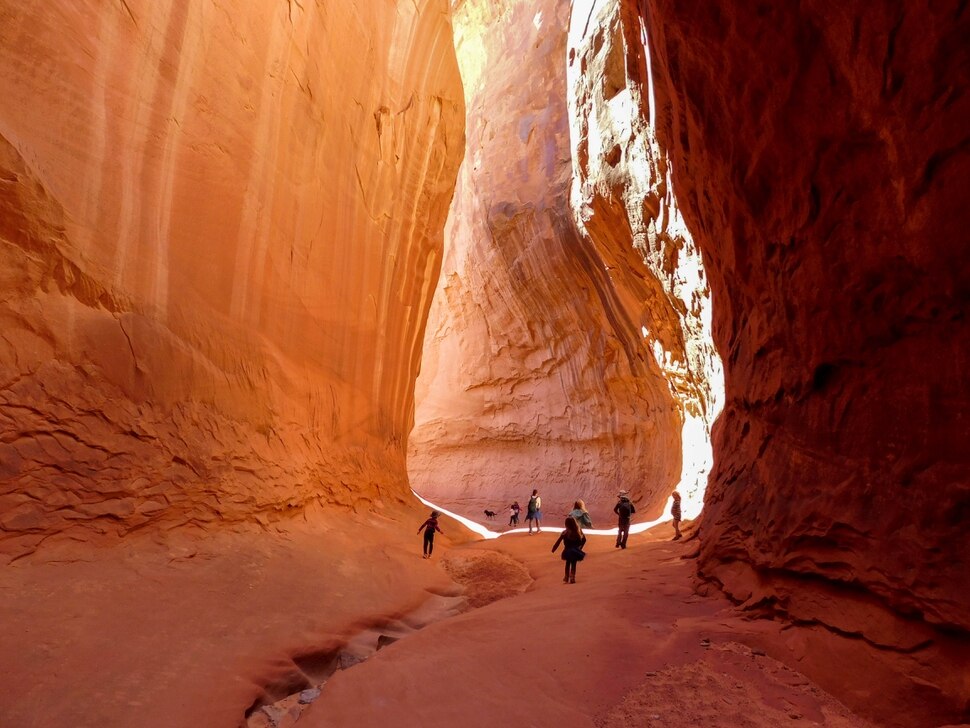
We are staying at the Noor Hotel in Torrey, Utah. We are here for just one night and will be heading South in a few hours time on Highway UT-12, a scenic route, from this stupendous area of geological wonderland down to Kanab, about 200 miles away.
Tomorrow we will have been on our travels for just one week. To say that we have done a lot would be an understatement! It started by us getting to Lakeview, SE Oregon, on Monday evening and finding that Brandy was very unhappy. So much so that on the Tuesday morning we drove the 4 hours back to Merlin and left him with Jana and the gang. He was so pleased to be back and all the other dogs likewise to see Brandy.
Then we drove back to Lakeview the same day!
Now we have seen such sights that are beyond words. This part of the world is variously 7,000 – 8,000 feet high. We are over 7,000 feet now. The region is known as the Waterpocket Uplift that includes Capitol Reef National Park and is dramatic, sensational and overwhelmingly beautiful. I have taken over 150 photographs already. Trust me, I can’t wait to post some of the better ones in about 10 days time.
So that’s all for now. Jeannie and I are well, very fortunate to have come this way, but missing our dogs!
So love to you all.
It may be quite a long time before there’s another update from us, and I’m sorry I can’t yet welcome new visitors or engage in responses to individual comments. And apologies for not being able to share a picture. That will come!
Written by Rob Moir, Ph.DI recently returned from a research sail through the Denmark Straits and I couldn’t be more in awe of mother nature.
We sailed aboard the gaft-rigged ketch Tecla out of Isafjordur, Iceland, bound for Greenland. We were thirteen women and men on a hundred-foot steel-hulled sailing vessel.
As we cleared the steep-sided fjord and sailed out into the bay past towering headlands, we saw a humpback whale breach. It rose straight out of the water, extended enormous knobby flippers, rotated and fell on its side with a large splash.
We sailed on, and another wheeled before us.
Further out, white-beaked dolphins streaked, exhaled, and splashed in the bow waves at the front of our boat.
Gray and white fulmars with outstretched wings carved the sky and nearly scratched the sea. And then there were icebergs.
The natural beauty of Mother Earth never ceases to take my breath away, no matter how many times I see it.
We traversed the threshold between the Atlantic and the Arctic Oceans. The south-bound East Greenland current squeezed between the craggy coasts of Iceland and Greenland to become a “superhighway” for turbulent water. Here, the denser Arctic water mass crashes into the bulwark front of warmer Atlantic Water. Arctic water plunges downwards into the Denmark Strait Cataract. This is the world’s largest waterfall. Yet, skimming the surface of immense water all we see are waves that crest white tumble and stream like the tossed manes of charging horses.
Unfortunately, we also saw the threats to nature.
First, a quick science lesson: When seawater freezes at the ocean surface, the ice is actually made of freshwater; the salt gets rejected back into the surrounding water. That surrounding water then becomes denser and sinks. This happens on a massive scale, which results in ocean currents around the world. Think of it like an organic engine that circulates the oceans’ water.
Now, because global warming exposes more of the surface every summer than it used to (about twice as much, in fact) that means more surface ice each winter. That means that our ocean circulation engine is twice as big, which radically alters the seascape, threatens not only the ocean ecosystem – from tiny algae to those humpback whales – but life worldwide.
We caused global warming. Now we must come together to decrease carbon emissions and increase carbon capture. For the Denmark Strait, for the humpback whales, and for our own places of habitation.
ooOOoo
I will do no better than to repeat that last paragraph.
We caused global warming. Now we must come together to decrease carbon emissions and increase carbon capture. For the Denmark Strait, for the humpback whales, and for our own places of habitation.
PUBLISHED ON 09/13/2019
To Loijuk the elephant, nothing is more important than family — especially now that she is starting one of her own.
In 2006, the orphaned elephant was found all alone at only 5 months old, and was rescued by the Sheldrick Wildlife Trust (SWT) in Kenya. She was hand-raised by SWT until she was old enough to return to the wild.
Years have passed, but Loijuk still has a close bond with her human family. She returns to the grounds of the sanctuary every month to visit. But in September, Loijuk surprised her former caretakers with a newborn elephant calf in tow.
Sheldrick Wildlife Trust
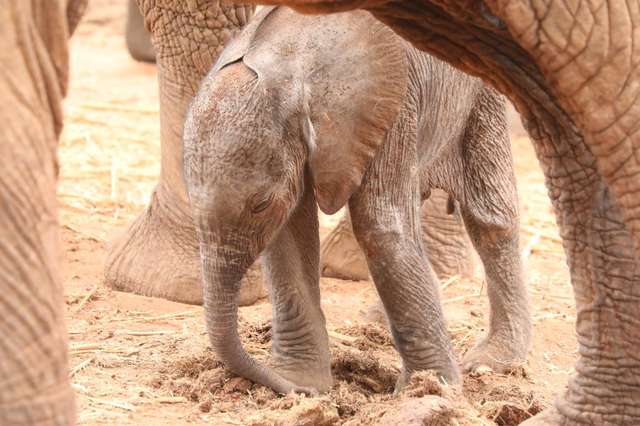
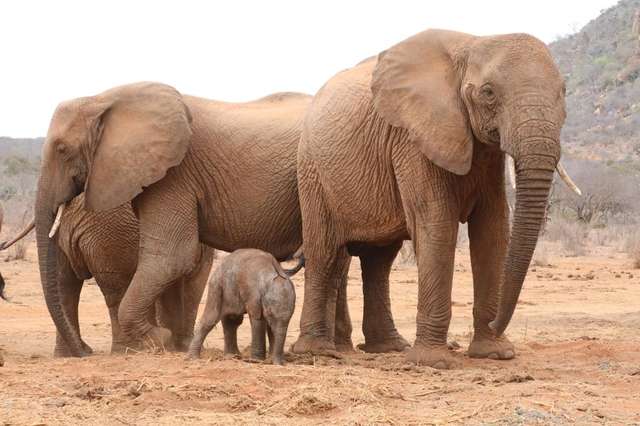
It was clear the proud elephant mom couldn’t wait to show off her baby. The calf, who has since been named Lili, was only hours old — likely born only the night before.
Loijuk has never forgotten the kindness of those who helped her. She even invited Benjamin Kyalo, the head keeper, to have a special moment with her newborn calf.
Sheldrick Wildlife Trust
“Benjamin was able to get close to Lili (who nestled into his legs), stroke her delicate newborn skin and breathe into her trunk, thereby letting her know who he was via his scent,” Rob Brandford, executive director of SWT, told The Dodo. “Elephants have an incredible memory and sense of smell and our keepers will often breathe into the orphans’ trunks so they can recognize who they are.”
You can watch a video of Loijuk and Lili’s touching visit here:
Lili was quite wobbly on her feet during the meeting, but over the course of the week, Kyalo watched as she got stronger and stronger.
“Loijuk has stayed close to the area around the unit, allowing our keepers to watch over her and check how she’s getting on,” Brandford said. “Considering September is the peak of the dry season in Tsavo, not the most favorable of conditions for a new baby, we are delighted that Loijuk has returned close to home so that we can help supplement her diet when she visits.”
Sheldrick Wildlife Trust
In the wild, calves are raised with the help of female relatives within the herd. Loijuk has played nanny to other babies before giving birth to Lili, and now her calf has nannies of her very own — two other wild orphans named Naserian and Ithumbah.
Lili will remain with her mom’s herd in the wild for life, and if she is ever in need, she now knows there is a safe place she can always return to.
Sheldrick Wildlife Trust
Lili is the 31st calf born to female orphaned elephants raised by SWT now living wild, and she is a beacon of hope for threatened elephant populations everywhere.
“Moments like these are momentous,” Brandford said. “In saving one orphaned elephant’s life, we are not only seeing that orphan thrive but start a family.”
“Lili has a brighter future ahead of her than many elephants,” Brandford added, “and we look forward to watching this little girl grow up in the wild.”
A sobering article about the unacceptable face of dogs!
Jim Goodbrod recently sent me an email that included a copy of a recent article in the Washington Post.
Here’s what Jim wrote:
Hey Paul…..
I read this article in the Washington Post a couple weeks ago: it’s not something we want to hear or admit to, but I thought you’d find it interesting nonetheless.
Regards, Jim
Jim got it in one when he said that it’s not something we want to admit to.
But it deserves sharing with you.
ooOOoo
The dog is one of the world’s most destructive mammals. Brazil proves it.
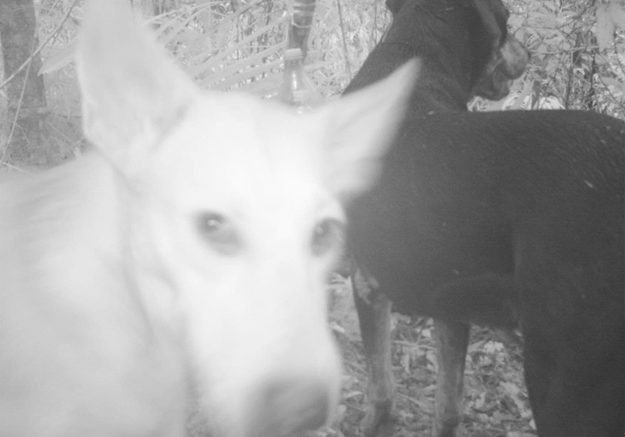
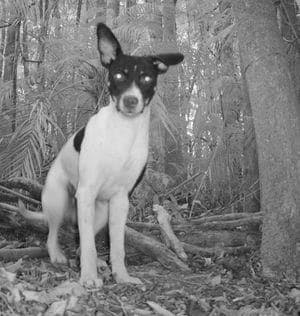
Surveillance cameras placed by researchers in Brazil’s Tijuca National Park capture a pair of dogs. (Courtesy of Katyucha Silva)
RIO DE JANEIRO — High above this Brazilian city, in a jungle blanketing a mountain, the turtles were out, and the scene was hopeful.
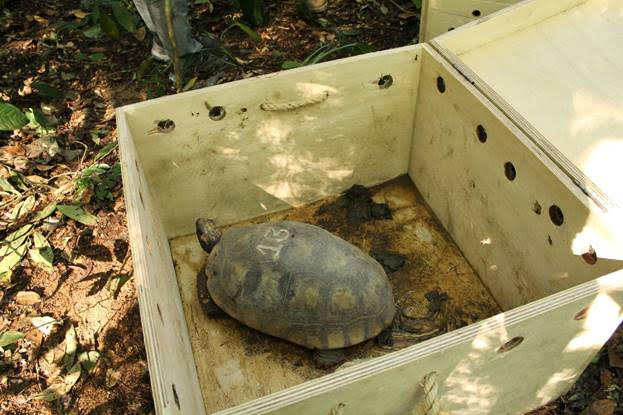
Scientists were reintroducing 15 mud-caked tortoises to this urban forest where they had once been plentiful. Children were running around. People were oohing and aahing. A stern-looking security guard appeared to briefly smile.
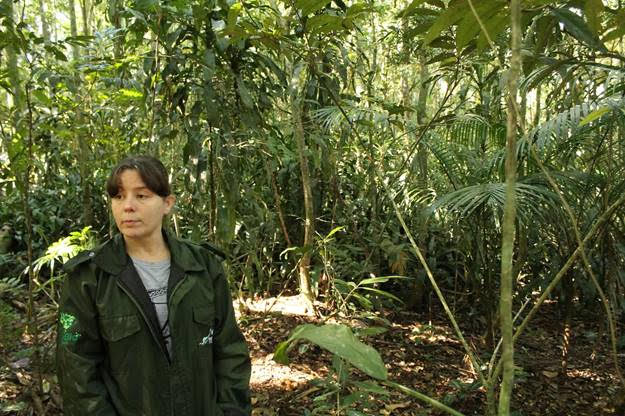
But not government biologist Katyucha Silva. She was thinking about dogs.
What would they do to these turtles? What were they doing to Brazil?
It’s a question more researchers are beginning to ask in a country where there are more dogs than children — and where dogs are quickly becoming the most destructive predator. They’re invading nature preserves and national parks. They’re forming packs, some 15 dogs strong, and are hunting wild prey. They’ve muscled out native predators such as foxes and big cats in nature preserves, outnumbering pumas 25 to 1 and ocelots 85 to 1.
Every year, they become still more plentiful, spreading diseases, disrupting natural environments, goosing scientists who set up elaborate camera systems to photograph wild animals, only to come away with pictures of curious canines.
“It’s a difficult thing for people to hear,” said Isadora Lessa, a Rio de Janeiro biologist who wrote her doctoral dissertation on domestic dogs causing environmental mayhem. “They love dogs too much.”
How the dog became one of the world’s most harmful invasive mammalian predators is as much a global story as a Brazilian one. Over the last century, as the human population exploded, so did the dog population, growing to an estimated 1 billion.
That has been great for people — and even better for dogs — but less so for nature, according to a growing body of academic research implicating canines, particularly the free-roaming ones, in environmental destruction.
“The global impacts of domestic dogs on wildlife are grossly underestimated,” researchers concluded in a 2017 study published in the journal Biological Conservation. The researchers, based in Australia, convicted dogs in the extinction of 11 species and declared them the third-most-damaging mammal, behind only cats and rodents.
The International Union for Conservation of Nature maintains a list of animals whose numbers dogs are culling. There are 191, and more than half are classified as either endangered or vulnerable. They range from lowly iguanas to the famed Tasmanian devil, from doves to monkeys, a diversity of animals with nothing in common beyond the fact that dogs enjoy killing them. In New Zealand, the organization reported, a single German shepherd once did in as many as 500 kiwis — and that was the conservative estimate.
“Unfortunately, we have a big problem,” said Piero Genovesi, chair of the agency’s invasive species unit. “There is a growing number of dogs.”
People all over the world are — begrudgingly — beginning to take note.
In Chile, stray dogs were the top concern among city dwellers surveyed this year, topping deteriorating sidewalks and theft. In New Zealand, some communities moved last year to restrict the movement of dogs in a gambit to save little blue penguins. In India, farmers are complaining about stray dogs killing their livestock, just as other predators once had.
And in Brazil, atop a mountain outside of Rio de Janeiro, 15 tortoises were nestling into the forest floor, oblivious to the danger of the forest’s leading predator.
‘A complex problem’
And in Brazil, atop a mountain outside of Rio de Janeiro, 15 tortoises were nestling into the forest floor, oblivious to the danger of the forest’s leading predator.
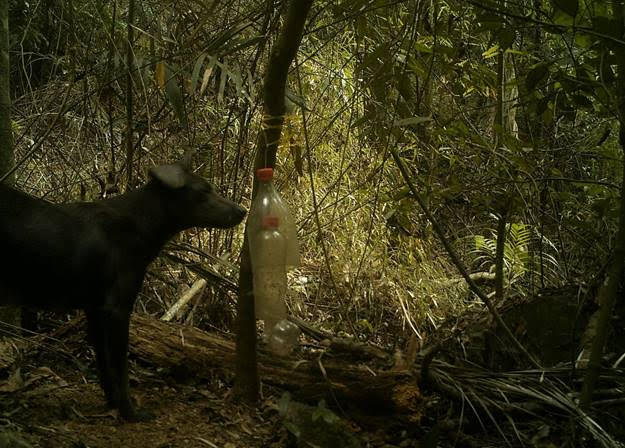
Researchers estimate there are more than 100 dogs in Tijuca National Park outside Rio de Janeiro, where they hunt and kill wild animals in packs. (Courtesy of Katyucha Silva)
Brazil is home to an estimated 52 million dogs, according to the most recent government statistics — more than anywhere in Latin America — but their lives vary widely. In a nation defined by inequality, where the rich fly in helicopters over the poor in the favelas below, the dog has become one more way of understanding the divide.
In wealthy cities, the dog is everywhere, strolling through fancy shopping malls, sitting in the laps of restaurant patrons, even riding paddle boards out on the surf. Some people wheel their dogs around in little strollers.
“The dog brings to Brazilians some things that Brazilians appreciate in themselves,” said Alexandre Rossi, a television personality more commonly known as Dr. Pet. “To be friendly, to want to socialize with everyone . . . and be there and be close to your family. These are perceived as very good Brazilian qualities.”
On the streets of trendy Ipanema one recent afternoon, few people could believe that a dog — or at least their dog — could be much of predator.
“The dog is a friend!” sputtered Philipe Soares, the furball Bobby at his feet. “No, I’ve never thought of him that way.”
“Difficult to imagine,” said Carlos Alberto Vicente, peering down at his own pooch.
“In her case,” said Flavio Vilela, a shirtless man striding through a park with a small mutt named Nicoli, “they’d hunt her.”
The problem, researchers say, isn’t these dogs, who lead the coddled lives of European or American pets.
The problem is the dogs in poorer and more rural communities, where the life of the dog is more frequently the life of hunger. They prowl the streets day and night with neither a collar nor an owner, looking for food wherever it can be found — in trash heaps, alongside roads, and in forests and fields, where they form packs to hunt and kill.
“It’s a very complex problem,” said Silva, the government biologist.
A stunning discovery
Katyucha Silva, a government researcher, has discovered dozens of dogs in Tijuca National Park. (Terrence McCoy/The Washington Post)
Ana Maria Paschoal, a researcher at the Federal University of Minas Gerais, remembers when she first started thinking about the dog differently. She was out in the Atlantic Forest in Southeast Brazil around a decade ago when she noticed there were an awful lot of them.
She wondered: How many dogs are using the protected areas? Are these feral or domestic dogs? Is their presence changing the occurrence of wild species?
So she set up cameras across 2,400 acres of forest to find out. What she discovered, published in 2012 in the scientific journal Mammalia, stunned her.
“The presence of the domestic dog is a threat,” Paschoal and her co-authors concluded.
The research, subsequently confirmed in a larger survey, laid the groundwork for a growing field of study here. One researcher linked Brazil’s dogs to the spread of diseases. Another accused the dogs in the National Park of Brasilia, where they hunted in massive packs, of scaring off natural predators. It was found that the closer humans lived to a nature preserve, the more likely dogs had penetrated it.
The International Union for Conservation of Nature has counted 191 species whose numbers dogs are culling. More than half are endangered or vulnerable. (Courtesy of Katyucha Silva)
But perhaps most striking? The dogs were neither feral nor domestic — but somewhere in between.
“All the dogs we detected had an ‘owner’ or a person that the animal has a bond with,” Paschoal said. “The species population increases following human populations, exacerbating their potential impact on wildlife.”
It was something Fernando Fernandez, an ecology professor at the Federal University of Rio de Janeiro, learned the hard way. For the last decade, he has been reintroducing native animals to the Tijuca forest, one of the world’s largest urban woodlands, which spills across Rio de Janeiro’s mountains.
First came the agouti, a squirrel-like rodent. Then followed a problem: “Dogs.”
They started killing the agouti, and not for food. It was just for fun.
Fernandez and Silva wanted to learn more. They set up cameras and discovered dozens of dogs in the forest. They estimated more than 100 dogs were in the park — not residents, it turned out, so much as frequent visitors, tracking in from nearby favelas.
“These are people who are very poor,” said Silva, who has six dogs at home. “They don’t have money to build walls. . . . When the owners leave for work, the dog leaves, too, and only returns when the owner comes back to the house from work.”
The owners often have no idea what their dogs are up to. Even if they were told, Rob Young said, they almost certainly wouldn’t believe it.
Young, chairman of wildlife conservation at the University of Salford in Britain, witnessed the psychology at work after seeing dogs kill flightless birds in the state of Minas Gerais.
“We’d do interviews with the farmers: ‘Have you seen these dogs?’
“And they’d say, ‘Yeah, but my dogs aren’t the problem; it’s my neighbor’s dogs.’
“Every farmer would say the same thing.”
These factors — inability to see aggression in dogs, intractable inequality, the rapid expansion of humanity — left Silva feeling apprehensive as she watched the tortoises being reintroduced into the Tijuca forest.
In the long term, she didn’t know how the problem of dogs laying waste to the world’s environments would realistically improve.
And in the short term: Could dogs kill these tortoises, just as they’d dispatched a few agouti?
“Yes,” she said. “They could.”
Silva worries that tortoises reintroduced in the park could fall prey to dogs. (Terrence McCoy/The Washington Post)
ooOOoo
It’s a tough read and there doesn’t appear to be a solution, not in the short-term at least.
As was reported in the article it is as much a global problem with something of the order of a billion dogs roaming the planet.
Now it’s still two weeks away but on the 23rd September we are going away until the 8th October.
We are driving to Utah specifically to see the slot canyons in Capital Reef National Park, and elsewhere.
The story behind this was quite a few months ago I was reading on Ugly Hedgehog about these canyons and said to Jeannie that we really should try and go there before we get too old.
As it happened, Jana could babysit the house and dogs, cats and horses on the dates that I mentioned earlier on.
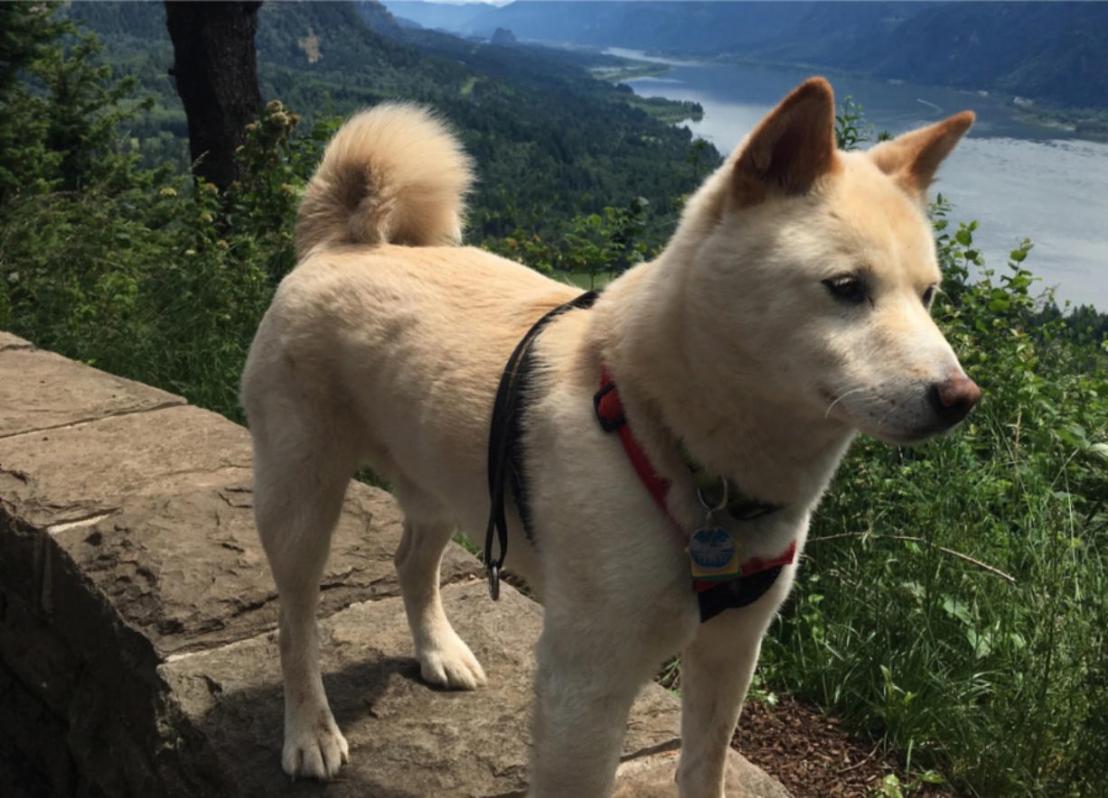
We are taking just one dog with us. We will take Brandy because he adores being taken for a drive and he has the habit of going for a walkabout when at home and we thought it wasn’t fair on Jana.
So it’s all uncertain as to what I shall do with the blog. Whether I will have time to use old posts, or leave it alone completely, or from time to time go online and leave a brief post.
Things may become clearer nearer the time.
But it seemed like a good idea to give your a heads-up!
A Vancouver, Washington dog survives a month in the wilderness.
Niko is a Vancouver family’s dog. He is also adventure partner to 16-year-old Caden Alt.
On July 26th, Niko went camping with Caden’s father, David Alt, in the Gifford Pinchot National Forest. Located in South-West Washington it encompasses well over a million acres.
Dog Survives 31 Days In Woods After Being Hit By Car
By LINDSAY NADRICH, KGW-TV
VANCOUVER, Wash. (AP) — Niko, a Vancouver family’s dog, survived 31 days in the wilderness after getting hit by a car.
Niko is 16-year-old Caden Alt’s adventure partner.
“He’s always fun to have around,” Caden told KGW-TV. “He’s right there at your side walking around and yeah, he’s just awesome.”
On July 26, Niko went camping with Caden’s father, David Alt, in the Gifford Pinchot National Forest. Later that night, Niko wandered over to the road and got hit by a car. David ran from the campsite just in time to see Niko sprint off into the woods.
“A lady jumped out of the car immediately and said, ‘I don’t know how he could’ve survived that,'” he said.
He searched all night, but could not find Niko. He said it was devastating.
For the next 31 days, he and Caden spent as much time as they could going back to look.
“Every weekend we went up there, we searched, that was pretty hard, coming back every day not finding anything,” Caden recalled.
Then last weekend, they got a call from two men who had seen a post about Niko on Facebook and spotted him about 100 yards from where he disappeared.
“That was, just like, my heart dropped for a second, like, is this happening?” Caden asked.
The Good Samaritans canceled their own trip and drove Niko straight to Vancouver.
“So, yeah, my son and I were just crying, it was, it was unbelievable, yeah, and then of course when we’re in the driveway and they bring him up, Caden and I are crying, those two grown men are crying, four guys crying, it was great,” David said.
Niko lost about 15 pounds but is otherwise doing well.
“Skin and bones and one eye shut, he had lost 30% of his body weight, but he immediately was eating and drinking,” David said.
Niko seemed pretty happy to be back by Caden’s side.
“It’s been amazing,” Caden said. “I’m so glad to have him back. He’s not like perfect, energetic back up to himself, but he’s getting there, better every day. He’s just as cute as ever, the house is filled again.”
So what did Niko do for 31 days alone in the woods?
“As far as trying to recap, only Niko knows the story right, too bad he couldn’t tell it,” David said.
During the month Niko was missing, David and Caden said they got a lot of support from people on social media, as well as a lot of tips that helped with the search. They said they are so thankful for everyone who kept them going.
A quick scan of the horizon every twenty or thirty minutes and then back down to my bunk.
But what was that!
For the first time in ages there was a strange light off the starboard bow.
Impossible to gauge the distance.
Then I had it!
It was no ship’s light,
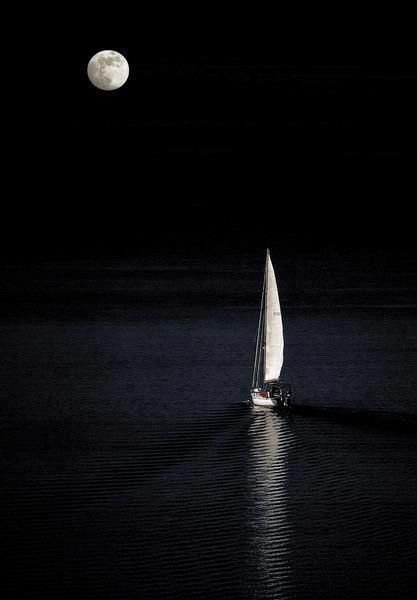
It was the edge of the rising moon.
My bunk below was forgotten in an instant.
The sight of the rising full moon was everything.
It rose seemingly rapidly and now cast its light over the ocean.
My ketch sailed in its golden light.
We seemed to sail on forever.
Now that’s coming on for thirty years ago,
But it is still clear in my mind.
Clear as if it was yesterday,
Reminded of it each full moon.
My ketch still sailing in its golden light.
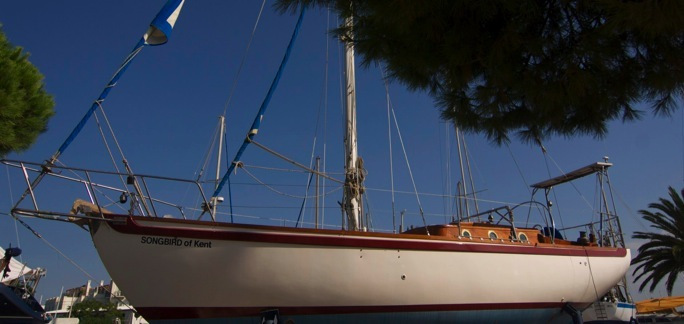
The following is not Songbird but a much more appropriate photograph.
And the poem came to me just the other day. The memory of that full moon out in the Atlantic en-route to Plymouth from Gibraltar in 1991 will be with me for ever.
That saying comes to mind when one reads about an attack on a dog in Queensland, Australia reported on the BBC News.
Here’s that item.
ooOOoo
Australia couple injured in ‘freak’ goanna attack on their dog
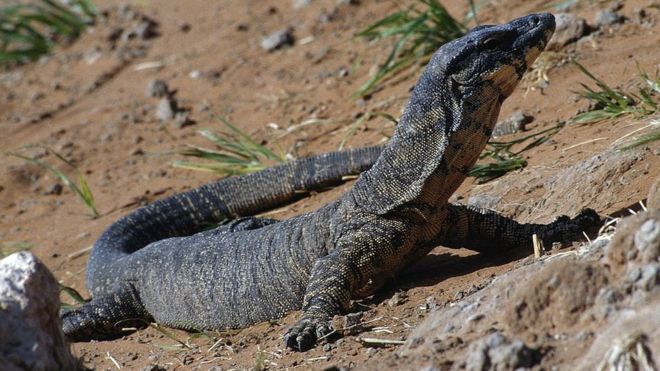
Goannas can grow up to two metres (6.5ft) in length
An elderly couple has been attacked in Australia by a goanna (a large lizard), as they tried to stop it from savaging their dog, emergency officials say.
The man, in his 70s, was said to have sustained significant injuries and was airlifted to hospital after the incident in north-eastern Queensland.
The woman, in her 60s, was also taken to hospital with an injury to her foot.
The couple’s dog, a long-haired Jack Russell cross, was seriously injured.
Goannas can grow up to 2m (6.5ft) in length, though most varieties are under 1m, and rarely attack humans.
The rescue service described the attack which took place in Flametree near Airlie Beach, as “a horrific and freak ordeal”.
“The man suffered a very serious laceration and possible fracture of his right forearm as well as severe bleeding from his leg wound. He was in considerable pain,” ABC News quotes an ambulance worker as saying.
“The patients are quite lucky not to have been more seriously injured given that goannas can be quite savage,” another ambulance worker told ABC, adding: “It doesn’t happen every day, that’s for sure.”
The dog was earlier reported to have died, but ABC later reported that it had survived the attack.
ooOOoo
Now I wasn’t sure what a goanna was but thanks to Wikipedia (and not the only source), we find:
Goanna refers to some species of the genus Varanus found in Australia and Southeast Asia.
Being predatory lizards, goannas are often quite large, or at least bulky, with sharp teeth and claws. The largest is the perentie (V. giganteus), which can grow over 2.5 m (8.2 ft) in length.
Not all goannas are gargantuan. Pygmy goannas may be smaller than the arm of an adult human. The smallest of these, the short-tailed monitor (Varanus brevicuda) reaches only 20 cm (8 inches) in length. They survive on smaller prey, such as insects and mice.
Goannas combine predatory and scavenging behaviours. A goanna will prey on any animal it can catch and is small enough to eat whole. Goannas have been blamed for the death of sheep by farmers, though most likely erroneously, as goannas are also eaters of carrion and are attracted to rotting meat.
Most goannas are dark-coloured, with greys, browns, blacks and greens featuring prominently; however, white is also common. Many desert-dwelling species also feature yellow-red tones. Camouflageranges from bands and stripes to splotches, speckles, and circles, and can change as the creature matures, with juveniles sometimes being brighter than adults.
Like most lizards, goannas lay eggs. Most lay eggs in a nest or burrow, but some species lay their eggs inside termite mounds. This offers protection and incubation; additionally, the termites may provide a meal for the young as they hatch. Unlike some other species of lizards, goannas do not have the ability to regrow limbs or tails.
I am republishing what made up Picture Parade Two Hundred and One.
ooOOoo
Margaret (MargfromTassie) comes up with wonderful pictures for you.
These will make today’s Post and the next three Picture Parades. And there was me worrying about where I would find more Picture Parades!!
(Note that on the original Powerpoint images some of them had neat sayings as overlays. In the conversion from pps to jpg formats those were not carried across. I have them as introductions to each picture.)
MAN’s BEST FRIEND!
oooo
“A life without a dog is a mistake” – Karl Zuckmayer
oooo
“Women and cats will do what pleases them, dogs and men should relax and get used to the idea” – Robert A. Heinlein
oooo
“The love for animals, enhances the cultural level of the people.” – F. Salvochea
oooo
When you leave a dog behind because he “grew old”, your children will learn the lesson. Maybe they will do the same to you when you are an old man. Think about it….
oooo
“The dog has made man their God, if the dog was an atheist, it would be perfect” – Paul Valery
oooo
“Love is when your dog licks your face, even if you leave it alone the whole day” – Anita, 4 years old
oooo
“It doesn’t matter if an animal can reason. It matters only that it is capable of suffering and that is why I consider it my neighbor” – Albert Schweitzer


 Gray and white fulmars with outstretched wings carved the sky and nearly scratched the sea. And then there were icebergs.







 Learning from Dogs