On February 26th Jean and I, and a caravan of dogs and cats, arrived at our new home in Payson, Arizona.
We chose Payson simply because we wanted seasons. Payson is about an hour NE of Phoenix up at 5,000 feet and has very distinct seasons!
Snow in the garden - late March!
Both of us for different reasons thought we knew America pretty well. Jean was married to an American for nearly 30 years and I had been doing business in the US for a long time, even having my own (small) US company based in New Jersey.
But what neither of us anticipated was the wonderful warmth and friendliness of the Payson inhabitants. Despite the fact that Payson is hurting big time as a result of the economic situation, the majority of people that we met were happy, smiling and wonderfully accepting of a couple of Brits turning up in their town.
Indeed, Jean spoke to this stranger in the local supermarket, a tall guy complete with the boots and Stetson hat, and asked simply, “Why are so many people in Payson smiling?”
His reply was simply, “Ma’am, it’s only a small cow town!”
Well here’s a couple of newcomers to this small cow town who like it!
Crazy, outdated concept – adjusting clocks twice a year!
The whole concept of adjusting the clocks with the seasons, “Daylight Saving” as the Americans call it, seems increasingly ludicrous the more that one thinks about it. In the UK, it is called British Summer Time and is abbreviated to BST; I call it British Silly Time.
The expensive consequences for computer systems, airlines, railways and many other systems and organisations having to mess about with times and schedules are completely unnecessary. And I have lost count of the number of times I have heard of people missing calls or online meetings due to misinterpretations of time zones and distortions in the name of “daylight saving”.
One would have thought that people who spend the most time involved with nature would find it the most ludicrous and that among those would be farmers. However, it seems that this is not the case as there is a discussion about introducing permanent BST or even “double BST” on the UK National Farmers Union (NFU) website.
The news article is titled “Should we change the clocks?”. My answer is a simple “no”. In case the answer is unclear, I mean “no”! That is “do not change the clocks”! That is “leave the clocks alone”! That is “stop messing with the clocks”! In the UK that means “leave the clocks on GMT, the correct time”!
Does no one else understand this? Well, thankfully, many people do. For example, the whole of the aviation industry uses Zulu time (UTC) worldwide. Let’s be clear what that means. When pilots get a weather reports from any airport in the world (whether it is Heathrow or Los Angeles airport), the times are in Zulu time which is UTC/GMT. Yes everyone uses UTC.
The really funny part is that the NFU news article even states “analysts have claimed an extra hour’s daylight could be worth £3.5 billion a year to the economy”. This is the ultimate fallacy.
Let us be clear about something, in case you had not noticed: THERE IS NO EXTRA DAYLIGHT!! Where, on earth, did farmers get the idea that there is?!
Elliot was ‘exposed’ to the Learning from Dogs readership on the 22nd March as our first Guest author. He wrote about the US Government and Poverty.
Elliot has one important distinction with respect to the other authors of this Blog; he is the right side of 30 years old!
He is going to use this perspective to reflect on schooling, something that most of us ‘aged’ peeps take for granted, assuming we can remember our school days! 😉
It promises to be a fascinating reflection.
———————————–
Setting the scene
I’ve had a plethora of experiences over the past 17 years of my life. I’ve made and lost friends, had romantic
Elliot Engstrom
relationships, read, traveled all around the world, lived in France, and done countless other things that I consider myself immeasurably blessed to have experienced.
Despite the fluidity of where these different experiences have taken me, my entire life since the age of four has had one characteristic in common – I have been a school student.
In the spirit of “Learning from Dogs,” I thought it might be interesting to reflect a bit upon the core dynamic between education (not learning, which is a far broader topic) and schooling.
I often ask myself just how effective the modern US schooling system is as a tool of education, and whether or not its costs outweigh its benefits. I hope to have at least a rough answer to this question in the final post of this series.
In the following three posts, I will examine three topics:
– In what ways does the modern schooling system function as a positive tool for education?
– What costs involved in modern schooling hinder its ability as an educative tool, and even make it a negative influence on students?
– Considering the analyses put forth in the first two posts, do the costs or benefits or this system outweigh the other? On the whole, are school and education complements or antagonists?
This series is going to be exciting for me because, to be quite frank, I have no idea what my final answer is going to be. I guess I’ll just have to stay tuned to see where my brain takes me – and so for you!
It is a sad and lonely vigil that we who long for good news sometimes keep. But now and again, like London buses, it does arrive in welcome batches, and so it has proved this week.
Oh look! Here's five of them!
US Health Care
First of all, our faith in Obama has been somewhat resurrected from what had become – in my case at least – a depressingly-comatose condition. For he has managed to squeeze his
Band-aid or long-term fix?
health bill through Congress, which is more than the glamorous Clinton duo managed the last time it was tried.
Now I am sure Learning from Dogs has many American friends – at least, I hope so. And they are surely better-qualified to give an objective view of exactly what has been achieved. To listen to the Republicans, you’d think the end of the world had arrived, yet it is surely surreal that “the greatest country in the world” should NOT have universal health care, isn’t it?
As far as I understand, another 32 million Americans will now have health cover, even if that still – apparently – leaves some outside the fold. Well, let’s not quibble; it’s a major step forward. How even the reddest-necked Republicans could accept poor Cuba having better overall health care for their poorest citizens than the mighty USA was always a mystery to me. So, let’s chalk it up and celebrate.
Palestine
Secondly, the Obama-Clinton team is AT LAST standing up to Israel. Now this is a major topic, and beyond the scope of one post, but if you empathize – as I feel one should – then from a Palestinian’s point of view, the Israelis are occupying their territory by force. And they are not alone in this belief; the international community has long considered the Israeli presence in the West Bank and Jerusalem to be illegal. Yes, Israeli supporters may find ways of rationalizing their presence there, but the facts speak for themselves.
“Whom the Gods seek to destroy, they first make mad.” Well, Netanyahu may not quite be mad, but he was certainly very silly – in my opinion – to so impudently announce more building in Jerusalem just as efforts to restart serious negotiations were under way. How he could imagine this would not be a major slap in the face to the US is a mystery. Perhaps he was just seeing how much he could get away with? Well, he seems to have found out, and for once – after nearly a year of pussy-footing about with Israel – the USA is moving closer to the international community’s position.
The world – let alone the Palestinians – needs a permanent solution to the problem, and that will not be achieved by Netanyahu prattling on about Jerusalem “belonging to Israel”. It is obvious to any outsider that the city has to be shared. As with Berlin, what will no doubt be a divided city for some time will eventually – through the force of position and logic – become a united one. WITHOUT goodwill (and there has been precious little in recent years from victorious Israel) this running sore will only come back to bite the Israelis time and time again. Friends of Israel – as I count myself in fact – should make this point more strongly.
However, the only friend that really counts is the USA, and we need them to keep up the pressure. Can and will Obama tough this one out in the face of the very powerful Israeli lobby? I believe Obama has said that he would prefer to be a one-term President if it meant he could get some real reforms through, and this is a welcome change from the “I’ll do anything to stay in office” syndrome that we seem to be seeing in Britain right now. Let’s hope he can live up to this promise. It is after all now nearly a decade since 9/11, after which there was so much talk about “finding a solution” that has – so far – come to little.
Google & China
Where next?
Finally, we hear from Asia that China is cross with Google for removing filters from its search engines. Now we have got used to cosying up to China, to the point where the west imports a VAST quantity of cheap goods that have helped China’s economy to make a real leap forward, and of course pay for a vast increase in their military spending.
Yet the truth remains the truth, no matter how you dress it up. It remains a Communist dictatorship.
That Google even tolerated acquiescence in the fascist suppression of free speech in the first place was a disgrace, but they seem now to be moving to a more defensible position. What was sad about their original move into China was that they are big and powerful enough to have made a stand before. All over that vast country, individuals are trying to stand up to a fascist state, so how must they have felt when a vast, rich and powerful organisation from the west (Statue of Liberty and all that) got into bed with their oppressors?
Well, perhaps those little people will feel a bit better now. Predictably, the Chinese are now making threats against other “partners” of Google, saying that they “must obey its laws”. Well, we’ll see how this plays, but united we stand, divided we fall, and is it moral to respect immoral laws?
Yes, it will irritate the Chinese Communist Party leaders (I won’t be losing any sleep there …) and No, it won’t make a vast practical difference in the short-term; the Chinese have their OWN search engines, but it is a symbol, and symbols count. Sooner or later, the Chinese will join the modern world; but every now and then the free world needs to give it a prod in the right direction.
By Chris Snuggs
[Explanation of title to our non-UK readers. Londoners are so used to waiting in the cold for a bus to arrive and then having three arrive at once, that the phrase has become a little bit of English folklaw! Ed.]
Why has it seemed like pushing water uphill for so long?
I’m in my mid-60s, having been born six months before the end of WWII. From the earliest days that I can remember, my parents loved to holiday in France and Spain. In those days if one was to motor into Europe then it was a case of the car being craned aboard the ferry from England to France. How things change!
Modern cross-channel ferry
Much later on in life, I did business extensively in many European countries and, for a while, taught sales and marketing at the international school, ISUGA, in Quimper, NW France. (Indeed, fellow Blog author Chris Snuggs was my Director of Studies at ISUGA – that’s how we came to meet.) I like to think that I have a reasonable understanding of the variety of cultures that is Europe.
So while acknowledging the convenience of a common currency (sort of) and ease of border transits, the one thing that has remained in my mind is that each country in Europe is very, very different to the other. These core differences have always struck me as so strong and deep-rooted that any form of real union was a ridiculous concept. The present deep problems with Greece seem to be the tip of this fundamental issue. Thus a couple of recently published articles, on Baseline Scenario and The Financial Times seem worthy of being aired on Learning from Dogs.
The winter can seems very long when the temperature remains extremely cold and the news headlines show dramatic pictures of villages completely cut off by drifting snow. And the old debate about cold weather payments for pensioners comes around once again.
We are often still able to enjoy time in our garden well into October, but the weeks that follow up to March can be very long and drawn out. Then comes my favourite flower, The Snowdrop.
Snowdrops
There are several different types of this beautiful little plant, and in the county of Hampshire in England [where Bob and his family live, Ed.], in particular there seem to be clumps of this special white flower everywhere.
Heale House
However the other day I was able to see a complete field of them in the grounds of Heale House, a private residence owned by Patrick Hickman,an ex Lancaster pilot, now 89, who is still very active and keeping his yew bushes well trimmed in the art of topiary.
Heale House is open at this time of year for people to visit the lovely gardens and again enjoy the snowdrops.
Spring has arrived, but it is the first flower that is my favourite!
Very early on in the life of this Blog, indeed on the second day, I wrote a short article about the NASA mission to the moon, some 40 years after the event. You see, for me that has been the historic event of my lifetime.
I believe that this nation should commit itself to achieving the goal, before this decade is out, of landing a man on the Moon and returning him safely to the Earth. No single space project in this period will be more impressive to mankind, or more important in the long-range exploration of space; and none will be so difficult or expensive to accomplish.
Apollo 11 badge
That speech before Congress by President Kennedy was on the 25th May, 1961. I was 16 and was enthralled by the idea of being alive when man first set foot on another planetary body. That came about on July 20th, 1969 at which time I was living and working in Sydney, Australia. I took three days off work, rented a TV and watched every minute of the event.
Exploration is a core need of man. By pushing out the boundaries of our knowledge we continue to offer hope to mankind.
So it is with great disappointment that it has been announced by President Obama that the manned mission programs to the moon are to be severely curtailed – that sounds terribly like political speak for cancelled!
As Eugene Cernan (last astronaut to set foot on the moon) said:
I’m quite disappointed that I’m still the last man on the Moon. I thought we’d have gone back long before now.
I think America has a responsibility to maintain its leadership in technology and its moral leadership… to seek knowledge. Curiosity’s the essence of human existence.
Curiosity is indeed the essence of human existence.
That curiosity and the investment in space exploration by NASA on behalf of the whole world has shown us some remarkable findings about Saturn and it’s majestic rings. Just watch the video segments in this piece from the BBC.
The one-time cost of Cassini-Huygens mission was $3.26 billion. Just 0.3% of the cost of one year’s expenditure on U.S. defense spending.
Science missions like Cassini enhance cooperation between nations, and greatly contribute to scientific progress which benefits everyone.
Perhaps the big Banks would like to pick up the cost of further manned missions to the Moon?
As a follow-up to my last Post on Learning from Dogs “Managing in a mad world“, I got to thinking about the so called “Law of Attraction“.
I say that because I beginning to believe that this ‘Law’ is more about what we think about and focus our attention on than anything that has a tangible force of attraction. But it is well known that the brain (to protect our sanity!) filters out on a huge scale so this ‘attraction’ may be our minds remaining receptive or, as it were, allowing us to ‘resonate’ with others sharing our ideas and emotions.
Again, I notice this common ground between my psychotherapy clients and my business clients. Successful people tend to focus on the positive and usually have a strong belief in themselves and their abilities, and unsuccessful people who have suffered any sort of difficulty for an extended time, tend to be preoccupied with focussing on the negative and tend to have a negative self-view.
Naturally, we become orientated around our belief systems. This, I believe is where good, consistent parenting comes in because many of our beliefs are taken on from our parents. Even if the parenting style has been ‘tough’ as long as there’s consistency, balance is maintained and there is a solid reference point for the youngster to come away from.
Management styles resemble parenting styles, and why shouldn’t they, as the higher qualities of facilitating structured learning in a safe environment is exactly what good management is all about. Delegating is about empowering and confidence building. Parenting styles that are loose or have little or no structure or that are overbearing and dictatorial tend to be damaging.
Of course, there are no hard and fast rules here, just tendencies but it’s interesting how these are played out everywhere, in every situation where we are in relationship with others. Even more interesting in a recession where companies are really struggling!
How fascinating to clock the number of companies struggling badly who have an autocratic management style, where staff are told what to do and there is little empowerment, and then compare them to ones where the opposite is true and people are free to interact, communicate, feel they’re reasonably empowered and work together in an environment of mutual trust.
The correlation in this part of the South West UK where I mainly work is significant. It’s as if when we feel empowered and we’re working together with a group of like-minded people, all problems and challenges are solvable, because our self-belief is high and we visualise success. Also, adversity is seen as a challenge and one that can be mastered.
Even in the midst of great pain, we must think through our choices
The last week has been really mad. I have been working in different companies and organisations and having to be part of redundancies, power struggles and people rebuilding their lives.
For example, I was in a company that had just let its second lot of people go in as many months. It’s gone past losing ‘dead wood’ and now people with valuable skills needed for recovery are going. I’ve noticed previously that good, employable people with key skills start to get concerned and will often take voluntary redundancy rather than hanging around to see how things pan out.
End of job!
It’s the shocking way that it’s done as well that’s unbelievable. No warning, just a phone call to attend a meeting, no hint as to what the meeting is about, then an envelope slid across the table and then a rapid escort off site. All done and dusted in 5 minutes.
Having been through this myself some years ago, it’s not something you forget in a hurry. Lots of feelings of rejection and feeling unvalued and unwanted are what I remember. Perhaps its part of being bought up in a job-for-life culture and then having that illusion shattered.
Working with people in this situation is literally quite shocking and traumatic because it clearly affects them and their lives and the lives of their families, and it affects me because the work we started comes to an abrupt end usually with little or no warning, and so does a source of income to be brutally honest. I don’t even have chance to say good-bye in many cases.
Every Thursday I become a trainee psychotherapist and work with people who mostly struggle to hold down any sort of job. The reasons for this are generally because of upbringings that are awful beyond description. The shock and trauma that is in the air when working with these people is amazing, and so scary for them that the idea of being present in the room with me and is virtually impossible.
So that brings us to managing in a world where lots of mad and non-integrous things happen. I believe that mindfulness can provide a key to these situations; being present for another does more than any instruction manual!
Being present means we make ourselves available at many levels to someone who is suffering. By avoiding the subtle invitation to join someone in their shock and trauma but by being there for them, to the best of our ability and listening to them at depth, we can provide an environment where real reflection can take place. Then options may be chosen which are not born of panic and reaction but come from reflection and response.
I believe that this approach gets us out of the ‘noise machine in our heads‘ (that is forever churning and worrying, in my case) that we have no control over, and creates space for more subtle things to come through the quiet and calm.
Most people I’ve met in my engineering work like to assume that they think their way out of tight situations but I’m not convinced that this process is actually effective. I have heard and practised many times the activity of ‘sleeping on something’ and then being able to decide on a course of action the following morning with relative ease. My psychotherapy clients can’t think their way out the awfulness because thinking about things has got them into a spiral
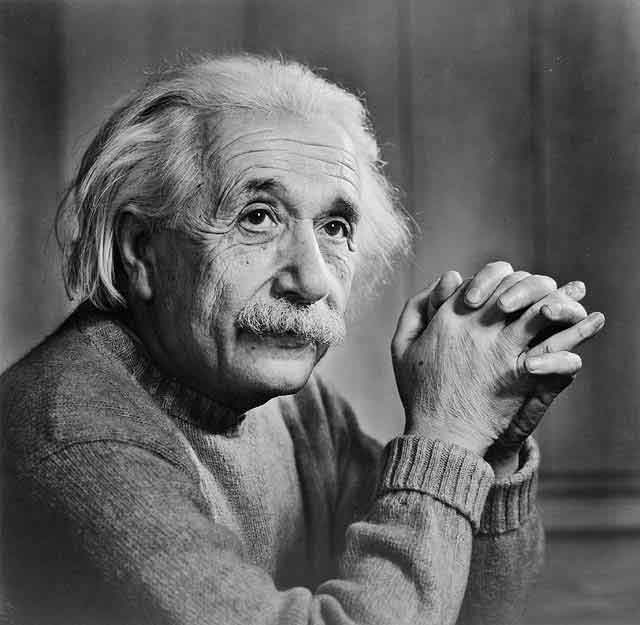
Albert Einstein
process which is highly addictive, predictable and virtually impossible to break without the intervention of a higher level of awareness. I think it was Einstein who said something like, “you can’t use the same intelligence that created a problem to solve it“! In other words, a different approach or level must be used.
I believe that this different approach or level can be used to solve most problems we have. By bringing a different level of awareness to a challenge, whether it is redundancy or some other sort of deeper problem always gives different results and provides more options. It’s just that initially it needs to be facilitated, until we can do it under our own steam. I am heartened that even in the depths of a recession that there are still companies out there that support this approach and the work I do.
By Jon Lavin [This article from the BBC is worth reading in conjunction with Jon’s excellent Post. Jon may be contacted via learningfromdogs (at) gmail (dot) com]
A piece of Internet fiction still carries an important message
One of the features of the Internet is that stories can circulate widely across the globe. This poem is one such example. The ‘story’ behind the poem would appear to be fiction but so what! It serves as a good reminder of something that affects us all (except those tragically cut off before they grow old!).
But before getting the poem, the reason that it was decided to publish the Post is that old age, whatever that really means, is a much bigger issue for societies than many care to acknowledge. Because, I guess, the ‘many’ tend not to be old, or let us say, the right side of 60.
And look how even the terminology is so biased towards youth. Why should it be the ‘right’ side of 60? What is ‘wrong’ with being older than 60, or 70 or whatever age?
Of course, in so many ways nature’s purpose is for us to breed the next generation to continue our gene pool and once we have achieved that then our ‘natural’ use is limited. But that is to ignore the value of wisdom, the huge advantage the next generation has in being able to tap into the experience and knowledge of the ‘ancients’.
Here’s an interesting piece from Aging and the Elderly by Hampton Roy MD and Charles Russell PhD
Wisdom has been attributed to older people in nearly all world societies from ancient times, but modern research on the psychology of aging has paid little attention to this quality of the late years
………………..
A number of researchers, however, have assessed the psychology of aging quite differently. Instead of measuring decline, their aim has been to measure the unique and special characteristics of mind possessed by older people.
………………….
These researchers might typically define wisdom as Kenyon did when he described it as “the ability to exercise good judgement about important but uncertain matters of life” -where “uncertain matters” refers to problems that may not have come up before, or to which there are competing or conflicting solutions, and so forth. These researchers describe the old as having “self-creating” powers because they seem to be more independent in their decisions, and less subject to external influences like the fads and trends that sweep over the young.
They propose also that the old are better able to live with contradictions in life and that they quickly see the essentials of situations because of their greater experience. Wisdom, they observe, includes the intent to do good, which in turn depends on holding favorable attitudes toward other people.
Then again, popular culture defines the ancient American Indian warrior as many things but old and decrepit doesn’t figure in that list!
Sioux warrior
So here’s that poem – may you live to a great age!