Category: Education

More tips for healthy dogs

Another interesting article from Susan Combs.

It’s self-explanatory and needs no further introduction from me save to say that this is the third guest post from Susan.

ooOOoo

Four Essential Tips to Make Your Dog Healthy and Active Round the Year

(Susan asked me to remove her article. The background to that decision may be read in my post of the 25th May, 2018: Living and Learning.)

ooOOoo

Susan also included the following graphic that I will leave you with.

We all love our dogs too much to take any risks with them!

Summer heat and caring for our dogs.

A guest post by Wendy Lipscomb.

Already there are some places in the USA that are experiencing some pretty hot days. For instance, at the time of me writing this introduction, around 2pm last Friday, the temperature in Phoenix, Arizona is 97 deg F. (36 deg C.)  That’s perfectly hot enough for us humans even before we think of dogs. Especially dogs that have thicker coats.

Over to Wendy!

ooOOoo

Regulating the Body Temperature of Your Thick-Haired Dog during the Summer.

by Wendy Lipscomb, May 9th, 2018

Summer brings in many outdoor activities such as hiking, swimming, running and going for a picnic or maybe going out just for a walk. There is nothing wrong with taking your dog out with you if you know how to regulate your pet’s body temperature.

Humans regulate their body temperature by sweating but animals do not have this property. Dogs do sweat very slightly from their nose and paws but that cannot help them regulate their body temperature. Dogs regulate their body temperature by panting; when a dog breathes through his mouth the saliva evaporates cooling down the blood in the veins. Put another way, the air that a dog breathes passes through its nasal passage before reaching its lungs. The air is cooled when it is passed through that nasal passage.

Therefore, it becomes even harder for dogs to regulate their body temperature when the sun is shining down, and also when the humidity in the air increases. This builds up a pressure on the dog’s lungs and heart as he breathes in and out more frequently to regulate his body temperature.

But you can take some measures to help your pet to regulate his body temperature during summer outdoors.

No doubt about it that dogs are super active animals and love to go outdoors. But while taking them out in those summer months it is easy to forget that the paws of our dogs are very sensitive and they can be burned by walking on the pavement and roads in the daytime. So, invest in good protective booties or apply paw wax to protect your dog’s paws.

In addition, your dog can also get sunburned by excessive exposure to the sun. Therefore, either limit the exposure of sun for your four footers or visit your vet clinic so that they can recommend a good sunscreen for your dog.

Another thing that you can consider while going out in the summer is that if you are traveling in a car and stop for rest never ever leave your furry companion in a locked or closed car. Because in summer your car becomes extremely hot by trapping the heat inside. If you leave your pet inside a hot car it can suffocate within minutes. Yes, within minutes!

Always carry a bottle of water to keep your dog hydrated. Create breeze for your dog to make the hot temperature tolerable for them. The breeze helps in cooling sweat and will make your dog feel relaxed. For this purpose buy a shop fan that is portable; a good option to create a breeze to keep yourself and your dog cool.

The above-mentioned tips are general tips that you must keep in your mind to implement in the summer. However, thick-haired dogs require a little more attention to maintain their safe body temperature.

People have the misconception that a dog with thick hair will suffer more during summer but let me tell you that thick-haired dogs are good at regulating their body temperatures. The fur of thick-coated dogs helps them to stay warm in winter and in summer their fur works as insulators and protects their skin from direct exposure to the sun.
Bathing For Thick-Haired Dog:
Well, fleas and ticks are around all of the year. Fleas can survive outside for long periods of time, particularly in a warm and sticky climate. As mentioned previously, summer bring in more heat, humidity and more outdoor time. Thus, it is the peak time for your thick-haired dog to catch fleas or ticks. Therefore, bathing your dog regularly is as important as anything else because it will not only help your dog to regulate his body temperature but bathing will also help you and your puppy be rid of these tiny crawlies as flea bites can cause redness, irritation, allergy and even illness such as Lyme diseases. It is recommended to use a good quality flea shampoo to get rid of fleas. Always examine the ingredients of the shampoo to avoid buying one with harsh chemicals because it may cause a reaction to your dog’s skin.
You should not Shave Your Dog in summer:

People ask me if I am going to shave my thick-haired dog in the summer? The answer to this question is “No”. Thick-haired dogs have two layers of hairs. The long-guard hairs protect the dogs in the winter from snow and the inner layer helps them to stay warm in those same winters. However, these dogs shed their undercoat in the summer and they are left with only long-guard hairs that insulate dogs from heat and protects them from sunburn.
Shaving your double-coated dog is not a good idea because shaving changes the texture of the coat. Your dog sheds off his inner coat in the summer. If you shave his coat his hair will soon start growing back and you will see that the soft and fluffy inner coat will grow first and later on the guard-hairs will combine with them. In addition to this, the texture of the new coat will be sticky and your dog will bring in whatever he passes through and that sticks to his new coat.
Moreover, the combination of the new growing inner and outer coat will also make your dog feel hotter on summer days.
Brush Your Dog Frequently:
Instead of shaving your dog’s coat, try to brush it every alternate day. Brushing your dog’s coat with a fine-toothed comb will untangle the hairs and it will also help in removing the winter undercoat of your thick-haired four-footer. This will increase air circulation and will make your dog feel cool and comfortable.

ooOOoo

I asked Wendy for a little about herself. This is what she sent in:

Wendy is a self-employed beauty therapist, mother of two; life-long pet parent and lover of dogs who somehow manages to squeeze in the time to satisfy another of her loves – writing. Wendy is the founder, main contributor to and editor of TotallyGoldens.com

So no other way than to close this post with the message: Stay Cool Peeps!

(Brandy! Take Note!)

Jean and Brandy at a local yard sale back in June 2016.

To England and France, Part Two.

Fun days with my daughter’s family!

We had arrived in England, via Gatwick airport, yesterday, as in Monday the 9th April, and were staying with Maija and family until Friday when Jean and I travelled up to London to meet my sister Eleanor.

So these three days were to be spent doing as many fun things as we could; it being the Easter school holiday week so Morten was at home each day.

Thus today’s post is a fairly quick run through of all the things that we did.

First thing on Tuesday morning was to see how adept young Morten was in riding his bike.

Thankfully it was dry but still overcast. The forecast was for the weather to improve over the coming days. But whatever the weather we were not going to let it get in the way.

Maija mentioned that Wakehurst, part of Kew Royal Botanical Gardens was close by and we readily agreed to go there. As the Kew website explains:

Our wild botanic garden on the High Weald of West Sussex has over 500 acres of beautiful ornamental gardens, woodlands and a nature reserve. Wakehurst is also home to the Millennium Seed Bank, the largest wild seed conservation project in the world.

Morten got it into his head to ‘dress up’!

He is a very lively young man!

Wakehurst was a very tranquil place.


As well as the beautiful grounds it was possible to buy plants.

Slowly the weather improved.

In the blink of an eye it was Wednesday and the plan that day was a visit to the Bluebell Railway. As the website offers:

The volunteer-run Bluebell Line was the UK’s first preserved standard gauge passenger railway, re-opening part of the Lewes to East Grinstead line of the old London Brighton & South Coast Railway in 1960. Since then it has developed into one of the largest tourist attractions in Sussex, yet it still remains true to its objectives of the preservation for posterity of a country branch line, its steam locomotives, coaches and goods stock, signalling systems, stations and operating practices.

One’s never too old to go on a steam railway!

Sheffield Park Station, East Sussex

As the above photograph shows it was another day of intermittent rain and low clouds.

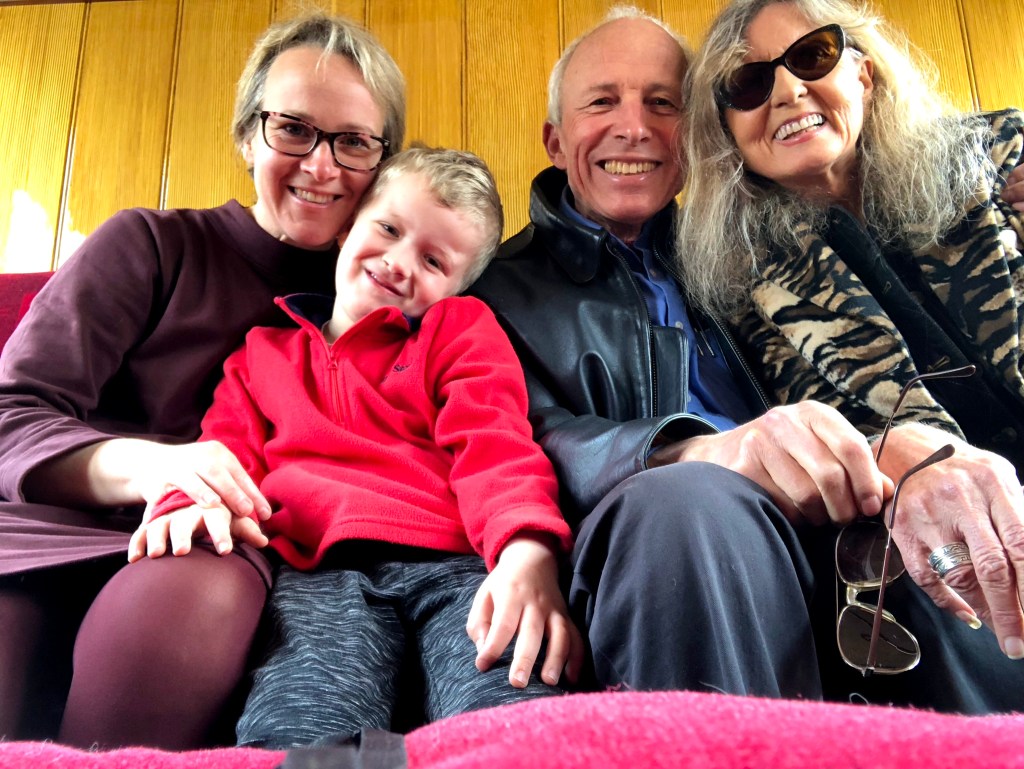
But did that stop four people having a fun time???

A ‘self-pic’ of four happy faces aboard the Bluebell train.

On the Thursday, the 12th, Maija had an engagement in London in connection with her company, SOUND UK, and Jeannie and I were in charge of Morten for the day.

Well I think that was the arrangement although Morten woke up with very clear ideas as to how the day was to be spent. Primarily walking into Lindfield village so he could show Jean and me all the places of note!

Lindfield is the classic English village complete with cricket field, village pond and a pub or two. As Wikipedia offers:

The village stands on high ground above the upper reaches of the River Ouse. It is situated close to both the natural beauty of the High Weald and to Haywards Heath with its amenities and station on the main London-Brighton railway line.

Lindfield has a rich historic and architectural heritage. The ancient High Street, lined with lime trees, has over forty medieval and post medieval timber-framed houses, with many individual shops. At the bottom of the High Street is a natural spring-fed pond with fish, ducks, and herons. Beyond lies the Common which, over the centuries, has witnessed many events – fairs, festivals, bonfire celebrations and sporting activities; cricket has been played there since 1747. Today, it is still central to village celebrations and leisure activities. In addition to the Common there is Pickers’ Green, providing pitches for cricket, football, stoolball and a children’s play area.

History

The High Street follows an ancient north-south track that has existed for thousands of years, long before the Romans built a major road, the London to Brighton Way, a mile to the west of the village.

Lindfield first appeared as Lindefeldia, ‘open land with lime trees’, in a Saxon charter of 765 AD, in which King Ealdwulf granted lands for the building of a Minster church. When the Domesday Book was compiled the lands were held by the Archbishop of Canterbury.[4]

King Edward III recognised the importance of medieval Lindfield and in 1343 granted the town a royal charter to hold a market every Thursday and two annual eight-day fairs. For centuries the fairs continued each April and August with the summer fair becoming one of the largest sheep sales in Sussex.[5]

Lindfield was once part of the thriving Wealden iron industry. As early as 1539, William Levett of Buxted, a county curate with a thriving sideline in iron and armaments, was recorded as extracting iron ore at Lindfield. Later the Henslowe family of Lindfield were actively engaged in the iron milling business in association with Ralph Hogge, parson Levett’s former servant and later a major ironmaster in his own right.

In 1841 the London-Brighton railway opened, passing to the west of the parish with a ‘Station for Cuckfield and Lindfield Towns’ on open land that was to become the town of Haywards Heath. The construction of the Ouse Valley branch line reached Lindfield in 1866 with a proposed station to the north of All Saints’ Church but the line was abandoned for financial reasons.

Charles Eamer Kempe, a leading church stained glass designer and manufacturer lived at Lindfield until his death in 1907. Kempe renovated and redecorated an Elizabethan manor house near the village which he renamed Old Place,[6] from where he entertained clients and professional partners. Internally the house was appointed to the highest standard of Victorian splendour. After his death in the 1930s, the house was partitioned into six individual residences, with the main reception rooms forming part of the new “East Wing”.[7]

Lindfield also had a children’s play area which is where I snapped this photograph of Morten on that Thursday.

Then before we knew it the morning of Friday, 13th was upon us and it was time to catch the train up to London.

However these days with Morten had put in place a precious bond that was one of the primary reasons for us coming to England.

In tomorrow’s post I offer the experiences of meeting Eleanor, Richard and my son Alex.

The Sound of Sadness!

Why is is that some things so profoundly affect one?

In working my way through magazines and other stuff that I wanted to read following being away for nearly three weeks, I came across a report published by the University of Exeter, back in England, about the effect of climate change on the Great Barrier Reef.

Deteriorating Great Barrier Reef hushed: young fish no longer hear their way home

Degraded coral reefs are far quieter than five years ago, and no longer sound like a suitable habitat to young fish searching for a place to live and breed, according to research published today in Proceedings of the National Academy of Sciences USA.

Baby fish looking for a home can use noisy coral reef sounds including snapping shrimp clicks, damselfish chirps, and clownfish chattering to locate and select suitable habitat. But that “coral reef orchestra” has been quietened following recent cyclone and coral-bleaching damage on the Great Barrier Reef, raising fears that young fish may no longer hear their way home.

An international team of scientists, led by the University of Exeter, carried out field experiments on the Northern Great Barrier Reef and found that reefs sound much quieter and less acoustically diverse than they did before three years of cyclones and coral bleaching.

The soundscapes of these recently-degraded reefs are less attractive to juvenile fishes attracting 40% fewer fish compared to the sound of previous healthy reefs.

Lead author Tim Gordon, a marine biologist at the University of Exeter, said: “It’s heart-breaking to hear. The usual pops, chirps, snaps and chatters of countless fish and invertebrates have disappeared. The symphony of the sea is being silenced.”

This loss of attractiveness of reef sounds to fish in the sea could have devastating consequences for reefs.

I know I am far from being alone in feeling great sadness at this aspect of our changing planet.

So before I republish the rest of that University of Exeter paper take a few minutes and watch this YouTube video about the Australian Barrier Reef

Then listen to this mp3 file that is a recording of the sounds of a healthy reef.

This is the balance of that news item published by the University.

Fish communities are instrumental to maintaining healthy reefs by removing algae, facilitating coral growth, contributing to nutrient cycles and keeping food webs in balance. Damaged reefs with healthy fish populations recover faster than reefs that have lost their fish.

Harry Harding, co-author from the University of Bristol, explains: “If fish aren’t hearing their way home anymore, that could be bad news for the recovery prospects of reefs. Fish play critical roles on coral reefs, grazing away harmful algae and allowing coral to grow. A reef without fish is a reef that’s in trouble.”

Coral reef animals produce a dazzling array of sounds to communicate with each other while hunting, to warn each other about the approach of predators and to impress each other during courtship. Together, these sounds combine to form a soundscape that can be heard for miles around. This soundscape provides a valuable cue for young fish to locate and select habitat after a period of early development in the open ocean.

Gordon said: “Being able to hear the difference really drives home the fact that our coral reefs are being decimated. Some of the most beautiful places on Earth are dying due to human activity, and it is up to us to fix it.”

The scientists from the University of Exeter, University of Bristol, Cefas (Centre for Environment, Fisheries and Aquaculture Science), Duke University (USA), the Australian Institute of Marine Science and James Cook University (Australia) built experimental reefs from coral rubble on sand flats, then used underwater loudspeakers to broadcast healthy coral reef sounds or degraded coral reef sounds, to see which sounds attracted more young fish.

Senior author Steve Simpson, Associate Professor in Marine Biology & Global Change at the University of Exeter, said: “Over the last 15 years my research group have discovered how important sound can be for fish to locate and select specific reefs. We have marvelled at the remarkable diversity and complexity of coral reef soundscapes. But in the last few years the reefs we know and love have died before our eyes. And the deserted and crumbling rubble fields have turned eerily quiet.”

Professor Simpson added: “If the reefs have gone quiet, then the chances of the next generation of fish recolonising the reefs are much reduced. Without fish, the reefs can’t recover.”

Warming seas increase the frequency and severity of coral bleaching events worldwide, as higher temperatures cause a breakdown in the relationship between corals and the zooxanthellae that they host in their tissue, providing their energy through photosynthesis.

This bleaching recently killed up to 80% of corals in some areas of the Great Barrier Reef, and bleaching events of this nature are happening worldwide four times more frequently than they used to.

Reductions in carbon emissions are needed to reduce this damage, as Gordon explains: “The damage we’ve done to reefs worldwide is horrific, but the fight isn’t over yet. If we can fulfil our international commitments to dramatically reduce carbon emissions, it’s still possible to protect some of the reefs that are left. The time for action is now.”

Date: 30 April 2018

Dear people, the time for action is now!

Doggie Aromas!

Dogs! We love them to pieces but sometimes they do smell a tad!

Zara Lewis has provided two previous guest posts for you good people and both of them were well received. Very well received!

So here is Zara’s third. My intuition is that will similarly go down well with all you good people out there!

ooOOoo

8 Tips for Keeping a Dog-Friendly Home Clean and Odor-Free

The love and affection that you give your dog and that it gives back to you makes the whole relationship truly fulfilling. But it wouldn’t be lying if we said that taking care of a pet dog and keeping a clean and tidy home at the same time does requires quite a bit of effort and energy. Here are some of the most practical tips on how to confront your four-legged companion’s gift to create a mess.

1 – Brush and bathe regularly

One of the most effective ways in which you can avoid finding your pooch’s hair in your soup, ears, sock drawers, or anywhere else in your home is to brush its coat on a daily basis, preferably somewhere outside. Besides keeping a neater appearance, you will prevent tons of hair piling up in the furthest, least accessible corners and areas of your rooms.

Make sure your pet also gets a good bath whenever it needs to. The frequency depends on its coat—dogs with more oily coats may need a bath as often as once a week, while for others, it is usually no more than once a month.

2 – Keep those paws clean

Whenever you and your pooch return from a walk, thoroughly wipe its paws with a damp towel or baby wipes. That way, no mud or dirt will be spread around, and maintaining the hygiene of the whole place will be even easier.

3 – Teach your dog where to do its business

Don’t let your precious one do its business wherever and whenever it feels like doing it. It may seem like something implied and silly to even mention, but some dog owners still do disregard this advice. Train your pooch to poop or pee outside, or only at specific places in your home if it’s left alone for a longer period of time—for example, in a litter box. Even when it does happen that he or she simply can’t control it, clean the mess right away.

4 – Maintain hygiene in all rooms

Ok, this one is somewhat obvious—keep your vacuum cleaner, duster, and mop close. No matter how much hair you manage to brush off your friend, some of it will inevitably sneak its way into your surroundings. Cleaning and dusting all the surfaces in your home will significantly reduce the amount of hair lying around, but also dander, dirt, and bacteria.

5 – Wash your dog’s food bowls

Not only can the remains from your dog’s previous meals get stuck in there and start smelling pretty bad, dirty bowls and dishes can be a breeding ground for masses of bacteria. That is why you should wash them at least once a day to prevent any minor or major consequences. After all, you do it with your plates, don’t you? Same thing.

6 – Be aware of the air you breathe

Living with dogs, we quickly get used to their smell and stop noticing the unpleasant odor that they may occasionally leave behind. But your guests certainly notice. You can tackle this problem by airing all the rooms regularly, along with lighting scented candles or sticks, or using high-quality air fresheners.

An even more effective solution than scented candles and sticks would be to equip yourself with an air purifier. If you’re looking for a top-notch product with more long-lasting benefits, turn to a mold air purifier by Oransi. It contains a HEPA filter which, besides removing the unpleasant odor, keeps the air even fresher, and gets rid of dust, dander, mold, and allergens floating round your room. A highly recommendable option for people with pets.

7 – Define your pooch’s territory

If you have the luxury of living in a bigger house or apartment, set boundaries or determine the space where your pet can roam freely. For example, allow him or her to enjoy the first floor of the house, and make the second floor a ‘humans only’ area. Also, determine a specific space or object for them to sleep on, like a cushion or a cozy blanket that will always remain in the same spot.

8 – Lint rollers are your friends

Lint removers are a really convenient way of keeping your furniture, as well as your clothes, hair and dander-free. It only takes a minute and requires minimal effort. Moreover, you can use them on any kind of textile. So, in case you haven’t got one, you might want to consider changing that.

Remember that keeping a clean and odor-free home primarily means keeping you and your beloved pet healthy and happy.

ooOOoo

Let me repeat Zara’s opening sentence: “The love and affection that you give your dog and that it gives back to you makes the whole relationship truly fulfilling.” No question at all about that!

But I would word it in a more gutsy manner ( and this is in no way a criticism of Zara) especially as the coming-home greeting that Jean and I had from our dogs just last Friday is still fresh in my mind.

Pure unconditional love is very rare between humans as opposed to true love that, thankfully, is common. Our dogs offer us unconditional love. Pure, total, perfect unconditional love!

Real Learning from Dogs – for our Children!

Another wonderful guest post from Zara Lewis.

Back on March 13th, Zara published her first guest post in this place. It was called Dogs and allergies and was very well received by many if not most of you.

So what a pleasure it was to receive a further email and material from Zara last Friday.

Here it is for all you good people!

ooOOoo

How Your Family Pooch Can Teach Your Youngsters Responsibility

by Zara Lewis, March 30th 2018

It’s easy to confuse pure obedience with true responsibility, simply because the former serves as the stepping stone, while the latter is a mindset that takes years to build. We as parents make choices every day that affect how well this mindset develops in our kids, but one of the best, most seamless ways for them to succeed is by nurturing their relationship with your family doggo.

With a four-legged friend by their side, kids tend to assume the role of a leader, a friend, and a caregiver with greater ease. Although it comes with its own set of parenting challenges, teaching your kids responsibility with your little fuzzy buddy is a rewarding experience that will enrich your kids’ childhood and help you be a better parent, as well!

Building healthy habits

From regular vet check-ups, vaccines, feeding on a schedule, and taking them for walks every day, your kids will quickly realize that only a healthy dog will be a happy dog. I know that some kids will be eager to split their chocolate cake with their furry pal, but when you explain to them that such a diet can be very harmful, they will be much more careful when choosing the right dog food.
When they’re young, they won’t perceive those walks and frisbee throws as exercise, but if they start embracing this lifestyle so early, they will be much more likely to stay active throughout their adulthood, too.

Learning about boundaries
No matter how in love your youngsters may be with their pet, they often don’t understand that dogs have moods, too. That means they won’t always be in the mood to be hugged, or that dogs won’t put up with having their tail pulled all the time.

The sooner they understand to respect the needs and wants of their pets, your kids will appreciate the meaning of personal preferences even in life. They will learn how to recognize certain body language signals that they are about to cross a line and transfer that knowledge to their hooman friends as well.


Mastering discipline

Just like that birthday cake is almost too irresistible not to be shared with your pooch, it’s no surprise that many kids want to take their dogs everywhere and share absolutely everything with them. My own little boy wanted to share his bed with our dog, Joey, and even though this is perfectly fine from time to time, making it into a habit wasn’t the best option for either of them.

So, we got a Snooza bed for Joey and placed it in our son’s bedroom and explained that it’s best for each of them to have their own space, since they both grow very fast. Plus, once I told my son that the cleaning of his room will be much more difficult if his bed was filled with dog hair, he immediately changed his mind!


Handling suitable tasks

Overburdening your kids with too many difficult chores is as bad as not giving them enough opportunities to be responsible. It’s best to discern how much your youngsters can handle depending on their age. For example, toddlers can tell you if their water bowl is empty or if they caught the little rascal in the potty act.

Older kids can share the entire feeding, grooming, and walking routine with you, depending on their school responsibilities and other chores. In fact, older kids can even help you train the dog by teaching them various tricks, and playing sessions are beneficial both for your kids and the dog, as they’ll help them grow stronger, and build their bond over time.

Fostering independence

Sometimes the homework will pile up and perhaps the flu season will kick in, so you’ll feel the need to spare your kids the trouble of caring for your pet. Even though it’s perfectly fine to help them manage their chores and take over a portion until they are well enough, they shouldn’t suddenly let you take over for good.
Moreover, encourage your kids to pitch in, no matter how little, with their birthday savings or their pocket money when buying dog food, or getting new chew toys. This is yet another way of sharing and learning to become more autonomous even financially with their pets.

The cycle of learning and teaching
While we’re on the subject of sharing, some kids perceive their pooch as another toy at first, or even as a chore you’ve added to their “unwanted” list. This is especially common among very young kids, and it becomes essential for parents to help them cope with these responsibilities by gradually introducing new ones.
Talk to them, see if they would actually like to take charge of a particular activity such as feeding or walking, while you share other responsibilities with them. Explain why these actions are important for keeping your pooch happy and healthy, and they will be much more likely to take on more responsibilities over time.

Finally, don’t forget to be a true role model while your kids are still in the learning stages of caring for your family pet. They will make mistakes, but they should look up to you for better behavioral patterns, and it’s your duty to be the caregiver you’d want your kids to become for your pooch.

ooOOoo

You do know if Zara carries on like this I shall hang up my keyboard and just savour Zara’s writings!!

Moving house – With A Dog

Or with 12 in our case!!

Back in February I received an email from a John Stuart:

Hi ,

I work on behalf of at kennelstore.co.uk, and I recently noticed your blog while I was looking around for a few resources on pets especially Dog! You have some great content there, I especially enjoyed this one https://learningfromdogs.com/2015/05/04/irish-wolfhound-guest-post/

I know sometimes it’s hard to create new content all the time and sometimes you probably find yourself needing blog content at learningfromdogs.com

I’m looking for high-quality sites like yours that I can contribute quality articles to in order to continue to build my profile, win a Pulitzer Prize and eventually take over the Universe.

Hopefully it’s a great opportunity for us to collaborate, you get some great content and I take a step towards world domination.

Hit me up and we can move forward from there. I’d be eager to contribute my knowledge and expertise and I’m confident I’ve got the writing chops to draw your readers in and even add value to your site.

Don’t just take my word for it though. Give me the nod and I’ll shoot across something for you to review and then we can go from there, I’d also be happy to work on something you might have had in mind for a while and not managed to get around to.

Note: I wont be charging anything for the article, it will be free of cost.

Regards,

John

Now I am pretty cautious when it comes to ‘promoting’ a guest author’s business or employer but if it’s clear that I have no direct connection with that business, and the article has real merit in being shared with you, then I think that is satisfactory. (But only if you dear readers agree with my stance in such cases: if you don’t then tell me!!)

Here is that article from John; the photographs were also supplied by him.

ooOOoo

Thinking of moving house? Here’s how to ensure it’s a dog friendly experience

Moving house can be stressful enough for us humans, and it’s even more of a confusing experience for the canine members of our household. Dogs are territorial animals by nature, and a sudden change of environment can upset the balance of their day-to-day lives. These changes can be very small; i.e. changing the room where you keep your dog’s food bowl or toys. It can also be a much greater logistical change; i.e. having to introduce your dog to a new vet, or new neighbours (human or canine)

Step One – Ensuring your new home is dog friendly 

This is arguably the most important step in ensuring your house move is as dog friendly as possible – your pooch needs to feel as happy and well-adjusted in a new house as possible. There are a number of factors to take into account when you’re first house-hunting (it’s worth noting that it’s ok if you can’t tick off all the items on this list!)

Living quarters

This is pretty essential. Your dog needs plenty of space to roam around, and probably won’t enjoy a confined space. If you’re used to keeping your dog indoors, it’s vital that your new home has plenty of space for their bed, toys and food bowl. Likewise, if your dog is kept outdoors, you need sufficient space to keep a kennel.

Security and safety

Make sure that your new residence is safe and secure for your dog to roam around. If you are keeping him/her outside, then you may wish to minimise visibility to and from the street, especially if your dog is easily excited by the site of strangers.

It’s also worth getting to know your local area and gaining a keen understanding of the potential hazards or threats which any pet owner needs to be aware of. If you are living in a highly built up area, then it’s doubly vital that your dog isn’t allowed to roam without your knowledge; likewise you may wish to familiarise yourself with any other dogs which your pet may come into contact with when you finally make the move.

Step Two – How to make your new home as dog-friendly as possible

Unfortunately, there’s no one-size-fits all, magical solution to making your dog’s home as friendly as possible. As long as you’ve got space and there are minimal hazards, the rest is a case of how much effort you’re willing to put in.

The secret of moving your dog into his/her new home smoothly is actually a relatively simple one – make your new home as similar as your old home as is humanly possible. There are several ways you can do this.

  • Establish a new routine as quickly as possible – this is very important; making sure your dog has an active routine is vital to ensuring continuity in your new home. Make this routine as similar to the old one. Feeding times and walk time should be exactly as they were in your previous residence. This routine should, of course, be as geared towards exploring your dog’s new surroundings as possible.
  • Don’t wash blankets – dogs are very responsive to familiar smells, meaning that it’s important to maintain as much familiarity as possible in the initial phases of a move. Familiar scents can make all the difference in making your dog feel more at home.
  • Transition is important – the actual experience of moving day might be unsettling for your dog, so making the transition as seamless and comfortable as possible is a good idea. Consider packing a little travel pack to make your dog as comfortable as possible. This should include blankets, toys, medication, water and food, as many things as possible to maximise comfort and continuity for your dog. As long as he/she feels at home, that’s all that matters.
  • Toilet train them immediately – when you get your dog to your new place, it’s important to make sure they know where to go to the toilet to avoid any unfortunate accidents.
  • Take special precautions for puppies – if you are moving a puppy, you may need to take extra precautions. It may be worthwhile to ask someone to puppy-sit for you if you’re planning to be out of the house for long periods of time.

Step Three – Important admin

This part is, admittedly, for you rather than your dog. However, there are some simple but important administrative tasks which can make all the difference in ensuring that your dog is happy in their new home. These can include:

  • Changing any dog tags which may have your old address on them
  • Registering with a new vet if possible. Dogs may not like visits to the vet at the best of times, so getting them adjusted to a new face is important.

Kennelstore specialise in the sale of wooden dog kennels, dog runs and dog cabins to homeowners and industry professionals.

http://kennelstore.co.uk/

ooOOoo

Your feedback as to the degree of value this post was for you would be most useful to me!

Blue Ridge Beef dog food recall

Reminds of me of that old saying about London buses!!

As in don’t worry if you just missed a bus, another one or twenty, will be along shortly!!

The following was circulated by Dog Food Advisor on the 27th March.

ooOOoo

Dear Fellow Dog Lover,

Because you signed up on our website and asked to be notified, I’m sending you this special recall alert. If you no longer wish to receive these emails, please click the “unsubscribe” link at the bottom of this message.
Important: This email alert includes 2 different recalls.

Blue Ridge Beef is recalling one lot of its BRB Complete raw frozen dog food due to possible contamination with Salmonella and Listeria monocytogenes.

To learn which products are affected, please visit the following link:

Blue Ridge Beef Dog Food Recall of March 2018

Also…

Darwin’s Natural Pet Products is recalling 4 lots of its raw dog food because they have tested positive for Salmonella and E. coli O128, bacteria that can cause serious and sometimes fatal infections.

To learn which products are affected, please visit the following link:

Darwin’s Dog Food Recall of March 2018

Please share the news of this alert with other pet owners.

Mike Sagman, Editor

The Dog Food Advisor

P.S. Get instant access to a list of The Dog Food Advisor’s safest and most recommended dog food brands. Click here for details.

ooOOoo

As usual, I also include the details of what you will find if you click on that Darwin’s Dog Food Recall link.

oooooh

Blue Ridge Beef Dog Food Recall of March 2018

March 26, 2018 — Blue Ridge Beef of Eatonton, GA, is voluntarily recalling one lot of its BRD Complete raw pet food because of the potential of contamination with Salmonella and Listeria monocytogenes.
What Caused the Recall?

This recall was initiated after samples collected and tested by the FDA showed positive for Salmonella and Listeria monocytogenes.

There has been no consumer or pet illnesses in association with this product.

Blue Ridge Beef is voluntarily recalling this product lot as a commitment to consumer and pet health and safety.

About Salmonella and Listeria

Salmonella and Listeria can cause severe and potentially fatal infection in both the animals consuming the pet food, and the humans that handle the pet food.

There is a risk to humans from handling contaminated pet products, especially if they have not thoroughly washed their hands after having contact with the products or any surface exposed to these products.

Pets can be carriers of the bacteria and infect humans, even if the pets do not appear to be ill.

Once Salmonella and/or Listeria monocytogenes gets established in the pet’s gastrointestinal tract, the animal can shed the bacteria when it has a bowel movement, and the contamination will continue to spread.

Groups at high risk for Salmonella and Listeria monocytogenes include the elderly, people with weakened immune systems and certain chronic medical conditions (such as cancer), and pregnant women.

Healthy people infected with Salmonella and Listeria monocytogenes should monitor themselves and their pets for some or all of the following symptoms: nausea, vomiting, diarrhea or bloody diarrhea, abdominal cramping and fever.

Consumers exhibiting these signs after having contact with this product or pets that have consumed this product should contact their healthcare provider.

Pet owners should contact a veterinarian if their pet shows symptoms.

Consumers should also follow the simple handling tips on the package.

What’s Recalled?

The recalled lot would affect the following states:

  • Florida
  • Georgia
  • North Carolina
  • South Carolina
  • Tennessee

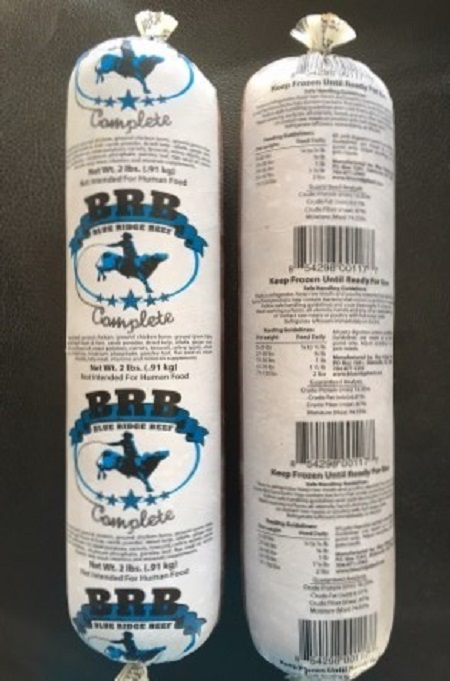
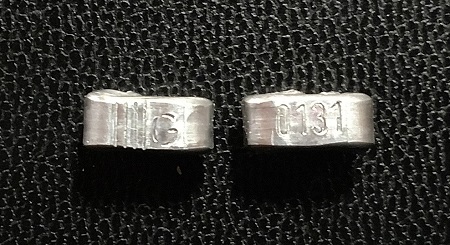
The affected product is sold in two pound chubs that are frozenand are distinguished by the manufacturing codes:

  • BRB Complete
  • Lot #: GA0131
  • Manufacturing date: 01/31/2018

The packaging of the product and the location of the lot number is pictured above along with the location of the clips on each end of the chub.

What to Do?

Consumers are encouraged to check the clips of product to ensure that they possess the affected lot # GA0131.

Those who have purchased the above lot of BRB Complete are urged to stop feeding them and return products to the place of purchase for a full refund or dispose of them immediately.

Those with questions can email the company at blueridgebeefga@yahoo.com.

This recall is being made with the knowledge of the US Food and Drug Administration.

U.S. citizens can report complaints about FDA-regulated pet food products by calling the consumer complaint coordinator in your area.

Or go to http://www.fda.gov/petfoodcomplaints.

Canadians can report any health or safety incidents related to the use of this product by filling out the Consumer Product Incident Report Form.

Get Dog Food Recall Alerts by Email

Get free dog food recall alerts sent to you by email. Subscribe to The Dog Food Advisor’s emergency recall notification system.

ooOOoo

As I always ask: “Please share this as far and wide as you can!”

Smucker Recalls Milo’s Kitchen Dog Treats

This was a dog food recall notice sent out on the 23rd March.

Dear Fellow Dog Lover,

Because you signed up on our website and asked to be notified, I’m sending you this special recall alert. If you no longer wish to receive these emails, please click the “unsubscribe” link at the bottom of this message.

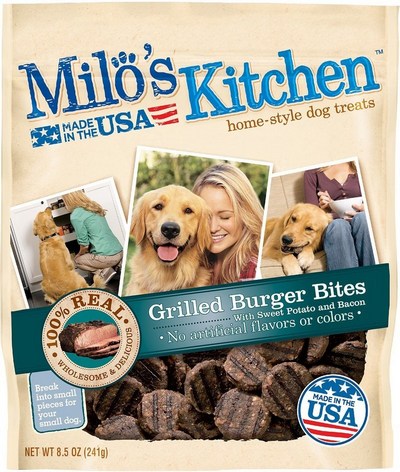
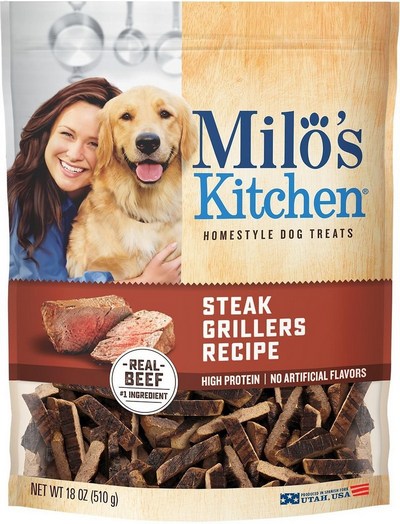
J. M. Smucker Company of Orrvile, OH, is recalling two varieties of its popular Milo’s Kitchen dog treats due to elevated levels of beef thyroid hormone.

To learn which products are affected, please visit the following link:

Smucker Recalls Milo’s Kitchen Dog Treats

Please share the news of this alert with other pet owners.

Mike Sagman, Editor
The Dog Food Advisor

P.S. Get instant access to a list of The Dog Food Advisor’s most recommended dog food brands. Click here for details.

If you go to that link then you will read this:

ooOOoo

Smucker Recalls Milo’s Kitchen Dog Treats

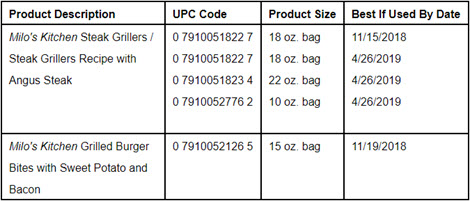
March 22, 2018 — The J.M. Smucker Company has announced a limited voluntary recall of specific lots of two varieties of Milo’s Kitchen dog treats, distributed nationally, because the products potentially contain elevated levels of beef thyroid hormone.

What’s Recalled?

The affected products include the following items and lots:
About Elevated Thyroid Hormone

Dogs consuming high levels of beef thyroid hormone may exhibit symptoms such as increased thirst and urination, weight loss, increased heart rate and restlessness.

These symptoms may resolve when the consumption of these levels is discontinued.

However, with prolonged consumption these symptoms may increase in severity and may include vomiting, diarrhea, and rapid or labored breathing.

Should these symptoms occur, we recommend pet owners contact their veterinarian immediately.

About the Recall

The FDA informed Smucker of three illness reports and the company immediately initiated a voluntary recall of the limited, impacted production.

No other Milo’s Kitchen dog treats, or any other product manufactured by The J.M. Smucker Company, are impacted.

The voluntary recall is being conducted in cooperation with the U.S. Food and Drug Administration.

What to Do?

Consumers who have purchased the specific lots of product listed above should stop feeding it to their dogs.

If consumers have questions or would like to receive a refund or coupon for replacement product, they should call the company at 888-569-6767, Monday through Friday, between 9:00 AM and 5:00 PM ET or email us by completing this form.

U.S. citizens can report complaints about FDA-regulated pet food products by calling the consumer complaint coordinator in your area.

Or go to http://www.fda.gov/petfoodcomplaints.

Canadians can report any health or safety incidents related to the use of this product by filling out the Consumer Product Incident Report Form.

Get Dog Food Recall Alerts by Email

Get free dog food recall alerts sent to you by email. Subscribe to The Dog Food Advisor’s emergency recall notification system.

ooOOoo

As always gets said, do please share this as best you can. Not just this one but the further one that is being republished tomorrow!

Things!

And I am not speaking of things that go bump in the night!

I switched from being a Microsoft Windows user to a Mac some time ago.

Apple products are not the cheapest by a very long shot but their operating systems are fabulous. So it was natural to follow-up having an iMac by getting myself an iPAD.

Not too many months ago I came across an application for the Apple Mac and iPAD that is called Things. As the website explains:

Things is the award-winning personal task manager that helps you achieve your goals.

This all-new version has been rethought from the ground up: it’s got an all-new design, delightful new interactions, and powerful new features.

I started off getting to know the app on the Mac and very quickly found it so useful and with such a clear and intuitive ‘user interface’ that I downloaded the version for the iPAD.

Here’s the little intro video that is on the Things website (and, please, understand that this review of this app is purely because of my own personal experience and has no connection whatsoever with the firm).

So if you are finding that keeping track of your to-do lists is becoming a bit of a headache and you are a MAC or iOS user, as in Apple MAC, iPad, iPhone or Apple Watch, then I really do recommend taking a closer look. Done so easily by looking at the features in the all-new Things!

Plus, the Things team offer great support!

For as Henry Ford is reputed to have said: “Anyone who stops learning is old, whether at twenty or eighty. Anyone who keeps learning stays young. The greatest thing in life is to keep your mind young.” (Thanks BrainyQuote.)

UPDATE: In the last 72 hours I received a newly-ordered iPhone and Apple Watch. The iPhone has had the Things 3 application installed upon it and, hey presto!, my watch now reminds me of the things coming up; even when the phone is some distance away from where I am. Plus it does tell the time rather accurately!!