It’s all too easy to forget that a dog can’t cope with hot weather.
As in too hot. Especially in a car!
I want to republish a post that appeared on The Dodo blog site recently. It is about a dog trapped in a car when it was far too hot.
ooOOoo
Guy Sees Puppy In Hot Car And Realizes What He Has To Do
Photo Credit: Jason Minson
Jason Minson, an Army veteran who runs a landscaping business, was out on a job in Norfolk, Virginia, on Tuesday when the first of several unusual things happened.
Minson was inspecting a tree in a yard when he heard a bang on the street.
When he went to check, he realized that a car driving by had bumped another car parked on the street. If that hadn’t happened, Minson probably never would have approached the parked car and discovered what was inside.
A black Labrador puppy was sprawled out on the floor of the vehicle — the noise and shudder seemed to have woken him up for a moment.
And he was incessantly panting.
“It was the kind of panting that was the last effort a dog does to try to cool himself off,” Minson told The Dodo.
Photo Credit: Jason Minson
Minson immediately called 911.
The police dispatched a unit to come help the dog — but they also informed Minson that breaking the window of the car to free the dog is a crime. (The law varies depending where you are.)
Minson watched the panting puppy from behind the pane of glass. He brought one bottle of water to the sliver of opened window and the dog jumped up on the seat and started drinking from it.
The dog went through the whole bottle. And then another.
“I’m usually a pretty cool, level-headed person but I was kind of fed up,” Minson said.
Photo Credit: Jason Minson
An animal control officer arrived and she started to try to pry the door open, but it wasn’t working. And nearly 20 minutes had passed since Minson had found the dog — and he was worried they were already out of time.
“The dog had laid back down on the floor of the car and wasn’t panting as quickly,” Minson said.
“I honestly didn’t think this pup was going to make it,” Minson wrote.
That’s when he took matters into his own hands.
“Charge me,” he can be heard saying in one of the videos he shot, “I don’t give a sh*t at this point.”
Using the baton from the animal control officer, Minson smashed the window and opened the door.
The animal control officer rushed the dog over to her van and took him to the vet for urgent care. And the owner of the dog was charged by the police. Minson received a call from the police, too — but to be a witness at the hearing about the incident.
The following day, Minson went to visit the pup at the facility where he’s recovering. Already, the dog seemed to be much stronger.
Photo Credit: Jason Minson
Minson, who has a Great Dane, hopes that if someone saw his dog in trouble in any way that they would do something about it.
“This is REAL talk people,” Minson wrote on Facebook after the dog was saved. “It’s hot out and if you leave an animal in your car [he’s] going to die from the heat … Take care of your fur babies.”
ooOOoo
I can’t think of a more dramatic way of telling you about the perils of dogs in cars in hot weather!
This was read quickly towards the end of the day, as in yesterday, but I thought it well worthwhile rescheduling my doggie article until Saturday and putting this in for today.
Later on yesterday it was read more thoroughly and it is full of fascinating information such as the weight of meteorites that fall onto Planet Earth each day. I wasn’t aware of that.
Anyway, hope you too find it of interest.
ooOOoo
The tell-tale clue to how meteorites were made, at the birth of the solar system
Assistant Professor of Earth and Environmental Sciences, Wesleyan University
June 6th, 2019.
April 26, 1803 was an unusual day in the small town of L’Aigle in Normandy, France – it rained rocks.
Over 3,000 of them fell out of the sky. Fortunately no one was injured. The French Academy of Sciences investigated and proclaimed, based on many eyewitness stories and the unusual look of the rocks, that they had come from space.
The Earth is pummeled with rocks incessantly as it orbits the Sun, adding around 50 tons to our planet’s mass every day. Meteorites, as these rocks are called, are easy to find in deserts and on the ice plains of Antarctica, where they stick out like a sore thumb. They can even land in backyards, treasures hidden among ordinary terrestrial rocks. Amateurs and professionals collect meteorites, and the more interesting ones make it to museums and laboratories around the world for display and study. They are also bought and sold on eBay.
Despite decades of intense study by thousands of scientists, there is no general consensus on how most meteorites formed. As an astronomer and a geologist, we have recently developed a new theory of what happened during the formation of the solar system to create these valuable relics of our past. Since planets form out of collisions of these first rocks, this is an important part of the history of the Earth.
This meteor crater in Arizona was created 50,000 years ago when an iron meteorite struck the Earth. It is about one mile across. W. Herbst, CC BY-SA
The mysterious chondrules
Drew Barringer (left), owner of Arizona meteor crater, his wife, Clare Schneider, and author William Herbst in the Van Vleck Observatory Library of Wesleyan University, where an iron meteorite from the crater is on display. W. Herbst
About 10% of meteorites are pure iron. These form through a multi-step process in which a large molten asteroid has enough gravity to cause iron to sink to its center. This builds an iron core just like the Earth’s. After this asteroid solidifies, it can be shattered into meteorites by collisions with other objects. Iron meteorites are as old as the solar system itself, proving that large asteroids formed quickly and fully molten ones were once abundant.
The other 90% of meteorites are called “chondrites” because they are full of mysterious, tiny spheres of rock known as “chondrules.” No terrestrial rock has anything like a chondrule inside it. It is clear that chondrules formed in space during a brief period of intense heating when temperatures reached the melting point of rock, around 3,000 degrees Fahrenheit, for less than an hour. What could possibly account for that?
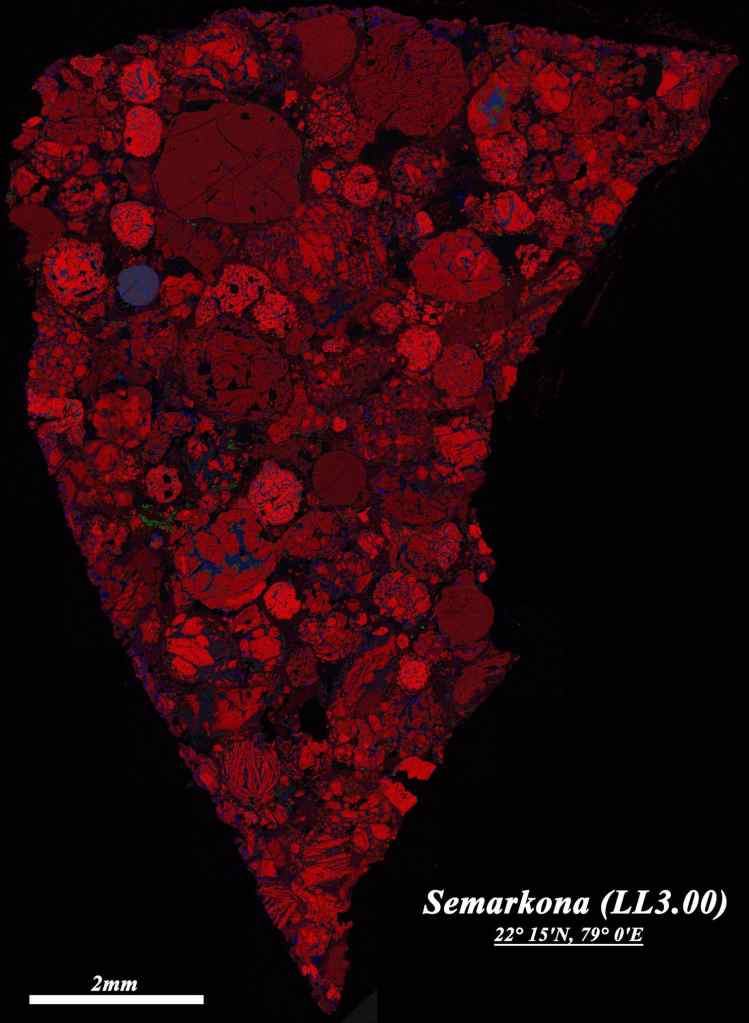
A closeup of the Semarkona meteorite showing dozens of chondrules. Kenichi Abe
Researchers have come up with many hypotheses through the last 40 years. But no consensus has been reached on how this brief flash of heating happened.
The chondrule problem is so famously difficult and contentious that when we announced to colleagues a few years ago that we were working on it, their reaction was to smile, shake their heads and offer their condolences. Now that we have proposed a solution we are preparing for a more critical response, which is fine, because that’s the way science advances.
The flyby model
Our idea is quite simple. Radioactive dating of hundreds of chondrules shows that they formed between 1.8 and 4 million years after the beginning of the solar system – some 4.6 billion years ago. During this time, fully molten asteroids, the parent bodies of the iron meteorites, were abundant. Volcanic eruptions on these asteroids released tremendous amounts of heat into the space around them. Any smaller objects passing by during an eruption would experience a short, intense blast of heat.
To test our hypothesis, we split up the challenge. The astronomer, Herbst, crunched the numbers to determine how much heating was necessary and for how long to create chondrules. Then the geologist, Greenwood, used a furnace in our lab at Wesleyan to recreate the predicted conditions and see if we could make our own chondrules.
Laboratory technician Jim Zareski (top) loads a programmable furnace as co-author Jim Greenwood looks on, in his laboratory at Wesleyan University. This is where the synthetic chondrules are made. W. Herbst
The experiments turned out to be quite successful.
We put some fine dust from Earth rocks with compositions resembling space dust into a small capsule, placed it in our furnace and cycled the temperature through the predicted range. Out came a nice-looking synthetic chondrule. Case closed? Not so fast.
Two problems emerged with our model. In the first place, we had ignored the bigger issue of how chondrules came to be part of the whole meteorite. What is their relationship to the stuff between chondrules – called matrix? In addition, our model seemed a bit too chancy to us. Only a small fraction of primitive matter will be heated in the way we proposed. Would it be enough to account for all those chondrule-packed meteorites hitting the Earth?
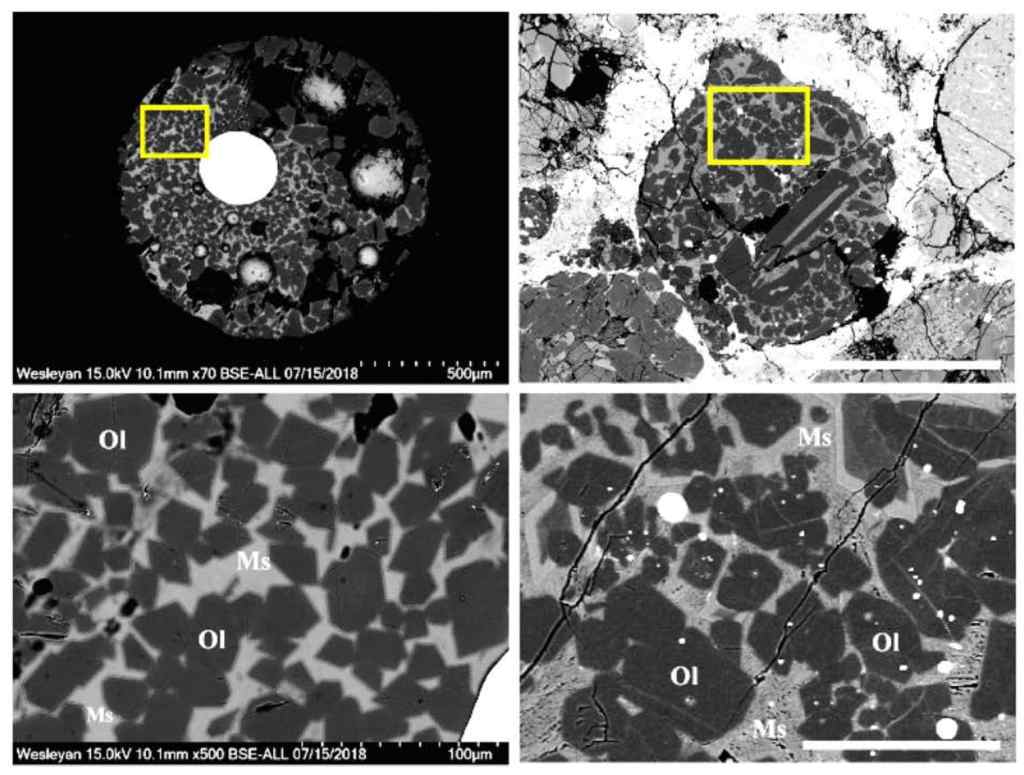
A comparison of a synthetic chondrule (left) made in the Wesleyan lab with a heating curve from the flyby model, with an actual chondrule (right) from the Semarkona meteorite. The crystal structure is quite similar, as shown in the enlargements (bottom row). J. Greenwood
Making whole meteorites
To address these issues, we extended our initial model to consider flyby heating of a larger object, up to a few miles across. As this material approaches a hot asteroid, parts of it will vaporize like a comet, resulting in an atmosphere rich in oxygen and other volatile elements. This turns out to be just the kind of atmosphere in which chondrules form, based on previous detailed chemical studies.
We also expect the heat and gas pressure to harden the flyby object into a whole meteorite through a process known as hot isostatic pressing, which is used commercially to make metal alloys. As the chondrules melt into little spheres, they will release gas to the matrix, which traps those elements as the meteorite hardens. If chondrules and chondrites form together in this manner, we expect the matrix to be enhanced in exactly the same elements that the chondrules are depleted. This phenomenon, known as complementarity, has, in fact, been observed for decades, and our model provides a plausible explanation for it.
The authors’ model for forming chondrules. A small piece of rock (right) — a few miles across or less — swings close to a large hot asteroid erupting lava at its surface. Infrared radiation from the hot lava briefly raises the temperature on the small piece of rock high enough to form chondrules and harden part of that object into a meteorite. W. Herbst/Icarus
Perhaps the most novel feature of our model is that it links chondrule formation directly to the hardening of meteorites. Since only well-hardened objects from space can make it through the Earth’s atmosphere, we would expect the meteorites in our museums to be full of chondrules, as they are. But hardened meteorites full of chondrules would be the exception, not the rule, in space, since they form by a relatively chancy process – the hot flyby. We should know soon enough if this idea holds water, since it predicts that chondrules will be rare on asteroids. Both Japan and the United States have ongoing missions to nearby asteroids that will return samples over the next few years.
If those asteroids are full of chondrules, like the hardened meteorites that make it to the Earth’s surface, then our model can be discarded and the search for a solution to the famous chondrule problem can go on. If, on the other hand, chondrules are rare on asteroids, then the flyby model will have passed an important test.
We took a rafting trip down the Rogue River yesterday (the 4th) and when I have finished transferring the photographs from my iPhone to my computer I will write a post on the journey.
But for today’s post I want to republish an item that appeared also yesterday in EarthSky.
“Mud ball” meteorites – full of clays, organics and water – are unique among space rocks. And a lot of them fell in April 2019 on a small town in Costa Rica, much to the delight of scientists.
This meteorite from the fall at Aguas Zarcas, Costa Rica, in April hit a doghouse. Luckily, the dog – Rocky – was unharmed. Image via Michael Farmer/ASU.
Meteorite falls on Earth are fairly common, but not all meteorites are the same. Some of them are “mud balls,” rich in clays, organic compounds and water-bearing minerals, called carbonaceous chondrites. They are of great interest to scientists, due to their unique composition, and now a bunch more prime specimens have been found, which rained down after a large fireball was seen over Aguas Zarcas, a small town in Costa Rica, on April 23, 2019.
The fireball was a meteor, or space rock, entering the Earth’s atmosphere that broke apart into hundreds of smaller pieces. When the pieces of this rock hit the ground, their name changed to meteorite. One meteorite fragment weighed about two pounds and smashed through the roof of a house, destroying the owner’s dining table. Another one crashed through the roof of a dog house, narrowly missing a sleeping dog. Close calls!
The doghouse with the hole in its roof from the April 2019 meteorite in Costa Rica. The dog, Rocky, was sleeping in the doghouse at the time; he was unharmed, but probably surprised! Image via Michael Farmer/ASU.
Several of the meteorites were collected and sent to Arizona State University (ASU) for study, donated by meteorite collector Michael Farmer. ASU will also be able to purchase additional meteorites from the fall, thanks to a private donor. This is the first time in 50 years that the university has had a chance to analyze such pristine samples of extraterrestrial mud balls. As Laurence Garvie, a research professor at ASU and a curator for its Center for Meteorite Studies, said:
Many carbonaceous chondrites are mud balls that are between 80 and 95 percent clay. Clays are important because water is an integral part of their structure. These had to be collected quickly and before they got rained on. Because they are mostly clay, as soon as these types of meteorites get wet, they fall apart.
Luckily, the researchers were able to collect their samples before it rained again, and they got a nice little haul, too, about 55 pounds (25 kilograms) of the precious space rocks.
A composite element map from one of the meteorites showing the distribution of different minerals. Orange-yellow colors show tochilinite, deep-blue colors represent olivine, and red colors are pentlandite and pyrrhotite. Image via ASU.
Analysis of the meteorites was carried out at ASU’s campus in Tempe, Arizona. According to Garvie:
I was in the lab by 5 a.m. the next morning after picking up the samples to get them ready for the initial analyses. Classification of new meteorites can be like a race with other institutions, and I needed ASU to be first so that we’ll have the recognition of being the collection that holds and curates the type specimen material.
Air-sensitive meteorites like these are kept in special nitrogen cabinets. The nitrogen gas helps to preserve the meteorites, which can degrade easily due to their composition. As Garvie explained:
If you left this carbonaceous chondrite in the air, it would lose some of its extraterrestrial affinities. These meteorites have to be curated in a way that they can be used for current and future research, and we have that ability here at ASU.
This mud ball meteorite fragment from April’s meteorite fall in Aguas Zarcas, Costa Rica, looks a bit like an arrowhead. Image via ASU.
The classification of these meteorites is part of a broader international classification effort. Garvie is also working with Karen Ziegler from the Institute of Meteoritics at the University of New Mexico. They studied the oxygen isotopes of the meteorites, to determine how similar they are to other carbonaceous chondrites.
Sandra Pizzarello, an organic chemist from ASU’s School of Molecular Sciences, is also involved in the studies, focusing on the organic content of the meteorites. These kinds of organics could have provided the material needed for life to begin on Earth.
Additional scientific analysis will follow later, but first the meteorites need to be approved, classified and named by The Meteoritical Society‘s nomenclature committee. This group of 12 scientists is responsible for approving all meteorite samples for study.
These new meteorite samples are currently on display at ASU’s Tempe campus in the Center for Meteorite Studies collection.
So, why are mud ball carbonaceous chondrite meteorites so significant?
They are thought to originate from asteroids that are leftovers from early planetesimals, planets that started to form in the early solar system billions of years ago but now no longer exist. Those planets had organic materials and water, making them places where the chemical precursors to life could have started. In the case of the asteroid that these new meteorites originated from, Garvie said:
It formed in an environment free of life, then was preserved in the cold and vacuum of space for 4.56 billion years, and then dropped in Costa Rica last week.
Carbonaceous chondrites are relatively rare among meteorites but are some of the most sought-after by researchers because they contain the best-preserved clues to the origin of the solar system. This new meteorite represents one of the most scientifically significant additions to our wonderful collection in recent years.
Because these meteorites contain so much mineral-bound water, they could also be useful in learning how water can be extracted from asteroids, a great resource for future astronauts. According to Garvie:
Having this meteorite in our lab gives us the ability, with further analysis, to ultimately develop technologies to extract water from asteroids in space.
Location of Aguas Zarcas in Costa Rica. Image via Google Maps.
The last time a carbonaceous chondrite meteorite fall similar to this one occurred was in 1969 near Murchison, Australia. Those meteorites were curated by another ASU professor and founding director of ASU’s Center for Meteorite Studies, Carleton Moore.
The meteorites in Aguas Zarcas have also been found to be similar in composition to asteroid Bennu, now being explored by NASA’s OSIRIS-REx spacecraft. Bennu is thought to be a remnant carbonaceous chondrite planetesimal. OSIRIS-REx is carrying ASU’s Phil Christensen-designed Thermal Emissions Spectrometer (OTES) instrument, which is being used to make mineral and temperature maps of the asteroid.
Garvie and other scientists will be studying these mud ball meteorites for years to come, unlocking more secrets as to how our solar system formed and evolved, and how the ingredients of life originated and were spread throughout the solar system, including to Earth.
Bottom line: This new meteorite fall in Costa Rica has provided scientists with a great opportunity to study multiple mud ball meteorites, one of the most unusual kinds of meteorites known to exist, and one that could help answer the question of how life started on Earth.
I don’t know about you but I found this very interesting indeed. I guess I hadn’t looked at meteorites as different entities, depending on the source, before.
Fascinating!
Must repeat that closing paragraph again: “Garvie and other scientists will be studying these mud ball meteorites for years to come, unlocking more secrets as to how our solar system formed and evolved, and how the ingredients of life originated and were spread throughout the solar system, including to Earth.”
I am a member of AAAS, the American Association for the Advancement of Science, and pulled a story from their Science journal and to my amazement found that I did this nearly a year ago.
The article, by Linda Goodman and Elinor K. Karlsson, is unavailable for complete republishing owing to copyright.
But on the AAAS website there is a summary, as follows:
Summary
Few traces remain of the domesticated dogs that populated the Americas before the arrival of Europeans in the 15th century. On page 81 of this issue, Ní Leathlobhair et al. (1) shed light on the origins of the elusive precontact dog population through genetic analysis of ancient and modern dogs. Building on earlier work, they show that American dogs alive today have almost no ancestry from precontact dogs, a monophyletic lineage descended from Arctic dogs that accompanied human migrations from Asia. Instead, the authors found that their closest remaining relative is a global transmissible cancer carrying the DNA of a long-deceased dog. It remains unclear why precontact dogs survived and thrived for thousands of years in the Americas only to swiftly and almost completely disappear with the arrival of Europeans.
From the article I would add:
It is unclear why there is so little evidence today of this thriving precontact dog population. Early European colonists may have discouraged the sale and breeding of native dogs, or even actively persecuted them (10). Yet, cultural preferences alone seem insufficient to explain their rapid decline. Most dogs worldwide are free-breeding scavengers, with minimal human control and high reproductive rates (11); native American dogs were likely similar.
There is a chart in the same article that shows the first human sites in the Americas were about 15,000 years ago with the oldest dog remains, also in America, being about 10,000 years ago.
smithsonian.com
May 17, 2019
Smushed-up faces are what make certain dog breeds, like French and English bulldogs or pugs, so ugly-cute. But those good looks come with a cost. Many dogs in these breeds suffer from a disease called Brachycephalic Obstructive Airway Syndrome (BOAS). The compact architecture of their skull results in deformation, which make their nostrils or soft palate too small, obstructing airflow and leaving the pups gasping for breath. Researchers long thought that the main cause was their shortened faces. But genes found in another breed suggest that the shortness of breath might be in their DNA, according to a new study published in the journal PLOS Genetics.
Ed Cara at Gizmodo reports that veterinarians began to notice that another small breed of dog, the Norwich terrier, was increasingly coming down with similar respiratory symptoms, a disease called upper airway obstructive syndrome. Unlike flat-faced pugs and bulldogs, however, the Norwich—bred for chasing rodents—has a nice, proportional skull. That got study author Jeffrey Schoenebeck, a veterinary scientist at the University of Edinburgh, wondering if the breathing problems in all the small dogs were genetic.
“That made us wonder if there was something similar shared across these different breeds, or if we were seeing two different diseases that just looked very similar,” he says.
Schoenebeck and his team decided to dig into the terrier’s DNA to find out. The team assessed 401 Norwich terriers for signs of the airway syndrome and also examined their genomes. Cassie Martin at Science News reports the researchers discovered one gene mutation in particular, ADAMTS3, was associated with the breathing disorder. Dogs with two copies of the mutation showed signs of fluid retention and swelling around the lungs. They had worse breathing scores than dogs with just one copy of the mutation or the normal gene.
When the team examined the genome of bulldogs and pugs, they also found that ADAMTS3 was common, meaning their funky faces might not be the only cause of BOAS.
“BOAS is a complex disease. Although skull shape remains an important risk factor, our study suggests that the status of ADAMTS3 should be considered as well,” Schoenebeck says in a press release. “More studies are needed to dissect the complex nature of this devastating disease.”
Cara reports that Norwich terrier breeders are already inadvertently combating the mutation. In Switzerland, Schoenebeck’s team has been working with breeders to give dogs breathing tests, identifying pups likely to develop the disease. As a result, the younger generation of terriers is less like to develop the disease than older dogs.
“In the 90s, something like 80 percent of the Norwich terriers that came into their clinic had poor breathing and this mutation,” Schoenebeck tells Cara. “But it’s decreasing further and further over time. They didn’t know it at the time, but they were actually selecting against this thing that we think is causing this disease.”
The genetic finding means that researchers can now screen directly for the mutation, and perhaps rid the terrier population of the disease.
The problem in flat-faced breeds may not be quite as simple to deal with. Wonky skull shape still makes the risk of developing BOAS higher, and the gene mutation adds to that risk. The team needs to do a similar study with bulldogs to figure out how much of their breathing problems come from their genes and how much comes from their cute little smushed-up skulls.
Smushed-up faces are what make certain dog breeds, like French and English bulldogs and pugs, so ugly-cute. But those good looks come with a cost. Many dogs in these breeds suffer from a disease called Brachycephalic Obstructive Airway Syndrome (BOAS). The compact architecture of their skull results in deformation, that make the nostrils or soft palate too small, obstructing airflow and leaving the pups gasping for breath. Researcher long thought that the main cause was their shortened faces. But genes found in another breed suggest that the shortness of breath might be in their DNA.
Ed Cara at Gizmodo reports that veterinarians began to notice that another small breed of dog, the Norwich Terrier, was increasingly coming down with similar respiratory symptoms, a disease called Upper Airway Syndrome. Unlike flat-faced pugs and bulldogs, however, the Norwich, bred for chasing rodents, has a nice, proportional skull. That got Jeffrey Schoenebeck of the Roslin Institute at the University of Edinburghand and lead author of the study in the journal PLOS Geneticswondering if the breathing problems in all the small dogs were genetic.
“That made us wonder if there was something similar shared across these different breeds, or if we were seeing two different diseases that just looked very similar,” he says.
Schoenebeck and his team decided to dig into the terrier’s DNA to find out. The team assessed 401 Norwich Terriers for signs of the airway syndrome and also examined their genomes. Cassie Martin at Science Newsreports the researchers discovered one gene mutation in particular, ADAMTS3, was associated with the breathing disorder. Dogs with two copies of the mutation showed signs of fluid retention and swelling around the lungs. They had worse breathing scores than dogs with just one copy of the mutation or the normal gene.
When the team examined the genome of bulldogs and pugs, they also found that ADAMTS3 was common, meaning their funky faces might not be the only cause of BOAS.
“BOAS is a complex disease. Although skull shape remains an important risk factor, our study suggests that the status of ADAMTS3 should be considered as well,” study leader Jeffrey Schoenebeck says in a press release. “More studies are needed to dissect the complex nature of this devastating disease.”
Cara reports that Norwich Terrier breeders are already inadvertently combating the mutation. In Switzerland, Schoenebeck’s co-authors have been working with breeders to give dogs breathing tests, identifying doggos likely to develop the disease. As a result, the younger generation of terriers is less like to develop the disease than older dogs.
“In the 90s, something like 80 percent of the Norwich Terriers that came into their clinic had poor breathing and this mutation,” Schoenebeck tells Cara. “But it’s decreasing further and further over time. They didn’t know it at the time, but they were actually selecting against this thing that we think is causing this disease.”
The genetic finding means that researchers can now screen directly for the mutation, and perhaps rid the terrier population of the disease.
The problem in flat-faced breeds may not be quite as simple to deal with. Wonky skull shape still makes the risk of developing BOAS higher, and the gene mutation adds to that risk. The team needs to do a similar study with bulldogs to figure out how much of their breathing problems come from their genes and how much comes from their cute little smushed-up skulls.
Jason Daley is a Madison, Wisconsin-based writer specializing in natural history, science, travel, and the environment. His work has appeared in Discover, Popular Science, Outside, Men’s Journal, and other magazines.
ooOOoo
How great it would be if the problem facing these flat-faced breeds was slowly done away with.
I first received notice of this story from a news release put by Uppsala University. That news release is what I publish as it is a short-form of the full scientific report. But I will also include an extract of the report as there may be some of you that will want to go further into this.
ooOOoo
Owning a dog is influenced by our genetic make-up
NEWS RELEASE
UPPSALA UNIVERSITY
A team of Swedish and British scientists have studied the heritability of dog ownership using information from 35,035 twin pairs from the Swedish Twin Registry. The new study suggests that genetic variation explains more than half of the variation in dog ownership, implying that the choice of getting a dog is heavily influenced by an individual’s genetic make-up.
Dogs were the first domesticated animal and have had a close relationship with humans for at least 15,000 years. Today, dogs are common pets in our society and are considered to increase the well-being and health of their owners. The team compared the genetic make-up of twins (using the Swedish Twin Registry – the largest of its kind in the world) with dog ownership. The results are published for the first time in Scientific Reports. The goal was to determine whether dog ownership has a heritable component.
“We were surprised to see that a person’s genetic make-up appears to be a significant influence in whether they own a dog. As such, these findings have major implications in several different fields related to understanding dog-human interaction throughout history and in modern times. Although dogs and other pets are common household members across the globe, little is known how they impact our daily life and health. Perhaps some people have a higher innate propensity to care for a pet than others.” says Tove Fall, lead author of the study, and Professor in Molecular Epidemiology at the Department of Medical Sciences and the Science for Life Laboratory, Uppsala University.
Carri Westgarth, Lecturer in Human-Animal interaction at the University of Liverpool and co-author of the study, adds: “These findings are important as they suggest that supposed health benefits of owning a dog reported in some studies may be partly explained by different genetics of the people studied”.
Studying twins is a well-known method for disentangling the influences of environment and genes on our biology and behaviour. Because identical twins share their entire genome, and non-identical twins on average share only half of the genetic variation, comparisons of the within-pair concordance of dog ownership between groups can reveal whether genetics play a role in owning a dog. The researchers found concordance rates of dog ownership to be much larger in identical twins than in non-identical ones – supporting the view that genetics indeed plays a major role in the choice of owning a dog.
“These kind of twin studies cannot tell us exactly which genes are involved, but at least demonstrate for the first time that genetics and environment play about equal roles in determining dog ownership. The next obvious step is to try to identify which genetic variants affect this choice and how they relate to personality traits and other factors such as allergy” says Patrik Magnusson, senior author of the study and Associate Professor in Epidemiology at the Department of Medical Epidemiology and Biostatistics at Karolinska Insitutet, Sweden and Head of the Swedish Twin Registry.
“The study has major implications for understanding the deep and enigmatic history of dog domestication” says zooarchaeologist and co-author of the study Keith Dobney, Chair of Human Palaeoecology in the Department of Archaeology, Classics and Egyptology at the University of Liverpool. “Decades of archaeological research have helped us construct a better picture of where and when dogs entered into the human world, but modern and ancient genetic data are now allowing us to directly explore why and how?”
ooOOoo
Now here’s the full report as published by Nature.com. And below I present the Introduction.
ooOOoo
Evidence of large genetic influences on dog ownership in the Swedish Twin Registry has implications for understanding domestication and health associations
The relationship between humans and dogs is the longest of all the domestic animals, yet the origin and history of perhaps our most iconic companion animal remains an enigma, and a topic of much ongoing scientific debate1. Decades of archaeological and more recent genetic investigations across the world have so far failed to resolve the fundamental questions of where, when and why wolves formed the transformational partnership with humans that finally resulted in the first domestic dog.
Although recent claims for the existence of so-called “Palaeolithic dogs”2,3,4,5 as early as 30,000 years ago remain controversial6,7, there is incontrovertible evidence for the existence of domestic dogs in pre-farming hunter-gatherer societies in Europe at least 15,000 years ago, the Far East 12,500, and the Americas 10,000 years ago8,9,10.
Over the subsequent millennia this ‘special relationship’ developed apace throughout most cultures of the world and is as strong and complex today as it has ever been. Dogs have long been important as an extension to the human ‘toolkit’, assisting with various tasks such as hunting, herding, and protection, as well as for more social activities such as ritual and companionship. The diverse roles that dogs fulfilled most likely introduced a range of selective advantages to those human groups with domesticated dogs. The anthropologist Dr. Pat Shipman went so far as to suggest that the close connection between dogs, other animals and their domesticators had a significant and tangible influence on our bio-cultural history – the animal connection hypothesis11. A number of experimental studies demonstrate that the view of dogs and other animal stimuli influence human behavior and interest from early childhood onward implicating innate mechanisms12,13, whilst others conversely highlight innate adverse responses to spiders and snakes in humans, indicating the evolutionary benefits of avoiding snakes and spiders14.
Inspired by assumed physical and psychosocial benefits of dog ownership, pet dogs are now increasingly being used in interventions for the rehabilitation of prisoners15, in-patient care16 and during pediatric post-surgical care17. A large number of studies have shown dog owners to be more physically active18,19,20, leading to acquisition of a dog being recommended as an intervention to improve health. There is also evidence that dog-owners feel less lonely21 and have an improved perception of wellbeing, particularly with regard to single people and the elderly22,23,24. We have previously shown that dog ownership is associated with longevity25 and lower risk of childhood asthma26. However, there are studies showing no relation (or even an inverse one) between dog ownership and these health outcomes27,28,29. One of the important limitations of the available evidence regarding health effects of dog ownership is that it is uncertain whether health differences between dog owners and non-dog owners reflect effects of dog ownership itself, or underlying pre-existing differences in personality, health and genetics. Such factors may impact the choice to acquire a dog in adult life as well as health outcomes – although these factors are difficult to disentangle.
Previous research has indicated that exposure to pets during childhood is positively associated with more positive attitudes towards pets30 and ownership in adulthood31,32, but it is unclear if genetic differences between families contribute to this association. The heritability of a trait can be estimated from studies comparing concordance of the trait in monozygotic (MZ) and dizygotic twins (DZ) using structural equation modeling. These estimations rely on the underlying assumptions that MZ and DZ twin pairs share environment to a similar degree, that MZ twins share their entire genome, and that DZ twins on average share 50% of their segregating alleles33. A previous study of twin pairs aged 51–60 indicated that genetic factors account for up to 37% of the variation in the frequency of pet play and that less than 10% is attributable to the shared childhood environment34 indicating a strong contribution of genetic factors to the amount of playful interaction with pets.
Increased understanding of a potential genetic adaption towards dog ownership would support theories of co-evolution of humans and dogs and could also aid the understanding of differences in health outcomes today. However, there are no empirical data supporting a genetic contribution to dog ownership, likely due to lack of information on dog ownership in large twin cohorts. However, it is now possible to study this using register data in Sweden. It is mandatory by law that every dog in Sweden is registered with the Swedish Board of Agriculture. Moreover, all dogs sold with a certified pedigree are also registered with the Swedish Kennel Club. A survey conducted by Statistics Sweden in 2012 estimated that 83% (95% confidence interval (CI), 78–87) of dogs are registered in either or both of the two registers35. In this study, we aimed to estimate the heritability of dog ownership in the Swedish Twin Registry, the largest twin cohort in the world.
ooOOoo
If you wish to follow up the references that appear above then please go here.
Also if you wish to examine the Tables and Figure 1 that appear in the Results then you also need to go to the same place.
We like to think of our relationship with dogs as a moderately recent affair. Not the time since dogs and humans have mixed together, that was a very long time ago, but having a dog as a pet.
But even that view needs to be updated.
Try 4,000 years ago!
ooOOoo
New Study Looks at Why Neolithic Humans Buried Their Dogs With Them 4,000 Years Ago
Analysis of the remains of 26 dogs found near Barcelona suggest the dogs had a close relationship with ancient humans
Specimen of a dog skull ( Wagner Souza e Silva / Museum of Veterinary Anatomy FMVZ USP via Wikicommons under Creative Commons Attribution-Share Alike 4.0 International )
Humans have enjoyed a long history of canine companions. Even if it’s unclear exactly when dogs were first domesticated (and it may have happened more than once), archaeology offers some clues as to the nature of their relationship with humans.
The latest clue suggests that humans living in Southern Europe between 3,600 to 4,200 years ago cared for dogs enough to regularly share their gravesites with them. Barcelona-based researchers studied the remains of 26 dogs from four different archaeological sites on the northeastern Iberian Peninsula.
The dogs ranged in age from one month to six years old. Nearly all were buried in graves with or nearby humans. “The fact that these were buried near humans suggests there was an intention and a direct relation with death and the funerary ritual”, says lead author Silvia Albizuri, a zooarchaeologist with the University of Barcelona, in a press release.
To better understand the dogs’ relationship with the humans they joined in the grave, Albizuri and her colleagues analyzed isotopes in the bones. Studying isotopes—variants of the same chemical element with different numbers of neutrons, one of the building blocks of atoms—can reveal clues about diet because molecules from plants and animals come with different ratios of various isotopes. The analysis showed that very few of the dogs ate primarily meat-based diets. Most enjoyed a diet similar to humans, consuming grains like wheat as well as animal protein. Only in two puppies and two adult dogs did the samples suggest the diet was mainly vegetarian.
This indicates that the dogs lived on food fed to them by humans, the team reports in the Journal of Archaeological Science. “These data show a close coexistence between dogs and humans, and probably, a specific preparation of their nutrition, which is clear in the cases of a diet based on vegetables,” says study co-author Eulàlia Subirà, a biological anthropologist at the Autonomous University of Barcelona.
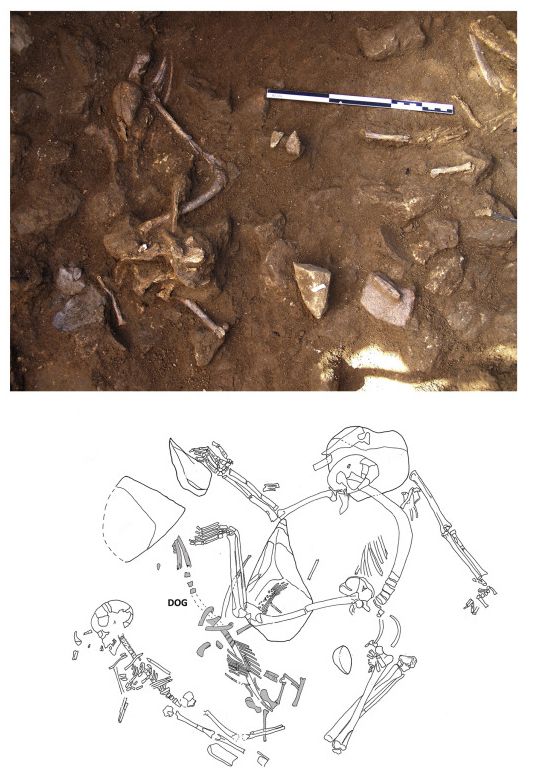
Top: remains of a dog found at the archeological site called La Serreta. Bottom: drawing of dog skeleton found between human skeletons in the necropolis Bòbila Madurell. (UB-UAB)
The archaeological sites all belong to people of the Yamnaya Culture, or Pit Grave Culture. These nomadic people swept into Europe from the steppes north of the Black and Caspian Seas. They kept cattle for milk production and sheep and spoke a language that linguists suspect gave rise to most of the languages spoken today in Europe and Asia as far as northern India.
The buried dogs aren’t the oldest found in a human grave. That distinction belongs to a puppy found in a 14,000-year-old grave in modern-day Germany. The care given to that puppy to nurse it through illness was particularly intriguing to the researchers who discovered it. “At least some Paleolithic humans regarded some of their dogs not merely materialistically, in terms of their utilitarian value, but already had a strong emotional bond with these animals,” Liane Giemsch, co-author on a paper about the discovery and curator at the Archäologisches Museum Frankfurt, told Mary Bates at National Geographic in 2018.
The fact that the researchers in the new study found so many dogs in the region they studied indicates that the practice of burying dogs with humans was common at the time, the late Copper Age through the early Bronze Age. Perhaps the canine companions helped herd or guard livestock. What is certain is that ancient humans found the animals to be important enough to stay close to even in death.
ooOOoo
That last sentence is precious. “What is certain is that ancient humans found the animals to be important enough to stay close to even in death.”
As I spoke about yesterday in my introduction, when my mother remarried my sister and I had a new man about the house, so to speak. He was Richard Mills.
I was 13 or thereabouts and already struggling with my school work (the result of my father’s sudden death). And ‘Dad’ as we called him was finding his feet in the strange world of going from having no children to instantly having two step children!
Anyway, Dad found a theme with me that I enjoyed: building a shortwave radio receiver. It was full of learning for me and over the years I became hooked on listening to radio stations both near and far transmitting in morse code. I also joined the Harrow Radio Society and went across to their weekly meetings by tube and bus. (Despite the Society no longer being at the Harrow address it is amazing that they are still going strong.)
It was also a time when there was a great deal of ‘radio surplus’ equipment going for next to nothing and I ‘upgraded’ to an R-1152 receiver.
War surplus R-1152 receiver.
In time I became sufficiently old to take driving lessons and pass my driving licence. I then got a secondhand car. It helped because then I could drive up to Bushey and spend Sunday mornings at the house of Ron Ray. Ron was a keen amateur. On Sunday mornings Ron had a small group of people who wanted to pass the morse code test and apply for a licence.
I was already a member of the RSGB, the Radio Society of Great Britain, and that surely encouraged me further to study for my amateur licence.
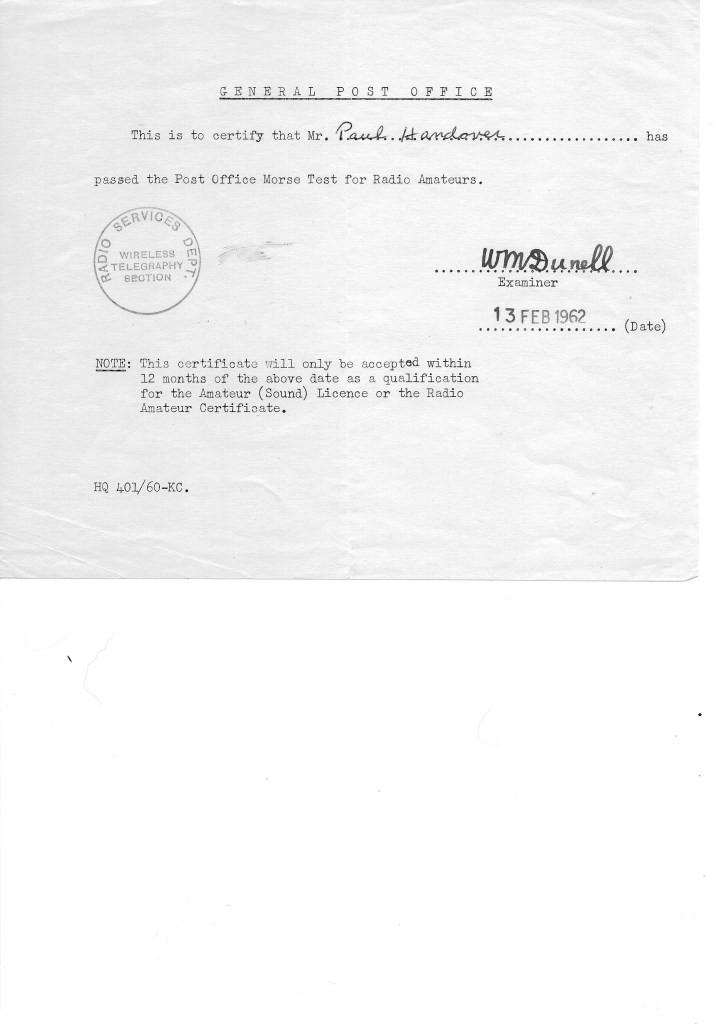
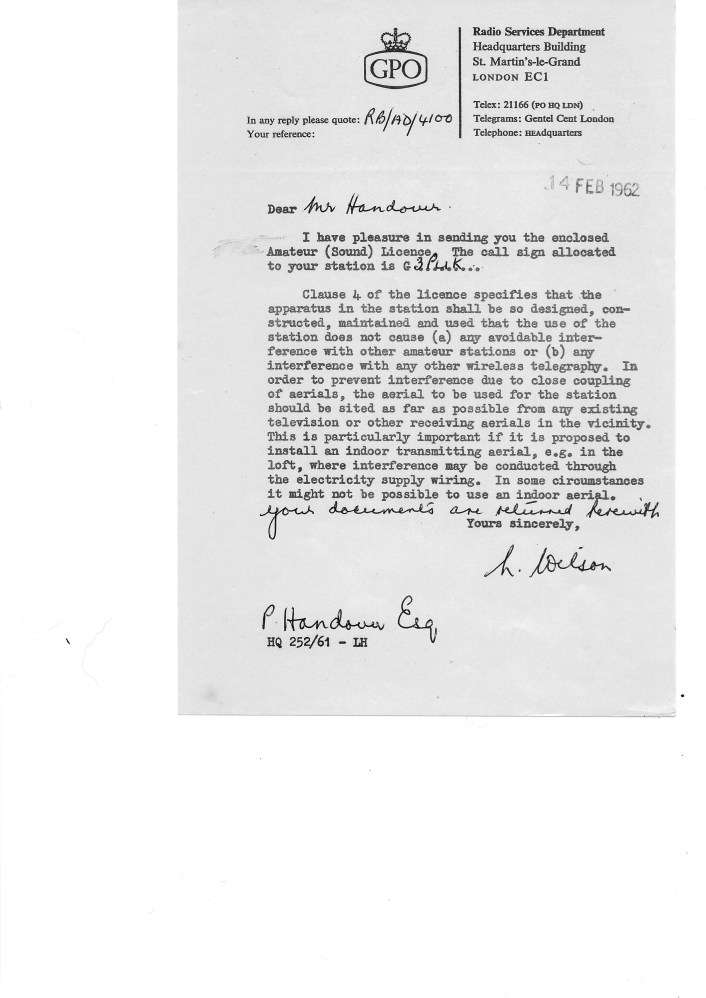
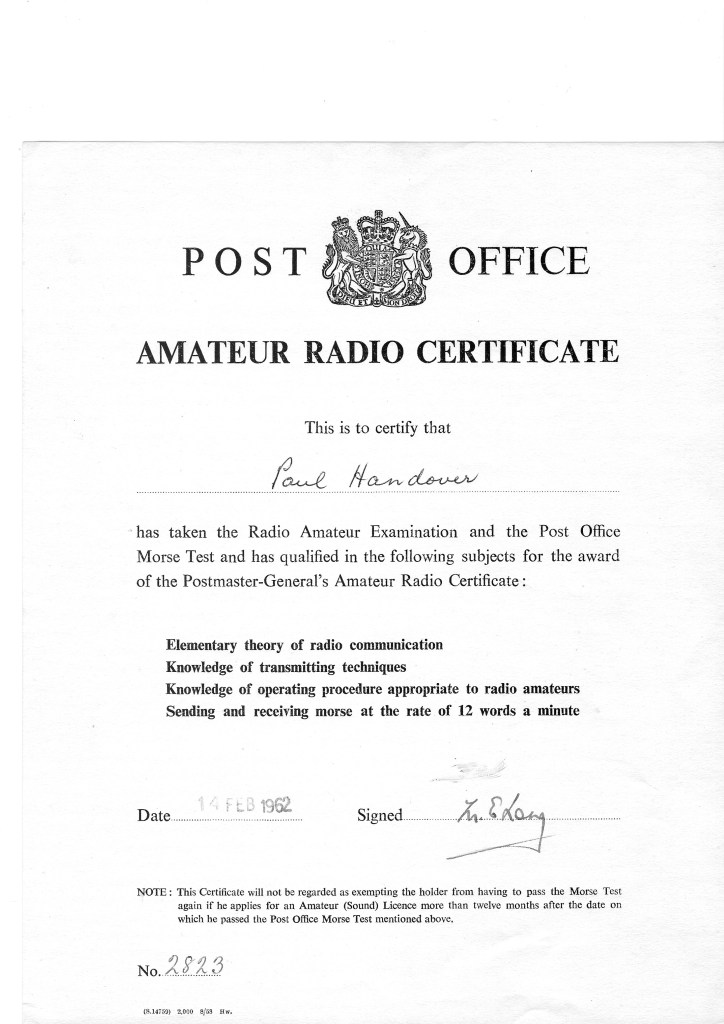
In time, I sat the exam and much to my amazement passed!
oooo
oooo
So that is the story of me and amateur radio.
Well, almost the full story.
In 1963 I volunteered for the Royal Naval Reserve, London Division. In time I was accepted and chose the join the radio branch, my G3PUK status coming in useful, because I reckoned that when we went to sea, on flat-bottomed minesweepers, it was better to be sick into a bucket between the knees than be sick on deck!
Two days of nostalgia follow! (You have been warned!)
As many of you already know, my father died fairly suddenly on December 20th, 1956. I had turned 12 some six weeks previously.
After about a year my mother remarried. His name was Richard Mills. Richard came to live at the house in Toley Avenue and had the unenviable task of taking on a new ‘son’ and ‘daughter’. (My sister, Elizabeth, some four years younger than I.)
Richard was a technical author in the newly-arrived electronics industry and one day he asked me if I would like to build a short-wave receiver. He coached me in the strange art of soldering wires and radio valves and other components and in the end I had a working receiver. That led, in turn, to me studying for an amateur radio licence. More of that tomorrow.
Simply elegant, Morse code marks 175 years and counting
The elegantly simple code works whether flashing a spotlight or blinking your eyes—or even tapping on a smartphone touchscreen
There’s still plenty of reason to know how to use this Morse telegraph key. (Jason Salmon/Shutterstock.com)
By Eddie King
Ph.D. Student in Electrical Engineering, University of South Carolina
May 21st, 2019
The first message sent by Morse code’s dots and dashes across a long distance traveled from Washington, D.C., to Baltimore on Friday, May 24, 1844 – 175 years ago. It signaled the first time in human history that complex thoughts could be communicated at long distances almost instantaneously. Until then, people had to have face-to-face conversations; send coded messages through drums, smoke signals and semaphore systems; or read printed words.
Thanks to Samuel F.B. Morse, communication changed rapidly, and has been changing ever faster since. He invented the electric telegraph in 1832. It took six more years for him to standardize a code for communicating over telegraph wires. In 1843, Congress gave him US$30,000 to string wires between the nation’s capital and nearby Baltimore. When the line was completed, he conducted a public demonstration of long-distance communication.
Morse wasn’t the only one working to develop a means of communicating over the telegraph, but his is the one that has survived. The wires, magnets and keys used in the initial demonstration have given way to smartphones’ on-screen keyboards, but Morse code has remained fundamentally the same, and is still – perhaps surprisingly – relevant in the 21st century. Although I have learned, and relearned, it many times as a Boy Scout, an amateur radio operator and a pilot, I continue to admire it and strive to master it.
Samuel F.B. Morse’s own handwritten record of the first Morse code message ever sent, on May 24, 1844. Library of Congress
Easy sending
Morse’s key insight in constructing the code was considering how frequently each letter is used in English. The most commonly used letters have shorter symbols: “E,” which appears most often, is signified by a single “dot.” By contrast, “Z,” the least used letter in English, was signified by the much longer and more complex “dot-dot-dot (pause) dot.”
In 1865, the International Telecommunications Union changed the code to account for different character frequencies in other languages. There have been other tweaks since, but “E” is still “dot,” though “Z” is now “dash-dash-dot-dot.”
The reference to letter frequency makes for extremely efficient communications: Simple words with common letters can be transmitted very quickly. Longer words can still be sent, but they take more time.
Going wireless
The communications system that Morse code was designed for – analogue connections over metal wires that carried a lot of interference and needed a clear on-off type signal to be heard – has evolved significantly.
The first big change came just a few decades after Morse’s demonstration. In the late 19th century, Guglielmo Marconi invented radio-telegraph equipment, which could send Morse code over radio waves, rather than wires.
The shipping industry loved this new way to communicate with ships at sea, either from ship to ship or to shore-based stations. By 1910, U.S. law required many passenger ships in U.S. waters to carry wireless sets for sending and receiving messages.
The arrow points at the chart label indicating the Morse code equivalent to the ‘BAL’ signal for a radio beacon near Baltimore. Edited screenshot of an FAA map, CC BY-ND
Aviators also use Morse code to identify automated navigational aids. These are radio beacons that help pilots follow routes, traveling from one transmitter to the next on aeronautical charts. They transmit their identifiers – such as “BAL” for Baltimore – in Morse code. Pilots often learn to recognize familiar-sounding patterns of beacons in areas they fly frequently.
There is a thriving community of amateur radio operators who treasure Morse code, too. Among amateur radio operators, Morse code is a cherished tradition tracing back to the earliest days of radio. Some of them may have begun in the Boy Scouts, which has made learning Morse variably optional or required over the years. The Federal Communications Commission used to require all licensed amateur radio operators to demonstrate proficiency in Morse code, but that ended in 2007. The FCC does still issue commercial licenses that require Morse proficiency, but no jobs require it anymore.
Blinking Morse
Because its signals are so simple – on or off, long or short – Morse code can also be used by flashing lights. Many navies around the world use blinker lights to communicate from ship to ship when they don’t want to use radios or when radio equipment breaks down. The U.S. Navy is actually testing a system that would let a user type words and convert it to blinker light. A receiver would read the flashes and convert it back to text.
Skills learned in the military helped an injured man communicate with his wife across a rocky beach using only his flashlight in 2017.
Other Morse messages
Perhaps the most notable modern use of Morse code was by Navy pilot Jeremiah Denton, while he was a prisoner of war in Vietnam. In 1966, about one year into a nearly eight-year imprisonment, Denton was forced by his North Vietnamese captors to participate in a video interview about his treatment. While the camera focused on his face, he blinked the Morse code symbols for “torture,” confirming for the first time U.S. fears about the treatment of service members held captive in North Vietnam.
Navy pilot Jeremiah Denton, a prisoner of war, blinks Morse code spelling out ‘torture’ during a forced interview with his captors.
There are still many ways people can learn Morse code, and practice using it, even online. In emergency situations, it can be the only mode of communications that will get through. Beyond that, there is an art to Morse code, a rhythmic, musical fluidity to the sound. Sending and receiving it can have a soothing or meditative feeling, too, as the person focuses on the flow of individual characters, words and sentences. Overall, sometimes the simplest tool is all that’s needed to accomplish the task.
ooOOoo
I do hope you read this article in full because it contains much interesting information. Many people will not have a clue about The Morse Code and, as you can see above, it is still relevant.
Finally, I can still remember the The Morse Code after all these years!
Eating Your Veggies Is a Better Way to Get Your Vitamins Than Taking Supplements, Study Shows
Vitamins in some supplements were actually harmful at high doses, while exceeding the daily nutritional limit in food didn’t show the same risk.
(barol16/istock)
By Jason Daley
smithsonian.com, April 15, 2019,
Dietary supplements, including daily vitamins, have been a part of life in the United States for decades. In fact, people spend $30 billion per year on various pills, powders, gummies and tinctures to help improve their health, boost their brain, lose weight, build muscle and strengthen their immune system.
But a new extensive study suggests many people may be better off spending all that disposable income at the farmer’s market or grocery store produce section to buy spinach, tomatoes and other vitamin-packed veggies instead, according to a paper published this week in the journal Annals of Internal Medicine.
Researchers analyzed data from 27,725 participants in the Centers for Disease Control’s National Health and Nutrition Examination Survey (NHANES). Each volunteer, all over the age of 20, logged what they ate for 24 hours and what supplements they took in the previous 30 days. The data was collected between 1999 and 2010.
Linda Carroll at NBC News reports that during the study’s six-year follow-up period, 3,613 participants died, including 945 from cardiovascular disease and 805 from cancer. Using that data, the study team found that getting enough vitamin K—found in leafy greens—and magnesium—found in legumes, nuts, whole grains, fish and meat—were associated with a lower mortality rate. Getting the recommended dose of vitamin K, zinc and vitamin A was linked to lower mortality rates associated with cardiovascular disease.
And it turned out that taking 1,000 milligrams of calcium per day in supplement form was associated with increased cancer risk, while getting excess calcium from food did not seem to increase those risks.
“Our results support the idea that, while supplement use contributes to an increased level of total nutrient intake, there are beneficial associations with nutrients from foods that aren’t seen with supplements,” Fang Fang Zhang of Tufts University, the study’s senior author, says in a statement. “This study also confirms the importance of identifying the nutrient source when evaluating mortality outcomes.”
At first glance, the data suggested that supplement users might have better outcomes than non-vitamin takers. But Beth Mole at Ars Technica reports that supplement users tend to be wealthier and more educated than non-users, smoke less, exercise more, and have an overall healthier diet. When those factors were accounted for, the benefits of supplements disappeared. (It’s possible that supplements are helpful for portions of the population that suffer from certain nutritional deficiencies.)
The study has some limitations. Mole reports that the NHANES data relies on participants self-reporting what they eat and what supplements they take, which means the data might not be entirely accurate. The study is observational, meaning any relationship between nutrients in food and certain diseases is merely an association and does not imply causation.
Still, the study’s overall message is that supplements are not a silver bullet for health.
“I don’t think you can undo the effect of a bad diet by taking supplements,” Rekha Kumar, an endocrinologist at NewYork-Presbyterian and Weill Cornell Medicine, who was not involved in the study tells NBC’s Carroll.
This isn’t the first study to question the power of nutritional supplements. A paper last year in the Journal of the American College of Cardiology found that using multivitamins did not provide any apparent benefits but did not cause any harm either.
In fact, taking some supplements have negative consequences. A 2011 study found that taking vitamin E, which was hypothesized to help prevent prostate cancer, actually increased the chances of developing the disease in men instead.
Zhang and her colleagues say that much more research needs to be undertaken to confirm and understand these findings since there are so many other factors that play a role in overall health.
ooOOoo
H’mmm. It would be a braver person than I to come off the range of supplements that I take. And we are vegan as well!