Category: Education

A complex relationship

Slowly getting back to normal!

And posts like this help.

ooOOoo

Wolves on Michigan’s Isle Royale reveal new info about predator-prey relationships

This we know: Top carnivores profoundly influence local ecosystems.

By STARRE VARTAN  October 26, 2018.

Dawn breaks over Moskey Basin, at Isle Royale National Park, Michigan. Canadian wolves colonized the island in 1949. (Photo: Steve Lagreca/Shutterstock)

The American people’s relationship with top predators — especially wolves — is complex and ever-evolving. About three decades ago, it was mostly just animal-rights groups and their supporters who fought for the wolves’ right to exist; they were often considered a nuisance. But now there’s plenty of scientific evidence proving what’s good for wolves is good for their prey, the plants those prey eat, and indeed, positively affects the entire ecosystem. That’s ultimately good for humans too — unless you’re competing with the wolves, like a rancher who grazes animals or a hunter who wants to shoot the same deer or moose that wolves need to eat. But at this point, even some ranchers and hunters have come over to the pro-predator side.

Much of that change in the perception of predators is down to studies that have proven how precisely cougars, wolves, bears, tigers, lions, bald eagles, alligators and other apex predators affect the land around them. None have been studied longer than the wolves and moose in Isle Royale National Park, a Guam-sized island in Lake Superior. For almost 60 years, the populations of these two groups have been tracked — as well as their effects on the plants and other animal communities on the island. (You can read the reports here, including the recent 59th annual report.)

As the video above explains, there used to be as many as 50 wolves on Isle Royale; however, that number has dwindled, mostly due to inbreeding that caused a debilitating spinal condition to proliferate among the too-closely-related wolves. Just 10 years ago, there were still around 30 wolves but by 2015, there were only three wolves left. Now, there are just two, a closely related male-female pair that probably won’t breed. (The female of the pair has aggressively fought back when the male attempted to breed with her.)

Already, the moose population on the island has boomed, “undoubtably because of lack of predation,” John Vucetich, a wildlife ecologist from Michigan Technological University told Science magazine, adding that the two remaining wolves are now “… swimming in moose.” Despite the wolves’ regular predation on moose, there’s been a 20 percent increase in moose in just one year, which scientists estimate is about five to 10 times higher than on mainland areas. Beaver populations have also risen sharply. There’s just not enough wolves to keep either population in check.

So what’s so bad about so many moose? Well, as most ungulates do, moose spend their days browsing on vegetation, so the more moose, the more food they need — and the plants on the island can only take so much nibbling. An aquatic plant, which was found in abundance just six years ago, is now only found in places where moose are not. Long-term, this means the island will soon run out of food to keep the ever-larger moose population alive, and many will starve once food becomes scarce. Previously, the wolves have kept moose populations low enough so they didn’t overeat the vegetation, keeping the system in balance.

A plan to rebalance the ecosystem
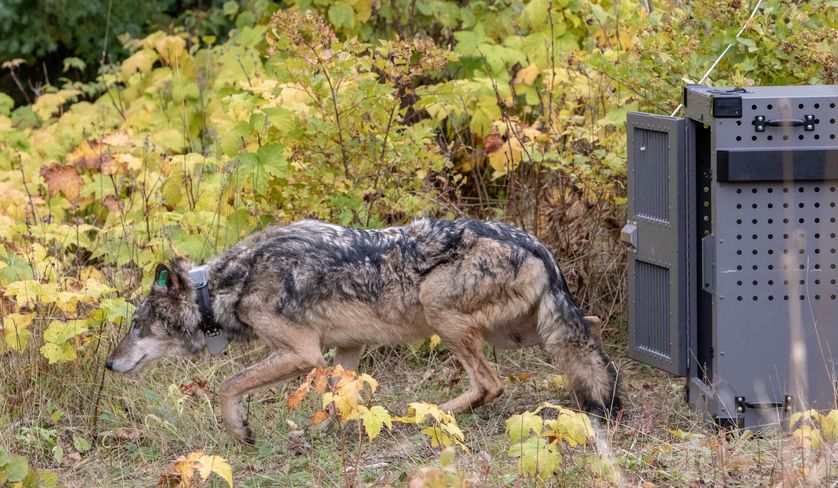
This female wolf arrived at Isle Royale on Oct. 2, 2018. (Photo: NPS/Jim Peaco)

This is why some people think the best solution is to bring a fresh influx of wolves to Isle Royale National Park. The plan is to release 25-30 wolves over the next three to five years. So far, park officials have trapped four wolves on the mainland beginning in late September and released them on the island. Three of the wolves are female — with the hope they will successfully breed.

This new blood would potentially rebalance the predator-prey relationship and the idea is that the rest of the ecosystem would follow. Introducing so many wolves over several years is hardly natural either, others argue, saying that humans should just be hands off and let nature take its course. The original 50 wolves had found their way to the island on their own, having moved in from Canada; perhaps they could do so again if given the chance.

Editor’s note: This article has been updated since it was originally published in April 2017.

ooOOoo

This is the real news!

A dog food recall for you!

This came in while we were away.

G & C Dog and Cat Food Recall Expands to Include Multiple Brands

October 24, 2018 — G & C Raw of Versailles, Ohio, is recalling all products lots manufactured from February 27, 2018 through July 20, 2018, because they have the potential to be contaminated with Listeria monocytogenes.

Affected products are sold under the brand names G & C Raw Dog Food and G & C Raw Cat Food and sold through direct distribution to customers.

Product Image

No product images have been provided by either the company or the Food and Drug Administration.

About Listeria

Listeria monocytogenes, an organism which can cause serious and sometimes fatal infections in animals eating the products.

Furthermore, there is risk to humans from handling contaminated pet products, especially if they have not thoroughly washed their hands after having contact with the products or any surfaces exposed to these products.

Healthy people infected with Listeria monocytogenes should monitor themselves for some or all of the following symptoms: nausea, vomiting, aches, fever, and diarrhea.

Listeria monocytogenes infections can cause serious and sometimes fatal infections in young children, frail or elderly people, and others with weakened immune systems.

Although healthy individuals may suffer only short-term symptoms such as high fever, severe headache, stiffness, nausea, abdominal pain and diarrhea, Listeria infection can cause miscarriages and stillbirths among pregnant women.

Consumers exhibiting these signs after having contact with this product should contact their healthcare providers.

Pets with Listeria monocytogenes infections are rare, and pets may display symptoms such as mild to severe diarrhea, anorexia, fever, nervous, muscular and respiratory signs, abortion, depression, shock, and death.

In addition to the possibility of becoming sick, such infected animals can shed Listeria monocytogenes through their feces onto their coats and into the home environment and thus serve as sources of infection to humans and other animals in the household.

If your pet has consumed the recalled product and has these symptoms, please contact your veterinarian.

Where Was Product Distributed?

Recalled products were distributed by direct delivery and may have been sent to the following states:

  • Georgia
  • Illinois
  • Indiana
  • Kentucky
  • Michigan
  • North Carolina
  • Ohio
  • Pennsylvania
  • Tennessee

What’s Being Recalled?

The manufacture dates are included at the end of the lot number.

For example, the pet food product manufactured on February 27, 2018 has a lot code of that ends with 022718.

The company is now recalling all products with lot numbers that end in 022718 through 072018.

The recalled dog food products include:

  • Beef Veggie Mix Dog Food
  • Ground Beef Dog Food
  • Sliced Beef Heart Dog Food
  • Ground Beef Heart Dog Food
  • Kim’s Special Beef Organ Dog Food
  • Ground Chicken Dog Food
  • Chicken Veggie Mix Dog Food
  • Chicken Mix Patties Dog Food
  • Duck Veggie Mix Dog Food
  • Ground Duck Dog Food
  • Ground Rabbit Dog Food
  • Rabbit Veggie Mix Dog Food
  • Ground Lamb Dog Food
  • Lamb Veggie Mix Dog Food
  • Ground Beef Pancreas Dog Food
  • Beef Liver Chunks Dog Food
  • Beef Sweet Breads Dog Food
  • Ground Pork Dog Food
  • Pork Veggie Mix Dog Food
  • Shelby’s Pork Organ Mix Dog Food
  • Ground Pollock Dog Food
  • Turkey Veggie Mix Dog Food
  • Ground Turkey Dog Food
  • Tripe Dog Food

The recalled cat food products include:

  • Pat’s Cat Beef
  • Pat’s Cat Chicken
  • Pat’s Cat Turkey
  • Pat’s Cat Duck
  • Pat’s Cat Rabbit

No confirmed illnesses have been reported to date.

What Caused the Recall?

The recall was initiated as the result of a routine sampling program by the Ohio Department of Agriculture which revealed that some finished products contained the bacteria.

What to Do?

Consumers who have purchased the products are urged to return them to G & C Raw, 225 N. West Street, Versailles, OH, for a full refund.

Consumers with questions may contact G & C Raw at 937-827-0010 from 9 to 5 pm Easter Time or by email at mgcrawdogfood@yahoo.com.

U.S. citizens can report complaints about FDA-regulated pet food products by calling the consumer complaint coordinator in your area.

Or go to http://www.fda.gov/petfoodcomplaints.

Canadians can report any health or safety incidents related to the use of this product by filling out the Consumer Product Incident Report Form.

You keep all your dogs safe out there!

What a way to spend a Sunday!

Poor little Sweeny!

Last Sunday, Sweeny not having eaten for 3 days, it was felt that we could not leave it any longer and decided to take Sweeny to Southern Oregon Veterinary Specialty Center.  They are an emergency 24-hour a day service.  It turned out to be a longer day that we had anticipated.

For we arrived at 9:15 am and didn’t leave until 5:15 pm.

Even then we were still left with some uncertainty.

For the long rigmarole of tests didn’t come to a firm conclusion.

A part of the SOVMC invoice.

Luckily we could leave taking dear Sweeny back with us but the results from the Fine needle aspirate won’t be through until Tuesday or Wednesday. (P.S. Just heard by phone that the results should be through in the next hour. Ergo: Monday evening.)

If it is Tuesday that will be better than Wednesday.

For on Wednesday we leave for a short holiday in Mexico.

In fairness, the house is being looked after by Jana Stewart but it will still be better to know before we leave.

That leads me to say that for the next ten days the regularity of blogging is going to be variable; to say the least.

Not only beautiful …….

……. but also intelligent.

There is something about a Huskie that takes one’s breath away. Not only because of the grace and wit with which they conduct their lives but also because the majority of them are working dogs.

So it was with interest that I read recently about the Huskies and wanted to share it with you all.

Here it is.

ooOOoo

Why do huskies have blue eyes?

New genetic study finally solves the mystery.

BRYAN NELSON,   October 4, 2018.

A happy husky with its characteristic blue eyes. (Photo: Nancy Wong/Wiki Commons)

A dog DNA startup company called Embark, based out of Boston, Massachusetts, and Ithaca, New York, appears to have finally solved the mystery as to why huskies sport their beautiful blue eyes. The study is the first consumer genomics study ever conducted in a non-human model, as well as the largest canine genome-wide association study to date, reports Phys.org.

The key, it turns out, lies in the dogs’ 18th chromosome. A duplication on chromosome 18, near the ALX4 gene, was found to be strongly associated with blue eye color. The ALX4 gene plays an important role in mammalian eye development, so this association is not entirely out of left field. And interestingly, the study also found this same genetic quirk in non-merle Australian shepherds, which also tend to have blue eyes.

This flies in the face of how eye color is usually thought to be determined in dogs. For instance, two genetic variants are known to underlie blue eye color in many dogs, but scientists have long known that these variants do not explain the blue eyes of huskies, thus the mystery.

In fact, even though we’re seemingly in a genomic scientific age, the genetic underpinnings of many traits in non-human animals are still largely unknown, even for humans’ best friends. Embark aims to change that.

For the study, which was performed in partnership with Cornell University College of Veterinary Medicine, researchers used a diverse panel of 6,070 genetically tested dogs, with owners who contributed phenotype data — physical traits of the dogs — via web-based surveys and photo uploads. A comprehensive, consumer-driven survey of this size is largely unprecedented.

“Using genetic data from the pets of our customers, combined with eye colors reported by customers for those same animals, we have discovered a genetic duplication that is strongly associated with blue eye color. This study demonstrates the power of the approach that Embark is taking towards improving canine health,” explained Aaron J. Sams of Embark. “In a single year, we collected enough data to conduct the largest canine study of its kind. Embark is currently pursuing similar research projects in a range of morphological and health-related traits and we hope to continue to use our platform to move canine genetics and health forward in a very real way.”

It’s all in the name of improved health care options for our canine companions, as well as helping curious human owners better understand the origins of their pets. Answering why huskies have blue eyes is just the first such mystery they hope to solve.

ooOOoo

What can one say! They are such beautiful dogs!

Picture Parade Two Hundred and Fifty-Nine

Taken from the world’s most smartest dogs.

From this site,

Herding dogs are often considered some of the smartest breeds.

oooo

The Border Collie

oooo

The Poodle combines brain and brawn.

oooo

The gorgeous German Shepherd Dog

oooo

My heart goes out to a Golden Retriever

oooo

The keenest eyes in this Doberman Pinscher.

oooo

Have you seen such a face in this Shetland Sheepdog Sheltie.

oooo

Three Labrador Retrievers

oooo

The enchanting face of the Papillion.

Onward and upwards to another set.

A Letter to Mr. Cosmos, Page One

The last in this recent series on me examining my navel!

Dear Mr. Cosmos,

Clearly, I have no idea how many letters you receive from us funny inhabitants on Planet Earth. Can’t imagine you get floods of them but then neither can I imagine that this is the first one you have ever received.

Why can I not imagine this is to be your first? Simply, because us funny folk on this incredible planet of yours have been around for quite a while. I mean that over in that country we folk call Israel there has been found evidence of “control of fire by humans nearly 790,000 years ago.

Whoops!

Just realised that me saying “quite a while” and writing of “790,000 years ago” will be utterly meaningless, in terms of scale, to how you describe your past. Just as it is utterly meaningless for me to contemplate that in cosmological terms the ‘Big Bang”, generally recognised as the start of your Universe, was, give or take, some 13.8 billion years ago.

I wish I could really get an idea of what a million years feels like, let alone a billion years. Ah well!

Let me stay with this notion of stuff being meaningless.

My dear, long-time friend Dan Gomez sent me a link to an item that had been published on the Science Alert website. It was about how the NASA Hubble space telescope had recently embarked on a new mission. Or in the words of that article:

Hubble Just Revealed Thousands of Hidden Galaxies in This Jaw-Dropping Photo

By Michelle Starr, September 13th, 2018

Hubble has embarked on a new observation mission: to study the farthest reaches of the Universe, using some of the most massive objects in the Universe – galaxy clusters.

And this newly released picture shows how.

At the centre is Abell 370, a cluster of a few hundred galaxies located around 4 billion light-years from Earth. And arrayed around it, never seen before, are thousands of galaxies, out even farther in the depths of space.

The reason we can see them now is because of Abell 370. All those hundreds of galaxies, clustered so close together, and the associated dark matter, create an immense field of gravity.

When the light behind that field passes through it, the gravitational force is so strong that it bends the path of the light. This creates a magnifying effect called gravitational lensing, allowing us to see objects we usually can’t.

Abell 370 is the first of these clusters.

Here is one of those photographs,

(NASA, ESA, A. Koekemoer, M. Jauzac, C. Steinhardt, and the BUFFALO team)

And an explanation of what we are looking at:

In the image, you can see the galaxies in Abell 370. The brightest yellowish white ones are huge, containing hundreds of billions of stars. The bluer ones are smaller, spiral galaxies, like the Milky Way, with younger populations of stars. And the dimmer, yellower galaxies are older, with ageing star populations.

The galaxies behind Abell 370 appear as smeared lines of light. The most spectacular, to the lower left of the centre, is nicknamed the Dragon (possibly for its resemblance to a Chinese dragon), with its head to the left. It’s made up of five images of the same spiral galaxy, magnified and stretched by the gravitational lens.

Mr. Cosmos, you know a little earlier I was remarking about how it is impossible to comprehend the age of the Universe. Well, dear Sir, it’s just as impossible to comprehend your distances.

Take Abell 370 out there some 4 billion light years from Planet Earth! I really wanted to have a go at understanding that distance.

First, I looked up the distance in miles that is represented by one light-year. Answer: one light year is a tad under six trillion miles.

Just one, let alone some 4 billion of them!

Next, I looked up the distance of our very familiar Big Dipper constellation. You must have heard of it? This one!

The Big Dipper. Image Credit & Copyright: Jerry Lodriguss

Turns out that even this very familiar sight in our night sky ranges from 78 to 123 light years away. Average that as 100 light years and, bingo, you are looking at this familiar cluster of stars that is 590 trillion miles away!

So, dear Mr. Cosmos, that puts your Abell 370 constellation about a distance that is 10 million times more distant than our Big Dipper!

I wrote above that “I really wanted to understand that distance.” In reference to how far that Abell 370 constellation truly was.  My conclusion is that I will never, ever understand that distance.

Anyone able to help?

Tomorrow, Mr. Cosmos, the closing page two of my letter to you.


Science and the ocean floor

A wonderful postscript to my letter to Mr. Neptune!

The following was published last Wednesday and appeared on The Conversation site.

I found it very interesting and wanted to share it with you.

ooOOoo

Scientists have been drilling into the ocean floor for 50 years – here’s what they’ve found so far

September 26, 2018

By Professor Suzanne O’Connell, Professor of Earth & Environmental Sciences, Wesleyan University

The scientific drilling ship JOIDES Resolution arrives in Honolulu after successful sea trials and testing of scientific and drilling equipment. IODP, CC BY-ND

It’s stunning but true that we know more about the surface of the moon than about the Earth’s ocean floor. Much of what we do know has come from scientific ocean drilling – the systematic collection of core samples from the deep seabed. This revolutionary process began 50 years ago, when the drilling vessel Glomar Challenger sailed into the Gulf of Mexico on August 11, 1968 on the first expedition of the federally funded Deep Sea Drilling Project.

I went on my first scientific ocean drilling expedition in 1980, and since then have participated in six more expeditions to locations including the far North Atlantic and Antaractica’s Weddell Sea. In my lab, my students and I work with core samples from these expeditions. Each of these cores, which are cylinders 31 feet long and 3 inches wide, is like a book whose information is waiting to be translated into words. Holding a newly opened core, filled with rocks and sediment from the Earth’s ocean floor, is like opening a rare treasure chest that records the passage of time in Earth’s history.

Over a half-century, scientific ocean drilling has proved the theory of plate tectonics, created the field of paleoceanography and redefined how we view life on Earth by revealing an enormous variety and volume of life in the deep marine biosphere. And much more remains to be learned.

Technological innovations

Two key innovations made it possible for research ships to take core samples from precise locations in the deep oceans. The first, known as dynamic positioning, enables a 471-foot ship to stay fixed in place while drilling and recovering cores, one on top of the next, often in over 12,000 feet of water.

Anchoring isn’t feasible at these depths. Instead, technicians drop a torpedo-shaped instrument called a transponder over the side. A device called a transducer, mounted on the ship’s hull, sends an acoustic signal to the transponder, which replies. Computers on board calculate the distance and angle of this communication. Thrusters on the ship’s hull maneuver the vessel to stay in exactly the same location, countering the forces of currents, wind and waves.

Another challenge arises when drill bits have to be replaced mid-operation. The ocean’s crust is

The re-entry cone is welded together around the drill pipe, then lowered down the pipe to guide reinsertion before changing drill bits. IODP, CC BY-ND

composed of igneous rock that wears bits down long before the desired depth is reached.

When this happens, the drill crew brings the entire drill pipe to the surface, mounts a new drill bit and returns to the same hole. This requires guiding the pipe into a funnel shaped re-entry cone, less than 15 feet wide, placed in the bottom of the ocean at the mouth of the drilling hole. The process, which was first accomplished in 1970, is like lowering a long strand of spaghetti into a quarter-inch-wide funnel at the deep end of an Olympic swimming pool.

Confirming plate tectonics

When scientific ocean drilling began in 1968, the theory of plate tectonics was a subject of active debate. One key idea was that new ocean crust was created at ridges in the seafloor, where oceanic plates moved away from each other and magma from earth’s interior welled up between them. According to this theory, crust should be new material at the crest of ocean ridges, and its age should increase with distance from the crest.

Part of a core section from the Chicxulub impact crater. It is suevite, a type of rock, formed during the impact, that contains rock fragments and melted rocks. IODP, CC BY-ND

The only way to prove this was by analyzing sediment and rock cores. In the winter of 1968-1969, the Glomar Challenger drilled seven sites in the South Atlantic Ocean to the east and west of the Mid-Atlantic ridge. Both the igneous rocks of the ocean floor and overlying sediments aged in perfect agreement with the predictions, confirming that ocean crust was forming at the ridges and plate tectonics was correct.

Reconstructing earth’s history

The ocean record of Earth’s history is more continuous than geologic formations on land, where erosion and redeposition by wind, water and ice can disrupt the record. In most ocean locations sediment is laid down particle by particle, microfossil by microfossil, and remains in place, eventually succumbing to pressure and turning into rock.

Microfossils (plankton) preserved in sediment are beautiful and informative, even though some

are smaller than the width of a human hair. Like larger plant and animal fossils, scientists can use these delicate structures of calcium and silicon to reconstruct past environments.

Thanks to scientific ocean drilling, we know that after an asteroid strike killed all non-avian dinosaurs 66 million years ago, new life colonized the crater rim within years, and within 30,000 years a full ecosystem was thriving. A few deep ocean organisms lived right through the meteorite impact.

Ocean drilling has also shown that ten million years later, a massive discharge of carbon – probably from extensive volcanic activity and methane released from melting methane hydrates – caused an abrupt, intense warming event, or hyperthermal, called the Paleocene-Eocene Thermal Maximum. During this episode, even the Arctic reached over 73 degrees Fahrenheit.

The resulting acidification of the ocean from the release of carbon into the atmosphere and ocean caused massive dissolution and change in the deep ocean ecosystem.

This episode is an impressive example of the impact of rapid climate warming. The total amount of carbon released during the PETM is estimated to be about equal to the amount that humans will release if we burn all of Earth’s fossil fuel reserves. Yet, an important difference is that the carbon released by the volcanoes and hydrates was at a much slower rate than we are currently releasing fossil fuel. Thus we can expect even more dramatic climate and ecosystem changes unless we stop emitting carbon.

Enhanced scanning electron microscope images of phytoplankton (left, a diatom; right, a coccolithophore). Different phytoplankton species have distinct climatic preferences, which makes them ideal indicators of surface ocean conditions. Dee Breger, CC BY-NC-ND


Finding life in ocean sediments

Scientific ocean drilling has also shown that there are roughly as many cells in marine sediment as in the ocean or in soil. Expeditions have found life in sediments at depths over 8000 feet; in seabed deposits that are 86 million years old; and at temperatures above 140 degrees Fahrenheit.

Today scientists from 23 nations are proposing and conducting research through the International Ocean Discovery Program, which uses scientific ocean drilling to recover data from seafloor sediments and rocks and to monitor environments under the ocean floor. Coring is producing new information about plate tectonics, such as the complexities of ocean crust formation, and the diversity of life in the deep oceans.

This research is expensive, and technologically and intellectually intense. But only by exploring the deep sea can we recover the treasures it holds and better understand its beauty and complexity.

ooOOoo

Did the phrase in the first paragraph of the article jump out for you as it did for me?

This one: “…we know more about the surface of the moon than about the Earth’s ocean floor.

Doesn’t Mr. Neptune hold his cards close to his chest.

Wonder if he communes with man’s best friend??


A Letter to Mr. Neptune

Continuing my series on examining my navel.

Dear Mr. Neptune,

Your oceans of the world are truly breath-taking. The power you can display in the odd wave or million through to the tranquility you so often also display defy rational explanations.

I have had the profound experience of sailing upon your waters, dear Mr. Neptune, over a number of years sailing back and forth between Cyprus and Turkey. Not a long distance but still sufficient to experience being solo on a yacht day and night.

Tradewind 33 – Songbird of Kent. My home for five years.

Then on my way sailing back to Plymouth, SW England, the magical, almost primeval, feeling of being alone on the Atlantic Ocean. Looking up at the night sky, feeling so insignificant, so infinitesimally minute with 500 miles of open ocean in all directions and those stars above my head.

No question, that practically everything about your oceans is beyond the understanding of us humans. Indeed, I had to look up online how much water there is on Earth to discover there is:

It’s roughly 326 million cubic miles (1.332 billion cubic kilometers), according to a recent study from the U.S. Geological Survey.

Because I simply didn’t have a clue.

And knowing there are approximately 326 million cubic miles of water doesn’t help because I am still left not having a clue as to what that means!

So, thank goodness, Mr. Neptune this is all a ‘walk in the park’ for you!

But I do have a question for you.

What do you make of this?

The image is cropped from the following:

The description of these figures is:

Figure. (upper) Change in global upper-level (0–2000 m) ocean heat content since 1958. Each bar shows the annual mean relative to a 1981–2010 baseline. (lower) Annual mean ocean heat content anomaly in 2017 relative to a 1981–2010 baseline.

And it was taken from research undertaken by Lijing Cheng and Jiang Zhu and found on the web here.

Ocean Heat Content

Owing to its large heat capacity, the ocean accumulates the warming derived from human activities; indeed, more than 90% of Earth’s residual heat related to global warming is absorbed by the ocean (IPCC, Cheng et al. 2017). As such, the global ocean heat content record robustly represents the signature of global warming and is impacted less by weather-related noise and climate variability such as El Niño and La Niña events (Cheng et al. 2018). On the other hand, ocean thermal expansion due to ocean temperature change contributes substantially (30%~50%) to the sea level change, which can considerably influence human populations in coastal and island regions and marine ecosystems. Therefore, monitoring the OHC changes and understanding its variation are crucial for climate change.

Is it possible, Mr. Neptune, that even you as the master of all our oceans is worried about the future?

I hope not but I do fear your answer.

Sincerely,

Paul

More benefits of four legs!

Look what dear Monty found!

I shall cut my waffling and just say that I saw this item on The Smithsonian ‘Smart News’ section last week and just knew it should be shared with you!

ooOOoo

Who’s a Good Archaeologist? Dog Digs Up Trove of Bronze Age Relics

While on a walk outside a small Czech village, Monty the dog and his owner found nearly two dozen 3,000-year-old artifacts

Monty, the dog that found the Bronze Age relics, unearthed 13 sickles, two spear points, three axes and several bracelets. (Hradec Králové Region)

Some archaeologists carry tools and painstakingly chip away at historic sites. Others might have fluffy bodies, keen senses of smell and an affinity for digging stuff up.

As Tom McEnchroe reports for Radio Praha, a very good dog named Monty recently unearthed a rare trove of Bronze Age artifacts near the Czech village of Kostelecké Horky. Monty was walking with his human, identified as “Mr. Frankota,” in a field when he began pawing frenetically at the ground. Soon, thanks to Monty’s hard work, metallic objects began to emerge in the soil.

The cache of relics includes 13 sickles, two spear points, three axes and several bracelets. The objects have been dated to the Urnfield period around 3,000 years ago. This late European Bronze Age culture is marked by the transition from inhumation burials to cremations; the remains of the dead were interred in urns, giving the era its name. According to Encyclopaedia Britannica, Urnfield culture first appeared in east-central Europe and northern Italy, but eventually spread “to Ukraine, Sicily, Scandinavia, and across France to the Iberian peninsula.”

It is rare to find a cluster of intact Urnfield objects, according to a press release. “The culture that lived here at the time normally just buried fragments, often melted as well,” Martina Beková, an archaeologist at the Museum and Gallery of Orlické who studied the artifacts after they were discovered by Monty, tells McEnchroe. So she suspects that the relics were tied to a ritual—“most likely a sacrifice of some sorts,” Beková says.

Additional evidence could help pin down the function of the objects, and according to Michelle Starr of Science Alert, local archaeologists have been searching the area in the hopes of finding more relics. They haven’t uncovered anything yet, but Sylvie Velčovská, a spokeswoman for the region, tells McEnchroe that there have been, considerable changes to the surrounding terrain over the centuries, so it is possible that the deeper layers are still hiding some secrets.

The newly uncovered objects will be on display at the Museum and Gallery of Orlické Mountains in the town of Rychnov until October 21, after which point they will undergo conservation and be moved to a permanent exhibition in the village of Kostelec.

Frankota, Monty’s owner, was awarded 7860 Czech Koruna (around $360) for his role in alerting archaeologists to the ancient treasures. One can only hope that Monty was given many treats and pets for his superb fieldwork

Read more: https://www.smithsonianmag.com/smart-news/dog-uncovers-trove-bronze-age-relics-czech-republic-180970324/#HE8cRkejVQOPDlzk.99
Give the gift of Smithsonian magazine for only $12! http://bit.ly/1cGUiGv
Follow us: @SmithsonianMag on Twitter

oooo

Brigit Katz is a freelance writer based in Toronto. Her work has appeared in a number of publications, including NYmag.com, Flavorwire and Tina Brown Media’s Women in the World.

Read more from this author |

ooOOoo

Where would we be without our dear dogs!!

Sweet Oliver surveying the new sights and smells down by the stables!

The Fall

And I am not speaking of the Autumn!

To be honest, dear friends, I really agonised over whether or not to republish an item that I saw on The Conversation blogsite last Friday. For it has nothing to do with dogs, nothing to do with learning from dogs, and everything to do with being the ‘wrong’ side of 65 years old.

But then one day last week I was out watching some tree cutting being undertaken by Jimmy Gonzales and his crew and heard the phoning ringing in the house.

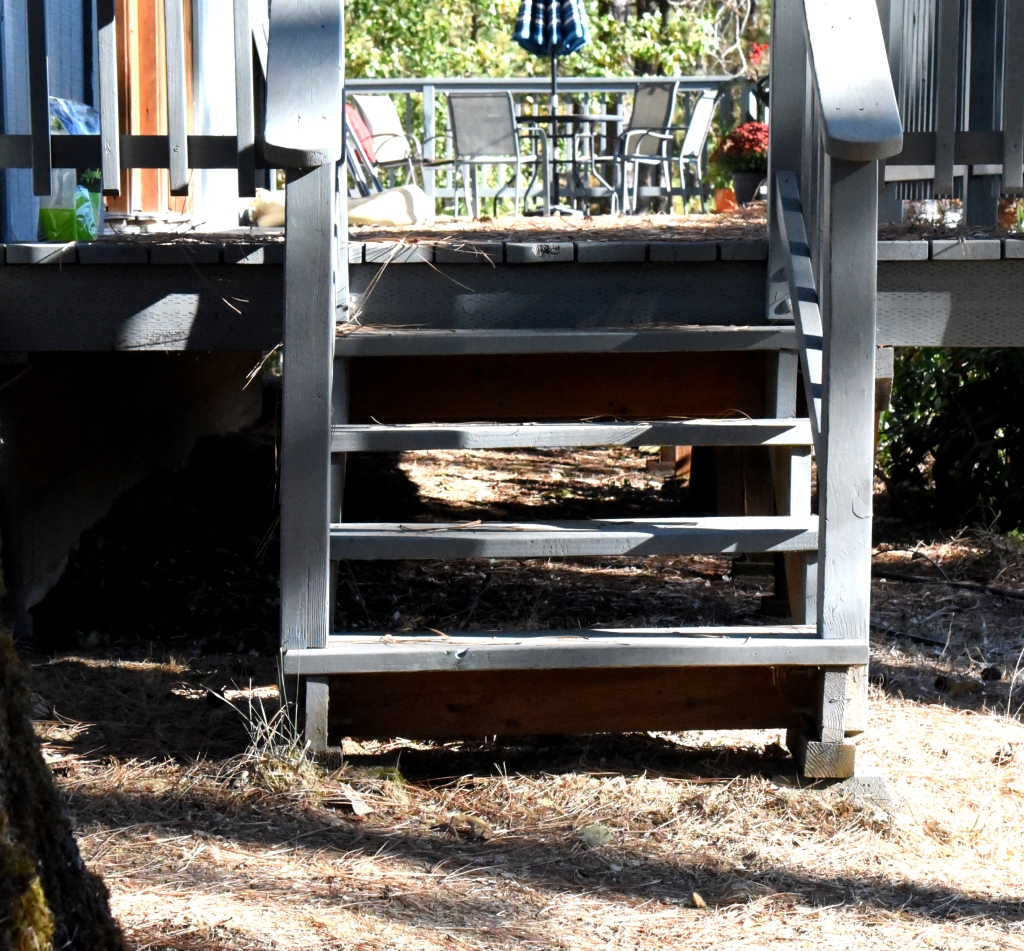
I ran for the steps leading up to the deck and missed the bottom step.

I fell but luckily managed to grab the handrails seconds before I could have smacked my head into the steps. However, it did scare me especially when I reflected that it wasn’t even 9 months since my medical emergency following my fall from my bicycle.

It confirmed the sense in republishing the item. Republished within the terms of The Conversation site.

ooOOoo

Before the fall: How oldsters can avoid one of old age’s most dangerous events

September 21, 2018

By four authors:

 Co-Director of Texas A&M Center for Population Health and Aging, Texas A&M University

  Research Scientist, University of North Carolina at Chapel Hill

  Regents and Distinguished Professor, Associate Vice President for Strategic Partnerships and Initiatives, Texas A&M University

  Adjunct Assistant Professor, Public Health, University of North Carolina at Chapel Hill

Baby boomers, who once viewed themselves as the coolest generation in history, are now turning their thoughts away from such things as partying and touring alongside rock bands to how to they can stay healthy as they age. And, one of the most important parts of healthy aging is avoiding a fall, the number one cause of accidental death among people 65 and older.

The issue is growing more pressing each day. More adults than ever – 46 million – are 65 and older, and their numbers are increasing rapidly.

The Centers for Disease Control and Prevention estimates that one in four older adults will fall each year. Falls are the leading cause of injury and injury deaths among older adults. And, they are costly. Falls are responsible for an estimated US$31 billion in annual Medicare costs. This estimate does not account for non-direct medical or societal costs.

People who fall can lose their physical mobility for life, go into a hospital never to be discharged, require skilled nursing or other caregiver support, or become so fearful about falling again that they dramatically limit their daily activities.

The good news is that most falls are preventable, research has identified many modifiable risk factors for falls, and older adults can empower themselves to reduce their falls risks. This means there are opportunities to intervene in clinical and community settings to promote protective behaviors and improve safety.

A life-changing event

Falls can cause fractures, traumatic brain injuries and other conditions that require an emergency room visit or hospitalization. An older adult dies from a fall every 19 minutes, and every 11 seconds an older adult is treated in an emergency room for a fall-related injury. About one in four falls results in needed medical attention, and falls are responsible for about 95 percent of all hip fractures. In addition to the physical and mental trauma associated with the fall itself, falls often result in fear of falling, reduced quality of life, loss of independence and social isolation.

shutterstock. Astrid Gast/Shutterstock.com

There is no single cause for falling. Falls can result from issues related to biological aging, such as balance problems, loss of muscle strength, changes in vision, arthritis or diabetes. Taking a combination of several prescription drugs can also contribute to falls. Lifestyle behaviors such as physical inactivity, poor nutrition and poor sleep quality can also increase the risk for falling. Environmental hazards inside the home, such as poor lighting and throw rugs, and outside, such as bad weather, standing water and uneven sidewalks, can create situations where falls are more likely to occur.

It takes a careful village

Because falls can be caused by many things, the solutions must also include a diverse set of systems, organizations and professionals. Toward that end, 42 active or developing state fall prevention coalitions, which coordinate initiatives and serve as advocates for policy development and community action, are in place. Their activities foster collaboration across the aging services network, public health and health care system. They do such things as host health fairs and fall risk screening events, fall prevention programs, and awareness-raising events to inform decision-makers and legislators about ways to make communities safer for older adults.

Here are some of the key objectives that the coalitions are working on to reduce hazards from falling:

  • Enhance clinical-community collaboration for programming.

There are many fall prevention programs offered in communities to promote healthful behaviors and to reinforce positive mental perspectives about falls being preventable.

People concerned about falling should contact their local Area Agency on Aging to find out where these programs are offered and which can be most beneficial. Also, seniors should ask their doctors about fall-related risk factors and what they can do to reduce risk. Communicate your concerns about falls with your health care team and social network, tell them about what you learn during your fall prevention programs, and report back about how they are making a difference in your life.

  • Manage chronic conditions.

About 70 percent of older adults have one or more chronic conditions, many of which can increase the risk for falling. For example, people with diabetes may have vision problems and problems with sensation in their feet. Also, the medications used to treat these conditions can increase fall risk. And, taking five or more medications has been identified with increased frailty and higher risk for falling.

Being physically active can help seniors have better balance and reduce the risk of falls. wavebreakmedia/Shutterstock.com

While health care access and utilization are important for chronic disease diagnosis and management, 90 percent of health care happens outside the health care setting. Therefore, older adults need to manage their diseases better. To do this, however, they often need help. For starters, they should discuss the side effects of all medications with their doctors and also how best to adhere to prescribed treatment regimens, such as when to take medications, whether to take with food and whether there are possible interactions of one medication with another. Seniors also can consider enrolling in evidence-based disease self-management programs to improve their knowledge and confidence to manage their conditions as well as enhance lasting skills for goal setting and action planning, such as being physically active for 30 minutes a day for five days a week.

  • Alter the physical environment.

About 44 percent of falls occur inside the home. In-home risk factors for falls can include dim lighting, clutter on floors, throw rugs and ottomans, missing railings, uncovered wires and extension cords, children and pets underfoot and unsafe bathrooms. A unsafe bathroom is one with an inappropriate toilet height, high shower or bathtub walls and no grab rails.

To identify possible risks in the home, the CDC created a user-friendly safety checklist that can safeguard older adults by eliminating environmental hazards.

  • Maintain healthful behaviors.

Daily lifestyle behaviors such as physical activity, nutrition and sleep quality can influence fall risk, and these are never too late to change. Interventions can be successful for people of all ages. Among the most important is physical activity, namely safely performing lower-body exercises to increase strength, balance and flexibility. Additionally, seniors should work with their health care team to have medications reviewed and eyes checked regularly. Also, they should ask about their vitamin D levels and possible nutritional supplementation.

ooOOoo

Yes, when it comes to being more careful on our feet once again our dear dogs offer us a much better way: Have four of them!!

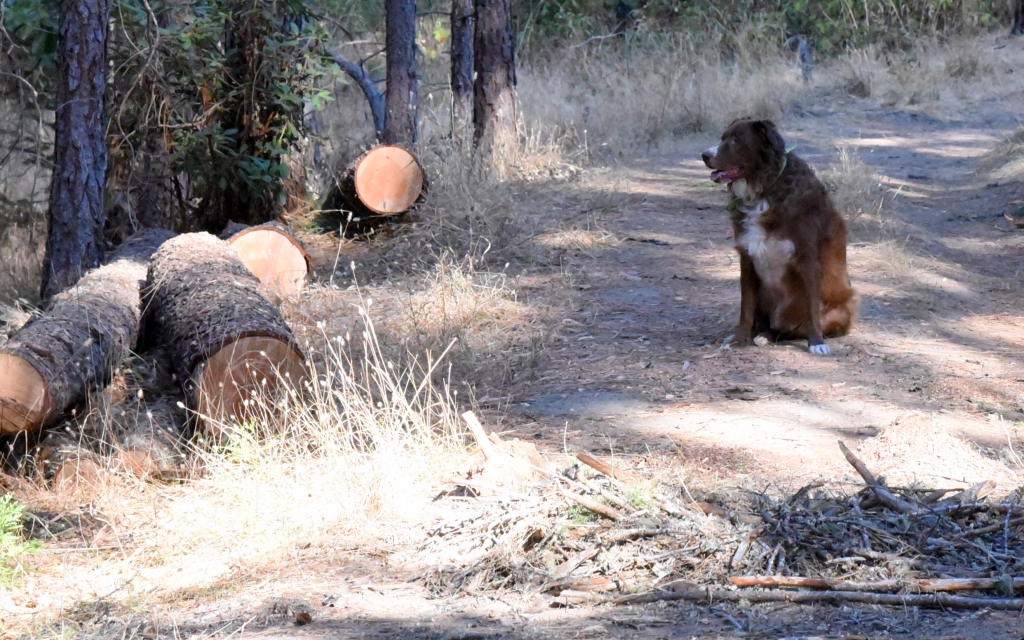
Just look at the ease of our dear Brandy scampering through the woods yesterday morning!

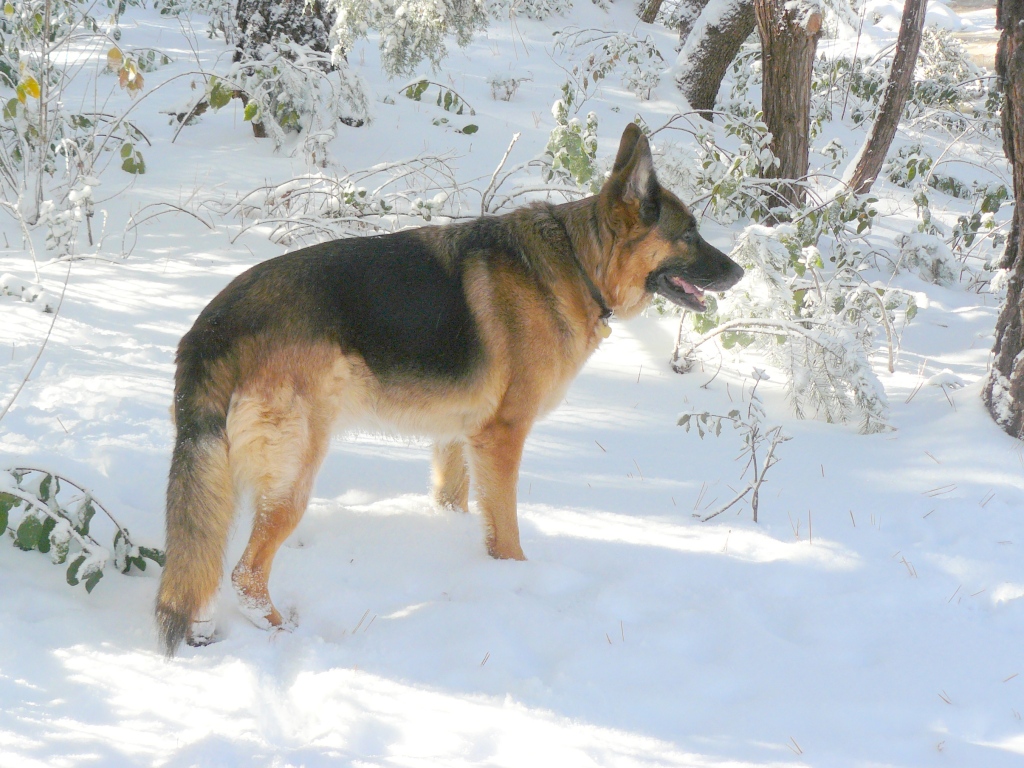
Our dear, sorely-missed Pharaoh demonstrating the advantages of four feet!

So my good people – you be careful out there!