Category: Education

How well do dogs understand humans?

How well do dogs understand humans?

Another guest post; this time from Lorna D.

Dogs are so close to humans, as has been reported many times in many places. This guest post from Lorna explores the very latest in scientific thinking.

ooOOoo

Busting Myths: Do Dogs Really Understand Human Language?

By Lorna Dikoff

Dogs are often seen as more than pets. They are companions, loyal protectors, and, for many like me, family members.

Many people think dogs understand our words like we do. This idea has been around for a long time. But is it true?

Let’s look at what science tells us about how dogs communicate. Also, let’s think about what our bonds with dogs teach us. These bonds teach us about trust and loyalty. They also reveal a deeper form of connection.

The Science of Canine Communication

Dogs have been our companions for thousands of years. During this time, they have become very good at understanding human behavior.

In 2016, researchers in Hungary made an interesting discovery. They found that dogs process words and tone similarly to humans. Dogs use different parts of their brains to recognize words and emotional sounds.

But, this doesn’t mean dogs understand language like we do. Instead, they learn to connect certain sounds (words) with specific actions or results. For example, a dog might know that the sound of a leash means a walk is coming. They recognize patterns rather than understanding language.

So while dogs are good at figuring out what we do and say, they don’t understand language the same way humans do. They’ve learned to pick up on our signs, but in their own special way.

But does this mean they understand the full meaning behind those words? The answer is no.

Dogs are great at reading people. They watch our body language, listen to our tone, and look at our faces. Dogs pay more attention to these signs than to our words.

This doesn’t mean dogs are less smart. It shows that they excel in a different type of communication.

The Myth of Full Language Comprehension

People often think dogs understand human language. We want to believe our pets understand us like other people do. It’s a nice idea, but it’s not quite true.

Dogs can learn some words and follow orders. But they don’t understand language. They remember patterns and connect words with actions. It’s not the same as how we understand each other when we talk.

This myth doesn’t make our bond with dogs any less special. It actually shows something even more extraordinary. Dogs are great at connecting with us without words. They tune into our feelings and pick up on how we act. This makes our relationship with them pretty amazing.

Dogs don’t need words to sense when we are sad, anxious, or excited. Their ability to “read” our emotions is what makes their companionship so special.

Trust and Loyalty: The Real Language of Dogs

Dogs and humans have a special bond that is far more profound than language. It’s about trust and loyalty.

These things are at the heart of what we can learn from dogs. Dogs show us how to be honest and true. They teach us about connecting with feelings, not only with words.

Dogs don’t need a large vocabulary to express their loyalty or unconditional love. Instead, they show it through actions. They sit with us when we’re sad and guard us when we’re weak. And they always get super happy to see us, even if we’ve only been gone for a bit.

This speaks to a deeper truth that dogs teach us: communication isn’t only about words. It’s about the trust we build through consistent, reliable actions.

In a world where words can sometimes mislead or fall short, dogs show us a better way. Dogs remind us of the importance of honesty and integrity in our interactions.

The Lesson from Dogs

So, do dogs understand human language? The answer is no, at least not in the way we hope. But their understanding of us is something far more profound.

Dogs teach us that we don’t always need words to talk. They teach us that our actions often speak louder than language. Their loyalty, intuition, and emotional intelligence. makes our bond with them special, more than words can explain.

We often overcomplicate communication, but dogs keep it simple. They show up and act the same way every day.

This teaches us that real connections come from trust and love. Dogs prove that understanding each other is about more than using words.

About the Author:

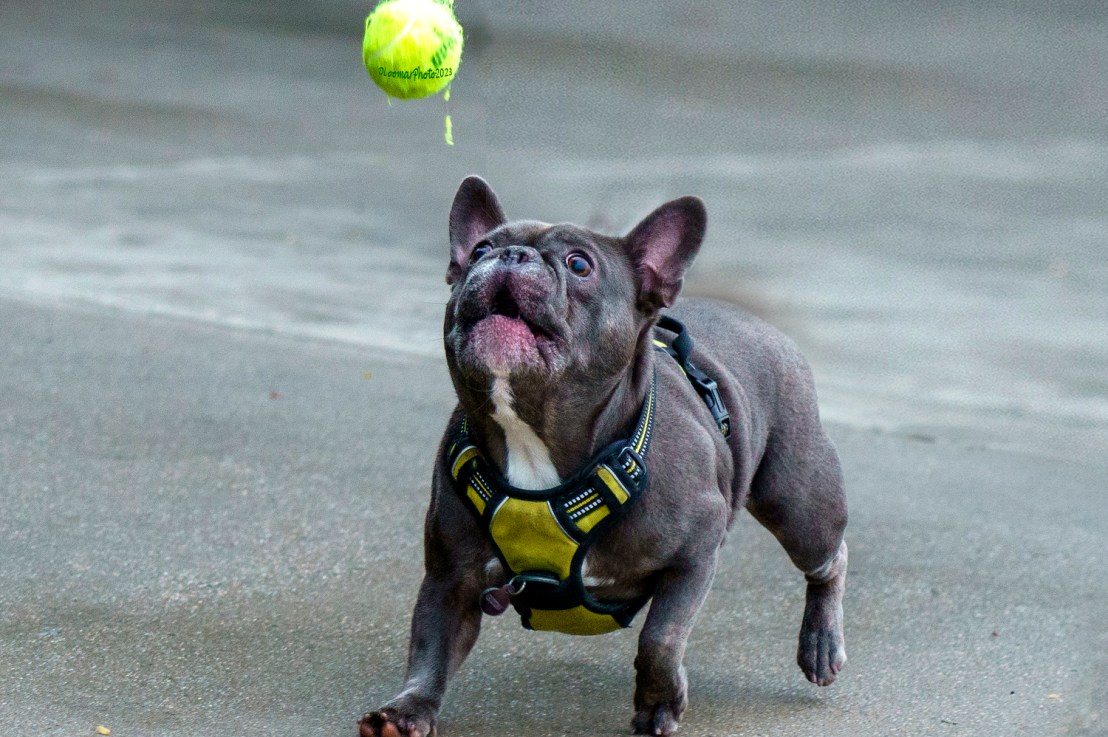
Lorna is the founder of Furry Friends Advisor. She is a passionate and experienced long-time dog owner with a deep love for animals. Lorna’s commitment to understanding and caring for dogs led her to spend countless hours researching and learning about canine health, behavior, and care. When not immersed in writing for her site, she is pampering her French Bulldog name Lucy. Her mission is to give advice about dog care and nutrition accessible to everyone. 

ooOOoo

Thank you, Lorna.

There is no question that a dog’s actions speak so much louder than words.

Trust and loyalty; they are the supreme qualities of dogs and it is a pity that in some quarters these qualities are not seen in humans.
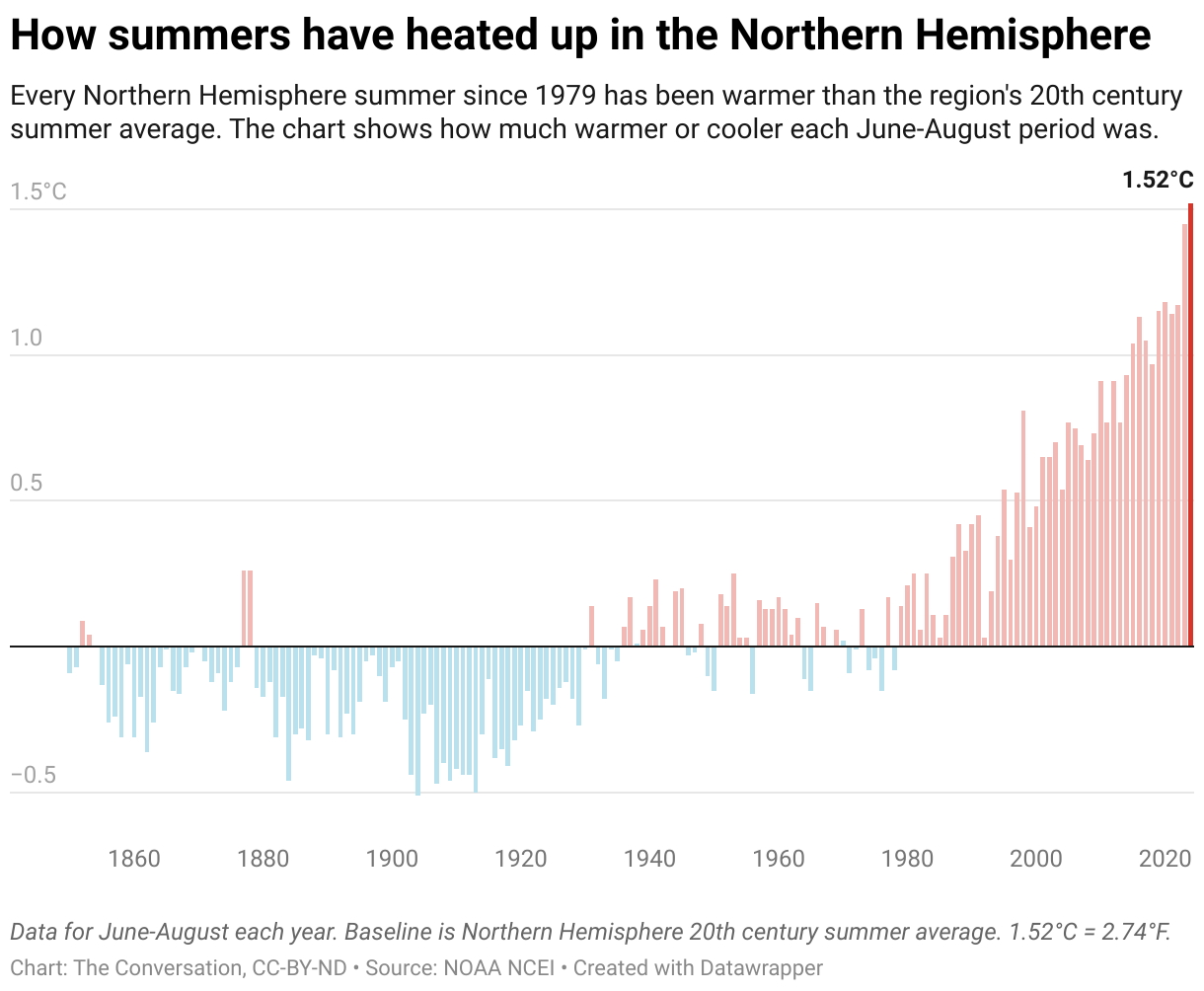
The summer of 2024 in the Northern Hemisphere.

Once more, an article on the changing climate.

Recently, the BBC News reported that:

Global efforts to tackle climate change are wildly off track, says the UN, as new data shows that warming gases are accumulating faster than at any time in human existence.

Current national plans to limit carbon emissions would barely cut pollution by 2030, the UN analysis shows, leaving efforts to keep warming under 1.5C this century in tatters.

The update comes as a separate report shows that greenhouse gases have risen by over 11% in the last two decades, with atmospheric concentrations surging in 2023.

ooOOoo

What the jet stream and climate change had to do with the hottest summer on record − remember all those heat domes?

Shuang-Ye Wu, University of Dayton

Summer 2024 was officially the Northern Hemisphere’s hottest on record. In the United States, fierce heat waves seemed to hit somewhere almost every day.

Phoenix reached 100 degrees for more than 100 days straight. The 2024 Olympic Games started in the midst of a long-running heat wave in Europe that included the three hottest days on record globally, July 21-23. August was Earth’s hottest month in the National Oceanic and Atmospheric Administration’s 175-year record.

Overall, the global average temperature was 2.74 degrees Fahrenheit (1.52 degrees Celsius) above the 20th-century average.

That might seem small, but temperature increases associated with human-induced climate change do not manifest as small, even increases everywhere on the planet. Rather, they result in more frequent and severe episodes of heat waves, as the world saw in 2024.

The most severe and persistent heat waves are often associated with an atmospheric pattern called a heat dome. As an atmospheric scientist, I study weather patterns and the changing climate. Here’s how heat domes, the jet stream and climate change influence summer heat waves and the record-hot summer of 2024.

What the jet stream has to do with heat domes

If you listened to weather forecasts during the summer of 2024, you probably heard the term “heat dome” a lot.

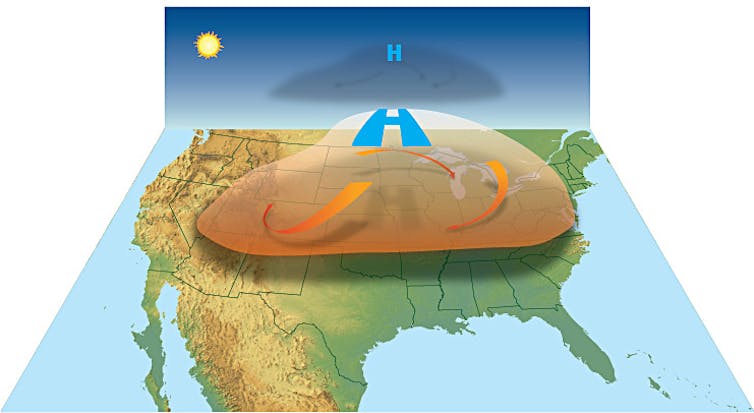
A heat dome is a persistent high-pressure system over a large area. A high-pressure system is created by sinking air. As air sinks, it warms up, decreasing relative humidity and leaving sunny weather. The high pressure also serves as a lid that keeps hot air on the surface from rising and dissipating. The resulting heat dome can persist for days or even weeks.

The longer a heat dome lingers, the more heat will build up, creating sweltering conditions for the people on the ground.

A 3D image of the US showing a heat dome above it.
High pressure in the middle layers of the atmosphere acts as a dome or cap, allowing heat to build up at the Earth’s surface. NOAA

How long these heat domes stick around has a lot to do with the jet stream.

The jet stream is a narrow band of strong winds in the upper atmosphere, about 30,000 feet above sea level. It moves from west to east due to the Earth’s rotation. The strong winds are a result of the sharp temperature difference where the warm tropical air meets the cold polar air from the north in the mid-latitudes.

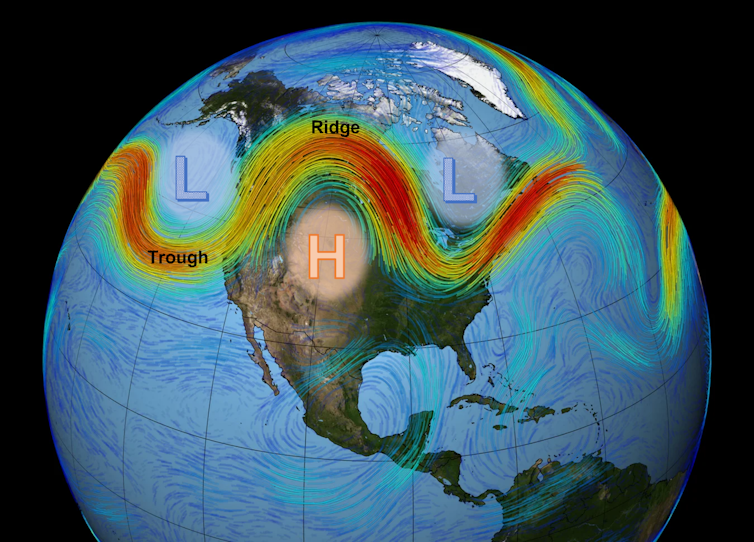
The jet stream does not flow along a straight path. Rather, it meanders to the north and south in a wavy pattern. These giant meanders are known as the Rossby waves, and they have a major influence on weather.

An illustration shows how ridges create high pressure to the south of them and troughs create low pressure to the north of them.
Ridges and troughs created as the jet stream meanders through the mid-latitudes create high (H) and low (L) pressure systems. Reds indicate the fastest winds. NASA/Goddard Space Flight Center Scientific Visualization Studio

Where the jet stream arcs northward, forming a ridge, it creates a high-pressure system south of the wave. Where the jet stream dips southward, forming a trough, it creates a low-pressure system north of the jet stream. A low-pressure system contains rising air in the center, which cools and tends to generate precipitation and storms.

Most of our weather is modulated by the position and characteristics of the jet stream.

How climate change affects the jet stream

The jet stream, or any wind, is the result of differences in surface temperature.

In simple terms, warm air rises, creating low pressure, and cold air sinks, creating high pressure. Wind is the movement of the air from high to low pressure. Greater differences in temperature produce stronger winds.

For the Earth as a whole, warm air rises near the equator, and cold air sinks near the poles. The temperature difference between the equator and the pole determines the strength of the jet stream in each hemisphere.

However, that temperature difference has been changing, particularly in the Northern Hemisphere. The Arctic region has been warming about three times faster than the global average. This phenomenon, known as Arctic amplification, is largely caused by the melting of Arctic sea ice, which allows the exposed dark water to absorb more of the Sun’s radiation and heat up faster.

Because the Arctic is warming faster than the tropics, the temperature difference between the two regions is lessened. And that slows the jet stream.

As the jet stream slows, it tends to meander more, causing bigger waves. The bigger waves create larger high-pressure systems. These can often be blocked by the deep low-pressure systems on both sides, causing the high-pressure system to sit over a large area for a long period of time.

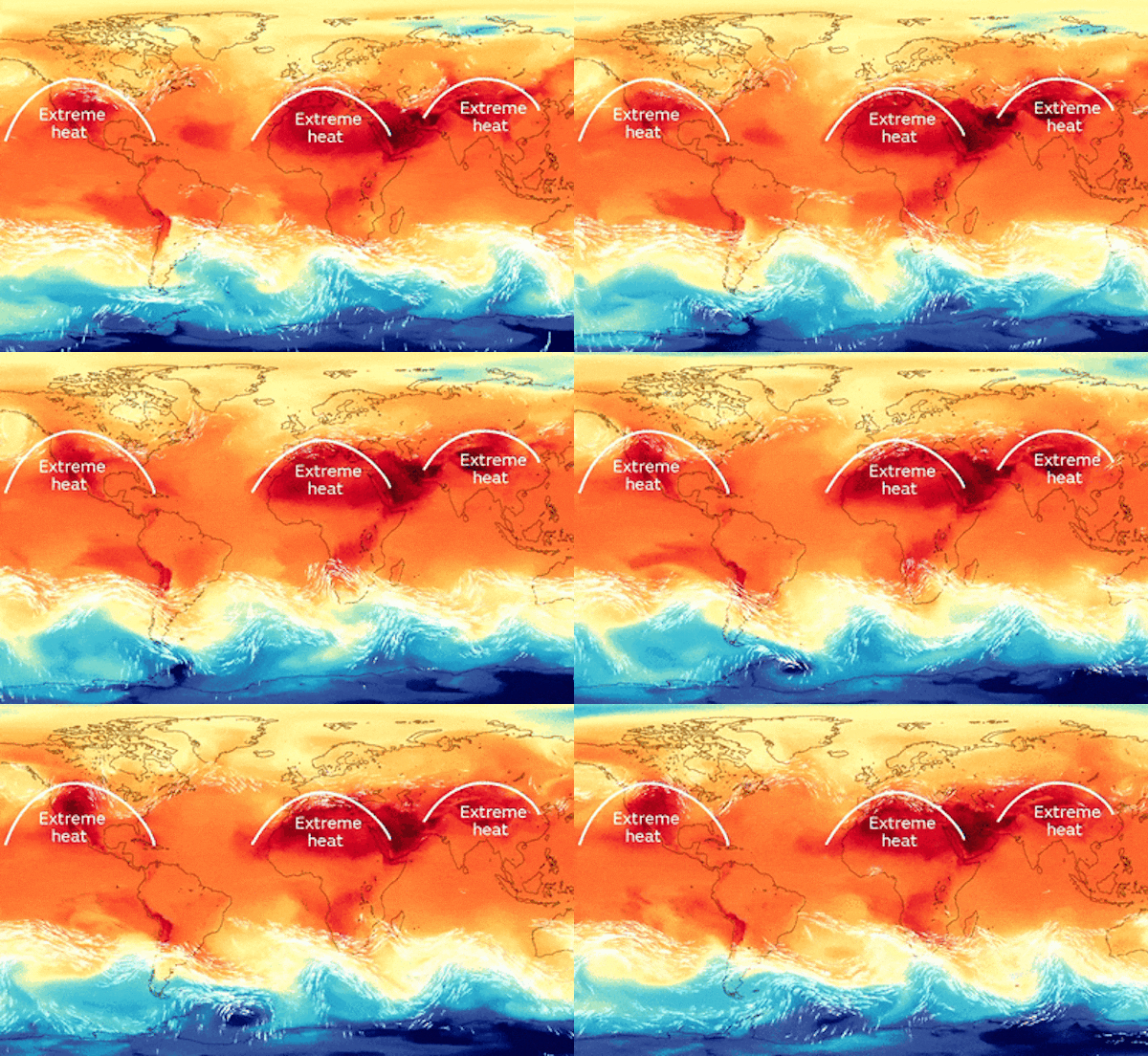
A stagnant polar jet stream can trapped heat over parts of North America, Europe and Asia at the same time. This example happened in July 2023. UK Met Office

Typically, waves in the jet stream pass through the continental United States in around three to five days. When blocking occurs, however, the high-pressure system could stagnate for days to weeks. This allows the heat to build up underneath, leading to blistering heat waves.

Since the jet stream circles around the globe, stagnating waves could occur in multiple places, leading to simultaneous heat waves at the mid-latitude around the world. That happened in 2024, with long-lasting heat waves in Europe, North America, Central Asia and China.

Jet stream behavior affects winter, too

The same meandering behavior of the jet stream also plays a role in extreme winter weather. That includes the southward intrusion of frigid polar air from the polar vortex and conditions for severe winter storms.

Many of these atmospheric changes, driven by human-caused global warming, have significant impacts on people’s health, property and ecosystems around the world.

Shuang-Ye Wu, Professor of Geology and Environmental Geosciences, University of Dayton

This article is republished from The Conversation under a Creative Commons license. Read the original article.

ooOOoo

I maybe approaching my own end of life but millions of others are younger than me. When I see a woman with a young baby in her arms I cannot stop myself from wondering what that generation is going to do.

Starting a veterinary clinic

Like any new start-up of a business venture, this requires knowledge, skills and quite a bit of luck!

I am delighted to offer this guest post by Penny.

ooOOoo

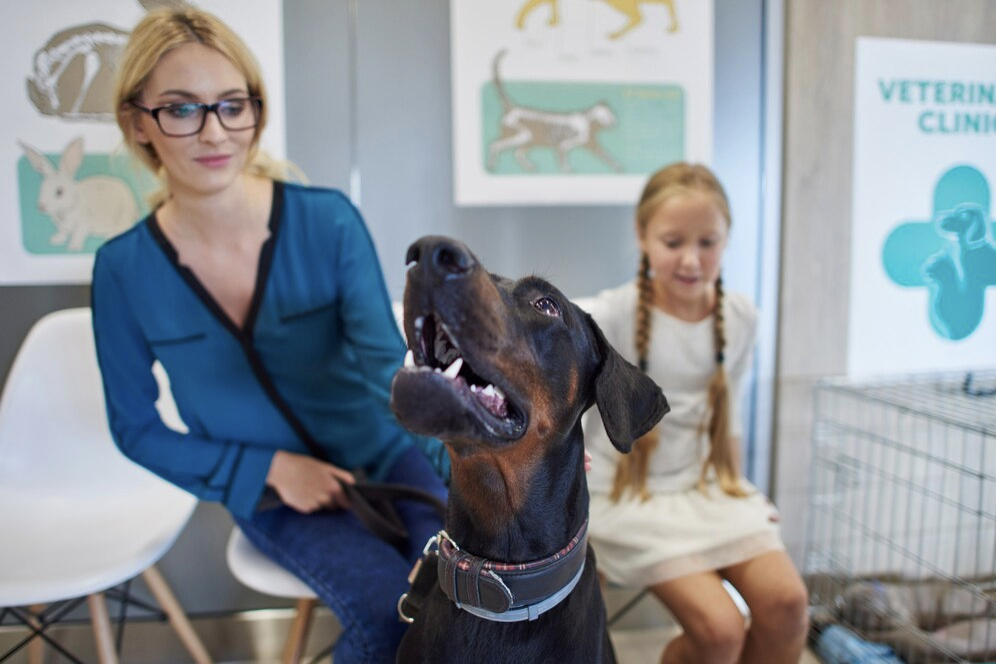
Image: Freepik

Vision to Reality: Building a Profitable Vet Clinic

Launching a veterinary clinic is a significant endeavor that requires meticulous planning and strategic decision-making. This venture combines a passion for animal care with the intricacies of managing a successful business. Aspiring clinic owners must navigate several critical steps to lay a strong foundation and ensure operational excellence. Starting your own clinic promises not only to fulfill a dream of helping animals but also to establish a thriving enterprise in the community.

Build a Strong Foundation with an Effective Marketing Strategy

A robust marketing strategy is essential to attract potential clients in the digital era. Establishing a professional online presence through a user-friendly website that details your services, team, and location builds trust among pet owners. Engage actively on social media with regular updates and client testimonials to showcase your expertise and commitment to animal care. Forge partnerships with local pet-related businesses to increase visibility and drive traffic to your clinic, enhancing both your and your partners’ customer bases.

Craft a Clear and Detailed Business Plan

A well-constructed business plan acts as your clinic’s roadmap, detailing your mission, services offered, and the specific target market. Identify your niche early—whether it’s specializing in certain animals or treatments—to attract the appropriate clientele. Include comprehensive financial projections and a marketing budget in your plan to ensure financial preparedness and support your clinic’s promotional activities.

Enhance Your Business Knowledge by Pursuing an MBA

Running a veterinary clinic demands a blend of clinical and business expertise. Pursuing a master’s of business administration online can boost your proficiency in key business areas such as strategy, management, and finance. An MBA not only deepens your understanding of business operations but also enhances leadership skills and self-assessment capabilities. These competencies are essential for balancing the medical and business demands of your clinic, ensuring its long-term success.

Safeguard Your Business with Proper Insurance

Operating a veterinary clinic comes with inherent risks, making comprehensive insurance coverage essential. Essential policies include malpractice insurance to handle legal issues and general liability insurance for accidents on your premises. Property insurance is crucial to protect your clinic’s infrastructure and equipment against unexpected events. Consulting with an insurance expert can ensure that you have thorough coverage to protect against potential financial setbacks.

Invest in High-Quality Veterinary Equipment

Providing top-tier care necessitates investing in high-quality veterinary equipment. Essential tools like X-ray machines, surgical instruments, and lab equipment should be of the highest standard to ensure accurate diagnoses and treatments. Modern technologies, such as digital imaging systems, not only enhance patient care but also improve operational efficiency. While the initial cost may be higher, investing in quality equipment pays off in the long run by boosting efficiency and minimizing errors.

Secure the Necessary Funding for Your Clinic

Securing sufficient funding is critical when starting a veterinary clinic. Estimate your startup costs accurately to understand your financial needs, including equipment, premises, staffing, and marketing. Explore diverse financing options, such as bank loans, private investors, and specialty medical practice loans that might offer favorable terms. Adequate initial funding prevents cash flow problems and supports your clinic’s growth trajectory.

Choose the Right Location for Your Clinic

The location of your clinic is pivotal to its success, necessitating a spot with a high demand for veterinary services. Conduct thorough market research to choose a community rich in pet owners who need your services. Select a location that is accessible, visible, and has ample parking to ensure convenience for your clients. Proximity to complementary services like pet groomers or dog trainers can further enhance client traffic and provide expansion opportunities.

Opening a veterinary clinic is both challenging and rewarding, demanding a careful blend of dedication and strategic foresight. Success in this field not only enhances the well-being of pets but also contributes positively to the local community. It requires ongoing commitment to adapt and grow in a dynamic environment. Ultimately, the fulfillment of running a successful veterinary clinic comes from both the impact on animal health and the achievement of entrepreneurial goals.

Discover the timeless wisdom that dogs offer at Learning from Dogs, where integrity and living in the present are celebrated. Dive into our content and embrace the lessons from our four-legged friends.

ooOOoo

This is a skilled summary of the needs of opening a vet’s clinic. And thank you, Penny, for your last paragraph. It has been a pleasure!

The changing climate

Here is one explanation.

There is no question the world’s weather systems are changing. However, for folk who are not trained in this science it is all a bit mysterious. So thank goodness that The Conversation have not only got a scientist who does know what he is talking about but also they are very happy for it to be republished.

ooOOoo

Atmospheric rivers are shifting poleward, reshaping global weather patterns

Atmospheric rivers are long filaments of moisture that curve poleward. Several are visible in this satellite image. Bin Guan, NASA/JPL-Caltech and UCLA

Zhe Li, University Corporation for Atmospheric Research

Atmospheric rivers – those long, narrow bands of water vapor in the sky that bring heavy rain and storms to the U.S. West Coast and many other regions – are shifting toward higher latitudes, and that’s changing weather patterns around the world.

The shift is worsening droughts in some regions, intensifying flooding in others, and putting water resources that many communities rely on at risk. When atmospheric rivers reach far northward into the Arctic, they can also melt sea ice, affecting the global climate.

In a new study published in Science Advances, University of California, Santa Barbara, climate scientist Qinghua Ding and I show that atmospheric rivers have shifted about 6 to 10 degrees toward the two poles over the past four decades.

Atmospheric rivers on the move

Atmospheric rivers aren’t just a U.S West Coast thing. They form in many parts of the world and provide over half of the mean annual runoff in these regions, including the U.S. Southeast coasts and West Coast, Southeast Asia, New Zealand, northern Spain, Portugal, the United Kingdom and south-central Chile.

California relies on atmospheric rivers for up to 50% of its yearly rainfall. A series of winter atmospheric rivers there can bring enough rain and snow to end a drought, as parts of the region saw in 2023.

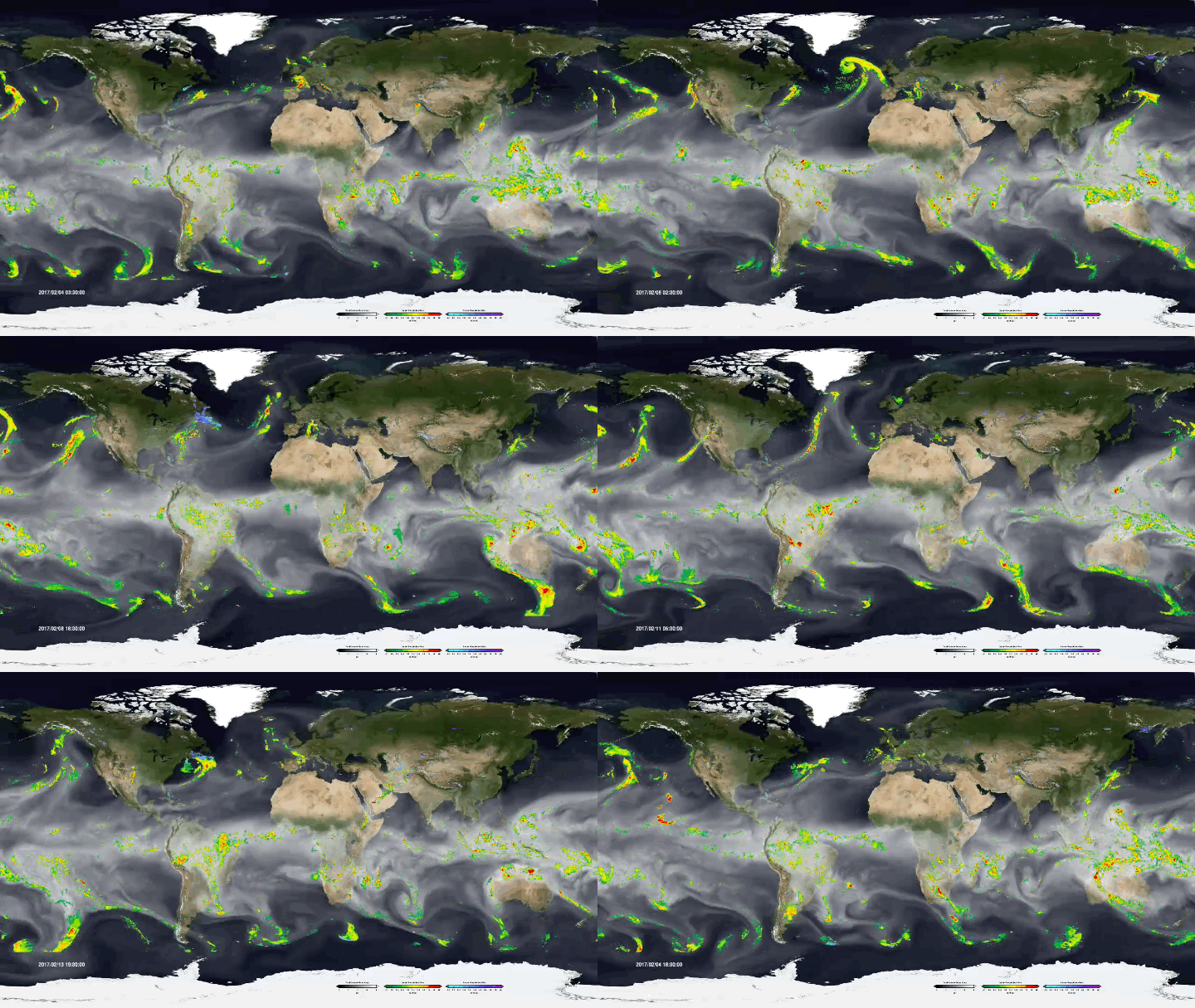
Atmospheric rivers occur all over the world, as this animation of global satellite data from February 2017 shows. NASA/Goddard Space Flight Center Scientific Visualization Studio

While atmospheric rivers share a similar origin – moisture supply from the tropics – atmospheric instability of the jet stream allows them to curve poleward in different ways. No two atmospheric rivers are exactly alike.

What particularly interests climate scientists, including us, is the collective behavior of atmospheric rivers. Atmospheric rivers are commonly seen in the extratropics, a region between the latitudes of 30 and 50 degrees in both hemispheres that includes most of the continental U.S., southern Australia and Chile.

Our study shows that atmospheric rivers have been shifting poleward over the past four decades. In both hemispheres, activity has increased along 50 degrees north and 50 degrees south, while it has decreased along 30 degrees north and 30 degrees south since 1979. In North America, that means more atmospheric rivers drenching British Columbia and Alaska.

A global chain reaction

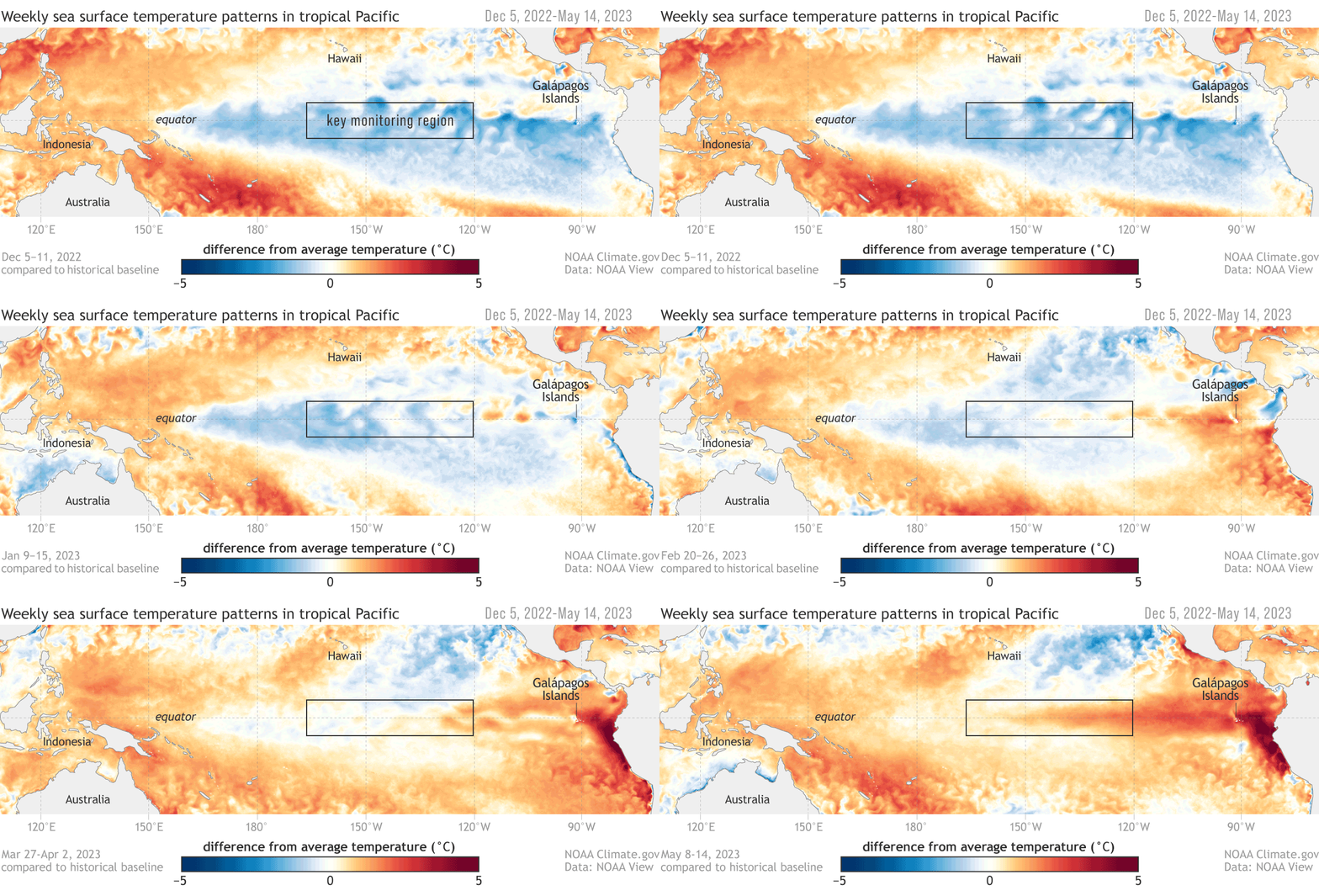
One main reason for this shift is changes in sea surface temperatures in the eastern tropical Pacific. Since 2000, waters in the eastern tropical Pacific have had a cooling tendency, which affects atmospheric circulation worldwide. This cooling, often associated with La Niña conditions, pushes atmospheric rivers toward the poles.

The poleward movement of atmospheric rivers can be explained as a chain of interconnected processes.

During La Niña conditions, when sea surface temperatures cool in the eastern tropical Pacific, the Walker circulation – giant loops of air that affect precipitation as they rise and fall over different parts of the tropics – strengthens over the western Pacific. This stronger circulation causes the tropical rainfall belt to expand. The expanded tropical rainfall, combined with changes in atmospheric eddy patterns, results in high-pressure anomalies and wind patterns that steer atmospheric rivers farther poleward.

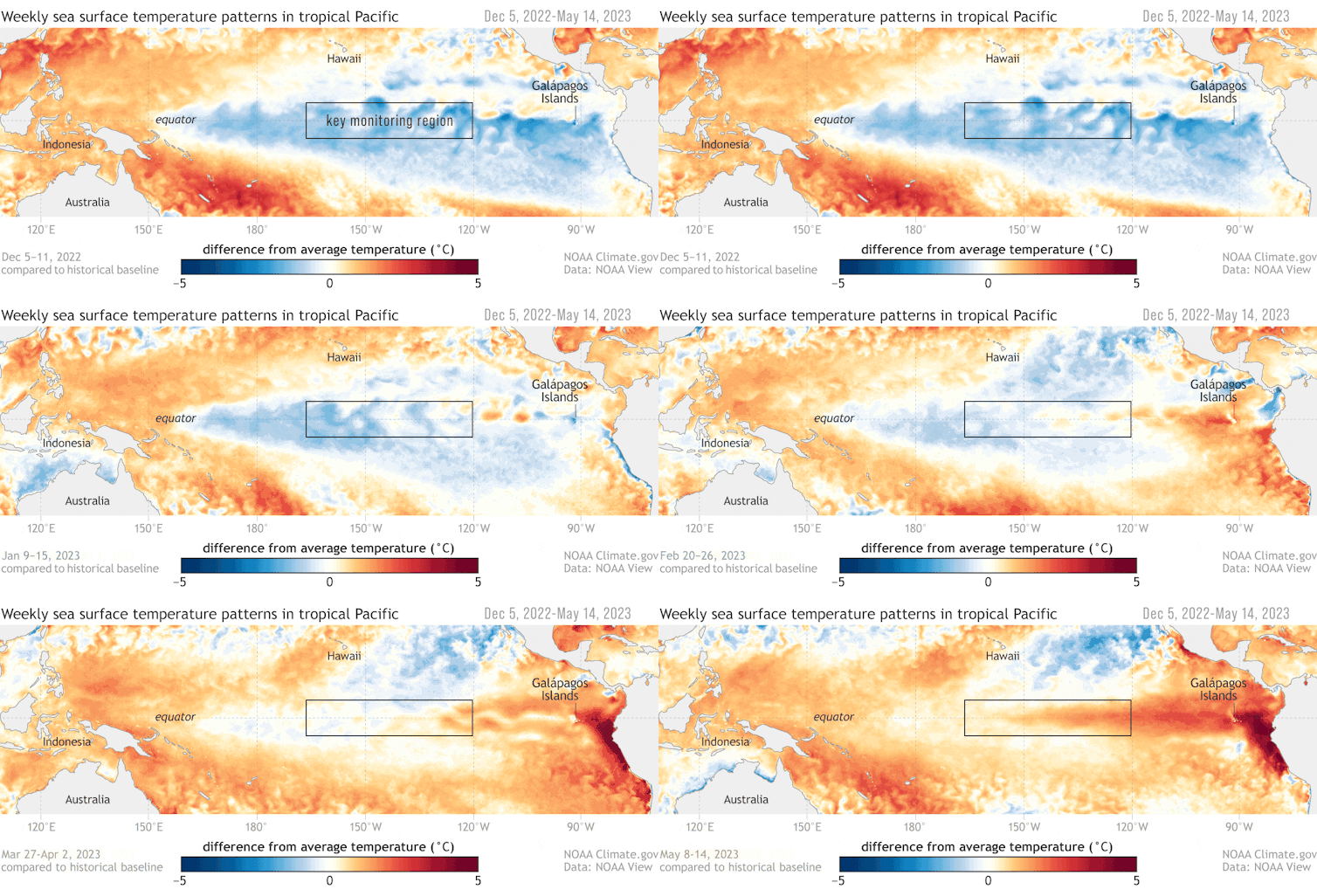
An animation of satellite data shows sea surface temperatures changing over months along the equator in the eastern Pacific Ocean. When they're warmer than normal, that indicates El Niño forming. Cooler than normal indicates La Nina.
La Niña, with cooler water in the eastern Pacific, fades, and El Niño, with warmer water, starts to form in the tropical Pacific Ocean in 2023. NOAA Climate.gov

Conversely, during El Niño conditions, with warmer sea surface temperatures, the mechanism operates in the opposite direction, shifting atmospheric rivers so they don’t travel as far from the equator.

The shifts raise important questions about how climate models predict future changes in atmospheric rivers. Current models might underestimate natural variability, such as changes in the tropical Pacific, which can significantly affect atmospheric rivers. Understanding this connection can help forecasters make better predictions about future rainfall patterns and water availability.

Why does this poleward shift matter?

A shift in atmospheric rivers can have big effects on local climates.

In the subtropics, where atmospheric rivers are becoming less common, the result could be longer droughts and less water. Many areas, such as California and southern Brazil, depend on atmospheric rivers for rainfall to fill reservoirs and support farming. Without this moisture, these areas could face more water shortages, putting stress on communities, farms and ecosystems.

In higher latitudes, atmospheric rivers moving poleward could lead to more extreme rainfall, flooding and landslides in places such as the U.S. Pacific Northwest, Europe, and even in polar regions.

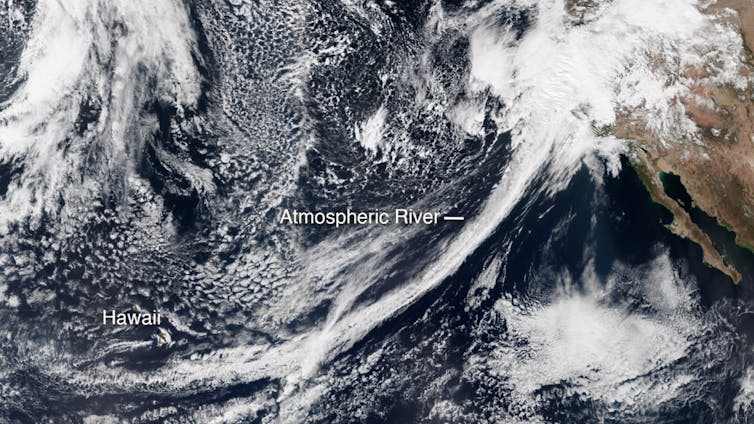
A long narrow band of moisture sweeps up toward California, crossing hundreds of miles of Pacific Ocean.
A satellite image on Feb. 20, 2017, shows an atmospheric river stretching from Hawaii to California, where it brought drenching rain. NASA/Earth Observatory/Jesse Allen

In the Arctic, more atmospheric rivers could speed up sea ice melting, adding to global warming and affecting animals that rely on the ice. An earlier study I was involved in found that the trend in summertime atmospheric river activity may contribute 36% of the increasing trend in summer moisture over the entire Arctic since 1979.

What it means for the future

So far, the shifts we have seen still mainly reflect changes due to natural processes, but human-induced global warming also plays a role. Global warming is expected to increase the overall frequency and intensity of atmospheric rivers because a warmer atmosphere can hold more moisture.

How that might change as the planet continues to warm is less clear. Predicting future changes remains uncertain due largely to the difficulty in predicting the natural swings between El Niño and La Niña, which play an important role in atmospheric river shifts.

As the world gets warmer, atmospheric rivers – and the critical rains they bring – will keep changing course. We need to understand and adapt to these changes so communities can keep thriving in a changing climate.

Zhe Li, Postdoctoral Researcher in Earth System Science, University Corporation for Atmospheric Research

This article is republished from The Conversation under a Creative Commons license. Read the original article.

ooOOoo

Those last two paragraphs of the above article show the difficulty in coming up with clear predictions of the future. As was said: ‘How that might change as the planet continues to warm is less clear. Predicting future changes remains uncertain due largely to the difficulty in predicting the natural swings between El Niño and La Niña, which play an important role in atmospheric river shifts.

Picture Parade Four Hundred and Fifty

Today is the Autumn Equinox.

At the equinoxes, the ecliptic and the celestial equator intersect. See the intersection point on this imaginary great circle, representing the dome of Earth’s sky? The celestial equator is directly above Earth’s equator. The ecliptic is the sun’s apparent path across our sky. And the celestial equator intersects your horizon at points due east and due west. That’s why – at every equinox, no matter where you are on the globe – the sun, on the celestial equator, rises due east and sets due west. Image via NASA.

This September equinox happens at 12:44 UTC or 04:44 Pacific Daylight Time today, September 22, 2024.

The equinox sun rises due east and sets due west

It’s not true that day and night are precisely equal on the day of an equinox. But here’s an equinox fact that is true. The sun rises due east and sets due west at the equinox. It might seem counterintuitive. But it’s true no matter where you live on Earth (except at the North and South Poles). Here’s how to visualize it.

To understand the nearly due-east and due-west rising and setting of an equinox sun, you have to think of the reality of Earth in space. First think about why the sun’s path across our sky shifts from season to season. That’s because our world is tilted on its axis with respect to its orbit around the sun.

Read the rest of this article here: https://earthsky.org/tonight/equinox-sun-rises-due-east-and-sets-due-west/

Fantastic advice re dogs for seniors

A great post on WebMD.

Now I appreciate that many who come to this place are not seniors but as I approach 80 that makes me most definitely a senior.

So this article was highly relevant.

ooOOoo

Best Dogs for Seniors

Medically Reviewed by Poonam Sachdev on October 12, 2023

Written by WebMD Editorial Contributors

Any dog owner can tell you there’s nothing like having a loyal companion. Dogs are good pets for people of any age, as long as you choose the right dog for your lifestyle.

If you’re an older adult looking to find a furry, four-legged friend, here are a few things you should consider. 

Why Get a Dog?

It’s a big responsibility, but the benefits are worth the work. Dogs can give you joy, companionship, and unconditional love. They can bring warmth and comfort into your life.

Better health. Decades of studies have shown the health benefits of spending time with dogs. Dog owners tend to have better heart and blood vessel health, including lower blood pressure, than those who don’t have a pet pup. That’s because dogs get people moving. Walking a dog regularly can help you boost how much exercise you get each day.

Less lonely. Dogs offer companionship just by being around. They might also help you be more social. Taking your dog on walks gives you a chance to meet neighbors or other canine owners at the local dog park.

Much happier. Looking at your dog can release a hormone that makes you feel happier. Science shows that gazing into your dog’s eye releases oxytocin. Known as the love hormone, oxytocin quickly boosts your mood.

Caring for a Dog

Before you get a furry pal, you should think about what you can offer the dog, as well as what they can offer you. You want to make sure to choose a dog that will be happy with the kind of life you lead. Consider these things when you start looking for a new pet.

Space. How much room do you have indoors and outdoors? You need to pick a dog that will be happy with the space you have to offer. 

Exercise. Some dogs need a lot of exercise, while others are happy hanging out on the couch all day. Think about how much exercise time you can give your pup. Also, think about how fit you are. You may not want a large, strong dog that could tug hard on the leash and cause you to get hurt on a walk.

Cost. All dogs need vet care, food, and toys. If they need a lot of grooming, you need to consider paying a professional groomer.

Age. Puppies are cute, but they’re also a lot of work. Older dogs may already have some training, but they might be set in their ways. Spend some time thinking about what you’re willing to accept in dog behavior.

Best Breeds for Seniors

Here are a few breeds that are natural choices for older adults.

Bichon Frise. These dogs are very small and cute. Their fluffy coats need regular grooming. They’re happy in small homes and apartments, and they only need moderate exercise.

Cocker spaniels. These dogs are known for their beautiful, soft coats, which need regular grooming. They’re gentle and friendly, and usually weigh under 30 pounds. They need regular walks to stay fit, but they aren’t highly energetic.

Beagles. They’re small, smart, and make wonderful companions. Their short coats are easy to groom. Beagles are energetic and need a lot of exercise every day.

Greyhounds. They can run fast, but they don’t always want to. They’re happiest lounging around indoors, but they need walks to stay fit. They’re large, usually weighing around 60 pounds, but they have short coats that don’t require a lot of grooming.

Pugs. These happy little dogs make great companions. They’re usually around 15 pounds and have short, easy-to-groom coats. They need more exercise than they want because they’re prone to be overweight. Regular walks can take care of that.

If you’re an older adult looking for a four-legged companion, you can speak to a veterinarian or a dog trainer in your area for more information. They can help you choose the perfect pet.

ooOOoo

I am certain there are many people who will find this a practical help in deciding what dog to get.

In my own case we currently have two dogs, Cleo and Oliver, and I frequently ponder on what Jean and I do when the last of them dies.

This article reminds me and Jean that at whatever age we are it is better to have a dog than not!

The weather conundrum!

We are in an era of unknown weather, across the world!

Niccolò Ubalducci Photographer
Photo by Niccolò Ubalducci

ooOOoo

The climate is changing so fast that we haven’t seen how bad extreme weather could get

Simon H. Lee, University of St Andrews; Hayley J. Fowler, Newcastle University, and Paul Davies, Newcastle University

Published: July 30, 2024

Extreme weather is by definition rare on our planet. Ferocious storms, searing heatwaves and biting cold snaps illustrate what the climate is capable of at its worst. However, since Earth’s climate is rapidly warming, predominantly due to fossil fuel burning, the range of possible weather conditions, including extremes, is changing.

Scientists define “climate” as the distribution of possible weather events observed over a length of time, such as the range of temperatures, rainfall totals or hours of sunshine. From this they construct statistical measures, such as the average (or normal) temperature. Weather varies on several timescales – from seconds to decades – so the longer the period over which the climate is analysed, the more accurately these analyses capture the infinite range of possible configurations of the atmosphere.

Typically, meteorologists and climate scientists use a 30-year period to represent the climate, which is updated every ten years. The most recent climate period is 1991-2020. The difference between each successive 30-year climate period serves as a very literal record of climate change.

This way of thinking about the climate falls short when the climate itself is rapidly changing. Global average temperatures have increased at around 0.2°C per decade over the past 30 years, meaning that the global climate of 1991 was around 0.6°C cooler than that in 2020 (when accounting for other year-to-year fluctuations), and even more so than the present day.

A moving target for climate modellers

If the climate is a range of possible weather events, then this rapid change has two implications. First, it means that part of the distribution of weather events comprising a 30-year climate period occurred in a very different background global climate: for example, northerly winds in the 1990s were much colder than those in the 2020s in north-west Europe, thanks to the Arctic warming nearly four times faster than the global average. Statistics from three decades ago no longer represent what is possible in the present day.

Second, the rapidly changing climate means we have not necessarily experienced the extremes that modern-day atmospheric and oceanic warmth can produce. In a stable climate, scientists would have multiple decades for the atmosphere to get into its various configurations and drive extreme events, such as heatwaves, floods or droughts. We could then use these observations to build up an understanding of what the climate is capable of. But in our rapidly changing climate, we effectively have only a few years – not enough to experience everything the climate has to offer.

Extreme weather events require what meteorologists might call a “perfect storm”. For example, extreme heat in the UK typically requires the northward movement of an air mass from Africa combined with clear skies, dry soils and a stable atmosphere to prevent thunderstorms forming which tend to dissipate heat.

Such “perfect” conditions are intrinsically unlikely, and many years can pass without them occurring – all while the climate continues to change in the background. Based on an understanding of observations alone, this can leave us woefully underprepared for what the climate can now do, should the right weather conditions all come together at once.

Startling recent examples include the extreme heatwave in the Pacific north-west of North America in 2021, in which temperatures exceeded the previous Canadian record maximum by 4.6°C. Another is the occurrence of 40°C in the UK in summer 2022, which exceeded the previous UK record maximum set only three years earlier by 1.6°C. This is part of the reason why the true impact of a fixed amount of global warming is only evident after several decades, but of course – since the climate is changing rapidly – we cannot use this method anymore.

Playing with fire

To better understand these extremes, scientists can use ensembles: many runs of the same weather or climate model that each slightly differ to show a range of plausible outcomes. Ensembles are routinely used in weather prediction, but can also be used to assess extreme events which could happen even if they do not actually happen at the time.

When 40°C first appeared in ensemble forecasts for the UK before the July 2022 heatwave, it revealed the kind of extreme weather that is possible in the current climate. Even if it had not come to fruition, its mere appearance in the models showed that the previously unthinkable was now possible. In the event, several naturally occurring atmospheric factors combined with background climate warming to generate the record-shattering heat on July 19 that year.

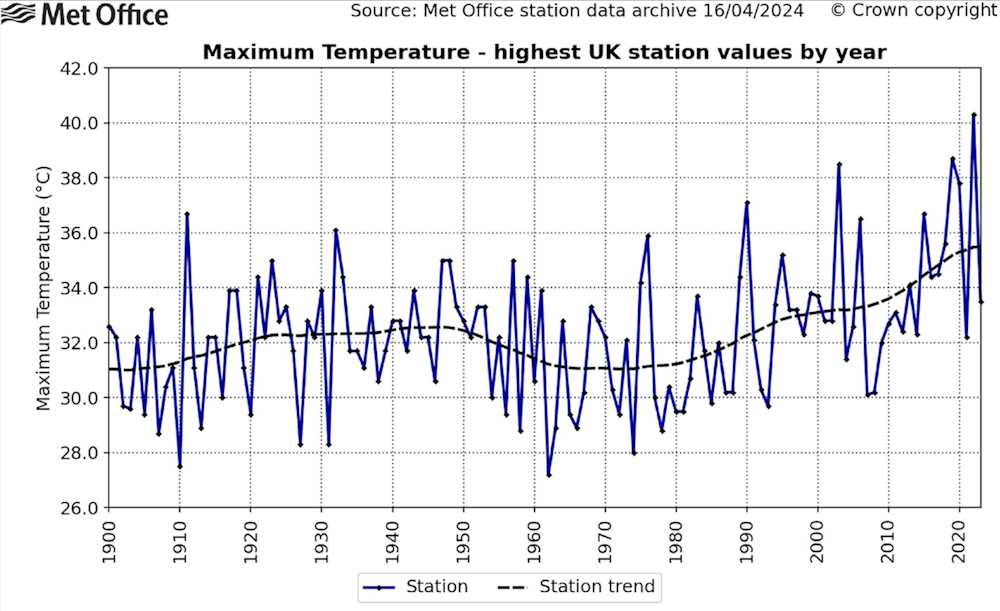
The highest observed temperature each year in the UK, from 1900 to 2023

A graph showing the highest observed temperature in the UK between 1900 and 2023.
The hottest days are getting hotter in the UK. Met Office/Kendon et al. 2024

Later in summer 2022, after the first occurrence of 40°C, some ensemble weather forecasts for the UK showed a situation in which 40°C could be reached on multiple consecutive days. This would have posed an unprecedented threat to public health and infrastructure in the UK. Unlike the previous month, this event did not come to pass, and was quickly forgotten – but it shouldn’t have been.

It is not certain whether these model simulations correctly represent the processes involved in producing extreme heat. Even so, we must heed the warning signs.

Despite a record-warm planet, summer 2024 in the UK has been relatively cool so far. The past two years have seen global temperatures far above anything previously observed, and so potential extremes have probably shifted even further from what we have so far experienced.

Just as was the case in August 2022, we’ve got away with it for now – but we might not be so lucky next time.

Simon H. Lee, Lecturer in Atmospheric Science, University of St Andrews; Hayley J. Fowler, Professor of Climate Change Impacts, Newcastle University, and Paul Davies, Chief Meteorologist, Met Office and Visiting Professor, Newcastle University

This article is republished from The Conversation under a Creative Commons license. Read the original article.

ooOOoo

That last sentence says it all: “Just as was the case in August 2022, we’ve got away with it for now – but we might not be so lucky next time.”

I am giving a talk, The Next Ten Years, next Saturday to our local Freethinkers group in Grants Pass. Close to the start of the presentation I say: “The Global Temperature anomaly, as of last year, 2023, is 1.17 C, 2.11 F, above the long-term average from 1951 to 1980. The 10 most recent years are the warmest years on record.

Finally, I am getting on in age and part of me wants to die, hopefully naturally, before more climate extremes are reached, but then another part of me would like to experience it!

Essentially, life is about play

We take our decision from watching the animal kingdom.

A recent post in The Conversation provides the article for today’s blog post.

ooOOoo

At its core, life is all about play − just look at the animal kingdom

David Toomey, UMass Amherst

At Cambridge University Library, along with all the books, maps and manuscripts, there’s a child’s drawing that curators have titled “The Battle of the Fruit and Vegetable Soldiers.”

The drawing depicts a turbaned cavalry soldier facing off against an English dragoon. It’s a bit trippy: The British soldier sits astride a carrot, and the turbaned soldier rides a grape. Both carrot and grape are fitted with horses’ heads and stick appendages.

A child's drawing of two soldiers ridind a grape and a carrot
‘The Battle of the Fruit and Vegetable Soldiers,’ a drawing on the back of a manuscript page from Charles Darwin’s ‘On the Origin of Species,’ attributed to Darwin’s young son Francis. Cambridge University Library, CC BY-ND

It’s thought to be the work of Francis Darwin, the seventh child of British naturalist Charles Darwin and his wife, Emma, and appears to have been made in 1857, when Frank would have been 10 or 11. And it’s drawn on the back of a page of a draft of “On the Origin of Species,” Darwin’s masterwork and the foundational text of evolutionary biology. The few sheets of the draft that survive are pages Darwin gave to his children to use for drawing paper.

Darwin’s biographers have long recognized that play was important in his personal and familial life. The Georgian manor in which he and Emma raised their 10 children was furnished with a rope swing hung over the first-floor landing and a portable wooden slide that could be laid over the main stairway. The gardens and surrounding countryside served as an open-air laboratory and playground.

Play also has a role in Darwin’s theory of natural selection. As I explain in my new book, “Kingdom of Play: What Ball-bouncing Octopuses, Belly-flopping Monkeys, and Mud-sliding Elephants Reveal about Life Itself,” there are many similarities – so many that if you could distill the processes of natural selection into a single behavior, that behavior would be play.

No goal, no direction

Natural selection is the process by which organisms that are best adapted to their environments are more likely to survive, and so able to pass on the characteristics that helped them thrive to their offspring. It is undirected: In Darwin’s words, it “includes no necessary and universal law of advancement or development.”

Through natural selection, the rock pocket mouse has evolved a coat color that hides it from predators in the desert Southwest.

In contrast to foraging and hunting – behaviors with clearly defined goals – play is likewise undirected. When a pony frolics in a field, a dog wrestles with a stick or chimpanzees chase each other, they act with no goal in mind.

Natural selection is utterly provisional: The evolution of any organism responds to whatever conditions are present at a given place and time. Likewise, animals at play are acting provisionally. They constantly adjust their movements in response to changes in circumstances. Playing squirrels, faced with obstacles such as falling branches or other squirrels, nimbly alter their tactics and routes.

Natural selection is open-ended. The forms of life are not fixed, but continually evolving. Play, too, is open-ended. Animals begin a play session with no plan of when to end it. Two dogs play-fighting, for instance, cease playing only when one is injured, exhausted or simply loses interest.

Natural selection also is wasteful, as Darwin acknowledged. “Many more individuals of each species are born than can possibly survive,” he wrote. But in the long term, he allowed, such profligacy could produce adaptations that enable an evolutionary line to become “more fit.”

Keepers noticed that Shanthi, a 36-year-old elephant at the Smithsonian national zoo, liked to make noise with objects, so they gave her horns, harmonicas and other noisemakers.

Play is likewise profligate. It requires an animal to expend time and energy that perhaps would be better devoted to behaviors such as foraging and hunting that could aid survival.

And that profligacy is also advantageous. Animals forage and hunt in specific ways that don’t typically change. But an animal at play is far more likely to innovate – and some of its innovations may in time be adapted into new ways to forage and hunt.

Competing and cooperating

As Darwin first framed it, the “struggle for existence” was by and large a competition. But in the 1860s, Russian naturalist Pyotr Kropotkin’s observations of birds and fallow deer led him to conclude that many species were “the most numerous and the most prosperous” because natural selection also selects for cooperation.

Scientists confirmed Kroptokin’s hypothesis in the 20th century, discovering all manner of cooperation, not only between members of the same species but between members of different species. For example, clown fish are immune to anemone stings; they nestle in anemone tentacles for protection and, in return, keep the anemones free of parasites, provide nutrients and drive away predators.

Play likewise utilizes both competition and cooperation. Two dogs play-fighting are certainly competing, yet to sustain their play, they must cooperate. They often reverse roles: A dog with the advantage of position might suddenly surrender that advantage and roll over on its back. If one bites harder than intended, it is likely to retreat and perform a play bow – saying, in effect, “My bad. I hope we can keep playing.”

River otters at the Oregon Zoo repeatedly separate and reunite while playing in a tub of ice.

Natural selection and play also may both employ deception. From butterflies colored to resemble toxic species to wild cats that squeal like distressed baby monkeys, many organisms use mimicry to deceive their prey, predators and rivals. Play – specifically, play-fighting – similarly offers animals opportunities to learn about and practice deception.

To live is to play

Darwin wrote that natural selection creates “endless forms most beautiful and most wonderful.” Play also creates beauty in countless ways, from the aerial acrobatics of birds of prey to the arcing, twisting leaps of dolphins.

In 1973, Ukrainian-American geneticist Theodosius Dobzhansky published an essay with the take-no-prisoners title “Nothing in Biology Makes Sense Except in the Light of Evolution.” Many biologists would agree. Perhaps the most satisfying definition of life attends not to what it is but to what it does – which is to say, life is what evolves by natural selection.

And since natural selection shares so many features with play, we may with some justification maintain that life, in a most fundamental sense, is playful.

David Toomey, Professor of English, UMass Amherst

This article is republished from The Conversation under a Creative Commons license. Read the original article.

ooOOoo

Prof. Toomey’s analysis is spot-on.

All of life involves some form of play.

Dogs can smell our human stress

An article from Live Science tells all.

Before I share the article with you, I felt I should mention that I haven’t found a link to share the Live Science item and it may need to be moved. We will see what happens.

ooOOoo

Dogs can smell their humans’ stress, and it makes them sad.

By Sara Novak,  published July 27, 2024.

Dogs can smell when people are stressed, and it seems to make them feel downhearted.

A new study shows that dogs pick up on our emotions through their sense of smell. (Image credit: Catherine Falls Commercial via Getty Images)

Humans and dogs have been close companions for perhaps 30,000 years, according to anthropological and DNA evidence. So it would make sense that dogs would be uniquely qualified to interpret human emotion. They have evolved to read verbal and visual cues from their owners, and previous research has shown that with their acute sense of smell, they can even detect the odor of stress in human sweat. Now researchers have found that not only can dogs smell stress—in this case represented by higher levels of the hormone cortisol—they also react to it emotionally.

For the new study, published Monday in Scientific Reports, scientists at the University of Bristol in England recruited 18 dogs of varying breeds, along with their owners. Eleven volunteers who were unfamiliar to the dogs were put through a stress test involving public speaking and arithmetic while samples of their underarm sweat were gathered on pieces of cloth. Next, the human participants underwent a relaxation exercise that included watching a nature video on a beanbag chair under dim lighting, after which new sweat samples were taken. Sweat samples from three of these volunteers were used in the study.

Participating canines were put into three groups and smelled sweat samples from one of the three volunteers. Prior to doing so, the dogs were trained to know that a food bowl at one location contained a treat and that a bowl at another location did not. During testing, bowls that did not contain a treat were sometimes placed in one of three “ambiguous” locations. In one testing session, when the dogs smelled the sample from a stressed volunteer, compared with the scent of a cloth without a sample, they were less likely to approach the bowl in one of the ambiguous locations, suggesting that they thought this bowl did not contain a treat. Previous research has shown that an expectation of a negative outcome reflects a down mood in dogs.

The results imply that when dogs are around stressed individuals, they’re more pessimistic about uncertain situations, whereas proximity to people with the relaxed odor does not have this effect, says Zoe Parr-Cortes, lead study author and a Ph.D. student at Bristol Veterinary School at the University of Bristol. “For thousands of years, dogs have learned to live with us, and a lot of their evolution has been alongside us. Both humans and dogs are social animals, and there’s an emotional contagion between us,” she says. “Being able to sense stress from another member of the pack was likely beneficial because it alerted them of a threat that another member of the group had already detected.”

The fact that the odor came from an individual who was unfamiliar to the dogs speaks to the importance of smell for the animals and to the way it affects emotions in such practical situations, says Katherine A. Houpt, a professor emeritus of behavioral medicine at Cornell University’s College of Veterinary Medicine. Houpt, who was not involved in the new study, suggests that the smell of stress may have reduced the dogs’ hunger because it’s known to impact appetite. “It might not be that it’s changing their decision-making but more that it’s changing their motivation for food,” she says. “It makes sense because when you’re super stressed, you’re not quite as interested in that candy bar.”

This research, Houpt adds, shows that dogs have empathy based on smell in addition to visual and verbal cues. And when you’re stressed, that could translate into behaviors that your dog doesn’t normally display, she says. What’s more, it leaves us to wonder how stress impacts the animals under the more intense weight of an anxious owner. “If the dogs are responding to more mild stress like this, I’d be interested to see how they responded to something more serious like an impending tornado, losing your job or failing a test,” Houpt says. “One would expect the dog to be even more attuned to an actual threat.”

Sara Novak, Science Writer

Sara Novak is a science writer based on Sullivan’s Island, S.C. Her work has appeared in Discover, Sierra Magazine, Popular Science, New Scientist, and more. Follow Novak on X (formerly Twitter) @sarafnovak

ooOOoo

Dogs are such perfect animals and Sara brings this out so well. As was pointed out in the article dogs have learned to live with us humans over thousands of years.

Well done, Sara!

Parkinson’s Disease (PD)

More information on this terrible condition.

As you know, Jean suffers from PD and was diagnosed in 2015.

Very recently there was this article on PD and I reproduce parts of it (I have not applied for permission to republish) but I have provided the link to a pdf.

ooOOoo

Protein discovery linked to Parkinson’s disease opens future research areas

by WEHI

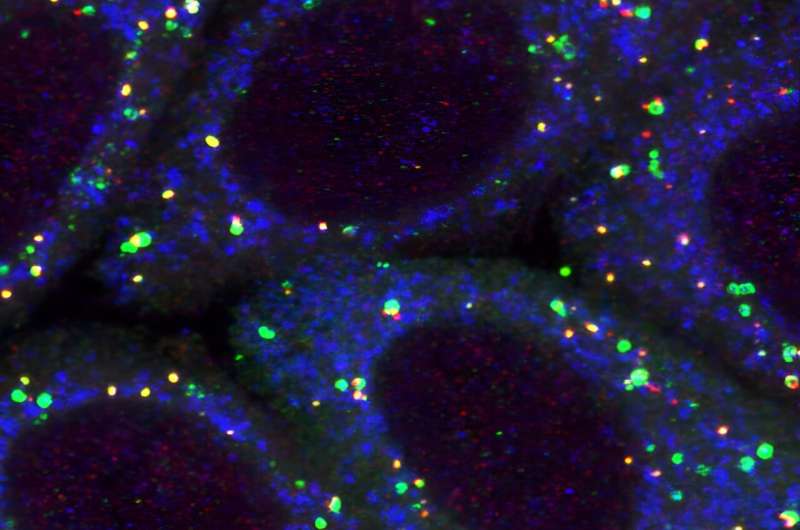
Mitochondria (blue) being targeted by mitophagy (green and red). Credit: WEHI

Parkinson’s disease is the world’s fastest growing neurological condition. Currently there are no drugs or therapies that slow or stop the progression of the disease.

In Australia, someone is diagnosed with Parkinson’s approximately every 30 minutes. Current estimates show there are more than 219,000 people living with Parkinson’s in Australia, a number forecast to double in the next 15 years.

WEHI’s Parkinson’s Disease Research Center has some of the world’s leading researchers tackling the problem using a multi-disciplinary collaborative approach.

New proteins linked to Parkinson’s pathway

Mitochondria are the energy generating machines in our cells and are kept healthy by mitophagy, which is the molecular process of removing or recycling damaged or dysfunctional mitochondria.

PINK1 and Parkin are two key genes involved in mitophagy, and mutations in these genes are linked to early-onset Parkinson’s disease.

Until the discovery of two proteins, NAP1 and SINTBAD, exactly how PINK1/Parkin mitophagy activation was regulated was unknown.

ooOOoo

We wish the scientists all the best as they delve into PD.

That link to the PDF file is https://www.nature.com/articles/s41594-024-01338-y