Category: Education

German Shepherd Dogs

How to find a good breeder.

This is a long and comprehensive guest post from Michael Kempkes.

ooOOoo

5 Best German Shepherd Dog Breeders in California.

If you are looking for the highest-quality German Shepherd in California, you must choose the right breeder first and this selection will make all the difference. A well-bred German Shepherd is a loyal companion, a skilled working dog, and a trusted member of your family, so the right choice is extremely important. But with so many options available, how to pick a reputable breeder? In this post, we have compiled a list of the top 5 German Shepherd breeders in California for 2025. These breeders are known for their commitment to health, temperament, and ethical breeding practices and for producing strong, well-balanced dogs with excellent genetics. All these breeders provide German shepherds for different purposes whether you are looking for a family protector, a sports dog, or a working-line GSD.

So, let’s just find out the best places to get a well-bred German Shepherd in California.

1. Kempkes Executive K9s (Agua Dulce, CA)

  • Rating: ⭐⭐⭐⭐⭐
  • Location: 9450 Yucca Hills Rd, Agua Dulce, CA 91390
  • Specialization: Elite German & European Bloodline GSD
  • Certifications: SV, FCI, VA, Schutzhund/IPO Titled German Shepherd Dogs


Kempkes Executive K9s
 has over 30 years of experience in breeding top-quality German Shepherds. They focus on elite German and European bloodlines, their expertise makes them one of the best breeders in the world. You can trust their dogs to have exceptional traits and strong lineage. They provide top-tier, fully trained imported GSDs from the finest bloodlines perfect as protection dogs and family companions. They put health first, train with care, and build strong temperaments for 100% customer satisfaction. This commitment to quality sets them apart as a top breeder in California. A name you can trust for well-bred, highly trained dogs. They have years of experience working with all types of German bloodline dogs. This includes Malinois, West German Showline German Shepherds, Working Line German Shepherds, Rottweilers, Doberman Pinschers, and Schnauzers. Their team is skilled in handling these dogs, making sure they receive the best training.

What Makes Kempkes Executive K9s Stand Out?

  • Kempkes Executive K9s is renowned for producing elite German Shepherds with exceptional quality and temperament.
  • Each puppy and dog is carefully selected from the top European bloodline to ensure superior genetics and health.
  • Their German Shepherds undergo three levels of protection training, including guarding, bomb detection, and search and rescue, providing unmatched security.
  • They deliver advanced personalized training program packages to satisfy the personal needs of each family or individual.
  • All dogs are free from genetic health issues, ensuring a long and healthy life for your companion.
  • Their trainers have a deep understanding of German Shepherds’ behavior. They know the behavioral patterns and instincts of dogs. Using this knowledge, they apply proven training techniques to develop effective obedience and confidence in GSDs.
  • Their training programs help improve communication and build trust. Both the dog and owner will feel safe and supported during the entire training.

2. Vom Walters Kennels (Pilot Hill, CA)

  • Rating: ⭐⭐⭐⭐⭐
  • Location: 5580 Salmon Falls Rd, Pilot Hill, CA 95664, United States
  • Specialization: Finest German VA, V, & Schutzhund imported lines.
  • Certifications: AKC-registered & OFA-certified

Vom Walters Kennels breeds top-quality German Shepherds. They focus on the best German VA, V, and Schutzhund bloodlines. Years of experience help them raise dogs with great temperaments and strong abilities. Passion and commitment set them apart. First-time owners and experienced handlers will find the right match here. Their dogs come with expert care and full support. You also get a pet free from hip and elbow dysplasia.

What Makes Vom Walters Kennels Stand Out?

  • Vom Walters Kennels breeds come from elite bloodlines. These lines have strong genetics, high intelligence, and excellent working skills. 
  • Every dog at Vom Walters Kennels goes through strict health tests and gets OFA certification. They are checked for hip and elbow issues to make sure they are free from dysplasia. This focus on health gives buyers confidence. They can trust their dog will live a long and healthy life.
  • Vom Walters Kennels has dogs grow up in a caring environment and adjust well to different roles. They make great family pets, work with law enforcement, and excel in sports.
  • Vom Walters Kennels goes the extra mile to support their clients for life. They help you choose the right puppy, offer training advice, and continue to assist you throughout your journey together. Their dedication to your success goes beyond just getting a dog. You’ll always have the guidance and resources needed to build a strong bond with your pet.
  • Vom Walters Kennels values quality above all. The health and happiness of their dogs come first. Their breeding program focuses on strong health, good temperament, and following breed standards. Each puppy is carefully bred to represent the true German Shepherd breed.

3. Lundborg-Land (Southern CA)

  • Rating: ⭐⭐⭐⭐⭐
  • Location: 15110 Harness Hill Drive Perris, California 92570
  • Specialization: Show and Work quality dogs & puppies
  • Certifications: AKC, SV, Schutzhund titled, Hip Certified Dogs

Lundborg-Land is a distinguished breeder located in Southern California, specializing in show and work-quality German Shepherds. With a focus on breeding the German “SV” way, they produce dogs with exceptional temperament, intelligence, and physical structure. They raise puppies and adult dogs in an affectionate environment, which helps them grow confident, friendly, and ready for different roles. Some become loving family pets, while others shine in shows or as working dogs. Lundborg-Land focuses on top health and quality, that’s why German Shepherd lovers trust them.

What Makes Lundborg-Land Stand Out?

  • Lundborg-Land carefully selects their breed for their conformation, intelligence, and drive, making them versatile companions for families, competitors, and working professionals.
  • All dogs at Lundborg-Land are bred for the highest quality and good temperament. They are hip-certified and come from Schutzhund-titled, health-certified parents. This ensures they are free from genetic health issues and have stable, confident personalities.
  • Lundborg-Land breeds German Shepherds with excellence and maintains heritage. They stick to the highest standards set by the German Shepherd Club (SV). 
  • They train puppies well, each one learns obedience training and becomes a well-mannered and well-adjusted adult. 
  • Lundborg-Land offers dog boarding for your convenience, as well as new crates tailored to your dog’s size. They also assist with airplane flight costs, making it easier for out-of-state clients to bring home their new companions.

4. Mountain Valley K9 (Lindsay, CA)

  • Rating: ⭐⭐⭐⭐⭐
  • Location: 2500 Ave 220, Lindsay, CA 93247, US
  • Specialization: Working Line German Shepherd breeding
  • Certifications: AKC Registration, Hip & Elbow OFA, Schutzhund-titled dogs

Mountain Valley K9, based in Lindsay, California, breeds working-line German Shepherds. They focus on dogs that are smart, strong, and full of energy. These dogs are trained for jobs like family protection and sports. The puppies are raised in a loving home, helping them grow confident and social. The breeder cares about their dogs’ health, temperament, and abilities, making them a top choice for those looking for working dogs.

What Makes Mountain Valley K9 Stand Out?

  • Mountain Valley K9 specializes in breeding German Shepherds, these dogs are known for their strong instincts and quick learning abilities. They excel in protection, search and rescue, and even sports with smooth and efficient training programs. 
  • The breeding program pays close attention to structure, movement, and coat quality. This way, the dogs are not only capable but also look great.
  • Each puppy is checked by a vet, vaccinated, dewormed, and given plenty of love and care. This ensures they are healthy and ready for their new home.
  • Socialization starts early, with puppies being exposed to different sounds and sights. This helps them grow into confident, well-adjusted dogs.
  • Mountain Valley K9 stands behind their puppies. They offer a 100% satisfaction guarantee and provide ongoing support to make sure your dog thrives in your home.

5. Royal Tribes K9 (Beverly Hills, CA)

  • Rating: ⭐⭐⭐⭐⭐
  • Location: 113 North San Vicente Blvd. Suite 348, Beverly Hills, CA 90211
  • Specialization: Black and Long Hair German Shepherd
  • Certifications: Health Guarantee Certificate

Royal Tribes K9 is a luxury breeder based in Beverly Hills. They specialize in rare black and long-haired German Shepherds, these dogs are known for their beauty and wonderful temperaments. The puppies are bred to meet high standards of health, intelligence, and appearance. Royal Tribes K9 aims to provide top-tier companions for clients who want only the best. Each puppy is raised with great care, they are not only stunning to look at but also well-socialized. These dogs are ready to become a beloved member of your family.

What Makes Royal Tribes K9 Stand Out?

  • Royal Tribes K9 specializes in rare black, long-haired German Shepherds. These dogs offer a luxurious choice for anyone looking for a unique companion.
  • Each puppy undergoes thorough health checks to ensure they are in top condition, giving you confidence in their well-being.
  • The puppies are kept up-to-date on vaccinations and follow a strict care routine. This helps lay the foundation for a healthy, happy life.
  • If your puppy develops a hereditary genetic issue within five years, Royal Tribes K9 will replace it with a puppy of equal value. This shows their dedication to customer satisfaction.
  • To help your puppy stay healthy, they provide detailed food and supplement plans. These plans ensure your dog thrives in its new home.

What to Look for in a German Shepherd Breeder

You need to choose the right German Shepherd breeder to bring home a healthy, well-behaved dog. This decision is crucial. Here are four important things to consider when picking a breeder:

1. Health Screenings & Genetic Testing

An authentic breeder would really keep dogs in good health. Health screenings and genetic testing done on the dog would fetch out any potential problems. German Shepherds can have problems like hip dysplasia, elbow dysplasia, and degenerative myelopathy, and ask the breeder for health clearances for the parents. This includes hip and elbow clearances from OFA (Orthopedic Foundation for Animals). They should also test for degenerative myelopathy and other issues. Healthy puppies come from healthy parents, so make sure to ask for this information.

2. Ethical Breeding Practices & Socialization

Ethical breeding and proper socialization are key to raising German Shepherd dogs. These practices help make sure the dogs grow up healthy and well-balanced. They also build confidence and make them better suited for life with families. A responsible breeder follows ethical practices to raise puppies in a clean and smooth environment. Socializing puppies is also key, early exposure to various sights, sounds, and experiences helps build their confidence. It’s important to ask the breeder about:

  • How do they socialize their puppies? 
  • Do they introduce the pups to different people, places, and new things?

This early interaction helps them become well-adjusted adults later on.

3. Registration & Pedigree Verification

A reliable breeder will give you registration papers and pedigree details for their puppies. This shows the dog comes from a proven lineage and follows breed standards. Choose breeders who register their dogs with trusted groups like the:

  • American Kennel Club (AKC)
  • Verein fur Deutsche Schaferhunde (SV)
  • Federation Cynologique Internationale (FCI)
  • the German Shepherd Dog Club of America (GSDCA)

Pedigree details also show the dog’s family history. You can see if its parents or grandparents earned titles or awards. This can help you gauge the dog’s quality and temperament.

4. Customer Reviews and Breeder Transparency

Customer reviews and breeder transparency are key signs of a breeder’s trustworthiness. Check for feedback from past clients. Feel free to ask for references, a reliable breeder will answer all your questions openly. They’ll also let you visit their facility to meet the puppies and their parents. Trustworthy breeders are clear about their practices. Avoid breeders who seem secretive or refuse to share details about their breeding process.

The Bottom Line

The breeders listed here are known for their priority on health, ethical breeding, and expert training. If you need a working-line GSD, a show-quality champion, or a loyal family protector, these breeders deliver top-quality dogs with strong genetics and great temperaments.

You should first visit the breeder to inquire about the breeding standards, health, and many other aspects. The health certifications are of great importance to ensure the dog’s health. A well-bred German Shepherd is a long-term investment that will bring years of loyalty, protection, and companionship. The right breeder will help you find a dog that fits your home and lifestyle.

ooOOoo

The Author’s Bio.

Michael Kempkes grew up in Borken, Germany, and discovered his passion for German Shepherds at the age of nine. Over the years, he has gained deep experience in training, titling, and showing these incredible dogs. Michael has worked with the German Military, training dogs for Personal Protection, Guard duty, bomb detection, and search and rescue. He has earned his official certifications through one of the top schools in the world for K9 training in Koblenz, Germany.

My thanks to Michael.

This was a great guest post. Very informative and very useful information.

Finally, it is shame that all dogs do not live long enough, especially the German Shepherd!
Why do we love dogs?

A fifteen-minute programme from the BBC.

I recently listened to this episode. It is part of a series on the BBC (Radio 4) that is entitled Why Do We Do That?

Hopefully you can also listen to the programme by using this link: https://www.bbc.co.uk/sounds/play/m0027v43

The information about this episode is published below.

Ella Al-Shamahi asks why do we love dogs? Dogs evolved from wolves but why did they choose us humans to be their best friends? They say dogs are a man’s best friend but all dogs, even chihuahuas are descended from wolves, the grey wolf, a majestic, fierce and incredibly dangerous species. How did this happen but more importantly, why did we start trusting wolves? And when did wolves turn into dogs? Dogs have been a part of our story for a long time. They are depicted in cave and rock art and dogs are a part of our story because of how useful they are. From the mundane everyday hunting and guarding to the epic stories of life saving dogs . But how did we get here? Oxford Professor Greger Lawson studies ancient dog DNA and thinks the evolution from wolves into dogs began when we both realised we could help each other.

Enjoy!

Scamming

It is becoming very large!

Early on last Wednesday, February 26th, the BBC Radio 4 programme World at One, had a major item on scamming. Here are the details of that programme:

Released On: 26 Feb 2025

Back in September we revealed the knitted cardigan scam. Millions have been taken in by social media ads of expensive looking knitwear for a reasonable price. Victims hear nothing until something cheap and nasty arrives in the post months later. But it’s more than a simple con. Shari Vahl reveals what its really about. Sales of stout show no sign of stopping as more young women are turning to it. Guinness blames increased demand with supply chain issues for a recent shortage. Its rivals in the dark beer world are jumping on the opportunity with some success. Will it work? Finally, a listener tells us how his energy company gave his mobile number to a criminal who went on to steal £40,000. We find out how you can prevent this happening to you. Presenter: Shari Vahl Producer: Kevin Mousle.

Then later on that morning, I watched the video below, produced by the American Social Administration

Then there was this list of scams and frauds produced by the USA Government

Read it – that link is here: https://www.usa.gov/scams-and-fraud

Be carefully everybody!

An article on decluttering

And it isn’t all that one might expect!

Jeannie and I are at opposite ends of the scale, so to speak. The older I get the more I want everything in the same place, primarily because I cannot remember where I previously put something.

Jeannie loves putting stuff anywhere because she can recall where it is!

So an article in The Conversation was fascinating.

ooOOoo

Decluttering can be stressful − a clinical psychologist explains how personal values can make it easier

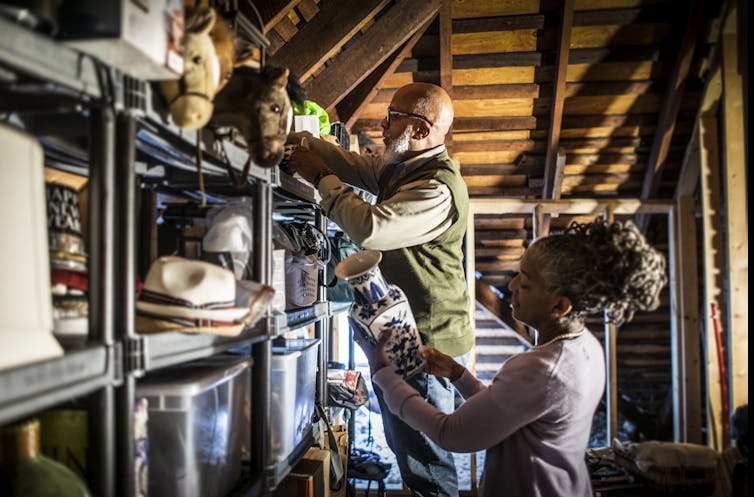
Asking how discarding an item fits with a person’s goals can help them decide whether to keep it. MoMo Productions via Getty Images

Mary E. Dozier, Mississippi State University

I recently helped my mom sort through boxes she inherited when my grandparents passed away. One box was labeled – either ironically or genuinely – “toothpick holders and other treasures.” Inside were many keepsakes from moments now lost to history – although we found no toothpick holders.

My favorite of the items we sorted through was a solitary puzzle piece, an artifact reflecting my late grandmother’s penchant for hiding the final piece to a jigsaw puzzle just to swoop in at the last moment and finish it.

After several hours of reminiscing, my mom and I threw away 90% of what we had sorted.

“Why did I keep this?” is a question I hear frequently, both from my family and friends and from patients. I am a licensed clinical psychologist whose research focuses on the characterization, assessment and treatment of hoarding disorder, particularly for adults 60 years of age or older. As such, I spend a great deal of my time thinking about this question.

What drives the need to keep stuff?

Hoarding disorder is a psychiatric condition defined by urges to save items and difficulty discarding current possessions. For adults with “clinically severe” hoarding disorder, this leads to a level of household clutter that impairs daily functioning and can even create a fire hazard. In my professional experience, however, many adults struggle with clutter even if they do not meet the clinical criteria for hoarding disorder.

Holding on to things that have sentimental value or could be useful in the future is a natural part of growing older. For some people, though, this tendency to hold on to objects grows over time, to the point that they eventually do meet criteria for hoarding disorder. Age-related changes in executive function may help explain the increase in prevalence of hoarding disorder as we get older; increasing difficulty with decision-making in general also affects decisions around household clutter.

The traditional model behind hoarding disorder suggests that difficulty with discarding comes from distress during decision-making. However, my research shows that this may be less true of older adults.

When I was a graduate student, I conducted a study in which we asked adults with hoarding disorder to spend 15 minutes making decisions about whether to keep or discard various items brought from their home. Participants could sort whatever items they wanted. Most chose to sort paper items such as old mail, cards or notes.

We found that age was associated with lower levels of distress during the task, such that participants who were older tended to feel less stressed when making the decision about what to keep and what to discard. We also found that many participants, particularly those who were older, actually reported positive emotions while sorting their items.

In new research publishing soon, my current team replicated this finding using a home-based version of the task. This suggests that fear of making the wrong decision isn’t a universal driver of our urge to save items.

In fact, a study my team published in August 2024 with adults over 50 with hoarding disorder suggests that altruism, a personality trait of wanting to help others, may explain why some people keep items that others might discard. My colleagues and I compared our participants’ personality profiles with that of adults in the general population of the same gender and age group. Compared with the general population, participants with hoarding disorder scored almost universally high on altruism.

Altruism also comes up frequently in my clinical work with older adults who struggle with clutter. People in our studies often tell me that they have held onto something out of a sense of responsibility, either for the item itself or to the environment.

“I need it to go to a good home” and “my grandmother gave this to me” are sentiments we commonly hear. Thus, people may keep things not out of fear of losing them but because saving them is consistent with their values. https://www.youtube.com/embed/JNVjPM1cIbg?wmode=transparent&start=0 Your values can help guide which possessions should stay in your life and which ones should go.

Leaning into values

In a 2024 study, my team demonstrated that taking a values-based approach to decluttering helps older adults to decrease household clutter and increases their positive affect, a state of mind characterized by feelings such as joy and contentment. Clinicians visited the homes of older adults with hoarding disorder for one hour per week for six weeks. At each visit, the clinicians used a technique called motivational interviewing to help participants talk through their decisions while they sorted household clutter.

We found that having participants start with identifying their values allowed them to maintain focus on their long-term goals. Too often, people focus on the immediate ability of an object to “spark joy” and forget to consider whether an object has greater meaning and purpose. Values are the abstract beliefs that we humans use to create our goals. Values are whatever drives us and can include family, faith or frivolity.

Because values are subjective, what people identify as important to keep is also subjective. For example, the dress I wore to my sister’s wedding reminded me of a wonderful day. However, when it no longer fit I gave it away because doing so was more consistent with my values of utility and helpfulness: I wanted the dress to go to someone who needed it and would use it. Someone who more strongly valued family and beauty might have prioritized keeping the dress because of the aesthetics and its link to a family event.

Additionally, we found that instead of challenging the reasons a person might have for keeping an item, it is helpful to instead focus on eliciting their reasons for discarding it and the goals they have for their home and their life.

Tips for sweeping away the old

My research on using motivational interviewing for decluttering and my observations from a current clinical trial on the approach point to some practical steps people can take to declutter their home. Although my work has been primarily with older adults, these tips should be helpful for people of all ages.

Start with writing out your values. Every object in your home should feel value-consistent for you. For example, if tradition and faith are important values for you, you might be more inclined to hold onto a cookbook that was made by the elders at your church and more able to let go of a cookbook you picked up on a whim at a bookstore.

If, instead, health and creativity are your core values, it might be more important to hold onto a cookbook of novel ways to sneak more vegetables into your diet.

Defining value-consistent goals for using your space can help to maintain motivation as you declutter. Are you clearing off your desk so you can work more efficiently? Making space on kitchen counters to bake cookies with your grandchildren?

Remember that sometimes your values will conflict. At those moments, it may help to reflect on whether keeping or discarding an object will bring you closer to your goals for the space.

Similarly, remember that values are subjective. If you are helping a loved one declutter, maintain a curious, nonjudgmental attitude. Where you might see a box filled with junk, your grandmother might see something filled with “toothpick holders and other treasures.”

For additional resources and information on hoarding disorder, visit the International OCD Foundation website.

Mary E. Dozier, Assistant Professor of Psychology, Mississippi State University

This article is republished from The Conversation under a Creative Commons license. Read the original article.

ooOOoo

Prof. Mary Dozier makes some powerful, and cogent, statements in this article. Especially that one’s values are subjective. Nevertheless, I think I should write out my values and see what they tell me.

Our human language!

Namely a universal law.

I was attracted to an article that I read in The Conversation last a week ago.

It also taught me that we humans speak according to Zipf’s Law. I had not previously heard of this law.

So let me republish the article with the full permission of The Conversation.

ooOOoo

Whalesong patterns follow a universal law of human language, new research finds

A humpback whale mother and calf on the New Caledonian breeding grounds. Mark Quintin

Jenny Allen, Griffith University; Ellen Garland, University of St Andrews; Inbal Arnon, Hebrew University of Jerusalem, and Simon Kirby, University of Edinburgh

All known human languages display a surprising pattern: the most frequent word in a language is twice as frequent as the second most frequent, three times as frequent as the third, and so on. This is known as Zipf’s law.

Researchers have hunted for evidence of this pattern in communication among other species, but until now no other examples have been found.

In new research published today in Science, our team of experts in whale song, linguistics and developmental psychology analysed eight years’ of song recordings from humpback whales in New Caledonia. Led by Inbal Arnon from the Hebrew University, Ellen Garland from the University of St Andrews, and Simon Kirby from the University of Edinburgh, We used techniques inspired by the way human infants learn language to analyse humpback whale song.

We discovered that the same Zipfian pattern universally found across human languages also occurs in whale song. This complex signalling system, like human language, is culturally learned by each individual from others.

Learning like an infant

When infant humans are learning, they have to somehow discover where words start and end. Speech is continuous and does not come with gaps between words that they can use. So how do they break into language?

Thirty years of research has revealed that they do this by listening for sounds that are surprising in context: sounds within words are relatively predictable, but between words are relatively unpredictable. We analysed the whale song data using the same procedure.

Photo of a humpback whale breaching from the water.
A breaching humpback whale in New Caledonia. Operation Cetaces

Unexpectedly, using this technique revealed in whale song the same statistical properties that are found in all languages. It turns out both human language and whale song have statistically coherent parts.

In other words, they both contain recurring parts where the transitions between elements are more predictable within the part. Moreover, these recurring sub-sequences we detected follow the Zipfian frequency distribution found across all human languages, and not found before in other species.

Whale song recording (2017) Operation Cetaces 916 KB (download)

A chart showing the different frequencies of sound in whale song.
Close analysis of whale song revealed statistical structures similar to those found in human language. Operation Cetaces

How do the same statistical properties arise in two evolutionarily distant species that differ from one another in so many ways? We suggest we found these similarities because humans and whales share a learning mechanism: culture.

A cultural origin

Our findings raise an exciting question: why would such different systems in such incredibly distant species have common structures? We suggest the reason behind this is that both are culturally learned.

Cultural evolution inevitably leads to the emergence of properties that make learning easier. If a system is hard to learn, it will not survive to the next generation of learners.

There is growing evidence from experiments with humans that having statistically coherent parts, and having them follow a Zipfian distribution, makes learning easier. This suggests that learning and transmission play an important role in how these properties emerged in both human language and whale song.

So can we talk to whales now?

Finding parallel structures between whale song and human language may also lead to another question: can we talk to whales now? The short answer is no, not at all.

Our study does not examine the meaning behind whale song sequences. We have no idea what these segments might mean to the whales, if they mean anything at all.

Photo of whale backs and tails visible above the surface of the sea.
A competitive pod of humpback whales on the New Caledonian breeding grounds. Operation Cetaces

It might help to think about it like instrumental music, as music also contains similar structures. A melody can be learned, repeated, and spread – but that doesn’t give meaning to the musical notes in the same way that individual words have meaning.

Next up: birdsong

Our work also makes a bold prediction: we should find this Zipfian distribution wherever complex communication is transmitted culturally. Humans and whales are not the only species that do this.

We find what is known as “vocal production learning” in an unusual range of species across the animal kingdom. Song birds in particular may provide the best place to look as many bird species culturally learn their songs, and unlike in whales, we know a lot about precisely how birds learn song.

Equally, we expect not to find these statistical properties in the communication of species that don’t transmit complex communication by learning. This will help to reveal whether cultural evolution is the common driver of these properties between humans and whales.

Jenny Allen, Postdoctoral research associate, Griffith University; Ellen Garland, Royal Society University Research Fellow, School of Biology, University of St Andrews; Inbal Arnon, Professor of Psychology, Hebrew University of Jerusalem, and Simon Kirby, Professor of Language Evolution, University of Edinburgh

This article is republished from The Conversation under a Creative Commons license. Read the original article.

ooOOoo

The research scientists have led to a prediction: … we should find this Zipfian distribution wherever complex communication is transmitted culturally. Humans and whales are not the only species that do this.

Fascinating!

Nutrition advice

An article on educating us on avoiding misinformation.

Many articles on nutrition are full of errors and for the lay person there’s no easy way to understand what is correct, or not.

That’s why a recent article appealed to me and I thought it worth sharing.

ooOOoo

Nutrition advice is rife with misinformation − a medical education specialist explains how to tell valid health information from pseudoscience

If a health claim about a dietary intervention sounds too good to be true, it probably is. Mizina/iStock via Getty Images Plus

Aimee Pugh Bernard, University of Colorado Anschutz Medical Campus

The COVID-19 pandemic illuminated a vast landscape of misinformation about many topics, science and health chief among them.

Since then, information overload continues unabated, and many people are rightfully confused by an onslaught of conflicting health information. Even expert advice is often contradictory.

On top of that, people sometimes deliberately distort research findings to promote a certain agenda. For example, trisodium phosphate is a common food additive in cakes and cookies that is used to improve texture and prevent spoilage, but wellness influencers exploit the fact that a similarly named substance is used in paint and cleaning products to suggest it’s dangerous to your health.

Such claims can proliferate quickly, creating widespread misconceptions and undermining trust in legitimate scientific research and medical advice. Social media’s rise as a news and information source further fuels the spread of pseudoscientific views.

Misinformation is rampant in the realm of health and nutrition. Findings from nutrition research is rarely clear-cut because diet is just one of many behaviors and lifestyle factors affecting health, but the simplicity of using food and supplements as a cure-all is especially seductive.

I am an assistant professor specializing in medical education and science communication. I also train scientists and future health care professionals how to communicate their science to the general public.

In my view, countering the voices of social media influencers and health activists promoting pseudoscientific health claims requires leaning into the science of disease prevention. Extensive research has produced a body of evidence-based practices and public health measures that have consistently been shown to improve the health of millions of people around the world. Evaluating popular health claims against the yardstick of this work can help distinguish which ones are based on sound science.

A white person's hands holding a smartphone with screen showing a health app, next to a cup of coffee.
To parse pseudoscientific claims from sound advice about health and nutrition, it’s crucial to evaluate the information’s source. tadamichi/Getty Images

Navigating the terrain of tangled information

Conflicting information can be found on just about everything we eat and drink.

That’s because a food or beverage is rarely just good or bad. Instead, its health effects can depend on everything from the quantity a person consumes to their genetic makeup. Hundreds of scientific studies describe coffee’s health benefits and, on the flip side, its health risks. A bird’s-eye view can point in one direction or another, but news articles and social media posts often make claims based on a single study.

Things can get even more confusing with dietary supplements because people who promote them often make big claims about their health benefits. Take apple cider vinegar, for example – or ACV, if you’re in the know.

Apple cider vinegar has been touted as an all-natural remedy for a variety of ailments, including digestive issues, urinary health and weight management. Indeed, some studies have shown that it might help lower cholesterol, in addition to having other health benefits, but overall those studies have small sample sizes and are inconclusive.

Advocates of this substance often claim that one particular component of it – the cloudy sediment at the bottom of the bottle termed “the mother” – is especially beneficial because of the bacteria and yeast it contains. But there is no research that backs the claim that it offers any health benefits.

One good rule of thumb is that health hacks that promise quick fixes are almost always too good to be true. And even when supplements do offer some health benefits under specific circumstances, it’s important to remember that they are largely exempt from Food and Drug Administration regulations. That means the ingredients on their labels might contain more or less of the ingredients promised or other ingredients not listed, which can potentially cause harms such as liver toxicity.

It’s also important to keep in mind that the global dietary supplements industry is worth more than US$150 billion per year, so companies – and wellness influencers – selling supplements have a financial stake in convincing the public of their value.

Misinformation about nutrition is nothing new, but that doesn’t make it any less confusing.

How nutrition science gets twisted

There’s no doubt that good nutrition is fundamental for your health. Studies consistently show that a balanced diet containing a variety of essential nutrients can help prevent chronic diseases and promote overall well-being.

For instance, minerals such as calcium and iron support bone health and oxygen circulation in the blood, respectively. Proteins are essential for muscle repair and growth, and healthy fats, like those found in avocados and nuts, are vital for brain health.

However, pseudoscientific claims often twist such basic facts to promote the idea that specific diets or supplements can prevent or treat illness. For example, vitamin C is known to play a role in supporting the immune system and can help reduce the duration and severity of colds.

But despite assertions to the contrary, consuming large quantities of vitamin C does not prevent colds. In fact, the body needs only a certain amount of vitamin C to function properly, and any excess is simply excreted.

Companies sometimes claim their supplement is “scientifically proven” to cure illness or boost brain function, with no credible research to back it up.

Some companies overstate the benefits while underplaying the hazards.

For example, wellness influencers have promoted raw milk over pasteurized milk as a more natural and nutritious choice, but consuming it is risky. Unpasteurized milk can contain harmful bacteria that leads to gastrointestinal illness and, in some cases, much more serious and potentially life-threatening diseases such as avian influenza, or bird flu.

Such dietary myths aren’t harmless. Reliance on nutrition alone can lead to neglecting other critical aspects of health, such as regular medical checkups and lifesaving vaccinations.

The lure of dietary myths has led people with cancer to replace proven science-backed treatments, such as chemotherapy or radiation, with unproven and misleading nutrition programs.

How to spot less-than-solid science

Pseudoscience exploits your insecurities and emotions, taking advantage of your desire to live the healthiest life possible.

While the world around you may be uncertain and out of your control, you want to believe that at the very least, you have control over your own health. This is where the wellness industry steps in.

What makes pseudoscientific claims so confusing is that they use just enough scientific jargon to sound believable. Supplements or powders that claim to “boost immunity” often list ingredients such as adaptogens and superfoods. While these words sound real and convincing, they actually don’t mean anything in science. They are terms created by the wellness industry to sell products.

I’ve researched and written about reliable ways to distinguish science facts from false health claims. To stay alert and find credible information, I’d suggest you follow a few key steps.

First, check your emotions – strong emotional reactions, such as fear and anger, can be a red flag.

Next, check that the author has experience or expertise in the field of the topic. If they’re not an expert, they might not know what they are talking about. It’s always a good idea to make sure the source is reputable – ask yourself, would this source be trusted by scientists?

Finally, search for references that back up the information. If very little or nothing else exists in the science world to back up the claims, you may want to put your trust in a different source.

Following these steps will separate the facts from fake news and empower you to make evidence-based decisions.

Aimee Pugh Bernard, Assistant Professor of Immunology and Microbiology, University of Colorado Anschutz Medical Campus

This article is republished from The Conversation under a Creative Commons license. Read the original article.

ooOOoo

Sound advice for the majority of us!

Winter is here!

A lovely guest post from Pratyush S.

Pratyush has been very patient with me. He first contacted me regarding sending in a guest post many months ago. At first I thought it was a spam email and then realised that was a mistake. Then stuff my end got in the way, and so on.

But I’m delighted to publish this today, and should add that Pratyush is based in India!

ooOOoo

Winter is here — When you have a golden retriever at home.

Golden Retrievers are great family dogs with a lovely personality, good intelligence, and adaptability. Golden Retrievers are built for colder climates and have plenty of thick, insulating double coats to keep them warm; however, special considerations should still be taken in winter weather to promote the health, comfort, and happiness of your Golden. Below is a complete guide outlining things to be aware of when looking after Golden Retrievers in winter.

Keep Their Paw Pads Safe From Cold and Salt

Although Golden Retrievers enjoy an outdoor adventure, winter can be tough on the pads of their sensitive paws. Winter storms bring snow and ice, which lead to dry skin, cracking and irritation — not to mention the damage from road salt. When they return from walks, be sure to wash their paws properly to get rid of salt or other chemicals. You can apply a paw balm to protect and moisturize your puppy’s paws, make sure you opt for a non-toxic product. Depending on how cold it gets where you live, you may resort to dog booties for their feet when they go outside.

Change Their Diet with the Seasons

Golden Retrievers are energetic, active dogs, and if they’re out in the cold playing during winter, they might need a boost in energy levels. This additional energy expenditure may require you to make minor adjustments in their calorie intake. Over feeding allows them to gain weight, so, consult your Veterinarian to make any alternate diet plan. And they have free fresh water forever, as well during chills when dehydration is possible.

Keep Them Warm Indoors

Golden Retrievers do have a thick double coat which insulates them against the cold but they still need an indoor space to feel warm and comfortable. Give them a warm bed in a wind-free part of your home. If your floors are tiled or wooden, place a blanket or mat under them when they sleep for additional warmth. Do not shave or trim coats too short in winter, it is their natural protection against the cold.

Limit Bathing During Winter

Now, bathing your Golden Retriever too often in winter will remove the natural oils on your dog’s skin which can cause drying of the skin and irritations. Rather, give them a bath only when needed and use a conditioning dog shampoo that helps restore their skin. If your kitty has a bath, be sure to dry them off well so that they don’t catch a chill. Until they are allowed to roam free, blow them dry using a pet safe hair dryer on low or towel drying set properly.

Monitor Their Time Outdoors

Golden Retrievers love to romp and play in the snow, however too much time spent out in freezing conditions can cause hypothermia or frostbite. Do not leave them outside too long and keep an eye on them for signs that they may be feeling cold like shivering or lifting their feet off the ground. On very cold days, keep them busy with something indoors, puzzle toys or activities.

Regular Grooming is Essential

The thick coat of a Golden Retriever can mat and tangle in winter weather. Grooming is also a great way to keep the insulation quality of their coat intact and helps to avoid skin problems. Groom at least three times a week to minimize loose fur, matting,and spread natural oils. Look for any possible drying or skin irritation and when in doubt contact your vet.

Ensure Proper Exercise

Golden Retrievers are energetic dogs that enjoy getting out, and they still need exercise in the winter. On the flip side — snowy or slick conditions may elevate the risk of injuries. Keep them on a leash so they cannot run onto frozen surfaces and only walk in safe areas. If you cannot take them outdoors for exercise, make opportunities indoors to play– fetch or hide-and-seek can help expend some energy.

Watch for Signs of Illness

Cold climates could contribute to Golden Retrievers developing a cold or respiratory infection. Look out for any coughing, sneezing or lethargy. If you observe unusual behavior or signs of illness, take action and contact your veterinarian. Make sure they are vaccinated against seasonal diseases.

Offer Enrichment and Mental Stimulation

When the weather grows chilly, it can restrain outdoor actions that need to be carried out in the hot sun so exercise for a Golden Retriever should be maintained indoor as well. Keep their mind active with interactive toys, treat-dispensing puzzles or by teaching them new tricks. Physical exercise is very important, especially during the colder season when outdoor playtime becomes scarce, but so does mental stimulation.

Watch Over Older Dogs

For older Golden Retrievers, the cold can aggravate any existing joint problems e.g. arthritis. Keep them a warm, cozy resting space and try orthopedic beds to relieve them of joint problems. Consider discussing with your vet promoting joint health, supplements that help in the cold months or medications.

Conclusion

Taking care of a Golden Retriever in winter is all about comfort, health and happiness. However, though their double coat does provide some protection against the cold, they need you to help them get through winter safely and comfortably. With the right protection for their paws, some diet changes, and keeping them warm and active, your golden retriever can enjoy the winter just like humans. Take good care of them and they will love the winter season as much as you do!

ooOOoo

There is great advice in this guest post and for anyone with Golden Retrievers this post is spot on. To be honest, the advice presented is applicable to all breeds of dogs.

Thank you, Pratyush

The Edwin Hubble Great Debate

The following is more than fascinating; it is an example of how far science has reached; both figuratively and literally.

ooOOoo

One large Milky Way galaxy or many galaxies? 100 years ago, a young Edwin Hubble settled astronomy’s ‘Great Debate’

The Andromeda galaxy helped Edwin Hubble settle a great debate in astronomy. Stocktrek Images via Getty Images

Chris Impey, University of Arizona

A hundred years ago, astronomer Edwin Hubble dramatically expanded the size of the known universe. At a meeting of the American Astronomical Society in January 1925, a paper read by one of his colleagues on his behalf reported that the Andromeda nebula, also called M31, was nearly a million light years away – too remote to be a part of the Milky Way.

Hubble’s work opened the door to the study of the universe beyond our galaxy. In the century since Hubble’s pioneering work, astronomers like me have learned that the universe is vast and contains trillions of galaxies.

Nature of the nebulae

In 1610, astronomer Galileo Galilei used the newly invented telescope to show that the Milky Way was composed of a huge number of faint stars. For the next 300 years, astronomers assumed that the Milky Way was the entire universe.

As astronomers scanned the night sky with larger telescopes, they were intrigued by fuzzy patches of light called nebulae. Toward the end of the 18th century, astronomer William Herschel used star counts to map out the Milky Way. He cataloged a thousand new nebulae and clusters of stars. He believed that the nebulae were objects within the Milky Way.

Charles Messier also produced a catalog of over 100 prominent nebulae in 1781. Messier was interested in comets, so his list was a set of fuzzy objects that might be mistaken for comets. He intended for comet hunters to avoid them since they did not move across the sky.

As more data piled up, 19th century astronomers started to see that the nebulae were a mixed bag. Some were gaseous, star-forming regions, such as the Orion nebula, or M42 – the 42nd object in Messier’s catalog – while others were star clusters such as the Pleiades, or M45.

A third category – nebulae with spiral structure – particularly intrigued astronomers. The Andromeda nebula, M31, was a prominent example. It’s visible to the naked eye from a dark site.

The Andromeda galaxy, then known as the Andromeda nebula, is a bright spot in the sky that intrigued early astronomers.

Astronomers as far back as the mid-18th century had speculated that some nebulae might be remote systems of stars or “island universes,” but there was no data to support this hypothesis. Island universes referred to the idea that there could be enormous stellar systems outside the Milky Way – but astronomers now just call these systems galaxies.

In 1920, astronomers Harlow Shapley and Heber Curtis held a Great Debate. Shapley argued that the spiral nebulae were small and in the Milky Way, while Curtis took a more radical position that they were independent galaxies, extremely large and distant.

At the time, the debate was inconclusive. Astronomers now know that galaxies are isolated systems of stars, much smaller than the space between them.

Hubble makes his mark

Edwin Hubble was young and ambitious. At the of age 30, he arrived at Mount Wilson Observatory in Southern California just in time to use the new Hooker 100-inch telescope, at the time the largest in the world.

A black and white photo of a man looking through the lens of a large telescope.
Edwin Hubble uses the telescope at the Mount Wilson Observatory. Hulton Archives via Getty Images

He began taking photographic plates of the spiral nebulae. These glass plates recorded images of the night sky using a light-sensitive emulsion covering their surface. The telescope’s size let it make images of very faint objects, and its high-quality mirror allowed it to distinguish individual stars in some of the nebulae.

Estimating distances in astronomy is challenging. Think of how hard it is to estimate the distance of someone pointing a flashlight at you on a dark night. Galaxies come in a very wide range of sizes and masses. Measuring a galaxy’s brightness or apparent size is not a good guide to its distance.

Hubble leveraged a discovery made by Henrietta Swan Leavitt 10 years earlier. She worked at the Harvard College Observatory as a “human computer,” laboriously measuring the positions and brightness of thousands of stars on photographic plates.

She was particularly interested in Cepheid variables, which are stars whose brightness pulses regularly, so they get brighter and dimmer with a particular period. She found a relationship between their variation period, or pulse, and their intrinsic brightness or luminosity.

Once you measure a Cepheid’s period, you can calculate its distance from how bright it appears using the inverse square law. The more distant the star is, the fainter it appears.

Hubble worked hard, taking images of spiral nebulae every clear night and looking for the telltale variations of Cepheid variables. By the end of 1924, he had found 12 Cepheids in M31. He calculated M31’s distance as a prodigious 900,000 light years away, though he underestimated its true distance – about 2.5 million light years – by not realizing there were two different types of Cepheid variables.

His measurements marked the end of the Great Debate about the Milky Way’s size and the nature of the nebulae. Hubble wrote about his discovery to Harlow Shapley, who had argued that the Milky Way encompassed the entire universe.

“Here is the letter that destroyed my universe,” Shapley remarked.

Always eager for publicity, Hubble leaked his discovery to The New York Times five weeks before a colleague presented his paper at the astronomers’ annual meeting in Washington, D.C.

An expanding universe of galaxies

But Hubble wasn’t done. His second major discovery also transformed astronomers’ understanding of the universe. As he dispersed the light from dozens of galaxies into a spectrum, which recorded the amount of light at each wavelength, he noticed that the light was always shifted to longer or redder wavelengths.

Light from the galaxy passes through a prism or reflects off a diffraction grating in a telescope, which captures the intensity of light from blue to red.

Astronomers call a shift to longer wavelengths a redshift.

It seemed that these redshifted galaxies were all moving away from the Milky Way.

Hubble’s results suggested the farther away a galaxy was, the faster it was moving away from Earth. Hubble got the lion’s share of the credit for this discovery, but Lowell Observatory astronomer Vesto Slipher, who noticed the same phenomenon but didn’t publish his data, also anticipated that result.

Hubble referred to galaxies having recession velocities, or speeds of moving away from the Earth, but he never figured out that they were moving away from Earth because the universe is getting bigger.

Belgian cosmologist and Catholic priest Georges Lemaitre made that connection by realizing that the theory of general relativity described an expanding universe. He recognized that space expanding in between the galaxies could cause the redshifts, making it seem like they were moving farther away from each other and from Earth.

Lemaitre was the first to argue that the expansion must have begun during the big bang.

The Hubble telescope, which looks like a metal cylinder, floating in space.
Edwin Hubble is the namesake for NASA’s Hubble Space Telescope, which has spent decades observing faraway galaxies. NASA via AP

NASA named its flagship space observatory after Hubble, and it has been used to study galaxies for 35 years. Astronomers routinely observe galaxies that are thousands of times fainter and more distant than galaxies observed in the 1920s. The James Webb Space Telescope has pushed the envelope even farther.

The current record holder is a galaxy a staggering 34 billion light years away, seen just 200 million years after the big bang, when the universe was 20 times smaller than it is now. Edwin Hubble would be amazed to see such progress.

Chris Impey, University Distinguished Professor of Astronomy, University of Arizona

This article is republished from The Conversation under a Creative Commons license. Read the original article.

ooOOoo

So wonderful that in this modern era we can read articles from distinguished scientists in the comfort of our own homes.

Critical thinking!

Thinking it through thanks to a recent issue of Skeptical Inquirer.

Melanie Trecer-King is the creator of Thinking is Power and the associate professor of biology at the Massasoit Community College, where she teaches a science course designed to equip her students with essential critical thinking, information literacy, and science literacy skills.

The article was published in the November/December, 2024 issue of the magazine. I believe it is free to share.

ooOOoo

Most people agree that critical thinking is an important skill that should be taught in schools. And most educators think they teach critical thinking. I know I did. After all, I was a science educator, and science is critical thinking. Isn’t it?

For years, I taught general-education biology, a course commonly taken by undergraduates who aren’t science majors. And while I love biology, I grew more and more frustrated with the content. I asked myself: If I had one semester to teach the average student what they need to know about the process of science and critical thinking, what would it look like?

Thankfully, my college allowed me to replace my traditional introductory biology course with a course titled Science for Life, designed to teach critical thinking, information literacy, and science literacy skills (Trecek-King 2022). Since my conversion, I’ve been sharing my new path with anyone who will listen about the value of teaching critical thinking.

Yet conversations with Bertha Vazquez, director of education for the Center for Inquiry, gave me pause. In a recent podcast conversation with the two of us and Daniel Reed (of the West Virginia Skeptics Society), Vazquez was adamant. Educators do teach critical thinking: the Next Generation Science Standards (NGSS) require students to ask questions, plan and carry out investigations, analyze and interpret data, construct explanations, and engage in arguments from evidence.

As a science communicator, I constantly fight misconceptions around certain terms. Theory and skepticism are prime examples. So imagine my surprise (and embarrassment) when I realized that, as a critical thinking educator, I had overlooked an important first step in critical thinking: defining terms. The irony.

What Is Critical Thinking?

While we can all agree that it’s important to teach critical thinking, there’s not always agreement on what we mean by the term.

In his book Critical Thinking, Jonathan Haber (2020) explains how the concept emerged and some of the ways it’s currently defined. John Dewey, in his 1910 work How We Think, proposed one of the first modern definitions of reflective thinking, describing it as an “active, persistent, and careful consideration of any belief” (Dewey 1910, 6).

In his 1941 dissertation, Edward Glaser identified three components of critical thinking: “(1) an attitude of being disposed to consider in a thoughtful way the problems and subjects that come within the range of one’s experiences, (2) knowledge of the methods of logical inquiry and reasoning, and (3) some skill in applying those methods” (Glaser 1941, 5–6). That same year, Glaser and Goodwin Watson published the Watson-Glaser Tests of Critical Thinking (now the Watson-Glaser Critical Thinking Appraisal), a widely used standardized test for assessing critical thinking skills.

Critical thinking’s “big bang” moment, according to Haber, came in the early 1980s when the state of California (Harmon 1980, 3) mandated that all students in its university system complete a course that teaches “an understanding of the relationship of language to logic, leading to the ability to analyze, criticize and advocate ideas, reason inductively and deductively, and reach factual or judgmental conclusions based on sound inferences drawn from unambiguous statements of knowledge or belief.”

And the Delphi Report (Facione 1990, 2), in which Peter Facione worked with critical thinking experts to create a consensus definition, concludes that critical thinking is a “purposeful, self-regulatory judgment which results in interpretation, analysis, evaluation, and inference, as well as explanation of the evidential, conceptual, methodological, criteriological, or contextual considerations upon which that judgment is based.”

From these (and many other) definitions, Haber identifies three interconnected parts of critical thinking: knowledge of critical thinking components, such as logic and argumentation; the skills to put the knowledge to use in real-world situations; and the dispositions needed to prioritize critical thinking honestly and ethically.

This problem-solving view of critical thinking forms the basis of many of the current educational standards, including the NGSS and Common Core, which ask students to think deeply within a specific domain. And it is one scientists themselves use when trying to understand issues.

These are worthy educational goals to be sure. However, in my experience teaching general-education biology, I’ve come to realize that this approach is incomplete.

If critical thinking requires deep knowledge, then our ability to analyze topics is limited to areas in which we possess sufficient expertise. Pedagogy that encourages “independent” thinking outside these areas can have the unintended consequence of teaching students to overestimate their abilities. The best minds know they can’t know everything. Even experts rely on other experts and sources.

Additionally, in the classroom, students are provided with reliable content from which to critically analyze. In the “real world,” these guardrails are nonexistent. Not only is misinformation ubiquitous, disinformation purveyors exploit our biases and emotions to manipulate our reasoning.

And finally, we can’t address science misinformation, from evolution to vaccines to climate change, by giving students more content knowledge. We don’t fall for science denial and pseudoscience because we don’t have the facts but because of our emotions, desires, identities, and biases.

I now have a better understanding of what my colleague and friend Andy Norman means when he says that critical thinking suffers from a branding problem.

Yes, And …?

Using the above definition(s), I was teaching my biology students how to think critically. For example, I didn’t just ask them to memorize the stages of mitosis but to explore the mutations that could disrupt the cell cycle and lead to cancer. But to what end? If (or when) my former students are touched by cancer, will they remember how proto-oncogenes and tumor suppressor genes can lead to unregulated cell growth? Is that even what they need to know? I argue that, especially for students who aren’t going to be scientists, it’s far more important to teach students how and why the process of science results in reliable knowledge … and how to find it.

My Science for Life course and my Thinking Is Power resource are both based on the same premise. Knowledge may be power, but there’s too much to know. Even more, knowledge is a process; it’s not just what we know but how we know. It’s not just a noun but a verb. When we need reliable knowledge, can we find it and use it to make wiser decisions? And how do we know what information to ignore?

As a science educator, I want my students to understand how the process of science produces knowledge and why it’s reliable. Why aren’t comments such as “it worked for me” or “I know what I saw” sufficient evidence? I’ve come to realize that an essential—and often overlooked—ingredient is why we need science in the first place.

Richard Feynman famously said, “The first principle is that you must not fool yourself, and you are the easiest person to fool.” Science is how we correct for this tendency toward self-deception. That’s why I spend the first third of the semester exploring how we come to our beliefs, the limits of our perception and memory, the importance of skepticism, the cognitive biases that can lead our thinking astray, and the logical fallacies we use to convince ourselves (and others) that our conclusions are justified.

Influential voices in the skeptical community played a crucial role in shaping the ingredients of critical thinking I use in Science for Life and Thinking Is Power, which include the following:

  • Being aware of our limitations: Understanding that our perception and memory are flawed, and the biases and heuristics our brains rely on to make fast and easy decisions can lead us astray.
  • Arguing with evidence and logic: Using arguments that are well-structured and supported by evidence. This includes understanding how the different types of arguments work (i.e., deductive, inductive, and abductive) and avoiding logical fallacies.
  • Thinking about our thinking (metacognition): Actively examining and questioning our own thought processes—including the source of our knowledge, assumptions, intuitions, motivations, emotions, and biases—and how they might influence our judgments.
  • Embracing nuance and uncertainty: Avoiding the black-or-white thinking that can lead to oversimplified conclusions and accepting that our knowledge is never perfect or complete.
  • Seeking objectivity: Actively working to counter the limitations that prevent us from accurately understanding the world. This includes seeking diverse perspectives, separating our identity from our beliefs, and prioritizing accuracy over ego.
  • Having curiosity and open-mindedness: Possessing a desire to learn and understand by asking questions and seeking out information, even if it contradicts what we want to believe.
  • Maintaining healthy skepticism: Balancing gullibility and doubt and proportioning our beliefs to the available evidence. And remembering that claims made without evidence can be dismissed without evidence and extraordinary claims require extraordinary evidence.
  • Exhibiting intellectual humility: Recognizing the limitations of our knowledge, being open to the expertise of others, and being willing to change our minds with evidence.

In my experience, giving students this foundation is essential for helping them become better consumers of information and science. Without an awareness that our emotions and existing beliefs can drive our reasoning, search engines and low-quality sources become tools to confirm our biases. And without an understanding of how our identities and worldviews can alter our standards of evidence, pseudoscience and science denial provide cover for what we want or don’t want to believe.

The logic of science’s practices, from carefully controlling experimental variables to making the findings available to other experts for scrutiny and replication, falls into place once students understand the problems it’s addressing. Simply put, science is our shield against self-deception.

Now instead of asking students to think critically about the biology of cancer, I teach them how to evaluate sources to find reliable information, how to recognize pseudoscientific “treatments,” and how their need for hope and answers makes them vulnerable to misinformation.

The Take-Home Message

I have no doubt that most educators teach critical thinking. But for pedagogical and communication purposes, it would be beneficial to clarify what we mean—and just as importantly to ask ourselves what we want our students to learn.

The dominant view of critical thinking in education is problem-solving in specific domains, which is absolutely a valuable skill. However, many skeptics view critical thinking as good thinking in a broader sense. My own teaching shifted toward this latter framework after I realized that problem-solving skills are insufficient without a foundation in better thinking. We may be born with the ability to think, but we must be taught to think well, and our primate brains aren’t adapted to today’s tidal wave of misinformation.

I’m grateful to the skeptical community for challenging my assumptions about critical thinking and my friend Bertha Vazquez for encouraging me to think more deeply about the good work science educators do in their classrooms every day. This article is the result of my attempt to reconcile what critical thinking means to educators and what it means to skeptics, and my hope is that it opens a conversation about how we can better serve our students. Maybe it will even start a critical thinking revolution, especially in science education.

Let the critical thinking revolution begin!

Acknowledgments

My thanks go to those on this brief list of skeptical thinkers/authors who’ve influenced my understanding of critical thinking: James Alcock, Timothy Caulfield, John Cook, Brian Dunning, Julia Galef, Adam Grant, David Robert Grimes, Jon Guy, Harriet Hall, Guy Harrison, Daniel Kahneman, David McRaney, Steven Novella, Carl Sagan, Michael Shermer, and Carol Tavris.

Special thanks to Bertha Vazquez, Daniel Pimentel, Andy Norman, Daniel Reed, and Jon Guy for their helpful feedback on this article.

References

Dewey, John. 1910. How We Think. Lexington, MA: D.C. Heath and Company.

Facione, Peter A. 1990. Critical Thinking: A Statement of Expert Consensus for Purposes of Educational Assessment and Instruction—The Delphi Report. Millbrae, CA: California Academic Press.

Glaser, Edward M. 1941. An Experiment in the Development of Critical Thinking. New York, NY: Teachers College, Columbia University.

Haber, Jonathan. 2020. Critical Thinking. Cambridge, MA: The MIT Press.

Harmon, Harry. 1980. Executive Order No. 338: General Education-Breadth Requirements. The California State University and Colleges.

Trecek-King, Melanie. 2022. Teach skills, not facts. Skeptical Inquirer 46(1): 39–42.

ooOOoo

I hope others have read this fascinating article and repeat the statement: ‘While we can all agree that it’s important to teach critical thinking, there’s not always agreement on what we mean by the term.’

Whatever, the article was superb.

The geological history of Planet Earth

We live on a profoundly ancient and beautiful planet.

I follow the photographic website Ugly Hedgehog and have been doing for some time. There has been a post recently from the section Photo Gallery and ‘greymule’ from Colorado called his entry ‘A Couple of Desert Scenes’ and I will display just one of his images from that post.

It makes a wonderful connection to today’s post which is from The Conversation.

ooOOoo

Evidence from Snowball Earth found in ancient rocks on Colorado’s Pikes Peak – it’s a missing link

Rocks can hold clues to history dating back hundreds of millions of years. Christine S. Siddoway

Liam Courtney-Davies, University of Colorado Boulder; Christine Siddoway, Colorado College, and Rebecca Flowers, University of Colorado Boulder

Around 700 million years ago, the Earth cooled so much that scientists believe massive ice sheets encased the entire planet like a giant snowball. This global deep freeze, known as Snowball Earth, endured for tens of millions of years.

Yet, miraculously, early life not only held on, but thrived. When the ice melted and the ground thawed, complex multicellular life emerged, eventually leading to life-forms we recognize today.

The Snowball Earth hypothesis has been largely based on evidence from sedimentary rocks exposed in areas that once were along coastlines and shallow seas, as well as climate modeling. Physical evidence that ice sheets covered the interior of continents in warm equatorial regions had eluded scientists – until now.

In new research published in the Proceedings of the National Academy of Sciences, our team of geologists describes the missing link, found in an unusual pebbly sandstone encapsulated within the granite that forms Colorado’s Pikes Peak.

An illustration of an icy earth viewed from space
Earth iced over during the Cryogenian Period, but life on the planet survived. NASA illustration

Solving a Snowball Earth mystery on a mountain

Pikes Peak, originally named Tavá Kaa-vi by the Ute people, lends its ancestral name, Tava, to these notable rocks. They are composed of solidified sand injectites, which formed in a similar manner to a medical injection when sand-rich fluid was forced into underlying rock.

A possible explanation for what created these enigmatic sandstones is the immense pressure of an overlying Snowball Earth ice sheet forcing sediment mixed with meltwater into weakened rock below.

A hand holds a rock with dark seams through it and other colors.
Dark red to purple bands of Tava sandstone dissect pink and white granite. The Tava is also cross-cut by silvery-gray veins of iron oxide. Liam Courtney-Davies

An obstacle for testing this idea, however, has been the lack of an age for the rocks to reveal when the right geological circumstances existed for sand injection.

We found a way to solve that mystery, using veins of iron found alongside the Tava injectites, near Pikes Peak and elsewhere in Colorado.

A cliff side showing a long strip of lighter color Tava cutting through Pikes Peak Granite. The injectite here is 5 meters tall
A 5-meter-tall, almost vertical Tava dike is evident in this section of Pikes Peak granite. Liam Courtney-Davies

Iron minerals contain very low amounts of naturally occurring radioactive elements, including uranium, which slowly decays to the element lead at a known rate. Recent advancements in laser-based radiometric dating allowed us to measure the ratio of uranium to lead isotopes in the iron oxide mineral hematite to reveal how long ago the individual crystals formed.

The iron veins appear to have formed both before and after the sand was injected into the Colorado bedrock: We found veins of hematite and quartz that both cut through Tava dikes and were crosscut by Tava dikes. That allowed us to figure out an age bracket for the sand injectites, which must have formed between 690 million and 660 million years ago.

So, what happened?

The time frame means these sandstones formed during the Cryogenian Period, from 720 million to 635 million years ago. The name is derived from “cold birth” in ancient Greek and is synonymous with climate upheaval and disruption of life on our planet – including Snowball Earth.

While the triggers for the extreme cold at that time are debated, prevailing theories involve changes in tectonic plate activity, including the release of particles into the atmosphere that reflected sunlight away from Earth. Eventually, a buildup of carbon dioxide from volcanic outgassing may have warmed the planet again.

University of Exeter professor Timothy Lenton explains why the Earth was able to freeze over.

The Tava found on Pikes Peak would have formed close to the equator within the heart of an ancient continent named Laurentia, which gradually over time and long tectonic cycles moved into its current northerly position in North America today.

The origin of Tava rocks has been debated for over 125 years, but the new technology allowed us to conclusively link them to the Cryogenian Snowball Earth period for the first time.

The scenario we envision for how the sand injection happened looks something like this:

A giant ice sheet with areas of geothermal heating at its base produced meltwater, which mixed with quartz-rich sediment below. The weight of the ice sheet created immense pressures that forced this sandy fluid into bedrock that had already been weakened over millions of years. Similar to fracking for natural gas or oil today, the pressure cracked the rocks and pushed the sandy meltwater in, eventually creating the injectites we see today.

Clues to another geologic puzzle

Not only do the new findings further cement the global Snowball Earth hypothesis, but the presence of Tava injectites within weak, fractured rocks once overridden by ice sheets provides clues about other geologic phenomena.

Time gaps in the rock record created through erosion and referred to as unconformities can be seen today across the United States, most famously at the Grand Canyon, where in places, over a billion years of time is missing. Unconformities occur when a sustained period of erosion removes and prevents newer layers of rock from forming, leaving an unconformable contact.

Unconformity in the Grand Canyon is evident here where horizontal layers of 500-million-year-old rock sit on top of a mass of 1,800-million-year-old rocks. The unconformity, or ‘time gap,’ demonstrates that years of history are missing. Mike Norton via Wikimedia, CC BY-SA

Our results support that a Great Unconformity near Pikes Peak must have been formed prior to Cryogenian Snowball Earth. That’s at odds with hypotheses that attribute the formation of the Great Unconformity to large-scale erosion by Snowball Earth ice sheets themselves.

We hope the secrets of these elusive Cryogenian rocks in Colorado will lead to the discovery of further terrestrial records of Snowball Earth. Such findings can help develop a clearer picture of our planet during climate extremes and the processes that led to the habitable planet we live on today.

Liam Courtney-Davies, Postdoctoral Research Associate in Geological Sciences, University of Colorado Boulder; Christine Siddoway, Professor of Geology, Colorado College, and Rebecca Flowers, Professor of Geological Sciences, University of Colorado Boulder

This article is republished from The Conversation under a Creative Commons license. Read the original article.

ooOOoo

All I can add is fascinating.