Category: Dogs

Annie’s Second Chance.

My very great pleasure to publish today’s guest post.

Regulars of this place know that I am always open to any one of you sending in a guest post. Indeed, any involvement that comes to mind is welcome.

A couple of days ago in came an email from Kristin. She blogs about her shared life with very large dogs. Kristin’s email was an offer of a guest post for you dear readers. Of course, I said ‘yes’.

In reply to me asking for some background information, Kristin responded with the following:

I don’t really have a preference about what to say about me. Basically, as my kids get older and more independent I keep bringing in another dog!

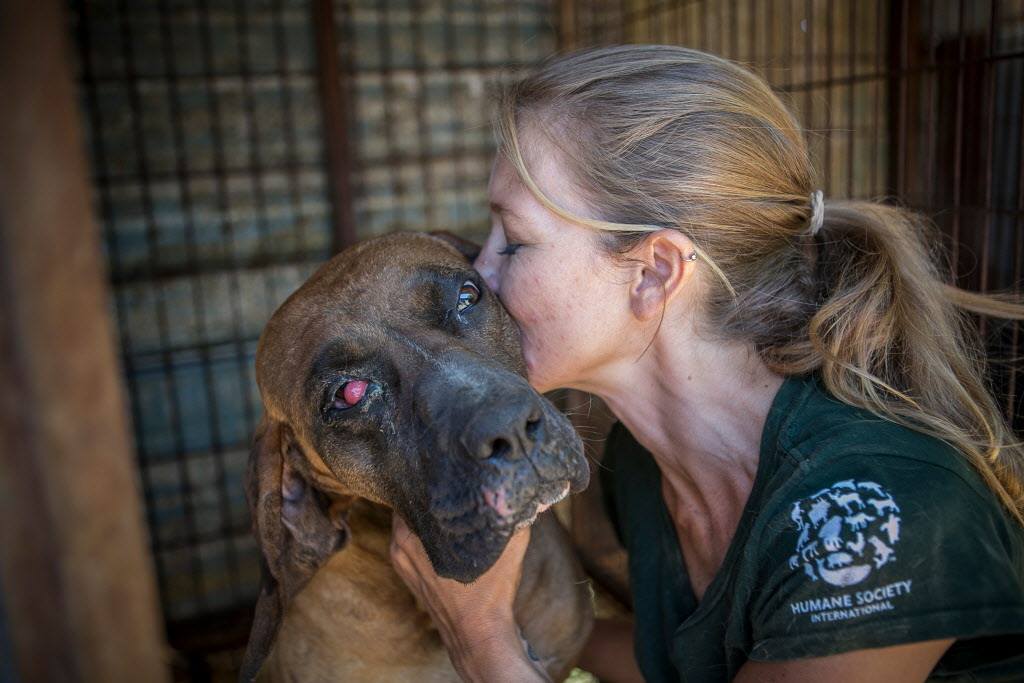
Newfoundlands are my breed of choice, I love their sweet dispositions, the way they look, the bonds they form and the way they love to work.  I’ve learned a lot about rescue as well as ethical breeding practices since I adopted Annie and my greatest wish is to see all puppy mills shut down. I started writing Annie’s story, which led to the blog, and at some point would love to work with someone to make it better and figure out how to make it a fundraising tool for rescue organizations.

I’m not a trained writer, I just write from the heart. I write about anything that happens to be going on with me and the dogs which covers a lot of subjects. I just try to keep the focus on the dogs and my relationship with them.

Forget about Kristin not being “a trained writer” and just immerse yourself in this beautiful guest post.

ooOOoo

Oh happy day!

August 1, 2017

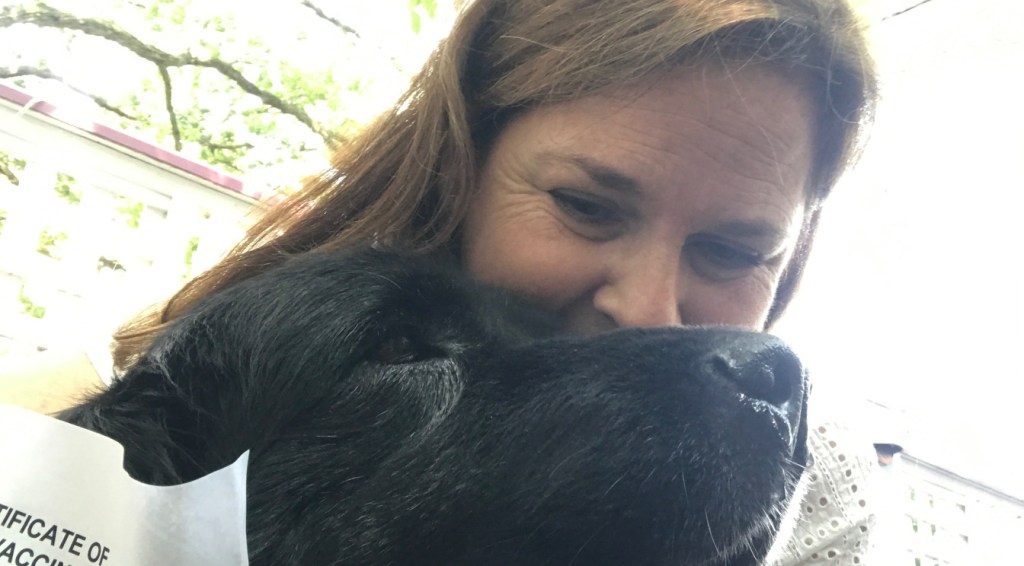
Annie and I had a big day today.  A day that changes everything! It was time for her rabies shot so our big date was a trip to the vet.  Annie and I have made many of these trips over the last year-and-a-half, but this time was very different.

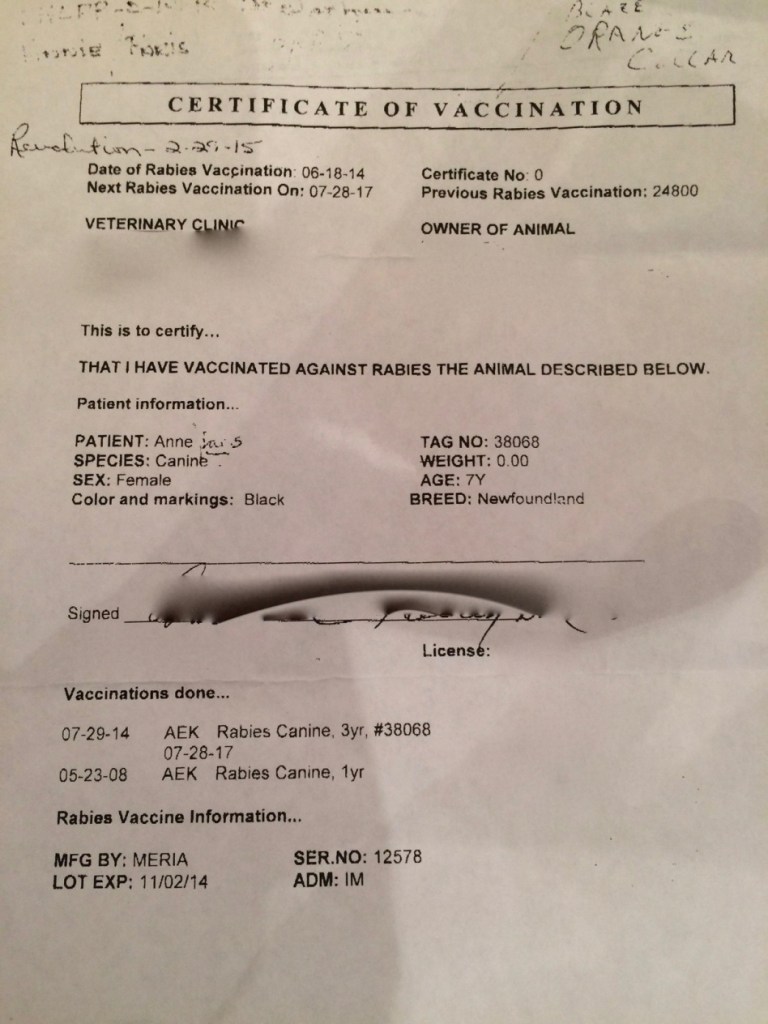
When Annie was surrendered to rescue, the only document that came with her was her 2014 rabies certificate.  By the time she came home with us a year later, the rabies tag was long gone and the certificate we received was in pretty rough shape but the story it told was clear to me.

It’s a copy of a fax and is crooked and faded. On multiple occasions I’ve had to pull it out of her file when asked to show proof of vaccination.  Each time I pull it out, the anger bubbles up because it is a reminder in black and white of her life before us.

The owner’s name and address belongs to the man that operated the kennel/puppy mill.  It’s easy for me to say that even though I’ve never met him, I hate him.  Her name is listed as Anne, but “Paris” is written next to it. Why does she have two names? I don’t know.  Her age is listed as 7, although she had just had a birthday and was actually 8. Her weight is listed as 00. Record keeping was obviously not a priority with these dogs.  There are other notes that are hard to read, but are the vaccinations that she received after she was rescued. At the top are the words Annie Paris, blaze and orange collar.  The final glaring bit of information is the list of vaccinations done which only includes 2 things, the one she received that day and another rabies shot she received May 23, 2008!

(Names and addresses have been edited)

These are all broad strokes that paint a picture of neglect. After 6 years, what compelled him to seek out a vet to administer a 3 year rabies vaccination? Who knows, but what really bothers me concerns the veterinarian. There is no way he could have examined her and thought that she or any of the other dogs from that kennel were receiving proper care. The conditions they were forced to live in were unsanitary and disgusting. Knowing Annie as I do, they would have had to drag her to him, with her trembling and cowering.

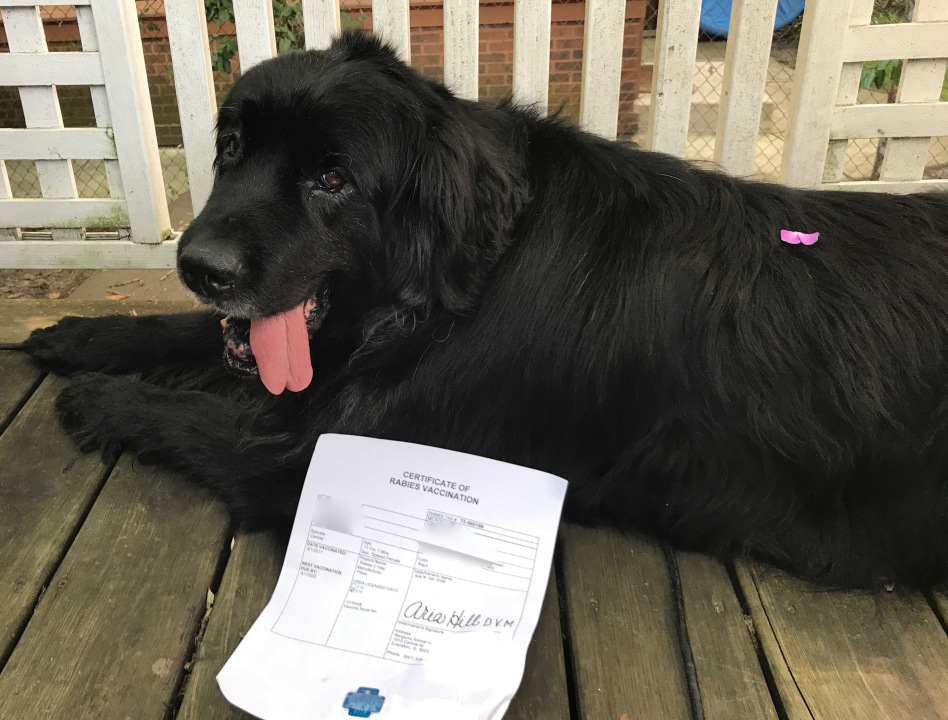
So now, here’s the good news. Annie came to us with a broken spirit on the mend thanks to her rescuers and now she is a completely different dog. She’s happy and loving, she has a spring in her step and a twinkle in her eye. She regularly approaches me and nudges my hand for a scratch behind the ear. She walks on leash beautifully and loves our neighborhood patrols. She comes running when she hears the scoop in the dog food or the word “treat”. She doesn’t hide in her crate anymore but instead sprawls out all over the house, moving around, finding a comfy spot on the cool tile or under my feet or on the rug in the next room. She’s quick to come when I’m having training time with Winn and she will do her two tricks, sit and down, with precision so she can also get treats. She joins me in the kitchen when I’m cooking, confident that she will get a nibble now and then. At the end of every day, we climb the stairs together, I give her her eye drops and then she collapses on her Big Barker bed and lets out a sigh of contentment.

So this time going to the vet was different. Yes, she trembled as we were waiting, it took a lot of gentle coaxing to get her into the room and she wasn’t overly enthused about the attention she was getting but we both eagerly left with a treasure in my hands. I now have a proper certificate with both of our names in print. It is signed by a Dr. who lovingly cares for her and is genuinely invested in her well-being. The final reminder of her previous life can go in the trash. We belong to each other, and we have no reason to ever look back again!

ooOOoo

I’m not going to take anything away from Kristin’s most beautiful story. All I will do is to repeat her last sentence: “We belong to each other, and we have no reason to ever look back again!

That is perfect! Thank you, Kristin and Annie!

Looking ahead!

The joys of installing new flooring!

In a number of the rooms here at home we still have down on the floor the carpeting that was in the house when we moved in 5 years ago. As you might imagine that carpet, being slept on daily by cats and dogs, is also home to a range of uninvited ‘guests’. That song title comes to mind: “The hills are alive ….”.

A while ago we replaced the carpet in our main living-room with oak flooring and now we are replacing just about all the rest of the carpet in our house with laminate boarding that is a very good match with the oak flooring.

One of the rooms that is affected is my office and although the installers will only be working for the three days of the 16th to the 18th August, the rooms will need to be emptied out of all furniture a few days before the 16th.

Ergo, I expect to be ‘off air’ for about a week. Probably from Sunday, 13th August through to Sunday, 20th August.

During those days I won’t be able to respond to your replies to posts. But I will put up posts for each of those days well ahead of the 13th.

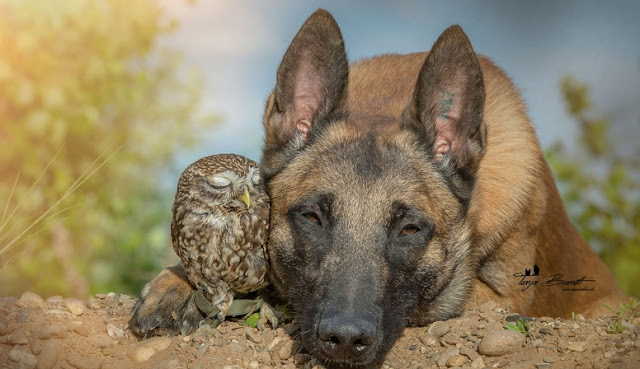
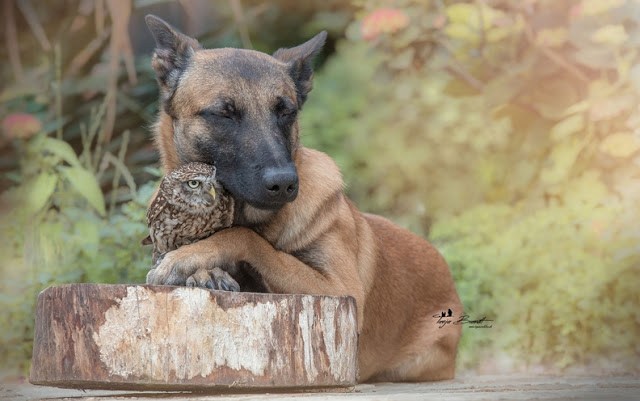
What I will post is something that Suzann emailed Jean the other day. It’s the wonderful story of a Belgian Shepherd dog befriending an owl. This is what was included in Suzann’s email:

ooOOoo

For years, photographer Tanja Brandt has made it her mission to capture magnificent photos of animals and wildlife. Recently, the German artist found a new challenge when she photographed the unique bond between two unlikely friends: Ingo, a Belgian shepherd, and Poldi (Napoleon), a one-year-old owlet.

The owlet and canine have a special “protector-protected” relationship and that their affection towards each other couldn’t be any more evident. Ingo lovingly guards Poldi, who apparently “doesn’t know how to live free.”
The owlet, hatched two days after his six brothers and sisters, therefore, has always been very vulnerable due to his small size. Comparatively, Ingo was raised by a family of strong, and oftentimes ruthless, police dogs.

“They respect each other and they can read each other,” says the photographer.

ooOOoo

There are many photographs of Ingo and Poldi and they will make up the posts for you all for that week of the 14th August.

Visiting the Vet – Jefferson’s heart!

Welcome to August!

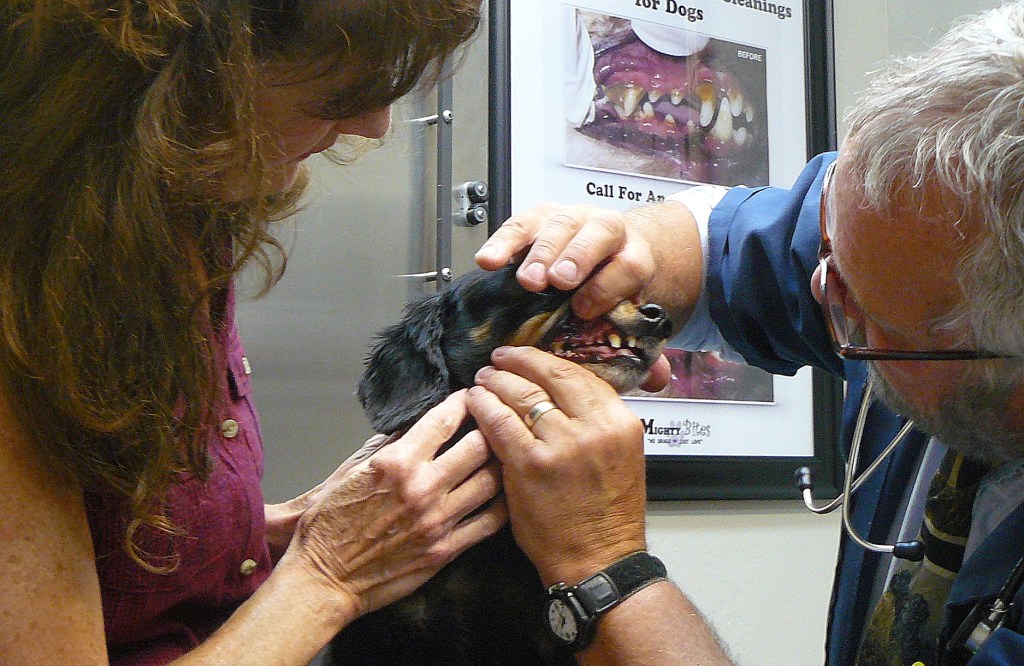
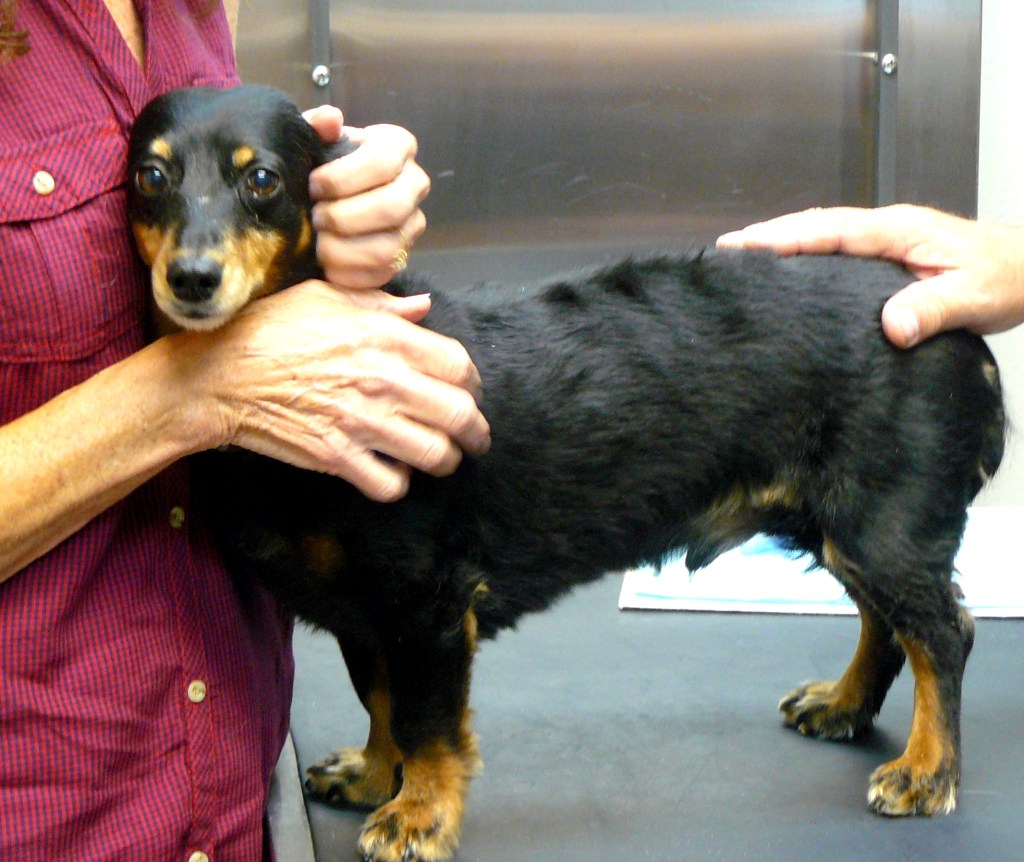
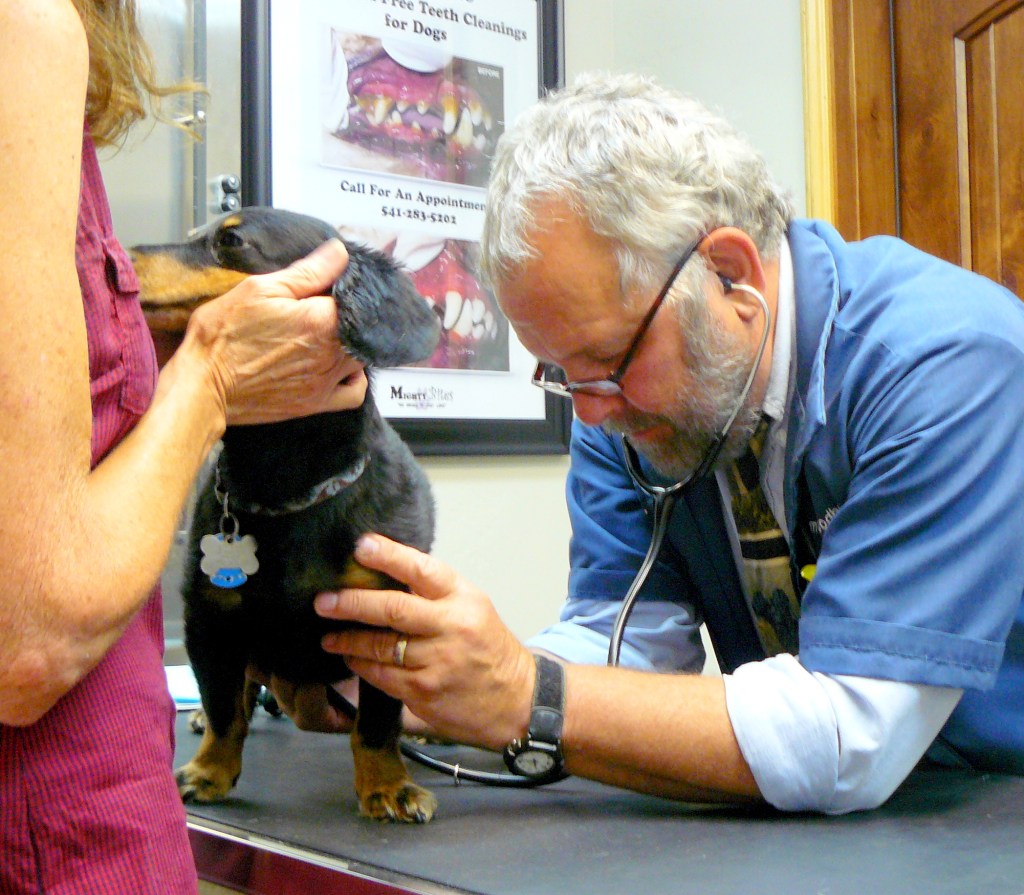
July 13th. 11:00 The second case that I sat in on was Linda bringing in Jefferson.

Jefferson is an eight-year-old long-haired male Dachshund. Linda had decided to bring her dog into Lincoln Road because recently Jefferson had started coughing but only when he was pulling on his leash.

Linda added that Jefferson seemed to be chewing on a number of pine cones just now.

Jim examined Jefferson. First examining the dog’s lymph node and then listening to either side of the dog’s chest.

While everything sounded fine on Jefferson’s right side, Jim detected a very small heart murmur when listening to Jefferson’s left side.

Jim also noted that the lymph node was prominent but not enlarged. Dogs can get lymphoma.

Nothing arose to give cause for concern but in view of the chewing of pine cones, Jim thought that giving Jefferson an injection of ‘Lepto’ would be no bad thing.

11:20 All done!

I subsequently did a web search on ‘Lepto’ and came across this on the Vetstreet website: (in part)

It’s scary to think that a fun stroll through the woods or swim in a favorite watering hole can lead to a terrible illness, but it can –– for you as well as your dog. Leptospirosis is caused by a bacteria spread through soil, water, and the urine of infected animals, and if not caught early it can be deadly. There is a vaccine available for the most common subtypes of the bacteria that infect dogs, but it’s not always a recommended part of the routine vaccination protocol. Ask your veterinarian if the leptospirosis vaccine is right for your dog.

Overview

Leptospirosis is a potentially serious disease caused by the bacterium Leptospira interrogans. It affects dogs but can also infect a wide variety of domestic and wild animals as well as humans.

The organism is usually spread through infected urine, but contaminated water or soil, reproductive secretions, and even consumption of infected tissues can also transmit the infection. Introduction of the organism through skin wounds can also occur. Common carriers of the organism include raccoons, opossums, rodents, skunks, and dogs.

To be continued:

(Please note: These observations are mine alone and because of the busy environment it must be assumed that my interpretation of what was taking place might not be totally accurate. Nothing in this blog post should be used by a reader to make any medical judgment about an animal. If you have any concern about an animal do make an appointment to see a properly qualified veterinarian doctor.)

Picture Parade Two Hundred and Six

Forgive the indulgence today.

In last week’s Picture Parade it was mentioned that at some point I would share some of the sights of home.

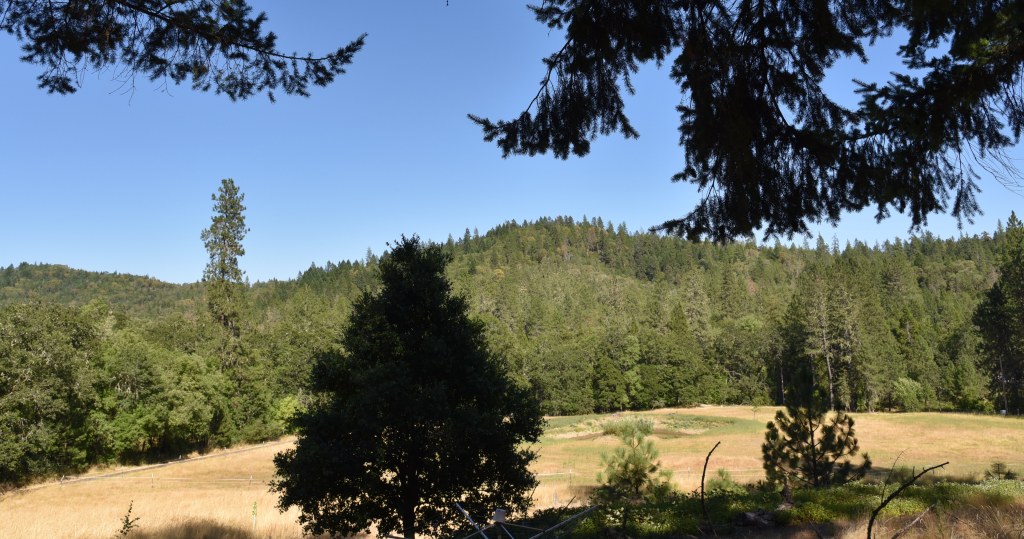
Well today, all the photographs were taken here at home (that being Merlin, Southern Oregon). The motivation behind these photographs was learning the operation of a new camera that I recently treated myself with. That is turning out to be quite a task; the user manual is 510 pages long!

But in no particular order, here are a few pictures.

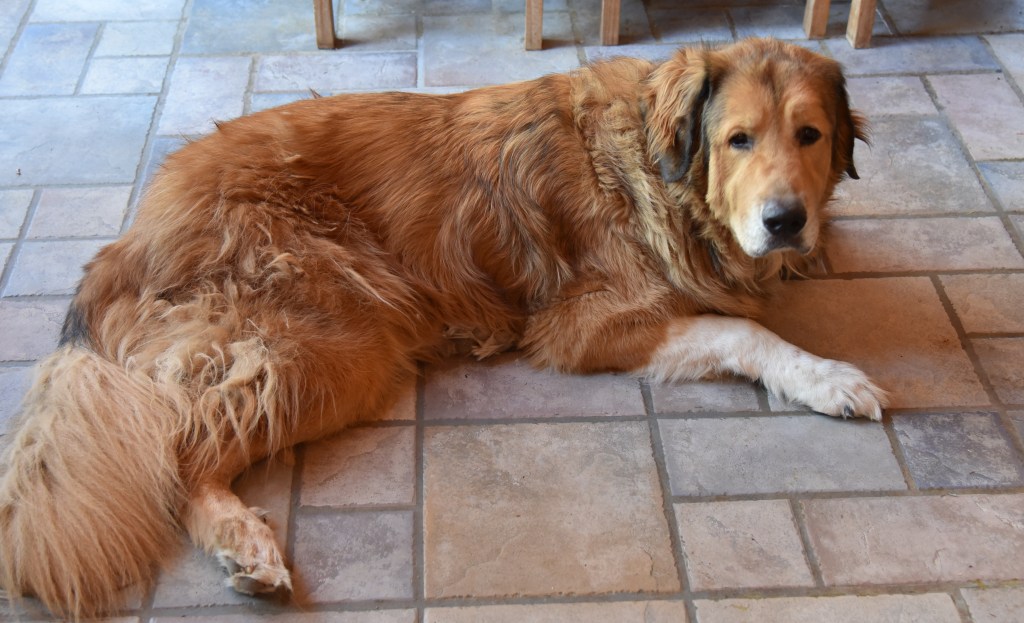
Brandy staying cool on the kitchen floor!

oooo

Looking out to the East from the deck adjoining the house.

oooo

Photo taken at 06:10 on the morning of the 25th July. That is Mount Sexton on the horizon and the view is towards the North-East, again taken from our deck. (I was playing with the exposure control on the camera.)

oooo

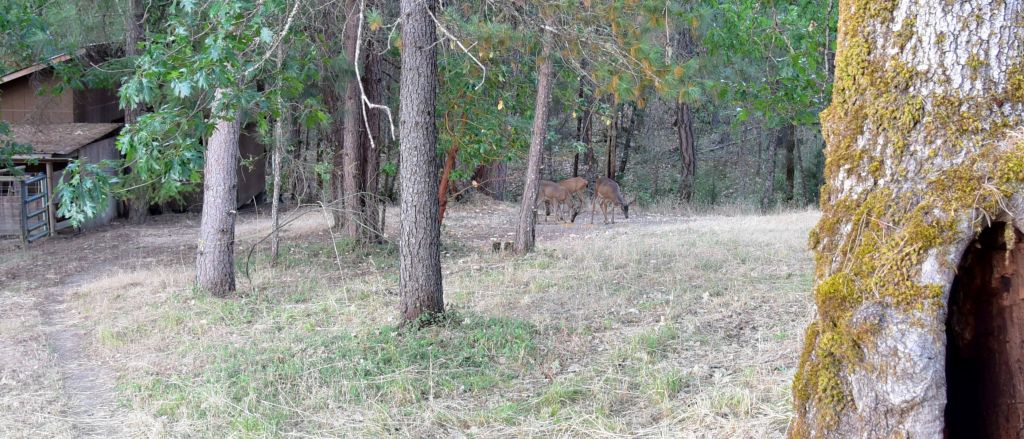
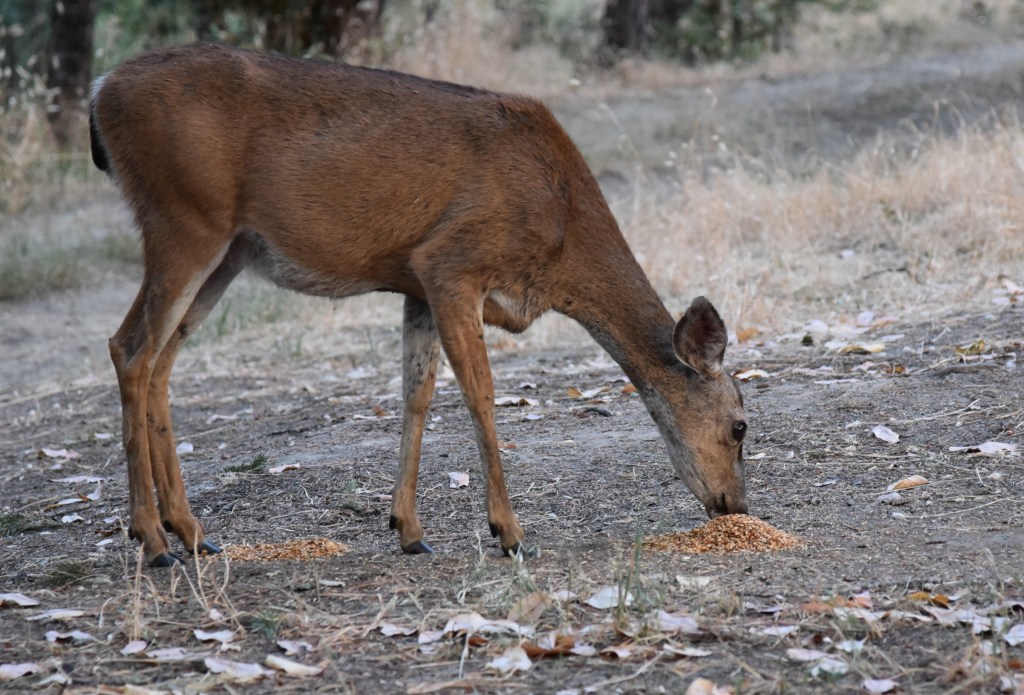
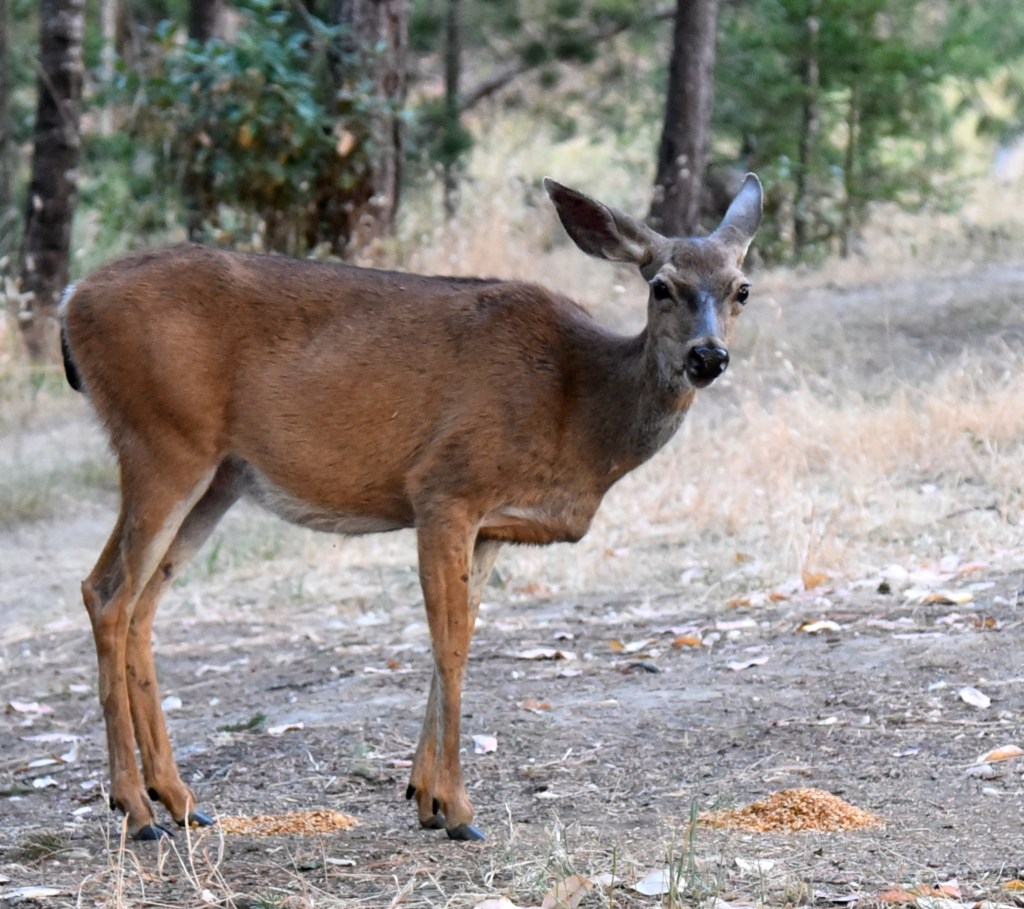
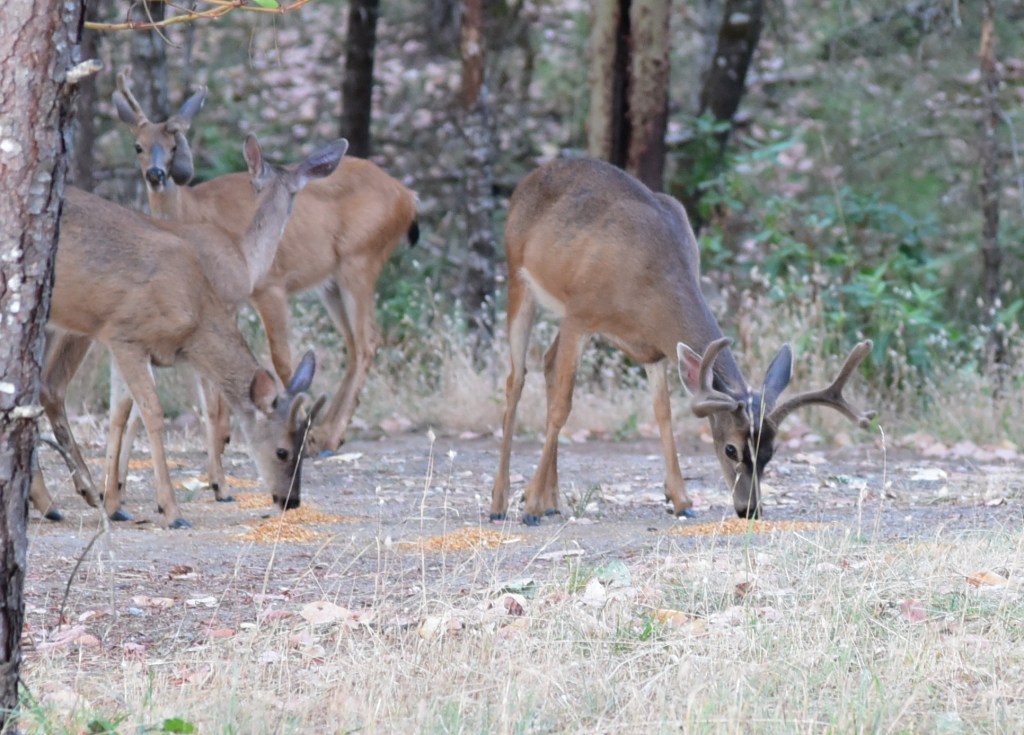
Looking from the end of the deck towards the South down to where our stables are. Photo taken at 06:20 on the 28th shortly after I had put out feed for the deer that come most mornings.

oooo

Taken at 06:10 on the 25th. This shows ‘Doris’ (the second) who has been sleeping under the trees overnight.

oooo

Zoomed in a little closer to Doris and she looked up at me exactly when I took the photograph!

oooo

Morning sky. Unusual to have cloudy skies at this time of the year. 06:20 on the 26th July.

oooo

Our beautiful, gorgeous stag. He has been a regular visitor for the last two years. Taken at 06:10 on the 25th.

oooo

Morning sky, with exposure adjustment, taken at 06:00 on the 25th July.

Can’t close without publicly thanking the wonderful photographic forum Ugly Hedgehog. With over 75,000 users it really is a superb place for all those interested in photography. The forum was invaluable in helping me decide what camera to purchase and, just as importantly, where to purchase it from.

Have a great week, everyone!

Help Stop the use of dogs for medical testing!

Sometimes I wonder about the human race!

Sorry for the outburst above but in the last ten minutes I read this over on Lady Freethinker’s blog: Sign: Pass Bill to Ban Cruel VA Medical Testing on Dogs It made me very angry!

It has to be shared with all you good people.

ooOOoo

Sign: Pass Bill to Ban Cruel VA Medical Testing on Dogs

Saving dogs big time

This is really what matters!

Well it does in the worlds of Jean and me and many of you who frequent this place.

Whatever is going wrong in the world around us, all we need is examples of people putting animals in front of them.

No better illustrated than by a recent news item released by Humane Society International. Albeit, I am using the story as it was presented on the Care2 site.

ooOOoo

Nearly 150 Dogs Saved From the Dog Meat Trade in South Korea

Get ready for some happy news: 149 dogs who were destined to be turned into food have been successfully rescued and will now be starting their new lives in peace.

These dogs, who were rescued by a team from Humane Society International (HSI), are among millions who are raised and killed for their meat in South Korea. According to HSI, more than one million dogs are killed and eaten during Bok Nal days – the three hottest days of the summer – mainly as a soup that’s mistakenly believed to improve stamina and virility.

Fortunately, their fate changed when the farmer who was raising them turned to HSI for help. The organization has been working in partnership with those in the industry who express interest in getting out to help them close their farms and transition into other lines of work.

This latest rescue marks the ninth dog meat farm that HSI has permanently closed since 2014, which has resulted in saving the lives of nearly 1,000 dogs who would have otherwise been brutally slaughtered.

The dogs from this farm will now be free from the cages and chains that confined them, and are headed to HSUS Emergency Placement Partner shelters in the U.S. located in Florida, Illinois, Indiana, New Jersey, New York, Pennsylvania and Wisconsin, where they’ll be prepared to be adopted into homes where they’ll become members of a family.

The first few have already arrived, and the rest will be on their way in the coming weeks. A group of 15 puppies who were too young to fly are being fostered with their moms until they’re ready to make the trip.

“With every dog meat farm we close, we are not only saving the lives of these poor, terrified dogs caught up in this cruel trade, but we are also presenting a successful blueprint for change that we hope the government will follow. Eating dog is a dying practice in Korea, especially among young people. However, the Bok Nal days of summer still lead many to eat dog meat soup in the mistaken belief that it will invigorate the blood in the sluggish heat. Our campaign shows them the disgusting conditions in which the dogs are forced in live in their own feces, and their pitiful suffering, and it is changing hearts and minds,” said Nara Kim, HSI’s South Korea dog meat campaigner.

While millions of dogs are still at risk, attitudes among the public are changing for the better, particularly among younger generations who are eschewing dog meat.

“Some people say that dog eating is Korean culture, but you won’t find many young people who feel it’s a cultural habit we want to hold on to. It’s intellectually lazy to use culture as an excuse for cruelty because all cultures evolve over time and we often shed practices of the past. We are hopeful that things will change, and that the new Korean president will advance a new culture of compassion to animals. I am so happy that for these dogs the dog meat trade is over, but we have to fight on for the millions who are still suffering,” added Kim.

HSI is continuing to urge the government to act to end the trade ahead of the 2018 Winter Olympics, which will be hosted in South Korea, and will be heavily campaigning this summer to raise more awareness about the issue locally.

For more info on how to help, and updates on the dogs, check out Humane Society International.

Photo credit: Friends of Oregon Zoo Elephants/IDA

ooOOoo

The Care 2 version also included a number of very moving photographs but this one, in particular, seemed a great one to share with you. The rest will form the next Picture Parade.

Well done HSI!


Saturday smile time!

Cute beyond words!

Published on Jul 13, 2017

5-month-old Angus the Golden Retriever loves his local beach on Port Phillip Bay in Seaford, Melbourne. After seeing crabs run through the shallows he chases straight for them, frantically trying to catch what he spotted. Awesome!

Have a great weekend!

New ideas about our relationship with dogs.

What a delight to read this latest scientific news.

There’s so much ‘doom and gloom’ to be seen on the news services across the world that a genuine discovery that enlarges the mind is always a treat. Now make that a discovery about our dogs. Better still, let the BBC do it for you.

ooOOoo

How did dogs become our best friends? New evidence

19 July 2017

Dogs most probably evolved from wolves at a single location about 20,000 to 40,000 years ago, a study suggests.

Previously, it had been thought that dogs were tamed from two populations of wolves living thousands of miles apart.

Researchers studied DNA from three dogs found at archaeological sites in Germany and Ireland that were between 4,700 and 7,000 years old.

The ancient canines share ancestry with modern European dogs.

By looking at the rates of change to the DNA from the oldest specimen, scientists were able to place the timing of the domestication of dogs to between 20,000 and 40,000 years ago.

Krishna Veeramah of Stony Brook University in New York is a researcher on the study.

He said the process of dog domestication began when a population of wolves moved to the outskirts of hunter-gatherer camps to scavenge for leftovers.

”Those wolves that were tamer and less aggressive would have been more successful at this,” he explained.

“While the humans did not initially gain any kind of benefit from this process, over time they would have developed some kind of symbiotic relationship with these animals, eventually evolving into the dogs we see today.”

DNA was obtained from the skull of an ancient dog.

The story of how dogs came to be tamed from wolves is complex and hotly debated.

Scientists believe dogs started moving around the world, perhaps with their human companions, about 20,000 years ago.

By 7,000 years ago, they were pretty much everywhere, although they were not the kind of dogs that we would consider pets.

”They would likely have resembled dogs we today call village dogs, which are free-breeding that did not live in specific people’s houses and have a similar look to them across the world,” said Dr Veeramah.

The dogs were later bred for their skills as hunters, herders or gundogs, eventually creating hundreds of modern breeds.

The research, published in Nature Communications, suggests even the dog breeds and village dogs found in the Americas and Pacific Islands are almost completely derived from recent European dog stock.

This is probably due to prolific dog breeding in Victorian times.

The dog skull inside an ancient burial chamber.

”In this regard, it appears therefore that our 7,000-year, Neolithic-old dog from Europe is virtually an ancestor to most modern breed dogs found throughout the world,” said Dr Veeramah.

”This ancestral relationship may even stretch back to the oldest dog fossil we know of, which is approximately 14,000 years old from Germany.”

Previous evidence suggested that the first domestic dogs appeared on opposite sides of the Eurasian continent more than 12,000 years ago.

Later, the eastern dogs moved with migrating humans and bred with those from the west, according to this theory.

Dr Greger Larson of the University of Oxford said it was great to see more ancient dog genomes being published.

“There is a fascinating story here and we’re only just scraping the surface,” he said.

“The more we get the more we might have a shot at finally unravelling the story of how we became such good friends over such a long time.”

Follow Helen on Twitter.

ooOOoo

Once read, it was but a moment to do a web search for Dr Veeramah and bring up the news of his research on the Stony Brook Newsroom.

ooOOoo

Study Reveals Origin of Modern Dog Has a Single Geographic Origin

Reported in Nature Communications, the finding counters previous research that suggested two domestication events led to the modern dog

Stony Brook, NY; Stony Brook University: Department of Ecology and Evolution Assistant Professor Krishna Veeramah. His research will be published in Nature and his study reveals origin of modern dog has a single geographic origin.

STONY BROOK, N.Y., July 18, 2017 – By analyzing the DNA of two prehistoric dogs from Germany, an international research team led by Krishna R. Veeramah, PhD, Assistant Professor of Ecology & Evolution in the College of Arts & Sciences at Stony Brook University, has determined that their genomes were the probable ancestors of modern European dogs. The finding, to be published in Nature Communications, suggests a single domestication event of modern dogs from a population of gray wolves that occurred between 20,000 and 40,000 years ago.

Dogs were the first animal to be domesticated by humans. The oldest dog fossils that can be clearly distinguished from wolves are from the region of what is now Germany from around 15,000 years ago. However, the archeological record is ambiguous, with claims of ancient domesticated dog bones as far east as Siberia. Recent analysis of genetic data from modern dogs adds to mystery, with some scientists suggesting many areas of Europe, Central Asia, South Asia and the Middle East as possible origins of dog domestication.

(L to R) Shyamalika Gopalan, PhD Candidate, Dean Bobo, Bioinformatics Scientist, and Krishna Veermah, Assistant Professor of Ecology & Evolution. (F) Four-legged friend, Joci

In 2016, research by scientists using emerging paleogenomics techniques proved effective for sequencing the genome of a 5,000-year-old ancient dog from Ireland. The results of the study led the research team to suggest dogs were domesticated not once but twice. The team from Oxford University also hypothesized that an indigenous dog population domesticated in Europe was replaced by incoming migrants domesticated independently in East Asia sometime during the Neolithic era.

“Contrary to the results of this previous analysis, we found that our ancient dogs from the same time period were very similar to modern European dogs, including the majority of breed dogs people keep as pets,” explained Dr. Veeramah. “This suggests that there was no mass Neolithic replacement that occurred on the continent and that there was likely only a single domestication event for the dogs observed in the fossil record from the Stone Age and that we also see and live with today.”

In the paper, titled “Ancient European dog genomes reveal continuity since the Early Neolithic,” Veeramah and colleagues used the older 7,000 year old dog to narrow the timing of dog domestication to the 20,000 to 40,000 years ago range.

They also found evidence of the younger 5,000 year old dog to be a mixture of European dogs and something that resembles current central Asian/Indian dogs. This finding may reflect that people moving into Europe from the Asian Steppes at the beginning of the Bronze Age brought their own dogs with them.

“We also reanalyzed the ancient Irish dog genome alongside our German dog genomes and believe we found a number of technical errors in the previous analysis that likely led those scientists to incorrectly make the conclusion of a dual domestication event,” added Veeramah.

Overall, he emphasized, their new genomic analysis of ancient dogs will help scientists better understand the process of dog evolution, even if the exact geographic origin of domestication remains a mystery. He expects further sequencing of the ancient genomes from Eurasia will help to eventually solve the issue.

The study and findings are a collaboration between scientists at Stony Brook University; the University of Michigan, Johannes Gutenberg-University, Germany; University of Bamberg, Germany; Trinity College, Ireland; and the Department of Monumental Heritage in Germany.

The research was supported in part by the National Institutes of Health.

###

 About Stony Brook University
Stony Brook University is going beyond the expectations of what today’s public universities can accomplish. Since its founding in 1957, this young university has grown to become one of only four University Center campuses in the State University of New York (SUNY) system with more than 25,700 students, 2,500 faculty members, and 18 NCAA Division I athletic programs. Our faculty have earned numerous prestigious awards, including the Nobel Prize, Pulitzer Prize, Indianapolis Prize for animal conservation, Abel Prize and the inaugural Breakthrough Prize in Mathematics. The University offers students an elite education with an outstanding return on investment: U.S. News & World Report ranks Stony Brook among the top 40 public universities in the nation. Its membership in the Association of American Universities (AAU) places Stony Brook among the top 62 research institutions in North America. As part of the management team of Brookhaven National Laboratory, the University joins a prestigious group of universities that have a role in running federal R&D labs. Stony Brook University is a driving force in the region’s economy, generating nearly 60,000 jobs and an annual economic impact of $4.65 billion. Our state, country and world demand ambitious ideas, imaginative solutions and exceptional leadership to forge a better future for all. The students, alumni, researchers and faculty of Stony Brook University are prepared to meet this challenge.

ooOOoo

Even better than the University providing the link to the above, it also gave me the good Doctor’s email address. I shall reach out to him and see if there is more that I can share with you!

Protecting our dogs from being stolen!

Can you imagine anything more awful!

I’m not sure if we are out and about with our dogs more frequently in the Summer but one would assume so.

But whatever the season, the number of people that do take their dogs with them when they are out is very significant.

So a recent article published by Care 2 about how thieves do steal dogs seemed timely.

ooOOoo

5 Ways Thieves Could Steal Your Dog

Editor’s note: This Care2 favorite was originally posted on January 1, 2013. Enjoy!

Sergeant Kenneth Chambers was playing Frisbee with his dog in the parking lot of a Jacksonville, Florida, grocery store recently when lightning struck out of the clear blue sky. The young American veteran, in recovery for post traumatic stress disorder, rolled down the car windows and placed his Australian Shepard/Blue Heeler Mix inside the vehicle just briefly, while he went inside to help his mother with the bags. When he came out moments later, Adalida was gone.

Unfortunately for Sergeant Chambers, and for Adalida, the parking lot scenario placed them in two of the top five high-risk situations for pet theft. And while Sergeant Chamebers’ search continues for Adalida, there are measures that all of us can take to prevent a similar tragedy.

Here are five of the top high-risk pet theft scenarios to avoid: 

1. Dogs in cars

In the blink of an eye, a partially opened window can be forced down or smashed. It takes 20 seconds or less to abduct a dog, and by the time a pet owner returns to the car, their dog is long gone. The American Kennel Club reports a 70 percent rise in dog theft in 2012 and a 40 percent rise the year before. A weak economy has fueled financially motivated dog-napping — and a dog in a car is, quite simply, a sitting duck.

2. Highly prized breeds or dogs with special abilities

A purebred dog or a dog with special skills is a bit like a gold watch. Thieves see dollar signs, and that’s more than enough temptation. Any dog left unattended can be taken, but there is far greater motivation for criminals to walk off with a dog who can bring in a large sum of cash.

3. Pets left in fenced backyards

Everyone loves the convenience of a doggy door — especially criminals. Homeowners who let their pet explore the fenced yard without supervision maintain the illusion of safety, but police departments across the country will tell you that this isn’t enough.

In broad daylight on a single Saturday in November, Corning Animal Shelter Manager Debbie Eaglebarger documented the theft of four Dobermans, four Australian shepherds and two Rottweilers. One neighbor witnessed a man and a woman lure one of the dogs out of a backyard and into their vehicle. All dogs taken that day were purebred, but that is not always the case.

4. Pets left tied in front of businesses

This one may sound like a no-brainer, but particularly in urban areas where pets accompany their owners on errands, it’s not uncommon to find dogs tied up in front of a bank or grocery store. Typically, these are dogs with a gentle demeanor — and that makes them highly susceptible to the commands of a would-be thief.

“Leaving your dog tied up in front of a store is about as ludicrous as leaving your child out front and saying, ‘Wait right there, I’ll be back in 10 minutes,” explains Howard Simpson of Integrated Security and Communications in Tyngsboro, Massachusetts. “Do yourself a favor and realize that there are security risks in even the safest of neighborhoods. Being naive makes you a target.”

5 Strangers in the neighborhood

Any strangers on your property can be a risk to your pets. Whether they are invited contractors, deliverymen or political campaigners, visitors could easily grab a pet during a moment when the homeowner is distracted. In some cases, they are making a mental note of homes with valuable breeds or easy-to-subvert home security that will facilitate a quick dog-napping at a later time. It bears mentioning that it’s not uncommon for cats to jump into the back of truck beds for a snooze and to be unwittingly carried off at the end of the day.

Which breeds are most likely to be stolen?

According to the American Kennel Club, the most stolen dog of 2011 was the Yorkshire terrier, followed by the Pomeranian, Maltese and Boston terrier. Small breeds are targeted by thieves because of their size but also because of their value on the market — a single dog can fetch well over $1,000! Among the large breeds, Labrador retrievers are a frequent target, as well as pit bull terriers and pit bull mixes – perhaps for a much more sinister purpose.

Why do thieves target pets?

1. Bait dogs and laboratory dogs

This is every dog guardian’s worst nightmare. Indeed people involved in dog fighting will gather “bait” dogs to be used as training tools for fighting dogs. It happens in both urban and rural areas, and there has been no measurable decline in dog fighting in recent years. Despite some legislation intended to stop the sale of undocumented dogs to research laboratories, under-the-table sales continue — and, in some countries, these exchanges are not considered a crime.

2. Financially motivated theft

“For the first time ever we’ve seen a trend now where shelters are being broken into and purebred and mixed breed dogs are being stolen,” said Lisa Peterson, spokesperson for the American Kennel Club. In fact, any purebred dog, particularly puppies, is considered a high-value commodity. Even with a microchip, it’s often too late when a pet buyer discovers that they have purchased a stolen dog.  By then, the thief is long gone.

3. Emotionally driven theft

What’s often overlooked are the emotionally motivated crimes that rob dogs of their families. This can happen because the perpetrator feels that a dog is not being properly cared for. Some animal lovers will feel justified in stealing a dog that is tied in front of a store or who gets  loose one day. Other times it’s an act of revenge, and, in many cases, a former romantic partner is considered the prime suspect.

Whatever the scenario or the motivation, dog guardians can best protect their dogs with watchfulness. Never leave a dog unattended. Secure your home, including all doors and windows, to the best of your ability and budget. And be wary of strangers in your neighborhood at all times.

Brought to you by the Harmony Fund, an international animal rescue charity.

There’s big, and then there’s really big!

There’s something about big dogs!

I’m not saying that I have a preference for big dogs just that there’s a difference in my mind as to how larger dogs interact with one.

Jean and Brandy at our local yard sale last weekend. (June 29th, 2016)

All of which elegantly leads into an item that was presented on Mother Nature News the other day and is shared with you all today.

ooOOoo

Removed because of copyright infringement.

ooOOoo

Here’s another wonderful photograph to close off today’s post.

Aren’t our dogs such wonderful, special friends!