Six days after Mexico City was ravaged by an earthquake, there seemed little hope of finding anyone alive among the rubble.
But a Japanese rescue team was thrilled to find one more tiny survivor — a schnauzer, who they managed to pull from the ruins of a collapsed apartment building.
The lucky dog was checked out by vets, and had somehow managed to remain in good health. Authorities now hope to reunite the schnauzer with her family as soon as possible.
Thank you to rescuers who travelled from around the world to save lives — both human and animal — in the wake of this tragic disaster.
ooOOoo
The video and news item was carried by the New York Post and for reasons I am unsure about I couldn’t include the video in this post. But you can view that video by going here. Luckily other newspapers carried the wonderful event and the following photograph appeared in The Independent newspaper two days ago.
A schnauzer dog who survived the quake is pulled out of the rubble from a flattened building by rescuers in Mexico City 24 September. ALFREDO ESTRELLA/AFP/Getty Images
My guess is that dogs and humans have been saving each other for thousands of years and long may it continue.
With the recent earthquakes in Mexico being a glorious example of that!
Nobody would have missed out on the news of the terrible catastrophe of the recent earthquakes in Mexico.
As seen on the NBC news site.
Mexico Earthquake Death Toll Climbs as Dozens Sleep on Streets
byThe Associated Press
JUCHITAN, Mexico — The death toll from one of the most powerful earthquakes ever recorded in Mexico rose to at least 61 early Saturday as workers scrambled to respond to the destruction just as Hurricane Katia struck its coastline.
The 8.1 quake off the southern Pacific coast just before midnight Thursday toppled hundreds of buildings in several states. Hardest-hit was Juchitan, Oaxaca, where 36 people died and a third of the city’s homes collapsed or were otherwise rendered uninhabitable, President Enrique Pena Nieto said late Friday in an interview with the Televisa news network.
It’s impossible to truly appreciate the terror of such an event unless one has had the misfortune of already living through such an earthquake. Likewise, almost as difficult to appreciate the terror of being trapped.
But thank goodness for dogs that are trained to sniff out those trapped persons. Such as Frida who saved so many lives down in Mexico. Here’s the account of Frida’s special deeds as carried on the Care2 site.
ooOOoo
Frida, the Heroic Rescue Dog, Saves Lives After Mexico’s Earthquake
Photos and videos of a rescue dog named Frida have gone viral — complete with her cute-yet-necessary work uniform: doggie goggles, vest and four protective, Velco-strapped booties. She has become a four-legged symbol of hope during these dark times in Mexico.
Although, contrary to some early news reports, Frida didn’t really rescue 52 people after the devastating 7.1 earthquake struck Mexico Sept. 19, the 7-year-old yellow Labrador retriever has nonetheless become a media sensation.
What’s true is that prior to the earthquake, Frida (she’s named after the artist Frida Kahlo) had helped rescue 12 people and recover the bodies of 40 people during her career as a disaster rescue dog with the Mexican Navy’s (SEMAR) Canine Unit.
Working with 14 other dogs in the unit, she has located 12 victims of the Sept. 19 quake so far.
Frida’s first mission after the earthquake struck was to find survivors at the Enrique Rebsamen School in Mexico City. Eleven children were found alive by other emergency workers. Tragically, 19 children and six adults did not survive.
Frida suffered from exhaustion after searching the school Sept. 20, her handler, Israel Arauz Salinas, told the Los Angeles Times. After napping and drinking plenty of water with electrolytes, she was in better spirits the following day and ready to go back to work.
Frida has two colleagues in the Canine Unit, Evil and Echo, who are both one-year-old Belgian Malinois dogs. Because Frida is getting on in years, Evil and Echo enter collapsed buildings before she does. If they find someone, Frida enters and spends no longer than 20 minutes inside the building.
The disaster rescue dogs can reach areas that are inaccessible to human responders, including spaces that are less than 20 inches high. When they find a victim who’s alive, the dogs bark. Otherwise they stop and slowly approach the body. “They act afraid,” Salinas told the L.A. Times. “That indicates to us that there is a cadaver.”
Like the other dogs in the Canine Unit, Frida began training when she was just two months old. The skills the dogs show in training determine whether they will go on to detect people, narcotics or explosives.
To train dogs to find people, they are first taught to fetch toys and balls. Once they learn how to do that, their trainers run with the toy or ball in their hands. The dogs learn to associate the smell of the person with the reward of the ball, Salinas told the L.A. Times. Before they’re ready to be dispatched to disaster areas, the dogs train for about three hours a day for a year.
Just two weeks before the Sept. 19 earthquake, Frida helped locate the body of a policeman after a massive 8.1 quake struck Juchitan. She also worked in Ecuador after an earthquake there in April last year.
Before Frida won the hearts of the rest of the world, even the president of Mexico, Enrique Pena Nieto, was a fan of hers (or at least the person in charge of his official Twitter account was).
“She is @Frida, belongs to the #SEMAR_mx and has helped save 52 lives in various natural disasters at the national and international levels,” says a @PresidenciaMX tweet on Sept. 13.
ooOOoo
I’m going to finish off today’s post with a recent video aired by Quebec News. (Actually, a series of still photographs.)
Quebec NEWSPublished on Sep 21, 2017
Thousands of emergency services, military, and civilians are currently searching through rubble across the country for survivors. Among them are Frida, a rescue dog who has saved 52 people throughout her career, according to the office of Mexico’s President. Frida’s adorable outfit has a purpose. The goggles are to protect her eyes from smoke and debris, while the boots protect her feet from rough terrain. A massive 7.1 earthquake rocked Mexico earlier this week,It was the second major earthquake to hit Mexico in two weeks
An emotional post that is potentially upsetting to readers. Especially English readers.
Yesterday, September 14th, saw the opening of the inquiry into the Grenfell Tower fire that happened on June 14th. As the BBC News reported:
The inquiry into the Grenfell Tower fire has opened, with its chairman promising it will provide answers to how the disaster could have happened in 21st century London.
Sir Martin Moore-Bick said he would not shrink away from making recommendations that could lead to prosecutions.
Yesterday morning, I woke at 5am PDT (1pm UK time) and picked up my tablet that has a BBC Radio 4 app installed. I lay there in the dark, Jeannie still fast asleep alongside me, and listened to the World at One: Forty-five minutes of news, analysis and comment, with Martha Kearney. Naturally the opening stages of the inquiry were one of the main items covered.
I was born in London. At the maternity ward at the hospital in Park Royal, West London. Some 5 miles from Grenfell Tower. I was brought up in Wembley, London again some 5 miles straight line distance from the tower.
For much of my early life as a young adult I was in and around that part of London. So while I was not personally familiar with Grenfell Tower itself, the news coverage of the disaster at the time relayed sights of a part of London that seemed like an old friend from the past.
A ghost of my life from over 50 years ago.
Yesterday on the World at One Martha Kearney interviewed Kareem Dennis better known as the rapper Lowkey:
Lowkey: A song for Grenfell, a call for justice
Hip Hop artist Lowkey lives opposite Grenfell tower. He has written a song called Ghosts of Grenfell, featuring people from the local community, which demands justice for those who died.
Lowkey told the World at One about his song and the night of the fire.
(Photo: Lowkey. Credit: BBC)
The interview included snippets of Lowkey’s song.
After I had finished listening to the World at One I did a web search to learn more about the poor animals that lost their lives in the inferno. It broke my heart reading the stories.
Then I started watching the full video of Lowkey’s song: Ghosts of Grenfell. Sixty seconds into the song I could hold my emotions no longer and burst into deep sobs.
[Intro: Lowkey] The night our eyes changed Rooms where, love was made and un-made in a flash of the night Rooms where, memories drowned in fumes of poison Rooms where, futures were planned and the imagination of children built castles in the sky Rooms where, both the extraordinary and the mundane were lived Become forever tortured graves of ash Oh you political class, so serve out to corporate power
[Chorus: Mai Khalil & Lowkey]
Did they die, or us?
Did they die, or us?
Did they die, for us? Ghosts of Grenfell still calling for justice Now hear ’em, now hear ’em scream
Did they die, or us?
Did they die, or us?
Did they die, for us? This corporate manslaughter will haunt you Now hear ’em scream
[Verse 1: Lowkey]
Words can not express
Please allow me to begin though
1:30am heard the shouting from my window
People crying in the street
Watchin’ the burning of their kinfolk
Grenfell Tower, now historically a symbol
People reaching, from their windows
Screaming, for their lives
Pleading, with the cries
Tryna reason with the skies
Dale youth birthed champions
Comparison is clear though
That every single person in the building was a hero
So don’t judge our tired eyes in these trying times
‘Cause we be breathing in cyanide, the entire night
They say Yasin saw the fire and he ran inside
Who’d thought that would be the site where he and his family died
The street is like a graveyard, tombstones lurching over us
Those shouting out to their windows, now wish they never woke them up
Wouldn’t hope your worst enemy to go in this position
Now it’s flowers for the dead and printed posters for the missing, come home
[Chorus: Mai Khalil & Lowkey]
Did they die, or us?
Did they die, or us?
Did they die, for us? Ghosts of Grenfell still calling for justice Now hear ’em, now hear ’em scream
Did they die, or us?
Did they die, or us?
Did they die, for us? This corporate manslaughter will haunt you Now hear ’em scream
[Verse 2: Lowkey]
I see trauma in the faces of all those that witnessed this
Innocence in the faces of all those on the missing list
See hopes unfulfilled
Ambitions never achieved
No I’m not the only one that sees the dead in my dreams
Strive for the bravery of Yasin, artistic gift of Khadija
Every person, a unique blessing to never be repeated
Strive for the loyalty of siblings that stayed behind with their parents
Pray that every loved one lost can somehow make an appearance
We are, calling like the last conversations with their dearest
Until we face, what they face we will never know what fear is
We are, calling for survivors rehoused in the best place
Not to be left sleeping in the West Way for 10 days
We’re, calling for arrests made and debts paid
In true numbers known for the families that kept faith
We’re, calling for safety in homes of love
They are immortalised forever, the only ghosts are us
I wonder
[Chorus: Mai Khalil & Lowkey]
Did they die, or us?
Did they die, or us?
Did they die, for us? Ghosts of Grenfell still calling for justice Now hear ’em, now hear ’em scream
Did they die, or us?
Did they die, or us?
Did they die, for us? This corporate manslaughter will haunt you Now hear ’em scream
[Bridge: Mai Khalil (Arabic)]
Olooli win arooh
Nas a’am tehtere’a fe sa’at sahoor
Ahess ennee be alam tanee
Ahess ennee be alam tanee
Olooli win arooh
Nas a’am tehtere’a fe sa’at sahoor
Ahess ennee be alam tanee
Ahess ennee be alam tanee
[Speech: Lowkey & Various Voices] To whom it may concern, at the Queen’s royal borough of Kensington in Chelsea. Where is Yasin El-Wahabi? Where is his brother Mehdi? Where is his sister Nur Huda? Where is their mother and where is their father? Where is Nura Jamal and her husband Hashim? Where is their children, Yahya, Firdaus and Yaqoob? Where is Nadia Loureda? Where is Steve Power? Where is Dennis Murphy? Where is Marco Gottardi? Where is Gloria Trevisian? Where is Amal and her daughter Amaya? Where is Mohammed Neda? Where is Ali Yawar Jafari? Where is Khadija Saye? Where is Mary Mendy? Where is Mariem Elgwahry? Where is her mother Suhar?
Tell us, where is Rania Ibrahim and her two daughters? Where is Jessica Urbano Remierez? Where is Deborah Lamprell? Where is Mohammed Alhajali? Where is Nadia? Where is her husband Bassem? Where are her daughters, Mirna, Fatima, Zaina and their grandmother? Where is Zainab Dean and her son Jeremiah? Where is Ligaya Moore? Where is Sheila Smith? Where is Mohammednour Tuccu? Where is Tony Disson? Where is Maria Burton? Where is Fathaya Alsanousi? Where is her son Abu Feras and her daughter Esra Ibrahim? Where is Lucas James? Where is Farah Hamdan? Where is Omar Belkadi? Where is their daughter Leena? Where is Hamid Kani? Where is Esham Rahman? Where is Raymond Bernard? Where is Isaac Paulos? Where is Marjorie Vital? Where’s her son Ernie? Where is Komru Miah? Where is his wife Razia? Where are their children Abdul Hanif, Abdul Hamid, Hosna? Where are Sakineh and Fatima Afraseiabi? Where is Berkti Haftom and her son Biruk?
Tells us, where is Stefan Anthony Mills? Where is Abdul Salam? Where is Khadija Khalloufi? Where is Karen Bernard? Where are these people? Where are these people? Where is Gary Maunders? Where is Rohima Ali? Where is her six year old daughter Maryam, her five year old daughter Hafizah and her three year old son Mohammed? God bless you all! Where are all these people?
[Outro]
Where are all these people?
The blood is on your hands
There will be ashes on your graves
Like a Phoenix we will rise
The blood is on your hands
There will be ashes on your graves
Like a Phoenix we will rise
On the 6th September last I offered a guest post from Lea of the blog Paws Give Me Purpose that carried the title More Doggie Language. It was well-received by all of you.
So it was easy for me to say “Yes” to Lea offering an update. Here it is.
ooOOoo
September 1, 2017, by Lea
Doggie Language Continued
Lately, I have seen many articles written on dog language and what your dog may be telling you. I published my own post entitled “Doggie Language” back on June 25th, the link can be found here:
There are just so many ways our dogs speak to us that one post will never be enough. Even when you think you have it all covered you suddenly think of something else, see your dog do something new, or read something else from another individual’s perspective. That is why today I am writing about this subject once again.
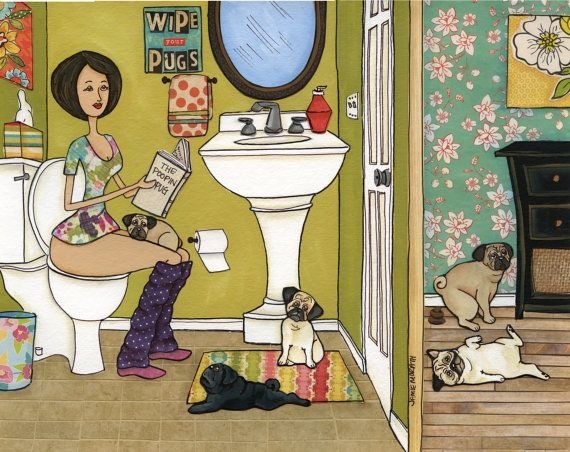
So here’s an interesting question that I have been asked a few times, and it makes me laugh every time I see someone on Facebook, or another site posting a joke or photo about it. Why do dogs follow you into the bathroom?
(image courtesy of Pinterest.com)
Having a loyal dog in your household ensures an incredible amount of love between you and your pup. Understanding your dog can be easy and it’s not hard to understand that your pup wants to give you some love with kisses, however your pup may often behave in more subtle manners as well.
Now, most of us aren’t mentalists or even Dr. Doolittle, so here are some things your dog may do and what they are trying to say to you:
Puppy dog eyes – puppy dog eyes are often used by young children whenever they really want something. Your pup may use them to show love and it enforces a greater trust between you both.
Following you around – you must agree that it is absolutely adorable when your pup follows you all over the house. According to some Veterinarians, following behavior is a dog’s instinct, to always do things with their pack/family.
Giving you gifts – I have had my dogs bring me dead birds, squirrels, and even once a live baby squirrel into the house. The gift is not always as interesting or gross, sometimes it’s a ball to play fetch or a stuffed toy, but turns out that our pups simply want to share their joy with us and there’s no better person to share it with!
Cuddle time after dinner – most of us are used to our dogs cuddling at bedtime or on the couch when we watch tv, but cuddling with you after their bellies are filled with a hearty meal shows that your pup is truly comfortable around you.
Licking your face and body – there are some people who love it, others find it gross, but all dogs like giving licks once in a while. Licking is actually a submissive behavior and it actually helps your pup ease their stress level as well as of course being a sign of loving you.
Going “crazy” when you come home – the second your dog hears you coming back home, chaos ensues. I know at my house it starts the minute I pull into the driveway, I can hear them even before I put my key in the lock.. Your pup is just happy you’re home, happy to see you! This enthusiastic response is just their way of saying “I missed you”.
Knowing when something is wrong – Your pet doesn’t need to be able to actually talk to you to sense that something is wrong or if you’re feeling sad. They read your body language and use their senses to detect if something is wrong. They are also more than willing to help you feel better.
Crawling into your bed – not everyone sleeps with their dogs, it’s a personal preference. Perhaps once every so often, your pup will join you in your bed, they won’t just sit there, they keep you close. Often they will cuddle you, they lay on you. When you’re not home and away for work, they may just want to smell you so they climb in the bed because they miss you.
Raising a single paw or tapping you with a paw – raising one of two paws usually means your dog is in the mood for some playtime or wants attention. Sometimes, they’ll do this when they see something interesting in their environment, they will sit with one paw raised like a statue.
Leaning against you – if your dog is actively leaning against you, it means he or she is looking for some extra love, hugs, pets from you. Dogs always love to have your undivided attention!
Try to get your opinion – have you ever had the feeling that your dog was looking for your approval? Your pup actually really appreciates and values your opinion. A little love and affection go a long way!
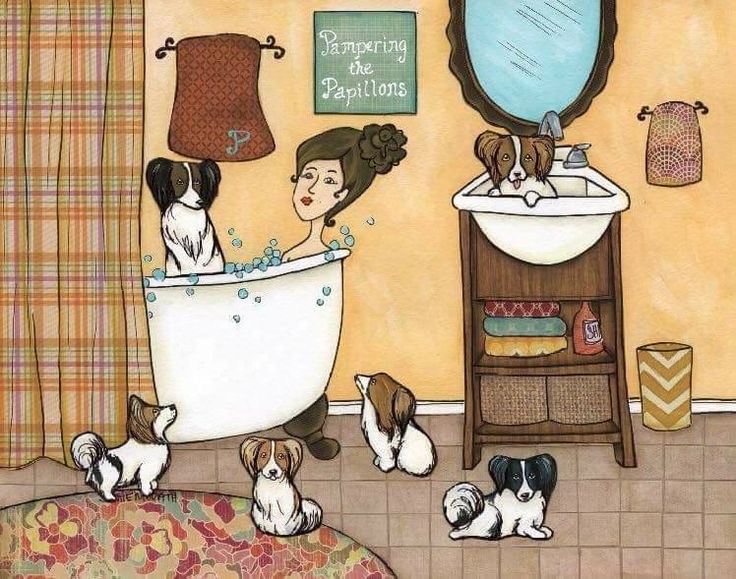
(image courtesy of Pinterest.com)
Whether you have a new dog or you and your pup have been together for a while, it’s helpful to know the meaning of their communication signals so that you can adjust your own behavior as needed and also you know how your pup is feeling.
Dogs make vocalizations and gestures using their face and body just as us humans do in order to express their feelings. While some of these gestures can appear similar to ours, they can have very different meanings. It is my hope that my original post on the subject and in this follow up, I have helped you learn a little more about how to interpret your dog’s various actions and that you’ve learned something new about how to communicate more effectively with your own pup!
When I was reading this I was struck by Lea reminding me, and all other dog lovers, that the role of the gestures and faces of our dogs so closely matches how we humans communicate non-verbally. No wonder the bond between dog and human can be so close and wonderful.
How times change! Morten is now writing stories on his iPad and sending them to me.
Like this one:
ooOOoo
Once upon a time there were 2 Very cute dogs called cuty and puty and they were having a great day in the deep dark forest andcuty said I want to go home but puty doesn’t want to go home but they did. THE END
This was a story about two dogs
ooOOoo
And included in that lovely email was this photograph:
Maija, me and Jeannie.
Okay good people, my book event is now behind me and Jeannie and I are back home.
Unexpectedly, the plane was diverted to Sydney along the way. The flight attendant explained that there would be a delay, and if the passengers wanted to get off the aircraft the plane would re-board in 50 minutes.
Everybody got off the plane except one lady who was blind.
A man had noticed her as he walked by and could tell the lady was blind because her Guide Dog lay quietly underneath the seats in front of her throughout the entire flight.
He could also tell she had flown this very flight before because the pilot approached her, and calling her by name, said, “Kathy, we are in Sydney for almost an hour. Would you like to get off and stretch your legs?”
The blind lady replied, “No thanks, but maybe Buddy would like to stretch his legs.”
The pilot duly obliged Kathy.
………..
All the people in the gate area came to a complete standstill when they looked up and saw the pilot walk off the plane with a Guide dog!
The pilot was even wearing sunglasses.
People scattered …
They not only tried to change planes, but they were trying to change airlines!
It is a true story!
Have a great day and remember … THINGS AREN’T ALWAYS AS THEY APPEAR.
You loved Sam Grant’s photos of Casper and Scotland. Learn more about her.
Last Sunday my Picture Parade was primarily a recent item that appeared on the BBC website.
Meet Scotland’s ‘most well-travelled dog’
By Ewan Murrie, BBC Scotland news website, 3rd June 2017
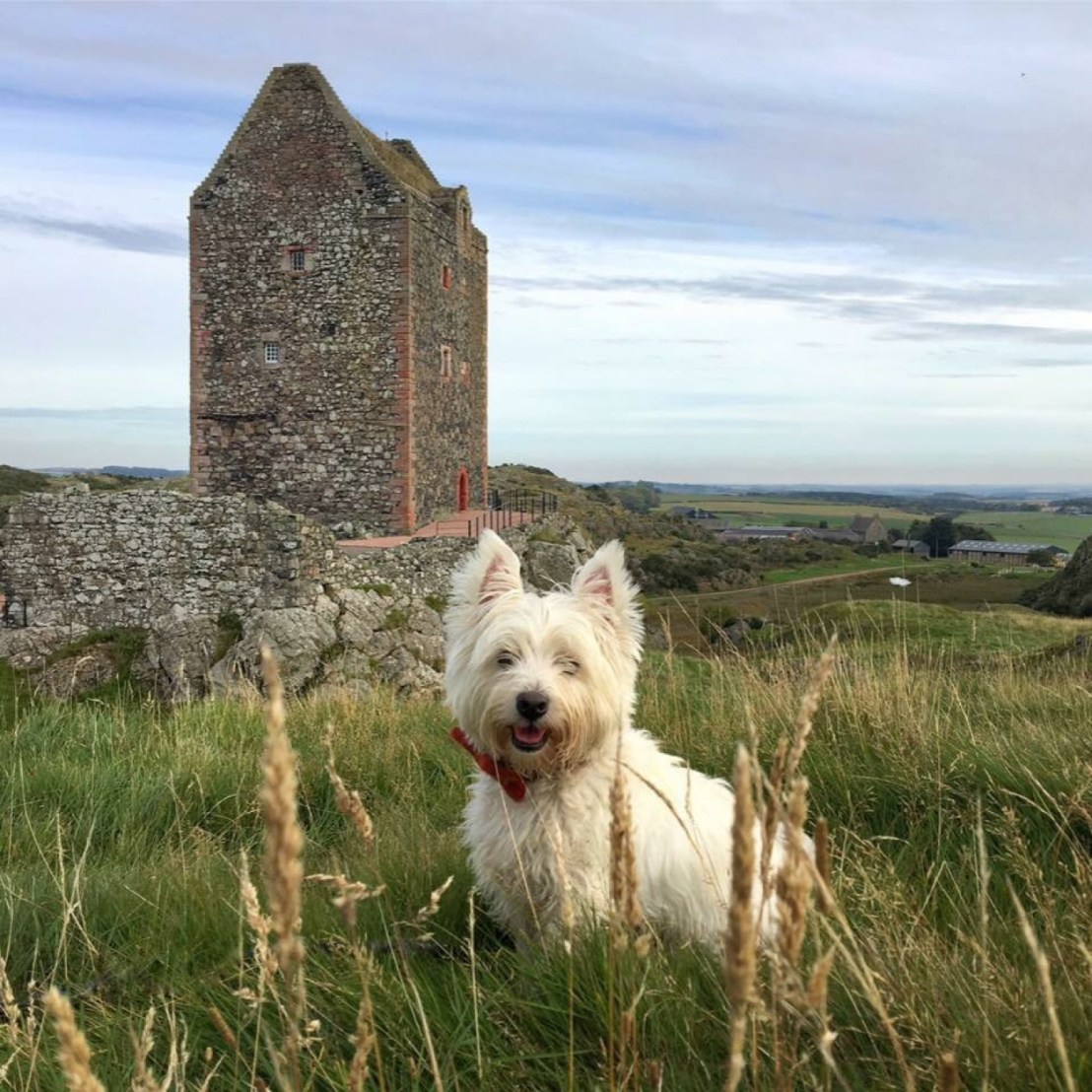
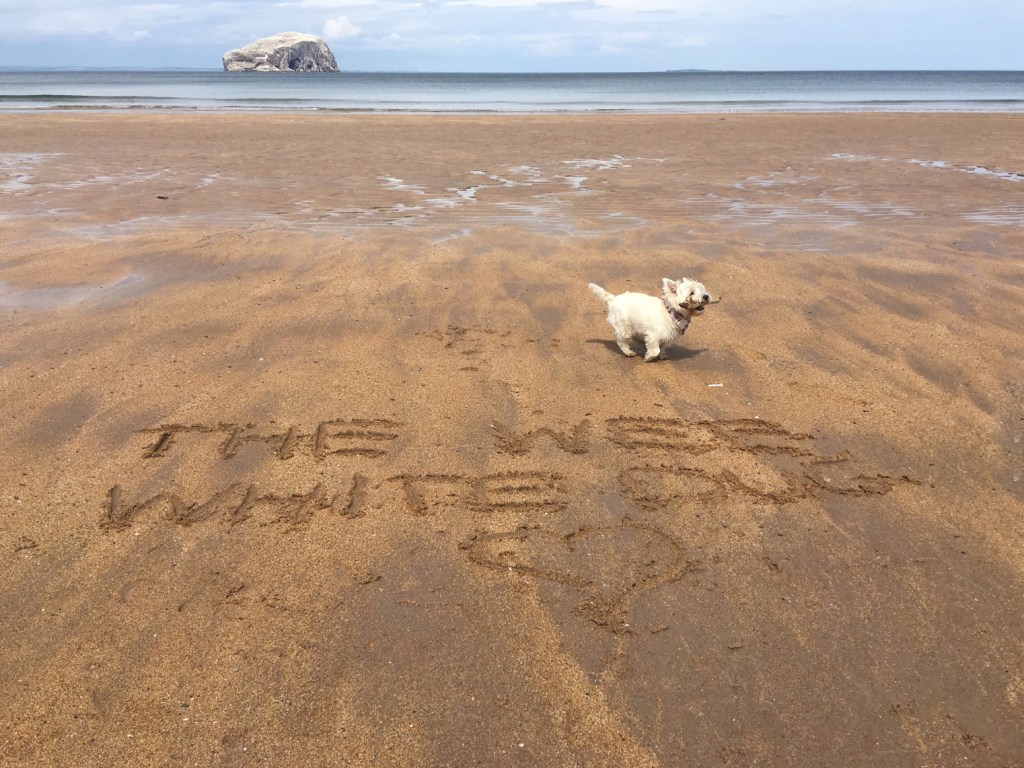
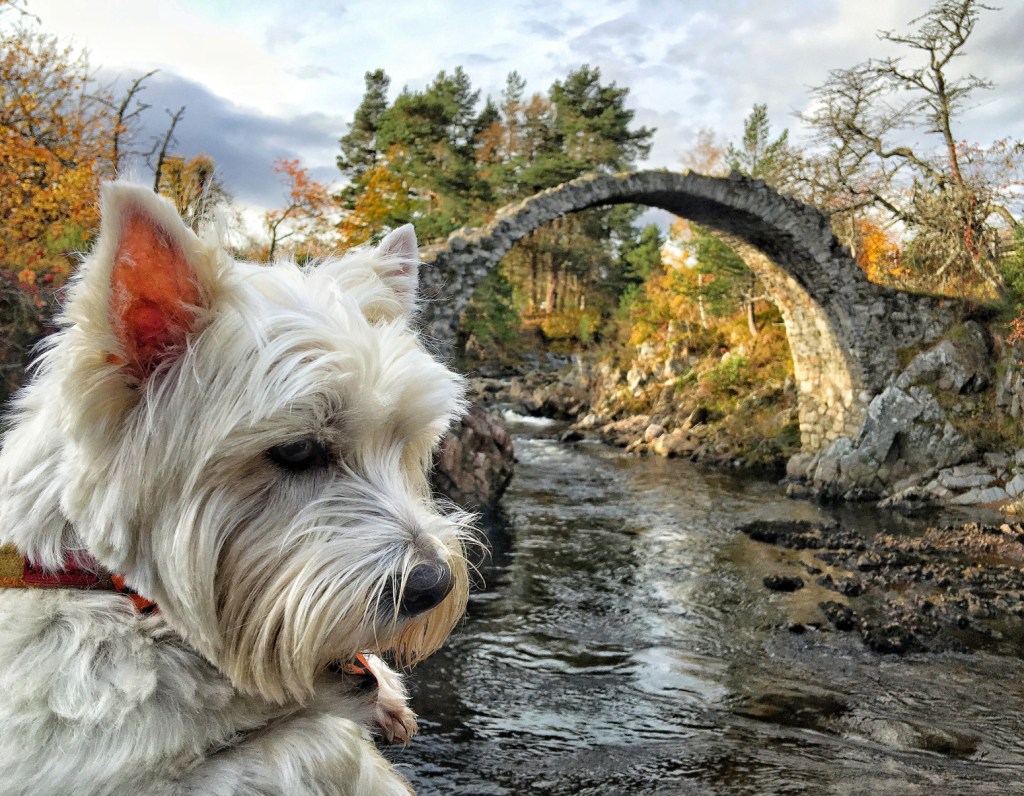
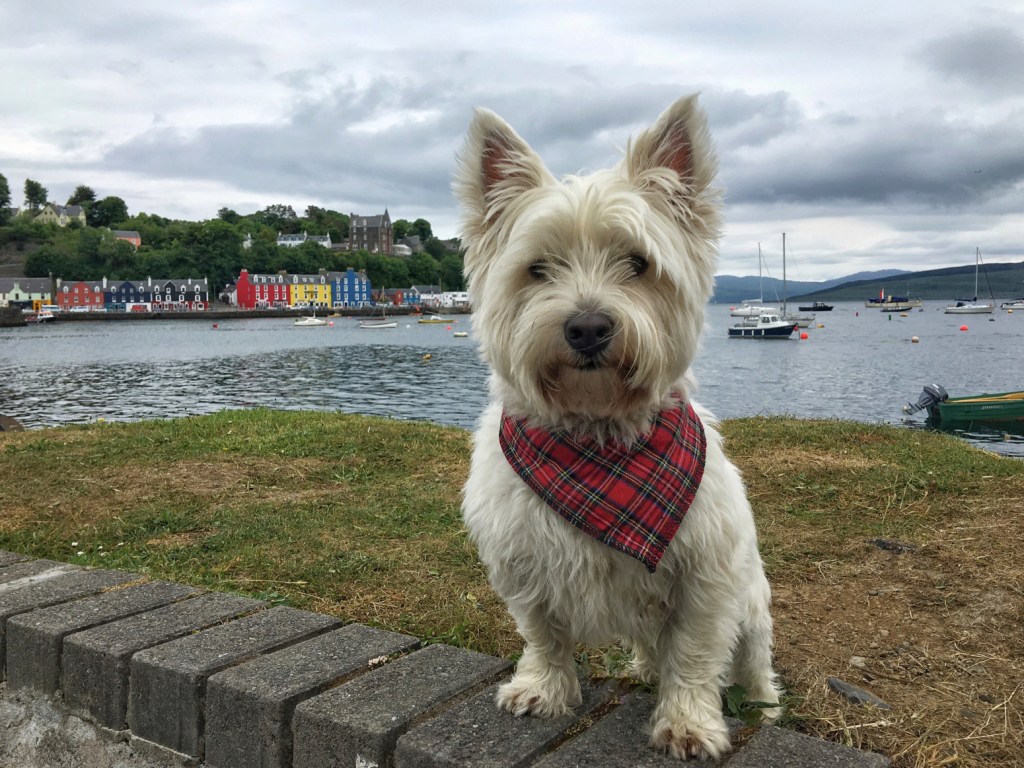
After photographs of her West Highland Terrier received more “likes” on social media than even the most stunning Glencoe landscapes she could capture, Sam Grant conceded that “the wee white dug” should star in her Scottish travel blog.
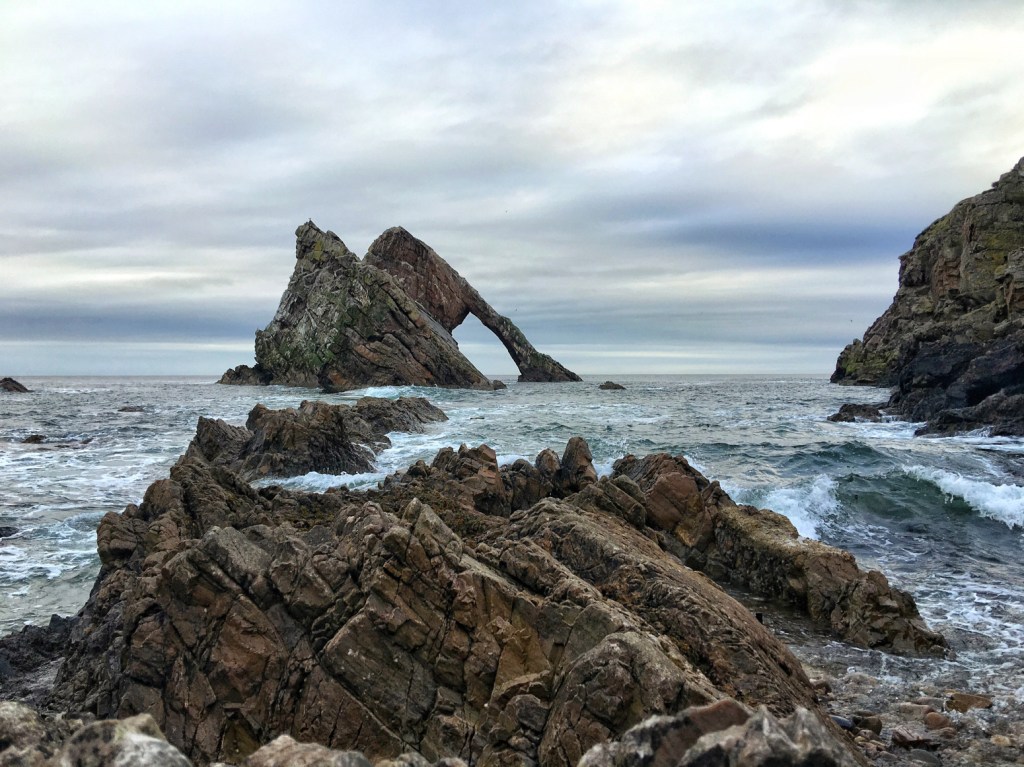
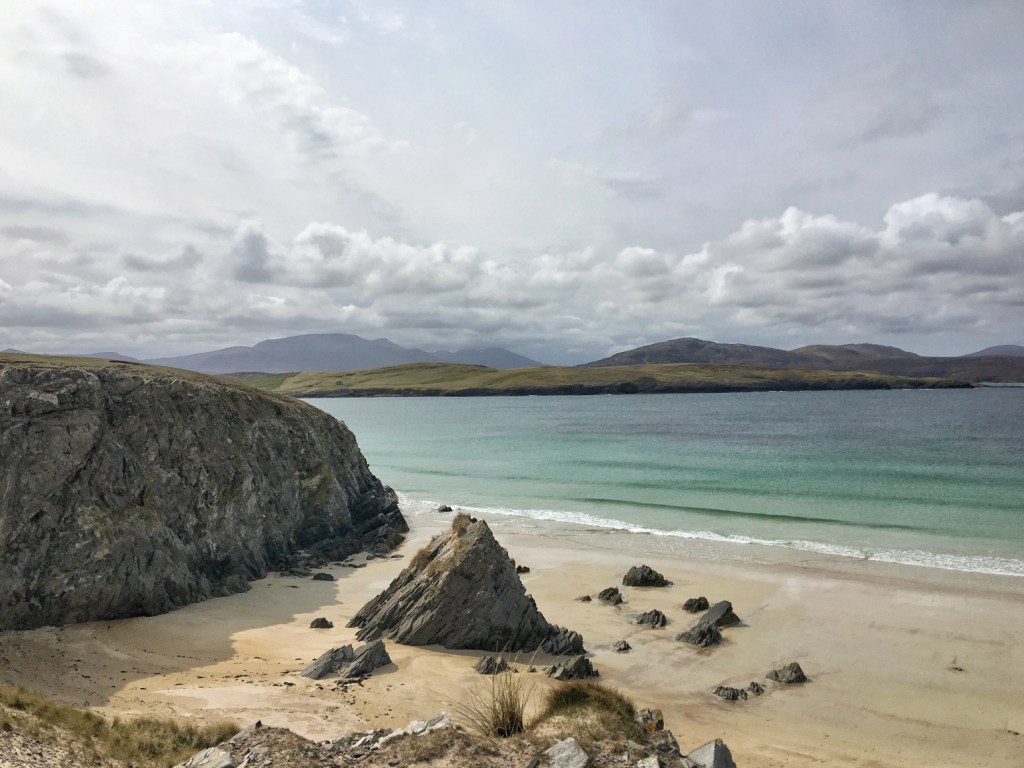
I went on to republish a wonderful set of photographs that had been taken by Sam. You all loved them and that led me to ask Sam if I could republish her About Me page on her blog. Sam very kindly said that would be fine.
ooOOoo
Scotland with the Wee White Dug
A Scottish travel blog showcasing the best of Scotland. Scotland with the Wee White Dug is a comprehensive and informative guide to Scotland, covering history, outdoor activities, events, visitor attractions, accommodation, eating out and more.
About Me
A little bit about me
Hello and welcome to my Scottish travel blog which I hope you’ll find informative and interesting, but most of all fun.
I’m Samantha but am generally known as Sam, Mrs G or Mum. I’m married to Alex (Mr G) and we live in Edinburgh with a well travelled wee white dug called Casper. We also share our home with the The Teen, Casper’s sloth like and gadget obsessed big sister.
All of my free time is spent road-tripping around Scotland. I’ve travelled extensively throughout the country and never tire of its jawdropping and diverse beauty.
I have a vast knowledge of where to stay, eat and what to do in Scotland. Whether it be an afternoon out, a day trip or an extended tour. I also know all of the best places to go with your four legged friend.
I’m a Visit Scotland Ambassador and I helped launch their online Community in the spring of 2016. The Community is a Scottish travel forum for sharing insider hints and tips about visiting Scotland. Visit Scotland’s Ambassadors were selected for their expert knowledge of the country.
In January 2017 I took up the role of resident blogger for East Lothian Council on their Visit East Lothian website. I write a fortnightly post for their blog, highlighting the delights of East Lothian.
I’m passionate about the history, language, literature, customs and myths of Scotland. I read History at the University of Edinburgh and during my time there I studied Scottish History, Literature and Politics which gave me an excellent understanding of how Scotland became the country that it is today.
I absolutely adore the great outdoors – it’s my happy place. I love hiking, have been known to summit a Munro or two and am happiest when surrounded by lochs, moors and mountains.
My photography
I’ve been an avid hobby photographer since joining Instagram several years ago. I’m part of a diverse group of Scottish Instagrammers with a passion for sharing Scotland with the World.
My feed @bean_nighe has appeared on Instagram’s prestigious Suggested User list. You’ll find the Wee White Dug on Instagram too @theweewhitedug. His feed is also dedicated to sharing our Scottish travels.
My photos appear regularly on various social media channels including those of Canon UK, BBC, Skyscanners, Scottish Memories Magazine, Scotrail, Historic Scotland, Visit Scotland and The Guardian.
I share my Scottish travels on Facebook and Twitter too so if you’re on those sites stop by and say hello.
I’m passionate about promoting Scotland as a wonderful place to visit. It’s a country with a rich history and heritage. A country full of stories just waiting to be told.
I appreciate you taking the time to stop by my blog to join me on my travels. I hope ‘Scotland with the Wee White Dug’ inspires you to visit Scotland, helps you to plan for a forthcoming trip or makes you reminisce fondly about a past visit.
If you’re interested in working with me you can find out more here.
On September 1st, I published an update on Ruby’s condition with regard to her UTI. This was because Ruby had had a re-occurrence of blood in her urine. Dr. Jim took an xray and also wanted Ruby’s urine sent across to Three Rivers Hospital for a culture. As I explained in that post, using information found online:
A urine culture is a test to find germs (such as bacteria) in the urine that can cause an infection. Urine in the bladder is normally sterile. This means it does not contain any bacteria or other organisms (such as fungi). But bacteria can enter the urethra and cause a urinary tract infection (UTI).
A sample of urine is added to a substance that promotes the growth of germs. If no germs grow, the culture is negative. If germs grow, the culture is positive. The type of germ may be identified using a microscope or chemical tests. Sometimes other tests are done to find the right medicine for treating the infection. This is called sensitivity testing.
Late on Tuesday afternoon, the Clinic rang to say that the full results were in.
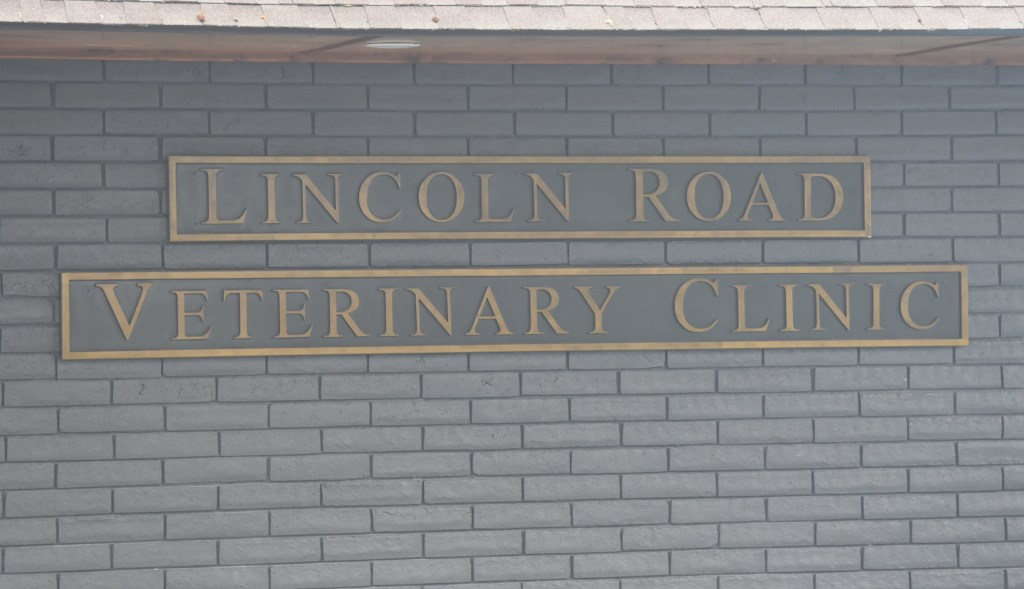
So yesterday morning, the air still heavy with the smoke from the forest fires, we called in to Lincoln Road.
The report from Rogue Regional Medical Center, as in Three Rivers Hospital, offered the following:
VET URINE CULTURE
SPECIMEN SOURCE: URINE
COMMENTS TO MICRO: URINE
CULTURE RESULTS: 20,000 CFU/ML PROTEUS MIRABILIS
REPORT STATUS: FINAL 09/02/2017
(My emphasis)
That translated into Ruby’s medicine being changed from her present course of Amoxicillin antibiotic to Enrofloxacin (Two 136 mg tablets by mouth every 24 hours for 10 days.)
Enrofloxacin (ENR) is a fluoroquinolone antibiotic sold by the Bayer Corporation under the trade name Baytril. Enrofloxacin is currently approved by the FDA for the treatment of individual pets and domestic animals in the United States.
But I wanted to inform all you wonderful readers that for the next 6 days I am going to be rather distracted by a book event. I have prepared posts through to the 12th, my first clear day ‘back at my desk’ but if in the meantime you wonder why I am being unresponsive that’s the reason.
I saw the following not too long ago and asked if I might have permission to republish it here. Lea said “Of course”. Thus I am delighted to republish what appeared on Paws Give Me Purpose blog earlier this year.
ooOOoo
Doggie Language
By Lea
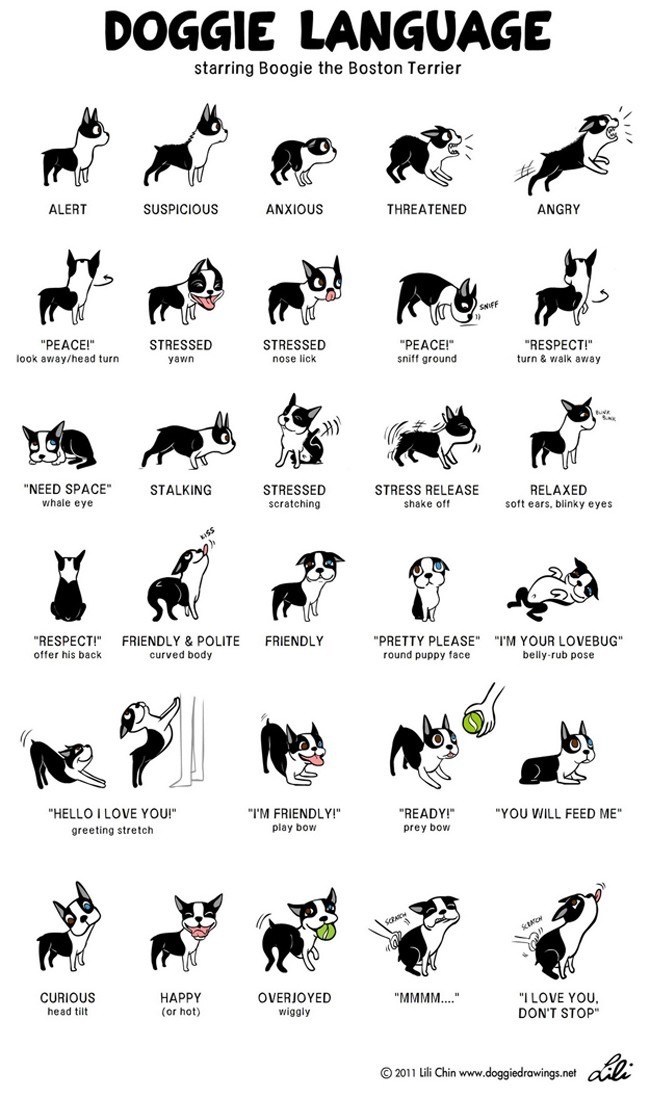
Most dog owners wish their pup could speak to them and tell them exactly what they want, how they’re doing and how they’re feeling. I honestly believe dogs can talk, but only to those who know how to listen. Their body language and behaviors are the language they use to speak to you. Do you ever wonder if your dog loves their life? If they’re happy?
This is a picture of Phoebe, a Maltese that was rescued by Yorkie911 Rescue Inc. This was her first day in my home, look at that smile! She knew she was safe and was expressing her happiness.
Here are some ways to know your pup is relaxed and happy:
Your dog gets excited! Excited to see you, to play, to eat, to go for walks. If for some reason your dog doesn’t get excited for these things your pup may be telling you they are not be feeling well.
Your dog sleeps well. A happy relaxed dog sleeps well. A stressed dog, or if your dog is not feeling well, will be restless and change spots often trying to get comfortable during the night.
A healthy dog is a happy dog 🙂 Obviously if your pup isn’t feeling well the signs of happiness won’t show.
Pay attention to your dog’s eyes, when your pup is happy his eyes are bright and are their “regular” shape. If your dog is uncomfortable or in pain his eyes will tell you, he may squint.
When your dog is happy and relaxed their mouth will be closed or slightly opened with a relaxed tongue hanging out. A panting dog could be hot or stressed, so pay attention to this body language.
A destructive dog is a bored dog 🙁 If your dog is content they will play with their toys and bones rather than eat your shoes or anything else.
If your dog’s body language is relaxed he/she is happy. Relaxed posture, not tense or stiff. When a dog places it’s head in your lap it’s a relaxed happiness being with his/her person.
When your dog is relaxed he/she will carry their tail in its natural position. When they are happy they will wag it from side to side. They may even wiggle their entire body with joy! A tail that is held low or between the legs signals a lack of confidence, nervousness, or fear. (A dog’s tail can tell you a great deal about their moods. A wagging tail does not always mean they are happy, don’t assume that’s always the case. Pay attention to the rest of the dog’s body and actions. Believe me, just the tail itself can be a full post on its own).
Happy dogs are active. They love to play with you, with their toys, chew on their bones, explore, and solicit attention from you. They may play bow or initiate physical contact with you by rolling over for a belly rub, this also shows trust. A happy dog wants to hang out with his/her people!
A happy dog likes to eat. Some dogs, like one of mine, can be picky eaters when it comes to meals, but in general when they are happy, he/she will enjoy eating. What dog can resist a cookie.
Some dogs rarely bark, but those that do have a higher-pitched bark when they’re happy than they usually do. Sometimes it’s even a high pitched howl in this house.
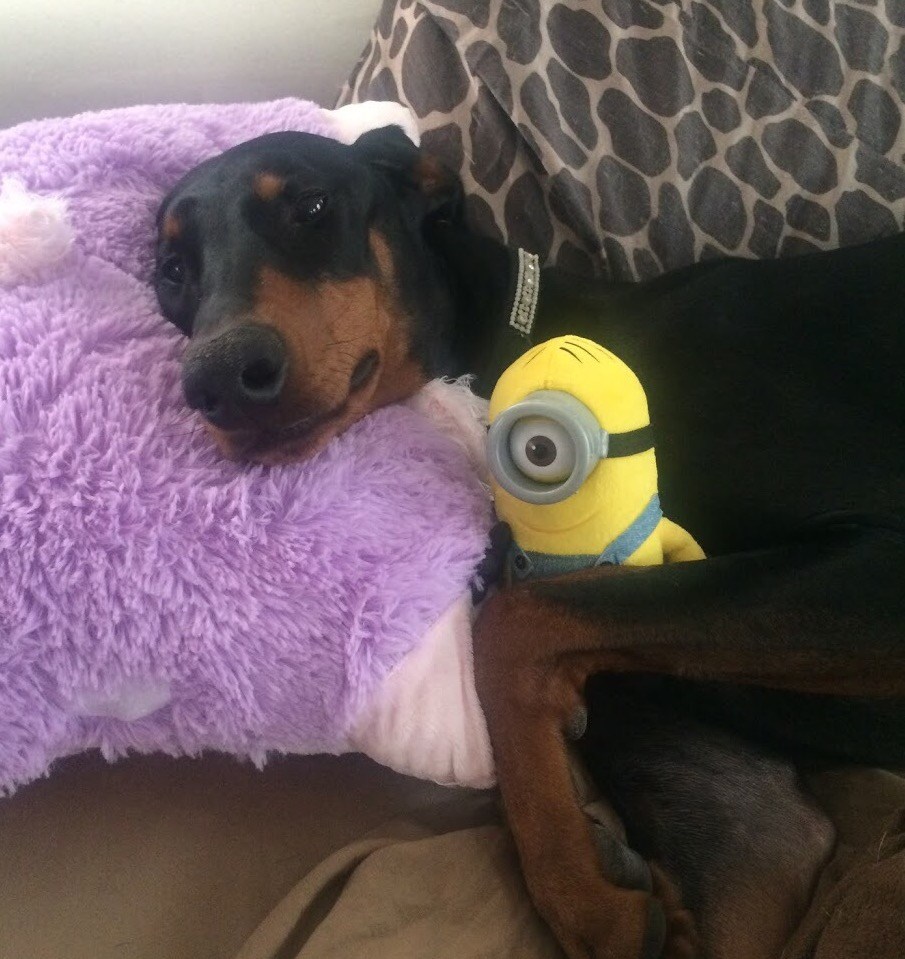
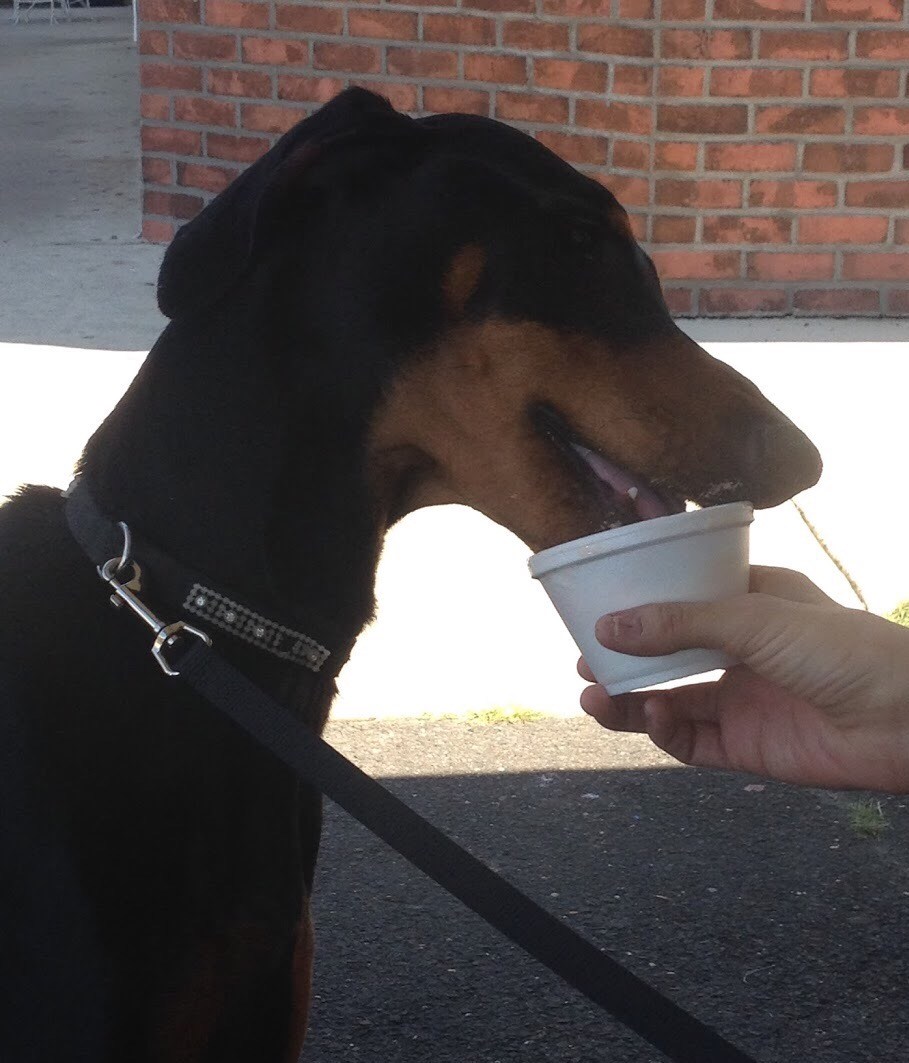
Spirit, a Doberman I rescued from a backyard breeder myself, smiling as she eats some doggie ice cream. Look at her joyful expression!
While you obviously know your dog best, these are the ways I see my dogs express their relaxed and happy mood. Having a rescue dog in my home that was labeled “aggressive” has taught me a great deal about my pups body language and what they are trying to tell me. There really is a great deal we can learn from our furry friends body language and we can understand what they are saying by simply watching closely.