Category: Dog lessons

Unlocking the inner parts of our brain.

The healing power of meditation and self-reflection.

Yesterday, I wrote about two seemingly disconnected events that appeared to resonate together.  One of those was a comment left by reader Patrice Ayme.

But that harmony didn’t stop with those two events.  Here’s how it continued to flow.

Patrice has a recently published post called Consciousness I.  To be honest, some of the concepts have been a bit of a struggle for me to understand.  However, at one point in that essay, Patrice wrote:

Meditation is a most precious, most human state of consciousness. Whereas sentience is shared with many animals on this planet, obviously, not so with the capacity for meditation. meditation allows to shut down most (over-) used neuronal circuitry, and engage more strategically important parts of the brain.

Action without meditation is as slavedom without wisdom.

That really struck a chord with me because, once again, the power of meditation has been brought into focus.  Regular readers of Learning from Dogs may recall that just six days ago, I wrote a piece called Maybe home is found in our quietness.  There were three references to meditation in that post that I will take the liberty of repeating today.

The first was:

A few weeks ago when meeting our local doctor for the first time since we moved to Oregon, I had grumbled about bouts of terrible short-term memory recall and more or less had shrugged my shoulders in resignation that there was nothing one could do: it was just part of getting older, I guessed!

“On the contrary”, responded Dr. Hurd, continuing, “There’s growing evidence that our information-crowded lives: cell phones; email; constant TV; constant news, is pumping too much for our brains to manage.”

Dr. Hurd continued, “Think about it!  Our brains have to process every single sensory stimulus.  The research is suggesting that our brains are being over-loaded and then the brain just dumps the excess data.  If that is the case, and the evidence is pointing in that direction, then try thirty minutes of meditation each day; give your brain a chance to rest.”

Then later on in that post came:

The second was a recent science programme on the BBC under the Horizon series.  The programme was called,The Truth About Personality.

…….

Within the programme came the astounding fact that even ten minutes a day meditation can help the brain achieve a more balanced personality (balance in terms of not being overly negative in one’s thoughts).

The last one was in a short talk by writer Pico Iyer  meditating on the meaning of home, the joy of traveling and the serenity of standing still.

Now come forward just three days to last Tuesday evening. Jean and I sat down and more or less randomly wondered if there was something of interest to watch on the website Top Documentary Films.  Just by chance, we came across a film by filmmaker Isabelle Raynauld with the title of Mystical Brain.

Here’s a tiny snippet from the film:

Filmmaker Isabelle Raynauld offers up scientific research that suggests that mystical ecstasy is a transformative experience.

It could contribute to people’s psychic and physical health, treat depression and speed up the healing process when combined with conventional medicine.

This documentary reveals the exploratory work of a team from the University of Montreal who seek to understand the states of grace experienced by mystics and those who meditate. In French with English subtitles.

However, as interesting as this snippet is, the power of the film is in the area of spirituality and the way that meditation can open up the brain to an incredible range of mystical experiences, as well as the impressive health benefits of slowing the mind.  Maybe, just maybe, the power of religious and spiritual experience is being understood, with some very surprising results.

So please watch the whole documentary on-line. The website of the Mind & Life Institute will also be of interest.

To underscore why the film should be watched, there is much about the nature of the theta rhythms in the brain.  The relevance of these?  Simply that when the brain is generating these regular slow oscillations the human condition is one of great peace.

Dhalia showing us humans how easy it is to meditate!

Call it prayer, meditation, relaxation, building internal energy or life force, compassion, love, patience, generosity or forgiveness; what does it matter.  It’s what it is doing to you that matters!

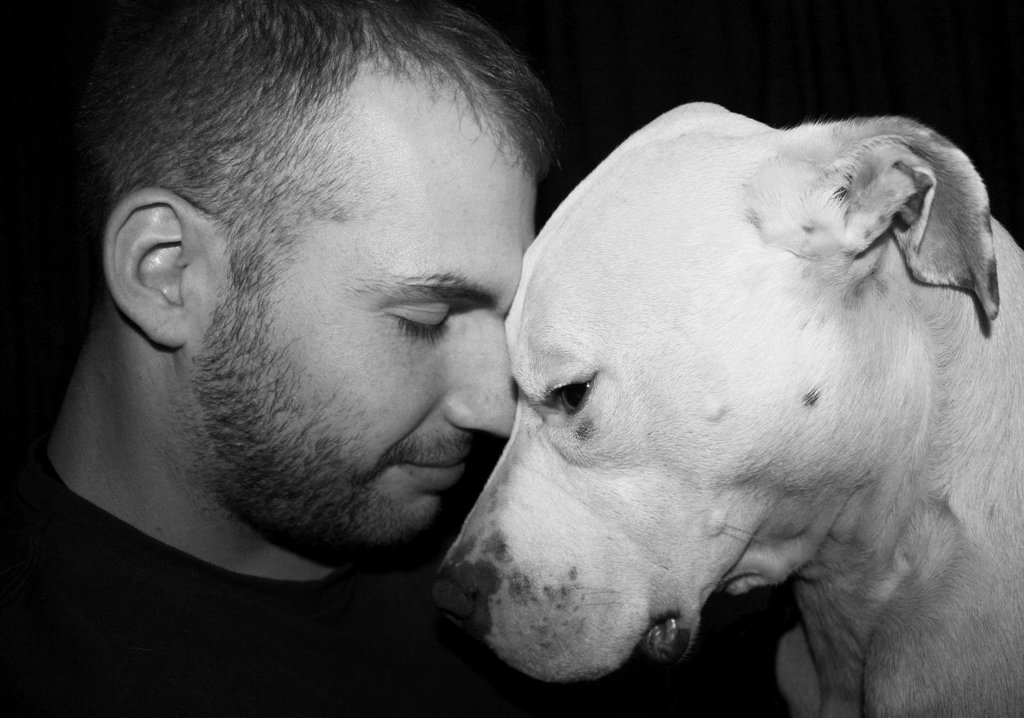
So when you bury your face in the warm fur of your beautiful dog and both you and your dog appear to be transported to some beautiful, magical place you have entered that indestructible sense of well-being.

Actually, let me make one small correction. Both you and your dog have entered that indestructible sense of well-being.

Only one way to finish today’s post: I think, therefore I am!” René Descartes.
Four years old!

How time flies!

Four years ago this day, the first post was published on Learning from Dogs.  Here it is again:

Parenting lessons from Dogs!

Much too late to make me realise the inadequacies of my own parenting skills, I learnt an important lesson when training my GSD (who is called Pharaoh, by the way).  That is that putting more emphasis into praise and reward for getting it right ‘trains’ the dog much quicker than telling it off.  The classic example is scolding a dog for running off when it should be lots of hugs and praise for returning home.  The scolding simply teaches the dog that returning home isn’t pleasant whereas praise reinforces that home is the place to be.  Like so many things in life, very obvious once understood!

Absolutely certain that it works with youngsters just the same way.

Despite being a very dominant dog, Pharaoh showed his teaching ability when working with other dogs.  In the UK there is an amazing woman, Angela Stockdale, who has proved that dogs (and horses) learn most effectively when being taught by other dogs (and horses).  Pharaoh was revealed to be a Beta Dog, (i.e. second in status below the Alpha Dog) and, therefore, was able to use his natural pack instinct to teach puppy dogs their social skills and to break up squabbles within a pack.

When you think about it, don’t kids learn much more (often to our chagrin!) from other kids than they do from their parents.  Still focusing on giving more praise than punishment seems like a much more effective strategy.

As was read somewhere, Catch them in the act of doing Right!

By Paul Handover.

As it happens, it feels a little like ‘what goes around, comes around’.  Why do I say that?

Because just last Saturday, I sent off a selection of pictures and videos to Angela Stockdale.  Stay with me for a while as to the reason why.

Angela trades under the name of The Dog Partnership and, frankly, what she doesn’t know about the behaviour of dogs isn’t worth bothering about!

Just take a peek at the page on her website under the heading of Teaching Dogs.  Here’s a little of what Angela writes:

I consider myself so lucky for dogs alone to have been my teachers. I learnt from watching how my own dogs responded to another dog’s body language and vice versa their language. Watching, learning and working with Teaching Dogs was the only way I knew.

I was and always will be in awe of a Teaching Dog’s dogs ability to consciously adapt their body language in accordance to how the other dog was feeling. The result being, they could relax nervous dogs but at the same time maintain control of a problem situation. Remember, dogs talk dog far better than we do.

It came as quite a shock to me when I learnt about other approaches. It seemed foreign for people to have so much input in resolving what were described as ‘ behavioural’ issues. For me, working with these dogs was far more than resolving a behavioural issue. It was about improving the quality of lives of dogs who were not coping with everyday life. If they found dogs or people worrying, sometimes this was shown in displays of aggression. It is important to understand, these dogs were not aggressive, they simply displayed aggressive behaviour.

Now, I would like to introduce you to the world of Teaching Dogs and how these special dogs change the lives of less fortunate dogs, who never had the opportunity to really understand how to communicate with their own species.

Do read the rest here.

Back to why those photographs and videos had been sent to Angela.  A couple of weeks ago, we enjoyed an evening meal with friends of friends, so to speak.  This other couple owned a beautiful-looking male German Shepherd dog: Duke.  Duke was 4-years-old.  Our hostess remarked that he was very boisterous and had nipped a couple of strangers who had called at the house.  She added that he seemed difficult to control.  Duke had been there for about a month and he was a rescue so they had little or no knowledge of past behaviour.

Well, I’m no expect with dogs, that’s Jean’s domain.  But there was something about Duke that captivated me.  Something in the way he looked at me, his eyes linking so directly with mine, allowing me to see a dog that offered an honest openness.

More or less on impulse I stood up, held my right arm up at 45 degrees, looked Duke in the face and said, “Duke! Sit!”

Duke held my gaze and sat back on his haunches.

I moved my arm in a complete circle, around to the right, and said, “Duke! Lie down!” Duke lay down.

H’mm, I thought. Fascinating.  This dog has been professionally trained at some point in the past, using the same ‘command’ system of voice and arm signalling as I had learnt with Pharaoh way back in 2003/2004.

The food was now on the table.  I grabbed a small piece of meat off my plate and returned to Duke who had, of course, resumed his pottering around the room.  “Duke! Here boy!”  Duke came over to me.  “Duke! Lie down!”  Duke did so.  I placed the piece of meat on the wooden floor about three feet in front of him.  Duke’s eyes were riveted on the meat.  “Duke!”  Duke’s eyes reluctantly engaged with mine.  “Duke! Stay!”  I repeated the Stay command a couple more times as I backed away about 6 or 8 feet.

“Go on, Boy. Take the meat!”  Duke gleefully grabbed the piece of meat.  Gracious, I thought, this dog is magnificent.  I wonder ……..

I took another piece of meat, “Duke! Sit!”  “Duke! Stay!”  I then backed off that 8 feet again, got down on my knees and placed the piece of meat just between my lips.  I knew this was potential madness with a dog I had only met some 30 minutes previously, but there wasn’t an ounce of doubt in my mind.  I voiced in my throat for Duke to fetch the meat. Duke came straight over and confidently and carefully removed the meat from my lips.

What a truly fabulous dog! It was a wonderful evening and once home both Jean and I were eulogising about Duke.

Then two days later, our dinner hostess rang me.  “You know, I have decided we can no longer keep Duke.  He is too strong a dog, I can’t control him.  Is there any chance of you finding a new home for Duke?”

Without question, Jean and I would have offered Duke a new home; in a heartbeat.  The only thing stopping that was me wondering if this strong-willed, male German Shepherd might be a Beta dog, as Pharaoh was. Or just might be too dominant a male dog to fit in comfortably with our dogs, especially Pharaoh who was at the stage of life where the last thing that should happen is for his happiness and contentment to be disturbed.

I hadn’t a clue as to how to answer that question.  But I knew someone who would know: Angela Stockdale.

I rang her, caught up on old times and then explained the background to Duke’s situation.  Angela said to repeat the exercise that I had witnessed when I took Pharaoh to her all those years ago, when I wondered if Pharaoh was an aggressive dog.  My uncertainty with regard to Pharaoh followed a number of times when walking him in a public area with other dogs and he had been very threatening, both in voice and posture, towards some of those other dogs.

This is what Angela arranged.  I took Pharaoh up to her place at Wheddon Cross, near Minehead in Somerset.  When we arrived, Angela was standing just by a gate into a fenced paddock, maybe a half-acre in size.  In the far corner were two dogs.

Angela asked me to bring Pharaoh to the gate and let him off the leash.  It was clear that Pharaoh was going to be let into the paddock.  I cautioned that Pharaoh could be quite a handful with other dogs and, perhaps, it would be better that I walked him into the area still on his lead.  Angela said that wouldn’t be necessary.  So as she held the gate open sufficient for Pharaoh to enter the paddock, I slipped the lead off him and backed away, as requested.

Pharaoh had hardly taken 2 or 3 paces when Angela called out, “Paul, there’s nothing wrong with him!”

I was astounded and stammered, “But, er, er, how can you tell so quickly?”  “Because my two dogs haven’t taken any notice!”, came the reply.

Later Angela explained that in the paddock were her female Alpha dog and her male Beta dog.  Ergo, the two top dogs in terms of status so far as dogs see other dogs.

In fact, Pharaoh was utterly subservient to these dogs, in a way that I had never witnessed before.  Later on, as Pharaoh relaxed and started playing, Angela said that she thought that Pharaoh was a Beta dog.  Mixing some of her other dogs into the group was later able to confirm that.

So back now to present times and Duke.

Thus last Saturday, as Angela recommended, we selected two of our dogs, Cleo our female German Shepherd and the most socialable of dogs, and Casey, a strong but not aggressive male (he had some PitBull in him).

Duke arrived and was allowed freely to nose around the large grassed area some way from the fenced-off horse paddock that we were using for the ‘introduction’.

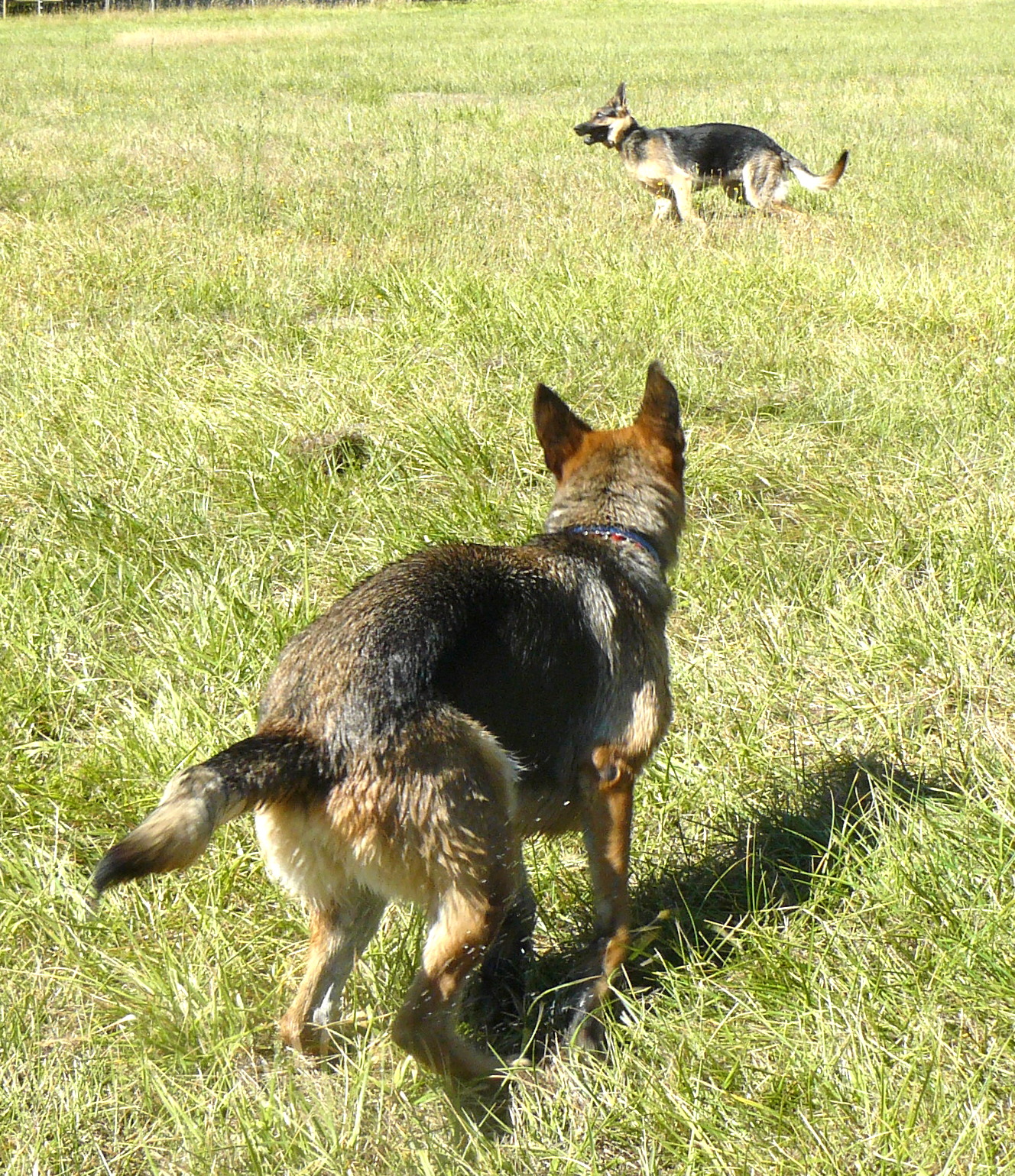
Duke pottered around and then caught sight of Cleo and Casey in the paddock.

First sighting of Cleo and Casey.

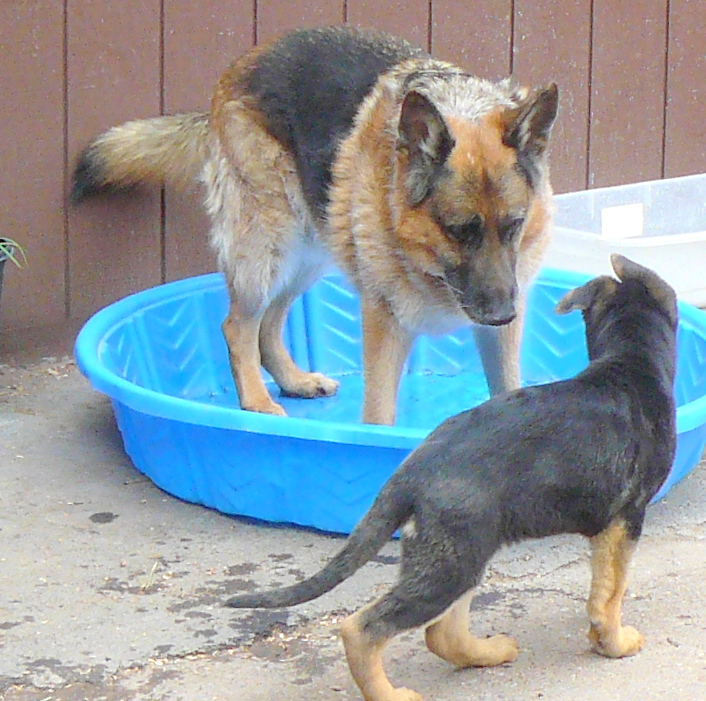
Then the meetings began!

Hello! My name is Duke.  Do I smell OK? Mr. Casey?
Hello! My name is Duke. Do I smell OK? Mr. Casey?

And play didn’t seem to be too far off the agenda!

You lead, Cleo, I'll chase!
You lead, Cleo, I’ll chase!

So all the photographs and videos have been sent to Angela, and we will see what the conclusion is!

As Angela put it, “Remember, dogs talk dog far better than we do.”

Life’s changes.

Sometimes life has a way of offering a new path.

*** If you are not into introspection, then look away and come back tomorrow! 😉 ***

Regular readers will know that quite frequently I write under a topic heading that could be regarded as within the classification of key subjects of our time.  You know, such subjects as big government, big money, big power, and even climate change! 😉

Why has this been the case?

Well, because, a) most of my life I’ve tried to stay abreast of ‘current affairs’ and, b) within the broad label of ‘integrity’ it’s relevant to this blog.  The sub-heading of the blog is after all: “Dogs are integrous animals. We have much to learn from them.”  (Yes, I do know ‘integrous’ isn’t grammatically accurate! – Any suggestions for an alternative word?)

Stay with that while I go elsewhere.

Yesterday (Tuesday) a number of events ended up having a profound effect on me. On the face of it, utterly disconnected events.

The first was a post from Alex Jones on his blog The Liberated Way.  The only common ground between Alex and me is that we both know Colchester in Essex, England.  Alex because he lives there today, me because I used to have a business in Colchester in previous times.  Other than that just a couple of bloggers separated by thousands of miles.

Anyway, the post was this one: Cycle of Life. Alex wrote:

Life seems like a cycle of birth, living and death.

I have the honour of following awesome bloggers on WordPress.  I learn inspirational teachings from their intimate life experiences that they share with their readers.  The cycle, for in my belief everything moves in cycles, of birth, life and death is if we are attentive to living life something we will often be reminded of in our interactions with others and nature.

Then later, adding:

Lijiun is a Buddhist who shares daily experiences from their own life with a Buddhist theme running through their blog.  Lijiun has a cat called Little White who often acts as a teacher to them about the meaning of life and a reminder of Buddhist teachings.  Little White two weeks ago brought home a stray kitten, which it adopted as like a surrogate parent.  Yesterday Adik the kitten died, and a beautiful blog post by Lijiun in memory of Adik reminds us life is impermanent.

Almost absent-mindedly, I clicked on the link about the death of Adik and …… was shaken to my core; shaken by the power of the truth.  I want to give you more than a link to the post – want to share some of the beautiful words.

IN MEMORY OF “ADIK”…

In memory of our little Kitten, “adik”….

Every moment in life is full of changes, this is a law of nature.

However, sometimes we might assume that everything unchanged.

“Adik”- Our stray kitten, so far, she was not showing a sign of sickness. Yesterday, in the evening, I discovered she was laid down under my neighbor car, not moving at all and look severe sick. We checked through her little body, no physical injuries and we tried our best to feed her water and Cat food. She refuse to take.

We need to send her to Veterinarian immediately as her condition was critical, however during Sunday, especially evening time. Most of the Veterinarian clinic is closed. We did our best to check through internet, we were able to locate one of the Vet and we rushed over.

In the journey, we played Mantra Chanting to our little kitten, We reached to the vet clinic, “Adik” was alive but in agony…. she was struggling for life. The only thing we can help was to keep chanting mantra, our only aspiration are for her to relieve from suffering, not to reborn in 3 lower realm, able to follow spiritual practice and attain enlightenment in the coming life.

“Adik” passed away in peace even before the Veterinarian came to treat her.

Then Lijiun went on to write that “This incident gave me a very clear insight on “death”  and offered more of that insight: (These are extracts: Please read the full post.)

1. Impermanence Of life

Nothing is permanence , we need to live at now, not past or future.

When Death approached, no bargain time at all whether you are rich or poor, you are ready or not, you are healthy or sick, …

Do all good deeds when you are still alive, Follow spiritual path whenever you can, don’t give excuses that “I’ve plenty of time, I’ll do it when I am “FREE”? When You are Free, you might not able to do it…

2. Young or old…

Some of us, might assume that people died in old age. As such, we’ve a long journey in life.

Is It true???

I learned from “Adik” Sudden death – that death will happen in any age.

“Coffin is not meant for elderly people….” This is so profound.

Spend time with your family members, be filial piety to your parent, Pursuit your dream, Don’t wait until later day…. We are unsure we can survive until later day!

3. Breathing in & Out

Treasure every breath in & breath out…

Life is just in between Breath in & out.

Be Mindfulness in life!

4. What Can you bring???

What can you bring after death, “NOTHING”.

No matter, how much wealth, how much money, how many cars, how many bungalow, how high is your position, how lovely is your family… you can’t bring anything..

Ask yourself, “What is the purpose of life?”, “What do you want?”

5. Alone..

You, yourself need to face the death moment…

Nobody can help you… Don’t avoid the topic and say, “It’ll not happen to me so soon”..

Just get ready.

6. Love

“Adik” passed away at 8:30 pm.. according to my mom, Little White, Our lovely cat was “Meowing” loudly at home. He can sense that “Adik” was not longer around. Animals are just like us, they are loving. Please treat all beings well, no differentiation on form.

We are so touched that “Adik” came home before her death and spend her last moment with us.

Before we sent “Adik” to Vet, She “Meow” loudly to my mom as a good-bye & gratitude to my mom for taking care of her. It’s so touching!

Thank you to “Adik” for celebrating 16 happy day with us and leave behind a great lesson to us.

May “Adik” be relieved from suffering, not reborn in 3 lower realm and find the lasting happiness!

May all beings be Well and Happy!

Then also yesterday, I was chatting to someone who lives close to us; he and his partner-lady have become good friends.  He was bemoaning the corruption of so much of his fine country and went on to say that the only way that he could function was to turn away from the big stuff, have no TV, ignore the constant news of this and that, the endless trials and tribulations in this world of ours.  I listened in silence, only to find later that the words must have left a mark on me.

My dear friend, Dan Gomez, has known me for over 40 years.  He was my Best Man at my wedding to Jean in November, 2010.  He and I have been exchanging emails about the truth of the role of man in the raising of the temperature of the planet.  I sent Dan the link to the death of Adik, the kitten.  It seemed so much more important than the emails we had been exchanging about the ‘big’ subjects in life.

Then something happened overnight (Tuesday/Wednesday) because not long after I got to my PC this morning, I sent this email to Dan.

Dear Dan,

Yesterday was one of those days, one of those rare days I should have said, where my view of life was radically changed.

Partly because I’m still adjusting to Corinne’s death [my sister], partly because of something I read elsewhere, and other stuff best left for a phone call.

In essence, despite my anger at what is going on around us (big government, big money, big power, even climate change!) I want to retreat from these areas and focus on what is most valuable to me.

Aspects of my life such as love, friendship with ‘old’ travelers, the natural world, being in the present, community, our animals (especially Pharaoh who is over 10), my writings, my book, our small world here at 4000 Hugo; you get my drift!

I’m 70 in November, 2014. Corinne died in her 80th year. Time goes so quickly. No, life goes so quickly. Jean and I met 6 years ago this next December. I must turn away from the things over which I have little or no control and embrace the present. Just what dogs do so well. Live in the present.

It’s all about endeavouring to come to the end of one’s life hearing those immortal words of Edith Piaf, “Je regret rien.”

So dear reader of Learning from Dogs, if you are still ‘on frequency’ – Well done! You have stuck with my very long ramble!

Back to what gets written about in this place.  If integrity means anything, it means I’m going to drop all the ‘big’ topics and focus entirely on what man can learn, nay, has to learn from dogs.  Indeed, will close by republishing the full ‘home’ page below.

Pharaoh – just being a dog!

Dogs live in the present – they just are!  Dogs make the best of each moment uncluttered by the sorts of complex fears and feelings that we humans have. They don’t judge, they simply take the world around them at face value.  Yet they have been part of man’s world for an unimaginable time, at least 30,000 years.  That makes the domesticated dog the longest animal companion to man, by far!

As man’s companion, protector and helper, history suggests that dogs were critically important in man achieving success as a hunter-gatherer.  Dogs ‘teaching’ man to be so successful a hunter enabled evolution, some 20,000 years later, to farming,  thence the long journey to modern man.  But in the last, say 100 years, that farming spirit has become corrupted to the point where we see the planet’s plant and mineral resources as infinite.  Mankind is close to the edge of extinction, literally and spiritually.

Dogs know better, much better!  Time again for man to learn from dogs!

Welcome to Learning from Dogs

Back to dog healing!

Yet more evidence of the healing powers of dogs.

For today, I was going to post a graphic that was sent to me recently by ZocDoc (will offer the link tomorrow).  It’s a fabulous visual reminder of just how important dogs are to humans.

But aware that this subject has been touched on before (the name of the blog rather suggests this might happen!) I was trawling through nearly 4 years of posts and came across a post first published on October 7th, 2010; Real healing power.  So presuming that many of the current readers of Learning from Dogs (big hugs to you all) will not have seen that one, here it is again.

oooOOOooo

Ricochet – just another healing dog!

Ricochet

This story has spread far and wide but, nonetheless, deserves a Post on Learning from Dogs because it is the essence of what dogs offer the world – unconditional love.

To gain the trust of a dog and enter the special relationship that humans have with dogs is to understand the significance of taking people at their face value and expect nothing in return, as dogs do.

Ricochet was born as a service dog and entered into the appropriate training. But there was a hic-cup in her learning, fortuitous as it happened and …. no, that’s enough from me. Watch it yourself ….

Now take a few minutes and understand what Ricochet and Ian McFarland demonstrated to the world.

and here’s Ricochet website.

and, well … just think what the world would be like if we all understood the power of love!

Love is the only answer


oooOOOooo

Tomorrow – How wonderful it is to have a dog in our life.

Hands across the ether.

Never underestimate the power of like-minded people.

We are nothing without others in our life.  Each one of us is drawn to those that laugh with us, cry with us and comfort us in times of sorrow.

These thoughts come to mind as, to my humble amazement, the number of followers of Learning from Dogs approaches 500 and I reflect on how many of you, dear readers, now feel like friends. (Update: as at 7:40 pm last night, Raechelsheart became follower number 500!  Thank you all.)

So from that parochial view to the following video.  No introduction required by me, other than to thank neighbours Dordie and Bill who brought this performance to my attention.

Finally, it’s not just humans who are drawn together.  Here’s Pharaoh getting to know puppy Cleo back on the 7th April last year.  They are now deeply connected friends who share their whole lives together; with so much fun.

P1110332

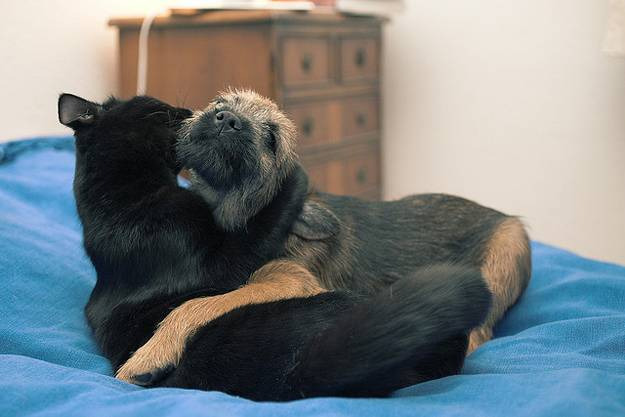
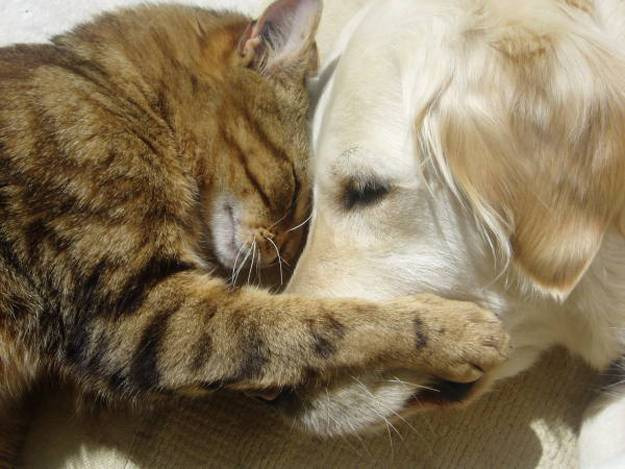
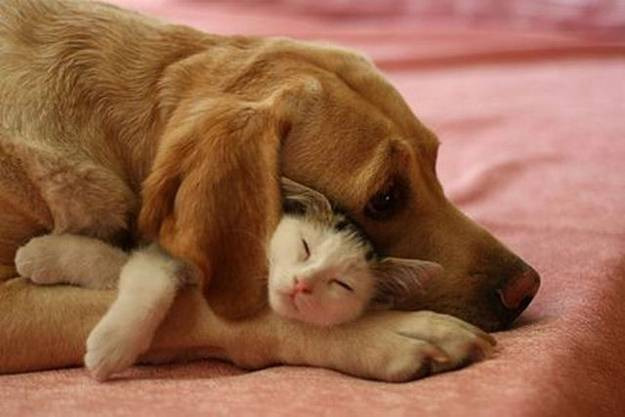
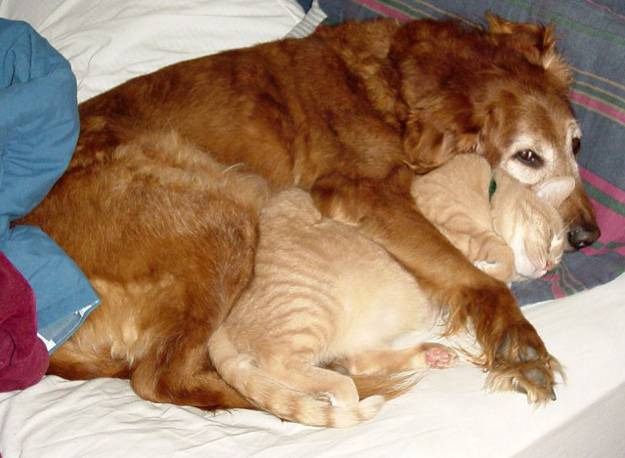
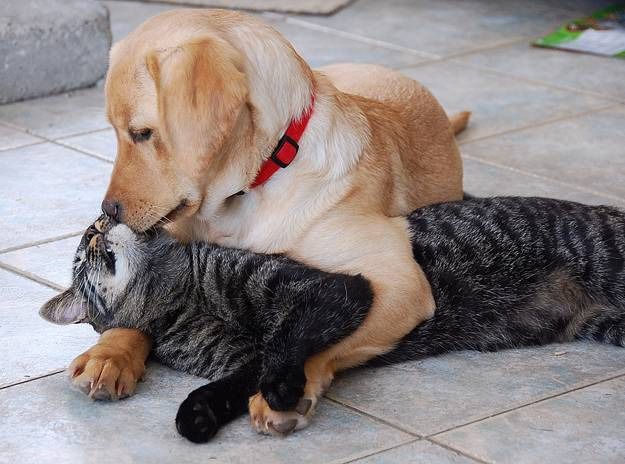
Every dog should have its cat!

Another gem from John Hurlburt.

dogcat1

oooo

dogcat2

oooo

dogcat3

oooo

dogcat4

oooo

dogcat5

oooo

dogcat6

oooo

dogcat7

oooo

dogcat8

oooo

dogcat9

oooo

It came to me that every time I lose a dog,
they take a piece of my heart with them….
And every new dog who comes into my life,
gifts me with a piece of their heart.
If I live long enough, all the components of
my heart will be dog …
and maybe
I will become as generous and loving as they are.

Unknown author.

Change of tack!

Moving on to happiness.

Whatever one’s view is about the significance of CO2 levels in the Earth’s atmosphere, this blog is about integrity.  As the byline states, “Dogs are integrous animals. We have much to learn from them.” Regular readers (and thank you for being one) know that this blog ranges far and wide in pursuit of stories, essays and examples of integrity, all the more better when they involve a dog!

All dog owners know that one of the prime things we can learn from our dogs is the ability to remain in the present.  No, more than that! To value and cherish the present. Dogs manage this in an effortless manner, in a way that humans can only dream of achieving.

This came to me as a result of a recent post on Damn the Matrix, Mike Stasse’s fascinating blog.  The post was about what we humans regret at the end of our days, which I will come to in a moment.

Mike had taken the theme from a recent book by Australian author Bronnie Ware. Her website is here from where one learns:

Picture from The Sunday Mail (Qld)

Bronnie Ware is an inspiring and creative soul from Australia.

Through her work Bronnie weaves delightful tales of real life observations and experience. Using gentleness, honesty, and humour, Bronnie celebrates both the strength and vulnerability of human nature. Her message is a positive and inspiring one.

Bronnie is the author of the full-length memoir, The Top Five Regrets of the Dying – A Life Transformed by the Dearly Departing, released worldwide, with translations in 27 languages. She also runs an online personal growth and songwriting course, has released two albums of original songs, and writes a well-loved blog called Inspiration and Chai.

A quick visit to that blog site reveals:

Every challenge brings its own gifts. Sometimes though it is not always easy to see those gifts at first. Suffering and wounds can blind us. We have all been there. It is at times like these that Inspiration and Chai is needed. Inspiration to soothe the heart. Chai to soothe the body.

Even during happier cruising chapters, being inspired is still a beautiful thing. It keeps us going. It reminds us of what we already know.

Inspiration and Chai is an ongoing journey. The aim of this site is to share inspirational stories and motivational thoughts and for it to reach more and more people in need, seekers on their path. It is a positive environment to revisit whenever you feel it calling. It is also somewhere for me to share my love of story telling and to share memories of life.

Jean is no stranger to the death of a dog. Over her many years of rescuing dogs Jean has seen far too many deaths.  I have been living with Jean since 2008.  In that short time five of our dogs have died.

Of course, we have no idea of what goes through a dog’s mind in those last stages of life. Dogs appear to embrace death in an uncomplicated way but we will never know for sure.

What about humans? On Bronnie’s blogsite there is a post under the title of Regrets of the dying.  Whatever age you are, read what Bonnie wrote and ponder:

REGRETS OF THE DYING

For many years I worked in palliative care. My patients were those who had gone home to die. Some incredibly special times were shared. I was with them for the last three to twelve weeks of their lives.

People grow a lot when they are faced with their own mortality. I learnt never to underestimate someone’s capacity for growth. Some changes were phenomenal. Each experienced a variety of emotions, as expected, denial, fear, anger, remorse, more denial and eventually acceptance. Every single patient found their peace before they departed though, every one of them.

When questioned about any regrets they had or anything they would do differently, common themes surfaced again and again. Here are the most common five:

1. I wish I’d had the courage to live a life true to myself, not the life others expected of me.

This was the most common regret of all. When people realise that their life is almost over and look back clearly on it, it is easy to see how many dreams have gone unfulfilled. Most people had not honoured even a half of their dreams and had to die knowing that it was due to choices they had made, or not made.

It is very important to try and honour at least some of your dreams along the way. From the moment that you lose your health, it is too late. Health brings a freedom very few realise, until they no longer have it.

2. I wish I didn’t work so hard.

This came from every male patient that I nursed. They missed their children’s youth and their partner’s companionship. Women also spoke of this regret. But as most were from an older generation, many of the female patients had not been breadwinners. All of the men I nursed deeply regretted spending so much of their lives on the treadmill of a work existence.

By simplifying your lifestyle and making conscious choices along the way, it is possible to not need the income that you think you do. And by creating more space in your life, you become happier and more open to new opportunities, ones more suited to your new lifestyle.

3. I wish I’d had the courage to express my feelings.

Many people suppressed their feelings in order to keep peace with others. As a result, they settled for a mediocre existence and never became who they were truly capable of becoming. Many developed illnesses relating to the bitterness and resentment they carried as a result.

We cannot control the reactions of others. However, although people may initially react when you change the way you are by speaking honestly, in the end it raises the relationship to a whole new and healthier level. Either that or it releases the unhealthy relationship from your life. Either way, you win.

4. I wish I had stayed in touch with my friends.

Often they would not truly realise the full benefits of old friends until their dying weeks and it was not always possible to track them down. Many had become so caught up in their own lives that they had let golden friendships slip by over the years. There were many deep regrets about not giving friendships the time and effort that they deserved. Everyone misses their friends when they are dying.

It is common for anyone in a busy lifestyle to let friendships slip. But when you are faced with your approaching death, the physical details of life fall away. People do want to get their financial affairs in order if possible. But it is not money or status that holds the true importance for them. They want to get things in order more for the benefit of those they love. Usually though, they are too ill and weary to ever manage this task. It is all comes down to love and relationships in the end. That is all that remains in the final weeks, love and relationships.

5. I wish that I had let myself be happier.

This is a surprisingly common one. Many did not realise until the end that happiness is a choice. They had stayed stuck in old patterns and habits. The so-called ‘comfort’ of familiarity overflowed into their emotions, as well as their physical lives. Fear of change had them pretending to others, and to their selves, that they were content. When deep within, they longed to laugh properly and have silliness in their life again.

When you are on your deathbed, what others think of you is a long way from your mind. How wonderful to be able to let go and smile again, long before you are dying.

Life is a choice. It is YOUR life. Choose consciously, choose wisely, choose honestly. Choose happiness.

I hesitated to write anything more because that last sentence should be the one that continues to resonate.

So just a reflection on how easy it is for a dog to wag its tail – dogs so easily choose happiness.

Finding one’s true self.

A personal journey

In some ways, it is surprising that I haven’t written about my own counselling experiences before.  Perhaps it has never felt like the right moment.

But the guest post from Peter Bloch that I had the honour of publishing yesterday so strongly resonated with the ‘Fergus’ inside me that I was compelled to offer my own journey.  So if you are not into bouts of personal introspection, look away and come back tomorrow! 😉

The fickle finger of fate

I was born in Acton, North London, just 6 months before the end of World War II.  Nothing remarkable about that.  Just another one of the millions of soon-to-be post-war babies.  My father was an architect; my mother a teacher.  Indeed, at the age of 93 my mother is still teaching music!

In 1956 when my father was 55 years-old he developed lung cancer.  I and my sister were blissfully unaware of our father’s terminal condition until the evening of December 19th, 1956.  That evening Mum came into my bedroom and said that father was very ill and may not live for very much longer.  To be honest, it didn’t really register and off I went to sleep.  I was 12 and looking forward to Christmas in 5 days time.

My father died in the night hours of December 19th/20th.  I had slept through not even wakening when his body was removed from the house.  On the morning of the 20th he was just gone!

It was felt by the family doctor, who had been attending my father, that it would be too upsetting for me and my younger sister to attend the funeral.  That funeral was a cremation and therefore no grave.

The good and the not so good.

The only obvious effect of the trauma of my father’s death was that I bombed out at school.  I had passed my ’11+’ exams at my primary school and in September, 1956, become a pupil at Preston Manor County Grammar School near Preston Road, Wembley where we were living; Wembley Stadium could be seen from the back windows of the 2nd floor of our house.

I struggled with schooling, the victim of much bullying as I recall, sat 8 ‘O-level’ exams, passed 2, struggled to get another couple of ‘O-levels’ but it was clear that a University place was not going to be for me.

From then on, in stark contrast, I enjoyed a wonderfully varied life, working as a business salesman, freelance journalist and ending up starting my own company in Colchester in 1978 which became surprisingly successful.

But when it came to relationships, that wasn’t so successful.  If I tell you that Jeannie is my 4th wife, you will get the message!

A little more background.

When running my own business back in the 1980s I had a network of overseas distributors.  My US West Coast distributor was Cimarron, a company owned and run by Daniel Gomez out of Los Angeles.  Dan and I became good friends and still are some 35 years later.  I’ll come back to this highly relevant relationship with Dan.

I sold my business in 1986 and went overseas for 5 years, actually living on a boat based in Larnaca, Cyprus.  (The boat was a Tradewind 33 named ‘Songbird of Kent‘.)

In the early 1990s upon returning to England I chose to live in the South Hams area of South Devon, ending up in the small village of Harberton, pop. 300, near Totnes.  Once settled I took up business mentoring.  In previous years, I had gained Chartered Membership of the Institute of Marketing.  In addition, I became a youth mentor with the Prince’s Youth Business Trust, a really fabulous organisation that does so much good for young people.

One of my personal mentees was Jon Lavin, the founder of The People Workshop.  (Yes, and Jon is aware that his website is a tad out-of-date!)

Out of sight, but not out of mind.

In time I became married to wife number three.  Seemingly happy living in a tranquil part of rural Devon, keeping busy, not thinking too much about life.

Pharaoh became an important part of my life in 2003.  At the time, I had no idea how important!

Pharaoh, relaxing in a Devon garden.

On the evening of December 20th, 2006, 50 years to the day that my father died, my wife announced that she had met another man. The implications of this casually delivered bombshell were obvious and catastrophically painful.

I will spare you the details but, trust me, the next few weeks were tough!

High on my priorities were letting close friends know what was happening.  Dan, in characteristic Daniel fashion, said over the phone, “Hey, Handover, you get your arse over to Southern California pronto! Like now!”  I replied that it was much too difficult to do that now but maybe later on in 2007.

Realising that I might need some psychological support, I spoke with Jon Lavin.  However, Jon made it clear that as we already had a working relationship with me as his mentor, he couldn’t now, in turn, be my psychotherapist.  I pleaded with Jon.  He said he would only work with me on the strict understanding that he would terminate the counselling relationship if our past workings interfered.  Of course, I agreed. [See footnote.]

Finding one’s true self after 50 years!

Jon, quite naturally, started into understanding my past experiences. Right back to that fateful day in 1956 when my father died.  And, guess what!

Unbeknownst to me, the lack of time to adjust to my father’s cancer, his sudden death, being unable to ‘say goodbye‘; all had been emotionally interpreted as acute and profound emotional rejection.  Buried deep within me with both strong positive and negative emotional consequences.  Negatively, making me very vulnerable to emotional rejection; positively, causing me to strive for outward success in so many ways.  Those sessions with Jon brought it all to the surface bringing with it deep and peaceful calm.

Yet, the true implications of finding myself were still to come.

In the Summer of 2007, I took up Dan’s offer to ‘get my arse to Southern California!‘  I had a fabulous time with Dan and his dear wife, Cynthia.  It also included a visit to Dan’s sister, Suzann, and her husband, Don, in their home in Los Osos, California.  Su fussed over me restoring my sense of self-worth as Dan and Cynthia had been doing.

One morning over breakfast Suzann said, “Hey Paul, what are you doing for Christmas?

I replied, “Oh, give me a break, Suzann, it’s the middle of June.  Long time before I have to think about dealing with Christmas!

Su then made the offer that was to change my life irrevocably.  “Don and I have a house down in San Carlos, Mexico where we shall be at Christmas.  Why don’t you come and have Christmas with us in Mexico?

And I did.  And it was in San Carlos, Mexico that I met Jean.  Suzann and Jean were great buddies. Jean had been living there since she and her late husband, Ben, had moved there many years ago.  Ben, an American, and Jean had been married for 26 years with Ben, sadly, having died in 2005.

Jean and I spent hundreds of hours chatting and getting to know each other, including the fact that she and I had both been born Londoners within 23 miles of each other.  Jean had been rescuing Mexican feral dogs for years and there were 14 dogs in her house in San Carlos.  So many of those dogs loved me from the start.  It seemed like the most beautiful Christmas I could have wished for.  In such stark contrast to just a year ago.

Mexican sunset! San Carlos, 2nd January, 2008.

In September, 2008 after selling the house in Devon, I moved out to San Carlos, Mexico.  Just me and Pharaoh who had been such a devoted friend, companion and confidant over the previous months.

In 2010, we moved to Payson in Arizona, some 80 miles NE of Phoenix. On November 20th, 2010 Jean and I were married.

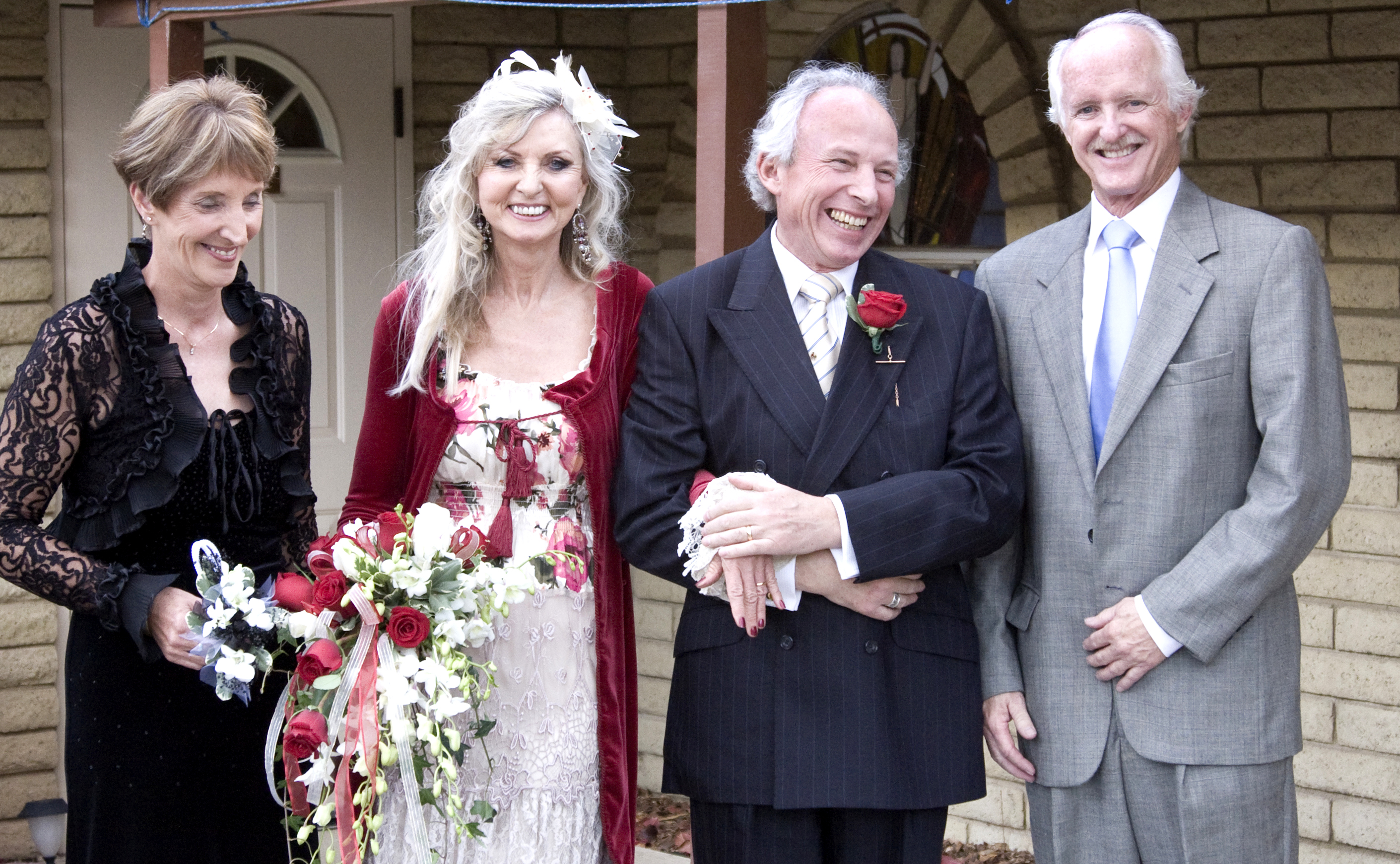
The marriage of Jean and Paul wonderfully supported by Diane, maid of honour, and best man, Dan Gomez.

Releasing the Fergus in me and all of us.

What Peter Bloch wrote yesterday was so true.  A dog can only be a happy, fulfilled dog, if allowed to be the true dog that is in him or her.  Despite the fact that humans are primates and dogs are canids like wolves, coyotes, and foxes, it still holds as true for us humans as it did for Fergus.

We can only be happy, to put it in the words of Fergus, “happy, energised, purposeful and fulfilled in every way.” if we are given the freedom to be our self.

So if you find that you, like Fergus, suffer from digestive problems, possibly have skin disorders and sometimes behave a little strangely take note – you need to find your healer!

oooOOOooo

Footnote

Back in 2008 when Jon Lavin was working with me, I would take Pharaoh and he would lay on the floor behind my seat.  On one occasion Jon was talking about the findings of Dr. David Hawkins and his Scale of Consciousness; from falsehood to truthfulness. (See here and here for more details.)

Anyway that fateful day, Jon mentioned that Dr. Hawkins had measured dogs as being integrous animals.  That notion stayed with me and later I registered the domain name learningfromdogs (dot) com leading to – yes, you guessed it – this blog.  Funny old world.

What I have learned about health and happiness from my dog.

I’m clearly not the only one to believe we really can learn from dogs!

Last Friday, I published a post under the title of The healing power of dogs.  This is how that post opened:

How dogs offer us humans health and happiness.

Many months ago, I was contacted by a Peter Bloch offering to write a guest post on the subject of the healing power of dogs.  Peter had read a post that I had published in July last year which prompted the email dialogue between us.

Not going to say much more at this stage except that today I am republishing that post from last July.  On Monday, I will introduce Peter and his guest post.  Then on Tuesday, I will speak of my own experiences both as entrepreneurial mentor and as a ‘customer’ of a wonderful psychotherapist back in Devon during 2007.

So, as promised, here is that guest post from Peter.

oooOOOooo

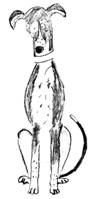
Fergus, the Healing Dog.  A sketch by Mrs. Peter Bloch
Fergus, the Healing Dog. A sketch by Mrs. Peter Bloch

My dog Fergus is a philosopher, and the nature of health and happiness is his area of special expertise. When he learned about Paul’s blog he became very excited because he has always been convinced that dogs have so much to teach humans about life. As much as anything to have a little peace from his continual philosophical musings, I agreed to set out his theories here for the benefit of everyone who loves dogs.

Fergus would like it to be known that when he is free to pursue the activities to which his particular breed is most naturally attracted then, as a dog, he feels happy, energised, purposeful and fulfilled in every way. Fergus has also observed that when he is able to participate as a co-operating member of his ‘pack’, he feels safe and secure, is clear about how to proceed with his life, and at night he sleeps like a dog.

But Fergus says that when these conditions do not apply, he can be quite remarkably miserable. As a Greyhound, he loves to run very fast, and he is not at all interested in things like retrieving balls, or wallowing in water.

Fergus doing what he loves - running very fast!
Fergus doing what he loves – running very fast!

However once he was in the care of someone who Fergus thinks we should just call ‘Sarah’.  Sarah has a Labrador and thinks that all dogs really ought to be like her dog, resulting in Fergus being put under considerable pressure to enjoy activities that he could not understand.

That lead to Sarah telling Fergus’ owners that he was a difficult dog when in fact he was just a misunderstood dog. He was amazed how, in just one day, he went from sleeping ‘like a dog‘ to ‘living in the doghouse‘!

Indeed, within a week he was suffering from digestive problems and skin disorders, despite an identical diet, and was found to be engaging in several bizarre neurotic behaviours. Fortunately, when more congenial conditions were restored, Fergus returned to feeling safe and secure.

Fergus often expresses surprise that people often do not understand that the freedom to be himself, the true dog that he is, including living in unifying solidarity with his pack, is a fundamental requirement for his health; in all meanings of the word.

For instance, Fergus noticed that Sarah has a son called Henry, who really wanted to be a designer. But his mother thought that it would be better for him to be a lawyer. In fact, Sarah was so certain that in the end Henry became a lawyer. Fergus observes that Henry is always suffering from digestive problems and skin disorders and sometimes behaves a little strangely.  Doctors have not been able to find out what is wrong with him, despite all sorts of diets and medicines being tried.

But here’s the rub. When Henry goes out for a walk with Fergus, Fergus always runs as fast as he can and his resulting happiness always makes Henry feel so much better.

Henry is convinced that Fergus is a healer! Who could argue with that?

Fergus, the healing dog.

oooOOOooo

Trust me, when I’m feeling a little down the dogs all know.  All of them allow me to come and bury my face in their fur, or rest my face alongside their face.  Perhaps one of the most powerful gifts from our dogs is their wonderful, unconditional love for us funny humans.

I have no connection with Peter other than being delighted to have this guest post from him (or was it from Fergus??).  Peter offered this brief summary of his work, which I am pleased to include:

Peter Bloch has developed a form of existential and person-centred psychotherapy through touch. In this therapeutic model, health is defined as the ability to be true to oneself and open to genuine relationships with others – qualities that he finds in abundance in his dog.

The healing power of dogs.

How dogs offer us humans health and happiness.

Many months ago, I was contacted by a Peter Bloch offering to write a guest post on the subject of the healing power of dogs.  Peter had read a post that I had published in July last year which prompted the email dialogue between us.

Not going to say much more at this stage except that today I am republishing that post from last July.  On Monday, I will introduce Peter and his guest post.  Then on Tuesday, I will speak of my own experiences both as entrepreneurial mentor and as a ‘customer’ of a wonderful psychotherapist back in Devon during 2007.  Hope that works for you.

So here’s that Learning from Dogs post.

000OOOooo

The bond between dogs and humans

Such a beautiful and mutually-important relationship.

I didn’t plan to write more about this subject thinking that my last two posts, Woof at the Door and Prof. Pat Shipman, more than covered the theme; indeed much more.

But then a flurry of other articles conspired to pass my desk.

In no particular order there was an article on the Big Think website, Do Dogs Speak Human?  As the article opened,

What’s the Big Idea?

Perhaps the better question is, do humans speak dog? Either way, the debate over whether language is unique to humans, or a faculty also possessed by wild and domestic animals from dogs to apes to dolphins, is an interesting one. The answer depends on exactly how we define “language,” and who’s doing the talking, says David Bellos, the Booker prize-winning translator.

The article includes this three-minute video,

and concludes,

Broadly, a language is a mode of expression. “The argument that only human language is language and that animal communication systems, however sophisticated they are — and some of them are quite sophisticated — are not languages because they consist of discrete signals is a circular argument,” he argues. “It’s a self-fulfilling thing. And I think we should be a little bit more interested in the complexity and the variability of animal communication systems and less rigid about this distinction between what is a language and what is not a language.”

For now, we’re happy with this:

The June 30th edition of The Economist had an article entitled, Can dogs really show empathy towards humans? (You may have to register (free) to view this.)  That report ends, as follows,

As they report in Animal Cognition, “person-oriented behaviour” did sometimes take place when either the stranger or the owner hummed, but it was more than twice as likely to occur if someone was crying. This indicated that dogs were differentiating between odd behaviour and crying. And of the 15 dogs in the experiment that showed person-oriented responses when the stranger cried, all of them directed their attention towards the stranger rather than their owner.

These discoveries suggest that dogs do have the ability to express empathetic concern. But although the results are clear enough, Dr Custance argues that more work needs to be done to be sure that such behaviour is true empathy. It is possible, she points out, that the dogs were drawing on previous experiences in which they were rewarded for approaching distressed human companions. Dog-owners, however, are unlikely to need any more convincing.

It was then an easy follow-up to that Animal Cognition article which is available online here; here’s the abstract,

Empathy covers a range of phenomena from cognitive empathy involving metarepresentation to emotional contagion stemming from automatically triggered reflexes.

An experimental protocol first used with human infants was adapted to investigate empathy in domestic dogs. Dogs oriented toward their owner or a stranger more often when the person was pretending to cry than when they were talking or humming. Observers, unaware of experimental hypotheses and the condition under which dogs were responding, more often categorized dogs’ approaches as submissive as opposed to alert, playful or calm during the crying condition. When the stranger pretended to cry, rather than approaching their usual source of comfort, their owner, dogs sniffed, nuzzled and licked the stranger instead.

The dogs’ pattern of response was behaviorally consistent with an expression of empathic concern, but is most parsimoniously interpreted as emotional contagion coupled with a previous learning history in which they have been rewarded for approaching distressed human companions.

It doesn’t get closer than this.