Category: Dog lessons

The democratic deficit.

The widespread failure of politics.

With the NaNoWriMo book completed, it’s back to normal in terms of postings on Learning from Dogs. Subscribers will also be receiving in 30 minutes time Chapter Sixteen with subsequent chapters coming out on Monday, Wednesday and Friday for the next three weeks.

George Monbiot
George Monbiot

Next, I have long admired the writings of George Monbiot and today’s essay is a classic example of both his perception of the world around us and his clear and direct way of expressing same.  In these unsettling times we need observers, such as G. Monbiot, who will challenge what is happening in our societies and ask the questions we would all wish to ask. That George frequently reports for  the highly regarded Guardian newspaper is no surprise.

A couple of weeks ago, I wrote to George asking for permission to republish his essay on Why Politics Fails.  I was delighted not only to receive that permission but also a general permission to republish his essays, with one condition.  That is that they appear in digital format only and not in print.  Could I ask anyone who is thinking of reposting from Learning from Dogs to respect and honour that condition.  Thank you.

Finally, there have been a number of new subscribers during the month of November when I have been distracted by the NaNoWriMo event. It felt a good time again to explain to my newer followers why this blog for most of the time isn’t about dogs; well not directly.

I use the qualities of dogs as metaphors for the qualities that, to a great extent, appear to have been overlooked by man in the last 100 years or so.  Many of the behaviours of dogs that were of critical importance to the species before domestication are still very much in evidence in the family pet dog. I’m speaking of behaviours like unconditional love, living in the present, respecting boundaries, faithfulness, loyalty, honesty and forgiveness.  A group of behaviours that one could define in a single word: integrity.
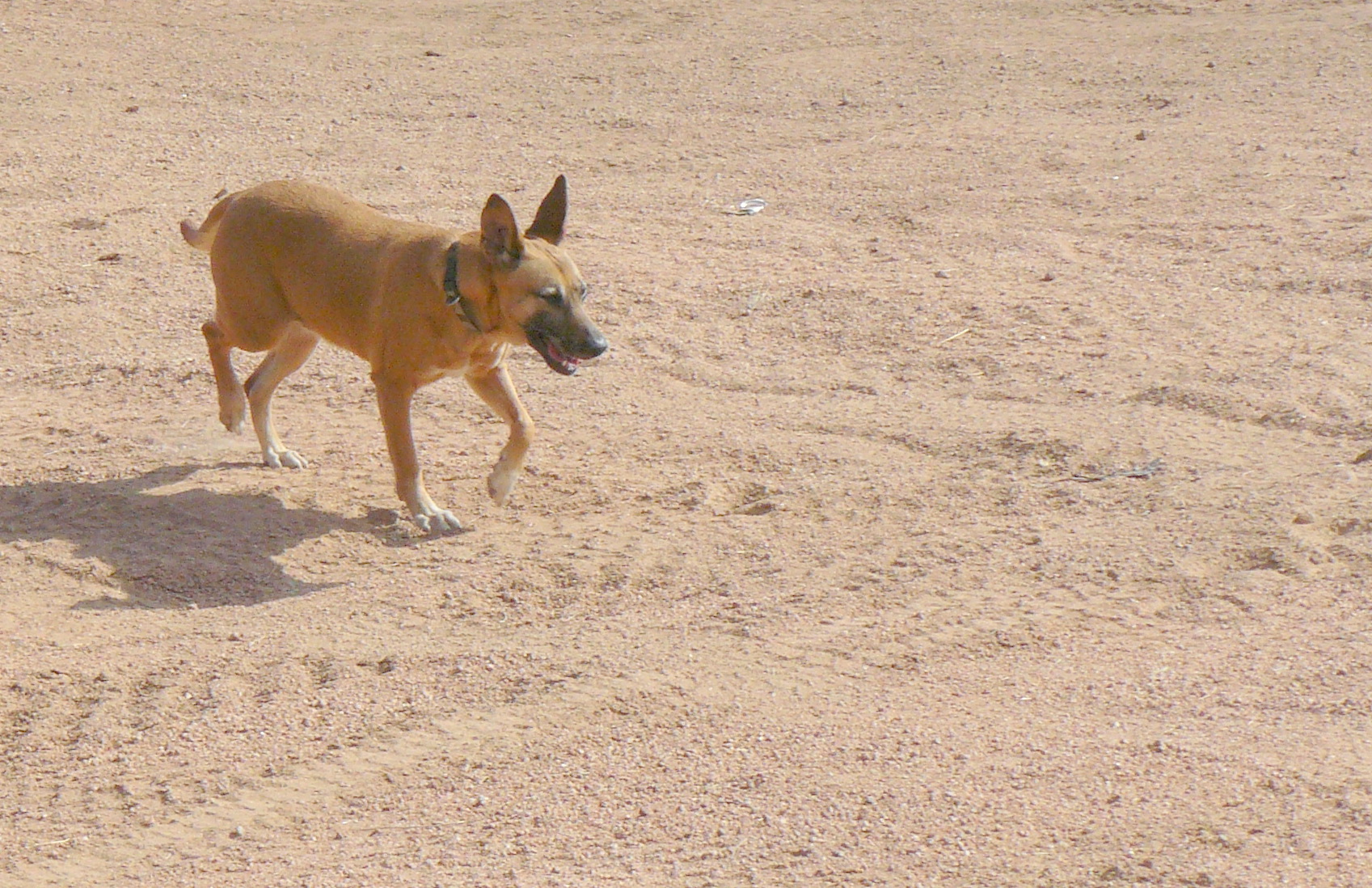
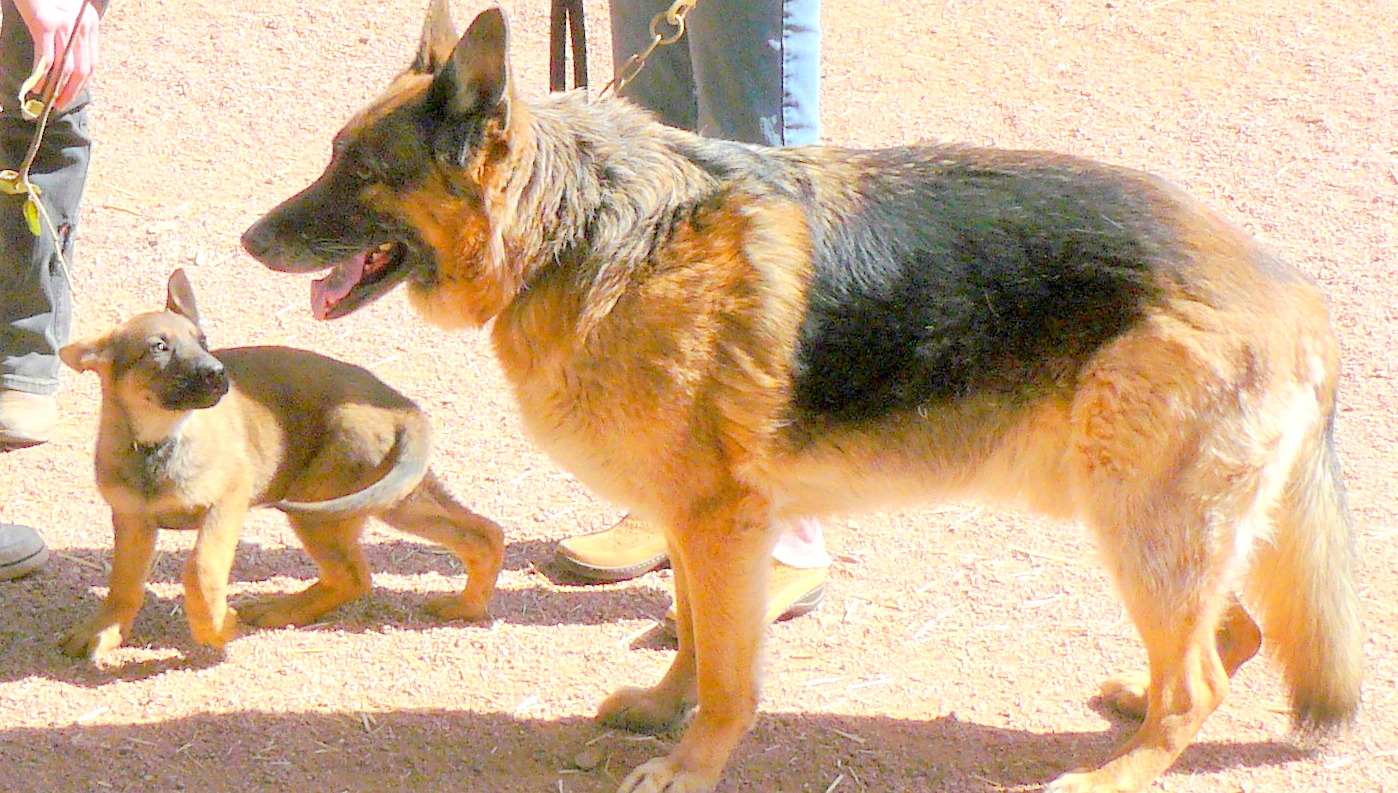
Dhalia - domesticated but still the wild dog shows through.
Dhalia – domesticated but still the wild dog shows through.

So, hope that makes sense.  My posts predominantly illustrate both what is wrong with our 21st C. society and examples of how we can correct our ways.

OK, to George Monbiot.

oooOOOooo

Why Politics Fails

November 11, 2013

Nothing will change until we confront the real sources of power.

By George Monbiot, published in the Guardian 12th November 2013

It’s the reason for the collapse of democratic choice. It’s the source of our growing disillusionment with politics. It’s the great unmentionable. Corporate power. The media will scarcely whisper its name. It is howlingly absent from parliamentary debates. Until we name it and confront it, politics is a waste of time.

The political role of corporations is generally interpreted as that of lobbyists, seeking to influence government policy. In reality they belong on the inside. They are part of the nexus of power that creates policy. They face no significant resistance, from either government or opposition, as their interests have now been woven into the fabric of all three main parties.

Most of the scandals that leave people in despair about politics arise from this source. On Monday, for example, the Guardian revealed that the government’s subsidy system for gas-burning power stations is being designed by an executive from the company ESB, who has been seconded into the energy department(1). What does ESB do? Oh, it builds gas-burning power stations.

On the same day we learnt that a government minister, Nick Boles, has privately assured the gambling company Ladbrokes that it needn’t worry about attempts by local authorities to stop the spread of betting shops(2). His new law will prevent councils from taking action.

Last week we discovered that G4S’s contract to run immigration removal centres will be expanded, even though all further business with the state was supposed to be frozen while allegations of fraud are investigated(3). Every week we learn that systemic failures on the part of government contractors are no barrier to obtaining further work, that the promise of efficiency, improvements and value for money delivered by outsourcing and privatisation have failed to materialise(4,5,6). The monitoring which was meant to keep these companies honest is haphazard(7), the penalties almost non-existent(8), the rewards stupendous, dizzying, corrupting(9,10). Yet none of this deters the government. Since 2008, the outsourcing of public services has doubled, to £20bn. It is due to rise to £100bn by 2015(11). This policy becomes explicable only when you recognise where power really lies. The role of the self-hating state is to deliver itself to big business. In doing so it creates a tollbooth economy: a system of corporate turnpikes, operated by companies with effective monopolies.

It’s hardly surprising that the lobbying bill – now stalled by the Lords – offered almost no checks on the power of corporate lobbyists, while hogtying the charities who criticise them. But it’s not just that ministers are not discouraged from hobnobbing with corporate executives: they are now obliged to do so.

Thanks to an initiative by Lord Green, large companies have ministerial “buddies”, who have to meet them when the companies request it. There were 698 of these meetings during the first 18 months of the scheme, called by corporations these ministers are supposed be regulating(12). Lord Green, by the way, is currently a government trade minister. Before that he was chairman of HSBC, presiding over the bank while it laundered vast amounts of money stashed by Mexican drugs barons(13). Ministers, lobbyists – can you tell them apart?

That the words corporate power seldom feature in the corporate press is not altogether surprising. It’s more disturbing to see those parts of the media that are not owned by Rupert Murdoch or Lord Rothermere acting as if they are.

For example, for five days every week the BBC’s Today programme starts with a  business report in which only insiders are interviewed. They are treated with a deference otherwise reserved for God on Thought for the Day. There’s even a slot called Friday Boss, in which the programme’s usual rules of engagement are set aside and its reporters grovel before the corporate idol. Imagine the outcry if Today had a segment called Friday Trade Unionist or Friday Corporate Critic.

This, in my view, is a much graver breach of BBC guidelines than giving unchallenged airtime to one political party but not others, as the bosses are the people who possess real power: those, in other words, whom the BBC has the greatest duty to accost. Research conducted by the Cardiff school of journalism shows that business representatives now receive 11% of airtime on the BBC’s 6 o’clock news (this has risen from 7% in 2007), while trade unionists receive 0.6% (which has fallen from 1.4%)(14). Balance? Impartiality? The BBC puts a match to its principles every day.

And where, beyond the Green Party, Plaid Cymru, a few ageing Labour backbenchers, is the political resistance? After the article I wrote last week, about the grave threat the transatlantic trade and investment partnership presents to parliamentary sovereignty and democratic choice(15), several correspondents asked me what response there has been from the Labour party. It’s easy to answer: nothing.

Blair and Brown purged the party of any residue of opposition to corporations and the people who run them. That’s what New Labour was all about. Now opposition MPs stare mutely as their powers are given away to a system of offshore arbitration panels run by corporate lawyers.

Since Blair’s pogroms, parliament operates much as Congress in the United States does: the lefthand glove puppet argues with the righthand glove puppet, but neither side will turn around to face the corporate capital that controls almost all our politics. This is why the assertion that parliamentary democracy has been reduced to a self-important farce has resonated so widely over the past fortnight.

So I don’t blame people for giving up on politics. I haven’t given up yet, but I find it ever harder to explain why. When a state-corporate nexus of power has bypassed democracy and made a mockery of the voting process, when an unreformed political funding system ensures that parties can be bought and sold, when politicians of the three main parties stand and watch as public services are divvied up by a grubby cabal of privateers, what is left of this system that inspires us to participate?

www.monbiot.com

References:

1. http://www.theguardian.com/environment/2013/nov/10/gas-industry-employee-energy-policy

2. http://www.theguardian.com/society/2013/nov/10/planning-law-changes-help-bookmakers-minister

3. http://www.theguardian.com/business/2013/nov/08/g4s-expand-contract-freeze-government-work

4. http://www.theguardian.com/commentisfree/2013/aug/05/privatisation-public-service-users-bill

5. http://www.telegraph.co.uk/news/politics/9742685/Total-chaos-after-pet-dog-counted-on-translators-database.html

6. http://www.theguardian.com/society/2013/jul/22/disabled-benefits-claimants-test-atos

7. http://www.theguardian.com/society/2013/nov/07/government-outsourcing-problems-g4s-serco-a4e

8. http://www.theguardian.com/public-leaders-network/2013/jul/17/ifg-government-outsourcing-privatisation-skills

9. http://www.theguardian.com/commentisfree/2013/jan/09/financial-transparency-privatised-nhs

10. http://www.theguardian.com/commentisfree/2013/nov/04/rail-privatisation-train-operators-profit

11. http://www.theguardian.com/commentisfree/2013/feb/07/public-sector-outsourcing-shadow-state

12. http://www.theguardian.com/politics/2013/jan/18/buddy-scheme-multinationals-access-ministers

13. http://www.theguardian.com/business/2012/jul/24/lord-green-hsbc-scandal

14. http://downloads.bbc.co.uk/bbctrust/assets/files/pdf/our_work/breadth_opinion/content_analysis.pdf

15. http://www.theguardian.com/commentisfree/2013/nov/04/us-trade-deal-full-frontal-assault-on-democracy

oooOOOooo

I’m staying with this theme tomorrow when I want to discuss a recent interview with Lyn Carson who is a professor with the Business Programs Unit at the University of Sydney.  The interview is on the subject of Improving Democracy Through Deliberation.
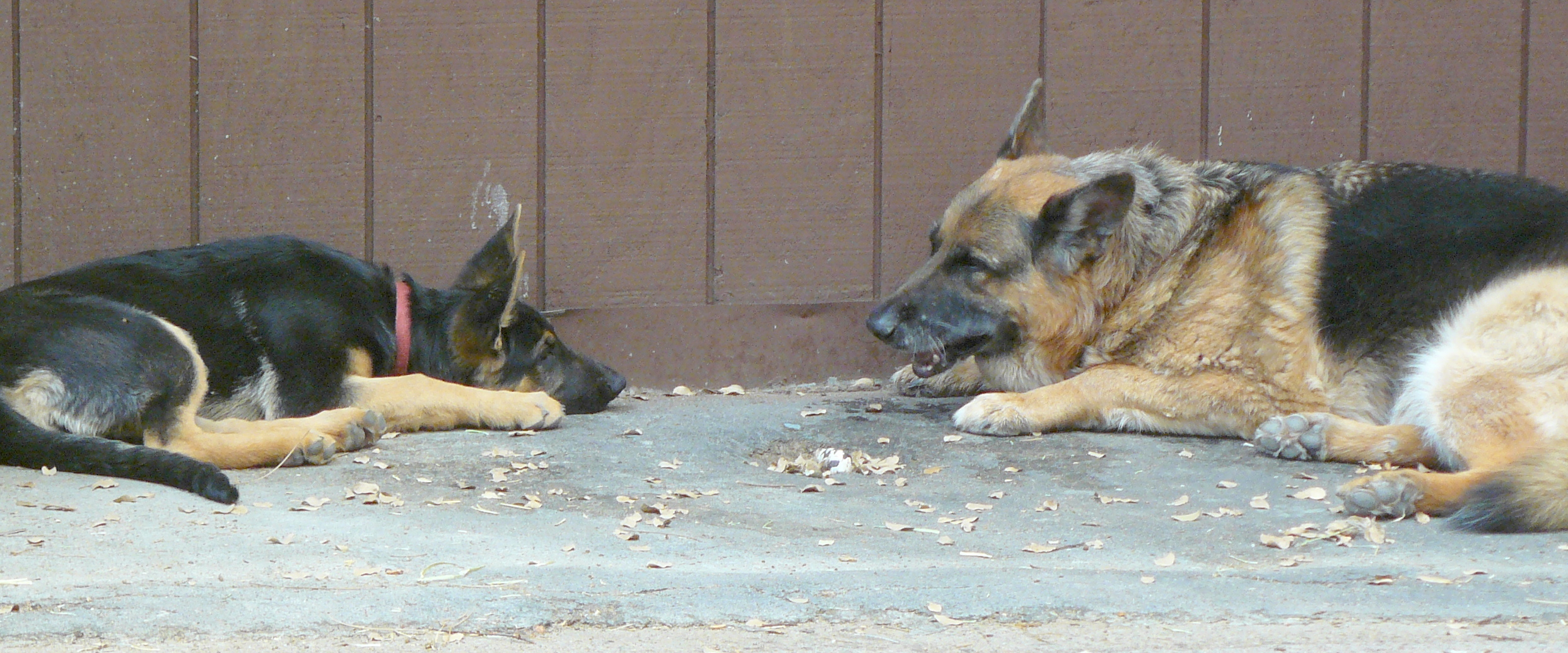
The power of sharing.

“Minds together do not just bind together, they find together.”

My post last Monday, The lure of patterns, appears to have resonated far and wide.  In the sense of many echoes reinforcing the perilous nature of our present times and the desperately uncertain decades ahead.  Tomorrow I shall be writing specifically about those echoes.

Today, I wanted to spend a little time reflecting on dogs and communities!  After all this blog is called Learning from Dogs!

In Monday’s post I opined that the future may well see a return to people re-evaluating and re-energising the benefits of local communities.  Now when it comes to communities, there are no better examples than dogs and, so many thousands of years before dogs, grey wolves.  These species have an incredibly strong social structure.  I mean, of course, the pack.  It’s a shame that the expression ‘pack of wolves’ or ‘pack of dogs’ has such misplaced negative connotations.

Before dogs were domesticated, as in when they first evolved from the grey wolf, they shared with wolves a natural pack size of around 50 animals.  There was a very strong social cohesiveness within that pack yet a very ‘light’ status differential between those dogs having pack status and the mass of the pack group.  Ditto with wolves.

In fact there were (still are) just three status roles: Mentor/Monitor/Nanny.  Or has been described previously on this blog: Alpha/Beta/Omega roles.  Even within the domesticated dog, thousands upon thousands of years later, those social instincts are alive and well.  Many followers of Learning from Dogs will know that Pharaoh, him of the Home Page, now an elderly German Shepherd is a Monitor or Beta dog.  I could write about this aspect of dogs for hours!

Pharaoh being a monitor for young Cleo.

So back to us funny old humans.

I closed last Monday’s post off with three predictions:

  • That the power of internet communications will allow more people, more quickly, to find their soul-mates wherever they are on this planet.
  • That the realisation of how dysfunctional many Governments are, of how truly poorly they serve the majorities of their citizens, will lead to mass rejections of these so-called Governments’ policies.  Such rejections predominantly peaceful, as in taking the horse to water but being unable to make it drink.
  • That there will be a new form of localism.  At two levels.  Literally, people geographically close to each other creating 21st C. versions of local communities.  Virtually, those local communities linking to other like-minded communities right across the world resulting in highly effective and innovative learning, accelerated common-sense, (call it wisdom if you wish), and extraordinarily efficient and sustainable ways of living on this planet.

Patrice commented:

Dear Paul: I like your predictions. They will play some role. But maybe somewhere in the bushes only. I think predictions of the future beyond the next 12 months are obsolete.

Jeremy remarked: (and do click the link and read some of Jeremy’s fantastic poetry)

I am hoping for a new localism. I see signs of this in the local food movement and a growing concern about factory farming, for one thing. I think people are really scrutinizing where their food comes from, where their medicines are made, and I think there also is a dawning awareness of how we are living on the backs of exploited third world workers (and poorly paid service workers here at home). I do see signs of these things permeating the consciousness of many people and leading them to want to become more “local.”

Alex said:

Your predictions are good, and I liked the one of communities from different parts of the world working with each other… that was creatively brilliant.

(Click on their names to see three wonderful blog sites, by the way.)

So my idea of a return to an era of localism, but a 21st C. version reflecting the way so many millions of us are connected electronically, wasn’t immediately rejected.

Patrice recently published a post called Devils In The Details.  I mentioned in a comment to that post that I would be referring to it in this place.  Patrice replied [my italics]:

Very good, Paul! No doubt you will bring more common sense to one more of these interesting collaborations you bring together! Internet debates! A long way from the paleolithique cave!… But still the same idea. Minds together do not just bind together, they find together.

I found that last sentence so powerful that it was used as the sub-heading to today’s post.  Then Alexi Helligar commented:

The word consciousness, breaks down to con+scious+ness, which literally means together knowing or shared knowledge.

Adding in a subsequent comment:

In other words: Without society there is no consciousness. The sages of old knew this. Why has it been forgotten?

So right before my eyes (and yours!) we are seeing the power of ‘finding together‘.

Finally, just on the spur of the moment, I did a web search under an entry of ‘early caveman social structure’.  Guess what!  One of the top search returns was an essay by an Erik D. Kennedy under the title of On the Social Lives of Cavemen.  From which jumped off the screen:

Human beings are no strangers to group living.  Call it a family trait.  Our closest animal relatives spend a good bulk of their time eating bugs off of their friends’ back.  While I’m overjoyed we’re not social in that manner, I’m less pleased that we’re not social more to that degree.  In study after study, having and spending time with close friends is consistently correlated with happiness and well-being.  And yet, the last few decades in America have seen a remarkable decline in many things associated with being in a tight-knit social circle—things like family and household size, club participation, and number of close friends.  Conversely, we’ve seen an increase in things associated with being alone—TV, commutes, and the internet, for example.

This trend is quite unhealthy.  It’s no surprise that humans are social animals—but it may be surprising that we’re such social animals that merely joining a club halves your chance of death in the next year—or that living in a close-knit town of three-generation homes can almost singlehandedly keep you safe from heart disease.

My goodness me, this sharing idea may be core to a healthy society in ways that we need to return to.  Erik’s essay goes on thus:

That particular case—of Roseto, Pennsylvania—is mentioned by Malcolm Gladwell in his book Outliers.  In 1950’s Roseto, the incidence of heart disease in men over sixty-five was half the national average (and suicide, alcoholism, drug addiction, and serious crime were also basically unheard of[ii]).  Bewildered doctors searched for solutions in genetics, diet, exercise, and geography, but finding nothing, reached the conclusion that it was the close-knit social life of the community that kept its residents so healthy. Dinners with grandma, friendly chats between neighbors, and a precocious level of civic involvement were the driving factors in the health of a town that nothing but old age could kill.

The happiness and health I’m describing are not, however, ingredients to a long-lost elixir of well-being.  This sort of paleo social life occurs in cultures large and small all over the globe.  America just happens to be an enormous exception (and the one that I live in).  The whole reason Roseto was an outlier is because it was a town whose inhabitants more or less collectively moved from rural Italy to the middle of Pennsylvania over a few decades.  This was basically an Italian village in the American countryside, and it stood out because Italy’s social culture was remarkable compared to America’s—and that was in the 1950’s.  America’s social culture has only deteriorated even further since then.  We’ve lost a lot, but my thesis is a positive one; we have as much to gain as ever.

So if wolves and dogs naturally settle into packs of 50 animals, what’s the optimum ‘pack’ size for humans?  Dear Erik even offers that answer:

Along with that urban emigration came a shrink in residents per household and a widespread decline in community and organization engagement.  This isolation has been taxing on our physical and mental health, and the reason has been clear from the beginning: it’s not good for man to be alone.

So we’ll spend more time with other people.  Fine.  But who should we spend our time with?  What kind of groups should we hang out in?  And how big of groups?  The simple answer is: as long as you’re pretty close to the people you’re with, it hardly matters. Piles of research back up what is essentially obvious from everyday experience: that the more time you spend with people you trust, the better off you are.  That’s not to discourage actively meeting new people, but seeing as though close friends push us towards health and happiness better than strangers, there does appear to be a limit on the number of people you can have in your “tribe”.

And that number is about 150, says anthropologist Robin Dunbar, who achieved anthropologist fame by drawing a graph plotting primates’ social group size as a function of their brain sizes.  He inputted the average human brain size into his model, and lo and behold, the number 150 has been making a whirlwind tour of popular non-fiction books ever since.  Beyond being the upper bound for both hunter-gatherer tribes and Paleolithic farming villages,  it appears that everything from startup employee counts to online social networks show this number as a fairly consistent maximum for number of close social ties.

You really must read Erik’s essay in full; it really ‘spoke’ to me and maybe it will do the same for you.

So no other way to close than to say that of all the things we can learn from dogs, the power of sharing, of living a local community life, may just possibly be the difference between failure and survival of us humans.

Dogs and man should never be alone.

oooo

I'll say it again! Dogs, and man, should never be alone!
I’ll say it again! Dogs, and man, should never be alone!

Let there be lions.

The power and logic of nature.

In yesterday’s post Autumn ramblings, I mentioned:

There’s been a couple of posts that I want to refer to because they underline the fact that humans are so prone to forgetting that we are of the wild, from the wild and connected to the wild.

The first of those posts was a recent essay by Patrice Ayme under the title of Rewilding Us and is republished on Learning from Dogs with the kind permission of Patrice.

oooOOOooo

Rewilding Us.

REALITY IS WILD & FEROCIOUS. IGNORING IT IS INHUMAN.

And Presents A Civilizational Risk.

Princeton is freaking out. Flesh devouring aliens are lurking out in the woods, threatening academia’s fragile thoughts. Krugman:

‘From the Princeton Town Topics, which used to be all about (a) parking (b) deer:

A growing population of coyotes in the wooded area bordering the Institute for Advanced Study has motivated the Princeton Animal Control Advisory Committee to recommend that sharpshooters be hired to help handle the problem. “There is a big pack over at the Institute Woods,” officer Johnson said this week. “I’m having a lot of complaints that they follow people around.”‘

You Can’t Always Eat Who You Want

The “Mountain Lion”, is a relative of the Cheetah (erroneously put in the cat family, felis, until last year or so). It has 40 names, in English alone, and is found from the American Arctic to Patagonia, from the sea shore to the high mountains. The weight above is that of the female. Males are heavier (typically up to 100 kilograms). The heaviest puma shot in Arizona was 300 pounds (136 kilos).

The lion/cougar/puma is capable of jumping up twenty feet from a standstill (yes, 6 meters; horizontally, 14 meters). It is capable of killing a grizzly (pumas and ‘golden bears’ were famous for their naturally occurring furious fights to death in California). The feline’s crafty method consisted into jumping on top of the bear, and blinding him with furious pawing. Top speed: 50 mph, 80 km/h. (By the way, there used to be pure cheetahs in North America, recently exterminated by man. I propose to re-install the Asian cheetah in the USA, in a sort of cheetah diplomacy with Iran.)

The philosophical question here is: what is this world all about? Is it about living on our knees, or ruling among animals and wilderness?

Why would Princeton panic about small canids? Because they don’t obey the established order?

Coyotes are totally clever, and not at all dangerous (being so clever). They have very varied voices, when in packs. Going out and shooting them is really primitive, and misses the main point of having nature around. That is: to teach humility, and teach the richness of our planet, visit hearts with emotional diversity, and minds with complexity.

Bears and Mountain Lions are a completely different matter. They are both extremely clever too, but can be very dangerous.

Running and hiking in the Sierra, I got charged by scary bears several times. I view this dangerosity as a plus, but it never loses my mind, and I got scared nearly out my wits more than once.

Once, in a national Park on the coast, I literally ran into two large lions in 30 minutes! Then I got charged by a large elk before he realized I was not a lion. Other high notes were finding a bear cub on the trail in the near vertical mountain side, on the way down, as dusk was coming.

Another high point was the large bear by the trail, who was lying like a bear rug, at 9pm, in an apparent ruse to let me approach until he could jump at his prey, as he did, before realizing that I was not a deer, something that obviously infuriated him. He was torn between making the human into dinner, and the instinct that this would turn badly for him.

In Alaska I was charged by a moose with her progeny… although I did not go as fast as an experienced mountain biker who happened to be there too, the anti-grizzly cannister in my hand emboldened me to succeed in a circuitous move  to proceed towards my distant destination, something facilitated by the calf’s crash into some obstacle, drawing his mother’s concern. Mountain running often requires to proceed, no matter the obstacles in the way, when one is too far to turn around.

Bears know rocks, they have been hurt by them, and so they fear airborn rocks (throw the rock on something noisy, to impress; I had to hit, with a very large rock, a charging bear directly, once; it fled; it was killed by rangers later after he caused a flesh wound to somebody else; some will find all this very violent; well, it is, that’s part of the whole point).

Mountain Lions are better charged and/or, roared or barked at. They fear insane behavior.

In general making lots of noise helps, with bears and lions. I don’t have clever tricks to suggest for bathing safely in the murky icy Pacific. Although I assume that the presence of sea lions bobbing on the surface placidly is indicative of the absence of an obvious white shark prowling… In any case the pacific is so cold, you will probably die of cardiac arrest before you are devoured.

In Africa, there are about 500,000 elephants. 25,000 to 30,000 are killed, a year, to send the ivory to east Asia (China, Vietnam). So African elephants may disappear. This is beyond tragic, it’s irreplaceable. Elephants understand people’s gestures, without any learning (they apparently learn to use trunk gestures among themselves). One is talking about extremely intelligent animals here. (In contrast, chimpanzees have great difficulties understanding human gestures.)

Intelligence and culture are dominant among apex mammals. That’s what makes them so superior. Washington State had the smart idea to shoot full grown adult male mountain lions. Thus mountain lion society and culture collapsed, uneducated teenagers took over, and incidents with humans exploded (something about the quiet macho society!).

A Japanese specialist of chimpanzee intelligence who happens to have a bear in his lab, found that the bear did not underperform chimpanzees on mental tasks (that’s actually a problem with bears; being so clever, they can be unpredictable, one can never know what they have up their sleeve, like the one who mimicked a bear rug, above, or one who drove a car in Tahoe). A number of social mentally advanced animals (sea mammals, parrots) use advanced languages.

So what are my recommendations? The Princeton Institute for Advanced Studies ought to realize that, if it wants to become really brainy, it ought to give our fellow species a chance. They are part of what make our minds, in full.

Elephants and rhinoceroses used to be all over Europe and North America. They ought to be re-introduced right away, using Indian and African species (rare camels too; later, thanks to genetic engineering, part of those could be replaced by re-engineered ancient species, such as the Mammoth). Lions and leopard like species ought to be reintroduced too.

It can work: in the San Francisco Bay Area, there is an impressive population of mountain lions.  I had many close calls (in the most recent incident, a few weeks ago, a lion peed an enormous and dreadfully smelling amount on a trail I was making a loop on, obviously to show me he owned the territory, a total wilderness reserve a few miles from Silicon Valley… especially at dusk).

However, the lions are extremely good at avoiding people (although one got killed by police in downtown Berkeley in the wee hours of the morning). They will all be collared in the next ten years, to find out what is going on. With modern technology (collars!) and sophisticated human-animal culture, there is no reason why extremely dangerous, but clever species could not live in reasonable intelligence with humans.

So rewilding is possible. It’s also necessary. Why? So we humans can recover our hearts, and our minds.

Whether we like it or not, we are made for this wild planet. By forgetting how wild it is, by shooting it into submission, we lose track of the fact human life, and civilization itself, are much more fragile than they look.

And thus, by turning our back to the wilds, we lose track of what reality really is. Worse: we never discover all what our minds can be, and how thrilling the universe is. We are actually bad students who refuse to attend the most important school, that taught by reality itself.

Rewilding is necessary, not just to instill a mood conducive to saving the planet, but also to remake us in all we are supposed to be.

Expect Evil, And Don’t Submit.

These are the times when, once again, the plutocratic phenomenon is trying to take over. That’s when the few use the methods of Pluto to terrorize and subjugate the many (to constitute what is variously named an elite, oligarchy, or “nomenklatura“, or aristocracy, that is, a plutocracy).

And how is that possible? because the many have been made into a blind, stupid, meek herd (I refer to Nietzsche for the condemnation of the herd mentality).

How do we prevent that? Nietzsche advocated the mentality of the “blonde beast“. That meant the lion (and not what the Nazis claimed it was; few were as anti-Nazi as Nietzsche). Why lion? Because lions are domineering. I learned in Africa that one could go a long way with wild lions, as long as one gave them respect, and time to get out of the way. However, disrespecting a lion means death.

Lions don’t accept to live on their knees. When abominable forces from the giant Persian theocratic plutocracy put the tiny Athenian democracy in desperate military situations, Athenians fought like lions. And democracy won.

Yet, 150 years later, when fascist, plutocratic, but apparently not as abominable, Macedonian forces put Athens in a difficult situation, Athenians surrendered. They did not fight like lions. Democracy would not come back to Athens for 23 centuries (and only thanks to the European Union).

We will not defeat plutocracy if we do not rewild ourselves. First. Let there be lions.

***

Patrice Ayme

oooOOOooo

What I read in Patrice’s essay is this.  Man is, by definition, part of nature.  Yet man, uniquely of all the natural species on this planet, has contrived to ‘evolve’ a set of beliefs that run counter to the core integrity of nature.  Perhaps more accurately put: sections of modern man have evolved this way.

I have a background piece on Learning from Dogs called Dogs and integrity.  Here’s an extract:

Dogs:

  • are integrous ( a score of 210) according to Dr David Hawkins
  • don’t cheat or lie
  • don’t have hidden agendas
  • are loyal and faithful
  • forgive
  • love unconditionally
  • value and cherish the ‘present’ in a way that humans can only dream of achieving
  • are, by eons of time, a more successful species than man.

And have poetry written for them:

Inner Peace

If you can start the day without caffeine,

If you can always be cheerful, ignoring aches and pains,

If you can resist complaining and boring people with your troubles,

If you can eat the same food every day and be grateful for it,

If you can understand when your loved ones are too busy to give you any time,

If you can take criticism and blame without resentment,

If you can conquer tension without medical help,

If you can relax without liquor,

If you can sleep without the aid of drugs,

You are probably the family dog!

Those words apply equally to all the animals on this planet; all of Nature’s animals. In other words, integrity must be and has to be the one and only framework within which we live.

The second post I referred to is on Alex Jones’ wonderful blog The Liberated Way.  The post is called Nature Deficit Disorder.  Here is the text of Alex’s post.

I occasionally read sad stories in my local media of senseless cruelty against wildlife around my town of Colchester: the smashing of barn owl eggs; people suffocated badgers by closing their den up.  People have no opportunity to expose themselves to nature, and thus connect with nature, some experts call “Nature Deficit Disorder.”

Technology, far from liberating, enslaves the individual to a relentless need for entertainment and personal validation, backed by demands of television, homework, cellphones and money earning.  Many view nature as a health and safety risk, so that it is either managed or avoided.  The situation is best illustrated in a satirical YouTube video called“The discovery of the last child in the woods.”

The solution is simple: expose yourself to nature.

The indigenous Native American expresses a connection to nature in this video:

Here is that video.  Watch it without interruption.  In less that 3 minutes it spells out everything that we humans have to relearn about the world we live in; the world we are part of.  The integrous world we must fight for. Fight for as lions!

When all the trees have been cut down,
when all the animals have been hunted,
when all the waters are polluted,
when all the air is unsafe to breathe,
only then will you discover you cannot eat money.
~ Cree Prophecy ~

A return to integrity

Can we mend our broken ways? Just possibly.

Yesterday’s long rant was the outcome of me promising ‘a debate’ with Patrice Ayme.  Succinctly, I had disagreed with a comment from Patrice where he had written: “Force is the truth of man. Everything else is delusion, even the vegetarian style.” and wanted to respond within the space of a post rather than the more restrictive comment.

For my disagreement with Patrice had been essentially about his statement, ‘Force is the truth of man‘.  I don’t recall a war in the last 50 years that has been a force for good.

But then it was Alex’s comment, see below, that stopped me short.  For I realised that I was confusing ‘force’ with ‘war’ and that was probably a big mistake on my behalf.  Of course, I’m writing this without the benefit of knowing better what Patrice meant in his comment! Blogging, as powerful a media as it is, does not provide for immediate interaction!

Nevertheless, Alex’s comment yesterday was powerfully inspirational.  Because so many of us (and I include me in that ‘us’) all too often behave as though we are a species utterly divorced from Nature.

I closed yesterday’s post with these words;

So what to do?  Because I am fundamentally at odds with the sentiment expressed by Patrice Ayme; “Force is the truth of man. Everything else is delusion, even the vegetarian style.

The answer takes us to tomorrow’s post, A return to integrity.

And, yes, it does mention dogs!  Rather a lot as it happens!

Dogs are the one species that man has lived with longer than any other species.  So when we refer to the qualities of the dog it is simply because we are so familiar with them.  In no way does that exclude the numerous other species that bond with man and share the same wonderful qualities.

Qualities so easily seen: Love, Honesty, Loyalty, Trust, Openness, Faithfulness, Forgiveness and Affection. Together they are Integrity.

Of course dogs will kill a rabbit, for example, as readily as a cat will kill a mouse.  In this respect force is the truth of Nature.

The only way for species man to survive on this planet is for every element of man’s existence on this planet to be rethought of in terms of the natural order.  Read the comment left by Alex in yesterday’s post:

Hi Paul, what you highlight are examples of disconnection between humanity with nature and each other. I have on my own blog highlighted a concept of Ubuntu – “I am because we are” – which is only possible when the self realises they are part of an inter-connected network of life. Your example of islands of fragmented forest where disconnected wildlife are dying out is how it is with disconnected humanity, we are doomed to destruction because we are cut off from the life-giving connection to nature.

All the problems you highlight are symptoms of the disease of disconnection, until there is reconnection to nature none of these symptoms can be successfully addressed.

War is an integral part of nature, when people seek to dismiss this then they add to the disconnection from nature. I was stung in the face by a drunken wasp a few days ago, this is how it is with nature, it is beautiful but also brutal. Peace and balance are illusions, life is in a becoming because of unbalance and strife. I advocate harmony, like a downhill skier we do not seek to control our surroundings, but instead act in harmony by moving around the obstacles such as rock and tree.

Disconnection can be as large as destroying whole forests by ignorant energy policies to those idiots who kicked a puffball to pieces before I could harvest it, or the new owners of my former home who have taken a chainsaw to all the trees and bushes in the garden. People who are disconnected do not consider how their actions impact nature or people contrary to the philosophy of Ubuntu.

I am because we are!” Each and every one of us is where we are today, for good or ill, because of what we are: part of Nature.  It’s so incredibly obvious – we are a natural species – yet who reading this wouldn’t admit at times to behaving “as though we are a species utterly divorced from Nature.”

Millions of us have pets and animals that we love.  Yet we still miss the key truth of our pets.  That we are a part of Nature, subject to Natural order, just as much as our pets are.  We have so much to learn from our animals.

Take this rather sad story but, nonetheless, a formidable story of the integrity of one species for another.  Watch the video.

oooo

Take this rather happier story about the integrity of one species for another. Watch the video.

oooo

Thus when we see the extraordinary benefits that arise from love and trust, from loyalty and faithfulness, and much more, why oh why is so much of our society fundamentally broken?

As John Hurlburt wrote in a recent email, it is because, “we are spiritual bankrupt. We spend too much of our time thinking about ourselves and what we want and too little of our time thinking about other people and what we all need.”  John went on to add that this spiritual bankruptcy had preceded our moral and economical bankruptcy. He pointed out that the solution to our moral and financial problems, as well as our salvation as individuals and as a species, is spiritual. “We simply need to love the Nature of God, the earth and each other regardless of what we may believe God to be.”

Now whether you are a religious soul, or a heathen, or somewhere in the middle, it matters not.  For if we continue to defy Nature and the natural laws of this planet we are going to be dust before the end of this century.  Again in John’s powerful words:

Denying climate change is a death wish.

Nature always wins in the long run.

Nature is balanced. Are we?

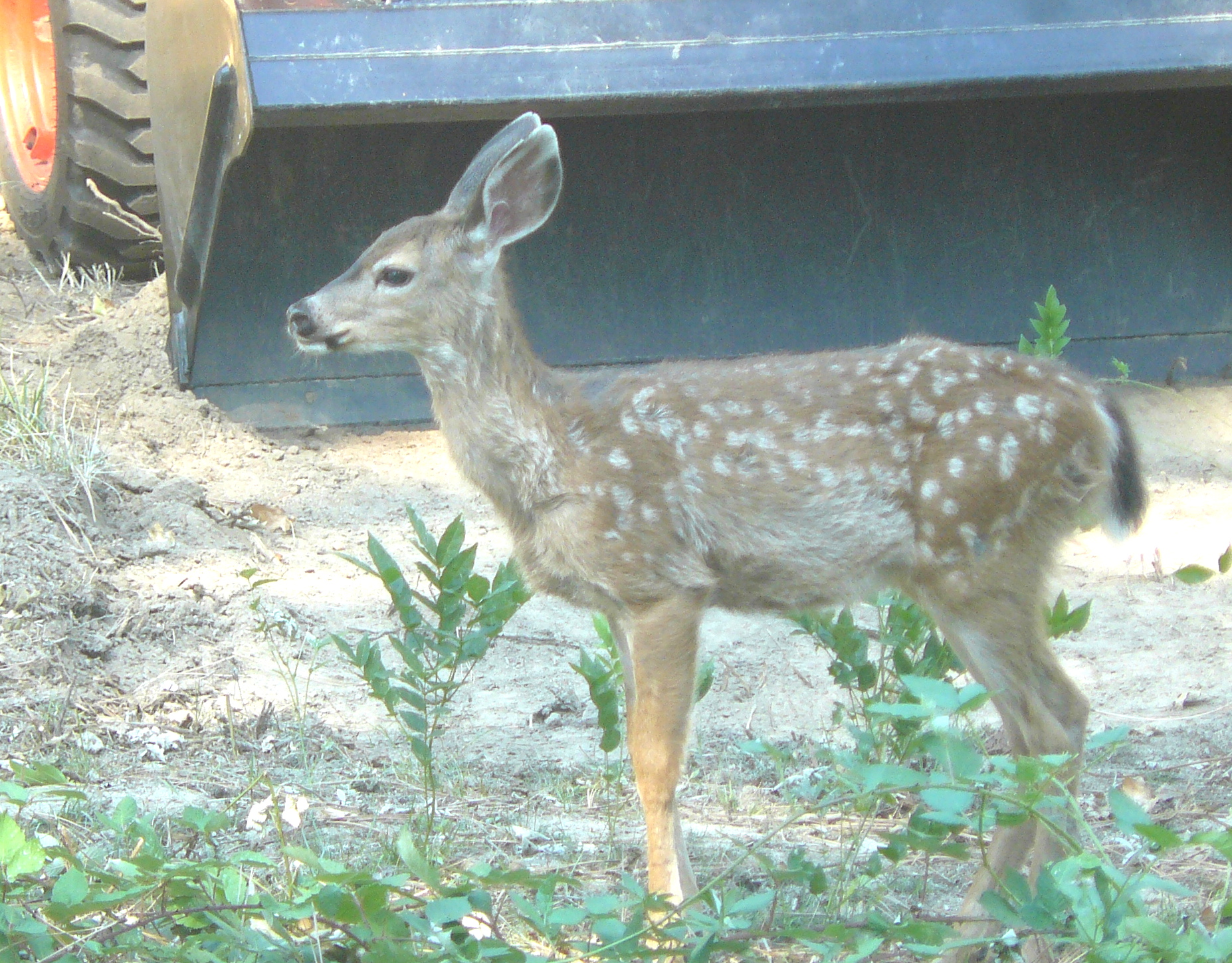
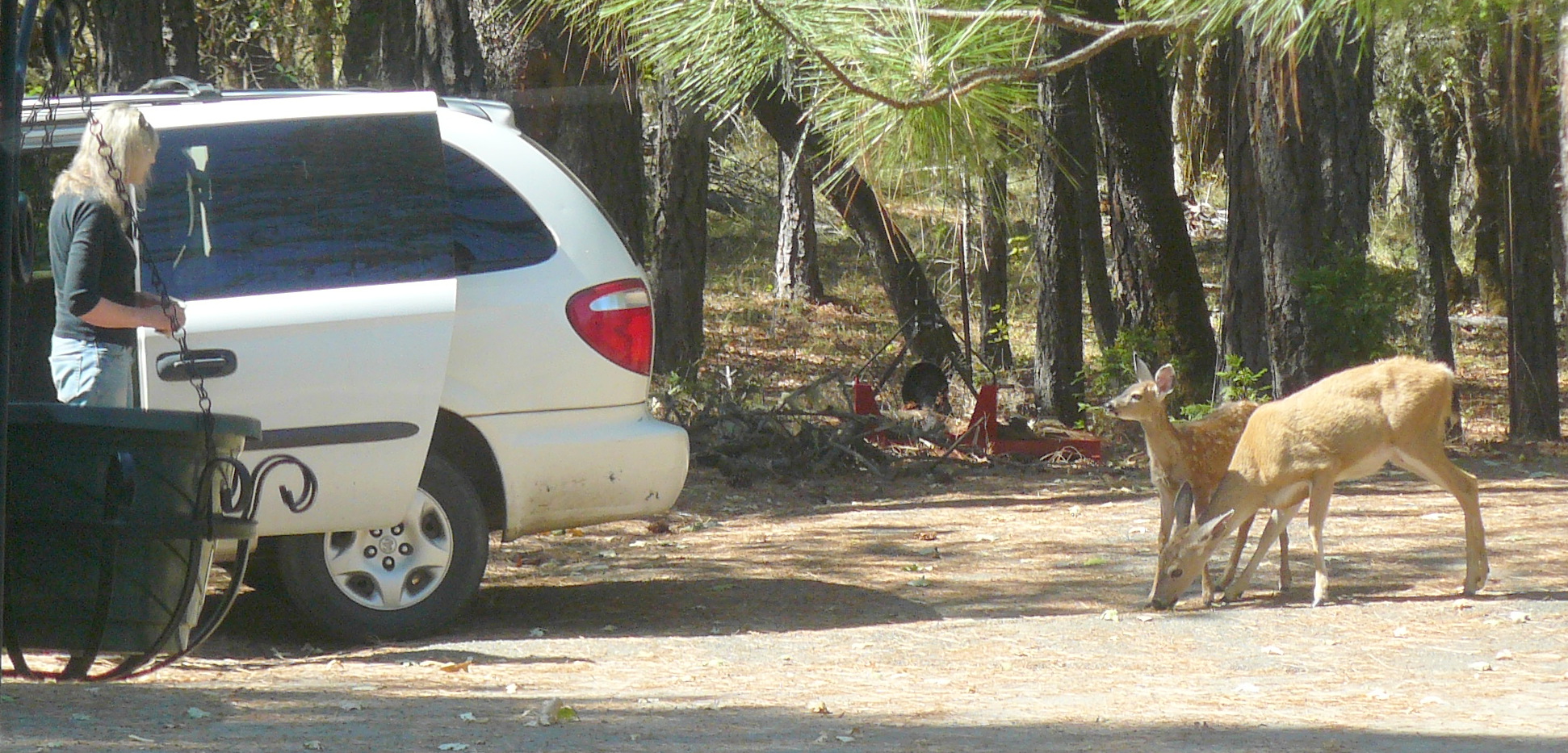
As if to endorse the great examples that Nature offers us in terms of the benefits of love and trust, take a look at these three recent photographs from here in Oregon.

A young timid deer responding to me sitting quietly on the ground.
A young timid deer showing her trust of me as I sat quietly on the ground less than 30 feet away.

oooo

A mother and her fawn trusting Jean's love for them, and getting a good feed!
A mother and her fawn trusting Jean’s love for them, and getting a good feed!

oooo

Sweeny, on back of settee, and Cleo in peace and comfort.
Little Sweeny and Cleo converting trust to peace and happiness.  (Not to mention Jean!)

Now these are not photographs to ‘ooh’ and ‘ah’ over, these are reminders that kindness, generosity, selflessness and trust are part of Nature.  All the great virtues and values of man do not come from a vacuum, they come to us via Nature.

We have been blessed by an evolution that has allowed mankind to achieve remarkable things.  Even to the point of leaving the confines of our planet and setting foot on the Moon and sending probes from out of our Solar System.  There’s a sense, a distinctly tangible sense, that man has conquered all; that we have broken the link from being part of Nature; from being of Nature.

And now Mother Earth is reminding all of her species, every single one of them including species man, that everything is bound by her Natural Laws.

Does this mean that man has to revert to some form of pre-civilised stone-age era?  Of course not!  Progress can be as much within the Natural order than in competition with it, as it has been in recent times.  In fact, Professor Pat Shipman explains our progress is benefited by being part of that Natural order.  Here’s how Amazon describe her book, The Animal Connection.

The Animal Connection: A New Perspective on What Makes Us Human

A bold, illuminating new take on the love of animals that drove human evolution.

Why do humans all over the world take in and nurture other animals? This behavior might seem maladaptive—after all, every mouthful given to another species is one that you cannot eat—but in this heartening new study, acclaimed anthropologist Pat Shipman reveals that our propensity to domesticate and care for other animals is in fact among our species’ greatest strengths. For the last 2.6 million years, Shipman explains, humans who coexisted with animals enjoyed definite adaptive and cultural advantages. To illustrate this point, Shipman gives us a tour of the milestones in human civilization-from agriculture to art and even language—and describes how we reached each stage through our unique relationship with other animals. The Animal Connection reaffirms our love of animals as something both innate and distinctly human, revealing that the process of domestication not only changed animals but had a resounding impact on us as well.

It’s a powerful read and greatly recommended.  Here’s an extract from the book [page 274, my emphasis]:

Clearly, part of the basis of our intimacy with tame or domesticated animals involves physical contact.  People who work with animals touch them.  It doesn’t matter if you are a horse breeder, a farmer raising pigs, a pet owner, a zoo keeper, or a veterinarian, we touch them, stroke them, hug them.  Many of us kiss our animals and many allow them to sleep with us.  We touch animals because this is a crucial aspect of the nonverbal communication that we have evolved over millennia.  We touch animals because it raises our oxytocin levels – and the animal’s oxytocin levels.  We touch animals because we and they enjoy it.

From the first stone tool to the origin of language and the most recent living tools, our involvement with animals has directed our course.

So to round this off.  These last two posts came from my need to debate with Patrice the statement that “Force is the truth of man.”  If Patrice’s meaning was that the truth of man is subject to the force of Nature, then I agree one-hundred percent.

For the time for man to recognise that the force of Nature is “the truth of man” is running out.

Each of us, whoever you are, for the sake of your children and for all of the children in the world, embrace today the qualities, the values of Nature.

Love, Honesty, Loyalty, Trust, Openness, Faithfulness, Forgiveness, Affection.

(Unknown author)

If you can resist treating a rich friend better than a poor friend,

If you can face the world without lies and deceit,

If you can say honestly that deep in your heart you have no prejudice against creed, colour, religion or politics,

Then, my friend, you are almost as good as your dog.

Let us learn from dogs.

Let us return to integrity.

Growing old!!

Are there options?  Are there decisions to be made?

Of the two certainties in life, one of them is pretty stark: death!  (The other certainty is taxes, by the way!)

So one could legitimately argue that if death is ‘non-negotiable’ then it’s not even worth spending a moment dwelling on it.  And certainly not worth the time and effort in writing about it!

But, of course, this misses a very big point.  That is that doing all we can to improve our quality of life, especially in the Autumn of our lives, is very important.

That’s why a recent item on the BBC News website jumped off the page at me.  It was an article called: Health kick ‘reverses cell ageing’ written by Michelle Roberts, Health editor, BBC News online.  Here is how the article opened:

Going on a health kick reverses ageing at the cellular level, researchers say.

The University of California team says it has found the first evidence a strict regime of exercise, diet and meditation can have such an effect.

But experts say although the study in Lancet Oncology is intriguing, it is too early to draw any firm conclusions.

The study looked at just 35 men with prostate cancer. Those who changed their lifestyle had demonstrably younger cells in genetic terms.

“Reverses ageing”!  How on earth can that work?

The researchers saw visible cellular changes in the group of 10 men who switched to a vegetarian diet and stuck to a recommended timetable of exercise and stress-busting meditation and yoga.

The changes related to protective caps at the end of our chromosomes, called telomeres.

Their role is to safeguard the end of the chromosome and to prevent the loss of genetic information during cell division.

As we age and our cells divide, our telomeres get shorter – their structural integrity weakens, which can tell cells to stop dividing and die.

Researchers have been questioning whether this process might be inevitable or something that could be halted or even reversed.

The latest work by Prof Dean Ornish and colleagues suggests telomeres can be lengthened, given the right encouragement.

Now if you, like me, are noticing some of the rather frustrating aspects of ageing, then this one piece of science research could turn out to be invaluable.  But best not to get too carried away just now, as the BBC article underlines:

Prof Ornish said: “The implications of this relatively small pilot study may go beyond men with prostate cancer. If validated by large-scale randomised controlled trials, these comprehensive lifestyle changes may significantly reduce the risk of a wide variety of diseases and premature mortality.

“Our genes, and our telomeres, are a predisposition, but they are not necessarily our fate.”

Dr Lyn Cox, a biochemistry expert at Oxford University in the UK, said it was not possible to draw any conclusions from the research, but added: “Overall, though, the findings of this paper that changes in lifestyle can have a positive effect on markers of ageing support the calls for adoption of and adherence to healthier lifestyles.”

Dr Tom Vulliamy, senior lecturer in Molecular Biology at Queen Mary University of London, said: “It is really important to highlight that this is a small pilot study.

Nevertheless, here’s how the article ends:

But past work has shown that people who lead a sedentary lifestyle can experience accelerated cellular ageing in the form of more rapid shortening of their telomeres.

All of which rather embarrassingly reminds me that back on the 6th August, in a post called The habit of doing nothing, I set out Leo Babauta’s  ‘How To Meditate‘ guide.  Then, frankly, ignored it!  So to me and all you other readers who would like to chill out like your dog, here’s that guide again.

How to Do It Daily

There are lots and lots of ways to meditate. But our concern is not to find a perfect form of meditation — it’s to form the daily habit of meditation. And so our method will be as simple as possible.

1. Commit to just 2 minutes a day. Start simply if you want the habit to stick. You can do it for 5 minutes if you feel good about it, but all you’re committing to is 2 minutes each day.

2. Pick a time and trigger. Not an exact time of day, but a general time, like morning when you wake up, or during your lunch hour. The trigger should be something you already do regularly, like drink your first cup of coffee, brush your teeth, have lunch, or arrive home from work.

3. Find a quiet spot. Sometimes early morning is best, before others in your house might be awake and making lots of noise. Others might find a spot in a park or on the beach or some other soothing setting. It really doesn’t matter where — as long as you can sit without being bothered for a few minutes. A few people walking by your park bench is fine.

4. Sit comfortably. Don’t fuss too much about how you sit, what you wear, what you sit on, etc. I personally like to sit on a pillow on the floor, with my back leaning against a wall, because I’m very inflexible. Others who can sit cross-legged comfortably might do that instead. Still others can sit on a chair or couch if sitting on the floor is uncomfortable. Zen practitioners often use a zafu, a round cushion filled with kapok or buckwheat. Don’t go out and buy one if you don’t already have one. Any cushion or pillow will do, and some people can sit on a bare floor comfortably.

5. Start with just 2 minutes. This is really important. Most people will think they can meditate for 15-30 minutes, and they can. But this is not a test of how strong you are at staying in meditation — we are trying to form a longer-lasting habit. And to do that, we want to start with just a two minutes. You’ll find it much easier to start this way, and forming a habit with a small start like this is a method much more likely to succeed. You can expand to 5-7 minutes if you can do it for 7 straight days, then 10 minutes if you can do it for 14 straight days, then 15 minutes if you can stick to it for 21 straight days, and 20 if you can do a full month.

6. Focus on your breath. As you breathe in, follow your breath in through your nostrils, then into your throat, then into your lungs and belly. Sit straight, keep your eyes open but looking at the ground and with a soft focus. If you want to close your eyes, that’s fine. As you breathe out, follow your breath out back into the world. If it helps, count … one breath in, two breath out, three breath in, four breath out … when you get to 10, start over. If you lose track, start over. If you find your mind wandering (and you will), just pay attention to your mind wandering, then bring it gently back to your breath. Repeat this process for the few minutes you meditate. You won’t be very good at it at first, most likely, but you’ll get better with practice.

And that’s it. It’s a very simple practice, but you want to do it for 2 minutes, every day, after the same trigger each day. Do this for a month and you’ll have a daily meditation habit.

Yet again, dogs offer us a great example.

For here’s a photograph of Pharaoh that I took just a few moments ago showing him deep in meditation behind my chair!

Demonstrating the art of doing nothing!

The growth of empathy.

As they say in the old country, it’s an ill wind that doesn’t blow anyone any good!

So often when I stare at the screen wondering just what on earth to write about, along comes something to fire me up.

In this case, it was a small clutch of disconnected items that seemed to have a common thread for me.

The first was reading the links in this morning’s Naked Capitalism summary and seeing this:

The REAL Fukushima Danger

Posted on September 14, 2013 by WashingtonsBlog

The Real Problem …

The fact that the Fukushima reactors have been leaking huge amounts of radioactive water ever since the 2011 earthquake is certainly newsworthy.  As are the facts that:

But the real problem is that the idiots who caused this mess are probably about to cause a much biggerproblem.

Specifically, the greatest short-term threat to humanity is from the fuel pools at Fukushima.

If one of the pools collapsed or caught fire, it could have severe adverse impacts not only on Japan … but the rest of the world, including the United States.   Indeed, a Senator called it a national security concern for the U.S.:

The radiation caused by the failure of the spent fuel pools in the event of another earthquake could reach the West Coast within days. That absolutely makes the safe containment and protection of this spent fuel a security issue for the United States.

Nuclear expert Arnie Gundersen and physician Helen Caldicott have both said that people should evacuate the Northern Hemisphere if one of the Fukushima fuel pools collapses. Gundersen said:

Move south of the equator if that ever happened, I think that’s probably the lesson there.

Former U.N. adviser Akio Matsumura calls removing the radioactive materials from the Fukushima fuel pools “an issue of human survival”.

So the stakes in decommissioning the fuel pools are high, indeed.

But in 2 months, Tepco – the knuckleheads who caused the accident – are going to start doing this very difficult operation on their own.

The New York Times reports:

Thousands of workers and a small fleet of cranes are preparing for one of the latest efforts to avoid a deepening environmental disaster that has China and other neighbors increasingly worried: removing spent fuel rods from the damaged No. 4 reactor building and storing them in a safer place.

The Telegraph notes:

Tom Snitch, a senior professor at the University of Maryland and with more than 30 years’ experience in nuclear issues, said  “[Japan officials] need to address the real problems, the spent fuel rods in Unit 4 and the leaking pressure vessels,” he said. “There has been too much work done wiping down walls and duct work in the reactors for any other reason then to do something….  This is a critical global issue and Japan must step up.”

Apologies, that’s more than sufficient to ruin your day!  If you really want to read to the end, the item is here.

However, the next item carries a much more positive thread.  It was an essay that was highlighted on Linked-In back in June.

The Number One Job Skill in 2020

What’s the crucial career strength that employers everywhere are seeking — even though hardly anyone is talking about it? A great way to find out is by studying this list of fast-growing occupations, as compiled by the U.S. Bureau of Labor Statistics.

Sports coaches and fitness trainers. Massage therapists, registered nurses and physical therapists. School psychologists, music tutors, preschool teachers and speech-language pathologists. Personal financial planners, chauffeurs and private detectives. These are among the fields expected to employ at least 20% more people in the U.S. by 2020.

Did you notice the common thread? Every one of these jobs is all about empathy.

In our fast-paced digital world, there’s lots of hand-wringing about the ways that automation and computer technology are taking away the kinds of jobs that kept our parents and grandparents employed. Walk through a modern factory, and you’ll be stunned by how few humans are needed to tend the machines. Similarly, travel agents, video editors and many other white-collar employees have been pushed to the sidelines by the digital revolution’s faster and cheaper methods.

But there’s no substitute for the magic of a face-to-face interaction with someone else who cares. Even the most ingenious machine-based attempts to mimic human conversation (hello, Siri) can’t match the emotional richness of a real conversation with a real person.

Coincidentally, that thought about the ‘magic of a face-to-face interaction’ really echoed in me.  Why?  Because, I was ruminating on the wonderful world of human interaction this world of blogging delivers.  It seems to combine all the benefits of meeting real people with a global consciousness of those same real people spread way beyond our own local domains.

Hence  the reason why I offer the next seemingly unrelated item. The recent post from Sue Dreamwallker that I am republishing in full.

A Big Thank You to you ALL.

by Sue Dreamwalker

many-thanks-to-all_thumb

This is just a short post to say a Big thank you to all of my readers and to those who visit regular and comment upon my posts. You Bring with you such light and encouragement, and I often at a loss to say how much your kind support means.

I logged onto my Blog today and discover that my readership has swelled to 400 followers and so I just want to say a Big thank you for all of my oldest friends who have been with me since my beginnings of Windows Live Spaces days when I started in 2007, My first real post after transferring was called Finding Answers  here on WordPress.  And I remember well spending the best part of a Day getting to know and personalise my header  and  Blog back then as everything was alien that day was in Oct 2010.  A move I am so pleased to have made, as I just love the W.P. Community of friends we have gathered here and whom I have got to know and love.

And I just want to say a big thank you to all of my newest arrivals who have clicked the follow button.. I hope to get around to discovering your blogs as soon as time allows.And to say thank you to my email subscribers also.. And Welcome, I hope you enjoy my thoughts and if not please don’t be shy to air your opinions for that’s how we grow and learn by sharing knowledge and understanding.

Today I just want to post what I have been up to in recent days besides  the ‘Day-job’ in picture format.. So if you click the photos, you should be able to read more in the caption headings.. [Photos available on Sue’s blogsite.]

Take care all of you and I have a busy week a head in my Day Job, so I will catch you when I can…

Love and Blessings

~Sue~

Still the resonances continued.  For Rebecca Solnit published yesterday an incredibly powerful essay over on TomDispatch.  It was called Victories Come in All Sizes.  As always, Tom writes a wonderful introduction.  Let me skip to Rebecca’s opening paragraphs.

Joy Arises, Rules Fall Apart 
Thoughts for the Second Anniversary of Occupy Wall Street 
By Rebecca Solnit

I would have liked to know what the drummer hoped and what she expected. We’ll never know why she decided to take a drum to the central markets of Paris on October 5, 1789, and why, that day, the tinder was so ready to catch fire and a drumbeat was one of the sparks.

To the beat of that drum, the working women of the marketplace marched all the way to the Palace of Versailles, a dozen miles away, occupied the seat of French royal power, forced the king back to Paris, and got the French Revolution rolling. Far more than with the storming of the Bastille almost three months earlier, it was then that the revolution was really launched — though both were mysterious moments when citizens felt impelled to act and acted together, becoming in the process that mystical body, civil society, the colossus who writes history with her feet and crumples governments with her bare hands.

She strode out of the 1985 earthquake in Mexico City during which parts of the central city collapsed, and so did the credibility and power of the Institutional Revolutionary Party, the PRI that had ruled Mexico for 70 years. She woke up almost three years ago in North Africa, in what was called the Arab Spring, and became a succession of revolutions and revolts still unfolding across the region.

Such transformative moments have happened in many times and many places — sometimes as celebratory revolution, sometimes as terrible calamity, sometimes as both, and they are sometimes reenacted as festivals and carnivals. In these moments, the old order is shattered, governments and elites tremble, and in that rupture civil society is born — or reborn.

It really is an essay that you need to read in full.

However, this further extract covering the closing paragraphs explains why it resonated so strongly with me in terms of the rising consciousness of all the millions of ordinary people just trying to leave the world in a better place:

Part of what gave Occupy its particular beauty was the way the movement defined “we” as the 99%.  That (and that contagious meme the 1%) entered our language, offering a way of imagining the world so much more inclusive than just about anything that had preceded it. And what an inclusive movement it was: the usual young white suspects, from really privileged to really desperate, but also a range of participants from World War II to Iraq War veterans to former Black Panthers, from libertarians to liberals to anarchist insurrectionists, from the tenured to the homeless to hip-hop moguls and rock stars.

And there was so much brutality, too, from the young women pepper-sprayed at an early Occupy demonstration and the students infamously pepper-sprayed while sitting peacefully on the campus of the University of California, Davis, to the poet laureate Robert Hass clubbed in the ribs at the Berkeley encampment, 84-year-old Dorli Rainey assaulted by police at Occupy Seattle, and the Iraq War veteran Scott Olsen whose skull was fractured by a projectile fired by the Oakland police. And then, of course, there was the massive police presence and violent way that in a number of cities the movement’s occupiers were finally ejected from their places of “occupation.”

Such overwhelming institutional violence couldn’t have made clearer the degree to which the 1% considered Occupy a genuine threat. At the G-20 economic summit in 2011, the Russian Prime Minister, Dmitry Medvedev, said, “The reward system of shareholders and managers of financial institution[s] should be changed step by step. Otherwise the ‘Occupy Wall Street’ slogan will become fashionable in all developed countries.” That was the voice of fear, because the realized dreams of the 99% are guaranteed to be the 1%’s nightmares.

We’ll never know what that drummer girl in Paris was thinking, but thanks to Schneider’s meticulous and elegant book, we know what one witness-participant was thinking all through the first year of Occupy, and what it was like to be warmed for a few months by that beautiful conflagration that spread across the world, to be part of that huge body that wasn’t exactly civil society, but something akin to it, perhaps in conception even larger than it, as Occupy encampments and general assemblies spread from Auckland to Hong Kong, from Oakland to London in the fall of 2011. Some of them lasted well into 2012, and others spawned things that are still with us: coalitions and alliances and senses of possibility and frameworks for understanding what’s wrong and what could be right. It was a sea-change moment, a watershed movement, a dream realized imperfectly (because only unrealized dreams are perfect), a groundswell that remains ground on which to build.

On the second anniversary of that day in lower Manhattan when people first sat down in outrage and then stayed in dedication and solidarity and hope, remember them, remember how unpredictably the world changes, remember those doing heroic work that you might hear little or nothing about but who are all around you, remember to hope, remember to build. Remember that you are 99% likely to be one of them and take up the burden that is also an invitation to change the world and occupy your dreams.

Rebecca Solnit, author most recently of The Faraway Nearby spent time at Occupy San Francisco, Occupy Oakland, and Occupy Wall Street in 2011 and wrote about Occupy often for TomDispatch in 2011-2012. This essay is adapted from her introduction to Nathan Schneider’s new book, Thank You, Anarchy (University of California Press).

Copyright 2013 Rebecca Solnit

The final element was from an email yesterday in from Chris Snuggs.  Chris has previously written guest posts on Learning from Dogs, the last one being In Defence of Politics back on July 8th.  In that email was the following photograph.

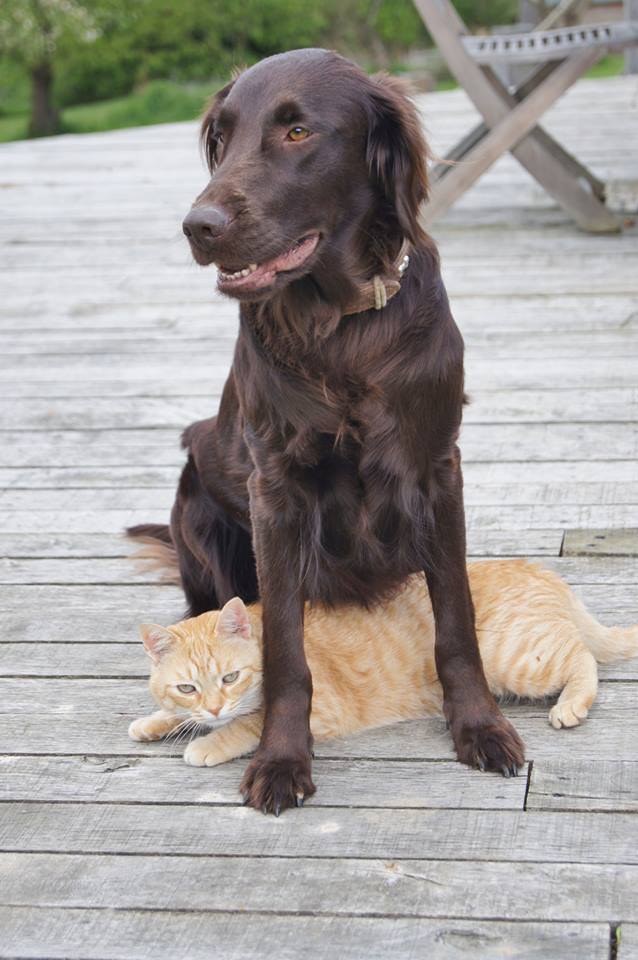
"You touch my mate and I'll have ya."
“You touch my mate and I’ll have ya.”

Let me draw out the thread that I saw in all these items.

That is that the 1% that Rebecca Solnit wrote about are incredibly powerful people, with access to more power, money and control than one can even imagine.  But what that 1% cannot control is the growing consciousness, the growing mindfulness and awareness of millions of people across this planet that something as simple and pure and beautiful as unconditional love will conquer all.

The most fundamental lesson that we can learn from dogs!

Looking at stress from a different perspective

Who doesn’t get stressed out!  Maybe not such an issue?

I have in my bookshelf a book called The Anxiety Epidemic.  On the back cover it explains this:

The Pain & Stress Center was founded in 1979, but the dream started long before that.  The goal is to help individuals realize their true potential and to support and conduct research in the areas of man’s greatest needs – natural alternatives.

I had seen the book in a second-hand bookshop and paid $1.99 for it!

Clearly I have some interest in the topic and like many others around me know that certain situations cause me stress.

Thus when recently there was a TED talk on the topic of ‘How to make stress your friend’ it seemed like a worthwhile thing to watch.  I was not wrong!

Published on Sep 4, 2013

Stress. It makes your heart pound, your breathing quicken and your forehead sweat. But while stress has been made into a public health enemy, new research suggests that stress may only be bad for you if you believe that to be the case. Psychologist Kelly McGonigal urges us to see stress as a positive, and introduces us to an unsung mechanism for stress reduction: reaching out to others.

It was an easy matter to find Kelly McGonigal’s website and discover a mine of advice and other good stuff.  For example, this:

Watch: How to Think Like a Psychologist

My fall 2011 Stanford University course “How to Think Like a Psychologist” is now available as a series of free, downloadable videos through iTunes university.

In this fun course, I invited my favorite psychology and neuroscience researchers at Stanford to talk about their work and what it means for everyday life and real-world problems. Each class starts with a 45-min lecture by the guest speaker, followed by about 30 minutes of Q&A from myself and course participants. I had a great time grilling these amazing scientists about everything from politics to education, parenting, shopping, and the scientific process. You’ll even hear a few personal stories they’ve never shared in public before!

Then there was this:

Learn: Mindfulness of Breathing.

I’m frequently asked questions about how to get started meditating, what is the best meditation for beginners, what is the best meditation for reducing stress (or training willpower, or cultivating self-compassion, or developing focus, etc.). Below is my favorite meditation for all these intentions.

You can listen to (or download) a version of these instructions and a 15-min guided practice here.

Mindfulness of Breathing

The intention of this practice is to turn your attention to the breath, notice when the mind wanders, and bring your attention back to the breath.

This meditation cultivates self-awareness, mindfulness, and the ability to make conscious choices about what you are doing. It also is good practice in not following every impulse or habit.

There are a few different ways to focus on the breath; choose the one that feels right to you.

There’s more to read here.

Of course, I couldn’t sign off without offering yet another thing to learn from dogs- relaxation.

Cleo dealing with stress!

So have a great week ahead: With or without stress!

Healing our planet, person by person.

Jon Lavin reflects on the Four Noble Truths of Buddhism.

Last week, I republished a number of Jon’s posts from way back and was delighted at how many of you enjoyed his writings.  Jon and his family are taking a well-earned vacation which clearly includes reading posts on Learning from Dogs: Poor soul!  This was made clear from an email Jon sent me yesterday afternoon.

Jon had read the essay from George Monbiot that was published three days ago under my post title of Dichlorodiphenyltrichloroethane (DDT) all over again?  So hopefully, this introduction puts Jon’s email into proper context.  The subject title of Jon’s email was DDT 2.0.

oooOOOooo

Hi Paul!

Hope you guys are well on your lovely farm! We’re in sunny Falmouth for the week staying in our Ben’s student flat slowly working our way through his food supplies.

In my current chilled state, I read your reproduced article and I got to thinking; so you might pick out the odd bit of coherence in these ramblings!

I am reminded of David Hawkins’ ‘Scale of Human Consciousness’. If 80 percent of us are below the level of Integrity, and therefore truth, and the average level of integrity in business is below this level, it is no wonder that money comes before the greater good. Think of the banking crisis as a good example.

I guess we move forward at the speed of the slowest. We certainly seem to learn through the pain and suffering of our own making. I can understand now why this world is perfect for our development and advancement. We are exposed to every opportunity to better ourselves and not everyone has enough of what it takes to hit the mark. We just have to keep going until we get it, even if this means pain and suffering.

The Four Noble Truths of Buddhism talk about suffering and how we create it.The First Noble Truth states that life is suffering. The 2nd Noble Truth talks about our craving for things: money, possessions, etc.; cravings that create suffering. The Third Noble Truth talks of a cure and a way out of hopelessness and suffering and finally, the Fourth Noble Truth gives guidance on walking the path out of suffering.

So, although your article is awful, it is to be expected that we keep being attracted to these sorts of schemes and are attracted to money. We have to learn through pain and suffering until we get it right.

People frequently ask, “What can I do to help?”. Unfortunately or fortunately, there is a way out! The best way to help is to work on ourselves! Sounds a bit silly but by working and developing ourselves we raise the overall level of human consciousness. This means that when companies and individuals attempt to do things that are not integrous, there is less likelihood of them being successful.

Heady stuff really and I wouldn’t describe myself as Buddhist but I have to admit there seems to be some truth in this.

I hope some of this makes sense.

Warm wishes,

Jon.

oooOOOooo

Well, of course it makes sense; perfect sense!  Reminds me of the old adage that one cannot truly help another without first helping oneself.

Thus what I read in Jon’s words is that by living a life of integrity we help bring up the overall level of human consciousness, right across our planet.  Let me stay with that for a moment longer.  Jon mentioned David Hawkins’ ‘Scale of Human Consciousness’.  It was included in a post in January 2012 The evolution of the domestic dog but to save you going there, here it is again:

Map of Consciousness, copyright Dr. David Hawkins

One might argue that the column headed ‘LEVEL’ is a pseudonym for ‘Behaviour’. In other words, those behaviours from Courage and up represent integrity.

So when Jon writes, “The best way to help is to work on ourselves!“, what he is saying that by consciously abandoning levels below 200 we open ourselves to being a force for good beyond ourselves.  Just run your eye down the emotions from Ineffable to Affirmation and reflect on how others that offer those emotions affect us in such a positive and inspiring way.  Indeed, no better than reflecting on how a dog makes us feel when offering unconditional love!

Of course it’s not easy! Nothing great ever is. There is so much around us that we can hate (score 150), so much to create anxiety (score 100), and so many examples of despair (score 50).

But remember the beginning of integrity is 200.

Which is why trust (score 250) and optimism (score 310) and forgiveness (score 350) and especially love (score 500) are truly the tools of healing our planet.

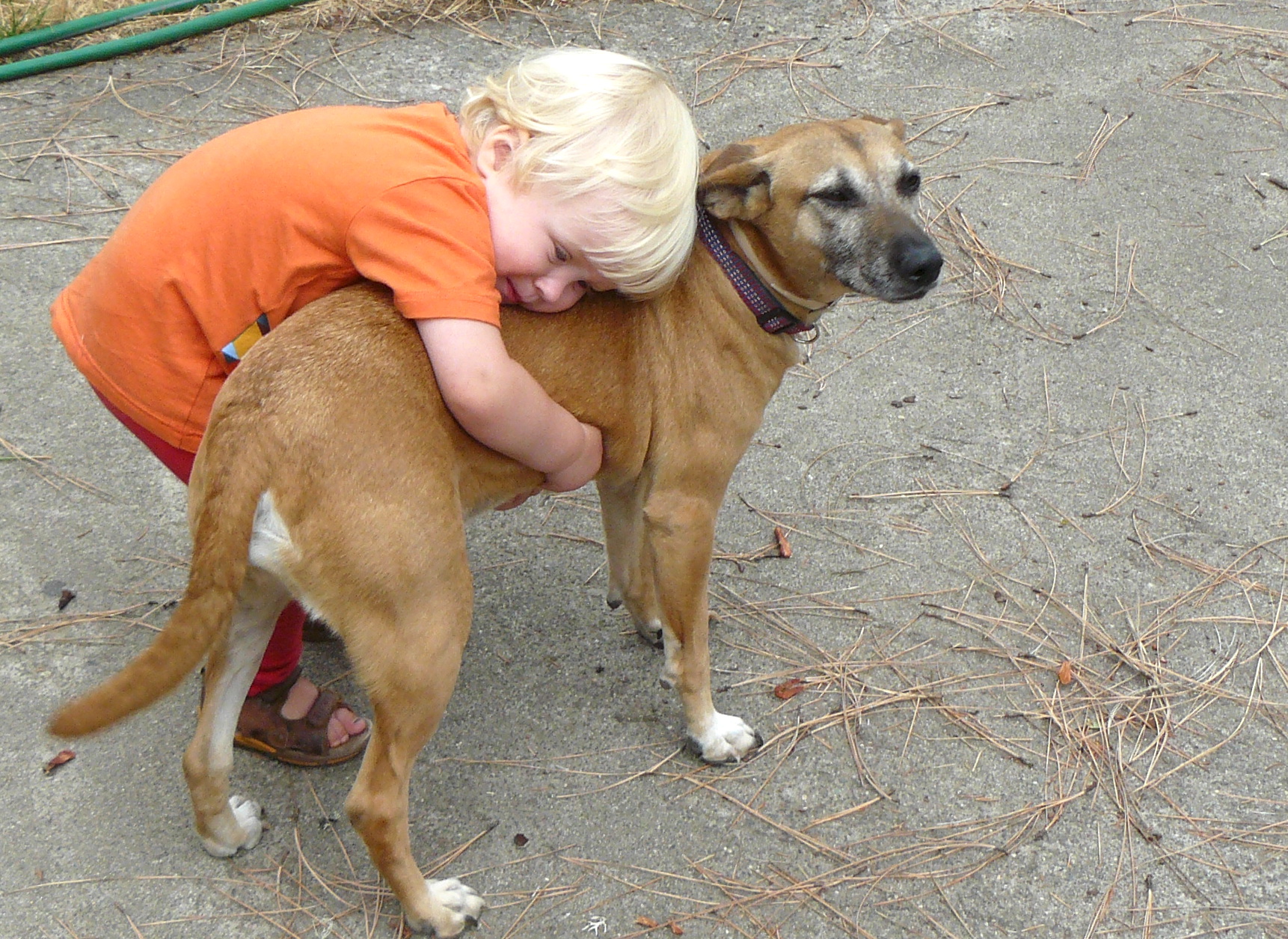
You can start right now by hugging a dog (dogs score 210!).

Love and Trust - Grandson Morten hugging Dhalia.
Love and Trust – Grandson Morten hugging Dhalia.

Thank you, Jon.

Some content on this page was disabled on August 23, 2017 as a result of a DMCA takedown notice from Susan Hawkins. You can learn more about the DMCA here:

https://wordpress.com/support/copyright-and-the-dmca/

Overload and rescue!

Starting to look like a bit of a theme!

Over the last few weeks there have been a number of posts touching on the role of meditation and the huge potential benefits of taking a little time out each day.  For those new to Learning from Dogs or to this particular thread, here are links to previous posts.

On the 19th June, there was a post called Maybe home is found in our quietness. In that post there were three references to the power of meditation, that is in a curative sense.  Here’s a small extract from that post:

A few weeks ago when meeting our local doctor for the first time since we moved to Oregon, I had grumbled about bouts of terrible short-term memory recall and more or less had shrugged my shoulders in resignation that there was nothing one could do: it was just part of getting older, I guessed!

“On the contrary”, responded Dr. Hurd, continuing, “There’s growing evidence that our information-crowded lives: cell phones; email; constant TV; constant news, is pumping too much for our brains to manage.”

Dr. Hurd continued, “Think about it! Our brains have to process every single sensory stimulus. The research is suggesting that our brains are being over-loaded and then the brain just dumps the excess data. If that is the case, and the evidence is pointing in that direction, then try thirty minutes of meditation each day; give your brain a chance to rest.”

Just hang on to what Dr. Hurd said, “There’s growing evidence that our information-crowded lives: cell phones; email; constant TV; constant news, is pumping too much for our brains to manage.

The second post was on the 25th June,  Unlocking the inner parts of our brain.  It included this:

The second was a recent science programme on the BBC under the Horizon series. The programme was called,The Truth About Personality.

…….

Within the programme came the astounding fact that even ten minutes a day meditation can help the brain achieve a more balanced personality (balance in terms of not being overly negative in one’s thoughts).

You will not have failed to note, “even ten minutes a day meditation can help the brain achieve a more balanced personality“.

So let me move on!

Not sure how I came across the website Natural health news but on July 03, 2013, Zach Miller wrote a piece under the title of Information Fatigue Syndrome (IFS): What it is and how it affects you.  I’m hoping it’s OK to republished Zach Miller’s article.  Because it so perfectly supports those referred posts.

oooOOOooo

Information Fatigue Syndrome (IFS): What it is and how it affects you

Wednesday, July 03, 2013 by: Zach C. Miller

(NaturalNews) These days, we’re living in an increasingly connected, electronic world. Every day we use the internet, computers, cell phones, Blackberries, and Bluetooth devices. We read newspapers, watch TV and listen to internet radio (and even read ads on billboards as we drive down the freeway). While all our media and technology is convenient and useful (we’re always just an internet search away from the answer to any question that pops into our heads, especially if our cellular phone has mobile internet), being connected so much results in something called “Information Overload”, a term coined by futurist Alvin Toffler back in 1970. The term refers to our inability to absorb and process all the information we’re exposed to, and this information is literally everywhere these days.

The problem defined

Information Overload, or “Information Fatigue Syndrome (IFS),” occurs when we over-expose ourselves to media, technology and information. Our brains have trouble keeping up with everything that we are feeding them, and the distorted-spin EMF energy fields we’re being exposed to don’t help the case (generated by cell phones and wi-fi). We end up having headaches and being exhausted and end up making mistakes and wrong decisions. The main point is, when exposed to too much information and technology, we tend to shut down.

Causes

Information Overload is now commonplace around the world, at work, at home and during leisure time. Some of the causes include:

– Widespread and easy access to the Internet

– Social networking sites such as Facebook and Twitter

– Cheap and accessible use of cell phones, texting, and mobile internet

– Online and offline news, media, and advertising: TV, newspapers, magazines, and billboards

Simple solutions

The only upside to these problems is that they have a relatively simple solution; take a day off occasionally from being connected to any media and the internet, and set limits on your internet in terms of hours per day. These restrictions may sound scary for us web-addicted techno-humans, but it’s absolutely imperative if we want to regain control of our energy levels, mental health, and life in general in an increasingly information-infused modern era.

Take a full day off from all media and electronic devices (including cell phones; this may be nearly impossible for some), and go out into nature and pursue outdoor interests. If you feel better, which you likely will, take a day off occasionally whenever you need one. If you’d rather a set schedule, take one day per week and set it aside as a internet-free day. If this is too often, make it bi-monthly. Pick a schedule that fits in with work or school. A key point being that even good things need to be used in moderation, including useful techo-goodies as the internet, Facebook, and Twitter updates.

Sources for this article include:

http://www.wnd.com

http://www.infogineering.net/understanding-information-overload.htm

http://psychcentral.com

https://en.wikipedia.org/wiki/Electromagnetic_field

About the author:
Zach C. Miller was raised from an early age to believe in the power and value of healthy-conscious living. He later found in himself a talent for writing, and it only made sense to put two & two together! He has written and published articles about health & wellness and other topics on ehow.com and here on NaturalNews. He holds a Bachelor’s degree in Applied Science.

oooOOOooo

The problem, I’m sure, is that the vast majority of readers of this post will give a sage nod because they intuitively  agree and …… do nothing about it!  Trust me, I’m just as guilty.  My short-term memory is really crap and it feeds my worry that this may be early stage dementia. (My sister’s recent death from dementia doesn’t help!)

So even though my doctor spoke about the benefits of meditation, even though there have been other articles recently posted on this blog, even though I would, supposedly, do anything to arrest or reverse my memory problems, guess what; I’m pathetic!  Kept up taking 30 minutes away from everything for a week and then the good intentions crumbled.

If this verbal slap across my wrists is resonating out there, dear reader, then that’s good.  Because, I am going to try harder!  From today!

So how to close this! Obviously with more advice about meditating! None better than from Leo Babauta over on Zen Habits.  It’s called How to Meditate Daily.  Starts thus:

The habit of meditation is one of the most powerful things I’ve ever learned.

Amazingly, it’s also one of the most simple habits to do — you can do it anywhere, any time, and it will always have immediate benefits.

How many habits can you say that about?

While many people think of meditation as something you might do with a teacher, in a Zen Center, it can be as simple as paying attention to your breath while sitting in your car or on the train, or while sitting at the coffee shop or in your office, or while walking or showering.

It can take just one or two minutes if you’re busy. There’s no excuse for not doing it, when you simplify the meditation habit.

So, go on, take a couple of minutes to read the rest of the article!

And then realise there’s yet another wonderful lesson we learn from dogs – chilling out!

Cleo and Sweeny - just chilling out!
Sweeny and Cleo – just chilling out!

Be more dog!

You are going to love this!

Sent to me by dear friend, Neil, from my Devon days.

Yes, it’s an advert but so what – it’s just a gorgeous short film.

Plus you are going to love this!

Sent to me by dear Cynthia, wife of Dan Gomez.

Opens up a whole range of potential names!