A cranky older woman “in her senior years” was arrested for shoplifting at a grocery store. She gave everyone a hard time, from the store manager to the security guard to the arresting officer who took her away. She complained and criticized everything and everyone throughout the process.
When she appeared before the judge, the judge asked her what she had stolen from the store.
The lady defiantly replied, “Just a stupid can of peaches you old fool.”
The judge then asked why she had done it.
She replied, “I was hungry and forgot to bring any cash to the store.”
The judge asked how many peaches were in the can.
She replied in a nasty tone, “Nine! But why do you care about that?”
The judge answered patiently, “Well, ma’am, because I’m going to give you nine days in jail — one day for each peach.”
As the judge was about to drop his gavel, the lady’s long-suffering husband raised his hand slowly and asked if he might speak.
(Post alert! This is a longish post so if you are interested in diet, nutrition and health and are short on time just now then bookmark it for a better time for you. For I am of the opinion that this post will be of great value to you and many others!)
Regular readers of this place (you poor people!!) will be aware that via a series of lucky chances, or the fickle finger of fate as I like to call it, not being a religious person, I made contact with Justina, a London-based nutritionist, following contacting Colin Potter.
I wrote about that connection in more detail in my post The Power of Good Food that was published on the 16th January. Here’s a snippet from that post:
Richard lives with his good lady, Julie, in Minety, a village in North Wiltshire. He and I go back many, many years and we have been close friends from the day that we first met. Richard was diagnosed with early-stage Parkinson’s Disease (PD) the same year and month as my Jeannie: December, 2015.
Last New Year’s Eve Richard and Julie were at a local party and the subject of PD came up. Richard subsequently told me that he was speaking to a fellow party guest who said that he was, in turn, an acquaintance of a Colin Potter. He went to add that Colin had also been diagnosed with PD but had decided not to ‘give in’ to the diagnosis but undertake comprehensive research into the causes and whether it was possible to go into remission. He later launched a website Fight Parkinsons.
We then reached out to Colin and very quickly subscribed to his Fight-Parkinson’s site. Colin’s message was that it was all about diet! Here’s that message in a short video from Colin.
That, in turn, resulted in both Jean and me adding to our already reasonably healthy diet a significant number of additional vitamins and supplements; the reasons for which will be spelt out later on. Plus more fruit, eggs, cheese but most definitely coming off all grains, sugar, carbohydrate and processed foods. Or in Colin’s words:
The right diet
This is the high fat/ low carb diet which is covered in the Fight-Parkinsons Recovery Eating Plan on my website.
I follow a diet that excludes all grains, sugar, carbohydrate and processed foods, and is rich in fats and cholesterol-laden foods. So, in addition to organic vegetables, I eat plenty of eggs, butter, dairy (full fat), fish and a little meat.
This raises the question of cholesterol and the so-called link to heart disease.THIS ARTICLE should lay this misguided information to rest and inform you of the fraud that has been practised upon us over the past 60 years (the same period during which chronic disease, in all its forms, has rocketed).
I consume foods rich in antioxidants and avoid inflammatory foods.
Supplementation
It is vital that we get the required minerals, vitamins and amino acids on a daily basis, and THIS VIDEOof an interview with Dr Joel Wallach explains why.
I have taken numerous supplements over the past few years, often leading to me taking a small mountain of capsules each day.
So, to underline that “small mountain” phrase here is a photograph of what Jeannie and yours truly are now taking by way of vitamins and supplements.
Plus, all the other organic fruit and vegetables and nutrients.
Returning to Justina.
She has been very helpful in bringing us up to speed on the efficacy of the the required minerals, vitamins and amino acids we need on a daily basis. Or to put it more specifically on the efficacy of the products that one can purchase from Youngevity. She said that the Wellness 90 Pak was effective albeit one had to commit to taking it for a period of at least 90 days (hence the name) as the body required that time to ‘adjust’ if that’s the correct term. Here’s a description of the purpose of that ‘Wellness Pak’ from their website.
The Wellness 90 Pak™ delivers the nutritional support needed for individuals following the Wellness 90 Program. This program focuses on a diet rich in fruits, vegetables, whole grains, legumes, nuts, olive oil, and other healthy options, that helps improve your overall nutrition. This Pak™ includes: (1) TMR Total Meal Replacement-Vanilla canister, (1) Slender FX™ Sweet EZE™, (1) TrueDetox Tea™ box (30 packets), and (1) Slender FX™ Rev™ bottle. See individual products for details.
Justina then mentioned about the online food resource site known as Food Matters TV (FMTV). Not a site we had come across before but, again, once we signed up to the site, a subscription site, we were blown away by what was available. Especially a documentary called Food Matters. Here’s the trailer to that documentary (that has been viewed nearly 1.8 million times!).
As Justina pointed out the documentary expresses the same critically important message as Dr. Joel Wallach is promoting: We Are What We Eat! But there is no connection between the two.
The bottom line is that Jean and I are going to add the Wellness 90 Pak to our diets for the next 90 days and you can be sure that how it goes will be reported here.
What about our dear, dear dogs?
I asked Justina the question knowing that I would be writing and publishing this post and this is what she said:
I don’t have dogs, but my friend has two golden retrievers and one of them didn’t or couldn’t lift his tail.
She went to see conventional vet and they said he needed a surgery that costs thousands and there’s still possibility of him being paralyzed. So she found holistic vet and wanted to get their opinion.
She was really impressed as they made a special food plan for him and after 3 month he lifts his tale half way! In Chinese medicine he was called a ‘hot dog’ and needed certain nutrients daily for his condition and that was natural just majority raw food that humans eat too!
More on good food for dogs coming along tomorrow.
Hope this was interesting to you!
Finally, please understand that I do not offer advice and nothing on any website, including the blog site Learning from Dogs, email or any other communication is intended to treat, diagnose, prevent or cure any disease. It is not a substitute for consulting your doctor. You should consult a doctor for diagnosis of conditions, before beginning any diet, exercise or supplementation or if you suspect you have any health issue. You should not stop medication without consulting your doctor.
Both Emily’s previous guest posts were received very well by you. There was Four-legged Gardening, published here last October 24th, and Return To The Movies that came out on the 4th of that same month.
Now Emily writes about something that is never far away from us these days, irrespective of age: depression. And the strongly positive role of pets. Great guest post but first let me re-introduce you to Emily.
Emily Ridgewell is an arts professional and a pet enthusiast from sunny LA. Emily has a creative energy and an aesthetic sense of living, where everything beautiful is worth sharing. She loves her yorkie Olivia and writes original and fun articles on ways to learn and improve your pet-best friend’s life. She finds exciting new things to explore and experience! Don’t forget to connect with her on Twitter: @ridgewell_j
ooOOoo
The Role of Pets in Depression and Bullying in Kids
Kids today are faced with more stress and worry than ever, and childhood depression is on the rise because of it. Recent studies have shown almost 10% of children and adolescents experience depression. One of the main sources of depression among children is being the victim of bullying. Unfortunately, bullying doesn’t discriminate and can happen to boys and girls of any ethnic, racial, religious, or socio-economic background. Lasting effects of being bullied include having low self-esteem and negative self-image, unhappiness at school and difficulty focusing, and trouble establishing healthy relationships with peers.
Interestingly enough, these side effects are found in the bullies as well as their victims. Both are more likely to experience depressive symptoms than those who have never been involved in bullying. They also are more likely to have coexisting mental health issues, such as Oppositional Defiance Disorder, Attention Deficit Disorder, and Clinical Depression and Anxiety. If left unaddressed, these feeling of depression and low self-worth can lead to chronic levels of mental health issues, isolation, and even suicidal ideation.
The first line of defense for parents is arming themselves with strategies to help their children cope with feelings of depression and address them when they first appear. First and foremost, they need to recognize the signs of depression. Then they need to put their heads together and come up with a plan to help their child combat it. Use resources such as your pediatrician, teachers, and school counselors to help develop a long term plan. In the meantime, one of the most effective and immediate ways to help them at home is by getting a pet.
Pets have several benefits that help combat depression and help your child feel happier, more whole, and well connected. First of all, they offer uncomplicated, unconditional love. They don’t say hurtful things, get angry over petty misunderstandings, or hold grudges. They simply love and express joy every time they see their owners. They also offer constant companionship. Having a pet means never having to feel alone or isolated. Additionally, the act of petting a dog or cat (or any other pet, for that matter) offers physical touch and provides comfort, creating a soothing effect and releasing feel-good endorphins in the brain. In turn, this reduces stress and anxiety and helps your child feel calmer and more emotionally balanced.
Further, having a pet means your child will have an added responsibility. Contrary to what you may originally think, a new responsibility provides a distraction and offers a positive focus instead of what’s bothering him.. Plus, he’ll feel good about himself for taking care of something that needs him. He will feel capable, and this bolsters self-esteem and causes a ripple effect in all aspects of her life. It’s a win-win situation.
If you opt for a dog, part of the responsibilities will be walking it. This earns another point in the fight against depression for a couple of reasons. It will make your child be physically active, a well-known tool for negating depressive symptoms. It also is an excellent way to increase social interaction. People are always wanting to touch a puppy, and this leads to a natural conversation when they ask permission. Even if your child is anxious about talking to new people, dogs and pets are automatic ice breakers. Talking about their pet can easily guide the conversation with very little pressure on your child to generate small talk. If they are engaging in conversation, they are less likely to feel isolated and will benefit mentally from the interaction.
Of course, pet ownership isn’t something you should jump into lightly. Be sure to choose the right pet for your child and teach him the right way to handle and care for it. With care and supervision, your child and her pet will become fast friends in no time. While there is no quick fix for depression, owning a pet has multiple benefits which will show their impact quickly. Having an unconditional friend to love can work wonders for building confidence and self-esteem and combatting the negative effects of bullying and depression.
ooOOoo
Emily is spot on. Pets, especially dogs, are the epitome of loving us humans unconditionally and that connection is precious beyond words. Being able to hug or cuddle a dog, frequently as an ad-hoc impulse, is about as comforting a place that us humans, well certainly this human, can get.
Sitting in front of the television of an evening and having a cat snuggle up next to one and start purring is a very close second-best!
Sometime over the next few days I will write a post about an amazing connection that Jean made, via Richard in England, with Colin Potter. He is the founder of the site Fight Parkinson’s.
It is mentioned as an introduction to today’s post because Colin stresses the critical importance of the right diet for us humans.
Richard lives with his good lady, Julie, in Minety, a village in North Wiltshire. He and I go back many, many years and we have been close friends from the day that we first met. Richard was diagnosed with early-stage Parkinson’s Disease (PD) the same year and month as my Jeannie: December, 2015.
Last New Year’s Eve Richard and Julie were at a local party and the subject of PD came up. Richard subsequently told me that he was speaking to a fellow party guest who said that he was, in turn, an acquaintance of a Colin Potter. He went to add that Colin had also been diagnosed with PD but had decided not to ‘give in’ to the diagnosis but undertake comprehensive research into the causes and whether it was possible to go into remission. He later launched a website Fight Parkinsons.
This is Colin’s video that appears on the home page of Fight Parkinson’s.
Parkinson’s RecoveryThis is where you find the answers to the causes of Parkinson’s and the actions you can take which may bring about a recovery.
There are actions that I’ve taken which have required guidance from a doctor (of Functional Medicine) or special practitioner. Other steps, such as changing to a better diet, I have done independently based upon my research.
Nowadays, there are so many ways that we fall foul of nature and the kind of life we are built to lead. Industrialisation and technology expose our bodies to so much stress and toxic substances, it’s no wonder that chronic disease arises. It also means that there are many things to put right.
This has been a journey of learning over several years and, with subsequent knowledge, there are some things I did at the start that I would do differently now. Nevertheless, I did them and can’t turn the clock back.
I share this with you because the chances are that you know someone who knows someone with PD. The information on the Fight Parkinson’s website is too important not to be shared as far and wide as possible.
The subscription price for signing up to all the information is just $5/GBP3.60 per month. Both Jeannie and Richard are subscribers.
John, he of the blog site The Superstitious Naked Ape, recently sent me this appeal. I am very pleased to republish it here.
ooOOoo
Hello,
When I started Mercy For Animals nearly 20 years ago, I was a kid from the Midwest with a big dream and an unwavering determination to help animals. Building MFA was not easy. Our first meeting had three attendees. We had no money. But as we grew, I surrounded myself with incredible supporters like you, passionate volunteers, and committed colleagues.
MFA is the most meaningful endeavor of my life so far. My journey has been moving and inspiring. Working alongside such brilliant colleagues and implementing our shared vision of a kinder world for farmed animals has been an honor. Together, we have built MFA into the powerful organization it is today—one that achieves groundbreaking successes as the result of teamwork.
As MFA has grown in the past few years, I’ve found the personal and creative space to think about how I can best continue to shape our movement—and help more animals. This space led me to launch Circle V, the first vegan animal rights music festival, and to conceptualize and co-found The Good Food Institute, an organization that supports innovation in food and science to produce alternatives that are superior to animal products.
I’ve determined that I can be most effective right now by helping launch exciting new companies and initiatives. This means remaining in this creative, big-picture space and handing over much of the day-to-day operations at MFA to other skilled and respected leaders within the organization.
I’m proud to announce that our executive vice president, Matt Rice, has been promoted to president of MFA. I will continue to serve MFA as chair of the board of directors and will remain intimately involved in strategic decisions as the organization’s founder.
For more than 15 years, Matt Rice has been a central leader in the animal protection movement. He shares my vision for MFA and has implemented it with determination, tireless dedication, and compassion for animals and people.
Matt began in MFA’s New York office carrying out grassroots outreach before being promoted to director of operations. He later moved to Los Angeles to take over as director of investigations, working closely with our brave undercover investigators. Matt has overseen many of MFA’s biggest cases, most successful campaigns, and other victories. As executive vice president, he has overseen all departments.
Click below to watch a video about Matt and MFA’s priorities for 2018.
Matt is steadfast in his commitment to MFA. He is an ideal team player with sound judgment—a true powerhouse for animals. I trust him completely.
Matt is already working with other senior MFA leaders to implement new systems and structures, and we will launch compelling new campaigns this year. Matt is supported by a team of some of the best activists I’ve ever met.
I know that MFA will continue to break barriers and exceed expectations worldwide. Much remains to be done for animals, but we’ve proved time and again that for a movement built on love and persistence, no company is too powerful, no factory farm too big, and no government too mighty.
I’ve never been more optimistic about the future of MFA and our movement. Our greatest victories are still ahead.
Nathan Runkle
Founder
ooOOoo
Let me add that there is much information about the charity on WikiPedia, from which I quote a little:
Mercy For Animals (MFA) is an international non-profit organization dedicated to preventing cruelty to farmed animals and promoting compassionate food choices and policies, founded in October 1999. Nathan Runkle is the group’s executive director and founder.[1] Focusing primarily on advocacy on behalf of farmed animals, MFA runs a number of campaigns that aim to educate the public on animal protection issues and to encourage them to adopt a vegan diet.[2] It has engaged in several undercover investigations, primarily of egg farms, and has produced television commercials showing the treatment of animals in slaughterhouses and factory farms.[3] MFA is headquartered in Los Angeles.
Sometime over the next few days I will write a post about an amazing connection that Jean made, via Richard in England, with Colin Potter. He is the founder of the site Fight Parkinson’s.
It is mentioned as an introduction to today’s post because Colin stresses the critical importance of the right diet for us humans.
But now I want to go straight to a guest post sent to me by Kathreen Miller on the topic of diet for our dogs.
ooOOoo
Is Organic Food Really Good For Your Dog To Eat?
by Kathreen Miller
If you are searching for information related to organic food for dogs, then you’re probably a firm believer in animal rights and how food affects their health. . Maybe you are also considering how your dog will follow a vegan diet. Or how an organic diet can help improve your pet’s health?
You must understand that dogs require protein-rich foods. Therefore, you should look for balanced and high-quality food so that your pet’s health is not deteriorated. A low intake of protein in your pet could result in anemia which again causes joint pain in dogs.
Pet Bounce is one of the best dog pain medications to allefviate the joint pain in pet dogs.
Therefore, read this article to get information about organic food for a dog and how to make it a part of their regular diet. You might have some questions in your mind. You might think how can you make your dog eat organic food? Is it good for dogs? Before you start such kind of diet for your pet you need to do some research.
Consult a veterinary doctor and speak to him/her about the deficiency and advantage of an organic diet. You need to understand that the stomach of dogs is fragile. An instant change in the diet of a dog makes them suffer from diarrhea or bad breath. The change of diet in your dog should be slow.
If you are starting with organic food for your pet, then initially you need to give them organic food once a week. This will make your dog habitual and accustomed to organic food.
During this time period, you need to ensure that your dog gets a mix of normal as well as organic diet. Then after a considerable period of time, slowly increase the organic food proportion, and finally making it one hundred percent.
Besides, if you are considering about giving your dog the homemade diet then you must know which vegetables and fruits aren’t consumed by your dog. This is of utmost importance as a few vegetables can be toxic to your dog’s digestion. Visit a professional canine nutritionist to receive expert guidance. Also take your dog for health checkups.
This is to make sure that your dog will eat their new food and does not suffer from any diseases.
Why is Organic Food Important for Your Dog?
It is correct, that organic food for dogs is created with natural methods and does not contain any type of additives, preservatives, and artificial colorants. Also, the organic food should be grown in a completely natural manner. But remember, that all organic food brands won’t be entirely free from the preservatives.
Is Organic food Good for Dog’s Health?
As long as you obey the advice of your veterinary doctor, organic food is very good for the health of your dog. If you satisfy the requirements of your dogs, and their health is good, then we can have the idea that organic diet is good for the dogs. There are many types of organic foods. But what makes them bad or good is the range to which they satisfy the animal requirements for the nutrients.
Also, ensure that dogs must get a regular and high intake of protein and they never eat the excess quantity of corn. Since for dogs, corns are not easy to digest.
ooOOoo
I am delighted to add a little about Kathreen’s background.
Kathreen Miller is a pet health expert. She lives in Chicago with her daughter and a dog named “Buddy”. She regularly contributes her write ups to pet health related websites and blogs. In her Free time, she loves listening to music, watching TV and traveling.
On her Pet Bounce site there is an informative article about joint pain in dogs.
Thanks Kathreen for composing this guest post.
I have taken the liberty of grabbing a copy of one of the photos from the Pet Bounce site.
We must do all we can to keep our dogs fit and healthy for as many years as possible!
Last Wednesday I was signed off in terms of being over my medical challenge and the good doctor said I was clear to return to driving; I drove home that afternoon from Eugene to Merlin.
I wanted to offer you good people a sense of what being home, more or less compus mentus , feels like.
A few weeks ago I reported my bike accident. I published the post here: https://learningfromdogs.com/2017/11/24/dont-try-home/
In that post I spoke that on November 22nd I had a bike accident that knocked me out for nearly 8 minutes. I was taken to our local hospital, they did a CAT scan, and declared that there was no serious harm apart from some severe bruising.
Then about 2 weeks ago I noticed I was a little strange. Like I couldn’t write words and other strange behaviors. Jean and I thought it was just part of the healing process. But Alex, my son, became very worried because I was acting so strange. Then friend of 40 years, Dan Gomez, insisted on me going back to the local hospital. I did return last Sunday the 24th. Thank goodness for he saved my life.
That hospital in Grants Pass found more bleeding in my brain, albeit very slow bleeding, and transferred urgently me to the regional trauma center at Eugene. I then had two sub-durnal (sp?) operations overnight before being put onto the ICU ward. The lead surgeon explained that I was within 24 hours of dying! As in if I had not gone back to hospital.
I am now on the Neurology ward at the Sacred Heart Medical Center in Eugene, rapidly regaining my strength and hoping to go home over the weekend. Fingers crossed the neurological damage will not be too bad.
So yet another example of always listening to one’s inner mind.
I must add that the care and attention, even love, shown to me by everyone at the hospital has been wonderful beyond imagination! Thank you all! Continue reading “A very lucky day!”→
Hoping to bring a dog into your home? Some people are happy to adopt any dog who’s at the shelter. And some opt to follow the pack and choose one of the most popular breeds in America. But others want to do their research and make sure they choose the right dog. Some dog breeds are easier to own than others, especially for novice dog parents. To find the easiest dog breeds to own, we took a look at a variety of important characteristics. And you might be surprised by the traits that matter most.
You might think you want a smart dog. But highly intelligent dogs aren’t always the easiest to train because trainability is more about a dog’s willingness to follow instructions than his ability to understand them. And you might assume an active dog will be the simplest to keep healthy. But a dog with a lower energy level and no genetic predisposition to disease will actually be easier to handle. Plus, choosing a dog with an easygoing temperament — and minimal grooming needs — will go a long way toward keeping you sane.
Ready to find the perfect dog? Check out 21 of the easiest dog breeds to own.
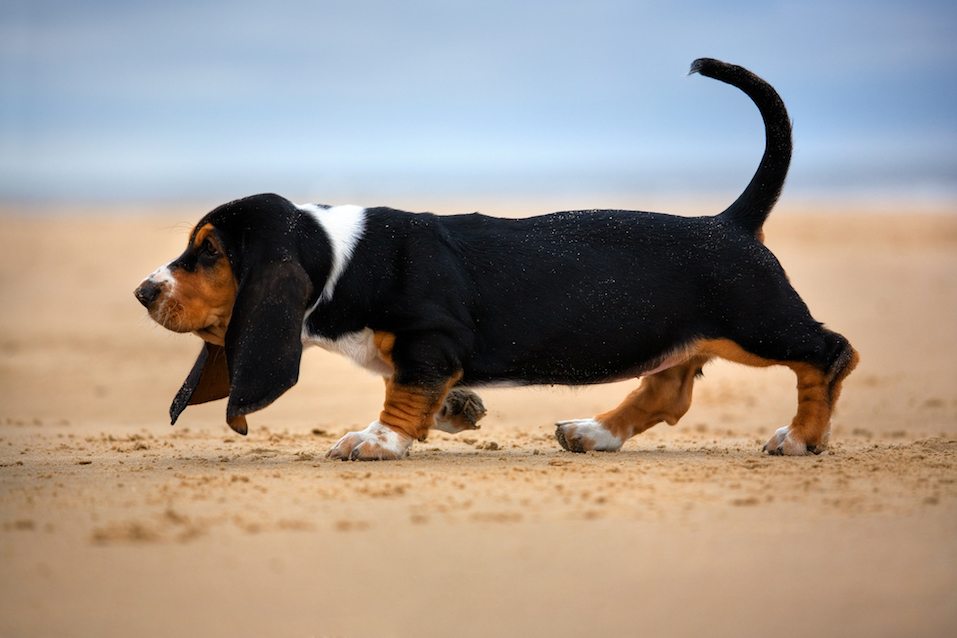
1. Basset hound
Basset puppy | iStock.com/imants
Want a low-key dog? You might just love the basset hound, a dog breed the American Kennel Club characterizes as “easygoing, laid-back, and even a bit lazy.” These medium-sized dogs aren’t very active. (They do still need regular walks to stay healthy though.) Most dog owners won’t put the basset hound’s hunting prowess to the test. But they will appreciate the breed’s extreme patience with children. Plus, the AKC reports these dogs are “easy to train, and despite their plodding pace, they do well at various dog sports.”
Because the basset hound is prone to obesity, you’ll want to make a point of taking your dog on daily walks. A basset hound is an extreme people-pleaser, and he’ll love to bond with you in obedience classes. These dogs have a short coat, which does shed. But they need minimal grooming. And generally, basset hounds are a healthy breed.
2. Beagle
Small dog sitting on the wooden floor. Beagle puppy
Some of the easiest dog breeds to own are the ones that are friendly and outgoing, rather than hyper-intelligent. The beagle is a great example. The breed’s AKC profile characterizes these dogs as “merry,” “friendly,” and “curious.” The organization promises, “Beagles are loving and lovable, happy, easygoing, and companionable.” They are very active little dogs who need plenty of exercise. But they love to play, and a beagle will likely have you laughing constantly with his antics.
VetStreet reports the beagle is one of the most outgoing, approachable, and people-pleasing breeds. “The beagle is among the top 10 most popular breeds for good reason: He has a bigger-than-life personality and a merry nature that make him a warm and cheerful companion.”
Plus, the beagle is generally a very healthy dog breed. And somewhat controversially, the beagle’s easygoing personality — and the breed’s freedom from genetic diseases — explains why researchers choose beagles for animal testing.
3. Bichon frisé
Another dog breed to consider if you want a friendly and easygoing pup? The bichon frisé. This small dog is a great companion both for adults and older children. He’s happy and curious. And he’s both “playful” and “peppy,” according to the AKC. The organization reports that bichons are “bundles of energy, so they’ll need daily play sessions and walks.” They make great family pets. And they are easy to train because they love not only to perform, but also to please their people.
PetWave describes bichon frisés as “little puffs of personality.” This dog breed loves people. And a bichon wouldn’t mind going everywhere with you, whether you’re walking, running, or driving around town.
The AKC adds that “owners might even delight in watching their dog suddenly experience a burst of energy, known as the ‘Bichon Blitz,’ during which they’ll comically sprint around their space. That period is usually followed by some serious cuddle time to satisfy their lovable side.”
4. Border terrier
Border terriers | iStock.com/shellhawker
Not everybody knows about the border terrier. But you might want to get familiar with this dog breed, which the AKC characterizes as “plucky,” “happy,” and “affectionate.” The border terrier has a moderate energy level but a more laid-back personality than many other terriers. And the AKC explains that even though this dog breed loves exploring outdoors and was bred to be a country dog, “border terriers adapt well to city life — as long as they get plenty of exercise.”
Border terriers get along well with other dogs. But the AKC warns that “their hunting instincts can be aroused when cats or squirrels cross their path.” Nonetheless, the organization notes the border terrier “is good tempered, affectionate, obedient, and easily trained.”
PetWave explains though personalities vary, every border terrier is “curious by nature and will want to be included in all family activities.” The publication recommends a mix of “consistency, confident leadership, and lots of positive reinforcement” when training a border terrier.
5. Bulldog
English bulldog puppies | iStock.com/onetouchspark
If you want a patient and mellow dog, you can’t go wrong with the bulldog. The AKC explains this dog breed is “calm, courageous, and friendly,” plus “dignified but amusing.” What a winning combination. This medium-sized dog has a moderate energy level. And the AKC notes, “Bulldogs won’t beg to be exercised, but they require regular walks and the occasional romp.” Because the bulldog is very intelligent, he does his own thinking. (Hence the breed’s reputation for stubbornness.)
Nonetheless, you can successfully train your bulldog. The AKC advises, “Training is most successful when begun at an early age with elaborate praise and rewards given for good behavior. It also helps if the owner/trainer has a sense of humor and appreciation of the bulldog’s ability to ‘do it my way’ in very innovative ways!”
Rover characterizes the bulldog’s personality as “sleepy.” All jokes aside, bulldogs have an easygoing temperament and won’t bark nearly as much as other breeds (though they make up for it with adorable snorting, grunting, and snoring).
6. Cavalier King Charles spaniel
Cavalier King Charles spaniel | iStock.com/Banepx
Want a dog who really, really loves people? Then, consider the Cavalier King Charles spaniel. According to the AKC, these friendly little dogs “do equally well with active types and homebodies — they can be loyal hiking partners or shameless couch potatoes, depending on the owner’s personality — as long as they get a satisfying walk each day.” They have a moderate energy level so need some exercise. But they are friendly and easy to train. You can trust them with children, and they make a great addition to a family.
According to VetStreet, “The little spaniels are attracted to people the way strawberry jam is to peanut butter. If a Cavalier sees an empty lap, he is likely to jump into it, whether he knows the person or not. And a Cavalier who sees a stranger on the street may just veer in that person’s direction, anxious to make a new friend.”
And though PetWave reports this dog breed loves running around outside as much as curling up inside, this spaniel is a true companion dog. That means you shouldn’t leave him alone for too long.
7. Chihuahua
When you think Chihuahua, you might envision a yappy little dog. But it’s poorly trained dogs who have earned the breed that reputation. According to the AKC, “Inside each little Chihuahua is a miniature king or queen ready to rule their realms, so they need to be taught what is acceptable in human kingdoms.” Nonetheless, this dog breed is intelligent, enthusiastic, trainable, and generally low-maintenance despite their regal attitude.
Chihuahuas can do well in families, particularly if the children in the household are gentle and patient with their dog. Because they’re so small, they require little exercise. That means they adapt well to life in cities, but the breed is hardy enough to enjoy life in rural setting, as well. (Just watch out for cold temperatures to which the Chihuahua can be sensitive.) Plus, many Chihuahuas get along with other pets, especially companions of their own breed.
8. Collie
Collie | iStock.com/Eudyptula
Want a dog who’s both smart and eager to please his owners? You won’t be disappointed by the collie. The AKC explains that collies have “legendary” herding and protecting abilities. But this dog breed isn’t too intelligent — or too proud — to crave your attention and approval. The AKC notes, “Collies can do well in the country or the city but need companionship.” The organization adds that the collie is “great at understanding human’s moods” and gets along well with children. They learn quickly and easily.
According to the Collie Club of America, this dog breed “falls in the mid-range of responsibility when it comes to the practical concerns that influence the choice of a breed as a family dog.” Collies show a gentle, laid-back personality. They are also clean and quiet around the house, and they housebreak easily. They do need to be brushed every week or two. But they are generally odor-free — a plus for any would-be pet owner worried about a smelly dog.
9. Corgi
The corgi will definitely steal your heart if you want an easygoing dog with a lot of personality. The AKC describes this dog breed as “smart and alert, affectionate but not pushy, bold but kindly.” These little dogs are active, but they can adapt to just about any living situation as long as they get regular exercise. The corgi responds well to training.
As the AKC reports, “The time you spend in training, especially during the first year of your pet’s life, will be repaid many times over by giving you a well-behaved companion, one that is bonded to you and your family for the rest of his life.” The organization also notes that a corgi “without a job will often assign himself work, like herding children or his fellow dogs.” This dog breed craves activity and togetherness and will prove incredibly loyal to a family who can provide both. Corgis have a medium-length coat that requires regular weekly grooming, plus an occasional bath.
10. French bulldog
The French bulldog might just be the perfect dog breed for someone who wants an outgoing and people-pleasing companion. These lively little dogs always want attention, and they show a knack for entertaining the people around them. According to the AKC, this friendly dog breed is playful, but smart. They aren’t very active nor particularly athletic. That means brisk walks will be enough to keep them trim and healthy.
Plus, the Frenchie has a well-documented sense of humor. According to the AKC, “You won’t have to worry about a yappy dog bothering your neighbors because Frenchies rarely bark. That said, you can count on them to alert their owners to danger (Look! The UPS guy is coming!).”
French bulldogs, and other dogs with short faces, breathe less efficiently than longer-nosed dog breeds. So you’ll need to keep your dog cool in warm weather and avoid overly strenuous exercise. But they are intelligent dogs, and training is easy as long as you make it a game.
For just two days ago I published a post under the heading of Meat is Heat. It featured an essay by Michael Greger. He of the website NutritionFacts.org. That essay promoted the message:
What we eat may have more of an impact on global warming than what we drive.
Just cutting out animal protein intake one day of the week could have a powerful effect. Meatless Mondays alone could beat out a whole week of working from home and not commuting.
Many of you read that post.
On the same day that I published that post, George Monbiot published an article in The Guardian newspaper that offered the same message, albeit coming at it from a different place but nonetheless just as critically important.
Here it is republished with Mr. Monbiot’s very kind permission.
ooOOoo
We Can’t Keep Eating Like This
This is the question everyone should be attending to – where is the food going to come from?
By George Monbiot, published in the Guardian 11th December 2017
Brexit; the crushing of democracy by billionaires; the next financial crash; a rogue US president: none of them keeps me awake at night. This is not because I don’t care – I care very much. It’s only because I have a bigger question on my mind. Where is the food going to come from?
By mid-century there will be two or three billion more people on Earth. Any one of the issues I am about to list could help precipitate mass starvation. And this is before you consider how they might interact.
The trouble begins where everything begins: with soil. The UN’s famous projection that, at current rates of soil loss, the world has 60 years of harvests left, appears to be supported by a new set of figures. Partly as a result of soil degradation, yields are already declining on 20% of the world’s croplands.
Now consider water loss. In places such as the North China Plain, the central United States, California and north-western India – among the world’s critical growing regions – levels of the groundwater used to irrigate crops are already reaching crisis point. Water in the Upper Ganges aquifer, for example, is being withdrawn at 50 times its recharge rate. But, to keep pace with food demand, farmers in South Asia expect to use between 80 and 200% more water by 2050. Where will it come from?
The next constraint is temperature. One study suggests that, all else being equal, with each degree Celsius of warming the global yield of rice drops by 3%, wheat by 6% and maize by 7%. This could be optimistic. Research published in the journal Agricultural & Environmental Letters finds that 4°C of warming in the US Corn Belt could reduce maize yields by between 84 and 100%.
The reason is that high temperatures at night disrupt the pollination process. But this describes just one component of the likely pollination crisis. Insectageddon, caused by the global deployment of scarcely-tested pesticides, will account for the rest. Already, in some parts of the world, workers are now pollinating plants by hand. But that’s viable only for the most expensive crops.
Then there are the structural factors. Because they tend to use more labour, grow a wider range of crops and work the land more carefully, small farmers, as a rule, grow more food per hectare than large ones. In the poorer regions of the world, people with less than 5 hectares own 30% of the farmland but produce 70% of the food. Since 2000, an area of fertile ground roughly twice the size of the United Kingdom has been seized by land grabbers and consolidated into large farms, generally growing crops for export rather than the food needed by the poor.
While these multiple disasters unfold on land, the seas are being sieved of everything but plastic. Despite a massive increase in effort (bigger boats, bigger engines, more gear), the worldwide fish catch is declining by roughly 1% a year, as populations collapse. The global land grab is mirrored by a global seagrab: small fishers are displaced by big corporations, exporting fish to those who need it less but pay more. Around 3 billion people depend to a large extent on fish and shellfish protein. Where will it come from?
All this would be hard enough. But as people’s incomes increase, their diet tends to shift from plant protein to animal protein. World meat production has quadrupled in 50 years, but global average consumption is still only half that of the UK – where we eat roughly our bodyweight in meat every year – and just over a third of the US level. Because of the way we eat, the UK’s farmland footprint (the land required to meet our demand) is 2.4 times the size of its agricultural area. If everyone aspires to this diet, how do we accommodate it?
The profligacy of livestock farming is astonishing. Already, 36% of the calories grown in the form of grain and pulses – and 53% of the protein – are used to feed farm animals. Two-thirds of this food is lost in conversion from plant to animal. A graph produced last week by Our World in Data suggests that, on average, you need 0.01m2 of land to produce a gram of protein from beans or peas, but 1m2 to produce it from beef cattle or sheep: a difference of 100-fold.
It’s true that much of the grazing land occupied by cattle and sheep cannot be used to grow crops. But it would otherwise have sustained wildlife and ecosystems. Instead, marshes are drained, trees are felled and their seedlings grazed out, predators are exterminated, wild herbivores fenced out and other lifeforms gradually erased as grazing systems intensify. Astonishing places – such as the rainforests of Madagascar and Brazil – are laid waste to make room for yet more cattle.
Because there is not enough land to meet both need and greed, a global transition to eating animals means snatching food from the mouths of the poor. It also means the ecological cleansing of almost every corner of the planet.
The shift in diets would be impossible to sustain even if there were no growth in the human population. But the greater the number of people, the greater the hunger meat eating will cause. From a baseline of 2010, the UN expects meat consumption to rise by 70% by 2030 (this is three times the rate of human population growth). Partly as a result, the global demand for crops could double (from the 2005 baseline) by 2050. The land required to grow them does not exist.
When I say this keeps me up at night, I mean it. I am plagued by visions of starving people seeking to escape from grey wastes, being beaten back by armed police. I see the last rich ecosystems snuffed out, the last of the global megafauna – lions, elephants, whales and tuna – vanishing. And when I wake, I cannot assure myself that it was just a nightmare.
Other people have different dreams: the fantasy of a feeding frenzy that need never end, the fairytale of reconciling continued economic growth with a living world. If humankind spirals into societal collapse, these dreams will be the cause.
There are no easy answers, but the crucial change is a shift from an animal to a plant-based diet. All else being equal, stopping both meat production and the use of farmland to grow biofuels could provide enough calories for another 4 billion people and double the protein available for human consumption. Artificial meat will help: one paper suggests it reduces water use by at least 82% and land use by 99%.
The next Green Revolution will not be like the last one. It will rely not on flogging the land to death, but on reconsidering how we use it and why. Can we do this, or do we – the richer people now consuming the living planet – find mass death easier to contemplate than changing our diet?
As many of you know Jeannie and I changed our diet to a vegan diet some four weeks ago. It was done more for personal health reasons than from an awareness of the difference that it made to the future of the planet. But over the last few weeks we have had our eyes opened to the broader benefits of not eating meat. George Monbiot spells out the urgency of change for all of us, especially the richer people in the richer countries.
Am I hopeful that there will be a mass awareness of the need to change? I truly just don’t know. I will close be repeating Mr. Monbiot’s closing sentence.
Can we do this, or do we – the richer people now consuming the living planet – find mass death easier to contemplate than changing our diet?



 This is where you find the answers to the causes of Parkinson’s and the actions you can take which may bring about a recovery.







 When you think Chihuahua, you might envision a yappy little dog. But it’s poorly trained dogs who have earned the breed that reputation. According to the AKC, “Inside each little Chihuahua is a miniature king or queen ready to rule their realms, so
 The corgi will definitely steal your heart if you want an easygoing dog with a lot of personality. The AKC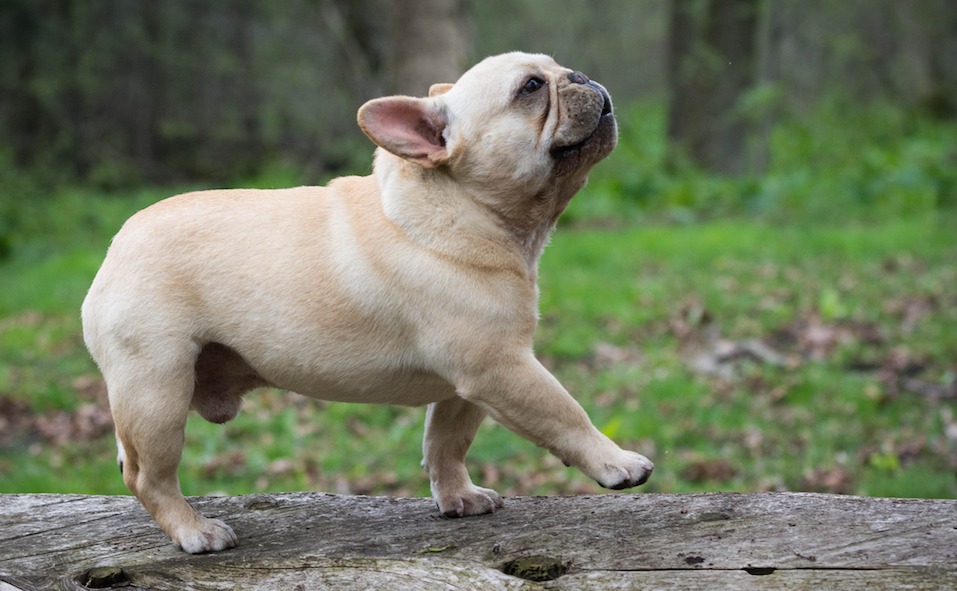
 Learning from Dogs