But all dog owners know that the odds of anxiety or depression if you have a dog or two around one are greatly reduced.
I’m chairing a discussion on depression at our local Humanists and Freethinkers group in eighteen days time; on January 18th, 2020. The core of my talk is a TED Talk given journalist Johann Hari in July of 2019.
This is how the talk is introduced.
In a moving talk, journalist Johann Hari shares fresh insights on the causes of depression and anxiety from experts around the world — as well as some exciting emerging solutions. “If you’re depressed or anxious, you’re not weak and you’re not crazy — you’re a human being with unmet needs,” Hari says.
There are sufficient numbers of people who follow this blog that it is likely that this talk will really engage a few of you. It’s twenty minutes long and very interesting!
Science has maybe found a clue to the ancestor of the dog and the wolf.
For an animal that means so much to us humans, the origins of the dog are still uncertain. Indeed, as this interesting article shows, the origins of the wolf are uncertain.
ooOOoo
Was This 18,000-Year-Old Puppy Frozen in Siberian Permafrost the Ancestor of Wolves, Dogs or Both?
DNA tests on the well-preserved remains can’t determine whether the little canine was wild or domestic
(Sergey Fedorov/NEFU)
By Jason Daley, smithsonianmag.com
Dec. 3, 2019, 10 a.m.”>December 3, 2019
Meet Dogor, an 18,000-year-old pup unearthed in Siberian permafrost whose name means “friend” in the Yakut language. The remains of the prehistoric pup are puzzling researchers because genetic testing shows it’s not a wolf or a dog, meaning it could be an elusive ancestor of both.
Locals found the remains in the summer of 2018 in a frozen lump of ground near the Indigirka River, according to the North-Eastern Federal University in Yakutsk. Parts of the animal are incredibly well-preserved, including its head, nose, whiskers, eyelashes and mouth, revealing that it still had its milk teeth when it died. Researchers suggest the animal was just two months old when it passed, though they do not know the cause of death.
The pup is so well-preserved that researchers at the Centre for Palaeogenetics in Sweden were able to sequence the animal’s DNA using a piece of rib bone. The results found that Dogor was male, but even after two rounds of analysis the team could not determine whether he was a dog or a wolf.
“It’s normally relatively easy to tell the difference between the two,” David Stanton, a Centre for Palaeogenetics research fellow, tells Amy Woodyatt at CNN. “We have a lot of data from it already, and with that amount of data, you’d expect to tell if it was one or the other. The fact that we can’t might suggest that it’s from a population that was ancestral to both—to dogs and wolves.”
The find is exciting, regardless of whether Dogor turns out to be a common canine ancestor, an early dog, or an early wolf. Hannah Knowles at The Washington Post reports that Dogor comes from an interesting time in canine evolution, when wolf species were dying out and early dogs were beginning to emerge.
“As you go back in time, as you get closer to the point that dogs and wolves converge, [it becomes] harder to tell between the two,” Stanton tells Knowles.
(Sergey Fedorov/NEFU)
The history of just how and when dogs split from wolves is unresolved. There’s a general agreement among scientists that modern gray wolves and dogs split from a common ancestor 15,000 to 40,000 years ago, explains Brian Handwerk previously for Smithsonian.com. How dogs became dogs, however, is contested. Some research suggests that dogs were domesticated by humans once, while other studies have found dogs were domesticated multiple times. Exactly where in the world wild canines became man’s best friend is also disputed. The origin of the human-animal bond has been traced to Mongolia, China and Europe.
Scientists disagree about how dogs ended up paired with people, too. Some suspect humans captured wolf pups and actively domesticated them. Others suggest that a strain of “friendly,” less aggressive wolves more or less domesticated themselves by hanging out near humans, gaining access to their leftover food.
Dorgor’s DNA could help unravel these mysteries. The team plans to do a third round of DNA testing that may help definitively place Dogor in the canine family tree, report Daria Litvinova and Roman Kutuko at the Associated Press.
ooOOoo
This is incredibly interesting, don’t you think?
Hopefully I will hear of that third round of DNA testing and, if so, will most definitely share it with you.
“Susan Combs” has published this post for us, but I was wondering if we could have a new guest post and pay the fees for that post directly to you? We would ghostwrite this, so it would have to published under your name.
Do let me know what you think and what you would charge for this!<
David
I then replied:
David,
I write my blog purely for pleasure, there is no charge.
Having said that, I also try hard not to promote commercial concerns and I’m unsure whether or not this applies to your goodself, I suspect not.
Please give me some further details about your intended article plus some information about yourself.
Regards,
Paul
Well the article came through a couple of days ago and it is a commercial, profit-seeking, company. I’m also in the unknown as to whether there are others in the same vein out there.
But I decided to publish it anyway because, who knows, there may be some out there who are interested in the service.
ooOOoo
A company turns people and pet’s ashes and hair into diamonds
By Melodie Beattie, a motivational author.
These powerful words ring true for the staff at Heart in Diamond (HID), where they make the impossible happen by taking cremated ashes or hair from a loved one or pet and turning it into diamonds.
Heartache led Anita to work with Heart in Diamond to help others
In particular, there is one employee at Heart in Diamond that can personally attest to this quote, and that is Anita Bolton. In 2011, Anita suffered the loss of her beloved husband. She was completely devastated following his death and Central England Cooperative Funeral Care was there to help her make the necessary plans for a memorial service and cremation for him.
Not only did the organization take care of all the arrangements for her, but they also informed her about Heart in Diamond, which is a company that allows people to pay tribute to the deceased by having a diamond created from some of their cremated ashes or a lock of hair. Anita talks about her first introduction to HID:
“I went to collect the ashes and that was when I was given a Heart in Diamond leaflet. I thought it was a beautiful way for me to remember my husband. I had never heard of the process at all. I had a white diamond created and my young son had a blue diamond.”
Anita also said that the beautiful white diamond ring has filled her with love, happiness, and it has created an everlasting bond. She believes that clients who reach out to the company to have their very own cremation diamond made will look at it and be reminded of their eternal love and it will become a treasured keepsake for many generations to come.
The company made such a great impact on Anita, that she decided to work with Heart in Diamond and became the business operations manager. In this role, she actually works very closely with the good people at Central England Cooperative Funeral Care, who are the same ones who helped her in those very dark and dreary days in her life. When talking about the work she does for Heart in Diamond, Bolton says:
“I’m very proud that Heart in Diamond has given me the opportunity to share my experience in a product I truly believe in and work within a dedicated professional caring team.”
If you would like to learn more about Anita, feel free to visit her employee page at the Heart in Diamond website.
HID is committed to providing personalized service
With an incredible combination of genuine love for people and an unerring passion for doing a good job, the team of dedicated professionals at Heart in Diamond was formed in 2005 when it set out to provide an extraordinary experience to every client they serve. According to the company’s About Us page:
“We pride ourselves by offering a personal service for your commemorative diamond.”
All the individuals that make up the HID team share a common vision and passion to demonstrate real care and love, inherent in each and every diamond they create. Some of the guiding principles of the company include:
We treat all samples with respect
Every customer is an individual and not a number
We provide personal service to each customer
We are committed to delivering a product of the highest quality
We are committed to delivering the best price on the market
We are committed to providing the shortest production time
We guarantee a genuine product through our unique authentication program.
Creating everlasting bonds worldwide since 2005
Heart in Diamond is a UK-based company that is also recognized as a world-renowned manufacturer of laboratory diamonds. If you or a loved one is dealing with grief from the loss of a close friend, spouse, family member, or even a pet, Heart in Diamond can provide you with unique tribute gifts that last a lifetime.
Carbon is extracted from either the ashes or hair of pets or people. Then, it is exposed to a laboratory-controlled environment that mimics the natural processes deep within the earth in order to grow the sample into a diamond. Lab-grown diamonds from HID are identical to mined diamonds in terms of physical, chemical, and optical properties, but they cost 20 to 30 percent less on average and they are a more ethical choice than conflict diamonds.
When you buy a commemorative diamond from HID, you not only receive a high-quality gem, but your cremation jewelry also serves as a living memory you can pass on to generation after generation.
ooOOoo
I then went across to the website hoping to get some pictures to share with you but they are not clear enough to view here.
But there’s a great deal of information that you may want to consider.
And, to state the obvious, I did not receive any compensation for publishing this.
There’s something almost beyond the world of words, pictures and blogging. That’s when a dog goes missing and then is found. Especially if the lover of the dog is a young boy who fears the worst.
Dogs bring out so much that is good in us. Dogs cross gender, age, country and ethnic boundaries.
This is what struck me with some force I will admit when I read this article on the Daily Dodo yesterday. It is republished for your own delight!
The holidays aren’t about what’s under the tree; it’s who you’re with that matters. And no one understands that better than Carter Licata and his dog, Piper.
The 2-year-old pug loves everyone in her family, but her bond with her brother is special. “It was love at first sight for the two of them,” April Licata, Carter’s mom, told The Dodo.
But the family’s holiday season was nearly destroyed when the unthinkable happened — Piper went missing.
Photo Credit: April Licata
Last month, Licata let Piper and her other dog outside to use the bathroom. But when she opened the door to let them back in, Piper was nowhere to be seen.
The family searched everywhere, posted on social media, and reached out to neighbors and community groups. They prayed for Piper’s safe return, but as days turned to weeks, they feared that they would never see their pug again.
“We were all sick,” Licata said. “The older kids wanted nothing to do with decorating the Christmas tree and it was a very somber Thanksgiving for them.”
Then, Licata received a Facebook message from the Genesee County Animal Shelter. A dog matching Piper’s description had been dropped off at the shelter by a person who wanted to remain anonymous. “My husband and I were going out to dinner and honestly, there was an outcry of joy in the truck,” Licata said. “We were shocked and elated!”
Carter was out of town when they learned about Piper, so they decided to keep it a secret and surprise him with a special reunion when he returned. Piper, meanwhile, wandered around the house looking for her brother, until finally, their reunion day arrived.
Photo Credit: Facebook/April Licata
When Carter saw Piper in the front seat of the truck, decked out in bows, he immediately broke down in tears.
Piper’s tail went crazy at the sight of her brother and as soon as he stepped in the truck, she jumped in his arms, showering him with kisses.
The family couldn’t be happier to have Piper back again — and just in time for Christmas.
“My son loves his dog so much, was sick while she was gone, and tonight she’s sleeping next to him again,” Licata wrote on Facebook. “What a Christmas miracle for our family.”
You can see the heart-warming video below.
ooOOoo
I know that for the main part I just republish the work that others do. But that doesn’t mean that I’m not affected by the articles. This one in particular had me in tears.
Winner of the ‘I Love Dogs Because…’ category (Photo: Jade Hudson/Dog Photographer of the Year Competition.
Hugo the puppy is the subject of this winning image by 16-year-old Jade Hudson.
Winner of the Oldies category (Photo: Kevin Smith/Dog Photographer of the Year Competition)
The gray faces of old dogs speak to all the love and friendship they’ve provided over the years as Lizzie, a 12-year-old mixed breed dog, shows us. Curling up with a cracking fire and your four-legged BFF is one of life’s great joys.
Winner of the Dog Portrait category (Photo: Jamie Morgan/Dog Photographer of the Year Competition)
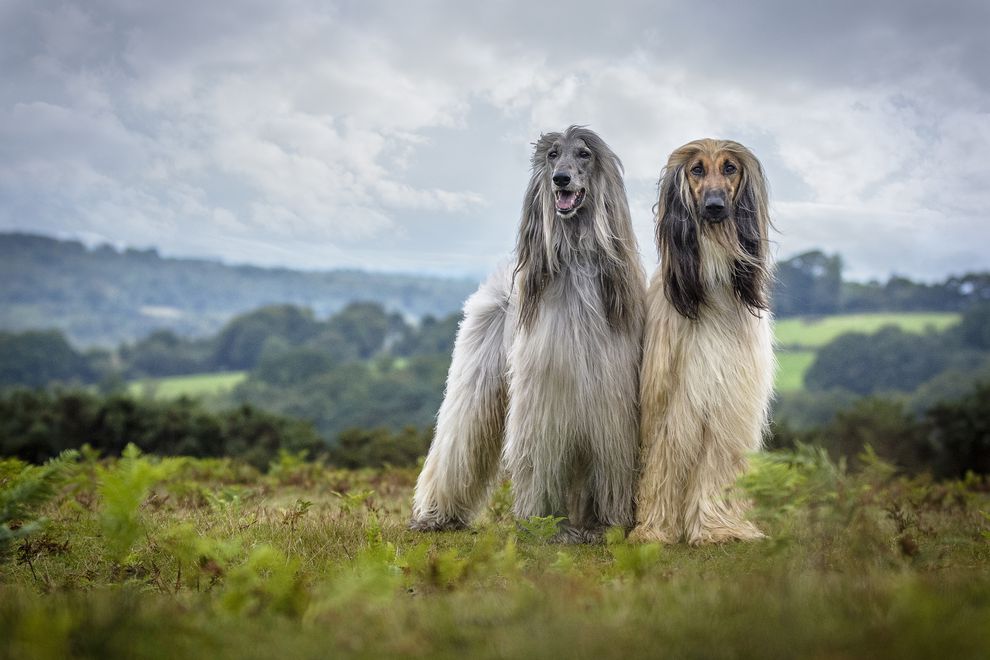
This portrait of two Afghan hounds named Ozzie and Elvis took first place for the Dog Portrait category. The setting is the idyllic Ashdown Forest in Sussex.
Winner of the Puppy category (Photo: Linda Storm/Dog Photographer of the Year Competition)
And finally, the winner of the Puppy category is little rescue puppy Buddy enjoying a bowl of milk. The photo was taken by Colorado-based photographer Linda Storm.
“The entries for this year’s Dog Photographer of the Year competition were some of the best we have ever seen,” says Rosemary Smart, Kennel Club chief executive. “Choosing the winners was an incredibly challenging task and we commend every photographer who entered. Each of the winning photographers beautifully captured the essence of their canine subjects on camera, demonstrating how important dogs are to us in every walk of life.”
If you’re a photographer who loves dogs as your subject, keep an eye on the opening date for next year’s competition!
ooOOoo
I should say so! These photographs are the very best of pictures taken by very talented photographers.
There’s a science background to being healthy and happy.
Especially as one gets older.
It’s Jean’s birthday today and we are grateful for our lot. I’m 75 now and Jean is a few years younger. But more importantly we are so grateful to have met and, subsequently, fallen in love.
As well as Jean’s love in return we have our gorgeous dogs as well (not to count in addition the two horses, the two parakeets and the cat) and they reinforce the feelings of happiness that surround us.
All of which is an introduction to an article on The Conversation that caught my eye yesterday.
I’m afraid it doesn’t mention dogs but then again we dog owners know for sure how they benefit us humans.
ooOOoo
Are you as grateful as you deserve to be?
November 26, 2019
By Richard Gunderman
Chancellor’s Professor of Medicine, Liberal Arts, and Philanthropy, Indiana University
Gratitude is not only a great feeling but a healthy one. Aaron Amat/Shutterstock.com
As a physician, I have helped to care for many patients and families whose lives have been turned upside down by serious illnesses and injuries. In the throes of such catastrophes, it can be difficult to find cause for anything but lament. Yet Thanksgiving presents us with an opportunity to develop one of the healthiest, most life-affirming and convivial of all habits – that of counting and rejoicing in our blessings.
Gratitude’s benefits
Research shows that grateful people tend to be healthy and happy. They exhibit lower levels of stress and depression, cope better with adversity and sleep better. They tend to be happier and more satisfied with life. Even their partners tend to be more content with their relationships.
Perhaps when we are more focused on the good things we enjoy in life, we have more to live for and tend to take better care of ourselves and each other.
When researchers asked people to reflect on the past week and write about things that either irritated them or about which they felt grateful, those tasked with recalling good things were more optimistic, felt better about their lives and actually visited their physicians less.
It is no surprise that receiving thanks makes people happier, but so does expressing gratitude. An experiment that asked participants to write and deliver thank-you notes found large increases in reported levels of happiness, a benefit that lasted for an entire month.
Philosophical roots
Giving thanks is important for our psyches and our souls. Love You Stock/Shutterstock.com
One of the greatest minds in Western history, the Greek philosopher Aristotle, argued that we become what we habitually do. By changing our habits, we can become more thankful human beings.
If we spend our days ruminating on all that has gone poorly and how dark the prospects for the future appear, we can think ourselves into misery and resentment.
But we can also mold ourselves into the kind of people who seek out, recognize and celebrate all that we have to be grateful for.
This is not to say that anyone should become a Pollyanna, ceaselessly reciting the mantra from Voltaire’s “Candide,” “All is for the best in this, the best of all possible worlds.” There are injustices to be righted and wounds to be healed, and ignoring them would represent a lapse of moral responsibility.
But reasons to make the world a better place should never blind us to the many good things it already affords. How can we be compassionate and generous if we are fixated on deficiency? This explains why the great Roman statesman Cicero called gratitude not only the greatest of virtues but the “parent” of them all.
Religious roots
Gratitude is deeply embedded in many religious traditions. In Judaism, the first words of the morning prayer could be translated, “I thank you.” Another saying addresses the question, “Who is rich?” with this answer: “Those who rejoice in what they have.”
From a Christian perspective, too, gratitude and thanksgiving are vital. Before Jesus shares his last meal with his disciples, he gives thanks. So vital a part of Christian life is gratitude that author and critic G.K. Chesterton calls it “the highest form of thought.”
Gratitude also plays an essential role in Islam. The 55th chapter of the Quran enumerates all the things human beings have to be grateful for – the Sun, Moon, clouds, rain, air, grass, animals, plants, rivers and oceans – and then asks, “How can a sensible person be anything but thankful to God?”
In his 1994 book, “A Whole New Life,” the Duke University English professor Reynolds Price describes how his battle with a spinal cord tumor that left him partially paralyzed also taught him a great deal about what it means to really live.
After surgery, Price describes “a kind of stunned beatitude.” With time, though diminished in many ways by his tumor and its treatment, he learns to pay closer attention to the world around him and those who populate it.
Reflecting on the change in his writing, Price notes that his books differ in many ways from those he penned as a younger man. Even his handwriting, he says, “looks very little like that of the man he was at the time of his diagnosis.”
“Cranky as it is, it’s taller, more legible, and with more air and stride. And it comes down the arm of a grateful man.”
A brush with death can open our eyes. Some of us emerge with a deepened appreciation for the preciousness of each day, a clearer sense of our real priorities and a renewed commitment to celebrating life. In short, we can become more grateful, and more alive, than ever.
Practicing gratitude
Good conversation, good friends and connections – not material possessions – bring great joy. Jacob Lund/Shutterstock.com
When it comes to practicing gratitude, one trap to avoid is locating happiness in things that make us feel better off – or simply better – than others. In my view, such thinking can foster envy and jealousy.
There are marvelous respects in which we are equally blessed – the same Sun shines down upon each of us, we all begin each day with the same 24 hours, and each of us enjoys the free use of one of the most complex and powerful resources in the universe, the human brain.
Much in our culture seems aimed to cultivate an attitude of deficiency – for example, most ads aim to make us think that to find happiness we must buy something. Yet most of the best things in life – the beauty of nature, conversation and love – are free.
There are many ways to cultivate a disposition of thankfulness. One is to make a habit of giving thanks regularly – at the beginning of the day, at meals and the like, and at day’s end.
Likewise, holidays, weeks, seasons and years can be punctuated with thanks – grateful prayer or meditation, writing thank-you notes, keeping a gratitude journal and consciously seeking out the blessings in situations as they arise.
Gratitude can become a way of life, and by developing the simple habit of counting our blessings, we can enhance the degree to which we are truly blessed.
That reference to Reynolds Price and his challenges make one think. I have been fortunate that nothing really dreadful has happened to me; apart from my father’s death when I had just turned 12. I’m getting a little hazy in terms of certain memories but that’s an old age thing rather than an illness. But to go through what he did; I just don’t know the person that I am, in terms of how I wold react to that.
But to the general tone of the article, I would hope that I can get better and better.
For it’s splendid to cultivate that disposition.
One is to make a habit of giving thanks regularly – at the beginning of the day, at meals and the like, and at day’s end.
I don’t know. What with wood splitting ahead of the rain and snow, and working hard at editing the completed book, I didn’t seem to have the creative urge to publish a new Picture Parade.
So I’m once again republishing one that was first published on July 17th, 2016.
Enjoy!
ooOOoo
Incredible, prize-winning, images of dogs.
The following was read over on Mother Nature News on June 30th. The item, and especially the photographs, just had to be shared with you.
However, to ensure the integrity of republication and the identity of the photographers, I’m going to include the photographs and the words of the original MNN piece, and split it across today and next Sunday.
Trust me you will adore these photographs.
ooOOoo
These prize-winning images of dogs will steal your heart.
10th annual Dog Photographer of the Year competition drew entries from photographers in 90 countries.
Winner of the Man’s Best Friend category (Photo: Fiona Sami/Dog Photographer of the Year Competition)
The love of a dog is a universal joy, as the latest photography competition from The Kennel Club illustrates. The 10th annual competition drew over 13,000 entries from photographers in 90 countries. The photographs show the beauty, loyalty, companionship, dignity and, of course, the adorableness of dogs around the world.
The competition features eight categories, including Puppies, Oldies, Dogs at Work, Dogs at Play, Man’s Best Friend (winner pictured above), Assistance Dogs and Dog Charities, Dog Portraits and I Love Dogs Because.
Winner of the Dogs At Work category as well as overall winner of the competition (Photo: Anastasia Vetkovskaya/Dog Photographer of the Year Competition)
This image of Sheldon the English springer spaniel enjoying a mist-shrouded pond early one morning is the work of Anastasia Vetkovskaya from Russia. Not only did it win for the Dogs At Work category, but it also placed as the overall winner of the competition.
Vetkovskaya states, “I have loved animals from an early age, which is why I went to Moscow Veterinary Academy and became a veterinary surgeon in 2007. Around this period of time, my husband gave me my first SLR camera, and since then I have devoted all of my free time to photography. My specialty is pets, and I am inspired most by horses and dogs.”
Winner of the Dogs at Play category (Photo: Tom Lowe/Dog Photographer of the Year Competition)
Baxter the Westie inspired his photography-loving human, Tom Lowe, to snap this image of Baxter playing in the water of Loch Lomond in Scotland.
Winner of the Assistance Dogs and Dog Charities category (Photo: Michael Higginson/Dog Photographer of the Year Competition)
This poignant image was taken by Michael Higginson, and features his brother Dale with Esta the dog. The win not only benefits the photographer but also a charity of his choice. The Kennel Club is making a donation to Higginson’s favorite charity, Dogs for Good.
Higginson states, “Winning the Assistance Dog category has made it even more special. It’s an honor to be able to show the world what a difference a dog can make to someone else’s life.”
ooOOoo
Aren’t they breath-takingly beautiful!
The rest of these fabulous photographs in a week’s time.
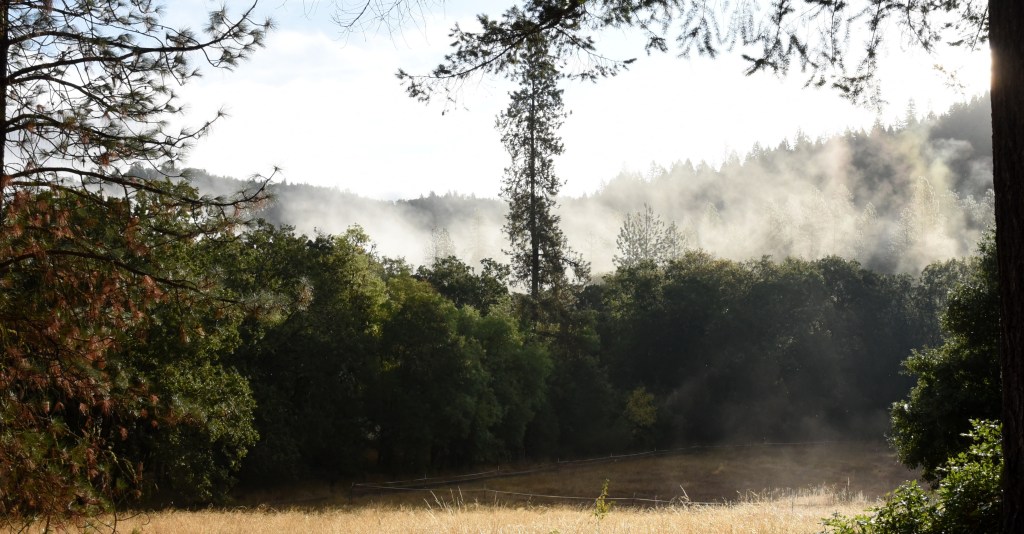
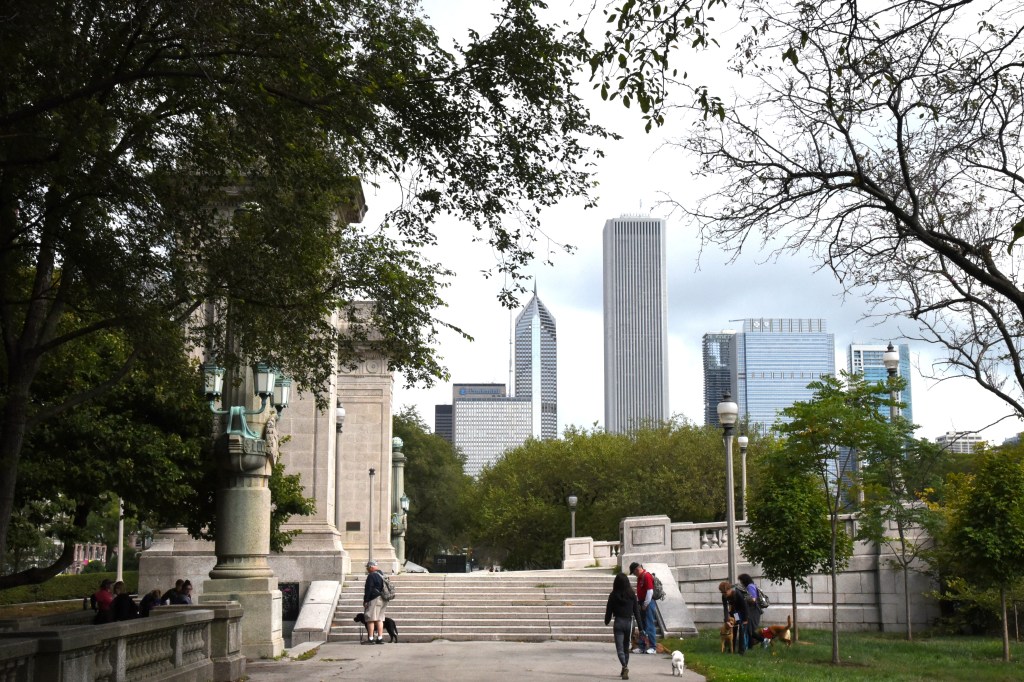
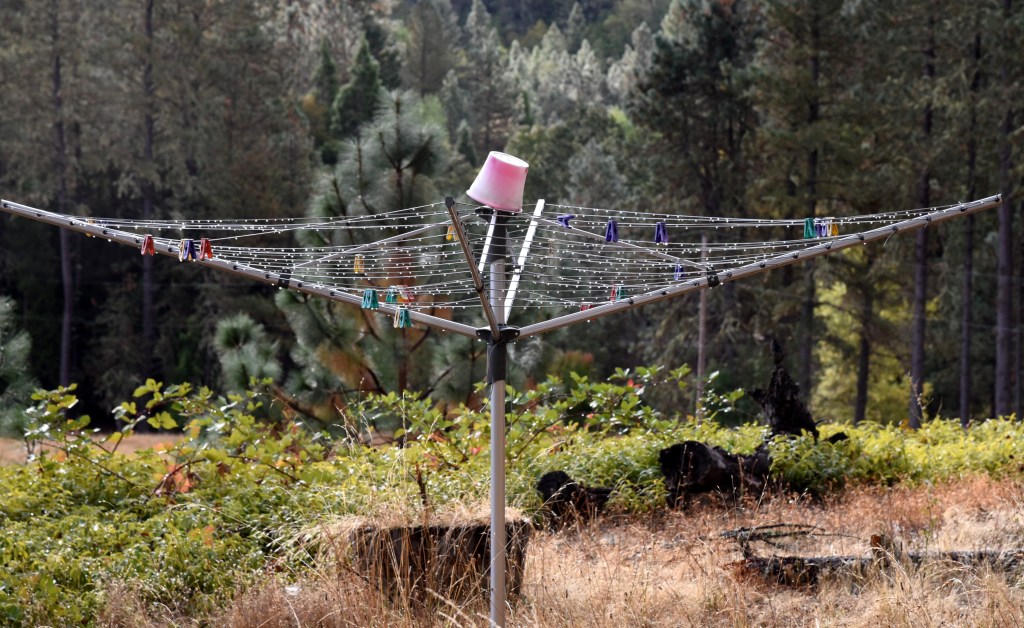
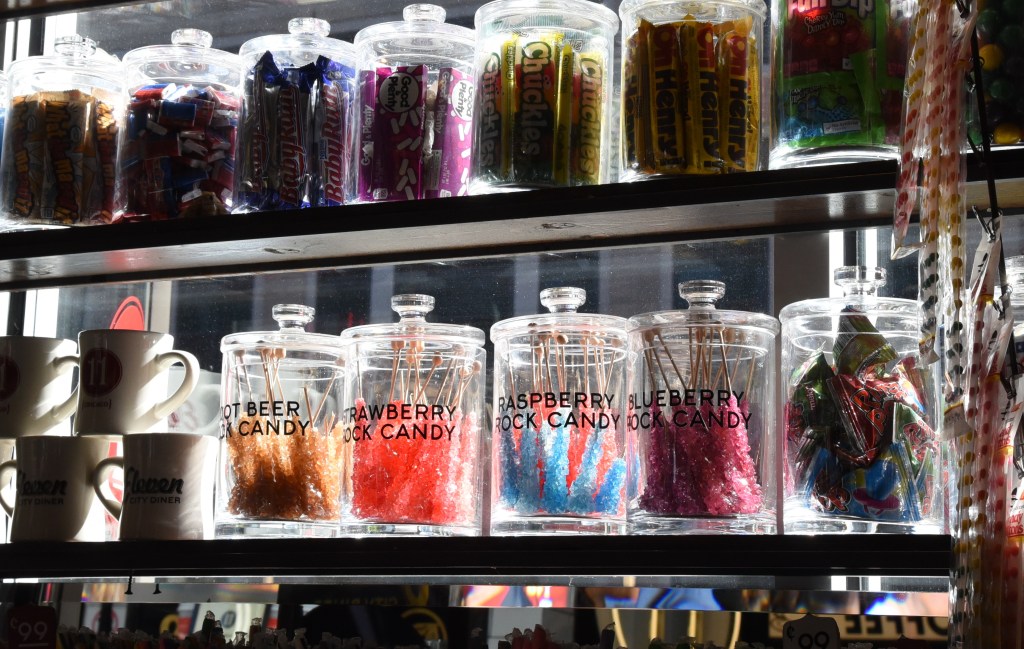
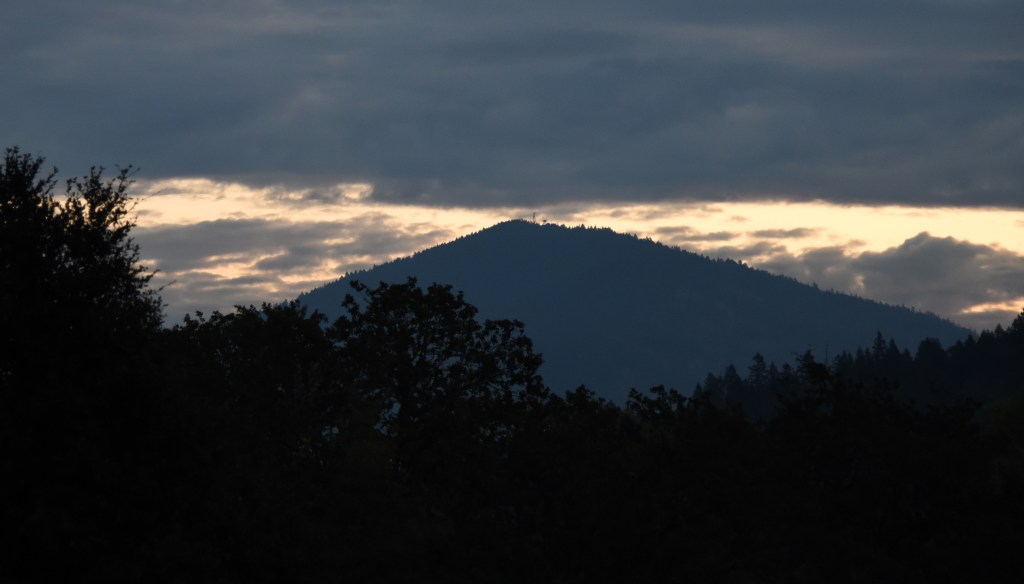
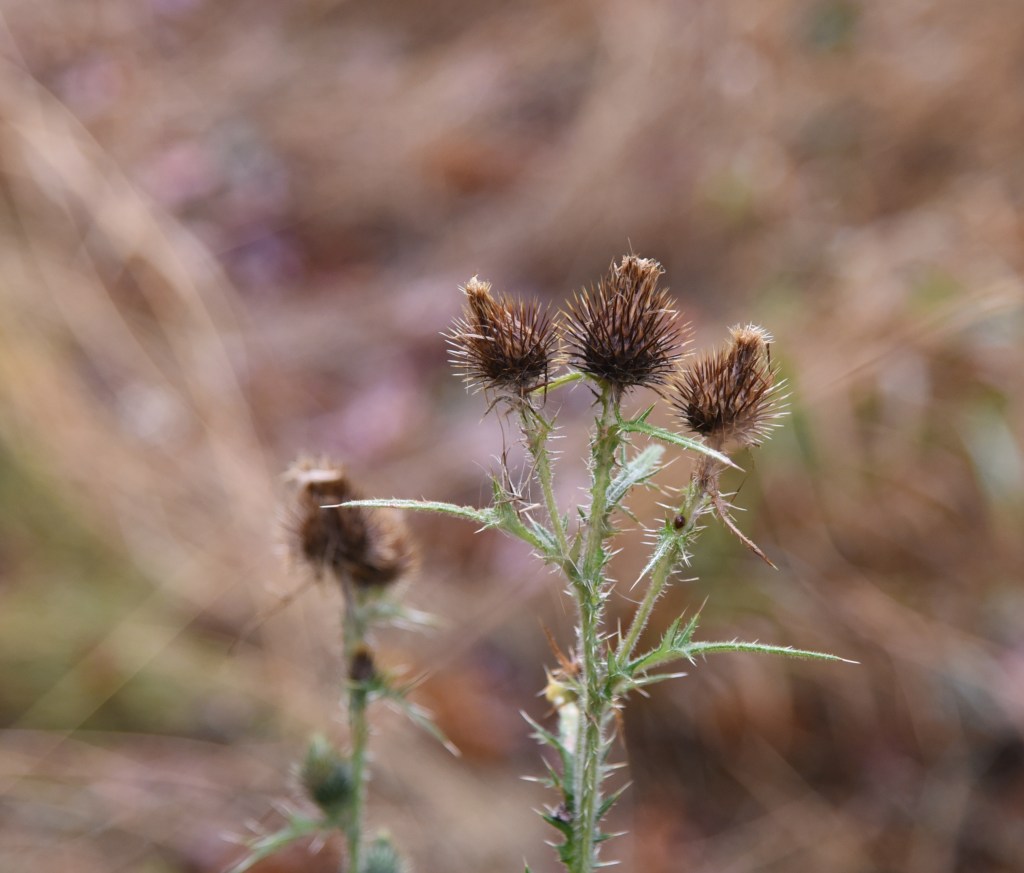
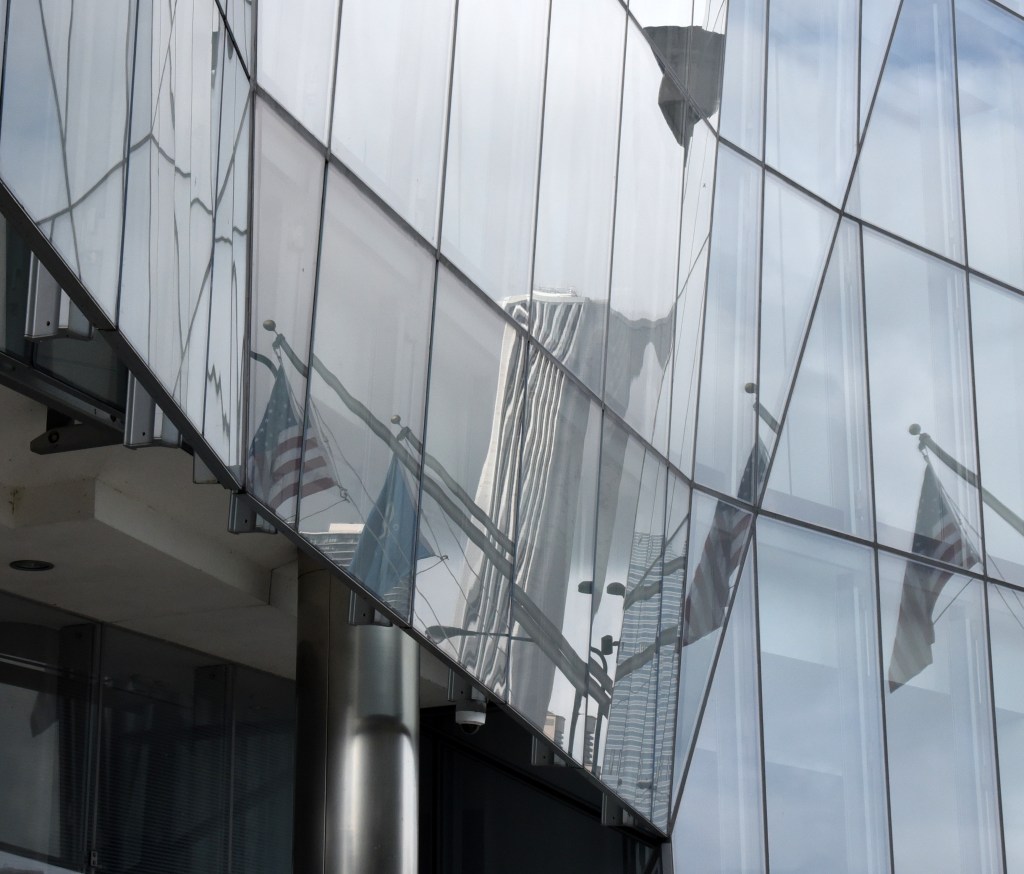
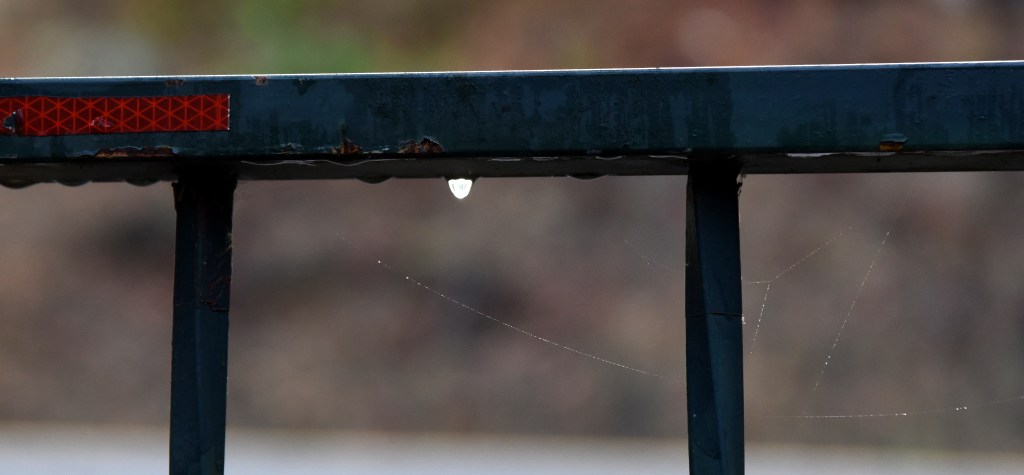
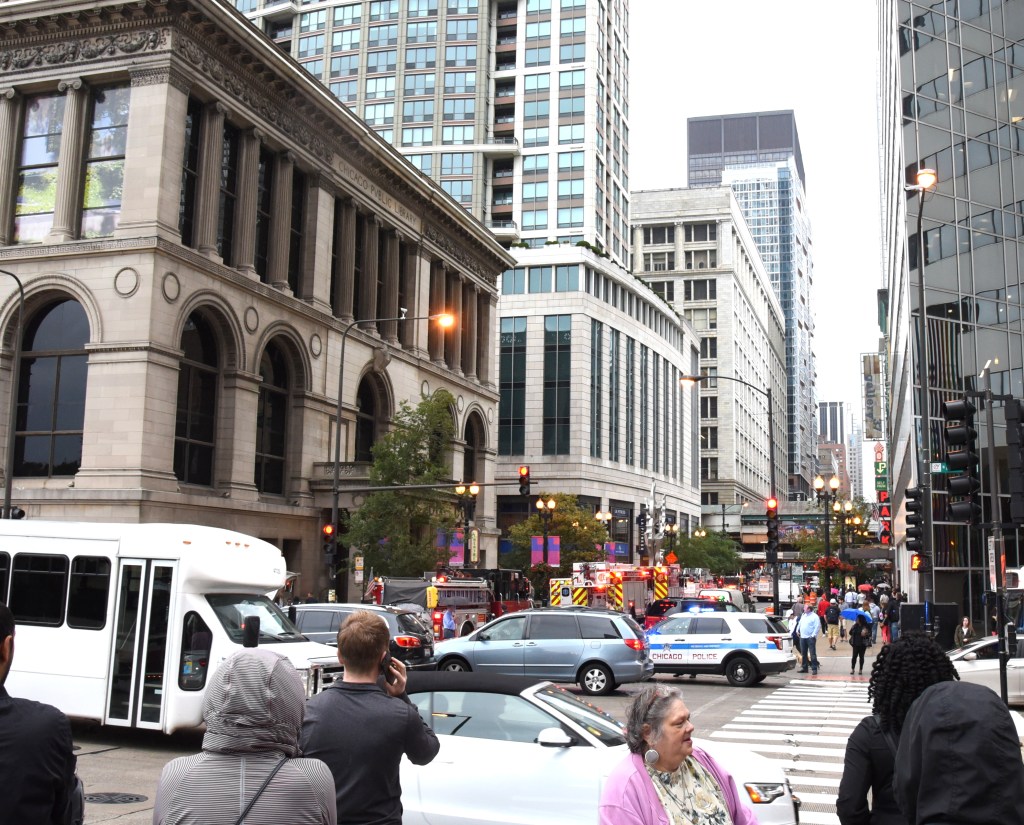
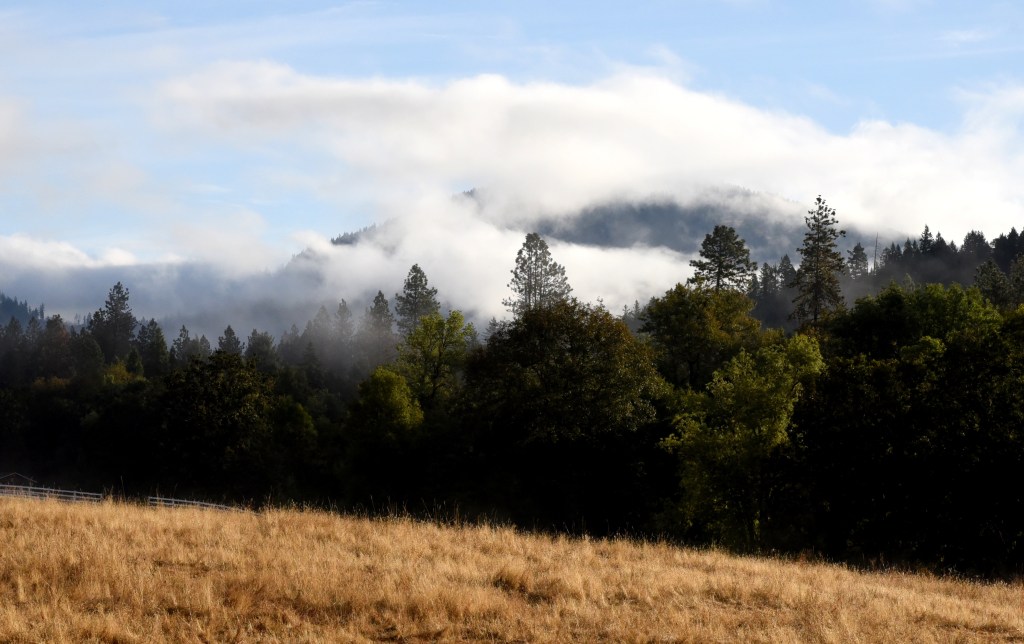
The first weekend of this month saw Jeannie and me in Chicago. Then back home in Merlin, earlier this week, half-an-inch of rain fell to break a long spell of dry weather. I went out last Thursday morning to capture some sights of the first misty morning of Autumn. The contrast between our rural home and Chicago was dramatic; to say the least! Enjoy!
(P.S. I sensed there was no need to describe each photograph in terms of which one was taken in Merlin or in Chicago!)
On Monday when Jeannie and I went to our regular session at Club Northwest, Jean to her Rock Steady class, and me to spend 45 minutes with Austin Raymond, one of the fitness coaches, he and I were speaking of health in general and veganism in particular. Austin, Jean and I are vegans.
Austin mentioned had we watched the film The Game Changers on Netflix? I replied that we had not but we were subscribers to Netflix and would watch it in the evening.
Well what an incredible film! I mean really incredible!
P.S. If you are a Netflix subscriber then you may watch it without any fuss.
(So I taken time out from book writing to publish this post; I’m over 9,000 words already written in November!)
Here’s a YouTube trailer to the film:
Have you ever seen an ox eating meat!
But apart from the solid science that we never were meat-eaters were the facts about illness being so much prevalent in those eating meat compared to vegans. That was just one aspect of the film that grabbed our attention! There were many more.
Back to fundamentals!
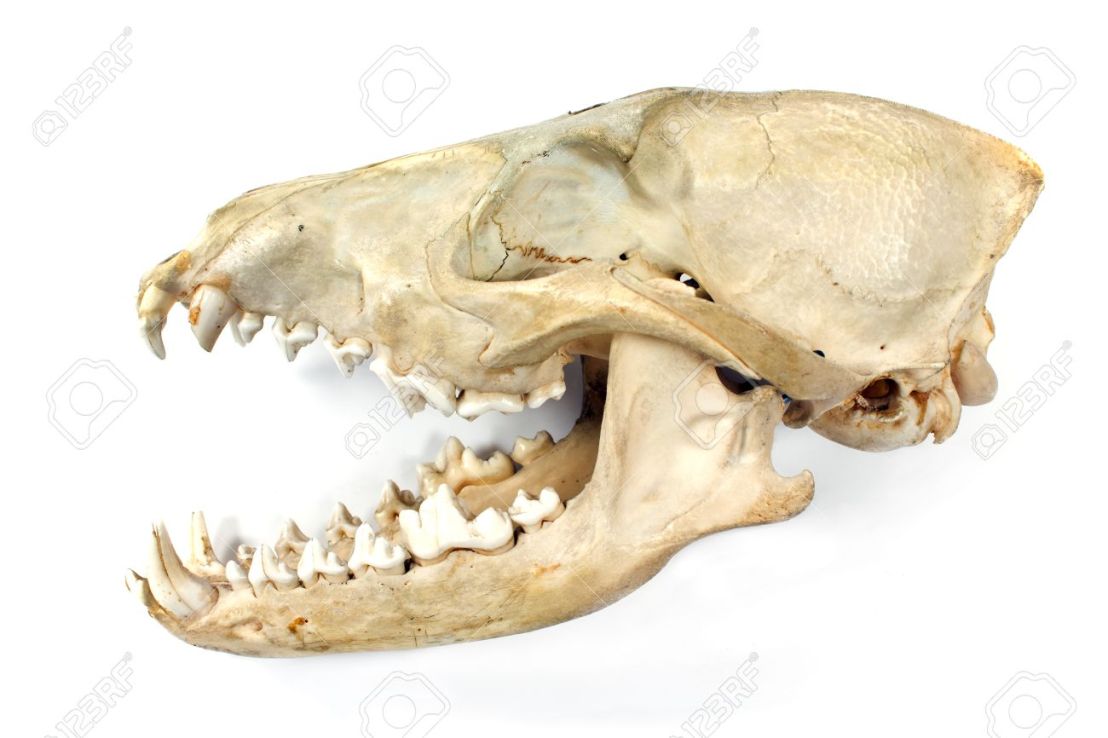
Let’s examine one fact, the jaw shape.
Here’s the jaw of a dog.
Dog skull and jaw isolated on white
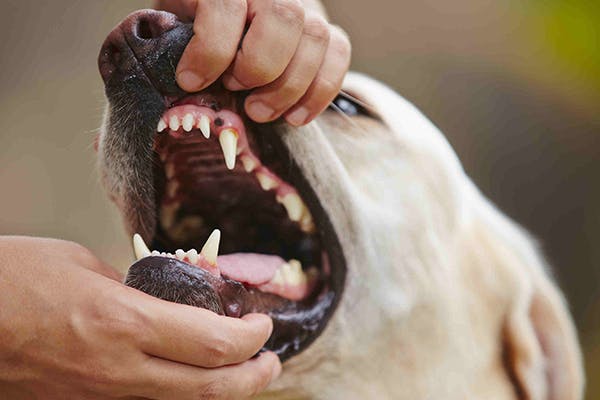
and here’s another:
That is a mouth that has evolved to tear meat from an animal.
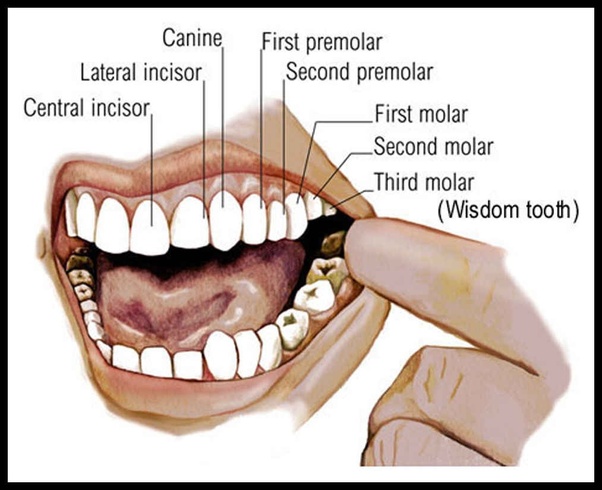
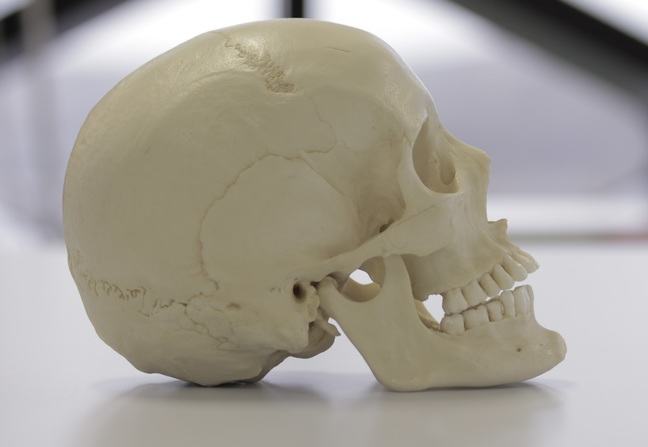
And here’s the jaw of a human:
and the picture of the whole skull.
Notice that the teeth have always been adapted to eat fruit and vegetables.
And that’s before we think how much land has been converted from natural land and forest to grazing land for cattle and sheep!
Now I don’t know how long the full documentary will remain for free on YouTube but here it is:
Photographers Kelly Pratt and Ian Kreidich frequently work with professional dancers, capturing their gorgeous movements and their breathtaking abilities. But in a random moment, Pratt suggested to her husband, Kreidich, that they throw a few dogs into the mix for an unusual collaboration.
“We definitely didn’t fully know what to expect with this project,” Pratt tells MNN. “We started very small — at first we worked with our friends at the St. Louis Ballet — and just slowly tried to figure out what worked and what didn’t, when it came to working with dogs. No one had ever done this before, so it was all trial and error.”
Pratt and Kreidich spent more than two years photographing 100 dancers and 100 dogs in more than 10 cities across the U.S. Now the images of graceful dancers and furry companions are in the book “Dancers & Dogs.”









 Learning from Dogs