I have written about the dog’s nose before. Or rather I have written about the dog’s sense of smell;
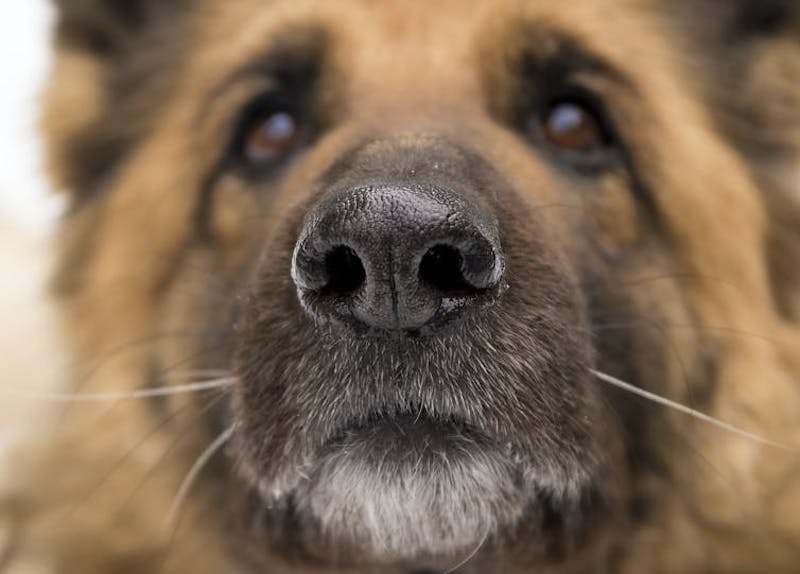
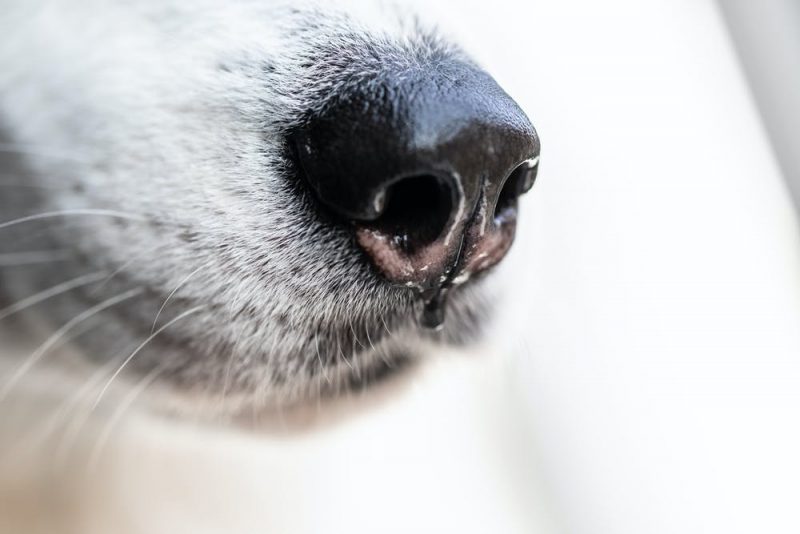
Dogs’ noses just got a bit more amazing. Not only are they up to 100 million times more sensitive than ours, they can sense weak thermal radiation—the body heat of mammalian prey, a new study reveals. The find helps explain how canines with impaired sight, hearing, or smell can still hunt successfully.
But I wanted to draw your attention to an article in 2017; June 26th to be precise. In an article called What a nose!
Here’s how that post opened.
Two items that recently caught my eye.
The power of a dog’s nose is incredible and it is something that has been written about in this place on more than one occasion.
But two recent news items reminded me once again of the way we humans can be helped by our wonderful canine partners.
The first was a report that appeared on the Care2 website about how dogs are being used to search for victims in the burnt out ruins following that terrible Grenfell Tower fire. That report opened, thus:
Wearing heat-proof booties to protect their feet, specially trained dogs have been dispatched in London’s Grenfell Tower to help locate victims and determine the cause of last week’s devastating fire that killed at least 79 people.
Because they’re smaller and weigh less than humans, urban search-and-rescue dogs with the London Fire Brigade (LFB) are able to access the more challenging areas of the charred 24-story building, especially the upper floors that sustained the most damage.
Because I read recently, on the EarthSky website, about dogs in Australia that are being trained to detect Covid-19 in humans.
ooOOoo
These dogs are trained to sniff out the coronavirus
Posted by Eleanor Imster in Human World, August 10, 2020
Scientists have been working with professional trainers in South Australia, Victoria and New South Wales to train dogs to sniff out Covid-19. Most of the dogs have a 100% success rate.
What does a pandemic smell like? If dogs could talk, they might be able to tell us.
We’re part of an international research team, led by Dominique Grandjean at France’s National Veterinary School of Alfort, that has been training detector dogs to sniff out traces of the novel coronavirus (SARS-CoV-2) since March.
These detector dogs are trained using sweat samples from people infected with Covid-19. When introduced to a line of sweat samples, most dogs can detect a positive one from a line of negative ones with 100% accuracy.
Across the globe, coronavirus detector dogs are being trained in the United Arab Emirates (UAE), Chile, Argentina, Brazil and Belgium.
In the UAE, detector dogs – stationed at various airports – have already started helping efforts to control Covid-19’s spread. This is something we hope will soon be available in Australia too.
A keen nose
Our international colleagues found detector dogs were able to detect SARS-CoV-2 in infected people when they were still asymptomatic, before later testing positive.
On average, dogs have about 220 million scent receptors. Image via Shutterstock/ The Conversation .
When it comes to SARS-CoV-2 detection, we don’t know for sure what the dogs are smelling.
The volatile organic compounds (VOCs) given off in the sweat samples are a complex mix. So it’s likely the dogs are detecting a particular profile rather than individual compounds.
Sweat is used for tests as it’s not considered infectious for Covid-19. This means it presents less risk when handling samples.
Covid-19 sniffing dogs in Australia
Here in Australia, we’re currently working with professional trainers of detector dogs in South Australia, Victoria and New South Wales. The most common breed used for this work so far has been the German shepherd, with various other breeds also involved.
We are also negotiating with health authorities to collect sweat samples from people who have tested positive for the virus, and from those who are negative. We hope to start collecting these within the next few months.
We will need to collect thousands of negative samples to make sure the dogs aren’t detecting other viral infections, such as the common cold or influenza. In other countries, they’ve passed this test with flying colors.
Once operational, detector dogs in Australia could be hugely valuable in many scenarios, such as screening people at airports and state borders, or monitoring staff working in aged care facilities and hospitals daily (so they don’t need repeat testing).
To properly train a dog to detect SARS-CoV-2, it takes:
– 6-8 weeks for a dog that is already trained to detect other scents, or
– 3-6 months for a dog that has never been trained.
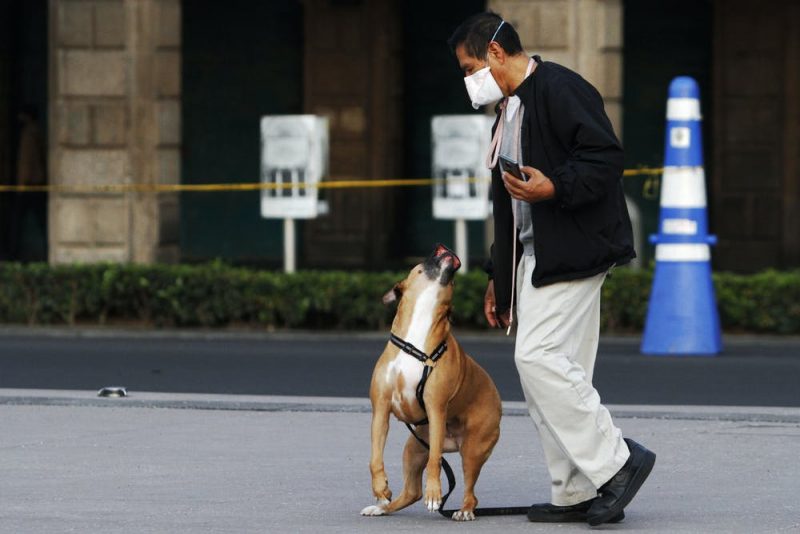
Coronavirus cases recently peaked in Victoria, Australia. Having trained sniffer dogs at hand could greatly help manage future waves of Covid-19. Image via Daniel Pockett/ AAP/ The Conversation.
Could the dogs spread the virus further?
Dogs in experimental studies have not been shown to be able to replicate the virus (within their body). Simply, they themselves are not a source of infection.
Currently, there are two case reports in the world of dogs being potentially contaminated with the Covid-19 virus by their owners. Those dogs didn’t become sick.
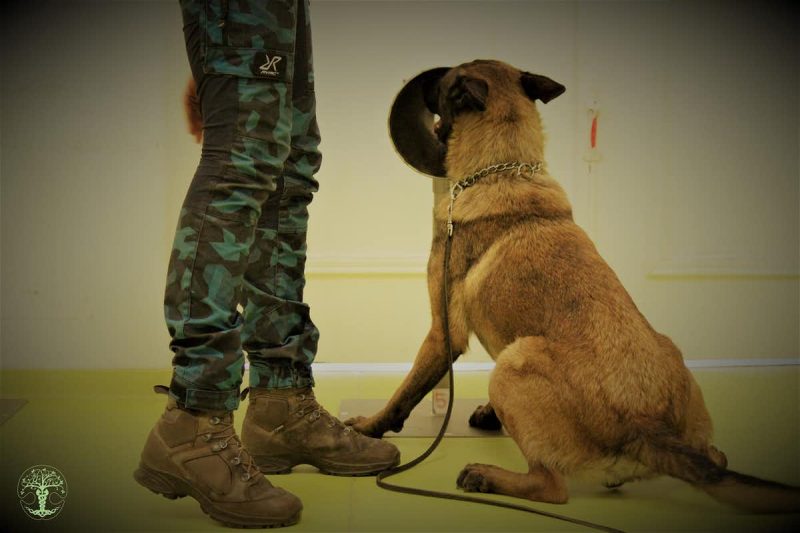
To further reduce any potential risk of transmission to both people and dogs, the apparatus used to train the dogs doesn’t allow any direct contact between the dog’s nose and the sweat sample.
The dog’s nose goes into a stainless steel cone, with the sweat sample in a receptacle behind. This allows free access to the volatile olfactory compounds but no physical contact.
Furthermore, all the dogs trained to detect Covid-19 are regularly checked by nasal swab tests, rectal swab tests and blood tests to identify antibodies. So far, none of the detector dogs has been found to be infected.
Dogs are not susceptible to the negative effects of the novel coronavirus. Image via Eyepix/ Sipa USA/ The Conversation.
Hurdles to jump
Now and in the future, it will be important for us to identify any instances where detector dogs may present false positives (signaling a sample is positive when it’s negative) or false negatives (signaling the sample is negative when it’s positive).
We’re also hoping our work can reveal exactly which volatile olfactory compound(s) is/are specific to Covid-19 infection.
This knowledge might help us understand the disease process resulting from Covid-19 infection – and in detecting other diseases using detector dogs.
This pandemic has been a huge challenge for everyone. Being able to find asymptomatic people infected with the coronavirus would be a game-changer – and that’s what we need right now.
A Covid-19 detector dog enrolled in the NOSAIS program led by professor Dominique Grandjean and Clothilde Julien from the Alfort Veterinary School (France). Image via The Conversation.
A friend to us (and science)
Perhaps we shouldn’t be surprised about dogs’ ability to detect Covid-19, as we already know their noses are amazing.
Their great potential in dealing with the current pandemic is just one of myriad examples of how dogs enrich our lives.
We acknowledge Professor Riad Sarkis from the Saint Joseph University (Beirut) and Clothilde Lecoq-Julien from the Alfort Veterinary School (France) for first conceiving the idea underpinning this work back in March.
There was a story on the Daily Dodo yesterday that just says it all when it comes to us humans and our love for dogs. Now we don’t know the name of the Dad but so what! It’s a wonderful story nonetheless!
ooOOoo
Dad And The Dog He Didn’t Want Now Have The Sweetest Bedtime Routine
“He fell in love” ❤️
By Stephen Messenger, Published on 7/27/2020
Believe it or not, there was once a time when Alice Garrido Gallardo’s dad didn’t want another dog at all — but now he pretty much epitomizes what it means to be a proud pet parent.
He and his pup, named Jean Grey, have the sweetest bedtime routine to prove it.
Alice Garrido Gallardo
Jean Grey started out life as a stray and was rescued by Gallardo’s friend. When Gallardo suggested to her dad that they adopt her, he was opposed to the idea at first.
“We had lost our old dog and he didn’t want to have another one anytime soon,” Gallardo told The Dodo. “He was still grieving.”
Gallardo, however, wasn’t deterred. She decided to arrange an introduction between Jean Grey and her dad. And sure enough:
“He fell in love the day I brought her home,” Gallardo said.
Alice Garrido Gallardo
As time went on, his love for the dog he didn’t want only grew stronger — and he found the most wonderful way to show it.
“He began to put her to bed every night,” Gallardo said.
Photo Credit: TikTok/alicegrgl
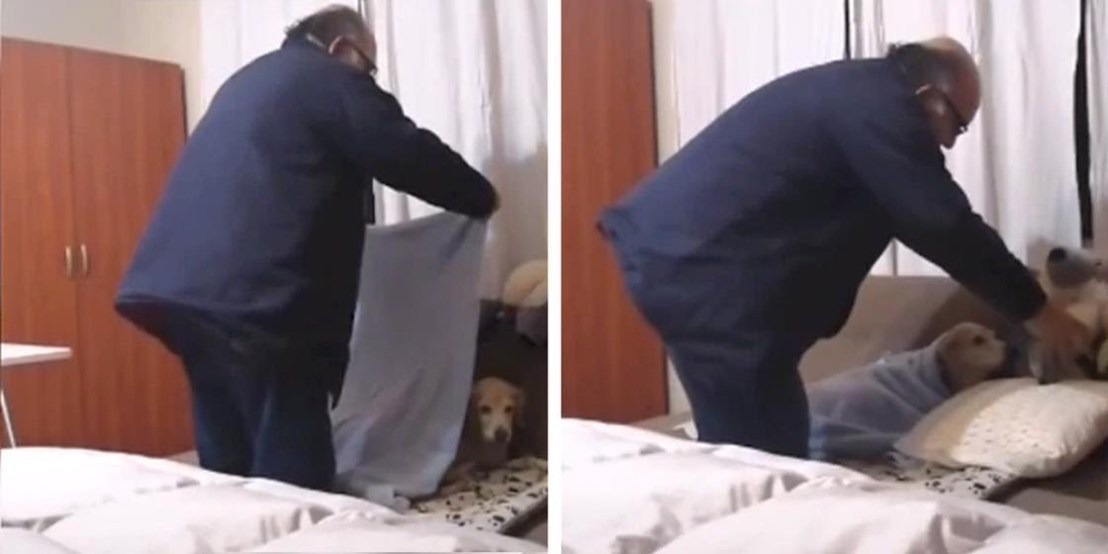
Each and every night now, Gallardo’s dad tucks Jean Grey into bed, placing a pillow under her head and toy close by.
“I love to see them, my dad being super loving and affectionate,” Gallardo said. “I love to see them and know that they love each other very much.”
ooOOoo
I used the sub-heading: “One can never turn off one’s heart to love.”
To give that statement slightly more detail I should have said: “One can never turn off one’s heart to the love of a dog!”
I wrote in my post of the 23rd: “In fact tomorrow I shall republish a post I wrote in 2015 about the origins of the dog!”
Well tomorrow wasn’t possible with the sad news of the loss of our cat.
But it is today! It was originally published on the 13th July, 2015 – my how 5 years have sped by!
So here it is again. I suspect many of you have not read it!
ooOOoo
The Origins of the Dog.
Dogs and humans go back even further than previously thought.
Humans and dogs were constant companions well before our ancestors settled in villages and started growing crops 10,000 years ago …
I have no doubt that thousands of dog owners all around the world must be enthralled by the way that dogs relate to us and, in turn, how we humans relate to dogs. More than once a day, one of our dogs will do something that has me and Jean marvelling at their way of living so close to us.
Then when one starts to reflect on how long dogs and humans have been together, perhaps it could be seen as the direct result of that length of relationship.
Now there’s nothing new in me writing this, after all the home page of Learning from Dogs states:
Yet they have been part of man’s world for an unimaginable time, at least 30,000 years. That makes the domesticated dog the longest animal companion to man, by far!
Back in May the website Livescience published an article that revealed more about the length of our relationship with dogs. This is how it opened:
Ancient Wolf DNA Could Solve Dog Origin Mystery
by Becky Oskin, Senior Writer
Humans and dogs were constant companions well before our ancestors settled in villages and started growing crops 10,000 years ago, a new study suggests.
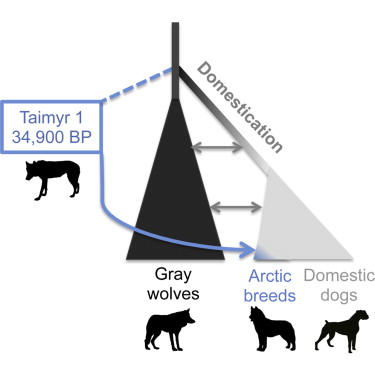
Genetic evidence from an ancient wolf bone discovered lying on the tundra in Siberia’s Taimyr Peninsula reveals that wolves and dogs split from their common ancestor at least 27,000 years ago. “Although separation isn’t the same as domestication, this opens up the possibility that domestication occurred much earlier than we thought before,” said lead study author Pontus Skoglund, who studies ancient DNA at Harvard Medical School and the Broad Institute in Massachusetts. Previously, scientists had pegged the wolf-dog split at no earlier than 16,000 years ago.
The Livescience article referred to results that were published in the journal Current Biology on May 21st this year. One needs a subscription to read the full report but here is their summary:
The origin of domestic dogs is poorly understood [ 1–15 ], with suggested evidence of dog-like features in fossils that predate the Last Glacial Maximum [ 6, 9, 10, 14, 16 ] conflicting with genetic estimates of a more recent divergence between dogs and worldwide wolf populations [ 13, 15, 17–19 ]. Here, we present a draft genome sequence from a 35,000-year-old wolf from the Taimyr Peninsula in northern Siberia. We find that this individual belonged to a population that diverged from the common ancestor of present-day wolves and dogs very close in time to the appearance of the domestic dog lineage. We use the directly dated ancient wolf genome to recalibrate the molecular timescale of wolves and dogs and find that the mutation rate is substantially slower than assumed by most previous studies, suggesting that the ancestors of dogs were separated from present-day wolves before the Last Glacial Maximum. We also find evidence of introgression from the archaic Taimyr wolf lineage into present-day dog breeds from northeast Siberia and Greenland, contributing between 1.4% and 27.3% of their ancestry. This demonstrates that the ancestry of present-day dogs is derived from multiple regional wolf populations.
That summary page also includes the following Graphical Abstract:
I don’t have permission to republish the Livescience article in full but would like to offer the closing paragraphs of this fascinating report.
“It is a very well-done paper,” Perry [George Perry, an expert in ancient DNA at Pennsylvania State University] told Live Science. “This topic is a critical one for our understanding of human evolution and human-environment interactions in the Paleolithic. Partnership with early dogs may have facilitated more efficient hunting strategies.”
If dogs first befriended hunter-gatherers, rather than farmers, then perhaps the animals helped with hunting or keeping other carnivores away. For instance, an author of a new book claims humans and dogs teamed up to drive Neanderthals to extinction. Skoglund also suggested the Siberian husky followed nomads across the Bering Land Bridge, picking up wolf DNA along the way.
“It might have been beneficial for them to absorb genes that were adapted to this high Arctic environment,” Skoglund said.
This is the first wolf genome from the Pleistocene, and more ancient DNA from prehistoric fossils could provide further insights into the relationship between wolves, dogs and humans, the researchers said.
Yes, our dogs have been part of man’s world for an unimaginable time – and Jean and I, as with tens of thousands of others, can’t imagine a world without dogs.
ooOOoo
They are our supreme companions. They don’t judge. They don’t lie. They are …. well let me repeat what I wrote right at the beginning of the blog.
Dogs are part of the Canidae, a family including wolves, coyotes and foxes, thought to have evolved 60 million years ago. There is no hard evidence about when dogs and man came together but dogs were certainly around when man developed speech and set out from Africa, about 50,000 years ago. See an interesting article by Dr. George Johnson.
Because of this closeness between dogs and man, we (as in man!) have the ability to observe the way they live. Now I’m sure that scientists would cringe with the idea that the way that a dog lives his life sets an example for us humans, well cringe in the scientific sense. But man seems to be at one of those defining stages in mankind’s evolution where the forces bearing down on the species homo sapiens have the potential to cause very great harm. If the example of dogs can provide a beacon of hope, an incentive to change at a deep cultural level, then the quicker we ‘get the message’, the better it will be.
A very interesting article in Scientific American magazine!
A single page article in this month’s Scientific American magazine is fascinating. The sub-heading is: “An amicable disposition also governed the course of evolution for an animal that turned into a favorite pet.”
A little later on in the article one reads:
When our research group began its work almost 20 years ago, we discovered that dogs also have extraordinary intelligence: they can read our gestures better that any other species, even bonobos and chimpanzees. Wolves, in contrast, are mysterious and unpredictable. Their home is the wilderness, and that wilderness is shrinking.
The article was written by Prof. Brian Hare and Vanessa Woods and is part of a much longer piece on Homo sapiens.
In fact tomorrow I shall republish a post I wrote in 2015 about the origins of the dog!
In a world that is becoming madder by the day it’s good to read such stories!
The news from many quarters is increasingly alarming.
For example, I was reading in a recent issue of Science magazine about the Antarctic. From page 1331:
The Antarctic Ice Sheet is losing mass at an accelerating pace, and ice loss will likely continue over the coming decades and centuries. Some regions of the ice sheet may reach a tipping point, potentially leading to rates of sea level rise at least an order of magnitude larger than those observed now, owing to strong, positive feedbacks in the ice-climate system.
Melting ice on the coast of Adélie Land in East Antarctica. REUTERS/Pauline Askin
One can easily read many other stories of doom and gloom.
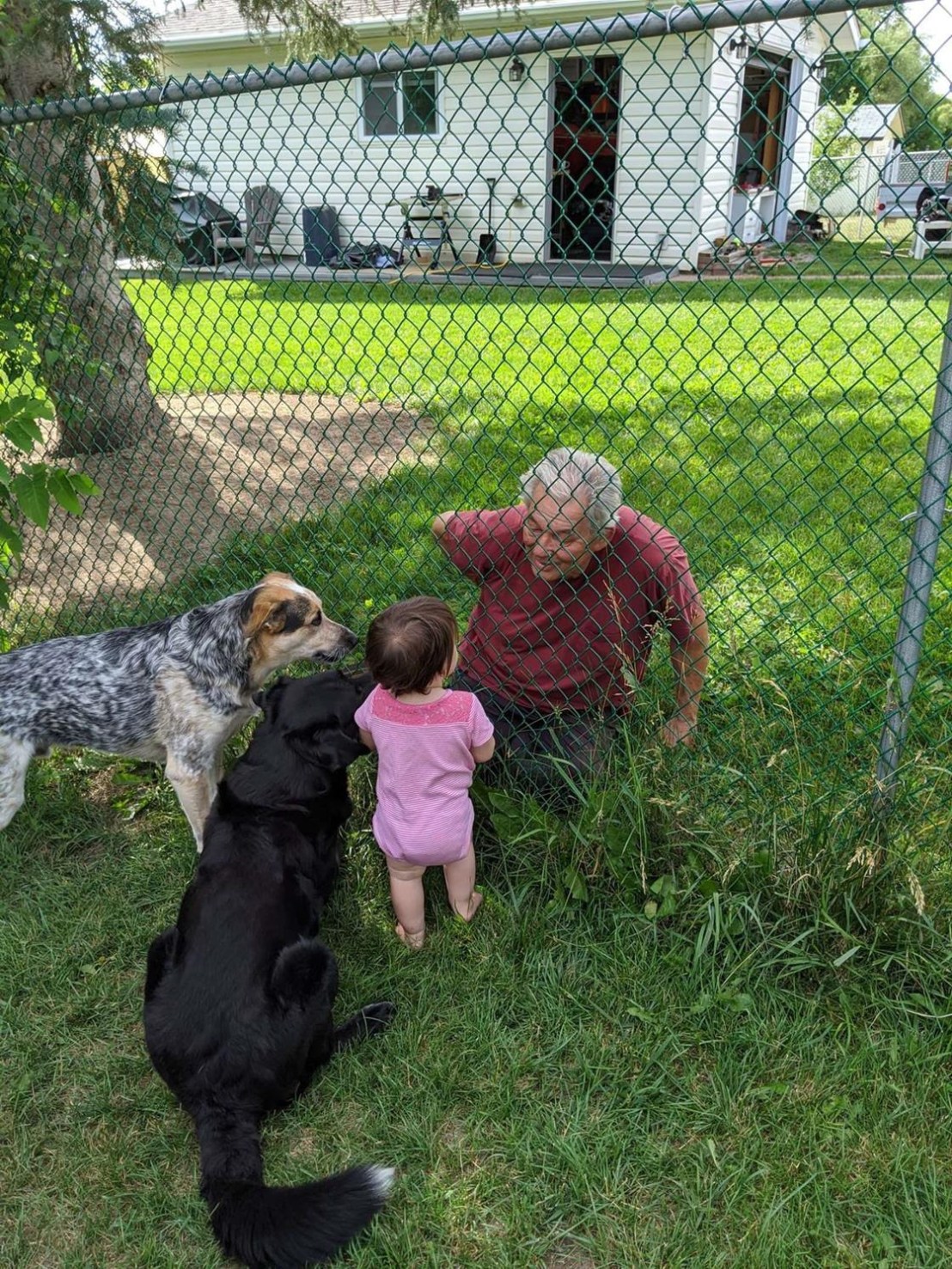
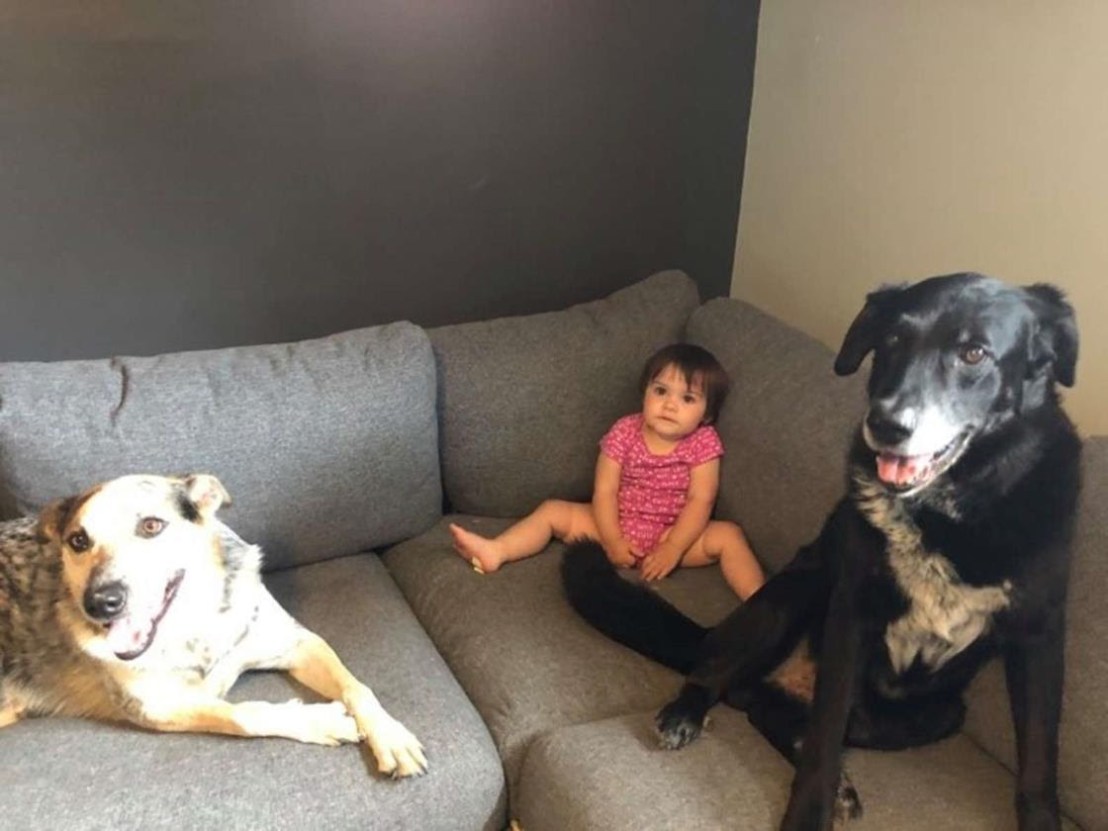
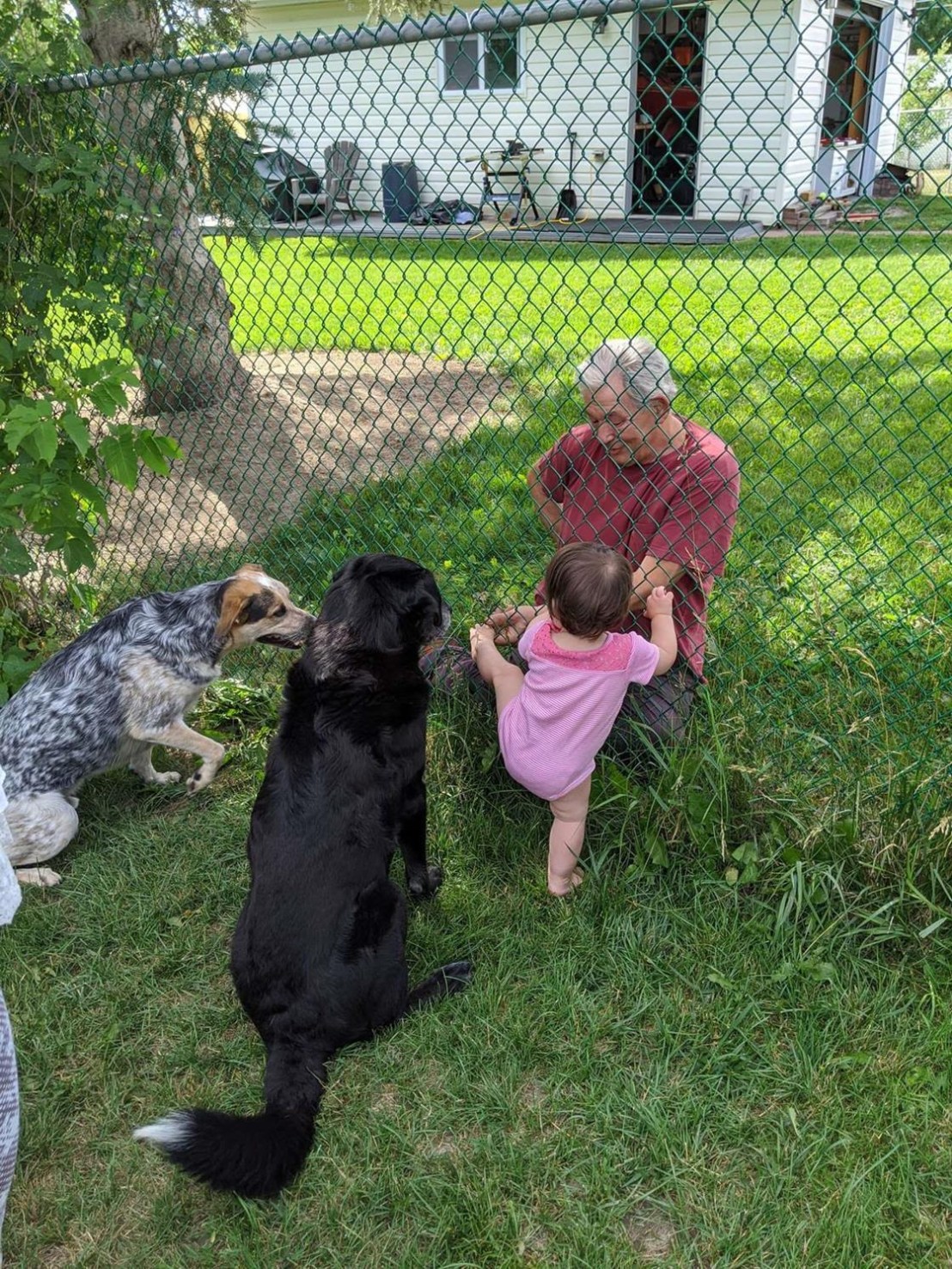
Sometimes you just want to be part of the pack. And the fact that Ramona is a toddler and her brothers Zeus and Blue are dogs makes no difference.
The pups are happy to include her and are always gentle and relaxed around her.
Ramona loves hanging out with them, though she hasn’t learned how to be gentle yet: “She loves her big puppies and is always trying to give them kisses,” Mike Whalley, Ramona’s dad, told The Dodo. “She also often finds them hilarious, frequently having giggle fits about something they’re doing like chasing their tail or jumping around for toys or snacks.”
Photo Credit: Mike Whalley
So when Ramona realized that her brothers were getting treats each day from their neighbor — she had to be involved.
“[Our] neighbor, Gary, originally shared a bologna sandwich with Zeus one afternoon. He asked us if it was all right and then he started buying boxes of dog treats to offer,” Whalley said. “At first, it was just Zeus, then we got Blue and he joined in.”
As soon as Ramona was able to eat solid foods, the neighbor offered her a freshly baked oatmeal cookie and Ramona quickly realized how good her dog brothers had it. “Now that she’s walking and mobile she just trots on over to the fence to line up with the dogs so she can get her ‘treats’ too,” Whalley said.
Photo Credit: Mike Whalley
Of course, their generous neighbor gives the dogs a few more treats each day than Ramona. “They get their breakfast treat, lunchtime, coffee break and their bedtime snack,” Whalley said. “For bedtime, they get their bigger bone to ‘brush their teeth.’”
“Ramona usually joins in for the afternoon treats and it’s usually a cookie or some Ritz crackers,” he added.
Zeus and Blue have Gary on a strict schedule, and if he misses their treat time they make sure to let him know. Now that Ramona is part of the pack, Gary never lets them down.
ooOOoo
It takes such stories as this one to keep us all on the straight and narrow, so to speak, and not to worry too much about the future.
This, again, is not about our beloved animals; in other words, this is not about our dogs.
But it is about something of supreme importance: The role of innovation. That’s innovation in all aspects of our human lives. Think of it as a process of innovation.
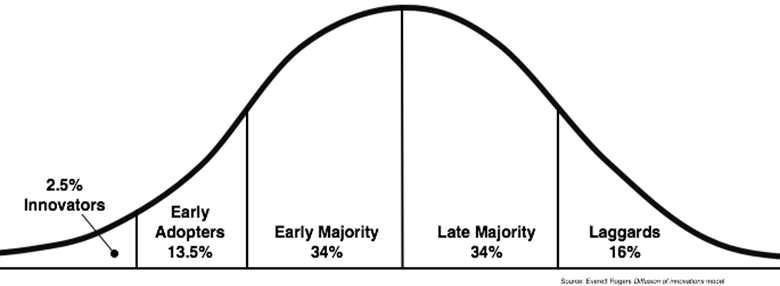
There was the Diffusion of Innovation (DOI) Theory developed by E.M. Rogers in 1962. There is a comprehensive explanation of DOI here, from where I take the following diagram, but before explaining, from that same site, the meanings behind the definitions, I would like to emphasize one important point: “It works better with adoption of behaviors rather than cessation or prevention of behaviors.“.
So here is that diagram:
Here are the meanings of those terms (my emboldening):
Adoption of a new idea, behavior, or product (i.e., “innovation”) does not happen simultaneously in a social system; rather it is a process whereby some people are more apt to adopt the innovation than others.
Researchers have found that people who adopt an innovation early have different characteristics than people who adopt an innovation later. When promoting an innovation to a target population, it is important to understand the characteristics of the target population that will help or hinder adoption of the innovation.
There are five established adopter categories, and while the majority of the general population tends to fall in the middle categories, it is still necessary to understand the characteristics of the target population. When promoting an innovation, there are different strategies used to appeal to the different adopter categories.
Innovators – These are people who want to be the first to try the innovation. They are venturesome and interested in new ideas. These people are very willing to take risks, and are often the first to develop new ideas. Very little, if anything, needs to be done to appeal to this population.
Early Adopters – These are people who represent opinion leaders. They enjoy leadership roles, and embrace change opportunities. They are already aware of the need to change and so are very comfortable adopting new ideas. Strategies to appeal to this population include how-to manuals and information sheets on implementation. They do not need information to convince them to change.
Early Majority – These people are rarely leaders, but they do adopt new ideas before the average person. That said, they typically need to see evidence that the innovation works before they are willing to adopt it. Strategies to appeal to this population include success stories and evidence of the innovation’s effectiveness.
Late Majority – These people are skeptical of change, and will only adopt an innovation after it has been tried by the majority. Strategies to appeal to this population include information on how many other people have tried the innovation and have adopted it successfully.
Laggards – These people are bound by tradition and very conservative. They are very skeptical of change and are the hardest group to bring on board. Strategies to appeal to this population include statistics, fear appeals, and pressure from people in the other adopter groups.
Now there’s a TED Talk that I hadn’t seen, and yet nearly 51 million people had! It came to me as an email from TED and yesterday, while we were sitting up in bed early in the morning, I watched it. It ‘spoke’ to me and I felt that I just had to share it with you.
Because so many of the problems that face our society today are global issues and if humans are to have a future on this planet then we need great leaders who will inspire us.
Now watch the following video, it’s just over 18 minutes long, but it says it all.
Independence Day should also apply to our beloved dogs!
This was first published four years ago but I wonder if there has been any real change. So it’s being published again for the 2020 Independence Day.
ooOOoo
So today is July 4th. One of the key days of the year in the American calendar, if not the key day.
Freedom and independence are the corner stones of a healthy nation. That ‘nation’ should include our dogs. Ergo, I have no hesitation in republishing the following that first was seen on the Care2 site.
The sight is heartbreaking: a sad animal, exposed to the heat or the cold, often without shelter, chained in a backyard. Sometimes all it takes to secure them is a thin rope tied around their collar on one end and a dog house on the other, in others it’s a thick metal chain that keeps the dog from moving away from a tree. Whatever the case, it’s enough to inspire any animal lover to change that dog’s life, but how? The answer is simpler than one would imagine: build a fence.
“Building a fence really changes the relationship between dogs and owners,” explains Michele Coppola, President of Fences for Fido, a nonprofit organization that builds fences in houses that have chained dogs so the dogs can run freely in the backyard. “Many times dogs who were outside 24/7 go on to become a family member, spending time in the house and outside because they’re no longer a location.”
Since 2009, Fences for Fido has been helping dogs in the Southwest Oregon and Washington state areas. People can anonymously nominate a house with a chained dog on their website or people can nominate themselves if they don’t have the means to build their own fence. According to the Coalition to Unchain Dogs, who helped Fences for Fido get started and has been building fences since 2006 in North Carolina, that lack of resources is the most common reason why people keep dogs chained.
“When we first started we thought we would build this fence and solve a problem but we quickly saw the problem is not chained dogs, it’s poverty,” explains Lori Hensley, Director of Operations at Coalition to Unchain Dogs. “No one wants to chain a dog. They just don’t have the means to build a fence.”
Other common reasons are not understanding that dogs are social animals that need to run around, an owner not knowing how to address behavioral problems and trying to keep the dog from running away, says the Humane Society of the United States.
“People chain their dogs for a variety of reasons so we always approach them without judgement because most times we’re not seeing the whole story,” says Coppola adding that those issues are addressed when building a fence for someone to make sure they’re educated on why chaining their dogs shouldn’t be a solution. “Maybe they didn’t have a fence to start with and someone, maybe a family member, dumped a dog with them and they’re keeping it out of the goodness of their hearts but they don’t have a fence. You don’t know.”
Between the two organizations, over 3,400 dogs have been freed from chains but since they only operate locally, they have created resources for people in other parts of the country who want to help. Unchained Planet, a Facebook group of volunteer fence builders, offers advice and tips to anyone looking to start their own fence building organization and a DIY tutorial is also available for free download.
From materials needed to step by step instructions, anyone can start building a fence to help chained dogs in their communities, though to complete novices, the guidance of a seasoned builder or a professional is encouraged.
“If you’re starting out for the very first time, it might be a good idea to pair up with a fence company who may be willing to help and even donate the materials,” suggests Coppola. “Or you want to find somebody who’s done a fence before and can kind of show you how to go about it.”
Potato the corgi never misses an opportunity to say hi to her neighbors. So when social distancing started in Portland, Oregon, Potato’s parents, Cee and Pan, knew their dog wouldn’t be getting the kind of attention she was used to.
Instagram/potato_corgo
“She loves everyone — any dog, any kid, any adult human, doesn’t matter,” Cee told The Dodo. “Even dogs who snarl at her she’s like, ‘It’s OK, I’ll check back in five minutes.’”
“She’s in a polyamorous relationship with all of the mail, UPS and FedEx delivery people but the UPS man is her primary partner,” Cee added. “If you’re having a picnic at the park she will invite herself to your blanket and join in on the gossip.”
Instagram/potato_corgo
Potato knows a number of tricks, including how to ring a bell when she wants to go outside to the yard and socialize with the passersby. Cee, who works from home running a web agency, is always there to keep an eye on Potato when she goes out. And they noticed right away how difficult it was for Potato when her friends started ignoring her.
“Potato takes her job of getting pats through the fence very seriously and honestly seemed depressed that people stopped saying hi to her when social distancing started,” Cee said. “People kept looking really guilty when we’d catch them patting Potato through the fence, or others would ask if they could still pat her.”
Instagram/potato_corgo
To put an end to the confusion, they decided to make a little sign letting everyone know that it was still OK to give Potato the pets she craved, along with a few facts about her. “She’d bark at people she knew who normally would pat her when they’d walk by without saying hi,” Cee said. “So we wanted to make it known that it was consensual for us to take that slight risk of exposure.”
They laminated the sign and tacked it above Potato’s favorite spot on the fence. Potato was instantly happier.
Instagram/potato_corgo
The sign reads: “This is Potato! She’s friendly and yes you can pet her, even now with the virus. She also loves every dog so feel free to intro your dog!”
The sign has done more than cheer up Potato — it’s helped to connect Cee and Pan with neighbors they hadn’t met before. “People approach us more if we’re in the yard, or they send us little notes on [Potato’s] Instagram account,” Cee said. “There’s also an older neighbor lady who specifically comes by every single day to give her treats. It’s pretty wholesome.”
The point at which the sun reaches its farthest point north of the equator is the Summer Solstice, well it is for the Northern Hemisphere. This occurs annually on June 20 or June 21, depending on your time zone.
Here in Southern Oregon, the moment of the Summer Solstice will be at 2:43 PM or 14:43 PDT on Saturday, i.e. today! For the United Kingdom it will be at 22:43 BST on the same day or 21:43 GMT/UTC.
A quick web ‘look-up’ finds that the word solstice is from the Latin solstitium, from sol (sun) and stitium (to stop), reflecting the fact that the Sun appears to stop at this time, albeit momentarily.
At the ancient stone circle of Stonehenge in Southern England, the prehistoric monument that took Neolithic builders an estimated 1,500 years to erect, for many years the Druids have celebrated the Solstice and, undoubtedly, will be doing so again.
AMESBURY, UNITED KINGDOM – JUNE 21: A man stands on top of Stonehenge as the sun rises over Salisbury Plain on June 21, 2006 in Amesbury, England. Police estimated around 17,000 people travelled to watch the sun rise over the 5,000 year old stone circle to start the longest day of the year. (Photo by Daniel Berehulak/Getty Images)
There’s a good article over at EarthSky on this year’s Solstice. I would like to quote a little from it:
At the June solstice, Earth is positioned in its orbit so that our world’s North Pole is leaning most toward the sun. As seen from Earth, the sun is directly overhead at noon 23 1/2 degrees north of the equator, at an imaginary line encircling the globe known as the Tropic of Cancer – named after the constellation Cancer the Crab. This is as far north as the sun ever gets.
All locations north of the equator have days longer than 12 hours at the June solstice. Meanwhile, all locations south of the equator have days shorter than 12 hours.
and
Where should I look to see signs of the solstice in nature? Everywhere. For all of Earth’s creatures, nothing is so fundamental as the length of the day. After all, the sun is the ultimate source of almost all light and warmth on Earth’s surface.
If you live in the Northern Hemisphere, you might notice the early dawns and late sunsets, and the high arc of the sun across the sky each day. You might see how high the sun appears in the sky at local noon. And be sure to look at your noontime shadow. Around the time of the solstice, it’s your shortest noontime shadow of the year.
If you’re a person who’s tuned in to the out-of-doors, you know the peaceful, comforting feeling that accompanies these signs and signals of the year’s longest day.
Is the solstice the first day of summer? No world body has designated an official day to start each new season, and different schools of thought or traditions define the seasons in different ways.
In meteorology, for example, summer begins on June 1. And every schoolchild knows that summer starts when the last school bell of the year rings.
Yet June 21 is perhaps the most widely recognized day upon which summer begins in the Northern Hemisphere and upon which winter begins on the southern half of Earth’s globe. There’s nothing official about it, but it’s such a long-held tradition that we all recognize it to be so.
It has been universal among humans to treasure this time of warmth and light.
For us in the modern world, the solstice is a time to recall the reverence and understanding that early people had for the sky. Some 5,000 years ago, people placed huge stones in a circle on a broad plain in what’s now England and aligned them with the June solstice sunrise.
We may never comprehend the full significance of Stonehenge. But we do know that knowledge of this sort wasn’t limited to just one part of the world. Around the same time Stonehenge was being constructed in England, two great pyramids and then the Sphinx were built on Egyptian sands. If you stood at the Sphinx on the summer solstice and gazed toward the two pyramids, you’d see the sun set exactly between them.
How does it end up hotter later in the summer, if June has the longest day? People often ask:
If the June solstice brings the longest day, why do we experience the hottest weather in late July and August?
This effect is called the lag of the seasons. It’s the same reason it’s hotter in mid-afternoon than at noontime. Earth just takes a while to warm up after a long winter. Even in June, ice and snow still blanket the ground in some places. The sun has to melt the ice – and warm the oceans – and then we feel the most sweltering summer heat.
Ice and snow have been melting since spring began. Meltwater and rainwater have been percolating down through snow on tops of glaciers.
But the runoff from glaciers isn’t as great now as it’ll be in another month, even though sunlight is striking the northern hemisphere most directly around now.
So wait another month for the hottest weather. It’ll come when the days are already beginning to shorten again, as Earth continues to move in orbit around the sun, bringing us closer to another winter.
And so the cycle continues.
Indeed, so the cycle continues as it has for time immemorial!











 Learning from Dogs