Category: Core thought

The history of everything – In just three minutes.

The history of life on Earth  – quicktime!

A whole clutch of things happened yesterday to conspire in me running out of creative time.  Indeed, it was after 4pm when I sat down in front of my computer wondering about today’s LfD blog post.

Luckily (well for me!), amongst the list of draft posts was this one from January 1st, 2014.  So I cheated by grabbing it and offering it for you today. I just hope you find it of interest.  It was originally presented on Big Think on the 1st January, 2014.

ooOOoo

The History of Life on Earth in Three Minutes

by BIG THINK EDITORS
JANUARY 1, 2014, 12:00 AM

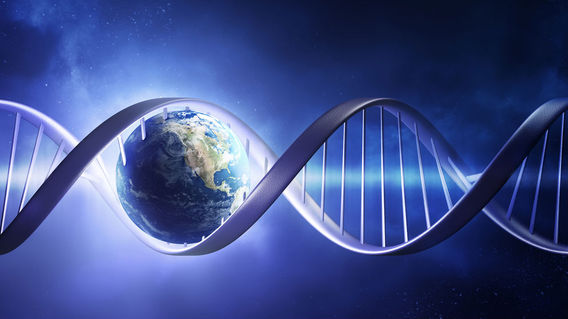
earth_dna

Happy New Year, planet Earth!

According to the Anno Domini designation, the year is now 2014. But the Earth has been around a lot longer than that – about 4.567 billion years. The first evidence of life dates back to around 3.8 billion years ago. Homo sapiens first appeared on the planet around two hundred thousand years – or ten thousand generations – ago.

How’s that for perspective?

Kirk Johnson, director of the National Museum of Natural History, calls this perspective “deep time.” This is the story of our planet preserved in “the DNA of living things,” Johnson explains, as well as “in the fossils we find, in the geologic structures of our planet, in the meteorites we scavenge from the ice fields in Antarctica. Those things together give us an incredible manual for thinking about the planet.”

Why is this manual useful? We are facing a century that will be an incredibly challenging one for humanity. We now live on a planet with seven billion people, which is up from 1.7 billion people just three or four generations ago. So we have more people, and a greater need for resources.

Fortunately we have the bodies of extinct plants and animals that lived for the last three-and-a-half billion years. These fossils are not only a source of energy, but also a source of knowledge about how this planet works. Over its history the Earth has seen an incredible diversity of life – maybe as many as fifty million species. Johnson says we’re learning “as much about the evolution of life on Earth by looking at what happened in the past as we are at looking at the breakthroughs in genomics and DNA of living things.” Furthermore, Johnson sees the sequencing of the human genome as the vanguard for what will eventually be “the study of the genomics of all living things.”

We have the opportunity right now, Johnson says, to choose what our future will be. Our understanding of the diversity of life on this planet, he says, will be our guide. This story is being told at a current exhibition at the National Museum of Natural History called “Genome: Unlocking Life’s Code.”

In the video below, Johnson shares a unique perspective on deep time in the form of a timeline of life on this planet in just three minutes.

ooOOoo

Don’t know about you but I found the video fascinating.

Dogs and humans – fascinating research.

Serendipity, or just coincidence?

Yesterday, I published a post and called it Dogs and wolves – fascinating research.  Then blow me down in yesterday’s online BBC News, there was an article headlined: Dogs’ brain scans reveal vocal responses  This is how it opened.

Dogs’ brain scans reveal vocal responses

By Rebecca Morelle, Science reporter, BBC World Service

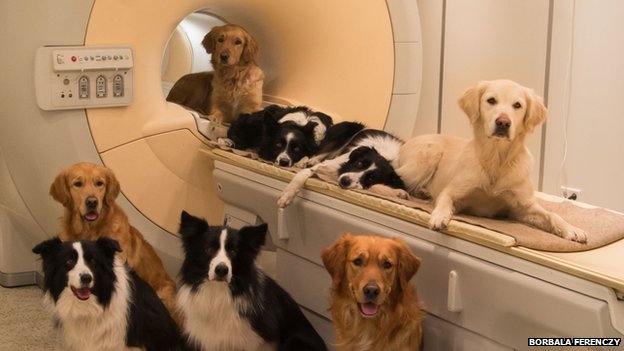
Pet dogs took part in the MRI scanning study.

Devoted dog owners often claim that their pets understand them. A new study suggests they could be right.

By placing dogs in an MRI scanner, researchers from Hungary found that the canine brain reacts to voices in the same way that the human brain does.

Emotionally charged sounds, such as crying or laughter, also prompted similar responses, perhaps explaining why dogs are attuned to human emotions.

The work is published in the journal Current Biology.

Lead author Attila Andics, from the Hungarian Academy of Science’s Eotvos Lorand University in Budapest, said: “We think dogs and humans have a very similar mechanism to process emotional information.”

Eleven pet dogs took part in the study; training them took some time.

Going across to that Current Biology link, one reads:

Summary

During the approximately 18–32 thousand years of domestication [1], dogs and humans have shared a similar social environment [2]. Dog and human vocalizations are thus familiar and relevant to both species [3], although they belong to evolutionarily distant taxa, as their lineages split approximately 90–100 million years ago [4]. In this first comparative neuroimaging study of a nonprimate and a primate species, we made use of this special combination of shared environment and evolutionary distance. We presented dogs and humans with the same set of vocal and nonvocal stimuli to search for functionally analogous voice-sensitive cortical regions. We demonstrate that voice areas exist in dogs and that they show a similar pattern to anterior temporal voice areas in humans. Our findings also reveal that sensitivity to vocal emotional valence cues engages similarly located nonprimary auditory regions in dogs and humans. Although parallel evolution cannot be excluded, our findings suggest that voice areas may have a more ancient evolutionary origin than previously known.

Back to the BBC news item.

The canine brain reacted to voices in the same way that the human brain does.

“There were 12 sessions of preparatory training, then seven sessions in the scanner room, then these dogs were able to lie motionless for as long as eight minutes. Once they were trained, they were so happy, I wouldn’t have believed it if I didn’t see it.”

For comparison, the team looked at the brains of 22 human volunteers in the same MRI scanners.

The scientists played the people and pooches 200 different sounds, ranging from environmental noises, such as car sounds and whistles, to human sounds (but not words) and dog vocalisations.

The researchers found that a similar region – the temporal pole, which is the most anterior part of the temporal lobe – was activated when both the animals and people heard human voices.

“We do know there are voice areas in humans, areas that respond more strongly to human sounds that any other types of sounds,” Dr Andics explained.

“The location (of the activity) in the dog brain is very similar to where we found it in the human brain. The fact that we found these areas exist at all in the dog brain at all is a surprise – it is the first time we have seen this in a non-primate.”

Emotional sounds, such as crying and laughter also had a similar pattern of activity, with an area near the primary auditory cortex lighting up in dogs and humans.

Likewise, emotionally charged dog vocalisations – such as whimpering or angry barking – also caused a similar reaction in all volunteers,

Dr Andics said: “We know very well that dogs are very good at tuning into the feelings of their owners, and we know a good dog owner can detect emotional changes in his dog – but we now begin to understand why this can be.”

However, while the dogs responded to the human voice, their reactions were far stronger when it came to canine sounds.

They also seemed less able to distinguish between environmental sounds and vocal noises compared with humans.

About half of the whole auditory cortex lit up in dogs when listening to these noises, compared with 3% of the same area in humans.

Commenting on the research, Prof Sophie Scott, from the Institute of Cognitive Neuroscience at University College London, said: “Finding something like this in a primate brain isn’t too surprising – but it is quite something to demonstrate it in dogs.

“Dogs are a very interesting animal to look at – we have selected for a lot of traits in dogs that have made them very amenable to humans. Some studies have show they understand a lot of words and they understand intentionality – pointing.”

But she added: “It would be interesting to see the animal’s response to words rather than just sounds. When we cry and laugh, they are much more like animal calls and this might be causing this response.

For the full report, as it was posted on the BBC website, click here.

Plus, do watch this five-minute video abstract.

Published on Feb 20, 2014

The video presents the first study to compare brain function between humans and any non-primate animal. Scientists at MTA-ELTE Comparative Ethology Research Group in Hungary found that dogs and humans use similar neural mechanisms to process social information in voices. The fact that dogs can be trained to lie motionless during fMRI tests opens up the space for a new branch of comparative neuroscience.

Paper in Current Biology: http://dx.doi.org/10.1016/j.cub.2014….

Group home page: http://mta-etologia.elte.hu/

The first study to compare brain function between humans and any non-primate animal shows that dogs have dedicated voice areas in their brains just as people do. Dog brains, like those of people, are also sensitive to acoustic cues of emotion, according to a study in the Cell Press journal Current Biology.

The findings suggest that voice areas evolved at least 100 million years ago, the age of the last common ancestor of humans and dogs, the researchers say. It also offers new insight into humans’ unique connection with our best friends in the animal kingdom, perhaps explaining how our two species have lived and worked together so effectively for tens of thousands of years.

“Our findings suggest that dogs and humans not only share a similar social environment, but they also use similar brain mechanisms to process social information,” said Atilla Andics of MTA-ELTE Comparative Ethology Research Group in Hungary. “This may help the successfulness of vocal communication between the two species.”

Andics and his colleagues trained eleven dogs to lay motionless in an fMRI brain scanner. That made it possible to run the very same neuroimaging experiment on dog and human participants — something that had never been done before. They captured both dogs’ and humans’ brain activities while they listened to dog and human sounds, ranging from whining or crying to playful barking or laughing.

The images show that dog and human brains include voice areas in similar locations. Not surprisingly, the voice area of dogs responds more strongly to other dogs, while that of humans responds more strongly to other humans. The researchers also noted striking similarities in the ways the dog and human brain processes emotionally loaded sounds. In both species, an area near the primary auditory cortex lit up more with happy sounds than unhappy ones. Andics said they were most struck by the common response to emotion across species.

There were some differences too: in dogs, 48 percent of all sound-sensitive brain regions respond more strongly to sounds other than voices. That’s in contrast to humans, in which only three percent of sound-sensitive brain regions show greater response to non-vocal versus vocal sounds.

The study is the first step to understanding how it is that dogs can be so remarkably good at tuning into the feelings of their human owners. “This method offers a totally new way of looking at neural processing in dogs,” Andics said. “At last we begin to understand how our best friend is looking at us and navigating in our social environment.”

The spirit in all life.

There are things that are beyond rational explanation.

Warning – this post is rather more ‘touchy-feely’ than you are used to seeing on Learning from Dogs.  So if it wanders about in ways that you struggle to follow then just stifle your yawn and come back tomorrow!

It goes back to an earlier plan that I had in terms for a couple of posts.  Both focussing on the myriad of examples of the appalling decline in our world.  I had been collecting a number of essays to support the proposition that if we don’t learn from dogs the qualities of integrity and unconditional love then our world was doomed.  I had collected the essay from Ellen Cantaro over on TomDispatch about the incredible stupidity of fracking. Or the one from Tom’s own pen in an essay about climate change being the new ‘Anti-News’.  I had saved the recent essay from George Monbiot discussing the madness of the so-called dredging practices in the UK’s Somerset Levels.  I had fumed at another George Monbiot essay Bring It On that included this incredible statement:

It is hard to think of a more serious allegation. For six months an undercover officer working for the Metropolitan Police was instrumental in planning a major demonstration, which ended up causing injuries and serious damage to property. Yet the police appear to have failed to pass this intelligence to the City of London force, leaving the target of the protest unprotected.

I had many more examples but you get the message!

So what stopped me?

I was chatting to Jon Lavin on Monday about a variety of things.  Jon asked how the book was coming along.  I replied by saying that a recent NaNoWriMo webinar had persuaded me that the book wasn’t a novel and should be re-written as a non-fiction story.  Going on to add that I might include some of the appalling examples of what was going wrong in our society to strengthen the argument that we truly have much to learn from dogs.

Jon, who had read the first, very rough draft of the book that appeared on this blog, cautioned me against doing that.  He went on to say that in the world of solutions focussed therapy, the area that Jon practices in professionally, the way forward was always to focus “on what’s working“.  Jon continued by saying that while one would initially allow the problems to be voiced, this negativity would always be a tiny piece of the overall process, say less than 5% of the session.  That even if a client’s whole world seemed to be failing, there would always be something that was alright, always a 1% that was working, and that would be the place to start.  A quick web search endorsed that as the website of Good Therapy revealed, from where I read:

Solution focused brief therapy (SFBT) targets the desired outcome of therapy as a solution rather than focusing on the symptoms or issues that brought someone to therapy. This technique only gives attention to the present and the future desires of the client, rather than focusing on the past experiences. The therapist encourages the client to imagine their future as they want it to be and then the therapist and client collaborate on a series of steps to achieve that goal. This form of therapy involves reviewing and dissecting the client’s vision, and determining what skills, resources, and abilities the client will develop and use to attain his desired outcome. Solution focused therapy was developed by Steve De Shazer, Insoo Kim Berg, and their team at the Brief Family Therapy Family Center in Milwaukee, USA.

Thus coming back to the book rewrite, Jon said that people wanted to read ‘good news’ not negativity.  It was a key reminder for me and an incredibly inspiring call that in these challenging times, whether on this blog or in a potential book, I need to write about all the powerfully, positive lessons that dogs, and all warm-blooded creatures, offer mankind.  The lessons of integrity, love, trust, balance, loyalty, faithfulness, affection, forgiveness and more.

OK, moving on.

On the evening of February 7th Jean and I settled down to watch a YouTube video.  It had been featured in a post from LadyBlueRose that had been published on the 6th.  The post was called His Name is Spirit and it was the story of a woman, Anna Breytenbach, who has dedicated her life to what she calls interspecies communication.

We had reached the six-minute point in the film, already captivated by it, when the telephone rang.  I paused the film and answered the phone.  It was neighbour Dordie from next door ringing to say that when she had seen us earlier in the day she had forgotten to mention that there was this incredible film that we really had to watch …… yes, you guessed it!  The film that Jean and I were watching at that moment.

Here is that film.

Now here is Anna’s website Animal Spirit where one learns:

ENHANCING THE RELATIONSHIP BETWEEN HUMANS, OTHER ANIMALS AND THE NATURAL WORLD

Welcome to an exploration of interspecies communication – a journey of discovering ways to restore a deep relationship with all of life.

Human and animal communication creates a valuable bridge between human and non-human animals. By connecting with our intuition, we can engage in meaningful dialogue and remember how to hear the subtle messages from those whose space we share in our lives and our natural environment. Coming from a place of respect and reverence for all life, we can learn to understand our wilder relatives, honour their truths and live in greater harmony.

and where one also can watch the short introductory film that is on her home page; as below.

A web search then came across a fascinating interview with Anna.

So where does this all end up?

Simply, that in a world dominated by media of all types that favour ‘doom and gloom’ it can be incredibly difficult to hang on to the message offered by Jon and by Anna, and by many others no doubt, the message that our individual health, and by implication the health of this planet, is afforded through staying positive.

Or put more basically, if you are feeling low go and hug a dog!  So I can do no better than to close with the same picture that closed Tuesday’s post Meet the dogs – Dhalia.

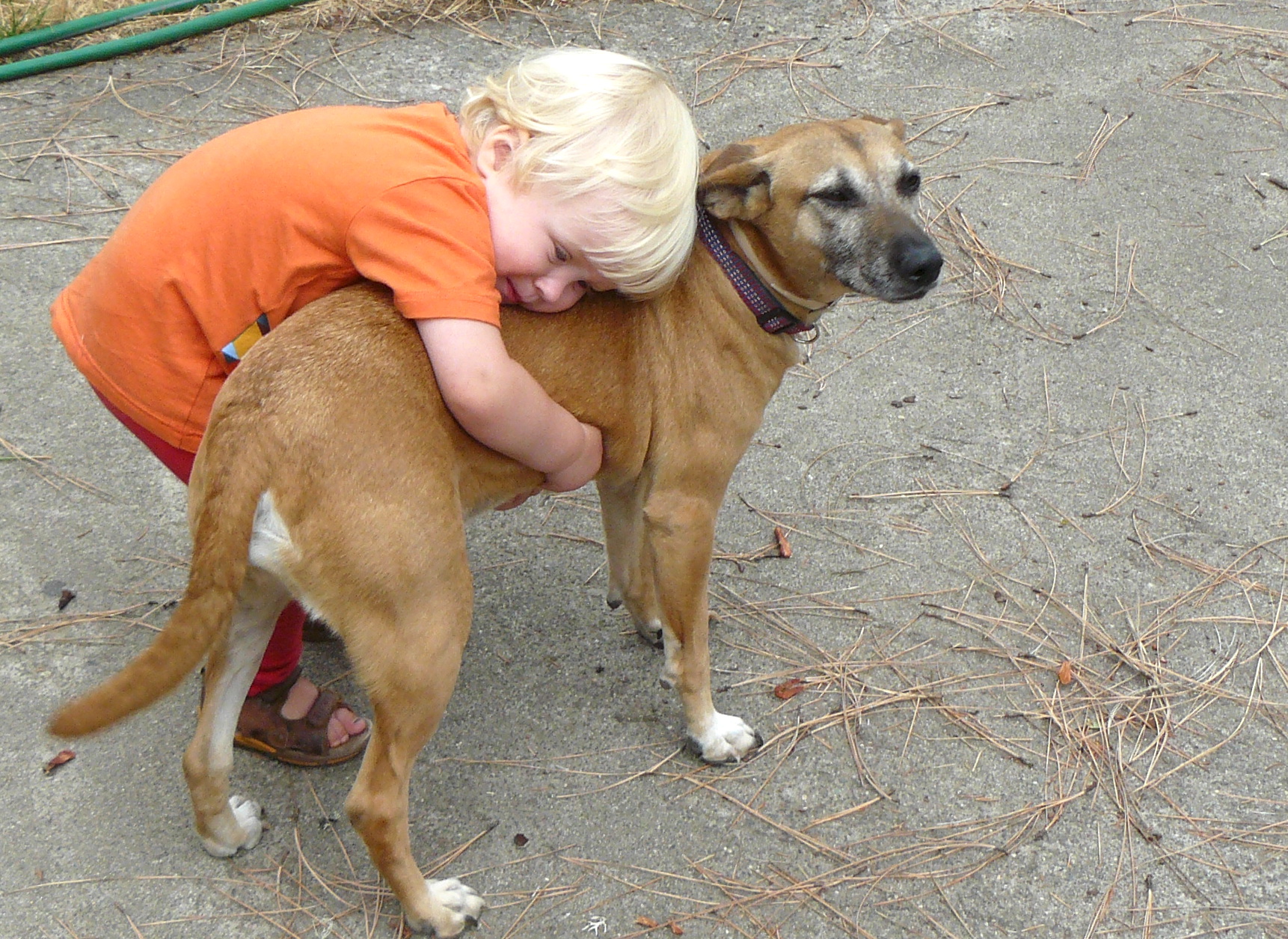
Love and Trust - Grandson Morten hugging Dhalia.
Love and Trust – Grandson Morten hugging Dhalia

Meet the dogs – Dhalia

Dhalia – the third of our nine dogs.

There have been previous tales in this series of meeting our dogs.  Firstly, Paloma and then Lilly.  Now comes Jean’s story about how she found Dhalia.

ooOOoo

Dhalia

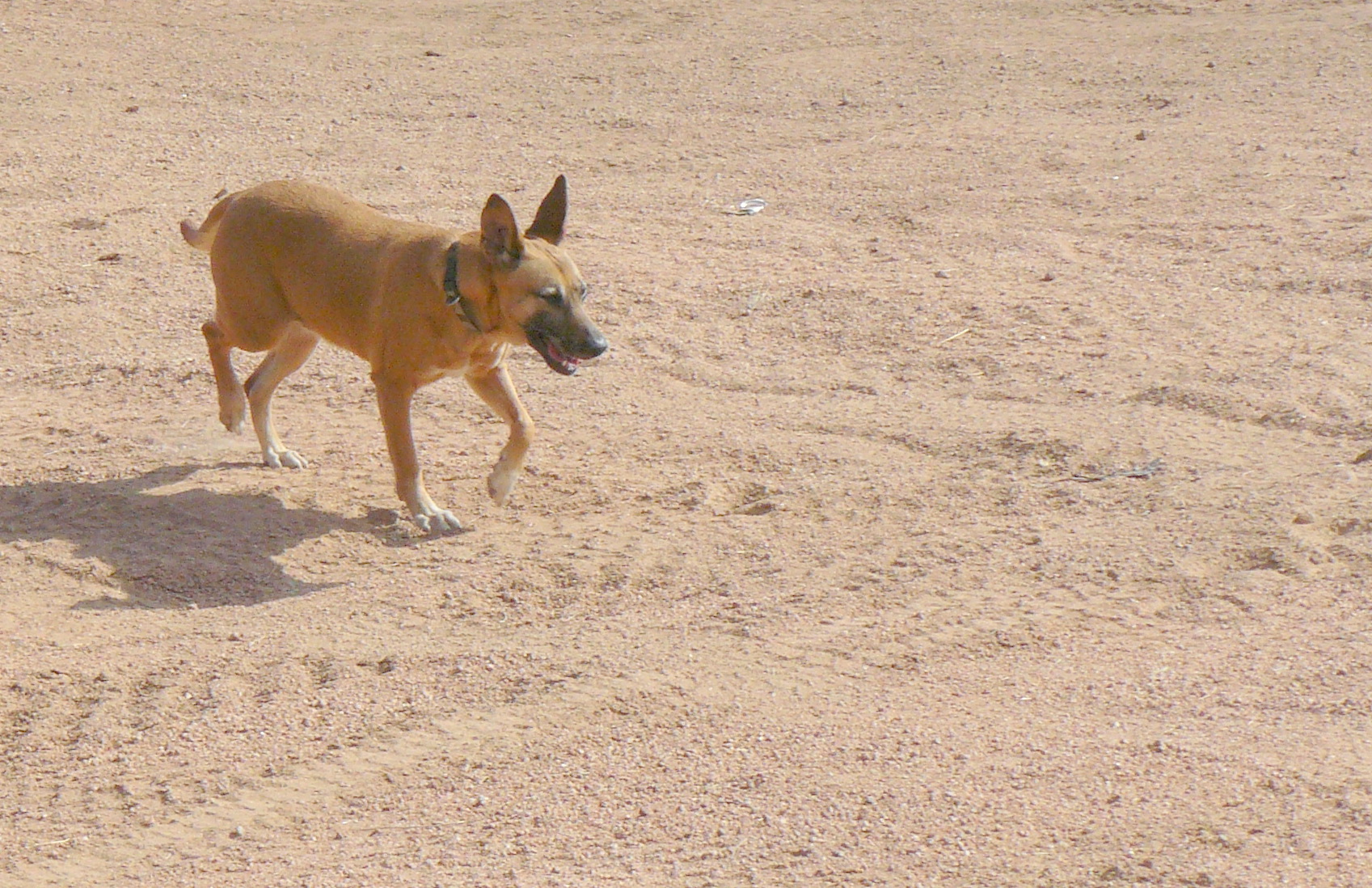
Dhalia - domesticated but still the wild dog shows through.
Dhalia – domesticated but still the wild dog shows through.

It was a Sunday around the middle of the month of September in the year 2005. My friend, Gwen, and I had set off for La Manga, a small fishing village three miles from San Carlos, Mexico.  As the trip would take us through areas of desolate desert and the day was forecast to be a sizzler, we left early. The purpose of the journey was to feed a pack of dogs that were living on the outskirts of La Manga. These wild dogs were gradually getting used to our presence and with the aid of a humane trap we had previously caught two of them, a small puppy and her mother. Those two dogs were at my home and were gradually becoming tame so that good homes could be found for them.

Half-way to our destination, we saw two dogs running by the side of the road.   It wasn’t unusual to see strays searching for road-kill. I stopped the car and prepared food and water for them. One dog took off almost immediately but the other just stood perfectly still looking intently at me. She was rail-thin and full of mange.  Her ears and chest were scabbed with blood, and I could see that previously she had had pups. Tentatively, I pushed the food towards her. She took a bite and sat on her haunches; her eyes never leaving mine. Then she lifted a paw and reached out to me. Immediately, I burst into tears and scooped her into my arms.  I carried her back to the car where she lay quietly in my lap whilst we went on to do our feeding.  She was bloody and very smelly. However, I didn’t care.

I named her Dhalia and after treatments for mange she became quite beautiful.  She was the pivotal part of a short story Paul wrote back in 2011. [Ed: see note]  Under her sweet exterior remains that same will to survive so evident when I rescued her all those years ago.  There has been more than one occasion that she has brought me a recently killed squirrel or an ancient bone.  We love our Dhalia: she still reaches out with her front paw when she seeks attention.  Dhalia will be ten-years-old this year.

Love and Trust - Grandson Morten hugging Dhalia.
Love and Trust – Grandson Morten hugging Dhalia, September 2013.

ooOOoo

NB: Tomorrow, I will publish the short story written three years ago Messages from the Night.  Next week another account from Jean about one of our family members.

Love over fear.

Do we chose love over fear?

On the 24th January this year, I published a post called 20:20 self-awareness.  To save you clicking the link and returning to that post, the essence was speaking clearly; not only to others but to ourselves.  I quoted George Bernard Shaw, “The single biggest problem in communication is the illusion that it has taken place.”

Then went on to write:

Yet, what we hear and what we say are both modified, frequently unconsciously, by past events, experiences and trauma.  That being the case, then it is key, critically so, that we achieve the best possible self-awareness.  Because it is only through an understanding of our past that we come to learn of our sensitivities and our associated ‘tender spots’ and their potential for ‘pulling our strings’.

Closing the post by including a twenty-minute, documentary film about fear.  (Here it is again for those that missed it.)

One of the comments to that post was from Sue who writes the blog Dreamwalker’s Sanctuary. (It’s a beautiful blog, by the way.)

This was the comment left by Sue.

Fear is inherent in us all for that Flight or Fight mode.. But the F word has now been used and abused as it has been used as a useful tool .. Self awareness comes when we wake up to what our world is generating and we have a choice. We can allow ourselves to get embroiled within the Fear.. Or we can see it for what it is and who and what is creating that fear and why?…. Once that awareness kicks in we can see there is nothing to Fear but Fear itself… Living in the Now of a moment prevents us also from fearing the future, and fearing what has passed..

Easier said than done, I guarantee you .. But once you can get your head around it all… We breathe deeper and evenly and let all fear go… ( I am still working on this, I am not perfect by any means ) for as your video states its been ingrained within us for so long we know no other way, and we are a creature of habit!..

Thought provoking post, Paul thank you

Sue then pointed me to one of her essays, that I have the great pleasure of republishing today.

ooOOoo

Do You Chose Love Over Fear?

One Love Heart.
One Love Heart.

Remember those Prophesies of “2012”? I posted many of my thoughts upon this timeline which I thought was to mark the end of one era and the beginning of the Next – Maybe those ancients teachers didn’t know whether we would rise or fall as they marked the end of their calendar.

Maybe that fate awaits us still depending upon our choices we make in the Now dependant upon our Next actions!  But as we read through those  teachings of ancient prophecy  you will see also they speak  of transformation. Transformation requires Change, and we are being urged now to Think! Think outside our boxes as our comfort zones are now being tweaked as we become ever more sensitive to the Energy Shifts within our World.

Whether we realise it or not we are incarnated with a ‘Soul Mission’ even though we caught amnesia after we were born.  But more and more of us are thankfully waking up as we begin to remember who we are. It may have taken many life times and lessons to align with our present purpose as we pass through various stages on our journey, often not understanding the reasons for painful events and experiences.  It isn’t until later that we look back and see the gifts and healing which were given to us and that through them we learn to grow, letting go of the past as we step into the Now.

Giving Birth is not without pain, and our new earth is only now going through her own birthing pains.  We see it in the spasms of conflict, the wars, hunger, poverty, displacement of refugees and the destruction through pollution of Mother nature.  Pains which are now being experienced which we humans have carried with us over many life times. Pains that emerge as a build-up of our Fear and Prejudices.

The choices are simple: we either choose Fear or Love.

Even while writing this a sense of peace has swept over me as I smile to myself. I recently read an article which said “…we incarnate with these wounds and at a soul-level choose to encounter those whose actions catalyse us to resolve and heal our soul wounding“. That made me smile even wider as I have long held the belief that our enemies are our greatest teachers helping serve our soul’s growth as we learn the various lessons such as patience, kindness, love, forgiveness, and compassion.

We are each of us now experiencing shifts in our emotions and lives, as we feel the ‘Shift’ in energy within our Mother Earth who is calling us to wake up and remember who we are; as our vibrations alter.

When I first started my blog back in 2007 I stumbled almost by accident to the opening post. But it was no accident! In fact my very first post was an experiment called Smile. I wanted to make a difference even if it was only through the words of a poem.

As we ‘Lighten Up’, letting go of what we no longer need, we lift our vibration higher; as we leave behind the wounds of the past. We are Energy Beings – and it’s time now to realise we each are a part of the Whole, that Oneness that permeates all things with the same Energy.

We are now ‘Shifting’ from duality to Unity Consciousness. This was brought home again to me on how many of us are thinking similar thoughts even here on WordPress. We see similar themes as we link into the Mass Consciousness, as we join together our thoughts, as we link subconsciously to the Cosmic web of thoughts.

We need to be aware of the Power of our thoughts and how we can assist in raising our planet’s vibration and our own collective Consciousness.

Much has been spoken upon The Ascension. First we need to ascend through our own layers as we climb ever higher, leaving behind the things that no longer serve us.

We do that by not getting swept up in conflict, by being more loving and tolerant, by being compassionate rather than being judgmental holding hate and anger.

We need to put the Care back in the world. If we embrace and choose Love over fear and stop looking who to blame but start to set examples of living in harmony and unity, then the true magnificence of who we really are can begin to manifest that ‘Golden Age’ that was once prophesied to bring about Peace.

It is up to each one of us to pledge to change our own lives, because only that way will those prophesies come to fruition.

The Choice is Ours

Choose Well..

Love and Gratitude

Sue Dreamwalker..

ooOOoo

Unconditional Love.
Unconditional Love.

The most important thing we must learn from dogs.

Picture parade thirty.

We interrupt your life to bring you a moment of beauty, part two.

Last week I published the first set of pictures sent across by John Hurlburt.  Here is the second set (but do look at the postscript).

John11

oooo

John12

oooo

John13

oooo

John14

oooo

JH15

oooo

JH16

oooo

John17

oooo

John18

oooo

John19

oooo

John20

oooo

Now a bonus.

I was reading Naked Capitalism earlier on Saturday and came across the link to a story in Huffington Post about a young man who jumped into a swollen river in Bangladesh to rescue a young fawn in danger of being swept away to it’s death.  This how that story opens:

Courageous Teen Risks His Life To Save Drowning Baby Deer

This is pretty incredible.

A wildlife photographer visiting Noakhali, Bangladesh, was able to witness — and document — an amazingly courageous teen risk his own life to save a drowning fawn, Caters News Service reports.

The boy waded into the fast current of a surging, swollen river in Noakhali, holding the deer above his head, even as he, himself, disappeared beneath the water at times.

The link in the last sentence takes you to the article as it appeared in The Daily Mail newspaper (online version).

Two of the photographs from that article.

PIC FROM HASIB WAHAB / CATERS NEWS (Pictured: DEER RETURNED SAFELY) - A brave boy fearlessly risked his own life - to save a helpless baby deer from drowning. The boy, believed to be in his early teens, defiantly held the young fawn in one hand above his head as he plunged through the surging river. During the ordeal onlookers were unsure whether the boy was going to appear again. When he finally made it to the other side the locals cheered as the deer was reunited with its family. The incident took place in Noakhali, Bangladesh, when the young fawn became separated from its family during torrential rain and fast-rising floods.
PIC FROM HASIB WAHAB / CATERS NEWS (Pictured: DEER RETURNED SAFELY) – A brave boy fearlessly risked his own life – to save a helpless baby deer from drowning. The boy, believed to be in his early teens, defiantly held the young fawn in one hand above his head as he plunged through the surging river. During the ordeal onlookers were unsure whether the boy was going to appear again. When he finally made it to the other side the locals cheered as the deer was reunited with its family. The incident took place in Noakhali, Bangladesh, when the young fawn became separated from its family during torrential rain and fast-rising floods.

oooo

PIC FROM HASIB WAHAB / CATERS NEWS (Pictured: DEER) - A brave boy fearlessly risked his own life - to save a helpless baby deer from drowning. The boy, believed to be in his early teens, defiantly held the young fawn in one hand above his head as he plunged through the surging river. During the ordeal onlookers were unsure whether the boy was going to appear again. When he finally made it to the other side the locals cheered as the deer was reunited with its family. The incident took place in Noakhali, Bangladesh, when the young fawn became separated from its family during torrential rain and fast-rising floods.
PIC FROM HASIB WAHAB / CATERS NEWS (Pictured: DEER)

Here’s that article in The Daily Mail newspaper.

OK, I know I have a tendency to get a little sentimental but here’s my closing thought.  That is that while there are people in the world such as young Belal who will not hesitate to rescue a vulnerable creature then there’s hope for all of mankind.

Just love.

A guest post.

Whenever someone signs up to follow Learning from Dogs, it seems right and proper for me to thank them directly. In the majority of cases these new subscribers have their own blog site and I go across to that site and leave a thank you message.  Almost without exception, I include an invite for that new follower to consider writing a guest post for me.

That’s how the following story came about.  Mrs. G., who has the blog site Love Me, Trust Me, Kill Me contacted me and offered a guest post.  If that wasn’t sufficiently special Mrs. G. is a teenager with a talent for writing beautiful prose and poetry.  Thus the link is not only across the ‘blogosphere’ but across more than fifty years of age difference.  I find that deeply humbling.

So without further ado, here is the short but very beautiful post.

ooOOoo

Man’s best friend.

“A dog is a man’s best friend”.

For me, this phrase represents the incontestable truth.  I say this for I, too, have one of those wonderful creatures called dogs and I know how much love and comfort they offer. I treat my dog as I would treat a human because, in a way, they are like us just without the complicated emotions and insecurities. To know that there is someone who loves you unconditionally, someone who will never betray you as a human would, someone who will always be there for you when you need them the most, helping you, protecting you, is an indescribable and heartwarming feeling.

They are intelligent, loving, protective and they were, are and will be our companions for a very long time. We must love and protect them just like they love and protect us; unconditionally. If you hurt a dog it will still love you, no matter what. We can learn many things from them, things like loyalty and affection, what it means to care for someone, and they take away the feeling of loneliness. Dogs do not need to learn anything from us, we need to learn from them and they need to teach us how to be better persons.

I see my dog as my friend, I see him as a family member, and I love him with all my heart. I know that one day he will be gone and I’m afraid. I cry when I think about it, but that’s the way it is. Just like humans, dogs are born, they live, they die, and we must treasure them, love them, protect them and learn from them while we still can, because one day dogs may be gone forever.

Kind regards, Georgiana

ooOOoo

Georgiana’s dog is called Shony and she shares it with her sister.  You may see the loving animal here.

I’m sure that you, as with me, was greatly moved by Georgiana’s feelings for Shony so beautifully expressed in her words.  Further writings from Mrs. G. would be wonderful.

Closing off today’s post was difficult.  There are a number of videos on YouTube showing dogs loving people but, in the end, I couldn’t resist a video that was first published on Learning from Dogs last March.  It was included in a post called All it takes is love.

Not only is it a beautiful video of a dog loving a cat, the musical backing track is gorgeous – there will be tears, I guarantee you!

… from helping the mustangs.

If you can help these beautiful animals in any way, read on.

Yesterday, in a post called Wild horses wouldn’t stop me …. I outlined the situation in Nevada where “the Nevada Farm Bureau is suing the Bureau of Land Management because they want the federal agency to round up what’s left of America’s wild horses and send them to slaughter.” The post included the commitment from Jean and me to adopt two of these horses.

In the hope that this post touches others who would also like to adopt a horse or know someone else that would, then here are the details that we have collected in the last twenty-four hours. (NB: please double-check yourself because much, if not all, of this is new to me and I am far from being an authority on the subject.)

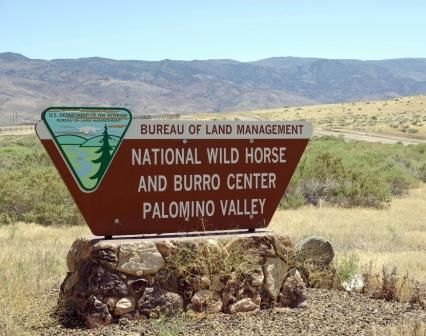
The starting point seems to be Palomino Valley National Adoption Center.  Their website is here.  On the home page of that website, one reads:

palomino_valley_center.

The National Wild Horse and Burro Center at Palomino Valley (PVC) is the largest BLM preparation and adoption facility in the country and serves as the primary preparation center for wild horses and burros gathered from the public lands in Nevada and other near-by states. Nevada is home to more than 50 percent of the Nation’s wild horses and burros with approximately 83 herd management areas throughout the state.

Adoption Details

The majority of animals at PVC are available for adoption 6 days a week. To schedule an appointment to adopt a wild horse or burro at PVC, please call 775-475-2222. Appointments for viewing/adopting are limited to a maximum of one hour. The majority of animals are available for adoption, however, some are not due to the time involved in the preparation process. If you have questions about our adoption requirements, click here to go to our Adoption page.

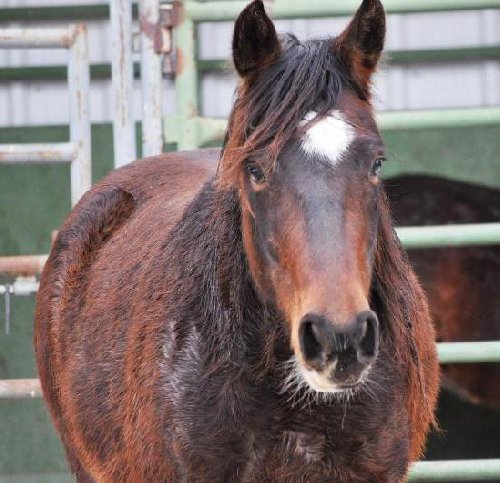
When I called that office number yesterday afternoon, the person who helpfully answered a number of my questions recommended the BLM Adopt-A-Horse website.  That website offers a number of useful links that anyone wanting to learn more should explore, including how to adopt via the internet. Plus a link to an online gallery where there are many pictures of beautiful horses, such as this one:

Horse 2249

Sex: Mare Age: 5 Years   Height (in hands): 15.0Necktag #: 2249   Date Captured: 08/28/12

Color: Brown   Captured: Paisley Desert (OR)

Notes:
#2249 – 5 yr old brown mare, captured Aug 2012 from the Paisley Desert Herd Area, Oregon.

This horse is currently located at the Corral Facility in Hines, Oregon. For more information, contact Patti Wilson at email pwilson@blm.gov or Tara at tmartina@blm.gov.

Pick up options (by appt): Burns, OR; Salt Lake, UT; Elm Creek, NE; Pauls Valley, OK; Piney Woods, MS; Mequon, WI.

Other pick up options: West Monroe, LA (Mar 21), Archdale, NC (Apr 18) and Springfield, OH (Apr 25).

Adoption confirmation for this animal must be finalized no later than Feb 6. After this date, all unclaimed animals will be available for in-person walk up adoption ONLY.

Some other useful websites now follow:

Ever After Mustang Rescue in Maine.

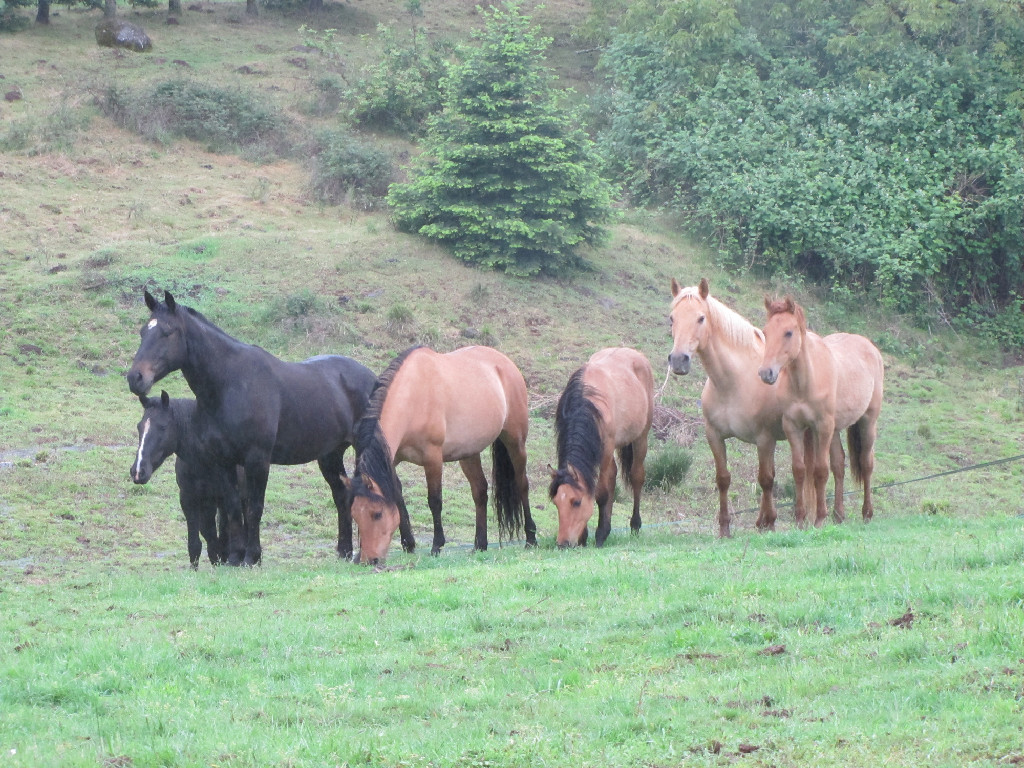
Wild Horse Mountain Ranch in Sherwood, Oregon (South-West of Portland).  From which I have taken the following photograph.

Wild Horse Mtn

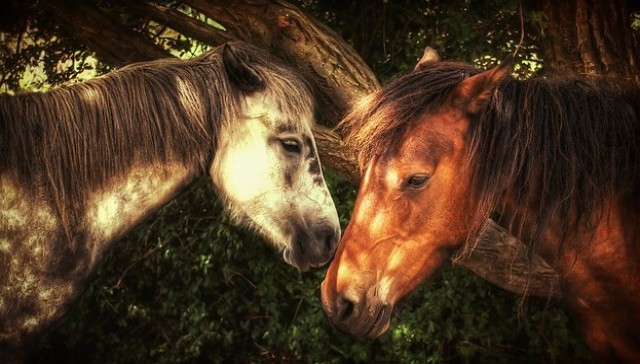
and, finally, MUSTANGS 4 US that has a plethora of information and good advice. Take this link, for example: Adopt A Mustang (Oregon). Plus there’s a very useful page on Where To Adopt. This photograph also came from the Mustangs 4 Us website.

AdoptHorse

Fingers crossed this has been of interest to many and of direct value to some.  Jean and I have much to learn and as we work our way towards being better informed and being ready to take on two horses, all the details will be shared with you.

An Act Of Congress
“Congress finds and declares that wild free-roaming horses and burros are living symbols of the historic and pioneer spirit of the West; (and) that they contribute to the diversity of life forms within the Nation and enrich the lives of the American people …”
(Public Law 92-195, December 15, 1971)

Wild horses won’t stop me …

From alerting you to the potential catastrophe of the Mustangs in Nevada.

Relationships across the internet, especially across the world of blogging are, oh, I don’t know, different! (OK, I hear some saying I could have chosen a more apt word; such as weird, self-indulgent, vain, and so on.)

Melinda Roth is an author. Her ‘goodreads’ page is here; her Amazon Books page is here; her website is here.  Melinda has started reading posts on Learning from Dogs and, likewise, I have read posts over at Anyone Seen My Horse?

Seven days ago, Melinda published a post under the title of Oh, yum.  This is the opening paragraph.

I ran across this recipe while doing a little research on horse slaughter (the Nevada Farm Bureau is suing the Bureau of Land Management because they want the federal agency to round up what’s left of America’s wild horses and send them to slaughter) so… thought I’d share:

When I read that I felt a mixture of anger, confusion, puzzlement; surely this can’t be the case?  Then I read on, skipping the recipes that Melinda included in her post.

Now, you might have to go to Canada or Mexico to get the horse meat, but we ship those countries about 150,000 of our unwanted equines for slaughter anyway, so your meat will probably be home grown in the USA. No worries.

That is, as long as you’re not too concerned about the unregulated administration of numerous chemical substances to horses before slaughter, which according to official reports “are known to be dangerous to humans, untested on humans, or specifically prohibited for use in animals raised for human consumption.”

If travel is out of the question, however, you can always buy imported horse meat online.

Check out My Brittle Pony, which is horse meat jerky seasoned with “Guinness, onions, garlic, fresh herbs and Soy Sauce and is guaranteed to contain no horse substitute such as beef.”

It costs £3.50… and you can pay with Pay Pal.

But if the Nevada Farm Bureau has its way, we won’t have to travel or use currency converters to buy horse meat. A majority of the country’s last wild horses live in Nevada, and that state seems ready to cash in on one of its most popular natural resources.

Anyone who knows anything about Jean and me knows that we love animals and we adore our own animals. Thus as I read Melinda’s post the pain and anguish building in me was indescribable; and I’m only half-way through the post. Yes, there’s worse to come.

According to reports published in the last week, the Nevada Farm Bureau and the Nevada Association of Counties want the BLM to round up just about as many remaining wild horses as they can. The BLM argues that it’s already housing about 50,000 wild horses it’s already captured and can’t afford to take in many more.

The Nevada Farm Bureau has an answer, however: The BLM should “destroy” horses that are deemed unadoptable.

I shall include one more paragraph from her post:

The Nevada Farm Bureau argues that there are too many wild horses on public lands. But there are only about 30,000 wild horses left, and since public lands seem perfectly able to support 1.75 million head of livestock (that belong to private ranchers), what exactly is the problem?

There’s more you should read so please do so.  Especially not forgetting to communicate your feelings to NVFB via the address listed on their web site – nvfarmbureau@nvfb.org

I wrote a comment to Melinda’s post endeavouring to explain what I was feeling. Melinda then pointed me to an essay by Andrew Cohen.  It was beautiful and it seemed in order to share it with you.  So here is Andrew Cohen writing about horses.

ooOOoo

Cohen horses

Why I Write About Wild Horses

 By Andrew Cohen 

29 January 2014

I write about wild horses. I write an awful lot about wild horses. And it’s not just because I cherish the animals or admire all that they have done through the centuries to ease our burden here in North America. I sometimes get grief about my focus upon the nation’s herds, and I know that many people who don’t “get” horses, or who have never been near a horse, cannot fathom the depth of passion the animals engender among their human supporters. What can I say? I can’t help it and I won’t stop.

I write about wild horses for many of the same reasons that I write about mentally ill prisoners who are abused in their cells or about indigent defendants who cannot afford a lawyer or anyone else who has a voice, and rights, but who cannot be properly heard or who cannot have those rights acknowledged. Mordecai Richler, the late, great Canadian writer, long ago captured the essence of what I try to do with all my writing: “The novelist’s primary moral responsibility is to be the loser’s advocate,” he said. The actor Ricky Gervais said pretty much the same thing the other day, without the literary flair, when he said: “Animals don’t have a voice. But I do.”

I have a voice and I’ve chosen to speak out for these horses, which are being rounded up by the tens of thousands from our public and private lands and sent to holding pens in the Midwest — or sold into slaughter even though that is against the law. The government and the ranchers say these roundups must happen because there is no room for the herds, or because they graze too heavily upon the land, but ample evidence exists suggesting that this simply isn’t so. The truth is that there is plenty of room out West for these horses and there are plenty of ways in which the herds may be properly managed to ensure their survival without forcing them into cruel conditions or slaughter.

Why that isn’t happening is a story everyone ought to care about. So I write about wild horses because I think their treatment over the past four decades, since the passage of the federal law designed to protect them, reveals a great deal about American politics and the nature of the bureaucratic state. The Interior Department, which has stewardship over the herds, is little more than a straw man for the industries it is supposed to regulate. And those industries, which receive enormous federal benefits in the form of welfare ranching, and which in turn send millions of dollars and boatloads of lobbyists to Washington, want the horses off the public lands no matter what anyone else says.

I write about wild horses because last year the National Academies of Science issued a report scathing in its criticism of the Bureau of Land Management’s scientific approach to the herds. Before the report was issued, federal officials assured advocates that its conclusions would be respected (or at least publicly discussed). But it’s been seven months now since the report was issued and federal officials have done almost nothing about it. That’s just not unjust to the horses, and unfair to their human advocates, and perhaps a violation of federal law, it’s also terrible policy, as a general rule, for bureaucrats to ignore the findings of a report they themselves commissioned and paid for.

I write about wild horses because the last Secretary of the Interior was a rancher who did not even try to conceal his disdain for federal obligations to the horses and because the current Secretary of the Interior, herself a former engineer, has shown no interest in the herds or in addressing the concerns raised by the NAS report. Only the Interior Department, the backwater of all Washington beats, could engender so little muckracking when so much money, and so much else, is on the line. I write about wild horses because their story is the story of every other small interest without political power in Washington or the statehouses of this nation.

They are persecuted. They have rights but no remedies. And their fate isn’t going to get better unless more people come to understand the injustice of what’s happening to them — and how far the gulf is between the noble image we have given them in our national psyche and the reality of their perilous existence. That’s why I write about wild horses and it’s why I am grateful when anyone happens to read what I’ve written.

ooOOoo

Now I don’t know one end of a horse from the other.  But Jean does.  In previous years, Jean was a keen horse-woman.  But me not speaking horse doesn’t mean that I am not passionate about doing something to help these poor wild horses. Even if what we do is only something tiny, as the old saying goes, by the inch it’s a cinch.  Jean is just as passionate about wanting to help as I.

Not only do we have two miniature horses here in Oregon, we have sufficient pasture to accommodate two of these Mustangs.  We want to adopt two horses or burros that, otherwise, would be slaughtered.

Tomorrow I will share how we are researching how one goes about adopting a mustang or a burro.  Because if only one extra horse is adopted as a result of the Melinda Roth – Andrew Cohen – Learning from Dogs sequence then that’s one less horse destined for slaughter.

Lovely what comes out of relationships!
Meet the dogs – Lilly

Lilly, the second of our nine dogs.

Last week was the start of a series of posts giving you, dear reader, background on each of our nine dogs.  Thus last week, Jean wrote about Paloma.  Here is Jean’s account of how Lilly came into her life.

ooOOoo

Lilly

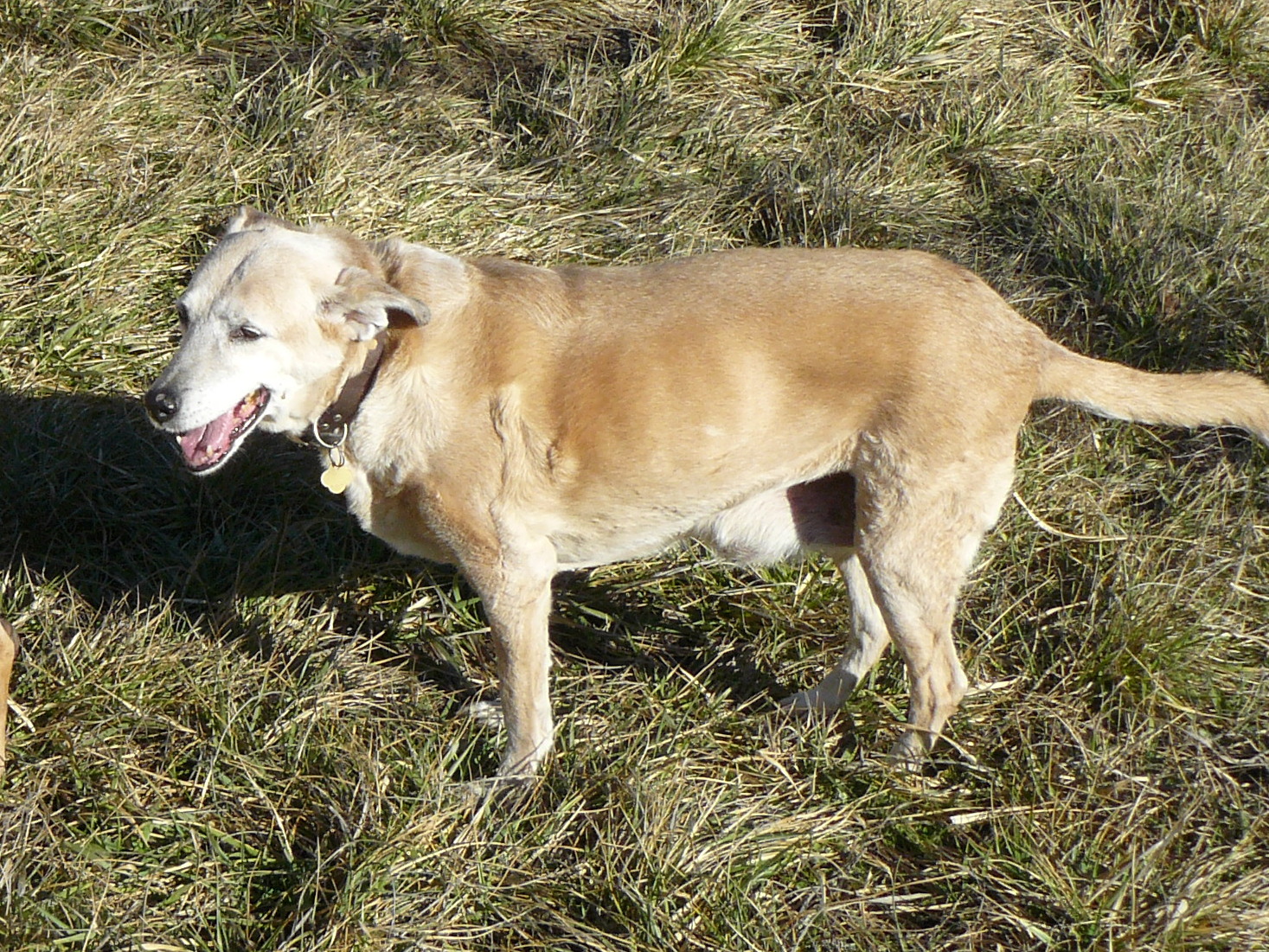
Lilly - Taken in the last two weeks.
Lilly – Taken 26th January, 2014

Lilly came into my life fourteen years ago. I had taken my car into the mechanics workshop in San Carlos, Mexico for an oil change and was beckoned over to an old junk car in their lot. It had no glass in the windows and in the hatch-back area lay a smallish dog with five young, suckling puppies. She had apparently walked in off the street and chosen the old airy car as a suitable ‘house’ in which to have her babies. The workers had supplied her with an old greasy towel for a mattress.

My girlfriend, Suze, and I immediately set about making her comfortable with a small quilt and plenty of water and good dog food. She had been dining on tacos and tamales scraps up until then.

Suze and I visited frequently and took plenty of food and at the same time went about looking for homes for the pups. However, one day we arrived and found all the beautiful babies gone. The mechanics had given them away. We were shattered and could only hope that they had gone to loving homes.

‘Rabbit’, as she was then called, continued hanging around the workshop and the men seemed to like her. Rabbit had this trick of leaping on her hind legs, twirling and landing on her four legs; hence her name Rabbit, I guess.

Suze and I would see her once a week on average and had also arranged for Rabbit to be spayed. All seemed well until Easter came (I think we are talking of the year 2000). As is common in Mexico, during Easter week in San Carlos everything shuts down. It’s carnival time. The streets are busy with tourists and there is much traffic. I was worried about Rabbit as the mechanic’s shop was locked up tight and Rabbit was outside in the lot by the street. I planned to take her home for the rest of the holiday but fate intervened. On my way to collect her, I was aghast to see her motionless by the side of the road, obviously having been hit by a car.  I gently picked her up and took her home.  On inspection, it was clear that she had two broken legs on her right-hand side.  Her injuries were so bad that I knew the local vet did not have the skills or instruments to heal her. My late husband, Ben, and I ended up driving her two hours South to Obregon where there was an orthopaedic vet. He put pins in both legs and she stoically set about mending herself. Rabbit became Lilly. Irrespective of name, she was an assertive but sweet young dog and settled in nicely with my burgeoning pack; I had twelve rescue dogs in those days.  Her legs healed nicely and she resumed her twirling.

Lilly became a particular favourite of Ben, my late husband. When in 2005 Ben lay dying at home, Lilly slept non-stop by his side on the bed, only leaving to eat or go outside.  I knew for sure that Ben had died in the night when one morning I awoke to feel Lilly beside me on my bed. Lilly sensed that now I needed her more.

Lilly is still with us.  Now a dowager old lady of at least fifteen years of age, she still enjoys going out with her buddies whom she tends to boss somewhat.  (Paul thinks that Lilly is an ‘alpha’ dog, in other words has pack leadership in her genes.) But one thing that Lilly doesn’t now do; she doesn’t twirl anymore, but then neither do I.

It will be a very sad day when Paul and I have to say goodbye to this treasure of a dog. In the meantime we endeavour to make each day that she has left as rich as possible.

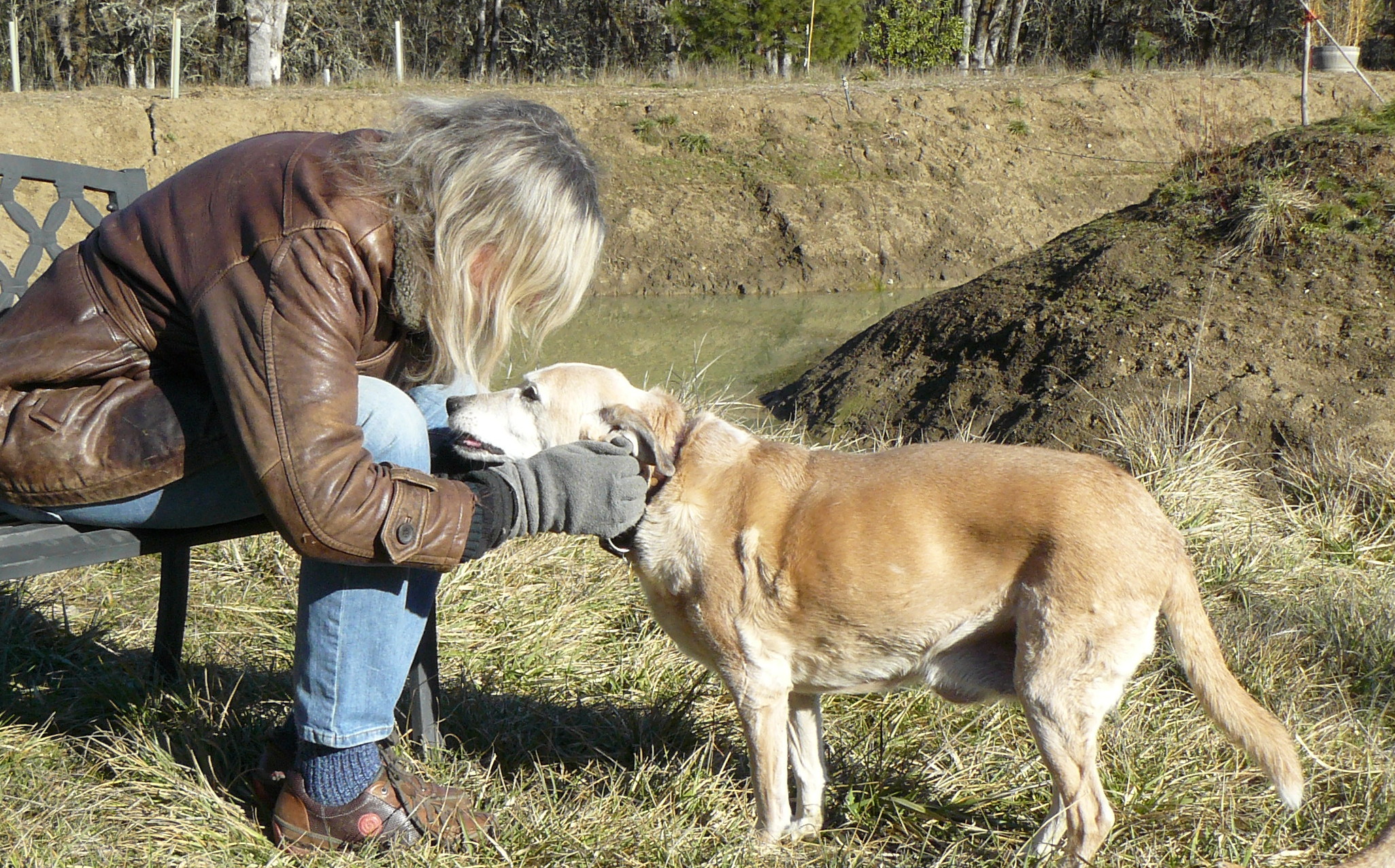
Another very recent photograph of Lilly.

ooOOoo

Next week another story about another member of our family.