If you can help these beautiful animals in any way, read on.
Yesterday, in a post called Wild horses wouldn’t stop me …. I outlined the situation in Nevada where “the Nevada Farm Bureau is suing the Bureau of Land Management because they want the federal agency to round up what’s left of America’s wild horses and send them to slaughter.” The post included the commitment from Jean and me to adopt two of these horses.
In the hope that this post touches others who would also like to adopt a horse or know someone else that would, then here are the details that we have collected in the last twenty-four hours. (NB: please double-check yourself because much, if not all, of this is new to me and I am far from being an authority on the subject.)
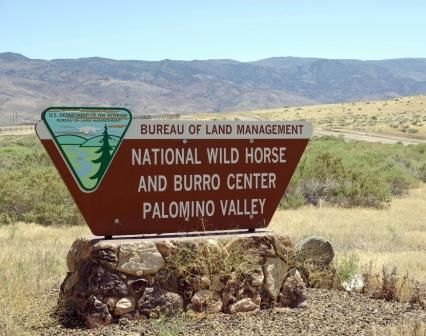
The starting point seems to be Palomino Valley National Adoption Center. Their website is here. On the home page of that website, one reads:
The National Wild Horse and Burro Center at Palomino Valley (PVC) is the largest BLM preparation and adoption facility in the country and serves as the primary preparation center for wild horses and burros gathered from the public lands in Nevada and other near-by states. Nevada is home to more than 50 percent of the Nation’s wild horses and burros with approximately 83 herd management areas throughout the state.
Adoption Details
The majority of animals at PVC are available for adoption 6 days a week. To schedule an appointment to adopt a wild horse or burro at PVC, please call 775-475-2222. Appointments for viewing/adopting are limited to a maximum of one hour. The majority of animals are available for adoption, however, some are not due to the time involved in the preparation process. If you have questions about our adoption requirements, click here to go to our Adoption page.
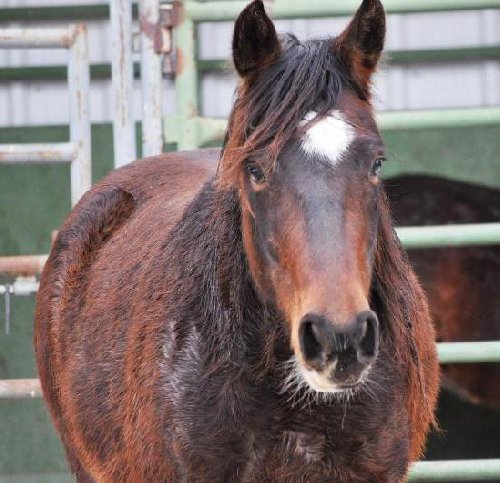
When I called that office number yesterday afternoon, the person who helpfully answered a number of my questions recommended the BLM Adopt-A-Horse website. That website offers a number of useful links that anyone wanting to learn more should explore, including how to adopt via the internet. Plus a link to an online gallery where there are many pictures of beautiful horses, such as this one:
Sex: Mare Age: 5 Years Height (in hands): 15.0Necktag #: 2249 Date Captured: 08/28/12
Color: Brown Captured: Paisley Desert (OR)
Notes:
#2249 – 5 yr old brown mare, captured Aug 2012 from the Paisley Desert Herd Area, Oregon.
This horse is currently located at the Corral Facility in Hines, Oregon. For more information, contact Patti Wilson at email pwilson@blm.gov or Tara at tmartina@blm.gov.
Pick up options (by appt): Burns, OR; Salt Lake, UT; Elm Creek, NE; Pauls Valley, OK; Piney Woods, MS; Mequon, WI.
Other pick up options: West Monroe, LA (Mar 21), Archdale, NC (Apr 18) and Springfield, OH (Apr 25).
Adoption confirmation for this animal must be finalized no later than Feb 6. After this date, all unclaimed animals will be available for in-person walk up adoption ONLY.
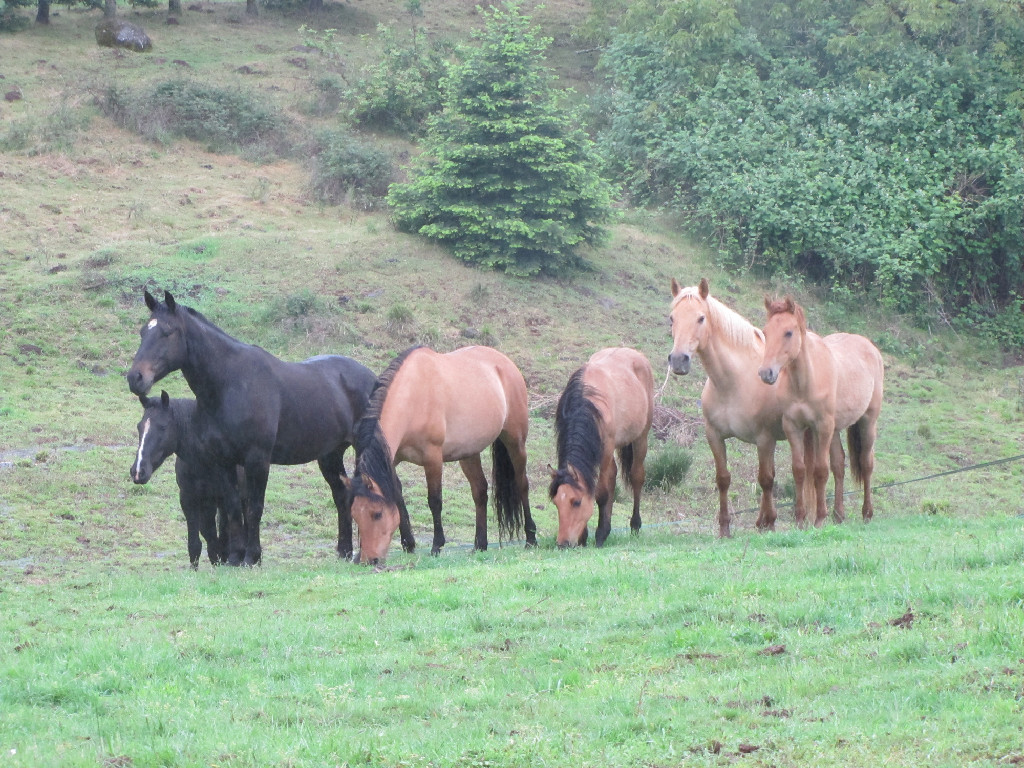
Wild Horse Mountain Ranch in Sherwood, Oregon (South-West of Portland). From which I have taken the following photograph.
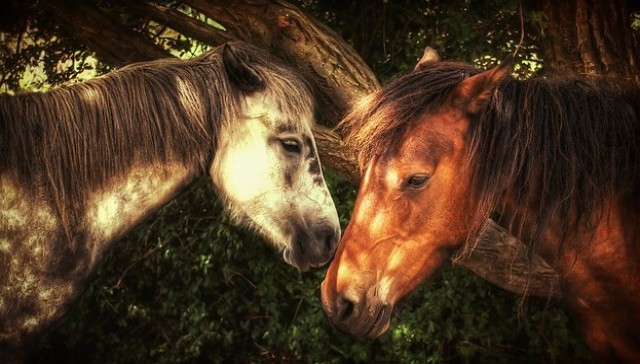
and, finally, MUSTANGS 4 US that has a plethora of information and good advice. Take this link, for example: Adopt A Mustang (Oregon). Plus there’s a very useful page on Where To Adopt. This photograph also came from the Mustangs 4 Us website.
Fingers crossed this has been of interest to many and of direct value to some. Jean and I have much to learn and as we work our way towards being better informed and being ready to take on two horses, all the details will be shared with you.
An Act Of Congress
“Congress finds and declares that wild free-roaming horses and burros are living symbols of the historic and pioneer spirit of the West; (and) that they contribute to the diversity of life forms within the Nation and enrich the lives of the American people …”
(Public Law 92-195, December 15, 1971)
From alerting you to the potential catastrophe of the Mustangs in Nevada.
Relationships across the internet, especially across the world of blogging are, oh, I don’t know, different! (OK, I hear some saying I could have chosen a more apt word; such as weird, self-indulgent, vain, and so on.)
Melinda Roth is an author. Her ‘goodreads’ page is here; her Amazon Books page is here; her website is here. Melinda has started reading posts on Learning from Dogs and, likewise, I have read posts over at Anyone Seen My Horse?
Seven days ago, Melinda published a post under the title of Oh, yum. This is the opening paragraph.
I ran across this recipe while doing a little research on horse slaughter (the Nevada Farm Bureau is suing the Bureau of Land Management because they want the federal agency to round up what’s left of America’s wild horses and send them to slaughter) so… thought I’d share:
When I read that I felt a mixture of anger, confusion, puzzlement; surely this can’t be the case? Then I read on, skipping the recipes that Melinda included in her post.
Now, you might have to go to Canada or Mexico to get the horse meat, but we ship those countries about 150,000 of our unwanted equines for slaughter anyway, so your meat will probably be home grown in the USA. No worries.
That is, as long as you’re not too concerned about the unregulated administration of numerous chemical substances to horses before slaughter, which according to official reports “are known to be dangerous to humans, untested on humans, or specifically prohibited for use in animals raised for human consumption.”
If travel is out of the question, however, you can always buy imported horse meat online.
Check out My Brittle Pony, which is horse meat jerky seasoned with “Guinness, onions, garlic, fresh herbs and Soy Sauce and is guaranteed to contain no horse substitute such as beef.”
It costs £3.50… and you can pay with Pay Pal.
But if the Nevada Farm Bureau has its way, we won’t have to travel or use currency converters to buy horse meat. A majority of the country’s last wild horses live in Nevada, and that state seems ready to cash in on one of its most popular natural resources.
Anyone who knows anything about Jean and me knows that we love animals and we adore our own animals. Thus as I read Melinda’s post the pain and anguish building in me was indescribable; and I’m only half-way through the post. Yes, there’s worse to come.
According to reports published in the last week, the Nevada Farm Bureau and the Nevada Association of Counties want the BLM to round up just about as many remaining wild horses as they can. The BLM argues that it’s already housing about 50,000 wild horses it’s already captured and can’t afford to take in many more.
The Nevada Farm Bureau argues that there are too many wild horses on public lands. But there are only about 30,000 wild horses left, and since public lands seem perfectly able to support 1.75 million head of livestock (that belong to private ranchers), what exactly is the problem?
There’s more you should read so please do so. Especially not forgetting to communicate your feelings to NVFB via the address listed on their web site – nvfarmbureau@nvfb.org
I wrote a comment to Melinda’s post endeavouring to explain what I was feeling. Melinda then pointed me to an essay by Andrew Cohen. It was beautiful and it seemed in order to share it with you. So here is Andrew Cohen writing about horses.
I write about wild horses. I write an awful lot about wild horses. And it’s not just because I cherish the animals or admire all that they have done through the centuries to ease our burden here in North America. I sometimes get grief about my focus upon the nation’s herds, and I know that many people who don’t “get” horses, or who have never been near a horse, cannot fathom the depth of passion the animals engender among their human supporters. What can I say? I can’t help it and I won’t stop.
I write about wild horses for many of the same reasons that I write about mentally ill prisoners who are abused in their cells or about indigent defendants who cannot afford a lawyer or anyone else who has a voice, and rights, but who cannot be properly heard or who cannot have those rights acknowledged. Mordecai Richler, the late, great Canadian writer, long ago captured the essence of what I try to do with all my writing: “The novelist’s primary moral responsibility is to be the loser’s advocate,” he said. The actor Ricky Gervais said pretty much the same thing the other day, without the literary flair, when he said: “Animals don’t have a voice. But I do.”
I have a voice and I’ve chosen to speak out for these horses, which are being rounded up by the tens of thousands from our public and private lands and sent to holding pens in the Midwest — or sold into slaughter even though that is against the law. The government and the ranchers say these roundups must happen because there is no room for the herds, or because they graze too heavily upon the land, but ample evidence exists suggesting that this simply isn’t so. The truth is that there is plenty of room out West for these horses and there are plenty of ways in which the herds may be properly managed to ensure their survival without forcing them into cruel conditions or slaughter.
Why that isn’t happening is a story everyone ought to care about. So I write about wild horses because I think their treatment over the past four decades, since the passage of the federal law designed to protect them, reveals a great deal about American politics and the nature of the bureaucratic state. The Interior Department, which has stewardship over the herds, is little more than a straw man for the industries it is supposed to regulate. And those industries, which receive enormous federal benefits in the form of welfare ranching, and which in turn send millions of dollars and boatloads of lobbyists to Washington, want the horses off the public lands no matter what anyone else says.
I write about wild horses because last year the National Academies of Science issued a report scathing in its criticism of the Bureau of Land Management’s scientific approach to the herds. Before the report was issued, federal officials assured advocates that its conclusions would be respected (or at least publicly discussed). But it’s been seven months now since the report was issued and federal officials have done almost nothing about it. That’s just not unjust to the horses, and unfair to their human advocates, and perhaps a violation of federal law, it’s also terrible policy, as a general rule, for bureaucrats to ignore the findings of a report they themselves commissioned and paid for.
I write about wild horses because the last Secretary of the Interior was a rancher who did not even try to conceal his disdain for federal obligations to the horses and because the current Secretary of the Interior, herself a former engineer, has shown no interest in the herds or in addressing the concerns raised by the NAS report. Only the Interior Department, the backwater of all Washington beats, could engender so little muckracking when so much money, and so much else, is on the line. I write about wild horses because their story is the story of every other small interest without political power in Washington or the statehouses of this nation.
They are persecuted. They have rights but no remedies. And their fate isn’t going to get better unless more people come to understand the injustice of what’s happening to them — and how far the gulf is between the noble image we have given them in our national psyche and the reality of their perilous existence. That’s why I write about wild horses and it’s why I am grateful when anyone happens to read what I’ve written.
ooOOoo
Now I don’t know one end of a horse from the other. But Jean does. In previous years, Jean was a keen horse-woman. But me not speaking horse doesn’t mean that I am not passionate about doing something to help these poor wild horses. Even if what we do is only something tiny, as the old saying goes, by the inch it’s a cinch. Jean is just as passionate about wanting to help as I.
Not only do we have two miniature horses here in Oregon, we have sufficient pasture to accommodate two of these Mustangs. We want to adopt two horses or burros that, otherwise, would be slaughtered.
Tomorrow I will share how we are researching how one goes about adopting a mustang or a burro. Because if only one extra horse is adopted as a result of the Melinda Roth – Andrew Cohen – Learning from Dogs sequence then that’s one less horse destined for slaughter.
Of course, they are not ‘our’ deer, far from it. But over the past months we have come to love the daily, sometime twice-daily, visits of these beautiful creatures to our property.
Early last Saturday morning, as Jean went to feed the chickens and our two miniature horses, just the other side of the grass track she saw a deer lying prone under the trees.
Jean was certain that it was dead and a few minutes later when together we went up to the creature it was obvious that this was the case.
Closer inspection revealed that the deer was one that we had got to know; an elderly lady that had previously lost the sight of her right eye. My guess was that the poor animal had been dead for something under twenty-four hours. There were no obvious signs of an attack by dogs or other creatures. Jean and I hope that she died from old age.
Rather than bury the deer on our property and run the risk of wild carnivores digging it up, we telephoned Wildlife Images, who are close by, because we knew that sometimes dead wild animals make valuable feeding for their precious inhabitants.
Wildlife Images rehabilitation and education center.
However, the fact that we couldn’t guarantee that the dead deer had not been contacted by other wild animals meant that the carcass could not be fed to Wildlife Images’ guests, for fear of disease. (NB: Anyone interested in visiting or helping the centre, please do watch this video.)
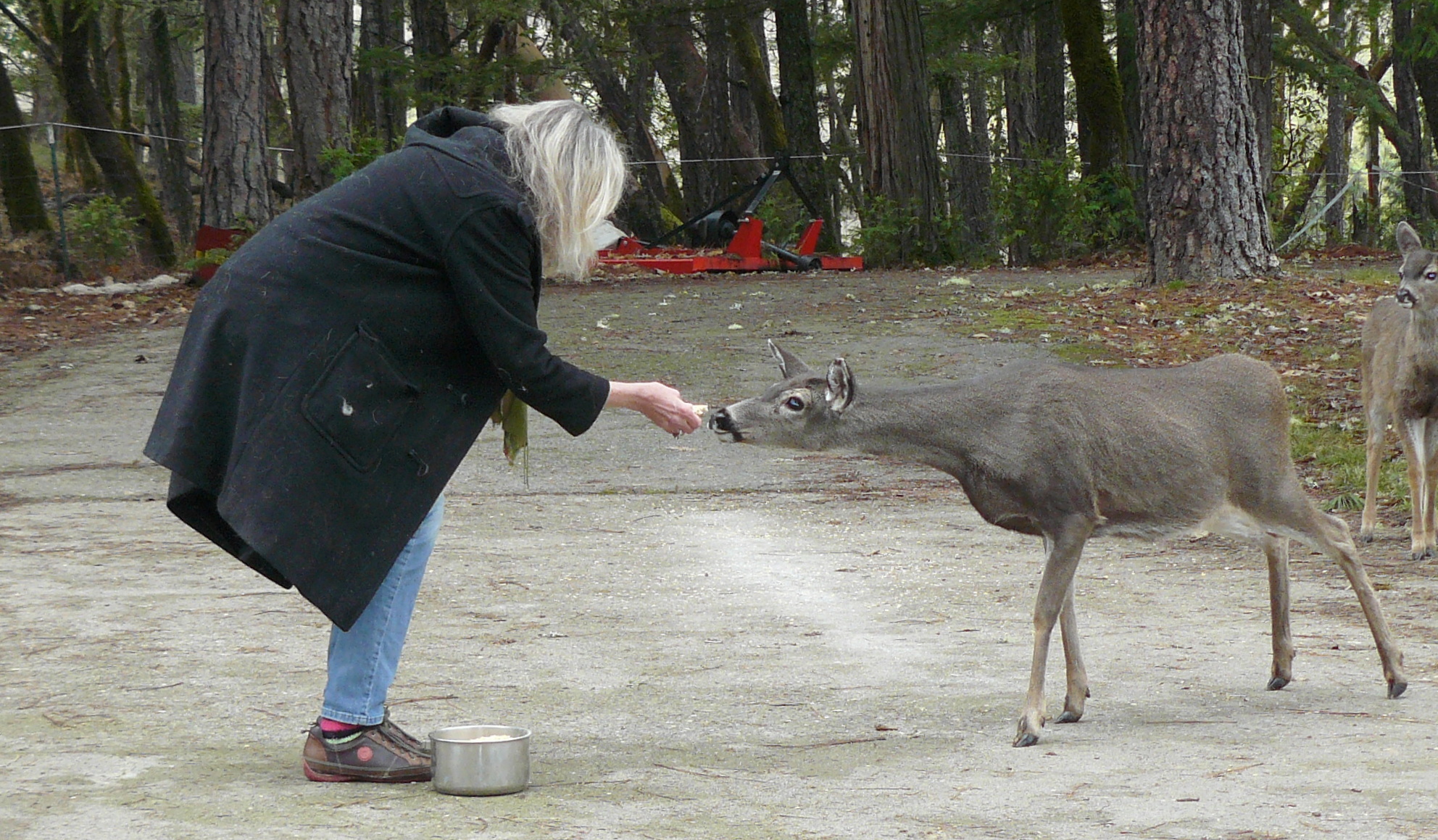
So, will close on a happier note by including a photograph taken a couple of weeks ago of Jean hand-feeding one of the deer that is part of the group that included the old lady who so sadly died.
May the old lady have died quickly and without pain.
It was all Jean’s fault! In that the other day I was talking to her about ideas for posts for Learning from Dogs and Jean suggested a series featuring each of the nine dogs that we have here in Oregon. Considering that this blog is called what it is, for that idea to surface some 2,000 posts and over 4 years after the blog first started says something about yours truly that I’d rather not pursue!
Paloma
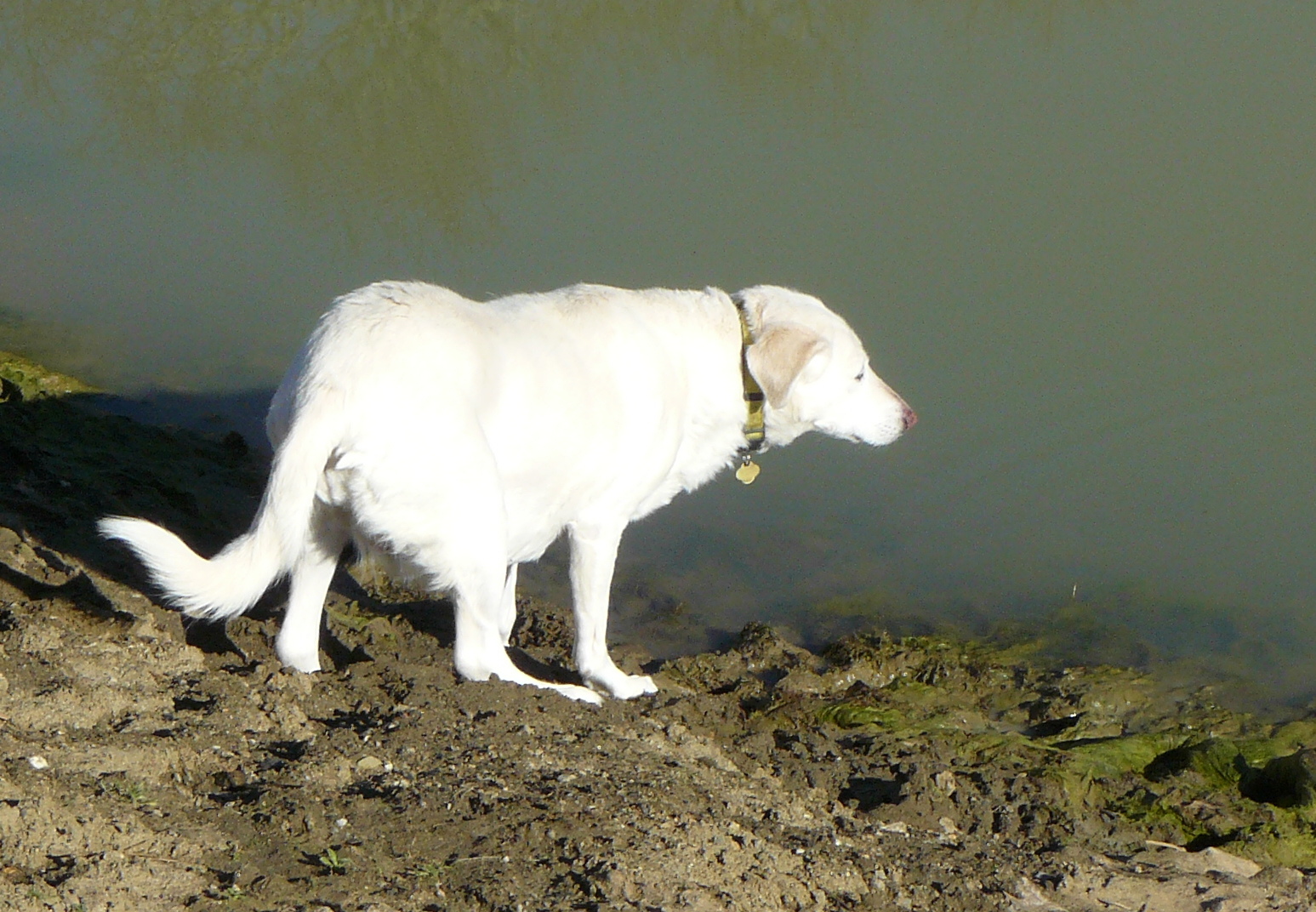
Here are a couple of photographs taken of Paloma just two days ago.
Paloma, Oregon, January 26th, 2014.
oooo
oooo
Now, as it happens, some time ago there was a post about Paloma published here. Here it is republished some two years later.
ooOOoo
Preface.
Before I met Jean in December 2007, she had been rescuing feral dogs in the Mexican beach town of San Carlos for many, many years. Over those years, Jean must have rescued and found homes for 60 dogs or more. In the month that I met Jean, she had 12 dogs and 6 cats at her home. Ten months later, September 2008, I flew out to be permanently with Jean with my German Shepherd, Pharaoh – that’s him on the home page of Learning from Dogs – taking the total up to 13 dogs.
When we moved up to Payson, Arizona in February, 2010 we brought all 13 dogs and 6 cats with us, much to the amazement of the US Immigration officers at the US-Mexican border town of Nogales! Indeed, our particular officer left his booth excitedly to explain to his colleagues that our dogs and cats represented a border crossing record!
oooo
Paloma, December 29th 2011
Paloma
The old white dog padded down the dusty pavement. Sway-backed and dull-eyed, her teats, heavy with milk, grazed the ground. An anonymous creature in a cruel world. The pavement sizzled in the afternoon Mexican summer sun blistering her tired feet, but she could not hurry. She had to conserve her energy. Her pups were soon coming and finding a safe place to give birth to them was her priority. The beach that had been her home was not a good place. .. needed cool shelter. She would find it.
She was alone among a sea of human legs in this scruffy Mexican beach town. No-one noticed her plight. No-one cared. She was used to it. She had long been adept at finding dried fish, discarded tortillas, sometimes a tasty morsel thrown by a tourist sunning in front of the big hotel.
This would be her eighth litter and she was very tired. As a puppy she belonged to a family with small children. There were plenty of leftovers. But when she became pregnant they drove her to the beach, threw her out and left her to fend for herself.
Her babies were always beautiful. She had Labrador in her genes donating a coat that was pure white. Humans always took her pups; she could only ever hope their fate was always a better one than hers.
Anonymity. She had perfected the art; never make eye contact, move low to the ground, escape the stray kick with a quick sideways leap.
She remembered at the very end of the long beach there was a house with a pool. Plenty of water. Onward she padded.
The lawn surrounding the pool was moist with sprinklers and the hibiscus hedge close to the house made a safe nest. Soon she had dug into the damp earth a big enough hole to curl into; it was cool under the canopy of red flowers.
A human voiced shouted, “Carlos, get that dog out of the hedge.” Then the long hose filling that tempting pool was turned on her and a burst of water hit her in the face. She uttered a low growl. Carlos, the gardener, backed away, “Señor, the dog, she is having babies.”
The owner of the house turned abruptly and went inside. He picked up his phone, made a call to the local English lady who over the years had acquired the nickname ‘Dog Lady’. He practically shouted down the phone, “I have a dog in my hedge having pups. You had better do something about it or I shall dispose of them, and I won’t be pretty about it!”
‘Dog Lady’ was used to this. Had been many years since she took on the practically impossible task of rescuing Mexican feral dogs and she was well-known for never turning a dog away. In less than 15 minutes, she had walked to the fine house overlooking the beach and quietly looked under the hedge. As anticipated, the dog was incapable of being moved, her focus entirely now on the safe birth of her pups. With appropriate feminine wiles, the white dog’s human saviour persuaded the disgruntled owner to allow the mother dog a stay of a few days. ‘Dog Lady’ promised that she would take them away as soon as possible.
“She’s a mean and wild dog, you’ll never tame her,” came the angry response from the house owner.
‘Dog Lady’ just smiled and said nothing.
But every day she took food to the white dog then sat quietly close by on the grass reading her book. The white dog had just the one pup, which ‘Dog Lady’ called Solovino, the Spanish for ‘comes alone’. The mother dog she called Paloma, Spanish for ‘Dove’. Many white dogs in Mexico were called Paloma and maybe years earlier that was what the children named her as the name did seem to resonate with this gentle dog.
Patiently, ‘Dog Lady’ moved closer and closer until Paloma would take meat from her hand, rapidly followed by allowing her ears to be caressed. Ten days later, while Paloma was eating, ‘Dog Lady’ picked up the little Solovino and put him into her car. Paloma’s response was immediate; she frantically ran to her child, her mothering instinct so great that she leapt without hesitation into this strange vehicle. Paloma and Solovino were safe.
The house owner graciously admitted that he had been taught a lesson in empathy and how sorry he was for being so rude and cruel.
Back at ‘Dog Lady’s’ home, a quiet sanctuary for so many dogs over the past years, Paloma and Solovino were quickly settled into a cool room. Paloma soon utterly trusted her ‘Dog Lady’ human companion and became the tame and loving dog she always wanted to be. Her shining eyes embraced her new world and she even regained her figure! Solovino grew quickly and found a wonderful family home in Tucson, Arizona.
Now some 6 years after ‘Dog Lady’ rescued Paloma from under that hedge, she is a beloved part of the Handover family. Indeed, she travelled in peace in February 2009 with her twelve dog friends from her sanctuary in San Carlos, Mexico to this dog paradise in the Arizonan forest just outside Payson.
Paloma will never want again.
ooOOoo
Now here we are in Southern Oregon some two years after that story was first published. Paloma happy and contented.
So many of the dogs that have passed through Jean’s loving arms have stories to tell. Next up will be the story of Lilly.
According to the online version of the Merriam Webster dictionary, one of the two definitions of synchronicity is:
: the coincidental occurrence of events and especially psychic events (as similar thoughts in widely separated persons or a mental image of an unexpected event before it happens) that seem related but are not explained by conventional mechanisms of causality —used especially in the psychology of C. G. Jung
That seems sufficiently apt to warrant the choice of title for today’s post.
Here’s why!
Yesterday, Chris Snuggs left a comment to my post Unconditional love. Essentially, Chris made the argument that much of what we see as wrong with the world is not new; not new at all [my insertion of the image of and link to the Great Fire of London].
Great Fire of London. September 2nd-5th, 1666.
What I mean is, the danger of thinking that today’s events are somehow special and different in kind than throughout history, a feeling generated by the fact that WE are living NOW. However, is it not true that ALL ages of Mankind have seen disasters, wars, dangers, catastrophes, including natural ones? How must those have felt who lived through the 30 Years War, the plague, the Great Fire of London, Stalin’s purges and of course the holocaust?
Even in these present times, Chris doubted that mankind had not been here before [my emphasis]:
WHAT then is special about OUR era? Well, Patrice is and rightly very concerned about the kleptocracy. The staggering statistic that emerged the other day about 85 individuals having as much wealth as 3,5 BILLION people was yet another wake-up call, especially as history seems to tell us that A) there have ALWAYS been kleptocracies and B) they ALWAYS end in revolution, dictatorship or social collapse. But the point is, this is nothing NEW. On the contrary, it has in many societies been the normal progression of things for millenia.
So what about Global Warming, as in man-caused? Chris wrote:
No, all my uncertainties lie in the area of GW. It’s pretty clear that there Is global warming, but A) Is it our fault? B) What should we DO about it? and C) Is it too late anyway?
The notion that it is too late to prevent widespread, major consequences from the heating of our planet is widely shared; I sing the siren’s song myself.
So when an item came along yesterday from Transition Network’s blog courtesy of Rob Hopkins pointing out that Chris, me and many others may be wrong to sing the ‘doom and gloom’ song, it naturally caught my eye. A quick call to the Transition Network team in Totnes, Devon gave me permission to republish on Learning from Dogs, so here it is. Thanks TN team. (My thoughts follow the TN piece.)
ooOOoo
Lipkis on Holmgren: “Our job is to make viable the alternative and have it ready”
You know how sometimes someone will just put something you were thinking far more eloquently and clearly than you would have been able to? On Thursday we’ll be posting an interview with Andy Lipkis of TreePeople in Los Angeles. When I talked to Andy last week, it was 80°F, and a state of drought emergency had just been declared (in LA, not Totnes, it was raining here, as usual). At the end of the interview, I asked for his thoughts on the recent debate sparked by David Holmgren’s Crash on Demand article. I asked him “Can we achieve the action on climate change that we need within the existing paradigm, or do we need to deliberately bring the economy down, to deliberately crash it?”. Here’s what he told me.
Andy Lipkis
“This system is so armoured to defend itself from a deliberate crash that much of our resources and intelligence networks are focused on exactly stopping that. On the flip side, the crash is already happening. We don’t have to engineer it: it’s already been engineered into the system. Check it out: Infrastructure systems are in breakdown in major cities around the world, with severe climate exceeding the designed capacity for storms, floods, water shortages, heat events resulting in increasing numbers of people being dislocated, injured or killed. In the US, taxpayers are unwilling or unable to pay for the rapidly inflating costs for upgrading and climate-proofing the outmoded infrastructure systems, all the while, climate change denial campaigns prevent communities from preparing for and protecting themselves from the impacts.
I think our job is to make viable the alternative and have it ready. If we’ve really done our homework, we could scale this thing in a flash in California right now because this crash is upon us. And I hope we’re going to be able, perhaps within months…I invented a cistern that could replace the backyard fence or wall, that could hold 5,000 – 20,000 gallons and could be manufactured locally. The City’s going “hey, maybe we should do that now”. Now. Because it’s going to rain again, even if this drought lasts some years, we could deploy them quickly, just as they did in Australia’s 12 year drought.
I think we’ve been trained to spend time on these battles, on the negativity, and we lose people. We’ve lost precious decades. The crash is on its way. We don’t have to do anything. We need the time to convert people and move people. We need to use examples of Australia and what’s happening now in California to tell those stories, because I agree, denial, defending the system is keeping it pumping. But as you saw from Snowden and all the evidence, for those of us who went through the ‘60s and ‘70s in protest, I don’t think that’s going to succeed. If we focus on that our best leaders are going to end up in jail for too long.
When you look at how fast people change when you add inspiration, when you add attraction, people change on a dime! When we were growing up, there were – I don’t know if you had The Munsters? One of the only people who we all knew who was doing yoga and eating yoghurt was Uncle Fester. But when we started seeing beautiful, sexy male and female bodies doing that, it started selling, moving people by the millions and then billions to choose these lifestyles.
I’m not saying the marketplace is the only answer, I’m just saying that if we choose attraction and inclusion we can create those markets, as you’re starting to do. Your stories over and over again on what’s happening with local currency – it’s time to tell the stories better and use those market forces, because people will choose those because they’re less painful and more attractive. And to be smart, to say wow, yeah.
The Bush administration was ready for all Americans to be protesting to try to stop the Iraq war. They expected that, they built that into their design. I was so amazed that they could say they didn’t care what the people said, that I had to think through why they did not care about that. How did they make it resilient? Because all they cared about was as long as people kept consuming, especially petroleum, their objective was being met. They were counting on no-one changing lifestyles.
The most radical thing sometimes that you can do is actually vote with your feet and vote with your dollars. I was going – “wow, yeah, they’re counting on people complaining”. Protesting and not changing. I started thinking that even the Obama administration is still using the same metrics as the Bush administration was, saying people won’t change on energy. “It’s going to take 35 years to reduce our energy use by 30%”. Well that’s bullshit, because we can choose to do that in a week.
So, I decided that I was going to show that that’s possible even in my own lifestyle. I drive a Prius which is especially fuel efficient, but I’m going to stop driving that car two or three days a week. I told my secretary to book meetings downtown where I could get the bus to. I got out of the car, took the bus, and it actually became a really cool thing. I started investing my dollars in the local bus system. I did it for over two years. I blogged about it. A lot of other people stopped full time car use, and right at the right time as gasoline prices were spiking, a proposal came out to build a new transit system. It’s always been rejected in LA, but the voters at that moment chose to fund 40 billion dollars to build a new subway system in Los Angeles so we could get out of our cars. It’s a radical move, but it’s starting to happen.
So maybe that’s a long complicated answer, but we’ve built the right foundation. Our happiness, our health is the answer. It’s infectious. Our job is to be that much more infectious and inclusive. And don’t put up barriers of titles. Don’t put up barriers of shame and blame. Be open to learning fast and welcoming people in. We’re hacking the system and making it so much better. If we invite that kind of creativity, the generation that’s inheriting this right now is really ready to take this home.
ooOOoo
Don’t know about you but I find that compelling. It’s far too easy to wait for others to fix the problems. Too easy to see the issues as insurmountable. Each of us has the ability and the common-sense to make a change in our lives. Whether it is a small, medium or large change in your behaviour, you will make a difference.
So if you have been inspired by this, as Jeannie and I have been, commit to making a difference.
The most important thing, without a doubt, to learn from dogs.
Last Tuesday, Learning from Dogs published the first of the three parts of Martin Lack’s essay From Environmentalism to Ecologism. It generated a fascinating discussion. One of the commentators was Chris Snuggs who writes his own blog under the name of Nemo Insula Est. Here is the essence of a discussion with Martin Lack and Patrice Ayme. (Without reading the following comments, my closing opinion will make little sense; assuming they do at the best of times!)
Chris: The problem with politics at the moment is that the choices come down to A) being socialist, moral and bankrupt or B) capitalist and immoral but at least with a chance of avoiding poverty and chaos.
Martin: I think I am very much in agreement with you, Chris. It says a l lot when a practicing Catholic can admit that his Church needs to ditch its anthropocentric bias and stop treating the Earth as if we are the only species that matters…
Chris: One of the big questions for me is this. Is the world of our perceptions ONLY what we see, hear, smell and touch or is there another dimension which we cannot sense? Personally, I believe the former, which is why I cannot believe in: God, aliens, ghosts, an afterlife, fairies or indeed a sensible socialist economic policy.
I sometimes feel this makes me boring (or if you like, it just another feature of my boringness), but on the other hand I feel more or less in tune with what I understand “The Enlightenment” to have meant. It would be much more reassuring to know that there is a God (caring if possible, though it is hard to see how he would be) and indeed aliens, as long as they were friendly. But until there is some sound evidence, I cannot. And there IS no evidence that would stand up in court, is there?
So, we are alone; the universe is as it is; how it came into being we do not know and it is perhaps unknowable; the planet Earth cares not a jot about us or our feelings; we have no particular right to exist: we just do, by natural accident (until proven otherwise). I am not a fan of the “There are billions of stars in the universe, so there must be other forms of life elsewhere.” argument. “must be” is not “is”.
So if WE do not ensure our survival by looking after the planet then nobody or nothing will. As for “ecology”, good people are trying to do a lot of things, but as far as I can see:
A) It is too late and too little. Even if we were doing all the right things NOW (which we obviously are not), the time lag before our actions start to correct othe damage done will be too great; we may well have died out by then.
B) Despite all that is being done, CO2 emissions are going up, countries have STILL found no economic model that does not insist on growth and you cannot have growth without increased energy use, which for the moment and foreseeable future means fossil fuel extraction. And THIS of course continues apace with many countries now desperately trying to frack their way to growth, in the case of the USA rather successfully.
Martin: All very interesting, Chris, although I am not sure why your atheism necessitates rejection of socialism. For many people the two are inextricably linked. However, this is all off-topic… All I wanted to point out was that anthropocentrism is a mistake that can be made by both theists and atheists alike; and that it is good to see the former admitting they have made this mistake.
Paul: Chris/Martin, To my way of thinking, there is a more fundamental issue at work. That is the corrupting effect of power. I’m certain you know the famous saying. Thus whatever fine motives propel a person to enter politics, that person seems unable to avoid the call of power and its corrupting effect. The only hope is that key countries, and none so key as the USA, evolve a better, more representative, political process. Otherwise, I fear for the coming years.
Patrice: I agree with Paul 100%. I saw the call of power. Unimaginable. People just get insane. There are also filtering systems to insure they get that way (it starts right away with one week retreats in extremely posh resorts; does not matter if you are capitalist, socialist, blueist, reddist, ecologist, independentist, etc.).
Chris: Agreed. It has been clear time and time again throughout history. Well, so much is obvious, but WHAT TO DO about it?
A) We must end the practice of having career politicians: you serve a maximum of TEN years, at the end of which you go.
B) Inherited wealth allowing the building up of immensely powerful family dynasties over generations must be ended. It is simply untenable. The rich-poor gap is getting obscene everywhere, and money is of course power. My “Abolish inheritance” idea will be wildly unpopular because we are naturally acquisitive and “greedy” and of course would hit those with most to lose who also therefore have the most power.
Patrice: With all due respect, Chris and Martin sound rather naïve… Huge wealth and power is where it’s at. And it attracts to politics first, foremost, and soon uniquely, those it attracts most, namely the basest sort.
Chris:
A) All a question of balance: SOME ambition is essential; it is when there is too much that it is dangerous.
B) I would have maximum terms for political service. plus:
C) Nobody should be allowed to be a public representative until they have fulfilled certain conditions, for example (but to be debated): worked in the private sector; some experience of life in a factory; nobody under 30; high achievement in some industrial, commercial, academic or social field, and so on
Ed Milliband grew up in a Marxist family, went to a posh school and then straight to university from where he went straight into politics as an “advisor”, thence to become a Minister and now leader of the opposition and possible OM.
THAT is not the proper background for a national leader, but the House of Commons is full of such people. The % of MPs from “working-class” backgrounds is going down and down and down. In the USA, Congress is over-represented by the rich, famous and/or connected. Where are the mailmen, bus drivers and burger-servers? “You need more intelligent Congresspeople than that.”
Sorry, I can’t take that argument from a country that elected Dan Quayle, George Bush and Sara Palin!!!!!
Patrice: Right. Glad to see every body agrees. It’s even worse than that. “Representative” politics is intrinsically demonic, as it vests great power in some individuals. That, per se is not just a crime, but absolutely corrupting.
Representative politics has got to be eliminated. Switzerland has eliminated it at the legislative level. Why can’t all other countries of the West do the same? Because the present plutocracy rules through the representatives, esp. in the USA? After we have done the legislative, the executive could be handled along Roman Republican lines and Athenian lines. Roman Consuls, for example, had full power only for one month at a time. In Athens enormous quora (say, 8% of the potential electorate) had to be found, before any decision.
Martin:Excellent synopsis, Patrice. All of the things you mention would be made possible by a return to localism and/or bioregionalism, which may well come to pass by default (i.e. as a result of those in power now being in denial about what is happening to our planet).
Now the reason that I offered up this lengthy transcript of the conversation was that it clearly showed to me that bright, well-educated people agree that there is much wrong with many, if not most, countries that offer a representative democratic form of Government. Bright, well-educated people are also not afraid to offer answers. Patrice went on to write a most engaging post over at his place under the title of Representative Politics Is Dictatorship. It opens:
Representative Dictatorship Is Not Democracy
I know a young lady who was elected for the first time in California. She is sent to a posh resort for a week to learn the basics of her new job, being a “Democratic” politician. Everything is wrong with this picture (not just the mansion she lives in and her million dollar family income, while claiming to be a leftie). Everything is wrong, but it’s typical: all elected representatives in the USA are treated very well, and get to meet who, it dawns on them after a while, can insure for them, and their families, much nicer lives. (The New York Times, to its discredit, just discovered this PACS trick in 2014.)
A gigantic manipulation industry has developed, with its own strategists. Barack Obama seemed to have come out of nowhere, but, even before he started to score big, he was viewed as the anointed one, by the highest powers in “Democratic” circles: Axelrod, a professional manipulator who had just led Kerry’s campaign, was sent to Obama, just a modest Senator. Obama then gave a keynote speech at the Kerry convention, etc. When he campaigned, Wall Street money started to flow, more than towards any other candidate, by orders of magnitude, etc. No wonder Obama has found so hard to bite the hand that fed him.
Let me draw this all together. Possibly in a manner that will cause readers to sigh and say the old fella is losing the plot!
Because what I am about to say strikes me as so obvious, so massively demonstrated day-in, day-out by the planet’s sentient, warm-blooded creatures (even man can do it!).
It is this.
We have lost sight of the fact that animals offer an endless set of examples of living in the present and offering unconditional love to those creatures, humans included, that do not threaten them. These are very difficult times for us and all the creatures on this planet. Unconditional love for the planet we live on and for all those that do not threaten us is the only way forward!
Let me close with three photographs that provide all the evidence that we need to embrace love and tenderness for everything in our lives.
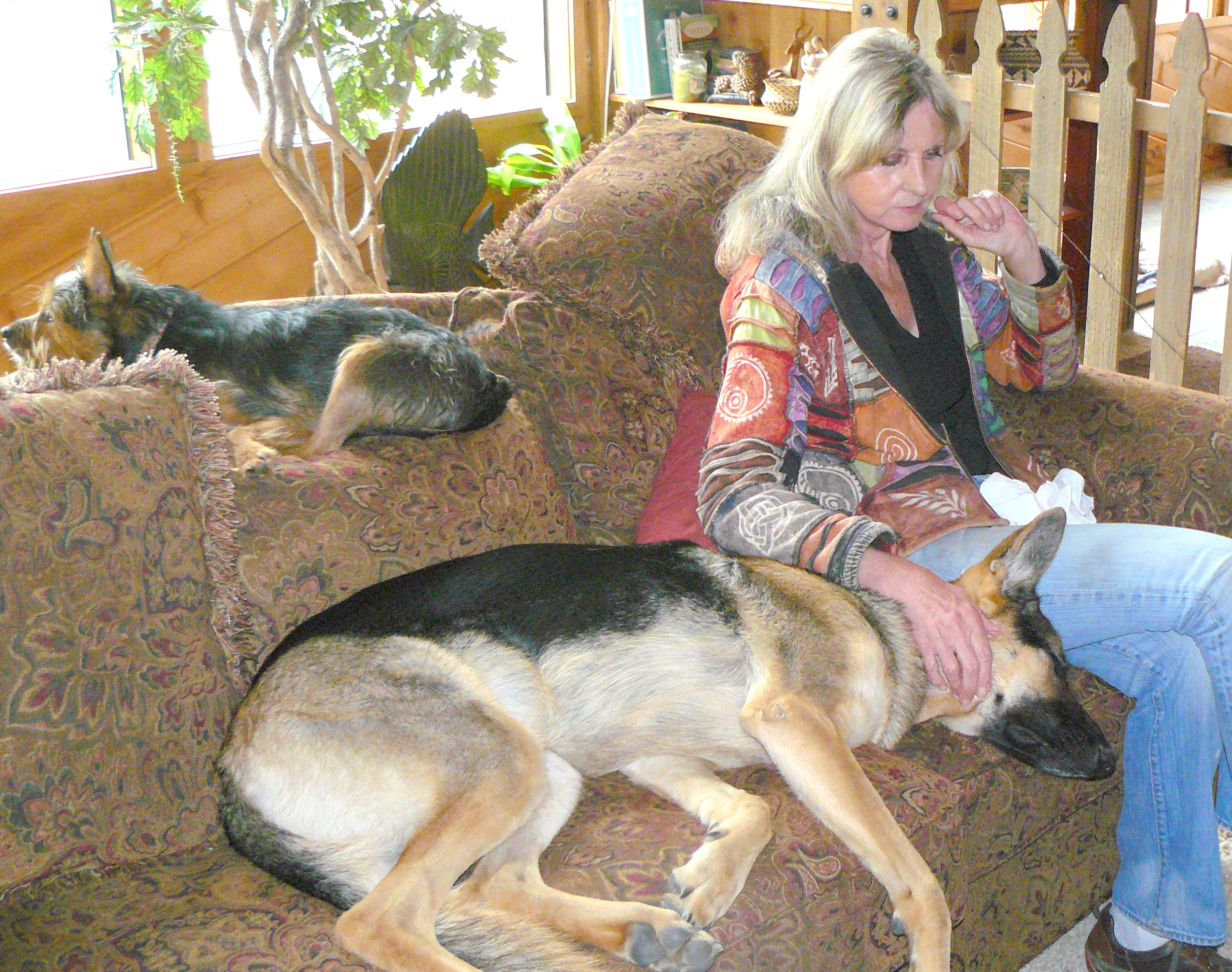
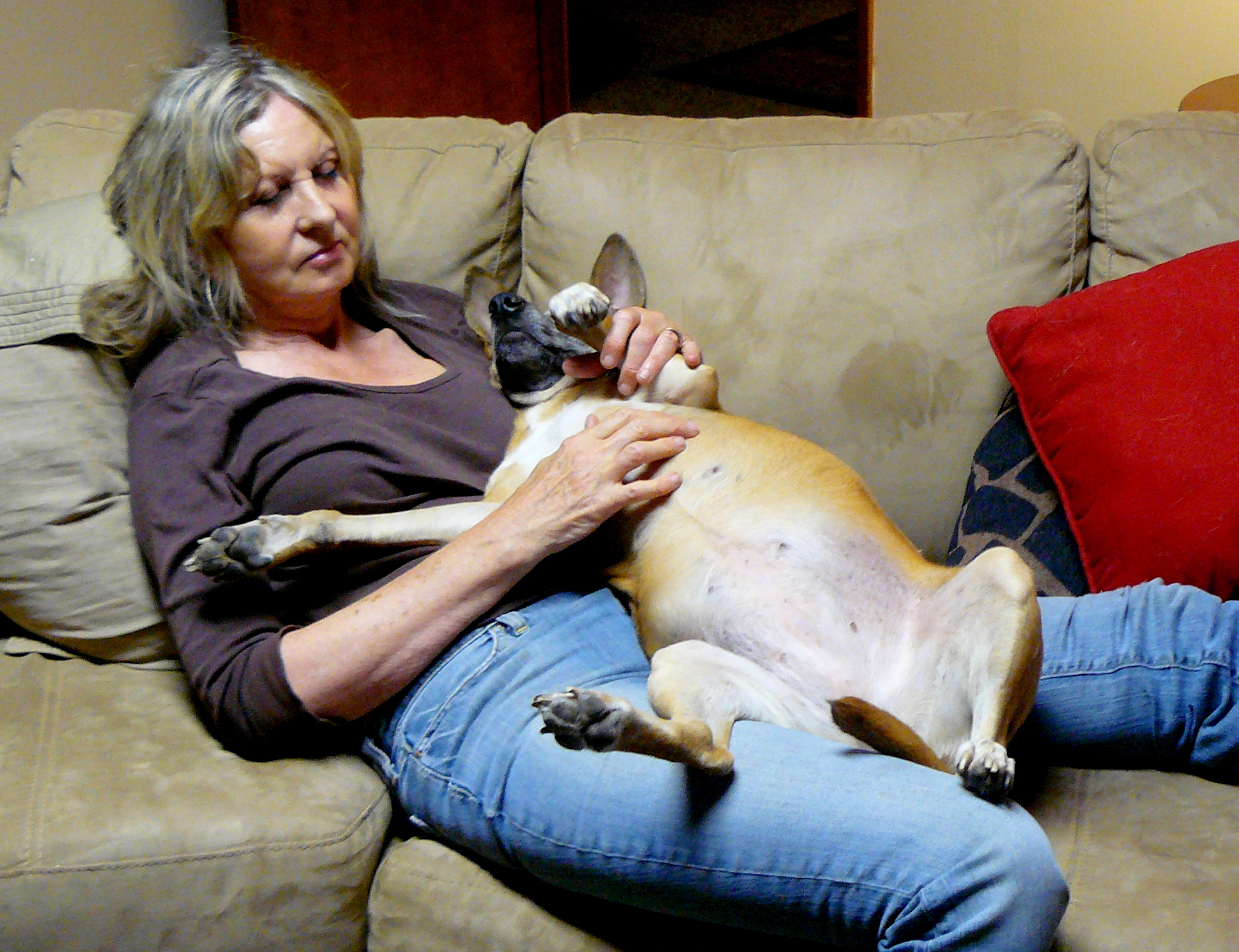
Sweeny on back of settee, Cleo loving Jean.
oooo
Dhalia’s unconditional love for Jean.
oooo
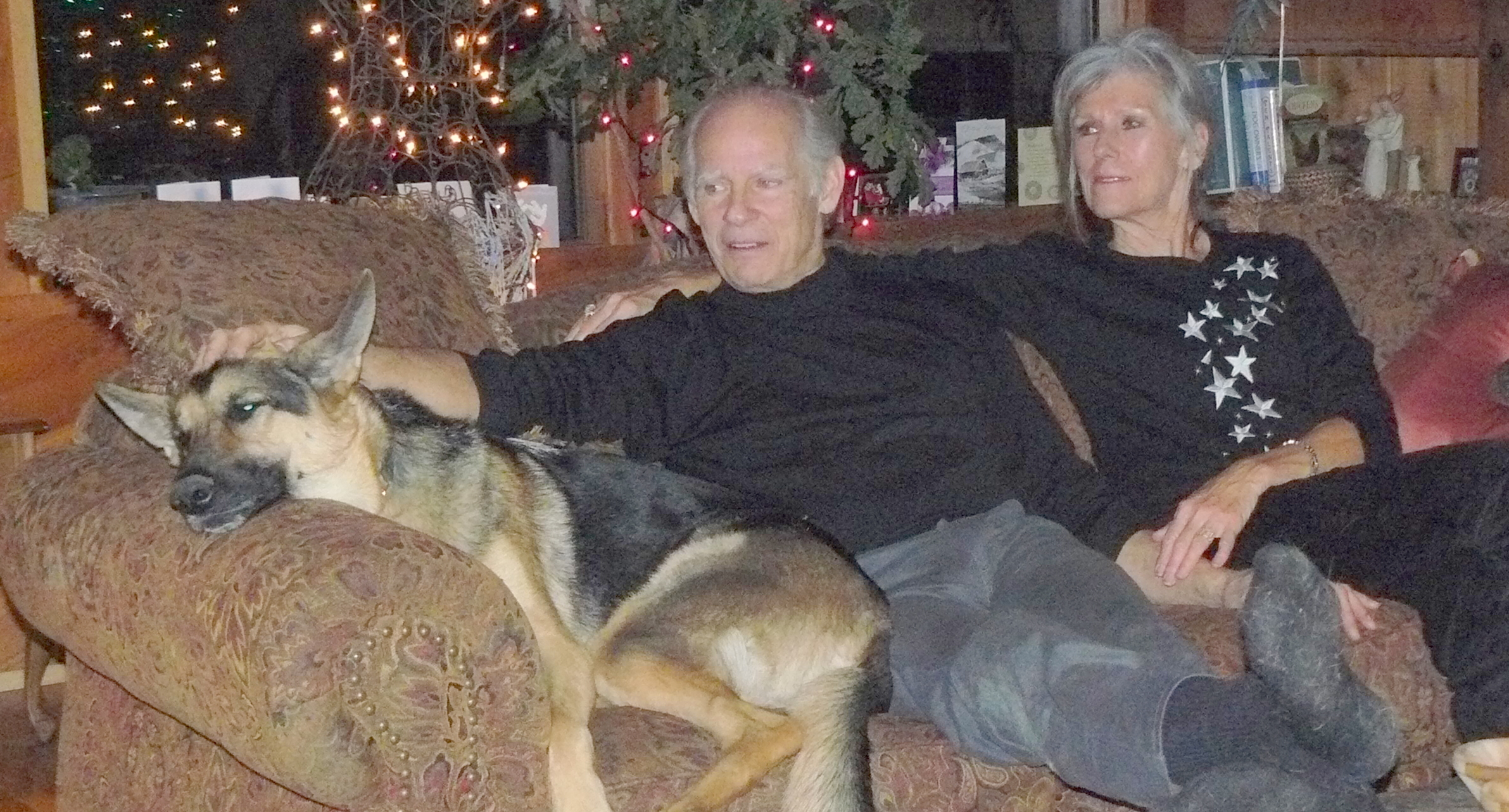
Neighbours Bill and Dordie under the influence of Cleo’s unconditional love.
How something so fundamental as humans talking with each other can so often be mysterious.
When I composed this sub-heading, I wasn’t sure of what word to use to end the sentence. Some of the words that sped through my mind were: complex, distorted, difficult, obtuse and …. well, you get the message.
“The single biggest problem in communication is the illusion that it has taken place.” George Bernard Shaw is reputed to have once said!
Today’s essay on the challenges of speaking clearly to another, perhaps better described as communicating in a clear and unambiguous fashion, came out of a recent conversation with Jon Lavin, a good friend from my Devon days. (Jon offers services for business owners and entrepreneurs under his business banner of The People Workshop.)
Jon was explaining that the number one hurdle for businesses that are managing change, and for so many businesses managing change is practically a constant, is having clear communications within the team.
Seems clear enough to me! 😉
Yet, what we hear and what we say are both modified, frequently unconsciously, by past events, experiences and trauma. That being the case, then it is key, critically so, that we achieve the best possible self-awareness. Because it is only through an understanding of our past that we come to learn of our sensitivities and our associated ‘tender spots’ and their potential for ‘pulling our strings’. Here’s a personal story.
In 1956, when I was 12, I experienced a trauma that was interpreted by my consciousness as emotional rejection. By the age of 14 that sensitivity to rejection had descended into my subconscious. For fifty years, that sensitivity remained hidden yet continued to influence my life in many unseen ways, not all of them negatively by a long measure. In 2007 a period of counselling revealed that hidden emotional rejection; brought it to the surface. It changed beyond imagination how I felt, how I behaved, how I was. Nonetheless, that sensitivity to rejection is still there, albeit now visible. Thus when I hear or experience something that tickles that sensitivity I still react. But because I can now see and feel myself reacting, I can sidestep the emotional strings.
The following is a short, twenty-minute, documentary film about fear. Do watch it. The message that we are so profoundly a product of our past is beautifully presented.
HEIST: Who Stole the American Dream? is stunning audiences across the globe as it traces the worldwide economic collapse to a 1971 secret memo entitled Attack on American Free Enterprise System. Written over 40 years ago by the future Supreme Court Justice Lewis Powell, at the behest of the US Chamber of Commerce, the 6-page memo, a free-market utopian treatise, called for a money fueled big business makeover of government through corporate control of the media, academia, the pulpit, arts and sciences and destruction of organized labor and consumer protection groups.
But Powell’s real “end game” was business control of law and politics. HEIST’s step by step detail exposes the systemic implementation of Powell’s memo by BOTH U.S. political parties culminating in the deregulation of industry, outsourcing of jobs and regressive taxation. All of which led us to the global financial crisis of 2008 and the continued dismantling of the American middle class. Today, politics is the playground of the rich and powerful, with no thought given to the hopes and dreams of ordinary Americans. No other film goes as deeply as HEIST in explaining the greatest wealth transfer of our time. Moving beyond the white noise of today’s polarizing media, HEIST provides viewers with a clear, concise and fact- based explanation of how we got into this mess, and what we need to do to restore our representative democracy.
It’s an incredibly interesting film, but more of that later. For me, what was stunningly enlightening was at last understanding the powerful forces at work since Lewis Powell published ‘the memo’ back on August 23, 1971. Because for me over in Britain, the era of the ’70s’ and ’80s’ were incredibly fulfilling. First, as a salesman for IBM UK – Office Products Division, from 1970 through to 1978, and then forming and managing my own company through to 1986 when I succumbed to an attractive purchase offer. Then, when my company was sold, taking a few years off cruising a sailboat in the Mediterranean; based out of Larnaca, Cyprus.
Thus I was immune to the global money and power plays, albeit enjoying rising house prices! Only Lady Luck protected me from the collapse of 2008 in that I had sold my Devon home in early 2007 and was renting. Then Lady Luck arranging for me to meet Jean in Mexico, Christmas 2007 (we were born 23 miles apart in London) and subsequently moving out to Mexico with Pharaoh in September, 2008, to be with Jean and all her dogs. Lady Luck’s magic continued in that we came to Merlin, Oregon because we were able to take advantage of a bank-owned property; moving there in October, 2012.
Of course, the scale of the downturn was obvious and there were many instances of people that I knew losing jobs or homes, or both, and generally having a very rough time.
So back to the film. Here’s the official trailer.
Uploaded on Feb 17, 2012
Please watch the newly updated trailer for “Heist: Who Stole the American Dream?,” the new, explosive documentary from Frances Causey and Donald Goldmacher exposing the roots of the American economic crisis and the destruction of the American dream. Visit www.Heist-TheMovie.com for more information on how to see the feature film and how to Take Action in restoring democracy and economic justice in the United States.
But here’s another thing that now makes sense: The legitimate anger of so many people, especially those who have some insight into what had been taking place. No, amend that! What is still taking place!
Just one example of that legitimate anger, that of Patrice Ayme. Just go across and read his blog post of two days ago: American Circus.
My strong recommendation is that you take an evening off and watch the film. Here’s another preview:
Frances Causey, Co-producer & co-director-Heist & Donald Goldmacher, Co-producer & co-director-Heist join Thom Hartmann. Corporate America is the biggest Welfare reciepient in the country – but that wasn’t always the case. The makers of Heist will tell you how organized money has been able to pull off the biggest “Heist” of the American Dream!
The film also concludes by offering many ways in which individuals can take back control of their lives, reinvigorate local communities, actively show that people-power is unstoppable. As it always has been and always will be.
This post started with a quote and I’m going to close with another.
“The day the power of love overrules the love of power, the world will know peace.” -Mahatma Gandhi