This is about breathing and is something I know about. Because Bruce at our local ClubNorthwest has a session with me when I spend five minutes or so taking in through the nose the deepest breath that I can.
If you have not registered with the BBC then you will need to do so before the link at the bottom works.
In Episode 4 – Air – we visit an infant school in Nottingham where young children regularly learn breathing techniques to reduce stress and anxiety. We also hear about research from Italy showing how slowing our breathing impacts positively on brain activity. Plus breath coach and founder of School Breathe, Aimee Hartley, shares her experience of learning to breathe well.
Produced and Presented by Helen Needham Research by Anna Miles and Maud Start Original Music by Anthony Cowie Mixed by Ron McCaskill and Malcolm Torrie
A BBC Scotland Production made in Aberdeen for BBC Radio 4
Continuing this fascinating series from BBC Radio 4.
Last week the BBC chose to present a programme called An Almanac for Anxiety. There were five episodes: Fire; Wood: Water: Air; Earth.
If you have not registered with the BBC then you will need to do so before the link below works.
The details of each episode were presented on the BBC website:
In Episode 3 – Water – we join a group of socially prescribed outdoor swimmers on Teignmouth Beach in Devon who find joy in immersing themselves in cold water. We also hear why spending time around blue spaces is so effective at promoting a sense of calm from Dr Catherine Kelly of the University of Brighton.
Produced and Presented by Helen Needham Research by Anna Miles and Maud Start Original Music by Anthony Cowie Mixed by Ron McCaskill and Malcolm Torrie
A BBC Scotland Production made in Aberdeen for BBC Radio 4
Last week the BBC chose to present a programme called An Almanac for Anxiety. There were five episodes: Fire; Wood: Water: Air; Earth.
If you have not registered with the BBC then you will need to do so before the link below works.
The details of each episode were presented on the BBC website:
Anxiety is the most common form of mental illness in the UK, with nearly a fifth of people experiencing it over the course of a year. Although it is often treated through medication, there are many alternative ways which are proving to be very effective in reducing anxiety amongst some people. In this series, we explore how connecting with the elemental forces of nature helps people with a range of mental illnesses to feel better. We also learn about the current academic research behind these methods.
In Episode 1 – Fire – we visit an overnight camp on the banks of the River Spey near Aviemore in the Scottish Highlands run by the charity Fire and Peace. According to the participants, – who have a range of mental ill health and addiction issues – the experience of spending time around the fire in nature is transformative when it comes to promoting feelings of connection and wellbeing. We also hear new research which shows how being around a campfire can be calming.
BBC Radio 4
I am going to share the link to the BBC each day this week with a new episode each day. The programmes are 15 minutes long and in my opinion well worth listening to.
Now above we were told: ‘Anxiety is the most common form of mental illness in the UK’ but of course we all know that anxiety affects many millions across the world. That is why I intend to share with you all five programmes.
Republishing a recent article published by The Conversation.
Before I go to this article I want to talk briefly about the book the Myth of Normal or as the subtitle explains TRAUMA, ILLNESS & HEALING IN A TOXIC CULTURE.
Let me pick this closing paragraph of Chapter 20, on page 296:
Disconnection in all its guises – alienation, loneliness, loss of meaning and dislocation – is becoming our culture’s most plentiful product. No wonder we are more addicted, chronically ill, and mentally disordered than ever before, enfeebled as we are by such malnourishment of mind, body, and soul.
the Myth of Normal, Dr Gabor Maté with Daniel Maté
It is a very powerful book albeit not the easiest read in the world but still highly recommended.
Plus there is a YouTube video of Dr. Maté being interviewed in July, 2023 by Tara Westover (also a long video!).
Now to the main purpose of today’s post.
ooOOoo
Keeping your cool in a warming world: 8 steps to help manage eco-anxiety
But amid doom-and-gloom predictions, there is hope. As a therapist and clinical social work professor, I have seen firsthand how paralyzing eco-anxiety can be, and I’m dedicated to finding solutions. Here are a few evidence-based tips to tackle your climate woes.
Caring about the world you live in does not make you a “crazy” alarmist. In fact, growing numbers of people across the globe feel the same way, with two-thirds of Americans reporting being at least somewhat worried about climate change in recent polls.
It makes sense that people would feel nervous when basic needs like safety and shelter are threatened. Give yourself grace, because beating yourself up for these very valid feelings will only make you feel worse.
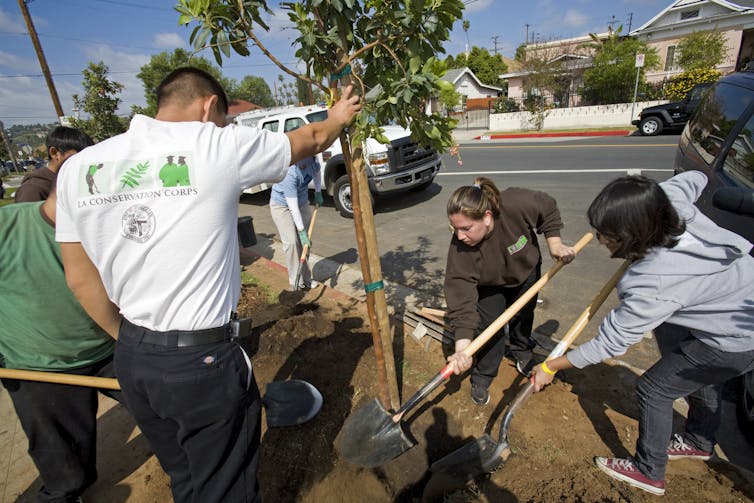
Participate in the solution
It can be hard to feel empowered when environmental harms are taking a toll on your mental health, but the escalating global crisis still demands urgent attention. Instead of burying your head in the sand, use that mental discomfort as a catalyst for action.
Individual efforts to reduce your carbon footprint matter. Joining larger movements has the potential for even move significant impacts, as well as the potential to buffer anxiety, research shows. Volunteer your own unique passions, talents and skills to advocate for systemic changes that will benefit the planet and humanity.
When you feel anxious, use that energy as fuel for the fight. Harnessing eco-anxiety in this way can reduce your sense of powerlessness.
As a therapist, I often help clients identify and reframe unhelpful thinking patterns. For example, while it is true that there are many environmental problems to grapple with, there is also positive news, so don’t discount it. Recognize and celebrate victories big and small.
Trauma: Process it so you can heal
The climate crisis has been conceptualized as a collective trauma, and many individuals are struggling with eco-grief from climate impacts that have already happened. Processing past trauma from events like weather disasters is a crucial step in enhancing your ability to cope with new experiences.
Even people who have not yet experienced significant climate impacts directly may have signs of pre-traumatic stress, a clinical term for the distress experienced in anticipation of a high-stress situation. A licensed mental health professional can help you process these emotions.
Reduce isolation
It’s no secret that having a strong social support network is a key ingredient for happiness. Surrounding yourself with compassionate, like-minded friends is also key to sustained efforts in doing your part to make a difference.
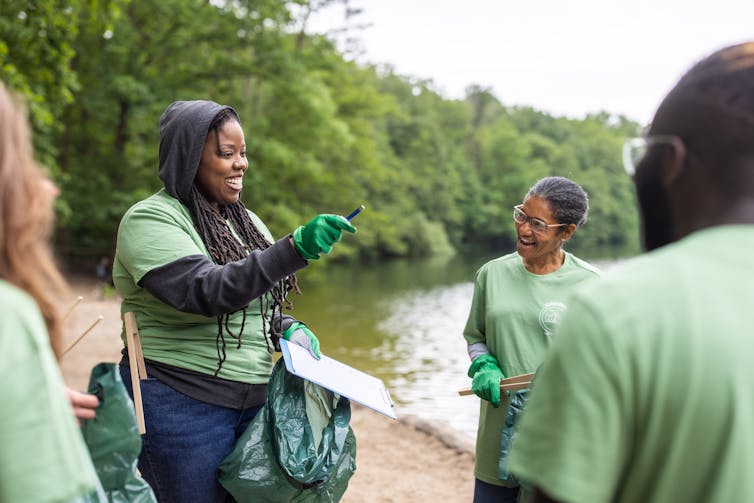
Consider joining or starting a Climate Cafe or similar group to talk about climate concerns. Visit a 10-step climate grief meeting. Join a local environmental organization. Or simply call up a friend when you need a listening ear.
Go for a quiet walk in the woods and observe nature all around you – it’s a Japanese practice for relaxation known as forest bathing. Spend time gardening. Exercise outdoors or otherwise spend time outdoors in a place that is relaxing and restorative for you.
Self-care is paramount when it comes to managing the emotional toll of eco-anxiety.
Engaging in self-care practices, such as getting adequate sleep, eating healthy and having fun, helps us maintain a sense of balance in the face of overwhelming environmental concerns.
Remember what they teach you on airplanes – you should always put on your own oxygen mask before helping other passengers. Likewise, when we come from a place of wellness, we are better equipped to handle the stresses of eco-anxiety and make a difference in this area.
Mindfulness
Because eco-grief is focused on the past and eco-anxiety is future-oriented, reconnecting to the present moment is a powerful way to combat both.
By cultivating mindfulness – a nonjudgmental awareness of the present moment – people can become more attuned to their thoughts, feelings and bodily sensations in response to eco-anxiety triggers. This heightened self-awareness helps people to acknowledge worries without becoming consumed by them.
In the face of eco-anxiety, these strategies can build resilience, reminding everyone that they have the power to shape a more sustainable and hopeful future.
There’s a powerful reminder that we have the power to stay in the present, or to put it another way by cultivating mindfulness. There are quite a few websites on Mindfulness including this description of what Mindfulness is on the Mayo Clinic website.
Mindfulness is a type of meditation in which you focus on being intensely aware of what you’re sensing and feeling in the moment, without interpretation or judgment. Practicing mindfulness involves breathing methods, guided imagery, and other practices to relax the body and mind and help reduce stress.
Mayo Clinic
Now that is something I should really focus on as I am terrible at being in the moment and nowhere else.
I would not have believed this had I not read it with my own eyes.
I have been an atheist all my life. My mother and father were all those years ago when being an atheist was not something one promoted.
But a recent article from The Conversation told a very surprising account: “These spiritual caregivers can be found working in hospitals, universities, prisons and many other secular settings, serving people of all faiths and those with no faith tradition at all.“
Here’s the full article.
ooOOoo
Religious leaders without religion: How humanist, atheist and spiritual-but-not-religious chaplains tend to patients’ needs
Chaplains talk with anyone, regardless of whether or not the patient has a religious affiliation – and some chaplains themselves are not religious. Jacob Wackerhausen/iStock via Getty Images Plus
In times of loss, change or other challenges, chaplains can listen, provide comfort and discuss spiritual needs. These spiritual caregivers can be found working in hospitals, universities, prisons and many other secular settings, serving people of all faiths and those with no faith tradition at all.
Yet a common assumption is that chaplains themselves must be grounded in a religious tradition. After all, how can you be a religious leader without religion?
Thirty percent of Americans are religiously unaffiliated. Research suggests that people who are atheists or otherwise nonreligious sometimes reject a chaplain out of wariness, or shut down a conversation if they feel judged for their beliefs. But this research has not accounted for a new, increasingly likely situation – that the chaplain might also be nonreligious.
No national survey has been done, so the number of nonreligious chaplains is unknown. But there is plenty of reason to think that as more Americans choose not to affiliate with any particular religion, so too do more chaplains.
Nonreligious chaplains have been a part of hospital systems and universities for years, but they came into the national spotlight in August 2021 when Harvard University’s organization of chaplains unanimously elected humanist and atheist Greg Epstein as president. Humanists believe in the potential and goodness of human beings without reference to the supernatural.
Other recent reporting on humanist chaplains has also focused on school campuses, but nonreligious chaplains are not limited to colleges and universities. Eighteen of the 21 nonreligious chaplains we spoke with in our study work in health care, including hospice. The Federal Bureau of Prisons allows nonreligious chaplains, but we were unable to find any of them to participate in the current study.
Humanist chaplain Bart Campolo, center, and his wife, Marty, right, mingle with students at the University of Southern California in 2015. AP Photo/Jae C. Hong
The idea of a “call” from God is central to many religious vocations: a strong impulse toward religious leadership, which many people attribute to the divine.
Chaplains who are atheists, agnostics, humanists or who consider themselves spiritual but not religious also can feel called. But they do not believe that their calls come from a deity.
Joe, for example, an atheist and a humanist whom we interviewed, has worked as a chaplain in hospitals and hospices. He says that his “light bulb moment” came after a history professor told him that beliefs are the source of a community’s power. While atheists do not believe in God or gods, many do have strong beliefs about ethics and morality, and American atheists are more likely than American Christians to say they often feel a sense of wonder about the universe. Joe’s call was not “from a divine source,” but nonetheless, he says this experience “kind of filled me with a sense of control, and confidence, and presence” in his life that grounded his sense of a calling.
Sunil, another chaplain our team interviewed, was inspired by his college chaplain, whom he calls “a really influential presence.” The chaplain helped Sunil answer questions about identity and values without “necessarily having any religious or spiritual leanings to it,” and encouraged him to go to divinity school.
Today, Sunil tries to help others answer those same questions in his work as a health care chaplain – and to offer deeply thoughtful, meaningful spiritual care to people who aren’t religious.
Education and training
Most chaplaincy jobs require a theological degree. Along with coursework in sacred scriptures and religious leadership, chaplaincy training usually involves clinical pastoral education, where students learn about hands-on, care-oriented aspects of their profession. This involves learning to provide care to everyone, regardless of their religious background.
Although coursework is broadly the same for all students, religious or nonreligious, the actual experience of earning a degree is very different for nonreligious students. In the United States, Christian students are easily able to enroll in a seminary or divinity school that shares their faith identity and spend their years of study learning about their own tradition.
Chaplaincy programs that focus on non-Christian traditions are available, but scarcer, and our team does not know of an overtly nonreligious chaplaincy program. In recent years, more seminaries have welcomed nonreligious students, but nonetheless, nonreligious students often find themselves focusing their study on traditions to which they have no personal connection.
Yet there is a surprising bright side.
‘I am here to support you’
Being deeply immersed in traditions that are not one’s own is one of the reasons that nonreligious chaplains can be so effective.
Artwork posted by a chaplain in a break room in the trauma surgery ICU at Harborview Medical Center in Seattle. David Ryder/Getty Images
For example, our team asked Kathy, a health care chaplain, how she approaches prayer with religious and nonreligious patients. “My goal is to try to meet that person where they are and pray in a way that’s helpful and comforting for them, or meets whatever the need is that’s arisen during the conversation that we’ve had,” she said. Like all chaplains, Kathy is there to accompany, not proselytize. While she herself prays to the “great mystery,” she is comfortable facilitating whatever prayer is needed.
Claire, a chaplaincy student, agreed with Kathy and described her own first experience meeting an evangelical Christian patient. It was easy, she said, because “you’re not trying to fix anything. You’re just trying to meet them where they are. So that’s it.”
Nonreligious chaplains are used to thinking outside the box. Having learned about major world religions, many of them can find overlapping values and beliefs with their patients, such as finding beauty and meaning in the natural world or finding strength in their conviction that human beings are inherently good.
Cynthia works in the palliative care department in a hospital and tells her patients, “I am here to support you in whatever is meaningful to you right now and whatever is most important in your life in this moment.” She asks patients: “What are you struggling with right now? What are your goals? What do you hope for? What are you afraid of?” – trying to “unpack that with a spiritual lens rather than a medical lens.”
Cynthia is an example of why spiritual care by nonreligious chaplains may be surprising, but is likely here to stay. Based on our research, nonreligious chaplains are as capable as religious chaplains of meeting a person in their darkest hour and taking them by the hand.
That last sentence may be opened up even more. In that the article speaks of chaplains, both religious and nonreligious. But as someone who was a counsellor with the Prince’s Youth Business Trust some years ago, now The Prince’s Trust, it is my opinion that anyone who is an active listener can undertake the role.
The article has many fine points including one that I had not considered before. “That American atheists are more likely than American Christians to say they often feel a sense of wonder about the universe.” I am certain that this isn’t confined to Americans.
Let me quote from a post on Ugly Hedgehog because it will make a good introduction to today’s Picture Parade.
We made our way to get a new pup. Before I could get to the litter to choose, one of them decided to walk over to me and sit right between my feet. Clearly he was telling me that he was the one. From the start he was comfortable with anything and anyone around him. No matter what the situation, it was his pleasure and he made it ours. He loved strangers and playmates of all kinds – even taking selfies with them. You could hide his toys anywhere and he had an amazing sense to find them. He was a gentle soul who enriched our hearts for nearly 14 years. Brady surrendered to a medical condition he endured for a couple of years without ever showing an ounce of complaint. Some days its tough to walk without him by my side, but no sympathy is needed because he left us with too much joy. Instead, give your pets the unconditional love they give you for as long as you are so blessed.
I was looking for something else on YouTube and came across this 8:56 video of what the James Webb has seen.
ooOOoo
Every Stunning Image Captured By James Webb Space Telescope So Far
21 Jul 2023
The James Webb Space Telescope has completed its first year of science operations. In its first year, the $10-billion infrared space observatory challenged our understanding of the cosmos and showed the universe in a way no other telescope in the past could. In this video, you will find every James Webb Space Telescope image released so far: From the mesmerizing images of the planets of the solar system to the gigantic galaxies seen at the edge of time.
Copyright (2023) National Geographic Partners, LLC. (I hope me sharing this image with you is alright.)
National Geographic published the above edition of their magazine recently that consists of three chapters: From Wolf to Wolf; The Human-Dog Bond; Inside Dog Behaviour.
In that first chapter it is stated that: “The exact timing of the appearance of the domesticated dog is hotly debated, but based on the latest science, it most likely falls somewhere between 15,000 and 40,000 years ago.”
So when I wrote on the home page of this blog all those years ago, “Yet they have been part of man’s world for an unimaginable time, at least 30,000 years.“, I wasn’t far wrong.
If you can possibly purchase a copy then please do. National Geographic provide back issues while Ebay, Amazon and others also sell this. You will not regret it!
Hate to say it but it is the great leveller. Some believe in some form of afterlife but not me (nor Jeannie). But how we all get to that final state is far from being simple or straightforward.
That’s why I am republishing, with permission, a recent article in The Conversation.
ooOOoo
Aging is complicated – a biologist explains why no two people or cells age the same way, and what this means for anti-aging interventions
While some people may be older in chronological age, their biological age might be much younger. FangXiaNuo/E+ via Getty Images
Assistant Professor in Molecular, Cellular, and Developmental Biology.
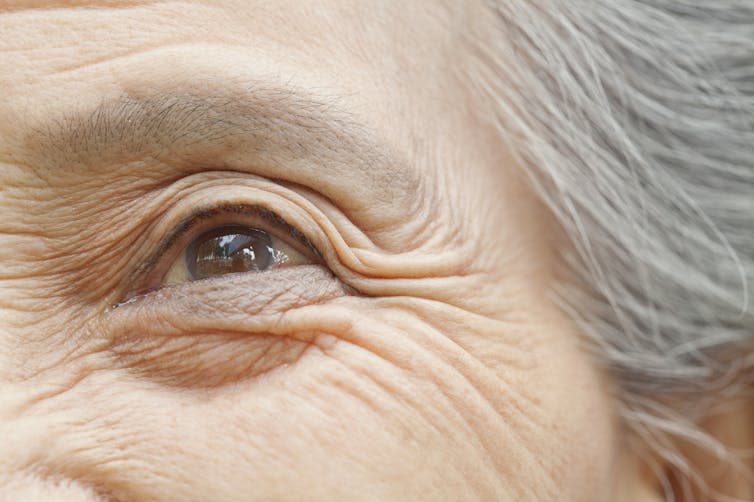
You likely know someone who seems to age slowly, appearing years younger than their birth date suggests. And you likely have seen the opposite – someone whose body and mind seem much more ravaged by time than others. Why do some people seem to glide though their golden years and others physiologically struggle in midlife?
I have worked in the field of aging for all of my scientific career, and I teach the cellular and molecular biology of aging at the University of Michigan. Aging research doesn’t tend to be about finding the one cure that fixes all that may ail you in old age. Instead, the last decade or two of work points to aging as a multi-factoral process – and no single intervention can stop it all.
What is aging?
There are many different definitions of aging, but scientists generally agree upon some common features: Aging is a time-dependent process that results in increased vulnerability to disease, injury and death. This process is both intrinsic, when your own body causes new problems, and extrinsic, when environmental insults damage your tissues.
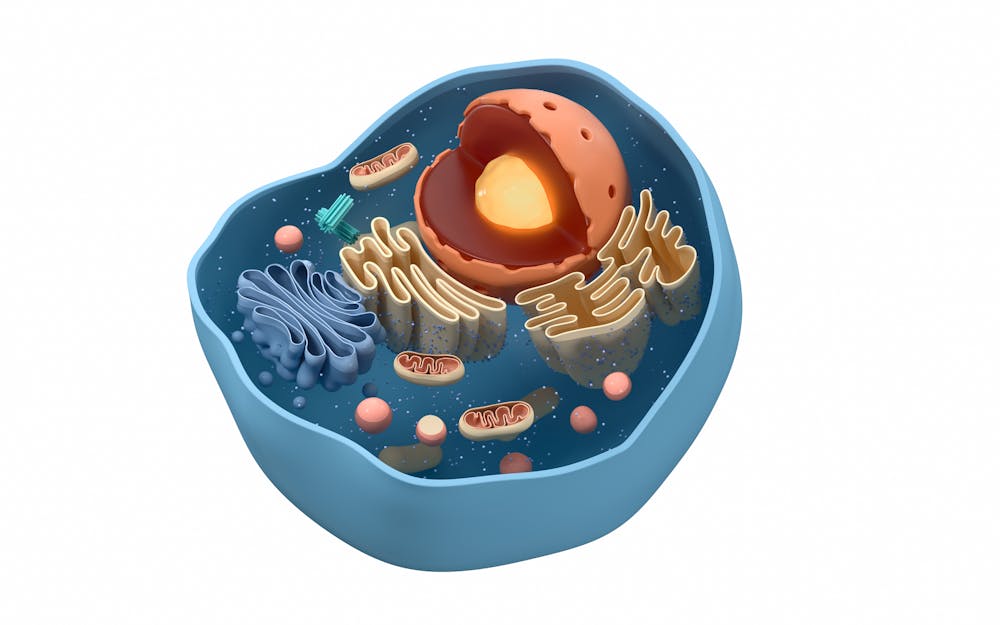
Your body is comprised of trillions of cells, and each one is not only responsible for one or more functions specific to the tissue it resides in, but must also do all the work of keeping itself alive. This includes metabolizing nutrients, getting rid of waste, exchanging signals with other cells and adapting to stress.
The trouble is that every single process and component in each of your cells can be interrupted or damaged. So your cells spend a lot of energy each day preventing, recognizing and fixing those problems.
Aging can be thought of as a gradual loss of the ability to maintain homeostasis – a state of balance among body systems – either by not being able to prevent or recognize damage and poor function, or by not adequately or rapidly fixing problems as they occur. Aging results from a combination of these issues. Decades of research has shown that nearly every cellular process becomes more impaired with age.
Repairing DNA and recycling proteins
Most research on cellular aging focuses on studying how DNA and proteins change with age. Scientists are also beginning to address the potential roles many other important biomolecules in the cell play in aging as well.
One of the cell’s chief jobs is to maintain its DNA – the instruction manual a cell’s machinery reads to produce specific proteins. DNA maintenance involves protecting against, and accurately repairing, damage to genetic material and the molecules binding to it.
Proteins are the workers of the cell. They perform chemical reactions, provide structural support, send and receive messages, hold and release energy, and much more. If the protein is damaged, the cell uses mechanisms involvingspecial proteins that either attempt to fix the broken protein or send it off for recycling. Similar mechanisms tuck proteins out of the way or destroy them when they are no longer needed. That way, its components can be used later to build a new protein.
Aging disrupts a delicate biological network
The cross-talk between the components inside cells, cells as a whole, organs and the environment is a complex and ever-changing network of information.
When all processes involved in creating and maintaining DNA and protein function are working normally, the different compartments within a cell serving specialized roles – called organelles – can maintain the cell’s health and function. For an organ to work well, the majority of the cells that make it up need to function well. And for a whole organism to survive and thrive, all of the organs in its body need to work well.
Aging can lead to dysfunction at any of these levels, from the sub-cellular to the organismal. Maybe a gene encoding an important protein for DNA repair has become damaged, and now all of the other genes in the cell are more likely to be repaired incorrectly. Or perhaps the cell’s recycling systems are unable to degrade dysfunctional components anymore. Even the communication systems between cells, tissues and organs can become compromised, leaving the organism less able to respond to changes within the body.
Random chance can lead to a growing burden of molecular and cellular damage that is progressively less well-repaired over time. As this damage accumulates, the systems that are meant to fix it are accruing damage as well. This leads to a cycle of increasing wear and tear as cells age.
Anti-aging interventions
The interdependence of life’s cellular processes is a double-edged sword: Sufficiently damage one process, and all the other processes that interact with or depend on it become impaired. However, this interconnection also means that bolstering one highly interconnected process could improve related functions as well. In fact, this is how the most successful anti-aging interventions work.
There is no silver bullet to stop aging, but certain interventions do seem to slow aging in the laboratory. While there are ongoing clinical trials investigating different approaches in people, most existing data comes from animals like nematodes, flies, mice and nonhuman primates.
One of the best studied interventions is caloric restriction, which involves reducing the amount of calories an animal would normally eat without depriving them of necessary nutrients. An FDA-approved drug used in organ transplantation and some cancer treatments called rapamycin seems to work by using at least a subset of the same pathways that calorie restriction activates in the cell. Both affect signaling hubs that direct the cell to preserve the biomolecules it has rather than growing and building new biomolecules. Over time, this cellular version of “reduce, reuse, recycle” removes damaged components and leaves behind a higher proportion of functional components.
What all of these interventions have in common is that they affect core processes that are critical for cellular homeostasis, often become dysregulated or dysfunctional with age and are connected to other cellular maintenance systems. Often, these processes are the central drivers for mechanisms that protect DNA and proteins in the body.
There is no single cause of aging. No two people age the same way, and indeed, neither do any two cells. There are countless ways for your basic biology to go wrong over time, and these add up to create a unique network of aging-related factors for each person that make finding a one-size-fits-all anti-aging treatment extremely challenging.
However, researching interventions that target multiple important cellular processes simultaneously could help improve and maintain health for a greater portion of life. These advances could help people live longer lives in the process.
I was born in London towards the tail end of 1944. I was the product of an affair between my father and mother. I came before my younger sister, Elizabeth, born in 1948. Then my father died on December 20th, 1956 and eventually my mother remarried my stepfather but he died in 1979 and then my mother died in 2016.
Elizabeth is still alive and so is my step-sister, Eleanor. I also had two half-sisters, Rhona, Corinne, born of my father and his first wife, but they are long dead.
But my family still continue and with a bit of luck I have a few years left; I shall be 80 in November, 2024.
When the music stops it will have been a fabulous life!