Category: consciousness

Staying with the memory of Lilly

A republication of a post from February, 2014

Yesterday, I offered the first of two previous posts about Lilly. Here is the second, originally published in February, 2014.

ooOOoo

Lilly, the second of our nine dogs.

Last week was the start of a series of posts giving you, dear reader, background on each of our nine dogs.  Thus last week, Jean wrote about Paloma.  Here is Jean’s account of how Lilly came into her life.

ooOOoo

Lilly

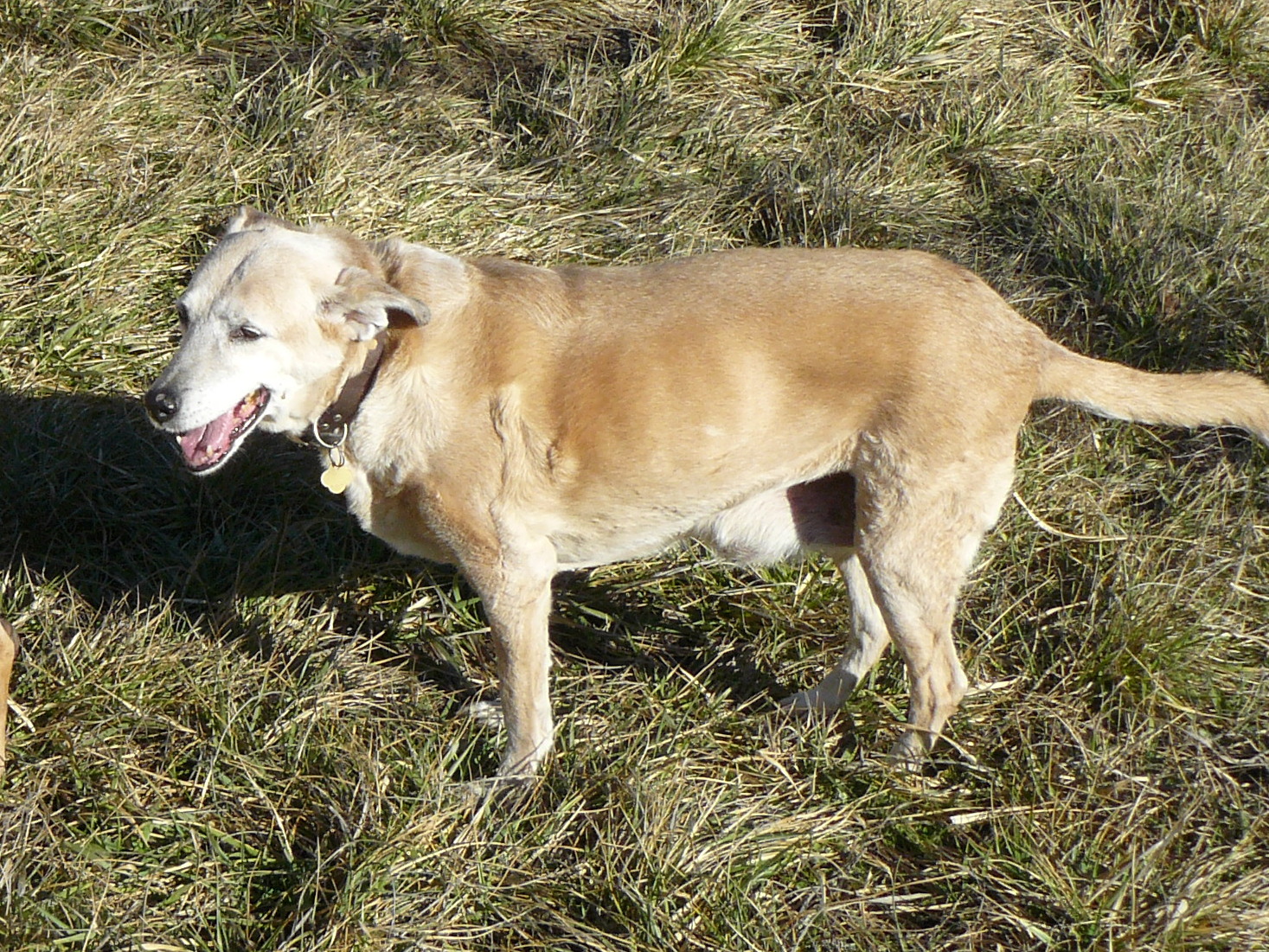
Lilly - Taken in the last two weeks.
Lilly – Taken 26th January, 2014

Lilly came into my life fourteen years ago. I had taken my car into the mechanics workshop in San Carlos, Mexico for an oil change and was beckoned over to an old junk car in their lot. It had no glass in the windows and in the hatch-back area lay a smallish dog with five young, suckling puppies. She had apparently walked in off the street and chosen the old airy car as a suitable ‘house’ in which to have her babies. The workers had supplied her with an old greasy towel for a mattress.

My girlfriend, Suze, and I immediately set about making her comfortable with a small quilt and plenty of water and good dog food. She had been dining on tacos and tamales scraps up until then.

Suze and I visited frequently and took plenty of food and at the same time went about looking for homes for the pups. However, one day we arrived and found all the beautiful babies gone. The mechanics had given them away. We were shattered and could only hope that they had gone to loving homes.

‘Rabbit’, as she was then called, continued hanging around the workshop and the men seemed to like her. Rabbit had this trick of leaping on her hind legs, twirling and landing on her four legs; hence her name Rabbit, I guess.

Suze and I would see her once a week on average and had also arranged for Rabbit to be spayed. All seemed well until Easter came (I think we are talking of the year 2000). As is common in Mexico, during Easter week in San Carlos everything shuts down. It’s carnival time. The streets are busy with tourists and there is much traffic. I was worried about Rabbit as the mechanic’s shop was locked up tight and Rabbit was outside in the lot by the street. I planned to take her home for the rest of the holiday but fate intervened. On my way to collect her, I was aghast to see her motionless by the side of the road, obviously having been hit by a car.  I gently picked her up and took her home.  On inspection, it was clear that she had two broken legs on her right-hand side.  Her injuries were so bad that I knew the local vet did not have the skills or instruments to heal her. My late husband, Ben, and I ended up driving her two hours South to Obregon where there was an orthopaedic vet. He put pins in both legs and she stoically set about mending herself. Rabbit became Lilly. Irrespective of name, she was an assertive but sweet young dog and settled in nicely with my burgeoning pack; I had twelve rescue dogs in those days.  Her legs healed nicely and she resumed her twirling.

Lilly became a particular favourite of Ben, my late husband. When in 2005 Ben lay dying at home, Lilly slept non-stop by his side on the bed, only leaving to eat or go outside.  I knew for sure that Ben had died in the night when one morning I awoke to feel Lilly beside me on my bed. Lilly sensed that now I needed her more.

Lilly is still with us.  Now a dowager old lady of at least fifteen years of age, she still enjoys going out with her buddies whom she tends to boss somewhat.  (Paul thinks that Lilly is an ‘alpha’ dog, in other words has pack leadership in her genes.) But one thing that Lilly doesn’t now do; she doesn’t twirl anymore, but then neither do I.

It will be a very sad day when Paul and I have to say goodbye to this treasure of a dog. [As indeed, it was] In the meantime we endeavour to make each day that she has left as rich as possible.

Another very recent photograph of Lilly.

ooOOoo

I think it would wonderful to also include a section from an email that Suzann Reeve, a good friend of this blog, sent to Jeannie yesterday.

The story of Lily and her origins:

(I of course burst into tears when reading your email, Paul.) I knew it was coming. I wish I could have seen her one more time.

Poor baby, I hope she did not suffer much.

In 1998, Don and I went to a junk yard, which at the time was next to the telephone company in San Carlos. As we were talking to the men, out of a shell of an old car behind us popped a small mama dog, heavy with milk. I of course went right over there after hearing puppies cry to see many little baby puppies were mewling for mommy’s milk! The dog was so sweet and jumped around like a rabbit. I brought food and water for her and found her a nice blanket for her and the pups.
I told Jeannie about them and we went back the next day to check it out. We told the men we would care for them, but one day when we came to feed, the puppies were gone! I begged Don to let me take her, but as I lived in an RV, he would not let me, and I also had 3 dogs at the time, Poncho, and his sister and Destina….., plus the men wanted her, which almost led to her death.
After Don and I left town for the summer sometime later, if i remember correctly, Jean and Ben were driving down the main road in town when they saw LLevre (rabbit in Spanish) injured on the road. I believe they took her down to Obregon for an operation right away, and after a successful operation, she was theirs! They saved her life!
She has lived a very full and happy life. I am so sad that she is gone.


Lilly’s long goodbye

Fewer than five minutes ago, at 11:52 PDT today, Sunday 23rd August 2015, Jim Goodbrod euthanised our Lilly.

Lilly, aged seventeen, started to decline about a year ago. In the last few weeks she had become progressively weaker, she was hardly eating and had lost much body mass, her kidneys were close to total failure and it was clear to Jean and me that she was close to what could in all likelihood be a painful end. So much better for Lilly that her end should be peaceful and pain-free, as it most clearly was.

Lilly was found by Jean sixteen years ago with her five young, suckling puppies in a car mechanics workshop in San Carlos, Mexico and has been loved and cared for by Jean right up to the end. Most Mexican street dogs barely live for a couple of years.

All of our dogs are special yet the odds of any other of our dogs living seventeen human years is very low.

I intend to republish tomorrow and Tuesday two posts of Lilly in homage of this wonderful, gentle and loving dog.

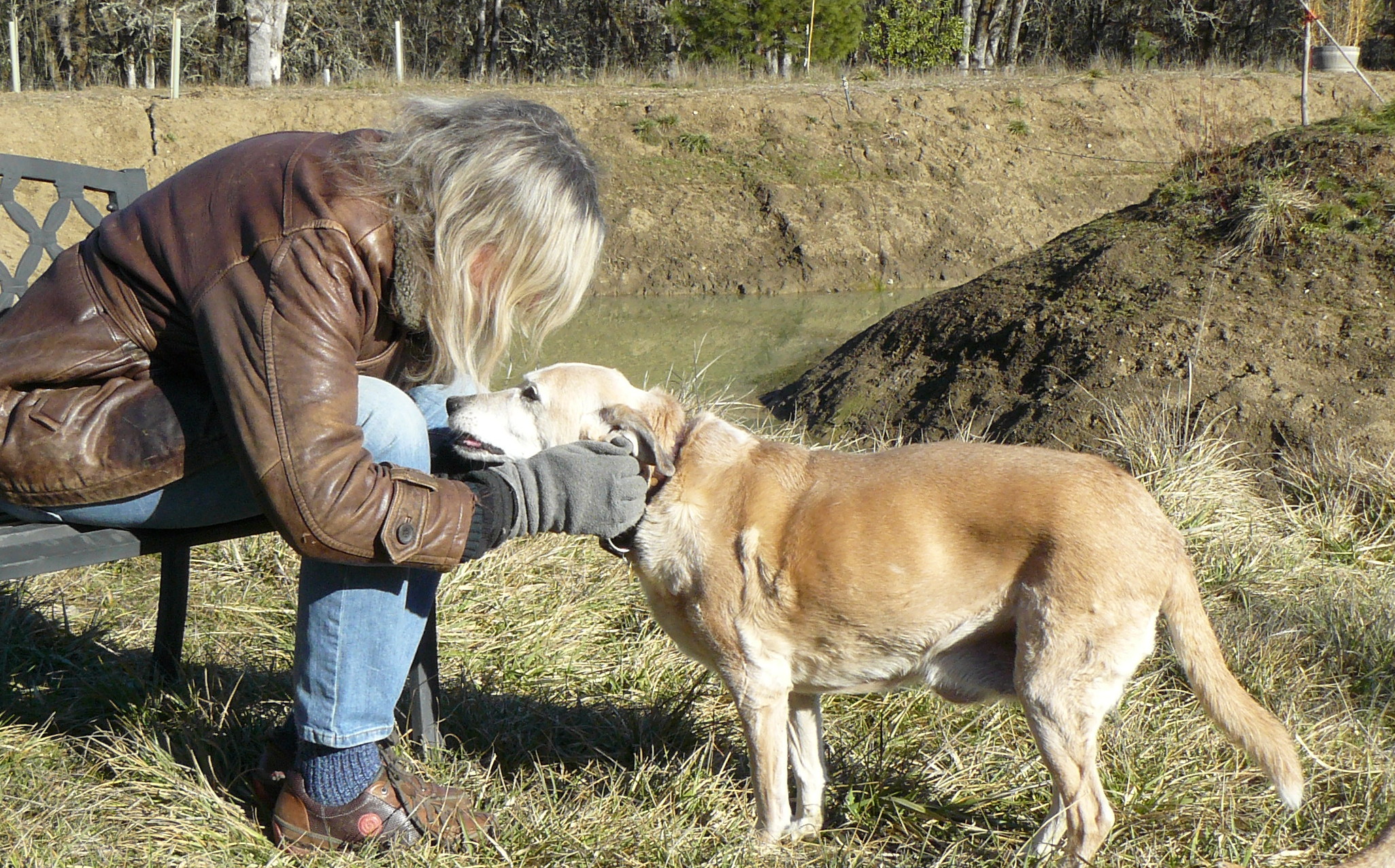
Let me leave you with this photograph of Jean and Lilly from earlier last year.

Another very recent photograph of Lilly.
A photograph of Lilly taken in February, 2014.

The art of stillness.

Another fabulous lesson we can learn from our dogs.

Stillness. It is a very simple, single word yet, somehow, it sounds as though it belongs to a different age. As though stillness is a very long way from the modern society that millions and millions of us subscribe to.

The dog is the master of being still. Being still, either from just laying quietly watching the world go by, or being still from being fast asleep. The ease at which they can find a space on a settee, a carpeted corner of a room, the covers of a made-up bed, and stretch out and be still, simply beggars belief. Dogs offer us humans the most wonderful quality of stillness that we should all practice. Dogs reveal their wonderful relationship with stillness.

Now watch this entrancing talk from Pico Iyer.

Published on Nov 26, 2014
The place that travel writer Pico Iyer would most like to go? Nowhere. In a counterintuitive and lyrical meditation, Iyer takes a look at the incredible insight that comes with taking time for stillness. In our world of constant movement and distraction, he teases out strategies we all can use to take back a few minutes out of every day, or a few days out of every season. It’s the talk for anyone who feels overwhelmed by the demands for our world.

Why you should listen.

Acclaimed travel writer Pico Iyer began his career documenting a neglected aspect of travel — the sometimes surreal disconnect between local tradition and imported global pop culture. Since then, he has written ten books, exploring also the cultural consequences of isolation, whether writing about the exiled spiritual leaders of Tibet or the embargoed society of Cuba.

Iyer’s latest focus is on yet another overlooked aspect of travel: how can it help us regain our sense of stillness and focus in a world where our devices and digital networks increasing distract us? As he says: “Almost everybody I know has this sense of overdosing on information and getting dizzy living at post-human speeds. Nearly everybody I know does something to try to remove herself to clear her head and to have enough time and space to think. … All of us instinctively feel that something inside us is crying out for more spaciousness and stillness to offset the exhilarations of this movement and the fun and diversion of the modern world.”

What others say

“[Iyer] writes the kind of lyrical, flowing prose that could make Des Moines sound beguiling.” — Los Angeles Times

Five years, in the blink of an eye!

How time flies.

We have a guest staying with us for twenty-four hours and the last thing I wanted to do was to spend time at a keyboard composing a new post for today.

So just for fun, I thought of reposting what appeared on this blog five years ago: August 18th, 2010.

And here it is.

ooOOoo

New thinking is our only solution

Came across an interesting organisation the other day, the Centre for the Advancement of the Steady State Economy.

Do drop in to the web site and read what they are all about.

Common sense!

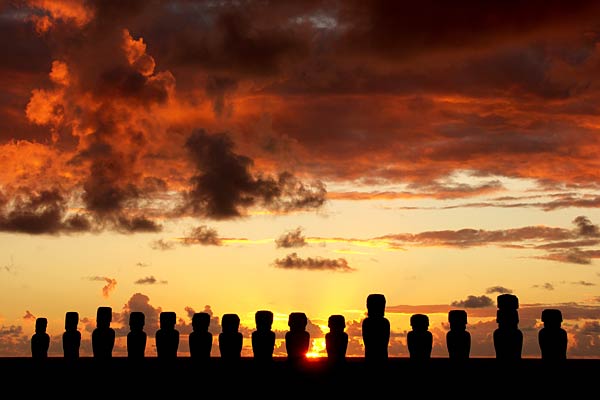
And then reflect about Easter Island.

It’s almost unimaginable that Planet Earth could go the same way.  Then again, anyone over the age of, say 60, would find where we are today, in terms of mankind’s long-term survival, equally unimaginable from how the world looked 40 years ago.

An early predictor of Planet Earth?

ooOOoo

When dark shadows fall across our hearts.

One of the most important lessons we can learn from our dogs: coping with death.

In writing about the lesson of death that we can learn from our dogs I am, of course, speaking of our own death, of the inevitability of our death. That largely unspoken truth that Sharon Salzberg described in her book Faith: “What does it mean to be born in a human body, vulnerable and helpless, then to grow old, get sick and die, whether we like it or not?” [page 34.]

Anyone who has loved a dog has most likely been intimately involved in the end of that dog’s life. It is, to my mind, the ultimate lesson that dogs offer us: how to be at peace when we die and how to leave that peace blowing like a gentle breeze through the hearts of all the people who loved us.

Our beloved dogs have much shorter life spans than us, thus almost everyone who has loved a dog will have had to say goodbye to that gorgeous friend at some point in their lives. Very sadly, perhaps, saying goodbye to more than one loved dog.

All of which is my introduction to a recent essay published on The Conversation blogsite. The essay is written by Bernard Rollin, Professor of Philosophy, Animal Sciences and Biomedical Sciences at Colorado State University. The essay is called: When is it ethical to euthanise your pet?

ooOOoo

When is it ethical to euthanize your pet?

August 12, 2015 6.18am EDT

In the 1960s, I knew people who, before going on vacation, would take their dogs to a shelter to be euthanized. They reasoned that it was cheaper to have a dog euthanized – and buy a new one upon returning – than pay a kennel fee.

Two decades later, I was working at Colorado State’s veterinary hospital when a group of distraught bikers on Harley-Davidsons pulled up carrying a sick chihuahua. The dog was intractably ill, and required euthanasia to prevent further suffering. Afterwards, the hospital’s counselors felt compelled to find the bikers a motel room: their level of grief was so profound that the staff didn’t think it was safe for them to be riding their motorcycles.

These two stories illustrate the drastic change in how animals have been perceived. For thousands of years, humans have kept animals as pets. But only during the past 40 years have they come to be viewed as family.

While it’s certainly a positive development that animals are being treated humanely, one of the downsides to better treatment mirrors some of the problems the (human) health care system faces with end-of-life care.

As with humans, in many cases the lives of pets are needlessly prolonged, which can cause undue suffering for the animals and an increased financial burden for families.

The growth of veterinary medicine and ethics

In 1979, I began teaching veterinary medical ethics at Colorado State University’s veterinary school, the first such course ever taught anywhere in the world.

A year later, the veterinary school hired an oncologist to head up a new program on animal oncology. Soon, our clinic was applying human therapeutic modalities to animal cancer. The visionary head of the veterinary program also hired a number of counselors to help pet owners manage their grief – another first in veterinary circles.

I’d been under the impression that people would be reluctant to spend much money on animal treatments, so I was genuinely shocked when the following April, the Wall Street Journal reported individuals spending upwards of six figures on cancer treatments for their pets.

As a strong advocate for strengthening concern for animal welfare in society, I was delighted with this unprecedented turn of events. I soon learned that concern for treating the diseases of pets besides cancer had also spiked precipitously, evidenced by a significant increase in veterinary specialty practices.

One of the family

So what’s behind the shift in how pets are perceived and treated?

For one, surveys conducted over the last two decades indicate an increasing number of pet owners who profess to view their animals as “members of the family.” In some surveys, the number is as high as 95% of respondents, but in nearly all surveys the number is higher than 80%.

In addition, the breakdown of nuclear families and the uptick of divorce rates have contributed to singles forming tighter bonds with companion animals.

Such attitudes and trends are likely to engender profound changes in societal views of euthanasia. Whereas before, many owners didn’t think twice about putting down a pet, now many are hesitant to euthanize, often going to great lengths to keep sick animals alive.

Vets caught in the middle

However, veterinarians continue to experience extensive stress as they experience two opposite – but equally trying – dilemmas: ending an animal’s life too soon, or waiting too long.

In a paper that I published entitled Euthanasia and Moral Stress, I described the significant stress experienced by veterinarians, veterinary technicians and humane society workers. Many chose their profession out of a desire to improve the lot of animals; instead, they invariably ended up euthanizing large numbers of them, often for unethical reasons.

These ranged from “I got the dog to jog with me, and now it’s too old to run,” to “If I die, I want you to euthanize the animal because I know it can’t bear to live without me.”

In other cases, the animal is experiencing considerable suffering, but the owner is unwilling to let the animal go. With owners increasingly viewing pets as family members, this has become increasingly common, and many owners fear the guilt associated with killing an animal too soon.

Ironically this, too, can cause veterinarians undue trauma: they know the animal is suffering, but there’s nothing they can do about it unless the owner gives them permission.

The consequences are manifest. One recent study showed that one in six veterinarians has considered suicide. Another found an elevated risk of suicide in the field of veterinary medicine. Being asked to kill healthy animals for owner convenience doubtless is a major contribution.

How to manage the decision to euthanize

Here is my suggestion to anyone who is thinking about getting a pet: when you first acquire it, create a list of everything you can find that makes the animal happy (eating a treat, chasing a ball, etc). Put the list away until the animal is undergoing treatment for a terminal disease, such as cancer. At that point, return to the list: is the animal able to chase a ball? Does the animal get excited about receiving a treat?

If the animal has lost the ability to have positive experiences, it’s often easier to let go.

This strategy can be augmented by pointing out the differences between human and animal consciousness. As philosopher Martin Heidegger has pointed out, for humans much of life’s meaning is derived from balancing past experiences with future aspirations, such as wishing to see one’s children graduate or hoping to see Ireland again.

Animals, on the other hand, lack the linguistic tools to allow them to anticipate the future or create an internal narrative of the past. Instead, they live overwhelmingly in the present. So if a pet owner is reluctant to euthanize, I’ll often point out that the animal no longer experiences pleasant “nows.”

In the end, managing euthanasia represents a major complication of the augmented status of pets in society. Ideally, companion animal owners should maintain a good relationship with their general veterinary practitioner, who has often known the animal all of its life, and can serve as a partner in dialogue during the trying times when euthanasia emerges as a possible alternative to suffering.

ooOOoo

So much to learn from these beautiful creatures and so many ways to return the unlimited love we receive from them.

Back to wolves.

Another example of the fabulous ways in which blogging connects people.

In the last twenty-four hours, Learning from Dogs has attracted a new follower. As always, I went across to this person’s blogsite and left a ‘thank you’ note. I loved what I saw because the blogsite was called Wolves of Douglas County Wisconsin authored by Rachel Tilseth. Better than that, there were a number of posts that I know LfD readers would enjoy very much.

Let me offer you an example of what you will find over on Rachel’s blog: Compassionate Conservation. Republished here with Rachel’s kind permission (but see my note at the very end of the post).

ooOOoo

Compassionate Conservation

a-wolf

When I think of compassionate conservation several well known conservationists, scientists, and psychologists come to mind. On a scale one to ten Dr. Jane Goodall, Joy Adamson, Bill Travers and Virginia McKenna, and Marc Bekoff Ph.D all rate in the top ten for their compassionate ideals and work regarding wild animals. I believe that it is wrong for humankind to kill off one species to save another because it is not acting in the best interests of wild animals and the ecosystems they support.

In a recent Facebook post on Todd Wilkinson’s timeline I was alerted to a column by Dr. Marc Bekoff on the subject of ‘compassionate conservation’ and decided to post Beckoff’s thought provoking article on my blog.

Compassionate Conservation Meets Cecil the Slain Lion A recent meeting focused on whether we should kill in the name of conservation Post published by Marc Bekoff Ph.D. on Aug 09, 2015 in Animal Emotions

The broad and interdisciplinary field of conservation biology(link is external) has received a good deal of attention in the past two weeks that has stimulated researchers and others to weigh in on what sorts of human-animal interactions are permissible as we try to save nonhuman animals (animals) and their homes. For example, some of the challenging questions that arise are: Should we kill in the name of conservation? Is it okay to trade off the lives of animals of one species for the good of their own or other species? Is seeking the “most humane” way of killing animals the only way to move forward? Is it possible to stop the killing of other animals and factor compassion that centers on the lives of individuals into our decisions? Should we try a “hands off” policy to see if it works where it’s clear our interference, despite our best intentions, has not solved the problems at hand? How do we factor in the interests of other animals and humans as we deal with the numerous — and growing — challenging and frustrating conflicts at hand? The field of anthrozoology (link is external) focuses on these and other questions.

Clearly, there are going to be differences among the people who are trying to save other animals and their homes and also take into account the interests of humans. And, this is what makes the field of conservation biology so exciting, for we are the only animals who are able to do what needs to be done to reverse the rather dismal and depressing situations in which humans and other animals find themselves in conflict. It goes without saying that the major problem is that there are too many humans and if we don’t stop making more of us it’s going to be a long and hard battle to right the wrongs for which we are responsible. And, given all of the information that is currently available, I like to call attention to a quote from William Wilberforce sent to me by Sadie Parr of Wolf Awareness(link is external), “You may choose to look the other way but you can never say again that you did not know. (link is external)”

Compassionate conservation comes of age

A recent meeting that centered on the rapidly growing international field called compassionate conservation (link is external) brought people together from all over the world, all of whom are trying to reduce or eliminate human-animal conflict. The conference was sponsored and coordinated by the Born Free Foundation (link is external) and the Centre for Compassionate Conservation(link is external) at the University of Technology, Sydney and hosted by the Animal Welfare Program(link is external) at the University of British Columbia (for more on compassionate conservation please click here, here (link is external), and here (link is external)). A most exciting part of the meetings was the presence of numerous students and young researchers. And, also very stimulating, were the obvious differences of opinion — the expected shades of gray — in what is possible and what methods are permissible as we try to deal with rampant and growing global human-animal conflicts. Some people argued that in the “real world” the “most humane” ways of killing are the only ways forward, whereas others argued that compassionate conservation is not about the “most humane” way of killing, but rather centers on stopping the killing because it is unethical and in many instances it really hasn’t worked. For them, individual animals are the focus of concern and the guide for compassionate conservation and “First do no harm (link is external)” means not harming or killing other animals “in the name of conservation.”

There also was very valuable discussion of the words people use to refer to the killing of otherwise healthy animals “in the name of conservation,” with the recognition that it is not euthanasia, or mercy-killing, but rather “zoothanasia” when it’s done in zoos or slaughter when done in other situations (please see “Animal ‘Euthanasia’ Is Often Slaughter: Consider Kangaroos“). Also of interest was the use of the word “pests” to refer to animals who are causing problems. Many agreed that it’s humans who are the pests, but because we can dominate and control other animals, they pay the price for just doing what comes naturally for them but is bothersome for us.

Clearly, there were many valuable discussions, and the abstracts of the broad array of papers that were presented can be seen here (link is external). They are a goldmine of information on the broad topics that were covered, the numerous different species discussed, and anthrozoologists should them to be indispensable for future studies of human-animal relationships. We learned that many wild animals really aren’t free (Yolanda Pretorius of the Centre for Wildlife Management at the University of Pretoria told us that elephants in South Africa are fenced and can’t migrate) and that “methods to assess the well-being of elephants are not included as a requirement for developing an elephant management plan.” Moles are ruthlessly killed in the UK because they destroy gardens and in many locations geese are killed because they poop on golf courses. We take away the geese’s habitats and then we kill them because they have nowhere else to go.

We also learned in a paper by MarÍa Fàbregas and G. M. Koehler of Save China’s Tigers(link is external) that in order to reintroduce critically endangered captive South China tigers back to restored protected areas within their historic range in China, they are allowed to practice killing ungulates. Many people were rather concerned with this practice, and it reminded me of breeding golden hamsters to allow endangered black-footed ferrets to practice killing them before being released into wild habitat. For many, these sorts of trade-offs are unacceptable.

In another project that was the focus of discussion, almost 900 wolves and other non-target animals were killed in Alberta, Canada (please also see and and), to try to save woodland caribou (it didn’t work) and not only were families broken up but there also are trans-generational effects. Simply put, far too many other animals are harmed or killed because we move into their homes and they have nowhere else to go and thus, they, innocent victims, become the “problems.” It’s a no-win situation for millions of other animals and we need to do much better so the killing stops.

Compassionate conservation meets Cecil the slain lion

It was also rather timely, and of course incredibly sad, that news about the thoroughly unnecessary killing of Cecil the lion(link is external) by Walter Palmer (please also see the numerous articles listed here (link is external) and Jennifer Jacquet’s “The Shaming of Walter Palmer (link is external)“) was making world-wide headlines as the meeting got under way. A few of us received requests for interviews the first morning of the meeting and Cecil was the topic of conversation at a number of talks and also at the coffee breaks, as was Marius, the young giraffe who was mercilessly killed at the Copenhagen Zoo in February 2014, because he didn’t fit into the zoo’s breeding program. Marius us a classic case of an animal who was zoothanized, not euthanized, as claimed by zoo administrators.

Many people are interested in the status and fate of African lions and as I was writing this essay I came across a review of a book called Lions in the Balance: Man-Eaters, Manes, and Men with Guns(link is external) by world renowned lion researcher Dr. Craig Packer(link is external) (the Kindle edition can be found here(link is external)). In the review by Iris Barber(link is external) called “Lions in the Balance: Can hunting save the kings of the jungle?” we learn that Dr. Packer argues, “‘Lions need trophy-hunting just as much as trophy-hunting needs lions.’ His plan: kill only male lions over the age of 6, so cubs aren’t killed by a lion mating with their mother who seeks to safeguard his own progeny. This is a fresh approach to conservation, where hunting is essential to survival.”

While numerous compassionate conservationists would argue against killing lions, when experts like Dr. Packer speaks, it’s highly worthwhile to listen carefully because it makes clear just how complex the issues are. As the book’s description notes, “Packer is sure to infuriate millionaires, politicians, aid agencies, and conservationists alike as he minces no words about the problems he encounters. But with a narrative stretching from far flung parts of Africa to the corridors of power in Washington, DC, and marked by Packer’s signature humor and incredible candor, Lions in the Balance is a tale of courage against impossible odds, a masterly blend of science, adventure, and storytelling, and an urgent call to action that will captivate a new generation of readers.”

Putting an end to dancing bears: All stakeholders count

Another tenet of compassionate conservation is that all stakeholders count, human and nonhuman. Of course, this is very challenging because various animals kill or harm humans or kill or harm animals on whom the livelihoods of humans and their communities depend. In an earlier essay I wrote about two projects in India that stress peaceful coexistence between humans and nonhumans who harm and kill the humans and destroy their businesses. Another excellent example of a project that took into account the interests of humans and nonhumans centered on putting an end to the use of dancing bears, discussed by Kartick Satyanarayan and Geeta Seshamani of the organization Wildlife SOS, India (link is external). The abstract for their talk reads as follows:

“Wildlife SOS spearheaded a conservation success story in India by resolving the barbaric dancing bear practice in which sloth bear cubs were poached from the wild, brutally trained in inhumane ways and spent their short tragic lives at the end of a four foot rope dragged through towns and villages to earn for the indigent, nomadic community called the Kalandars. Wildlife SOS’s initiative was to both rehabilitate the sloth bears held in captivity and the Kalandars themselves in alternative livelihoods. This in turn made a huge difference to the sloth bear population in the wild helping in its conservation.

“Compassionate Conservation and sustainability of wildlife and forests was the focus of the program which is still ongoing. Wildlife SOS also works with human-animal conflict situations similarly aiming for compassionate conservation and rehabilitation measures which educate the stakeholders, such as the villagers or dwellers around a forested area, in avoidance behavior.

“The education awareness programs are run in Maharashtra where the conflict species is the leopard and in Kashmir where the conflict species is the black bear and in Delhi and Agra the program deals with the rhesus macaque which seems to be the species humans have declared war on. Attempts at resolution involve creating safe spaces for the animals (rehabilitation centres) teaching people behaviours which do not lead to confrontation with the animals in question (awareness and education) but most importantly to inculcate a feeling for the animals in question emphasizing adjustment and acceptance of the existence of wildlife close to our human habitations. Our work with captive elephants is yet another conservation attempt at bringing down an ancient Indian traditional bastion that emphasizes training elephants using pain, fear and physical abuse by replacing it with compassion.

“Our training school – the kindness school provide straining to elephant keepers on modern and humane elephant management systems, compassionate handling, replacing negative management with positive reinforcement. However conservation also demands use of the law so the Wildlife SOS Anti-Poaching enforcement unit works to gatherintelligence on wildlife traffickers and smugglers and enforces the law working in partnership with the Indian Government.

“Compassionate conservation is the key to the future ahead of us.”

Another wonderful project in which human and nonhuman interests were taken into account and satisfied was concerned with how to deal non-lethally with “problem” raccoons at a fast food restaurant in Vancouver. Dr. Sara Dubois, who works with theBritish Columbia SPCA (link is external), outlined various strategies for coming to terms with urban “pests.” She noted, “The overall goal of developing humane standards for nuisance wildlife control is to create an educational and enforcement tool, setting a higher bar for control measures, whether they are done for conservation or nuisance purposes.”

The coming of age of compassionate conservation: It’s a “sad bad” if killing is the only viable option for “peaceful” coexistence

The field of compassionate conservation is slowly coming of age and it’s essential that all opinions come to the table to be discussed. Ethicist Bill Lynn, who supported the experimental humane killing of a few thousand barred owls to try to save endangered snowy owls, called this practice a “sad good.” While it may be a “sad good” for the snowy owls, it’s surely not for the slaughtered barred owls. I would call it a “sad bad” for the barred owls and many other animals if killing remains the only option. A “sad good” is a very slippery slope that sets a lamentable precedent for opening the door for the more widespread “experimental killing” of barred owls and other species just to see if it works.

Compassionate conservation requires a large change in heart and practices, and like any other revolutionary paradigm shift it will take time. Many hope that this most needed paradigm shift in conservation biology that entails stopping the killing “in the name of conservation” will endure its growing pains as more and more researchers and others realize that killing is not the answer. I hope those who see the “real world” as mandating killing will change their minds and hearts. Future and young researchers are critical to the development and implementation of compassionate conservation, as are those careerconservation officers, zoo administrators, and researchers who come to realize that using “the most humane killing” is not what compassionate conservation is all about. I like to imagine a world where killing is no longer part of the conservationist’s toolkit. The welfarist calculus patronizes other animals and when push comes to shove, or often when it’s merely convenient, the nonhumans suffer and are killed when it’s determined that the benefits to humans outweigh the costs to the animals.

It’s time to put away the guns, the traps, the snares, the poisons, and other “weapons of mass destruction” (as a few attendees called them) and figure out how to live in peaceful coexistence with the fascinating animals with whom we’re supposed to share our most magnificent planet. There does not have to be blood. I dedicated my talk to Cecil the lion and also to Bryce Casavant, a most courageous conservation officer who refused to kill two black bear cubs (link is external) near Port Hardy on northern Vancouver Island and was suspended because he said “no.” More people simply have to say “no” to killing other animals. We need to stop the violence and recognize that “The world becomes what we teach (link is external).” Compassion begets compassion and violence begets violence. By rewilding our hearts (link is external) and by becoming re-enchanted and reconnecting with nature I like to think that the killing will come to an end, slow as it may be.

If some people argue the killing cannot stop, it will not stop. It saddens me to think that we’ve gotten to the point where for some, killing is the only viable option for peaceful coexistence. Shame on us. As Kartick Satyanarayan and Geeta Seshamani concluded, “Compassionate conservation is the key to the future ahead of us.” I couldn’t agree more. We need to leave our comfort zones and think and act “outside of the box.”

The next meeting that will focus on compassionate conservation is slated for 2017 in Sydney, Australia. I often say that compassionate conservation is a wonderful meeting place for people who would otherwise not, but should, meet. This was so in Vancouver and I anticipate this will be the case in Sydney. Please stay tuned for more information on this future gathering and the exciting, challenging, and forward-looking field of compassionate conservation in general.

Note: I just learned of an essay titled “Mutant Animals Bred to be Brutally Killed by Hunters(link is external)” in which the person offering up these freaks outlandishly claims, “Conservation is a by-product of what I do.”

Marc Bekoff’s latest books are Jasper’s story: Saving moon bears (with Jill Robinson), Ignoring nature no more: The case for compassionate conservation, Why dogs hump and bees get depressed, and Rewilding our hearts: Building pathways of compassion and coexistence. The Jane effect: Celebrating Jane Goodall (edited with Dale Peterson) has recently been published. (marcbekoff.com; @MarcBekoff)

Source Psychology Today

ooOOoo

Note:

As Rachel points out in an earlier paragraph, the bulk of this essay was published by Marc Bekoff and I included the links in the third paragraph back to Marc’s essay.

However, Marc’s essay, via Rachel’s post, had a very great number of links including the many ‘link is external’ references and, sadly, far too many for me to enter in this reposting. So if you are curious about any aspect of Rachel/Marc’s essay then please re-read it here where all the links will be available to you.
The male of the species, Part Two

Further musings on dogs, women and men.

A few weeks ago, I read a book entitled The Republican Brain written by Chris Mooney and to quote WikiPedia:

The Republican Brain: The Science of Why They Deny Science — and Reality is a book by the journalist Chris Mooney that is about the psychological basis for many Republicans’ rejection of mainstream scientific theories, as well as theories of economics and history.

On page 83, Chris Mooney writes (my emphasis):

Here also arises a chief liberal weakness, in Lakoff’s view (*), and one that is probably amplified by academic training. Call it the Condorcet handicap, or the Enlightenment syndrome. Either way, it will sound very familiar: Constantly trying to use factual and reasoned arguments to make the world better and being amazed to find even though these arguments are sound, well-researched, and supported, they are disregarded, or even actively attacked by conservatives.

When glimpsed from a bird’s eye view, all the morality research that we’re surveying is broadly consistent. It once again reinforces the idea that there are deep differences between liberals and conservatives – differences that are operating, in many cases, beneath the level of conscious awareness, and that ultimately must be rooted in the brain.

(*) George Lakoff, Berkeley Cognitive Linguist and author of the book Moral Politics.

What Chris Mooney is proposing is that the difference between liberals and conservatives could be genetically rooted, at least in part.

That underlines in my mind how each of us, before even considering our gender differences, is truly a complex mix of ‘nature and nurture’ with countless numbers of permutations resulting.

That there are deep differences, apart from the obvious ones, between man and woman goes without saying. In earlier times, these differences were essential in us humans achieving so much and leading to, in the words of Yuval Noah Harari from yesterday’s post., ” … few would disagree that humans dominate planet Earth; we’ve spread to every continent, and our actions determine the fate of other animals (and possibly Earth itself).”

Speaking of earlier times, let me turn to dogs, for it is pertinent to my post, and I would like to quote an extract from what Doctor of Veterinarian Medicine, Jim Goodbrod, writes in the foreword of my forthcoming book:

But what exactly is this human-dog bond and why do we feel such an affinity for this species above all others? My feeling is that it may be associated with our deep but subconscious longing for that age of simple innocence and innate human goodness that we supposedly possessed before we became truly “human”: that child-like innocence or what Rousseau referred to as the “noble savage”, before being corrupted by civilization, before we were booted out of the Garden of Eden. We humans, for better or worse, somewhere along that evolutionary road acquired consciousness or so-called human nature and with it we lost that innocence. What we gained were those marvelous qualities that make us uniquely human: a sense of self-awareness, an innate moral and ethical code, the ability to contemplate our own existence and mortality, and our place in the universe. We gained the ability to think abstract thoughts and the intellectual power to unravel many of the mysteries of the universe. Because of that acquired consciousness and humans’ creative and imaginative mind we have produced the likes of Shakespeare, Mozart, and Einstein. We have peered deep into outer space, deciphered the genetic code, eradicated deadly diseases, probed the bizarre inner world of the atom, and accomplished thousands of other intellectual feats that hitherto would not have been possible without the evolution of our incredible brain and the consciousness with which it is equipped.

No other living species on this planet before or since has developed this massive intellectual power. But this consciousness was attained at what cost? Despite all the amazing accomplishments of the human race, we are the only species that repeatedly commits genocide and wages war against ourselves over political ideology, geographic boundaries, or religious superstition. We are capable of justifying the suffering and death of fellow human beings over rights to a shiny gold metal or a black oily liquid that powers our cars. We are the only species that has the capability to destroy our own planet, our only home in this vast universe, by either nuclear warfare, or more insidiously by environmental contamination on a global scale. Was it worth it? No matter what your or my opinion may be, Pandora’s Box has been opened and we cannot put the lid back on.

What can we do now to reverse this trend and help improve the quality of life for humanity and ensure the well-being of our planet? I think, if we recognize the problem and look very critically at ourselves as a unique species with awesome powers to do both good and bad, and put our collective minds to the task, it may be possible to retrieve some of the qualities of that innocence lost, without losing all that we have gained.

Dogs represent to me that innocence lost. Their emotions are pure. They live in the present. They do not suffer existential angst over who or what they are. They do not covet material wealth. They offer us unconditional love and devotion. Although they certainly have not reached the great heights of intellectual achievement of us humans (I know for a fact that this is true after having lived with a Labrador retriever for several years), at the same time they have not sunk to the depths of depravity to which we are susceptible. It could be argued that I am being overly anthropomorphic, or that dogs are simply mentally incapable of these thoughts. But nevertheless, metaphorically or otherwise, I believe that dogs demonstrate a simple and uncorrupted approach to life from which we all could benefit. I think the crux of Paul’s thesis is that, within the confines and limitations of our human consciousness, we can (and should) metaphorically view the integrity of the dog as a template for human behavior.

“Dogs demonstrate a simple and uncorrupted approach to life …”

I closed yesterday’s post with these words, “It is my contention that humankind’s evolution, our ability to “cooperate flexibly in large numbers”, is rooted in the gender differences between man and woman.”

The premise behind that proposition is that until, say one hundred years ago, give or take, that co-operation between large numbers of humans was critically important in so many areas: health; science; medicine; physics; exploration; outer space and more. (And whether one likes it or not: wars.)  My proposition is that it is predominantly men who have been the ‘shakers and movers’ in these areas. Of course not exclusively, far from it, just saying that so many advances in society are more likely to have been led by men.

But (and you sensed a ‘but’ coming up, perhaps) these present times call for a different type of man. A man who is less the rational thinker, wanting to set the pace, and more a man capable of expressing his fears, exploring his feelings, defining his fear of failure, and more. I don’t know about you but when I read Raúl Ilargi Meijer words from yesterday, “And if and when we resort to only rational terms to define ourselves, as well as our world and the societies we create in that world, we can only fail.”, it was the male of our species that was in my mind. As in, “And if and when we [males] resort to only rational terms to define ourselves …”.

Staying with Raúl Meijer’s words from yesterday (my emphasis), “And those should never be defined by economists or lawyers or politicians, but by the people themselves. A social contract needs to be set up by everyone involved, and with everyone’s consent.”

Dogs demonstrate a simple and uncorrupted approach to life but that doesn’t extend to them making social contracts. Women do understand social contracts, they are predominantly caring, social humans. Less so for men. But for that social contract to be successfully set up by everyone it must, of course, include men. And that requires men, speaking generally you realise, to find safe ways to get in touch with their feelings, to tap into their emotional intelligence, using positive psychology to listen to their feelings and know the truth of what they and their loved ones need to guarantee a better future. What they need in terms of emotional and behavioural change. And, if I may say, sensing when they might need the support of subject experts to embed and sustain those behavioural changes.

It was the fickle finger of fate that led me to the arms, metaphorically speaking, of a core process psychotherapist back in Devon in the first half of 2007. That counselling relationship that revealed a deeply hidden aspect of my consciousness: a fear of rejection that I had had since December, 1956. That finger of fate that took me to Mexico for Christmas 2007 and me meeting Jean and all her dogs. That finger of fate that pointed me to the happiest years of my life and a love between Jeannie and me that I could hitherto never ever have imagined.

However, as much as I love and trust Jean, wholeheartedly, it comes back to dogs.

For when I curl up and wrap myself around a dog and sense that pure unconditional love coming back to me, I have access to my inner feelings, my inner joys and fears, in a way unmatched by anything else.

Where learning from dogs is a gateway to learning from me.

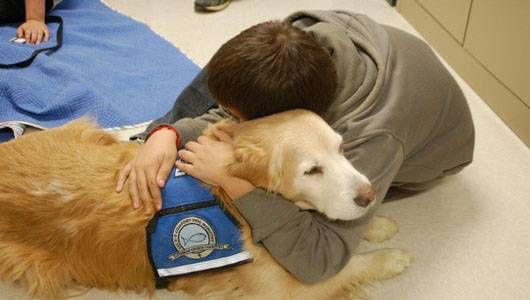
Pharaoh – more than just a dog!


The male of the species, Part One

Dogs, women and men.

I did warn you, my dear reader, at the end of yesterday’s post that my introspective mood continues!

Over today and tomorrow, I want to explore why we humans can be so incredibly clever, especially in a group sense, yet the males of our species find it so difficult to express themselves, and what that means for the future of humanity (at the risk of sounding a tad pompous).

More or less at random, a dip into yesterday’s selection of blogs brought to light some deeply disturbing items.

Professor William Even, Professor of Economics at the Farmer School of Business at Miami University was reported in The Conversation saying that:

As of 2014, there were approximately 39 million people aged 16-24 in the US, and 5.4 million of them were neither employed nor in school. That’s almost 14% of the age cohort, or more than two-and-a-half times the national rate of unemployment.

In that same bulletin from The Conversation, John Shepherd, a Professorial Research Fellow in Earth System Science at the University of Southampton in England, in writing about the challenges of directly removing CO2 from the atmosphere, stated (my emphasis):

A new paper in Nature Communications shows just how big the required rates of removal actually are. Even under the IPCC’s most optimistic scenario of future CO2 emission levels (RCP2.6), in order to keep temperature rises below 2℃ we would have to remove from the atmosphere at least a few billion tons of carbon per year and maybe ten billion or more – depending on how well conventional mitigation goes.

We currently emit around eight billion tonnes of carbon per year, so the scale of the enterprise is massive: it’s comparable to the present global scale of mining and burning fossil fuels.

Then Raúl Ilargi Meijer authored an item on The Automatic Earth blog, a blog that usually writes almost exclusively about money matters. His article was called: Power and Compassion. He opens his essay:

Time to tackle a topic that’s very hard to get right, and that will get me quite a few pairs of rolling eyes. I want to argue that societies need a social fabric, a social contract, and that without those they must and will fail, descend into chaos.

Then after referring to the European Union, he goes on to write (my emphasis):

Though it may look out of far left field for those of us -and there are many- who think in economic and political terms only, we cannot do without a conscious definition of a social contract. We need to address the role of compassion, morals, even love, in our societies. If Jesus meant anything, it was that.

There have been times through history when this subject would have been much easier to breach, but we today almost seem to think they are irrelevant, that we can do without them. We can’t. But in the US, people get killed at traffic stops every day, and in Europe, they die of sheer negligence. Developments like these will lead to ‘centers that cannot hold’.

In that part of the media whirlwind that we at the Automatic Earth expose ourselves to, virtually all discussions about our modern world, and what goes wrong with it, which is obviously a whole lot, are conducted in rational terms, in financial and political terminology.

But that’s exactly what we should not be doing. Because it’s never going to get us anywhere. In the end, let alone in the beginning too, we are not rational creatures. And if and when we resort to only rational terms to define ourselves, as well as our world and the societies we create in that world, we can only fail.

For a society to succeed, before and beyond any economic and political features are defined, it must be based solidly on moral values, a moral compass, compassion, humanity and simple decency among its members. And those should never be defined by economists or lawyers or politicians, but by the people themselves. A social contract needs to be set up by everyone involved, and with everyone’s consent. Or it won’t last.

How and why that most basic principle got lost should tell us a lot about where we are today, and about how we got here. Morals seem to have become optional. The 40-hour death struggle of Cecil the lion exemplifies that pretty well. And no, his is not some rare case. The lack of morals involved in killing Cecil is our new normal.

Let me now set the stage for what I want to write about tomorrow. And I’m going to do that by referring to a TED Talk that was recorded by historian and author Yuval Noah Harari. Here’s how that TED Talk was introduced:

Seventy thousand years ago, our human ancestors were insignificant animals, just minding their own business in a corner of Africa with all the other animals. But now, few would disagree that humans dominate planet Earth; we’ve spread to every continent, and our actions determine the fate of other animals (and possibly Earth itself). How did we get from there to here? Historian Yuval Noah Harari suggests a surprising reason for the rise of humanity.

Yuval Harari’s talk is based firmly on his thesis presented in his book: Sapiens: A Brief History of Humankind. (There’s a review of his book in The Guardian newspaper.) Namely:

The book surveys the history of humankind from the evolution of archaic human species in the Stone Age up to the twenty-first century. Its main argument is that Homo sapiens dominates the world because it is the only animal that can cooperate flexibly in large numbers. The book further argues that Homo sapiens can cooperate flexibly in large numbers, because it has a unique ability to believe in things existing purely in its own imagination, such as gods, nations, money and human rights. The author claims that all large scale human cooperation systems – including religions, political structures, trade networks and legal institutions – are ultimately based on fiction.

Other salient arguments of the book are that money is a system of mutual trust; that capitalism is a religion rather than only an economic theory; that empire has been the most successful political system of the last 2000 years; that the treatment of domesticated animals is among the worst crimes in history; that people today are not significantly happier than in past eras; and that humans are currently in the process of upgrading themselves into gods.

It is my contention that humankind’s evolution, our ability to “cooperate flexibly in large numbers”, is rooted in the gender differences between man and woman. A contention that I expand upon tomorrow.

Synecdoche : Little World

The concluding part of Hariod Brawn’s wonderful essay.

Haroid’s opening part was republished by me in this place yesterday, under the blog title of Alone in a sea of many. For the concluding part, I have named this blog post in accordance with Hariod’s chosen name. Thank you to all who read Part One and I hope you find Part Two equally stimulating.

ooOOoo

Synecdoche (Part Two): Little Person

Fool’s Cap Map of the World. Unknown origin c.1580-1590

In the first part of this article, we discussed how each person, in coming to understand how they construct themselves as the self-entity they take themselves to be, must in the process come to understand how all others do too. In other words, self-knowledge is not particular to the individual, because the self – in essence an embedded, accumulating and by graduation morphing narrative and body schema – comes into being by identical means in our species. Each of us remains unique in many ways, such as in our formative experience, our psychological make-up, conditioned traits, genetic inheritance, and in our individuated physicalities. Yet that which we regard as our quintessence, the enduring internalised construct we each unquestioningly hold as the self and the aspect of ourselves which we most intimately cling to, is little more than a formulaic pretence determined and governed solely by means of evolved, unbidden and unconscious processes.

Each character has a given name, societal position, cultural identity and perhaps a hierarchical status; yet all such markers are in part a figure of speech, or synecdoche, denoting an undeniable correlation with countless others. The markers delineate superficial distinctions alone, and the greater the number of them, the more we remove from our understanding the underlying truth of the other’s commonality with us. In much the same way, in our coming to understand how the worlds we ourselves inhabit are constructed, we see also that same world as a synecdoche for all others. How I relate to my home and environment, my relatives and loved ones, those I engage with out of chance or necessity, and those whom I depend upon or those who depend upon me, human or non-human, all make up my little world. It is a relational world, an interactive adventure forged from myriad connections, surprisingly few of which do I have great control over.

The argument against this is to assert that such correlations are facile, that how can I, a materially secure Westerner living in a largely strife-free state, possibly share any commonality with the oppressed and malnourished other on, say, the Indian sub-continent? Are these conditions not worlds apart, if only qualitatively? Well, in examining human suffering, we find it has a common genesis, proceeding as it does from the mind. For example, we commonly mistake unpleasant bodily sensations for suffering, failing to distinguish between physical pain and the attendant overlay of mental anguish. Is the suffering of the wealthy financier who contemplates suicide at her portfolio’s decimation greater than that of the homesteader in sub-Saharan Africa facing a crop failure of a few sacksful of grain? Objectively, then yes, these are worlds apart, yet the subjective suffering of each may be qualitatively indistinct, even in their wildly differing experiential settings.

Geography of Twitter. By Eric Fischer, Washington, DC

And what of care and affection; are we to suppose that our world as comprising love is any the lesser or greater than others? Ought we to suppose the human instinct to loving solicitude is greater than that of our fellow creatures? Who amongst us knows what human love is as distinct from other forms of animal love, and whether it is qualitatively superior? Am I so arrogant as to suggest my altruistic benevolence is any the greater than that of my pet Border Collie, for it seems far from being so? If I am unable to define precisely what constitutes this world aspect, how am I to know that those of other animals are not simulacra of my own, there being no original and authentic love-world other than the one as represented by the many – is this not a truth hard to refute? I may describe a personal world of felt affection, yet in doing so prescribe but a figure of speech alone, a synecdoche for all worlds inhabited perhaps by most beings of sentience.

My little world is forged at the interface between psyche and otherness, between ideas and the world as impressed upon my senses. Those impressions and the precise nature of that otherness differ in every detail from the next person’s, yet the means of forging are identical. This shared action results in distinct narratives of course, and it is these that are held to in our bids to assert the pre-eminence of individuality over commonality. I want to believe I am, if not special, then unique; yet that is only true in the differing stories of what I am and what my little world is. To those without privilege to my narratives of self and world, my assumed mantle of uniqueness is meaningless, and the same is true of theirs to me. We may here be at a cold and sterile juncture, yet it also is a starting point from which we may begin to introduce the binding agents of humankind – our innate qualities of kindness and compassion, of empathic understanding.

So what, why should I care about such ideas when I have altogether more pressing concerns? What is the point in abstracting notions such as these from the warp and weft of daily living, the place where I earn my crust, feed my children, and work on my betterment as a means of personal fulfilment? Perhaps the answer lies somewhat starkly in the evidence, and which seems to me to be in a state of constant deterioration. We live in a polarised world, where theists fight theists and atheists argue against both, where the wealthy seldom flinch in their impoverishment of others, and where power-hungry and psychopathic leaders crush the potential of all they have dominion over. Is it not time to find our common humanity, or even our common animality? We humans are destroying our sole environment; we are chasing down the darkening corridors of economic systems at the point of failure. Can we not rest awhile so as to perceive our little worlds as one?

ooOOoo

My sense is that for quite a few readers who read yesterday’s and today’s postings, they were not the easiest read that has been seen on Learning from Dogs. But in a world where the dumbing down of the English vocabulary seems ever more present, to read Hariod’s essay slowly and carefully, and let the deeper meanings of her arguments settle within the mind, is a profound and compelling reminder of the beauty and elegance of the English language.

This introspective mood continues tomorrow: you have been warned!

Alone in a sea of many

A few days of inner contemplation.

I suspect that many, if not most, originally came to this place expecting the blog to be directly about dogs. And, in many instances, the posts are directly about canis lupus familiaris. But the original idea behind choosing the blog name Learning from Dogs was the sense that we, as in mankind, have to change our ways if we are to offer our grandchildren a viable planet upon which they may live. More succinctly expressed in The Vision for this blog:

Our children require a world that understands the importance of faith, integrity and honesty,

Learning from Dogs will serve as a reminder of the values of life and the power of unconditional love – as so many, many dogs prove each and every day,

Constantly trying to get to the truth …

The power of greater self-awareness and faith; faith that the only way forward for us is through the truth …

If you have read this far you may be wondering if the old guy has lost yet another marble!

So what has prompted this introspection? I’ll tell you.

I subscribe to Hariod Brawn’s blogsite Contentedness.net For those that do not know Hariod’s writings then her About page offers (in part):

We’re here to discuss aspects of human well-being as they relate to our sense of self, our personal identity and whatever other notions we may hold for our own uniquely human sense of being. This means the discussion centres upon the pragmatic or real-life dimensions of experience – things like our sense of contentedness, of personal meaningfulness, and other tangibly perceived aspects of well-being. The discussion is positive, respectful, non-judgemental, considerate.

That, as you can see, resonates very much with me thinking of Learning from Dogs as a means, metaphorically so, of finding greater self-awareness.

On June 10th, Hariod published the first part of an essay called Synecdoche: Little Person. I found the essay extraordinarily interesting and wanted to share it with you in this place. Hariod generously gave me permission, so here is Part One.

ooOOoo

Synecdoche (Part One): Little Person

Hariod1

I am just a little person, one person in a sea of many little people who are not aware of me, yet each potentially a simultaneous understanding of the other; each, in a sense, a simulacrum or synecdoche for all others: if I understand myself sufficiently deeply, then in that moment I understand the other, however remote my presence to them. This is not to say I can appreciate their specific complexities, of course, and the detail, the true intricacy of any given life, remains forever removed from that quota of awareness I am privileged to. Each little person, tagged with their own unique package of characteristics, is still a synecdoche though, potentially at least, for all the little people out in the sea of otherness. The word means literally ‘take with something else’, so conveying the idea that even a partial representation alone is sufficient to apprehend the whole, or vice versa.

This sounds rather fanciful to the contemporary mind, conditioned as it is in a belief as to the total, inarguable individuality of each little person. What an appealing belief this is too, for this same little person here finds a seemingly plausible counter to a reluctantly intuited sense of homogeneity, which word itself derives from the Greek ‘homogene’, meaning ‘of the same kind’: Homo Sapiens. Even though each of the little person’s internal organs are replaceable with those fished from the sea of many little people, even though their blood, hair, bones, limbs, eyes and hands can be substituted with biological or manufactured alternatives, still the little person resists the evidence, demanding their status as a uniquely enduring entity. It is of course the mind itself that insists upon countering the intuited and actual homogeneity, and the mind, so the little person believes, belongs to them.

Hariod2

This raises a problem, for if the little person’s physicality is all but totally interchangeable, then at what point during this theoretical process does the supposed possessor of the mind cease to exist? When does the point arrive at which we can no longer claim the mind belongs to any little person? If we hold to Physicalism, or Hard Materialism, we assert the mind belongs, if not to the little person, then to the organ of the brain. Should we be an Eliminative Materialist, we say there is no mind, and so no such question arises. I resist these philosophical perspectives, for to me there is a non-locality of awareness, meaning it arises both within as well as about what we think of as the little person, and whilst we call this aware experience ‘mind’, I do not adhere to any Cranialism; it’s not exclusively headstuff. In accepting this, we logically must ask whether the mind is under ownership.

Ownership implies agency, or self-determination, and it is belief in this that makes the little person feel unique and autonomous, directing their life just as all others would theirs. Yet this owning agent is never verifiable other than as consciousness, for it is only ever a belief that resides within and as that consciousness. Now, all conscious displays are themselves non-local simulacra, representations of otherness that are neither the little person nor any owning agent, and which clearly may never be evidenced outside of consciousness. This means the little person is always a thought-construct, a put-up job forged by mind and subsisting in otherness but never in essence itself. Should this hypothesis obtain, then the little person is a synecdoche for the entirety of others in kind; this is because every little person, being a fabrication of mind, comes into apparent existence in an identical manner.

Hariod3

Where are we? We heard that the mind persists in countering a reluctantly intuited homogeneity of all the little persons. Further, we said the mind forges each little person as a thought-construct, and that the little person does not exist as an enduringly instantiated entity – just like a house, a car, or a computer, its parts are interchangeable. Beyond this, we learned the mind produces only conscious effects as verification of its own fabrications, and that these subsist universally for all the apparent little persons, being as they are culled from the same sea of otherness. And lastly, we found that the hypothesis as a whole demonstrates that each apparent little person is a synecdoche for the sea of many little people. So, in understanding myself sufficiently deeply, then in that moment I understand the other, which was the assertion of the opening paragraph and a challenge to the curious mind.

In the ‘Ship of Theseus’ paradox, a parallel question is raised: in replacing a wooden ship plank by plank, are the ongoing resultants still the original ship? In point of fact, only the conception itself endures across the constant transitioning. The ship, as known, is not a wooden construct; it is a thought-construct, a fixed conception presenting to any observing little person, all of whom create each the other in identical fashion. Each parallel the ship in that their structure constantly mutates whilst a sense of enduring selfhood smears out across the whole, forged in mind in homogeneous ways. Now, if the little person turns the mind in on itself reflectively, they in time realise that they must be more than a thought-construct, a belief. They see that the little person whom they believed they existed as was a synecdoche: a motif in play which in its perfectly clear seeing brings knowledge of all of its kind.

Images courtesy of New Zealand Government Archives.

ooOOoo

The concluding part of Hariod’s essay is published tomorrow.