Category: consciousness

Dealing with painful losses

The other side of the life-saving bond coin!

Yesterday, I shared an article about what flowed from the bond between ex-shelter dogs and special needs children. It underlined what so many dog lovers instinctively understand: The magic that flows from the relationship of a dog to a person, disadvantaged or otherwise.

However, or perhaps better said inevitably, the obverse face of that life-saving bond practically guarantees that the loss of that bond results in huge stress and emotional turmoil for the dog.

In other words helping our beloved dog cope with the loss of a family member is something else that we can be helped with by others.

That leads me neatly on to a comment left by ‘Small Talk’ to my Putting A Smile On Your Dog’s Face post last week.

Very good article…check out this article I wrote about dog depression… cheers!

https://animalwellnessmagazine.com/helping-dog-adjust-loss-separation/

I liked the article and asked for permission to share it with you here. That permission was promptly given.

ooOOoo

Helping Your Dog Adjust To Loss or Separation

by Jennifer Hinders
Whether it’s a death in the family, a child leaving home, or a divorce, your dog will notice that one of his “pack” members is missing. Learn to help him deal with his grief.

Grief has many forms, and can arise from many situations besides the death of a loved one. A relationship breakup, a child leaving home, even a prolonged business trip or hospital stay are all examples of family changes that can cause feelings of loss and grief in those remaining at home. That grief can be felt even more keenly by your dog, who doesn’t understand where the missing person is and when or even if s/he will be back.

My own dog became extremely sad when my husband left for an extended trip. Every time I sat down, he jumped in my lap (no small task since he weighs 50 pounds), lay his head on my arm and sighed pathetically. He poked around the house with his head drooping like a deflated balloon.

I asked veterinary behaviorist Dr. Nicholas Dodman about my dog’s behavior. “Dogs can get into a funk or lose interest in life because of separation,” he told me, adding that even short absences can cause changes in behavior. “For instance, if a man goes out to play a game of golf for five hours, the dog will feel temporary loss, but will be relieved when the owner returns.

“With long term separation or loss, dogs suffer bereavement and get depressed, not unlike humans,” Dr. Dodman adds. “Dogs have a difficult time adjusting to an owner or family member being removed from the household. This is especially the case if the person is someone to whom the dog is close — for example, a dog sleeps in someone’s room and then suddenly that person is out of the picture. The dog can’t understand why that person has disappeared.” 

Symptoms of bereavement or loss

Here are some common symptoms that indicate your dog is grieving over a separation or loss:

  • He seems down and depressed.
  • He has lost interest in things he formerly liked to do.
  • He’s listless, not playing with toys.
  • His appetite changes – typically, a grieving dog eats less and may lose weight.
  • He shows signs of anxiety.
  • His energy seems low when he’s out for walks.

In extreme cases, bereavement can cause compulsive behaviors like incessant licking.

How to cheer him up

Many separations and losses in life are inevitable, which means you have to help your dog adjust to the absence of the missing family member. If you’re also grieving, it might be easy to overlook your dog’s feelings; but one of the best ways to help both of you is to try and find ways to make life happy and interesting again.

  1. Act in an upbeat way around your dog; sympathy will actually make his depression worse because he’ll pick up on your own emotions. Dog behaviorist Bill Campbell calls this the “Jolly Routine”: when you act happy or jolly, it helps lift the dog’s mood. An old proverb states that “a cheerful heart is good medicine”. Being upbeat, fun and positive is good medicine for your dog (and for you).
  2. Give your dog lots of attention — treats, new toys, extra walks or play sessions. Throw a ball. Let him play with other dogs. Consider getting him a new friend in the form of a puppy, if circumstances allow. When you go back to work after the loss or separation, don’t leave your dog at home alone. If your workplace allows, take him with you, or have him stay with a friend or family member he knows well.

The good news is that your dog’s grief will ease over time. He may feel low for a few weeks, but it’s generally temporary. As his owner, being aware of his suffering and taking the necessary actions to help him through it will speed his (and your) recovery and adjustment. 

Losing a dog buddy is also hard on him

Dogs don’t just grieve when people in their lives die or go away. It’s also common for a dog to grieve over the loss of another dog he was closely bonded with. Dogs in the same household may play together, sleep together, operate as a pack, so the loss of one has a deep impact on the other.

Here’s one dramatic example involving two dogs in the same home. The older dog became terminally ill and needed to be put to sleep. The owner arranged for his healthy dog to go for a long run while the other was euthanized. Back home, the owner buried the older dog in the garden, covering the grave completely so it was basically indistinguishable from the surrounding area.

When the healthy dog was brought back from his outing, he ran around the house looking for his buddy, then begged to go outside. He immediately went to his friend’s grave and lay on it for three days.

ooOOoo

A few words of reflection from me following Jennifer Hinders useful article.

Death is inevitable. For both our beloved pets and, for that pet, their beloved humans. As they say about death and taxes!

But for that pet the loss of their beloved human can come about for other reasons apart from death.

Yet in the midst of say a divorce, or a loved young person leaving home to make their own life, it must be all too easy for people to lose the focus on what that means for the family pet, especially the family dog.

Stay connected good people!

Bonding that saves lives!

Again and again the power of our relationship with dogs is breathtakingly beautiful.

If I carried on writing about dogs and sharing articles with you for a thousand years, I still don’t think I would become immune to the joy and wonder of what dogs mean to us. (Luckily for your sake you won’t have to follow this blog for quite those many years!)

Turning to us, the measure of a compassionate and caring society is how it looks after those who, through circumstance and bad luck, are disadvantaged. While there are many in such a situation who are the wrong side of twenty-one there’s something especially important, critically so, in reaching out to help our youngsters.

So why this switch from dogs to disadvantaged young people?

Read on:

ooOOoo

Shelter Dogs and Special Needs Kids: A Match Made in Heaven

By: Vera Lawlor June 9, 2017

About Vera Follow Vera at @vtlawlor

Brook, a Rhodesian Ridgeback mix, was sitting in a high-kill shelter in Arizona with just two days to live when she was rescued by Janice Wolfe, founder and CEO of Merlin’s KIDS. The nonprofit organization rescues, rehabilitates and trains shelter dogs to work as service dogs for children with autism and special needs, as well as to assist disabled veterans. After extensive training Brook returned Wolfe’s kindness by transforming the life of Julie, 21, who is developmentally delayed due to a premature birth.

Wolfe describes Brook as a “rock star,” a calm sweet dog with the perfect temperament for working as an emotional support service dog. Julie’s mom, Ellen, couldn’t agree more.

“Brook has given Julie a greater sense of confidence,” Ellen said. “They are always together and Brook definitely knows that it’s her responsibility to take care of Julie.”

Before being paired with Brook, Julie was afraid to go outside the house on her own. Now she and Brook take walks down the block or sit together in the yard. Julie has become more outgoing and enjoys speaking or singing in front of people.

“Brook has become an emotional support for all of us,” Ellen said. “I can’t believe that they almost put her to sleep. She is the love of our lives!”

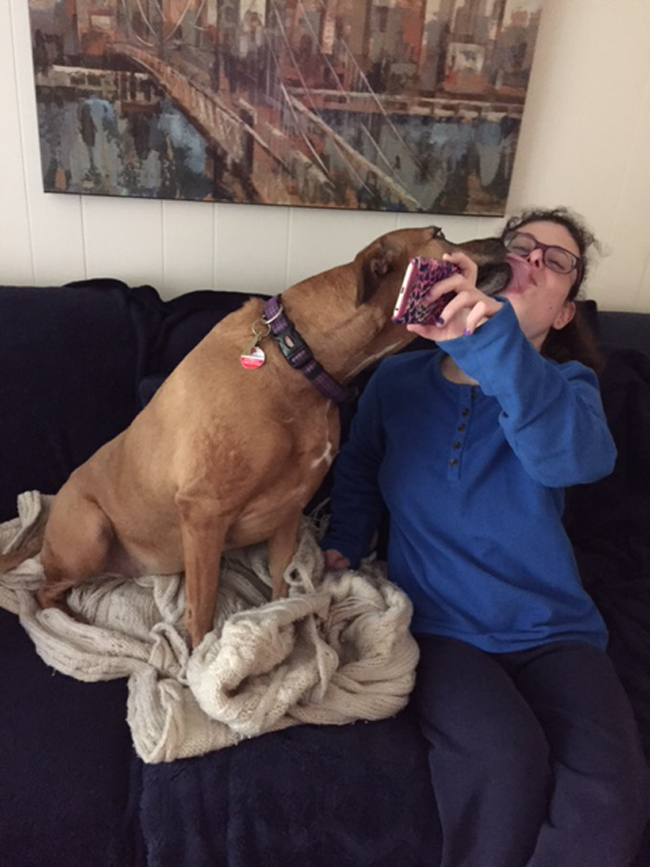
Julie takes a selfie with Brook as he smothers her with kisses.

Another Merlin’s KIDS graduate, Willow, was rescued from a beach in Aruba where she ran with a feral pack. She was so scared that nobody could touch her. With patience and love her foster family won her love and trust. Now after completing the training program, the 40-pound sweet-natured cunucu dog is ready to join three other Merlin’s Kids service dogs in the Animal Adaptive Therapy program at the Calais School for special needs children in New Jersey. Willow is a cortisol detection dog trained to detect stress signals in students and to alert the counseling team so that they can intervene before a problem escalates. She will also work with students to learn the social, emotional and behavioral skills they need to succeed in life.

Willow and Brook are just two of the 1,300 dogs that have been rescued, rehabilitated and trained as service dogs by Wolfe, a canine behavior rehabilitation specialist and author of “SHH HAPPENS! Dog Behavior 101.” In addition to Rhodesian Ridgebacks, the nonprofit organization has rescued and rehabilitated Labrador mixes, pointer mixes and coonhound mixes to work as service dogs. The goal of the organization is to ensure that service dogs are available to families in need regardless of financial circumstances. To fulfill this mission it depends on financial donations and sponsorships.

Wolfe said that Merlin’s KIDS service dogs are highly trained and highly specialized. They can do anything from keeping a special needs child from wandering away to opening doors or picking up pencils for children with disabilities to alerting before the onset of a seizure. It’s important, the trainer said, to make sure that the dogs are physically capable of doing the jobs being asked of them and that they have the right temperament.

“I’m very careful when placing dogs with autistic children because these kids can have such erratic behavior and the dogs have to be able to handle that,” Wolfe said. “Service dogs who will be tethered to a child have to be really chill and calm”

When it comes to autistic children Wolfe’s dogs are trained to serve the individual child. For example, dogs are trained to help children who are overstimulated by interrupting behavior patterns, and they can prevent children from opening a door and running out into the street. Some children need deep pressure to fall asleep so Wolfe and her team train service dogs to lay across their laps at night.

“We have a lot of autistic kids who had never slept in their own beds until they got a service dog,” Wolfe said. In addition to donations and sponsors, Merlin’s Kids is always in need of volunteers and foster families.

ooOOoo

This beautiful article was first seen on the Care2 site and, please, do drop across to that Merlin Kids website.

The science of love.

Yes, really!

Here’s a photograph of Pharaoh taken on the 3rd December, 2005. Taken in my home in Harberton, Devon, some two years before I met Jeannie.

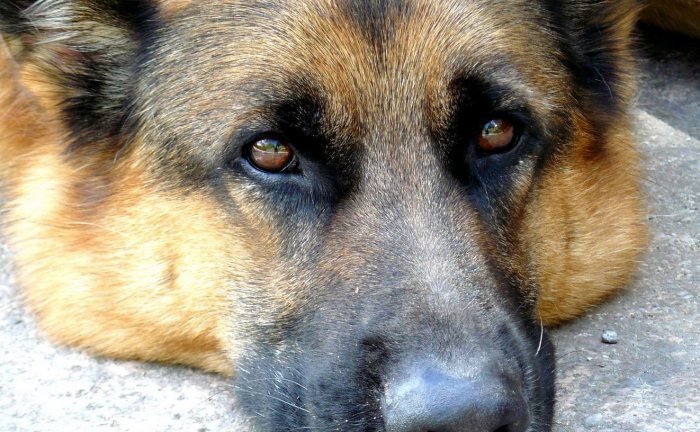
It’s not the world’s best photograph but I start today’s post with it simply because there is a look in Pharaoh’s eyes that spells out love to me in capital letters. Always has since the day I took that photograph.

Here’s an enlargement of the photo offering a closer look at Pharaoh’s expression in those eyes.

Right from the very first moment that I held Pharaoh I sensed the start of a loving bond. Did I choose to love Pharaoh? Well, of course I did! Was it a conscious decision? I don’t think so!

All of which is my introduction to a fascinating essay about the science of love that recently appeared on the Care2 site.

Enjoy!

ooOOoo

Can You Choose to Love? Science Suggests You Can

By: Zoe Blarowski June 2, 2017

About Zoe

Love may often feel spontaneous and sometimes even out of control. But is it, really? Research is starting to show that you can change the intensity of love you feel towards others. Similar to emotions like fear or sadness, love can be influenced simply by how you think about a situation.

Is love under your control?

One study looked at altering love feelings in people who were either in a romantic relationship or had recently broken up from one. Each participant started by viewing pictures of their current lover or their ex-partner to bring up their current feelings towards them.

Then, researchers asked them to think about positive aspects of their partner, relationship or possible future scenarios. Their feelings towards their current or previous partners were assessed again.

The second part of the study asked participants to think of negative things about their partner, such as what’s wrong with them or their relationship.

Perhaps it’s not surprising that participants reported having greater love feelings after thinking positive thoughts. Whereas, they reported decreased lovingness after the negative thoughts. It was the same for everyone, whether they were in a relationship or had recently broken up.

Researchers felt this shows great potential for people to take more control of their emotional world, which could in turn benefit their lives and relationships.

Interestingly, thoughts also appeared to affect everyone’s overall mood and feelings about life in general. The positive thoughts improved people’s mood and disposition, whereas the negative thoughts brought everyone down.

This may highlight the importance of how positive and negative thoughts in general can affect our mental health.

How can you put this to use?

You can likely think of times in your own life when it would be helpful to either decrease or increase your love for another person.

Have you ever had an unwanted crush on someone? For instance, obsessing over a celebrity you’ll likely never meet can cause more frustration than joy in your life. Or maybe you’ve fallen for someone who’s not available, either physically or emotionally.

These are times when it’s in your best interest to end your attachment to the person and move on.

In addition, research has shown that thinking negatively about an ex-partner or your previous relationship helps you get over a break-up. The reverse is also true – if you think positively about an ex, it’s more difficult to heal and move on.

Keep this in mind if you’re going through a break-up, or need to reduce your feelings towards someone for another reason.

Try asking yourself questions like these:

  • What annoys me about this person?
  • Did we ever have a fight?
  • Why were we a bad match for each other?
  • What didn’t work in our relationship?
  • What could go wrong if we stayed together?

Reframing your thoughts is also a much healthier way to try to get over someone than taking self-destructive action to distract yourself, such as drinking too much.

On the other hand, the world always needs a lot more love to go around. Increasing your love towards others is often one of the best things you can do to help yourself and everyone in your life.

Unfortunately, the top reason married couples give for getting a divorce is growing apart and falling out of love. It’s true the intensity of love feelings usually fluctuates throughout a long-term relationship, but a decrease in feelings doesn’t have to mean the end.

If you’re starting to question whether or not you should stay in a long-standing relationship, take a closer look at your situation before making a final decision. Do you still respect and care for your partner? Do you still have lots in common? Is it possible you’re just in a temporary slump?

Questions like these may help to re-frame how you feel about your relationship:

  • What are some of your partner’s best qualities?
  • Why did you get together in the first place?
  • Are there things you’d like to do with your partner in the future?
  • What makes you a good match for each other?
  • Do you enjoy spending time with your partner?

Romantic partners who view each other in a positive light have been shown to actually have happier relationships. This is likely true for all relationships. Choosing more positive thoughts can go a long way towards creating greater harmony with all your loved ones.

Sharing your thoughts and telling others why you love them is even better.

ooOOoo

As my dearest Jeannie will confirm, I have never been the most comfortable person in terms of verbalising my love for her, despite Jean being the dream loving partnership of my life. Jean, on the other hand, expresses her love for me many times each day.

Maybe this essay offers an insight into the different ways we love?

For Jean also tells the dogs individually many times each day that she loves them. I feel the same but don’t say it anything like as often.

So is science showing us why the difference between Jean and me? I think so.

Yet another thing that we learn from dogs. Or more specifically that I have to learn from dogs!

Tell them every day how much I love them!

Picture Parade One Hundred and Ninety-Eight

In celebration of Pharaoh’s 14th birthday yesterday.

(Long-term followers of this place will have seen many of these photos before.)

Just being a dog!

oooo

Luckily the training paid off! Pharaoh was fabulous around sheep!

oooo

Pharaoh riding the back of the Piper Super Cub

oooo

Pharaoh enjoying Bummer Creek.

oooo

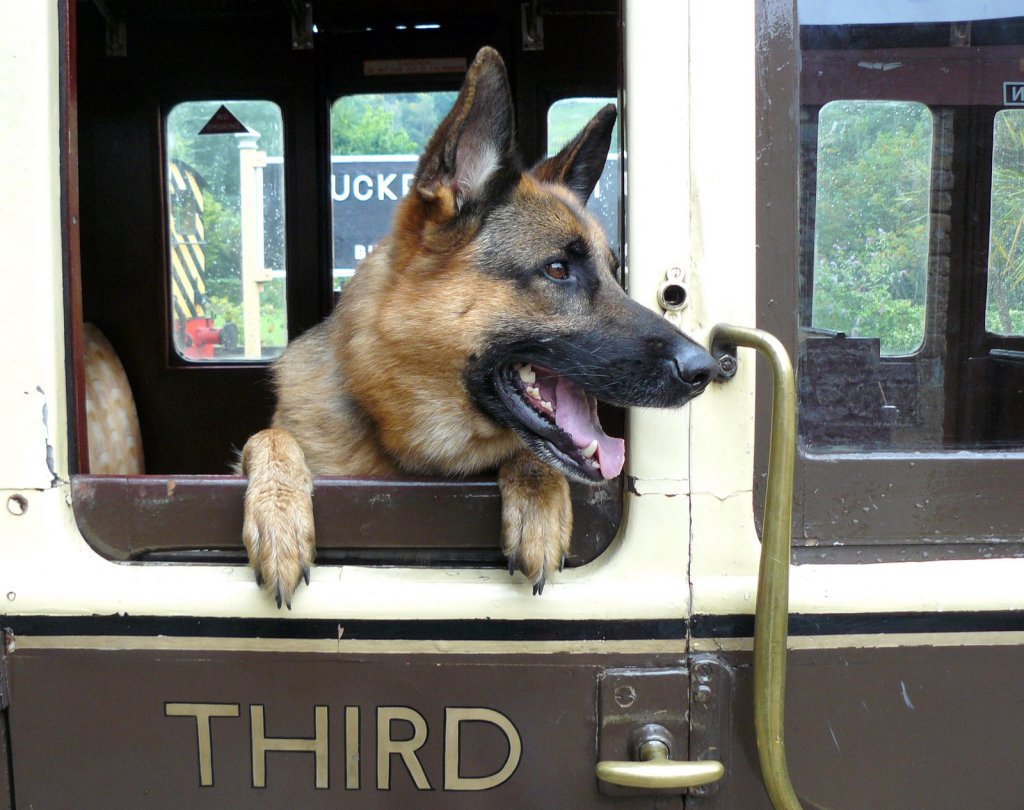
On board the Dart Valley Steam Railway stopped at Buckfastleigh Station.

oooo

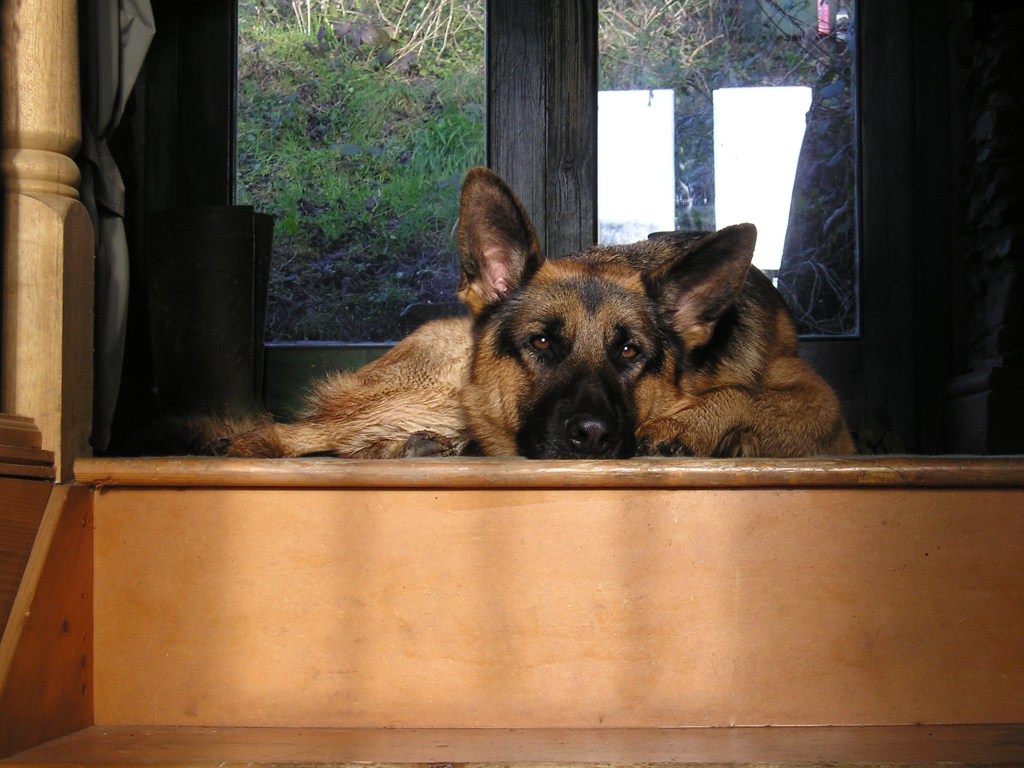
Pharaoh, relaxing in a Devon garden.

oooo

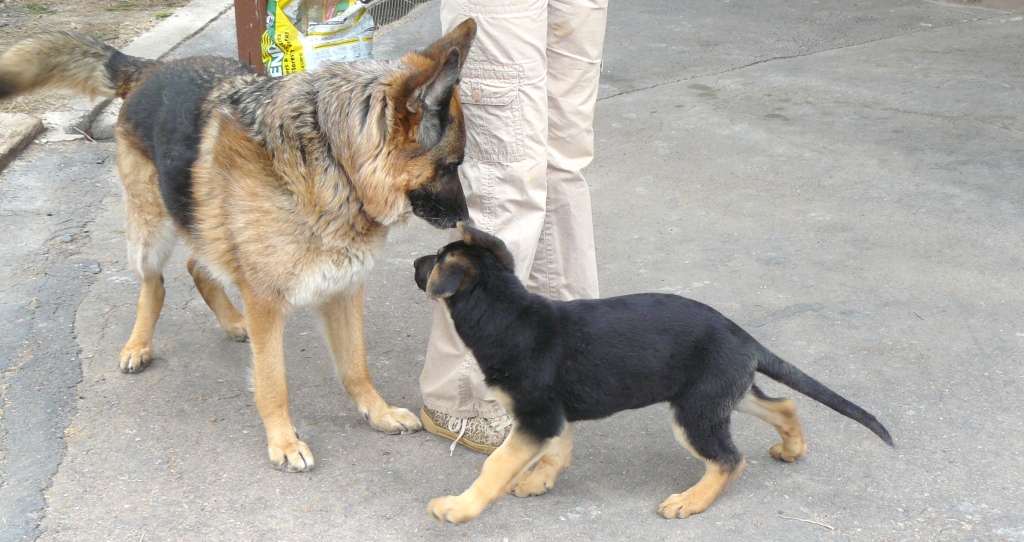
First meeting between Pharaoh and Cleo; April 7th, 2012.

oooo

Pharaoh with little Poppy, a stray found on a Mexican building site

oooo

Hi Pedy, I’m the bossman around here. Name’s Pharaoh and you’ll be OK.

oooo

Taken on the afternoon of Pharaoh’s birthday, June 3rd 2017.

oooo

The face of a King of dogs!

Happy Birthday dear Pharaoh

Beloved Pharaoh was born this day in 2003

I’m just going to share a few photos today and then devote tomorrow’s Picture Parade to other photographs of this wonderful, noble, indomitable friend.

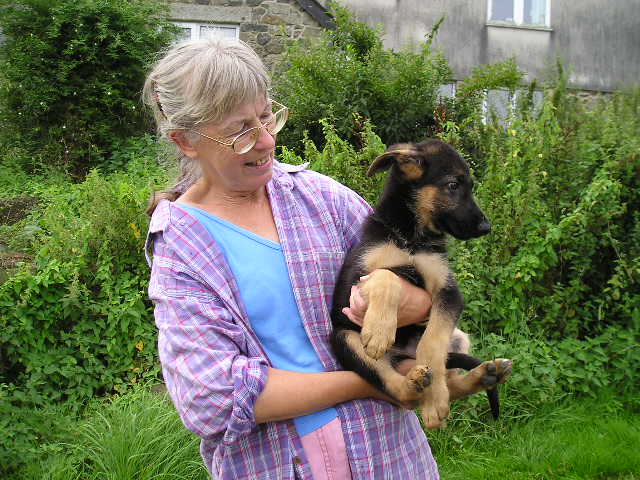
The first day that Pharaoh was passed across to me. Devon, June 2003.

oooo

Puppy Pharaoh settling in to his new home.

oooo

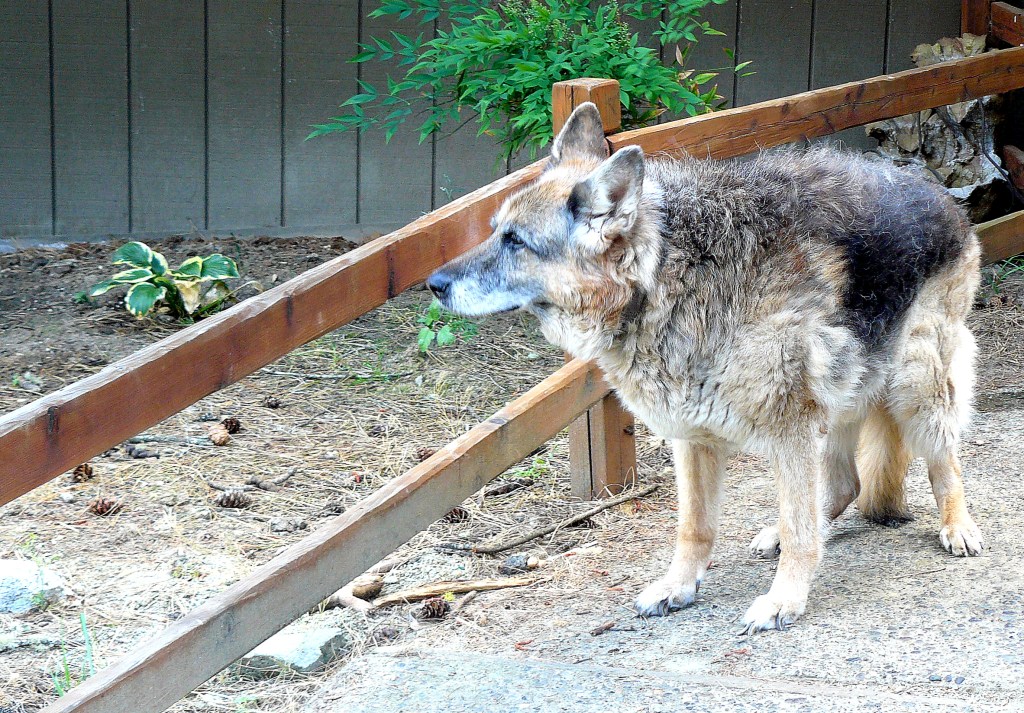
Grand old man of 14!

Happy Birthday, Pharaoh, with fondest love from Jeannie and me and so, so many others who have known you directly and via the pages of this blog!

Who do you think you are?

Talk about extremes of topics!

Yesterday it was gliding, tomorrow it is going to be a celebration of Pharaoh’s 14th birthday and today it is about you!

Kadam Morten Clausen is a Buddhist teacher. Now I would be the first to stick up my arm and say that my understanding of Buddhism is pretty poor. But in the days many years back when I spent time exploring a number of Asian countries I found the culture surrounding Buddhism very appealing. (And I write as someone who is not a religious believer.)

Back to Morten Clausen.

The Kadampa Meditation Center in New York, where Kadam is a resident teacher, describe him as follows:

Kadam Morten Clausen is the Eastern US National Spiritual Director of the New Kadampa Tradition and Resident Teacher at the Kadampa Meditation Center New York City, and also Bodh Gaya Center in Bayside, Queens. For over 30 years he has been a close disciple of Venerable Geshe Kelsang Gyatso, who gave him the title “Kadam,” indicating that he is a senior lay teacher of the Kadampa Tradition.

Kadam Morten met his teacher, Geshe Kelsang, while attending university in England. He taught widely throughout the UK and helped develop many Kadampa Centers in England. Kadam Morten has been teaching in the US for more than 20 years and has established centers throughout the New York area, as well as Washington DC, Virginia, and Puerto Rico. In addition to his local teaching responsibilities, he teaches and guides retreats regularly throughout the United States and Europe.
Kadam Morten is greatly admired as a meditation teacher and is especially known for his clarity, humor and inspirational presentation of Dharma. His teachings are always practical and easy to apply to everyday life. Through his gentle and joyful approach and his peaceful example, he has helped many people find true happiness in their hearts.

So what’s this all about when I say that today’s post is about you?

Enjoy the following, recently published on the Big Think site:

ooOOoo

Science and Buddhism Agree: There Is No “You” There

Unconditional dog love

Couldn’t have a better story to follow yesterday’s news about Socks finding a new home.

I have lost count of the times that over the years I have featured on this blog the bond between a person and a dog. Yet that hasn’t blunted my mind or dulled my heart to hearing of new stories of this wonderful bond arriving over the ‘air waves’.

Such is the case of Ben and his dog that was featured on the Shareably site last July.

My pleasure to share this story with you.

ooOOoo

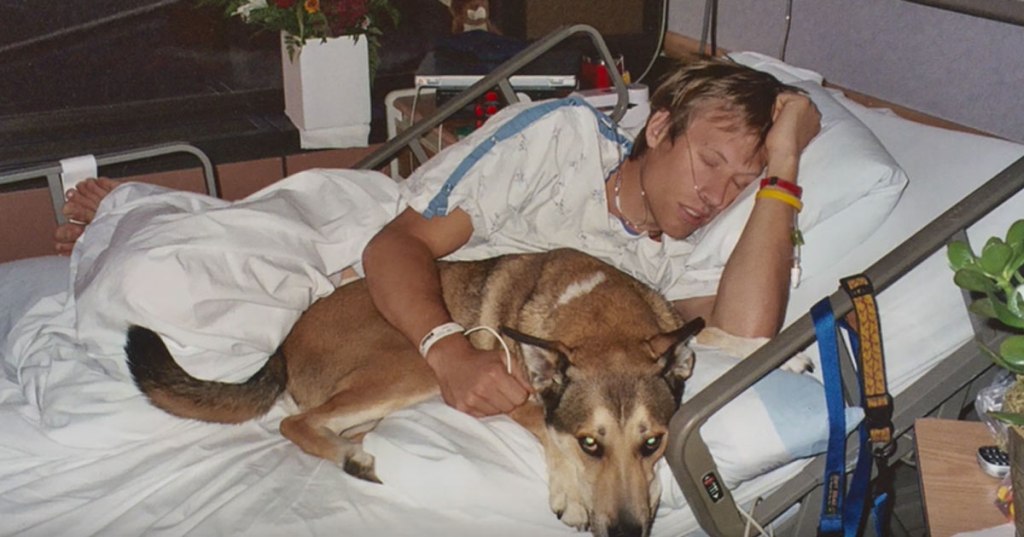
Doctor’s tell dog to leave owner’s hospital bed, but dog refuses and lays by his owner’s side

written by Jenny Brown on July 11th, 2016
There is the saying that a dog is a man’s best friend. It might be because a dog is by your side when you’re feeling down, is there to play catch when you feel like throwing around the frisbee, or simply there when you want some company.
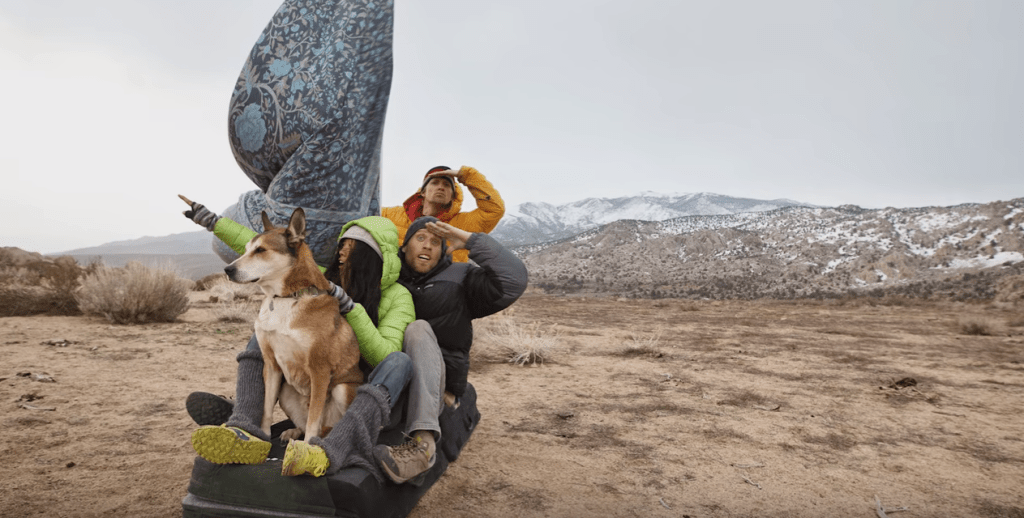
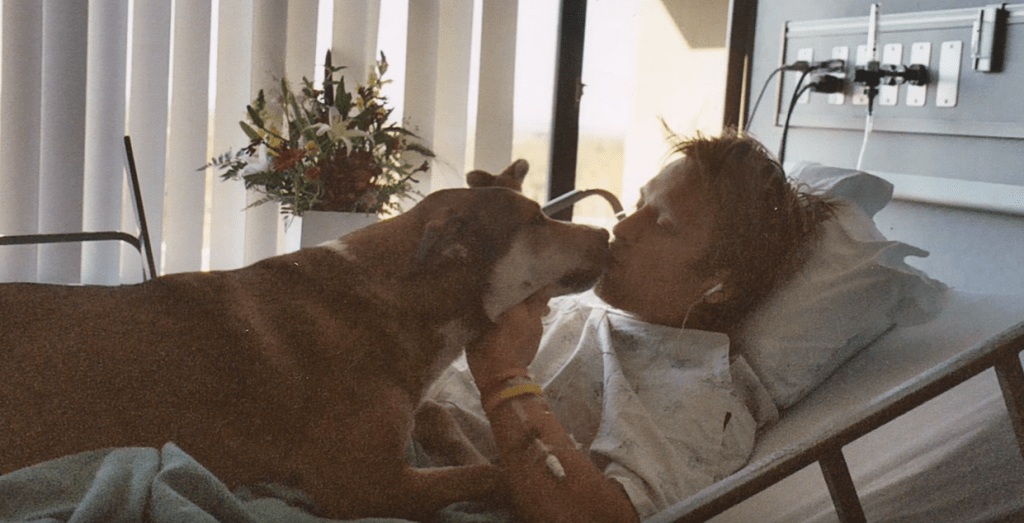
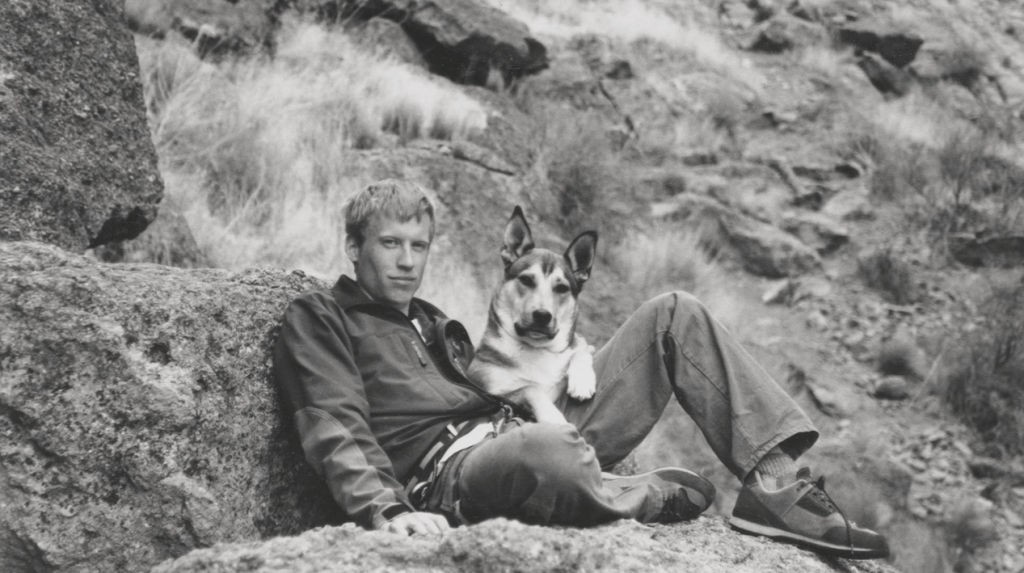
As dog-lovers we are grateful for the things dogs do for us, but do we consider how dogs might be as grateful for the things we do for them? In this video, the beautiful relationship between one man, Ben, and his dog is shown from the perspective of not the man, but his dog.

The relationship between Ben and his dog begins in their earlier years. The two of them travel around the world. From camping in the deserts to hiking in the mountains, they discover their favorite places to visit and make new friends along the way.

Source YouTube/Ben Moon

As the story continues, however, Ben develops cancer. While Ben must spend his time in a hospital and away from traveling, his dog continues to stay by his side, night and day. The relationship between Ben and his dog seems that it may worsen due to Ben’s obstacle, but instead, their relationship only strengthens.

Source YouTube/Ben Moon

The story progresses years later, as Ben overcomes his battle and the bond between him and his dog continues to grow. Through the highs and lows of their relationship, Ben and his dog remain the best of friends until the very end.
This touching video is a dedication made by Ben to his dog, for all the best moments they spent together. This video also shows what is truly the essence of friendship, between a man and his best friend, his dog.

Source YouTube/Ben Moon

Please SHARE this with your friends and family.

(Ed: Note that the dialogue in the following professionally shot film is the voice of the dog.)

ooOOoo

Friendship, as in true friendship, is very precious. That true friendship is rarely unconditional between humans. Not impossible, just rare.

For common examples of unconditional friendship, as in the unconditional love bond, we have to turn to our dogs.

What beautiful teachers they are!

Socks has been adopted!

It doesn’t get more beautiful than this!

On the 11th I penned a post under the title of Feathers and Socks.

I included a photo of Socks and wished him the very best of luck in finding a home.

Beautiful Socks!

Well, miracles of miracles, when I came to my emails last Saturday morning awaiting me was this email from John Zande.

Paul and Jean, Socks has a wonderful new home!

I really don’t want to jinx it by writing this email (I am the superstitious naked ape, after all), but the morning started out with not much hope as we drove and drove out into the countryside, wondering where on earth this petshop was that was hosting the adoption fair.

When we eventually found it, it was a tiny storefront, little more than a dog-bath business. We thought, “nothing is going to come from this.” They were just opening as we arrived and met the young girl who runs it. Lovely person. Literally two minutes later a family walk up the road dropping off their two dogs for a bath. We got to talking. They fell in love with Socks.

After a phone call to the woman’s husband (a serious, serious dog lover, we’re told, as she is too) we heard the words we did not think we’d hear: “If it’s OK, we’d love to give him a home.”

Ten minutes later we were in their house, which was about 50 meters down the road. Nice place, lots of room, and Socks has full run of the outside, and a huge enclosed laundry-come-Socks-home for the night. He won the lotto! Three young boys full of energy. He took to them like a champion. I still can’t believe it. It’s like this every time we find a home. It just doesn’t seem real.

Anyway, I’ve attached two short videos of Socks and his new home, and a photo. And yes, the family is keeping Jean’s name, Socks. They loved it. I’m sure G will write you later tonight, but you both played a huge role in this. Your help paid for his neutering, and for that we’re eternally grateful.
Here is that photo and those videos.
oooo
oooo
oooo
A little later on ‘G’, John’s nickname for his wife, sent me these further details:
Hello Paul and Jean – I guess you’ve been cheering since John’s e-mail, right? So have we, since this morning.
Well, I have to say I still can’t believe how lucky we (and Socks) have been. Virginia and Fabiano and their three boys: Lago (11 or 12 y.o, not sure); Marcos (turning 8 tomorrow, Sunday) and Raphael, 6. Lovely family, she invited us to go to their place (he was working), showed us around.
As I said at the outset: It doesn’t get more beautiful than this!

More wonderful doggy goodness!

Such a wonderful and obvious thing to do!

Yet despite it being so obvious it hadn’t crossed my mind before.

I’m referring to the wonderful idea of using those people, who through circumstance have found themselves homeless, to care for animals via an animal shelter.

This fabulous project came to me when reading a recent item on the Democracy Now website. Do watch the video.

ooOOoo

Glenn Greenwald Unveils New Project to Build Animal Shelter in Brazil Staffed by Homeless People

Published on May 10, 2017

http://democracynow.org – Pulitzer Prize-winning journalist Glenn Greenwald unveils his plans to build an animal shelter in Brazil with his husband David Miranda, a city council member in Rio de Janeiro. The shelter will be staffed by homeless people who live on the streets with abandoned pets.

ooOOoo

If you, like me, needed to be reminded as to Mr. Greenwald’s background there’s plenty online.

He has his own website here. Over at The Intercept website one reads:

Glenn Greenwald is one of three co-founding editors of The Intercept. He is a journalist, constitutional lawyer, and author of four New York Times best-selling books on politics and law. His most recent book, No Place to Hide, is about the U.S. surveillance state and his experiences reporting on the Snowden documents around the world. Prior to co-founding The Intercept, Glenn’s column was featured at The Guardian and Salon. He was the debut winner, along with Amy Goodman, of the Park Center I.F. Stone Award for Independent Journalism in 2008, and also received the 2010 Online Journalism Award for his investigative work on the abusive detention conditions of Chelsea Manning. For his 2013 NSA reporting, he received the George Polk award for National Security Reporting; the Gannett Foundation award for investigative journalism and the Gannett Foundation watchdog journalism award; the Esso Premio for Excellence in Investigative Reporting in Brazil (he was the first non-Brazilian to win), and the Electronic Frontier Foundation’s Pioneer Award. Along with Laura Poitras, Foreign Policy magazine named him one of the top 100 Global Thinkers for 2013. The NSA reporting he led for The Guardian was awarded the 2014 Pulitzer Prize for public service.

Plus, there is more information about Glenn Greenwald on WikiPedia.

Well done, that man, and the rest of the team!!

More importantly, well done all those special people who are loving those dogs.

Another great move for dogs in Brazil.

Still in the month of May!

Figurative and literal cracks!

My rather cryptic sub-heading will make sense very soon.

Just ten days ago I published a post The Month of May. It explained why May had always been a special month in my life and then went on to introduce an article published by The Smithsonian Using a New Roadmap to Democratize Climate Change.

That article featured the former president of Iceland, Olafur Grimsson, and how he was encouraging new solutions to climate change. Primarily via a new organisation called RoadMap. (Did you sign up??)

There is change in the air. People are starting to make a better future. Cities across the USA (and elsewhere undoubtedly) are pledging to go 100 percent renewable. Here’s what Grist published on May 4th.

ooOOoo

Cities all over the U.S. are pledging to go 100 percent renewable.

Atlanta, Georgia (Shutterstock)

On Monday, Atlanta lawmakers voted unanimously to power the city entirely with clean energy sources by 2035.

Atlanta is the 27th city to make the pledge, according to the Sierra Club. These kinds of municipal promises have been popping up nationwide over the past few months. Here’s a recap:

“We know that moving to clean energy will create good jobs, clean up our air and water, and lower our residents’ utility bills,” said Kwanza Hall, an Atlanta City Council member and mayoral candidate, in a statement. “We have to set an ambitious goal or we’re never going to get there.”

A round of applause for local climate progress!

ooOOoo

Lovely to see the city of Portland on that list.

Keep it coming. For we need to see cracks of change; cracks of hope.

Cracks to counter literal cracks.

ooOOoo

The crack that’s redrawing the world’s map.

(From the BBC Culture Newsletter 5th May.)

The shape of the world is hanging by a thread – or rather, according to experts, by a 110 mile-long (177km) rift. That’s the extent of a rapidly expanding crack in an enormous ice shelf in Antarctica. When the Larsen C shelf finally splits, the largest iceberg ever recorded (bigger than the US state of Rhode Island and a third the size of Wales) will snap off into the ocean. Widening each day by 3 ft (1 m), the groaning cleft is on the verge of dramatically redrawing the southern-most cartography of our planet and is likely to lead, climatologists predict, to an acceleration in the rise of sea levels globally.

 An aerial photo of the frigid fissure, taken late last year when it was discovered that the pace of the icy tear was quickening, was suddenly back in the news this week with the announcement that a second rift in the shelf had been detected. The fracture leads our eye along a zig-zagging path – from the backward gaze of the plane’s right engines to the pristine polar blue of the horizon in the distance. The jaggedness of the cleft, which takes our vision on a journey whose ultimate destination is unfathomable, seems at once monumental and terrifyingly fragile. The photo intensifies our helplessness in the face of cataclysmic change. It freezes the potential destruction in the blink of a camera’s shutter, while at the same time hinting at a catastrophe that we can witness unfolding but are utterly powerless to stop.

A second rift was recently discovered in the Larsen C ice shelf on the Antarctic peninsula (Credit: NASA/John Sonntag)

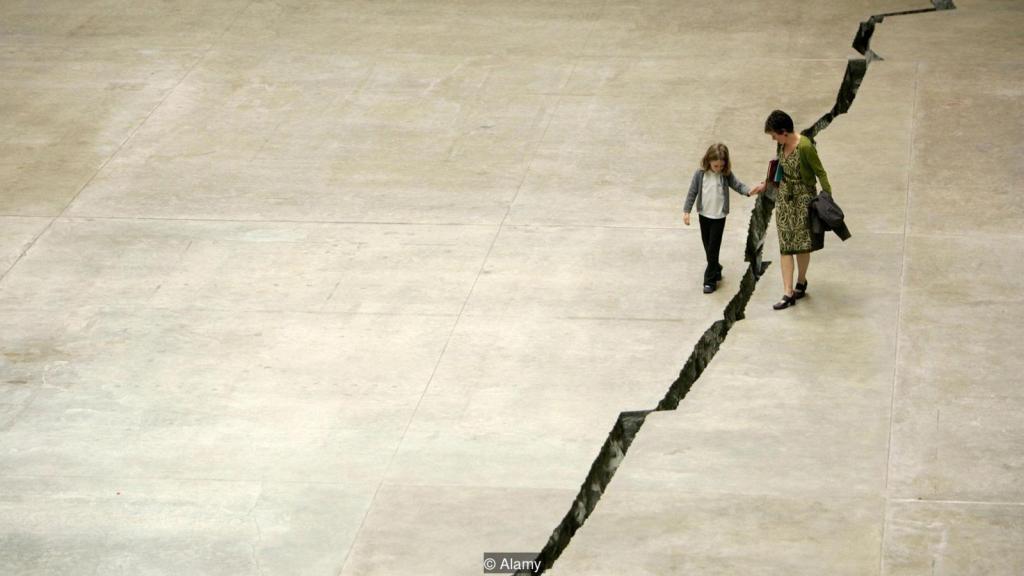
As a visual statement, the aerial photo of the Larsen C crack is, by definition, incomparable; never before has the world marked the glacial advance of such a sublime and fearsome fracture in its very fabric. Yet the reemergence of the image in the news anticipates the ten-year anniversary of one of the most intriguing and innovative large-scale works in contemporary art – a work whose power relies for its thought-provoking effect on the peculiar poetry of ruinous rifts. In October 2007, the Colombian-born artist Doris Salcedo unveiled in London an ambitious installation in the cavernous space of Tate Modern’s Turbine Hall – a piece that split reaction down the middle.

Inviting gallery-goers into the otherwise empty and austere interior of the former Bankside Power Station, Salcedo subverted expectations. Rather than offering visitors a hall of temporarily installed sculptures, she orchestrated the contemplation instead of a ragged subterranean breach that appeared to rip open the concrete floor of the structure – a crevice that extended from one end of the yawning space to the other.

For the Colombian artist Doris Salcedo’s 2007 work, Shibboleth, a giant crack was made in the concrete floor of Tate Modern’s Turbine Hall (Credit: Alamy)

Salcedo deepened the mystery of her bold and experimental conceptual work by giving to it the curious title Shibboleth – a biblical word which, when mispronounced, was said to have exposed the outsider status of individuals. Complicating matters still further, the artist insisted that her work was a comment not on the folly of material ambitions, but on racism – that deep cultural scar that tears at the foundations of humanity. Placed side-by-side, this week’s photo from Antarctica and the image captured a decade ago of Doris Salcedo’s challenging Shibboleth share both a brutal beauty and a common theme: the brittleness of being.

If you would like to comment on this story or anything else you have seen on BBC Culture, head over to our Facebook page or message us on Twitter.

And if you liked this story, sign up for the weekly bbc.com features newsletter, called “If You Only Read 6 Things This Week”. A handpicked selection of stories from BBC Future, Earth, Culture, Capital and Travel, delivered to your inbox every Friday.

ooOOoo

“the brittleness of being.”

Please, all of us, let’s make a positive difference so that we can soften the edges of that brittleness.