Category: consciousness

Just say “No!”

We have to keep banging this drum on behalf of our wildlife!

OK! This new essay from George Monbiot applies specifically to the United Kingdom. But there’s no question in my mind that awareness of what is going in the U.K. will be important for readers in many other countries.

ooOOoo

Incompetence By Design

As state bodies are dismantled, corporations are freed to rip the living world apart

By George Monbiot, published in the Guardian 4th July 2018

It feels like the collapse of the administrative state – and this is before Brexit. One government agency after another is losing its budget, its power and its expertise. The result, for corporations and the very rich, is freedom from the restraint of law, freedom from the decencies they owe to other people, freedom from democracy. The public protections that constrain their behaviour are being dismantled.

An example is the cascading decline in the protection of wildlife and environmental quality. The bodies charged with defending the living world have been so enfeebled that they now scarcely exist as independent entities. Natural England, for example, has been reduced to a nodding dog in the government’s rear window.

Its collapse as an autonomous agency is illuminated by the case that will be heard next week in the High Court, where two ecologists, Tom Langton and Dominic Woodfield, are challenging its facilitation of the badger cull. That the cull is a senseless waste of life and money is well established, but this is only one of the issues being tested. Another is that Natural England, which is supposed to assess whether the shooting of badgers causes wider environmental harm, appears incapable of discharging its duties.

As badger killing spreads across England, it intrudes upon ever more wildlife sites, some of which protect animals that are highly sensitive to disturbance. Natural England is supposed to determine whether allowing hunters to move through these places at night and fire their guns has a detrimental effect on other wildlife, and what the impact of removing badgers from these ecosystems might be. The claimants allege that it has approved the shooting without meaningful assessments.

Some of its decisions, they maintain, are farcical. In Dorset, for example, Natural England assumed that overwintering hen harriers and merlins use only one out of all the sites that have been designated for their protection, and never stray from it. It makes the same assumption about the Bewick’s swans that winter around the Severn estuary. That birds fly, enabling them to move from one site to another, appears to have been overlooked.

Part of the problem, the claimants argue, is that staff with specialist knowledge have been prevented from making decisions. The location of the badger cull zones is such a closely guarded secret that Natural England’s local staff are not allowed to see the boundaries. As a result, they can make no meaningful assessment of what the impact might be. Instead, the decisions are made in distant offices by people who have not visited the sites.

I wanted to ask Natural England about this, but its external communications have been shut down by the government: any questions now have to be addressed to Michael Gove’s environment department, Defra. Defra told me “staff carrying out this work have all the necessary information. It would be inappropriate to comment on an ongoing legal matter.” How can Natural England be an independent body when the government it is supposed to monitor speaks on its behalf?

Another example of how far Natural England has fallen is the set of deals it has struck with grouse moor owners, allowing them to burn protected habitats, kill protected species and build roads across sites that are supposed to be set aside for wildlife. For several years, the redoubtable conservationist Mark Avery has been fighting these decisions. This May, Natural England conceded, in effect, that he was right. The agency that is meant to protect our wild places has been colluding in their destruction.

A correspondent from within Natural England tells me its staff are so demoralised that it has almost ceased to function. “Enforcement, for example, is close to non-existent … Gove seems to have somehow both raised the profile of environmental issues whilst simultaneously stripping the resources … it has never been as bad as this.”

In March, the House of Lords reported that Natural England’s budget has been cut by 44% since it was founded in 2006. The cuts have crippled both its independence and its ability to discharge its duties. It has failed to arrest the catastrophic decline in our wildlife, failed to resist the housebuilders trashing rare habitats and abandoned its regulatory powers in favour of useless voluntary agreements. As if in response, the government cut the agency’s budget by a further 14%.

Dominic Woodfield, one of the claimants in the court case next week, argues that Natural England has been “on death row” since it applied the law at Lodge Hill in Kent, where the Ministry of Defence was hoping to sell Britain’s best nightingale habitat to a housing developer. Natural England had no legal choice but to designate this land as a site of scientific interest, hampering the government’s plans. As the government slashed its budget and curtailed its independence, the agency’s disastrous response has been to try to save itself through appeasement. But all this has done is to alienate its defenders, reduce its relevance and hasten its decline. “There are still good people in Natural England. But they’re broken. They talk very slowly because they’re thinking very carefully about everything they say.”

If this is happening before we leave the European Union, I can only imagine where we will stand without the protection of European law. The environmental watchdog that, according to Michael Gove, will fill the role now played by the European Commission, will know, like Natural England, that its budget is provided by the government and can be cut at the government’s discretion. What is to prevent it from being nobbled as other agencies have been?

Already, the deliberate mutilating of the administrative state, delivering incompetence by design, has released landowners, housebuilders and assorted polluters from regulatory restraint. Only through European law have government agencies been forced to discharge their duties. Brexit strips away this defence. And if, as some propose, it paves the way for One Nation Under Gove, we should, the evidence so far suggests, be even more alarmed.

But some of us are now mobilising to turn the great enthusiasm for wildlife and natural beauty in this country into political action, and to fight the dismantling of the laws that protect our precious wild places. Watch this space.

http://www.monbiot.com

ooOOoo

On George Monbiot’s blog home page is this quote:

“I love not man the less, but Nature more.”

We must all love Nature more!

We truly are what we eat!

That’s both us and our beloved dogs!

Today through to Wednesday is all about increasing awareness of the risk of not being ultra-careful as to what we put into the mouths of both ourselves and our beloved dogs.

Thus, on Wednesday I will be republishing a recent post from Colette about the power of eating a vegan diet. Tomorrow will be a post about curbing the widespread use of neonicotinoid pesticides. Today is a republication of an important article that appeared on the Healthy Pets website on June 25th. (Thank you Belinda for the ‘heads up’!)

ooOOoo

Dozens of Dog Deaths Now Linked to This Pentobarbital-Tainted Food

By Dr. Karen Shaw Becker, June 25th, 2018

Earlier this year I wrote about a second incident of the euthanasia drug pentobarbital discovered in dog food. The first incident was in 2017 and involved Evanger’s formulas. Then came the more recent recall of Gravy Train tainted with pentobarbital.

Background on Contaminated Gravy Train Dog Food

The Gravy Train situation was investigated by WJLA ABC 7 in Washington D.C. The station teamed up with Ellipse Analytics, a laboratory that specializes in testing food for contami­nants. They tested 62 samples of over 24 brands of wet (canned) dog food for pentobarbital.

“After months of tests and re-tests, one brand repeatedly came back positive for pentobarbital,” says WJLA. “In total, we tested 15 cans of Gravy Train. Nine cans — 60 percent of the sample — were positive for pentobarbital. And while the levels detected were not lethal, under federal law they are also not permitted at any concentration.”1

The WJLA investigation resulted in a class action lawsuit against J.M. Smucker/Big Heart Pet Brands filed on February 9 of this year in a U.S. District Court in California by a Missouri woman who believes Gravy Train may have contributed to the death of her Miniature Schnauzer.2

The lawsuit wants Smucker/Big Heart to “… disclose its pet food sold throughout the United States is adulterated and contains pentobarbital and to restore monies to the consumers and businesses who purchased the Contaminated Dog Foods ….”3

Later in February, Smucker/Big Heart voluntarily withdrew 10 varieties of Gravy Train dog food, along with certain shipments of Kibbles ‘N Bits, Ol’ Roy and Skippy.4 A complete list of the products pulled from store shelves — all of it canned dog food — can be found here. In early March, the FDA notified Smucker/Big Heart that its voluntary removal of products was now considered a recall, based on a test confirming the presence of pentobarbital in the tallow the company used in the recalled pet foods.

The Plot Thickens

My friend and pet food consumer advocate Susan Thixton of Truth About Pet Food recently wrote an update regarding the class action lawsuit, noting a Master Consolidated Complaint filed on May 1.5 The newly filed document names 11 additional plaintiffs (pet owners), and as Susan says, “… reveals some damning information against pet food manufacturer Smucker.”6

The updated filing asserts that “… Defendant [Smucker/Big Heart] knew the Contaminated Dog Foods contained pentobarbital.” The plaintiffs did not make this claim in the initial lawsuit, which means that between February 9 and May 1, their investigation revealed additional unfavorable details about Smucker’s business practices.

On February 16, 2018, the FDA issued an alert to consumers about the recalled Gravy Train dog foods, stating very clearly that pentobarbital should not be in pet food.

A week or so later, Smucker issued a press release stating it had identified the source of the pentobarbital and described it as “a single ingredient (beef fat).” According to the updated filing, Smucker was less than forthcoming about what they tested to arrive at their conclusion:

“Defendant did not identify what exactly was tested — whether it was cans of the food pulled from the shelves, cans shipped directly from the manufacturing plant, and/or isolated samples of beef fat from the supplier. Defendant did claim the tested beef fat was sourced from cattle from the United States. However, Defendant has offered no information about how it identified this particular ingredient or whether it tested any other ingredients included in the recalled pet foods.

Defendant also did not specify what animals they tested the Contaminated Dog Foods for beyond cattle. When doing DNA testing, it must be determined beforehand what species will be looked for (i.e. dog, cat, cattle, horse, etc.). Defendant has not disclosed whether its testing looked for dog, cat, or horse DNA.”

In early March, Smucker updated the above statement, claiming the animal fat was from “cow, pig and chicken and no other animal of the nine types tested.” Smucker still didn’t identify what types of animals were included in the testing, nor did it disclose the name of the manufacturing plant and/or supplier that is the suspected source of the tainted raw materials.

Later the same day, Smucker changed its statement yet again, now claiming the source of contamination was pig and chicken fat (no cow this time) and “no other animal of the nine types tested,” again neglecting to name the nine types of animals tested. From the updated filing:

“In the end, over ninety million cans of food manufactured and distributed by Defendant were recalled because of the inclusion of pentobarbital.

Moreover, the testing results showed alarmingly high levels of pentobarbital in the tallow. Specifically, the current supply tested showed levels ranging from 801 ppb to 852 ppb, and the retained sample from 2017 contained pentobarbital at the level of 529 ppb.

Despite this, Defendant has publicly represented that the testing showed ‘extremely low levels of pentobarbital do not pose a threat to pet safety’ but failed to disclose or acknowledge the testing results that showed the high levels of pentobarbital in the tallow.”

Smucker/Big Heart ‘Knew or Recklessly Chose to Ignore That the Contaminated Dog Foods Were Adulterated Pet Food’

Smucker ultimately named the source of the contaminated tallow as a single supplier, JBS USA Holdings, Inc. and its rendering facility. According to the plaintiffs, JBS “knowingly” works with meat byproduct recycling, including animal byproducts not suitable for human consumption.

And in addition, JBS “has been plagued by investigations, recalls, and other red flag situations.” This should have alerted Smucker that it needed to routinely confirm the safety and quality of products purchased from this supplier, especially since it claims to “regularly audit our suppliers and have assurances from them about the quality and specifications of the materials they supply us.” From the updated filing:

“Yet Defendant chose to utilize JBS as a supplier even though it maintains that it keeps rigorous quality and supplier standards from ‘start to finish’ and performs three-tier auditing that includes third party auditors, to ensure pure ingredients and fair labor are used in its products, including the Contaminated Dog Foods.

Given this rigorous auditing process, Defendant knew or recklessly chose to ignore that the Contaminated Dog Foods were adulterated pet food as it retained samples of the tallow that should have been tested based on the claimed practices and standards by Defendant.”

According to Susan Thixton, who’s been conducting her own investigation of Big Pet Feed business practices for years, these clearly shady dealings are commonplace.

“Audits of pet food ingredient suppliers, [and] testing of ingredients for safety and quality are mostly to support a paper trail,” she writes. “Little to no true quality control testing is ever performed.

Truck drivers delivering ingredients to pet food facilities have been instructed to carry in the truck cab ‘clean’ samples provided for testing; not a sample of what is actually delivered to the plant. Drivers have also shared that when a load of pet food ingredients is actually tested and fails, lot numbers are changed and the delivery is then accepted without question.

It has been shared multiple times from multiple individuals — the main goal is to keep the pet food plant in production … not the quality of ingredients.”

At an AAFCO meeting Susan attended a few years ago, pet food company employees shared that manufacturers keep a supply of clean samples on hand in the event regulatory authorities or auditors ask to test ingredients. “Rarely, if ever, are the actual ingredients used in a pet food tested by regulatory or auditors,”she writes.

Naming the Dead

Sadly, the victims of Big Pet Food’s unconscionable business practices and lack of regulatory oversight by the FDA and individual State Departments of Agriculture are innocent pets and their unsuspecting owners. From the Master Consolidated Complaint:

“In August 2017, Plaintiff Sebastiano’s dog became weak and confused, began vomiting, had blood in his stool, lost weight, no longer wanted to eat, and had trouble standing and walking. At only [7] and a half years old, Samson died, on December 4, 2017.

Plaintiff Johnson … fed the Contaminated Dog Foods to his thirteen border collie and Australian shepherd mixes he used as herding dogs for his cattle. Plaintiff Johnson had seven males and six female dogs that ranged from [10] months to approximately [7] years old. … Devastatingly, Plaintiff Johnson lost all thirteen dogs, including one pregnant female, on January 14 and 15, 2018.

At that time, all of his dogs were showing symptoms of kidney failure so the veterinarian recommended that all thirteen be put down. All of the dogs were fed the Contaminated Dog Foods at the same time and all were sick within hours after eating the Contaminated Dog Foods. They subsequently all died within two days of eating the Contaminated Dog Foods.

Plaintiff Williamson purchased certain lines of the Contaminated Dog Foods … and fed the Contaminated Dog Foods to her two Great Danes, Nova and Sadie. Sadie passed away on Wednesday, September 7, 2016, and Nova passed away on Sunday, January 22, 2017.

Plaintiff Todd purchased certain lines of the Contaminated Dog … and fed the Contaminated Dog Foods to his American pit bull, Tito. Tito passed away on November 18, 2017.” Plaintiff Brown purchased certain lines of the Contaminated Dog Foods … She rescues stray dogs and has fed all of them the Contaminated Dog Foods.

Several of her dogs have died over the course of the class period, including: Speedy, a [2]-year-old Chihuahua mix who died in December 2016; Humpty, an [8]– or [9]-year-old lab-chow mix who died in November 2017; Elly Mae, a [10]-year-old lab-chow mix who died in December 2017; Sara, an [8]-year-old lab who died in October 2017; Red, an [8]-year-old lab who died November 2017; Mary, a [9]-year-old lab-chow mix who died in August 2017; Duke, a [7]-year-old Great Pyrenees who died in August 2017.

Plaintiff Mayo purchased the Contaminated Dog Foods … and fed the Contaminated Dog Foods to her dogs, including Cocheese (a lab mix), Glory B (a chocolate lab mix), and Blade (an Alaskan husky mix). Most recently, Glory B passed away on or around February 2, 2018, two days after she consumed a can of Gravy Train with Chicken Chunks on or around January 31, 2018. On February 5, 2018, Plaintiff Mayo’s cat, Midnight, also passed away after having accidentally ingested some of the Contaminated Dog Food fed to Glory B on January 31st.”

Plaintiff Collins purchased the Contaminated Dog Foods … and fed the Contaminated Dog Foods to his miniature poodle, Duffy. Duffy passed away in February 2018, soon after consuming a can of Gravy Train.”

As Susan Thixton points out, had it not been for intrepid reporters at WJLA ABC 7 in D.C., specifically Lisa Fletcher, the deaths of these precious pets and probably many more would have gone unnoticed by the FDA and others.

“Nobody cared … until they got caught,” writes Susan. “That is the real crime of pet food — nobody cares if ingredients contain pentobarbital, violate law, or pets die … until they get caught.”

Protecting Furry Family Members From Poisoned Pet Food

Between low-grade ingredients, too-frequent recalls, and an exploding population of pets with chronic digestive issues, allergies and degenerative disease, it’s no wonder so many pet parents are exploring homemade diets, fresh food diets made by smaller, transparent pet food producers, raw diets, and other alternatives to the dead, rendered, dubious, processed stuff.

My advice? Search this website for more information on choosing the best diet for your pet. There are dozens of videos and articles here that can help you become more knowledgeable about pet nutrition so that you can make the best diet choices for your own dog or cat.

If you want to help change the deceptive practices occurring in the pet food industry, I recommend becoming a member of the Association for Truth in Pet Food, which is the only organization out there committed to holding the regulatory agencies and AAFCO accountable.

ooOOoo

Dr. Becker opens up her important article with a summary of the situation.

I have chosen to close the post with that summary.

Story at-a-glance

  • Dog food contaminated with pentobarbital triggered a class action lawsuit that has been recently updated to reveal several additional plaintiffs and jaw-dropping allegations of pet food manufacturer misconduct
  • Over 90 million cans of Gravy Train were recalled due to alarmingly high levels of pentobarbital in tallow (animal fat)
  • Smucker/Big Heart Brands, manufacturer of Gravy Train products, has not been forthcoming with information about the company’s business practices or testing methods as requested by plaintiffs in the class action lawsuit
  • It seems likely Smucker knew it was selling dog food contaminated with pentobarbital
  • The Master Consolidated Complaint lawsuit update filed on May 1 reveals that tragically, many dogs fed pentobarbital-tainted Gravy Train diedGravy 

Gentle souls

This was the post that I had planned for the 20th.

But a power failure across quite a large area of Oregon rather stopped things in their tracks. Nevertheless, it’s a wonderful post and I ‘borrowed’ the photograph to close Colette’s story last Monday. Here’s a repeat of that close:

Colette’s story didn’t come with a photograph. So I thought I would do a quick web search and find a picture that fitted Colette’s story well.

In fact, the article that included this photograph may be republished and I will be doing that tomorrow!

The article was seen here and I trust may be republished in this place!

ooOOoo

Everyone Else Walked Past This Homeless Guy And His Dog, But One Guy Didn’t. This Is Heartbreaking.

In my city (Paris, France) there is a homeless man…

Every day he is begging, always at the same place. Despite ‘his situation,’ he is always smiling and says “hello” or “have a good day” even to people who don’t donate to him.

This man has a dog who is as gentle as he is. It never barks or shows its teeth. Many people say this man is dumb, having a dog when he can barely feed himself. Despite being summer in France, mornings are often cold.

One morning, I was walking and I saw him with his dog. He was hugging him tightly. They were very cold.

It was so cold, seeing those two felt like a knife to the heart. I thought about them all day, even though I don’t have a lot of money, I decided to do something.

The next morning I told my boss I was taking the morning off. I took one of my blankets, bought a whole box of food for the dog, and as much food for the man as I could carry.

I bought two coffees and asked if I could sit and talk with him for a few minutes. He agreed.

I asked him why he was there and he asked me why I was speaking to him.

So I told him “Every day I walk to work. And every day everyone around me seems so sad except for you. You are always smiling. You always seem so happy despite your living conditions and every day you warm my heart. Every day I tell myself that even if it’s a bad day and I am not as happy as I want to be, here’s this man living on the street who seems happier than I am despite that he has nothing.”

He stopped me and said “I have something, something that you can’t value. It’s this little boy in my arms (the dog).”

I asked him how he found this dog and he told me:

“One day I asked myself why I was still living if I was just going to be begging for my survival. I had no one to think about, and no one who would miss me if I died. So it was two years ago when I was on the bridge when I was about to commit suicide and then this little guy came, barking at me and even biting my cloths, preventing me from jumping. So I gave him the last cookie I had in my pocket. He was so happy that I cried and decided not to jump. Since that moment, he’s all I have and he is like my child. Sometimes he goes off for a walk and returns with something for both of us to eat (piece of cake, half eaten sandwich, etc…). He always wants to sleep next to me.”

I asked him if he had ever found a place at a homeless shelter and he told me something that brought me to tears. “8 months ago, I was offered a place to sleep, something to eat and a warm place to stay. Thing is, dogs were not allowed. So I declined the offer. This guy is all I have left and I would rather die than abandon him. When I thought that I had nothing, this little boy taught me love and gave me something to live for. I can never thank him enough for that. When people give me money, I always buy food for him. I only buy human food when I have everything he needs. I sometimes hear people telling me that I am dumb for having him, and I say to them ‘maybe he’s an animal, but he’s given me more love than any human I have ever met and for that, I will never let him go hungry.’”

Hearing that, I gave him the blanket and the food. He thanked me like no one ever has. He said that thanks to me, Bobby (the dog) would eat well and never be cold again.

And then for reasons I still can’t explain, I gave him a piece of paper, wrote my address on it, tied it to the dog’s collar and said “you don’t have to worry anymore. If someday something bad happens to you, I will take care of Bobby. He will never be alone.”

Then he cried. That day I saw the happiest man in my life and I wish you could have seen the same.

Story originally sourced here.

ooOOoo

I’m speechless!

(But will only underline how much we can learn from our dogs!)

Never jump to a quick (and incorrect) conclusion

Delighted to welcome another guest post from Colette Bytes.

Back on June 5th, I published the first of three parts of a guest post from Colette. It was called Spot and Me and was a gorgeous (true) account of how Colette trained little Spot when she was dog-sitting for a week. If you missed it then go no further than dropping across to the first part of Colette’s story.

It was beautifully written as well as offering real, solid advice as to how to train a dog that is being a tad challenging. You all loved it!

Well, speaking of beautifully written stories from Colette, here’s another one!

ooOOoo

Always Think Twice

by Colette Bytes, June 15th, 2018.

We all have the ability to make snap ‘first impressions.’
For instance, we say things like, ‘ I knew right from the moment I met him/her…

But are we correct?

Experience often makes us callous and judgemental. Let’s face it, we all have a tendency to think negatively in certain conditions.

Such is the case with Spain’s numerous beggars. They camp out where they are likely to encounter the most foot-traffic, so one can expect two or three of them outside most supermarket entrances. They are not allowed to harass people but they do often intimidate store visitors with looks, gestures, and often cardboard signs in English (to capture the attention and guilty consciences of tourists).

If I gave to every beggar that I see, (and I have occasionally been accosted physically in car-parking lots), I would feel duped by professionals run by the Mafia. There are such people. But once in a while, I do a double-take and think again.

Such was the case one morning. The beggar was an elderly gentleman, unshaved, unkempt and sitting with a young Italian Greyhound tied with a rope. Dogs are often present with beggars, some misused for the purpose.

As my husband and I drew level, the unkempt man said: “Good morning to you!” in a very eloquent manner, and in perfect English. I smiled and thanked him. My husband whispered as we went through the door, “Don’t encourage them!” But I felt different about the man and wanted to do something.

While my husband went in search of the items he wanted, I went to the pet aisle and chose a ring-pull opening tin of dog food and a packet of dental sticks. It amounted to about five euros. I put them in my husband’s shopping basket so he could pay for them as I had no money on me. “What are those for?” He said, (frowning because he already knew). “I’m going to give them to the man outside.” My hubby was angry, but didn’t argue, he knows that it was useless to try and intimidate me. “You are too soft,” he muttered to the air.

I took the doggy stuff out while my hubby packed up our groceries. I handed them over to the grateful man, who thanked me kindly. He opened up a bag next to him to put my gifts into it. The bag held a bowl (for the dog), a big bottle of water and other foodstuffs for them both as well as a towel. He closed it again saying, “I just fed her, so she can have these later!”

The dog sat quietly. I held out my hand and asked her name. She was still a puppy and bounced up to my hand, licking it and dancing around, tangling herself up in the rope the man was using to restrain her. “I have named her Bella. She’s still young; ’bout six months I think. I found her a few days ago on a building site – stray, like most of them. Very hungry.”

The dog was thin, thinner than even her breed dictated. She had the most gorgeous eyes. “She’s still learning how to behave with people, sorry!” His apology wasn’t necessary.

“How long have you been in Spain? ” I asked. “Forty years,” came his reply.
“Goodness, how did you end up here?” I was a bit shocked!

As he fussed the little dog, the man proceeded to tell me a sorry tale. He had lived here with his wife in a nice (if illegally built) house with a thriving business moving residents belongings between Spain and the UK. His business was doing so well that he took on a partner to manage the financial side, and travel and storage arrangements.

Unbeknownst to him, the partner funnelled all the assets to an offshore account, and then suddenly disappeared after a couple of months. The next thing he knew, debt collectors started pounding on his door, often with nasty threats. He lost everything, including his home. His wife borrowed money from her family to return to the UK. He was left here, relying on the kindness of friends to help him along.

“I volunteer a bit at a local dog shelter in return for food, and a bit of company from the other volunteers,” he said. He went on to say that he befriends stray dogs, keeps them for a little while so as to socialise them and then gives them to the dog shelter so that they can be adopted out to good homes.

“Gives me a bit of company, and well, we (he pats Bella on her head) can commiserate on our similar circumstances.” He winked.

As we talked, a few people offered food donations, with sincere thanks from the man that I now knew as ‘Nick.’

One woman approached and gave Nick a reproachful look. Ignoring him (and me) she held out her hand to Bella, who got up from her seated position. The hand opened and held a small pile of dry cat food. Bella sniffed it and then without further interaction, returned to her corner of safety looking wary. Nick explained. “Thank you, but she isn’t hungry. She had her breakfast only half an hour ago.” The woman scowled and dropped the pile of unappetising bits on the ground. Without a word, she walked off!

I smiled at Nick. ” Takes all sorts.” Nick shook his head. “Get a lot of that…” His voice trailed off.

“I’m sorry I don’t have any money to help, my husband has it all,” I said, a bit helplessly.
” Your donation is more than generous,” he said kindly. I always take the excess donations to the dog shelter…they give me some food in return. And little ladies like this one, get a new chance at life!”
I smiled.

“Your husband is waiting for you, I think.” Nick pointed behind me, where my husband was drumming the steering wheel of our car, rather impatiently.
“I better go, it was lovely chatting with you. I hope things work out!”
Nick smiled back and wished me a lovely day.

As I walked away, Nick was smiling, and saying a pleasant “Good Morning,” to a couple walking through the store entrance. They ignored him.

I waved goodbye as we drove away and Nick waved back, smiling!

I told my husband all about Nick, and his attitude changed a bit. But that judgemental side of him still took over… “He probably did everything illegally and that’s why he’s in a mess now.”

Whether Nick brought his circumstances on himself or not, is not really relevant. He was kind to me, and kind to Bella. And kindness always attracts kindness!

ooOOoo

Colette’s story didn’t come with a photograph. So I thought I would do a quick web search and find a picture that fitted Colette’s story well.

In fact, the article that included this photograph may be republished and I will be doing that tomorrow!

To England and France, Part Three

Refreshing dear connections from the past!

So on Friday the 13th of April daughter Maija ran Jean and me to the railway station at Haywards Heath to catch a train into London, specifically to Victoria Station.

Then we boarded the London Underground to get ourselves from Victoria Station to Bounds Green tube station on the Picadilly Line. It was a bit of a culture shock for both Jean and me; to say the least. But we managed it somehow and once at Bounds Green there was my sister Eleanor to greet us. Eleanor lives in Johannesburg in South Africa (long story) but needed to come to England and made arrangements that meant she could meet with us for this one afternoon and evening. For Eleanor had pre-booked a bed and breakfast in Coniston Road, London N10.

Eleanor is twelve years my younger sister and it was only later on in life that both of us realised what a precious age gap that was. For as Eleanor was growing up in her early years I was at the age of wanting to be the big brother to her and it became, and still is, a very close bond.

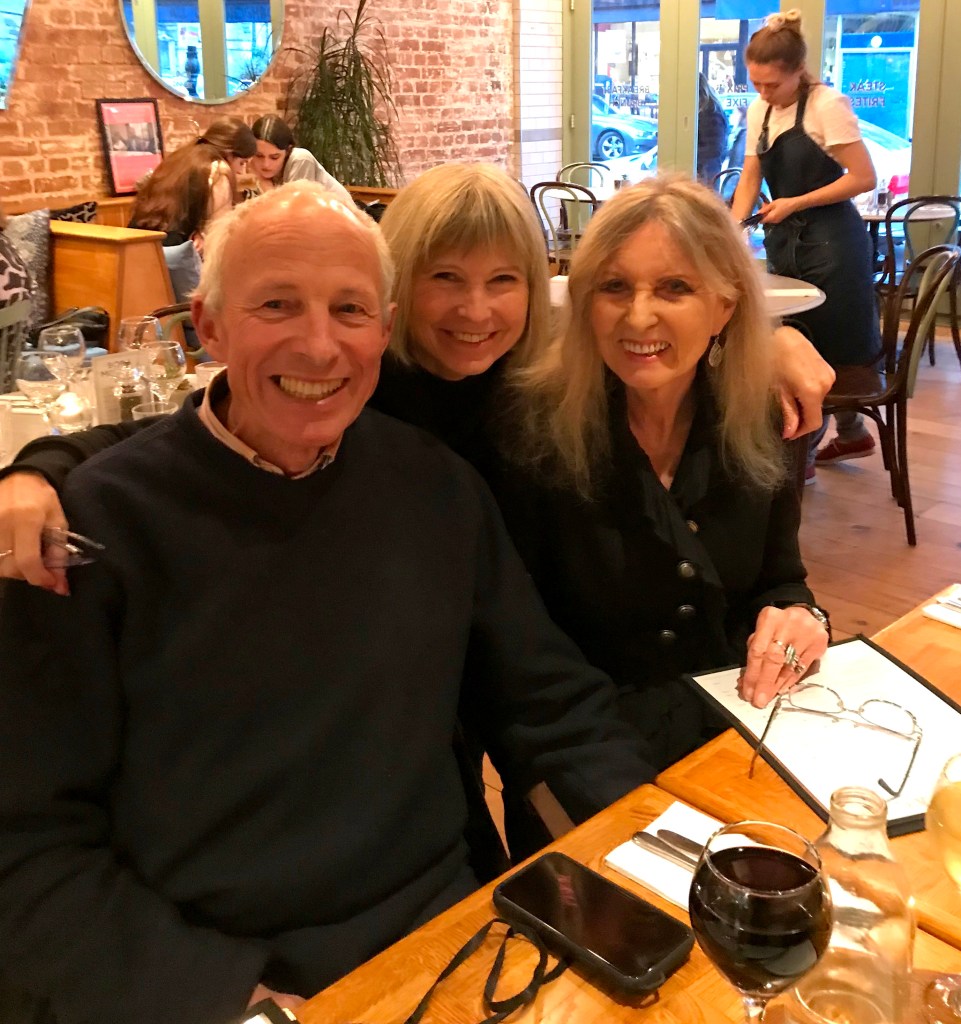
Eleanor holding her arms around Jean and me!

Immediately upon meeting we found a nearby cafe to grab some lunch and do a bit of catching up!

The afternoon and evening went by far too quickly and fairly smartly on the Saturday morning, the 14th, we said our ‘goodbyes’ and Jean and I struggled for the second time in twenty-four hours with the Underground! This time making our way from Bounds Green to Paddington Station, the main line station that serves Bristol and places in between, as in the Great Western Railway, as well as down to the South-West including Exeter and then on to Plymouth and into Cornwall.

Our train journey was from Paddington to Swindon Station to be met by Richard and Julie.

Richard is my longest, closest and dearest male friend.

He and I go back very many years, for we met not long after I had left IBM in 1978, where I had been an Office Products salesman, and then started my own company. Richard had, in turn, recently left Olivetti where he, too, had been an Office Products salesman.
We hit it off immediately and over the intervening years, as in the thick end of 40 years, there’s not a lot that we haven’t shared in terms of fun and frolics, and especially a great many flying exploits in my group-owned Piper Super Cub!

Piper Cub R151

When Jean and I got together in 2008 as you might imagine she quickly became close friends with Richard and Jules, as Richard calls Julie.

Plus Jean and Richard share a rather ironic, if that’s the right term, event. For both of them were diagnosed in December, 2015 with the early stages of Parkinson’s Disease!

As with seeing Eleanor, the time with Richard and Jules was far too short but, nonetheless, very

Murphy being cuddled by Jules

precious. Plus, dear Murphy gave Jean and me a much-needed dog fix!

Thus on the morning of the 15th, Richard and Jules ran us across to Bristol which is where my son, Alex, is living with Lisa, his partner.

The plan was to spend from Sunday, the 15th, through to Wednesday, the 18th, with Alex and Lisa. Alex had booked time off work for those days but Lisa unfortunately was working during the weekdays.

Yet another meeting of dear friends, as in Richard and Jules catching up with Alex.

Alex had arranged for Jean and me to go down to South Devon on Monday, 16th, to meet with John Joiner, my dear brother-in-law.

Let me explain some family background. My father had had two daughters with a previous wife to my mother. Their names were Rhona and Corinne and when they were alive they both lived in South Devon. In the years that followed my father’s death in December, 1956, both Rhona and Corinne, and their respective husbands, Reider and John, made me feel very special and very deeply loved by both of them. (Indeed, it was because of wanting to be close to Rhona and Corinne’s families that I settled in South Devon when I returned from Cyprus in 1991.)

Corinne died in June, 2013. John, who is now well into his 80s, lives in a small apartment in the village of South Brent just a few miles from Totnes in South Devon. I make a point of calling him from Oregon at least once a week but to be able to see John again after so many years was another big highlight of the vacation.

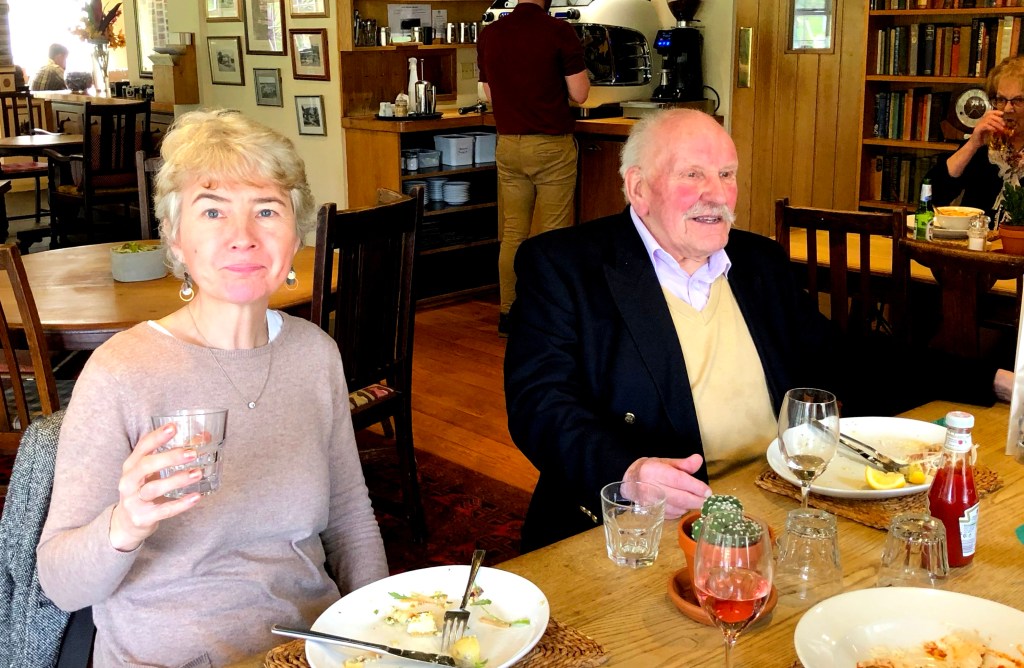
Inevitably, along came another lunch and in the photograph above you can see John on the right-hand side and sitting next to him, as in the left of the photo, is Greta, my cousin as in Rhona’s daughter, who spends a great deal of her spare time looking after John. Dear Greta!

After the pub lunch we returned to John’s apartment for tea and carried on sharing many special memories.

Indeed, one of those special memories was Benji the wonderful dog that Corinne and John had for many years. On one of John’s walls was this wonderful painting of Benji.

The other fact about John is his incredible use of the English language. Both in terms of his vocabulary and his diction. John’s legacy to me is, and will be for the rest of my days, the value of speaking well.

Another wonderful connection with past times.

The truth is that the odds are that I may never see John again. That made this day with John so incredibly special. Huge thanks to Alex and Greta. What a fabulous day!

The next day, Tuesday, the 17th, was Lisa’s birthday and yet another wonderful evening out.

Then came the 18th and the last few hours of being with Alex. At 12:50 that day we were due to fly from Bristol down to Nice in Southern France to spend six nights with Reggie, Jean’s brother.

Those beautiful days will be the topic of tomorrow’s post. See you then!

But before I turn away from today’s description of our days in England, let me address a question that John Zande raised yesterday. Namely: “Have to ask, do you miss the English village life? It’s so beautiful.

Here’s my answer:

John, yes there was no question that there were stirrings of great familiarity when down with John near Totnes. In my mind’s eye, I could still walk up Totnes High Street and name many of the stores that I used to visit on an almost weekly basis when living in Harberton.

But at the same time I was shocked and disappointed by the huge growth in new housing, someone said an additional 500 homes built in the area in the last 5 years, and all the traffic and crowded lanes that go with that expansion. Many of the lanes were so crowded with parked cars that they were effectively single-lane carriageways.

The relatively sparse housing in the part of Oregon where we now live, the way that the natural world seems untouched by us humans here on Hugo Road, felt very beautiful in comparison. We looked forward to being back in Merlin.

Upper Barn, Harberton, where I used to live before meeting my Jeannie!

To England and France, part one

Our recent vacation to see family in England and France.

Dear friends, I have my fingers tightly crossed that today’s post and the posts for the rest of the week aren’t going to come across as too indulgent!

For what I have planned this week is to share the experiences that Jean and I had when we flew from Oregon to Europe, leaving on 8th April and returning on the 26th.

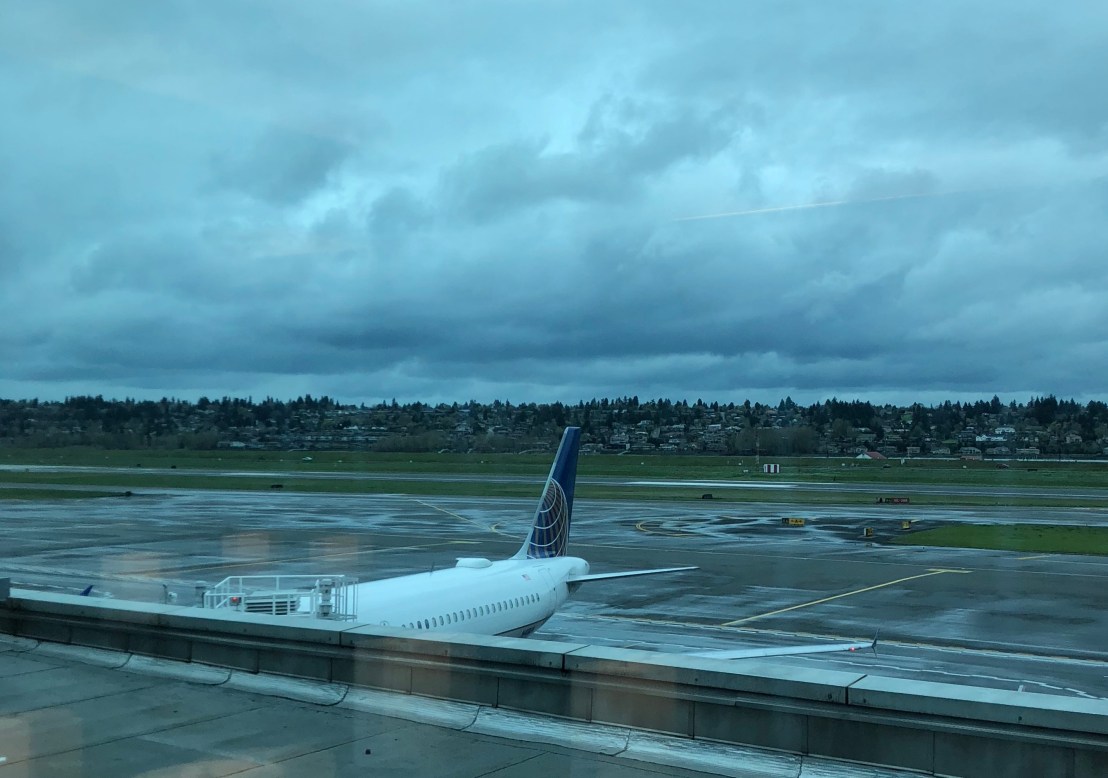
Come the day of our departure the morning presented low clouds and persistent rain. It was a four-hour drive North on Highway I-5 and our plan was to be away by 8am. Our home-sitter cum pet-sitter, Jana, would be arriving around 9:30.

Inevitably, I couldn’t sleep that well and it was not long after 7:30am that Jean and I drove down our driveway to start the journey to Portland International Airport. It was rain the whole way and not an easy drive; to say the least. Especially when overtaking the many trucks when the spray was pretty grim!

The Portland skies were just as wet and dreary as the drive up had been.

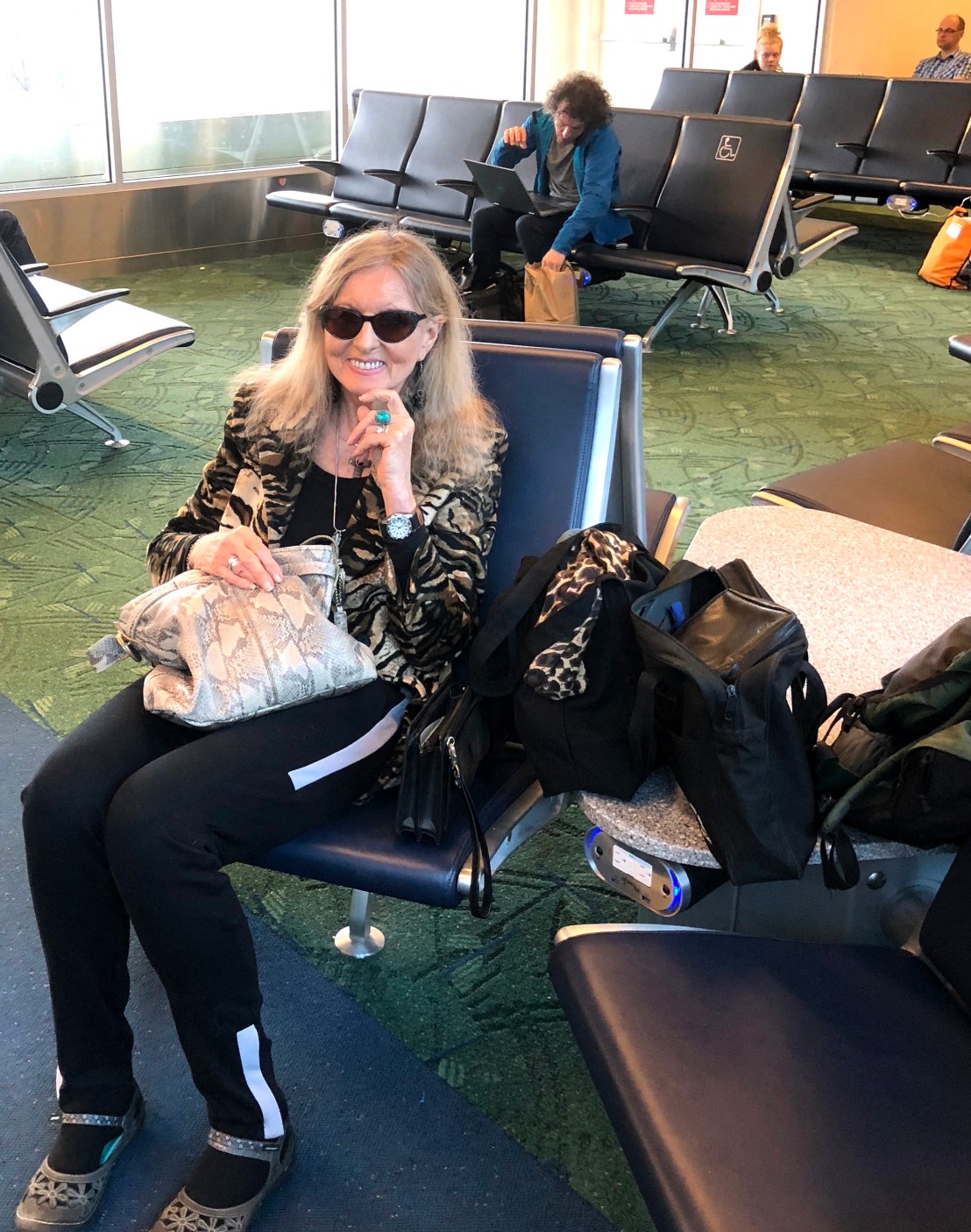
Anyway, we had arrived without any hitches and it was time to forget about the car for nearly three weeks and start getting ourselves into holiday mood.

Then on the very dot of the scheduled time for departure, as in 15:40, our Icelandic Air flight FI664 rotated skywards en route for London Gatwick via a short stop at Reykjavik.

Airborne!

To our great amazement the total flight time of over ten hours passed reasonably smoothly and before we knew it we were catching a taxi from London Gatwick to my daughter’s house in the village of Lindfield just 20 minutes away from the airport.

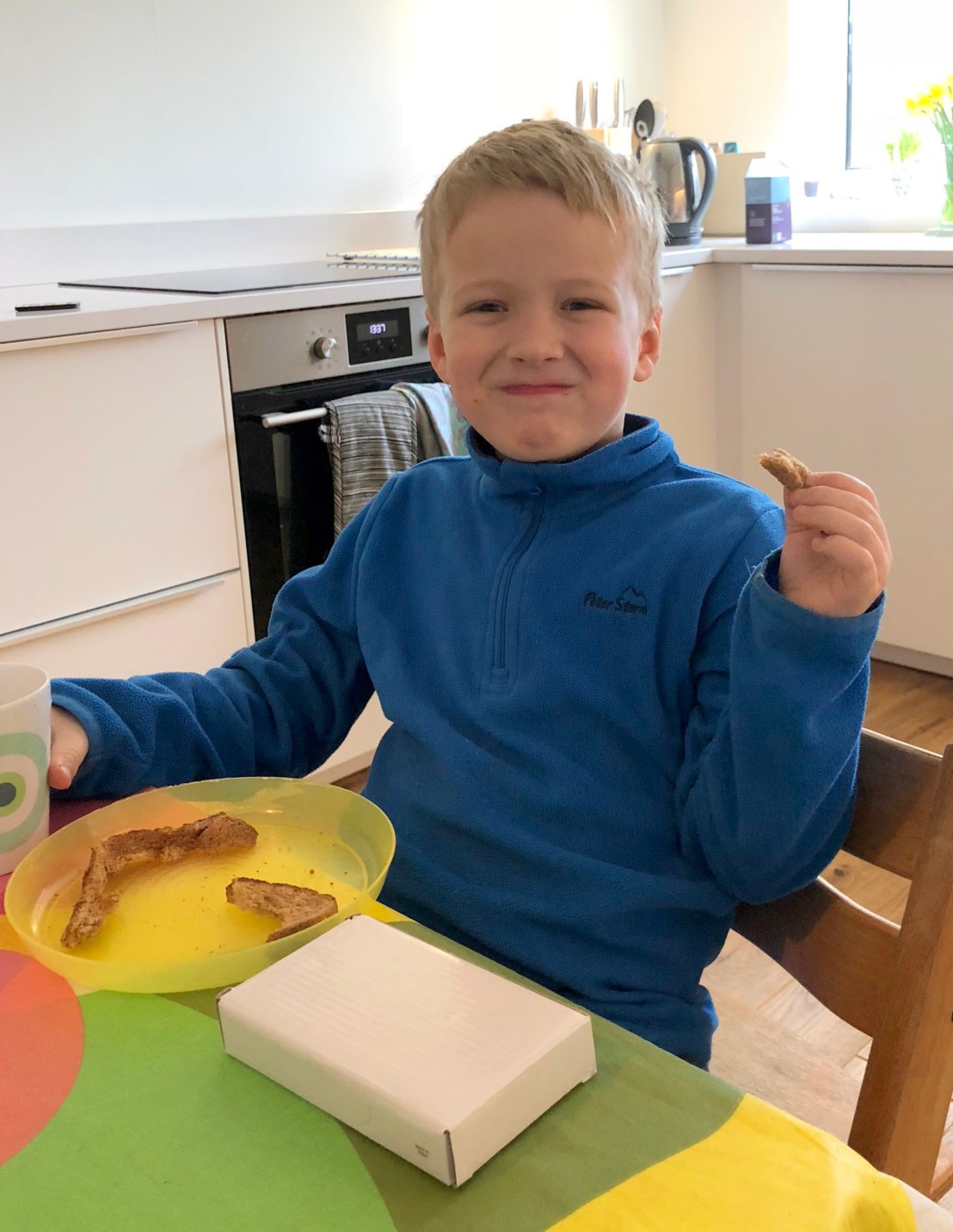
By mid-day on Monday the 12th we were at my daughter’s house and sitting down to a lunch snack with Maija, my daughter, and Morten, my seven-year-old grandson.

The plan was to spend a few days with Maija, and her husband Marius, and above all with Morten and I will cover what we did over those days in tomorrow’s post.

The Sound of Sadness!

Why is is that some things so profoundly affect one?

In working my way through magazines and other stuff that I wanted to read following being away for nearly three weeks, I came across a report published by the University of Exeter, back in England, about the effect of climate change on the Great Barrier Reef.

Deteriorating Great Barrier Reef hushed: young fish no longer hear their way home

Degraded coral reefs are far quieter than five years ago, and no longer sound like a suitable habitat to young fish searching for a place to live and breed, according to research published today in Proceedings of the National Academy of Sciences USA.

Baby fish looking for a home can use noisy coral reef sounds including snapping shrimp clicks, damselfish chirps, and clownfish chattering to locate and select suitable habitat. But that “coral reef orchestra” has been quietened following recent cyclone and coral-bleaching damage on the Great Barrier Reef, raising fears that young fish may no longer hear their way home.

An international team of scientists, led by the University of Exeter, carried out field experiments on the Northern Great Barrier Reef and found that reefs sound much quieter and less acoustically diverse than they did before three years of cyclones and coral bleaching.

The soundscapes of these recently-degraded reefs are less attractive to juvenile fishes attracting 40% fewer fish compared to the sound of previous healthy reefs.

Lead author Tim Gordon, a marine biologist at the University of Exeter, said: “It’s heart-breaking to hear. The usual pops, chirps, snaps and chatters of countless fish and invertebrates have disappeared. The symphony of the sea is being silenced.”

This loss of attractiveness of reef sounds to fish in the sea could have devastating consequences for reefs.

I know I am far from being alone in feeling great sadness at this aspect of our changing planet.

So before I republish the rest of that University of Exeter paper take a few minutes and watch this YouTube video about the Australian Barrier Reef

Then listen to this mp3 file that is a recording of the sounds of a healthy reef.

This is the balance of that news item published by the University.

Fish communities are instrumental to maintaining healthy reefs by removing algae, facilitating coral growth, contributing to nutrient cycles and keeping food webs in balance. Damaged reefs with healthy fish populations recover faster than reefs that have lost their fish.

Harry Harding, co-author from the University of Bristol, explains: “If fish aren’t hearing their way home anymore, that could be bad news for the recovery prospects of reefs. Fish play critical roles on coral reefs, grazing away harmful algae and allowing coral to grow. A reef without fish is a reef that’s in trouble.”

Coral reef animals produce a dazzling array of sounds to communicate with each other while hunting, to warn each other about the approach of predators and to impress each other during courtship. Together, these sounds combine to form a soundscape that can be heard for miles around. This soundscape provides a valuable cue for young fish to locate and select habitat after a period of early development in the open ocean.

Gordon said: “Being able to hear the difference really drives home the fact that our coral reefs are being decimated. Some of the most beautiful places on Earth are dying due to human activity, and it is up to us to fix it.”

The scientists from the University of Exeter, University of Bristol, Cefas (Centre for Environment, Fisheries and Aquaculture Science), Duke University (USA), the Australian Institute of Marine Science and James Cook University (Australia) built experimental reefs from coral rubble on sand flats, then used underwater loudspeakers to broadcast healthy coral reef sounds or degraded coral reef sounds, to see which sounds attracted more young fish.

Senior author Steve Simpson, Associate Professor in Marine Biology & Global Change at the University of Exeter, said: “Over the last 15 years my research group have discovered how important sound can be for fish to locate and select specific reefs. We have marvelled at the remarkable diversity and complexity of coral reef soundscapes. But in the last few years the reefs we know and love have died before our eyes. And the deserted and crumbling rubble fields have turned eerily quiet.”

Professor Simpson added: “If the reefs have gone quiet, then the chances of the next generation of fish recolonising the reefs are much reduced. Without fish, the reefs can’t recover.”

Warming seas increase the frequency and severity of coral bleaching events worldwide, as higher temperatures cause a breakdown in the relationship between corals and the zooxanthellae that they host in their tissue, providing their energy through photosynthesis.

This bleaching recently killed up to 80% of corals in some areas of the Great Barrier Reef, and bleaching events of this nature are happening worldwide four times more frequently than they used to.

Reductions in carbon emissions are needed to reduce this damage, as Gordon explains: “The damage we’ve done to reefs worldwide is horrific, but the fight isn’t over yet. If we can fulfil our international commitments to dramatically reduce carbon emissions, it’s still possible to protect some of the reefs that are left. The time for action is now.”

Date: 30 April 2018

Dear people, the time for action is now!

Wolves and Rivers

Connections!

Just a few days ago, on May 1st to be precise, I published the post Dogs and Humans.

Colin Reynolds, he of the blog Wibble, left the following comment:

Good to see you back, glad to hear you had an enjoyable trip.
Those goslings are really cute 🙂
At risk of self-promotion: I was thinking of you when I wrote my latest blog post. Granted, wolves aren’t dogs, but they almost are… 🙂

I went across to Colin’s latest blog post and immediately wanted to share it with you all in this place.

It also seemed appropriate to ask Colin for his introduction. But here’s what he offered: “When Paul asked me if I would be willing to turn this post into a guest post for Learning from Dogs, I was more puzzled than anything else. The only words here that aren’t my own are those where I explain that all I did was transcribe George Monbiot’s words from the video.” I’m bound to say that the transcription was a grand job!

Anyway, here is Colin’s post.

ooOOoo

How Wolves Change Rivers

by Colin Reynolds

When we try to pick out anything by itself, we find it hitched to everything else in the Universe.” — John Muir

When wolves were reintroduced to Yellowstone National Park in the United States after being absent for nearly 70 years, the most remarkable ‘trophic cascade‘ occurred. In this short film, George Monbiot explains what a trophic cascade is, and how wolves do actually change rivers.

I found this so remarkable that I took the time to transcribe George’s words:

One of the most exciting scientific findings of the past half century has been the discovery of widespread ‘trophic cascades’. A trophic cascade is an ecological process which starts at the top of the food chain and tumbles all the way down to the bottom, and the classic example is what happened in the Yellowstone National Park in the United States when wolves were reintroduced in 1995. Now, we all know that wolves kill various species of animals, but perhaps we’re slightly less aware that they give life to many others.

Before the wolves turned up, they’d been absent for seventy years, but the numbers of deer — because there’d been nothing to hunt them — had built up and built up in the Yellowstone Park and despite the efforts by humans to control them, they’d reduced much of the vegetation there to almost nothing; they’d just grazed it away. But as soon as the wolves arrived, even though they were few in number, they started to have the most remarkable effects.

First, of course, they killed some of the deer. But that wasn’t the major thing: much more significantly, they radically changed the behaviour of the deer. The deer started avoiding certain parts of the park: the places where they could be trapped most easily, particularly the valleys and the gorges — and immediately, those places started to regenerate. In some areas, the height of the trees quintupled in just six years; bare valley sides quickly became forests of aspen, and willow, and cottonwood.

And as soon as that happened, the birds started moving in. The number of songbirds and migratory birds started to increase greatly. The number of beavers started to increase because beavers liked to eat the trees; and beavers, like wolves, are ecosystem engineers, they create niches for other species. And the dams they built in the rivers provided habitats for otters and musk-rats and ducks and fish and reptiles and amphibians.

The wolves killed coyotes, and as a result of that, the number of rabbits and mice began to rise, which meant more hawks, more weasels, more foxes, more badgers. Ravens and bald eagles came down to feed on the carrion that the wolves had left. Bears fed on it too, and their population began to rise as well, partly also because there were more berries growing on the regenerating shrubs. And the bears reinforced the impact of the wolves by killing some of the calves of the deer.

But here’s where it gets really interesting: the wolves changed the behaviour of the rivers. They began to meander less, there was less erosion, the channels narrowed, more pools formed, more riffle sections, all of which was great for wildlife habitats. The rivers changed in response to the wolves. And the reason was that the regenerating forests stabilised the banks so that they collapsed less often, so that the rivers became more fixed in their course. Similarly, by driving the deer out of some places and the vegetation recovering on the valley sides there was less soil erosion, because the vegetation stabilised that as well.

So the wolves, small in number, transformed not just the ecosystem of the Yellowstone National Park, this huge area of land, but also its physical geography.

Note from the video’s publisher (Sustainable Human): “There are ‘elk’ pictured in this video when the narrator is referring to ‘deer.’ This is because the narrator is British and the British word for ‘elk’ is ‘red deer’, or ‘deer’ for short. The scientific report this is based on refers to elk so we wanted to be accurate with the truth of the story.”

ooOOoo

As that quote from John Muir infers, we are all connected. No better illustrated by a very sad piece of research news that will be the topic for tomorrow’s post.

Real Learning from Dogs – for our Children!

Another wonderful guest post from Zara Lewis.

Back on March 13th, Zara published her first guest post in this place. It was called Dogs and allergies and was very well received by many if not most of you.

So what a pleasure it was to receive a further email and material from Zara last Friday.

Here it is for all you good people!

ooOOoo

How Your Family Pooch Can Teach Your Youngsters Responsibility

by Zara Lewis, March 30th 2018

It’s easy to confuse pure obedience with true responsibility, simply because the former serves as the stepping stone, while the latter is a mindset that takes years to build. We as parents make choices every day that affect how well this mindset develops in our kids, but one of the best, most seamless ways for them to succeed is by nurturing their relationship with your family doggo.

With a four-legged friend by their side, kids tend to assume the role of a leader, a friend, and a caregiver with greater ease. Although it comes with its own set of parenting challenges, teaching your kids responsibility with your little fuzzy buddy is a rewarding experience that will enrich your kids’ childhood and help you be a better parent, as well!

Building healthy habits

From regular vet check-ups, vaccines, feeding on a schedule, and taking them for walks every day, your kids will quickly realize that only a healthy dog will be a happy dog. I know that some kids will be eager to split their chocolate cake with their furry pal, but when you explain to them that such a diet can be very harmful, they will be much more careful when choosing the right dog food.
When they’re young, they won’t perceive those walks and frisbee throws as exercise, but if they start embracing this lifestyle so early, they will be much more likely to stay active throughout their adulthood, too.

Learning about boundaries
No matter how in love your youngsters may be with their pet, they often don’t understand that dogs have moods, too. That means they won’t always be in the mood to be hugged, or that dogs won’t put up with having their tail pulled all the time.

The sooner they understand to respect the needs and wants of their pets, your kids will appreciate the meaning of personal preferences even in life. They will learn how to recognize certain body language signals that they are about to cross a line and transfer that knowledge to their hooman friends as well.


Mastering discipline

Just like that birthday cake is almost too irresistible not to be shared with your pooch, it’s no surprise that many kids want to take their dogs everywhere and share absolutely everything with them. My own little boy wanted to share his bed with our dog, Joey, and even though this is perfectly fine from time to time, making it into a habit wasn’t the best option for either of them.

So, we got a Snooza bed for Joey and placed it in our son’s bedroom and explained that it’s best for each of them to have their own space, since they both grow very fast. Plus, once I told my son that the cleaning of his room will be much more difficult if his bed was filled with dog hair, he immediately changed his mind!


Handling suitable tasks

Overburdening your kids with too many difficult chores is as bad as not giving them enough opportunities to be responsible. It’s best to discern how much your youngsters can handle depending on their age. For example, toddlers can tell you if their water bowl is empty or if they caught the little rascal in the potty act.

Older kids can share the entire feeding, grooming, and walking routine with you, depending on their school responsibilities and other chores. In fact, older kids can even help you train the dog by teaching them various tricks, and playing sessions are beneficial both for your kids and the dog, as they’ll help them grow stronger, and build their bond over time.

Fostering independence

Sometimes the homework will pile up and perhaps the flu season will kick in, so you’ll feel the need to spare your kids the trouble of caring for your pet. Even though it’s perfectly fine to help them manage their chores and take over a portion until they are well enough, they shouldn’t suddenly let you take over for good.
Moreover, encourage your kids to pitch in, no matter how little, with their birthday savings or their pocket money when buying dog food, or getting new chew toys. This is yet another way of sharing and learning to become more autonomous even financially with their pets.

The cycle of learning and teaching
While we’re on the subject of sharing, some kids perceive their pooch as another toy at first, or even as a chore you’ve added to their “unwanted” list. This is especially common among very young kids, and it becomes essential for parents to help them cope with these responsibilities by gradually introducing new ones.
Talk to them, see if they would actually like to take charge of a particular activity such as feeding or walking, while you share other responsibilities with them. Explain why these actions are important for keeping your pooch happy and healthy, and they will be much more likely to take on more responsibilities over time.

Finally, don’t forget to be a true role model while your kids are still in the learning stages of caring for your family pet. They will make mistakes, but they should look up to you for better behavioral patterns, and it’s your duty to be the caregiver you’d want your kids to become for your pooch.

ooOOoo

You do know if Zara carries on like this I shall hang up my keyboard and just savour Zara’s writings!!

Shit Happens!

A very inspirational essay from George Monbiot.

It is said that there are only two certainties in life: Death and Taxes.

I think that is one short: The Unexpected. As in Death, Taxes and The Unexpected!

As evidence of The Unexpected, one could put falling off one’s bike or being diagnosed with Parkinson’s Disease. Or the many other ‘hiccups’ that are an attribute of the real world that we humans live in. Put in the words of the street: Shit Happens!

Now read this very inspirational essay from George Monbiot. Republished here with Mr. Monbiot’s very kind permission.

ooOOoo

Unprostrated

16th March 2018

I have prostate cancer, but I’m happy. Here’s how.

By George Monbiot, published in the Guardian 14th March 2018

It came, as these things often do, like a gunshot on a quiet street: shocking and disorienting. In early December, my urine turned brown. The following day I felt feverish and found it hard to pee. I soon realised I had a urinary tract infection. It was unpleasant, but seemed to be no big deal. Now I know that it might have saved my life.

The doctor told me this infection was unusual in a man of my age, and hinted at an underlying condition. So I had a blood test, which revealed that my prostate specific antigen (PSA) levels were off the scale. An MRI scan and a mortifying biopsy confirmed my suspicions. Prostate cancer: all the smart young men have it this season.

On Monday, I go into surgery. The prostate gland is buried deep in the body, so removing it is a major operation: there are six entry points and it takes four hours. The procedure will hack at the roots of my manhood. Because of the damage that will be caused to the surrounding nerves, there’s a high risk of permanent erectile dysfunction. Because the urethra needs to be cut and reattached to the bladder, I will almost certainly suffer urinary incontinence for a few months, and possibly permanently. Because the removal of part of the urethra retracts the penis, it appears to shrink, at least until it can be stretched back into shape.

I was offered a choice: radical surgery or brachytherapy. This means implanting radioactive seeds in the parts of the prostrate affected by cancer. Brachytherapy has fewer side effects, and recovery is much faster. But there’s a catch. If it fails to eliminate the cancer, there’s nothing more that can be done. This treatment sticks the prostate gland to the bowel and bladder, making surgery extremely difficult. Once you’ve had one dose of radiation, they won’t give you another. I was told that the chances of brachytherapy working in my case were between 70 and 80%. The odds were worse, in other words, than playing Russian roulette (which, with one bullet in a six-chambered revolver, gives you 83%). Though I have a tendency to embrace risk, this was not an attractive option.

It would be easy to curse my luck and start to ask “why me?”. I have never smoked and hardly drink; I have a ridiculously healthy diet and follow a severe fitness regime. I’m 20 or 30 years younger than most of the men I see in the waiting rooms. In other words, I would have had a lower risk of prostate cancer only if I had been female. And yet … I am happy. In fact, I’m happier than I was before my diagnosis. How can this be?

The reason is that I’ve sought to apply the three principles which, I believe, sit at the heart of a good life. The first is the most important: imagine how much worse it could be, rather than how much better.

When you are diagnosed with prostate cancer, your condition is ranked on the Gleason Score, which measures its level of aggression. Mine is graded at 7 out of 10. But this doesn’t tell me where I stand in general. I needed another index to assess the severity of my condition, so I invented one: the Shitstorm Scale. How does my situation compare to those of people I know, who contend with other medical problems or family tragedies? How does it compare to what might have been, had the cancer had not been caught while it is still – apparently – confined to the prostate gland? How does it compare to innumerable other disasters that could have befallen me?

When I completed the exercise, I realised that this bad luck, far from being a cause of woe, is a reminder of how lucky I am. I have the love of my family and friends. I have the support of those with whom I work. I have the NHS. My Shitstorm Score is a mere 2 out of 10.

The tragedy of our times is that, rather than apply the most useful of English proverbs – “cheer up, it could be worse” – we are constantly induced to imagine how much better things could be. The rich lists and power lists with which the newspapers are filled, our wall-to-wall celebrity culture, the invidious billions spent on marketing and advertising, create an infrastructure of comparison that ensures we see ourselves as deprived of what others possess. It is a formula for misery.

The second principle is this: change what you can change, accept what you can’t. This is not a formula for passivity. I’ve spent my working life trying to alter outcomes that might have seemed immovable to other people. The theme of my latest book is that political failure is, at heart, a failure of imagination. But sometimes we simply have to accept an obstacle as insuperable. Fatalism in these circumstances is protective. I accept that my lap is in the lap of the gods.

So I will not rage against the morbidity this surgery might cause. I won’t find myself following Groucho Marx who, at the age of 81, magnificently lamented, “I’m going to Iowa to collect an award. Then I’m appearing at Carnegie Hall, it’s sold out. Then I’m sailing to France to pick up an honour from the French government. I’d give it all up for one erection.” And today there’s viagra.

The third principle is this: do not let fear rule your life. Fear hems us in, stops us from thinking clearly and prevents us from either challenging oppression or engaging calmly with the impersonal fates. When I was told that this operation has an 80% chance of success, my first thought was “that’s roughly the same as one of my kayaking trips. And about twice as good as the chance of emerging from those investigations in West Papua and the Amazon”.

There are, I believe, three steps to overcoming fear: name it, normalise it, socialise it. For too long, cancer has been locked in the drawer labelled Things We Don’t Talk About. When we call it the Big C, it becomes, as the term suggests, not smaller, but larger in our minds. He Who Must Not Be Named is diminished by being identified, and diminished further when he becomes a topic of daily conversation.

The super-volunteer Jeanne Chattoe, whom I interviewed recently for another column, reminded me that, just 25 years ago, breast cancer was a taboo subject. Thanks to the amazing advocacy of its victims, this is almost impossible to imagine today. Now we need to do the same for other cancers. Let there be no more terrible secrets.

So I have sought to discuss my prostate cancer as I would discuss any other issue. I make no apologies for subjecting you to the grisly details: the more familiar they become, the less horrifying. In doing so, I socialise my condition. Last month, I discussed the remarkable evidence suggesting that a caring community enhances recovery and reduces mortality. In talking about my cancer with family and friends, I feel the love that I know will get me through this. The old strategy of suffering in silence could not have been more misguided.

I had intended to use this column to urge men to get themselves tested. But since my diagnosis, we’ve discovered two things. The first is that prostate cancer has overtaken breast cancer to become the third biggest cancer killer in the UK. The second is that the standard assessment (the PSA blood test) is of limited use. As prostate cancer in its early stages is likely to produce no symptoms, it’s hard to see what men can do to protect themselves. That urinary tract infection was a remarkably lucky break.

Instead, I urge you to support the efforts led by Prostate Cancer UK to develop a better test. Breast cancer has attracted twice as much money and research as prostate cancer, not because (as the Daily Mail suggests) men are the victims of injustice, but because women’s advocacy has been so effective. Campaigns such as Men United and the Movember Foundation have sought to bridge this gap, but there’s a long way to go. Prostate cancer is discriminatory: for reasons unknown, black men are twice as likely to suffer it as white men. Finding better tests and treatments is a matter of both urgency and equity.

I will ride this out. I will own this disease but I won’t be defined by it: I will not be prostrated by my prostate. I will be gone for a few weeks but when I return, I do solemnly swear I will still be the argumentative old git with whom you are familiar.

http://www.monbiot.com

ooOOoo

It appears to be a unique aspect of the human mind. I am referring to our ability to worry about the future, to struggle to break away from ‘habitual’ responses to unanticipated crap coming along, to see the glass as half full as opposed to half empty, and so on, and so on.

Oh, to be like our dear, sweet, wise dogs.

Just let the world roll by!