July 26, 2019 — The Lennox International, Inc., of Edison NJ, is voluntary recallingits Natural Pig Ears dog treats because they may be contaminated with Salmonella.
What’s Recalled?
The affected pig ears product is supplied in an 8-pack branded pouch under UPC 742174 995163 and 742174994166.
It is also available in an individually shrink-wrapped package under UPC 0385384810 and 742174P35107.
All UPC codes are located on the front label of the package.
Package Image
The following low resolution product image was supplied by the company along with its announcement.
About Salmonella
Salmonella can affect animals eating the product and there is risk to humans from handling contaminated products, especially if they have not thoroughly washed their hands after having contact with the products or any surfaces exposed to these products which are solely for the consumption by dogs.
Healthy people infected with Salmonella should monitor themselves for some or all of the following symptoms: nausea, vomiting, diarrhea or bloody diarrhea, abdominal cramping and fever.
Rarely, Salmonella can result in more serious ailments, including arterial infections, endocarditis, arthritis, muscle pain, eye irritation, and urinary tract symptoms.
Consumers exhibiting these signs after having contact with this product should contact their healthcare providers.
Pets with Salmonella infections may be lethargic and have diarrhea or bloody diarrhea, fever, and vomiting.
Some pets will have only decreased appetite, fever and abdominal pain.
Infected but otherwise healthy pets can be carriers and infect other animals or humans.
If your pet has consumed the recalled product and has these symptoms, please contact your veterinarian.
About the Recall
The recalled products were shipped nationwide to distributors and retail stores between May 1 and July 3, 2019.
To date, Lennox is aware of two cases of its pig ears causing illnesses in dogs.
These cases may be related to the ongoing FDA investigation of Salmonella illness associated with what appears to be a multiple source.
What to Do?
Consumers who have purchased the product and have proper receipt may return product. Or they may contact the company at 800-538-8980, Monday to Friday, 9 to 5 pm, for a refund or additional information.
Consumers may also email the company at usaoffice@lennoxpets.com.
U.S. citizens can report complaints about FDA-regulated pet food products by calling the consumer complaint coordinator in your area.
A recent item in The Guardian suggests there isn’t!
I hang on to emails and files about dogs and dog stories for a very long time. For one reason that they make brilliant blog post topics. Such as this item that was published in The Guardian recently.
Have a read of it now and then see my closing comment.
ooOOoo
Experience: my dog is a champion surfer
By Judy Fridono
Fri 19th July, 2019
Judy Fridono and her dog Ricochet, who has won nine gold medals. Photograph: John Francis Peters/The Guardian
The dogs have 10 minutes to catch as many waves as they can. Judges look at length of ride, whether they make it back to shore, and how many tricks they do.
When my golden retriever, Ricochet, was born, on 20 January 2008, she took her first breath in my hands. I had launched a non-profit organisation called Puppy Prodigies, to train service dogs for people with disabilities, and I supported her mother while she had her litter. Ricochet was the ninth of 10.
She was a brilliant puppy – high energy and lots of fun; she got her name because she was literally bouncing off the walls. She began service dog training at a few days old and started off well, but at 16 weeks she began to shut down; she was more interested in chasing birds. Luckily she found something else to do.
We live in San Diego, California, half an hour from the ocean. I never planned to raise a surf dog, but she had been in a kids’ pool at eight weeks old and showed great balance on a boogie board. We progressed to a bigger pool, then the bay, then the ocean.
I got her a 6ft foam board and a pink lifejacket. I don’t surf so, as she improved, she got a water handler. Surf dog contests were becoming popular in southern California and someone suggested she take part in one, at Ocean Beach in San Diego. Ricochet was placed third of about 15 dogs. I felt so proud – not because she had a medal but because she had shown what she was capable of.
Typically in contests, the dogs have 10 minutes to catch as many waves as they can. Judges look at the length of the ride, whether they make it back to shore, and how many tricks or turns they do, such as riding a wave backwards. A big wave scores higher in the judging stakes. Breeds with shorter legs, such as bulldogs or corgis, tend to do well because they have lower centres of gravity, but all sorts of dogs have won. It all comes down to balance. There’s always a crowd of spectators on the beach.
On the board, she looks pretty serious and focused. Dogs wag their tails on the sand, but not so much on the water, where they need them for balance. She’s 11 years old now and has taken part in about 20 contests. She has nine gold medals and has been placed second or third in most of the others.
Soon after she started surfing, Ricochet started doing something more meaningful with her talent. She began to accompany children with disabilities for surf therapy, and we have used her profile to fundraise for them, working first with Patrick, a 14-year-old quadriplegic boy. Patrick enjoyed the independence and Ricochet was joyful when they shared a board.
In 2009, a video of Patrick and Ricochet went viral. It’s had more than 6.5m views. She now has 230,000 Facebook followers and 100,000 on Instagram. We get messages every week from people wanting to work with or meet her. One teenage boy with a brain tumour asked to surf with her for his Make A Wish. She’s now raised more than $500,000 for humans and animals in need.
She is a certified therapy dog, and also works with service members and veterans suffering from post-traumatic stress disorder. She connects with people on an extremely deep level and helps them express their feelings. Recently, she placed herself up against a wall to demonstrate how a naval officer she was working with was struggling inside. There is something about her that makes her excel.
Ricochet is one of only three competitive surf dogs from the original circuit still alive, but she doesn’t compete any more. Her last contest was at Imperial Beach in 2014, and she won first place. These days, competitions happen all over the world and up to 100 dogs compete for medals and bragging rights. Some dogs are sponsored, but there’s usually a charity element.
She’s in the last quarter of her life now and doesn’t have the energy for long rides on the board; but she still surfs for fun and does surf therapy work. Judges think it’s her ability to ride a wave that qualifies her as a winner. But, to me, it is her healing power that makes Ricochet a champion.
ooOOoo
Firstly, I want to thank The Guardian, well the online version, for making their content reusable.
Secondly, this article shows yet another example of the bonding that can take place between a dog and their ‘owner’. I have no doubt that there will be many more.
Finally, dogs in the main are the perfect companions to us humans. It’s such a shame that so many are homeless, humans as well as dogs!
Once again an alert and this is especially important.
This dog food alert came in on Monday.
ooOOoo
Dear Fellow Dog Lover,
You’re getting this alert because you signed up on our website and asked to be notified. If you no longer wish to receive these emails, please click the “unsubscribe” link at the bottom of this message.
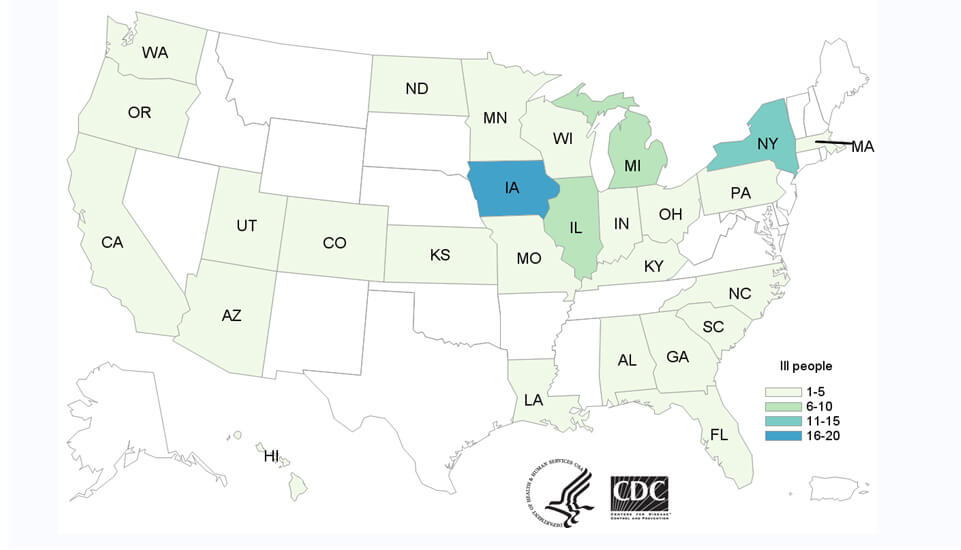
The U.S. Center for Disease Control (CDC) is expanding its investigation into an outbreak of Salmonella in 27 states due to contaminated pig ear dog treats.
For more information, including which states are listed in the CDC announcement, please visit the following link:
And if you go across to that first link then you will see the following:
ooOOoo
Salmonella Outbreak Linked to Dog Treats Expands
July 17, 2019 — The U.S. Centers for Disease Control and Prevention (CDC) has announced its investigation into an outbreak of Salmonella infections due to contaminated pig ears dog treats is expanding to 27 states.
Related Recall
In a related story posted July 3, 2019, by The Dog Food Advisor, Pet Supplies Plus recalled bulk pig ears stocked in open bins because they might be contaminated with Salmonella.
Link to Dog Treats Confirmed
The CDC has uncovered scientific evidence to indicate that contact with pig ear dog treats is the likely source of the outbreak.
DNA “fingerprinting” conducted by the CDC has linked the bacteria found on pig ears dog treats with the following 3 genetic strains:
Salmonella infantis
Salmonella newport
Salmonella london
About the Outbreak
As of July 16, 2019, a total of 93 people infected with the outbreak strains of Salmonella have been reported from 27 states.
Twenty ill people have been hospitalized. No deaths have been reported.
Illnesses might not yet be reported due to the time it takes between when a person becomes ill and when the illness is reported. This takes an average of 2 to 4 weeks.
What States?
Affected states include Alabama, Arizona, California, Colorado, Florida, Georgia, Hawaii, Illinois, Indiana, Iowa, Kansas, Kentucky, Louisiana, Massachusetts, Michigan, Minnesota, Missouri, New York, North Carolina, North Dakota, Ohio, Oregon, Pennsylvania, South Carolina, Utah, Washington, and Wisconsin.
A common supplier of pig ear dog treats has not been identified. Pet owners can take steps to keep their families healthy while feeding pets.
This investigation is ongoing and CDC will provide updates when more information is available.
About Salmonella
Most people infected with Salmonella develop diarrhea, fever, and stomach cramps 12 to 72 hours after being exposed to the bacteria.
The illness usually lasts 4 to 7 days, and most people recover without treatment.
In some people, the illness may be so severe that the patient needs to be hospitalized. Salmonella infection may spread from the intestines to the bloodstream and then to other places in the body.
Children younger than 5 years, adults 65 years and older, and people with weakened immune systems are more likely to have a severe illness.
Pets with Salmonella infections may be lethargic and have diarrhea or bloody diarrhea, fever, and vomiting.
Some pets will have only decreased appetite, fever and abdominal pain.
Infected but otherwise healthy pets can be carriers and infect other animals or humans.
What to Do?
Consumers should not feed suspected pig ears to their dog. Throw them away in a secure container so that your pets and other animals can’t eat them.
Even if some of the recalled pig ears were fed to dogs and no one got sick, do not continue to feed them to pets.
Wash containers, shelves, and areas that held the recalled pig ear dog treats with hot, soapy water.
U.S. citizens can report complaints about FDA-regulated pet food products by calling the consumer complaint coordinator in your area.
6 wolf pups caught on trail cam in Mount Hood area
Posted Jul 11, 2019
Two wolf pups were observed on the Warm Springs reservation in early August, marking the first time the wolves have successfully bred in Oregon’s northern Cascades since the animals returned to the state.
MOUNT HOOD — Officials say six wolf pups have been born this year to Oregon’s White River wolf pack in the Mount Hood area. Biologists with the Confederated Tribes of Warm Springs posted footage of the pups from a trail camera that was shared on Facebook by the U.S. Fish and Wildlife Service/Oregon.
The White River Pack is located just southeast of Mount Hood and east of Timothy Lake. With five members in 2018, it was one of the few confirmed packs in Western Oregon, along with southwest Oregon’s Rogue Pack.
Oregon Department of Fish and Wildlife carnivore biologist Derek Broman told The Statesman Journal that the current size of the White River pack is 11 animals.
The latest wolf count shows Oregon is home to a minimum of 137 wolves. The majority are clustered in northeast Oregon.
— The Associated Press
ooOOoo
Now it’s a great shame but the video of the young pups, evident if you go to this link, I cannot put into a WordPress blog, namely Learning from Dogs.
But the single most important lesson is integrity.
Again, another post from previous times. Albeit just a couple of years ago.
ooOOoo
Another tribute to dear Pharaoh.
The most profound thing that I learned from Pharaoh is that dogs are creatures of integrity. That goes back to a day in June, 2007. Some six months before I met Jeannie in Mexico in December, 2007. I was sitting in Jon’s home office just a few miles from where Pharaoh and I were then living in South Devon.
It was a key chapter in Part Four of my book where I examine all the qualities that we humans need to learn from our dogs.
So here is Chapter 13 from my book Learning from Dogs. (Written in ‘English’ English!)
ooOOoo
Chapter 13 Integrity
In the Introduction to this book I mentioned how the notion of “learning from dogs” went back to 2007 and me learning that dogs were creatures of integrity. Let me now elaborate on that.
It is a Friday morning in June in the year 2007. I am sitting with Jon at his place with Pharaoh sleeping soundly on the beige carpet behind my chair. I didn’t know it at the time but it was to become one of those rare moments when we gain an awareness of life that forever changes how we view the world, both the world within and the world without.
“Paul, I know there’s more for me to listen to and I sense that we have established a relationship in which you feel safe to reveal your feelings. However, today I want to talk about consciousness. Because I would like to give you an awareness of this aspect of what we might describe under the overall heading of mindfulness.”
I sat quietly fascinated by what was a new area for me.
“During the years that I have been a psychotherapist, I’ve seen an amazing range of personalities, probably explored every human emotion known. In a sense, explored the consciousness of a person. But what is clear to me now is that one can distil those different personalities and emotions into two broad camps: those who embrace truth and those who do not.”
Jon paused, sensing correctly that I was uncertain as to what to make of this. I made it clear that I wanted him to continue.
“Yes, fundamentally, there are people who deny the truth about themselves, who actively resist that pathway of better self-awareness, and then there are those people who want to know the truth of whom they are and seek it out when the opportunity arises. The former group could be described as false, lacking in integrity and unsupportive of life, while the latter group are diametrically opposite: truthful, behaving with integrity and supportive of life.”
It was then that Jon lit a fire inside me that is still burning bright to this day. For he paused, quietly looking at Pharaoh sleeping so soundly on the carpet, and went on to add, “And when I look at dogs, I have no question that they have a consciousness that is predominantly truthful: that they are creatures of integrity and supportive of life.”
That brought me immediately to the edge of my seat, literally, with the suddenness of my reaction causing Pharaoh to open his eyes and lift up his head. I knew in that instant that something very profound had just occurred. I slipped out of my chair, got down on my hands and knees and gave Pharaoh the most loving hug of his life. Dogs are creatures of integrity. Wow!
****
Later, when driving home, I couldn’t take my mind off the idea that dogs were creatures of integrity. What were those other values that Jon had mentioned? It came to me in a moment: truthful and supportive of life. Dogs have a consciousness that is truthful, that they are creatures of integrity and supportive of life: what a remarkable perception of our long-time companions.
I had no doubt that all nature’s animals could be judged in the same manner but what made it such an incredibly powerful concept, in terms of dogs, was the unique relationship between dogs and humans, a relationship that went back for thousands upon thousands of years. I realised that despite me knowing I would never have worked it out on my own, Jon’s revelation about dogs being creatures of integrity was so utterly and profoundly obvious.
As I made myself my usual light lunch of a couple of peanut butter sandwiches and some fruit and then sat enjoying a mug of hot tea, I still couldn’t take my mind off what Jon had revealed: dogs are examples of integrity and truth. I then thought that the word “examples” was not the right word and just let my mind play with alternatives. Then up popped: Dogs are beacons of integrity and truth. Yes, that’s it! Soon after, I recognised that what had just taken place was an incredible opening of my mind, an opening of my mind that didn’t just embrace this aspect of dogs but extended to me thinking deeply about integrity for the first time in my life.
Considering that this chapter is titled “Integrity”, so far all you have been presented with is a somewhat parochial account of how for the first time in my life the word “integrity” took on real meaning. That until that moment in 2007 the word had not had any extra significance for me over the thousands of other words in the English language. Time, therefore, to focus directly on integrity.
“If goodness is to win, it has to be smarter than the enemy.”
That was a comment written on my blog some years ago, left by someone who writes their own blog under the nom-de-plume of Patrice Ayme. It strikes me as beautifully relevant to these times, times where huge numbers of decent, law-abiding folk are concerned about the future. Simply because those sectors of society that have much control over all our lives do not subscribe to integrity, let alone giving it the highest political and commercial focus that would flow from seeing integrity as an “adherence to moral and ethical principles; soundness of moral character; honesty.” To quote my American edition of Roget’s Thesaurus.
Let me borrow an old pilot’s saying from the world of aviation: “If there’s any doubt, there’s no doubt!”
That embracing, cautious attitude is part of the reason why commercial air transport is one of the safest forms of transport in the world today. If you had the slightest doubt about the safety of a flight, you wouldn’t board the aircraft. If you had the slightest doubt about the future for civilisation on this planet, likewise you would do something! Remember, that dry word civilisation means family, children, grandchildren, friends, and loved ones. The last thing you would do is to carry on as before!
The great challenge for this civilisation, for each and every one of us, is translating that sense of wanting to change into practical, effective behaviours. I sense, however, that this might be looking down the wrong end of the telescope. That it is not a case of learning to behave in myriad different ways but looking at one’s life from a deeper, more fundamental perspective: living as a person of integrity. So perfectly expressed in the Zen Buddhist quote: “Be master of mind rather than mastered by mind.” Seeing integrity as the key foundation of everything we do. Even more fundamental than that. Seeing integrity as everything you and I are.
It makes no difference that society in general doesn’t seem to value integrity in such a core manner. For what is society other than the aggregate of each and every one of us? If we all embrace living a life of integrity then society will reflect that.
Integrity equates to being truthful, to being honest. It doesn’t mean being right all the time, of course not, but integrity does mean accepting responsibility for all our actions, for feeling remorse and apologising when we make mistakes. Integrity means learning, being reliable, and being a builder rather than a destroyer. It means being authentic. That authenticity is precisely and exactly what we see in our dogs.
The starting point for what we must learn from our dogs is integrity.
Continuing the theme of revisiting earlier posts this week!
ooOOoo
More on Pharaoh’s life
What a wonderful relationship it has been.
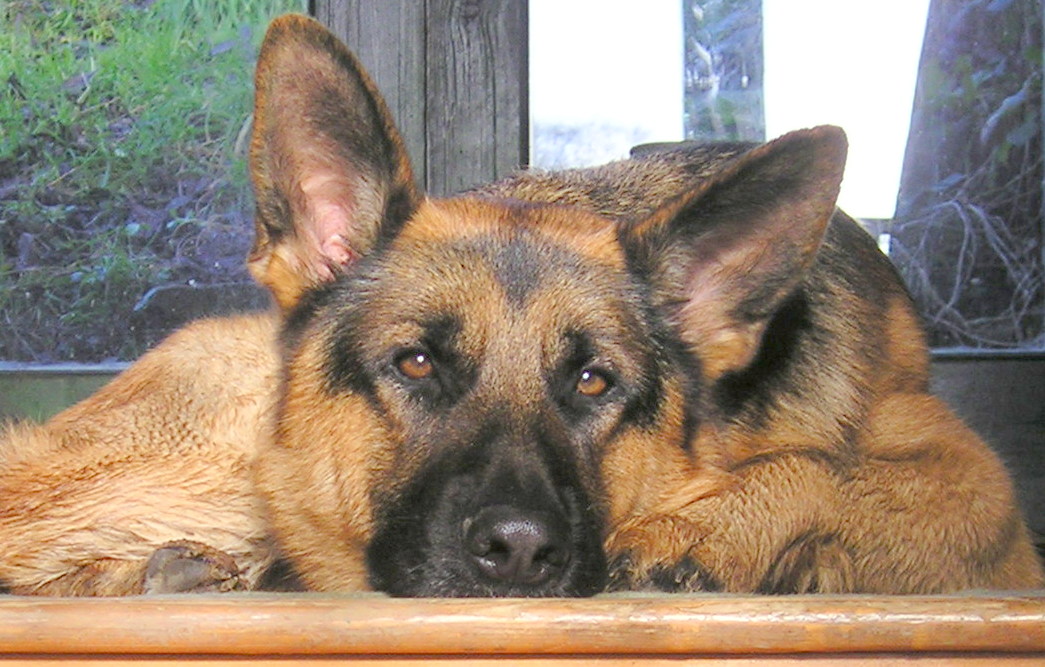
Years ago if I was ever to own a dog, it had to be one breed and one breed only: a German Shepherd Dog.
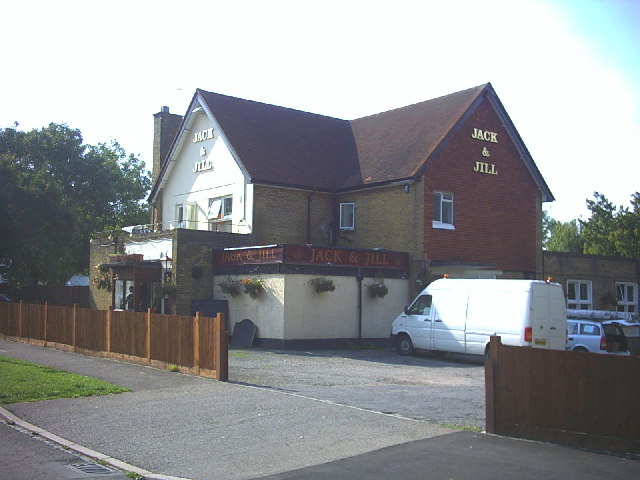
The reason for this was that back in 1955 my father and mother looked after a German Shepherd dog called Boy. Boy belonged to a lovely couple, Maurice and Marie Davies. They were in the process of taking over a new Public House (Pub); the Jack & Jill in Coulsdon, Surrey. My father had been the architect of the Jack & Jill.
Jack & Jill, Longlands Avenue, Coulsdon, Surrey
As publicans have a tough time taking holidays, it was agreed that the move from their old pub to the Jack & Jill represented a brilliant opportunity to have that vacation. My parents offered to look after Boy for the 6 weeks that Maurice and Marie were going to be away.
Boy was the most gentle loveable dog one could imagine and I quickly became devoted to him; I was 11 years old at the time. So when years later it seemed the right time to have a dog, there was no question about the breed. Boy’s memory lived on all those years, and, as this post reveals, still does!
Pharaoh was born June 3rd, 2003 at Jutone Kennels up at Bovey Tracy, Devon, on the edge of Dartmoor. As the home page of the Jutone website pronounces,
The Kennel was established in 1964 and it has always been the aim to breed the best German Shepherd Dogs for type and temperament. To this end the very finest German bloodlines are used to continue a modern breeding programme.
and elsewhere on that website one learns:
Jutone was established by Tony Trant who was joined by Sandra Tucker in 1976. Sandra continues to run Jutone since Tony passed away in 2004. Both Tony and Sandra qualified as Championship Show judges and Sandra continues to judge regularly. Sandra is the Secretary and a Life Member of the German Shepherd Dog Club of Devon.
Tony Trant
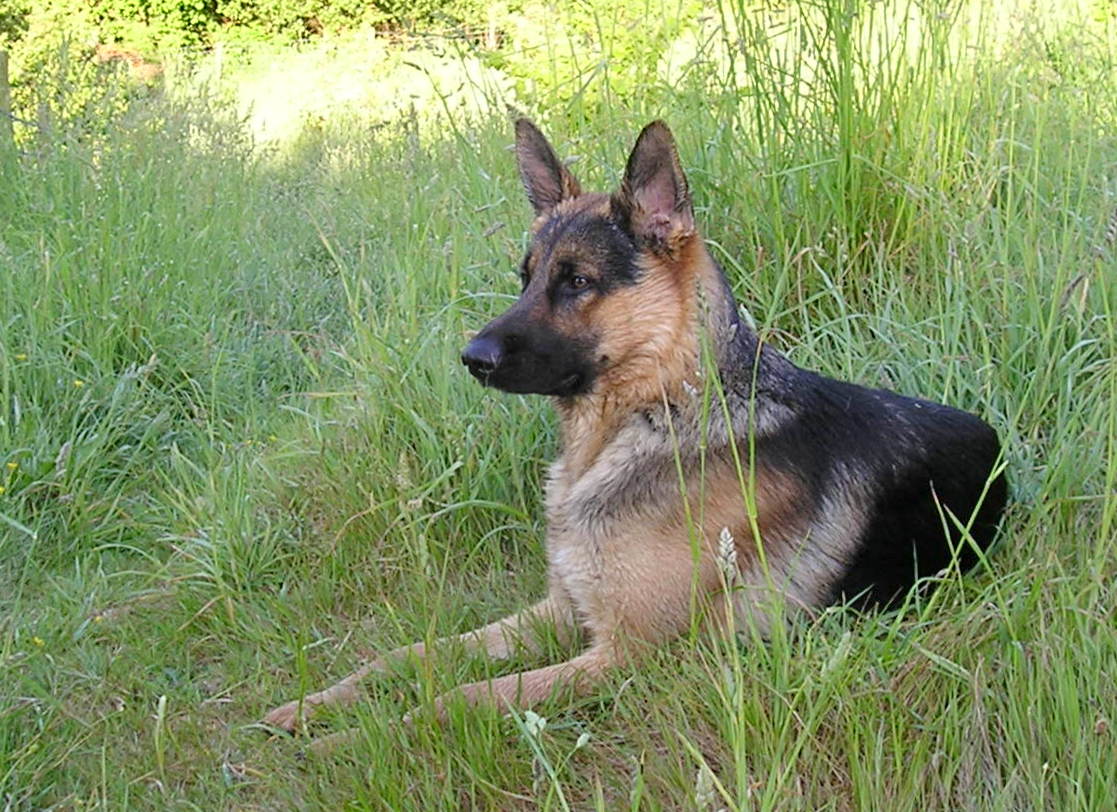
Turning to Pharaoh, here are a few more pictures over the years.
Pharaoh, nine months old.
oooOOOooo
One year old: June 3rd 2004.
The next picture of Pharaoh requires a little background information.
For many years I was a private pilot and in later days had the pleasure, the huge pleasure, of flying a Piper Super Cub, a group-owned aircraft based at Watchford Farm in South Devon. The aircraft, a Piper PA-18-135 Super Cub, was originally supplied to the Dutch Air Force in 1954 and was permitted by the British CAA to carry her original military markings including her Dutch military registration, R-151, although there was a British registration, G-BIYR, ‘underneath’ the Dutch R-151. (I wrote more fully about the history of the aircraft on Learning from Dogsback in August 2009.)
Piper Cub R151
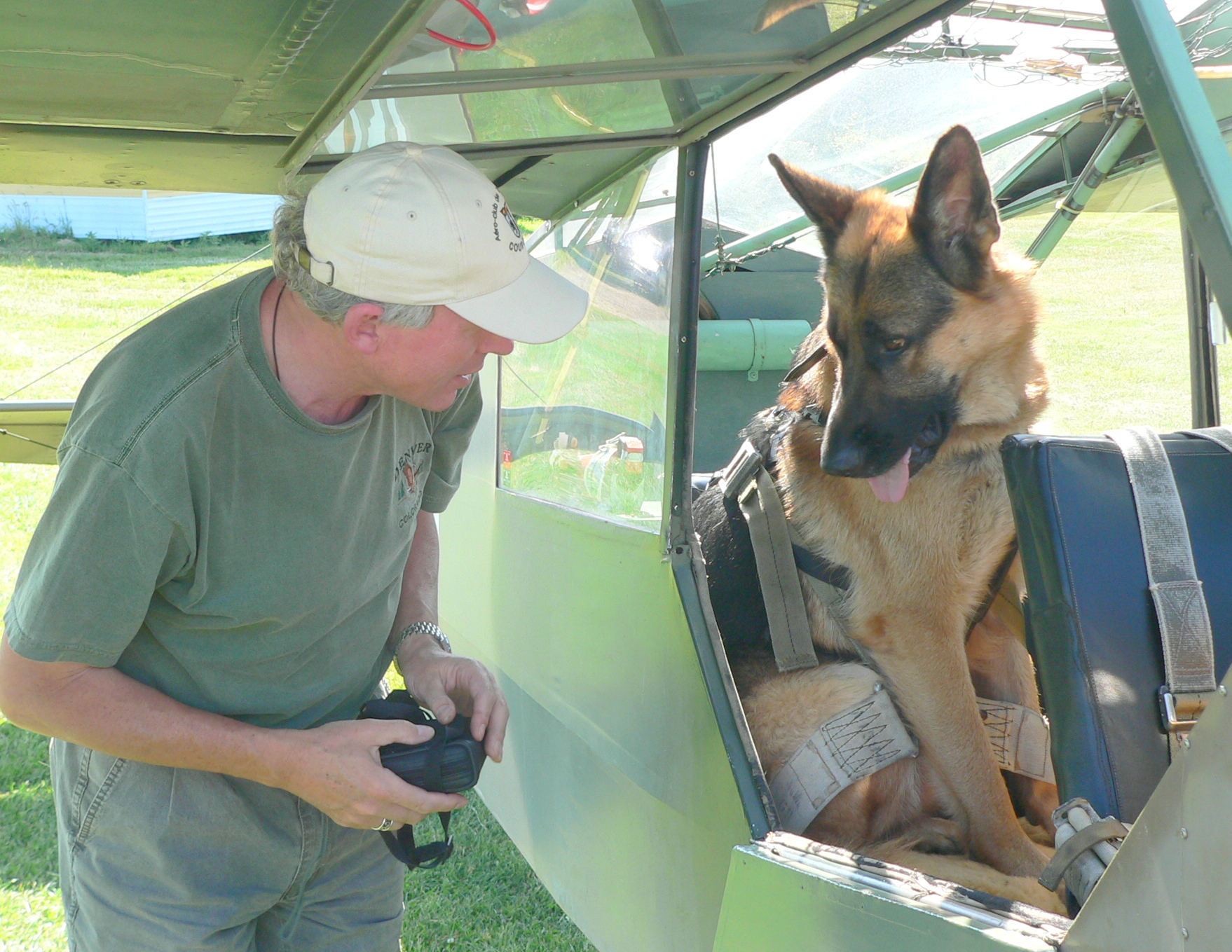
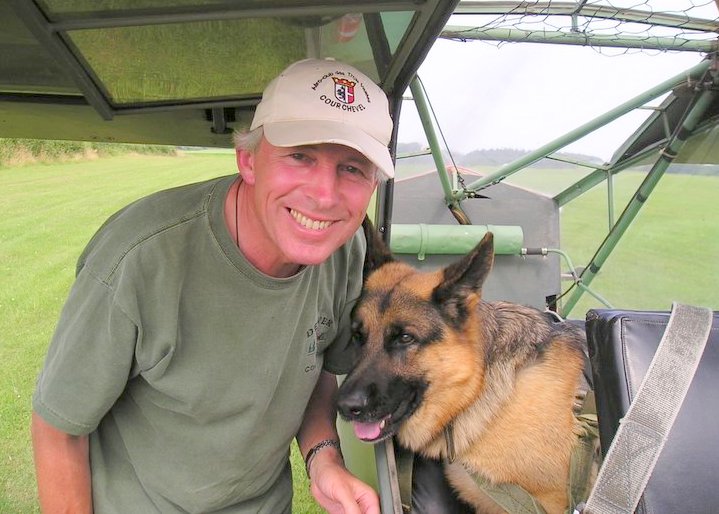
Anyway, every time I went to the airfield with Pharaoh he always tried to climb into the cockpit. So one day, I decided to see if he would sit in the rear seat and be strapped in. Absolutely no problem with that!
Come on Dad, let’s get this thing off the ground!
My idea had been to fly a gentle circuit in the aircraft. First I did some taxying around the large grass airfield that is Watchford to see how Pharaoh reacted. He was perfectly behaved.
Then I thought long and hard about taking Pharaoh for a flight. In the Cub there is no autopilot so if Pharaoh struggled or worse it would have been almost impossible to fly the aircraft and cope with Pharaoh. So, in the end, I abandoned taking him for a flight. The chances are that it would have been fine. But if something had gone wrong, the outcome just didn’t bear thinking about.
So we ended up motoring for 30 minutes all around the airfield which, as the next picture shows, met with doggie approval. The date was July 2006.
That was fun!
What a dear dog he has been over all the years and, thankfully, still is!
As if to reinforce the fabulous dog he still is, yesterday it was almost as though he knew he had to show how youthful he still was.
Because, when I took his group of dogs out around 7.30am armed with my camera, Pharaoh was brimming over with energy.
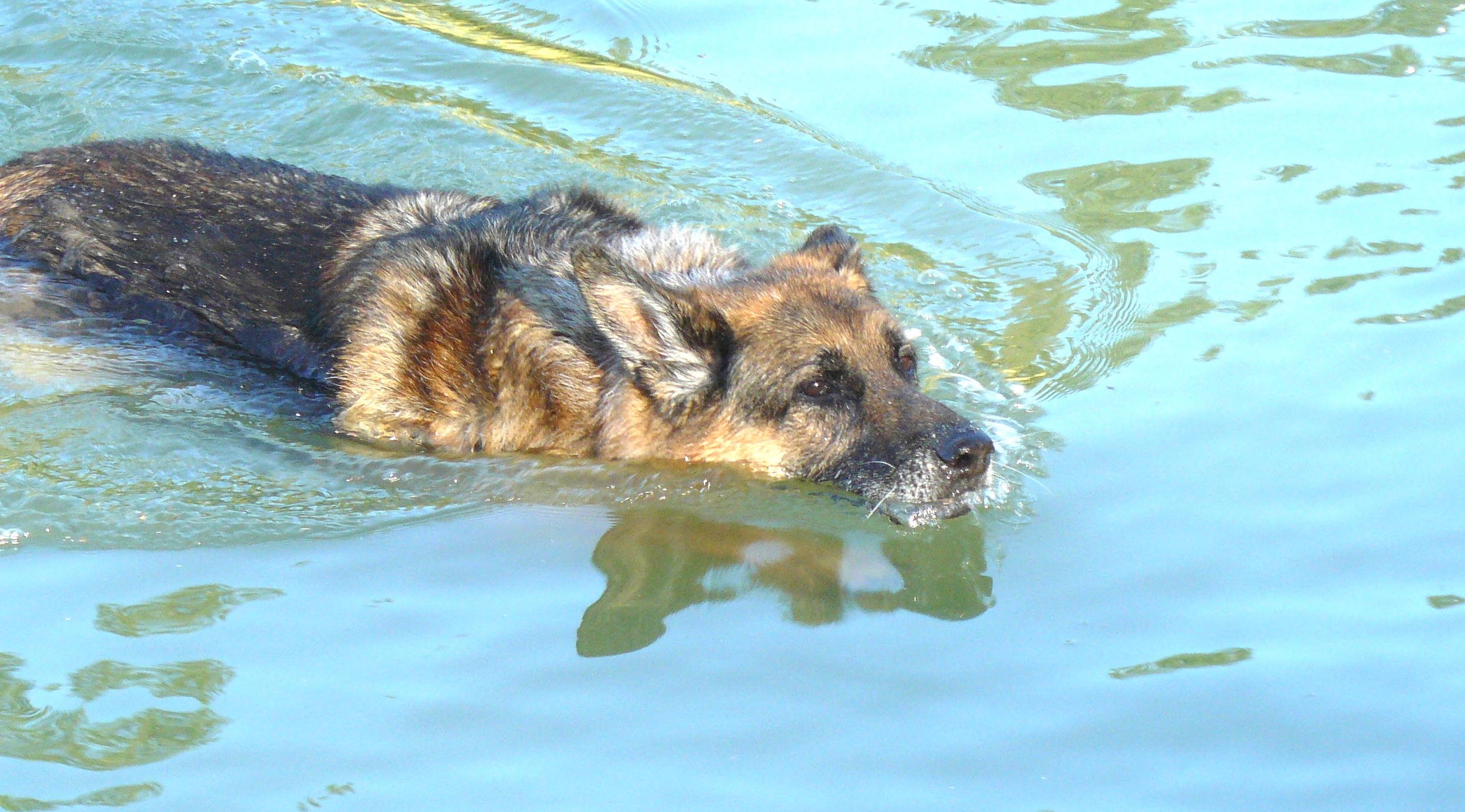
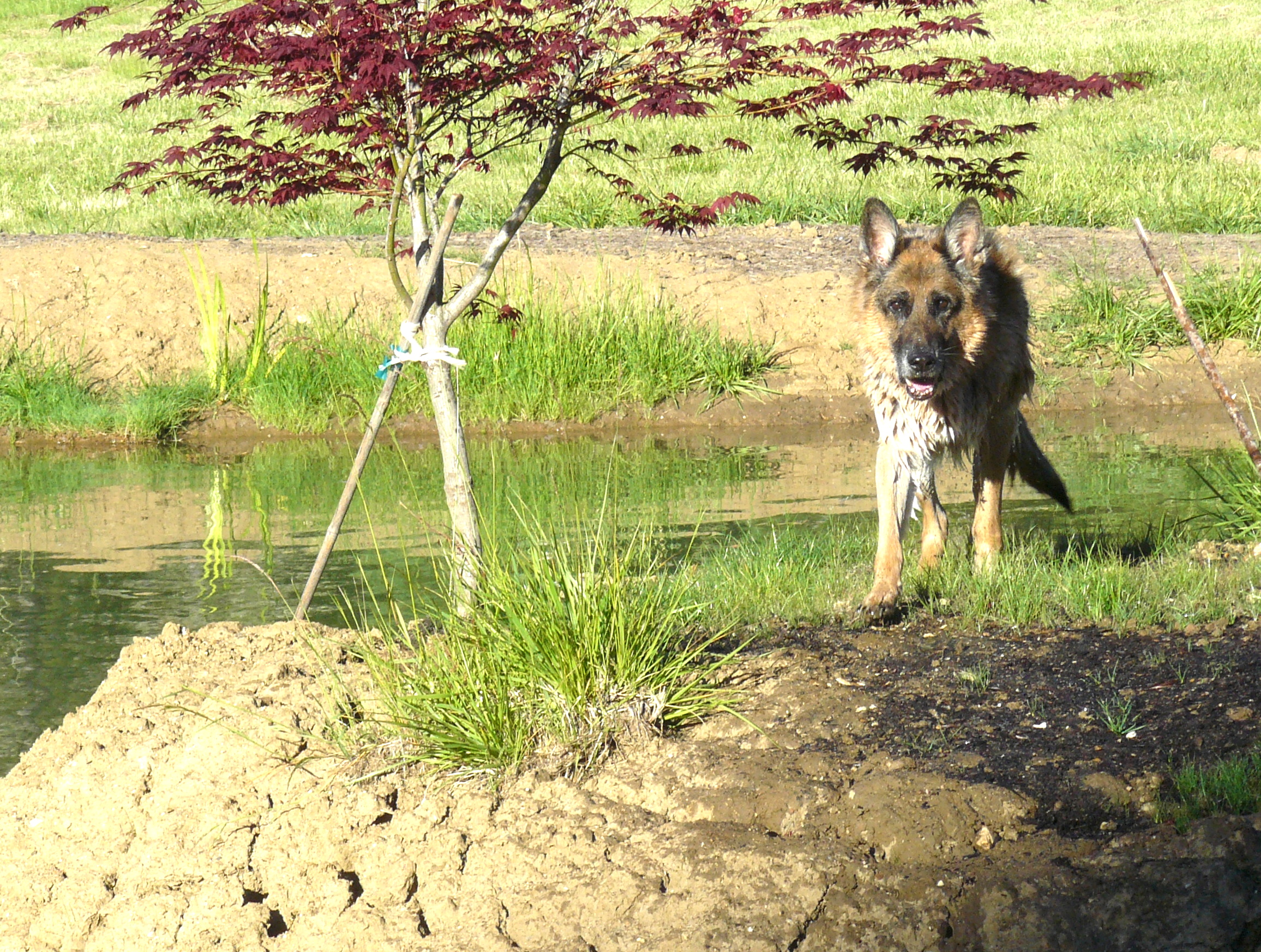
First up was a swim in the pond.
Ah, an early birthday dip! Bliss!
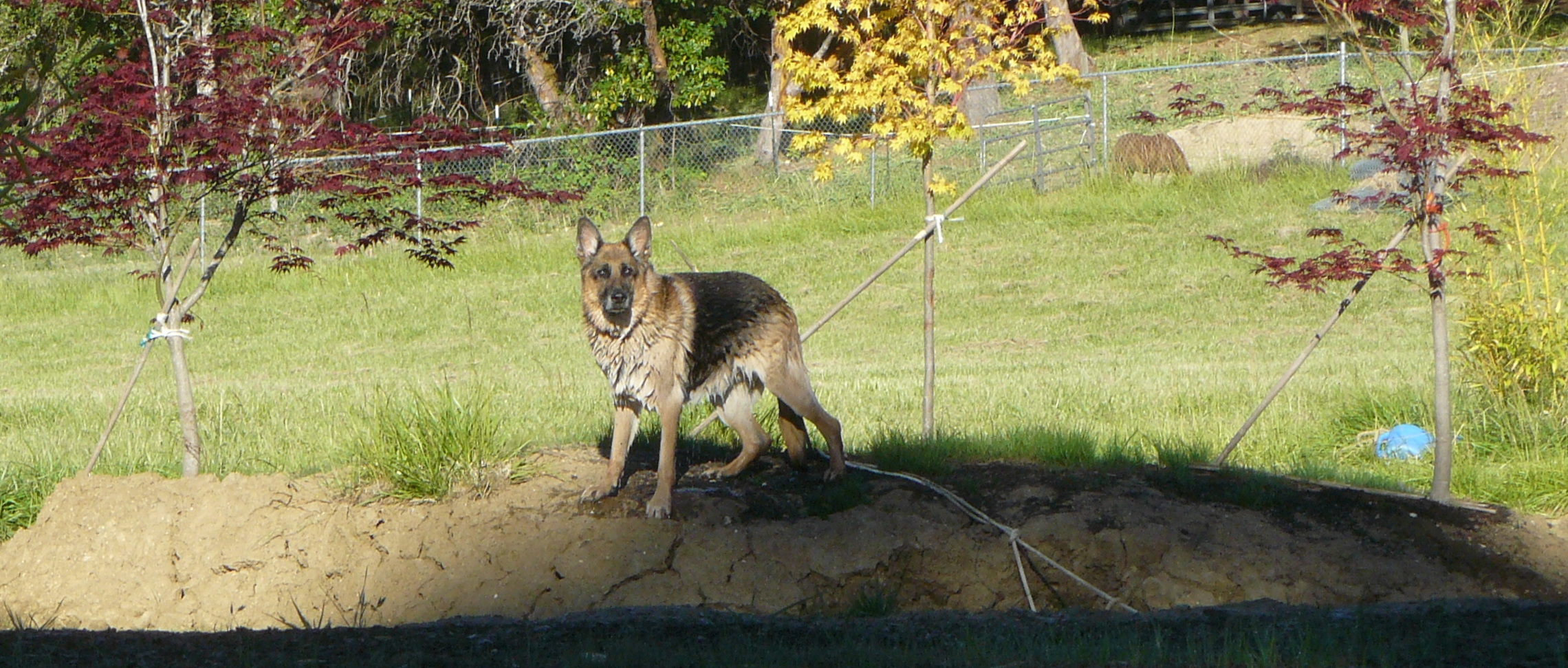
Then in a way he has not done before, Pharaoh wanted to play ‘King of my Island’, which is in the middle of the pond.
Halt! Who goes there!
ooo
This is my island! So there!
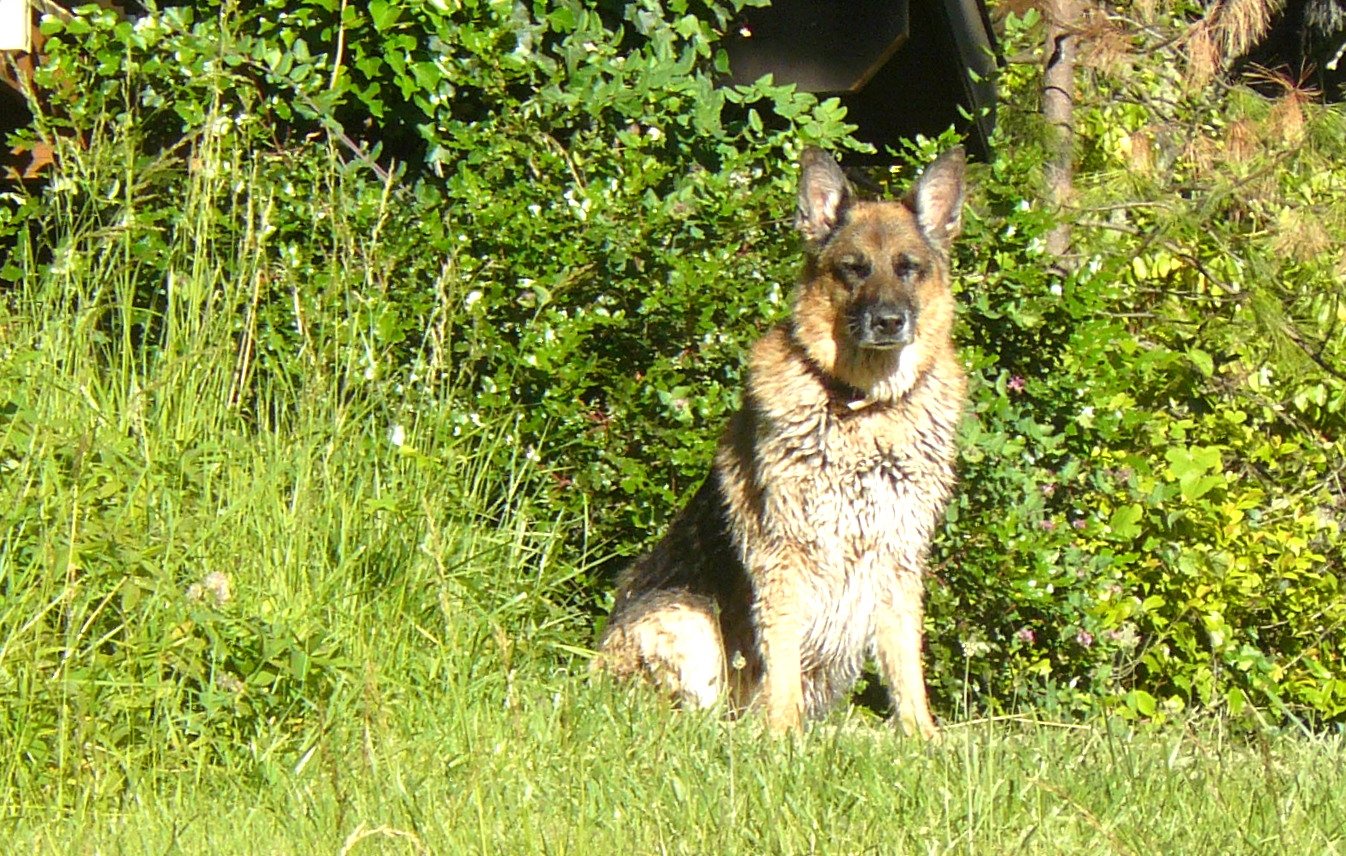
Then a while later, when back on dry land, so to speak, it was time to dry off in the morning sunshine.
Actually, this isn’t a bad life!
Long may he have an enjoyable and comfortable life.
ooOOoo
Pharaoh died of old age on June 19th, 2017. He was 14!
Despite the fact that we have six wonderful dogs including Cleo there is still a twinge of sadness when Pharaoh is mentioned. And now you know the origins of Pharaoh!
Let me close by sharing a photograph of Cleo.
Picture taken of puppy Cleo on the 13th April, 2012 when she was then aged 11 weeks.
To my utter surprise Leaning from Dogs has been going out for 10 years.
Thank you, all 3,881 followers.
How many recall the very first post? I guess hardly any one of you.
Well here it is again!
ooOOoo
Parenting Lessons From Dogs!
Much too late to make me realise the inadequacies of my own parenting skills, I learnt an important lesson when training my GSD (who is called Pharaoh, by the way). That is that putting more emphasis into praise and reward for getting it right ‘trains’ the dog much quicker than telling it off. The classic example is scolding a dog for running off when it should be lots of hugs and praise for returning home. The scolding simply teaches the dog that returning home isn’t pleasant whereas praise reinforces that home is the place to be. Like so many things in life, very obvious once understood!
Absolutely certain that it works with youngsters just the same way.
Despite being a very dominant dog, Pharaoh showed his teaching ability when working with other dogs. In the UK there is an amazing woman, Angela Stockdale, who has proved that dogs (and horses) learn most effectively when being taught by other dogs (and horses). Pharaoh was revealed to be a Beta Dog, (i.e. second in status below the Alpha Dog) and, therefore, was able to use his natural pack instinct to teach puppy dogs their social skills and to break up squabbles within a pack.
When you think about it, don’t kids learn much more (often to our chagrin!) from other kids than they do from their parents. Still focusing on giving more praise than punishment seems like a much more effective strategy.
As was read somewhere, Catch them in the act of doing Right!
By Paul Handover.
ooOOoo
Despite all our dogs being our very dear family, I still miss Pharaoh.