I ought not to call it an episode because I have a different presenter for today’s YouTube.
“The human brain is puzzling — it is curiously large given the size of our bodies, uses a tremendous amount of energy for its weight and has a bizarrely dense cerebral cortex.
But: why? Neuroscientist Suzana Herculano-Houzel puts on her detective’s cap and leads us through this mystery. By making “brain soup,” she arrives at a startling conclusion.”
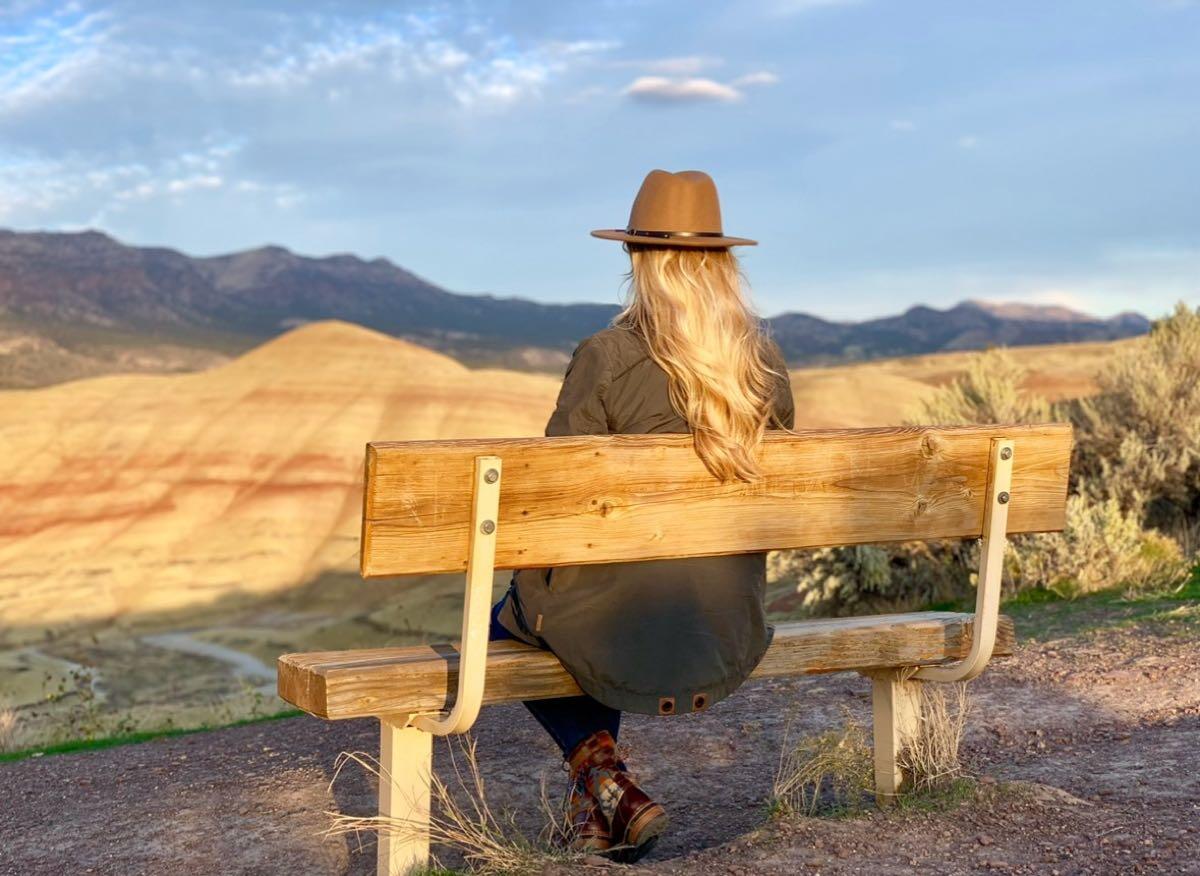
I am republishing a NextDoor News Feed created by Sammie Nolan that I read yesterday. Here is the photo that accompanied the note.
And here is that news item:
Happy Birthday, Oregon! 🥳
Today, February 14, 2026, the Beaver State officially turns 167 years old.
Oregon joined the Union as the 33rd state on Valentine’s Day in 1859, making it the only state to share its birthday with the holiday of love. 🥰
That is Sammie sitting on the bench and the photograph was taken at the Painted Hills. Some more information on Painted Hills courtesy of WikiPedia.
The Painted Hills is a geologic site in Wheeler County, Oregon that is one of the three units of the John Day Fossil Beds National Monument along with Sheep Rock and Clarno. It totals 3,132 acres and is located 9 miles northwest of Mitchell, Oregon. The Painted Hills are listed as one of the Seven Wonders of Oregon. Wikipedia
There was something really special about the last full moon. We watched as the moon rose on the very early nights of February, 2026 and I wished I had taken some photos. But no problem as YouTube had captured the images of the moon taken by others.
The Snow Moon in 2026 was the full moon that lit up the night sky on February 1, 2026, reaching its peak illumination around 5:09 p.m. EST (around 22:09 UTC) that evening. Because the moon appears full for a couple of nights around that moment, it was visible as a bright, full lunar disk on the nights of February 1 and 2. It’s traditionally called the “Snow Moon” because February is usually one of the snowiest months in the Northern Hemisphere. Here are some gorgeous images from our talented community of photographers. Enjoy them!
Merlin Oregon, Gateway To The Wild & Scenic Rogue River
The little hamlet of Merlin is located northwest of Grants Pass and is the home base for many outfitters and fishing guides. This and the fact that Merlin is close to the 84-mile segment of the Rogue River set aside by Congress under the National Wild and Scenic Rivers Act of 1968, is why Merlin is known as the “Gateway To The Wild & Scenic Rogue River.”
Located nearby is the famous Hellgate Canyon (on Galice Hwy.) where Rooster Cogburn with John Wayne and many other Westerns were filmed. Above Merlin is Grave Creek, the starting point for the 32 mile “wild” section of the Rogue River.
Great Fishing and rafting on the white waters are but some of the activities available in the Merlin area. One of the best hiking trails around is the famous Rogue River Wild and Scenic Trail which starts at Grave Creek above Merlin and runs downstream 40 miles through the Wild and Scenic section of the Rogue River to Foster Bar.
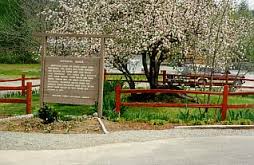
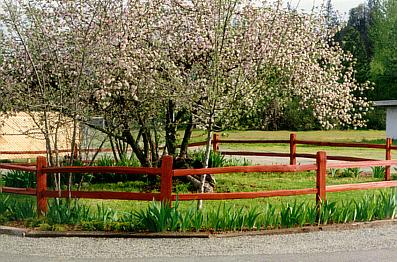
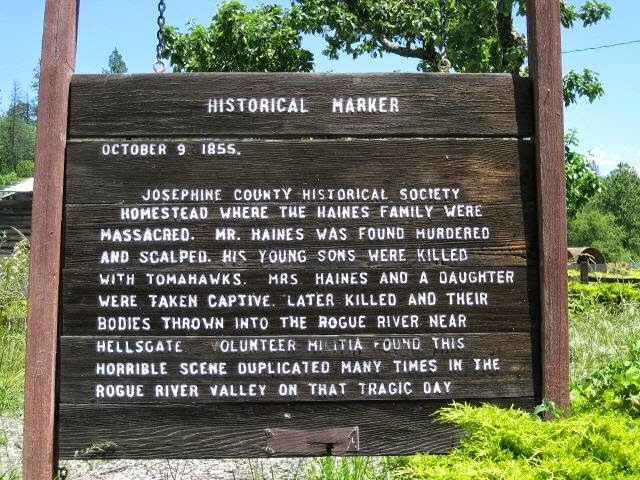
Located in Merlin Oregon, (PH: picture of tree on Sunday) this tree is Oregon’s 2nd oldest apple tree. It was planted by the Haines family in the either 1852 or 1854 (accounts vary), the tree stood throughout the Indian wars. The fighting began in 1855 when white vigilantes attacked a group of peaceful Indians-mostly women, children and elderly men-(at present day Eagle Point). Under the direction of a man who titled himself Major James A. Lupton, a group of ” hair brained enthusiast and professed ruffians” butchered the Indians, according to A.G. Walling’s story “A History Of Southern Oregon,” published in 1884.
The Indians in the area struck back, working their way down the Rogue River and attacking white homesteads. Their thirst for vengeance had not been quenched by the time they reached Merlin, according to the recently published “An Arrow In The Earth”: General Joe Palmer and the Indians of Oregon.”
Although Haines tried to fight off the Indians, they were one family against a band of angry warriors. When volunteers arrived to help, according to contemporary accounts, they found Mr. Haines and his young son murdered at the home site. The Indians took Mrs. Haines and her daughter captive, presumed to have been thrown into Hellgate Canyon on the Rogue River. Taking in account that white accounts of Indian atrocities were nearly always exaggerated.
The tree was reported to have died in August, 1973, a few months after Josephine County Commissioners held a ceremony celebrating its antiquity. But three years later, branches of the old three were still alive, and the State Forestry Department declared it a historic site.
A special thanks to Marilyn Luttrell, who over the years has looked after and help raise money to protect this historical tree and site.” We thank you Marilyn”
Life
Peters’s father, known as Umpqua Joe, was a member of the Grave Creek band of the Umpqua people who was known for warning settlers and miners in the Grants Pass area of an impending attack from local Indians in 1855.
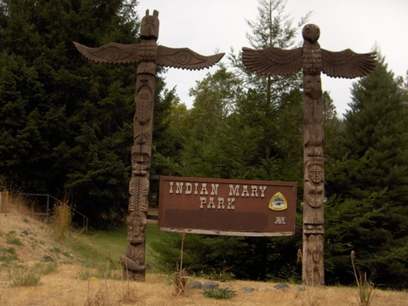
Peters’s father was reportedly allowed to stay on his land after the end of the Rogue River Wars rather than be removed to a reservation. Mary Peters, popularly known as “Indian Mary” – not to be confused with a different Native American woman also living in Oregon during the same period (Kalliah Tumulth, a WatlalaChinook) and also known as “Indian Mary”– lived on the land where her father had operated a ferry to transport miners and supplies in Southern Oregon until his death on November 13, 1886. After his death, Peters applied for a claim for the land under the Dawes Act, also known as the “Indian Homestead Act.” Eight years later, she received a little more than 72 acres.
Her 25-year land deed has often been described as the smallest Indian reservation in the United States. In 1958, the land was converted by Josephine County to Indian Mary Park, named after Peters.
She continued to operate her father’s ferry business after his death. In 1894 she leased the ferry to William Massie and moved with her two surviving daughters to Grants Pass. She moved to Salem in 1920 to be near her daughters. Peters died in 1921 and is buried in Salem‘s City View Cemetery.
I was browsing the internet over the last weekend and came across this account of Historical Merlin. I trust it is alright to republish the article. It was originally published by the Merlin North Valley Business Association.
A new railroad station in this location in 1883 was called “Jump Off Joe” for a local stream. The station was renamed Merlin in October 1886. The name came from a railroad civil engineer who named it for the Merlins he saw in the area.
“McAllister” post office was established about a mile north of Merlin in 1885, then moved to the vicinity of the railroad station and renamed Merlin in 1891.[1]
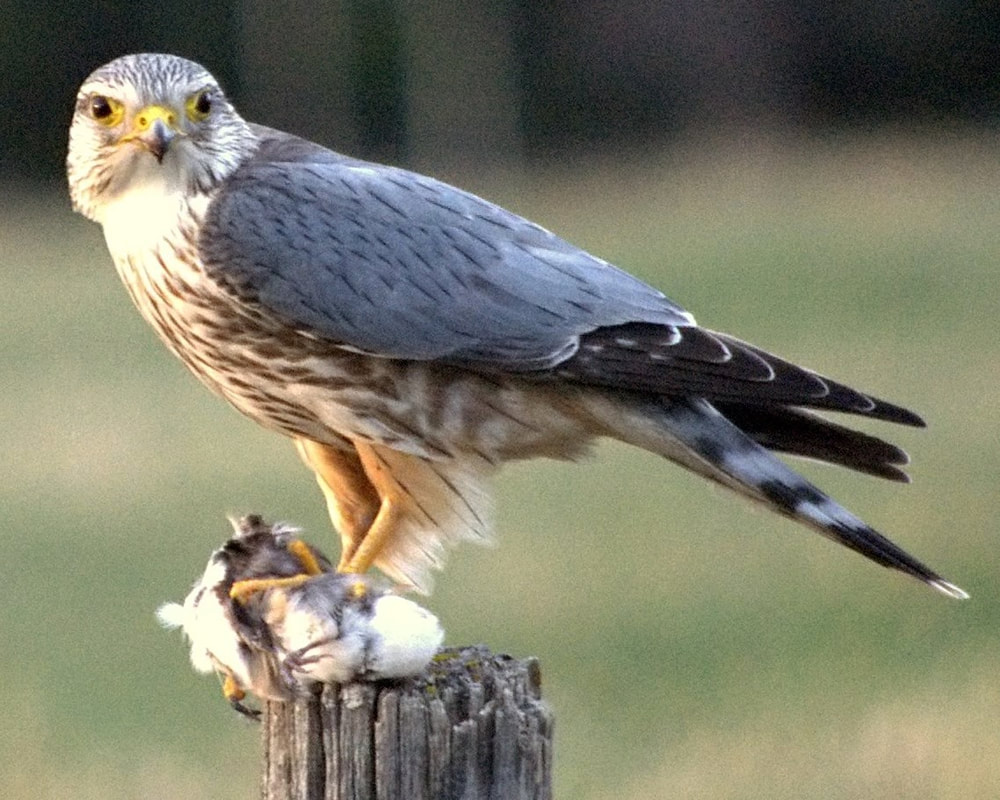
On the original application for a post office on October 11, 1885, the name “McAllister” is crossed out and Brandt is used. The name was changed back to McAllister on November 23, 1885. The name was later changed to Merlin–after the Pigeon Hawks in the area–on March 21, 1891.
The founder of Merlin was postmaster John C. Lanterman in 1885; the first post office was established on November 23, 1885. The first Merlin townsite was platted by Sarah E. Lanterman and registered in the courthouse on March 31, 1888, as the town of Azalia. Also stated on the platt, “Streets and alleys donated” (lot owners usually had to pay for streets and alleys, as well as, maintain them). In 1905 the Merlin township was founded by A.B. Cousins and the Merlin Land Development Company. This platt enlarged the original townsite of Azalia considerably.
J.W. Mitchell, pioneer merchant, purchased property in the center of the Azalia subdivision in 1888 and constructed a large mercantile store and was the leading merchant until the main part of the town burned in October of 1915, thus ending 27 years as Merlin’s leading merchant.
The Southern Pacific Railroad established the Jump-Off Joe Station in the early 1880’s. The name Merlin came from a railroad employee named David Loring after seeing the area inhabited by pigeon hawks also known as merlins. Mr. Loring’s imagination is also responsible for naming several other towns as well, including the city of Medford. Postmaster Lanterman changed the name of the post office to Merlin on March 21, 1891. Following Lanterman as postmaster were George A. Guild, followed by his daughter, Mattie. Ruth Lendberg was postmaster from 1930 to 1967, serving seven presidents. Mrs. Lendberg’s little green house served as the post office and it still stands with flagpole on Pleasant Valley Road, just down the street from the present day post office.
Merlin had two school districts in 1886: the Jump Off Joe School District had 54 children educated at a cost of $77.00; the Louse Creek School District had 26 pupils with a cost of $63.00. These two districts combined to form Merlin School District #24 in May of 1894. There was a brick school house built in 1912 on the spot where the present day elementary school sits. A bell from an older school was placed in the brick building and when it was demolished in 1963, it was given to the Merlin Community Baptist Church where it hangs today.
Merlin expanded rapidly after the townsite was platted in 1905. There was a grocery store, a three-story hotel, daily train stops, and even a hanging dentist sign guaranteeing no pain. But once again tragedy struck when on the morning of October 24, 1915 a fire destroyed a block of buildings including the post office and the train depot.
There is an interesting letter addressed to Debbie Lard who has done much on preserving the history of Merlin. This letter tells how it was in 1911 traveling to Grants Pass. Long time resident Ted Stiewig tells of a trip to see the Barnum and Bailey Circus in Grants Pass. At that time, Mr. Stiewig was about four years old and lived in Rand, just past Galice. He describes taking Massie’s stagecoach at 6:30 in the morning, stopping at Indian Mary’s ranch at about 12 noon to change horses, then arriving at the train depot in Merlin at about 2:00 in the afternoon. Since the train didn’t arrive until 6:30 p.m., they would stay and have lunch and dinner at Massie’s Hotel in Merlin before departing for Grants Pass.
Mr. Stiewig also describes going to Grants Pass with his friends while living in Merlin. After taking the train to Grants Pass and finding entertainment playing the pool halls, they would make sure they had at least 25 cents for train fare left between them so they could “ride the blinds;” that is, they would jump between the cars unseen. One friend would pay so the train would be sure to stop in Merlin on the way back so they all could jump off.
ooOOoo
Part Two of the history of Merlin will be published tomorrow and the photographs in the article will be published next Sunday.
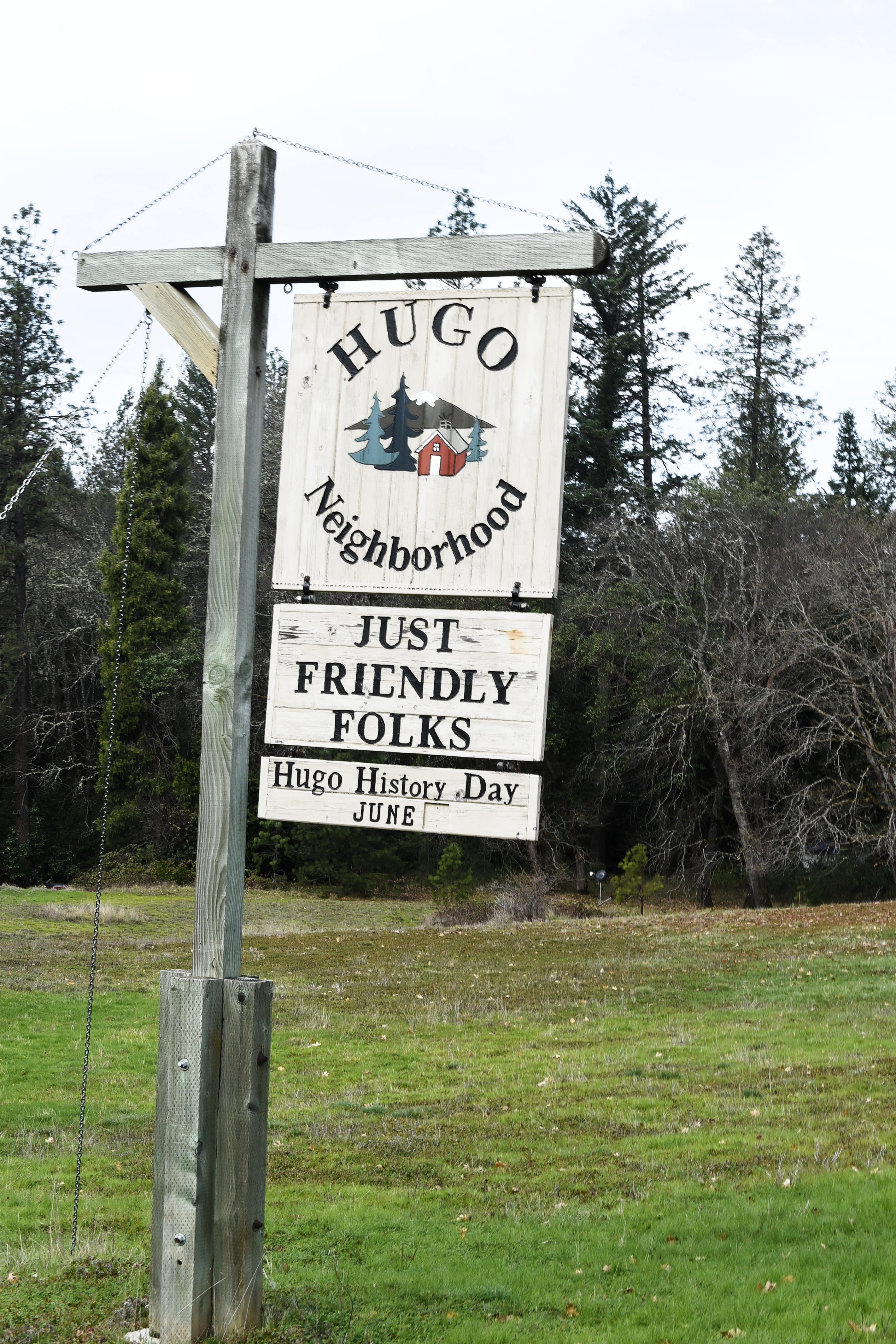
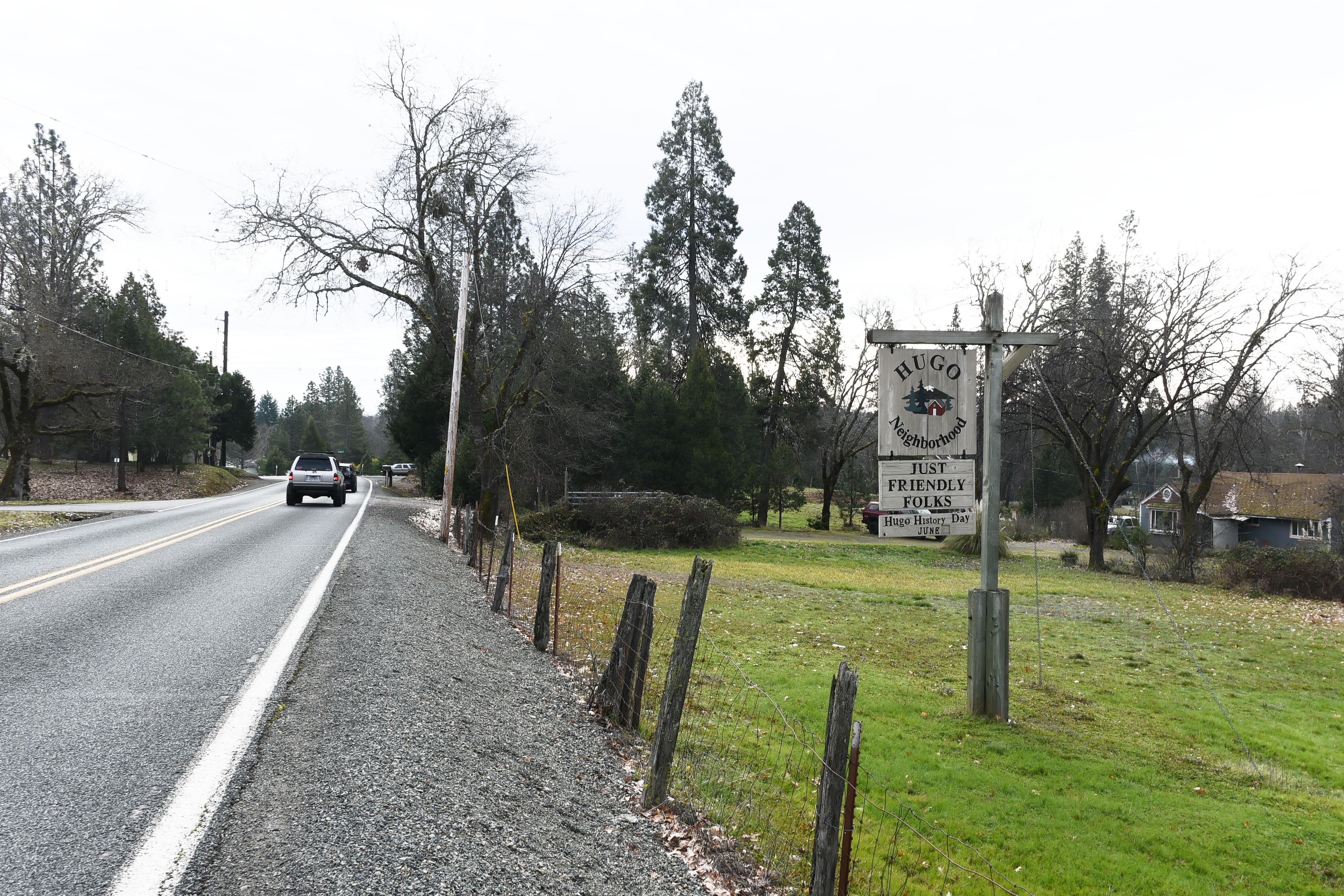
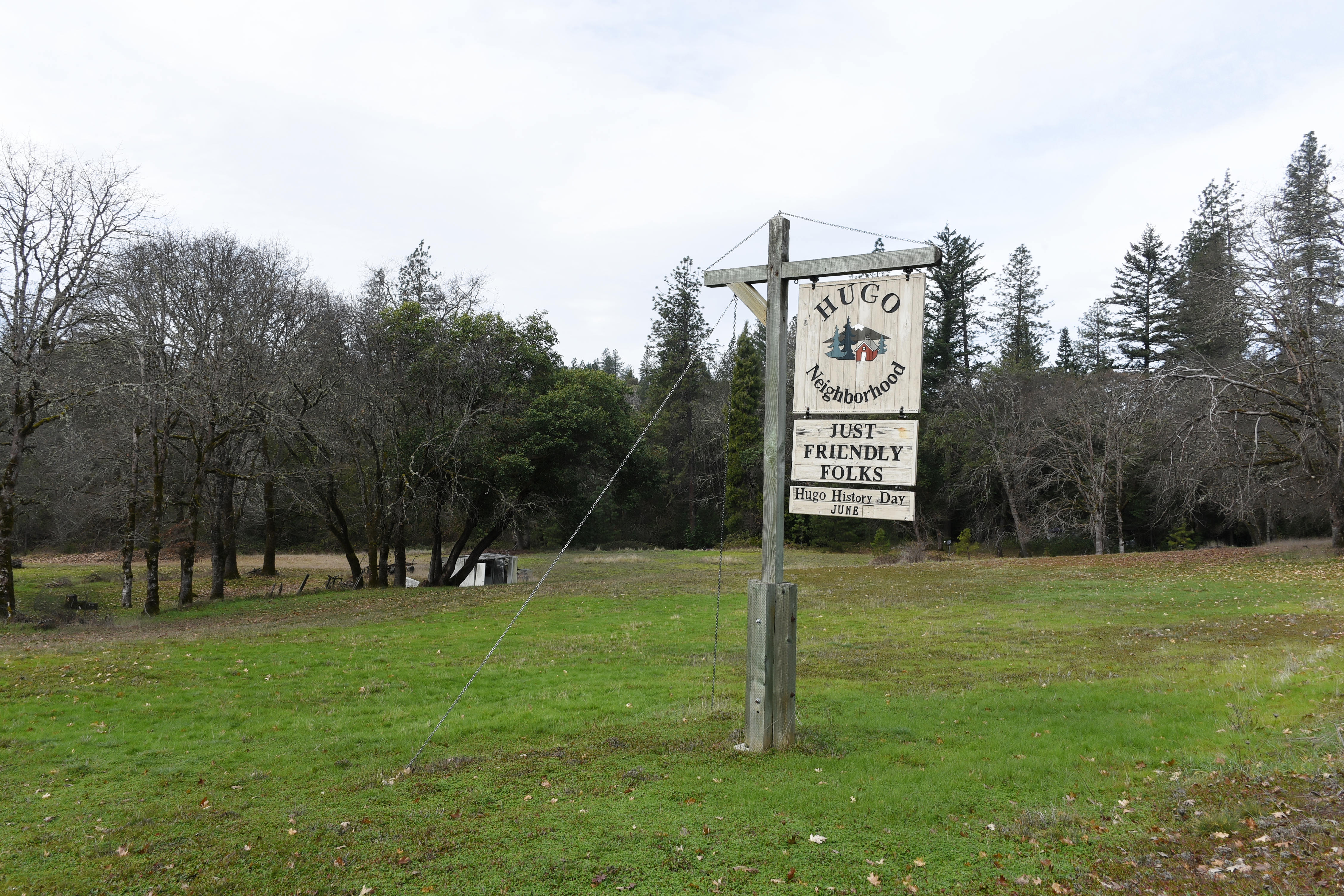
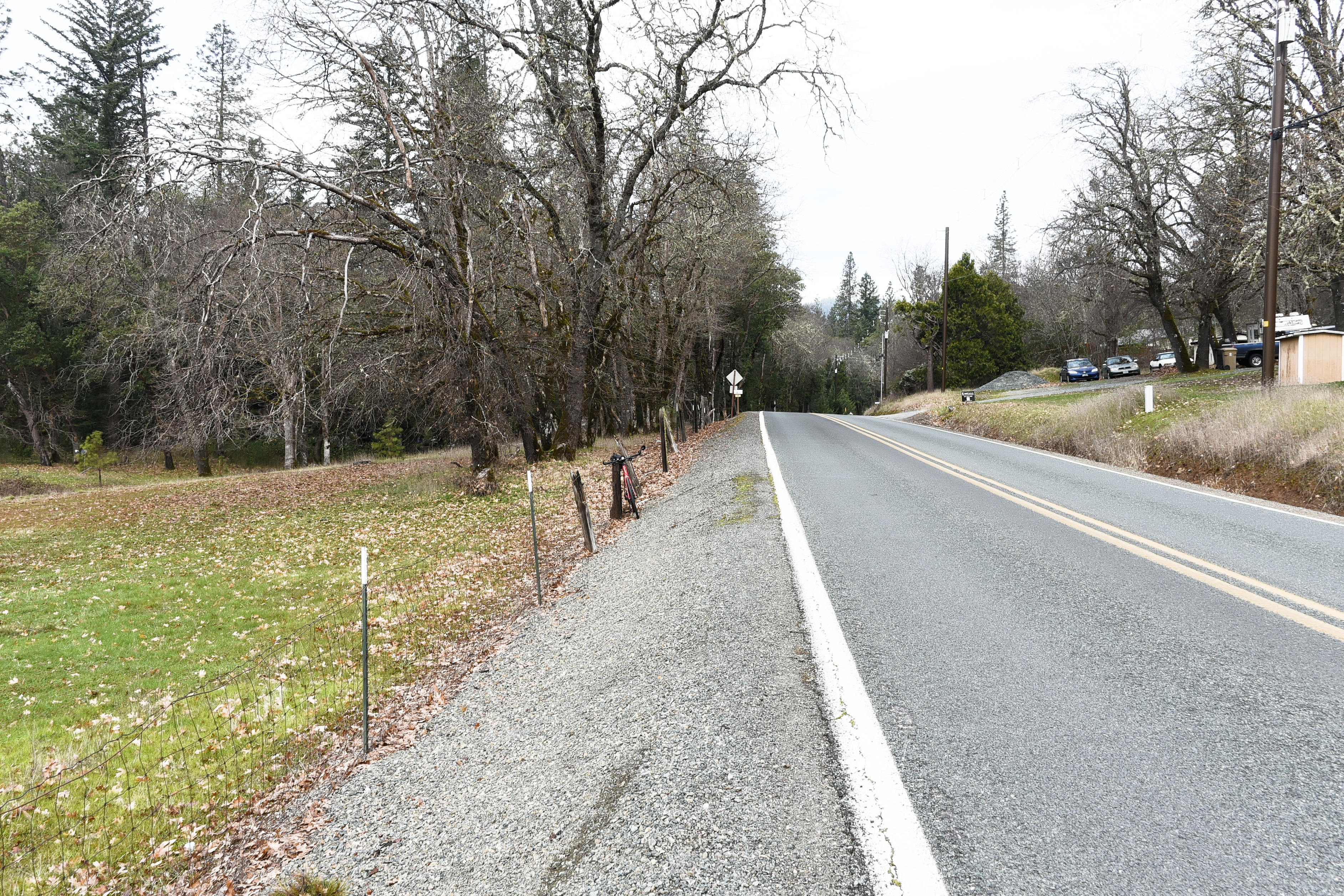
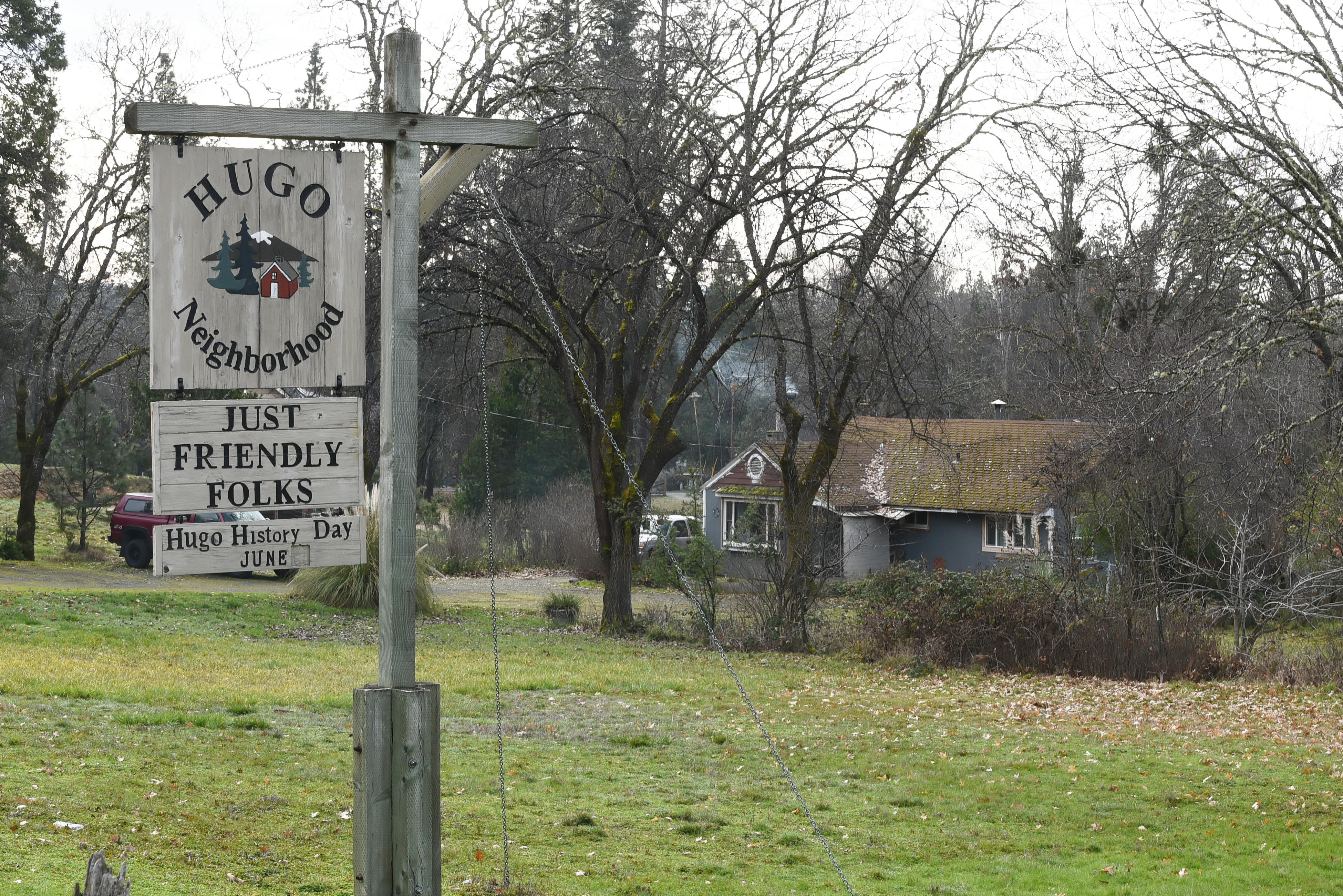
Of my three cycle rides a week, about once a week I turn left on Hugo Road, rather than turning right. After a very few miles I then turn right onto Three Pines Road. Less than a mile further on I pass a sign that speaks of our neighbourhood.
For those that live in this area are the friendliest Jeannie and I have ever known. And we are not the only ones to know this, as you will see from the following photos.
oooo
oooo
oooo
oooo
What the precise area is and why the locals are so, so friendly is beyond us. But to say we are grateful is an understatement. As the sign says:
It might come as a surprise to learn that the brain responds to training in much the same way as our muscles, even though most of us never think about it that way. Clear thinking, focus, creativity and good judgment are built through challenge, when the brain is asked to stretch beyond routine rather than run on autopilot. That slight mental discomfort is often the sign that the brain is actually being trained, a lot like that good workout burn in your muscles.
Think about walking the same loop through a local park every day. At first, your senses are alert. You notice the hills, the trees, the changing light. But after a few loops, your brain checks out. You start planning dinner, replaying emails or running through your to-do list. The walk still feels good, but your brain is no longer being challenged.
Routine feels comfortable, but comfort and familiarity alone do not build new brain connections.
For decades, scientists believed that the brain’s ability to grow and reorganize, called neuroplasticity, was largely limited to childhood. Once the brain matured, its wiring was thought to be largely fixed.
But that idea has been overturned. Decades of research show that adult brains can form new connections and reorganize existing networks, under the right conditions, throughout life.
The takeaway is simple: Repetition keeps the brain running, but novelty pushes the brain to adapt, forcing it to pay attention, learn and problem-solve in new ways. Neuroplasticity thrives when the brain is nudged just beyond its comfort zone.
Tasks that stretch your brain just beyond its comfort zone, such as knitting and crocheting, can improve cognitive abilities over your lifespan – and doing them in a group setting brings an additional bonus for overall health. Dougal Waters/DigitalVision via Getty Images
The reality of neural fatigue
Just like muscles, the brain has limits. It does not get stronger from endless strain. Real growth comes from the right balance of challenge and recovery.
When the brain is pushed for too long without a break – whether that means long work hours, staying locked onto the same task or making nonstop decisions under pressure – performance starts to slip. Focus fades. Mistakes increase. To keep you going, the brain shifts how different regions work together, asking some areas to carry more of the load. But that extra effort can still make the whole network run less smoothly.
Neural fatigue is more than feeling tired. Brain imaging studies show that during prolonged mental work, the networks responsible for attention and decision-making begin to slow down, while regions that promote rest and reward-seeking take over. This shift helps explain why mental exhaustion often comes with stronger cravings for quick rewards, like sugary snacks, comfort foods or mindless scrolling. The result is familiar: slower thinking, more mistakes, irritability and mental fog.
This is where the muscle analogy becomes especially useful. You wouldn’t do squats for six hours straight, because your leg muscles would eventually give out. As they work, they build up byproducts that make each contraction a little less effective until you finally have to stop. Your brain behaves in a similar way.
Likewise, in the brain, when the same cognitive circuits are overused, chemical signals build up, communication slows and learning stalls.
Overdoing any task, whether it be weight training or sitting at the computer for too long, can overtax the muscles as well as the brain. Halfpoint Images/Moment via Getty Images
Sleep is the brain’s night shift. While you rest, the brain takes out the trash through a special cleanup system called the glymphatic system that clears away waste and harmful proteins. Sleep also restores glycogen, a critical fuel source for brain cells.
During REM sleep, the stage of sleep linked to dreaming, the brain replays patterns from the day to consolidate memories. This process is critical not only for cognitive skills like learning an instrument but also for physical skills like mastering a move in sports.
The most important lesson from this science is simple. Your brain is not passively wearing down with age. It is constantly remodeling itself in response to how you use it. Every new challenge and skill you try, every real break, every good night of sleep sends a signal that growth is still expected.
You do not need expensive brain training programs or radical lifestyle changes. Small, consistent habits matter more. Try something unfamiliar. Vary your routines. Take breaks before exhaustion sets in. Move your body. Treat sleep as nonnegotiable.
So the next time you lace up your shoes for a familiar walk, consider taking a different path. The scenery may change only slightly, but your brain will notice. That small detour is often all it takes to turn routine into training.
The brain stays adaptable throughout life. Cognitive resilience is not fixed at birth or locked in early adulthood. It is something you can shape.
If you want a sharper, more creative, more resilient brain, you do not need to wait for a breakthrough drug or a perfect moment. You can start now, with choices that tell your brain that growth is still the plan.
That last section of the article is most powerful. I’m speaking of the section that is headed Train, recover, repeat.
The human brain notices when even small changes to our normal routine occur. Also that exercise strengthens the brain plus our brains stay adaptable throughout our lives. Amazing!



 Learning from Dogs