Category: Communication

Being healthy in your later years.

This is a key article!

Now this has nothing to do with dogs. Well not directly but the longer we humans live the longer we can have dogs as pets.

I was having an email ‘conversation’ with Jon over in England and he pointed me to Professor Tim Spector. Prof. Spector writes on his website that he:

Tim Spector is a Professor of Genetic Epidemiology and Director of the TwinsUK Registry at Kings College, London and has recently been elected to the prestigious Fellowship of the Academy of Medical Sciences. He trained originally in rheumatology and epidemiology.

In 1992 he moved into genetic epidemiology and founded the UK Twins Registry, of 13,000 twins, which is the richest collection of genotypic and phenotypic information worldwide. He is past President of the International Society of Twin Studies, directs the European Twin Registry Consortium (Discotwin) and collaborates with over 120 centres worldwide.

He has demonstrated the genetic basis of a wide range of common complex traits, many previously thought to be mainly due to ageing and environment. Through genetic association studies (GWAS), his group have found over 500 novel gene loci in over 50 disease areas. He has published over 800 research articles and is ranked as being in the top 1% of the world’s most cited scientists by Thomson-Reuters.

He held a prestigious European Research Council senior investigator award in epigenetics and is a NIHR Senior Investigator. His current work focuses on omics and the microbiome and directs the crowdfunded British Gut microbiome project.

Together with an international team of leading scientists including researchers from King’s College London, Massachusetts General Hospital, Tufts University, Stanford University and nutritional science company ZOE he  is conducting the largest scientific nutrition research project, showing that individual responses to the same foods are unique, even between identical twins.

You can find more on https://joinzoe.com/ He is a prolific writer with several popular science books and a regular blog, focusing on genetics, epigenetics and most recently microbiome and diet (The Diet Myth). He is in demand as a public speaker and features regularly in the media.

That is quite a CV!

Then I came across an essay on The Conversation website about being healthier in one’s old age.

Read it!

ooOOoo

Keen to be healthier in old age? Tend your inner garden

By

Clinical Senior Lecturer, King’s College London

Professor of Genetic Epidemiology, King’s College London

January 29, 2016

Grub’s up. Lunch by Shutterstock

The world’s oldest man, Yasutaro Koide recently died at the age of 112. Commentators as usual, focused on his reported “secret to longevity”: not smoking, drinking or overdoing it. No surprises there. But speculation on the basis of one individual is not necessarily the most helpful way of addressing this human quest for the Philosopher’s Stone.

The “very old” do spark our interest – but is our search for a secret to longevity actually misguided? Wouldn’t you rather live healthier than live longer in poor health? Surely, what we really want to know is how do we live well in old age.

Clearly as scientists we try to illuminate these questions using populations of people not just odd individuals. Many previous attempts have approached this question by looking for differences between young and old people, but this approach is often biased by the many social and cultural developments that happen between generations, including diet changes. Time itself should not be the focus – at least, in part, because time is one thing we are unlikely to be able to stop.

Yasutaro Koide made 112. Kyodo/Reuters

The real question behind our interest in people who survive into old age is how some manage to stay robust and fit while others become debilitated and dependent. To this end, recent scientific interest has turned to investigating the predictors of frailty within populations of roughly the same age. Frailty is a measure of how physically and mentally healthy an individual is. Studies show frailer older adults have an increased levels of low grade inflammation – so-called “inflammaging”.

New research published in Genome Medicine by Matt Jackson, from our group at King’s College London, investigated this question in an unlikely place – poo. Recent evidence indicates that our immune and inflammatory systems are trained and educated in our gut, through key interactions with gut bacteria. So we asked if changes in our gut bacteria could be part of the process of inflammation driving frailty.

Our recent work found that the frailer an individual, the lower the diversity of gut bacteria they have. We looked at stool samples from more than 700 healthy British twins and found that a group of bacteria belonging to the species with a tricky and slightly unpleasant name, Faecalibacterium prausnitzii, were found in higher amounts in the healthier twins. This is a particularly interesting microbe as it has been linked with good health in many other diseases such as inflammatory bowel disease and is believed to reduce inflammation of the gut. Could this bug help protect against frailty?

Putting in the research. Paper by Shutterstock

There were other microbes seen in increased amounts within the frailer twins. One was Eubacterium dolichum, which has been seen to increase in unhealthy Western diets. We found the same picture when comparing frailer, more elderly, individuals from the ELDERMET study, by the University of Cork. This suggests that dietary changes might be an easy way to encourage healthy ageing.

Our study does not yet clarify whether the changes to the gut bacteria are a cause of poor ageing itself or are just a consequence of frailty – longitudinal studies that follow people over several years will be needed to sort this out. But these results are exciting for researchers in the ageing field and suggest that if you want to age well you should perhaps do fewer crosswords and spend more time looking after your microbial garden, for example by eating plenty of plant fibre, for example in a Mediterranean-type diet.

ooOOoo

Well this essay was published nearly 5 years ago and one wonders if more information has come to light.

Certainly Jeannie and me are heavily into a plant-based diet with a small selection of fish from time to time.

I will do more research and see if there are any updates that may be published.

In the meantime stay as healthy and as happy as you can be!


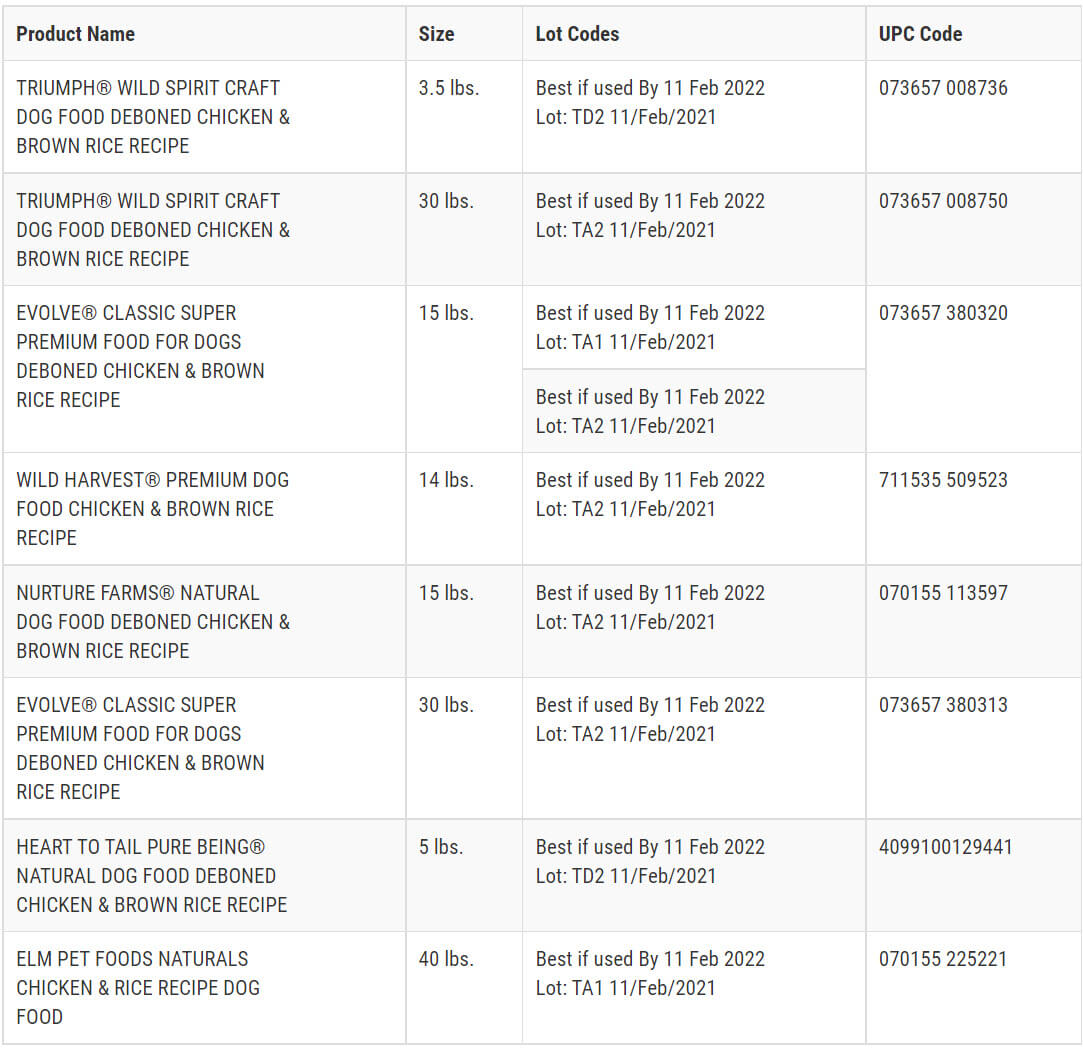
Yet another dog food alert!

This is regarding Sportmix.

This alert came into my inbox on December 30th.

The FDA has announced that Midwestern Pet Food is recalling select lots of Sportmix dog and cat foods because they contain potentially deadly levels of aflatoxin.

FDA is aware of at least 28 deaths and 8 illnesses in dogs who ate the affected products.

So this is extremely important.

The full details now follow:

ooOOoo

Sportmix Dog and Cat Foods Recalled Due to Deadly Mold Toxin

December 30, 2020 — The FDA is alerting consumers that Midwestern Pet Foods, Inc. is recalling nine lots of Sportmix pet food products because they contain potentially fatal levels of aflatoxin.

FDA is aware of at least 28 deaths and 8 illnesses in dogs that ate the recalled products.

This is an ongoing investigation. Case counts and the scope of this pending recall may expand as new information becomes available.

What’s Recalled?

The dry pet food products to be recalled by Midwestern Pet Foods, Inc. on December 30, 2020 include:

  • Sportmix Energy Plus, 50 lb. bag
    Exp 03/02/22/05/L2
    Exp 03/02/22/05/L3
    Exp 03/03/22/05/L2
  • Sportmix Energy Plus, 44 lb. bag
    Exp 03/02/22/05/L3
  • Sportmix Premium High Energy, 50 lb. bag
    Exp 03/03/22/05/L3
  • Sportmix Premium High Energy, 44 lb. bag
    Exp 03/03/22/05/L3
  • Sportmix Original Cat, 31 lb. bag
    Exp 03/03/22/05/L3
  • Sportmix Original Cat, 15 lb. bag
    Exp 03/03/22/05/L2
    Exp 03/03/22/05/L3

Lot code information may be found on the back of bag and will appear in a three-line code, with the top line in format “EXP 03/03/22/05/L#/B###/HH:MM”.

As new information becomes available, the product list above may continue to expand.

FDA and the Missouri Department of Agriculture are working with the firm to determine whether any additional products may have been made with the same ingredients containing potentially fatal levels of aflatoxin.

About Aflatoxin

Aflatoxin is a toxin produced by the mold Aspergillus flavus and at high levels it can cause illness and death in pets.

The toxin can be present even if there is no visible mold.

Pets are highly susceptible to aflatoxin poisoning because, unlike people, who eat a varied diet, pets generally eat the same food continuously over extended periods of time.

If a pet’s food contains aflatoxin, the toxin could accumulate in the pet’s system as they continue to eat the same food.

Pets with aflatoxin poisoning may experience symptoms such as sluggishness, loss of appetite, vomiting, jaundice (yellowish tint to the eyes, gums or skin due to liver damage), and/or diarrhea.

In some cases, this toxicity can cause long-term liver issues and/or death.

Some pets suffer liver damage without showing any symptoms.

Pet owners whose pets have been eating the recalled products should contact their veterinarians, especially if they are showing signs of illness.

There is no evidence to suggest that pet owners who handle products containing aflatoxin are at risk of aflatoxin poisoning.

However, pet owners should always wash their hands after handling pet food.

What to Do?

Affected products may still be on store shelves, online, or in pet owners’ homes.

Pet owners should stop feeding their pets the recalled products listed above and consult their veterinarian, especially if the pet is showing signs of illness.

The pet owner should remove the food and make sure no other animals have access to the recalled product.

Further information regarding this recall can be found in the related FDA Bulletin.

U.S. citizens can report complaints about FDA-regulated pet food products by calling the consumer complaint coordinator in your area.

Or go to the FDA’s “Report a Pet Food Complaint” page.

Canadians can report any health or safety incidents related to the use of this product by filling out the Consumer Product Incident Report Form.

ooOOoo

Please, please take note of this and wherever possible please share this email around.

Having great fun!

Just a simple and joyous start to the New Year.

I saw this short video elsewhere and wanted to publish it here.

So I contacted Taylor and asked for permission; hey presto, here it is.

Watch Bruno really enjoying himself. It’s short but still a marvellous video.

What fun!

Pure bliss!

Where would we be without our loving dogs!

Mid-Winters Day.

An essay about the 2020 winter solstice!
Winter solstice 2020 in the Northern Hemisphere will be at 2:02 AM on Monday, December 21. That is our local Pacific Time which is 8 hours behind UTC.
So in UTC terms that is 10:02.
For some reason I have always regarded the Winter solstice as special, no doubt because in the Northern Hemisphere it is the time for the shortest day! It is the start of the new year!

Here is that essay published by The Conversation.

ooOOoo

What you need to know about this year’s winter solstice and the great conjunction

December 18, 2020
By William TeetsActing Director and Astronomer, Dyer Observatory, Vanderbilt University

Editor’s note: Dr. William Teets is the director of Vanderbilt University’s Dyer Observatory. In this interview, he explains what does and doesn’t happen during the winter solstice on Dec. 21. Another cosmic phenomenon is also going to occur on the same day called “the great conjunction,” where Saturn and Jupiter, both of which can be seen with the naked eye, will appear extremely close to one another.

What happens on the winter solstice?

The winter solstice this year happens on Dec. 21. This is when the Sun appears the lowest in the Northern Hemisphere sky and is at its farthest southern point over Earth – directly over the Tropic of Capricorn. For folks living at 23.5 degrees south latitude, not only does this day mark their summer solstice, but they also see the Sun directly over them at local noon. After that, the Sun will start to creep back north again.

The sequence of images below shows the path of the Sun through the sky at different times of the year. You can see how the Sun is highest in the Northern Hemisphere sky in June, lowest in December, and halfway in between these positions in March and September during the equinoxes.

The winter solstice is the shortest day in the Northern Hemisphere but not the day with the latest sunrise and earliest sunset. How is that possible?

The winter solstice doesn’t coincide with the latest sunrise or the earliest sunset. Those actually occur about two weeks before and two weeks after the winter solstice. This is because we are changing our distance from the sun due to our elliptical, not circular, orbit, which changes the speed at which we orbit.

If you were to look at where the Sun is at exactly the same time of day over different days of the year, you would see that it’s not always in the same spot. Yes, the Sun is higher in the summer and lower in the winter, but it also moves from side to side of the average noontime position, which also plays a role in when the Sun rises and sets.

One should also keep in mind that the seasons are due to the Earth’s axial tilt, not our distance from the Sun. Believe it or not, we are closest to the Sun in January.

What is ‘the great conjunction’?

Saturn and Jupiter have appeared fairly close together in our sky throughout the year. But on Dec. 21, Saturn and Jupiter will appear so close together that some folks may have a difficult time seeing them as two objects.

If you have a pair of binoculars, you’ll easily be able to spot both planets. In even a small telescope, you’d see both planets at the same time in the same field of view, which is really unheard of. That’s what makes this conjunction so rare. Jupiter and Saturn appear to meet up about every 20 years. Most of the time, however, they’re not nearly as close together as we’re going to see them on Monday, Dec. 21.

For a comparison, there was a great conjunction back in 2000, but the two planets were separated by about two full-Moon widths. This year, the orbits will bring them to where they appear to be about one-fifth of a full-Moon diameter.

We have been encouraging folks to go out and look at these planets using just their eyes between now and Dec. 21. You’ll actually be able to see how much they appear to move over the course of a single day.

The next time they will get this close together in our sky won’t be for another 60 years, so this is going to be a once-in-a-lifetime event for many people. In fact, the last time they got this close together was in the year 1623, but it was really difficult, if not impossible, to see them then because they appeared much closer to the Sun and set soon after it. Go back another 400 years to 1226 and this would have been the last time that we would have had a good view of this type of conjunction.

What advice would you give to people who want to see the great conjunction?

If weather permits at Dyer Observatory, we’ll be streaming a live view of the conjunction from one of the observatory’s telescopes, and I’ll be available to answer questions. Even if you don’t have a telescope or a pair of binoculars, definitely go out and check out this very rare alignment with your own eyes. Remember that they set soon after sunset, so be ready to view right at dusk!

ooOOoo

From the introduction that was received by email:

I want to include another piece on the conjunction. It comes from the introduction to that item above: It’s been a tough year. To many of us, every day during the coronavirus pandemic has felt incredibly long. Perhaps it will come as a relief that Monday will be the shortest day of the year. December 21 will also bring a rare cosmic phenomenon. If the sky is clear over the next few nights, look out just over the southwest horizon. You may see Jupiter and Saturn coming together and then drifting apart in an event known as “the great conjunction.” Although this occurs once every two decades, the last time they came this close, and we Earthlings got such a clear view, was in 1226.

I also want to include a copy of an article on the website belonging to KRCC  that talks of the Great Conjunction.

Why The Jupiter And Saturn Conjunction During The 2020 Winter Solstice Is Extra Special

By Mike Procell

December 18, 2020

The conjunction of Jupiter and Saturn appears over Cheyenne Mountain in Colorado Springs. Jupiter appears brighter and to the lower right of Saturn. Saturn, to Jupiter’s upper left, has a slightly golden hue. Photo taken December 5, 2020. The planets will be closer than they have been observed from earth in over 800 years on the Winter Solstice

A rare celestial event will help mark the Winter Solstice in the northern hemisphere on Monday, Dec. 21.

Jupiter and Saturn are currently appearing very close together from an earthly vantage point. These two gas giants are in conjunction, an occurrence that happens every 20 years or so.

This one though, is extra special.

“Really, really close conjunctions like this one are quite rare,” said Hal Bidlack with the Colorado Springs Astronomical Society. “We haven’t been able to observe Jupiter and Saturn this close since the year 1226. And we won’t see them again this close for decades and decades to come.”

The two planets were last about this close together in the year 1623. But the pairing occurred while the planets were close to the sun from earth’s perspective, Bidlack said, and the sight was basically washed out in the sun’s glare.
In reality, Saturn and Jupiter are hundreds of millions of miles apart.

“On the 21st they will appear so close that if you held a dime on edge at arm’s length, that’s how close they would be together,” Bidlack said.

From Colorado Springs, sky gazers only need to look toward Cheyenne Mountain to catch a glimpse. Elsewhere in Colorado, Bidlack said folks can look to the southwestern skies, low near the horizon.

The pair sets around an hour and a half after the sun does, about 4:39 p.m. on Monday.

The planets will begin to separate when viewed from Earth, and will eventually disappear altogether from the night sky until reappearing in the morning sky in early 2021. See more skywatching tips from NASA.

If you have managed to stay on today’s post until near the end you would have seen the following: “We haven’t been able to observe Jupiter and Saturn this close since the year 1226. And we won’t see them again this close for decades and decades to come.”

Just about 800 years ago since this last happened.

If you can, go outside with a telescope or a pair of binoculars and watch the sight! That time of the sunset is 4:39 PM Pacific Time. I think that wherever you are in the world starting to watch as soon as  it is dark would be a good idea.

For me the new year starts now!

Happy Solstice!

The power of community

Despite the gloom and real stress for many people it’s not wall-to-wall pessimism.

The reason I was prompted to write about this was a couple of connections made in the last few days and the power they have to keep this elderly chap still bouncing along.

Recently on the forum Ugly Hedgehog there was a gentleman who posted some photographs of some dogs that he had seen at the dog park. It was in a post called Today at the dog park.

They were lovely and I thought what a good idea it would be if I was able to republish them for next week’s Picture Parade. So I asked!

Well I was not disappointed and indeed said gentleman emailed me with a short bio and a photograph of him and his dog by way of an introduction. This is what he wrote:

I was born on Long Island and spent the first 60 years of my life there except for my Naval service for four years during the Vietnam war. I was a Naval Aviator, and after my active duty was over I returned to Long Island and got into a career in law enforcement that lasted 31 years. I made thousands of arrests during my career and many of those who were incarcerated threatened to “get me” some day, so I would prefer that you don’t use my real name.

When I retired at age 60 I moved to Tampa, FL because my daughter lived there and I have two granddaughters and now my son lives here too. It’s great for photographing flora and fauna all year round. My love for dogs has worn off on my kids as my daughter has two of them and my son three! Photography has been a hobby of mine for over 60 years. Here is a casual photo of me and my buddy Ollie (a three year old golden doodle).

Ollie and Nimbushopper

You will have to wait until Sunday to view his photographs!

At the end of November Jean and I wanted to join the local camera club. It was clear that I had a camera, a Nikon D750, that was way more advanced than I thought and, frankly, I didn’t know my way around it.

So we joined the Caveman Camera Club in Grants Pass, Oregon. Although at the moment the pandemic puts a halt on physical meetings, twice a month ‘zoom’ meetings are held. Also mentors were available. I took advantage of the opportunity to work under a mentor and last week I went the short distance of nine miles to meet with Gene. Gene had so much knowledge and had regularly taught photography for a number of years. I came away very inspired and very motivated to become better in my photographic and composure skills. Gene’s area of interest is landscapes.

What was clear was that for my whole life, and I have been taking photographs for a very long time, I had been taking pictures and not composing photographs.

It’s going to be a long journey but one that fills me with delight

Here are some of my very first attempts, taken yesterday along the Rogue River in the rain and mist.

The Rogue River looking downstream.

oooo

The Rogue River looking upstream from the same point.

oooo

Looking towards the top of the opposite bank.

oooo

Trees in the mist.

Well it’s a start!

But I just wanted to reiterate that staying local both literally and virtually is very rewarding.

Picture Parade Three Hundred and Sixty-Seven.

But first this amazing photograph!

A lightning strike over the province of Batangas during the eruption of the Taal volcano in Philippines, January 2020 (Credit: Domcar C Lagto/Pacific Press via Alamy)

From the BBC:

Eruption of Taal Volcano in Philippines, January 2020

Volcanic lightning occurs when fragments of propelled ash (including glass, ice, and rock) spark against each other in the violent plume that rises above an erupting volcano. The First-Century Roman writer Pliny the Younger is credited with recording the earliest-extant account of a so-called ‘dirty thunderstorm’ after witnessing the eruption of Mount Vesuvius in 79 AD. “A dreadful black cloud,” Pliny observed in a letter to Tacitus, “was torn by gushing flames and great tongues of fire like much-magnified lightning.” Photos taken in January 2020 of a similar display near Manila, Philippines when Taal Volcano erupted captured the world’s attention. The intense gnashing of darkness and light preserved by the images recalls the cataclysmic beauty of The Destruction of Pompei and Herculaneum, the Romantic artist John Martin’s 1822 painterly recreation  of the ancient dirty thunderstorm that Pliny the Younger saw with his own eyes.

This is a copyrighted photograph and I may have to remove it pretty damn quickly.

So on to dogs!

Again taken from Pexels.

oooo

oooo

oooo

oooo

oooo

oooo

That’s it, good people, for another week.

A bit of a mess!

From a dog’s mess to an art project!

This is an amazing story. Yes, of course, it is about a dog. But somehow this is one special dog.

It was seen on The Dodo back on the 6th June but it is as current an item as an item can be. See what you think; here is that article:

ooOOoo

Dog Is So Excited To Show Mom The ‘Art Project’ He Did While She Was Gone

“He’s always proud of his messes” 💪

By Caitlin Jill Anders
Published on 11/6/2020

On her first day volunteering at the Norfolk SPCA in Virginia, Casey Lewis knew she wanted to adopt a dog, but was planning to wait until the moment was right. Then the volunteer coordinator introduced her to J.J. — and the adoption was official by the end of the day.

“It was love at first sight, and he came home with me that day … the SPCA still tells our story,” Lewis told The Dodo.

CASEY LEWIS

J.J. has been with his mom for over three years now, and in that time, he’s definitely caused a lot of trouble. He has very strong opinions about everything, and loves to get into things he shouldn’t.

“Last year he destroyed six boxes of tissues, tore down the baby gate for the first time, and got into the steel, pedal-operated trash can … cleanup took over an hour … But I love him, and I wouldn’t trade him for anything,” Lewis said.

CASEY LEWIS

Recently, Lewis had to go into work but couldn’t bring J.J. to doggy day care that day. She decided he’d be fine at home alone, and secured anything she thought he might be able to get into. She went off to work with her fingers crossed — and came home again to find that her hopes had been in vain.

“What I found when I got home was a MESS,” Lewis said. “He’d torn six boxes into shreds of various sizes, from recognizable to fingernail-sized. He’d also pulled down the wooden baby gate in the kitchen and managed to move the storage tower that held it in place, and a large chunk had broken off an already-broken corner of the gate. I was lucky he didn’t decide to go for the trash.”

CASEY LEWIS

As Lewis observed the mess she now had to clean up, J.J. stood there proudly with the biggest smile on his face. He was clearly so excited to show his mom the art project he’d completed while she was gone, and couldn’t have been more pleased with himself.

“He’s always proud of his messes — ‘guilty beagle’ is an oxymoron,” Lewis said.

Much to J.J.’s dismay, Lewis cleaned up the mess he made that day, knowing there are bound to be many more in the future. J.J. just loves to explore and express himself, and even though it’s messy sometimes, his mom wouldn’t have him any other way.

ooOOoo

Well Casey is a real hero and clearly loves dogs beyond measure.

But, as I said at the start, J.J. is an exceptional dog. And one has to regard J.J. in his own terms. It’s no good applying human behavioural values to what J.J. is doing.

J.J. loves to express himself!

Picture Parade Three Hundred and Sixty-Six

More beautiful dogs!

Once again, taken from Pexels.

oooo

oooo

oooo

oooo

oooo

oooo

Aren’t they gorgeous!

I don’t know how long I will be able to republish these photographs but until I reach that point I will keep them coming!

The most common human infrastructure.

Is the fence!

I saw this article yesterday on The Conversation and thought it was very significant and, as a result, worthy of sharing with you.

But first a picture of the Australian dingo.

By Henry Whitehead – Original photograph, CC BY-SA 3.0,

Taken from an article on WikiPedia.

Here is that article from The Conversation.

ooOOoo

Fences have big effects on land and wildlife around the world that are rarely measured

November 30, 2020

By , Postdoctoral Researcher, University of California Santa Barbara,

and

, Ph.D. Candidate in Environmental Science, Policy and Management, University of California, Berkeley,

and

, PhD Candidate in Environmental Science, Policy and Management, University of California, Berkeley.

What is the most common form of human infrastructure in the world? It may well be the fence. Recent estimates suggest that the total length of all fencing around the globe is 10 times greater than the total length of roads. If our planet’s fences were stretched end to end, they would likely bridge the distance from Earth to the Sun multiple times.

On every continent, from cities to rural areas and from ancient to modern times, humans have built fences. But we know almost nothing about their ecological effects. Border fences are often in the news, but other fences are so ubiquitous that they disappear into the landscape, becoming scenery rather than subject.

In a recently published study, our team sought to change this situation by offering a set of findings, frameworks and questions that can form the basis of a new discipline: fence ecology. By compiling studies from ecosystems around the world, our research shows that fences produce a complex range of ecological effects.

Some of them influence small-scale processes like the building of spider webs. Others have much broader effects, such as hastening the collapse of Kenya’s Mara ecosystem. Our findings reveal a world that has been utterly reorganized by a rapidly growing latticework of fences.

Connecting the dots

If fences seem like an odd thing for ecologists to study, consider that until recently no one thought much about how roads affected the places around them. Then, in a burst of research in the 1990s, scientists showed that roads – which also have been part of human civilization for millennia – had narrow footprints but produced enormous environmental effects.

For example, roads can destroy or fragment habitats that wild species rely on to survive. They also can promote air and water pollution and vehicle collisions with wildlife. This work generated a new scientific discipline, road ecology, that offers unique insights into the startling extent of humanity’s reach.

Our research team became interested in fences by watching animals. In California, Kenya, China and Mongolia, we had all observed animals behaving oddly around fences – gazelles taking long detours around them, for example, or predators following “highways” along fence lines.

We reviewed a large body of academic literature looking for explanations. There were many studies of individual species, but each of them told us only a little on its own. Research had not yet connected the dots between many disparate findings. By linking all these studies together, we uncovered important new discoveries about our fenced world.

Early advertisement for barbed wire fencing, 1880-1889. The advent of barbed wire dramatically changed ranching and land use in the American West by ending the open range system. Kansas Historical Society, CC BY-ND

Remaking ecosystems

Perhaps the most striking pattern we found was that fences rarely are unambiguously good or bad for an ecosystem. Instead, they have myriad ecological effects that produce winners and losers, helping to dictate the rules of the ecosystems where they occur.

Even “good” fences that are designed to protect threatened species or restore sensitive habitats can still fragment and isolate ecosystems. For example, fences constructed in Botswana to prevent disease transmission between wildlife and livestock have stopped migrating wildebeests in their tracks, producing haunting images of injured and dead animals strewn along fencelines.

Enclosing an area to protect one species may injure or kill others, or create entry pathways for invasive species.

One finding that we believe is critical is that for every winner, fences typically produce multiple losers. As a result, they can create ecological “no man’s lands” where only species and ecosystems with a narrow range of traits can survive and thrive.

Altering regions and continents

Examples from around the world demonstrate fences’ powerful and often unintended consequences. The U.S.-Mexico border wall – most of which fits our definition of a fence – has genetically isolated populations of large mammals such as bighorn sheep, leading to population declines and genetic isolation. It has even had surprising effects on birds, like ferruginous pygmy owls, that fly low to the ground.

Australia’s dingo fences, built to protect livestock from the nation’s iconic canines, are among the world’s longest man-made structures, stretching thousands of kilometers each. These fences have started ecological chain reactions called trophic cascades that have affected an entire continent’s ecology.

The absence of dingoes, a top predator, from one side of the fence means that populations of prey species like kangaroos can explode, causing categorical shifts in plant composition and even depleting the soil of nutrients. On either side of the fence there now are two distinct “ecological universes.”

Our review shows that fences affect ecosystems at every scale, leading to cascades of change that may, in the worst cases, culminate in what some conservation biologists have described as total “ecological meltdown.” But this peril often is overlooked.

The authors assembled a conservative data set of potential fence lines across the U.S. West. They calculated the nearest distance to any given fence to be less than 31 miles (50 kilometers), with a mean of about 2 miles (3.1 kilometers). McInturff et al,. 2020, CC BY-ND

To demonstrate this point, we looked more closely at the western U.S., which is known for huge open spaces but also is the homeland of barbed wire fencing. Our analysis shows that vast areas viewed by researchers as relatively untrodden by the human footprint are silently entangled in dense networks of fences.

Do less harm

Fences clearly are here to stay. As fence ecology develops into a discipline, its practitioners should consider the complex roles fences play in human social, economic and political systems. Even now, however, there is enough evidence to identify actions that could reduce their harmful impacts.

There are many ways to change fence design and construction without affecting their functionality. For example, in Wyoming and Montana, federal land managers have experimented with wildlife-friendly designs that allow species like pronghorn antelope to pass through fences with fewer obstacles and injuries. This kind of modification shows great promise for wildlife and may produce broader ecological benefits.

Another option is aligning fences along natural ecological boundaries, like watercourses or topographical features. This approach can help minimize their effects on ecosystems at low cost. And land agencies or nonprofit organizations could offer incentives for land owners to remove fences that are derelict and no longer serve a purpose.

Nonetheless, once a fence is built its effects are long lasting. Even after removal, “ghost fences” can live on, with species continuing to behave as if a fence were still present for generations.

Knowing this, we believe that policymakers and landowners should be more cautious about installing fences in the first place. Instead of considering only a fence’s short-term purpose and the landscape nearby, we would like to see people view a new fence as yet another permanent link in a chain encircling the planet many times over.

ooOOoo

This is something that I hadn’t hitherto thought about. I suspect that I am not alone.

There are many aspects of the fence that warrant more careful thought. I will close by repeating what was said just a few paragraphs above:

There are many ways to change fence design and construction without affecting their functionality. For example, in Wyoming and Montana, federal land managers have experimented with wildlife-friendly designs that allow species like pronghorn antelope to pass through fences with fewer obstacles and injuries. This kind of modification shows great promise for wildlife and may produce broader ecological benefits.

Another option is aligning fences along natural ecological boundaries, like watercourses or topographical features. This approach can help minimize their effects on ecosystems at low cost. And land agencies or nonprofit organizations could offer incentives for land owners to remove fences that are derelict and no longer serve a purpose.

We are never too old to learn!


Picture Parade Three Hundred and Sixty-Five

Still more from Pexels!

oooo

oooo

oooo

oooo

oooo

oooo

oooo

There!

And another set of fabulous photos in a week’s time.