Category: Communication

A Reunion to break one’s heart.

Tyler is reunited with his dog.

I have a folder where I put items that I think would make a good post. I have 1,139 items at present. Now many of them have been shared with you but by no means all of them. They are a constant reminder of the many ways in which the dog has, and is, the perfect companion for us humans.

Take this story that was published in The Dodo in March.

ooOOoo

This Boy’s Reunion With His Dog Will Totally Make Your Day

They never thought they’d see each other again ❤️

By Lily Feinn, Published on the 26th March, 2021

Earlier this month, a 10-year-old boy named Tyler Bandy got the best present he could ask for. As he walked in the door, he was immediately overwhelmed by love and kisses from an old friend — his dog, Bruiser.

STORYFUL/JAMIE BANDY

In January, Bruiser, a gray and white pit bull, was on a walk when he ran after a rabbit and got lost.

The Bandy family did everything they could to try and locate Bruiser. They posted fliers around their Florida neighborhood, posted on Facebook, put out old clothes in front of their home so he could smell them and repeatedly checked their local animal control.

FACEBOOK/JAMIE BANDY

But as the weeks passed and no leads were found, the family was “starting to lose hope,” according to Tyler’s mom, Jamie Bandy.“

That’s when the phone rang,” the Highlands County Sheriff’s Office wrote on Facebook. “Turns out their dog had been picked up by somebody on their way to Highlands County and, after a couple of months, it wound up in the hands of our animal services folks.”

STORYFUL/JAMIE BANDY

A staff member at animal services thought the pup looked familiar and, after some digging on social media, she found out why. Bruiser was returned to his parents, but they kept his arrival secret so that they could surprise Tyler.

“To say Bruiser had a joyous homecoming would be putting it lightly,” the Highlands County Sheriff’s Office said. 

You can watch the emotional reunion here:

Tyler was shocked when he came home and saw Bruiser, and both were overjoyed. Tyler immediately started sobbing and hugging his best friend, while Bruiser showered him with licks, wagging his tail as hard as possible.

“[Tyler] was simply overcome when his parents surprised him with his best friend,” the Highlands County Sheriff’s Office said. “The two have been inseparable since.”

ooOOoo

Just another account of a young boy reunited with his dog. But then so much more than that. In this young man’s mind he had lost the one dear creature in his life. Perhaps made worse because Bruiser just disappeared one day. It was what we adults call unfinished business.

Then after a number of weeks fate stepped in and Bruiser was returned and Bruiser and Tyler were reunited. I am going to repeat that sentence towards the end of the piece which shows the response of Bruiser and Tyler. It just doesn’t get any better. “Tyler immediately started sobbing and hugging his best friend, while Bruiser showered him with licks, wagging his tail as hard as possible.”

Beautiful!

It’s not just us who are social

How about plants!

Yes, a deeply interesting post from The Conversation website shows how plants thrive by communicating and much more.

Now this post doesn’t have a dog within sniffing distance but I still wanted to share it with you.

ooOOoo

Plants thrive in a complex world by communicating, sharing resources and transforming their environments

April 14, 2021. 

By Beronda L. Montgomery

Professor of Biochemistry and Molecular Biology & Microbiology and Molecular Genetics; Interim Assistant Vice President of Research & Innovation, Michigan State University.

As a species, humans are wired to collaborate. That’s why lockdowns and remote work have felt difficult for many of us during the COVID-19 pandemic. 

For other living organisms, social distancing comes more naturally. I am a plant scientist and have spent years studying how light cues affect plants, from the very beginning of a plant’s life cycle – the germination of seeds – all the way through to leaf drop or death. In my new book, “Lessons from Plants,” I explore what we can learn from the environmental tuning of plant behaviors. 

One key takeaway is that plants have the ability to develop interdependence, but also to avoid it when being connected could be damaging. Generally, plants are constantly communicating and engaged with other organisms in their ecosystems. But when these ongoing connections threaten to cause more harm than good, plants can exhibit a form of social distancing.

The power of connection and interdependence

When conditions are good, most plants are networkers. The vast majority of plants have fungi that live on or within their roots. Together, the fungi and roots form structures known as mycorrhizae, which resemble a netlike web.

Mycorrhizae increase their host plants’ ability to absorb water and nutrients, such as nitrogen and phosphate, through their roots. In return, the plants share sugars that they produce through photosynthesis with their fungal partners. Thus, the fungi and host plants are powerfully interconnected, and depend on one another to survive and thrive. 

Mycorrhizal connections can link multiple plants in a functioning network. When plants produce more sugars than they need, they can share them via this interconnected root-fungal network. By doing so, they ensure that all plants in the community have access to the energy they need to support their growth.

Put another way, these connections extend beyond a single host plant and its fungal partner. They create communitywide relationships and interdependent networks of plants and fungi. Factors in the external environment, such as the amount of light available for photosynthesis and the composition of soil around the plants, fine-tune the connections in these networks.

Mycorrhizhae also serve as communication channels. Scientists have documented that plants pass defensive chemicals, such as substances that promote resistance against insect pests, to other plants via fungal networks. These connections also allow a plant that has been attacked by aphids or other such pests to signal to neighboring plants to preemptively activate their own defense responses.

Mycorrhizhae are living communities of plant roots and fungi that benefit mutually from their relationship.

When it’s safer to keep your distance

Sharing resources or information that helps other plants ward off danger is a valuable example of the power of connectedness and interdependence in plant ecosystems. Sometimes, however, surviving requires plants to disconnect. 

When environmental cues such as light or nutrients become scarce enough that a host plant can produce enough sugars through photosynthesis to support only its own growth, staying actively interconnected in a larger community network could be dangerous. Under such conditions, the host plant would lose more from sharing limited sugar supplies than it would gain from the network in water and nutrients. 

At times like these, plants can limit mycorrhizal connections and development by restricting how many materials they exchange with their fungal partners and avoiding making new connections. This is a form of physical distancing that protects the plants’ ability to support themselves when they have limited energy supplies so they can survive for the long term. 

When conditions improve, plants can resume sharing with their fungal partners and establish additional connections and interdependence. Once again, they can benefit from sharing resources and information about the ecosystem with their extended plant and fungal communities.

Recognizing kin and collaboration

Social distancing isn’t the only trick plants use to make their way in the world. They also recognize related plants and tune their abilities to share or compete accordingly. When the plants that are interconnected by a fungal network are close genetic relatives, they share more sugars with the fungi in that network than they do when the other plants are more distantly related.

Prioritizing kin may feel highly familiar to us. Humans, like other biological organisms, often actively contribute to help our kin survive. People sometimes speak of this as working to ensure that the “family name” will live on. For plants, supporting relatives is a way to ensure they carry on their genes. 

Plants can also transform aspects of their environment to better support their growth. Sometimes essential nutrients that are present in soil are “locked up” in a form that plants can’t absorb: For example, iron can become bound up with other chemicals in forms very similar to rust. When this happens, plants can excrete compounds from their roots that essentially dissolve these nutrients into a form that the plants can readily use

Plants can transform their environments in this way either individually or collectively. Plant roots can grow in the same direction, in a collaborative process known as swarming that is similar to bee swarms or bird flocks. Such swarming of roots enables the plants to release a lot of chemicals in a particular soil region, which frees up more nutrients for the plants’ use.

Trees use fungal networks to send one another messages – and some species hijack the system to sabotage their rivals.

Better together

Behaviors like mycorrhizal symbiosis, kin recognition and collaborative environmental transformation suggest that overall, plants are better together. By staying in tune with their external environment, plants can determine when working together and fostering interdependence is better than going it alone. 

When I reflect on these tunable connections and interdependence between plants and fungi, I draw constant inspiration – especially during this pandemic year. As we make our way in a constantly changing world, plants offer all kinds of lessons for humans about independence, interdependence and supporting each other.

ooOOoo

I agree with Professor Montgomery. Who would have though it! Plants do indeed offer strong social lessons for us humans. Maybe that explains why trees, especially trees, have such a profound, beautiful appeal to yours truly as well as many other people.

Going to close with a photograph taken of our trees and pond here at home.

They are communicating!

Beyond the Call of Duty

A little coyote pup is rescued by a policeman.

I am republishing a post from The Dodo. It is dated May, 2019 but the actions, feelings and results are timeless.

Have a read of it yourself.

ooOOoo

Kind Cop Goes Above And Beyond For A Lonely Little Coyote Pup

He found a friend when he needed it most ❤

By Stephen Messenger

Published on 5/9/2019

Stop in the name of the awww.

This week, a Massachusetts State Police trooper did just that — coming to the aid of a helpless young coyote pup who’d been found stranded all alone along a busy roadway.

MASSACHUSETTS STATE POLICE

Seeing that the pup’s mother was nowhere in sight, trooper Carlo Mastromattei contacted Lisa Cutting, owner of Ocean View Kennels, for help in safely removing the animal from that perilous spot.

The pup was now out of immediate danger, but Mastromattei’s kindhearted actions didn’t end there.

MASSACHUSETTS STATE POLICE

At that late hour, all nearby wildlife rehab facilities were apparently closed. So, the trooper then decided to go above and beyond his call of duty in order to keep the little coyote safe until morning.

Mastromattei brought the pup home, where he and his girlfriend kept him cozy and fed through the night.

MASSACHUSETTS STATE POLICE

The next day, Mastromattei brought the coyote to the Tufts Wildlife Clinic for a checkup. Fortunately, he was found to be in good health — thanks in no small part to the trooper having rescued him in time.

MASSACHUSETTS STATE POLICE

According to the Massachusetts State Police, the young coyote has since been placed under the care of a wildlife rehabilitator. With any luck, he’ll continue gaining his strength until he’s old enough to be released back into the wild to live life as nature intended.

For their efforts, those involved in the pup’s rescue are getting some much-deserved praise from police officials, who wrote in a post:

“The Department offers its sincere thanks to Trooper Mastromattei, his girlfriend, Ocean View Kennels, and Tufts for their compassionate care for this beautiful little creature.”

ooOOoo

I would like to bet that Carlo Mastromattei has a dog at home. For this compassion shown by Carlo Mastromattei is surely brought about by having a dog or two in his life.

I guess we will never know but my bet stands.

The love for a dog and its rewards

What a hero!

Time after time we read about the special bond between humans and dogs. And unlike us humans dogs seem to completely forget times in their past when they were treated cruelly.

Take this story of a dog that was an absolute hero.

ooOOoo

Dog Spots A Boy Being Swept Out To Sea And Rushes To Help Him

By Lily Feinn Published on 22nd March, 2021

Max was never trained to be a hero, but when the moment called for it, the Staffordshire terrier/bulldog mix answered the call.

Before Jamie and Rob Osborn adopted Max, he was a neglected pup. He lived mostly outside and was never taken out for walks. But the love of his new parents quickly changed the wary dog.

FACEBOOK/ROBERT OSBORN

“When we got him, he was a bit antisocial,” Jamie Osborn told The Dodo. “If we were patting him too much, he’d get up and walk away. These days, Max is a completely different dog. He’s always happy! He’s really loving and gives us lots of love and affection.”

Max now lives inside as part of the family in Port Noarlunga, Australia. He loves sleeping in bed with his 11-year-old brother, Nev, and — most of all — splashing around in the water.

In the summer, Max spends most of his time at the beach with his family. “We have kayaks and he likes to swim along with us as we paddle, so we got him a life jacket so he wouldn’t get too worn out,” Osborn said. “Rob likes to surf and snorkel, so Max can often be seen at the beach hanging with the surfers waiting for a wave.”In January, Max was enjoying a quiet day at the beach with his dad and brother when something went wrong. A young boy got caught in the current and started to panic. Instead of swimming parallel to the shore to escape the current, he tried to swim against the current and quickly got stuck. Rob spotted the boy and called out to Max for help.

FACEBOOK/JAMIE OSBORN

“Max was just swimming around, wearing his life jacket, having a great time when the young boy got into trouble,” Osborn said. “Rob had the boy call Max over. Max was just doing what he loves best — swimming.”
Max obediently swam over to the struggling boy and let him grab ahold of his life jacket. The pup fought the current and towed him back to the safety of the beach.

Later, Max acted as lifeguard yet again. “One of Nev’s friends also found it a bit tough, so he went back and got her, too,” Osborn wrote on Facebook.

Max was declared a hero — but he doesn’t know it. All he knows is that he’s getting a lot more pets and treats, and is happier than ever.

ooOOoo

Isn’t this a terrific story! Max is a real star and hero. But then so are many, many other dogs. All they need is love from us humans and then they bond with us for life.

The range of human attitudes to dogs.

What a strange species we are!

Two days ago, just 3 miles down the road, someone reported seeing two dogs dumped in a yard and the culprit driving off at high speed. It was on the corner of Hugo Rd and Barker Rd, and Barker I know well because when I ride my bike I do an extra mile along Barker. (And we live on Hugo Rd.)

Then there’s the attitude adopted by the person who took puppies to a shelter. “… the breeder told her the coyotes can always use a meal.” As seen on the website Treehugger. Have a read.

ooOOoo

Rescued Blind and Deaf Puppies Are Incredibly Joyful

Breeder had threatened to feed them to coyotes.

By Mary Jo DiLonardo Updated April 9th, 2021

Mary Jo DiLonardo

Trudy is fearless when she runs. Fred Strobel Photography

As I write this, it sounds like there are hyenas battling it out in my basement. Yelps and screams and torturous cries are storming up the stairs along with a few barks and high-pitched squeals.

It’s just another day in fostering some rambunctious blind and deaf puppies who happen to play very, very loudly.

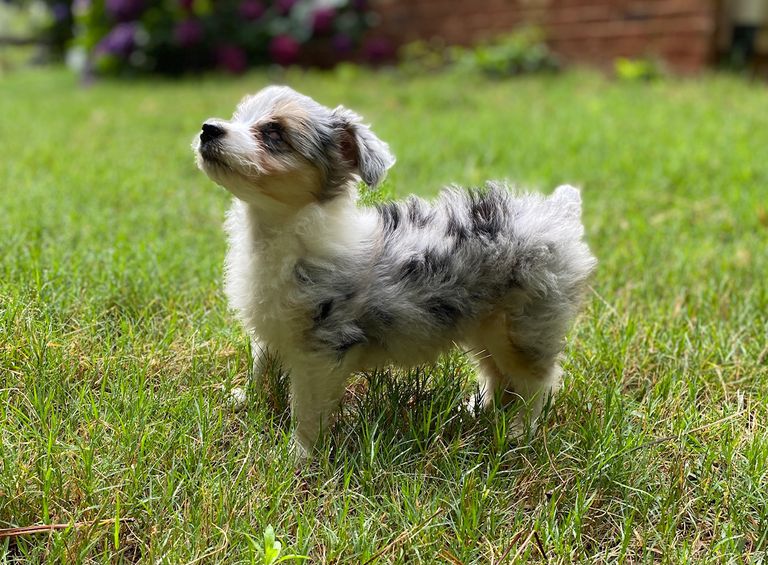
Trudy and Zane are 9-week-old Australian shepherd mixes, maybe Aussiedoodles. They were dropped off at a rural shelter somewhere in Illinois by a breeder. When the beleaguered shelter worker asked what would happen to the puppies if she couldn’t take them, the breeder told her the coyotes can always use a meal. She couldn’t believe it.

The shelter, of course, took them. And Speak! St. Louis, the rescue I volunteer with, of course, stepped up. And somehow the puppies ended up here in Atlanta, playing “WWF Smackdown” in my basement.

Trudy and Zane are double merles like the Treehugger puppies. Merle is a swirly pattern in a dog’s coat that is very lovely and highly prized by breeders and people who want a pretty dog. When two dogs with the merle gene are bred together, there’s a 25% chance that their puppies will be blind, deaf, or both.

Sometimes this happens by accident, but it seems that it happens too often on purpose. In any case, there sure are plenty of puppies that end up needing homes. At least those are the ones that rescue groups hear about. Others just quietly disappear.

I’m pretty sure that Zane and Trudy weren’t handled much by their owner when they got here. They were awfully squirmy and bitey and didn’t want to be held or touched. They wouldn’t eat unless they were touching each other.

So I’ve been working on it. Hold one for a few seconds and put them down before they fidget. Pet them all over a little at a time. Feed them just a little farther apart at each meal.

In just a couple of weeks, they’ve learned that people are pretty cool.

Navigating the World

Zane in a quiet moment.Fred Strobel Photography

I’ve fostered a blind puppy, several deaf puppies, and two blind and deaf puppies including the famous Whibble Magoo, who is now competing in agility contests and is smarter than most people I know.

It’s just amazing to watch how they navigate the world. They quickly map out their area, learning where the walls, bushes, and furniture are. Sure, they bounce off a few things at first but puppy heads are pretty hard. They do a little bit of a cartoon-like head shake where the world, no doubt, spins a little bit inside their heads. Then they jump up and go back to exploring and running and being happy. 

And, boy, are they happy.

People often say they feel sorry when they see blind or deaf puppies. They talk about how awful it must be for them.

But this is the only life they know and they are so joyful! When they go outside, they bounce in the grass like it is the best, most wonderful place in the world. When they play with a toy, it’s the coolest toy ever. When they find my dog, their tails wag so hard because they are ecstatic to be around him.

And when they find a person, they are elated because people are amazing, fun, and they give snuggles and treats.

They’ve come a long way from being just a step away from coyote dinner. Now they’ve learned to sit with two taps on their bottom and they are learning “down” is a tap on the front foot.

They are getting ready to look for their forever homes where their new people will appreciate that they aren’t just deaf and blind puppies. Instead, they are brilliant, silly, playful, gorgeous puppies with wonderful loving, sweet personalities. 

They just happen to play and live with the volume turned up loud.

ooOOoo

Regarding that dog dump in Barker Road, I managed to find out which house it was and later on in the day went for a bike ride that took me that way. There was no sign of anything unusual.

But to get to the matter of today’s post that is all about puppies that are blind or deaf. As I am sure you are aware, dogs are very different to us humans when it comes to their senses. I have written before about the great power of their sense of smell. This is many ways is their leading sense and I have no doubt that in the case of dogs that are blind or deaf their smell allows them to function pretty well.

There are many, many good people in the world. Some are outstanding. But I regret that there are quite a few low lights. Shame but there it is.

Another country but still the familiar dog

A dog nicks a large bone

This is a delightful story about a dog in the country of Columbia. It just goes to show that dogs are, in the main, universally admired and loved. The story was originally published on The Dodo.

ooOOoo

Clever Dog Sneaks Into Pet Store And Makes Off With A Giant Bone

The cutest little criminal 🐶

By Stephen Messenger

Published on 19th March, 2021

This is Agroveterinaria Los Paisas, a pet store and animal clinic in the town of Andalucia, Colombia.

It’s also the scene of a rather adorable crime.

VICTORIA ANDREA VIVIANA

The other day, Victoria Andrea Viviana was working in the shop, helping customers, when a certain someone evidently saw her distraction as a golden opportunity.

It was a dog. A dog with a plan.

While no one was looking, the dog quietly snuck into the store and slipped behind the counter. Then the object of his little mission became clear. He’d come to slyly steal a giant bone — but his getaway didn’t go unnoticed.

Here’s that scene on video:

“I was surprised by the cunning with which the dog took the bone,” Viviana told The Dodo. “One of our clients wanted to stop him, but he was very agile.”

The store had been robbed. But the culprit behind the crime was soon found out.

It was the dog’s own mom who turned him in.

VICTORIA ANDREA VIVIANA

“[The woman who owns the dog] came in to pay for the bone he stole, but we obviously didn’t take her money,” Vivian said. “It is something that happened unexpectedly, and the dog was able to amuse many people who watched the video.”

In the end, there were no hard feelings.

“The dog will always be welcome here,” Vivian said, “as well as any other animal who wants to visit.”

ooOOoo

Not much more to say except that our dogs everywhere are extraordinary in their similarity.

In fact, I am composing a post about the evolution of dogs and humans to show how far back we all go. I am not sure when it will see the light of day!

Service dogs

The unconditional love of dogs put to a very beneficial human use!

Yesterday while we were waiting to pay for a few food items in Winco we stopped behind a woman with a small service dog. The dog was a Dachshund and had a jacket on which were sewn badges saying that this was a service dog and not to make contact.

The woman suffered from panic attacks and strongly recommended an organisation that was called ADA. In fact it is a government organisation and ADA stands for Americans with Disabilities Act.

All of which makes a nice introduction to this next item that was published on The Conversation blog site.

ooOOoo

Service dogs can help veterans with PTSD – growing evidence shows they may reduce anxiety in practical ways

Training for service dogs starts very early.

By

March 26th, 2021

As many as 1 in 5 of the roughly 2.7 million Americans deployed to Iraq and Afghanistan since 2001 are experiencing post-traumatic stress disorder.

PTSD, a mental health problem that some people develop after experiencing or witnessing a life-threatening traumatic event, is a complex condition and can be hard to treat. Our lab is studying whether service dogs can help these military veterans, who may also have depression and anxiety – and run an elevated risk of death by suicide – in addition to having PTSD. 

We’ve been finding that once veterans with post-traumatic stress disorder get service dogs, they tend to feel less depressed and less anxious and miss work less frequently.

Complementing other forms of treatment

The traditional treatments for PTSD, such as talk therapy and medication, do work for many veterans. But these approaches do not alleviate the symptoms for all veterans, so a growing number of them are seeking additional help from PTSD service dogs.

The nation’s estimated 500,000 service dogs aid people experiencing a wide array of conditions that include visual or hearing impairments, psychological challenges, epilepsy and multiple sclerosis.

For our PTSD research, we partner with K9s For Warriors and Canine Companions for Independence, two of many nonprofits that train service dogs to work with veterans with PTSD.

There is no single breed that can help people this way. These dogs can be anything from purebred Labrador retrievers to shelter mixes.

Unlike emotional support dogs or therapy dogs, service dogs must be trained to do specific tasks – in this case, helping alleviate PTSD symptoms. In keeping with the Americans with Disabilities Act, service dogs are allowed in public places where other dogs are not.

Reducing anxiety

Service dogs can help vets with PTSD in many ways. The most common tasks include helping veterans remain calm and interrupting their anxiety. The veterans said they are asking their dogs to calm or comfort them from anxiety five times per day and that their dogs independently interrupted their anxiety three times per day on average.

For example, a dog may “cover” a veteran at a supermarket, allowing its owner to calmly turn to take something off the shelf, because veterans with PTSD can get startled if they don’t know if someone is approaching and benefit if their dogs signal that this is happening. If a veteran starts to have a panic attack, a service dog can nudge its owner to “alert” and interrupt the anxiety. At that point, the veteran can focus on petting the dog to re-center on the present – ideally preventing or minimizing the panic attack.

Service dogs can help veterans with PTSD relax when they’re shopping for groceries, a common trigger for their symptoms of this condition. Barcroft Media via Getty Images

Aside from the tasks that their dogs are trained to do, veterans also shared that the love and companionship they get from simply being with their dogs is helping make their PTSD easier to manage.

Once veterans got service dogs, they described themselves in surveys as more satisfied with their lives, said they felt a greater sense of well-being and deemed themselves as having better relationships with friends and loved ones.

We have also measured levels of cortisol, commonly called the “stress hormone,” in veterans with service dogs. We found they had patterns closer to adults without PTSD.

Challenges and extra responsibilities

Not all veterans are willing or able to benefit from having their own service dogs.

Being accompanied by dogs in public can draw attention to the veterans. Some veterans appreciate this attention and the way it encourages them to get out of their shell, while others dread having to avoid well-meaning, dog-loving strangers. We’ve found that veterans do not expect this challenge, but often experience it.

Service dogs can also make it harder to travel, since bringing a dog along can require more planning and effort, especially because many people don’t understand the legal rights of people with service dogs and may ask inappropriate questions or create barriers that they aren’t legally allowed to do. Many experts believe educating the public about service dogs could alleviate these challenges.

What’s more, feeding, walking, grooming and otherwise taking care of a dog also entails additional responsibilities, including making sure they see a veterinarian from time to time.

There can also be a new sense of stigma that goes along with making a disability that might otherwise be hidden readily apparent. Someone who has PTSD might not stick out until they get a service dog that is always present.

Most veterans say it’s worth it because the benefits tend to outweigh the challenges, especially when appropriate expectations are set. Clinicians can play a role in helping veterans realize in advance what caring for the animal entails, to make the intervention positive for both the veterans and the dogs.

We are now completing the first registered clinical trial comparing what happens when these veterans get the usual PTSD interventions with what happens when they get that same treatment in addition to a trained service dog.

As our research proceeds, we are trying to see how the effects of a service dog last over time, how the service dogs affect veterans’ families and how we can support the partnership between veterans and their service dogs.

ooOOoo

I am still struggling with WordPress. For example I haven’t yet worked out how to place the credit for the photograph underneath the picture. (It did it all on its own!) And there doesn’t seem to be a ‘blockquote’ command.

But coming back to the article it was a perfect description of the way that dogs are so, so good to us humans whether we have a medical need for a service dog or not.

Sidetracked!

What is a tooth between friends.

For about three weeks I have been suffering from a rather aggravating pain in my upper, left-hand jaw.

Yesterday I saw the paediatric surgeon at our local dentist.

He removed a very bad tooth that had lost both its nerve and quite a deal of bone.

So you will forgive me from not writing more.

But I will close with a photograph!

Enough said!

(Seriously it will not be until the 7th April that I will have the stitches taken out from the suture that ‘tied’ the gum together!)

Another dog food recall

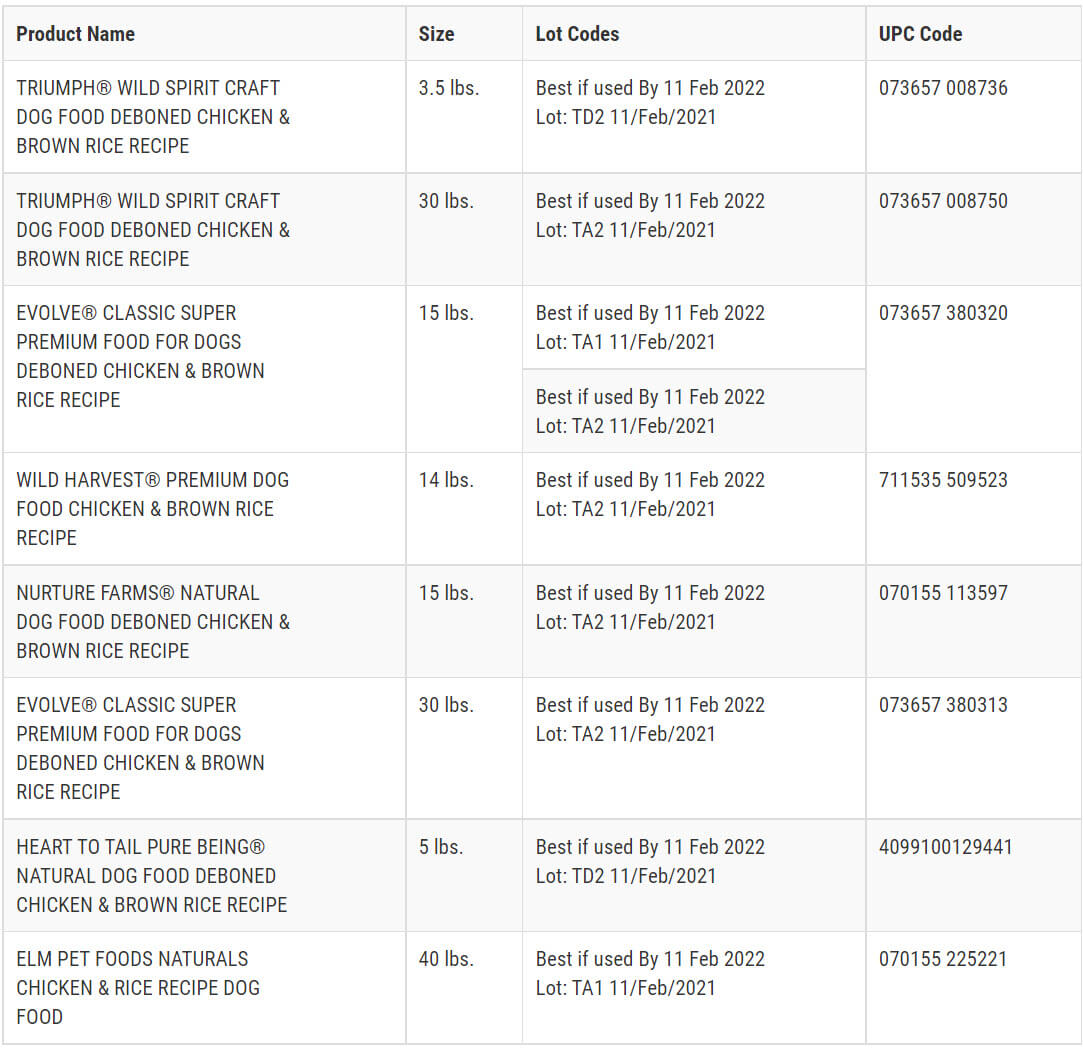
Here are the details (and it is a big one):

ooOOoo

Dear Fellow Dog Lover,

Midwestern Pet Foods is recalling multiple brands of dog and cat food due to possible contamination with Salmonella bacteria.  For full details, please visit the following link: Midwestern Pet Foods Recalls Multiple Dog and Cat Food Brands

(And if you go to that link …)

Midwestern Pet Foods Recalls Multiple Dog and Cat Food Brands

March 27, 2021 — Midwestern Pet Foods of Evansville, Indiana is recalling multiple brands of dog and cat food because they have the potential to be contaminated with disease-causing Salmonella bacteria.

What’s Recalled?

Recalled products include specific lots of CanineX, Earthborn Holistic, Venture, Unrefined, Sportmix Wholesomes, Pro Pac, Pro Pac Ultimates, Sportstrail, Sportmix and Meridian produced at its production facility in Monmouth, Illinois.

Recalled Dog and Cat Food with Lot Numbers

About Salmonella

Salmonella can affect animals eating the products and there is risk to humans from handling contaminated pet products, especially if they have not thoroughly washed their hands after having contact with the products or any surfaces exposed to these products.

Healthy people infected with Salmonella should monitor themselves for some or all of the following symptoms: nausea, vomiting, diarrhea or bloody diarrhea, abdominal cramping and fever. 

Rarely, Salmonella can result in more serious ailments, including arterial infections, endocarditis, arthritis, muscle pain, eye irritation, and urinary tract symptoms. 

Consumers exhibiting these signs after having contact with this product should contact their healthcare providers.

Pets with Salmonella infections may be lethargic and have diarrhea or bloody diarrhea, fever, and vomiting.

Some pets will have only decreased appetite, fever and abdominal pain. 

Infected but otherwise healthy pets can be carriers and infect other animals or humans. 

If your pet has consumed the recalled product and has these symptoms, please contact your veterinarian. 

No human or pet illnesses have been reported to date.

Where Were the Products Sold?

Products were distributed to retail store nationwide and to online retailers.

Lot code information may be found on the back of the bags with the following format:
“EXP AUG/02/22/M1/L#”

This recall covers only certain products manufactured at Midwestern Pet Foods Monmouth, Illinois facility. 

The unique Monmouth Facility identifier is located in the date code as an “M”.

What Caused the Recall?

The recall was as the result of a routine sampling program by the company which revealed that the finished products may contain the bacteria.

What to Do?

Retailers and distributors should immediately pull recalled lots from their inventory and shelves. 

Do not sell or donate the recalled products. 

Retailers are encouraged to contact consumers that have purchased the recalled products if the means to do so exists.

Do not feed the recalled products to pets or any other animals. 

Destroy the food in a way that children, pets and wildlife cannot access them.

Wash and sanitize pet food bowls, cups and storage containers. 

Always ensure you wash and sanitize your hands after handling recalled food or any utensils that come in contact with recalled food.

For more information, contact Midwestern Pet Foods Consumer Affairs at info@midwesternpetfoods.com. Or call 800-474-4163, ext 455, from 8 AM to 5 PM CT, Monday through Friday.

This voluntary recall is being conducted in cooperation with the US Food and Drug Administration. All other Midwestern Pet Foods products are unaffected by this recall.

U.S. citizens can report complaints about FDA-regulated pet food products by calling the consumer complaint coordinator in your area.

Or go to the FDA’s “Report a Pet Food Complaint” page.

Canadians can report any health or safety incidents related to the use of this product by filling out the Consumer Product Incident Report Form.

ooOOoo

Phew!

Nothing to add save please share this!

A hero dog

Clover comes to the aid of her human friend!

This was a story that appeared in my ‘in box’ yesterday afternoon but I didn’t want all the clutter that came with it. No problem because there were a number of videos on YouTube and I selected one that seemed to capture the essence of the story.

Words from the Today programme.

ooOOoo

Video captures moment hero dog stopped traffic during owner’s seizure

By Tim Fitzsimons

March 25, 2021

A dog named Clover is being hailed by Canadian media as a hero for helping her human, Haley Moore, survive a seizure that struck her suddenly during a walk.

Moore was strolling through the Stittsville neighborhood of Ottawa on Tuesday when she seized and fell to the curb, CTV News reported.

The incident was captured by a neighbor’s home security camera.

Clover, a year-and-a-half-old Maremma mix, sprung into action, attending first to Moore before bounding into the street and stopping traffic.

Dryden Oatway, a driver who stopped thanks to Clover’s heroics, said, “It was really impressive, the dog actually blocked my way. She kind of backed into the road to block my truck.”

Clover stopped another driver and then returned home.

“All I remember is waking up in the ambulance and being really confused, just like, ‘What is going on?'” Moore recalled in an interview with CTV. The cause of the seizure remains unknown.

Moore’s father, Randall Moore, told CTV that Clover was fed delicious steaks as a reward for her faithful service.

Psychology Today reported in March that new research suggests that seizure-predicting dogs are aided by the scent of volatile organic compounds that are excreted around seizures.

ooOOoo

Here is the YouTube video.

I’m still having some difficulty with the new WordPress but it is easier than yesterday.