Category: Communication

Remembering the Queen and her Corgis

It seems fitting to share this!

Until Her Majesty is laid to rest next Monday it is impossible just to come up with a topic that has nothing to do with her. That’s my feeling (and I am sticking to it)! 😉

Voice of America is a website that I recently came across and they appear to allow the republication of their stories. On September 12th, they published an article about the the Queen and her Corgis and it is shared with you all.

ooOOoo

A Queen and Her Corgis: Elizabeth Loved Breed Since Childhood

Britain’s Queen Elizabeth II, left, looks at a Corgi dog as British television presenter Paul O’Grady, second right, looks on during a visit to Battersea Dogs and Cats Home in London on March 17, 2015.

LONDON — 

For many people around the world, the word corgi is forever linked to Queen Elizabeth II. 

Princess Diana once called them a “moving carpet” always by her mother-in-law’s side. Stubby, fluffy little dogs with a high-pitched bark, corgis were the late queen’s constant companions since she was a child. She owned nearly 30 throughout her life, and they enjoyed a life of privilege fit for a royal pet. 

Elizabeth’s death last week has raised public concerns over who will care for her beloved dogs. But Sky News reported Sunday, according to a palace spokesman, the corgis will live with Prince Andrew and his ex-wife Sarah Ferguson. 

“One of the intriguing things people are wondering about at the funeral is whether a corgi is going to be present,” said Robert Lacey, royal historian and author of “Majesty: Elizabeth II and the House of Windsor.” “The queen’s best friends were corgis, these short-legged, ill-tempered beasts with a yap that doesn’t appeal to many people in Britain but was absolutely crucial to the Queen.” 

Puppy love

Elizabeth’s love for corgis began in 1933 when her father, King George VI, brought home a Pembroke Welsh corgi they named Dookie. Images of a young Elizabeth walking the dog outside their lavish London home would be the first among many to come over the decades. 

When she was 18 she was given another and named it Susan, the first in a long line of corgis to come. Later there were dorgis — a dachshund and corgi crossbreed — owned by the queen. Eventually they came to accompany her in public appearances and became part of her persona. 

Throughout Elizabeth’s 70 years on the throne, the corgis were by her side, accompanying her on official tours, reportedly sleeping in their own room at Buckingham Palace with daily sheet changes, and occasionally nipping the ankles of the odd visitor or royal family member. 

Three of them even appeared alongside the queen as she climbed into James Bond’s waiting helicopter in the spoof video that opened the 2012 Summer Olympics in London. 

Royal treatment

British author Penny Junor documented the dogs’ feisty lives in a 2018 biography “All the Queen’s Corgis.” 

She writes that Elizabeth walked and fed the dogs, chose their names, and when they died, buried them with individual plaques. Care for the corgis had fallen largely on the queen’s trusted dressmaker and assistant Angela Kelly and her page Paul Whybrew. 

The corgis were also present when the queen welcomed visitors at the palace, including distinguished statesmen and officials. When the conversation lulled, Elizabeth would often turn her attention to her dogs to fill the silence. 

“She was also concerned about what would happen to her dogs when she is no longer around,” Junor wrote, noting that some royal family members did not share her fondness for the corgis. 

After the death of her corgi Willow in 2018, it was reported that the queen would not be getting any more dogs. 

But that changed during the illness of her late husband, Prince Philip, who died in 2021 at age 99. She turned once again to her beloved corgis for comfort. On what would have been Philip’s 100th birthday last year, the queen was given another dog. 

In addition to her human family, Elizabeth is survived by two corgis, a dorgi, and a cocker spaniel.

ooOOo

It is clear from all the news and tributes presented following Her Majesty’s death on September 8th that she had a very special affection for her Corgis. As does Jean for all our dogs!
We are getting close to it being too late!

As in we humans living on this planet.

Next Saturday I am giving a talk to our local Freethinkers and Humanists group on climate change. As a result of this I was doing some research on the subject and I thought that I would share what I found with you.

But first may I say that the new King of the United Kingdom, King Charles III, may not have ages and ages on the throne but he is a committed environmentalist. In a recent VoA article the Prince of Wales, as he was then, reported that when Charles opened the COP26 climate summit, held in Scotland last year, and gave the opening speech, urging world leaders seated in front of him to redouble their efforts to confront global warming, he warned: “Time has quite literally run out.”

It is us!

The UN’s Intergovernmental Panel on Climate Change (IPCC) kicked off its 2021 report with the following statement: “It is unequivocal that human influence has warmed the atmosphere, ocean and land.”

A little later the article says: It took a while, but climate modelling is now refined enough to predict how things would go without human influence, within a margin of error. What we are observing today, however, is beyond that margin of error, therefore proving that we have driven the change.

It is getting hot

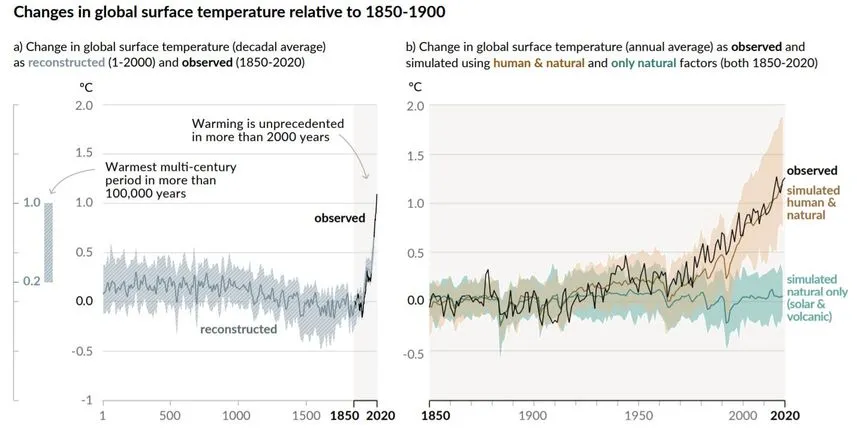
The last decade was the hottest in 125,000 years. There are a number of graphs to support this. Here is one:

The oceans

One of the facts of having a water world, 71% of the Earth’s surface is water-covered, and the oceans hold about 96.5% of all Earth’s water, is that a 2019 study found that oceans had sucked up 90% of the heat gained by the planet between 1971 and 2010. Another found that it absorbed 20 sextillion joules of heat in 2020  – equivalent to two Hiroshima bombs per second.

Carbon-dioxide

In fact CO2 levels are now the highest that they have been in 2 million years. Today, they stand at close to 420 parts per million (ppm). To put that into context pre-industrial levels, before 1750, had CO2 levels around 280 parts per million.

We are losing ice big time

I can do no better than to quote from Earth.org: Since the mid-1990s, we’ve lost around 28 trillion tons of ice, with today’s melt rate standing at 1.2 trillion tons a year. To help put that into perspective, the combined weight of all human-made things is 1.1 trillion tons. That’s about the same weight as all living things on earth.

I repeat: Every single year we are losing 1,200,000,000,000 tons of ice!

Extreme weather

We can now attribute natural disasters to human-driven climate change with certainty. We can now say with precision how much likelier we made things like the North American summer 2021 heatwave, which the World Weather Attribution says was “virtually impossible” without climate change as well as the Indian heatwave, which experts believe it was made 30 times more likely because of climate change.

Climate change mitigation

There is a long and comprehensive article on the above subject on WikiPedia. I will quote from the paragraph Needed emissions cuts.

If emissions remain on the current level of 42 GtCO2, the carbon budget for 1.5 Â°C could be exhausted in 2028. (That’s 42 gigatones, as in 1 gigaton is a unit of explosive force equal to one billion (109) tons of trinitrotoluene (TNT).

In 2022, the Intergovernmental Panel on Climate Change (IPCC) released its Sixth Assessment Report on climate change, warning that greenhouse gas emissions must peak before 2025 at the latest and decline 43% by 2030, in order to likely limit global warming to 1.5°C (2.7°F). Secretary-general of the United Nations, AntĂłnio Guterres, clarified that for this “Main emitters must drastically cut emissions starting this year”.

Then just before that paragraph WikiPedia reports that: The UNFCCC aims to stabilize greenhouse gas (GHG) concentrations in the atmosphere at a level where ecosystems can adapt naturally to climate change, food production is not threatened, and economic development can proceed in a sustainable fashion. Currently human activities are adding CO2 to the atmosphere faster than natural processes can remove it.

We need to act now, otherwise…

… it will be too late for billions of us.

This may be the most catastrophic of our climate change facts. As of now, only 0.8% of the planet’s land surface has mean annual temperatures above 29°C, mostly in the Sahara desert and Saudi Arabia (solid black in the map below).

A study by Xu et al. (2020) called “Future of the Human Niche” found that by 2070, under a high emissions scenario, these unbearable temperatures could expand to affect up to 3 billion people (dark brown areas).

Doing nothing is much worse than doing something

On the current path, climate change could end up costing us 11 to 14% of the global GDP by mid-century. Regression into a high emissions scenario would mean an 18% loss, while staying below 2°C would reduce the damage to only 4%. 

It has been proposed that ending climate change would take between $300 billion and $50 trillion over the next two decades. Even if $50 trillion is the price tag, that comes down to $2.5 trillion a year, or just over 3% of the global GDP. 

Climate change is an incredibly complex phenomenon, and there are many other things happening that were not covered above.

These are the facts. There is no disputing them. Jean and I are relatively immune from the effects, because of our ages, but not entirely so. The last few weeks with the imminent risk of our property being damaged by wildfires is one example. The last three winters being below average rainfall is another. But it is the youngsters I fear most for. On a personal note, my daughter and husband have a son and he is now 12. What sort of world is he growing up in?

So here is a view of the global population of young people.

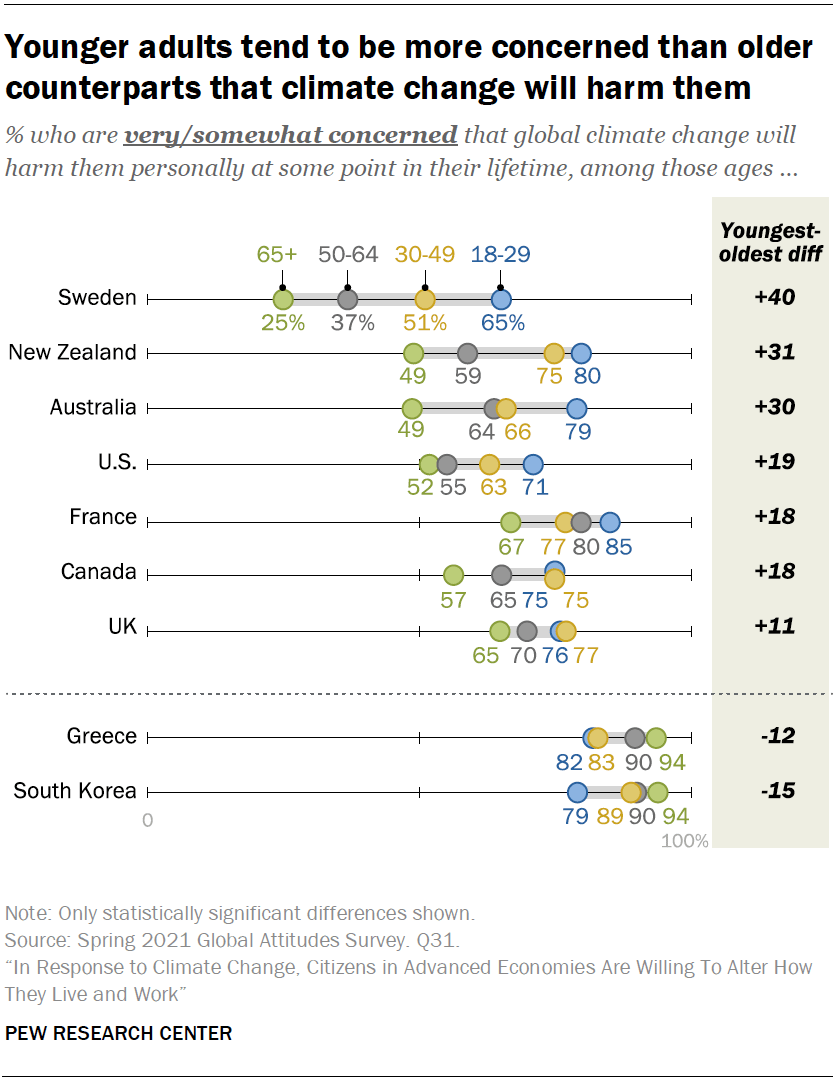
Just before I close let me show you my final chart. It goes to show our attitudes.

I am not a political animal. However I recognise that it is our leaders, globally, but especially in the top 10 countries in the world, who have to be leaders! Here are the top 10 countries.

So, please, dear leader, make this the number one priority for your country and for the world (areas of their country in square kilometres): Russia. 17,098,242, Canada. 9,984,670, United States. 9,826,675, China. 9,596,961, Brazil. 8,514,877, Australia. 7,741,220, India. 3,287,263 and Argentina. 2,780,400.

An alternative to the Picture Parade

It just seemed too soon to continue another Picture Parade!

So I chose this video. It is short but conveys the essence of the late Queen Elizabeth II.

Picture Parade Four Hundred and Fifty.

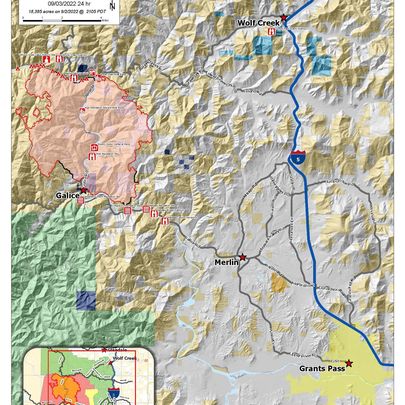
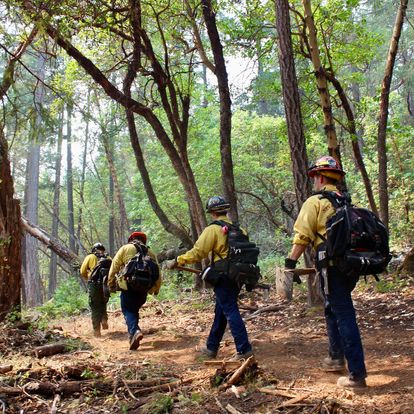
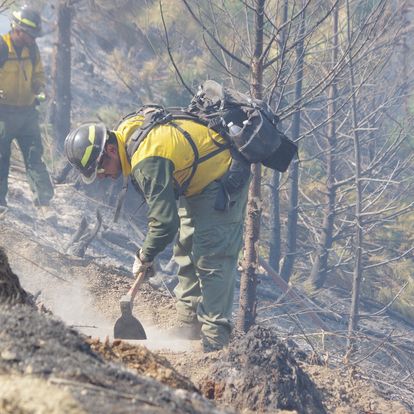
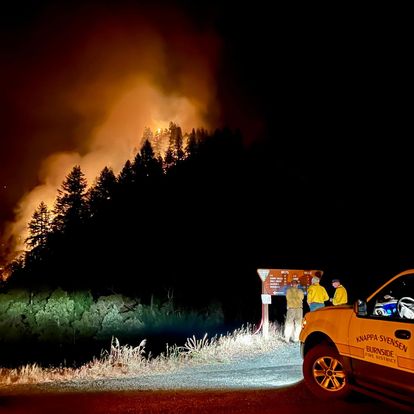
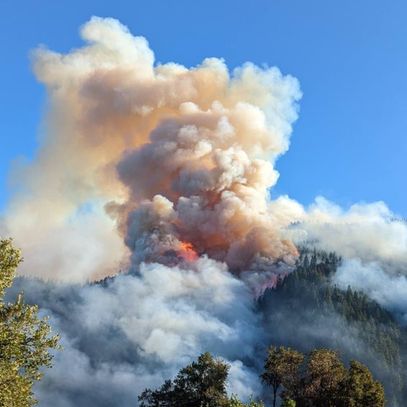
Photos of Rum Creek Fire!

Not all that are available by any means! These were copied from the Facebook page.

oooo

oooo

oooo

oooo

oooo

oooo

oooo

oooo

Well done all those actively involved. We will see what the next week brings.

From Jess

This is so very cute!

Jess, a longtime follower of this blog sent me recently the following email: Paul, I thought you’d really enjoy this one.  I hope you are having a great day.  JESS

It is called Military Dog and is offered for your pleasure.

(We watched it yesterday evening and it is incredible!)

Aren’t our dogs more than wonderful! They are better than precious!

Thank you, Jess, from the bottom of our hearts!

The Dog Ageing Project.

Yes, you heard that correctly!

I was just idly browsing dog websites a couple of days ago and came across the Dog Aging Project. As their About page reports:

The goal of the Dog Aging Project is to understand how genes, lifestyle, and environment influence aging. We want to use that information to help pets and people increase healthspan, the period of life spent free from disease.

I have taken the liberty of sharing one of their blog posts with you (I can’t see that isn’t allowed!)

ooOOoo

Longer, healthier lives. Together.

Dog and Human Genetics: Similarity and Difference

July 26th, 2022

Your pup may be your “fur baby,” but how similar are you genetically? You may be surprised!

Did you know that dogs and people share over 17,000 special genes called orthologs? Each pair of orthologs is derived from the same common ancestor via vertical descent (speciation) and they tend to have similar functions. They are one of the main reasons why your pup is such an invaluable comparative animal model for studying human health. In fact, humans and dogs have numerous similarities even in those parts of the genome that aren’t genes (the noncoding part of the genome). When it comes to better understanding human health, your pup is our best friend!

Sometimes, the effects of a gene are identical between dogs and people. For example, the same version of EPAS1, a gene triggered by low-oxygen conditions, is shared by people living in the Tibetan Plateau and the dog lineages that developed there. Genetic changes in this gene have taken place to help kickstart the body’s responses to hypoxia, or low oxygen levels, at high altitudes.

In other cases, the effects of a gene may be similar but not identical. For instance, the gene SCN3A is important to brain function and affects the development of speech. In children, mutations in SCN3A have been reported to cause disorders like epilepsy. But in dogs, genetic changes near the canine ortholog of SCN3A are associated with the frequency of howling in dogs.[1] The functions of this gene seem distinct (speech versus howling) but related!

For other health conditions shared by dogs and people, the same genes may not be responsible, but that doesn’t mean that research on those conditions in dogs isn’t helpful for humans! By learning more about how a dog’s genes are connected with a shared health condition, we can investigate the biological mechanisms involved and potentially make links to human health.

For example, people long suggested that narcolepsy might be a disease of the immune system: an autoimmune attack that causes daytime drowsiness and sudden sleep. In human studies, it was difficult to confirm the immune system link. It wasn’t until 1999[2] that this connection was discovered in a lineage of Doberman pinscher dogs. The researchers discovered a gene that is involved in the interface between the nervous system and immune system.

Finally, you and your pup share more than just genetics. Your environments are also very similar! You sleep in the same house—maybe even the same bed!—go on walks together, and breathe the same air. Interactions between these environmental variables and your genetics (called gene by environment interactions) can have an important impact on health. For example, smoking is well known to increase risk of bladder cancer in humans[3], but it is still unknown how secondhand smoke affects risk of bladder cancer in dogs.[4]

Data from the Dog Aging Project should help us answer important questions like these!

1. Kathleen Morrill et al. 2022. Ancestry-inclusive dog genomics challenges popular breed stereotypes. Science 376: https://www.science.org/doi/10.1126/science.abk0639

2. Ling Lin et al. 1999. The Sleep Disorder Canine Narcolepsy Is Caused by a Mutation in the Hypocretin (Orexin) Receptor 2 Gene. Cell 98 (3): 365-376. https://doi.org/10.1016/S0092-8674(00)81965-0

3. JD Figueroa et al. 2014. Genome-wide interaction study of smoking and bladder cancer risk. Carcinogenesis 35 (8):1737-44. https://pubmed.ncbi.nlm.nih.gov/24662972/

4. Deborah Knapp. Canine Bladder Cancer. https://www.vet.purdue.edu/pcop/files/docs/CanineUrinaryBladderCancer.pdf (PDF)

ooOOoo

This is, in my opinion, an important project.

Many may want to nominate their own dog and there is a page where a number of FAQ’s are addressed. If you wish to proceed then go to this page.

As was said, this seems like an important project.

What a difference a week makes!

It all makes sense now.

Photo by Salmen Bejaoui

“Do what you can, with what you have, where you are.” “Believe you can and you’re halfway there.” “It is hard to fail, but it is worse never to have tried to succeed.”

“It is not the critic who counts; not the man who points out how the strong man stumbles, or where the doer of deeds could have done them better.”

This famous quotation by Teddy Roosevelt (1858-1919), the 26th President of the USA, seems apt for today’s post.

Exactly one week ago I published a post called Musings from a 77 year old! I wrote that the future was uncertain. Summed up at one point by me writing: “I have no idea of the global changes that are afoot and how they will affect us in Merlin. Indeed, I have no idea how long I have to live.

Margaret (from Tasmania) was one of the many people who responded. She included a video interview of Meg Wheatley by Michael Shaw. It is an hour long. Last Friday afternoon Jean and I watched it in full and it was incredibly interesting. Thank you very much, dear Margaret.

But before I present Meg’s video again I want to show you another video. It is a talk by Richard Grannon about the collapse of our civilisation. Now Richard Grannon is an author, YouTuber and life coach so one needs to remain impartial to his views, certainly before one does further research. But in the 46-minute talk I think there is much sense in what he says. See for yourself:

Moving on! The interview of Meg Wheatley is very good indeed. It’s a broad look at the issues and problems governing society but done in such a way that the people who watch her will also take away a number of tools for avoiding depression and anxiety. Meg places great store on the Hopi Native American Indians: “The Hopi maintain a complex religious and mythological tradition stretching back over centuries.

Meg quotes one of the more famous Hopi prophecies, that is reproduced below:

This could be a good time! There is a river flowing now very fast. It is so great and swift that there are those who will be afraid. They will try to hold on to the shore. They will feel they are being torn apart and will suffer greatly. Know the river has its destination. The elders say we must let go of the shore, push off into the middle of the river, keep our eyes open, and our heads above the water.

And I say, see who is in there with you and celebrate. At this time in history, we are to take nothing personally, least of all ourselves. For the moment that we do, our spiritual growth and journey come to a halt.

The time of the lone wolf is over. Gather yourselves! Banish the word ’struggle’ from your attitude and your vocabulary. All that we do now must be done in a sacred manner and in celebration.

We are the ones we’ve been waiting for.

Photo by Lucas Ludwig 

Here is that Meg Wheatley interview. (It is an hour long but very interesting; please watch it!)

I want to pick up the topic that was at the end of her interview; that of societal collapse. How would one define it? I chose Wikipedia for a reference.

Societal collapse (also known as civilizational collapse) is the fall of a complex human society characterized by the loss of cultural identity and of socioeconomic complexity, the downfall of government, and the rise of violence.[1]Possible causes of a societal collapse include natural catastrophe, war, pestilence, famine,  economic collapse,  population decline, and mass migration. A collapsed society may revert to a more primitive state, be absorbed into a stronger society, or completely disappear.

Virtually all civilizations have suffered such a fate, regardless of their size or complexity, but some of them later revived and transformed, such as China, India, and Egypt. However, others never recovered, such as the Western and Eastern Roman Empires, the Maya civilization, and the Easter Island civilization.[1] Societal collapse is generally quick[1] but rarely abrupt.[2] However, some cases involve not a collapse but only a gradual fading away, such as the British Empire since 1918.[3]

Anthropologists, (quantitative) historians, and sociologists have proposed a variety of explanations for the collapse of civilizations involving causative factors such as environmental change, depletion of resources, unsustainable complexity, invasion, disease, decay of social cohesion, rising inequality, secular decline of cognitive abilities, loss of creativity, and misfortune.[1][4] However, complete extinction of a culture is not inevitable, and in some cases, the new societies that arise from the ashes of the old one are evidently its offspring, despite a dramatic reduction in sophistication.[4] Moreover, the influence of a collapsed society, such as the Western Roman Empire, may linger on long after its death.[5]

The study of societal collapse, collapsology, is a topic for specialists of historyanthropologysociology, and political science. More recently, they are joined by experts in cliodynamics and study of complex systems.[6][4]

The article is much more extensive than I have quoted above and for anyone deeply interested then I do recommend you going to the article and reading it extensively.

Now Meg is of the opinion that it is too late to turn back but next Tuesday I want to talk to you about Sir David Attenborough’s film A Life on our Planet. That he believes there is a chance to undo the harm we are causing to the planet; through rewilding.

Until then!

Volunteering at animal shelters.

Another great post from Penny Martin.

Once again I am delighted to publish another post from Penny. This is a relatively short post but nevertheless of supreme importance.

With no more ado from me, here it is:

ooOOoo

Protecting Our Pets: Resources for Volunteering at Animal Shelters

By Penny Martin

August 10th, 2022

If animal welfare is close to your heart, you might want to consider helping out at a pet shelter for abandoned or unwanted animals. There are always a number of charities in the USA and beyond looking for eager volunteers. 

Before You Apply

Animal welfare work can be challenging for an individual, even if you’re just volunteering. It’s important to take precautions before you commit to your decision.

  • Read about the experience of working at a shelter to better understand the challenges and obstacles you might encounter.
  • Often, volunteers need to undergo training, orientation, and background checks before they’re allowed to contribute.
  • Connect with your local shelters on social media to see the kind of work they do and whether there are opportunities to volunteer.

Organizations

Shelters for abandoned and neglected pets are frequently found throughout the country. If you want to do your part, the logical first step is to locate one close to you.

  • Institutions like Guide Star have been established to hold animal rescue services accountable and ensure they are being maintained properly.
  • Take some time to learn about the listed charities in your area.
  • If you find an abandoned pet and you’re not aware of shelters in your area, try reaching out to American Humane.

Ways to Help

If you’re unable to volunteer in person, there are still plenty of ways to get involved and do your part.

  • There’s good work to be done online via social media and you can help out by engaging in discussion and sharing posts about missing or unwanted pets.
  • If you have any spare supplies that you’re willing to donate, these can make a profound impact on the lives of animals. 
  • If you’re purchasing supplies to donate, read expert reviews to choose the highest-quality products.
  • If the existing organizations don’t meet your concerns, you could try forming your own nonprofit.
  • You can create Facebook ads for free to secure donations and get the word out about your nonprofit. 

Unfortunately, across the USA and beyond, there are a great many pets in need of our help but even small acts of kindness can take us a significant way towards eradicating the problem altogether. Reach out to your local shelter and see how you can help.

Read the Learning from Dogs book for a reminder of the unconditional love dogs give us every day. 

Image by Pexels

ooOOoo

Once again, a big thank you to Penny and also my thanks for the link to Learning from Dogs.

For those of you that are considering helping out then Penny’s post might offer the advice you require.

This is one quick-thinking man!

He saves the life of a dog.

This is a story from Peru. But world-wide our fondness and love for dogs is beyond measure.

ooOOoo

Quick-Thinking Man Saves Life Of Dog Falling From Building

“She didn’t stop wagging her tail out of happiness.”

By Stephen Messenger

Published on the 7th July, 2022

The other day, after a two-week-long stint working in the field, John Alexander Palomino Bendives was looking forward to finally relaxing in the apartment he shares with his mother and four dogs in Peru.

But, before he could even get inside the building, Bendives was called into action once more — to save the life of his beloved dog Mina.

When Bendives, along with his girlfriend, got to the front of his apartment building, their arrival didn’t go unnoticed. High above, in his family’s fourth-story rooftop apartment, Mina and the other pups were peering down over the railing, excited to see him home.

Bendives would be up to greet them in a few seconds. But that was apparently just a bit too long to wait for Mina.

Having either lost her balance and slipped or misjudged the distance and leapt, Mina began falling to the street below. Thankfully, quick-thinking Bendives took notice — and was able to catch her in his arms.

Bendives was able to save Mina from what may have been certain death — to his great relief. And to hers.

“She was OK, unharmed,” Bendives told The Dodo. “Mina was happy and grateful. She didn’t stop wagging her tail out of happiness.”

All his pups were thrilled that Bendives was finally home. Mina, clearly, just a bit too much so.

Bendives said this scary incident has the family planning to make some changes: “We are looking at putting up a mesh [barrier] on the roof so that they can continue to sit up there, but without the risk of falling again.”

Now that the unthinkable happened — and disaster narrowly avoided — it’s the least they could do.

“I love my pets very much,” Bendives said. “They always receive me with a lot of love and emotion. The time I spend at home, I try to spend as much time as possible with them.”

ooOOoo

(Both photographs by John Bendives.)

Another wonderful story of a life-saving act on behalf of Bendives and his saving of his dog, Mina. Four stories high is no laughing matter and Snr. Bendives certainly saved Mina from serious injury and probably death.

Literally hundreds of times every day, with the vast majority of the stories unreported, we humans save the lives of dogs!

Just wonderful!