Category: Communication

The book! Chapter Eleven.

Ouch, ouch and more ouch!

In yesterday’s chapter I wrote of what, perhaps, was one of the better times in the lives of our hero, Philip, and his wife Maggie.  But as we move to Chapter Eleven the phrase ‘first impressions may be misleading’ does come to mind.

oooOOOooo

Learning from Dogs

Chapter Eleven

Later that evening, after he and Maggie had eaten their evening meal, a rather poor affair that Philip had to admit, Monday being his turn to prepare dinner, he couldn’t shake off something approaching a cloud over him.  Most likely associated with the forthcoming fiftieth anniversary of his father’s death, he guessed.

It was the same every year.  Whatever he was involved in, however interesting and engaging his life was during the last few months of the year, Philip knew that the period between his birthday in early November and the date of his father’s death on the twentieth of December had some ill-defined greyness about it.  Then as soon as the twenty-first of December dawned, he was back to his usual brightness. Indeed, he was always embarrassed by the fact that his pre-Christmas mood never arrived until the twenty-first of December, frequently a bit on the late side to engage properly in the annual ritual of present-buying.

Still that’s how it had been for every year of his adult life and, privately, he wondered if that was his way of treasuring a father he never really knew.

Thus so it was this year. In the sense that it was about a week before Christmas Day, probably around the eighteenth of December that, again, he had to pull himself up sharply and start thinking as to what he should give Maggie as her main present.

What really caused him to focus on Maggie and Christmas was a very strange, decidedly untypical, interaction between Maggie and Pharaoh.  Up until then, whenever Maggie had gone out somewhere on her own, Pharaoh would always bark as her car turned into the driveway.  On their upper floor, the main living room area, there was a floor-to-ceiling pair of glass-panelled doors overlooking the front of the house, the garden and their short driveway and their five-bar, wooden gate.  The glass doors would have been wooden shutters back in the days when it was a cow barn.  Today, the doors could be opened during hot summer weather; there was a wooden rail across the opening to prevent any falling accidents.

Pharaoh’s usual routine with arriving cars was to bound up to the windows barking furiously when he heard the latch on the gate being handled and when any car drove up the driveway.  If it was Maggie returning home then as soon as he recognised her he would bound down the short, single flight of wooden stairs from the living-room level to the hallway and stand inside the front door, also glassed from head to foot, wagging his tail furiously until he was let out whereupon he would run joyously to her.

However this day, Philip was pretty sure is was the Monday, Pharaoh did his usual barking act as Maggie drove in.  Then there was the sound of Pharaoh coming down the steps to the front door with a growl in his throat. That’s what made Philip look up from his computer screen; he was certain that he had heard Maggie’s car but then the growling suggested otherwise.

Pharaoh’s growl became quite intense, practically a sound from him that Philip had never heard before.

He quickly pushed his office chair back on its wheels and stood up from his desk.  Within moments, he was beside Pharaoh looking out at Maggie walking back down the driveway to close the front gate.

“Pharaoh, quiet!”, Philip said with a sternness to his voice. Pharaoh reduced the constant growl to a sort of angry muttering in the back of his throat.  Philip had no doubt that Pharaoh was not playing around.  To the point where he practically dragged Pharaoh by his collar back into the small office and firmly closed the door on the two of them.

Pharaoh pushed to the office window, also full length, his eyes, ears and full body stance continuing to signal a great unease.  What on earth was happening?  Philip just couldn’t fathom it out.

He left his office room, closing the door with Pharaoh inside, and went out to meet Maggie who was walking towards the house with a semi-full bag of groceries in a cloth shopping bag.

“Hi, is that all there is to bring in?”, Philip asked.

“Yes, only a few items that I needed from Safeways.”

As Maggie came up to the front door, Philip continued, “You know, there’s something weird about Pharaoh just now.” He went on to explain what had just happened, continuing, “It’s almost as though he didn’t know it was you.”

They climbed the stairs up to the open-plan kitchen area that was at one end of the living room, to the right of the stairs, the main living room area to the left.  Philip then went over to the log-burner in the corner of the living room and fiddled with it for a while.  In fact, his mind was still on Pharaoh wondering if his angst had now subsided.  Only one way to find out.

He returned to his office room and opened the door.  Pharaoh was lying on the rug.  He looked up at Philip and, again, very strangely, only raising himself from the floor and following Philip upstairs to the living-room after a great deal of coaxing.

It was all very peculiar.

Wednesday, the 20th, dawned to reveal a bright pleasant morning with soft, cumulus clouds across a broadly blue sky.  A great morning to be over at the woods for a walk.

After breakfast, Philip called out to Maggie, who had been in the bathroom for a while, actually more than a while when he thought about it, that he and Pharaoh were off to James’ woods.  Philip just heard Maggie call out that she had heard him.

It was a wonderful walk.  Pharaoh was in his prime chasing squirrels, a fairly pointless task Philip always thought, then sticking his nose down the many rabbit holes, sniffing such large lungfulls of air that Philip wondered if Pharaoh thought he could suck the poor rabbits out of their burrows.

The date, fifty years to the day that his father had died, seemed to rest much more easily with him than he had feared.  It was all so, so long ago.  It crossed his mind to buy Maggie a bouquet of flowers on the way home.

A couple of hours later, he and Pharaoh bounced into the house, a fresh bouquet of flowers newly purchased at Safeways in Totnes in Philip’s right hand.

“Hi sweetheart, bought you these.  Just thought you looked a little off-colour earlier this morning and that some flowers might cheer you up.”

As he was offering the flowers to Maggie he realised that whatever it was that had been afflicting her earlier that morning was still troubling her.  Frankly, she looked very pale and drawn.

“Maggie, what’s the problem?  You don’t look at all well.”

“Philip, do you mind if I lie down on the bed for a little while, just not feeling that brilliant.”

“No, of course not,” came his reply.  “Look you go and lie down, I’ll put the flowers in water, make us both a nice cup-of-tea and bring them down to the bedroom.”

With that Philip went upstairs to the living room, dug out a glass vase and put the flowers in water, placing the vase with the flowers on one of the work surfaces in the kitchen.

He also noted that the fire was pretty low and needed rejuvenating.  Thus it was nearer thirty minutes before he returned to their bedroom with the hot teas. Maggie’s body was under the bedspread, her head back against a pair of pillows, still giving the appearance of being significantly out of sorts.

He put Maggie’s cup down on the bedside table next to her and cradling his own mug of tea in his hands sat down on the edge of the bed, just adjacent to where Maggie’s knees were under the cover.

Maggie heaved herself up, leaning back against the headboard and reached for her tea.  “Thank you, Philip, that was very kind of you.”

They both sat without saying a word, Philip conscious of the hot tea reminding him of an empty stomach not yet having had lunch.

Maggie took a breath, put her empty cup down on the bedside table, and looked at Philip.

“Philip, I don’t know how to say this.  The reason for me being unwell this morning was that I have just had a miscarriage.”

Philip’s world came to an instant, shuddering halt. Of course, that’s what Pharaoh had picked up, the impending breakup of his home. Because, after the birth of his second child with his first wife in 1972, Philip had opted for a vasectomy.

1,495 words. Copyright © 2013 Paul Handover

 oooOOOooo

Have to wait until Monday to see where it all leads to.
Voices of reason.

Tried hard to avoid a grim reality post, but failed!

As last week, I thought that wall-to-wall book chapters were a bit much and that Wednesdays should be a break.  Ideally, a light-hearted break.  But failed!  Sorry!

For a long time, I have followed George Monbiot’s writings.  Like a number of other correspondents that come to mind, Mr. Monbiot writes with a clarity and intellect that takes some beating.  Rather tentatively I wrote to him asking if I might republish some of his essays, including those that are published in the UK newspaper, The Guardian.  To my great pleasure, George replied that so long as his essays did not appear in print then permission was given.
us-constitution

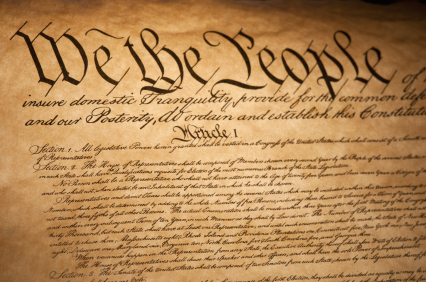
Before going on, it may do no harm to remind me and so many millions of others, of the opening preamble of the US Constitution:

We the People of the United States, in Order to form a more perfect Union, establish Justice, insure domestic Tranquility, provide for the common defence, promote the general Welfare, and secure the Blessings of Liberty to ourselves and our Posterity, do ordain and establish this Constitution for the United States of America.

Whatever the country, the concept of ‘by the people, of the people, for the people’ takes one hell of a lot of beating.

So to the essay. I was struck by a recent essay from George Monbiot that seemed to touch on something that more and more ordinary folk sense; that many so-called democratic political systems are not functioning in the interests of the people. Thus with no further ado, here it is.

oooOOOooo

Why Politics Fails

November 11, 2013
Nothing will change until we confront the real sources of power.

By George Monbiot, published in the Guardian 12th November 2013

It’s the reason for the collapse of democratic choice. It’s the source of our growing disillusionment with politics. It’s the great unmentionable. Corporate power. The media will scarcely whisper its name. It is howlingly absent from parliamentary debates. Until we name it and confront it, politics is a waste of time.

The political role of corporations is generally interpreted as that of lobbyists, seeking to influence government policy. In reality they belong on the inside. They are part of the nexus of power that creates policy. They face no significant resistance, from either government or opposition, as their interests have now been woven into the fabric of all three main parties.

Most of the scandals that leave people in despair about politics arise from this source. On Monday, for example, the Guardian revealed that the government’s subsidy system for gas-burning power stations is being designed by an executive from the company ESB, who has been seconded into the energy department(1). What does ESB do? Oh, it builds gas-burning power stations.

On the same day we learnt that a government minister, Nick Boles, has privately assured the gambling company Ladbrokes that it needn’t worry about attempts by local authorities to stop the spread of betting shops(2). His new law will prevent councils from taking action.

Last week we discovered that G4S’s contract to run immigration removal centres will be expanded, even though all further business with the state was supposed to be frozen while allegations of fraud are investigated(3). Every week we learn that systemic failures on the part of government contractors are no barrier to obtaining further work, that the promise of efficiency, improvements and value for money delivered by outsourcing and privatisation have failed to materialise(4,5,6). The monitoring which was meant to keep these companies honest is haphazard(7), the penalties almost non-existent(8), the rewards stupendous, dizzying, corrupting(9,10). Yet none of this deters the government. Since 2008, the outsourcing of public services has doubled, to £20bn. It is due to rise to £100bn by 2015(11).

This policy becomes explicable only when you recognise where power really lies. The role of the self-hating state is to deliver itself to big business. In doing so it creates a tollbooth economy: a system of corporate turnpikes, operated by companies with effective monopolies.

It’s hardly surprising that the lobbying bill – now stalled by the Lords – offered almost no checks on the power of corporate lobbyists, while hogtying the charities who criticise them. But it’s not just that ministers are not discouraged from hobnobbing with corporate executives: they are now obliged to do so.

Thanks to an initiative by Lord Green, large companies have ministerial “buddies”, who have to meet them when the companies request it. There were 698 of these meetings during the first 18 months of the scheme, called by corporations these ministers are supposed be regulating(12). Lord Green, by the way, is currently a government trade minister. Before that he was chairman of HSBC, presiding over the bank while it laundered vast amounts of money stashed by Mexican drugs barons(13). Ministers, lobbyists – can you tell them apart?

That the words corporate power seldom feature in the corporate press is not altogether surprising. It’s more disturbing to see those parts of the media that are not owned by Rupert Murdoch or Lord Rothermere acting as if they are.

For example, for five days every week the BBC’s Today programme starts with a  business report in which only insiders are interviewed. They are treated with a deference otherwise reserved for God on Thought for the Day. There’s even a slot called Friday Boss, in which the programme’s usual rules of engagement are set aside and its reporters grovel before the corporate idol. Imagine the outcry if Today had a segment called Friday Trade Unionist or Friday Corporate Critic.

This, in my view, is a much graver breach of BBC guidelines than giving unchallenged airtime to one political party but not others, as the bosses are the people who possess real power: those, in other words, whom the BBC has the greatest duty to accost. Research conducted by the Cardiff school of journalism shows that business representatives now receive 11% of airtime on the BBC’s 6 o’clock news (this has risen from 7% in 2007), while trade unionists receive 0.6% (which has fallen from 1.4%)(14). Balance? Impartiality? The BBC puts a match to its principles every day.

And where, beyond the Green Party, Plaid Cymru, a few ageing Labour backbenchers, is the political resistance? After the article I wrote last week, about the grave threat the transatlantic trade and investment partnership presents to parliamentary sovereignty and democratic choice(15), several correspondents asked me what response there has been from the Labour party. It’s easy to answer: nothing.

Blair and Brown purged the party of any residue of opposition to corporations and the people who run them. That’s what New Labour was all about. Now opposition MPs stare mutely as their powers are given away to a system of offshore arbitration panels run by corporate lawyers.

Since Blair’s pogroms, parliament operates much as Congress in the United States does: the lefthand glove puppet argues with the righthand glove puppet, but neither side will turn around to face the corporate capital that controls almost all our politics. This is why the assertion that parliamentary democracy has been reduced to a self-important farce has resonated so widely over the past fortnight.

So I don’t blame people for giving up on politics. I haven’t given up yet, but I find it ever harder to explain why. When a state-corporate nexus of power has bypassed democracy and made a mockery of the voting process, when an unreformed political funding system ensures that parties can be bought and sold, when politicians of the three main parties stand and watch as public services are divvied up by a grubby cabal of privateers, what is left of this system that inspires us to participate?

http://www.monbiot.com

References:

1. http://www.theguardian.com/environment/2013/nov/10/gas-industry-employee-energy-policy

2. http://www.theguardian.com/society/2013/nov/10/planning-law-changes-help-bookmakers-minister

3. http://www.theguardian.com/business/2013/nov/08/g4s-expand-contract-freeze-government-work

4. http://www.theguardian.com/commentisfree/2013/aug/05/privatisation-public-service-users-bill

5. http://www.telegraph.co.uk/news/politics/9742685/Total-chaos-after-pet-dog-counted-on-translators-database.html

6. http://www.theguardian.com/society/2013/jul/22/disabled-benefits-claimants-test-atos

7. http://www.theguardian.com/society/2013/nov/07/government-outsourcing-problems-g4s-serco-a4e

8. http://www.theguardian.com/public-leaders-network/2013/jul/17/ifg-government-outsourcing-privatisation-skills

9. http://www.theguardian.com/commentisfree/2013/jan/09/financial-transparency-privatised-nhs

10. http://www.theguardian.com/commentisfree/2013/nov/04/rail-privatisation-train-operators-profit

11. http://www.theguardian.com/commentisfree/2013/feb/07/public-sector-outsourcing-shadow-state

12. http://www.theguardian.com/politics/2013/jan/18/buddy-scheme-multinationals-access-ministers

13. http://www.theguardian.com/business/2012/jul/24/lord-green-hsbc-scandal

14. http://downloads.bbc.co.uk/bbctrust/assets/files/pdf/our_work/breadth_opinion/content_analysis.pdf

15. http://www.theguardian.com/commentisfree/2013/nov/04/us-trade-deal-full-frontal-assault-on-democracy

oooOOOooo

Nothing that I can add to Mr. Monbiot’s essay, that’s for sure.

The book! Chapter Nine.

Life is full of surprises and that seems to apply to writing a book as well!

I was chatting to Jeannie yesterday afternoon taking a break from, yes, you guessed it, book writing!  Speaking about another aspect of ‘write a book in November’ that had been unexpected; that of the range of emotions associated with the task.

First up was excitement that I had committed to the idea.  Next was surprise that I had actually got stuck into it.  Then came the feeling of being over the worst, that I really would write a 50,000 word book. But what followed next, to a certain extent reflecting my present mood, is that writing words for words sake is one thing, writing something that would result in a compelling and engaging story is something completely different.

As you can see my emotions are rather at odds with what NaNoWriMo published yesterday:

Wrimos, congratulations. You’ve made it through the strenuous Week Two, and emerged (mostly) unscathed. Not only are you past the halfway point of the month, but you’re far enough into your novel that actual things are (likely) starting to happen.

I’ve always found the shore of Week Three to be the most exciting place to stand, and the trip through it the most exhilarating portion of the month. You’ve gotten to know your characters, the story has a discernible shape and trajectory, and it’s just so thrilling to go play in that world you’ve crafted.

That being said, a brief addendum: if the bogs of Week Two sucked you in a bit, and you’re behind on word count, don’t despair. Week Three’s momentum is fantastic for helping get back on track.

Ah well!

oooOOOooo

Learning from Dogs

Chapter Nine

Philip easily found the house, a relatively modern brick-built detached house in a suburban road just off the Torbay Road, the road that connected Torquay with Brixham and then on to Dartmouth.  Indeed, as Philip turned into the concrete drive that lead to the garage door, a neat garden on his left, he realised that a much shorter way back home via Totnes would be along the Preston Down Road just a couple of turnings from where the Atkins had their home.

Jonathan opened the front door just as Philip’s hand went to the bell-push.

“Ah, excellent timing.  Helen has just left so there’s been no need to ask you to park at the kerbside. Do come on in.”

He led Philip into a front room that seemed to be set up as an office room or study.

“Can I get you a warm drink? Coffee, tea?”

“I would murder for a tea, missed my second cup of the day to be here on time.”

“Oh, apologies, hope this wasn’t too early to meet up?”

“Jonathan, not at all, I was just kidding.  Well, maybe partially kidding!”

This levity from Philip came naturally and spontaneously, reflecting a sense of openness that he couldn’t put his finger on. That same feeling that he had had when listening to Jonathan’s presentation back, golly when was that now, he had to think for a moment, back in the Autumn some two months ago now.

Over the hot cup of tea, Earl Grey as Philip noticed, a favourite of his, Jonathan outlined his background.  That he was a registered psychotherapist with a Master’s degree in Core Process Psychotherapy, whatever that was Philip mused, and, interestingly, a qualified teacher with a teaching degree from Exeter back in 1989. Going on to add that he was a member of the Institute of Transactional Analysis and a licensed practitioner in neuro-linguistic programming.

At this point Jonathan paused noticing that Philip’s eyes had started to glaze over.

“Sorry, Philip, guess this all is a little mumbo-jumbo for the uninitiated,” going on to suggest that Philip can look up the full details on his website. Philip made a note of the web address.

Philip then paused before saying, “Sorry, Jonathan, I’m sure your background is crucial in terms of your professional way of life.  But the challenge for me before even thinking of being your business mentor is that there is nothing in my background that would allow me to understand your experiences, to know your world.” Philip paused, and then added, “Well, I guess I now know who to call if I become even sillier than I already am.”

“Philip, just stay with me for a little longer while I explain what my  situation is.”

Philip looked down at his notebook, drew a line under the website address he had just noted, put down the time and date and looked back up at Jonathan.

“I have been working as a psychotherapist for a number of years on the payroll of an Exeter company; Cowdrays.  It was something I needed to do in terms of becoming fully accredited as a psychotherapist.  It’s a long and drawn out process.”

Just as well Philip thought.

“I am now very close to the point where I want to stand on my own two feet and run my own business.  That’s why hearing you speak at that Exeter event was so useful.  I appreciate you saying how you don’t understand my background in detail.” Jonathan took a couple of breaths and continued, “But while I’m clear about the services that I can offer and where I would like to operate, when it comes to starting, running, and more critically, marketing my own business, frankly I haven’t a clue.”

Wow, Philip thought, still looking down at the page on his knee.

“So it occurred to me when listening to you speak whether you were still taking on clients and whether you felt you and I could work together?”

Philip let a few moments pass, trying to listen to the quieter, inner parts of his brain.

“Jonathan, In principle, I believe I have the experience and background that you are looking for.  But here’s the rub. My knowledge of your market is practically zero.  OK, I’ve been on the receiving end of some counselling, some relationship counselling, but many of the terms you used when explaining your background, terms like neuro-linguistic programming, did I hear that correctly?”

Jonathan nodded.

“Those were terms I didn’t understand at all. Even the phrase core process psychotherapy didn’t mean much to me.  So what bothers me is whether or not I could properly and competently understand your clients, in other words your potential customers’ needs.  Because if I can’t within reasonable time understand exactly who your potential customers are, what they have, what they don’t have, what they need, what the payoff is, sorry to use such a clumsy term, and more, I can’t competently mentor you.”

Philip went on to add, “Back in my old days of selling for IBM, we described the process of selling a product to a customer as the business of understanding need, feature and benefit.  OK, I was only selling IBM Selectric typewriters, you know the old golfball typewriters, but the principle is still the same.  That for every aspect of a service that you wish to sell to a customer, you need to understand fully what the customer’s need is for that service, how it can be described in terms that the customer understands and, finally, why the Jonathan Atkins’ service is better than your competitors.  Sorry if that sounded too much like a lecture.”

Philip realised that he had become quite agitated in those last few minutes and consciously breathed in and out a few times to settle himself down.  Jonathan had noticed but instinctively knew that Philip had a few more thoughts to offer.

Philip smiled, “Sorry, I got a little passionate just there,” and went on to say, “I think what I was responding to was the potential appeal of working with you but, at the same time, realising that I just didn’t have the appropriate experience of your likely market segments; to use some more jargon.”

Jonathan looked Philip in the face and said, “How well do you understand business people?”

“Er, that sounds like a trick question,” Philip replied with a smile across his face.

“No, it’s not.  For the area that I wish to be in is the area of the relationships that professional persons have in their workplace. Let me explain.”

Philip sensed something significant was about to happen.

“Professional people, managers, directors, even lawyers, those that are more likely than not to be driven people, they are much more likely to have some interesting childhood experiences, various levels of parental issues of one form or another, than people in general.  In a very real sense, those backgrounds give them the edge, the fuel, for want of a better term, to succeed.”

Again, Philip felt a breath of something blow across his consciousness.

“However, the very drivers of success are also the root causes of the many issues that these people have in managing their teams and, frequently, in getting the best from their suppliers and other key business relationships including, of course, their relationships with their customers.”

Jonathan added, with a wry smile on his face, “You see I can dish the jargon just as well as you.”

Philip smiled back and could sense where this was leading.

“So, it’s my guess that first as a salesman for IBM, then when running your own company selling software around the world, and now mentoring those already running their own businesses, you have a much better idea of this group of people, the personalities, the frequent lack of mindfulness, what may be expressed as their emotional ignorance, than you first thought.”

Philip got it.

“Well, yes, of course.  I just hadn’t thought of it in those terms.  As a salesman both for IBM and then for my own company, I must have met on a personal one-to-one basis, thousands of business people.  In fact, it got to the stage where I could make a private guess as to whether or not I was going to sell to that person within the first couple of minutes of meeting them.

Philip reflected for a moment, then went on to say, “In fact, my very good Californian friend, Danny Mitchell, who was my US West Coast distributor and with as many years of selling experience as me, used to say exactly the same thing.  That he knew whether or not he was going to close the deal within the first five minutes.”

This was starting to be very interesting.

“Philip, you don’t need to worry yourself about all the strange terms and descriptions that are wall-to-wall in my line of work, you need to understand that what I seek to offer are reliable, people-centred, sorry another term, ways of allowing professional people to realise that a better understanding of self, of who they are, can offer huge dividends in understanding others.  That, of course, if we are talking about a business, has a direct and hugely positive effect on the performance of that business.”

“OK, I’m sold,” Philip said, as he threw his arms up in mock surrender, going on to add in a light-hearted almost frivolous mood, “Of course, you do know that the easiest persons to sell to are salesmen!” He noted how comfortable this new relationship with Jonathan seemed to feel.

They then talked through the mentoring aims, agreed on the financial terms, and the usual other bits and pieces that such a new relationship often entailed.

“So, Jonathan, in terms of a schedule, when you do want to get started?”

“Frankly, Philip, there’s going to be a slight delay.  I’ll tell you why. Namely, that it’s not going to be possible for you and I to work together until not only have I resigned from Cowdrays but then worked out my notice.”

Philip showed with a nod that he understood this.

Jonathan continued, “What I am thinking is once the New Year is here and the coaching programme for the early part of 2006 is settled, then I will know what my obligations are to Cowdrays and when would be the appropriate time to give notice.”

Adding, almost as an afterthought, “And my inclination is that I should offer three months notice but appeal to Cowdrays that if it makes no difference to them, could I be released earlier. So it could well be heading towards the middle of 2006 before I can come to you unencumbered, as it were.”

“Jonathan, that’s not an issue at all.  In fact, it will give me plenty of time to think things through.  Because, what’s clear to me is that building your own business will require much more sensitivity than a classical start-up.  It’s not as though you can shout across the roof-tops, ‘are you a professional person who screws up relationships, because, hey, here’s someone who can really help’, much as it would be nice to do so.”  There was a hint of a giggle in Philip’s voice.

Philip made a few notes, closed his notebook, and started to rise from his chair.

“Once again, Jonathan, thank you so much.  I’m going to enjoy working together; hugely enjoy.  You and your family have a wonderful Christmas and a very Happy New Year.  Going to be quite a year, me thinks.”

“Philip, you too.  Be in touch just as soon as I can.”

With that Philip bade farewell to Jonathan, unlocked his car door, started up the engine and reversed carefully out on to the street.

Yes, 2006 looked like being quite a year.


1,980 words. Copyright © 2013 Paul Handover

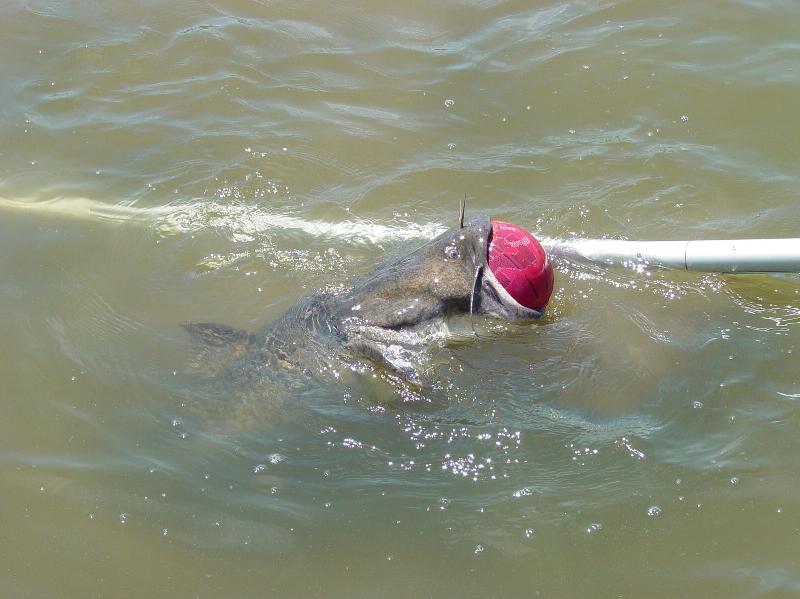
A Saturday smile fishy story!

But on this Saturday in November it really is a fish story, or so I thought.

Earlier in the month, I received an e-mail from Dan Gomez. It told of this tale from Grand Lake St. Marys:

A guy who lives at Lake Saint Mary’s (60 miles north of Dayton, OH ) saw a ball bouncing around kind of strange in the lake and went to investigate.

It turned out to be a flathead catfish that had apparently tried to swallow a basketball which became stuck in its mouth!!

The fish was totally exhausted from trying to dive, but unable to, because the ball would always bring him back up to the surface.

The guy tried numerous times to get the ball out, but was unsuccessful. He finally had his wife cut the ball in order to deflate it and release the hungry catfish.

You probably wouldn’t have believed this, if you hadn’t seen the following pictures:

Fish1

oooo

Fish2

oooo

Fish3

oooo

Fish4

oooo

Fish5

oooo

Be kinder than necessary because everyone bites off more than they can chew sometime in life…

oooOOOooo

I loved the story but then wanted to know: was it true?

Sadly, the story is true but the location is false.  Snopes.com researched this back in 2005. Hoax-Slayer.com wrote about it in 2007 after it “went viral”.

The true story originated in the Whichita (Kansas) Eagle on May 30, 2004. The man in the photo turns out to be Bill Driver, a fisherman at Sandalwood Lake who discovered the catfish with a taste for hardwood glory.

Two wonderful lessons to be learned from both the story and the story behind the story!

Don’t believe everything you read on the Internet and there’s always something fishy about a fisherman’s tale.

Have a great week-end.

Smart animals!

It’s not just dogs who can read us so well.

Millions of dog owners know how well their animals can read us humans; it’s been mentioned on Learning from Dogs many times before.

Try elephants.

There was a fascinating article on the BBC news website a few weeks ago that went on to explain:

10 October 2013

Elephants ‘understand human gesture’

By Victoria GillScience reporter, BBC News
African elephants have demonstrated what appears to be an instinctive understanding of human gestures, according to UK scientists. In a series of tests, researcher Ann Smet, of the University of St Andrews, offered the animals a choice between two identical buckets, then pointed at the one containing a hidden treat.

From the first trial, the elephants chose the correct bucket.

The results are published in the journal Current Biology.

The item included a short video that I am delighted to say is on YouTube.  Here it is:

Published on Oct 10, 2013

African elephants have demonstrated what appears to be an instinctive understanding of human gestures, according to UK scientists.

In a series of tests, researcher Ann Smet, of the University of St Andrews, offered the animals a choice between two identical buckets, then pointed at the one containing a hidden treat.

From the first trial, the elephants chose the correct bucket.

The results are published in the journal Current Biology.

The scientists worked with captive elephants at a lodge in Zimbabwe.

Prof Richard Byrne, a co-author on the research, said the elephants had been rescued from culling operations and trained for riding.

“They specifically train the elephants to respond to vocal cues. They don’t use any gestures at all,” said Prof Byrne.

“The idea is that the handler can walk behind the elephant and just tell it what to do with words.”

Despite this, the animals seemed to grasp the meaning of pointing from the outset.

Ms Smet added that she had been impressed by the animals’ apparently innate understanding of the gesture.

“Of course we had hoped that the elephants would be able to learn to follow human pointing, or we wouldn’t have done the experiment in the first place,” she said.

“But it was really surprising that they didn’t seem to have to learn anything.

“It seems that understanding pointing is an ability elephants just possess naturally and they are cognitively much more like us than has been realised.”

Prof Byrne said studying elephants helped build a map of part of the evolutionary tree that is very distant from humans.

“They’re so unrelated to us,” he told BBC News. “So if we find human-like abilities in an animal like an elephant, that hasn’t shared a common ancestor with people for more than 100 million years , we can be pretty sure that it’s evolved completely separately, by what’s called convergent evolution.”

The researchers said their findings might explain how elephants have successfully been tamed and have “historically had a close bond with humans, in spite of being potentially dangerous and unmanageable due to their great size”.

But the scientists added the results could be a hint that the animals gesture to one another in the wild with their “highly controllable trunks”.

Ms Smet told BBC News: “The next step [in our research] is to test whether when an elephant extends its trunk upwards and outwards – as they regularly do, such as when detecting a predator, this functions as a point.”

That BBC article goes on to highlight:

Prof Byrne said studying elephants helped build a map of part of the evolutionary tree that is very distant from humans.

“They’re so unrelated to us,” he told BBC News. “So if we find human-like abilities in an animal like an elephant, that hasn’t shared a common ancestor with people for more than 100 million years , we can be pretty sure that it’s evolved completely separately, by what’s called convergent evolution.”

The researchers said their findings might explain how elephants have successfully been tamed and have “historically had a close bond with humans, in spite of being potentially dangerous and unmanageable due to their great size”.

But the scientists added the results could be a hint that the animals gesture to one another in the wild with their “highly controllable trunks”.

Ms Smet told BBC News: “The next step [in our research] is to test whether when an elephant extends its trunk upwards and outwards – as they regularly do, such as when detecting a predator, this functions as a point.”

Now just where did I pack my old trunk.

Potentially dangerous Jerky Treats.

With thanks to Cynthia for including me on her recent email.

oooOOOooo

FDA seeks pet owner help on dangerous jerky treats

From Associated Press October 23, 2013 8:17 AM EST

WASHINGTON (AP) — The Food and Drug Administration is appealing to dog and cat owners for information as it struggles to solve a mysterious outbreak of illness and deaths among pets that ate jerky treats.

In a notice to consumers and veterinarians published Tuesday, the agency said it has linked illnesses from jerky pet treats to 3,600 dogs and 10 cats since 2007. About 580 of those pets have died.

The FDA’s Center for Veterinary Medicine has run more than 1,200 tests, visited pet treat manufacturing plants in China and worked with researchers, state labs and foreign governments but hasn’t determined the exact cause of the illness, the FDA statement said.

“This is one of the most elusive and mysterious outbreaks we’ve encountered,” Bernadette Dunham, a veterinarian and head of the FDA vet medicine center, said in the statement.

Pets can suffer from a decreased appetite, decreased activity, vomiting and diarrhea among other symptoms within hours of eating treats sold as jerky tenders or strips made of chicken, duck, sweet potatoes or dried fruit.

Severe cases have involved kidney failure, gastrointestinal bleeding, and a rare kidney disorder, the FDA said.

Most of the jerky treats implicated have been made in China, the FDA said.

The FDA has issued previous warnings. A number of jerky pet treat products were removed from the market in January after a New York state lab reported finding evidence of up to six drugs in certain jerky pet treats made in China, the FDA said. The agency said that while the levels of the drugs were very low and it was unlikely that they caused the illnesses, there was a decrease in reports of jerky-suspected illnesses after the products were removed from the market. FDA believes that the number of reports may have declined simply because fewer jerky treats were available.

oooOOOooo

That FDA Notice is here.  I have taken the liberty of republishing it in full.

oooOOOooo

Jerky Pet Treats

dog laying down

The problem

Since 2007, FDA has received reports of illnesses in pets associated with the consumption of jerky pet treats. As of September 24, 2013, FDA has received approximately 3000 reports of pet illnesses which may be related to consumption of the jerky treats. The reports involve more than 3600 dogs, 10 cats and include more than 580 deaths.

What we are doing

FDA is working with laboratories across the country to investigate causes. To date, testing for contaminants in jerky pet treats has not revealed a cause for the illnesses.

We have tested for:

  • Salmonella
  • Metals or Elements (such as arsenic, cadmium and lead, etc.)
  • Markers of irradiation level (such as acyclobutanones).
  • Pesticides
  • Antibiotics (including both approved and unapproved sulfanomides and tetracyclines)
  • Mold and mycotoxins (toxins from mold)
  • Rodenticides
  • Nephrotoxins (such as aristolochic acid, maleic acid, paraquat, ethylene glycol, diethylene glycol, toxic hydrocarbons, melamine, and related triazines)
  • Other chemicals and poisonous compounds (such as endotoxins).

Testing has also included measuring the nutritional composition of jerky pet treats to verify that they contain the ingredients listed on the label and do not contain ingredients that are not listed on the label. Another area of investigation includes the effects of irradiation and its byproducts.

Find out more.

What consumers can do

Watch your pet closely. Signs that may occur within hours to days of feeding the jerky treat products are decreased appetite, decreased activity, vomiting, diarrhea (sometimes with blood or mucus), increased water consumption and/or increased urination. Severe cases are diagnosed with pancreatitis, gastrointestinal bleeding, and kidney failure or the resemblance of a rare kidney related illness called Fanconi syndrome.

If your pet has experienced signs of illness, please report it to FDA. Once a consumer has filed a report with their local FDA Consumer Complaint Coordinator, or electronically through our safety reporting portal, FDA will determine whether there is a need to conduct a follow-up phone call or obtain a sample of the jerky pet treat product in question. While FDA does not necessarily respond to every individual complaint submitted, each report becomes part of the body of knowledge that helps to inform FDA on the situation or incident.

What veterinarians can do

The “Dear Veterinarian” letter to veterinary professionals explains how they can provide valuable assistance to the agency’s investigation, requests that veterinarians report to FDA any cases of jerky pet treat-related illness that come to their attention and, when requested, that they also provide samples for diagnostic testing by the Veterinary Laboratory Investigation and Response Network (Vet-LIRN), a network of veterinary laboratories affiliated with FDA.

oooOOOooo

I just mentioned this to Jeannie who says that while we do feed our dogs jerky treats, she is careful to purchase only those brands that are made in the USA.

Feel free to republish this howsoever you wish.

Picture parade sixteen

When the power of love overcomes the love of power, the world will know peace.

The last set of these beautiful photographs sent in by John Hurlburt.

If you missed John’s previous sets, then the first set is here and the second set here.

And don’t forget to read the closing remark at the foot of this post.


JH22

oooo

JH16

oooo

JH17

oooo

JH18

oooo

JH19

oooo

JH20

oooo

JH21

oooo

A few days ago, John sent me some more fabulous pictures.  They are of a different style to the last three weeks but still very charming.

The first set of the new pictures from John will be next Sunday, a  week from today.

You all look after yourselves out there.

Picture parade fifteen.

When the power of love overcomes the love of power, the world will know peace.

The second set of wonderful pictures sent in by John Hurlburt.  If you missed the first set, they are here.

JH09

oooo

JH10

oooo

JH11

oooo

JH12

oooo

JH13

oooo

JH14

oooo

JH15

oooo

And the final set from John next Sunday.

All change for November

“At that moment I must have lost my presence of mind.”

November's cause!
November’s cause!

A couple of years ago, in a fit of ‘all mouth and no trousers‘ I signed up to NaNoWriMo.  For the uninitiated that stands for National November Writing Month.

Why do I write ‘all mouth and no trousers‘?  Because in both the previous two Novembers I didn’t even think about writing a single word, let alone actually write a word.  OK, a year ago we were in the middle of settling down into our home here in Merlin.  But still ….

So this November, I have committed to have a go.  Or as the NaNoWriMo blog post explains:

NaNoWriMo 2013: Want to Write a Novel?

It’s just a few days until November, and you know what that means: National Novel Writing Month, better known ’round these parts as NaNoWriMo, is near.

Have you always wanted to write a novel?

We know some of you have been waiting all year for this month! For those of you who are new to this project, here’s the gist:

Who: You — whether you’re a seasoned novelist, novice writer, wannabe author, or a blogger up for a challenge.

What: A project in which you work toward a goal of writing a 50,000-word novel.

Where: On your laptop. At your desk. In your favorite café. Wherever inspiration strikes.

When: Kicking off this Friday, November 1, and ending at 11:59 pm on November 30.

Why: You’re creative and passionate about words. You’ve got a story to tell. You want to participate in a fun, rewarding project and push others to stretch their imaginations, too.

How: Sign up at NaNoWriMo.org, where you can plan your novel, track your progress, and join a community that offers support, encouragement, and advice — online and off.

So that means that for the month of November I shall have my head down for quite a fews hours each day in the self-imposed challenge of seeing if I can actually write a 50,000 word novel in one month! To put that into perspective, it’s the equivalent of 1,670 words every single day, seven days a week, for the thirty days of the month!

Ergo, the time for writing posts for Learning from Dogs is going to be very severely restricted!

In fact, it’s worse than that!  I’m going to be sharing my scribblings with you.

As the NaNoWriMo site goes on to suggest:

While the NaNoWriMo website is where you’ll capture the magic, we hope you’ll use your blog to post updates, test your material, and share tips:

Connect with other participants on WordPress.com. Be sure to follow NaNoWriMo in your Reader to read what others all over the world are writing and saying throughout the month.

Test material on your readers. While diving into a novel is a solitary journey, know that you’ve got a support network in your readership — they know your voice, so consider trying out material on your blog. Not sure if a scene is working? Post an excerpt.

Reflect on your writing process. If you don’t want to share your novel-in-progress or get too specific with your readers, that’s fine. But consider taking time in between your sessions to reflect on your process: roadblocks you’ve hit, questions about your craft, and advice for other participants.

“Share the lessons you learn about your writing — and yourself — through your NaNo journey,” says Kristi. Then, tag these posts with NaNoWriMo so others can find them. There’s already chatter in the Reader, so dive in: you’ll find resourceful and inspirational posts by bloggers like Kristen Lamb, Rachel Peterson, Cristian Mihai, and E.E. Blake.

My idea is to post completed chapters here on Learning from Dogs every couple of days or so.  Aiming for the foreword In the beginning to be posted here next Monday, the 4th. Then Chapter One, Chapter Two, and, just possibly, Chapter Three by the end of next week.  Tomorrow, November 1st, I will share my synopsis for my novel!

NaMoWriMo stress the importance of writing; writing; writing and not losing the impetus of getting those words out by dilly-dallying in constant editing; something that I am rather prone to do over what is now more than 1,850 posts since July, 2009!

Thus the writings posted on Learning from Dogs will have many obvious errors.  So what would be truly fantastic is to have your feedback, both good and bad, also highlighting crap writing and obvious mistakes, plus any ideas as to how the story might evolve. Because at this moment in time, I don’t have much of an idea.  Mind you, I bet I’m not alone.  The NaNoWriMo website shows there are 186,437 Novelists up for it this November!

During the intervening days, in other words non-sharing days, I’ll try and find something quick or humorous to post or, perhaps, repost something that has previously been published in this place.

So if all this doesn’t ‘rock your boat’, I’ll see you on December 1st!  Assuming there is some level of creative sanity left in me!

Have a good month, people!

Think differently.

“Before we change the world, we need to change the way we think.”

That quote comes from the sub-heading of an article in the magazine The New Statesman, Britain’s current affairs magazine.  In fact, written by Russell Brand from the week that he is guest editor for the magazine. Hence it following on from yesterday.

Guest editor for a week.

To remind readers, my post yesterday A powerful brand of truth centred around the interview on BBC Newsnight of Russell Brand by Jeremy Paxman.

Thus for today I wanted to offer some further thoughts from Russell Brand together with the film made by Dr Nafeez Ahmed. You will possibly recall that Dr. Ahmed was the author of the Guardian article that I quoted from yesterday.

Russell Brand’s New Statesman article spoke powerfully and eloquently of the issues that he covered in his BBC Newsnight interview.  With The New Statesman’s permission let me offer a few extracts:

First from where Brand is speaking about “young people, poor people, not-rich people”.

They see no difference between Cameron, Clegg, Boris, either of the Milibands or anyone else. To them these names are as obsolete as Lord Palmerston or Denis Healey. The London riots in 2011, which were condemned as nihilistic and materialistic by Boris and Cameron (when they eventually returned from their holidays), were by that very definition political. These young people have been accidentally marketed to their whole lives without the economic means to participate in the carnival. After some draconian sentences were issued, measures that the white-collar criminals who capsized our economy with their greed a few years earlier avoided, and not one hoodie was hugged, the compliance resumed. Apathy reigned.

There’s little point bemoaning this apathy. Apathy is a rational reaction to a system that no longer represents, hears or addresses the vast majority of people. A system that is apathetic, in fact, to the needs of the people it was designed to serve.

Russell Brand is also no slouch when it comes to offering solutions, as in:

These problems that threaten to bring on global destruction are the result of legitimate human instincts gone awry, exploited by a dead ideology derived from dead desert myths. Fear and desire are the twin engines of human survival but with most of our basic needs met these instincts are being engaged to imprison us in an obsolete fragment of our consciousness. Our materialistic consumer culture relentlessly stimulates our desire. Our media ceaselessly engages our fear, our government triangulates and administrates, ensuring there are no obstacles to the agendas of these slow-thighed beasts, slouching towards Bethlehem.

For me the solution has to be primarily spiritual and secondarily political. This, too, is difficult terrain when the natural tribal leaders of the left are atheists, when Marxism is inveterately Godless. When the lumbering monotheistic faiths have given us millennia of grief for a handful of prayers and some sparkly rituals.

By spiritual I mean the acknowledgement that our connection to one another and the planet must be prioritised. Buckminster Fuller outlines what ought be our collective objectives succinctly: “to make the world work for 100 per cent of humanity in the shortest possible time through spontaneous co-operation without ecological offence or the disadvantage of anyone”. This maxim is the very essence of “easier said than done” as it implies the dismantling of our entire socio-economic machinery. By teatime.

Towards the end of the article, or manifesto as Brand calls it, he speaks about the change that is required:

We are still led by blithering chimps, in razor-sharp suits, with razor-sharp lines, pimped and crimped by spin doctors and speech-writers. Well-groomed ape-men, superficially altered by post-Clintonian trends.

We are mammals on a planet, who now face a struggle for survival if our species is to avoid expiry. We can’t be led by people who have never struggled, who are a dusty oak-brown echo of a system dreamed up by Whigs and old Dutch racists.

We now must live in reality, inner and outer. Consciousness itself must change. My optimism comes entirely from the knowledge that this total social shift is actually the shared responsibility of six billion individuals who ultimately have the same interests. Self-preservation and the survival of the planet. This is a better idea than the sustenance of an elite. The Indian teacher Yogananda said: “It doesn’t matter if a cave has been in darkness for 10,000 years or half an hour, once you light a match it is illuminated.”

Then shortly thereafter:

The only systems we can afford to employ are those that rationally serve the planet first, then all humanity. Not out of some woolly, bullshit tree-hugging piffle but because we live on it, currently without alternatives. This is why I believe we need a unifying and in – clusive spiritual ideology: atheism and materialism atomise us and anchor us to one frequency of consciousness and inhibit necessary co-operation.

With the article/manifesto concluding:

But we are far from apathetic, we are far from impotent. I take great courage from the groaning effort required to keep us down, the institutions that have to be fastidiously kept in place to maintain this duplicitous order. Propaganda, police, media, lies. Now is the time to continue the great legacy of the left, in harmony with its implicit spiritual principles. Time may only be a human concept and therefore ultimately unreal, but what is irrefutably real is that this is the time for us to wake up.

The revolution of consciousness is a decision, decisions take a moment. In my mind the revolution has already begun.

It’s a powerful and very personal response to the issues facing all of humanity now and I can’t recommend too strongly reading the article in full.

So on to another powerful and personal analysis of the issues facing humanity. This time in a film made by Dr Nafeez Ahmed.  The film is called The Crisis of Civilization and shows, oh so clearly, the interconnectedness of the many issues we are facing these days. It’s nearly an hour-and-a-half long but eminently watchable.

Author and international security analyst Dr Nafeez Mosaddeq Ahmed on The Crisis of Civilization. Dr Ahmed is author of A User’s Guide to the Crisis of Civilization: And How to Save It, and co-producer of The Crisis of Civilization.

It often seems that different crises are competing to devastate civilization. The Crisis of Civilization argues that financial meltdown, environmental degradation, dwindling oil reserves, terrorism and food shortages need to be considered as part of the same ailing system.

Most accounts of our contemporary global crises focus on one area, or another, to the exclusion of others. The Crisis of Civilization suggests that the unwillingness of experts to look outside their own fields explains why there is so much disagreement and misunderstanding about the nature of the global threats we face. The Crisis of Civilization attempts to investigate all of these problem areas, not as isolated events, but as trends and processes that belong to a single global system. We are therefore not dealing with a ‘clash of civilizations’ as Samuel Huntington argued. Nor have we witnessed ‘the end of history’ that Francis Fukuyama prematurely declared. Rather, we are dealing with the end of the industrial age, a fundamental crisis of civilization itself.

oooOOOooo

OK, that’s the end of the serious stuff for this week.  Things are going to be very different here on Learning from Dogs for the month of November.

Tune in tomorrow and I’ll explain!