Like many who read yesterday’s post about this possibly being an age of loneliness I was struck by a terrible sense of sadness in George Monbiot’s words. Take these sentences:
Three months ago we read that loneliness has become an epidemic among young adults. Now we learn that it is just as great an affliction of older people. A study by Independent Age shows that severe loneliness in England blights the lives of 700,000 men and 1.1m women over 50, and is rising with astonishing speed.
Ebola is unlikely ever to kill as many people as this disease strikes down. Social isolation is as potent a cause of early death as smoking 15 cigarettes a day; loneliness, research suggests, is twice as deadly as obesity. Dementia, high blood pressure, alcoholism and accidents – all these, like depression, paranoia, anxiety and suicide, become more prevalent when connections are cut. We cannot cope alone.
It’s my proposition that not being able to cope with being alone derives from being unable to be fully at peace with oneself.
Yet, as dogs remind us so incredibly well, the ability to be on one’s own, to allow the brain to quieten down, to meditate in other words, is essential to our mental well-being. It is an essential part of the journey to find and like oneself. (I hasten to add that I write this without the benefit of any relevant professional knowledge!)
I am a neuropsychologist and have written and taught about the essential inner skills of personal well-being, psychological growth, and contemplative practice – as well as about relationships, family life, and raising children.Probably like you, there’s been a lot of to-ing and fro-ing in my life these days. Change can be interesting, exciting, and fun – but after awhile you start to long for something quieter, more stable.
A couple of weeks ago, the Just One Thing newsletter was all about stillness. It is republished below.
ooOOoo
Just One Thing (JOT) is the free newsletter that suggests a simple practice each week for more joy, more fulfilling relationships, and more peace of mind.
A small thing repeated routinely adds up over time to produce big results.
Things keep changing. The clock ticks, the day unfolds, trees grow, leaves turn brown, hair turns gray, children grow up and leave home, attention skitters from this to that, the cookie is delicious but then it’s all gone, you’re mad about something for awhile and then get over it, consciousness streams on and on and on.
Many changes are certainly good. Most people are glad to put middle school behind them. I’m still happy about shifting thirty years ago from single to married. Painkillers, flush toilets, and the internet seem like pretty good ideas. It’s lovely to watch grass waving in the wind or a river passing. Fundamentally, if there were no change, nothing could happen, reality would be frozen forever. I once asked my friend Tom what he thought God was and he said “possibility.”
On the other hand, many changes are uncomfortable, even awful. The body gets creaky, and worse. We lose those we love and eventually lose life itself. Families drift apart, companies fail, dictators tighten their grip, nations go to war. The planet warms at human hands, as each day we pour nearly a billion tons of carbon into the atmosphere. Countless species go extinct. As William Yeats wrote: “Things fall apart; the centre cannot hold.”
And change itself is often – maybe innately – stressful. When you really open to the fact always in front of our noses that each moment of now decays and disappears in the instant it arises – it can feel rather alarming. Life and time sweep us along. As soon as something pleasant occurs in the mind’s flow we reach for it but whoosh it passes away right through our fingers leaving disappointment behind. Inherently, anything that changes is not a reliable basis for enduring contentment and fulfillment.
Yet it is also true that some things remain always the same. In their stillness you can find a refuge, an island in the stream of changes, a place to stand for perspective and wisdom about events and your reactions to them, a respite from the race, quiet amidst the noise. Perhaps even find a sense of something transcendental, outside the frame of passing phenomena.
How?
Stillness, a sense of the unchanging, is all around, and at different levels. Look for it, explore its effects on you, and let it sink in.
For example, it’s not the ultimate stillness, but there is that lovely feeling when the house is quiet and you’re sitting in peace, the dishes are done and the kids are fine (or the equivalent), and you can really let down and let go. In your character, you have enduring strengths and virtues and values; situations change, but your good intentions persist. In relationships, love abides – even for people who drive you crazy!
More subtly, there is the moment at the very top of a tossed ball’s trajectory when it’s neither rising nor falling, the pause before the first stroke of the brush, that space between exhalation and inhalation, the silence in which sounds occur, or the discernible gap between thoughts when your mind is quiet.
In your mind there is always an underlying calm and well-being that contains emotional reactions, like a riverbed that is still even as the flood rushes over it (if you’re not aware of this, truly, with practice you can find and stabilize a sense of it). There is also the unchanging field of awareness, itself never altered by the thoughts passing through it.
More abstractly, 2+2=4 forever; the area of a circle will always be pi times the radius squared; etc. The fact that something has occurred will never change. The people who have loved you will always have loved you; they will always have found you lovable. Whatever is fundamentally true – including, ironically, the truth of impermanence – has an unchanging stillness at its heart. Things change, but the nature of things – emergent, interdependent, transient – does not.
Moving toward ultimate matters, and where language fails, you may have a sense of something unchangingly transcendental, divine. Or, perhaps related, an intuition of that which is unconditioned always just prior to the emergence of conditioned phenomena.
Wherever you find it, enjoy stillness and let it feed you. It’s a relief from the noise and bustle, a source of clarity and peace. Give yourself the space, the permission, to be still – at least in your mind – amidst those who are busy. To use a traditional saying:
May that which is still be that in which your mind delights.
Much as I respect Mr. Monbiot’s views, I hope he is wrong in this respect.
I have long admired the writings of George Monbiot and, as often as not, have republished his essays in this place.
But an essay by George that was published in the UK Guardian newspaper yesterday portrays a frightening picture of modern-day Britain. It was called Falling Apart and is republished, with George’s permission, today.
I want to offer a personal response to the essay, that immediately follows George’s piece.
ooOOoo
Falling Apart
October 14, 2014
Competition and individualism are forcing us into a devastating Age of Loneliness
By George Monbiot, published in the Guardian 15th October 2014
What do we call this time? It’s not the information age: the collapse of popular education movements left a void now filled by marketing and conspiracy theories(1). Like the stone age, iron age and space age, the digital age says plenty about our artefacts but little about society. The anthropocene, in which humans exert a major impact on the biosphere, fails to distinguish this century from the previous twenty. What clear social change marks out our time from those that precede it? To me it’s obvious. This is the Age of Loneliness.
When Thomas Hobbes claimed that in the state of nature, before authority arose to keep us in check, we were engaged in a war “of every man against every man”(2), he could not have been more wrong. We were social creatures from the start, mammalian bees, who depended entirely on each other. The hominims of East Africa could not have survived one night alone. We are shaped, to a greater extent than almost any other species, by contact with others. The age we are entering, in which we exist apart, is unlike any that has gone before.
Three months ago we read that loneliness has become an epidemic among young adults(3). Now we learn that it is just as great an affliction of older people. A study by Independent Age shows that severe loneliness in England blights the lives of 700,000 men and 1.1m women over 50(4), and is rising with astonishing speed.
Ebola is unlikely ever to kill as many people as this disease strikes down. Social isolation is as potent a cause of early death as smoking 15 cigarettes a day(5); loneliness, research suggests, is twice as deadly as obesity(6). Dementia, high blood pressure, alcoholism and accidents – all these, like depression, paranoia, anxiety and suicide, become more prevalent when connections are cut(7,8). We cannot cope alone.
Yes, factories have closed, people travel by car instead of buses, use YouTube rather than the cinema. But these shifts alone fail to explain the speed of our social collapse. These structural changes have been accompanied by a life-denying ideology, which enforces and celebrates our social isolation. The war of every man against every man – competition and individualism in other words – is the religion of our time, justified by a mythology of lone rangers, sole traders, self-starters, self-made men and women, going it alone. For the most social of creatures, who cannot prosper without love, there is now no such thing as society, only heroic individualism. What counts is to win. The rest is collateral damage.
British children no longer aspire to be train drivers or nurses, more than a fifth now say they “just want to be rich”: wealth and fame are the sole ambitions of 40% of those surveyed(9). A government study in June revealed that Britain is the loneliness capital of Europe(10). We are less likely than other Europeans to have close friends or to know our neighbours. Who can be surprised, when everywhere we are urged to fight like stray dogs over a dustbin?
We have changed our language to reflect this shift. Our most cutting insult is loser. We no longer talk about people. Now we call them individuals. So pervasive has this alienating, atomising term become that even the charities fighting loneliness use it to describe the bipedal entities formerly known as human beings(11). We can scarcely complete a sentence without getting personal. Personally speaking (to distinguish myself from a ventriloquist’s dummy), I prefer personal friends to the impersonal variety and personal belongings to the kind that don’t belong to me. Though that’s just my personal preference, otherwise known as my preference.
One of the tragic outcomes of loneliness is that people turn to their televisions for consolation: two-fifths of older people now report that the one-eyed god is their principal company(12). This self-medication enhances the disease. Research by economists at the University of Milan suggests that television helps to drive competitive aspiration(13). It strongly reinforces the income-happiness paradox: the fact that, as national incomes rise, happiness does not rise with them.
Aspiration, which increases with income, ensures that the point of arrival, of sustained satisfaction, retreats before us. The researchers found that those who watch a lot of television derive less satisfaction from a given level of income than those who watch only a little. Television speeds up the hedonic treadmill, forcing us to strive even harder to sustain the same level of satisfaction. You have only to think of the wall-to-wall auctions on daytime TV, Dragon’s Den, the Apprentice and the myriad forms of career-making competition the medium celebrates, the generalised obsession with fame and wealth, the pervasive sense, in watching it, that life is somewhere other than where you are, to see why this might be.
So what’s the point? What do we gain from this war of all against all? Competition drives growth, but growth no longer makes us wealthier. Figures published this week show that while the income of company directors has risen by more than a fifth, wages for the workforce as a whole have fallen in real terms over the past year (14). The bosses now earn – sorry, I mean take – 120 times more than the average full-time worker. (In 2000, it was 47 times). And even if competition did make us richer, it would make us no happier, as the satisfaction derived from a rise in income would be undermined by the aspirational impacts of competition.
The top 1% now own 48% of global wealth(15), but even they aren’t happy. A survey by Boston College of people with an average net worth of $78m found that they too are assailed by anxiety, dissatisfaction and loneliness(16). Many of them reported feeling financially insecure: to reach safe ground, they believed, they would need, on average, about 25% more money. (And if they got it? They’d doubtless need another 25%). One respondent said he wouldn’t get there until he had $1 billion in the bank.
For this we have ripped the natural world apart, degraded our conditions of life, surrendered our freedoms and prospects of contentment to a compulsive, atomising, joyless hedonism, in which, having consumed all else, we start to prey upon ourselves. For this we have destroyed the essence of humanity: our connectedness.
Yes, there are palliatives, clever and delightful schemes like Men in Sheds and Walking Football developed by charities for isolated older people(17). But if we are to break this cycle and come together once more, we must confront the world-eating, flesh-eating system into which we have been forced.
Hobbes’s pre-social condition was a myth. But we are now entering a post-social condition our ancestors would have believed impossible. Our lives are becoming nasty, brutish and long.
As closing sentences go, that’s about as tough as it gets.
Nevertheless, I’m going to offer a perspective, something that George doesn’t mention. That is the importance of community.
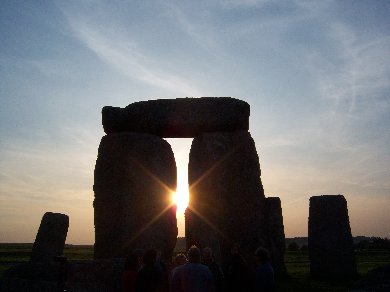
Back in 2008 BBC Timewatch screened a programme about the revelations that came from the latest archaeological dig at Stonehenge, near Amesbury in Wiltshire in England. I wrote about the programme over four years ago: Stonehenge – a place of healing.
Stonehenge is one of Britain’s most famous historical sites, deservedly so because Stonehenge was one of the most important places in ancient Europe.
Stonehenge
But evidence from a dig that was authorised in 2008 has shown that not only is Stonehenge a much older site of human habitation but that it’s purpose is altogether different to what has been assumed. It was, indeed, a healing place, possibly the most important in Europe.
Professors Tim Darvill and Geoff Wainwright are the world-renowned archaeologists who believe they have cracked the conundrum of Stonehenge’s original purpose.
If you would like to watch that Timewatch episode, and it is highly recommended, then someone has neatly uploaded it to YouTube.
The programme clearly offers evidence from the carbon-dating of seeds buried under the famous blue stones that dates this settlement to some 9,000 years BP. The detailed examination of ancient humans buried nearby indicates they came to Stonehenge with a range of diseases, many terminal in nature.
So back to George Monbiot’s essay and the element that screams out at me.
We have lost sight of the huge healing benefits that come from old-fashioned, shoulder-to-shoulder communities.
Not to mention the healing properties of a loving dog or two in one’s life!
A wonderful message from Sue of Sue Dreamwalker. Reders will recall that last Saturday, under the post title of And we’re back!, I offered a beautiful story told by the coal-mouse bird about the power of change. It included this sentence: “You see, it takes just one snowflake to make a difference.” In a very real sense, an example of that power of one snowflake was perfectly conveyed in Sue’s post a few days previously. Just read it, republished here with Sue’s blessings, and you will understand.
ooOOoo
Illusion.
What do you see in this Reality?
Do not your eyes view what is real to see?
Can you not touch the tangible fusion?
Or do we gaze into the ethers of illusion,
What trickery mocks us as we take in the lies
Binding our thoughts in roots of indoctrination
Following the herd, bleating like sheepHeld captive, half asleep.
What happened to the land of the Free?
Conform or suffer, or pay the penalty
What is your reality?
Come, let me walk you through the misty vale.
To where this illusion significantly pales
We are magnificent magicians whose thoughts cast their magic
Where all is possible, where to doubt is tragic
Seek and Find, let go of fear
Dance in joy as Light penetrates your sphere
For you have forgotten our Time’s lost spell
As into the abyss of darkness you dwell.
Open your eyes and open your hearts.
Let the Light dispel all dark
Fear nothing, hate less, and embrace ALL
Seek a new illusion before you fall.
Stop following blindly, grasp hold of Love today
Remember your tomorrows, forget your yesterdays
Reach for the memory held high up in the stars
And heal from within, let go of all your scars
Sit in the silence; begin to know who you are
As illusion drifts away revealing Ancient Stars
Your time is but a moment, live each moment well,
For soon the illusion shatters, broken like a spell.
I resurrected this poem which I published 4 years ago.. As it seems we are bombarded on all sides from the negative energies which are being put out..
Detach and spend some time in your Quiet zones of thought.. Bring in the Peace around you, and know that we are Magnificent BEings who have remarkable powers..
The Power of Thought!
What we Think we Create
We are the ones creating the chaos… So choose to create Peace.. Don’t allow yourselves to get caught up within the Fear being put out..
Know your time is but a moment, Live each moment well
For soon the Illusion shatters,
Broken like a Spell.
Enjoy your week
Blessings
Sue
ooOOoo
Whatever is going on in the world, whatever has the power to create fear in our minds, in the end it comes down to another power, the power of thought, and our choice of the behaviors that we offer the world.
That is why dogs are so important. Because they almost predominantly love sharing and living their lives in the company of humans.
Do you remember when puppy Oliver came to live with us?
Pharaoh passing on his wisdom to young Oliver.
Another picture of Oliver sitting on the lap of yours truly taken in the last couple of days.
How time passes by! For both of us in the picture!
In yesterday’s post, where I wrote about how Jean and I had the wonderful privilege of feeding a wild deer from our hands, I closed it with a p.s. This is what I wrote: “P.S.It is at times like this that we need poetry. So how about it: Sue?Kim? How would you describe in poetry what Jean and I experienced?“
Well, Sue, of Sue Dreamwalker, replied with a link to a poem of hers that she published back in 2012. I will say no more than republish, with permission, Sue’s beautiful words and close with one of the photographs from yesterday.
A connection with a wild animal doesn’t get better than this.
You may wonder, dear reader, how I “square the circle” in terms of a post title, Utterly beyond words, and then reaching out to you with the use of words! My answer to that legitimate question is that if I reflected for the rest of my life, I couldn’t verbalise adequately the feelings (but note p.s. at the end of the post) that went through me, and through Jean, when a mother deer and her young fawn, crossed the boundary between their wild, animal world and our human world.
This is what happened.
Last Sunday afternoon, around 4pm, I was pottering around the area of fruit trees just above our stables. We were fully aware that deer were coming in to our property to eat fallen apples as many times we had caught a glimpse of them through a window.
Anyway, on this particular afternoon outside by the stables, I noticed a deer eating some fallen apples and, somehow, picked up the idea that this gorgeous, wild animal was not stressed-out by me standing there looking at her from some twenty feet away.
After a few minutes of just watching, I quietly went across to the garage where we keep a bag of cob, or cracked corn, that we use to feed the deer during tough winter times. I collected a small amount in a round plastic tray and went back into the orchard area and sat with my back against the trunk of an old oak tree, spread my legs apart and placed the tray with the cob in between my knees.
The mother deer was still hunting around for fallen apples but within a couple of minutes looked across at me, clearly smelling the cob.
Slowly but steadily the beautiful creature came towards me and, miracle of miracles, trusted me sufficiently to eat from the tray. Her head was well within arm’s reach of me!
I was totally mesmerised by this beautiful, fragile, wild animal, head down, eating cob less than three feet from my face! I had the urge to touch her.
Slowly, I reached forward and took a small handful of the cob from the tray and with my other hand pulled the tray to one side. My hand with the cob was fully outstretched; my heart was whispering to the deer that I would never, ever harm her.
Softly, gently the deer reached towards me and nibbled the cob from my left hand.
Later on, when I relayed this incredible event to Jean, I said that if it was at all possible we must try and take a photograph of a wild deer feeding from our hands.
Moving on to Monday afternoon, camera ready if necessary, we kept an eye out for the return of the deer. There was no sign of her. Looked as though it wasn’t going to happen.
Then just before 7pm, I looked up from my desk and there, just outside the window, was the deer. But even better, this time the mother was accompanied by her young fawn.
I grabbed the camera and quickly told Jean to meet me outside with a refill of cob in the same plastic tray. We both sat down on the flat concrete cover of the septic tank; me with the camera, Jean with the tray of cob.
Over to the photographs! The daylight was fading fast and I was hand-holding the camera, thus these are not the sharpest of pictures. But so what!
The mother deer not even startled by the sound of the camera shutter!
oooo
Mother deer reaches down to feed; the tray is about three feet in front of Jean and me.
oooo
Jean reaches forward and gently draws the tray closer to us. Mother deer continues to feed.
oooo
Then, unbelievably, the wild deer continues feeding as Jean fondles the deer’s head and neck.
oooo
The trust between the deer and Jean then enabled the deer to feed from Jean’s hand.
oooo
There was a rustle in the leaves some twenty feet away and we saw the fawn watching her mother feeding on the cob. Jean pushed the tray away, just by a few feet, and the fawn came right up to her mother.
oooo
The culmination of the most magical of experiences: mother deer and her fawn eating together some three feet in front of us.
When I published my post Space for Nature a little over a week ago, a post that included a photograph of two deer some thirty feet from Jean’s car, never in my wildest dreams could I have imagined what took place last Tuesday afternoon.
Words truly do seem inadequate.
P.S. It is at times like this that we need poetry. So how about it: Sue?Kim? How would you describe in poetry what Jean and I experienced?
The wonderful BBC science programme, BBC Horizon, recently showed a fascinating programme entitled: Is your Brain Male or Female? The programme is introduced on the Horizon website:
Dr. Mosley and Prof. Roberts.
Dr Michael Mosley and Professor Alice Roberts investigate if male and female brains really are wired differently.
New research suggests that the connections in men and women’s brains follow different patterns, patterns which may explain typical forms of male and female behaviour. But are these patterns innate, or are they shaped by the world around us?
Using a team of human lab rats and a troop of barbary monkeys, Michael and Alice test the science and challenge old stereotypes. They ask whether this new scientific research will benefit both men and women – or whether it could drive the sexes even further apart.
Now I haven’t a clue as to how long this fascinating programme will remain on YouTube, but if you aren’t in the UK or don’t have access to the BBC iPlayer then don’t hesitate to watch it now.
Essentially, science shows that the ‘hard-wired’ differences are minute and the vast bulk of the preferences between the genders, trucks versus dolls, for example, is subtle conditioning from parents and the wider world; for instance, advertisements.
One thing that did jump ‘off the page’ at me was the evidence supporting how malleable or plastic is the brain. In other words, we are never too old to learn.
As if to reinforce that aspect of the flexibility of our brain, just yesterday morning I read an item on the BBC News website about memory.
As someone whose memory is a long way from where it used to be, this item really caught my attention:
Are there ways to stop yourself losing your memory? The latest brain research suggests there’s hope for the forgetful…
Memory loss has to be one of our biggest fears. Names, words, facts and faces – nothing is spared.
As the latest video from the Head Squeeze team describes above, mental deterioration was once thought to be an inevitable consequence of ageing, thanks to the steady erosion of our brain matter: we lose about 0.5% of our brain volume every year. The hippocampus – the region responsible for memory and learning – was thought to weather particularly badly; by the time we are 90, many of us have lost around a third of its grey matter.
Fortunately, recent research has shown that the brain is not concrete, but certain regions can adapt and grow. In 2000, a study of London taxi drivers, for instance, showed that the 4-year training of London’s 25,000 streets showed a remarkable growth in the hippocampus compared to bus drivers who early learnt a fixed number of routes. The scientists think that, by memorising the maps of London, the brain had built many more of the “synaptic connections” that allow the brain cells to communicate with each other. In other words, it may be possible to train the brain to compensate for some of the neural decline that accompanies our expanding waistlines and receding hairlines.
Challenging your brain could be one way of preserving your recollections – though the value of commercial brain training apps is debatable; some experiments seem to show that while people may become a whizz at the games on their screen, the improvements fail to transfer to daily life. But other, more traditional activities – like learning a musical instrument or a second language – do seem to have some protective benefits, at least on short-term recall. Ideally, it is probably best to keep your brain active throughout your life, well before you begin to approach your dotage.
Exercise and a healthy diet are also thought to offer some protection against dementia. As can an active social life – since regular contact with other people is also thought to excite our neurons and preserve our synapses. Ensuring that you regularly get a good night’s sleep helps too.
Of course, nothing can guarantee health and vitality in old age. But these few simple measures might give you the best possible chances of preserving your wits against the ravages of time.
For more videos subscribe to the Head Squeeze channel on YouTube. This video is part of a series produced in partnership with the European Union’s Hello Brain project, which aims to provide easy-to-understand information about the brain and brain health.
If you would like to comment on this video or anything else you have seen on Future, head over to our Facebook page or message us on Twitter.
So it’s clear now.
All I need to do is to learn a new language while in between my training to be the oldest trainee cabbie in London and applying for second violin position at the Royal Philharmonic Orchestra and I’ll never forget anything else in my life.
Oh, anyone seen where I left my car keys?
Or perhaps, harking back to the opening question of the differences between our sexes, I should be closing, thus:
With a sub-title regarding a missing dog, why on earth would I lead with a picture of fine food?
I will tell you.
In the last hour, Jean and I have come back from a meeting with the General Manager of a restaurant nearby in Grants Pass: the River’s Edge restaurant. That picture is on the home page of the restaurant’s website.
The GM’s name is Missy Clements and she is also the banqueting manager. Jean and I have previously enjoyed wonderful meals at the River’s Edge and the reason for meeting up with Missy was to kick around some ideas for a future event at the restaurant.
Anyway …..
During the meeting the conversation inevitably led to dogs and Missy, with obvious pain in her voice, explained that her six-year-old Boxer mix, Lucy, had recently gone missing.
I offered to post an item in this place, hence this coming out an an unusual time.
Please do all you can to share this, especially if you are in the Southern Oregon area. The address where Lucy was last seen was Crooks Creek Road, a few miles North-East of Selma in Oregon; Selma being 20 miles to the South-West of Grants Pass. If you have any questions or, even better, think you have some information on the whereabouts of Lucy then Missy has given me permission to publish her email address; that is: clements (dot) missy57 (at) gmail (dot) com
Australian artist Andy Thomas specializes in creating ‘audio life forms’: beautiful abstract shapes that react to sounds. In this animated short, he visualizes two recorded bird sounds from the archives of the Netherlands Institute for Sound and Vision in Hilversum.
I was blown away when I came across that video. Then a quick search found this place, from where one reads:
Australian multimedia artist Andy Thomas makes bird songs dance with 3D animations. It’s the latest in his line of “audio life forms.”
Using 3D visualization software and other programs, Thomas breaks down photos of insects, orchids, and birds into their composite parts. He then reassembles the images in a sort of collage and builds trippy animations that react, based on rules he’s set, to sound – in this case, archival bird song.
The resulting multimedia visualizations are stunning. They also suggest what you might see if you stood in the forest listening to the birds, while tripping on acid. The psychedelic feel is enhanced by the constant shape-shifting of the form, which in turn encourages you to be hyper-aware of the full range of tweets and trills.
Thomas has been painting and drawing since he was a child. In 1997 he began exploring the realm of digital art, and in recent years started experimenting with “creating a visual fusion between Nature and Technology.” But he also describes this work a bit moralistically “corrupting nature with technology.”
It was then a moment to go across to Andy’s website; which I strongly encourage you to do – the pictures are stunning: trust me! Just try yesterday’s Insect Friday photograph!
Another of Andy’s wonderful images.
Golly, there are some very clever people out there!
We all need a reminder of the many good things happening in our world!
It’s common knowledge that homo sapiens is wired to react to the threat of danger in a rapid manner. But while the danger of a bear or a lion jumping on us from out of the trees is much diminished in the 21st century, our fear-response circuits are still alive and active. One of the fundamental reasons why so much of the media ‘sells’ stories via alarmist headlines.
Thus it was a real delight to come across a magazine with the simple, yet powerful, brand name of YES!
Cover of the current issue of YES!
Even better than coming across YES! was receiving a complimentary subscription for Jean and me! (Thanks John H!) Jean and I took to the magazine immediately. Not only because of an active blog but also because of their support for sharing their content. I quote:
Reprints & Reposts
We want you to pass along the work of YES! Magazine. All we ask is that you follow these easy steps:
Text
For all material designated Creative Commons (cc):
(as used herein, material means the text of the articles, and does not mean titles, images, or illustrations)
Use the same byline information that we have placed at the end of the article. For reposts, keep links intact.
Material is free except for commercial use.
Do not alter, change, or add to the material.
Please notify us that you are reprinting by sending an email to reprints [at] yesmagazine.org.
We have adopted Creative Commons licensing beginning with our issue #44. We readily grant reprint permission for earlier copyrighted material, upon request. Just ask us at reprints [at] yesmagazine.org. We occasionally reprint or excerpt material that is copyrighted by others, and this material is NOT included in the Creative Commons license.
The Buy Nothing Project began as an experimental hyper-local gift economy on Bainbridge Island, WA; in just 8 months, it has become a social movement, growing to over 25,000 members in 150 groups, in 4 countries. Our local groups form gift economies that are complementary and parallel to local cash economies; whether people join because they’d like to quickly get rid of things that are cluttering their lives, or simply to save money by getting things for free, they quickly discover that our groups are not just another free recycling platform. A gift economy’s real wealth is the people involved and the web of connections that forms to support them. Time and again, members of our groups find themselves spending more and more time interacting in our groups, finding new ways to give back to the community that has brought humor, entertainment, and yes, free stuff into their lives. The Buy Nothing Project is about setting the scarcity model of our cash economy aside in favor of creatively and collaboratively sharing the abundance around us.
How does the Buy Nothing Project work? Using the free platform provided by Facebook Groups, Buy Nothing Project members can easily participate with their local group. Our rules are simple: “Post anything you’d like to give away, lend, or share amongst neighbors. Ask for anything you’d like to receive for free or borrow. Keep it legal. Keep it civil. No buying or selling, no trades or bartering, we’re strictly a gift economy.” The transparency of Facebook groups’ design allows our members to see mutual friends they share with relative strangers, and to build trust based on real-life connections visible through personal profile information. This trust allows groups to grow quickly and encourages people to both give freely and ask for what they need; everything from toilet paper roll springs to rides home from the doctor; burial sites for beloved pets to freshly-baked bread and casseroles have been given freely; our members share things mundane and meaningful in equal measure, and throughout it all connect with each other by means of the shared personal stories and chatting encouraged by the platform. We rely on our co-founders’ daily guidance and direction for the development of our nascent culture, assisted by a team of volunteer local administrators who have on-the-ground knowledge of their communities.
Why the Buy Nothing Project? The Buy Nothing Project is brought to you by the creators of Trash Backwards (www.trashbackwards.com,) an app that helps you with the last of the 3 Rs, “Reusing” and “Recycling” the everyday things in your life. The Buy Nothing Project addresses the first of the 3 R’s, “Reduce” as well as the lesser-known Rs “Refuse” and “Rethink.” Participating in a local Buy Nothing Project group allows individuals and communities to reduce their own dependence on single-use and virgin materials by extending the life of existing items through gifting and sharing between group members. Rethinking consumption and refusing to buy new in favor of asking for an item from a neighbor may make an impact on the amount of goods manufactured in the first place, which in turn may put a dent in the overproduction of unnecessary goods that end up in our landfills, watersheds, and our seas. It most certainly creates connections between people who see each other in real life, not just online, leading to more robust communities that are better prepared to tackle both hard times and good by giving freely. The Trash Backwards app, blog articles, and Buy Nothing Project groups are diverting more materials from our landfills and oceans than we can possibly quantify as hundreds of items are rehomed each day.
The Buy Nothing Project Strengthens Communities.
Our Statistics:
With over 25,000 members and growing every day, we have a captive audience in each of our groups. Most members visit the group pages several times a day and many literally spend hours there, commenting, reading posts, while posting their own gifts and wants.
Our Trash Backwards blog, app, and the Buy Nothing Project website garner over 50,000 unique visitors per month. With 7,000 followers on Pinterest and 3,775 “likes” on our Facebook Pages, we have enough sway to bring significant traffic to our sites whenever we upload news or new blog posts.
Funding:
With funding to staff our core project, PR, legal help, design, and developers, the Buy Nothing movement will grow quickly, spreading the joys of gift economy giving and receiving. The world is ready for this experimental model of sharing our possessions and talents to help others, but the endeavor needs its basic operational costs covered to foster the movement even further.
Isn’t that a fabulous idea!
I’m determined to start a local group here in Merlin, Oregon.
My final item of good news, that I’m sure many others read about, was:
A declaration announced as part of a UN summit on climate change being held in New York also pledges to halve the rate of deforestation by the end of this decade and to restore hundreds of millions of acres of degraded land.
The Guardian newspaper released the news, as follows:
UN climate summit pledges to halt the loss of natural forests by 2030
New York declaration on forests could cut carbon emissions equivalent of taking all the world’s cars off the road
PEKANBARU, SUMATRA, INDONESIA – JULY 11: A forest activist inspects land clearing and drainage of peat natural forest located on the concession of PT RAPP (Riau Andalan Pulp and Paper), a subsidiary of APRIL group which is being developed for a pulp and paper plantation at Pulau Padang, Kepulauan Meranti district on July 11, 2014 in Riau province, Sumatra, Indonesia. The Nature Climate Change journal has reported that Indonesia lost 840,000 hectares of natural forest in 2012 compared to 460,000 hectares in Brazil despite their forest being a quarter of the size of the Amazon rainforest. According to Greenpeace, the destruction of forests is driven by the expansion of palm oil and pulp & paper has increased the greenhouse gas emissions, pushing animals such as sumatran tigers to the brink of extinction, and local communities to lose their source of life. (Photo by Ulet Ifansasti/Getty Images)
Governments, multinational companies and campaigners are pledging to halt the loss of the world’s natural forests by 2030.
A declaration announced as part of a UN summit on climate change being held in New York also pledges to halve the rate of deforestation by the end of this decade and to restore hundreds of millions of acres of degraded land.
Backers of the New York declaration on forests claim their efforts could save between 4.5bn and 8.8bn tonnes of carbon emissions per year by 2030 – the equivalent of taking all the world’s cars off the road.
The UK, Germany and Norway have pledged to enter into up to 20 programmes over the next couple of years to pay countries for reducing their deforestation, which could be worth more than £700m.
Companies such as Kellogg’s, Marks & Spencer, Barclays, Nestle, the palm oil giant Cargill, Asia Pulp and Paper and charities including the RSPB, WWF and the International Union for Conservation of Nature (IUCN) have signed the declaration.
The declaration’s supporters say ending the loss of the world’s natural forests will be an important part of limiting global temperature rises to 2C, beyond which the worst impacts of climate change are expected to be felt.
It comes after analysis suggests that land use change such as deforestation accounts for around 8% of the world’s carbon emissions, with carbon dioxide released when trees are felled and burned to free up land for agriculture or development.
“Forests represent one of the largest, most cost-effective climate solutions available today,” the declaration says.
“Action to conserve, sustainably manage and restore forests can contribute to economic growth, poverty alleviation, rule of law, food security, climate resilience and biodiversity conservation.”
Signatories to the declaration are committing to a number of steps to halt forest loss, including backing a private sector goal of eliminating deforestation from producing agricultural products such as palm oil, soy, paper and beef by no later than 2020.
They are also seeking to support alternatives to deforestation which is caused by subsistence farming and the need for wood fuel for energy and reward countries that reduce forest emissions.
Cargill promises to stop chopping down rainforests. This is huge.
By Nathanael Johnson
Everything I’ve been reading about the U.N. Climate Summit had been making me pretty gloomy, until I read about the New York Declaration on Forests.
The first notice was a press release from the Rainforest Action Network informing me that Cargill, the agribusiness giant, had pledged “to protect forests in all of Cargill’s agricultural supply chains and to endorse the New York Declaration on Forests.” Cargill has a big handprint — they have soy silos in Brazil and palm oil plants in Malaysia. So as of now, if you want to carve a farm out of the jungle, you’re going to get the cold shoulder from a company that is a prime connector to world markets.
And this isn’t limited to hot-button crops like soy and oil palm. Here’s what Cargill’s CEO Dave MacLennan said at the U.N.: “We understand that this sort of commitment cannot be limited to just select commodities or supply chains,” said MacLennan. “That’s why Cargill will take practical measures to protect forests across our agricultural supply chains around the world.”
It’s not just Cargill. Kellogg’s, Unilever, Nestle, Asia Pulp and Paper, General Mills, Danone, Walmart, McDonalds, and many other corporations have committed to the New York Declaration on Forests. But, here’s why Cargill is interesting: It’s making a concrete pledge, while the actual declaration is pretty mushy at this point. The declaration calls for ending forest loss by 2030. And, to quote a U.N. brief: “It also calls for restoring forests and croplands of an area larger than India. Meeting these goals would cut between 4.5 and 8.8 billion tons of carbon pollution every year — about as much as the current emissions of the United States.” Or about as much as taking all the cars in the world off the roads — that’s another comparison I’ve seen. The details are supposed to be hammered out in time for the 2015 convention in Paris.
So as much as you, I and hundreds of thousands of others get battered with ‘gloom and doom’ stories every single day, we do need to balance that out from time-to-time with the good things around us. Also every single day.
“Honesty is the first chapter in the book of wisdom.”
Thus spoke Thomas Jefferson who died nearly 200 years ago (April 13th, 1743 – July 4th, 1826).
But some essays that have passed my eyes in the last few days have profoundly disturbed me. Because they illustrate, well to me anyway, the parlous state of wisdom in today’s world. Or better put, the parlous state of truth and integrity in today’s world.
The first essay was the latest one from Tom Engelhardt over at TomDispatch. Normally I republish TomDispatch essays in full, with permission I hasten to add, because they seem such a fine commentary of where we are as a ‘modern’ society. I used the word ‘we’ in the context of a global ‘we’.
But the latest essay was so disheartening that I couldn’t bring myself to republish it in full. Plus, if I am to be brutally honest (in line with the theme of today’s blog post!) I didn’t want to ‘make waves’ as a non-US citizen albeit a valid US resident (Green Card holder). I want to live freely and openly in the USA for the rest of my natural days!
Then in the last twenty-four hours up popped the latest essay from George Monbiot and I was struck by the harmony, the terrible harmony, between Tom and George.
See if you agree with me.
Tom Engelhardt published on Tuesday a TomGram about American Intelligence. It was called Failure Is Success – How American Intelligence Works in the Twenty-First Century.
Here’s a flavour of Tom’s essay.
What are the odds? You put about $68 billion annually into a maze of 17 major intelligence outfits. You build them glorious headquarters. You create a global surveillance state for the ages. You listen in on your citizenry and gather their communications in staggering quantities. Your employees even morph into avatars and enter video-game landscapes, lest any Americans betray a penchant for evil deeds while in entertainment mode. You collect information on visits to porn sites just in case, one day, blackmail might be useful. You pass around naked photos of them just for… well, the salacious hell of it. Your employees even use aspects of the system you’ve created to stalk former lovers and, within your arcane world, that act of “spycraft” gains its own name: LOVEINT.
You listen in on foreign leaders and politicians across the planet. You bring on board hundreds of thousands of crony corporate employees, creating the sinews of an intelligence-corporate complex of the first order. You break into the “backdoors” of the data centers of major Internet outfits to collect user accounts. You create new outfits within outfits, including an ever-expanding secret military and intelligence crew embedded inside the military itself (and not counted among those 17 agencies). Your leaders lie to Congress and the American people without, as far as we can tell, a flicker of self-doubt. Your acts are subject to secret courts, which only hear your versions of events and regularly rubberstamp them — and whose judgments and substantial body of lawmaking are far too secret for Americans to know about.
Then a few paragraphs later, Tom holds up his mirror:
Whatever the case, while taxpayer dollars flowed into your coffers, no one considered it a problem that the country lacked 17 overlapping outfits bent on preventing approximately 400,000 deaths by firearms in the same years; nor 17 interlocked agencies dedicated to safety on our roads, where more than 450,000 Americans have died since 9/11. (An American, it has been calculated, is 1,904 times more likely to die in a car accident than in a terrorist attack.) Almost all the money and effort have instead been focused on the microscopic number of terrorist plots — some spurred on by FBI plants — that have occurred on American soil in that period. On the conviction that Americans must be shielded from them above all else and on the fear that 9/11 bred in this country, you’ve built an intelligence structure unlike any other on the planet when it comes to size, reach, and labyrinthine complexity.
It’s quite an achievement, especially when you consider its one downside: it has a terrible record of getting anything right in a timely way. Never have so many had access to so much information about our world and yet been so unprepared for whatever happens in it.
Tough words indeed!
But it gets worse.
Let’s focus for a moment, however, on a case where more is known. I’m thinking of the development that only recently riveted the Obama administration and sent it tumbling into America’s third Iraq war, causing literal hysteria in Washington. Since June, the most successful terror group in history has emerged full blown in Syria and Iraq, amid a surge in jihadi recruitment across the Greater Middle East and Africa. The Islamic State (IS), an offshoot of al-Qaeda in Iraq, which sprang to life during the U.S. occupation of that country, has set up a mini-state, a “caliphate,” in the heart of the Middle East. Part of the territory it captured was, of course, in the very country the U.S. garrisoned and occupied for eight years, in which it had assumedly developed countless sources of information and recruited agents of all sorts. And yet, by all accounts, when IS’s militants suddenly swept across northern Iraq, the CIA in particular found itself high and dry.
The IC seems not to have predicted the group’s rapid growth or spread; nor, though there was at least some prior knowledge of the decline of the Iraqi army, did anyone imagine that such an American created, trained, and armed force would so summarily collapse. Unforeseen was the way its officers would desert their troops who would, in turn, shed their uniforms and flee Iraq’s major northern cities, abandoning all their American equipment to Islamic State militants.
Nor could the intelligence community even settle on a basic figure for how many of those militants there were. In fact, in part because IS assiduously uses couriers for its messaging instead of cell phones and emails, until a chance arrest of a key militant in June, the CIA and the rest of the IC evidently knew next to nothing about the group or its leadership, had no serious assessment of its strength and goals, nor any expectation that it would sweep through and take most of Sunni Iraq. And that should be passing strange. After all, it now turns out that much of the future leadership of IS had spent time together in the U.S. military’s Camp Bucca prison just years earlier.
All you have to do is follow the surprised comments of various top administration officials, including the president, as ISIS made its mark and declared its caliphate, to grasp just how ill-prepared 17 agencies and $68 billion can leave you when your world turns upside down.
Leaving Tom to offer the following sorry conclusions:
Clearly, having a labyrinth of 17 overlapping, paramilitarized, deeply secretive agencies doing versions of the same thing is the definition of counterproductive madness. Not surprisingly, the one thing the U.S. intelligence community has resembled in these years is the U.S. military, which since 9/11 has failed to win a war or accomplish more or less anything it set out to do.
On the other hand, all of the above assumes that the purpose of the IC is primarily to produce successful “intelligence” that leaves the White House a step ahead of the rest of the world. What if, however, it’s actually a system organized on the basis of failure? What if any work-product disaster is for the IC another kind of win.
Perhaps it’s worth thinking of those overlapping agencies as a fiendishly clever Rube Goldberg-style machine organized around the principle that failure is the greatest success of all. After all, in the system as it presently exists, every failure of intelligence is just another indication that more security, more secrecy, more surveillance, more spies, more drones are needed; only when you fail, that is, do you get more money for further expansion.
Keep in mind that the twenty-first-century version of intelligence began amid a catastrophic failure: much crucial information about the 9/11 hijackers and hijackings was ignored or simply lost in the labyrinth. That failure, of course, led to one of the great intelligence expansions, or even explosions, in history. (And mind you, no figure in authority in the national security world was axed, demoted, or penalized in any way for 9/11 and a number of them were later given awards and promoted.) However they may fail, when it comes to their budgets, their power, their reach, their secrecy, their careers, and their staying power, they have succeeded impressively.
You could, of course, say that the world is simply a hard place to know and the future, with its eternal surprises, is one territory that no country, no military, no set of intelligence agencies can occupy, no matter how much they invest in doing so. An inability to predict the lay of tomorrow’s land may, in a way, be par for the course. If so, however, remind me: Why exactly are we supporting 17 versions of intelligence gathering to the tune of at least $68 billion a year?
So over to George Monbiot. Yesterday, he published an essay in the UK’s Guardian newspaper entitled: Bomb Everyone. I am going to republish this in full, with the kind permission of George.
ooOOoo
Bomb Everyone
Humanitarian arguments, if consistently applied, could be used to flatten the entire Middle East
By George Monbiot, published in the Guardian 1st October 2014
Let’s bomb the Muslim world – all of it – to save the lives of its people. Surely this is the only consistent moral course? Why stop at blowing up Islamic State, when the Syrian government has murdered and tortured so many? This, after all, was last year’s moral imperative. What’s changed?
How about blasting the Shia militias in Iraq? One of them selected 40 people from the streets of Baghdad in June and murdered them for being Sunnis(1). Another massacred 68 people at a mosque in August(2). They now talk openly of “cleansing” and “erasure”(3), once Islamic State has been defeated. As a senior Shia politician warns, “we are in the process of creating Shia al-Qaida radical groups equal in their radicalisation to the Sunni Qaida.”(4)
What humanitarian principle instructs you to stop there? In Gaza this year, 2,100 Palestinians were massacred: including people taking shelter in schools and hospitals. Surely these atrocities demand an air war against Israel? And what’s the moral basis for refusing to liquidate Iran? Mohsen Amir-Aslani was hanged there last week for making “innovations in the religion” (suggesting that the story of Jonah in the Qu’ran was symbolic rather than literal)(5). Surely that should inspire humanitarian action from above? Pakistan is crying out for friendly bombs: an elderly British man, Mohammed Asghar, who suffers from paranoid schizophrenia, is, like other blasphemers, awaiting execution there after claiming to be a holy prophet(6). One of his prison guards has already shot him in the back.
Is there not an urgent duty to blow up Saudi Arabia? It has beheaded 59 people so far this year, for offences that include adultery, sorcery and witchcraft(7). It has long presented a far greater threat to the west than Isis now poses. In 2009 Hillary Clinton warned in a secret memo that “Saudi Arabia remains a critical financial support base for al-Qa’ida, the Taliban … and other terrorist groups.”(8) In July, the former head of MI6, Sir Richard Dearlove, revealed that Prince Bandar bin Sultan, until recently the head of Saudi intelligence, told him: “The time is not far off in the Middle East, Richard, when it will be literally ‘God help the Shia’. More than a billion Sunnis have simply had enough of them.”(9) Saudi support for extreme Sunni militias in Syria during Bandar’s tenure is widely blamed for the rapid rise of Isis(10,11). Why take out the subsidiary and spare the headquarters?
The humanitarian arguments aired in parliament last week(12), if consistently applied, could be used to flatten the entire Middle East and West Asia. By this means you could end all human suffering, liberating the people of these regions from the vale of tears in which they live.
Perhaps this is the plan: Barack Obama has now bombed seven largely-Muslim countries(13), in each case citing a moral imperative. The result, as you can see in Libya, Iraq, Pakistan, Afghanistan,Yemen, Somalia and Syria, has been the eradication of jihadi groups, of conflict, chaos, murder, oppression and torture. Evil has been driven from the face of the earth by the destroying angels of the west.
Now we have a new target, and a new reason to dispense mercy from the sky, with similar prospects of success. Yes, the agenda and practices of Isis are disgusting. It murders and tortures, terrorises and threatens. As Obama says, it is a “network of death”(14). But it’s one of many networks of death. Worse still, a western crusade appears to be exactly what it wants(15).
Already Obama’s bombings have brought Isis and Jabhat al-Nusra, a rival militia affiliated to Al Qaeda, together(16). More than 6,000 fighters have joined Isis since the bombardment began(17). They dangled the heads of their victims in front of the cameras as bait for war planes. And our governments were stupid enough to take it.
And if the bombing succeeds? If – and it’s a big if – it manages to tilt the balance against Isis, what then? Then we’ll start hearing once more about Shia death squads and the moral imperative to destroy them too – and any civilians who happen to get in the way. The targets change; the policy doesn’t. Never mind the question, the answer is bombs. In the name of peace and the preservation of life, our governments wage perpetual war.
While the bombs fall, our states befriend and defend other networks of death. The US government still refuses – despite Obama’s promise – to release the 28 redacted pages from the Joint Congressional Inquiry into 9/11, which document Saudi Arabian complicity in the attack on America(18). In the UK, in 2004 the Serious Fraud Office began investigating allegations of massive bribes paid by the British weapons company BAE to Saudi ministers and middlemen. Just as the crucial evidence was about to be released, Tony Blair intervened to stop the investigation(19). The biggest alleged beneficiary was Prince Bandar, mentioned above. The Serious Fraud Office was investigating a claim that, with the approval of the British government, he received £1bn in secret payments from BAE(20).
And still it goes on. Last week’s Private Eye, drawing on a dossier of recordings and emails, alleges that a British company has paid £300m in bribes to facilitate weapons sales to the Saudi National Guard(21). When a whistleblower in the company reported these payments to the British ministry of defence, instead of taking action it alerted his bosses. He had to flee the country to avoid being thrown into a Saudi jail. Smirking, lying, two-faced bastards – this scarcely begins to touch it.
There are no good solutions that military intervention by the UK or the US can engineer. There are political solutions in which our governments could play a minor role: supporting the development of effective states that don’t rely on murder and militias, building civic institutions that don’t depend on terror, helping to create safe passage and aid for people at risk. Oh, and ceasing to protect and sponsor and arm selected networks of death. Whenever our armed forces have bombed or invaded Muslims nations, they have made life worse for those who live there. The regions in which our governments have intervened most are those which suffer most from terrorism and war. That is neither coincidental nor surprising.
Yet our politicians affect to learn nothing. Insisting that more killing will magically resolve deep-rooted conflicts, they scatter bombs like fairy dust.
21. Richard Brooks and Andrew Bousfield, 19th September 2014. Shady Arabia and the Desert Fix. Private Eye.
ooOOoo
Two journalists reporting from two very different countries separated by thousands of miles.
Yet together they illustrate the very low regard for truth, for truth and integrity I should add, held by two major western Governments. That old saying of never underestimate the power of unintended consequences is hammering inside my head.
What very strange times we live in just now.
The sooner the concepts of truth and integrity are adopted by those with the power, money and influence, the sooner this world will turn away from what looks eminently like future self-destruction.
Let’s turn to dogs for some examples of beautiful ways of living.