So said Sir Winston Churchill. It applies equally to the price of power.
There was an essay recently written and published by Hariod Brawn over on her blog Contentedness.net that was incredibly thought-provoking and very beautiful besides. Hariod has given me permission to republish it and it follows shortly.
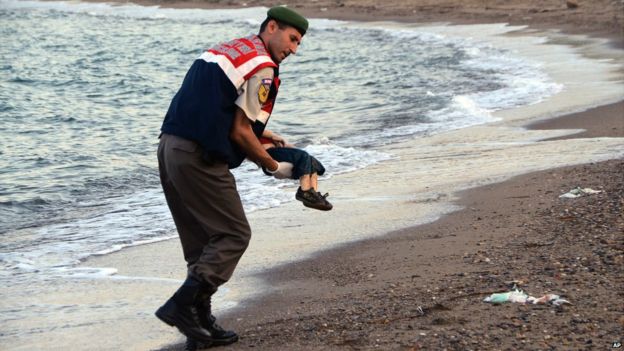
I have no doubt that Hariod’s essay was, in part, inspired by that terrible photograph that has been circulated and commented upon by thousands around the world.
In the words of the BBC, “The pictured boy is reported to be three-year-old Aylan, who drowned along with his five-year-old brother Galip and their mother, Rihan. Their father, Abdullah Kurdi, survived.”
The emotions created by this and other tragic photographs are disturbing, and I am no exception to having those same emotions. But as friend, Chris Snuggs, mentioned in a telephone call between us yesterday morning, what has been happening in Syria is no less terrible, perhaps even more so when one looks at the blood that is, metaphorically, on the hands of a number of western governments. The old saying of reaping what we sow comes to mind.
None of which takes away the intense beauty of Hariod’s essay: Empathetic apes.
ooOOoo
Empathic apes
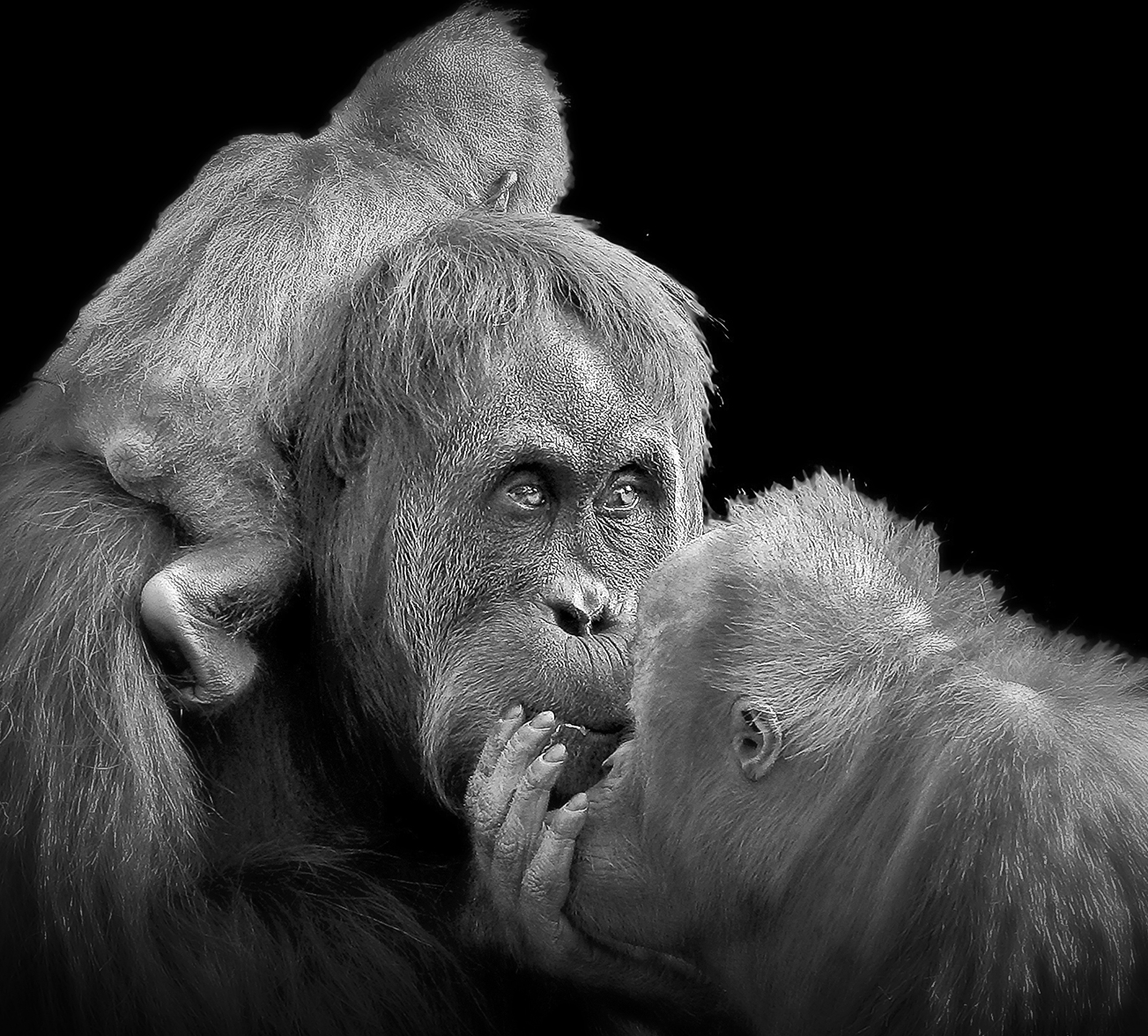
Orangutan mother and kids. By Patrick Bouquet, Chantilly.
The year is 1955, and far from the nearest village, somewhere within the Northwestern jungle region of Thailand, a 48 year-old Englishman and ordainee to the Buddhist monkhood sits quietly in studious attention. A few feet away, a female ape sits, arms carefully wrapped around some precious possession. The monk first chanced upon her the previous day, and due to the curiosity roused in observing her melancholic countenance, has remained respectfully nearby to her. A trust has developed, the ape sensing the monk’s gentle disposition and harmlessness. He really ought to be making his way to the village for alms, yet somehow senses that he should stay. A silent, palpable communication has developed between the two, and slowly, carefully and deliberately, the ape, her sadness still etched upon her face, finally unfolds her arms and offers a first sight of what she has been protecting. The monk slowly approaches to within a pace or two, sensing the invitation, only to catch sight of her lifeless and terribly deformed baby.
Two empathic apes, ancestrally and psychologically speaking, separated by little more in this moment than a distant, lineage-splitting, speciation event. Opposable thumbs, one hers and one his, in turn chase away a monk’s tear and a delicately mottled butterfly as it alights from the baby’s forehead, though cannot do the same for their conjoined feelings. Eyes meet, evincing as they do a deepening rush of sadness. Nothing can be done – is this what she is thinking in her way? In his unknowing, the saffron-robed wanderer radiates compassion, yet knows he has nothing to do with it; an offering from wisdom, not from the self. All that need be known arrives in the fullest of measures. What use now the venerable elder’s sagacity, his knowledge of emptiness, renunciation, equanimity, the void? She inhabits the void, is the void, her bleak knowing piercing its veils. Without turning, the monk slowly retreats, still reverently holding her gaze alongside a shared understanding. A slight suggestion of a bowing head betokens what passes between them.
It is the ability to empathise which in part distinguishes the psychopathic mind from its otherwise healthy state, and the primary orbit of empathy is that of feeling, not the mere gyrations of intellect. This is why many species of sentience can empathise, and we human animals are but one of them. We may erroneously presume that an ability to reflect upon others’ situations facilitates human empathic capacity; yet the state of those others and their situations need not be known as verbally abstracted objects in the mind – little stories packaged in words. We may just as well occupy others’ frames of reference by intuited means; and vitality, morbidity, distress and joy may all be recognised across species in differing ways; one need not indulge any anthropomorphisation, for clear evidence abounds. What is intuited here, or instinctively known, is the nature of the other’s felt emotional condition; and in this way, 60 years ago, the grieving mother ape and mendicant monk shared that intense experience – a wordless world of deep, primate feeling.
Engraving of Orangutan. By Willem Piso (1611-1678). Courtesy Wellcome Trust
Was the mother ape empathic? Well, she came to appreciate the monk’s amity; she felt able to extend trust; she intuited the monk’s concern for her as well as his desire for understanding as to the reasons for, and significance of, her sadness; and finally, she recognised that the monk would feel something of that sadness in revealing its causes to him. This is all to say that she significantly placed herself within the monk’s frame of reference and innately understood that emotions can be matched in shared experience – the personal does not expire at the boundary of the body. Her empathic appreciation was sophisticated, certainly moreso than any psychopathic human ape. Now, one way to cheat the system is to mimic expressions and gestures, which results in a like proprioceptive sense. This means our feelings echo the other’s, so affecting an emotional contagion of sorts, whether volitionally induced or not. Yet neither jungle dweller did so, their empathic link being forged in mind purely intuitively, and silently.
Empathy subsists in knowledge; it is in part to know the mind of the other, and whilst its currency is both cognitive (knowing) and emotional (feeling) in nature, it is the latter that strengthens the connective link to altruistic and prosocial leanings, as well as ameliorating aggressive traits. Primates’ mirror-neuron systems help forge innate empathic leanings, with research suggesting that empathy evolved in part as a survival mechanism. Right now, tens of thousands of refugees are fleeing war-torn regions of Africa and the Middle East so as to seek sanctuary, and survival, in Europe. A few hours ago, a three year-old Syrian boy, Aylan Kurdi, drowned and was washed up on the shores of the Greek island of Kos. Equally tragically, his five year-old brother met a similar fate. Whilst Europe’s politicians exhibit an ongoing empathy gap, innocent children are dying. We live, not literally, though metaphorically, in a jungle, sharing the empathic faculties of the monk and bereaved mother ape. Are we wise enough to nurture the same?
ooOOoo
We need leaders who understand the integrity that is required from them. We need leaders that accept and understand the responsibilities that they have embraced, indivisible from the power that society has lent to them. We need leaders that understand a different aspect of their power, the power of those unanticipated consequences from their actions.
Until we the people understand that electing leaders who do not embrace integrity then Aylan Kurdi and thousands of others in those ‘hot spots’ around the world will continue dying in vain.
Integrity equates to being truthful, to being honest. It doesn’t mean being right all the time, of course not, but integrity does mean accepting responsibility for all our actions, for feeling remorse and apologising when we make mistakes. Integrity means learning, being reliable, being a builder rather than a destroyer. It means being authentic. That authenticity is precisely and exactly what we see in our dogs.
The starting point for what we must learn from our dogs is integrity.
A few days ago I received a friendly email from Alex in Sydney, Australia.
My name is Alex and I work for Spoilt Rotten Dogs, a boutique dog care centre in Sydney.
In an effort to improve community awareness and knowledge about dog care, we are looking at contributing to high profile blogs like Learning From Dogs by sharing tips and information provided by professional carers, vets, and groomers. I’ve learned from your site that you are looking for guest contributors.
I’ve recently written a post that I think fits pretty well with your site especially that you are based in Australia. It’s about the best places in Sydney to walk your dog. I’m sure your readers will find it really helpful.
I politely replied to Alex pointing out that Learning from Dogs was based in Southern Oregon and not Australia and thus a guest essay on walking one’s dog in Sydney was unlikely to have huge reader appeal! 😉
Unperturbed, Alex then replied with a guest essay that seemed much more pertinent to dog lovers right across the world. It now follows but not before I declare that there is no connection between this blog and Alex’s dog care centre. The following image is taken from the home page of the website for Spoilt Rotten Dogs.
ooOOoo
5 Tips to Dog Proof Your Backyard
Regardless of the fact that you really love your dogs, you cannot keep your eyes on them and supervise their activities all the time. However, this doesn’t set you free from the responsibilities that you have towards your pets either.
In order to ensure that they are living in a safe, secure, and hygienic environment, it is necessary to observe some basic safety precautions. These safety measures will not only ensure that your pets are far away from all types of risks and dangers but will also put an end to the complaints that you have been receiving for their ill behaviour when they start barking when someone passes by or stands near the backyard fence.
For your assistance, here we present you 5 useful tips to dog proof your backyard.
Fencing the Yard
Creating a boundary around your backyard is the first and foremost step to ensuring your pets’ safety. It keeps your dog inside your property and safe from other animals roaming around the neighbourhood. It is suggested that you choose the material of the fence, depending on the temperament of your dog. If your dog gets excited or furious when it sees someone around the yard, use opaque fences. You can opt for reed fencing that is neat, cheap, and also helps in maintaining privacy. On the other hand, if your dog has a calm nature, you can use regular wooden fences to surround your yard.
Sheltering for All Weathers
It has been observed that dogs are very sensitive to climatic changes. Whether it’s the scorching heat of the summers or chilly winds of the winter, your dogs need an appropriate home to maintain their body temperature. Instead of considering the entire open yard as their home, you should place a small yet spacious doghouse for them to live in.
Internal Dangers
It’s not just external dangers or outsiders that can cause harm to your dog, as there are several things inside your backyard that can put your pet into trouble. Wondering about those? Sharp and pointed tools, pest traps and pest treating chemicals, as well as pools, toxic plants, and so on; can all cause harm to your beloved dogs. Therefore, keep all such items and areas, out of your dogs’ reach.
Additional Airlocks
Airlocks are not very common around homes but you must have seen them in dog parks. These are additional fences that are set in front of the gates to ensure that even if the main gates are not closed properly, dogs cannot leave the premises and are thus, kept inside.
Maximum Supervision
Last but certainly the most essential tip is to supervise your dog as much as possible. You cannot expect them to maintain discipline and follow your set of rules. Instead, you can spend more time with them and train them to keep themselves safe from such troubles.
So, check on your pets timely to ensure they are away from all types of dangers and take the measures necessary to safeguard their well being.
Rain after 11pm. Areas of smoke before 11pm. Low around 60. West wind around 6 mph. Chance of precipitation is 90%. New precipitation amounts between a tenth and quarter of an inch possible. Saturday
Rain likely before 11am, then a slight chance of showers after 11am. Partly sunny, with a high near 76. West wind 11 to 14 mph, with gusts as high as 21 mph. Chance of precipitation is 60%. New precipitation amounts of less than a tenth of an inch possible.
If that rain arrives it will break a spell of fifty days since we last had rain. So fingers, and toes, very tightly crossed.
The second reason to be joyful is demonstrated in the following video sent to me by Chris Snuggs.
Enjoy, and wherever you are have a wonderful wet weekend!
Say the word ‘dog’ to me and my immediate thought would be of the domesticated animal, as I’m sure would be the first thought of thousands of others.
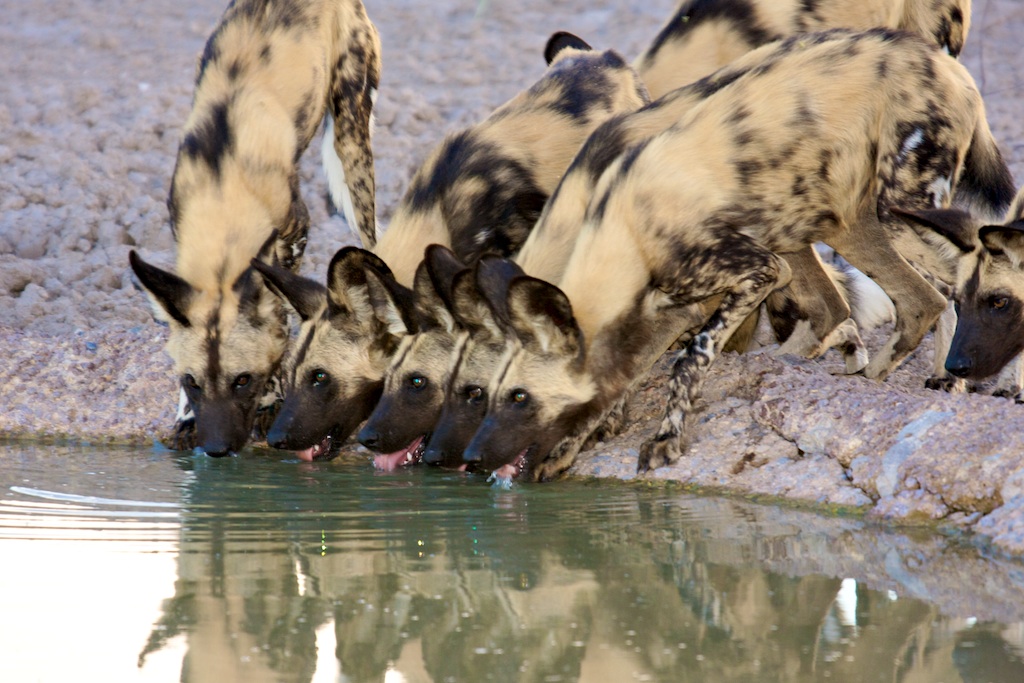
But our wonderful doggie companions came from the wild and in some countries wild dogs still are widely found. There was an article on the Mokolodi Nature Reserve blogsite in November, 2009 specifically about wild dogs, that included the following picture:
Wild hunting dogs drinking.
All of which is a wonderful reminder that wilderness is a critical and essential element in the overall health of our planet, and by extension, of ourselves.
The academic blogsite The Conversation yesterday published an article by William Lynn who is a Research Scientist in Ethics and Public Policy at Clark University. It proposes a wonderful way of keeping our populations of wild animals healthy and vibrant through rewilding. It is republished here within the terms of The Conversation.
ooOOoo
Setting aside half the Earth for ‘rewilding’: the ethical dimension
August 26, 2015 5.50am EDT
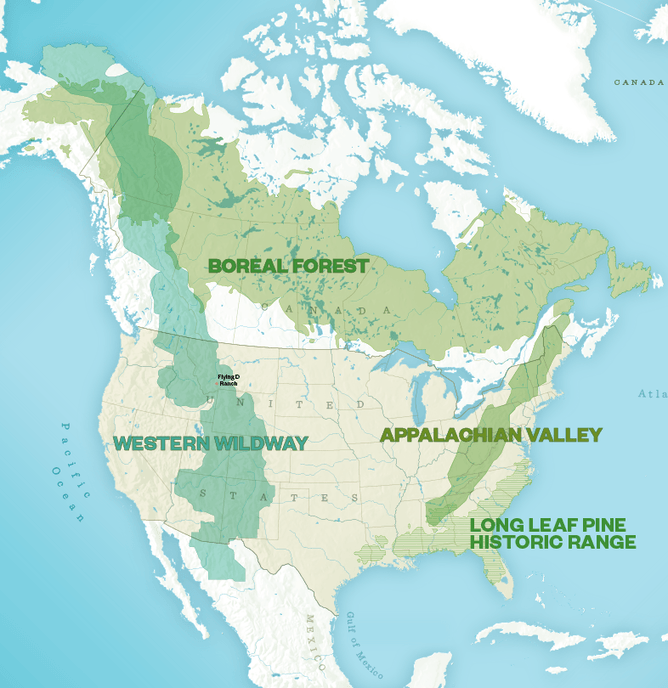
Wildlife corridors: four proposals to ‘rewild’ portions of North America. Smithsonian Institute, CC BY-NC
The famous biologist and naturalist would do this by establishing huge biodiversity parks to protect, restore and connect habitats at a continental scale. Local people would be integrated into these parks as environmental educators, managers and rangers – a model drawn from existing large-scale conservation projects such as Area de Conservación Guanacaste (ACG) in northwestern Costa Rica.
The backdrop for this discussion is that we are in the sixth great extinction event in earth’s history. More species are being lost today than at any time since the end of the dinosaurs. There is no mystery as to why this is happening: it is a direct result of human depredations, habitat destruction, overpopulation, resource depletion, urban sprawl and climate change.
Wilson is one of the world’s premier natural scientists – an expert on ants, the father of island biogeography, apostle of the notion that humans share a bond with other species (biophilia) and a herald about the danger posed by extinction. On these and other matters he is also an eloquent writer, having written numerous books on biodiversity, science, and society. So when Wilson started to talk about half-Earth several years ago, people started to listen.
As a scholar of ethics and public policy with an interest in animals and the environment, I have been following the discussion of half-Earth for some time. I like the idea and think it is feasible. Yet it suffers from a major blind spot: a human-centric view on the value of life. Wilson’s entry into this debate, and his seeming evolution on matters of ethics, is an invitation to explore how people ought to live with each other, other animals and the natural world, particularly if vast tracts are set aside for wildlife.
The ethics of Wilson’s volte-face
I heard Wilson speak for the first time in Washington, DC in the early 2000s. At that talk, Wilson was resigned to the inevitable loss of much of the world’s biodiversity. So he advocated a global biodiversity survey that would sample and store the world’s biotic heritage. In this way, we might still benefit from biodiversity’s genetic information in terms of biomedical research, and perhaps, someday, revive an extinct species or two.
Not a bad idea in and of itself. Still, it was a drearily fatalistic speech, and one entirely devoid of any sense of moral responsibility to the world of nonhuman animals and nature.
What is striking about Wilson’s argument for half-Earth is not the apparent about-face from cataloging biodiversity to restoring it. It is the moral dimension he attaches to it. In several interviews, he references the need for humanity to develop an ethic that cares about planetary life, and does not place the wants and needs of a single species (Homo sapiens sapiens) above the well-being of all other species.
The half-earth proposal prompts people to consider the role of humans in nature. jene/flickr, CC BY-NC-ND
To my ear, this sounds great, but I am not exactly sure how far it goes. In the past, Wilson’s discussions of conservation ethics appear to me clearly anthropocentric. They espouse the notion that we are exceptional creatures at the apex of evolution, the sole species that has intrinsic value in and of ourselves, and thus we are to be privileged above all other species.
In this view, we care about nature and biodiversity only because we care about ourselves. Nature is useful for us in the sense of resources and ecological services, but it has no value in and of itself. In ethics talk, people have intrinsic value while nature’s only value is what it can do for people – extrinsic value.
For example, in his 1993 book The Biophilia Hypothesis, Wilson argues for “the necessity of a robust and richly textured anthropocentric ethics apart from the issues of rights [for other animals or ecosystems] – one based on the hereditary needs of our own species. In addition to the well-documented utilitarian potential of wild species, the diversity of life has immense aesthetic and spiritual value.”
The passage indicates Wilson’s long-held view that biodiversity is important because of what it does for humanity, including the resources, beauty and spirituality people find in nature. It sidesteps questions of whether animals and the rest of nature have intrinsic value apart from human use.
His evolving position, as reflected in the half-Earth proposal, seems much more in tune with what ethicist call non-anthropocentrism – that humanity is simply one marvelous but no more special outcome of evolution; that other beings, species and/or ecosystems also have intrinsic value; and that there is no reason to automatically privilege us over the rest of life.
What kind of a species are we that we treat the rest of life so cheaply? There are those who think that’s the destiny of Earth: we arrived, we’re humanizing the Earth, and it will be the destiny of Earth for us to wipe humans out and most of the rest of biodiversity. But I think the great majority of thoughtful people consider that a morally wrong position to take, and a very dangerous one.
The non-anthropocentric view does not deny that biodiversity and nature provide material, aesthetic and spiritual “resources.” Rather, it holds there is something more – that the community of life has value independent of the resources it provides humanity. Non-anthropocentric ethics requires, therefore, a more caring approach to people’s impact on the planet. Whether Wilson is really leaving anthropocentrism behind, time will tell. But for my part, I at least welcome his opening up possibilities to discuss less prejudicial views of animals and the rest of nature.
The 50% solution
It is interesting to note that half-Earth is not a new idea. In North America, the half-Earth concept first arose in the 1990s as a discussion about wilderness in the deep ecology movement. Various nonprofits that arose out of that movement continued to develop the idea, in particular the Wildlands Network, the Rewilding Institute and the Wild Foundation.
These organizations use a mix of conservation science, education and public policy initiatives to promote protecting and restoring continental-scale habitats and corridors, all with an eye to preserving the native flora and fauna of North America. One example is ongoing work to connect the Yellowstone to Yukon ecosystems along the spine of the Rocky Mountains.
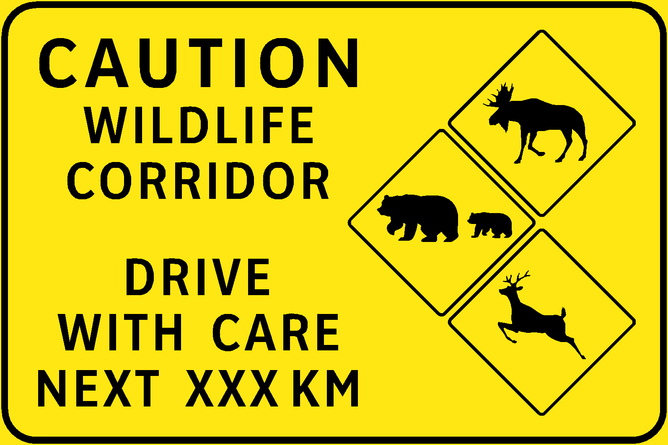
Take it up a notch? The British Columbia Ministry of Transportation recently started to add signs warning motorists when they are likely to encounter wildlife. British Columbia Ministry of Transportation, CC BY-NC-ND
When I was a graduate student, the term half-Earth had not yet been used, but the idea was in the air. My classmates and I referred to it as the “50% solution.” We chose this term because of the work of Reed Noss and Allen Cooperrider’s 1994 book, Savings Nature’s Legacy. Amongst other things, the book documents that, depending on the species and ecosystems in question, approximately 30% to 70% of the original habitats of the Earth would be necessary to sustain our planet’s biodiversity. So splitting the difference, we discussed the 50% solution to describe this need.
This leads directly into my third point. The engagement of Wilson and others with the idea of half-Earth and rewilding presupposes but does not fully articulate the need for an urban vision, one where cities are ecological, sustainable and resilient. Indeed, Wilson has yet to spell out what we do with the people and infrastructure that are not devoted to maintaining and teaching about his proposed biodiversity parks. This is not a criticism, but an urgent question for ongoing and creative thinking.
Humans are urbanizing like never before. Today, the majority of people live in cities, and by the end of the 21st century, over 90% of people will live in a metropolitan area. If we are to meet the compelling needs of human beings, we have to remake cities into sustainable and resilient “humanitats” that produce a good life.
Such a good life is not to be measured in simple gross domestic product or consumption, but rather in well-being – freedom, true equality, housing, health, education, recreation, meaningful work, community, sustainable energy, urban farming, green infrastructure, open space in the form of parks and refuges, contact with companion and wild animals, and a culture that values and respects the natural world.
To do all this in the context of saving half the Earth for its own sake is a tall order. Yet it is a challenge that we are up to if we have the will and ethical vision to value and coexist in a more-than-human world.
ooOOoo
I am sure many will agree that this is a very interesting idea and one that I hope is eventually adopted. For the sake of all our wild animals, including our dogs.
A republication of a post from November of last year.
Our dear Lilly offers her special thoughts.
Preface: Lilly is reaching an amazing age for a dog; trully amazing. Lilly was featured back in February this year when we did a series of posts under the generic heading of Meet the dogs.
Yesterday, Jean thought it would be wonderful to hear it from Lilly; so to speak.
So these are Lilly’s words; as whispered to Jeannie!
oooo
The World According to Lilly
Surveying her domain.
I am sixteen years old! That’s one hundred and twelve people years!
So no-one is going to tell me what to do; especially those bratty young dogs I live with.
I refuse to eat canned dog food and expect Mum to cook fresh meat on a daily basis or I will stop eating and give her the moon eyes. (No real issue as Mum does understand my demands! 😉 ) The only dry food that passes my lips is ‘Canidae’. It’s not cheap but, hey, I’m worth it!
No dog is allowed to snag my food or I will bite their nose; and well the others know that! OK, maybe young Oliver can sneak a nibble or two off my bowl; he is rather cute!
I will only take a pill if it is camouflaged in the fresh marrow of a bone – Mum, bless her, thinks I don’t know it’s there! Ha!
When it’s raining, I refuse to go out. Period! To make Mum happy, sometimes I let her use this sheepskin-lined sling thing to help me tackle the deck steps but many times I can manage on my own – hey! I’m only sixteen! But I know that it makes Mum’s day if she sees herself being useful!
It’s been a good life. OK, I’m rather creaky now but determined to make seventeen. Who knows maybe even eighteen!
Give Dad a run for his money any day! Golly, he has only just turned seventy in people years and to hear him natter on you would think he feels old!
Now where’s my bed …..
Not a bad life for an old dog! (I’m speaking of Dad!)
We rarely get to know what a rescue dog has been through.
Of the ten dogs that we have here at home, two are pedigree dogs purchased from breeders, that’s Pharaoh and Cleo, two are rescue dogs that came from known sources, Oliver from neighbours who couldn’t cope with him and Pedy from the local Merlin dog pound, and the rest are all ex-rescue dogs that Jean took from the streets of San Carlos, Mexico.
The last rescue dog to be taken in by Jean before we both left Mexico was Hazel who was abandoned outside Jean’s house in San Carlos a few weeks before we left for Arizona. The picture below is of Hazel taken in March 2014.
Hazel is the most loving and adorable of dogs and the love that I feel coming from her towards me is real, tangible and precious. Yet this is a mother dog who very shortly before she was deposited in front of Jean’s house in Mexico had had all her puppies removed from her as Hazel was still in milk. (The poor in San Carlos frequently sell young puppies for a few Pesos.) It’s beyond the comprehension of us humans, especially women, to imagine what it must be like for a mother to so catastrophically lose her young babies.
That’s why a recent article over on Mother Nature Network really reached out to me. We never know what homeless dogs have to contend with before they find loving homes.
ooOOoo
Why our Great Dane is so scared to be alone
Most of us will never know what our rescue dogs have been through. We found out.
By: Ali Berman, August 12, 2015
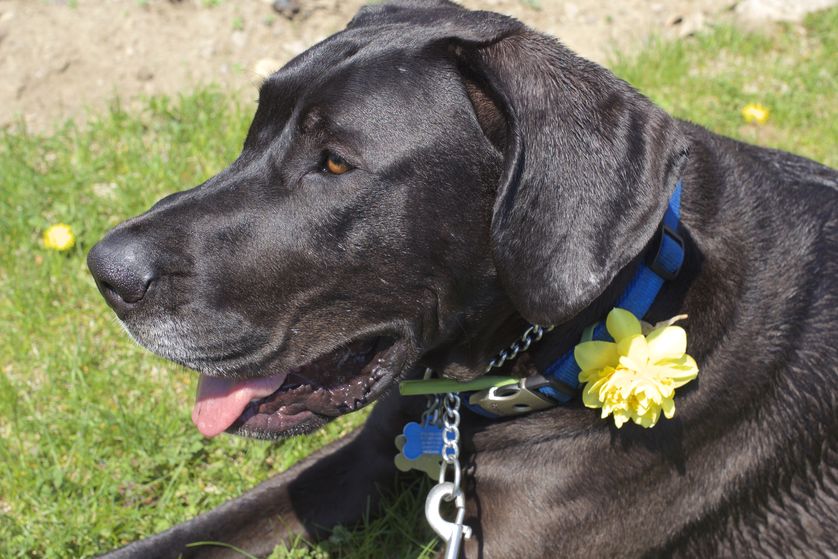
Author Ali Berman discovered she had a new shadow when she met Cooper. (Photo: Ali Berman)
In February 2015, David and Glenda Berman — that’s my mom and dad — drove from New York to Connecticut to meet Cooper, a 13-month-old Great Dane. When they were introduced, 100-pound Cooper rushed over to give them an enthusiastic greeting, burying his head in their legs, leaning on them, and asking to be petted. My mom and dad fell in love, and Cooper took the two-hour drive back to their house, the place that would become his forever home.
During those first few weeks, my parents got to know Cooper. They went for walks in the snow, played together, and snuggled. (He’s a major snuggler.) But, in addition to those normal doggy behaviors, they noticed something else. Cooper was reluctant to leave their sides. If they left the room, he went with them. He took trip after trip to the kitchen, to the bathroom, to the laundry room. When they moved, he moved.
I didn’t believe the extent of it until I got the chance to meet him myself. I traveled back to New York to visit my family in May. For me and Coop, it was love at first sight. We played, we ran, we cuddled, and by the end of the first day, I found myself with a 115-pound shadow. As soon as I showed any sign of movement, his head perked up and he was ready to follow me. In the morning when he opened his eyes, he went directly to my room to wake me up. When I napped in the afternoon, he came with me, opting to sleep right next to the bed. And when I went out to dine with a friend, my parents distracted him so he wouldn’t see that I was leaving.
Now, when a small dog follows you everywhere, it’s not a big deal. But when a Great Dane follows you around, it’s not stealthy. Seeing how much he craved to be near people, I welcomed him wherever I went — even the bathroom. Still, I wondered: Why was he so reluctant to be alone? Did he not believe we’d come back?
If there’s a hug going on, Cooper wants to be a part of it. (Photo: Ali Berman)
Thinking we knew the full story behind his upbringing, we all wrote it off as him being a little insecure. In just over a year he had experienced four different homes. After he left the breeder (his first home), Cooper went to live with a young woman who loved him very much. Unfortunately, they learned that while Cooper enjoys meeting other dogs on his walks, he has trouble living with other dogs. He got into fights with another pooch in the house and with great difficulty, the young woman sent Cooper to live with her uncle. As he also had animals at home, the problem repeated itself.
Cooper needed to live with a one-dog family. The uncle — who could easily have sold purebred Cooper for a handsome sum — instead decided to put him up for adoption to find the best family possible. My parents had been looking for a Great Dane to adopt, so they sent their references, along with pictures with their previous Great Dane who had died two years before, and a heartfelt message. They were chosen to be Cooper’s new and final family.
Because Cooper was loved and well treated in all of his homes, my parents thought the insecurity came from the many moves.
But that wasn’t the full story. Not even close.
In an email from the woman who originally took Cooper in, my mother learned the truth. Cooper had been born with the rest of his litter in the home of an Iowa breeder. One night, when the breeders were out bowling, their home caught on fire. Everything went up in flames. Cooper’s mother and siblings all tragically perished. Baby Cooper was found alone in the debris in the yard. In just one night, he had lost his entire family, suffering more trauma in an instant than most experience in a lifetime.
After the fire, the breeders had to rebuild their lives, so they put Cooper up for adoption. That’s when he started to move from house to house, finally finding his perfect match with my parents. Now, he starts out every day with a multi-mile walk, a nap in the office while my dad works, and then Cooper spends an hour or two playing with his friends in the dog park in the afternoon. If he’s not snoozing or walking, he’s out in the garden with my mom soaking up the sun.
Some serious trauma as a puppy made Cooper never want to be alone. (Photo: Ali Berman)
Just part of the story
When we rescue an animal, most of the time we never get to know their complete history. Why do some cry when their humans leave the house? Or some bark and growl at men who wear hats? Like people, animals remember the various difficulties and tragedies they have suffered. Those scars go through life with them, just like our own scars follow us. The only difference is they can’t tell us their fears, and we can’t explain to them that they are safe. The best we can do is show them they are loved and hope with enough repetition, they’ll get the message.
In an ideal world, every dog would only have good memories. Their first Frisbee catch or trip to the beach, their favorite person who knows how to pet the ears just right, and the safety of a single home where they will live their life right through to ripe old age. That’s not the case for every dog. Some need a little extra help from us as they learn to trust, move on from the past and accept that their new reality is the one they can count on.
With time, Cooper might just learn to keep snoozing while his mom or dad goes to get a cup of tea. Until then, we’ll all keep showing him that he’s loved, and that this home and this family are forever.
ooOOoo
When one thinks of how dogs, Cooper, Hazel and tens of thousands of others, so beautifully offer their unlimited love to us humans it is just a great shame that we humans haven’t emulated our beloved dogs across mankind in such a widespread manner.
Picture taken by our guest Don Reeve of Hazel (and me) Wednesday afternoon.
Gorgeous Hazel. Who would have thought from that smiling face of hers that she had ever suffered the catastrophic loss of her puppies that she had.
This is a TED video presented by Will Marshall. A quick web search reveals that Will Marshall is:
Co-founder & CEO of Planet Labs.
Planet Labs is helping share near-real-time images of our planet, from a constellation of earth-observing satellites.
In his Twitter bio, William Marshall calls himself a “quantum physicist cum space scientist in search of world peace and harmony.” And when you hear about his job, it falls into place: he and his cofounders at Planet Labs want to show the earth what it looks like, almost real time, via a new network of compact, capable satellites. They hope that up-to-date images will inform future humanitarian and commercial projects all over our planet; it will enable people to make decisions that enable us to take care of our dearest spaceship, spaceship earth.
Before co-founding Planet Labs, Marshall was a scientist at NASA/USRA, where he helped to formulate the Small Spacecraft Office at NASA Ames Research Center. He worked on lunar orbiter mission LADEE, lunar impactor mission LCROSS and the groundbreaking PhoneSat project, building satellites out of consumer parts.
It was only a couple of mouse clicks to find the website for Planet Labs.
All of which is my way of introducing the TED video but not before thanking next door neighbour Larry Little who emailed me the link to the video.
Published on Nov 18, 2014
Satellite imaging has revolutionized our knowledge of the Earth, with detailed images of nearly every street corner readily available online. But Planet Labs’ Will Marshall says we can do better and go faster — by getting smaller. He introduces his tiny satellites — no bigger than 10 by 10 by 30 centimeters — that, when launched in a cluster, provide high-res images of the entire planet, updated daily.
Yes Paul, I too recognise the value in understanding the neural substrates involved, regardless of what may in any case be reliably inferred and readily apparent in behavioural evidence. The social intelligence of the dog seems remarkably advanced of course, and so naturally provides a rich source for such research. Having said that, I am struck by the amount of academic funding that goes into confirming what is already self-evident, and wonder if the apportioning of funds is done quite as effectively as it could be. Much is determined by commercial interests of course.
“Much is determined by commercial interests …”
I have been a resident of the United States since April 2011. There has been much to take in and embrace at so many levels. However, one of the things that has seemed very foreign to my eyes was the extent of the obesity seen almost everywhere that one is out and about. At first it seemed more of an American issue, but over the last few years watching news items from the UK and seeing other general items on the internet from ‘the old country’ I came to realise that countries both ‘sides of the pond’ are grappling with what could be fairly described as an epidemic.
Yesterday, George Monbiot published an essay called Slim Chance. As with so many of Mr. Monbiot’s essays this one highlights issues that I am sure are not widely appreciated. It is republished here with Mr. Monbiot’s kind permission.
ooOOoo
Slim Chance
11th August 2015
New evidence suggests that obesity might be incurable. So why does the government propose to punish sufferers?
By George Monbiot, published in the Guardian 12th August 2015
Is overeating more addictive than crack cocaine? It’s hard to compare addiction rates, or to produce a clear definition that holds true across all substances and behaviours. But consider this crude contrast. Between 10 and 20% of people who use crack cocaine become addicted to it. Across a 9-year study of 176,000 obese people, 98.3% of the men and 97.8% of the women failed to return to a healthy weight. Once extreme overeating begins, it appears to be almost impossible to stop.
A paper published in the journal Neuroscience and Biobehavioral Reviews proposed that “food addiction” is a less accurate description of this condition than “eating addiction”. There is little evidence that people who are driven to overeat become dependent on a single ingredient; instead they tend to seek out a range of highly palatable, energy-dense foods, of the kind with which we are now surrounded.
The activation of reward systems in the brain and the loss of impulse control are similar to those involved in dependency on drugs. But eating addiction appears to be more powerful. As the same paper notes, in laboratory experiments “a majority of rats will prefer a sweet reward over a cocaine reward.”
Once you become obese, an article published in the Lancet this year explains, biological changes lock you in. Fat cells proliferate. The brain becomes habituated to dopamine signalling (the reward pathway), driving you to compensate by increasing your consumption. If you try to lose weight, the body perceives that it is being starved, and powerful adaptations (such as an increase in metabolic efficiency) try to bounce you back to your previous state. People who manage, against great odds, to return to a normal weight must consume 300 fewer calories per day than those who have never been obese, if they are not to put the weight back on. “Once obesity is established, … bodyweight seems to become biologically stamped in”. The more weight you lose, the stronger the biological pressure to get back to your former, excessive size.
The researchers find that “these biological adaptations often persist indefinitely”: in other words, if you have once been obese, staying slim means sticking to a strict diet for life. The best you can hope for is not a dietary cure, but “obesity in remission”. The only effective, long-term treatment for obesity currently available, the same paper says, is bariatric surgery. This can cause a number of grim complications.
I know this statement will be unwelcome. I too hate the idea that people cannot change their circumstances. But the terrible truth is that, except through surgery, for the great majority of sufferers, obesity is an incurable disease. In one respect it resembles cancer: the changes in lifestyle that might have prevented it are unlikely to be of use in curing it.
Fat-shaming is worse than useless. Another paper found that the more weight-conscious people are, the more likely they are to overeat: the stress it induces is a trigger for comfort eating. As Sarah Boseley points out in her book The Shape We’re In, “the diet industry … is one of the biggest frauds of our time”. For the obese, temporary reductions in weight will almost inevitably be reversed.
People who are merely overweight, rather than obese (in other words who have a BMI of between 25 and 30) appear not to suffer from the same biochemical adaptations: their size is not “stamped in”. For them, changes of diet and exercise are likely to be effective. But urging obese people to buck up produces nothing but misery.
The crucial task is to reach children before they succumb to this addiction. As well as help and advice for parents, this surely requires a major change in what scientists call “the obesogenic environment” (high energy foods and drinks and the advertising and packaging that reinforces their attraction). Unless children are steered away from overeating from the beginning, they are likely to be trapped for life.
You might have expected this knowledge to lead to acceptance, empathy and an end to stigmatisation. Fat chance. A fortnight ago, just after the figures I mentioned at the top of this article were published, David Cameron announced a review that could lead to obese people being deprived of social security payments if they fail to accept “treatment” for their condition.
This review, conducted by Dame Carol Black, has already pre-empted its conclusions: eight times it describes obesity as “treatable”. Really? How? It will consider the case “for linking benefit entitlements to take up of appropriate treatment”. Are Cameron and Black proposing that benefit claimants will be forced to undergo surgery? Or will they be pressed into a useless and punitive dietary regime? These proposals look to me like a transfer of blame for the disease away from food manufacturers and advertisers and onto those afflicted.
Why do we have an obesity epidemic? Has the composition of the human species changed? Have we suffered a general collapse in willpower? No. The evidence points to high-fat, high-sugar foods that overwhelm the impulse control of children and young adults, packaged and promoted to create the impression that they are fun, cool and life-enhancing. Many are placed in the shops where children are bound to encounter them: around the tills, at grasping height.
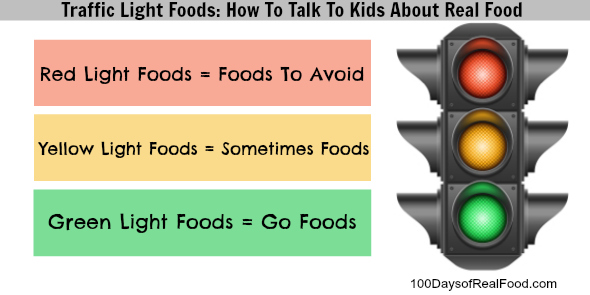
The disease will keep ravaging the population (and slowly overwhelm the health service) until these circumstances change. But the government’s sole contribution has been to tear down mandatory controls, replacing them with a voluntary – and therefore useless – “responsibility deal” with manufacturers and retailers. It allows them to choose whether or not to use the traffic light system, which is the most effective way of informing people about the likely impact of what they eat. And many corporations, unsurprisingly, choose not to. As far as nutritional content is concerned, food manufacturing is effectively unregulated.
Industry and government will resist the obvious solutions until they can be resisted no longer. Eventually, the change will have to happen: similar restrictions on advertising, sponsorship, display and accessibility to those imposed on the tobacco pedlars. One day, though not before many thousands have needlessly died, it will become illegal to advertise any food or drink that merits a red traffic light warning. They will be sold only in plain packaging, with health warnings, on high shelves.
Does this seem draconian to you? If so, remember that obesity afflicts a quarter of the adult population, and is rising rapidly. It causes a range of hideous conditions, just one of which – diabetes – accounts for one sixth of NHS admissions and 10% of its budget. If smoking demands fierce intervention, why not overeating?
This is the choice we face. To recognise that the only humane and effective means of addressing the obesity epidemic is to prevent more people from being hooked, by restricting the pushers. Or to continue a programme of fat-shaming, bullying and compulsory treatment, whose only likely outcome is unhappiness. Now ask yourself again: which of these two options is draconian?
Let me close with an image. The image that George Monbiot believes will be seen very widely and representing the same common-sense in eating that we have been used to with regard to No Smoking signs.


 Learning from Dogs