Just think what it would be like if all our nine dogs were as helpful as this!
Please, all of you dear readers, have a happy and relaxed weekend.
Dogs are animals of integrity. We have much to learn from them.
Category: Communication
Just think what it would be like if all our nine dogs were as helpful as this!
Please, all of you dear readers, have a happy and relaxed weekend.
Let’s end the week on a light-hearted note.
There have been some pretty serious posts in recent days and I wanted to close off the week with something completely different!
The following was sent to me from Dan earlier on this week. It is socially incorrect and, for the sake of clarity, I don’t subscribe to this form of gender bias in any way.
But it sure is funny!

1. The later you are, the more excited your dogs are to see you.

2. Dogs don’t notice if you call them by another dog’s name.

3. Dogs like it if you leave a lot of things on the floor.

4. A dog’s parents never visit.

5. Dogs agree that you have to raise your voice to get your point across.

6. You never have to wait for a dog; they’re ready to go 24 hours a day.

7. Dogs find you amusing when you’re drunk..

8. Dogs like to go hunting and fishing.

9. A dog will not wake you up at night to ask, “If I died, would you get another dog?”

10. If a dog has babies, you can put an ad in the paper and give them away.

11. A dog will let you put a studded collar on it without calling you a pervert.
12. If a dog smells another dog on you, they don’t get mad. They just think it’s interesting.

13. Dogs like to ride in the back of a pickup truck.
And last, but not least:
14. If a dog leaves, it won’t take half of your stuff.
To test this theory:
Procrastination is the art of keeping up with yesterday.
Can’t claim credit for the sub-heading; it was taken from BrainyQuote.

However, the reason I went looking for a quotation on procrastinating was that I’m doing research for a fairly “heavy” post for tomorrow, and was looking for something quick and easy for today.
My blog folder came up with an essay from The Conversation website that is rather fun. It is republished here on Learning from Dogs within the terms of The Conversation.
ooOOoo
October 7, 2015
Authors: Elliot Berkman, Assistant Professor, Psychology, University of Oregon, and Jordan Miller-Ziegler, PhD Candidate in Psychology, University of Oregon.
“I love deadlines,” English author Douglas Adams once wrote. “I love the whooshing noise they make as they go by.”
We’ve all had the experience of wanting to get a project done but putting it off for later. Sometimes we wait because we just don’t care enough about the project, but other times we care a lot – and still end up doing something else. I, for one, end up cleaning my house when I have a lot of papers to grade, even though I know I need to grade them.
So why do we procrastinate? Are we built to operate this way at some times? Or is there something wrong with the way we’re approaching work?
These questions are central to my research on goal pursuit, which could offer some clues from neuroscience about why we procrastinate – and how to overcome this tendency.
To do, or not to do
It all starts with a simple choice between working now on a given project and doing anything else: working on a different project, doing something fun or doing nothing at all.
The decision to work on something is driven by how much we value accomplishing the project in that moment – what psychologists call its subjective value. And procrastination, in psychological terms, is what happens when the value of doing something else outweighs the value of working now.
This way of thinking suggests a simple trick to defeat procrastination: find a way to boost the subjective value of working now, relative to the value of other things. You could increase the value of the project, decrease the value of the distraction, or some combination of the two.
For example, instead of cleaning my house, I might try to focus on why grading is personally important to me. Or I could think about how unpleasant cleaning can actually be – especially when sharing a house with a toddler.
It’s simple advice, but adhering to this strategy can be quite difficult, mainly because there are so many forces that diminish the value of working in the present.
The distant deadline
People are not entirely rational in the way they value things. For example, a dollar bill is worth exactly the same today as it is a week from now, but its subjective value – roughly how good it would feel to own a dollar – depends on other factors besides its face value, such as when we receive it.
The tendency for people to devalue money and other goods based on time is called delay discounting. For example, one study showed that, on average, receiving $100 three months from now is worth the same to people as receiving $83 right now. People would rather lose $17 than wait a few months to get a larger reward.
Other factors also influence subjective value, such as how much money someone has recently gained or lost. The key point is that there is not a perfect match between objective value and subjective value.
Delay discounting is a factor in procrastination because the completion of the project happens in the future. Getting something done is a delayed reward, so its value in the present is reduced: the further away the deadline is, the less attractive it seems to work on the project right now.
Studies have repeatedly shown that the tendency to procrastinate closely follows economic models of delay discounting. Furthermore, people who characterize themselves as procrastinators show an exaggerated effect. They discount the value of getting something done ahead of time even more than other people.
One way to increase the value of completing a task is to make the finish line seem closer. For example, vividly imagining a future reward reduces delay discounting.
No work is ‘effortless’
Not only can completing a project be devalued because it happens in the future, but working on a project can also be unattractive due to the simple fact that work takes effort.
New research supports the idea that mental effort is intrinsically costly; for this reason, people generally choose to work on an easier task rather than a harder task. Furthermore, there are greater subjective costs for work that feels harder (though these costs can be offset by experience with the task at hand).
This leads to the interesting prediction that people would procrastinate more the harder they expect the work to be. That’s because the more effort a task requires, the more someone stands to gain by putting the same amount of effort into something else (a phenomenon economists call opportunity costs). Opportunity costs make working on something that seems hard feels like a loss.
Sure enough, a group of studies shows that people procrastinate more on unpleasant tasks. These results suggest that reducing the pain of working on a project, for example by breaking it down into more familiar and manageable pieces, would be an effective way to reduce procrastination.
Your work, your identity
When we write that procrastination is a side effect of the way we value things, it frames task completion as a product of motivation, rather than ability.
In other words, you can be really good at something, whether it’s cooking a gourmet meal or writing a story, but if you don’t possess the motivation, or sense of importance, to complete the task, it’ll likely be put off.
It was for this reason that the writer Robert Hanks, in a recent essay for the London Review of Books, described procrastination as “a failure of appetites.”
The source of this “appetite” can be a bit tricky. But one could argue that, like our (real) appetite for food, it’s something that’s closely intertwined with our daily lives, our culture and our sense of who we are.
So how does one increase the subjective value of a project? A powerful way – one that my graduate students and I have written about in detail – is to connect the project to your self-concept. Our hypothesis is that projects seen as important to a person’s self-concept will hold more subjective value for that person.
It’s for this reason that Hanks also wrote that procrastination seems to stem from a failure to “identify sufficiently with your future self” – in other words, the self for whom the goal is most relevant.
Because people are motivated to maintain a positive self-concept, goals connected closely to one’s sense of self or identity take on much more value.
Connecting the project to more immediate sources of value, such as life goals or core values, can fill the deficit in subjective value that underlies procrastination.
ooOOoo
So there; glad that’s clear for us all.

Mustn’t delay – I need to write down a list of all the things I’m not doing today!
Our dogs have come a very long way.
I feel a little guilty at just dropping this full article in your path, and running away, so to speak, but yesterday was one of those days where Jean and I were “full on” for most of the day, and then out from the house from 4pm onwards.
It doesn’t lessen the interest, in my humble opinion, of this essay, that was recently published by The Conversation, and is republished within their terms.
ooOOoo
October 20, 2015
Author: Laura Shannon, Postdoctoral Research Associate in Biological Sciences, Cornell University
Dogs’ origin story goes something like this: sometime between 16,000 and 30,000 years ago, there were some stressed-out hungry wolves whose hunting territory had been encroached upon by humans. Luckily, these wolves were resourceful and they noticed human beings have a tendency to leave delicious things lying around. Scavenging leftovers seemed significantly easier than going out and hunting, so they hung around the people.
Wolves make unnerving neighbors. However, some are less unnerving than others. The humans were a lot more inclined to tolerate the proximity of less aggressive, more people-oriented wolves. As an added bonus, other predators are less likely to harass you when you are surrounded by wolves. So the people and the nicest wolves came to an agreement – the people tolerated and fed the tamest and most helpful wolves.
Smart, tame wolves have smarter, tamer wolf cubs, and so over time the wolves became more and more pleasant to have around. Obviously, friendly, helpful wolves hanging around people and eating leftovers aren’t really wolves; we have a word for those things – they’re dogs.
That’s biologists’ reasonable guess for how dogs came about. We have some idea when it all happened, but it’s been harder to figure out where. Who first took in scavenging gray wolves and turned them into dogs?

Scientists have looked at DNA inherited exclusively from the mother (called mitochondrial) and DNA inherited exclusively from the father (the Y-chromosome) and suggested that dogs were first domesticated in China, south of the Yangtze River.
However, the oldest dog bones anyone has found are from the other end of Eurasia, all the way in Northern Europe. Furthermore, the mitochondria of modern dogs are closely related to the mitochondria of ancient European wolves.
Finally, Middle Eastern wolves share the most genetic sequences with today’s dogs, which makes it seem like maybe Middle Eastern wolves are the ancestral wolf population.
All these threads of evidence broadly agree that dogs are from somewhere in Eurasia. But my colleagues and I wanted to narrow that down a bit – and to do that, we decided we needed DNA from as many dogs as possible for our new study.

Dogs are found almost everywhere people are, and over time we have bred them to do everything from guarding livestock to going fishing. The breeds we’ve created come in many shapes and sizes, ranging from tiny Chihuahuas to giant Great Danes. The vast majority of these breeds are less than 200 years old and come from Europe. But these purebred dogs or even mixes of these breed dogs are the minority of dogs on the planet.
Most dogs are free-ranging village dogs, which live around and among people but aren’t necessarily what you’d think of as pets. You can learn more about ancient dogs by studying these village dogs (as compared to studying breed dogs) because village dogs have more genetic diversity; the number of different versions of the same genes in village dogs is higher than it is in breed dogs.
All dogs were formed from a select group of wolves, and therefore have a subset of the genetic diversity found in wolves. But breeds were formed from a subset of dogs so they have only a further subset of the diversity found in dogs.

Members of our lab traveled to collect blood or spit from dogs in a variety of locales, and collaborators sent us fluids from places to which we didn’t manage to travel. Village dogs are fairly easy to find for researchers carrying food. In total, we extracted DNA from the fluids of 549 dogs from 38 countries spanning the majority of the globe as well as 4,676 purebred dogs. Our lab at Cornell is conveniently located in the same building as a veterinary hospital, so most of our purebred dogs were patients.
Once we had our samples, we then determined each dog’s genotype at about 180,000 distinct points in the genome. This is the largest data set anyone has used to address the question of dog origins so far.
We were looking for a very specific pattern of historical genetic diversity. When a select group of wolves became dogs, those dogs contained only the genetic diversity present in that subset of wolves. When people took some of the dogs and moved on to new regions of the globe, or traded dogs with people in other regions, they took only a subset of the total dogs, and by extension a subset of the total diversity.
Therefore, we expect the original population of dogs to be the most diverse. There would be a gradient of decreasing diversity in all populations as they move away from the center of origin.
And this is the pattern we observed when we compared the genetics of dogs from different populations. Dogs from Central Asia, Mongolia and Nepal are the most diverse, with genomes that correspond to the early, original variation in the population right after domestication happened. When we look at the same DNA markers in dogs from neighboring regions, diversity decreases. It decreases further corresponding to the location’s increasing distance from Central Asia. This is the pattern we would expect if the people who first took in scavenging gray wolves and turned them into dogs were located in Central Asia.

Looking at the largest data set of dogs amassed so far, we observe a very clear signal that most dogs alive today descended from dogs in Central Asia. However, we only looked at dogs alive right now. We have no information about historical populations of dogs that have no living descendants. Furthermore, the patterns of diversity we observe are reflective of the origins of dogs but also of everything that has happened to dog populations since domestication.
Other research groups are extracting DNA from bones of ancient dogs, and these sequences will provide exciting new insights from time points closer to domestication. However, ancient DNA studies are limited by the availability of ancient dog bones – which is affected by many factors other than the distribution of historic populations; for instance, some environments are more conducive to the preservation of bone and DNA than others, some regions have been more extensively investigated by archaeologists than others, and so on. If we see similar patterns in ancient and modern dogs, that will add clarity to the history of dogs and the people who love them.
ooOOoo
Ultimately, it doesn’t matter one hoot, in a non-scientific sense, from where our dogs are descended. Just that they did evolve.
For human life without our dogs would be unthinkable.
Junot Díaz reflects on the novel.
Communicating with written words may be older than we can possibly imagine. Yet, despite the very modern world of digital communications, the power of communicating with written words is probably more widespread than ever before. Let’s just dip into the world of blogging, or more accurately put, let’s dip into the world of WordPress blogging. The quickest of web searches revealed that:
74.6 Million Sites Depend on WordPress
Yep, you read that right. 74,652,825 sites out there are depending on good ol’ WordPress. That’s one site per person in Turkey.
Around 50% of this figure (close to 37 million) is hosted on the free WordPress.com.
Or try this amazing fact:
6 New WordPress.com Posts Every Second
That’s right. Every second, close to 6 (the actual figure is 5.7) new posts are published on WordPress.com blogs. That averages out to 342 posts per minute. Just above 20,000 per day. And a grand total of 7.49 million annually.
If you are wondering what brought on this rash of discovery, it was me wanting to find a way of introducing a talk that was recently given by Junot Díaz. Wikipedia explains that:
Junot Díaz (born December 31, 1968) is a Dominican American writer, creative writing professor at Massachusetts Institute of Technology (MIT), and fiction editor at Boston Review. He also serves on the board of advisers for Freedom University, a volunteer organization in Georgia that provides post-secondary instruction to undocumented immigrants. Central to Díaz’s work is the immigrant experience. He received the Pulitzer Prize for Fiction for his novel The Brief Wondrous Life of Oscar Wao, in 2008. He is a 2012 MacArthur Fellow.

Recently, the Big Think blog had an article by Díaz that I wanted to share with you dear readers of Learning from Dogs. For it struck me as a wonderful reminder of the power of writing and, especially, the power of writing fiction.
For reasons that I don’t understand the video in that Big Think piece is longer than the version that is on YouTube. So, watch the YouTube version coming up now, and if you want more then click the link just below that YouTube insertion.
Literature, explains Pulitzer-winning writer Junot Díaz, is the closest that we’ve come to telepathy. It’s through literature that we educate our souls by transporting ourselves into some other character’s mind. It builds empathy. It allows for new perspectives. It triggers provocation in all the best ways. Novels aren’t as popular a medium today as something like Twitter, but that doesn’t mean they’re not still hugely important.
The summary posted above was taken from the Big Think site, and if you go there you can read more, and watch the full 4-minute version of the video.
Finally, this coming Sunday is the 1st November, and November is the month for National Novel Writing Month. Whether or not you wonder if you have a full novel inside you, even if you have the slightest curiousity, pop over to the NaNoWriMo website and get involved!
Dear Fellow Dog Lover.
Because you signed up on our website and asked to be notified, I’m sending you this special recall alert.
On October 25, 2015, Salix Animal Health of Deerfield, Florida announced it is expanding the recall of its Good ‘n’ Fun Beefhide Chicken Sticks because the product has the potential to be contaminated with Salmonella.
Salmonella is a bacteria that can affect the health of both pets and humans.
To learn which products are affected, please visit the following link:
Good ‘n’ Fun Beefhide Chicken Sticks Dog Chews Recall Expands
Please be sure to share the news of this alert with other pet owners.
Mike Sagman, Editor
The Dog Food Advisor
P.S. Not already on our dog food recall notification list yet? Sign up to get critical dog food recall alerts sent to you by email. There’s no cost for this service.
Another lesson from our dogs…..
…. that of not taking life too seriously at times!
I didn’t get to my PC until after 4pm yesterday afternoon and, frankly, didn’t have a clue as to what to post for today.
Then in comes Per Kurowski to rescue me with an email sent earlier in the day, titled: “I do not know if you saw this?”
“This” being the following video.
With grateful thanks to neighbour, Dordie, who sent this to me.
Test Your Brain
This is really cool.
Count every “F” in the following text:
Finished?
HOW MANY ‘F’s?
What incredible, beautiful animals they are!
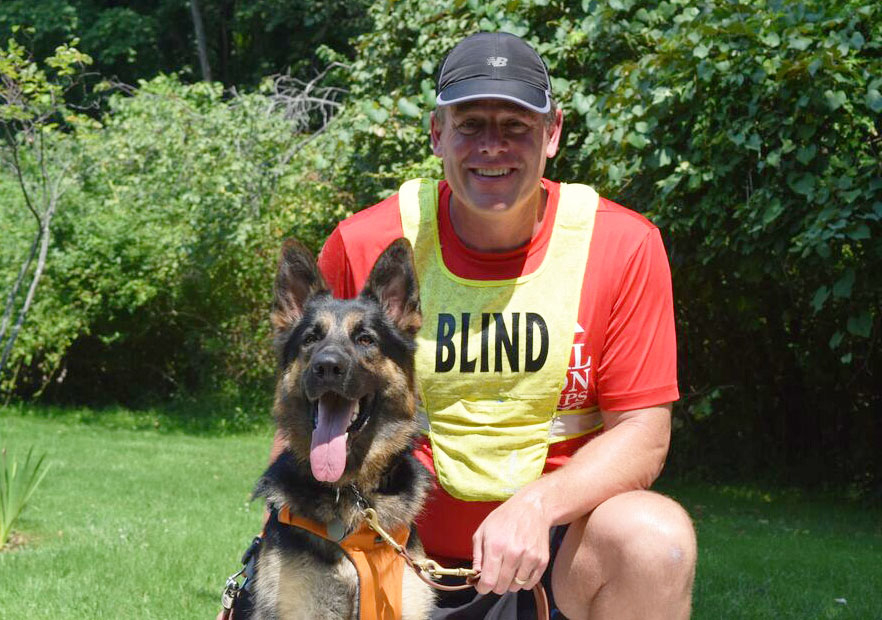
Close neighbour, Dordie, sent me an email with a link to a recent item that was broadcast on CBS.
Published on Oct 1, 2015
For thousands of blind athletes across the country, just setting foot out the door can be a huge challenge. Now one special dog is helping his owner not just walk out the door, but run. Only on “CBS This Morning,” Barry Petersen reports on the extraordinary story of one man’s journey to find the perfect running mate.
Richard and Klinger, and all those who made it happen, Jean and I salute you!
A good philosophical “coating of thought”.
In yesterday’s Part One, I focused on the hugely damaging effects of inequality in society. Reinforced only last Monday by an article by Professor Adam Levitin, a Professor of Law at Georgetown Law School. (Who also recently served on the Consumer Financial Protection Bureau’s Consumer Advisory Board and was Special Counsel to the Congressional Oversight Panel for the Troubled Asset Relief Program.) Levitin’s article was published by Naked Capitalism and opened with this statement:
A lot of Americans — right and left — are frustrated with what has happened to the middle class. The gap between the superrich and the rest of the country has widened, and it seems like everyone is having to work harder just to stay in place: wages have been stagnant, two-incomes are nearly mandatory (creating a subsidiary child care issue), and millions have lost their home equity in foreclosures. While there are a lot of people who bemoan the fate of the middle class, and even some want to do something about it, they don’t or can’t do the heavy lifting necessary to figure out why the system is broken and who wants to ensure it remains that way.
(I strongly encourage you to read the rest of the article.)
Trust me, as a good middle class Brit (albeit now living in America), it’s not just Americans who are frustrated!
However, one happening in this modern world is wonderful. I’m speaking of the ways that ideas can circulate around the world.
Better than that, the wonderful way we can “listen in” on the reflections of others in a manner that would have been impossible twenty years ago.
A few days ago, Patrice Ayme (PA) published a post called Human Kind, Yet Evil Rule. As so frequently happens, it attracted a clutch of fascinating responses. One of those responses came from a PA reader who writes under the name of EugenR. EugenR offered in his response a fascinating dialogue between a group of persons, and I saw that dialogue as promoting the value of philosophising about the more challenging aspects of present life.
Eugene explained, “It was edited from a conversation in the past. I found it to be a relevant response to the essay.” It matters not the names of the people described by the initials, what matters so much more is the value of an introspective “coating of thought”.
ooOOoo
EugenR: The worst rule the world, because they are the worst.
GD: Not for long
EugenR: For ever
GD: What about Non Violent Civil Disobedience ?
EugenR: At the end the “Non Violent Civil Disobedience” is a human organization, and as such it will either die out, or in worse case will have an organizational structure in which the worst bullies will be on the top. There is nothing new under the sun.
GD: At the end the truth, that at the age of internet is a simple finger click away, will win.
EugenR: At the end the truth wins, the question is when and at what price. In between the lie and cruelty celebrates. Just remember the last century events (Hitler, Stalin, Mao Zedong, Pol Pot, Mugabe i mean Dr Mugabe, etc.). All of them are gone (except the least evil Dr Mugabe). Did you know Pol Pot studied in Paris? Don’t be upset by history but learn from it. And now you have the Islam fundamentalism, that is all about cultural and religious non tolerance, racism (Sudan, Darfur, etc.), legitimization of enslavement of the non Muslims, intellectual degradation of women, death penalty for apostasy (Under current laws in Islamic countries, the actual punishment for the apostate (or murtadd مرتد) ranges from execution to prison terms. Islamic nations with sharia courts use civil code to void the Muslim apostate’s marriage and deny child custody rights, as well as his or her inheritance rights for apostasy. Twenty-three Muslim-majority countries, as of 2013, additionally covered apostasy in Islam through their criminal laws.), etc.
GD: The real question is do we have less fear because we have more access to knowledge? Or more fear because the media has portrayed fear as the new normal? I am not sure that mass herd mentality works in modern society anymore. And that is how dictators ruled. The new fear is forced acceptance. It is worse. Or should I say financially forced acceptance.
AH: I believe that unarmed truth and unconditional love will have the final word in reality. This is why right, temporarily defeated, is stronger than evil triumphant. Take the example of Martin Luther King, Jr.
EugenR: Yes, they were in history few good leaders who won. Martin Luther King is among them, others are N.Mandela, M. Gandhi, V. Havel all of them won, but at what personal price. Two of them murdered, two served years in jail. And anyway after them came some scoundrels destroyed anyway their achievements. Still the strife for self evident justice (that’s what these leaders were after) must go on. But who are the new Mendelas, Gandhis, Kings or Havels? In the best case those who came after them are at the best Obamas.
AH: It is a process. In the last 500 years from time of Galileo (who was threatened by his Church for telling the truth about the nature of the planets) to today there has been tremendous progress on a global scale. We with progressive values and committed to the path of love, must remember that darkness is also part of human nature (perhaps an essential part) and remain vigilant — and hopeful.
EugenR: I assume you never lived in a country where the government terrorizes its citizens. Try to express your truth in one of the terror countries, like Saudi Arabia, Iran, Afghanistan, Pakistan, etc. Try to say there, it is wrong not to let women to have education (about 50% of them are illiterate). Try to say something about freedom of faith. Communism was wiped out only 20 year ago, its leftovers are regimes like the one in N. Korea but also Cuba. You say, ……darkness is also part of human nature…. The question is not if darkness is part……..it definitely is and nobody can deny it, but how do you fight it. In most of the cases the fight is with even more darkness.
AH: I have never lived in a terrorizing country. I did have terrorizing parents and an entrenched belief in a terrorizing Pentecostal God. I am a racial minority in a world that devalues everything I do because of my skin colour. We all have our challenges. In the end, it is arrogant for me to think you can make (force) people do what I think they should do or feel what I think they should feel. This is exactly the mindset of the dictator and I reject that thinking completely. The best I can do is look at my inner signaling. I seek to elevate my own consciousness and change myself for the better. The next step is the social conversation. I share my thinking and values with others in the hope that they too will be inspired to change themselves for the better.
Darkness cannot drive out darkness: only light can do that.
Hate cannot drive out hate: only love can do that.
― Martin Luther King, Jr.
EugenR: Sorry Alexi, this time M.L.King had it wrong. The Nazis were defeated by Stalin, just because his cruelty did not have limits, while the Nazis limited their cruelty only to the non Germans. Without Stalin the Western powers would never stand against the Nazis.
AH: If you think about it carefully, the darkness of Hitler was replaced by the darkness of Stalin. This was true for the USSR, East Germany, East Berlin and most of East Europe. So Stalin did not drive out darkness, he just replaced it with his own dark shadow.
Alexi: Stalin was in control by 1923, ten years before Hitler (Lenin tried to stop him at the end of his life).
PA: The French started the nuclear bomb program in 1938. Nobel Laureate Irene Curie was certain that a bomb could be made. The program went to Manhattan, in total secret to the Nazis, and total opening to Stalin. Hitler would have been nuclear bombed into submission.
EugenR: If we speak about destiny probably Hitler would survive even the nuclear bomb, as he survived about 30 assassination attempts. If to believe in God here you have him. God is against humanism and humanity, and mainly against his “chosen people”. As he misled His Own People, some Jewish rabies made a trial of God in some extermination camp, and their verdict was, Death penalty. But then after the verdict they went to the next ceremonial pray. The religion is not about morality (mostly in contrary), not about reality or evidence, not about belief in truth (I know many skeptic believers), not even about tribalism since there are religious newcomers, who did not grow in the tribal tradition.
It is all this about some false answers to questions of eternal life? It can be right for some, but not for everyone. So tell me, what it is all about? The faith in communism did not include even belief in eternal life, and still it has so many followers. It seems religion or faith is a need of the human spices to believe in some fundamental dogma, be it even an obvious lie, all it needs is enough followers, and supporters of a false idea. In a way to be a football club fun is also a religion.
ooOOoo
As I said, I found the dialogue a compelling example of thinking ideas through.
 Learning from Dogs