Yes, we know that they are but the science as to why this is nonetheless is fascinating!
Inevitably when you think about my cultural roots you would not be surprised to hear that I use the BBC News website as a key source of staying in touch with the world. But very rarely would I think of sharing a news item with you via these pages.
One of those rare exceptions greeted my eyes back on July 20th. It was an article published by Helen Briggs of the BBC under the Science & Environment news classification. I can’t imagine any reason why I can’t republish it here.
ooOOoo
Why dogs are friendly – it’s written in their genes
By Helen Briggs – BBC News, 20 July 2017
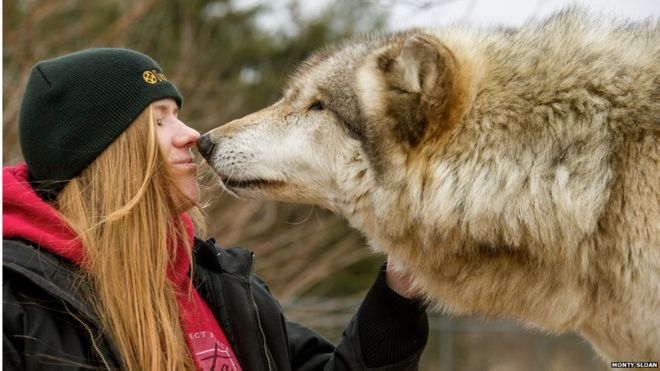
Some wolves are more sociable than others.
Being friendly is in dogs’ nature and could be key to how they came to share our lives, say US scientists.
Dogs evolved from wolves tens of thousands of years ago.
During this time, certain genes that make dogs particularly gregarious have been selected for, according to research.
This may give dogs their distinctive personalities, including a craving for human company.
“Our finding of genetic variation in both dogs and wolves provides a possible insight into animal personality, and may even suggest similar genes may have roles in other domestic species (maybe cats even),” said Dr Bridgett vonHoldt of Princeton University.
The researchers studied the behaviour of domestic dogs, and grey wolves living in captivity. They carried out a number of tests of the animals’ skills at problem-solving and sociability.
Captive wolves gave humans only brief attention.
These showed that wolves were as good as dogs at solving problems, such as retrieving pieces of sausage from a plastic lunchbox.
Dogs, however, were much more friendly. They spent more time greeting human strangers and gazing at them, while wolves were somewhat aloof.
DNA tests found a link between certain genetic changes and behaviours such as attentiveness to strangers or picking up on social cues.
Similar changes in humans are associated with a rare genetic syndrome, where people are highly sociable.
Dr Elaine Ostrander of the National Institutes of Health, who was a co-researcher on the study, said the information would be useful in studying human disease.
“This exciting observation highlights the utility of the dog as a genetic system informative for studies of human disease, as it shows how minor variants in critical genes in dogs result in major syndromic effects in humans,” she said.
Wolves playing at Yellowstone.
Dogs were domesticated from wolves between 20,000 and 40,000 years ago.
This process began when wolves that were tolerant of humans sneaked into hunter gatherer camps to feed on food scraps.
Over the course of history, wolves were eventually tamed and became the dogs we know today, which come in all shapes and sizes.
The finding of genetic changes linked to sociability in dogs shows how their friendly behaviour might have evolved.
“This could easily play into the story then of how these wolves leave descendants that are also ‘friendlier’ than others, setting the path for domestication,” said Dr vonHoldt.
Lisa Mae DeMasi offers you all a beautiful guest post.
Not going to allow my words to delay you reading this wonderful essay from Lisa.
ooOOoo
How this Handler and Service Dog Nurture One Another
by Lisa Mae DeMasi
At two years old, Lady’s ribs protruded from her coat and her belly was swollen with milk.
Like the thirteen other Labs that had arrived at a rest stop in Union, CT on the straight 12½-hour drive from Muncie, IN, she was presented to us on a crisp autumn day amid the chaos of respective adopters.
My husband Dennis had never experienced the warmth and companionship of having a dog and well, I surprised him with Lady, who we quickly renamed to Sabrina. The very afternoon we picked her up, we raced to the park, wanting her to feel the joy of freedom and play. My husband’s face lit up and while I was thrilled at the opportunity to befriend and care for Sabrina; it meant closing the 20-year gap since our beloved German Shepard from my childhood passed away.
Until laying my eyes on Sabrina’s profile, my heart couldn’t entertain loving another dog.
And what canine isn’t after the same love?
In Sabrina’s case, she couldn’t know of the family members that awaited to embrace her presence. Within days of the initial hair-raising excitement, the cat sought out occasions to groom her ears. Our pet rat was free to waddle the kitchen floor un-bothered, and the pair of bonded bunnies in want of company stretched out beside her on the living room floor.
Dog, cat, rat, rabbit?
You bet.
And Dennis and me?
Like kids again.
Sabrina settled into the folds of our lives, well-nourished and exercised in Boston’s epic snowfall in the winter of 2009-2010, taking careful watch over all of us. The fear expressed in her eyes pre-adoption disappeared. Eight years later, she watches over me in particular. Thirty years ago, I was struck and thrown from the passenger side of a car until my abdomen collided with the steering wheel—blunt force that called for iterative repair to my digestive system and caused permanent damage to the nerves that signal my bladder is full.
Today when I’m busy working away, Sabrina will alert me to get up every couple of hours to make a trip to the restroom by gently placing her head in my lap.
When I suffer acute intestinal cramping, Crohns-like symptoms, she’ll sit at my side and lean her body against mine. Her calm and steady source of nurturing, helps me to relax and mitigates the cramps.
In 2008, the Department of Justice amended the Americans with Disabilities Act (ADA). This was amended to include digestive, bowel and bladder impairments that limit major life activities as the disabled, calling for employers to make reasonable accommodations and if the individual elects, to allow task-oriented service animals [dog or miniature horse] to accompany them on the job.
Sabrina, serving in the capacity of a sensory/medical assist – alerting me to get up and take care of myself – qualifies.
The HR Director, Debra Susler of Reputation Institute in Cambridge, MA this past April would not allow Sabrina to accompany me on-the-job. I sent her an elaborate email explaining my condition and Sabrina’s certification. She did not reply to me but to my supervisor.
She said “no”.
My response?
I walked out of the place
Sabrina: rescue dog to devoted helper dog.
Respectively, Sabrina’s competencies and understanding of language cease to astound us and her behavior on-the-job at Dell EMC is so well-mannered, coworkers never run out of compliments.
And bystanders in public? The grocery store, pharmacy, gym, dentist, doctor?
Gazes from cell phones are broken, conversations fall short.
Then, come the smiles. A question. Praises. The feel-good moment.
Sabrina brings people together.
I recently read a distressing post from a woman who said every time she looks into a service dog’s eyes, she sees sadness. Even Ingrid Newkirk, CEO and Co-Founder of PETA, has told me, “the life of a typical service dog is a terrible one.”
It’s true. Any canine enslaved to servitude is doomed a dog’s life unlived.
Service animals are working animals, not pets.
The ADA confirms it.
But that’s not the relationship Sabrina and I share [and I understand it can’t be the same with other handlers and service dogs]. In addition to being my devoted helper, Sabrina teaches me to exist in the moment — just like she does. To enjoy the sight of the sun shimmering through the trees, the call of the birds, the fragrance of wildflowers, the feel of the soft soil I tread a few yards behind her when we’re on our hikes.
What more could a dog do for a girl?
ooOOoo
There is something rather special about Lisa’s guest post; special in an introspective way!
That will be better appreciated if you go across to Lisa’s blog site at Nurture Is My Nature.
In particular when you read, via her ‘About’ link, what Lisa offers about herself. Republished here in full.
ooOOoo
As time goes by and you’re getting older and stuff like that—getting older sucks. You know, I hear all this crap about, ‘Oh, you can age with dignity.’ Really? —Mickey Rourke
Lisa’s creative work has recently placed second in Fiftiness’s 2017 Writing Contest (Why I Love Bike Commuting in Boston) and been featured in the anthologies, Unmasked, Women Write About Sex & Intimacy After Fifty (9/17, print) and The Best of Vine Leaves Literary Journal (11/17, print). Her essays have been published in the lit journals and several other media outlets. She considers Massachusetts her home, but has lived in Connecticut, Vermont, New York State and two other planets called Wyoming and Arizona. She earned a B.A. from Regis College and an MBA from Babson College, and holds a Master certificate in Reiki.
Lisa is seeking a development editor [that gets her] to work on her collection of essays and her memoir.
If you detect a tone of exasperation in the following then you are very sensitive to the mood in the Handover household!
For until around 10:30 yesterday morning we had every expectation that the flooring installers would be hard at work through to Wednesday. That fact displayed on this blog by the continuing Flooring Diversion posts.
However, when we were told yesterday that a) Home Depot couldn’t advise us of the total cost of laying the board laminate on our floors, and b) that the installers were now unable to return to our house until the 23rd., it was decided that a face-to-face with the person in charge at our local HD store was called for.
That resulted in us going to the store and meeting Ben the store manager. And in fairness to Ben he listened to our grumbles, acknowledged that we had reason to grumble and got it all sorted. That translating into the installers being with us this coming weekend.
I had planned to publish a fabulous guest post on Thursday assuming that the flooring work had been completed by then.
It is now being published in ten minutes time. You will love it!
The post Floor Diversion Day Three has been postponed for twenty-four hours.
Simply because yesterday morning the installers contracted by Home Depot (HD) to rip up our existing carpet and start laying the laminate wooden boarding found underneath the old carpet underlay another carpet that some time in the distant past had been glued down. Why this wasn’t spotted by the HD measuring unit when they came here to look at the project and offer an estimate for the cost of installing the new flooring is a question that has yet to be answered.
However, while the majority of HD work the full weekend the ‘Chargeback’ department do not. This department had to hear what had been discovered in order for us to know what extra costs we might be looking at!
A long-winded way of explaining why it is a pleasure to offer you a regular Picture Parade for today.
In my post of last Wednesday, as in the 2nd, I gave everybody a ‘heads up’ to the fact that I expected to be offline for a few days:
A while ago we replaced the carpet in our main living-room with oak flooring and now we are replacing just about all the rest of the carpet in our house with laminate boarding that is a very good match with the oak flooring.
One of the rooms that is affected is my office and although the installers will only be working for the three days of the 16th to the 18th August, the rooms will need to be emptied out of all furniture a few days before the 16th.
Ergo, I expect to be ‘off air’ for about a week. Probably from Sunday, 13th August through to Sunday, 20th August.
During those days I won’t be able to respond to your replies to posts. But I will put up posts for each of those days well ahead of the 13th.
The installers telephoned us on Monday asking if we would like them to do the flooring this coming weekend; the 12th and 13th.
After Jean and I had had a quick discussion we decided to say ‘Yes”!
I am unsure whether I will lose internet connectivity or not but either way from now until next Monday or Tuesday ‘normal’ service will not be maintained.
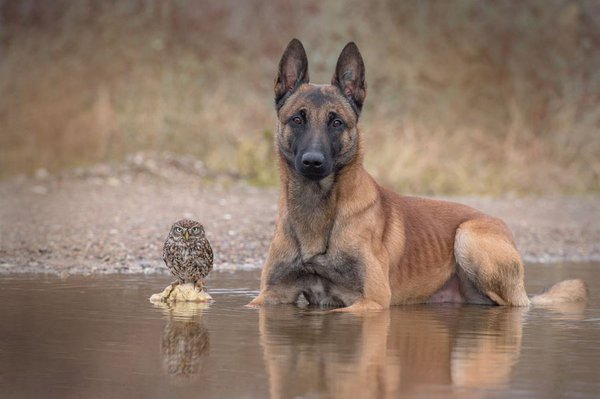
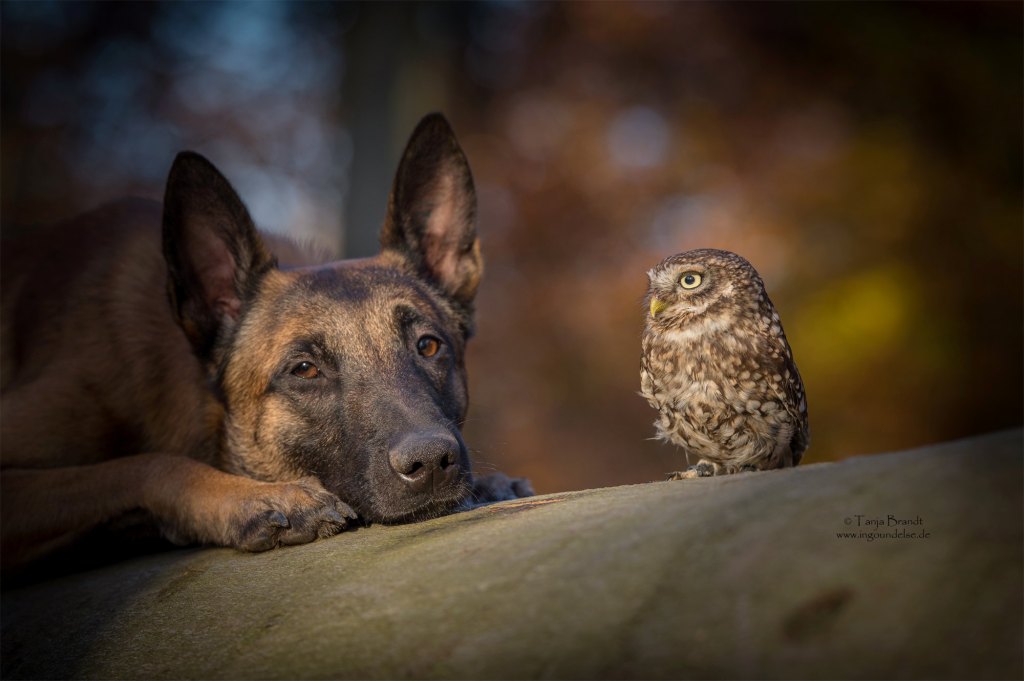
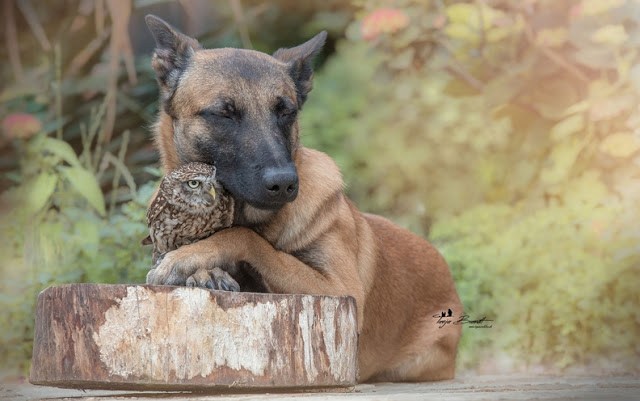
As promised, those fabulous photographs of the Belgian Shepherd and the Owlet coming to you for the next few days!
If meditation really works then we want to engage in it.
Those who watched the video that was the central component of yesterday’s post will not have missed the references by Ted Meissner that scientific, double-blind evidence shows that meditation offers benefits for us humans.
Both Jean and I are especially interested in learning more and, hopefully, finding an appropriate meditation group in our nearest town, Grants Pass.
We would also welcome feedback and advice from any of you good people who have trod this path before.
For example, when one conducts a quick internet search into the different forms of meditation there are dozens of websites that are returned in the search findings. Almost choosing one website at random, the Visual Meditation website declares there are 7 Types of Meditation. As in:
Transcendental Meditation (TM)
Heart Rhythm Meditation (HRM)
Kundalini
Guided Visualization
Qi Gong
Zazen
Mindfulness
To my uneducated eye, not one of those types seems to accord with the type supported by the American Meditation Society:
OUR MISSION
To provide instruction in meditation as taught by the founder of AMS, Gururaj Ananda Yogi.
To preserve and share the universal teachings of Gururaj with integrity and wisdom.
To provide a place where those who wish to unfold the inner self may do so in the company of other like-minded people.
Back to the plot! For this post is about the science.
The following video seemed worthy of sharing with you.
I watched the first 10 minutes before deciding it should be shared. By the time this post is published Jean and I will have watched it to the end. [20:45 yesterday evening. Jean and I have just finished watching the Bob Roth video below. It was both fascinating and very helpful!!]
The Aspen Institute
Published on Jun 26, 2016
Published studies have documented the many physical and mental health benefits of meditation, including decreased pain, better immune function, less anxiety and depression, a heightened sense of well-being, and greater happiness and emotional self-control. Google Scholar turns up almost 700,000 research documents on meditation, among them imaging studies that show increased activity in brain regions associated with attention, a higher volume of grey matter, and lessened amygdala response to emotional stimuli. What actually happens in the brain when we meditate? Why is meditation so nourishing to the mind, body and spirit?
Perri Peltz, Interviewer
Bob Roth
But a search of the YouTube website using the search term “meditation science” brought up many other links to shorter videos.
I selected the following (2:23 mins) because it is presented by Ferris Jabr who is an Associate Editor with Scientific American magazine.
Bottom line to my way of thinking is that this is something worth committing to once we know much more about engaging in meditation.
Your experiences most welcomed.
(And, of course, when it comes to chilling out for hours regularly each day then there’s another thing we can learn from our beloved dogs! No better demonstrated than by Brandy yesterday morning in the following photograph!)
Reflections on a very interesting meeting of our local Freethinkers group.
Last Saturday was the regular monthly meeting of our local Rogue Valley Freethinkers and Humanists. Many know that Jean and I are secular humanists and go as often as we can to these meetings in Grants Pass, Oregon.
Saturday’s meeting was all about Buddhism or more accurately as Jerry Reed, the group’s administrator, put it in a recent email:
For Saturday, Aug 5: Brenda will be our presenter/discussion leader. She will introduce us to Secular Buddhism, including comments on basic principles of Buddhism, and how traditional and secular Buddhism compare with each other, as well as on overlapping philosophical views of Buddhism and Humanism.
This video link provides a discussion between a humanist, Scott Lohman, and a secular Buddhist, Ted Meissner, which may help to familiarize you with Brenda’s topic prior to our meeting. It is about 29 minutes long, all interesting, but if you are cramped for time, especially the segment from about 10:30 to 16:30 which discusses basic Buddhist principles that might also relate to humanism, and another segment from about 19:30 to 27:00 on advice to a beginner who might want to try meditation, and how Star Trek borrowed from Buddhism, and also about the similarity of ethical focus of Buddhism and Humanism.
What I would hope is that if any of you are interested in this subject, then do watch the interview with Ted Meisser conducted by Scott Lohman .
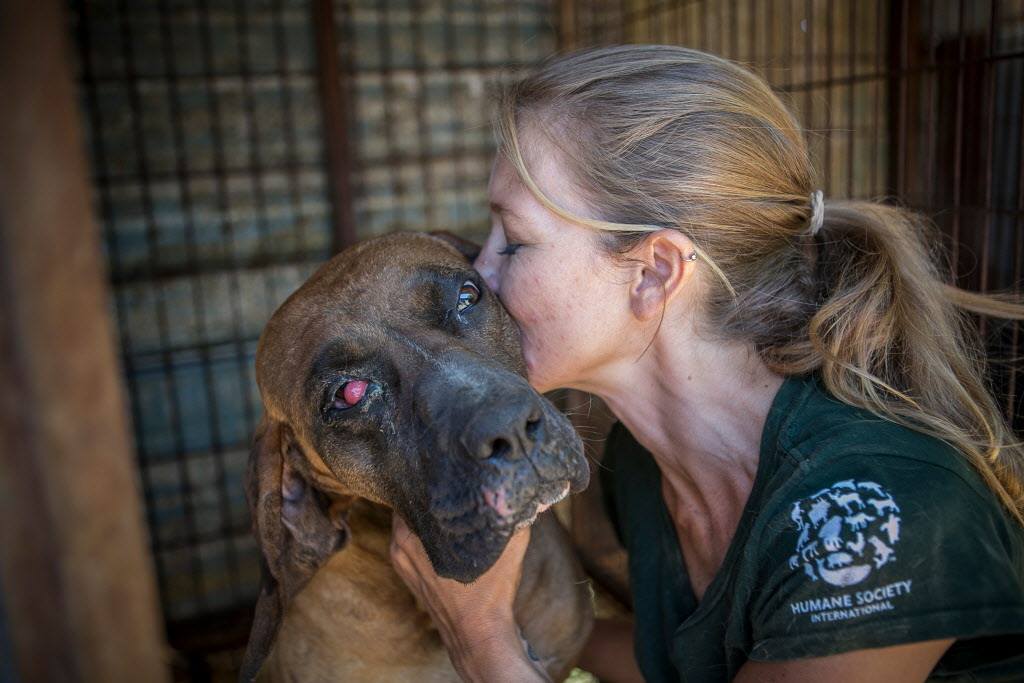
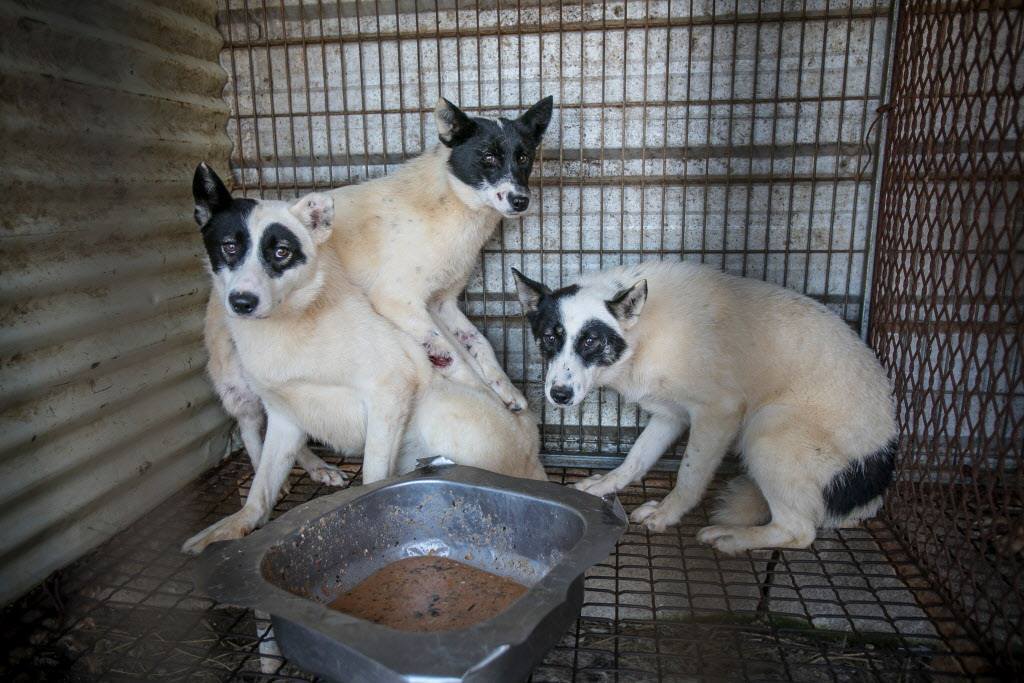
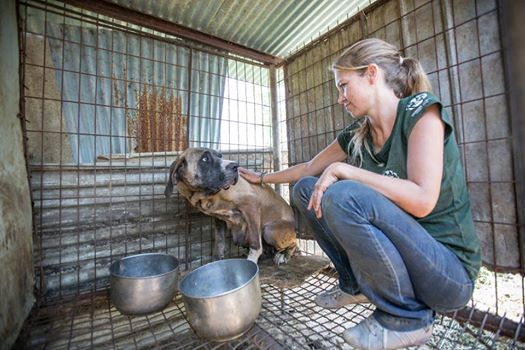
On the 26th July I posted an item about the work of The Humane Society in saving dogs. I included a very moving photograph and promised to include the rest of the photographs in a Picture Parade. Well, here they are including the one I republished.


 At two years old, Lady’s ribs protruded from her coat and her belly was swollen with milk.
 In Sabrina’s case, she couldn’t know of the family members that awaited to embrace her presence. Within days of the initial hair-raising excitement, the cat sought out occasions to groom her ears. Our pet rat was free to waddle the kitchen floor un-bothered, and the pair of bonded bunnies in want of company stretched out beside her on the living room floor.
 Eight years later, she watches over me in particular. Thirty years ago, I was struck and thrown from the passenger side of a car until my abdomen collided with the steering wheel—blunt force that called for iterative repair to my digestive system and caused permanent damage to the nerves that signal my bladder is full.
 calling for employers to make reasonable accommodations and if the individual elects, to allow task-oriented service animals [dog or miniature horse] to accompany them on the job.
 Sabrina brings people together.















 Learning from Dogs