Category: Climate

Taking a pause today!

Life has conspired with too many distractions.

It’s 11am Thursday at the time of writing this.

We have a visit to our property in a little over 2 hours time from the other students, Rhianna, our teacher, and mentors from the Land Stewardship course that Jean and I undertook at Oregon State University in the Spring.

I seemed to have picked up a Summer head cold that is making me more grumpy than usual!

Plus I have to focus on an interesting ‘project’ that I will write about early next week.

So there!

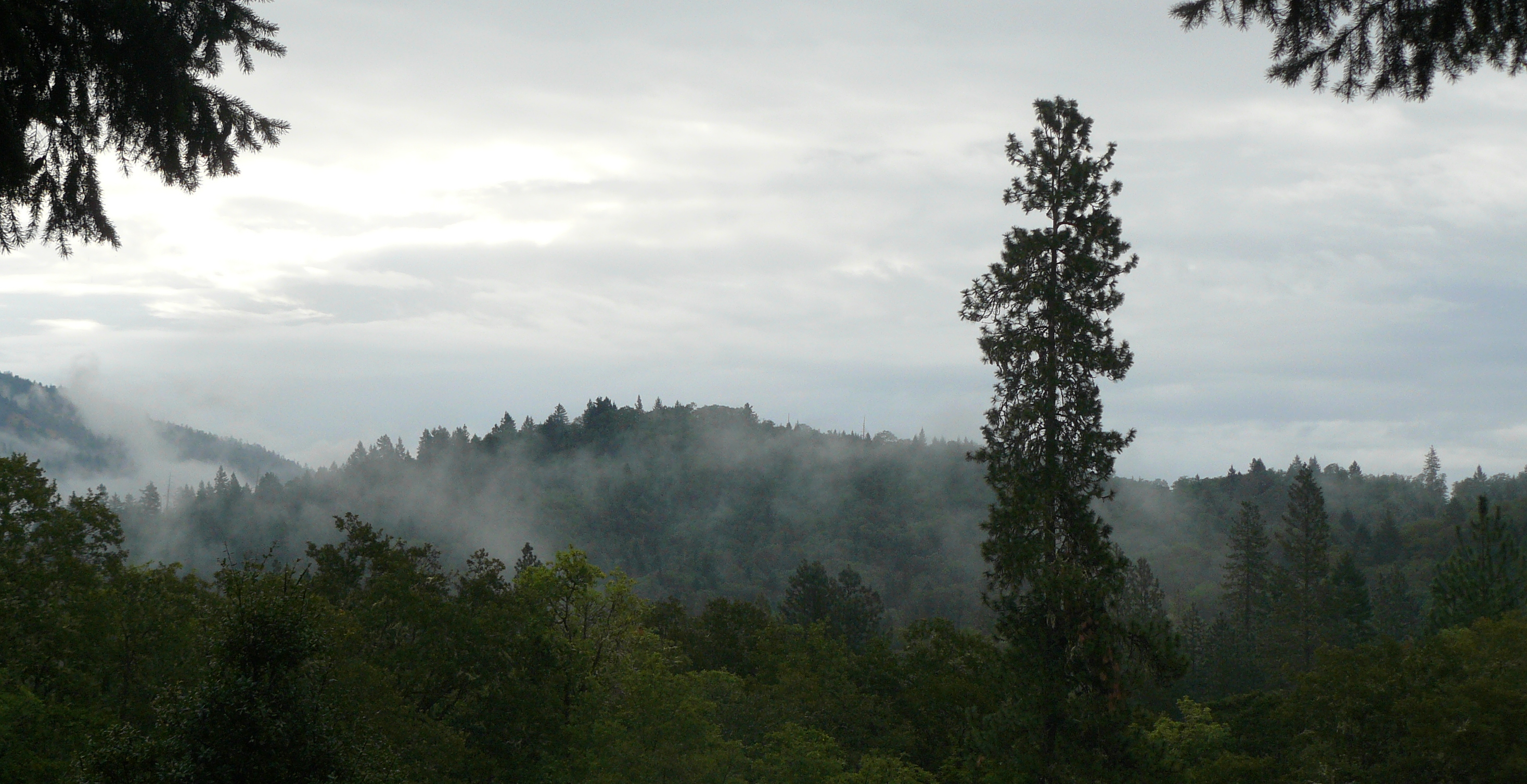
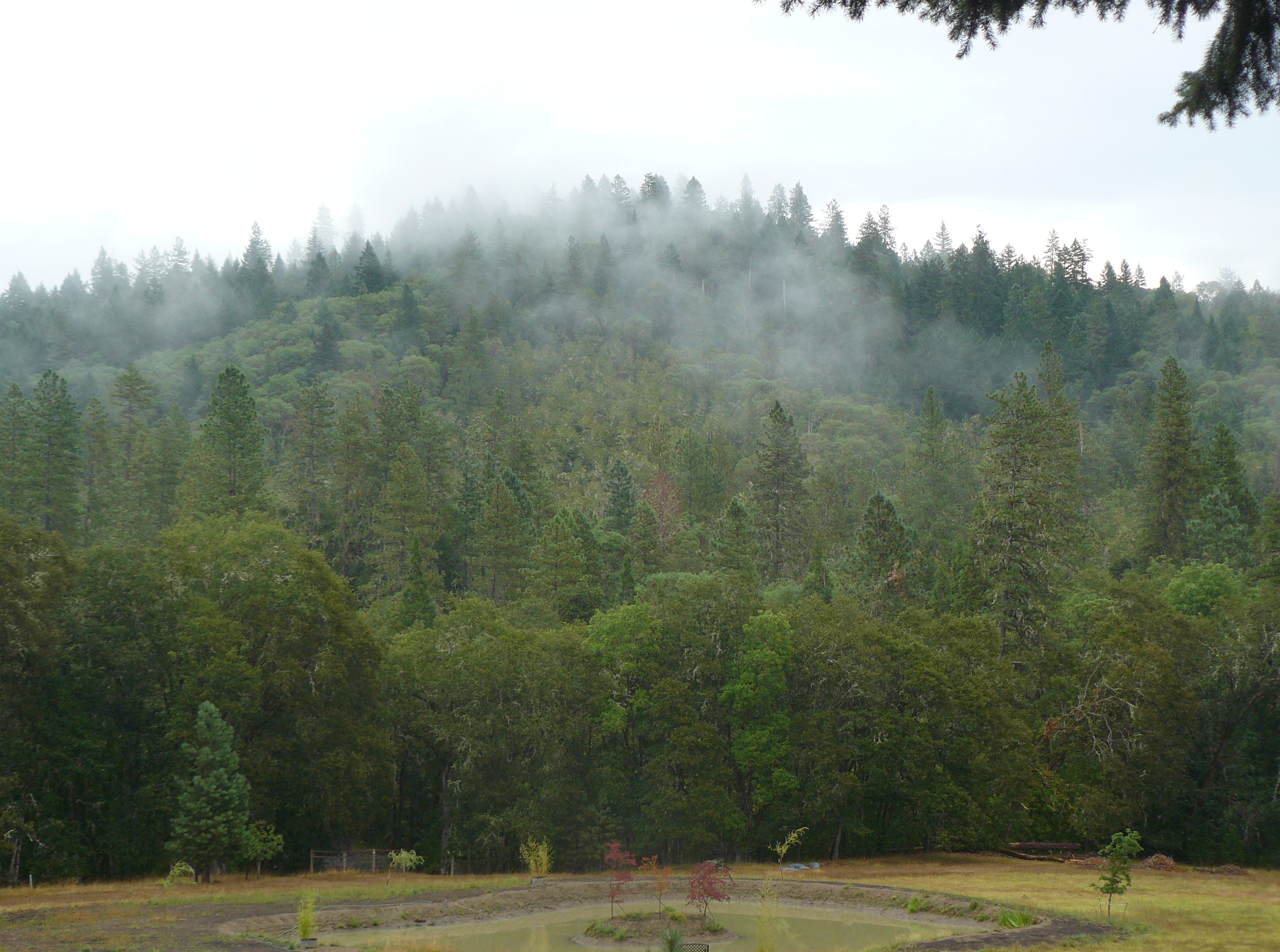
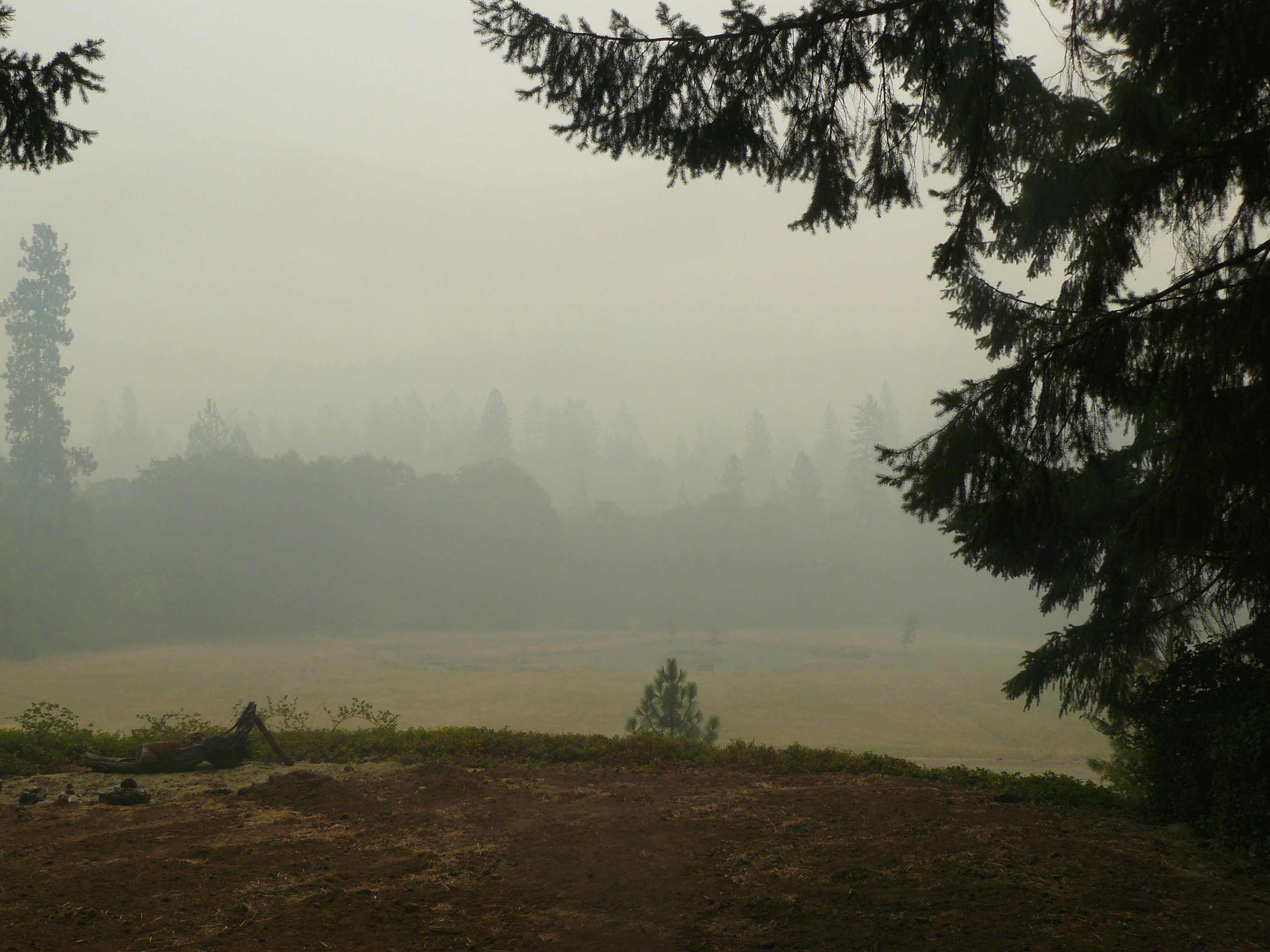
Let me leave you with these two pictures of the softness of cloud and low mist that brought some much-needed rain to us a few days ago.

asas
Looking out to the North-East with Sexton Mountain, some 5 miles away, just off picture to the left.

oooo

asasa
Looking East across our fields to the forest beyond.

If anyone wants to put these pictures into context, there was a property map published in the LfD post of the 22nd, Sing for the trees.

Fight for the trees.

An update to yesterday’s post.

In the recent post Sing for the trees, Pedantry of the blog Wibble left this comment:

 don’t consider myself an envious type, but I have to admit to being jealous of your location there, Paul. Deer in the back garden! Amazing. I guess I’m lucky to see the odd squirrel. But (as usual) I digress…

Trees… yes. Were I King of the Earth my first edict would be to make it illegal to chop down any more trees anywhere for any reason, and to reward true reforestation efforts (while banning old-forest lumbering dressed up as ‘reforestation’).

As I’m not, the extent of my singing for the trees is limited to pledges on such worthy projects as Who Bombed Judi Bari? (less than subtle hint: just 39 hours to go, as I write).

Your first image above is wonderful, and is a terrific, healing counterpoint to the images I see elsewhere, such as in the clip below, of what we’re doing to our home, out of sight of most people. Thank you.

That comment also included this video:

I thought readers would be interested in learning more by visiting the Kickstarter Campaign page and just possibly offering whatever pledge you can afford.

The importance of this campaign was underlined by the fact that just last Wednesday my daughter Maija, son-in-law Marius, and grandson Morten visited the Redwood Forest as part of their holiday with us in Oregon.  Here are three of their pictures taken just two days ago.

Life-giving Redwoods.

oooo

That need lots of loving.

oooo

From young and old alike.

oooo

So do whatever you can, please!  There are just 26 hours to go at the time of posting this: 9:10 am PDT.

Thanks to Pedantry for bringing this to the attention of LfD readers and followers.

Sing for the trees.

What can we do for the trees?

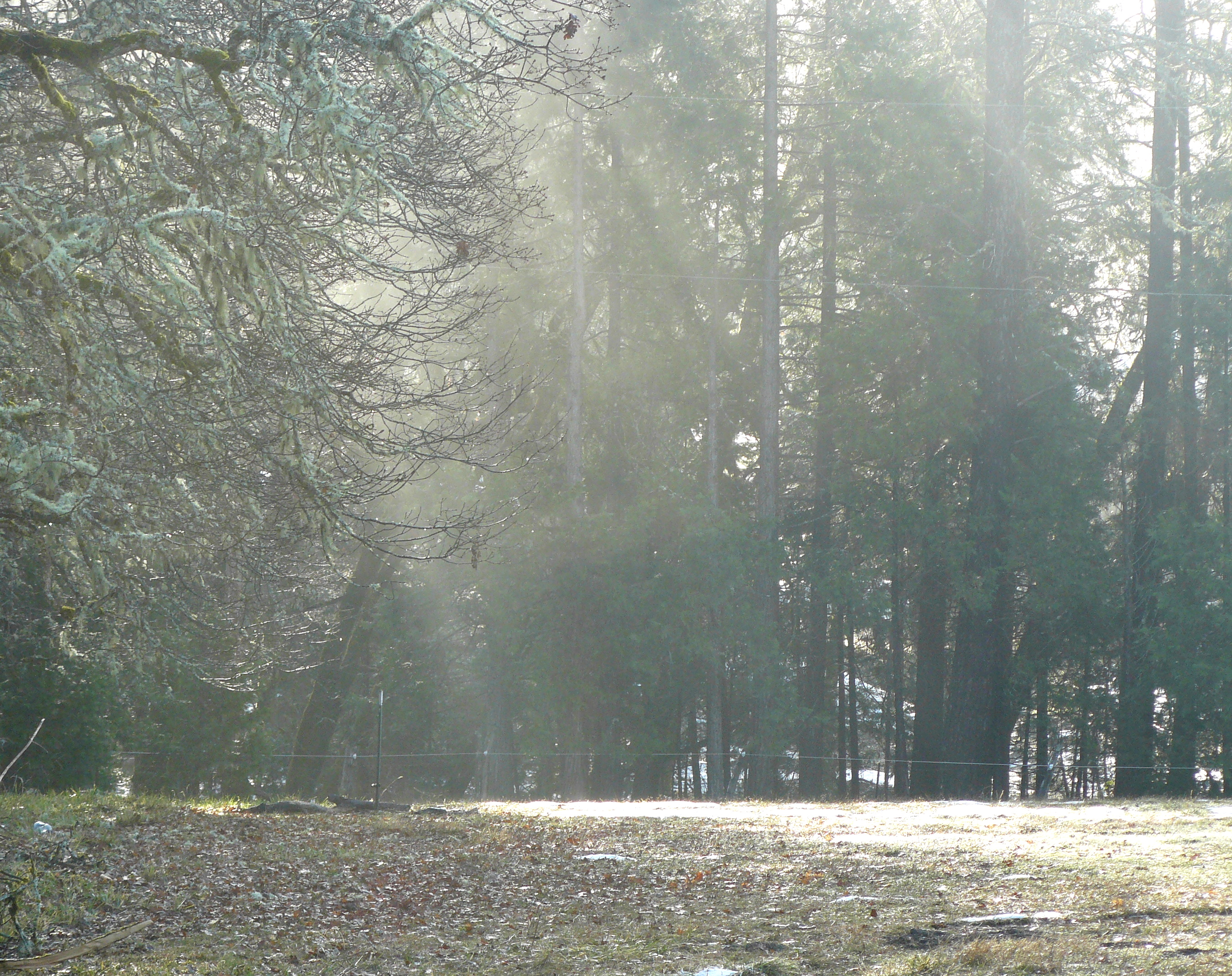
Winter sunlight filtering through the trees. Oregon, January 2013.

We don’t subscribe to television services here at home.  The only way I stay partially informed is via the BBC News website.  Thus it was a few days ago I saw the headline, “European forests near ‘carbon saturation point’”  This was a report by Mark Kinver, Environment reporter, BBC News.  It made me sit up and take notice.  For Mark Kinver wrote:

European forests are showing signs of reaching a saturation point as carbon sinks, a study has suggested.

Since 2005, the amount of atmospheric CO2 absorbed by the continent’s trees has been slowing, researchers reported.

Writing in Nature Climate Change, they said this was a result of a declining volume of trees, deforestation and the impact of natural disturbances.

Carbon sinks play a key role in the global carbon cycle and are promoted as a way to offset rising emissions.

Many of Europe’s forests are reaching an age where growth, and carbon uptake, slows down.

Writing in their paper, the scientists said the continent’s forests had been recovering in recent times after centuries of stock decline and deforestation.

The growth had also provided a “persistent carbon sink”, which was projected to continue for decades.

However, the team’s study observed three warnings that the carbon sink provided by Europe’s tree stands was nearing a saturation point.

It would be wrong to republish the full report but do go and read it here.  It contains much information, some of it counter-intuitive.  Such as Dr. Gert-Jan Nabuurs from Wageningen University and Research Centre, Netherlands saying of Europe’s forest;

“These forests have now reached 70-80 years old and are starting a phase in the life of a tree where the growth rate starts to come down,” he explained.

“So you have large areas of old forest and even if you add these relatively small areas of new forest, this does not compensate for the loss of growth rate in the old forests.”

The report includes the glaringly obvious, “However, mature woodlands have been recognised as a key habitat for supporting and conserving biodiversity.”!

The issue of knowing what is best for the wildlife, of all types and sizes, of balancing doing nothing to the forest or undertaking beneficial husbandry is one that is going to be in our minds here at home this coming Winter.

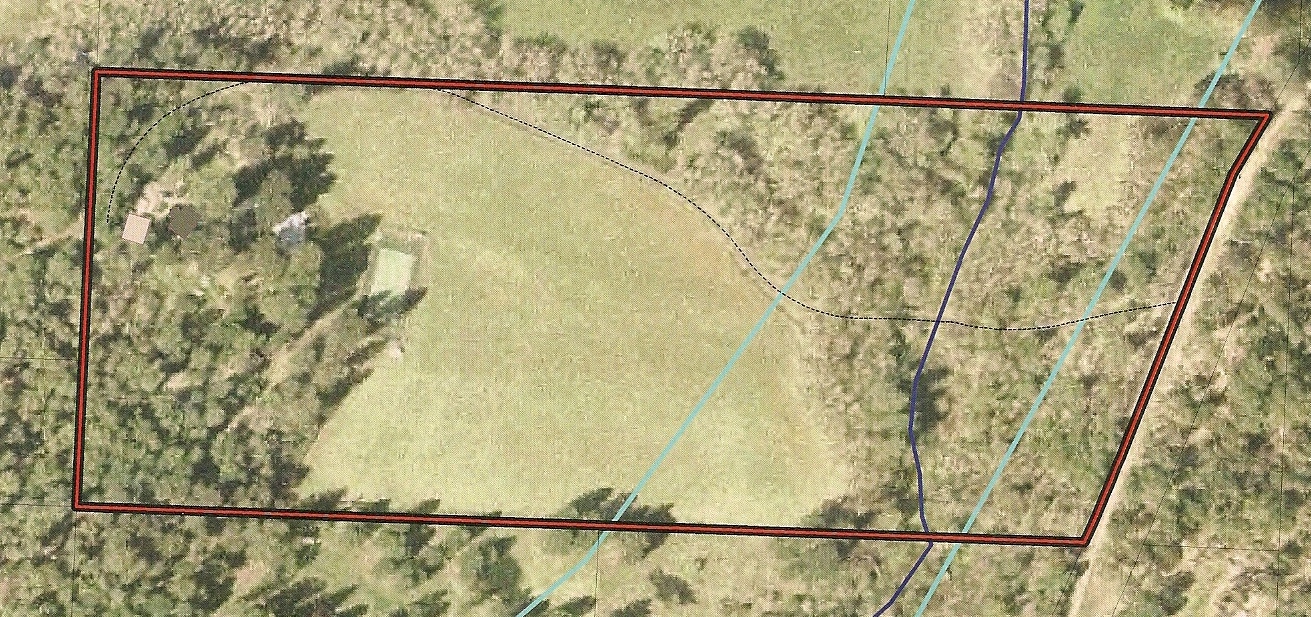
For much of our 13 acres is forest, as the following property map shows.

Assessor's Map 4000 Hugo Road.
Assessor’s Map 4000 Hugo Road.

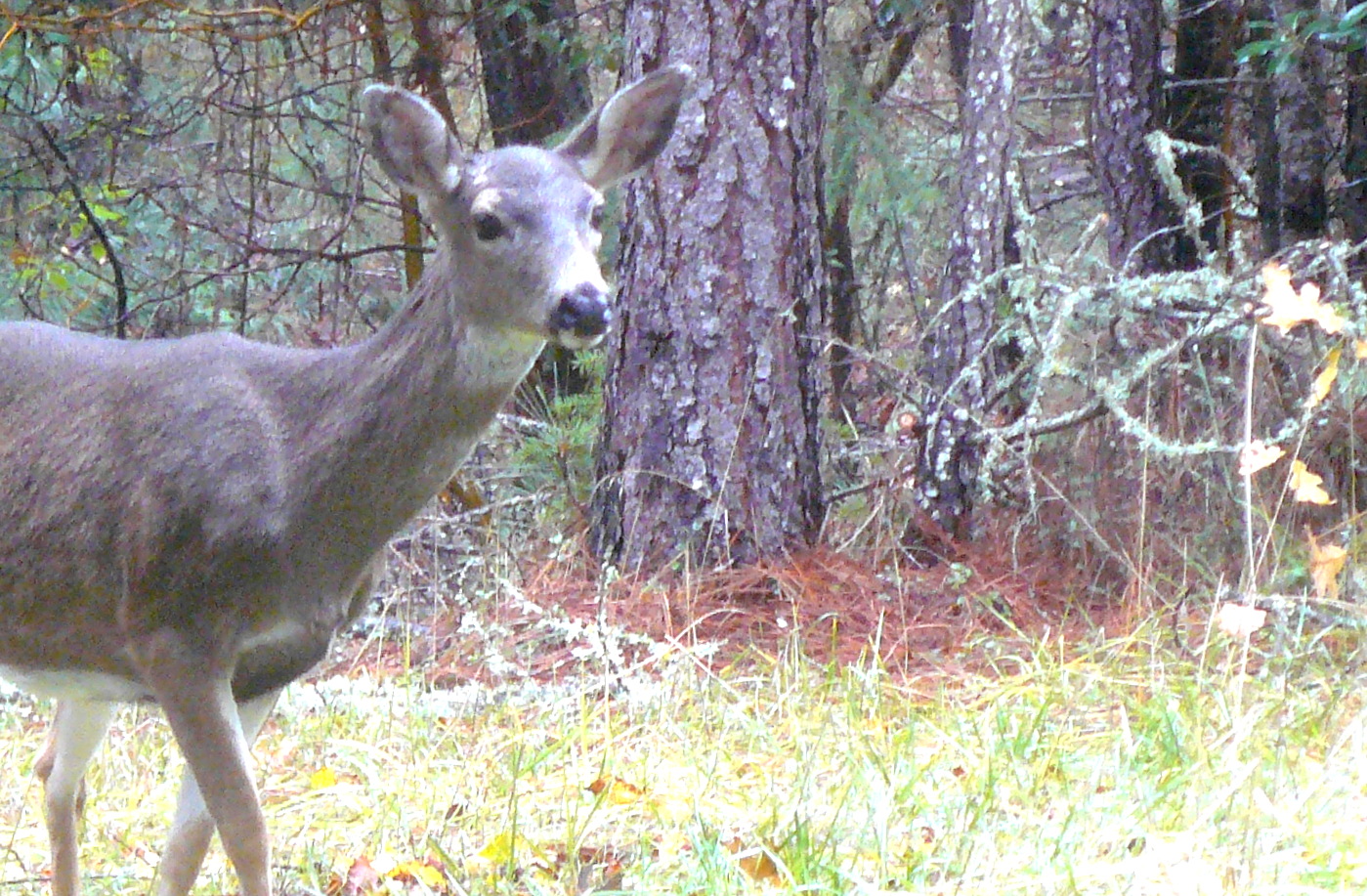
When we first moved in to the house last October, the most common wild large creatures around were the deer.  The only way one could get close enough to take a photograph was when there wasn’t a dog in sight.  Even then, the slightest sudden sound or movement had a deer dashing into the forest.

Deer very cautiously meets new humans on the block!
Deer very cautiously meets new humans on the block! (Early November 2012)

Yet over the following weeks, the healthy grass made an irresistible Winter meal and the deer settled down to being regular visitors.  But always within a few leaps and bounds of the edge of the trees.

Nevertheless, the deer remained very cautious of feeding during the daytime as they soon became aware that without warning dogs could come rushing out from the house; as happened numerous times!  It seemed clear that having the forest close by enabled them to scatter as soon as the first bark was heard.

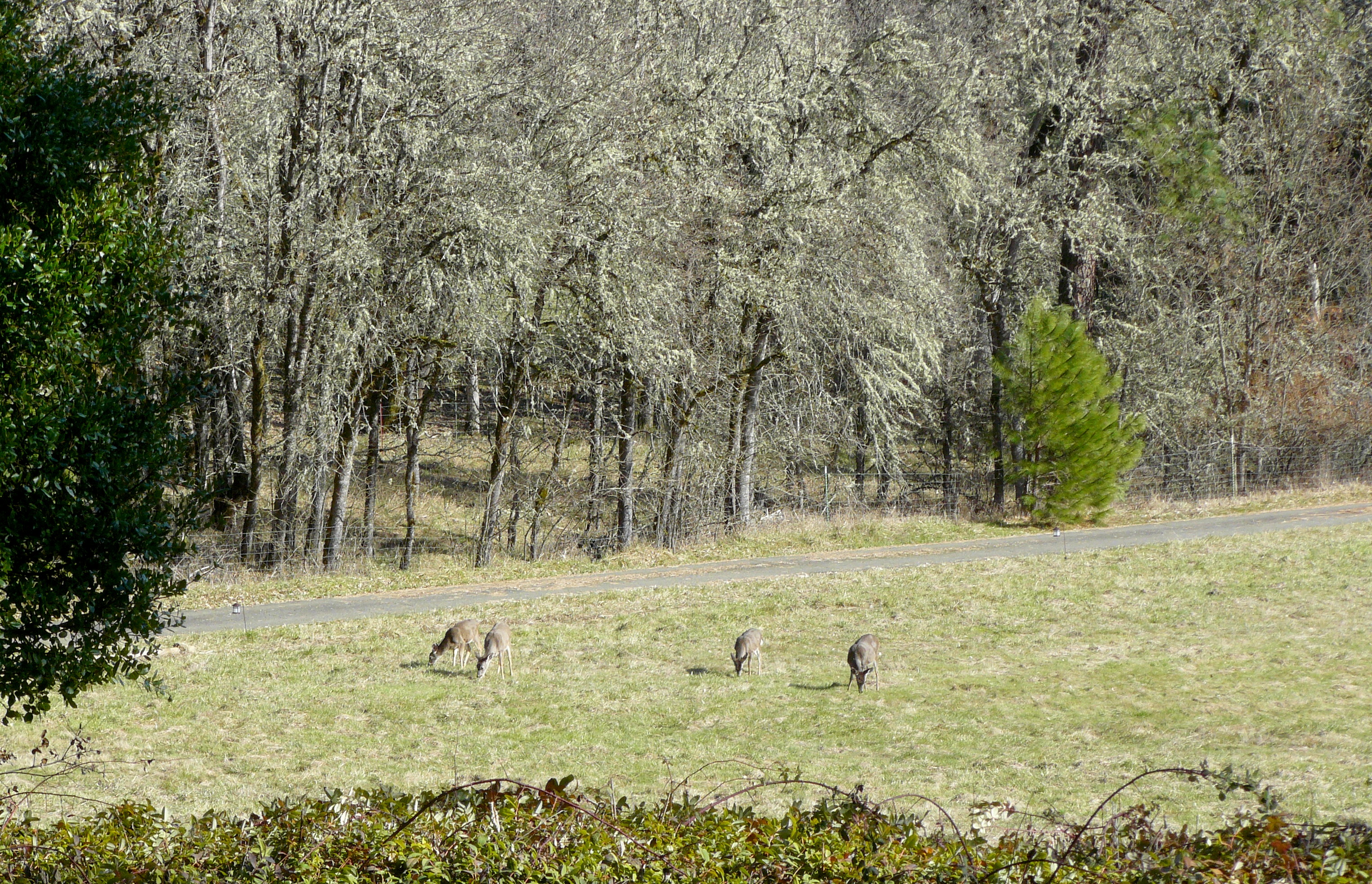
Months later, shown by this photograph taken early afternoon just a couple of weeks ago, these four wild deer still grazed close to the forest.

Wild deer feeding on the grass.

So this Autumn/Fall we shall be coming up with a plan to ensure that the forests on our property are reinvigorated to the best of our abilities.

Dichlorodiphenyltrichloroethane (DDT) all over again?

The terribly worrying bee crisis.

Yesterday, I wrote about the growing awareness of a major crisis affecting bees in a number of countries.  Coincidentally, when researching the various articles for that post, into my email ‘inbox’ came the latest essay from George Monbiot published both in the UK Guardian newspaper and on his own blog.  The title was DDT 2.0.  I emailed Mr. Monbiot requesting permission to republish his essay in full on Learning from Dogs and promptly received his approval to so do.

But for those who for whatever reason, don’t recall clearly the history of DDT, here’s some background.

Wikipedia’s entry opens, thus:

DDT (dichlorodiphenyltrichloroethane) is an organochlorineinsecticide which is a colorless, crystalline solid, tasteless and almost odorless chemical compound. Technical DDT has been formulated in almost every conceivable form including solutions in xylene or petroleum distillates, emulsifiable concentrates, water-wettable powders, granules, aerosols, smoke candles, and charges for vaporisers and lotions.[2]

First synthesized in 1874, DDT’s insecticidal properties were not discovered until 1939, and it was used with great success in the second half of World War II to control malaria and typhus among civilians and troops. The Swiss chemist Paul Hermann Müller was awarded the Nobel Prize in Physiology or Medicine in 1948 “for his discovery of the high efficiency of DDT as a contact poison against several arthropods.”[3] After the war, DDT was made available for use as an agricultural insecticide, and soon its production and use skyrocketed.[4]

Then goes on to mention Rachel Carson (1907 – 1964) and her mind-boggling expose of DDT in the famous book Silent Spring.

The legacy of Rachel Carson.

The Natural Resources Defense Council (NRDC) website explains:

The Story of Silent Spring

How a courageous woman took on the chemical industry and raised important questions about humankind’s impact on nature.

Although their role will probably always be less celebrated than wars, marches, riots or stormy political campaigns, it is books that have at times most powerfully influenced social change in American life. Thomas Paine’s Common Sense galvanized radical sentiment in the early days of the American revolution; Uncle Tom’s Cabin by Harriet Beecher Stowe roused Northern antipathy to slavery in the decade leading up to the Civil War; and Rachel Carson’s Silent Spring, which in 1962 exposed the hazards of the pesticide DDT, eloquently questioned humanity’s faith in technological progress and helped set the stage for the environmental movement.

Carson, a renowned nature author and a former marine biologist with the U.S. Fish and Wildlife Service, was uniquely equipped to create so startling and inflammatory a book. A native of rural Pennsylvania, she had grown up with an enthusiasm for nature matched only by her love of writing and poetry. The educational brochures she wrote for the Fish and Wildlife Service, as well as her published books and magazine articles, were characterized by meticulous research and a poetic evocation of her subject.

You can read the rest of that NRDC article here.

So with all that in mind, here’s the essay from George Monbiot.

oooOOOooo

DDT 2.0

August 13, 2013

We’re just beginning to understand the wider impacts of neonicotinoids.

By George Monbiot, published on the Guardian’s website, 5th August 2013

It’s the new DDT: a class of poisons licensed for widespread use before they had been properly tested, which are now ripping the natural world apart. And it’s another demonstration of the old truth that those who do not learn from history are destined to repeat it.

It is only now, when neonicotinoids are already the world’s most widely deployed insecticides, that we are beginning to understand how extensive their impacts are. Just as the manufacturers did for DDT, the corporations which make these toxins claimed that they were harmless to species other than the pests they targeted. Just as they did for DDT, they have threatened people who have raised concerns, published misleading claims and done all they can to bamboozle the public. And, as if to ensure that the story sticks to the old script, some governments have collaborated in this effort. Among the most culpable is the government of the United Kingdom.

As Professor Dave Goulson shows in his review of the impacts of these pesticides, we still know almost nothing about how most lifeforms are affected. But as the evidence has begun to accumulate, scientists have started discovering impacts across a vast range of wildlife.

Most people who read this newspaper will be aware by now of the evidence fingering neonicotinoids as a major cause of the decline of bees and other pollinators. These pesticides can be applied to the seeds of crops, and they remain in the plant as it grows, killing the insects which eat it. The quantities required to destroy insect life are astonishingly small: by volume these poisons are 10,000 times as powerful as DDT. When honeybees are exposed to just 5 nanogrammes of neonicotinoids, half of them will die. As bees, hoverflies, butterflies, moths, beetles and other pollinators feed from the flowers of treated crops, they are, it seems, able to absorb enough of the pesticide to compromise their survival.

But only a tiny proportion of the neonicotinoids that farmers use enter the pollen or nectar of the flower. Studies conducted so far suggest that only between 1.6 and 20% of the pesticide used for dressing seeds is actually absorbed by the crop: a far lower rate even than when toxins are sprayed onto leaves. Some of the residue blows off as dust, which is likely to wreak havoc among the populations of many species of insects in hedgerows and surrounding habitats. But the great majority – Goulson says “typically more than 90%” – of the pesticide applied to the seeds enters the soil.

In other words, the reality is a world apart from the impression created by the manufacturers, which keep describing the dressing of seeds with pesticides as “precise” and “targeted”.

Neonicotinoids are highly persistent chemicals, lasting (according to the few studies published so far) for up to 19 years in the soil. Because they are persistent, they are likely to accumulate: with every year of application the soil will become more toxic.

What these pesticides do once they are in the soil, no one knows, as sufficient research has not been conducted. But – deadly to all insects and possibly other species at tiny concentrations – they are likely to wipe out a high proportion of the soil fauna. Does this include earthworms? Or the birds and mammals that eat earthworms? Or for that matter, the birds and mammals that eat insects or treated seeds? We don’t yet know enough to say.

This is the story you’ll keep hearing about these pesticides: we have gone into it blind. Our governments have approved their use without the faintest idea of what the consequences are likely to be.

You might have had the impression that neonicotinoids have been banned by the European Union. They have not. The use of a few of these pesticides has been suspended for two years, but only for certain purposes. Listening to the legislators, you could be forgiven for believing that the only animals which might be affected are honeybees, and the only way in which they can be killed is through the flowers of plants whose seeds were dressed.

But neonicotinoids are also sprayed onto the leaves of a wide variety of crop plants. They are also spread over pastures and parks in granules, in order to kill insects that live in the soil and eat the roots of the grass. These applications, and many others, remain legal in the European Union, even though we don’t know how severe the wider impacts are. We do, however, know enough to conclude that they are likely to be  bad.

Of course, not all the neonicotinoids entering the soil stay there indefinitely. You’ll be relieved to hear that some of them are washed out, whereupon … ah yes, they end up in groundwater or in the rivers. What happens there? Who knows? Neonicotinoids are not even listed among the substances that must be monitored under the EU’s water framework directive, so we have no clear picture of what their concentrations are in the water that we and many other species use.

But a study conducted in the Netherlands shows that some of the water leaving horticultural areas is so heavily contaminated with these pesticides that it could be used to treat lice. The same study shows that even at much lower concentrations – no greater than the limits set by the European Union – the neonicotinoids entering river systems wipe out half the invertebrate species you would expect to find in the water. That’s another way of saying erasing much of the foodweb.

I was prompted to write this article by the horrible news from the River Kennet in southern England: a highly protected ecosystem that is listed among the few dozen true chalk streams on earth. Last month someone – farmer or householder, no one yet knows – flushed another kind of pesticide, chlorpyrifos, down their sink. The amount was equivalent – in pure form – to two teaspoonsful. It passed through Marlborough sewage works and wiped out most of the invertebrates in fifteen miles of the river.

The news hit me like a bereavement. The best job I ever had was working, during a summer vacation from university, as temporary waterkeeper on the section of the Kennet owned by the Sutton estate. The incumbent had died suddenly. It was a difficult job and, for the most part, I made a mess of it. But I came to know and love that stretch of river, and to marvel at the astonishing profusion of life the clear water contained. Up to my chest in it for much of the day, I immersed myself in the ecology, and spent far more time than I should have done watching watervoles and kingfishers; giant chub fanning their fins in the shade of the trees; great spotted trout so loyal to their posts that they had brushed white the gravel of the river bed beneath their tails; native crayfish; dragonflies; mayflies; caddis larvae; freshwater shrimps and all the other teeming creatures of the benthos.

In the evenings, wanting company and fascinated in equal measure by the protest and the remarkable people it attracted, I would stop at the peace camp outside the gates of the Greenham Common nuclear base. I’ve told the strange story that unfolded during my visits in another post.

Campaigners seeking to protect the river have described how, after the contamination,the river stank from the carcases of the decaying insects and shrimps. Without insects and shrimps to feed on, the fish, birds and amphibians that use the river are likely to fade away and die.

After absorbing this news, I remembered the Dutch study, and it struck me that neonicotinoid pesticides are likely, in many places, to be reducing the life of the rivers they enter to a similar extent: not once, but for as long as they are deployed on the surrounding land.

Richard Benyon, the minister supposed to be in charge of protecting wildlife and biodiversity, who happens to own the fishing rights on part of the River Kennet, and to represent a constituency through which it passes, expressed his “anger” about the chlorpyrifos poisoning. Should he not also be expressing his anger at the routine poisoning of rivers by neonicotinoids?

Were he to do so, he would find himself in serious trouble with his boss. Just as they are systematically poisoning our ecosystems, neonicotinoids have also poisoned the policies (admittedly pretty toxic already) of the department supposed to be regulating them. In April, Damian Carrington, writing in the Observer, exposed a letter sent by the ministerin charge of the Department for Environment, Food and Rural Affairs (Defra), Owen Paterson, to Syngenta, which manufactures some of these pesticides. Paterson promised the company that his efforts to prevent its products from being banned “will continue and intensify in the coming days”.

And sure enough, the UK refused to support the temporary bans proposed by the commission both in April and last month, despite the massive petitions and the 80,000 emails on the subject that Paterson received. When Paterson and Deathra were faced with a choice between the survival of natural world and the profits of the pesticides companies, there was not much doubt about how they would jump. Fortunately they failed.

Their attempt to justify their votes led to one of the most disgraceful episodes in the sorry record of this government. The government’s new chief scientist, Sir Mark Walport, championed a “study” Deathra had commissioned, which purported to show that neonicotinoids do not kill bees. It was not published in a peer-reviewed journal, nor could it be, as as any self-respecting scientist, let alone the government’s chief scientist, should have been able to see in a moment that it was complete junk. Among many other problems, the controls were hopelessly contaminated with the pesticide whose impacts the trial was supposed to be testing. The “study” was later ripped apart by the European Food Safety Authority.

But Walport did still worse, making wildly misleading statements about the science, and using scare tactics and emotional blackmail to try to prevent the pesticides from being banned, on behalf of his new masters.

It is hard to emphasise sufficiently the importance of this moment or the dangers it contains: the total failure of the government’s primary source of scientific advice, right at the beginning of his tenure. The chief scientist is not meant to be a toadying boot-licker, but someone who stands up for the facts and the principles of science against political pressure. Walport disgraced his post, betrayed the scientific community and sold the natural world down the river, apparently to please his employers.

Last week, as if to remind us of the extent of the capture of this government by the corporations it is supposed to be regulating, the scientist who led the worthless trials that Walport and Paterson cited as their excuse left the government to take up a new post at … Syngenta. It seems to me that she was, in effect, working for them already.

So here we have a department staggering around like a drunkard with a loaded machine gun, assuring us that it’sh perfectly shafe. The people who should be defending the natural world have conspired with the manufacturers of broad-spectrum biocides to permit levels of destruction at which we can only guess. In doing so they appear to be engineering another silent spring.

oooOOOooo

Frankly, there are more and more occasions when I think that if homo sapiens becomes virtually extinct there will be no queries as to why it happened.  Then again, a much more positive muse would be to see the ever-increasing madness going on in today’s world as the crumbling death throws of a materialistic and consumptionist era that is past its time.

Pity the bees; pity us.

A world without bees would be a world without us!

Note: I would like to remind good readers of Learning from Dogs as to what I wrote a week ago; namely:

My daughter, Maija, son-in-law, Marius, and grandson, Morten, aged two, are staying with us over the next couple of weeks, arriving tomorrow.

So being able to offer a daily fresh post on Learning from Dogs will be a challenge. As indeed, it should be: Family should always be the top priority.

However, rather than leaving you with blank pages, I shall be regurgitating some earlier posts, starting tomorrow.

Thus the room for creative writings from yours truly is restrained, if not impossible, until Maija and company leave on Friday morning.

oooo

Guard their future - and ours!
Guard their future – and ours!

For today I want to focus, primarily using materials from elsewhere, on the developing situation regarding our bees: they are in crisis.

This all came to my attention when Jean and I were able to watch a recent BBC Horizon Special: What’s Killing Our Bees?  As the BBC Horizon website explains:

Bill Turnbull investigates one of the biggest mysteries in the British countryside: what is killing our bees. It is a question that generates huge controversy. Changes in the weather, pesticides and even a deadly virus have all been blamed. It is a question that Bill is all too familiar with as a beekeeper himself. He meets the scientists who are fitting minute radar transponders on to bees to try to find answers.

Not sure how long this will remain available on YouTube but here is the first quarter of that BBC Horizon Special.

But the message put out by Bill Turnbull that this was solely a mystery for the British countryside was demolished in TIME Magazine for August 12th, which ran as their lead story:

g9510.20_Bee.indd
Bees making the headlines.

You can thank the Apis mellifera, better known as the Western honeybee, for 1 in every 3 mouthfuls you’ll eat today. Honeybees — which pollinate crops like apples, blueberries and cucumbers — are the “glue that holds our agricultural system together,” as the journalist Hannah Nordhaus put it in her 2011 book The Beekeeper’s Lament. But that glue is failing. Bee hives are dying off or disappearing thanks to a still-unsolved malady called colony collapse disorder (CCD), so much so that commercial beekeepers are being pushed out of the business.

So what’s killing the honeybees? Pesticides — including a new class called neonicotinoids — seem to be harming bees even at what should be safe levels. Biological threats like the Varroa mite are killing off colonies directly and spreading deadly diseases. As our farms become monocultures of commodity crops like wheat and corn — plants that provide little pollen for foraging bees — honeybees are literally starving to death. If we don’t do something, there may not be enough honeybees to meet the pollination demands for valuable crops. But more than that, in a world where up to 100,000 species go extinct each year, the vanishing honeybee could be the herald of a permanently diminished planet.

Forgive me, but just have to repeat that last sentence: “the vanishing honeybee could be the herald of a permanently diminished planet.

Then piling on the pressure was an article on Food Freedom News on the 11th August: 31 Percent of US Honey Bees Wiped Out This Year – Who Will Pollinate Our Crops?

By Michael Snyder
Blacklisted News

If bees keep dying off at this rate, we are going to be facing a horrific agricultural crisis very rapidly in the United States.  Last winter, 31 percent of all U.S. bee colonies were wiped out.  The year before that it was 21 percent.  These colony losses are being described as “catastrophic” by those in the industry, and nobody is quite sure how to fix the problem.  Some are blaming the bee deaths on pesticides, others are blaming parasites and others are blaming cell phones.  But no matter what is causing these deaths, if it doesn’t stop we will all soon notice the effects at the supermarket.  Bees pollinate about a hundred different crops in the United States, and if the bees disappear nobody is quite sure how we will be able to continue to grow many of those crops.  This emerging crisis does not get a lot of attention from the mainstream media, but if we continue to lose 30 percent of our bees every year it is going to have a cataclysmic effect on our food supply.

The frightening thing is that the bee deaths appear to be accelerating and they appear to be even worse in the UK and Canada…

This past winter was one of the worst on record for bees. In the U.S., beekeepers lost 31 percent of their colonies, compared to a loss of 21 percent the previous winter. In Canada, the Canadian Honey Council reports an annual loss of 35 percent of honey bee colonies in the last three years. In Britain, the Bee Farmers’ Association says its members lost roughly half their colonies over the winter.

“It has been absolutely catastrophic,” said Margaret Ginman, who is general secretary of the Bee Farmers’ Association. “This has been one of the worst years in living memory.”

Scientists have been scrambling to figure out what is causing this, and one study that was recently conducted by researchers at the University of Maryland and the U.S. Department of Agriculture may have some answers…

Please read the rest of the report here.

The United States Department of Agriculture (USDA) website is an obvious point of reference although a quick search by me failed to find confirmation of the importance of bee pollination for many crops, as was reported in the TIME Magazine article, namely:

Although many crops are only partially dependent on bee pollination, others, like the almond, cannot get by without it.  According to USDA, one-third of the food in our diet relies to some extent on bee pollination.

Almond: 100%

Apple: 90%

Asparagus: 90%

Avocado: 90%

I’m sure you get the message!

Tomorrow, I will present a recent essay from George Monbiot who offers his view of this major crisis.

Just about Arizona water.

A more intimate look at the water of Arizona.

Yesterday, I published a recent Tomgram essay by William deBuys: Goodbye to All That (Water).  The essence of what William was presenting was that, “The crucial question for Phoenix, for the Colorado, and for the greater part of the American West is this: How long will the water hold out?

Also in yesterday’s Learning from Dogs post, I closed with the statement, “If readers will forgive me, I will continue the theme tomorrow with a rather more personal perspective.

I have decided to delay the ‘personal’ aspect to today’s post until the very end.  So back to Arizona’s water.

As an indication that this is not a new problem, I recently came across an article that was published  in The Arizona Republic by  Shaun McKinnon in August 2009.  It was called Unabated use of groundwater threatens Arizona’s future. Here’s how that article opened:

Thirty years after Arizona tried to stop cities and towns from using up their groundwater, the state still can’t shake its thirst for one of its most finite resources.

The steady drain on underground reserves grows out of two realities: Canals and pipelines don’t reach far enough to deliver surface water to everyone, and laws don’t reach far enough to stop people from drilling.

If the groundwater addiction continues unabated and under-regulated, the effects will be broad and potentially disastrous: Scarcer supplies could push rates higher and create uncertainty about water availability, discouraging new business and slowing economic growth. If wells start to run dry and aquifers collapse, the landscape could be dotted with fissures and sinkholes.

Lawmakers adopted some of the nation’s most progressive water-protection laws to avert such crises, but the laws excluded rural areas and allowed changes that let cities and subdivisions resume well-drilling, further depleting exhaustible aquifers.

Meanwhile, the renewable resource intended to replace groundwater – surface water fed by the annual runoff of mountain snow – can’t meet the demand of urban areas too far from the delivery canals.

The result is holes in the state’s water bucket that are spreading as fast as the holes in the ground.

Then good friend, Dan Gomez sent me this link: Arizona’s Water: Uses and Sources. I would like to cover some of the information contained on that website.

Arizona’s Water: Uses and Sources

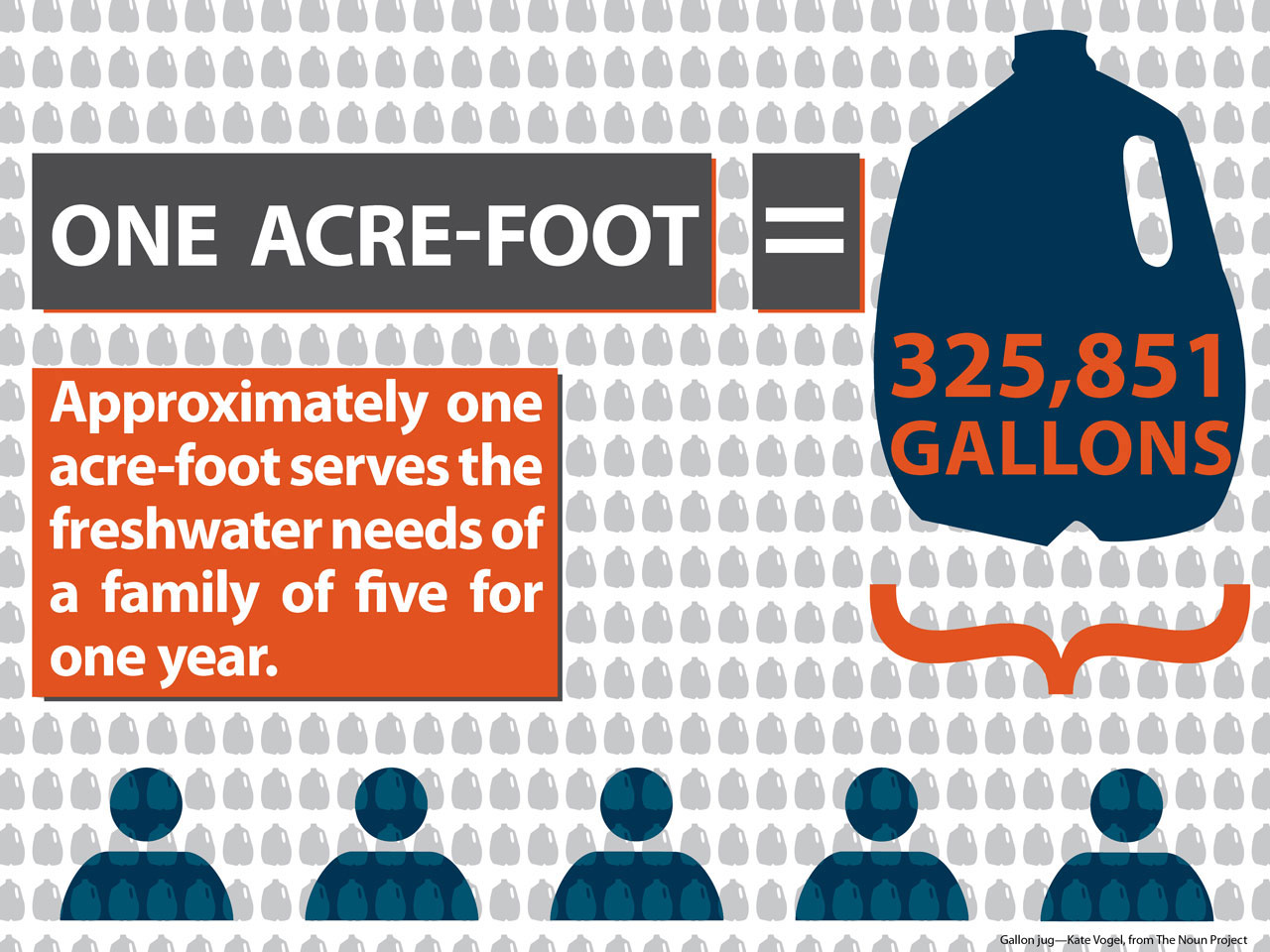
One acre-foot of water.

A land’s carrying capacity has always been determined by its access to usable water. Humans use water primarily for irrigation, industry, drinking water, and sanitation. Millions of non-human species depend on water for life itself. Only 1% of the earth’s water is freshwater, to be shared among more than 7 billion people and all freshwater aquatic ecosystems in the world. It is perhaps the most precious resource on the planet.

Large volumes of water are most commonly measured in acre-feet. One acre-foot is the amount of water required to cover one acre of area to the depth of one foot: 325,851 gallons. Approximately one acre-foot serves the needs of a family of five for one year. Arizona is one of the driest states in the U.S., and one of the fastest-growing. Arizona’s current population is over 6 million (2010 Census) and is projected to grow to as many as 9.5 million people by 2025. Encompassing four deserts, Arizona receives a statewide average of only 12.5 inches of rain per year. Our climate presents intense challenges in balancing our water needs between ourselves, our neighbors, and our riparian ecosystemsWater has defined our past and will determine our future.

“Water has defined our past and will determine our future”!

Let me skip a couple of paragraphs and continue, thus:

Water Budget: Usage and recharge

How much water do we ​use?

Based on Arizona Department of Water Resources (ADWR) data from 2001–2005, Arizona uses approximately 6.96 million acre-feet of water annually. A 2008 estimate by the University of Arizona Water Resources Research Center places that value as high as 8 million acre-feet. Collaborative estimates place the actual water used in Arizona at between 7.25 million and 7.75 million acre-feet annually. That’s about 2.4–2.5 trillion gallons a year.

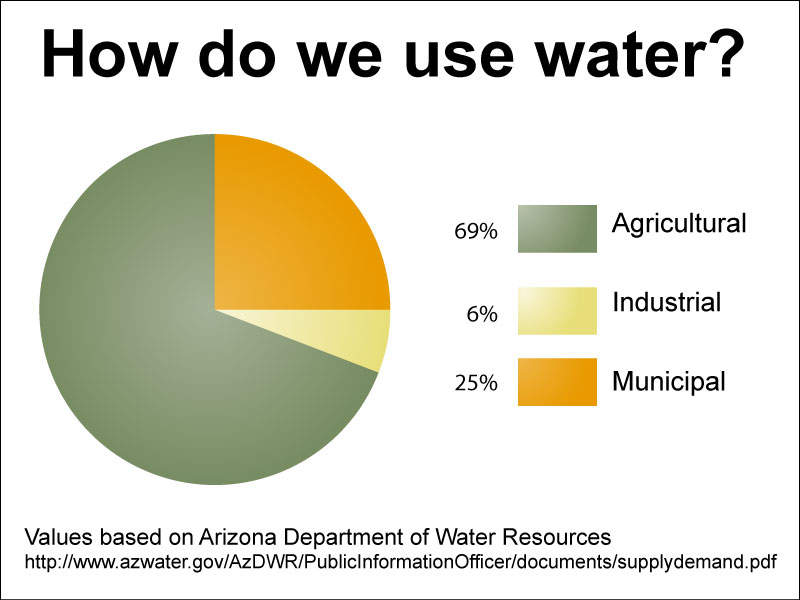
 How do we use water?

Water in Arizona is used for cultural purposes (for and by people) and for in-stream uses, such as for the support of fish and riparian ecosystems.

Arizona's cultural use of water. Values based on Arizona Department of Water Resources.
Arizona’s cultural use of water. Values based on Arizona Department of Water Resources.
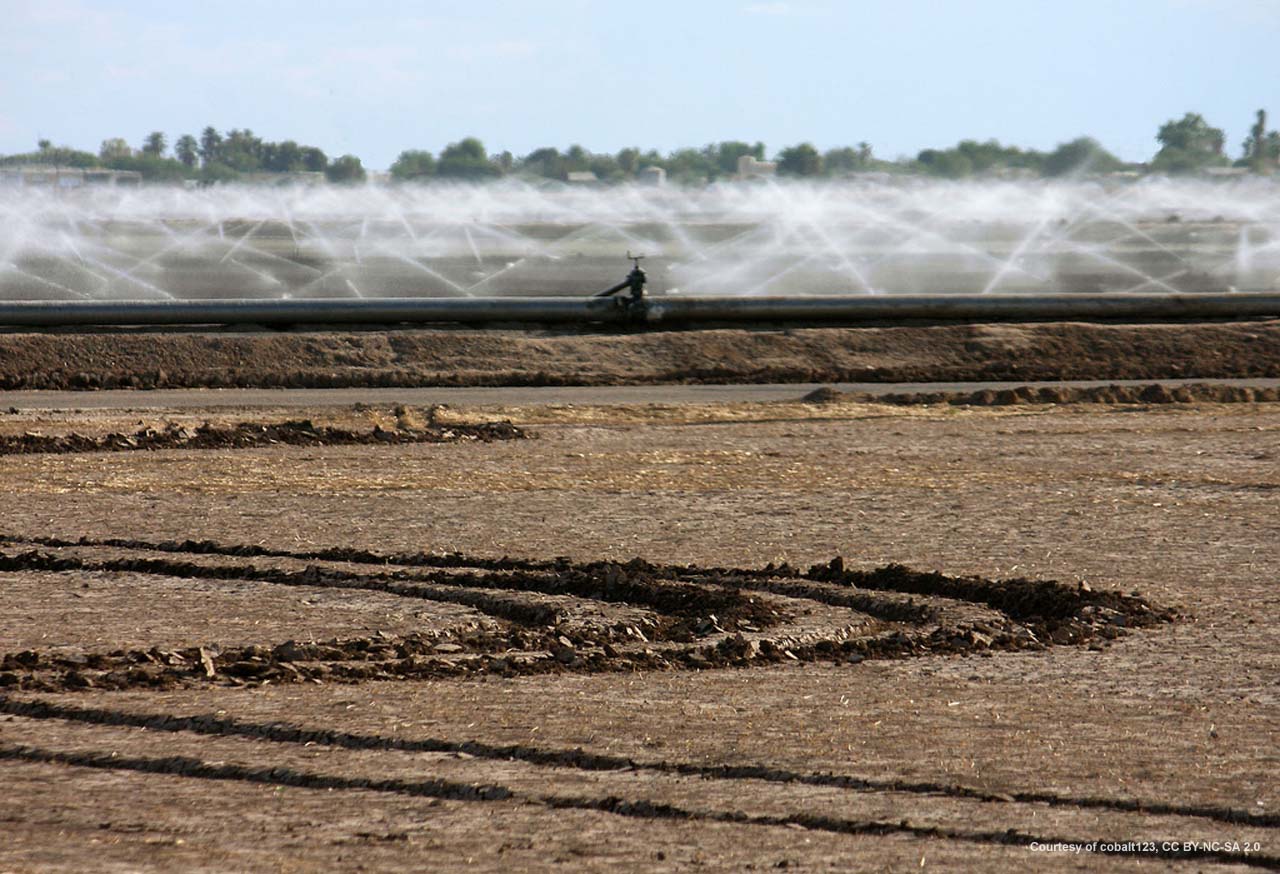
Approximately 69% of the available water supply in Arizona is used for agriculture.

Again, skipping forward.

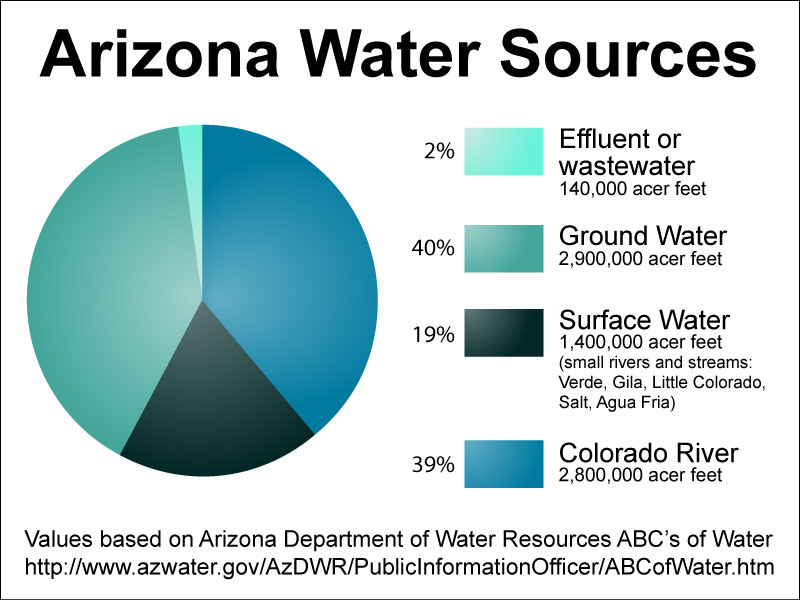
Values based on Arizona Department of Water Resources ABC’s of Water.

Water Sources

Arizona gets water from three major sources: surface water (which includes Colorado River water and water from other major rivers and streams), groundwater, and effluent or reclaimed water.

Groundwater

About 43% of the state’s water use comes from groundwater sources. Groundwater is found beneath the earth’s surface in natural reservoirs called aquifers. In most cases the aquifers that store water have been in place for millions of years. Throughout the 20th and 21st centuries, groundwater has been pumped out more rapidly than it has been replenished, creating a condition called overdraft. Though a large amount of water remains stored in Arizona’s aquifers, its availability is limited by location, depth and quality. By continuing to overdraft the state’s groundwater supplies, we challenge our ability to ensure a secure water supply for the future. In recognition of this threat, Arizona implemented the Groundwater Management Code in 1980. The Groundwater Code promotes water conservation and long-range planning of our water resources.

Colorado River Water

A separate category of surface water in Arizona is the water supplied through the Colorado River. The federal government constructed a system of reservoirs on the river to harness its supplies for use in several states. Arizona, California, Nevada, New Mexico, Utah, Colorado, Wyoming, and Mexico share the river’s resources. Rights to use Colorado River water are quantified by a string of legal authorities known as the “Law of the River.” Based on this body of law, Arizona has the right to use 2.8 million acre-feet annually of Colorado River water. Mohave, La Paz, and Yuma county water users rely on Colorado River as their principal water supply. When fully utilized, the Central Arizona Project (CAP) will deliver an annual average of 1.5 million acre-feet of Colorado River water to Maricopa, Pinal and Pima Counties.

Other Surface Water

Surface water from lakes, rivers, and streams is Arizona’s major renewable water resource. However, because of our desert climate, the amount of surface water available can vary dramatically from year to year, season to season, and place to place. In order to make the best use of the surface water when and where it is needed, storage reservoirs and delivery systems have been constructed throughout the state. Most notable are the major reservoir storage systems located on the Salt, Verde, Gila and Agua Fria rivers. Almost all of the natural surface water in Arizona has been developed.

Effluent

Reclaimed water, or effluent, is the one increasing water source in our state. As our population and water use grows, more treated wastewater will be available. Reclaimed water is treated to a quality that can be used for purposes such as agriculture, golf courses, parks, industrial cooling, or maintenance of wildlife areas.

Information made available by the Arizona Department of Water Resources and the University of Arizona Water Resources Research Center.

Since it is impossible to measure the exact values of water used across a state, some variance of values must be tolerated.

oooOOOooo

So take the message from yesterday’s post and then from above: “Throughout the 20th and 21st centuries, groundwater has been pumped out more rapidly than it has been replenished, creating a condition called overdraft. Though a large amount of water remains stored in Arizona’s aquifers, its availability is limited by location, depth and quality. By continuing to overdraft the state’s groundwater supplies, we challenge our ability to ensure a secure water supply for the future.“, and remember that 2 + 2 = 4!  I.e. the power of logic.

Now to close with that personal perspective.

When Jean and I were living in Payson, Arizona, we were close to town but not so close as to be on Payson City’s water supply.  Thus we had a well on our land.  If I recall, the depth of the drilled well was about 250 feet and the water level was about 80 feet below ground surface.  We had been told from the house survey that the ‘normal’ water level was about 35 feet down.  While we were there the water level slowly, but steadily, continued to drop.

We were both very happy in Payson; indeed it is where Jean and I were married.

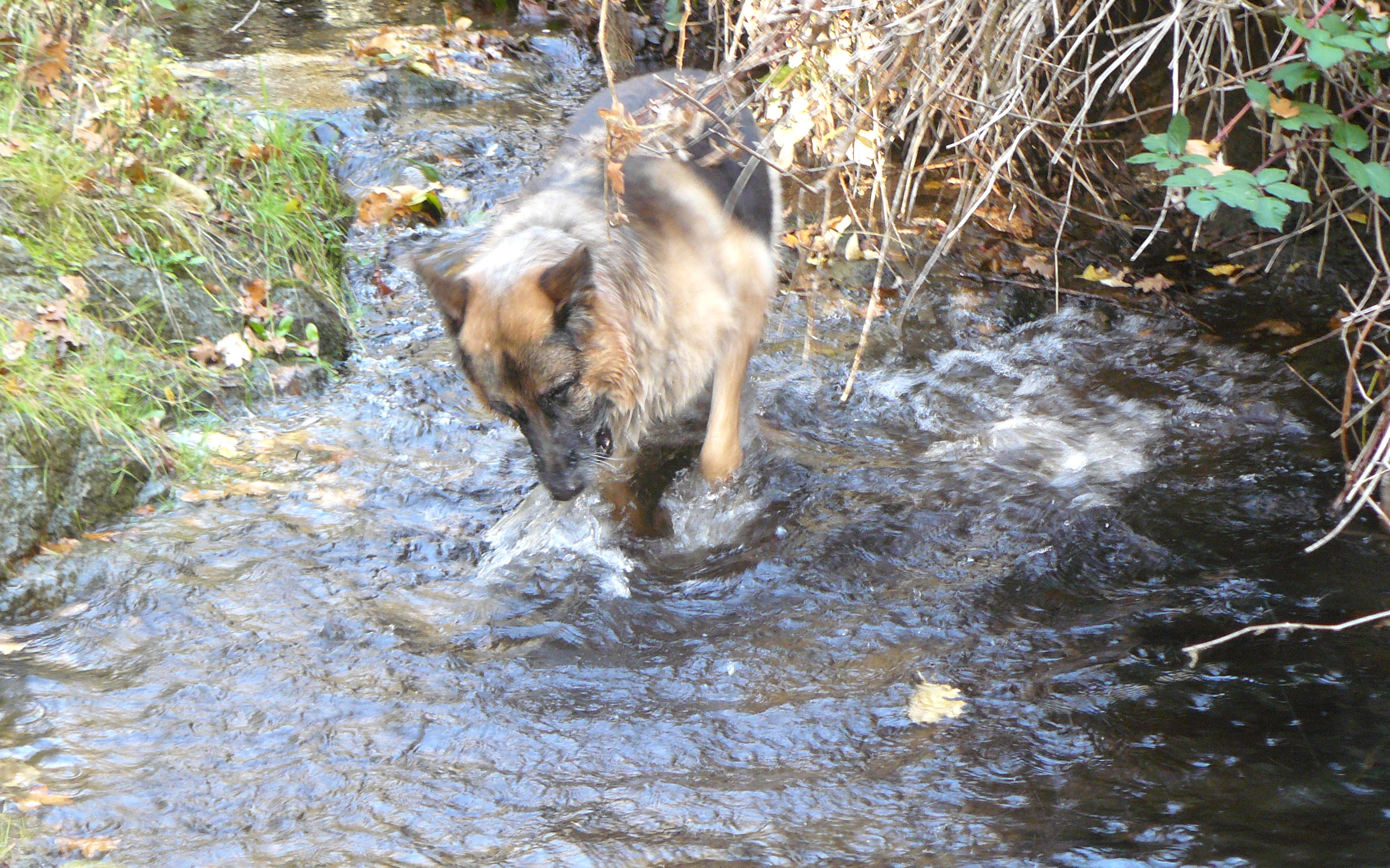
However, one night, I would guess last June, 2012, I had this weird dream that I had gone to the bathroom during the night, turned on the cold-water tap and nothing had flowed out.  Bizarre dream, wouldn’t you say!  But even more bizarre was that the image of no water was in my mind when I awoke in the morning, and I couldn’t shrug off a distinct feeling of disquiet.  That all lead to us coming up to Oregon, finding this wonderful property with an all-year creek, Bummer Creek, running through our land, and moving in on October 25th, 2012.

Funny old world at times!

Pharaoh enjoying Bummer Creek.

Just about water.

Having no drinking water puts every other aspect of living in the shade!

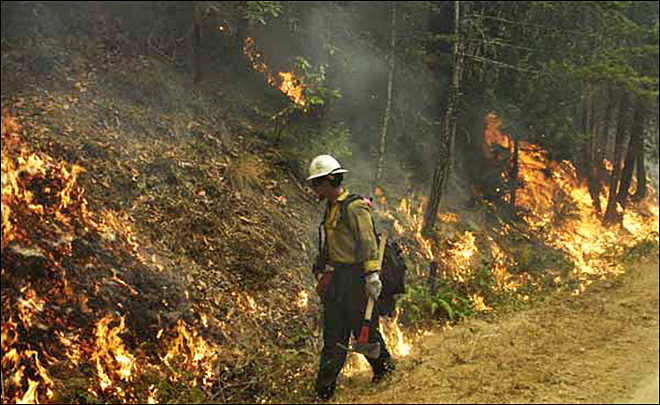
Yesterday afternoon, around 4pm, local thunderstorm activity produced some rain.  Not much but sufficient to wet the ground.  It brought to an end several weeks of intense drought complicated by what is now more than 55,000 acres of fires burning in southwest Oregon: more details here.

Oregon Wildfires
A Redmond Hotshots crew on the Douglas Complex conducts a burnout operation to create a barrier to the wildfire’s advance by removing fuel in its path.

Anyway, this is not about fire, irrespective of how potentially dangerous it can be in this part of the world, it is about water. So with that in mind, here’s a recent ‘Tomgram‘ from William deBuys, with introduction by Tom Engelhardt; republished with Tom’s generous permission.

oooOOOooo

Tomgram: William deBuys, Goodbye to All That (Water)

Martha and the Vandellas would have loved it.  Metaphorically speaking, the New York Times practically swooned over it.  (“An unforgiving heat wave held much of the West in a sweltering embrace over the weekend, tying or breaking temperature records in several cities, grounding flights, sparking forest fires, and contributing to deaths.”) It was a “deadly” heat wave, a “record” one that, in headlines everywhere, left the West and later the rest of the country “sweltering,” and that was, again in multiple headlines, “scary.”  The fire season that accompanied the “blasting,” “blazing” heat had its own set of “record” headlines — and all of this was increasingly seen, in another set of headlines, as the “new normal” in the West. Given that 2012 had already set a heat record for the continental U.S., that the 10 hottest years on record in this country have all occurred since 1997, and that the East had its own sweltering version of heat that wouldn’t leave town, this should have been beyond arresting.

In response, the nightly primetime news came up with its own convenient set of new terms to describe all this: “extreme” or “severe” heat.  Like “extreme” or “severe” weather, these captured the eyeball-gluing sensationalism of our weather moment without having to mention climate change or global warming.  Weather, after all, shouldn’t be “politicized.”  But if you’re out in the middle of the parching West like TomDispatch regular William deBuys, who recently headed down the Colorado River, certain grim realities about the planet we’re planning to hand over to our children and grandchildren can’t help but come to mind — along with a feeling, increasingly shared by those in the sweltering cities, that our particular way of life is in the long run unsustainable. Tom

Never Again Enough

Field Notes from a Drying West 

By William deBuys

Several miles from Phantom Ranch, Grand Canyon, Arizona, April 2013 — Down here, at the bottom of the continent’s most spectacular canyon, the Colorado River growls past our sandy beach in a wet monotone. Our group of 24 is one week into a 225-mile, 18-day voyage on inflatable rafts from Lees Ferry to Diamond Creek. We settle in for the night. Above us, the canyon walls part like a pair of maloccluded jaws, and moonlight streams between them, bright enough to read by.

One remarkable feature of the modern Colorado, the great whitewater rollercoaster that carved the Grand Canyon, is that it is a tidal river. Before heading for our sleeping bags, we need to retie our six boats to allow for the ebb.

These days, the tides of the Colorado are not lunar but Phoenician. Yes, I’m talking about Phoenix, Arizona.  On this April night, when the air conditioners in America’s least sustainable city merely hum, Glen Canyon Dam, immediately upstream from the canyon, will run about 6,500 cubic feet of water through its turbines every second.

Tomorrow, as the sun begins its daily broiling of Phoenix, Scottsdale, Mesa, Tempe, and the rest of central Arizona, the engineers at Glen Canyon will crank the dam’s maw wider until it sucks down 11,000 cubic feet per second (cfs). That boost in flow will enable its hydroelectric generators to deliver “peaking power” to several million air conditioners and cooling plants in Phoenix’s Valley of the Sun. And the flow of the river will therefore nearly double.

It takes time for these dam-controlled tidal pulses to travel downstream. Where we are now, just above Zoroaster Rapid, the river is roughly in phase with the dam: low at night, high in the daytime. Head a few days down the river and it will be the reverse.

By mid-summer, temperatures in Phoenix will routinely soar above 110°F, and power demands will rise to monstrous heights, day and night. The dam will respond: 10,000 cfs will gush through the generators by the light of the moon, 18,000 while an implacable sun rules the sky.

Such are the cycles — driven by heat, comfort, and human necessity — of the river at the bottom of the continent’s grandest canyon.

The crucial question for Phoenix, for the Colorado, and for the greater part of the American West is this: How long will the water hold out?

Major Powell’s Main Point

Every trip down the river — and there are more than 1,000 like ours yearly — partly reenacts the legendary descent of the Colorado by the one-armed explorer and Civil War veteran John Wesley Powell. The Major, as he preferred to be known, plunged into the Great Unknown with 10 companions in 1869. They started out in four boats from Green River, Wyoming, but one of the men walked out early after nearly drowning in the stretch of whitewater that Powell named Disaster Falls, and three died in the desert after the expedition fractured in its final miles. That left Powell and six others to reach the Mormon settlements on the Virgin River in the vicinity of present-day Las Vegas, Nevada.

Powell’s exploits on the Colorado brought him fame and celebrity, which he parlayed into a career that turned out to be controversial and illustrious in equal measure. As geologist, geographer, and ethnologist, Powell became one of the nation’s most influential scientists. He also excelled as an institution-builder, bureaucrat, political in-fighter, and national scold.

Most famously, and in bold opposition to the boomers and boosters then cheerleading America’s westward migration, he warned that the defining characteristic of western lands was their aridity. Settlement of the West, he wrote, would have to respect the limits aridity imposed.

He was half right.

The subsequent story of the West can indeed be read as an unending duel between society’s thirst and the dryness of the land, but in downtown Phoenix, Las Vegas, or Los Angeles you’d hardly know it.

By the middle years of the twentieth century, western Americans had created a kind of miracle in the desert, successfully conjuring abundance from Powell’s aridity. Thanks to reservoirs large and small, and scores of dams including colossi like Hoover and Glen Canyon, as well as more than 1,000 miles of aqueducts and countless pumps, siphons, tunnels, and diversions, the West has by now been thoroughly re-rivered and re-engineered. It has been given the plumbing system of a giant water-delivery machine, and in the process, its liquid resources have been stretched far beyond anything the Major might have imagined.

Today the Colorado River, the most fully harnessed of the West’s great waterways, provides water to some 40 million people and irrigates nearly 5.5 million acres of farmland. It also touches 22 Indian reservations, seven National Wildlife Reservations, and at least 15 units of the National Park System, including the Grand Canyon.

These achievements come at a cost. The Colorado River no longer flows to the sea, and down here in the bowels of the canyon, its diminishment is everywhere in evidence. In many places, the riverbanks wear a tutu of tamarisk trees along their edge. They have been able to dress up, now that the river, constrained from major flooding, no longer rips their clothes off.

The daily hydroelectric tides gradually wash away the sandbars and beaches that natural floods used to build with the river’s silt and bed load (the sands and gravels that roll along its bottom). Nowadays, nearly all that cargo is trapped in Lake Powell, the enormous reservoir behind Glen Canyon Dam. The water the dam releases is clear and cold (drawn from the depths of the lake), which is just the thing for nonnative trout, but bad news for homegrown chubs and suckers, which evolved, quite literally, in the murk of ages past. Some of the canyon’s native fish species have been extirpated from the canyon; others cling to life by a thread, helped by the protection of the Endangered Species Act. In the last few days, we’ve seen more fisheries biologists along the river and its side-streams than we have tourists.

The Shrinking Cornucopia

In the arid lands of the American West, abundance has a troublesome way of leading back again to scarcity. If you have a lot of something, you find a way to use it up — at least, that’s the history of the “development” of the Colorado Basin.

Until now, the ever-more-complex water delivery systems of that basin have managed to meet the escalating needs of their users. This is true in part because the states of the Upper Basin (Colorado, Wyoming, Utah, and New Mexico) were slower to develop than their downstream cousins. Under theColorado River Compact of 1922, the Upper and Lower Basins divided the river with the Upper Basin assuring the Lower of an average of 7.5 million acre-feet (maf) of water per year delivered to Lees Ferry Arizona, the dividing point between the two. The Upper Basin would use the rest. Until recently, however, it left a large share of its water in the river, which California, and secondarily Arizona and Nevada, happily put to use.

Those days are gone.  The Lower Basin states now get only their annual entitlement and no more. Unfortunately for them, it’s not enough, and never will be.

Currently, the Lower Basin lives beyond its means — to the tune of about 1.3 maf per year, essentially consuming 117% of its allocation.

That 1.3 maf overage consists of evaporation, system losses, and the Lower Basin’s share of the annual U.S. obligation to Mexico of 1.5 maf. As it happens, the region budgets for none of these “costs” of doing business, and if pressed, some of its leaders will argue that the Mexican treaty is actually a federal responsibility, toward which the Lower Basin need not contribute water.

The Lower Basin funds its deficit by drawing on the accumulated water surplus held in the nation’s largest reservoir, Lake Mead, which backs up behind Hoover Dam. Unfortunately, with the Lower Basin using more water than it receives, the surplus there can’t last forever, and maybe not for long. In November 2010, the water level of the lake fell to its lowest elevation ever — 1,082 feet above sea level, a foot lower than its previous nadir during the fierce drought of the 1950s.

Had the dry weather held — and increasing doses of such weather are predicted for the region in the future — the reservoir would have soon fallen another seven feet and triggered the threshold for mandatory (but inadequate) cutbacks in water delivery to the Lower Basin states. Instead, heavy snowfall in the northern Rockies bailed out the system by producing a mighty runoff, lifting the reservoir a whopping 52 feet.

Since then, however, weather throughout the Colorado Basin has been relentlessly dry, and the lake has resumed its precipitous fall. It now stands at 1,106 feet, which translates to roughly 47% of capacity.  Lake Powell, Mead’s alter ego, is in about the same condition.

Another dry year or two, and the Colorado system will be back where it was in 2010, staring down a crisis.  There is, however, a consolation — of sorts.  The Colorado is nowhere near as badly off as New Mexico and the Rio Grande.

How Dry I Am This Side of the Pecos

In May, New Mexico marked the close of the driest two-year period in the 120 years since records began to be kept. Its largest reservoir, Elephant Butte, which stores water from the Rio Grande, is effectively dry.

Meanwhile, parched Texas has filed suit against New Mexico in multiple jurisdictions, including the Supreme Court, to force the state to send more water downstream — water it doesn’t have. Texas has already appropriated $5 million to litigate the matter.  If it wins, the hit taken by agriculture in south-central New Mexico could be disastrous.

In eastern New Mexico, the woes of the Pecos River mirror those of the Rio Grande and pit the Pecos basin’s two largest cities, Carlsbad and Roswell, directly against each other. These days, the only thing moving in the irrigation canals of the Carlsbad Irrigation District is dust. The canals are bone dry because upstream groundwater pumping in the Roswell area has deprived the Pecos River of its flow. By pumping heavily from wells that tap the aquifer under the Pecos River, Roswell’s farmers have drawn off water that might otherwise find its way to the surface and flow downstream.

Carlsbad’s water rights are senior to (that is, older than) Roswell’s, so in theory — under the doctrine of Prior Appropriation — Carlsbad is entitled to the water Roswell is using. The dispute pits Carlsbad’s substantial agricultural economy against Roswell’s, which is twice as big. The bottom line, as with Texas’s lawsuit over the Rio Grande, is that there simply isn’t enough water to go around.

If you want to put your money on one surefire bet in the Southwest, it’s this: one way or another, however these or any other onrushing disputes turn out, large numbers of farmers are going to go out of business.

Put on Your Rain-Dancing Shoes

New Mexico’s present struggles, difficult as they may be, will look small-scale indeed when compared to what will eventually befall the Colorado. The U.S. Bureau of Reclamation expects the river’s 40 million water-users to grow to between 49.3 and 76.5 million by 2060. This translates into a thirst for Colorado River water of 18.1 to 20.4 maf — oceans more than its historical yield of 16.4 maf.

And that’s not even the bad news, which is that, compared to the long-term paleo-record, the historical average, compiled since the late nineteenth century, is aberrantly high. Moreover, climate change will undoubtedly take its toll, and perhaps has already begun to do so. One recent study forecasts that the yield of the Colorado will decline 10% by about 2030, and it will keep falling after that.

None of the available remedies inspires much confidence. “Augmentation” — diverting water from another basin into the Colorado system — is politically, if not economically, infeasible. Desalination, which can be effective in specific, local situations, is too expensive and energy-consuming to slake much of the Southwest’s thirst. Weather modification, aka rain-making, isn’t much more effective today than it was in 1956 when Burt Lancaster starred as a water-witching con man in The Rainmaker, and vegetation management (so that trees and brush will consume less water) is a non-starter when climate change and epidemic fires are already reworking the landscape.

Undoubtedly, there will be small successes squeezing water from unlikely sources here and there, but the surest prospect for the West?  That a bumper harvest of lawsuits is approaching. Water lawyers in the region can look forward to full employment for decades to come. Their clients will include irrigation farmers, thirsty cities, and power companies that need water to cool their thermal generators and to drive their hydroelectric generators.

Count on it: the recreation industry, which demands water for boating and other sports, will be filing its briefs, too, as will environmental groups struggling to prevent endangered species and whole ecosystems from blinking out. The people of the West will not only watch them; they — or rather, we — will all in one way or another be among them as they gather before various courts in the legal equivalent of circular firing squads.

Hey, Mister, What’s that Sound?

Here at the bottom of Grand Canyon, with the river rushing by, we listen for the boom of the downstream rapids toward which we are headed. Sometimes they sound like a far-off naval bombardment, sometimes more like the roar of an oncoming freight train, which is entirely appropriate. After all, the river, like a railroad, is a delivery system with a valuable cargo. Think of it as a stream of liquid property, every pint within it already spoken for, every drop owned by someone and obligated somewhere, according to a labyrinth of potentially conflicting contracts.

The owners of those contracts know now that the river can’t supply enough gallons, pints, and drops to satisfy everybody, and so they are bound to live the truth of the old western saying: “Whiskey’s for drinkin’, and water’s for fightin’.”

In the end, Powell was right about at least one thing: aridity bats last.

William deBuys, a TomDispatch regular, irrigates a small farm in northern New Mexico and is the author of seven books including, most recently, A Great Aridness: Climate Change and the Future of the American Southwest.

Copyright 2013 William deBuys

oooOOOooo

The stuff of life: literally.

If readers will forgive me, I will continue the theme tomorrow with a rather more personal perspective.

Interesting few days!

Well at least it isn’t boring!

Last Friday, the 26th, the area where we live in Oregon, that is Merlin just to the North-West of Grants Pass, Oregon, experienced a significant thunder and lightning storm.  The challenge was that the storm had very little associated rain and, as a consequence, a number of fires were started in the tinder-dry forest.

We were not really aware of these fires over the week-end.

Then on Monday morning, our microwave internet linked failed.  I went next door to our neighbours (thanks Dordie and Bill) and borrowed their PC to post a Loss of Service notice around 2pm on that Monday.  That’s also when I heard that one of the fires, named the Brimstone Fire, had started less than a couple of miles away from where we live – h’m-mm!

The edge of the smoke cover.

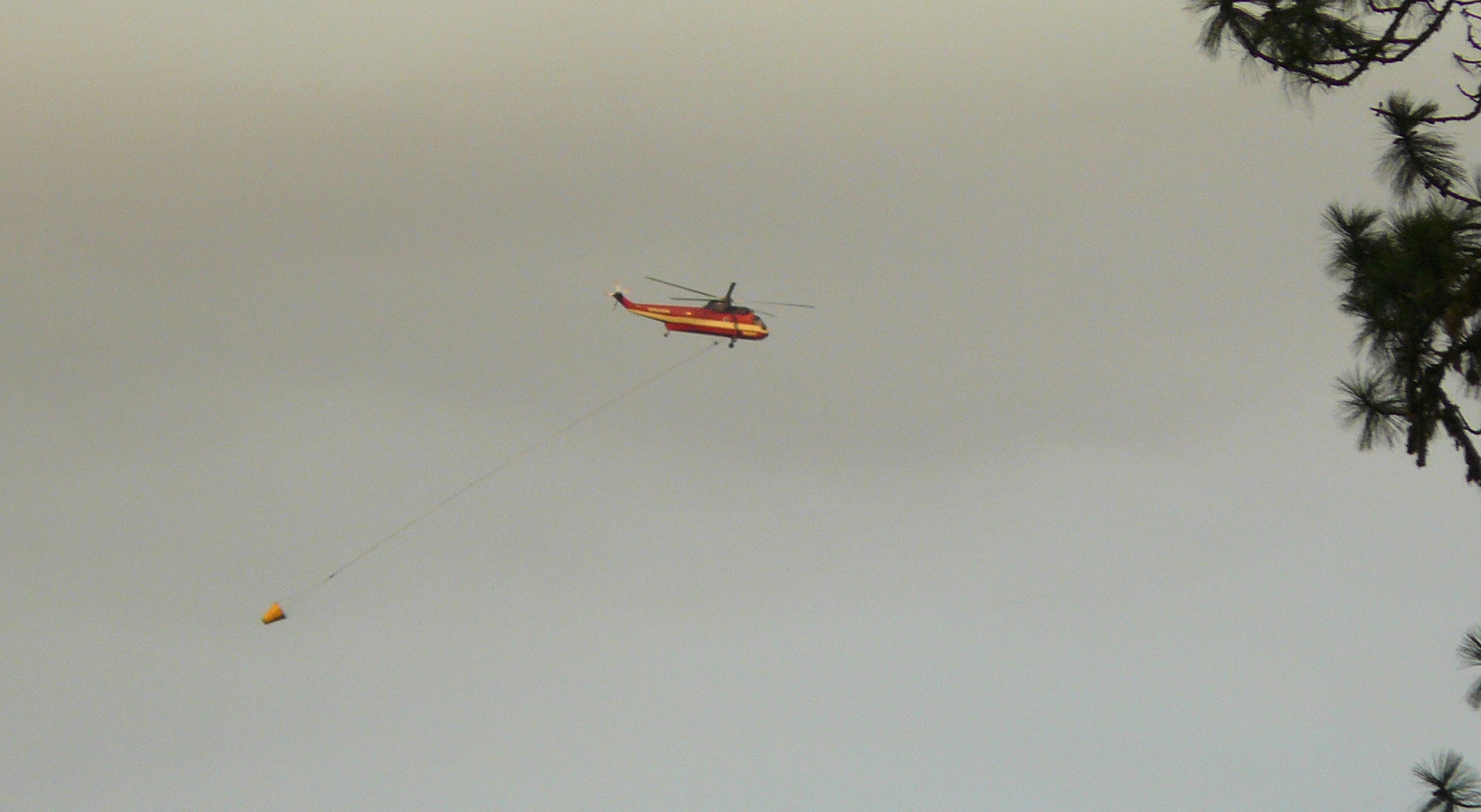
Later on that evening, the first of a great number of helicopter fire dousing flights flew by overhead.

Returning to refill at Grants Pass Airport.

The wind was creating some interesting cloud waves in the smoke cover.

Wave cloud - in the smoke cover.
Wave cloud – in the smoke cover.

Then as each day passed the air became more and more smoke filled.  Reliable reports had said that the smoke cover had expanded to Northern California.

Here’s a picture taken yesterday morning of the ground that drops away from the house!

About a quarter-mile visibility, frequently worse!

But at least our internet service has been restored enabling me for the first time to access the Fire Incident website, from which I read at 4:40 pm yesterday, the following.

Incident Overview

The 1,600-acre Brimstone Fire, located 5 miles west of Sunny Valley, made no significant movement late Tuesday or overnight. Crews coming in from night shift said planned fireline improvement on the north and southeast corners was completed, and burnouts in those same areas were successful. Nearly 800 people are assigned to the Brimstone Fire’s suppression effort. Specifically, 29 crews, 26 wildland fire engines, seven bulldozers and nine water tenders are divided between the day and night shifts. The weather has been calm and this has helped reduce fire activity.  However, the heavy smoke layer has made it impossible to use helicopters on the fire.No evacuations have been announced for residential areas around the fire area, but structural fire protection personnel have assessed homes should an evacuation become necessary. To find out more about evacuation planning, call the Josephine County Emergency Operations Center (EOC) at (541) 474-5305.Firefighters ask that the public not use roads in the Upper Quartz Creek Rd and Hogs Creek Rd areas because these roads are narrow and are being heavily used by fire engines, trucks hauling water, and bulldozers.

Basic Information
Incident Type: Wildfire
Cause: Lightning
Date of Origin: Monday July 29th, 2013 approx. 02:00 AM
Location: 10 miles northwest of Merlin, OR
Incident Commander: Chris Cline
Current Situation
Total Personnel: 773
Size: 1,600 acres
Percent Contained: 10%
Fuels Involved: Mixed conifer and hardwood trees of widely varied ages, snags (dead, standing trees), brush and logging slash.
Fire Behavior: Torching and short-range spotting. The fire is difficult to see due to smoky conditions.
Significant Events: Three roads are closed because fire engines and other equipment are using the roads. The closed roads are Hog Creek, Quartz Creek and Angora Creek.
Outlook
Planned Actions: Improve the fire line and strategically burn out unburned areas inside the fire line.
Growth Potential: High
Terrain Difficulty: High
Current Weather
Wind Conditions 10 mph NW
Temperature 85 degrees
Humidity 31%

Well at least I can settle down and work my way through 130+ emails!!

The magic of clouds.

In appreciation of clouds.

Live with your head in the clouds.

In the wake of yesterday’s post about the power of meditation, this recent TED Talk seemed a perfect way to end the week.

Published on Jul 16, 2013

You don’t need to plan an exotic trip to find creative inspiration. Just look up, says Gavin Pretor-Pinney, founder of the Cloud Appreciation Society. As he shares charming photos of nature’s finest aerial architecture, Pretor-Pinney calls for us all to take a step off the digital treadmill, lie back and admire the beauty in the sky above.

Want to learn a little more about the different types of cloud?  Then go here.  Want to learn more about the Cloud Appreciation Society?  More details here.

And who knows, you may even see your dog in those clouds!

One is never far from a dog!

A very simple notion.

Our beautiful planet.

As is the way of things, two completely disconnected events rang out yesterday, as if in harmony.

The first was this stunning picture released by NASA.

A distant view of home!

The full description may be read here, but I have taken the liberty of republishing this extract:

Earth, which is 898 million miles (1.44 billion kilometers) away in this image, appears as a blue dot at center right; the moon can be seen as a fainter protrusion off its right side. An arrow indicates their location in the annotated version. The other bright dots nearby are stars.

Now it doesn’t take too much imagination to put that minute speck of light, our Planet Earth, into its scale of meaning and importance vis-a-vis the universe.  You get my message, I’m sure.

The second event was a comment left by long-term reader and supporter of Learning from Dogs, Patrice Ayme.  The comment was on yesterday’s post, The meaning of wildness, and I quote:

Excellent article. Clearly primary temperate rain forest, nearly gone everywhere except in the American North west, has to be reintroduced.

Sheep ought not to be removed by man, but be removed by wolf, bear, felids. Cows would feel whole, having to fight off lions. And man’s sense of what nature means, vital to insure our survival, would blossom in this hour of need, when we have arisen as the planet’s gods. gods of evil, or gods of wisdom? That is the most important question.

“gods of evil, or gods of wisdom?”

To everybody I say this.  (And I am most certainly not excluding me.) When you next look at yourself in the mirror will you make a decision?  Will you be a god of evil or a god of wisdom?