Category: Climate

The winds of time.

Time from two very different perspectives.

solstice

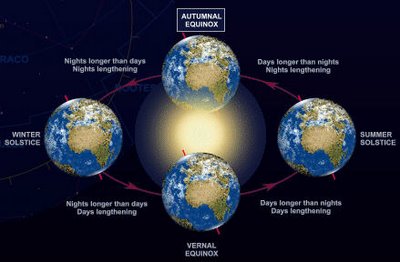
I started writing this post approaching midnight (UTC) on the afternoon of Tuesday, 26th May, 2015.  In other words, approaching 00:00 UTC 26/05/15 (or in American ‘speak’ 05/26/15 – a little thing that is taking me years to become accustomed to.)

At that time, it was fewer than four weeks to the June solstice. Now it was over a week ago and Christmas is just around the corner! (OK, I’ll admit a slight exaggeration!)

However, I thought the TomDispatch essay was just as valid on June 29th as it was on May 26th. So I will continue.

The planet Earth has been in orbit around the sun for a very long time!  Time beyond imagination. By comparison, in a very short time one species alone, namely homo sapiens, has altered the biosphere of Planet Earth. It’s almost beyond comprehension!

To expand on that shortage of time, let me republish an essay from TomDispatch from last September.  Republished with the kind permission of Tom Engelhardt.

ooOOoo

What to Do When You’re Running Out of Time

Posted by Rebecca Solnit at 8:09am, September 18, 2014.
Follow TomDispatch on Twitter @TomDispatch.

Just when no one needed more lousy news, the U.N.’s weather outfit, the World Meteorological Organization (WMO), issued its annual Greenhouse Gas Bulletin. It offered a shocking climate-change update: the concentrations of long-lasting greenhouse gases in the Earth’s atmosphere (carbon dioxide, methane, and nitrous oxide) rose at a “record-shattering pace” from 2012 to 2013, including the largest increase in CO2 in 30 years — and there was a nasty twist to this news that made it even grimmer.

While such increases reflected the fact that we continue to extract and burn fossil fuels at staggering rates, something else seems to be happening as well. Both the oceans and terrestrial plant life act as carbon sinks; that is, they absorb significant amounts of the carbon dioxide we release and store it away. Unfortunately, both may be reaching limits of some sort and seem to be absorbing less. This is genuinely bad news if you’re thinking about the future warming of the planet. (As it happens, in the same period, according to the Yale Project on Climate Change Communication, parts of the American public stopped absorbing information in no less striking fashion: the number of those who believe that global warming isn’t happening rose 7% to 23%.)

So consider this a propitious moment for a major climate-change demonstration, possibly the largest in history, in New York City this Sunday. [Ed: it turned out to be the largest climate march in history.] As the WMO’s Secretary-General Michel Jarraud pointed out, there is still time to make a difference. “We have the knowledge and we have the tools,” he said, “for action to try to keep temperature increases within 2°C to give our planet a chance and to give our children and grandchildren a future. Pleading ignorance can no longer be an excuse for not acting.” As TomDispatch regular Rebecca Solnit, author of the indie bestseller Men Explain Things to Me, points out, the pressure of mass movements can sometimes turn history upside down. Of course, the only way to find out if climate change is a candidate for this treatment is to get out in the streets. So, for those of you anywhere near New York, see you this Sunday! Tom

The Wheel Turns, the Boat Rocks, the Sea Rises

Change in a Time of Climate Change 
By Rebecca Solnit

There have undoubtedly been stable periods in human history, but you and your parents, grandparents, and great-grandparents never lived through one, and neither will any children or grandchildren you may have or come to have. Everything has been changing continuously, profoundly — from the role of women to the nature of agriculture. For the past couple of hundred years, change has been accelerating in both magnificent and nightmarish ways.

Yet when we argue for change, notably changing our ways in response to climate change, we’re arguing against people who claim we’re disrupting a stable system. They insist that we’re rocking the boat unnecessarily.

I say: rock that boat. It’s a lifeboat; maybe the people in it will wake up and start rowing. Those who think they’re hanging onto a stable order are actually clinging to the wreckage of the old order, a ship already sinking, that we need to leave behind.

As you probably know, the actual oceans are rising — almost eight inches since 1880, and that’s only going to accelerate. They’re also acidifying, because they’re absorbing significant amounts of the carbon we continue to pump into the atmosphere at record levels. The ice that covers the polar seas is shrinking, while the ice shields that cover Antarctica and Greenland are melting. The water locked up in all the polar ice, as it’s unlocked by heat, is going to raise sea levels staggeringly, possibly by as much as 200 feet at some point in the future, how distant we do not know. In the temperate latitudes, warming seas breed fiercer hurricanes.

The oceans are changing fast, and for the worse. Fish stocks are dying off, as are shellfish. In many acidified oceanic regions, their shells are actually dissolving or failing to form, which is one of the scariest, most nightmarish things I’ve ever heard. So don’t tell me that we’re rocking a stable boat on calm seas. The glorious 10,000-year period of stable climate in which humanity flourished and then exploded to overrun the Earth and all its ecosystems is over.

But responding to these current cataclysmic changes means taking on people who believe, or at least assert, that those of us who want to react and act are gratuitously disrupting a stable system that’s working fine. It isn’t stable. It is working fine — in the short term and the most limited sense — for oil companies and the people who profit from them and for some of us in the particularly cushy parts of the world who haven’t been impacted yet by weather events like, say, the recent torrential floods in Japan or southern Nevada and Arizona, or the monsoon versions of the same that have devastated parts of India and Pakistan, or the drought that has mummified my beloved California, or the wildfires of Australia.

The problem, of course, is that the people who most benefit from the current arrangements have effectively purchased a lot of politicians, and that a great many of the rest of them are either hopelessly dim or amazingly timid. Most of the Democrats recognize the reality of climate change but not the urgency of doing something about it. Many of the Republicans used to — John McCain has done an amazing about-face from being a sane voice on climate to a shrill denier — and they present a horrific obstacle to any international treaties.

Put it this way: in one country, one party holding 45 out of 100 seats in one legislative house, while serving a minority of the very rich, can basically block what quite a lot of the other seven billion people on Earth want and need, because a two-thirds majority in the Senate must consent to any international treaty the U.S. signs. Which is not to say much for the president, whose drill-baby-drill administration only looks good compared to the petroleum servants he faces, when he bothers to face them and isn’t just one of them. History will despise them all and much of the world does now, but as my mother would have said, they know which side their bread is buttered on.

As it happens, the butter is melting and the bread is getting more expensive. Global grain production is already down several percent thanks to climate change, says a terrifying new United Nations report. Declining crops cause food shortages and rising food prices, creating hunger and even famine for the poorest on Earth, and also sometimes cause massive unrest. Rising bread prices were one factor that helped spark the Arab Spring in 2011. Anyone who argues that doing something about global warming will be too expensive is dodging just how expensive unmitigated climate change is already proving to be.

It’s only a question of whether the very wealthy or the very poor will pay. Putting it that way, however, devalues all the nonmonetary things at stake, from the survival of myriad species to our confidence in the future. And yeah, climate change is here, now. We’ve already lost a lot and we’re going to lose more, but there’s a difference between terrible and apocalyptic. We still have some control over how extreme it gets. That’s not a great choice, but it’s the choice we have. There’s still a window open for action, but it’s closing. As the Secretary-General of the World Meteorological Society, Michel Jarraud, bluntly put it recently, “We are running out of time.”

New and Renewable Energies

The future is not yet written. Look at the world we’re in at this very moment. The Keystone XL tar sands pipeline was supposed to be built years ago, but activists catalyzed by the rural and indigenous communities across whose land it would go have stopped it so far, and made what was supposed to be a done deal a contentious issue. Activists changed the outcome.

Fracking has been challenged on the state level, and banned in townships and counties from upstate New York to central California. (It has also been banned in two Canadian provinces, France, and Bulgaria.) The fossil-fuel divestment movement has achieved a number of remarkable victories in its few bare years of existence and more are on the way. The actual divestments and commitments to divest fossil fuel stocks by various institutions ranging from the city of Seattle to the British Medical Association are striking. But the real power of the movement lies in the way it has called into question the wisdom of investing in fossil fuel corporations. Even mainstream voices like the British Parliament’s Environmental Audit Committee and publications like Forbes are now beginning to question whether they are safe places to put money. That’s a sea change.

Renewable energy has become more efficient, technologically sophisticated, and cheaper — the price of solar power in relation to the energy it generates has plummeted astonishingly over the past three decades and wind technology keeps getting better. While Americans overall are not yet curtailing their fossil-fuel habits, many individuals and communities are choosing other options, and those options are becoming increasingly viable. A Stanford University scientist has proposed a plan to allow each of the 50 states to run on 100% renewable energy by 2050.

Since, according to the latest report of the U.N.’s Intergovernmental Panel on Climate Change, fossil fuel reserves still in the ground are “at least four times larger than could safely be burned if global warming is to be kept to a tolerable level,” it couldn’t be more important to reach global agreements to do things differently on a planetary scale. Notably, most of those carbon reserves must be left untapped and the modest steps already taken locally and ad hoc show that such changes are indeed possible and that an encouraging number of us want to pursue them.

ooOOoo

In case you are wondering why this TomDispatch essay has been published some ten months after it first appeared, it is simply because I made a note to leave it for a few months to see if the benefit of some hindsight put the essay into context.

Here’s the context.

In the month of September, 2014, when this essay was published over on TomDispatch, the Atmospheric CO2 monthly average was 395.26 ppm. In April, 2015 it was 403.26 ppm. I can’t spell it out any better than what is written on the home page of CO2Now.org:

What the world needs to watch

Global warming is mainly the result of CO2 levels rising in the Earth’s atmosphere. Both atmospheric CO2 and climate change are accelerating. Climate scientists say we have years, not decades, to stabilize CO2 and other greenhouse gases.

To help the world succeed, CO2Now.org makes it easy to see the most current CO2 level and what it means. So, use this site and keep an eye on CO2. Invite others to do the same. Then we can do more to send CO2 in the right direction.

What an interesting period in man’s history to be alive.

Has the human ‘pack’ moved on!

Believers and non-believers alike owe Pope Francis a giant ‘thank you’.

As regular followers of this place will have heard before, one of the roles of the ‘alpha’ dog, or more accurately referred to these days as the Mentor dog, in other words the female dog that in the days before domestication was the leader of her pack, was to move her pack if she intuited that the pack’s home range was not sustaining them. (Her other role was pick of the male dogs!)

Thus the title of today’s post came to me as just possibly the metaphorical equivalent. That the global human ‘pack’ has been sharply reminded by one of the world’s key religious leaders that ‘more of the same’ isn’t going to work for much longer.

Quite rightly, there has been a huge amount of reporting and analysis of last week’s Papal Encyclical. But one of the most beautiful and profoundly eloquent came from the writer Jennifer Browdy. If you haven’t come across her before then do drop across to her website; you will love what she presents!  I have been a subscriber to her blog posts for some time and that was how I came across her post called: And the Walls Came Tumbling Down: Pope Francis Shows Us the Way. Jennifer very kindly gave me permission to republish her post today.

ooOOoo

And the Walls Came Tumbling Down: Pope Francis Shows Us the Way

By Jennifer Browdy

The Encyclical on climate change and the environment released by Pope Francis this week has all the magic of the fall of the Berlin Wall in 1991. Back then, the antagonism between the U.S. and the U.S.S.R. seemed implacable and unresolvable, a fight to the death. And then suddenly the wall came down and the world walked through, marveling, into a new era.

Now we have another abrupt shift, this time of a religious order. The leaders of the Catholic Church can hardly be accused of being “radical tree-huggers.” And yet here is Pope Francis, solemnly exhorting his flock of a billion Catholics worldwide to be respectful to Mother Earth and all the living beings she supports. In the blink of an eye, the language of Native American spirituality has been taken up by the same Catholic Church that once tortured and executed indigenous peoples precisely because of their different religious beliefs.

I urge you to read the entire Encyclical for yourself. It is a truly remarkable document, worth serious study. Of many passages I’d like to underline, here are two:

228 Care for nature is part of a lifestyle which includes the capacity for living together and communion. Jesus reminded us that we have God as our common Father and that this makes us brothers and sisters. Fraternal love can only be gratuitous; it can never be a means of repaying others for what they have done or will do for us. That is why it is possible to love our enemies. This same gratuitousness inspires us to love and accept the wind, the sun and the clouds, even though we cannot control them. In this sense, we can speak of a “universal fraternity”.

229 We must regain the conviction that we need one another, that we have a shared responsibility for others and the world, and that being good and decent are worth it. We have had enough of immorality and the mockery of ethics, goodness, faith and honesty. It is time to acknowledge that light-hearted superficiality has done us no good. When the foundations of social life are corroded, what ensues are battles over conflicting interests, new forms of violence and brutality, and obstacles to the growth of a genuine culture of care for the environment.

Here we find spiritual ecology enshrined as Catholic doctrine. And one thing about the Catholic Church—it is big on obedience. For believers, to ignore the Pope is to risk hellfire and damnation. In this case, though, the hellfire and damnation will be earthly, if we do not listen to the wise advice of Pope Francis and curb the insanity of industrial growth that goes beyond the limits of the planet to support.

Scientists appeal to our sense of reason, presenting compelling evidence that if we continue on our present path of wasteful consumption of the Earth’s resources, we will destroy our own future as a flourishing species. Religious leaders appeal to human beings’ moral conscience in invoking the responsibility of current parents and grandparents to leave a livable world to our descendants. It is up to the politicians, though, to translate vision into practice.

For too long, Christian conservatives in the U.S. have played the role of the ideological wing of Big Business, using money, manipulation and scare tactics to buy politicians and votes. In the face of the new Papal Encyclical, can American Christians really continue in good conscience to support the worst of the planet’s polluters and plunderers? Can they continue to elect mercenary politicians who hold our country hostage to the highest bidder?

If all good people who love our Earth and its creatures were to translate our love into action, as Pope Francis has just done so forcefully, I have no doubt the seemingly invincible wall of the industrial growth society we’ve been living with these past 200 years would melt away, revealing the path into a green, prosperous future.

“Where there’s a will, there’s a way,” the saying goes. Pope Francis has just shown us the will, and the way. It is now the task of us ordinary citizens to break the stranglehold of Big Business on politics and insist that our politicians follow his lead.

I close with an excerpt from the Pope’s “Christian Prayer in Union with Creation,” a vision of ecological interdependence if ever there was one:

“Triune Lord, wondrous community of infinite love,

teach us to contemplate you

in the beauty of the universe,

for all things speak of you.

“Awaken our praise and thankfulness

for every being that you have made.

Give us the grace to feel profoundly joined to everything that is.

God of love, show us our place in this world

as channels of your love

for all the creatures of this earth,

for not one of them is forgotten in your sight.

Enlighten those who possess power and money

that they may avoid the sin of indifference,

that they may love the common good, advance the weak,

and care for this world in which we live.”

Amen.

Browdy
And the meek shall inherit the Earth…. Photo by J. Browdy, 2015

ooOOoo

I am sure that, whatever your religious or spiritual persuasion, you will agree with me with regard to the beauty of Jennifer’s essay. I know there are millions and millions of people who will want to look back in a few years time and see how Pope Francis’ legacy literally saved our lives.

Our love for the natural ways of the world.

“In defending the natural world, we should be honest about our motivations – it’s love that drives us, not money.”

Not my words but the opening line from a brilliant essay published yesterday by George Monbiot.

I can add very little to the power of Mr. Monbiot’s essay other than to ‘top and tail’ his words with a couple of photographs taken here at home. Plus not forgetting to add that the essay is republished with George Monbiot’s very kind permission.

A view of our property looking out to the North-East. Our boundary is the other side of the line of trees. (Photo taken July, 2012)

ooOOoo

Channelling the Joy

17th June 2015

In defending the natural world, we should be honest about our motivations – it’s love that drives us, not money.

By George Monbiot, published in the Guardian 17th June 2015

Who wants to see the living world destroyed? Who wants an end to birdsong, bees and coral reefs, the falcon’s stoop, the salmon’s leap? Who wants to see the soil stripped from the land, the sea rimed with rubbish?

No one. And yet it happens. Seven billion of us allow fossil fuel companies to push shut the narrow atmospheric door through which humanity stepped. We permit industrial farming to tear away the soil, banish trees from the hills, engineer another silent spring. We let the owners of grouse moors, 1% of the 1%, shoot and poison hen harriers, peregrines and eagles. We watch mutely as a small fleet of monster fishing ships trashes the oceans.

Why are the defenders of the living world so ineffective? It is partly, of course, that everyone is complicit; we have all been swept off our feet by the tide of hyperconsumption, our natural greed excited, corporate propaganda chiming with a will to believe that there is no cost. But perhaps environmentalism is also afflicted by a deeper failure: arising possibly from embarrassment or fear, a failure of emotional honesty.

I have asked meetings of green-minded people to raise their hands if they became defenders of nature because they were worried about the state of their bank accounts. Never has a hand appeared. Yet I see the same people base their appeal to others on the argument that they will lose money if we don’t protect the natural world.

Such claims are factual, but they are also dishonest: we pretend that this is what animates us, when in most cases it does not. The reality is that we care because we love. Nature appealed to our hearts, when we were children, long before it appealed to our heads, let alone our pockets. Yet we seem to believe we can persuade people to change their lives through the cold, mechanical power of reason, supported by statistics.

I see the encyclical by Pope Francis, which will be published on Thursday, as a potential turning point. He will argue that not only the physical survival of the poor, but also our spiritual welfare depends on the protection of the natural world; and in both respects he is right.

I don’t mean to suggest that a belief in God is the answer to our environmental crisis. Among Pope Francis’s opponents is the evangelical Cornwall Alliance for the Stewardship of Creation, which has written to him arguing that we have a holy duty to keep burning fossil fuel, as “the heavens declare the glory of God; and the firmament proclaims his handiwork”. It also insists that exercising the dominion granted to humankind in Genesis means tilling “the whole Earth”, transforming it “from wilderness to garden and ultimately to garden city”.

There are similar tendencies within the Vatican. Cardinal George Pell, its head of finance, currently immersed in a scandal involving paedophile priests in Australia, is a prominent climate change denier. His lecture to the Global Warming Policy Foundation was the usual catalogue of zombie myths (discredited claims that keep resurfacing), nonsequiturs and outright garbage, championing, for example, the groundless claim that undersea volcanoes could be responsible for global warming. There are plenty of senior Catholics seeking to undermine the Pope’s defence of the living world; which could explain why his encyclical was leaked.

What I mean is that Pope Francis, a man with whom I disagree profoundly on matters such as equal marriage and contraceptives, reminds us that the living world provides not only material goods and tangible services, but is also essential to other aspects of our well-being. And you don’t have to believe in God to endorse that view.

In his beautiful book The Moth Snowstorm, Michael McCarthy suggests that a capacity to love the natural world, rather than merely to exist within it, might be a uniquely human trait. When we are close to nature, we sometimes find ourselves, as Christians put it, surprised by joy: “a happiness with an overtone of something more, which we might term an elevated or, indeed, a spiritual quality.”

He believes we are wired to develop a rich emotional relationship with nature. A large body of research suggests that contact with the living world remains essential to our psychological and physiological well-being. (A paper published this week, for example, claims that green spaces around city schools improve children’s mental performance).

This does not mean that all people love nature; what it means, McCarthy proposes, is that there’s a universal propensity to love it, which may be drowned out by the noise that assails our minds. As I’ve found while volunteering with the outdoor education charity Wide Horizons, this love can be provoked almost immediately, even among children who have never visited the countryside before. Nature, McCarthy argues, remains our home, “the true haven for our psyches”, and retains an astonishing capacity to bring peace to troubled minds. Acknowledging our love for the living world does something that a library full of papers on sustainable development and ecosystem services cannot: it engages the imagination as well as the intellect. It inspires belief; and this is essential to the lasting success of any movement.

Is this a version of the religious conviction from which Pope Francis speaks? Or could his religion be a version of a much deeper and older love? Could a belief in God be a way of explaining and channelling the joy, the burst of love that nature sometimes provokes in us? Conversely, could the hyperconsumption that both religious and secular environmentalists lament be a response to ecological boredom: the void that a loss of contact with the natural world leaves in our psyches?

Of course, this doesn’t answer the whole problem. If the acknowledgement of love becomes the means by which we inspire environmentalism in others, how do we translate it into political change? But I believe it’s a better grounding for action than pretending that what really matters to us is the state of the economy. By being honest about our motivation we can inspire in others the passions that inspired us.

www.monbiot.com

ooOOoo

Will close this thoughtful essay from Mr. Monbiot with another photograph.

Same view but this time on a foggy Autumn day in 2013.

It truly is love that drives our relationship with nature.

The Joy of Caring.

Things prosper when cared for and loved.

This is a repost of what appeared over on Alex Jones’ blog Liberated Way last Thursday. It resonated so wonderfully with all the young plants and trees around us here at home in Merlin, and the numerous oak saplings making their way into the world! Republished with Alex’s kind permission.

ooOOoo

Things prosper when cared for!

The joy of caring for something.

These oak saplings prosper because of care.

Today, I moved my eight oak saplings into the full sun, added a new layer of quality compost to their pots, and watered them. In their second year of life these oak saplings prosper because of care.

Caring for something means one must pay attention to the small details. For instance, I remove the caterpillars from the oak leaves, and the weeds that grow in the pots. If I did not concentrate on the small details, the little problems could grow into larger problems, the caterpillars destroying the oak saplings, the weeds stealing their nutrients in the pots.

Also, the individual spends time on the thing cared about, establishing regular activities, such as in my case, watering the oak saplings every few days. The individual looks for ways that the cared for thing might benefit, just as I moved my oak saplings into the full sun, added new compost to them, and infected them with a type of symbiotic fungus that aids oak sapling growth.

The thing cared for becomes special, for instance there are millions of oak trees in Britain, but only eight of those, my saplings, are special to me. In such a caring relationship, both sides come to depend upon the other. My oak saplings need my care and attention to survive, I need my oak saplings to feel good about myself when life is hard.

If the individual has nothing to care for, their life becomes empty and meaningless. I love the book by Antoine De Saint-Exupery called The Little Prince, which explores ideas around friendship and caring for things. In The Little Prince is the following beautiful quote:

You are beautiful, but you are empty. One could not die for you. To be sure, an ordinary passerby would think that my rose looked just like you — the rose that belongs to me. But in herself alone she is more important than all the hundreds of you other roses: because it is she that I have watered; because it is she that I have put under the glass globe; because it is she that I have sheltered behind the screen; because it is for her that I have killed the caterpillars; because it is she that I have listened to, when she grumbled, or boasted, or even sometimes when she said nothing. Because she is my rose.”

ooOOoo

Can’t recommend too highly you dropping in on Alex’s blog Liberated Way – even signing up as a ‘follower’!

Reintroducing ourselves to the wolf

A guest essay from Karla Powell.

A couple of weeks ago, an email arrived in my ‘in-box’, as follows:

Hi Karla and Paul,

I hope this email finds you both well. I recently met Karla on an Oregon Wild hike last weekend in the Gorge. Karla is a longtime Oregon Wild supporter, passionate wildlife advocate and published author. She recently wrote a really lovely article on the human connection to wolves that I found quite inspiring.

I wanted you two to connect as Paul is also a wildlife advocate, now living in southern Oregon with his wonderful partner Jean. Paul, I thought you might be able to recommend a place, online or otherwise, Karla might be able to submit this article. I think you’ll quite enjoy it.

Thank you both for supporting our work for so many years,
Bridget

Clearly, I was able to recommend a place where Karla could submit her article! Here on Learning from Dogs!

Karla and I made contact and, bingo!, here is her remarkable essay.

ooOOoo

Reintroducing Ourselves to the Wolf

Karla Powell

Is it possible that by reconciling our troubled relationship with the North American wolf, we may come to better know our own nature as well as theirs? In the realm of natural history, wolves have long been left to myth and superstition. “Well into the 20th century, even science lagged behind in its knowledge of wolves and retained certain biases,” says award-winning nature writer, Barry Lopez, in his definitive book Of Wolves and Men. Even in the 21st century, science still can be skewed towards special interests. Yet the relative merits of facts notwithstanding, it is opinions about wolves that hold sway, points out Lopez.

As a lifelong urban creature, I had neither opinions nor knowledge when it came to the existence of wolves. Then in mid-life I found myself living alone in a cabin in rural Oregon and running a Junior Rangers program for the local state park. I also oversaw the weekend evening family programs. One such program featured hybrid wolves who’d found shelter in a nearby sanctuary and were presented for educational purposes. It was the closest I’d ever come to the real thing. So the next day I incorporated the theme of wolves into my Jr. Ranger activity.

I began by encouraging my young charges to howl along with me. I’d been practicing in the car on the way and it felt great! (I can see why they say wolves may howl at times for sheer pleasure.) My Jr. Rangers eagerly entered the fray, and every dog in the campground soon followed. Contrast this youthful exuberance to the dispiriting recollection of Joseph Marshall, author of The Wolf: A Native American Symbol. Marshall’s tale is recounted in the book War Against Wolf. “As a seven-year-old, I knew that there were no wolves left in my world, and I knew why. One day my grandfather… told me that the spirits of all the dead wolves … would wait until the time was right for them to return and walk again on the earth.”

Marshall, a Sicangu Lakota, believed that the 1995 reintroduction of wolves in Yellowstone heralded that this day had arrived. Yet we’re still a far cry from the sustainable recovery of a species we nearly annihilated. Reintroduction efforts in several western states contend with tired old beliefs. This vocal minority seem to me not far removed from those distant ancestors whose hysteria about the animal went so far as to conjure human “werewolves,” who were hunted and burned alive.

The folklore that led to such extremes was ultimately carried to our shores. In the book Vicious: Wolves and Men in America, the author tells of “Euro-American colonists who captured live wolves and tortured them for fun, ignoring the animals’ cowering for clemency.” Yet canines at home could display similar signals, which their masters sympathetically interpreted.

None other than John James Audubon casually recorded the maniacal torture and vicious killing of a pack of wolves by an Ohio farmer in 1814. Audubon and other observers, including trappers, sometimes noted the meek submittal of wolves to human aggression. Yet even a naturalist at that time couldn’t extrapolate this to meaningful analysis of wolves’ socialization, which includes “signaling” postures as a plea for mercy.

“This is not predator control,” says Lopez in his chapter on the gruesome excesses of “wolf fever” in the settling of our continent. “It is the violent expression of a terrible assumption: that men have the right to kill other creatures not for what they do, but for what we fear they may do.” Lopez then goes on to discuss “theriophobia” or “fear of the beast as an irrational, violent, insatiable creature.” The author continues: “At the heart of theriophobia is the fear of one’s own nature.”

Some 200 years before Christ, the Roman dramatist Plautus pithily depicted the beast we humans carry within by saying, “Man is wolf to man.” A glance at today’s headlines reveals that man’s dual nature is far from reconciled. Our legacy with the wolf is equally dualistic. In conquest, labels of savagery or demonization of the “other” are commonly projected by the oppressor onto those whom they, in turn, savagely treat. Wilderness and wildlife also are targets of such dominating impulses.

The most basic familiarity with human psychology recognizes that if we repress or deny our own capacity for shadowy motives, we invariably project such motives onto scapegoats. In America’s nation-building, the 19th century campaign to exterminate the wolf indicates we were far more guilty of depradation upon them than they upon us.

The ever-popular Saint Francis of Assisi also lived in a time of conquest run amok. An allegory about a wolf in Gubbio, Italy, has Francis and this village interloper come to an amical agreement that restored harmony for all. A contemporary visionary can be found in environmental activist George Monbiot. His 2013 TEDGlobal talk addresses the trophic cascade that resulted from the reintroduction of wolves into Yellowstone.

This phenomenon begins at the top of the food chain and tumbles down, says Monbiot. The return of wolves to Yellowstone has restored the entire ecosystem to a more healthful balance, recalling the “complex, lost, natural food chains that once prevailed,” explains Monbiot. This trophic cascade brought about by wolves simply being wolves has regenerated entire valleys and even changed the behavior of a river, he points out.

Just as St. Francis struck a deal with the wolf of Gubbio by promising he’d be fed by the villagers, we moderns too might benefit from a more cooperative pact. The wolf was a source of fascination to Homo sapiens when they also existed as communal hunters. Some theorize that prehistoric man’s social structure was modeled on how effectively wolves assured their packs’ common good.

The advent of an agrarian society disrupted this complex food chain that formerly prevailed. An agrarian society also emphasized the notion of property. The most common argument against wolves in agricultural communities is they kill animals that are human property. Yet since we’ve eradicated the natural habitat and prey of our indigenous wolf, their only guilt is they must eat to survive. This is no sin, as St. Francis demonstrated at Gubbio.

Top predators such as wolves needed time to adapt to such “quirky and aggressive killers {as man},” says Vicious author Jon T. Coleman. “The short supply of energy at the top of the food pyramid denied them this time. Euro-American colonists attacked animals in a vulnerable niche, creatures stuck with few options in a thermodynamic dead end.”

Consider that the very term “civilizing forces” is an oxymoron. Judging from how we have in some ways devolved into morbid obesity and epidemic diet-related diseases (many of them induced by altering food’s integrity), is it not possible for us to restore more wonder into our world by “rewilding” somewhat, as Monbiot and others propose? Not a return to the Stone Age. But perhaps a truly evolutionary step. One that restores us to a future that can reimagine coexistence as an effective survival strategy.

As an archetype in differing cultures, the wolf has been both revered and demonized. Yet whether seen as good or evil, it is still being objectified. Can we not instead view it as a living being worthy of both reason and regard? Despite more data about wolves than ever before, reason still lags behind, Lopez notes in the afterword to his original book. “Some folklore is so deeply entrenched that its adherents completely shut out emerging insights … In their rigid stances, they are impervious even to reason.”

As for regard, I suggest some discernment that takes us beyond even the necessary rational analysis. No less than Kepler, Darwin and Einstein have said that intuition is key to the scientific process, Lopez points out. He then suggests that we remind ourselves, “There could be more, there could be things we don’t understand.” Such a reminder may be our only hope for the wolf— as well as for us.

ooOOoo

I have no doubt that everyone who reads Karla’s wonderful essay will be enthralled by the beautiful messages.

Only one way to close today’s post.

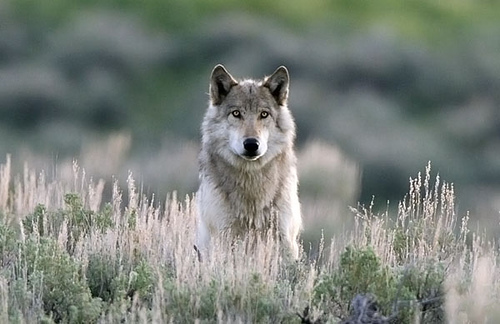
The long-awaited return of the Yellowstone wolf!

The winds of time

Time from two very different perspectives.

solstice

I’m writing this post approaching midnight (UTC) on the afternoon of Tuesday, 26th May, 2015.  In other words, approaching 00:00 UTC 27/05/15. (Or, in American speak 05/27/15.)

In fewer than four weeks it will be the moment of the Summer solstice, as in the Northern Hemisphere’s Mid-Summer’s Day. More precisely explained over on EarthSky.org together with a number of very interesting facts:

The solstice comes on June 21, 2015 at 16:38 UTC. For North American time zones, that places the solstice at 12:38 p.m. EDT, 11:38 a.m. CDT, 10:38 a.m. MDT and 9:38 a.m. PDT.

The planet Earth has been in orbit around the sun for a very long time!  Time beyond imagination. By comparison, in a very short time one species alone, namely homo sapiens, has altered the biosphere of Planet Earth. It’s almost beyond comprehension!

To expand on that notion, let me republish an essay from TomDispatch from last September.  Republished with the kind permission of Tom Engelhardt.

ooOOoo

Tomgram: Rebecca Solnit, What to Do When You’re Running Out of Time

Posted by Rebecca Solnit at 8:09am, September 18, 2014.
Follow TomDispatch on Twitter @TomDispatch.

Just when no one needed more lousy news, the U.N.’s weather outfit, the World Meteorological Organization (WMO), issued its annual Greenhouse Gas Bulletin. It offered a shocking climate-change update: the concentrations of long-lasting greenhouse gases in the Earth’s atmosphere (carbon dioxide, methane, and nitrous oxide) rose at a “record-shattering pace” from 2012 to 2013, including the largest increase in CO2 in 30 years — and there was a nasty twist to this news that made it even grimmer.

While such increases reflected the fact that we continue to extract and burn fossil fuels at staggering rates, something else seems to be happening as well. Both the oceans and terrestrial plant life act as carbon sinks; that is, they absorb significant amounts of the carbon dioxide we release and store it away. Unfortunately, both may be reaching limits of some sort and seem to be absorbing less. This is genuinely bad news if you’re thinking about the future warming of the planet. (As it happens, in the same period, according to the Yale Project on Climate Change Communication, parts of the American public stopped absorbing information in no less striking fashion: the number of those who believe that global warming isn’t happening rose 7% to 23%.)

So consider this a propitious moment for a major climate-change demonstration, possibly the largest in history, in New York City this Sunday. [Ed: it turned out to be the largest climate march in history.] As the WMO’s Secretary-General Michel Jarraud pointed out, there is still time to make a difference. “We have the knowledge and we have the tools,” he said, “for action to try to keep temperature increases within 2°C to give our planet a chance and to give our children and grandchildren a future. Pleading ignorance can no longer be an excuse for not acting.” As TomDispatch regular Rebecca Solnit, author of the indie bestseller Men Explain Things to Me, points out, the pressure of mass movements can sometimes turn history upside down. Of course, the only way to find out if climate change is a candidate for this treatment is to get out in the streets. So, for those of you anywhere near New York, see you this Sunday! Tom

The Wheel Turns, the Boat Rocks, the Sea Rises

Change in a Time of Climate Change 
By Rebecca Solnit

There have undoubtedly been stable periods in human history, but you and your parents, grandparents, and great-grandparents never lived through one, and neither will any children or grandchildren you may have or come to have. Everything has been changing continuously, profoundly — from the role of women to the nature of agriculture. For the past couple of hundred years, change has been accelerating in both magnificent and nightmarish ways.

Yet when we argue for change, notably changing our ways in response to climate change, we’re arguing against people who claim we’re disrupting a stable system. They insist that we’re rocking the boat unnecessarily.

I say: rock that boat. It’s a lifeboat; maybe the people in it will wake up and start rowing. Those who think they’re hanging onto a stable order are actually clinging to the wreckage of the old order, a ship already sinking, that we need to leave behind.

As you probably know, the actual oceans are rising — almost eight inches since 1880, and that’s only going to accelerate. They’re also acidifying, because they’re absorbing significant amounts of the carbon we continue to pump into the atmosphere at record levels. The ice that covers the polar seas is shrinking, while the ice shields that cover Antarctica and Greenland are melting. The water locked up in all the polar ice, as it’s unlocked by heat, is going to raise sea levels staggeringly, possibly by as much as 200 feet at some point in the future, how distant we do not know. In the temperate latitudes, warming seas breed fiercer hurricanes.

The oceans are changing fast, and for the worse. Fish stocks are dying off, as are shellfish. In many acidified oceanic regions, their shells are actually dissolving or failing to form, which is one of the scariest, most nightmarish things I’ve ever heard. So don’t tell me that we’re rocking a stable boat on calm seas. The glorious 10,000-year period of stable climate in which humanity flourished and then exploded to overrun the Earth and all its ecosystems is over.

But responding to these current cataclysmic changes means taking on people who believe, or at least assert, that those of us who want to react and act are gratuitously disrupting a stable system that’s working fine. It isn’t stable. It is working fine — in the short term and the most limited sense — for oil companies and the people who profit from them and for some of us in the particularly cushy parts of the world who haven’t been impacted yet by weather events like, say, the recent torrential floods in Japan or southern Nevada and Arizona, or the monsoon versions of the same that have devastated parts of India and Pakistan, or the drought that has mummified my beloved California, or the wildfires of Australia.

The problem, of course, is that the people who most benefit from the current arrangements have effectively purchased a lot of politicians, and that a great many of the rest of them are either hopelessly dim or amazingly timid. Most of the Democrats recognize the reality of climate change but not the urgency of doing something about it. Many of the Republicans used to — John McCain has done an amazing about-face from being a sane voice on climate to a shrill denier — and they present a horrific obstacle to any international treaties.

Put it this way: in one country, one party holding 45 out of 100 seats in one legislative house, while serving a minority of the very rich, can basically block what quite a lot of the other seven billion people on Earth want and need, because a two-thirds majority in the Senate must consent to any international treaty the U.S. signs. Which is not to say much for the president, whose drill-baby-drill administration only looks good compared to the petroleum servants he faces, when he bothers to face them and isn’t just one of them. History will despise them all and much of the world does now, but as my mother would have said, they know which side their bread is buttered on.

As it happens, the butter is melting and the bread is getting more expensive. Global grain production is already down several percent thanks to climate change, says a terrifying new United Nations report. Declining crops cause food shortages and rising food prices, creating hunger and even famine for the poorest on Earth, and also sometimes cause massive unrest. Rising bread prices were one factor that helped spark the Arab Spring in 2011. Anyone who argues that doing something about global warming will be too expensive is dodging just how expensive unmitigated climate change is already proving to be.

It’s only a question of whether the very wealthy or the very poor will pay. Putting it that way, however, devalues all the nonmonetary things at stake, from the survival of myriad species to our confidence in the future. And yeah, climate change is here, now. We’ve already lost a lot and we’re going to lose more, but there’s a difference between terrible and apocalyptic. We still have some control over how extreme it gets. That’s not a great choice, but it’s the choice we have. There’s still a window open for action, but it’s closing. As the Secretary-General of the World Meteorological Society, Michel Jarraud, bluntly put it recently, “We are running out of time.”

New and Renewable Energies

The future is not yet written. Look at the world we’re in at this very moment. The Keystone XL tar sands pipeline was supposed to be built years ago, but activists catalyzed by the rural and indigenous communities across whose land it would go have stopped it so far, and made what was supposed to be a done deal a contentious issue. Activists changed the outcome.

Fracking has been challenged on the state level, and banned in townships and counties from upstate New York to central California. (It has also been banned in two Canadian provinces, France, and Bulgaria.) The fossil-fuel divestment movement has achieved a number of remarkable victories in its few bare years of existence and more are on the way. The actual divestments and commitments to divest fossil fuel stocks by various institutions ranging from the city of Seattle to the British Medical Association are striking. But the real power of the movement lies in the way it has called into question the wisdom of investing in fossil fuel corporations. Even mainstream voices like the British Parliament’s Environmental Audit Committee and publications like Forbes are now beginning to question whether they are safe places to put money. That’s a sea change.

Renewable energy has become more efficient, technologically sophisticated, and cheaper — the price of solar power in relation to the energy it generates has plummeted astonishingly over the past three decades and wind technology keeps getting better. While Americans overall are not yet curtailing their fossil-fuel habits, many individuals and communities are choosing other options, and those options are becoming increasingly viable. A Stanford University scientist has proposed a plan to allow each of the 50 states to run on 100% renewable energy by 2050.

Since, according to the latest report of the U.N.’s Intergovernmental Panel on Climate Change, fossil fuel reserves still in the ground are “at least four times larger than could safely be burned if global warming is to be kept to a tolerable level,” it couldn’t be more important to reach global agreements to do things differently on a planetary scale. Notably, most of those carbon reserves must be left untapped and the modest steps already taken locally and ad hoc show that such changes are indeed possible and that an encouraging number of us want to pursue them.

ooOOoo

In case you are wondering why this TomDispatch essay has been published in this place some ten months after it first appeared over at TD, it is simply because I made a note to leave it for a few months to see if the benefit of some hindsight put the essay into context.

Here’s the context.

In the month of September, 2014, when this essay was published over on TomDispatch, the Atmospheric CO2 monthly average was 395.26 ppm. In April, 2015 it was 403.26 ppm. I can’t spell it out any better than what is written on the home page of CO2Now.org:

What the world needs to watch

Global warming is mainly the result of CO2 levels rising in the Earth’s atmosphere. Both atmospheric CO2 and climate change are accelerating. Climate scientists say we have years, not decades, to stabilize CO2 and other greenhouse gases.

To help the world succeed, CO2Now.org makes it easy to see the most current CO2 level and what it means. So, use this site and keep an eye on CO2. Invite others to do the same. Then we can do more to send CO2 in the right direction.

Standing for our trees

Can we stop this madness?

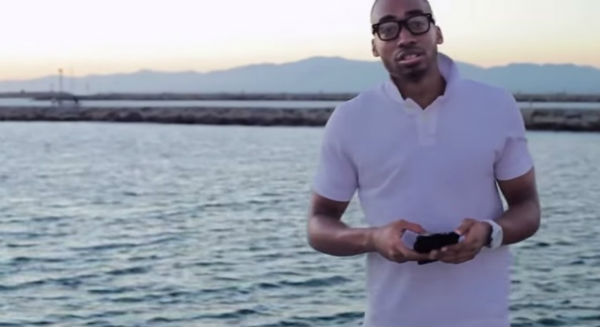
The name Richard Williams is not an uncommon one. But that doesn’t devalue what one Richard Williams has put his name to. I am referring to the Mr. Richard Williams who will be better known to many by his stage name Prince Ea; an American rapper and activist.

Mr. Richard Williams aka Prince Ea.

Here’s a little from Wikipedia:

Early life

Prince Ea was born as Richard Williams on September 16, 1988 in St. Louis, Missouri, the youngest of three children, and has resided there his whole life. The alias Prince Ea is derived from Sumerian mythology (“The prince of the Earth”). He has also graduated from the University of Missouri-St. Louis with an Anthropology degree and Latin honors.

So this particular Richard Williams is no slouch when it comes to what’s between his ears. Plus, he is of an age (27 this coming September) where the effects of what my generation has done, and is still doing, to Mother Earth will be unmissable.

Now watch this video.

http://www.youtube.com/watch?v=pN2WI5KqJDY

Published on Apr 20, 2015
Activist and Artist Prince Ea Releases New Video on Earth Day supporting Stand for Trees campaign

Celebrity activist and spoken word artist Prince Ea launched his newest online video entitled “Dear Future Generations: Sorry” to motivate individuals to take immediate action to stop climate change by Standing for Trees.

Prince Ea was inspired to produce the video by the Stand for Trees campaign, an innovative new way for individuals to take real and effective action to protect threatened forests and help mitigate global climate change, all with the press of a button on their smart phones.

I sense so much angst inside me that it’s difficult to calm myself down and think rationally and calmly about what me and hundreds of thousands of others of my era must do.

But one thing is very clear: doing nothing is not an option!

Those who have watched the video will be aware that it serves as a promotion for an organisation Stand for Trees and for making donations in the form of Trees Certificates. The website’s How it works section explains:

Purchasing Stand For Trees Certificates is one of the most effective actions an individual can take to halt deforestation and combat climate change. Here’s how it works:

How-It-Works-Step-1-v03

You buy a Stand For Trees Certificate — a unique, high-quality, verified carbon credit that protects a specific endangered forest and offsets a tonne of CO2 from entering the earth’s atmosphere. Because of your purchase, forests are left standing to do what they do best — store carbon, produce oxygen, provide habitat, and support local communities.

I strongly recommend you read everything that is available on that website including a helpful FAQs section.

It also needs to be said that neither Jean nor I have any connection with the organisation and, like many others, are considering how effective this is.  But we are minded to purchase a number of Trees Certificates in addition to a number of things that we are already doing here at home.  I was also comforted by coming across support for Stand For Trees Certificates from Richard Branson’s Virgin Group. Their web page includes this:

How does this work?

The second largest source of climate-changing CO2 emissions is the destructive clearing of the worlds’ forests. When you purchase a Stand For Trees Certificate, you prevent one tonne of CO2 from entering the atmosphere by supporting local and indigenous communities who are protecting that forest in a developing country. This creates new opportunities for communities that do not wish to choose between alleviating poverty or protecting their forests.

Each of these Certificates is verified to rigorous third-party standards for their climate, community, and biodiversity benefits. Independent auditors verify with satellite and ground data that each Certificate has indeed prevented one tonne of CO2 from reaching our atmosphere and that your money is reaching communities on the ground.

That second paragraph offers key information to my way of thinking.

Because if we don’t halt this destruction of our forests in the foreseeable future then it’s not just humans that will pay the price.

11134461_dog20pee

Back to trees

This week is starting to develop into a theme!

On Monday I published a post Hope Has A Place. It was based upon the hauntingly beautiful track of the same name from Enya. Then yesterday, serendipitously, came The watering hole. Both of those posts, although miles apart in terms of content, nonetheless seemed to subscribe to a common theme. That being that the more that everyday people, good common folk from all around the world, share their feelings, the more likely that those self-same people will make a difference. A positive difference!

Now don’t get me wrong! By presenting these recent posts I am not setting myself up to be anything other than just another everyday person and dog lover who just happens to enjoy sharing stuff via this blog.

Regular readers of this place will recall that a week ago I celebrated Earth Day with a post called Our beautiful, life-giving trees. It included this picture:

We must sing for our trees.

Then on the following day in a post called Now life-giving geese (by the way, the five baby goslings are doing really well!) I included this photograph:

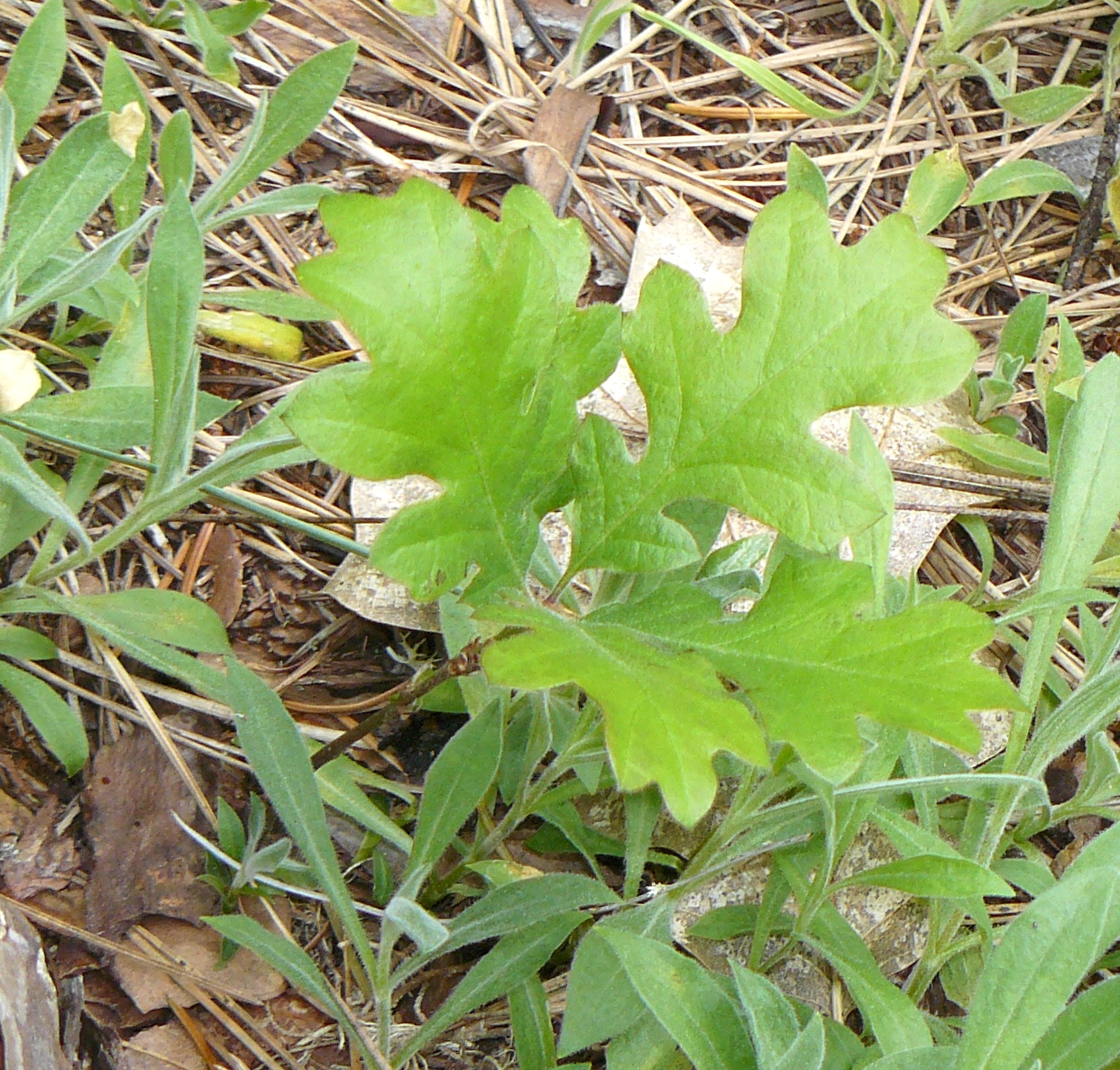
A baby oak.
And sing for them at all ages!

Yesterday morning I received the latest post from Sue Dreamwalker. It was an impassioned plea to do something and to stop the madness. Sue, in turn, had republished the post that had appeared on Endless Light and Love.

The theme that seems to be developing this week, unplanned I should hasten to add, is that it is all too easy to be overwhelmed by the scale of change that has to take place, must take place, if this generation (I’m a 1944 baby) can die knowing that it will be alright in the end. Because it is my generation that has been responsible, has created the circumstances, for the end of life as we have all known it if nothing is done, and done in the next decade or two.

So to trees.

Our trees are both a symbol for and an indicator of the overall health of our planet.

To close off this part of my two-day post, please watch this short video.

Uploaded on Apr 1, 2015
Trees give us beauty, shade, food, clean water, oxegen, medicine, housing, fresh air, habitat and happiness. For the cost of a craft beer, or a couple of cups of coffee you can protect a specific threatened forest. Each Stand for Trees certificate offsets 1 ton of carbon from the atmosphere while providing income to local forest communities. Income that supports education, healthcare, clean water and sustainable livelihoods. Trees stand for us, isn’t it time we stand for trees?

Tomorrow, I will return to hope. Perhaps better written, return with hope.

Giving in to Nature.

The power of Nature might surprise you!

The last two posts have offered two aspects of our bountiful Nature. First we had Earth Day and the celebration of our trees. Then yesterday we had the celebration of the birth of five Canada Geese goslings.

So it seemed appropriate to continue the theme for another day.

Earlier this month there was an article over on MNN that I saved for later use simply because the message it offered was counter-intuitive. Here’s how that article opened:

Deforestation vs. nature: The winner might surprise you

Large-scale tree-planting projects, abandoned farmland help balance out rain forest destruction.

By: Michael Graham Richard
Wed, Apr 08, 2015 at 10:11 AM

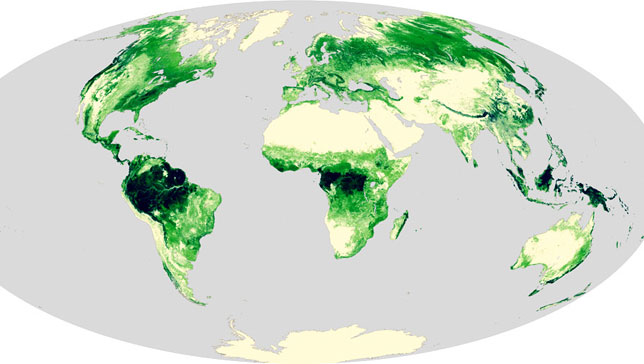
Forest canopy heights are highest near the equator and generally decrease the closer forests are to the poles. (Photo: NASA)

For decades, we’ve been hearing about how the world’s forests are under attack, how the equivalent of “36 football fields of the world’s forests are being cut every minute.” With all this pressure on nature, could the Earth possibly be getting greener? Not a chance, right? Surprisingly, that’s what a team of scientists discovered when they looked at two decades’ worth of data from satellites that use a technique called “passive microwave remote sensing,” which allows researchers to measure how much biomass, or living matter, is present on the surface of the planet.

The researchers found that despite ongoing deforestation in the rain forests of South America and Southeast Asia — a huge problem, regardless of what happens elsewhere — other regions outside the tropics, such as Africa and Australia, have been improving enough to offset the losses. Some of the more unexpected sources of this extra biomass are farmland abandoned after the fall of communism where forests have spontaneously regrown in the former Soviet republics, as well as in areas of China where large-scale tree planting projects took place.

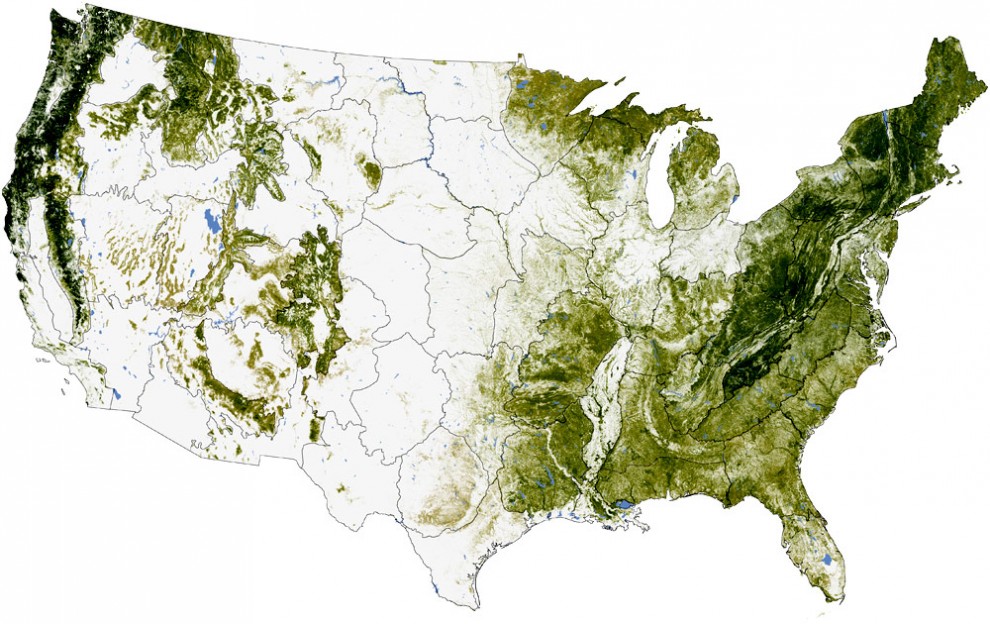
What really caught my eye was another photo from NASA that showed the biomass stored in trees in the USA.

The concentration of biomass stored in trees in the U.S. The darkest greens reveal the areas with the densest, tallest, and most robust forest growth. (Photo: NASA)

But as the article reminded readers:

We’re only talking about biomass quantities being offset, though; the loss of rain forests also mean the loss of many species of animals and plants, as well as unique habitats that can’t be replaced by other regions elsewhere, such as the savannah of Africa or the Australian Outback. So while this is good news, we can’t declare victory over deforestation just yet!

Nonetheless, I am sure that I am not the only one to welcome this reminder of the power of Nature. Or in the closing words of that MNN article:

In the period between 2003-2012, the total amount of vegetation above the ground has increased by about 4 billion tonnes of carbon. Any way you slice in, 4 billion tonnes is significant!

This is particularly important because around 25 percent of the CO2 that we release into the atmosphere by burning formerly buried hydrocarbons is absorbed by plants, so having more of them can help slow down (but not stop) climate change, and there’s a limit to plants’ rate of absorption. Still, it’s nice to get good news for a change …

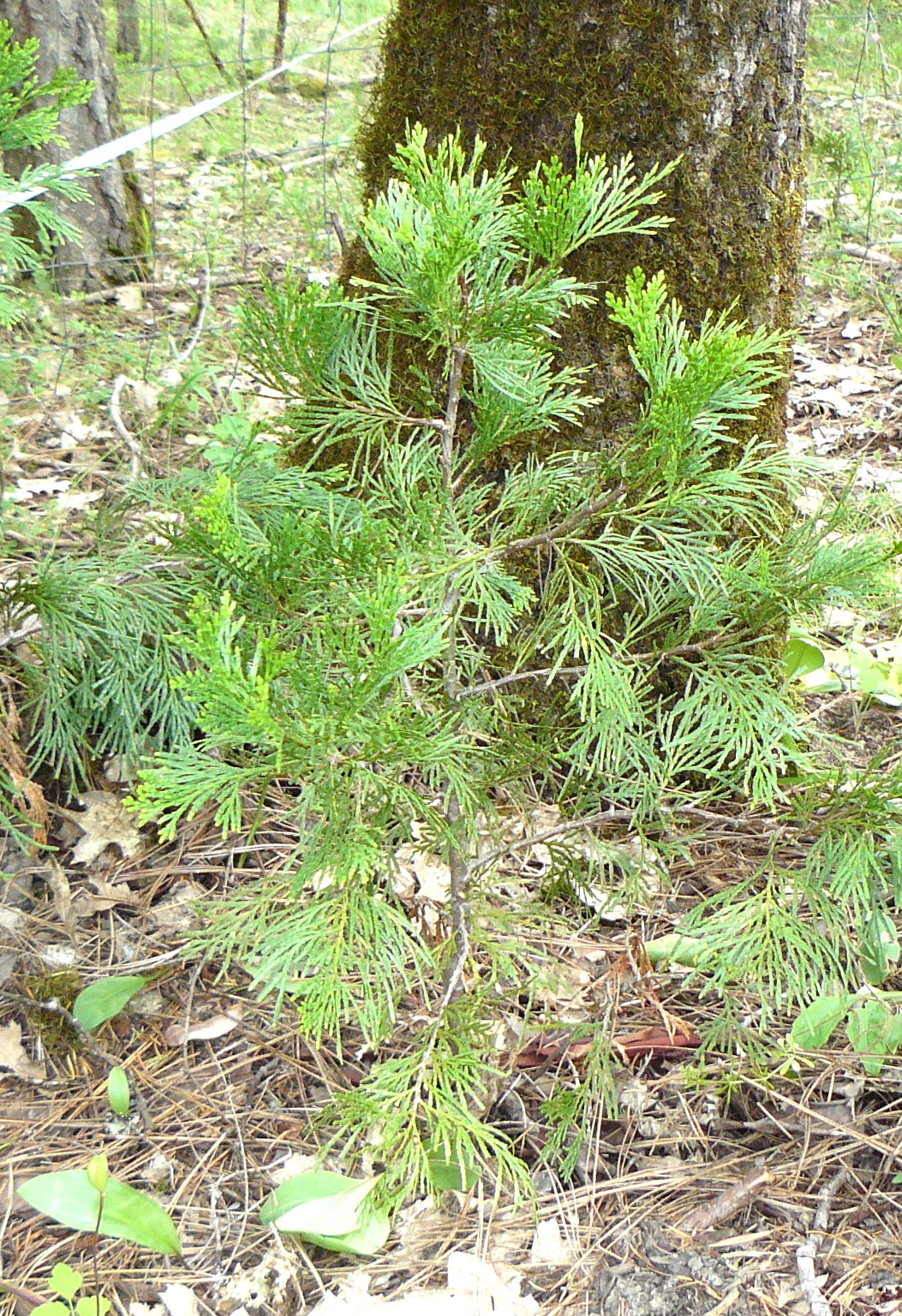
While it may be a long way yet from them being tonnes of carbon, let me close with three pictures of ‘increasing tree biomass‘ right here on Hugo Road in Merlin, Oregon.

The oak.
The oak.

oooo

The madrone.
The madrone.

oooo

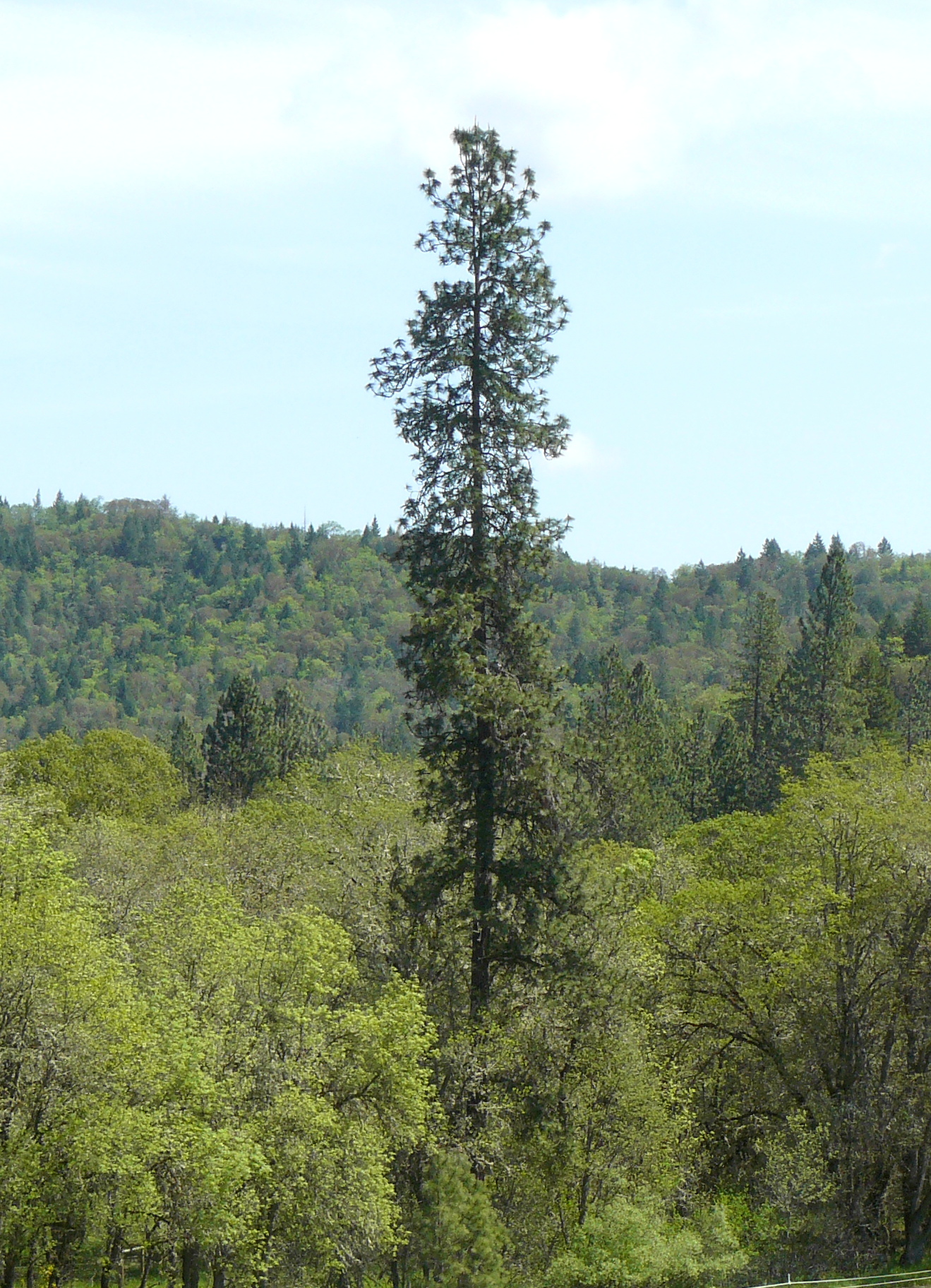
The cedar.
The cedar.

Nature really does have all the answers to man’s long-term survival.

Our beautiful, life-giving trees.

Today we sing for our trees.

I’m very grateful to a recent post over on Dreamwalker’s SanctuarySing for the Trees. This is how the post opens.

dsc01947_thumb

My Earth Day Painting, in tribute to our Earth Mother and Nature

You can find out more about Singing for our Trees Here and why its important to honour our sacred trees which are fast disappearing from our Earth.

In celebration of connecting with Gaia, our Earth Mother, I spent the weekend Painting. I wanted something Light, bright and showing the love.. Hence all the hearts and flowers.

But can you spot a Fairy two little elves and a new born, mouse and pot of gold in there?

That link in Sue’s second paragraph goes across to Songkeeper.net where one reads:

Earth Day – Sing for the Trees
April 22, 2015

Noon, wherever you are on the planet

Sing for the Trees You Love

A Single Idea Planted With Hope

In January 2010 a single idea was planted on the fertile ground of Facebook. It was a simple call: Create your own Woodstock. On Earth Day, April 22, 2010 sing to your favorite tree.

The Response

Since then over 8,000 people from 45 countries and 48 U.S. States have sung to trees

The Need

Every day a rain forest the size of Central Park is destroyed.

Every year a rain forest area larger than England is cut down.

15% of deforestation is caused by cutting down trees for toilet paper.

Why Sing?

The Civil Rights Movement, Apartheid and more recently Pete Seeger’s Ship of Hope to clean the Hudson River have used song to create awareness and galvanize action.

Singing:

  • Helps create community
  • Gives us a way to have a voice in saving what we love
  • Is an offering of our life force and spirit
  • Connects us to ancient traditions
  • Nourishes trees by giving them carbon dioxide
  • Is part of the joy of being human
  • Helps us relax and tune into nature and to each other
  • Reminds us we are part of the chorus of life

What more can I add other than offer some pictures of the trees here at home.

P1150587

oooo

P1150584

oooo

P1150585

 oooo

P1150588

oooo

P1150589

Yes, we will sing for the trees today, and not just today!

And there is one more thing I can offer; a song.