Category: Climate

The winds of time

Time from two very different perspectives.

solstice

I’m writing this post approaching midnight (UTC) on the afternoon of Tuesday, 26th May, 2015.  In other words, approaching 00:00 UTC 27/05/15. (Or, in American speak 05/27/15.)

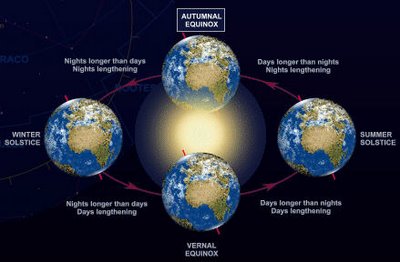
In fewer than four weeks it will be the moment of the Summer solstice, as in the Northern Hemisphere’s Mid-Summer’s Day. More precisely explained over on EarthSky.org together with a number of very interesting facts:

The solstice comes on June 21, 2015 at 16:38 UTC. For North American time zones, that places the solstice at 12:38 p.m. EDT, 11:38 a.m. CDT, 10:38 a.m. MDT and 9:38 a.m. PDT.

The planet Earth has been in orbit around the sun for a very long time!  Time beyond imagination. By comparison, in a very short time one species alone, namely homo sapiens, has altered the biosphere of Planet Earth. It’s almost beyond comprehension!

To expand on that notion, let me republish an essay from TomDispatch from last September.  Republished with the kind permission of Tom Engelhardt.

ooOOoo

Tomgram: Rebecca Solnit, What to Do When You’re Running Out of Time

Posted by Rebecca Solnit at 8:09am, September 18, 2014.
Follow TomDispatch on Twitter @TomDispatch.

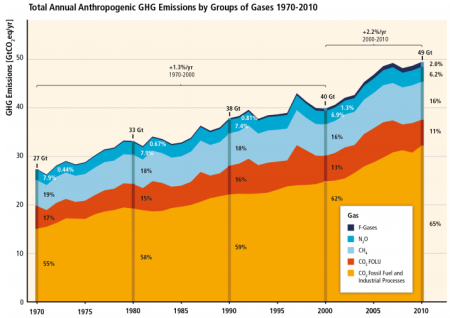
Just when no one needed more lousy news, the U.N.’s weather outfit, the World Meteorological Organization (WMO), issued its annual Greenhouse Gas Bulletin. It offered a shocking climate-change update: the concentrations of long-lasting greenhouse gases in the Earth’s atmosphere (carbon dioxide, methane, and nitrous oxide) rose at a “record-shattering pace” from 2012 to 2013, including the largest increase in CO2 in 30 years — and there was a nasty twist to this news that made it even grimmer.

While such increases reflected the fact that we continue to extract and burn fossil fuels at staggering rates, something else seems to be happening as well. Both the oceans and terrestrial plant life act as carbon sinks; that is, they absorb significant amounts of the carbon dioxide we release and store it away. Unfortunately, both may be reaching limits of some sort and seem to be absorbing less. This is genuinely bad news if you’re thinking about the future warming of the planet. (As it happens, in the same period, according to the Yale Project on Climate Change Communication, parts of the American public stopped absorbing information in no less striking fashion: the number of those who believe that global warming isn’t happening rose 7% to 23%.)

So consider this a propitious moment for a major climate-change demonstration, possibly the largest in history, in New York City this Sunday. [Ed: it turned out to be the largest climate march in history.] As the WMO’s Secretary-General Michel Jarraud pointed out, there is still time to make a difference. “We have the knowledge and we have the tools,” he said, “for action to try to keep temperature increases within 2°C to give our planet a chance and to give our children and grandchildren a future. Pleading ignorance can no longer be an excuse for not acting.” As TomDispatch regular Rebecca Solnit, author of the indie bestseller Men Explain Things to Me, points out, the pressure of mass movements can sometimes turn history upside down. Of course, the only way to find out if climate change is a candidate for this treatment is to get out in the streets. So, for those of you anywhere near New York, see you this Sunday! Tom

The Wheel Turns, the Boat Rocks, the Sea Rises

Change in a Time of Climate Change 
By Rebecca Solnit

There have undoubtedly been stable periods in human history, but you and your parents, grandparents, and great-grandparents never lived through one, and neither will any children or grandchildren you may have or come to have. Everything has been changing continuously, profoundly — from the role of women to the nature of agriculture. For the past couple of hundred years, change has been accelerating in both magnificent and nightmarish ways.

Yet when we argue for change, notably changing our ways in response to climate change, we’re arguing against people who claim we’re disrupting a stable system. They insist that we’re rocking the boat unnecessarily.

I say: rock that boat. It’s a lifeboat; maybe the people in it will wake up and start rowing. Those who think they’re hanging onto a stable order are actually clinging to the wreckage of the old order, a ship already sinking, that we need to leave behind.

As you probably know, the actual oceans are rising — almost eight inches since 1880, and that’s only going to accelerate. They’re also acidifying, because they’re absorbing significant amounts of the carbon we continue to pump into the atmosphere at record levels. The ice that covers the polar seas is shrinking, while the ice shields that cover Antarctica and Greenland are melting. The water locked up in all the polar ice, as it’s unlocked by heat, is going to raise sea levels staggeringly, possibly by as much as 200 feet at some point in the future, how distant we do not know. In the temperate latitudes, warming seas breed fiercer hurricanes.

The oceans are changing fast, and for the worse. Fish stocks are dying off, as are shellfish. In many acidified oceanic regions, their shells are actually dissolving or failing to form, which is one of the scariest, most nightmarish things I’ve ever heard. So don’t tell me that we’re rocking a stable boat on calm seas. The glorious 10,000-year period of stable climate in which humanity flourished and then exploded to overrun the Earth and all its ecosystems is over.

But responding to these current cataclysmic changes means taking on people who believe, or at least assert, that those of us who want to react and act are gratuitously disrupting a stable system that’s working fine. It isn’t stable. It is working fine — in the short term and the most limited sense — for oil companies and the people who profit from them and for some of us in the particularly cushy parts of the world who haven’t been impacted yet by weather events like, say, the recent torrential floods in Japan or southern Nevada and Arizona, or the monsoon versions of the same that have devastated parts of India and Pakistan, or the drought that has mummified my beloved California, or the wildfires of Australia.

The problem, of course, is that the people who most benefit from the current arrangements have effectively purchased a lot of politicians, and that a great many of the rest of them are either hopelessly dim or amazingly timid. Most of the Democrats recognize the reality of climate change but not the urgency of doing something about it. Many of the Republicans used to — John McCain has done an amazing about-face from being a sane voice on climate to a shrill denier — and they present a horrific obstacle to any international treaties.

Put it this way: in one country, one party holding 45 out of 100 seats in one legislative house, while serving a minority of the very rich, can basically block what quite a lot of the other seven billion people on Earth want and need, because a two-thirds majority in the Senate must consent to any international treaty the U.S. signs. Which is not to say much for the president, whose drill-baby-drill administration only looks good compared to the petroleum servants he faces, when he bothers to face them and isn’t just one of them. History will despise them all and much of the world does now, but as my mother would have said, they know which side their bread is buttered on.

As it happens, the butter is melting and the bread is getting more expensive. Global grain production is already down several percent thanks to climate change, says a terrifying new United Nations report. Declining crops cause food shortages and rising food prices, creating hunger and even famine for the poorest on Earth, and also sometimes cause massive unrest. Rising bread prices were one factor that helped spark the Arab Spring in 2011. Anyone who argues that doing something about global warming will be too expensive is dodging just how expensive unmitigated climate change is already proving to be.

It’s only a question of whether the very wealthy or the very poor will pay. Putting it that way, however, devalues all the nonmonetary things at stake, from the survival of myriad species to our confidence in the future. And yeah, climate change is here, now. We’ve already lost a lot and we’re going to lose more, but there’s a difference between terrible and apocalyptic. We still have some control over how extreme it gets. That’s not a great choice, but it’s the choice we have. There’s still a window open for action, but it’s closing. As the Secretary-General of the World Meteorological Society, Michel Jarraud, bluntly put it recently, “We are running out of time.”

New and Renewable Energies

The future is not yet written. Look at the world we’re in at this very moment. The Keystone XL tar sands pipeline was supposed to be built years ago, but activists catalyzed by the rural and indigenous communities across whose land it would go have stopped it so far, and made what was supposed to be a done deal a contentious issue. Activists changed the outcome.

Fracking has been challenged on the state level, and banned in townships and counties from upstate New York to central California. (It has also been banned in two Canadian provinces, France, and Bulgaria.) The fossil-fuel divestment movement has achieved a number of remarkable victories in its few bare years of existence and more are on the way. The actual divestments and commitments to divest fossil fuel stocks by various institutions ranging from the city of Seattle to the British Medical Association are striking. But the real power of the movement lies in the way it has called into question the wisdom of investing in fossil fuel corporations. Even mainstream voices like the British Parliament’s Environmental Audit Committee and publications like Forbes are now beginning to question whether they are safe places to put money. That’s a sea change.

Renewable energy has become more efficient, technologically sophisticated, and cheaper — the price of solar power in relation to the energy it generates has plummeted astonishingly over the past three decades and wind technology keeps getting better. While Americans overall are not yet curtailing their fossil-fuel habits, many individuals and communities are choosing other options, and those options are becoming increasingly viable. A Stanford University scientist has proposed a plan to allow each of the 50 states to run on 100% renewable energy by 2050.

Since, according to the latest report of the U.N.’s Intergovernmental Panel on Climate Change, fossil fuel reserves still in the ground are “at least four times larger than could safely be burned if global warming is to be kept to a tolerable level,” it couldn’t be more important to reach global agreements to do things differently on a planetary scale. Notably, most of those carbon reserves must be left untapped and the modest steps already taken locally and ad hoc show that such changes are indeed possible and that an encouraging number of us want to pursue them.

ooOOoo

In case you are wondering why this TomDispatch essay has been published in this place some ten months after it first appeared over at TD, it is simply because I made a note to leave it for a few months to see if the benefit of some hindsight put the essay into context.

Here’s the context.

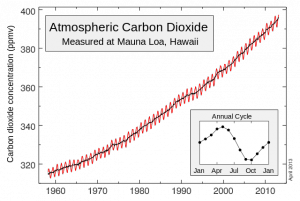
In the month of September, 2014, when this essay was published over on TomDispatch, the Atmospheric CO2 monthly average was 395.26 ppm. In April, 2015 it was 403.26 ppm. I can’t spell it out any better than what is written on the home page of CO2Now.org:

What the world needs to watch

Global warming is mainly the result of CO2 levels rising in the Earth’s atmosphere. Both atmospheric CO2 and climate change are accelerating. Climate scientists say we have years, not decades, to stabilize CO2 and other greenhouse gases.

To help the world succeed, CO2Now.org makes it easy to see the most current CO2 level and what it means. So, use this site and keep an eye on CO2. Invite others to do the same. Then we can do more to send CO2 in the right direction.

Standing for our trees

Can we stop this madness?

The name Richard Williams is not an uncommon one. But that doesn’t devalue what one Richard Williams has put his name to. I am referring to the Mr. Richard Williams who will be better known to many by his stage name Prince Ea; an American rapper and activist.

Mr. Richard Williams aka Prince Ea.

Here’s a little from Wikipedia:

Early life

Prince Ea was born as Richard Williams on September 16, 1988 in St. Louis, Missouri, the youngest of three children, and has resided there his whole life. The alias Prince Ea is derived from Sumerian mythology (“The prince of the Earth”). He has also graduated from the University of Missouri-St. Louis with an Anthropology degree and Latin honors.

So this particular Richard Williams is no slouch when it comes to what’s between his ears. Plus, he is of an age (27 this coming September) where the effects of what my generation has done, and is still doing, to Mother Earth will be unmissable.

Now watch this video.

Published on Apr 20, 2015
Activist and Artist Prince Ea Releases New Video on Earth Day supporting Stand for Trees campaign

Celebrity activist and spoken word artist Prince Ea launched his newest online video entitled “Dear Future Generations: Sorry” to motivate individuals to take immediate action to stop climate change by Standing for Trees.

Prince Ea was inspired to produce the video by the Stand for Trees campaign, an innovative new way for individuals to take real and effective action to protect threatened forests and help mitigate global climate change, all with the press of a button on their smart phones.

I sense so much angst inside me that it’s difficult to calm myself down and think rationally and calmly about what me and hundreds of thousands of others of my era must do.

But one thing is very clear: doing nothing is not an option!

Those who have watched the video will be aware that it serves as a promotion for an organisation Stand for Trees and for making donations in the form of Trees Certificates. The website’s How it works section explains:

Purchasing Stand For Trees Certificates is one of the most effective actions an individual can take to halt deforestation and combat climate change. Here’s how it works:

How-It-Works-Step-1-v03

You buy a Stand For Trees Certificate — a unique, high-quality, verified carbon credit that protects a specific endangered forest and offsets a tonne of CO2 from entering the earth’s atmosphere. Because of your purchase, forests are left standing to do what they do best — store carbon, produce oxygen, provide habitat, and support local communities.

I strongly recommend you read everything that is available on that website including a helpful FAQs section.

It also needs to be said that neither Jean nor I have any connection with the organisation and, like many others, are considering how effective this is.  But we are minded to purchase a number of Trees Certificates in addition to a number of things that we are already doing here at home.  I was also comforted by coming across support for Stand For Trees Certificates from Richard Branson’s Virgin Group. Their web page includes this:

How does this work?

The second largest source of climate-changing CO2 emissions is the destructive clearing of the worlds’ forests. When you purchase a Stand For Trees Certificate, you prevent one tonne of CO2 from entering the atmosphere by supporting local and indigenous communities who are protecting that forest in a developing country. This creates new opportunities for communities that do not wish to choose between alleviating poverty or protecting their forests.

Each of these Certificates is verified to rigorous third-party standards for their climate, community, and biodiversity benefits. Independent auditors verify with satellite and ground data that each Certificate has indeed prevented one tonne of CO2 from reaching our atmosphere and that your money is reaching communities on the ground.

That second paragraph offers key information to my way of thinking.

Because if we don’t halt this destruction of our forests in the foreseeable future then it’s not just humans that will pay the price.

11134461_dog20pee

Back to trees

This week is starting to develop into a theme!

On Monday I published a post Hope Has A Place. It was based upon the hauntingly beautiful track of the same name from Enya. Then yesterday, serendipitously, came The watering hole. Both of those posts, although miles apart in terms of content, nonetheless seemed to subscribe to a common theme. That being that the more that everyday people, good common folk from all around the world, share their feelings, the more likely that those self-same people will make a difference. A positive difference!

Now don’t get me wrong! By presenting these recent posts I am not setting myself up to be anything other than just another everyday person and dog lover who just happens to enjoy sharing stuff via this blog.

Regular readers of this place will recall that a week ago I celebrated Earth Day with a post called Our beautiful, life-giving trees. It included this picture:

We must sing for our trees.

Then on the following day in a post called Now life-giving geese (by the way, the five baby goslings are doing really well!) I included this photograph:

A baby oak.
And sing for them at all ages!

Yesterday morning I received the latest post from Sue Dreamwalker. It was an impassioned plea to do something and to stop the madness. Sue, in turn, had republished the post that had appeared on Endless Light and Love.

The theme that seems to be developing this week, unplanned I should hasten to add, is that it is all too easy to be overwhelmed by the scale of change that has to take place, must take place, if this generation (I’m a 1944 baby) can die knowing that it will be alright in the end. Because it is my generation that has been responsible, has created the circumstances, for the end of life as we have all known it if nothing is done, and done in the next decade or two.

So to trees.

Our trees are both a symbol for and an indicator of the overall health of our planet.

To close off this part of my two-day post, please watch this short video.

Uploaded on Apr 1, 2015
Trees give us beauty, shade, food, clean water, oxegen, medicine, housing, fresh air, habitat and happiness. For the cost of a craft beer, or a couple of cups of coffee you can protect a specific threatened forest. Each Stand for Trees certificate offsets 1 ton of carbon from the atmosphere while providing income to local forest communities. Income that supports education, healthcare, clean water and sustainable livelihoods. Trees stand for us, isn’t it time we stand for trees?

Tomorrow, I will return to hope. Perhaps better written, return with hope.

Giving in to Nature.

The power of Nature might surprise you!

The last two posts have offered two aspects of our bountiful Nature. First we had Earth Day and the celebration of our trees. Then yesterday we had the celebration of the birth of five Canada Geese goslings.

So it seemed appropriate to continue the theme for another day.

Earlier this month there was an article over on MNN that I saved for later use simply because the message it offered was counter-intuitive. Here’s how that article opened:

Deforestation vs. nature: The winner might surprise you

Large-scale tree-planting projects, abandoned farmland help balance out rain forest destruction.

By: Michael Graham Richard
Wed, Apr 08, 2015 at 10:11 AM

Forest canopy heights are highest near the equator and generally decrease the closer forests are to the poles. (Photo: NASA)

For decades, we’ve been hearing about how the world’s forests are under attack, how the equivalent of “36 football fields of the world’s forests are being cut every minute.” With all this pressure on nature, could the Earth possibly be getting greener? Not a chance, right? Surprisingly, that’s what a team of scientists discovered when they looked at two decades’ worth of data from satellites that use a technique called “passive microwave remote sensing,” which allows researchers to measure how much biomass, or living matter, is present on the surface of the planet.

The researchers found that despite ongoing deforestation in the rain forests of South America and Southeast Asia — a huge problem, regardless of what happens elsewhere — other regions outside the tropics, such as Africa and Australia, have been improving enough to offset the losses. Some of the more unexpected sources of this extra biomass are farmland abandoned after the fall of communism where forests have spontaneously regrown in the former Soviet republics, as well as in areas of China where large-scale tree planting projects took place.

What really caught my eye was another photo from NASA that showed the biomass stored in trees in the USA.

The concentration of biomass stored in trees in the U.S. The darkest greens reveal the areas with the densest, tallest, and most robust forest growth. (Photo: NASA)

But as the article reminded readers:

We’re only talking about biomass quantities being offset, though; the loss of rain forests also mean the loss of many species of animals and plants, as well as unique habitats that can’t be replaced by other regions elsewhere, such as the savannah of Africa or the Australian Outback. So while this is good news, we can’t declare victory over deforestation just yet!

Nonetheless, I am sure that I am not the only one to welcome this reminder of the power of Nature. Or in the closing words of that MNN article:

In the period between 2003-2012, the total amount of vegetation above the ground has increased by about 4 billion tonnes of carbon. Any way you slice in, 4 billion tonnes is significant!

This is particularly important because around 25 percent of the CO2 that we release into the atmosphere by burning formerly buried hydrocarbons is absorbed by plants, so having more of them can help slow down (but not stop) climate change, and there’s a limit to plants’ rate of absorption. Still, it’s nice to get good news for a change …

While it may be a long way yet from them being tonnes of carbon, let me close with three pictures of ‘increasing tree biomass‘ right here on Hugo Road in Merlin, Oregon.

The oak.
The oak.

oooo

The madrone.
The madrone.

oooo

The cedar.
The cedar.

Nature really does have all the answers to man’s long-term survival.

Our beautiful, life-giving trees.

Today we sing for our trees.

I’m very grateful to a recent post over on Dreamwalker’s SanctuarySing for the Trees. This is how the post opens.

dsc01947_thumb

My Earth Day Painting, in tribute to our Earth Mother and Nature

You can find out more about Singing for our Trees Here and why its important to honour our sacred trees which are fast disappearing from our Earth.

In celebration of connecting with Gaia, our Earth Mother, I spent the weekend Painting. I wanted something Light, bright and showing the love.. Hence all the hearts and flowers.

But can you spot a Fairy two little elves and a new born, mouse and pot of gold in there?

That link in Sue’s second paragraph goes across to Songkeeper.net where one reads:

Earth Day – Sing for the Trees
April 22, 2015

Noon, wherever you are on the planet

Sing for the Trees You Love

A Single Idea Planted With Hope

In January 2010 a single idea was planted on the fertile ground of Facebook. It was a simple call: Create your own Woodstock. On Earth Day, April 22, 2010 sing to your favorite tree.

The Response

Since then over 8,000 people from 45 countries and 48 U.S. States have sung to trees

The Need

Every day a rain forest the size of Central Park is destroyed.

Every year a rain forest area larger than England is cut down.

15% of deforestation is caused by cutting down trees for toilet paper.

Why Sing?

The Civil Rights Movement, Apartheid and more recently Pete Seeger’s Ship of Hope to clean the Hudson River have used song to create awareness and galvanize action.

Singing:

  • Helps create community
  • Gives us a way to have a voice in saving what we love
  • Is an offering of our life force and spirit
  • Connects us to ancient traditions
  • Nourishes trees by giving them carbon dioxide
  • Is part of the joy of being human
  • Helps us relax and tune into nature and to each other
  • Reminds us we are part of the chorus of life

What more can I add other than offer some pictures of the trees here at home.

P1150587

oooo

P1150584

oooo

P1150585

 oooo

P1150588

oooo

P1150589

Yes, we will sing for the trees today, and not just today!

And there is one more thing I can offer; a song.

Call of the wild.

A Monday morning reminder of our beautiful planet.

American Wilderness: The John Moulton Barn on Mormon Row at the base of the Tetons. Photo: Jon Sullivan

Just a random picture found by doing a web search. (Actually found on what looks like a great blog: I am Wilderness.)

This morning’s post was prompted by listening to one of my favourite music groups: The Alan Parsons Band. Listening to this particular track: Call of the Wild. From his third solo album The Time Machine released in September, 1999.

Lyrics written by Ian Bairnson

Well I’ve talked to the wind and I’ve listened to rain,
I have climbed to the clouds and I’ve cried out with pain,
This life is for living so come to my side,
And open your heart to the call of the wild.

We are all of one nation, all of one creed,
We are all out of nature, all of one seed,
We are in this together, man, woman and child,
So open your heart to the call of the wild.

We talk the same language in different tongues,
We’re somebody’s daughters and somebody’s sons,
But those who believe we are head of the chain,
May wake up to find we are all that remain.

There is no need to fear what we don’t understand,
For we breathe the same air and we walk the same land,
The strong and the anxious, the meek and the mild,
All dance to the drum that’s the call of the wild.

Impossible to listen to this beautiful track and not reflect on how badly we are treating Mother Earth.

And human madness!

Reality will intrude whatever we believe.

Fitting in very neatly with yesterday’s post And human wisdom?, on Tuesday evening Jean and I sat down after dinner and watched a documentary film that was available on the website Top Documentary Films. It was called Our Rising Oceans and was introduced, thus:

In the opening moments of Our Rising Oceans we learn that global catastrophe lies beneath the awe-inspiring pale blue skies and ghostly white icescapes of West Antarctica. The scientific data regarding the effects of climate change on the ongoing process of glacial melting is overwhelming. Yet according to the many subjects featured in the film, a staggering percentage of the public remains doubtful, and our politicians and other policy influencers remain hesitant to act due to ill-informed skepticism and corporate interests.

In response to those naysayers, VICE founder and host Shane Smith ventures to the epicenter of the crisis to discover firsthand the science by which these changes are being observed, and the dire consequences of inaction.

Antarctica is starting to melt,” warns expert glaciologist Dr. Eric Rignot. Over the past twenty years, Dr. Rignot has analyzed reams of carefully procured data, and his discoveries indicate a rapidly deteriorating environment which could forever alter the fate of mankind. Here, in the midst of the Antarctic plains, wind is circulating at an unprecedented rate and pushing warm waters underneath the massive sheets of ice. This dynamic effectively melts these sheets from the bottom up, and has a profoundly distressing impact on rising sea levels.

Over the course of the film, Dr. Rignot is joined by a host of additional scientists who dedicate their lives to bearing witness to these calamitous changes, and pursuing solutions against the opposition of politicized stagnation. But even in the absence of this opposition, the disastrous effects of climate change may be too far gone to rectify. Dr. Rignot contends that even the strictest emission regulations cannot reverse the tides of a redefining global landscape. Others testify that additional environmental protection policies may slow the process, but will by no means guarantee the sustainability of future generations.

But even the slivers of hope which do exist seem impossible to realize given the gridlock of governmental leadership within the United States, as its representatives remain sharply divided on the mere existence of climate change. “I think it’s almost like denying gravity now,” says Vice President Joe Biden in an interview which closes the film. Our Rising Oceans paints a powerful portrait of a planet on the brink of ruin, and the political dysfunction which continues to push it over the edge.

Now in that opening paragraph I deliberately used the expression “was available” because when I came to check that the video, a YouTube video, was available, I received a “This video is private.” message.

So all I can do is to offer you the link to the Top Documentary Film page for Our Rising Oceans and hope that you are able to freely watch the full documentary. The link is here.

The documentary was scary and only confirmed the truth of what Jean and I instinctively felt – that unless those who lead and comprise all the governments of the free world react to the truth of where this planet is heading, and react soon, then the next great extinction is guaranteed. The first great extinction that is man-made!

If for whatever reason the video is unavailable to you then, at least, do watch the trailer.

For if we, as in humanity, turn a blind eye to this then reality will have a way of reminding us of what science already knows: significant sea-level rises are guaranteed.

Here’s a recent item from the Washington Post.

A hundred years from now, humans may remember 2014 as the year that we first learned that we may have irreversibly destabilized the great ice sheet of West Antarctica, and thus set in motion more than 10 feet of sea level rise.

Meanwhile, 2015 could be the year of the double whammy — when we learned the same about one gigantic glacier of East Antarctica, which could set in motion roughly the same amount all over again. Northern Hemisphere residents and Americans in particular should take note — when the bottom of the world loses vast amounts of ice, those of us living closer to its top get more sea level rise than the rest of the planet, thanks to the law of gravity.

The findings about East Antarctica emerge from a new paper just out in Nature Geoscience by an international team of scientists representing the United States, Britain, France and Australia. They flew a number of research flights over the Totten Glacier of East Antarctica — the fastest-thinning sector of the world’s largest ice sheet — and took a variety of measurements to try to figure out the reasons behind its retreat. And the news wasn’t good: It appears that Totten, too, is losing ice because warm ocean water is getting underneath it.

Read the full piece here.

Welcome to the new world!

Storm surge on a Louisiana highway shows the affects of rising sea levels. (Credit: NOAA)

Once again, I’m going to be predictable in saying that our dogs wouldn’t be as half as mad as to deny the truth of what man is doing to our planet!

And human wisdom?

No other planet to move to!

The title of today’s post picks up the theme of yesterday’s post Dog Wisdom, that incorporated a wonderful essay from Mark Rostenko about the wisdom of dogs.

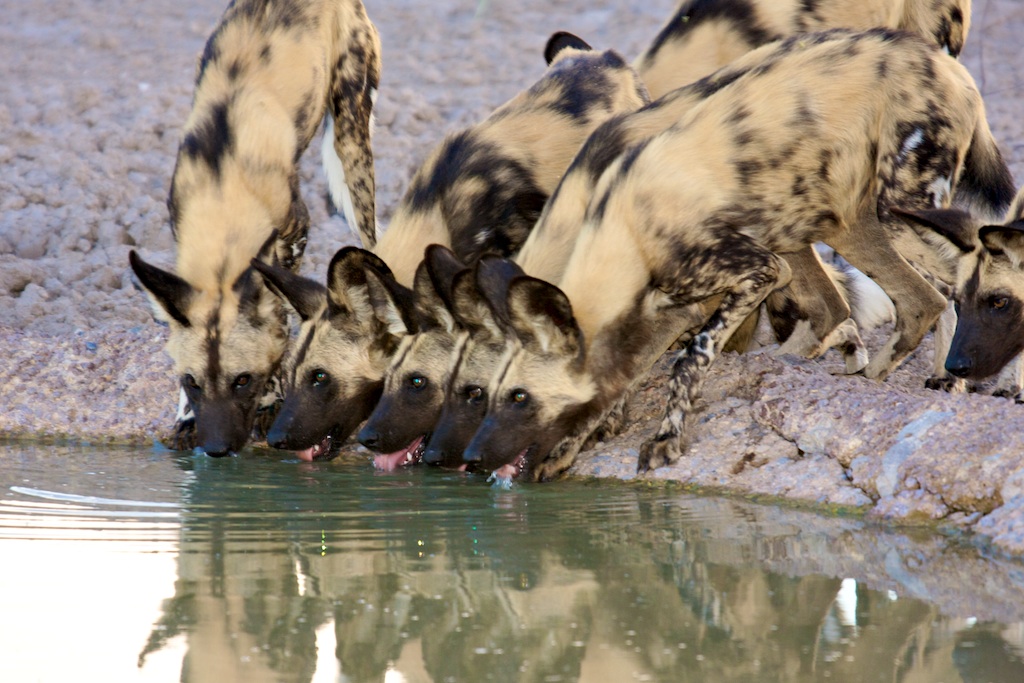
The words in the sub-heading came to me because, unlike wild dog packs, we do not have the luxury of our ‘alpha female’ deciding her pack’s territory is no longer viable and they needed to move on.

All of which serves as an introduction to a recent essay from Martin Lack over on the blog Lack of Environment. Martin is well qualified to write on such matters as climate as he has been a Fellow of the Geological Society (FGS) since 1992 and a Chartered Geologist (CGeol) since 1998.  His essay was published on the 15th March and is called Merchants of Doubt need to do the math.

ooOOoo

A feature-length documentary, based on the content of the Merchants of Doubt book by Naomi Oreskes and Erik Conway, went on general release at movie theatres in the USA this weekend.

As Desmogbog.com points out, it has already attracted the attention of an odd mixture of ideologically-motivated deniers of the reality of anthropogenic climate disruption.

I say “odd” because, as per the above link, those who prefer to see climate science as a conspiracy to raise taxes (and install worldwide Communist government via the United Nations, etc.) include both longstanding disputers of inconvenient science like Fred Singer (who questions whether the movie is defamatory) and self-confessed non-experts like James Delingpole.

Both of the above would have done well to watch a recent BBC Four (television) programme – Climate Change by Numbers. In contrast to just about every other programme about climate change that you might have seen, this one is presented by three mathematicians. A 30-second trailer is inserted below but, if you have not seen the full 74-minute programme (opens in a new window), I really would recommend it.

The programme focuses on three numbers:
— 0.85 Celsius – the rise in average global surface temperatures since the 1880s.
— 95% – the certainty of the scientific community that this is primarily human-caused.
— 1 trillion tonnes – humanity’s carbon budget to avoid 0.85 increasing to 2 Celsius.

Along the way, the programme highlights the early work of Svante Arrhenius – who determined that a halving of atmospheric CO2 could cause a 4 Celsius drop in temperature (and therefore that a doubling of CO2 will cause a 4 Celsius rise).

With regard to the accuracy of computer models, the programme highlights the way in which this has been proven by their ability to predict the cooling effects of large volcanic eruptions.

With regard to our carbon budget, the programme highlights the fact that humanity has already burnt 0.5 trillion tonnes and, unless radical changes are made to global trends, will burn the remaining 0.5 trillion tonnes within 30 years. It also points out that, as ongoing events might well suggest, even 2 Celsius could have severe and pervasive impacts (as the IPCC described them last year).

All very inconvenient for libertarians everywhere, I guess.

See also:

https://lackofenvironment.wordpress.com/2013/11/19/greedy-lying-bar-stewards-guilty-of-crimes-against-humanity/

https://lackofenvironment.wordpress.com/2013/10/11/a-summary-of-the-climate-departure-research-of-mora-et-al/

ooOOoo

NB: The link that Martin offers to the full programme is a version on YouTube that is chock-full of adverts; seemingly inserted every ten minutes or so.  Unfortunately, other YouTube videos of the same BBC programme also seem to have too many adverts.

Please don’t let that put you off watching a critically important message. Plus, as you watch the video, do stick under your hat the following note from Martin.

Thanks, Paul. There is one thing you might care to add (which I forgot to mention), which is this:

The final third of the programme includes a discussion of ‘extreme value analysis’ (EVA), which Wikipedia helpfully describes as “a branch of statistics… [that] seeks to assess… the probability of events that are more extreme than any previously observed“. Flood defences like the Woolwich Barrier on the Thames estuary were designed using EVA. However, crucially, EVA assumes that average parameter values do not change over time. Therefore, given that climate change invalidates this assumption, it is now accepted that London will need greater protection from flooding in the future. Athough not explicit in my original post, this was why I included a link to the ‘Climate Departure’ reseach of Mora et al., which estimates the regional variation in the date by which future climates will have departed from what has hitherto been considered normal.

So here is that full BBC Documentary.

Now where’s that spare planet!

Welcome to the asylum!

Michael Klare offers convincing proof that the world is mad!

Once again, serendipity has stepped in and provided me with today’s post.

What do I mean?

Well yesterday, I republished in full a recent essay from George Monbiot.  He demonstrated that when it comes to “fiddling while Rome burns” the United Nations takes some beating. This is in the context of 23 years of UN gatherings to control the levels of CO2 in our planet’s atmosphere without attempting, in the slightest, to control the production of coal, oil and gas.  Take this excerpt as an example of our madness.

You cannot solve a problem without naming it. The absence of official recognition of the role of fossil fuel production in causing climate change – blitheringly obvious as it is – permits governments to pursue directly contradictory policies. While almost all governments claim to support the aim of preventing more than 2°C of global warming, they also seek to “maximise economic recovery” of their fossil fuel reserves. (Then they cross their fingers, walk three times widdershins around the office and pray that no one burns it). But few governments go as far as the UK has gone.

In the Infrastructure Act that received royal assent last month, maximising the economic recovery of petroleum from the UK’s continental shelf became a statutory duty. Future governments are now legally bound to squeeze every possible drop out of the ground.

The idea came from a government review conducted by Sir Ian Wood, the billionaire owner of an inherited company – the Wood Group – that provides services to the oil and gas industry. While Sir Ian says his recommendations “received overwhelming industry support”, his team interviewed no one outside either the oil business or government. It contains no sign that I can detect of any feedback from environment groups or scientists.

Then serendipitously, yesterday morning up pops an essay from Michael Klare published on Tom Dispatch that continues to underline the absence, the global absence, of any form of smart thinking.  It is republished today with the kind permission of Tom Engelhardt.

ooOOoo

Tomgram: Michael Klare, Is Big Oil Finally Entering a Climate Change World?

Posted by Michael Klare at 8:00am, March 12, 2015.
Follow TomDispatch on Twitter @TomDispatch.

Welcome to the asylum! I’m talking, of course, about this country, or rather the world Big Oil spent big bucks creating.You know, the one in which the obvious — climate change — is doubted and denied, and in which the new Republican Congress is actively opposed to doing anything about it. Just the other day, for instance, Senate Majority Leader Mitch McConnell wrote a column in his home state paper, the Lexington Herald-Leader, adopting the old Nancy Reagan slogan “just say no” to climate change. The senator from Coalville, smarting over the Obama administration’s attempts to reduce carbon emissions from coal-fired power plants, is urging state governors to simply ignore the Environmental Protection Agency’s proposed “landmark limits” on those plants — to hell with the law and to hell, above all, with climate change. But it’s probably no news to you that the inmates are now running the asylum.

Just weeks ago, an example of Big Energy’s largess when it comes to sowing doubt about climate change surfaced. A rare scientific researcher, Wei-Hock Soon, who has published work denying the reality of climate change — the warming of the planet, he claims, is a result of “variations in the sun’s energy” — turned out to have received $1.2 million from various fossil fuel outfits, according to recently released documents; nor did he bother to disclose such support to any of the publications using his work. “The documents,” reported the New York Times, “show that Dr. Soon, in correspondence with his corporate funders, described many of his scientific papers as ‘deliverables’ that he completed in exchange for their money. He used the same term to describe testimony he prepared for Congress.”

There’s nothing new in this. Big Energy (like Big Tobacco before it) has for years been using a tiny cadre of scientists to sow uncertainty about the reality of climate change. Naomi Oreskes and Erik Conway wrote a now-classic investigative book, Merchants of Doubt, about just how the fossil fuel companies pulled this off, creating a public sense of doubt where a scientific one didn’t exist. Now, the book has been made into a striking documentary film, which has just opened nationally. Someday, perhaps, all of this will enter a court of law where those who knowingly perpetrated fraud on the American and global publics and in the process threatened humanity with a disaster of potentially apocalyptic proportions will get their just desserts. On that distant day when those who ran the planet into the ground for corporate profits have to pay for their criminal acts, Merchants of Doubt will undoubtedly be exhibit one for the prosecution.

In the meantime, TomDispatch regular Michael Klare continues his invaluable chronicling at this site of the depredations of Big Oil on this fragile planet of ours. Tom

Big Oil’s Broken Business Model

The Real Story Behind the Oil Price Collapse
By Michael T. Klare

Many reasons have been provided for the dramatic plunge in the price of oil to about $60 per barrel (nearly half of what it was a year ago): slowing demand due to global economic stagnation; overproduction at shale fields in the United States; the decision of the Saudis and other Middle Eastern OPEC producers to maintain output at current levels (presumably to punish higher-cost producers in the U.S. and elsewhere); and the increased value of the dollar relative to other currencies. There is, however, one reason that’s not being discussed, and yet it could be the most important of all: the complete collapse of Big Oil’s production-maximizing business model.

Until last fall, when the price decline gathered momentum, the oil giants were operating at full throttle, pumping out more petroleum every day. They did so, of course, in part to profit from the high prices. For most of the previous six years, Brent crude, the international benchmark for crude oil, had been selling at $100 or higher. But Big Oil was also operating according to a business model that assumed an ever-increasing demand for its products, however costly they might be to produce and refine. This meant that no fossil fuel reserves, no potential source of supply — no matter how remote or hard to reach, how far offshore or deeply buried, how encased in rock — was deemed untouchable in the mad scramble to increase output and profits.

In recent years, this output-maximizing strategy had, in turn, generated historic wealth for the giant oil companies. Exxon, the largest U.S.-based oil firm, earned an eye-popping $32.6 billion in 2013 alone, more than any other American company except for Apple. Chevron, the second biggest oil firm, posted earnings of $21.4 billion that same year. State-owned companies like Saudi Aramco and Russia’s Rosneft also reaped mammoth profits.

How things have changed in a matter of mere months. With demand stagnant and excess production the story of the moment, the very strategy that had generated record-breaking profits has suddenly become hopelessly dysfunctional.

To fully appreciate the nature of the energy industry’s predicament, it’s necessary to go back a decade to 2005, when the production-maximizing strategy was first adopted. At that time, Big Oil faced a critical juncture. On the one hand, many existing oil fields were being depleted at a torrid pace, leading experts to predict an imminent “peak” in global oil production, followed by an irreversible decline; on the other, rapid economic growth in China, India, and other developing nations was pushing demand for fossil fuels into the stratosphere. In those same years, concern over climate change was also beginning to gather momentum, threatening the future of Big Oil and generating pressures to invest in alternative forms of energy.

A “Brave New World” of Tough Oil

No one better captured that moment than David O’Reilly, the chairman and CEO of Chevron. “Our industry is at a strategic inflection point, a unique place in our history,” he told a gathering of oil executives that February. “The most visible element of this new equation,” he explained in what some observers dubbed his “Brave New World” address, “is that relative to demand, oil is no longer in plentiful supply.” Even though China was sucking up oil, coal, and natural gas supplies at a staggering rate, he had a message for that country and the world: “The era of easy access to energy is over.”

To prosper in such an environment, O’Reilly explained, the oil industry would have to adopt a new strategy. It would have to look beyond the easy-to-reach sources that had powered it in the past and make massive investments in the extraction of what the industry calls “unconventional oil” and what I labeled at the time “tough oil”: resources located far offshore, in the threatening environments of the far north, in politically dangerous places like Iraq, or in unyielding rock formations like shale. “Increasingly,” O’Reilly insisted, “future supplies will have to be found in ultradeep water and other remote areas, development projects that will ultimately require new technology and trillions of dollars of investment in new infrastructure.”

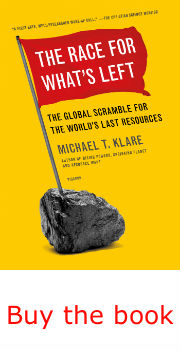
klarepbk2012For top industry officials like O’Reilly, it seemed evident that Big Oil had no choice in the matter. It would have to invest those needed trillions in tough-oil projects or lose ground to other sources of energy, drying up its stream of profits. True, the cost of extracting unconventional oil would be much greater than from easier-to-reach conventional reserves (not to mention more environmentally hazardous), but that would be the world’s problem, not theirs. “Collectively, we are stepping up to this challenge,” O’Reilly declared. “The industry is making significant investments to build additional capacity for future production.”

On this basis, Chevron, Exxon, Royal Dutch Shell, and other major firms indeed invested enormous amounts of money and resources in a growing unconventional oil and gas race, an extraordinary saga I described in my book The Race for What’s Left. Some, including Chevron and Shell, started drilling in the deep waters of the Gulf of Mexico; others, including Exxon, commenced operations in the Arctic and eastern Siberia. Virtually every one of them began exploiting U.S. shale reserves via hydro-fracking.

Only one top executive questioned this drill-baby-drill approach: John Browne, then the chief executive of BP. Claiming that the science of climate change had become too convincing to deny, Browne argued that Big Energy would have to look “beyond petroleum” and put major resources into alternative sources of supply. “Climate change is an issue which raises fundamental questions about the relationship between companies and society as a whole, and between one generation and the next,” he had declared as early as 2002. For BP, he indicated, that meant developing wind power, solar power, and biofuels.

Browne, however, was eased out of BP in 2007 just as Big Oil’s output-maximizing business model was taking off, and his successor, Tony Hayward, quickly abandoned the “beyond petroleum” approach. “Some may question whether so much of the [world’s energy] growth needs to come from fossil fuels,” he said in 2009. “But here it is vital that we face up to the harsh reality [of energy availability].” Despite the growing emphasis on renewables, “we still foresee 80% of energy coming from fossil fuels in 2030.”

Under Hayward’s leadership, BP largely discontinued its research into alternative forms of energy and reaffirmed its commitment to the production of oil and gas, the tougher the better. Following in the footsteps of other giant firms, BP hustled into the Arctic, the deep water of the Gulf of Mexico, and Canadian tar sands, a particularly carbon-dirty and messy-to-produce form of energy. In its drive to become the leading producer in the Gulf, BP rushed the exploration of a deep offshore field it called Macondo, triggering the Deepwater Horizon blow-out of April 2010 and the devastating oil spill of monumental proportions that followed.

Over the Cliff

By the end of the first decade of this century, Big Oil was united in its embrace of its new production-maximizing, drill-baby-drill approach. It made the necessary investments, perfected new technology for extracting tough oil, and did indeed triumph over the decline of existing, “easy oil” deposits. In those years, it managed to ramp up production in remarkable ways, bringing ever more hard-to-reach oil reservoirs online.

According to the Energy Information Administration (EIA) of the U.S. Department of Energy, world oil production rose from 85.1 million barrels per day in 2005 to 92.9 million in 2014, despite the continuing decline of many legacy fields in North America and the Middle East. Claiming that industry investments in new drilling technologies had vanquished the specter of oil scarcity, BP’s latest CEO, Bob Dudley, assured the world only a year ago that Big Oil was going places and the only thing that had “peaked” was “the theory of peak oil.”

That, of course, was just before oil prices took their leap off the cliff, bringing instantly into question the wisdom of continuing to pump out record levels of petroleum. The production-maximizing strategy crafted by O’Reilly and his fellow CEOs rested on three fundamental assumptions: that, year after year, demand would keep climbing; that such rising demand would ensure prices high enough to justify costly investments in unconventional oil; and that concern over climate change would in no significant way alter the equation. Today, none of these assumptions holds true.

Demand will continue to rise — that’s undeniable, given expected growth in world income and population — but not at the pace to which Big Oil has become accustomed. Consider this: in 2005, when many of the major investments in unconventional oil were getting under way, the EIA projected that global oil demand would reach 103.2 million barrels per day in 2015; now, it’s lowered that figure for this year to only 93.1 million barrels. Those 10 million “lost” barrels per day in expected consumption may not seem like a lot, given the total figure, but keep in mind that Big Oil’s multibillion-dollar investments in tough energy were predicated on all that added demand materializing, thereby generating the kind of high prices needed to offset the increasing costs of extraction. With so much anticipated demand vanishing, however, prices were bound to collapse.

Current indications suggest that consumption will continue to fall short of expectations in the years to come. In an assessment of future trends released last month, the EIA reported that, thanks to deteriorating global economic conditions, many countries will experience either a slower rate of growth or an actual reduction in consumption. While still inching up, Chinese consumption, for instance, is expected to grow by only 0.3 million barrels per day this year and next — a far cry from the 0.5 million barrel increase it posted in 2011 and 2012 and its one million barrel increase in 2010. In Europe and Japan, meanwhile, consumption is actually expected to fall over the next two years.

And this slowdown in demand is likely to persist well beyond 2016, suggests the International Energy Agency (IEA), an arm of the Organization for Economic Cooperation and Development (the club of rich industrialized nations). While lower gasoline prices may spur increased consumption in the United States and a few other nations, it predicted, most countries will experience no such lift and so “the recent price decline is expected to have only a marginal impact on global demand growth for the remainder of the decade.”

This being the case, the IEA believes that oil prices will only average about $55 per barrel in 2015 and not reach $73 again until 2020. Such figures fall far below what would be needed to justify continued investment in and exploitation of tough-oil options like Canadian tar sands, Arctic oil, and many shale projects. Indeed, the financial press is now full of reports on stalled or cancelled mega-energy projects. Shell, for example, announced in January that it had abandoned plans for a $6.5 billion petrochemical plant in Qatar, citing “the current economic climate prevailing in the energy industry.” At the same time, Chevron shelved its plan to drill in the Arctic waters of the Beaufort Sea, while Norway’s Statoil turned its back on drilling in Greenland.

There is, as well, another factor that threatens the wellbeing of Big Oil: climate change can no longer be discounted in any future energy business model. The pressures to deal with a phenomenon that could quite literally destroy human civilization are growing. Although Big Oil has spent massive amounts of money over the years in a campaign to raise doubts about the science of climate change, more and more people globally are starting to worry about its effects — extreme weather patterns, extreme storms, extreme drought, rising sea levels, and the like — and demanding that governments take action to reduce the magnitude of the threat.

Europe has already adopted plans to lower carbon emissions by 20% from 1990 levels by 2020 and to achieve even greater reductions in the following decades. China, while still increasing its reliance on fossil fuels, has at least finally pledged to cap the growth of its carbon emissions by 2030 and to increase renewable energy sources to 20% of total energy use by then. In the United States, increasingly stringent automobile fuel-efficiency standards will require that cars sold in 2025 achieve an average of 54.5 miles per gallon, reducing U.S. oil demand by 2.2 million barrels per day. (Of course, the Republican-controlled Congress — heavily subsidized by Big Oil — will do everything it can to eradicate curbs on fossil fuel consumption.)

Still, however inadequate the response to the dangers of climate change thus far, the issue is on the energy map and its influence on policy globally can only increase. Whether Big Oil is ready to admit it or not, alternative energy is now on the planetary agenda and there’s no turning back from that. “It is a different world than it was the last time we saw an oil-price plunge,” said IEA executive director Maria van der Hoeven in February, referring to the 2008 economic meltdown. “Emerging economies, notably China, have entered less oil-intensive stages of development… On top of this, concerns about climate change are influencing energy policies [and so] renewables are increasingly pervasive.”

The oil industry is, of course, hoping that the current price plunge will soon reverse itself and that its now-crumbling maximizing-output model will make a comeback along with $100-per-barrel price levels. But these hopes for the return of “normality” are likely energy pipe dreams. As van der Hoeven suggests, the world has changed in significant ways, in the process obliterating the very foundations on which Big Oil’s production-maximizing strategy rested. The oil giants will either have to adapt to new circumstances, while scaling back their operations, or face takeover challenges from more nimble and aggressive firms.

Michael T. Klare, a TomDispatch regular, is a professor of peace and world security studies at Hampshire College and the author, most recently, of The Race for What’s Left. A documentary movie version of his book Blood and Oil is available from the Media Education Foundation.

Follow TomDispatch on Twitter and join us on Facebook. Check out the newest Dispatch Book, Rebecca Solnit’s Men Explain Things to Me, and Tom Engelhardt’s latest book, Shadow Government: Surveillance, Secret Wars, and a Global Security State in a Single-Superpower World.

Copyright 2015 Michael T. Klare

ooOOoo

Both yesterday’s essay from George Monbiot and Michael Klare’s essay above are not quick reads.  But reading them thoroughly is rewarding because it underlines the degree to which the lives of millions of hard-working citizens comes to naught when big money, power and politics are involved.

Seeking intelligent life!

Continuing from yesterday with the essay from George Monbiot.

The title of today’s post comes from that very silly joke, oft repeated by yours truly, about why is it that Planet Earth has never been visited by aliens?

Answer: Because they have seen no signs of intelligent life!

(Yes, I know, it’s very corny!)

In yesterday’s post about Smart thinking (or the frequent lack of it) I referred to a recent essay from George Monbiot about the United Nations and climate change.  Mr. Monbiot’s essay offers both a startling and hard-to-believe account of the madness, in lieu of a more cruel word, of what could be one of the crucial assemblies for positive change, but isn’t!

I said that the essay would be published in full today and here it is, with the kind permission of Mr. Monbiot.

ooOOoo

Applauding Themselves to Death

10th March 2015

Why the UN climate talks have wasted 23 years, and how this can change.

By George Monbiot, published in the Guardian 11th March 2015

If you visit the website of the UN body that oversees the world’s climate negotiations(1), you will find dozens of pictures, taken across 20 years, of people clapping. These photos should be of interest to anthropologists and psychologists. For they show hundreds of intelligent, educated, well-paid and elegantly-dressed people wasting their lives.

The celebratory nature of the images testifies to the world of make-believe these people inhabit. They are surrounded by objectives, principles, commitments, instruments and protocols, which create a reassuring phantasm of progress while the ship on which they travel slowly founders. Leafing through these photos, I imagine I can almost hear what the delegates are saying through their expensive dentistry. “Darling you’ve re-arranged the deckchairs beautifully. It’s a breakthrough! We’ll have to invent a mechanism for holding them in place, as the deck has developed a bit of a tilt, but we’ll do that at the next conference.”

This process is futile because they have addressed the problem only from one end, and it happens to be the wrong end. They have sought to prevent climate breakdown by limiting the amount of greenhouse gases that are released; in other words, by constraining the consumption of fossil fuels. But, throughout the 23 years since the world’s governments decided to begin this process, the delegates have uttered not one coherent word about constraining production.

Compare this to any other treaty-making process. Imagine, for example, that the Biological Weapons Convention made no attempt to restrain the production or possession of weaponised smallpox and anthrax, but only to prohibit their use. How effective do you reckon it would be? (You don’t have to guess: look at the US gun laws, which prohibit the lethal use of guns but not their sale and carriage. You can see the results in the news every week). Imagine trying to protect elephants and rhinos only by banning the purchase of their tusks and horns, without limiting killing, export or sale. Imagine trying to bring slavery to an end not by stopping the transatlantic trade, but by seeking only to discourage people from buying slaves once they had arrived in the Americas. If you want to discourage a harmful trade, you must address it at both ends: production and consumption. Of the two, production is the most important.

The extraction of fossil fuels is a hard fact. The rules governments have developed to prevent their use are weak, inconsistent and negotiable. In other words, when coal, oil and gas are produced, they will be used. Continued production will overwhelm attempts to restrict consumption. Even if efforts to restrict consumption temporarily succeed, they are likely to be self-defeating. A reduction in demand when supply is unconstrained lowers the price, favouring carbon-intensive industry.

You can search through the UN’s website for any recognition of this issue, but you would be wasting your time. In its gushing catalogue of self-congratulation(2), at Kyoto, Doha, Bali, Copenhagen, Cancun, Durban, Lima and all stops en route, the phrase “fossil fuel” does not occur once. Nor do the words coal or oil. But gas: oh yes, there are plenty of mentions of gas. Not natural gas, of course, but of greenhouse gases, the sole topic of official interest.

The closest any of the 20 international conferences convened so far have come to acknowledging the problem is in the resolution adopted in Lima in December last year. It pledged “cooperation” in “the phasing down of high-carbon investments and fossil fuel subsidies”(3), but proposed no budget, timetable or any instrument or mechanism required to make it happen. It’s progress of a sort, I suppose, and perhaps, after just 23 years, we should be grateful.

There is nothing random about the pattern of silence that surrounds our lives. Silences occur where powerful interests are at risk of exposure. They protect these interests from democratic scrutiny. I’m not suggesting that the negotiators decided not to talk about fossil fuels, or signed a common accord to waste their lives. Far from it: they have gone to great lengths to invest their efforts with the appearance of meaning and purpose. Creating a silence requires only an instinct for avoiding conflict. It is a conditioned and unconscious reflex; part of the package of social skills that secures our survival. Don’t name the Devil for fear that you’ll summon him.

Breaking such silences requires a conscious and painful effort. I remember as if it were yesterday how I felt when I first raised this issue in the media(4). I had been working with a group of young activists in Wales, campaigning against opencast coal mines(5). Talking it over with them, it seemed so obvious, so overwhelming, that I couldn’t understand why it wasn’t on everyone’s lips. Before writing about it, I circled the topic like a dog investigating a suspicious carcass. Why, I wondered, is no one touching this? Is it toxic?

You cannot solve a problem without naming it. The absence of official recognition of the role of fossil fuel production in causing climate change – blitheringly obvious as it is – permits governments to pursue directly contradictory policies. While almost all governments claim to support the aim of preventing more than 2°C of global warming, they also seek to “maximise economic recovery” of their fossil fuel reserves. (Then they cross their fingers, walk three times widdershins around the office and pray that no one burns it). But few governments go as far as the UK has gone.

In the Infrastructure Act that received royal assent last month, maximising the economic recovery of petroleum from the UK’s continental shelf became a statutory duty(6). Future governments are now legally bound to squeeze every possible drop out of the ground.

The idea came from a government review conducted by Sir Ian Wood, the billionaire owner of an inherited company – the Wood Group – that provides services to the oil and gas industry. While Sir Ian says his recommendations “received overwhelming industry support”(7), his team interviewed no one outside either the oil business or government. It contains no sign that I can detect of any feedback from environment groups or scientists.

His review demanded government powers to enhance both the exploration of new reserves and the exploitation of existing ones. This, it insisted, “will help take us closer to the 24 billion [barrel] prize potentially still to come.” The government promised to implement his recommendations in full and without delay(8). In fact it went some way beyond them. It is prepared to be ruthlessly interventionist when promoting climate change, but not when restraining it.

During December’s climate talks in Lima, the UK’s energy secretary, Ed Davey, did something unwise. He broke the silence. He warned that if climate change policies meant that fossil fuel reserves could no longer be exploited, pension funds could be investing in “the sub-prime assets of the future”(9). Echoing the Bank of England and financial analysts such as the Carbon Tracker Initiative, Mr Davey suggested that if governments were serious about preventing climate breakdown, fossil fuel could become a stranded asset.

This provoked a furious response from the industry. The head of Oil and Gas UK wrote to express his confusion(10), pointing out that Mr Davey’s statements come “at a time when you, your Department and the Treasury are putting great effort into [making] the UK North Sea more attractive to investors in oil and gas, not less. I’m intrigued to understand how such opposing viewpoints can be reconciled.” He’s not the only one. Ed Davey quickly explained that his comments were not to be taken seriously, as “I did not offer any suggestions on what investors should choose to do.”(11)

Barack Obama has the same problem. During a television interview last year, he confessed that “We’re not going to be able to burn it all.”(12) So why, he was asked, has his government been encouraging ever more exploration and extraction of fossil fuels? His administration has opened up marine oil exploration from Florida to Delaware – in waters that were formally off-limits(13). It has increased the number of leases sold for drilling on federal lands and, most incongruously, rushed through the process that might, by the end of this month, enable Shell to prospect in the highly vulnerable Arctic waters of the Chukchi Sea(14).

Similar contradictions beset most governments with environmental pretentions. Norway, for example, intends to be “carbon neutral” by 2030. Perhaps it hopes to export its entire oil and gas output, while relying on wind farms at home(15). A motion put to the Norwegian parliament last year to halt new drilling because it is incompatible with Norway’s climate change policies was defeated by 95 votes to 3(16).

Obama explained that “I don’t always lead with the climate change issue because if you right now are worried about whether you’ve got a job or if you can pay the bills, the first thing you want to hear is how do I meet the immediate problem?”(17)

Money is certainly a problem, but not necessarily for the reasons Obama suggested. The bigger issue is the bankrolling of politics by big oil and big coal(18), and the tremendous lobbying power they purchase. These companies have, in the past, financed wars to protect their position(19); they will not surrender the bulk of their reserves without a monumental fight. This fight would test the very limits of state power; I wonder whether our nominal democracies would survive it. Fossil fuel companies have become glutted on silence: their power has grown as a result of numberless failures to challenge and expose them. It’s no wonder that the manicured negotiators at the UN conferences, so careful never to break a nail, have spent so long avoiding the issue.

I believe there are ways of resolving this problem, ways that might recruit other powerful interests against these corporations. For example, a global auction in pollution permits would mean that governments had to regulate just a few thousand oil refineries, coal washeries, gas pipelines and cement and fertiliser factories, rather than the activities of 7 billion people(20). It would create a fund from the sale of permits that’s likely to run into trillions: money that could be used for anything from renewable energy to healthcare. By reducing fluctations in the supply of energy, it would deliver more predictable prices, that many businesses would welcome. Most importantly, unlike the current framework for negotiations, it could work, producing a real possibility of averting climate breakdown.

Left to themselves, the negotiators will continue to avoid this issue until they have wasted everyone else’s lives as well as their own. They keep telling us that the conference in Paris in December is the make or break meeting (presumably they intend to unveil a radical new deckchair design). We should take them at their word, and demand that they start confronting the real problem.

With the help of George Marshall at the Climate Outreach and Information Network, I’ve drafted a paragraph of the kind that the Paris agreement should contain. It’s far from perfect, and I would love to see other people refining it. But, I hope, it’s a start:

“Scientific assessments of the carbon contained in existing fossil fuel reserves suggest that full exploitation of these reserves is incompatible with the agreed target of no more than 2°C of global warming. The unrestricted extraction of these reserves undermines attempts to limit greenhouse gas emissions. We will start negotiating a global budget for the extraction of fossil fuels from existing reserves, as well as a date for a moratorium on the exploration and development of new reserves. In line with the quantification of the fossil carbon that can be extracted without a high chance of exceeding 2°C of global warming, we will develop a timetable for annual reductions towards that budget. We will develop mechanisms for allocating production within this budget and for enforcement and monitoring.”

If something of that kind were to emerge from Paris, it will not have been a total waste of time, and the delegates would be able to congratulate themselves on a real achievement rather than yet another false one. Then, for once, they would deserve their own applause.

References:

1. http://unfccc.int/2860.php

2. See the section titled “Key Steps”.

3. http://unfccc.int/resource/docs/2014/cop20/eng/10a01.pdf

4. http://www.theguardian.com/commentisfree/2007/dec/11/comment.greenpolitics

5. http://www.theguardian.com/commentisfree/2007/dec/05/beartoherethetruthyouvespoken

6. http://www.legislation.gov.uk/ukpga/2015/7/part/6/crossheading/recovery-of-uk-petroleum/enacted

7. http://www.woodreview.co.uk/documents/UKCS%20Maximising%20Recovery%20Review%20FINAL%2072pp%20locked.pdf

8. https://www.gov.uk/government/groups/wood-review-implementation-team

9. http://www.telegraph.co.uk/finance/newsbysector/energy/11277546/Fossil-fuel-investing-a-risk-to-pension-funds-says-Ed-Davey.html

10. https://www.scribd.com/doc/256034152/Malcom-Webb-to-Secretary-of-State

11. https://www.scribd.com/doc/256034194/Secretary-of-State-to-Malcolm-Webb

12. http://www.nytimes.com/2014/06/08/opinion/sunday/friedman-obama-on-obama-on-climate.html?_r=1

13. http://www.motherjones.com/environment/2014/09/how-obama-became-oil-president-gas-fracking-drill

14. http://www.tomdispatch.com/post/175963/tomgram%3A_subhankar_banerjee%2C_arctic_nightmares/

15. http://www.newscientist.com/article/dn24299-ipcc-digested-just-leave-the-fossil-fuels-underground.html

16. https://stortinget.no/no/Saker-og-publikasjoner/Saker/Sak/?p=59412

17. http://www.nytimes.com/2014/06/08/opinion/sunday/friedman-obama-on-obama-on-climate.html?_r=1

18. http://www.theguardian.com/environment/georgemonbiot/2012/aug/02/climate-change-political-funding-us

19. http://en.mercopress.com/2008/06/15/formal-end-to-oil-companies-proxy-chaco-war-1932-35

20. http://www.kyoto2.org/

ooOOoo

What a funny lot we can be!