Category: Capitalism

Can we really avoid the ‘train crash’?

The idea that humanity will not prevent the approaching disaster is beyond belief!

One of the results of all you great people signing up to follow Learning from Dogs is that it encourages me to share things that strike me as so, so important.

Another of the results in there being, as of today, 3,349 following this place, is that I get the sense of what many of you good people also feel is important. Ergo, it is clear to me, clear beyond doubt, that caring and loving a dog or two makes you a person who cares and loves passionately this beautiful planet that is our home.

The emotion that is spilling out of me via these words to you is a result of having just read an essay published recently on The Conversation site and shared with you today.

Directly, it has nothing to do with our dear dogs. Yet, in a way, it does!

ooOOoo

7.5 billion and counting: How many humans can the Earth support?

By Associate Professor of Mathematics, College of the Holy Cross, July 9th 2018.

Humans are the most populous large mammal on Earth today, and probably in all of geological history. This World Population Day, humans number in the vicinity of 7.5 to 7.6 billion individuals.

Can the Earth support this many people indefinitely? What will happen if we do nothing to manage future population growth and total resource use? These complex questions are ecological, political, ethical – and urgent. Simple mathematics shows why, shedding light on our species’ ecological footprint.

The mathematics of population growth

In an environment with unlimited natural resources, population size grows exponentially. One characteristic feature of exponential growth is the time a population takes to double in size.

Exponential growth of world population

It took 127 years for the world population to double from one billion to two. By contrast, it took only 47 years, from 1927 to 1974, to double from two billion to four. Since 1960, world population has grown by about one billion every 13 years. Each point represents an additional one billion people.

[Ed: Text taken from a chart displayed in the article.]

Exponential growth tends to start slowly, sneaking up before ballooning in just a few doublings.

To illustrate, suppose Jeff Bezos agreed to give you one penny on Jan. 1, 2019, two pennies on Feb. 1, four on March 1, and so forth, with the payment doubling each month. How long would his $100 billion fortune uphold the contract? Take a moment to ponder and guess.

After one year, or 12 payments, your total contract receipts come to US$40.95, equivalent to a night at the movies. After two years, $167,772.15 – substantial, but paltry to a billionaire. After three years, $687,194,767.35, or about one week of Bezos’ 2017 income.

The 43rd payment, on July 1, 2022, just short of $88 billion and equal to all the preceding payments together (plus one penny), breaks the bank.

Real population growth

For real populations, doubling time is not constant. Humans reached 1 billion around 1800, a doubling time of about 300 years; 2 billion in 1927, a doubling time of 127 years; and 4 billion in 1974, a doubling time of 47 years.

On the other hand, world numbers are projected to reach 8 billion around 2023, a doubling time of 49 years, and barring the unforeseen, expected to level off around 10 to 12 billion by 2100.

This anticipated leveling off signals a harsh biological reality: Human population is being curtailed by the Earth’s carrying capacity, the population at which premature death by starvation and disease balances the birth rate.

World population projections

In 2020, the UN predicts that there will be 7,795,482 people worldwide.

[Ed: Text taken from a chart displayed in the article.]

Ecological implications

Humans are consuming and polluting resources – aquifers and ice caps, fertile soil, forests, fisheries and oceans – accumulated over geological time, tens of thousands of years, or longer.

Wealthy countries consume out of proportion to their populations. As a fiscal analogy, we live as if our savings account balance were steady income.

According to the Worldwatch Institute, an environmental think tank, the Earth has 1.9 hectares of land per person for growing food and textiles for clothing, supplying wood and absorbing waste. The average American uses about 9.7 hectares.

These data alone suggest the Earth can support at most one-fifth of the present population, 1.5 billion people, at an American standard of living.

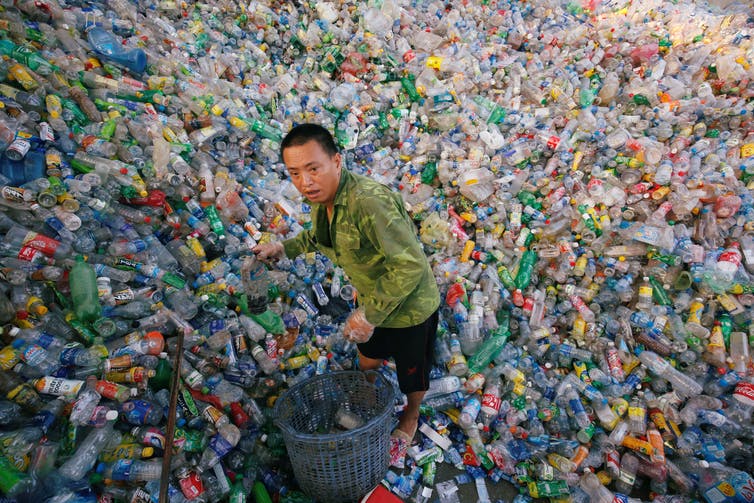
A man works recycling plastic bottles outside Hanoi, Vietnam. REUTERS/Kham

Water is vital. Biologically, an adult human needs less than 1 gallon of water daily. In 2010, the U.S. used 355 billion gallons of freshwater, over 1,000 gallons (4,000 liters) per person per day. Half was used to generate electricity, one-third for irrigation, and roughly one-tenth for household use: flushing toilets, washing clothes and dishes, and watering lawns.

If 7.5 billion people consumed water at American levels, world usage would top 10,000 cubic kilometers per year. Total world supply – freshwater lakes and rivers – is about 91,000 cubic kilometers.

World Health Organization figures show 2.1 billion people lack ready access to safe drinking water, and 4.5 billion lack managed sanitation. Even in industrialized countries, water sources can be contaminated with pathogens, fertilizer and insecticide runoff, heavy metals and fracking effluent.

Freedom to choose

Though the detailed future of the human species is impossible to predict, basic facts are certain. Water and food are immediate human necessities. Doubling food production would defer the problems of present-day birth rates by at most a few decades. The Earth supports industrialized standards of living only because we are drawing down the “savings account” of non-renewable resources, including fertile topsoil, drinkable water, forests, fisheries and petroleum.

The drive to reproduce is among the strongest desires, both for couples and for societies. How will humans reshape one of our most cherished expectations – “Be fruitful and multiply” – in the span of one generation? What will happen if present-day birth rates continue?

Population stays constant when couples have about two children who survive to reproductive age. In some parts of the developing world today, couples average three to six children.

We cannot wish natural resources into existence. Couples, however, have the freedom to choose how many children to have. Improvements in women’s rights, education and self-determination generally lead to lower birth rates.

As a mathematician, I believe reducing birth rates substantially is our best prospect for raising global standards of living. As a citizen, I believe nudging human behavior, by encouraging smaller families, is our most humane hope.

ooOOoo

This essay from Professor Hwang is one of those articles that one frequently sees online that comes across as really interesting but, in the end, only gets a skim read; at best.

So if you didn’t fully comprehend what the good Professor included then ‘Stop‘ and go back and read it all very carefully.

Don’t just be alarmed at Professor Hwang writing:

This anticipated leveling off signals a harsh biological reality: Human population is being curtailed by the Earth’s carrying capacity, the population at which premature death by starvation and disease balances the birth rate.

Or:

Though the detailed future of the human species is impossible to predict, basic facts are certain. Water and food are immediate human necessities. Doubling food production would defer the problems of present-day birth rates by at most a few decades. The Earth supports industrialized standards of living only because we are drawing down the “savings account” of non-renewable resources, including fertile topsoil, drinkable water, forests, fisheries and petroleum.

Be concerned that each and every one of us, as in you and me, can only prevent the train crash by making a change in how we live: Today!

Otherwise ….

In so many ways we are such a clever and inventive race, capable of exploring the farthest reaches of outer space and the innermost aspects of quantum mechanics. Surely we must learn to live sustainably on beautiful Planet Earth!

Just say “No!”

We have to keep banging this drum on behalf of our wildlife!

OK! This new essay from George Monbiot applies specifically to the United Kingdom. But there’s no question in my mind that awareness of what is going in the U.K. will be important for readers in many other countries.

ooOOoo

Incompetence By Design

As state bodies are dismantled, corporations are freed to rip the living world apart

By George Monbiot, published in the Guardian 4th July 2018

It feels like the collapse of the administrative state – and this is before Brexit. One government agency after another is losing its budget, its power and its expertise. The result, for corporations and the very rich, is freedom from the restraint of law, freedom from the decencies they owe to other people, freedom from democracy. The public protections that constrain their behaviour are being dismantled.

An example is the cascading decline in the protection of wildlife and environmental quality. The bodies charged with defending the living world have been so enfeebled that they now scarcely exist as independent entities. Natural England, for example, has been reduced to a nodding dog in the government’s rear window.

Its collapse as an autonomous agency is illuminated by the case that will be heard next week in the High Court, where two ecologists, Tom Langton and Dominic Woodfield, are challenging its facilitation of the badger cull. That the cull is a senseless waste of life and money is well established, but this is only one of the issues being tested. Another is that Natural England, which is supposed to assess whether the shooting of badgers causes wider environmental harm, appears incapable of discharging its duties.

As badger killing spreads across England, it intrudes upon ever more wildlife sites, some of which protect animals that are highly sensitive to disturbance. Natural England is supposed to determine whether allowing hunters to move through these places at night and fire their guns has a detrimental effect on other wildlife, and what the impact of removing badgers from these ecosystems might be. The claimants allege that it has approved the shooting without meaningful assessments.

Some of its decisions, they maintain, are farcical. In Dorset, for example, Natural England assumed that overwintering hen harriers and merlins use only one out of all the sites that have been designated for their protection, and never stray from it. It makes the same assumption about the Bewick’s swans that winter around the Severn estuary. That birds fly, enabling them to move from one site to another, appears to have been overlooked.

Part of the problem, the claimants argue, is that staff with specialist knowledge have been prevented from making decisions. The location of the badger cull zones is such a closely guarded secret that Natural England’s local staff are not allowed to see the boundaries. As a result, they can make no meaningful assessment of what the impact might be. Instead, the decisions are made in distant offices by people who have not visited the sites.

I wanted to ask Natural England about this, but its external communications have been shut down by the government: any questions now have to be addressed to Michael Gove’s environment department, Defra. Defra told me “staff carrying out this work have all the necessary information. It would be inappropriate to comment on an ongoing legal matter.” How can Natural England be an independent body when the government it is supposed to monitor speaks on its behalf?

Another example of how far Natural England has fallen is the set of deals it has struck with grouse moor owners, allowing them to burn protected habitats, kill protected species and build roads across sites that are supposed to be set aside for wildlife. For several years, the redoubtable conservationist Mark Avery has been fighting these decisions. This May, Natural England conceded, in effect, that he was right. The agency that is meant to protect our wild places has been colluding in their destruction.

A correspondent from within Natural England tells me its staff are so demoralised that it has almost ceased to function. “Enforcement, for example, is close to non-existent … Gove seems to have somehow both raised the profile of environmental issues whilst simultaneously stripping the resources … it has never been as bad as this.”

In March, the House of Lords reported that Natural England’s budget has been cut by 44% since it was founded in 2006. The cuts have crippled both its independence and its ability to discharge its duties. It has failed to arrest the catastrophic decline in our wildlife, failed to resist the housebuilders trashing rare habitats and abandoned its regulatory powers in favour of useless voluntary agreements. As if in response, the government cut the agency’s budget by a further 14%.

Dominic Woodfield, one of the claimants in the court case next week, argues that Natural England has been “on death row” since it applied the law at Lodge Hill in Kent, where the Ministry of Defence was hoping to sell Britain’s best nightingale habitat to a housing developer. Natural England had no legal choice but to designate this land as a site of scientific interest, hampering the government’s plans. As the government slashed its budget and curtailed its independence, the agency’s disastrous response has been to try to save itself through appeasement. But all this has done is to alienate its defenders, reduce its relevance and hasten its decline. “There are still good people in Natural England. But they’re broken. They talk very slowly because they’re thinking very carefully about everything they say.”

If this is happening before we leave the European Union, I can only imagine where we will stand without the protection of European law. The environmental watchdog that, according to Michael Gove, will fill the role now played by the European Commission, will know, like Natural England, that its budget is provided by the government and can be cut at the government’s discretion. What is to prevent it from being nobbled as other agencies have been?

Already, the deliberate mutilating of the administrative state, delivering incompetence by design, has released landowners, housebuilders and assorted polluters from regulatory restraint. Only through European law have government agencies been forced to discharge their duties. Brexit strips away this defence. And if, as some propose, it paves the way for One Nation Under Gove, we should, the evidence so far suggests, be even more alarmed.

But some of us are now mobilising to turn the great enthusiasm for wildlife and natural beauty in this country into political action, and to fight the dismantling of the laws that protect our precious wild places. Watch this space.

http://www.monbiot.com

ooOOoo

On George Monbiot’s blog home page is this quote:

“I love not man the less, but Nature more.”

We must all love Nature more!

Defending the world we love!

Mr. George Monbiot offers a deeply personal, deeply powerful reason to change!

I have long followed George Monbiot’s writings. Both for his writing skills and the many times he really spells it out. As in spelling out the madness of our present ways! Frequently I find him very inspiring. However, his latest essay In Memoriam is one of the best ones that I have read. It is a plea from George Monbiot to see what we are doing to our wildlife and our ecosystems.

It is republished here with George Monbiot’s very kind permission. I have taken the liberty of including a few recent photographs of the wildlife that graces our acres here in Oregon.

ooOOoo

In Memoriam

As our wildlife and ecosystems collapse, remembering is a radical act.

By George Monbiot, published in the Guardian 29th June 2018

It felt as disorientating as forgetting my pin number. I stared at the caterpillar, unable to attach a name to it. I don’t think my mental powers are fading: I still possess an eerie capacity to recall facts and figures and memorise long screeds of text. This is a specific loss. As a child and young adult, I delighted in being able to identify almost any wild plant or animal. And now it has gone. This ability has shrivelled from disuse: I can no longer identify them because I can no longer find them.

Perhaps this forgetfulness is protective. I have been averting my eyes. Because I cannot bear to see what we have done to nature, I no longer see nature itself. Otherwise, the speed of loss would be unendurable. The collapse can be witnessed from one year to the next. The swift decline of the swift (down 25% in five years) is marked by the loss of the wild screams that, until very recently, filled the skies above my house. My ambition to see the seabird colonies of the Shetlands and St Kilda has been replaced by the intention never to visit those islands during the breeding season: I could not bear to see the empty cliffs, whose populations have crashed by some 90% this century.

I have lived long enough to witness the vanishing of wild mammals, butterflies, mayflies, songbirds and fish that I once feared my grandchildren would experience: it has all happened faster than even the pessimists predicted. Walking in the countryside or snorkelling in the sea is now as painful to me as an art lover would find her visits to a gallery, if on every occasion another Old Master had been cut from its frame.

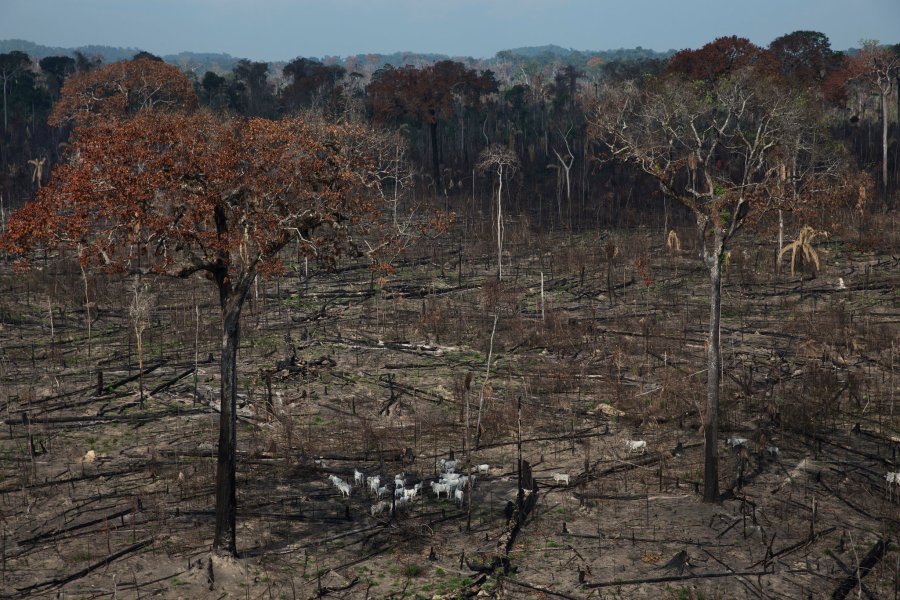
The cause of this acceleration is no mystery. The United Nations reports that our use of natural resources has tripled in 40 years. The great expansion of mining, logging, meat production and industrial fishing is cleansing the planet of its wild places and natural wonders. What economists proclaim as progress, ecologists recognise as ruin.

This is what has driven the quadrupling of oceanic dead zones since 1950; the “biological annihilation” represented by the astonishing collapse of vertebrate populations; the rush to carve up the last intact forests; the vanishing of coral reefs, glaciers and sea ice; the shrinkage of lakes, the drainage of wetlands. The living world is dying of consumption.

We have a fatal weakness: a failure to perceive incremental change. As natural systems shift from one state to another, we almost immediately forget what we have lost. I have to make a determined effort to remember what I saw in my youth. Could it really be true that every patch of nettles, at this time of year, was reamed with caterpillar holes? That flycatchers were so common I scarcely gave them a second glance? That the rivers, around the autumn equinox, were almost black with eels?

Others seem oblivious. When I have criticised current practice, farmers have sent me images of verdant monocultures of perennial rye grass, with the message “look at this and try telling me we don’t look after nature”. It’s green, but it’s about as ecologically rich as an airport runway. One of my readers, Michael Groves, records the shift he has seen in the field beside his house, where the grass, that used to be cut for hay, is now cut for silage. Watching the cutters being driven at great speed across the field, he realised that any remaining wildlife would be shredded. Soon afterwards, he saw a roe deer standing in the mown grass. She stayed throughout the day and the following night. When he went to investigate, he found her fawn, its legs amputated. “I felt sickened, angry and powerless … how long had it taken to die?”. That “grass-fed meat” the magazines and restaurants fetishise? This is the reality.

When our memories are wiped as clean as the land, we fail to demand its restoration. Our forgetting is a gift to industrial lobby groups and the governments that serve them. Over the past few months, I have been told repeatedly that the environment secretary, Michael Gove, gets it. I have said so myself: he genuinely seems to understand what the problems are and what needs to be done. Unfortunately, he doesn’t do it.

He cannot be blamed for all of the fiascos to which he has put his name. The 25-year plan for nature was, it seems, gutted by the Prime Minister’s office. The environmental watchdog he proposed was defanged by the Treasury (it has subsequently been lent some dentures by Parliament). Other failures are all his own work. In response to lobbying from sheep farmers, he has allowed ravens, a highly intelligent and long-lived species just beginning to recover from centuries of persecution, to be killed once more. There are 24 million sheep in this country and 7400 pairs of ravens. Why must all other species give way to the white plague?

Responding to complaints that most of our national parks are wildlife deserts, Gove set up a commission to review them. But governments choose their conclusions in advance, through the appointments they make. A more dismal, backward-looking and uninspiring panel would be hard to find: not one of its members, as far as I can tell, has expressed a desire for significant change in our national parks, and most of them, if their past statements are anything to go by, are determined to keep them in their sheepwrecked and grouse-trashed state.

Now the lobbyists demand a New Zealand settlement for farming after Brexit: deregulated, upscaled, hostile to both wildlife and the human eye. If they get their way, no landscape, however treasured, will be safe from broiler sheds and mega-dairy units, no river protected from run-off and pollution, no songbird saved from local extinction. The merger between Bayer and Monsanto brings together the manufacturer of the world’s most lethal pesticides with the manufacturer of the world’s most lethal herbicides. Already the concentrated power of these behemoths is a hazard to democracy; together they threaten both political and ecological disaster. Labour’s environment team have scarcely a word to say about any of it. Similarly, the big conservation groups, as usual, have gone missing in inaction.

We forget even our own histories. We fail to recall, for example, that the Dower report, published in 1945, envisaged wilder national parks than we now possess, and that the conservation white paper the government issued in 1947 called for the kind of large-scale protection that is considered edgy and innovative today. Remembering is a radical act.

That caterpillar, by the way, was a six spot burnet: the larva of a stunning iridescent black and pink moth that once populated my neighbourhood and my mind. I will not allow myself to forget again: I will work to recover the knowledge I have lost. For I now see that without the power of memory, we cannot hope to defend the world we love.

http://www.monbiot.com

ooOOoo

“… the world we love.”

No better illustrated each morning as my world reaches out to me with love and trust.

Thank you, George, for speaking out so powerfully!

Going Vegan!

More evidence that supports the sense, the very great sense, in going vegan!

Some three weeks ago, on June 15th to be exact, I published a post called On Veganism. Jean and I had just watched a film What The Health and what it presented in terms of eating chicken and fish convinced us to immediately go the final step, as in going from being vegetarians to vegans.

Many of you offered kind words and encouragement. Colette Bytes included a link to a blog post that she published in April, 2017. It is called Vegan Future and with her kind permission that post is republished today.

It is chock full of information and videos so do settle down and let all the information provided by Colette ‘speak’ to you! This is really worthy of an evening spent watching all the videos!

ooOOoo

Vegan Future

by Colette Bytes, April 21st 2017

Seventeen percent of human caused greenhouse gases,  come from meat and dairy production. It is actually a greater figure than all CO2 produced by global transportation!

Posted by The Daily Conversation

But is it enough, just to reduce our animal consumption, or should we look at the compelling evidence that we need a Vegan future!

Animal and Environmental Ethics

On a previous blog, I mention the documentary ‘Earthlings’ narrated by Hollywood actor, and lifelong Vegan, Joachim Phoenix. ‘Earthlings’ is the definitive Vegan film on exposing the meat and dairy industry in the US. And while other countries may not have factory farming on such a broad scale, many of the same procedures occur on a smaller scale. No member of the general public is allowed into the kill sections of slaughter houses for a very good reason. It is horrendous to watch a fear-ridden animal that wants to live, face its painful death.

This filmed reaction of a viewer watching ‘Earthlings’ is an average reaction. It is a moving experience for anyone with compassion. Posted by Raw Vegan, Fruitarian, Michael Lanfield, it is worth watching if you cannot bring yourself to actually watch the devastating, but common images of the meat, dairy and egg industry.

Switching your food intake to a plant-based Vegan diet, (eliminating all meat, dairy, egg and seafood), is the biggest change with the most impact that you can possibly make to reduce climate warming, land and water degradation, extinction rates, deforestation, pollution, human and animal suffering, and war (often over lack of food and water resources). And It is the number one thing you can do to improve your own health. It can also cut the cost of your food bill while you continue to eat a healthy diet.

There is no downside to this change if you keep your diet healthy and balanced. You can even eat processed plant-based, meat-like products if you want, but they may cost a similar amount to having meat in your diet.

The United Nations has already stated that we need to switch to a plant based diet if we are to survive.

http://www.un.org/apps/news/story.asp?NewsID=53984

So what is holding you back?

Australian, James Aspey, a survivor of thyroid cancer, has become a Vegan Speaker (on ending animal cruelty) with his own Youtube channel, but he is also one of an exponentially growing number of people who have improved their own health through a plant based diet switch.

James Aspey interview posted by Plant Based News

Find out more about James Aspey on his YouTube channel, Facebook, and on his website:
http://www.jamesaspey.com.au/

Healthy Eating

AllPlants interview on Plant Based News

Lots of new Ethical, Healthy Vegan Ready Made meals like this brand are appearing now on Super market shelves. So even if you don’t ‘do cooking’ you can still find nutritious Vegan options. And Vegan restaurants, holidays and lifestyles are all available now.

And new research is beginning to show that meat and dairy are actually toxic to our body.

Meat is a neurotoxin, Posted by 8/10/10 in London

And for when you have time, do listen to this amazing and life changing Cardiologist’s 1:20:00 hrs talk…on your likelihood of developing heart disease, diabetes, and other life threatening diseases on a meat based diet…and also look at doctor Greger’s work and videos too (links below)

Robert Ostfeld, Cardiologist and Director of a US Cardiology Centre. Posted by Jeanne Schumacher, ‘Plant Power’ YouTube channel

More on Dr Ostfeld is available on The Forks over Knives (film) website https://www.forksoverknives.com/contributors/robert-ostfeld/

Elite Athletes and Hollywood Icons
You’d be surprised how many top athletes eat a vegan diet just to be at the top of their sport…Names like Serena and Venus Williams, Novak Djokovic, and Andy Murray, are all Vegans. Winner of the world Strongman competition is Vegan. Many top boxers eat vegan. Look at PlantBased News on YouTube for lots of informative videos on who is Vegan. And see their 100 countdown of awesome Vegan celebrities.

Top 2017 Vegans posted by PlantBased News

Making the change to Vegan

Eating junk plant-based foods is not advisable as it will lead to nutrient deficiencies…and ultimately a disease state, so you can’t survive on potato crisps, popcorn, and bread….there is a responsibility to eat a balanced fresh food diet to be healthy.

You do need to eat proteins (nuts, legumes, grains, beans, some veggies). You will need to supplement with Vitamin B12, a soil- based, active nutrient essential for our brain & nervous system which we do not get in our diet as we no longer forage and eat unwashed food like our ape ancestors. And you may need to supplement Vit D3 for bone health as we no longer spend enough time outside in the sunshine. Essential oil, Omega 3 can be obtained from flax and hemp seeds. The rest, you should be able to get from a ‘good’ Vegan diet with lots of vegetables, fruits, legumes, beans, grains and nuts. Just 15 grams of nuts per day will give you enough protein to be healthy. Eating Kale and other dark leafy plants, beans, whole grain rice, legumes and some nuts, sweet potatoes are all sources of Calcium. The key to health is to have a full, varied selection of whole plant-based food!

Meat and Dairy Industry  Scare Tactics

The Meat and Dairy industry packers are worried that they will lose their industry and are fighting back with their political power and disinformation campaigns designed to scare us, but the smart companies will begin to think about how they can profit from exponential growth in the Vegan food industry.

Corporate Panick, posted by PlantBased News
Research

There are so many online sources to help you buy, and cook a healthy plant-based diet. Just type ‘Vegan Recipies’ into a search engine and you will find fantastic yummy recipes. You will love the variety and the taste of your new diet. And if you are not into cooking,  mainstream supermarkets are now starting to stock a growing variety of vegan ready made meals, and starting to label Vegan choices.

https://plantbasednews.org/

An all round informative website on Vegan trends, news headlines, and increasing popularity of healthy lifestyles including a plant- based diet.
Medical based RESOURCES on how to stay healthy on a Vegan diet

https://nutritionfacts.org/

Dr Michael Greger, MD, author of Best Seller, ‘How Not to Die’ and distributer of free videos and research on how plant based diets affect us. I have followed his work for years and he backs it all up with science based studies…his short videos and reports are packed with hundreds of supportive reports for a plant based diet.

https://www.drmcdougall.com/

Dr McDougal, Author of ‘A Starch Based Diet’ and follower of Nathan Pritikin, one of the forerunners promoting plant based nutrition.

http://www.theveganjunction.com/top-20-plant-based-health-professionals-to-follow/

Vegan Junction list of Plant-Based Diet health professionals
More Videos

Open Your Eyes – Toronto Pig Save posted by Bite-Size-Vegan

How not To Die – plant based diet by Dr Michael Greger
Latest documentaries to look up

Carnage (only on BBC iPlayer)

The Game Changers

Eating our way to Extinction

What the Health!

Plant Pure Nutrition

And there are so many more resources out there ! Join the growing trend to make this a better world for everyone, by making the biggest difference you can when you shop for food. Pick whole, plant-based, foods and kick the ‘animal eating’ habit to be healthy, stop animal cruelty, and save the environment and reduce global greenhouse gases. What could be a more worthy goal?

Why not check out my blog here on ‘Why do We Hurt Animals?

ooOOoo

This is so much more than just a blog post from Colette. It is a fantastic source of information, from a variety of sources, about why it makes such good sense to become a vegan.

I shall include it as a link from the home page of Learning from Dogs so it may serve as a reference long after it was republished today.

Then what about dogs eating a vegan diet? Sounds a bit strange? Maybe not! I shall be exploring that option with Halo, a company based in Florida, who claim:

Can dogs be vegan? Unlike cats, who are obligate carnivores, dogs can be fed a vegan diet as long as it’s high quality and nutritionally balanced like Halo® Garden of Vegan® dog food.

More on this next week.

In the meantime, I’m taking a day off tomorrow but please do read George Monbiot’s latest post, being republished here on Friday, 6th July.

We truly are what we eat!

That’s both us and our beloved dogs!

Today through to Wednesday is all about increasing awareness of the risk of not being ultra-careful as to what we put into the mouths of both ourselves and our beloved dogs.

Thus, on Wednesday I will be republishing a recent post from Colette about the power of eating a vegan diet. Tomorrow will be a post about curbing the widespread use of neonicotinoid pesticides. Today is a republication of an important article that appeared on the Healthy Pets website on June 25th. (Thank you Belinda for the ‘heads up’!)

ooOOoo

Dozens of Dog Deaths Now Linked to This Pentobarbital-Tainted Food

By Dr. Karen Shaw Becker, June 25th, 2018

Earlier this year I wrote about a second incident of the euthanasia drug pentobarbital discovered in dog food. The first incident was in 2017 and involved Evanger’s formulas. Then came the more recent recall of Gravy Train tainted with pentobarbital.

Background on Contaminated Gravy Train Dog Food

The Gravy Train situation was investigated by WJLA ABC 7 in Washington D.C. The station teamed up with Ellipse Analytics, a laboratory that specializes in testing food for contami­nants. They tested 62 samples of over 24 brands of wet (canned) dog food for pentobarbital.

“After months of tests and re-tests, one brand repeatedly came back positive for pentobarbital,” says WJLA. “In total, we tested 15 cans of Gravy Train. Nine cans — 60 percent of the sample — were positive for pentobarbital. And while the levels detected were not lethal, under federal law they are also not permitted at any concentration.”1

The WJLA investigation resulted in a class action lawsuit against J.M. Smucker/Big Heart Pet Brands filed on February 9 of this year in a U.S. District Court in California by a Missouri woman who believes Gravy Train may have contributed to the death of her Miniature Schnauzer.2

The lawsuit wants Smucker/Big Heart to “… disclose its pet food sold throughout the United States is adulterated and contains pentobarbital and to restore monies to the consumers and businesses who purchased the Contaminated Dog Foods ….”3

Later in February, Smucker/Big Heart voluntarily withdrew 10 varieties of Gravy Train dog food, along with certain shipments of Kibbles ‘N Bits, Ol’ Roy and Skippy.4 A complete list of the products pulled from store shelves — all of it canned dog food — can be found here. In early March, the FDA notified Smucker/Big Heart that its voluntary removal of products was now considered a recall, based on a test confirming the presence of pentobarbital in the tallow the company used in the recalled pet foods.

The Plot Thickens

My friend and pet food consumer advocate Susan Thixton of Truth About Pet Food recently wrote an update regarding the class action lawsuit, noting a Master Consolidated Complaint filed on May 1.5 The newly filed document names 11 additional plaintiffs (pet owners), and as Susan says, “… reveals some damning information against pet food manufacturer Smucker.”6

The updated filing asserts that “… Defendant [Smucker/Big Heart] knew the Contaminated Dog Foods contained pentobarbital.” The plaintiffs did not make this claim in the initial lawsuit, which means that between February 9 and May 1, their investigation revealed additional unfavorable details about Smucker’s business practices.

On February 16, 2018, the FDA issued an alert to consumers about the recalled Gravy Train dog foods, stating very clearly that pentobarbital should not be in pet food.

A week or so later, Smucker issued a press release stating it had identified the source of the pentobarbital and described it as “a single ingredient (beef fat).” According to the updated filing, Smucker was less than forthcoming about what they tested to arrive at their conclusion:

“Defendant did not identify what exactly was tested — whether it was cans of the food pulled from the shelves, cans shipped directly from the manufacturing plant, and/or isolated samples of beef fat from the supplier. Defendant did claim the tested beef fat was sourced from cattle from the United States. However, Defendant has offered no information about how it identified this particular ingredient or whether it tested any other ingredients included in the recalled pet foods.

Defendant also did not specify what animals they tested the Contaminated Dog Foods for beyond cattle. When doing DNA testing, it must be determined beforehand what species will be looked for (i.e. dog, cat, cattle, horse, etc.). Defendant has not disclosed whether its testing looked for dog, cat, or horse DNA.”

In early March, Smucker updated the above statement, claiming the animal fat was from “cow, pig and chicken and no other animal of the nine types tested.” Smucker still didn’t identify what types of animals were included in the testing, nor did it disclose the name of the manufacturing plant and/or supplier that is the suspected source of the tainted raw materials.

Later the same day, Smucker changed its statement yet again, now claiming the source of contamination was pig and chicken fat (no cow this time) and “no other animal of the nine types tested,” again neglecting to name the nine types of animals tested. From the updated filing:

“In the end, over ninety million cans of food manufactured and distributed by Defendant were recalled because of the inclusion of pentobarbital.

Moreover, the testing results showed alarmingly high levels of pentobarbital in the tallow. Specifically, the current supply tested showed levels ranging from 801 ppb to 852 ppb, and the retained sample from 2017 contained pentobarbital at the level of 529 ppb.

Despite this, Defendant has publicly represented that the testing showed ‘extremely low levels of pentobarbital do not pose a threat to pet safety’ but failed to disclose or acknowledge the testing results that showed the high levels of pentobarbital in the tallow.”

Smucker/Big Heart ‘Knew or Recklessly Chose to Ignore That the Contaminated Dog Foods Were Adulterated Pet Food’

Smucker ultimately named the source of the contaminated tallow as a single supplier, JBS USA Holdings, Inc. and its rendering facility. According to the plaintiffs, JBS “knowingly” works with meat byproduct recycling, including animal byproducts not suitable for human consumption.

And in addition, JBS “has been plagued by investigations, recalls, and other red flag situations.” This should have alerted Smucker that it needed to routinely confirm the safety and quality of products purchased from this supplier, especially since it claims to “regularly audit our suppliers and have assurances from them about the quality and specifications of the materials they supply us.” From the updated filing:

“Yet Defendant chose to utilize JBS as a supplier even though it maintains that it keeps rigorous quality and supplier standards from ‘start to finish’ and performs three-tier auditing that includes third party auditors, to ensure pure ingredients and fair labor are used in its products, including the Contaminated Dog Foods.

Given this rigorous auditing process, Defendant knew or recklessly chose to ignore that the Contaminated Dog Foods were adulterated pet food as it retained samples of the tallow that should have been tested based on the claimed practices and standards by Defendant.”

According to Susan Thixton, who’s been conducting her own investigation of Big Pet Feed business practices for years, these clearly shady dealings are commonplace.

“Audits of pet food ingredient suppliers, [and] testing of ingredients for safety and quality are mostly to support a paper trail,” she writes. “Little to no true quality control testing is ever performed.

Truck drivers delivering ingredients to pet food facilities have been instructed to carry in the truck cab ‘clean’ samples provided for testing; not a sample of what is actually delivered to the plant. Drivers have also shared that when a load of pet food ingredients is actually tested and fails, lot numbers are changed and the delivery is then accepted without question.

It has been shared multiple times from multiple individuals — the main goal is to keep the pet food plant in production … not the quality of ingredients.”

At an AAFCO meeting Susan attended a few years ago, pet food company employees shared that manufacturers keep a supply of clean samples on hand in the event regulatory authorities or auditors ask to test ingredients. “Rarely, if ever, are the actual ingredients used in a pet food tested by regulatory or auditors,”she writes.

Naming the Dead

Sadly, the victims of Big Pet Food’s unconscionable business practices and lack of regulatory oversight by the FDA and individual State Departments of Agriculture are innocent pets and their unsuspecting owners. From the Master Consolidated Complaint:

“In August 2017, Plaintiff Sebastiano’s dog became weak and confused, began vomiting, had blood in his stool, lost weight, no longer wanted to eat, and had trouble standing and walking. At only [7] and a half years old, Samson died, on December 4, 2017.

Plaintiff Johnson … fed the Contaminated Dog Foods to his thirteen border collie and Australian shepherd mixes he used as herding dogs for his cattle. Plaintiff Johnson had seven males and six female dogs that ranged from [10] months to approximately [7] years old. … Devastatingly, Plaintiff Johnson lost all thirteen dogs, including one pregnant female, on January 14 and 15, 2018.

At that time, all of his dogs were showing symptoms of kidney failure so the veterinarian recommended that all thirteen be put down. All of the dogs were fed the Contaminated Dog Foods at the same time and all were sick within hours after eating the Contaminated Dog Foods. They subsequently all died within two days of eating the Contaminated Dog Foods.

Plaintiff Williamson purchased certain lines of the Contaminated Dog Foods … and fed the Contaminated Dog Foods to her two Great Danes, Nova and Sadie. Sadie passed away on Wednesday, September 7, 2016, and Nova passed away on Sunday, January 22, 2017.

Plaintiff Todd purchased certain lines of the Contaminated Dog … and fed the Contaminated Dog Foods to his American pit bull, Tito. Tito passed away on November 18, 2017.” Plaintiff Brown purchased certain lines of the Contaminated Dog Foods … She rescues stray dogs and has fed all of them the Contaminated Dog Foods.

Several of her dogs have died over the course of the class period, including: Speedy, a [2]-year-old Chihuahua mix who died in December 2016; Humpty, an [8]– or [9]-year-old lab-chow mix who died in November 2017; Elly Mae, a [10]-year-old lab-chow mix who died in December 2017; Sara, an [8]-year-old lab who died in October 2017; Red, an [8]-year-old lab who died November 2017; Mary, a [9]-year-old lab-chow mix who died in August 2017; Duke, a [7]-year-old Great Pyrenees who died in August 2017.

Plaintiff Mayo purchased the Contaminated Dog Foods … and fed the Contaminated Dog Foods to her dogs, including Cocheese (a lab mix), Glory B (a chocolate lab mix), and Blade (an Alaskan husky mix). Most recently, Glory B passed away on or around February 2, 2018, two days after she consumed a can of Gravy Train with Chicken Chunks on or around January 31, 2018. On February 5, 2018, Plaintiff Mayo’s cat, Midnight, also passed away after having accidentally ingested some of the Contaminated Dog Food fed to Glory B on January 31st.”

Plaintiff Collins purchased the Contaminated Dog Foods … and fed the Contaminated Dog Foods to his miniature poodle, Duffy. Duffy passed away in February 2018, soon after consuming a can of Gravy Train.”

As Susan Thixton points out, had it not been for intrepid reporters at WJLA ABC 7 in D.C., specifically Lisa Fletcher, the deaths of these precious pets and probably many more would have gone unnoticed by the FDA and others.

“Nobody cared … until they got caught,” writes Susan. “That is the real crime of pet food — nobody cares if ingredients contain pentobarbital, violate law, or pets die … until they get caught.”

Protecting Furry Family Members From Poisoned Pet Food

Between low-grade ingredients, too-frequent recalls, and an exploding population of pets with chronic digestive issues, allergies and degenerative disease, it’s no wonder so many pet parents are exploring homemade diets, fresh food diets made by smaller, transparent pet food producers, raw diets, and other alternatives to the dead, rendered, dubious, processed stuff.

My advice? Search this website for more information on choosing the best diet for your pet. There are dozens of videos and articles here that can help you become more knowledgeable about pet nutrition so that you can make the best diet choices for your own dog or cat.

If you want to help change the deceptive practices occurring in the pet food industry, I recommend becoming a member of the Association for Truth in Pet Food, which is the only organization out there committed to holding the regulatory agencies and AAFCO accountable.

ooOOoo

Dr. Becker opens up her important article with a summary of the situation.

I have chosen to close the post with that summary.

Story at-a-glance

  • Dog food contaminated with pentobarbital triggered a class action lawsuit that has been recently updated to reveal several additional plaintiffs and jaw-dropping allegations of pet food manufacturer misconduct
  • Over 90 million cans of Gravy Train were recalled due to alarmingly high levels of pentobarbital in tallow (animal fat)
  • Smucker/Big Heart Brands, manufacturer of Gravy Train products, has not been forthcoming with information about the company’s business practices or testing methods as requested by plaintiffs in the class action lawsuit
  • It seems likely Smucker knew it was selling dog food contaminated with pentobarbital
  • The Master Consolidated Complaint lawsuit update filed on May 1 reveals that tragically, many dogs fed pentobarbital-tainted Gravy Train diedGravy 

On veganism!

Just in case this reaches out to others concerned about their diet!

The one thing we know for sure about our fabulous dogs is that they are meat-eaters!

As the The Natural Doggie website offers (my italics):

Dogs have always been a part of our families, so much so that many dog owners even save a seat on their dining tables for their furry friends. While this is all good and well that we shower the canine members of our family with as much love and affection as we do the other members of our family, it’s important for us to remember that their digestive systems and dietary requirements differ from ours.

However, for us humans with our distinctly human dietary requirements, meat is far, far from being an essential food ingredient!

When I met Jeannie back in 2007 it quickly became clear that she was, and had been since the age of 14, a vegetarian. As soon as were living together I joined ‘the club’!

Then a few days ago we both watched a documentary that we saw on Netflix. The film was called What The Health! and, boy oh boy, did it open our eyes. Not just to the very real dangers of eating meat but also fish and chicken. We resolved to become vegans immediately.

There is a website for the film, as in What The Health Film. While the film is only available for Netflix subscribers or may be purchased in other forms, as that website explains, there is a trailer available on YouTube. (The text that follows that trailer is from the Vimeo website.)

What the Health is the groundbreaking follow-up film from the creators of the award winning documentary Cowspiracy. The film follows intrepid filmmaker Kip Andersen as he uncovers the secret to preventing and even reversing chronic diseases – and investigates why the nation’s leading health organizations don’t want us to know about it. With heart disease and cancer the leading causes of death in America, and diabetes at an all-time high, the film reveals possibly the largest health cover-up of our time.

With the help of medical doctors, researchers, and consumer advocates, What the Health exposes the collusion and corruption in government and big business that is costing us trillions of healthcare dollars, and keeping us sick.

Join Kip as he tracks down the leading and most trusted American health nonprofits to find out why these groups are staying silent, despite a growing body of evidence. Audiences will be shocked to learn the insidious roles played by pharmaceutical companies, agribusiness, and processed animal food companies in the nation’s health, especially in the most vulnerable communities, and will cheer at the transformation and recovery of those who took their lives into their own hands.

What The Health is a surprising, and at times hilarious, investigative documentary that will be an eye-opener for everyone concerned about our nation’s health and how big business influences it.

However, in fairness a quick web search comes up with other perspectives. Try this 27-minute interview with Dr. Neal Barnard.

You really should watch it even before you decide to watch What The Health. Please!

Or you may want to read the review that was published by TIME Magazine in August, 2017.

The recent pro-vegan Netflix documentary, What the Health, is under fire from nutrition experts. The film, which is co-directed by Kip Andersen and Keegan Kuhn—the creators of another Netflix documentary, Cowspiracy—and co-produced by actor Joaquin Phoenix, is being criticized by some health professionals for exaggerating weak data and misrepresenting science to promote a diet that avoids all animal foods.

TIME fact-checked the film. Here are four things that What the Health got wrong—and what it got right.

Ultimately, it all comes down to personal choices.

But for those that want to explore the pros and cons try the information on the American Vegan Society website. Or call into Vegsource.com.

Plus, on Monday I shall be republishing a recent article from George Monbiot that addresses the issue.

But I started with a reference to dogs and I shall close by doing the same thing. How many saw the item on the BBC News website about how “A dog that transformed a 104-year-old’s life“?

Image copyright Dona Tracy

Milt Lessner has “always had dogs” throughout his life – and he’s 104 years old, he tells writer Jen Reeder. So are dogs the secret to longevity?

“I’d like to think so,” he says.

“I enjoy the familiarity with them, and the pleasantness, and the bonding – especially the bonding.”

Do read the full news story here.

Have a great weekend all of you!

Guess What! Another dog food recall!

That came in yesterday morning.

Dave’s Pet Food is recalling one lot of its Dave’s Dog Food 95% Premium Beef due to elevated levels of beef thyroid hormone.

To learn which products are affected, please visit the following link:

Dave’s Dog Food Recall of June 2018

Please share the news of this alert with other pet owners.

Mike Sagman, Editor
The Dog Food Advisor

As usual, I include what you will see when you go to that link.

ooOOoo

Dave’s Dog Food Recall of June 2018

June 12, 2018 — Dave’s Pet Food of Agawam, MA, is voluntarily recalling a single lot of Dave’s Dog Food 95% Premium Beef cans because the products potentially contain elevated levels of beef thyroid hormone.

What’s Recalled?

The recalled product consists of a single batch (548 cases) of 13 oz., 95% premium beef dog food with a UPC # of 85038-11167 and a date code of 08/2020.

  • Dave’s Dog Food 95% Premium Beef
    Size: 13-ounce cans
    UPC Code: 85038-11167
    Date Code: 08/2020

Where Was It Sold?

The affected product was distributed all along the east coast of the US, sold in pet stores and e-commerce sites.

About Beef Thyroid Hormone

Dogs consuming high levels of beef thyroid hormone may exhibit symptoms such as increased thirst and urination, weight loss, increased heart rate and restlessness.

These symptoms may resolve when the consumption of these levels is discontinued.

However, with prolonged consumption these symptoms may increase in severity and may include vomiting, diarrhea, and rapid or labored breathing.

Should these symptoms occur, we recommend pet owners contact their veterinarian immediately.

What Caused the Recall?

The recall was initiated after FDA informed Dave’s that one lot of product was analyzed and found to have elevated levels of thyroid hormone.

FDA analyzed the product after receiving a complaint that four dogs consuming it were found to have low Free T4 (fT4) and Thyroid stimulating hormone (TSH).

No other Dave’s products, or any other product manufactured by Dave’s Pet Food, are impacted.

The voluntary recall is being conducted in cooperation with the U.S. Food and Drug Administration.

What to Do?

Consumers who have purchased the specific product listed above should stop feeding it to their dogs.

If consumers have questions or would like to receive a refund or coupon for replacement product, they should call the company at 888-763-2738 Monday through Friday, 9:00 AM and 5:00 PM ET.

U.S. citizens can report complaints about FDA-regulated pet food products by calling the consumer complaint coordinator in your area.

Or go to http://www.fda.gov/petfoodcomplaints.

Canadians can report any health or safety incidents related to the use of this product by filling out the Consumer Product Incident Report Form.

Get Dog Food Recall Alerts by Email

Get free dog food recall alerts sent to you by email. Subscribe to The Dog Food Advisor’s emergency recall notification system.

ooOOoo

All of which reminds me that I wanted to publish a post explaining the reasons why a week ago both of us switched from being vegetarian to vegan.

That post coming out tomorrow.

Consuming the living planet.

The eating habits of us humans have to change!

Funny how things go!

For just two days ago I published a post under the heading of Meat is Heat. It featured an essay by Michael Greger. He of the website NutritionFacts.org. That essay promoted the message:

What we eat may have more of an impact on global warming than what we drive.

Just cutting out animal protein intake one day of the week could have a powerful effect. Meatless Mondays alone could beat out a whole week of working from home and not commuting.

Many of you read that post.

On the same day that I published that post, George Monbiot published an article in The Guardian newspaper that offered the same message, albeit coming at it from a different place but nonetheless just as critically important.

Here it is republished with Mr. Monbiot’s very kind permission.

ooOOoo

We Can’t Keep Eating Like This

This is the question everyone should be attending to – where is the food going to come from?

By George Monbiot, published in the Guardian 11th December 2017

Brexit; the crushing of democracy by billionaires; the next financial crash; a rogue US president: none of them keeps me awake at night. This is not because I don’t care – I care very much. It’s only because I have a bigger question on my mind. Where is the food going to come from?

By mid-century there will be two or three billion more people on Earth. Any one of the issues I am about to list could help precipitate mass starvation. And this is before you consider how they might interact.

The trouble begins where everything begins: with soil. The UN’s famous projection that, at current rates of soil loss, the world has 60 years of harvests left, appears to be supported by a new set of figures. Partly as a result of soil degradation, yields are already declining on 20% of the world’s croplands.

Now consider water loss. In places such as the North China Plain, the central United States, California and north-western India – among the world’s critical growing regions – levels of the groundwater used to irrigate crops are already reaching crisis point. Water in the Upper Ganges aquifer, for example, is being withdrawn at 50 times its recharge rate. But, to keep pace with food demand, farmers in South Asia expect to use between 80 and 200% more water by 2050. Where will it come from?

The next constraint is temperature. One study suggests that, all else being equal, with each degree Celsius of warming the global yield of rice drops by 3%, wheat by 6% and maize by 7%. This could be optimistic. Research published in the journal Agricultural & Environmental Letters finds that 4°C of warming in the US Corn Belt could reduce maize yields by between 84 and 100%.

The reason is that high temperatures at night disrupt the pollination process. But this describes just one component of the likely pollination crisis. Insectageddon, caused by the global deployment of scarcely-tested pesticides, will account for the rest. Already, in some parts of the world, workers are now pollinating plants by hand. But that’s viable only for the most expensive crops.

Then there are the structural factors. Because they tend to use more labour, grow a wider range of crops and work the land more carefully, small farmers, as a rule, grow more food per hectare than large ones. In the poorer regions of the world, people with less than 5 hectares own 30% of the farmland but produce 70% of the food. Since 2000, an area of fertile ground roughly twice the size of the United Kingdom has been seized by land grabbers and consolidated into large farms, generally growing crops for export rather than the food needed by the poor.

While these multiple disasters unfold on land, the seas are being sieved of everything but plastic. Despite a massive increase in effort (bigger boats, bigger engines, more gear), the worldwide fish catch is declining by roughly 1% a year, as populations collapse. The global land grab is mirrored by a global seagrab: small fishers are displaced by big corporations, exporting fish to those who need it less but pay more. Around 3 billion people depend to a large extent on fish and shellfish protein. Where will it come from?

All this would be hard enough. But as people’s incomes increase, their diet tends to shift from plant protein to animal protein. World meat production has quadrupled in 50 years, but global average consumption is still only half that of the UK – where we eat roughly our bodyweight in meat every year – and just over a third of the US level. Because of the way we eat, the UK’s farmland footprint (the land required to meet our demand) is 2.4 times the size of its agricultural area. If everyone aspires to this diet, how do we accommodate it?

The profligacy of livestock farming is astonishing. Already, 36% of the calories grown in the form of grain and pulses – and 53% of the protein – are used to feed farm animals. Two-thirds of this food is lost in conversion from plant to animal. A graph produced last week by Our World in Data suggests that, on average, you need 0.01m2 of land to produce a gram of protein from beans or peas, but 1m2 to produce it from beef cattle or sheep: a difference of 100-fold.

It’s true that much of the grazing land occupied by cattle and sheep cannot be used to grow crops. But it would otherwise have sustained wildlife and ecosystems. Instead, marshes are drained, trees are felled and their seedlings grazed out, predators are exterminated, wild herbivores fenced out and other lifeforms gradually erased as grazing systems intensify. Astonishing places – such as the rainforests of Madagascar and Brazil – are laid waste to make room for yet more cattle.

Because there is not enough land to meet both need and greed, a global transition to eating animals means snatching food from the mouths of the poor. It also means the ecological cleansing of almost every corner of the planet.

The shift in diets would be impossible to sustain even if there were no growth in the human population. But the greater the number of people, the greater the hunger meat eating will cause. From a baseline of 2010, the UN expects meat consumption to rise by 70% by 2030 (this is three times the rate of human population growth). Partly as a result, the global demand for crops could double (from the 2005 baseline) by 2050. The land required to grow them does not exist.

When I say this keeps me up at night, I mean it. I am plagued by visions of starving people seeking to escape from grey wastes, being beaten back by armed police. I see the last rich ecosystems snuffed out, the last of the global megafauna – lions, elephants, whales and tuna – vanishing. And when I wake, I cannot assure myself that it was just a nightmare.

Other people have different dreams: the fantasy of a feeding frenzy that need never end, the fairytale of reconciling continued economic growth with a living world. If humankind spirals into societal collapse, these dreams will be the cause.

There are no easy answers, but the crucial change is a shift from an animal to a plant-based diet. All else being equal, stopping both meat production and the use of farmland to grow biofuels could provide enough calories for another 4 billion people and double the protein available for human consumption. Artificial meat will help: one paper suggests it reduces water use by at least 82% and land use by 99%.

The next Green Revolution will not be like the last one. It will rely not on flogging the land to death, but on reconsidering how we use it and why. Can we do this, or do we – the richer people now consuming the living planet – find mass death easier to contemplate than changing our diet?

http://www.monbiot.com

ooOOoo

As many of you know Jeannie and I changed our diet to a vegan diet some four weeks ago. It was done more for personal health reasons than from an awareness of the difference that it made to the future of the planet. But over the last few weeks we have had our eyes opened to the broader benefits of not eating meat. George Monbiot spells out the urgency of change for all of us, especially the richer people in the richer countries.

Am I hopeful that there will be a mass awareness of the need to change? I truly just don’t know. I will close be repeating Mr. Monbiot’s closing sentence.

Can we do this, or do we – the richer people now consuming the living planet – find mass death easier to contemplate than changing our diet?

Interesting times!

Be careful!

Take notice regarding buying bones for your beloved dog!

The Dog Food Advisor service released this news yesterday:

The United States Food and Drug Administration has issued an important  warning regarding store-bought bone treats for dogs.

The associated treats have already caused numerous illnesses and even death in at least 15 dogs.

To learn which products are affected, please visit the following link:

FDA Warning: Store-Bought Bone Treats Could Kill Your Dog

Please be sure to share the news of this important recall event with other pet owners.

Mike Sagman, Editor
The Dog Food Advisor

If you go to that link you will read the following.

ooOOoo

FDA Warning: Store-Bought ‘Bone Treats’ Could Kill Your Dog

November 28, 2017 — The U.S. Food and Drug Administration has issued a warning regarding the purchase and use of store-bought “bone treats”. The FDA claims the danger goes beyond the risk of regular bones.

What’s a ‘Bone Treat’?

The FDA reports it has received about 68 reports of pet illnesses related to “bone treats”.

Bone treats differ from regular uncooked butcher-type bones because they’re processed and packaged for sale as “dog treats”.

Which Products?

A variety of commercially-available bone treats for dogs were listed in the reports including items described as:

  • “Ham Bones”
  • “Pork Femur Bones”
  • “Rib Bones”
  • “Smokey Knuckle Bones”

No specific brands are mentioned in the FDA bulletin.

The processed products may be dried through a smoking process or by baking. They may also contain other ingredients such as:

  • Preservatives
  • Seasonings
  • Smoke flavorings

According to Dr. Carmela Stamper, a veterinarian in the Center for Veterinary Medicine at the FDA…

“Giving your dog a bone treat might lead to an unexpected trip to your veterinarian, a possible emergency surgery, or even death for your pet.”

So, if you’re planning to give your dog a stocking full of bone treats this holiday season, you may want to reconsider.

Illnesses Reported

Illnesses reported to FDA by owners and veterinarians in dogs that have eaten bone treats have included:

  • Gastrointestinal obstruction (blockage in the digestive tract)
  • Choking
  • Cuts and wounds in the mouth or on the tonsils
  • Vomiting
  • Diarrhea
  • Bleeding from the rectum
  • Death

According to FDA, approximately 15 dogs have reportedly died after eating a bone treat.

How Widespread Is the Problem?

To date, reports submitted by pet owners and veterinarians have included about 90 dogs. Some reports included more than one dog.

In addition, FDA has received 7 reports of product problemssuch as…

  • Moldy-appearing bones
  • Treats splintering when chewed by the pet

How to Keep Your Dog Safe

FDA has included the following tips to help keep your dog safe:

  1. Chicken bones and other bones from the kitchen table can cause injury when chewed by pets, too. So be careful to keep platters out of reach when you’re cooking or the family is eating.
  2. Be careful what you put in the trash can. Dogs are notorious for helping themselves to the turkey carcass or steak bones disposed of there.
  3. Talk with your veterinarian about other toys or treats that are most appropriate for your dog. There are many available products made with different materials for dogs to chew on.

What to Do?

Dr. Stamper adds the following advice…

“We recommend supervising your dog with any chew toy or treat, especially one she hasn’t had before. And if she ‘just isn’t acting right,’ call your veterinarian right away!”

U.S. citizens can report complaints about FDA-regulated pet food products by calling the consumer complaint coordinator in your area.

Or go to http://www.fda.gov/petfoodcomplaints.

Canadians can report any health or safety incidents related to the use of this product by filling out the Consumer Product Incident Report Form.

Get Dog Food Recall Alerts by Email

Get free dog food recall alerts sent to you by email. Subscribe to The Dog Food Advisor’s emergency recall notification system.

ooOOoo

Please share this with other dog owners and carers who might not have seen the original announcement.

We must do everything we can to keep our dogs from harm!

Our beautiful planet.

It is the only lovely planet that we all have.

That ‘we’ being all the animals, plants, insects and humans there are.

I’m not saying anything new and not making this plea for the first time in this place.

But just take a few minutes out of your busy day to reflect that for you, for me, for everyone wherever they are in the world, physically and culturally, doing nothing is not an option.

More of that in a minute.

First I want to share with you a few autumnal photographs of our home here in Oregon.

Below was taken at 9am on October 24th showing the  mountain mist right down to the tops of our trees that mark the edge of our driveway from the house to our Hugo Road entrance.

Next, a sunrise photograph with the camera pointing to the East. The tree line follows the ridge of some hills the other side of Hugo Road. The picture taken on the 19th October at 07:20.
Now a close-up of the remains of a very old tree trunk with the trees that border Bummer Creek, that runs through our land, just showing through the morning mist. Taken on the 24th October at 09:05.

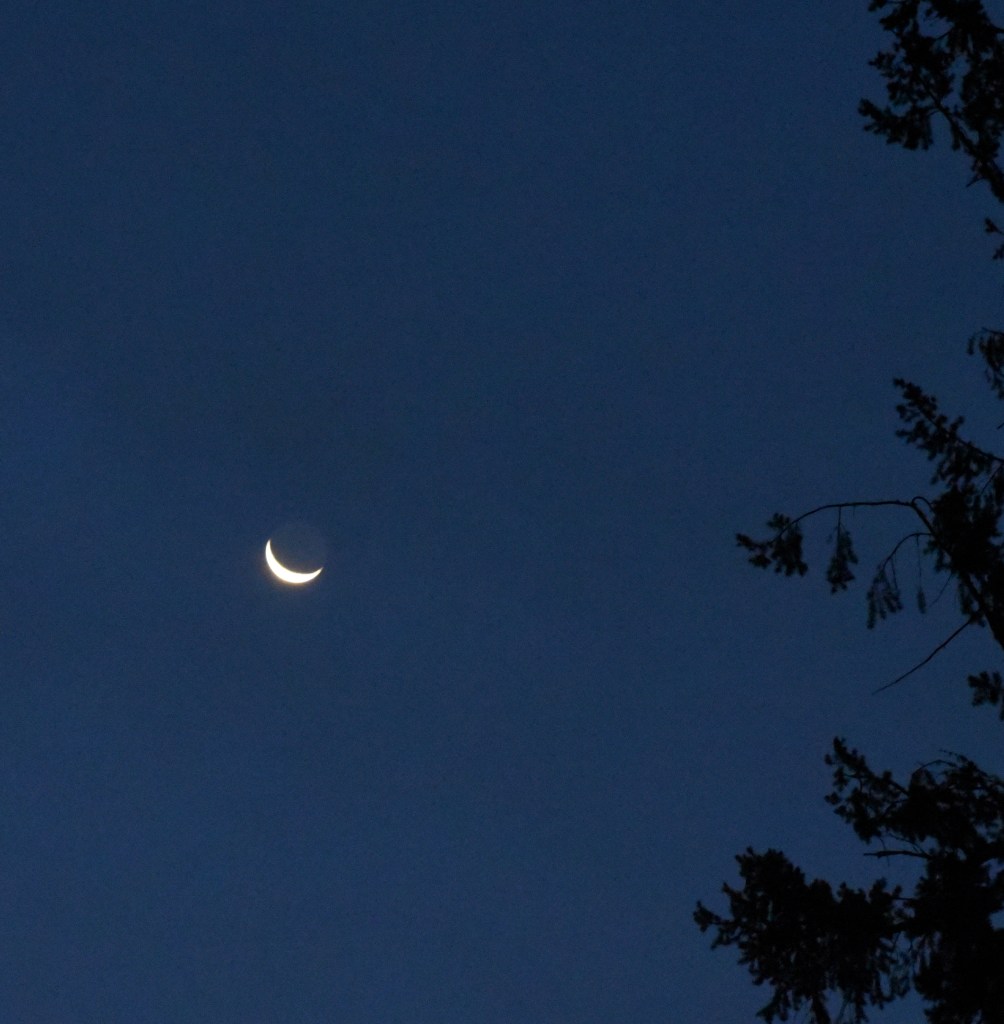
Final photograph I wanted to share with you is this beautiful sight of the moon taken from our property at 16:05 on the 25th. October.

Regular readers will know that Jean and I are not believers in any religion; we are atheists. But to my way of thinking that puts even more pressure on me and Jean to try to make a difference. We do all that we can but there’s no doubt that we can do more.

Yesterday, I referred to Bill Ripple, or to give him his full signature: William J. Ripple, Distinguished Professor of Ecology, Department of Forest Ecosystems and Society, Oregon State University, Corvallis, Oregon.

I sent Bill an email:

Dear Bill (and forgive the over familiarity if that offends),
I am a Brit, just turned 73, living with my beautiful wife, Jean, London-born as I was, down in Merlin, Oregon.

We live on 13 wonderful acres of rural property with 6 dogs (down from 12 when we moved here 5 years ago) and 4 horses, the majority of whom are ex-rescues.

I am the author of the blog Learning from Dogs and want to publish a post highlighting that viewpoint article. Because I believe with every neuron left in my ageing brain that the political changes that this world so urgently needs can only come when 99.9% of the public are screaming out “enough is enough”!

But there’s another saying that comes to mind, the one about being the change you want to see or something like that.

Is there information anywhere online that spells out, almost in words of one syllable, what lifestyle changes each of us can and need to commit to today? Changes that are as appropriate for elderly authors living in the country as young people seeking their first job or those up to their necks in working and raising families?

For that is what I want to publish on my blog!

If it would be easier for me to make an appointment to call you and take notes over the phone then I am just as happy to do that.

Sincerely,

Paul Handover
Hugo Road, Merlin,

Bill promptly replied:

Hi Paul, how long of a list of lifestyle changes do you want to make? Would three or four be enough? Bill

then followed that up with another email:

Paul, Consider suggesting that if people want to help, they could have fewer children, reduce energy consumption such as driving autos and flying, avoid meat and eat mostly plant-based foods and avoid wasting food. Below are quotes from our paper. Bill

“It is also time to re-examine and change our individual behaviors, including limiting our own reproduction (ideally to replacement level at most) and drastically diminishing our per capita consumption of fossil fuels, meat, and other resources ….

… reducing food waste through education and better infrastructure; promoting dietary shifts towards mostly plant-based foods

Now watch this video

I will close this post by listing out all the things that you and I can do now!

  • Set a target for reducing your car mileage next year compared to 2017,
  • If you are a regular aircraft passenger, then set a target for flying fewer hours in 2018 compared to 2017,
  • reduce or stop eating meat,
  • do not waste food,
  • reduce the use of heating and cooling in your home/s for next year,
  • commit to a dietary change away from meats and processed foods to a plant-based diet.

Then for younger couples who want a family around them, limit the number of children to a “replacement level” at most. Adopt??