Category: Business

The Fed’s Bond Purchases and Inflation

Fed’s Kohn on Lessons from Buying Government Bonds….in Britain

Preface:

Recently Dr Jarrell, now a fellow author of this Blog as well as her own, debated the meaning of inflation.  That essay, in three parts, may be found in the list of Essays on the right hand side of this Blog.  This Post is an extract from a recent Post that Dr Jarrell presented on her own site and is presented here with the hope that, following the essay on inflation, this Post is more widely accessible to you, the reader.  Paul Handover.

Do read on

Selling change – Part Four

Understanding the process of change – bringing it all together.

Yesterday, we promoted the importance of questioning.  Because it is only through answering questions that we see new perspectives.  In a sales situation, the skill of the salesperson is to have great in-depth knowledge about their products and services, the many ways in which existing customers use your solutions and likely areas of ‘pain’ that your prospective customer may recognise.

That requires a good understanding of the industry/s that your customers work within.  Because without that, you can’t ask the focused questions that will quickly get you an insight into the prospect’s situation.  The other bonus coming from knowing the prospect’s industry is that the sales approach will enable your prospect to feel as though you are there to help him.

Continue reading “Selling change – Part Four”

Selling change – Part Three

Understanding the process of change – Discovering the needs

In yesterday’s Part Two, we raised the important question of how we change our views.  Of course, in selling the ‘we’ is the person you are selling to.  But to see into their view of the world, it obviously helps to think about ourselves for a while.

The psychology of change is beyond the skill set of this author and is one of many areas left to the psychology professionals.  However, here is a very basic notion that works for the salesperson.

The role of questions is to elicit answers.  (You see, I did say it was basic!.)

But straight away, one particular widely-held idea is going to be destroyed.
Read more of this essay on change

Selling change – Part Two

Understanding the process of change – Upsetting the Homeostasis

In yesterday’s Post on this topic we left the reader with a ‘flow chart’ of the process of change within a business and, slightly tongue-in-cheek, how that compared with change at a personal level.

What is the role of the salesperson in facilitating this process?

Well, firstly the salesperson should have established that the potential client ought to have a need for the solution.  (That, at least, ups the odds of an effective use of sales time.)  Whether that is from knowledge about the company or its business, a referral from somewhere else, or a solid sales reference from another customer, i.e. another of the salesperson’s customers is a good example of using the solution.

Continue reading “Selling change – Part Two”

Hitler’s 787.

Imaginative versions of the film Downfall

My son, who is a commercial pilot flying with a company that have a number of Boeing 787s on order, sent me a YouTube clip that is a re-subtitled version of the film Downfall.  That film, by the way, is an excellent portrayal of theHitler last days of Hitler in 1945 and well recommended.
Anyway, it appears that the art of substitution is alive and well because a YouTube search reveals film clips of Hitler learning about Michael Jackson’s death, Hitler being banned from playing XBox Live, Hitler loves his waffles and more.

This particular clip is about Hitler learning of delays in the delivery of the Boeing 787.  It’s funny (but does include some minor vulgarity).

Continue reading “Hitler’s 787.”

Well that’s clear then!

Conflicting views about the economic outlook

Here are two extracts:

The first from Prof. Nouriel Roubini in his RGE Monitor of today’s date:

A number of economic and financial variables have exhibited signs of improvement recently even if macro indicators are still mixed. The pace of economic deterioration has slowed significantly, and after four quarters of severe contraction in economic activity, RGE Monitor now forecasts that the U.S. will display positive real GDP growth in the second half of 2009. As discussed below, however, that does not mean that the recession in the U.S. is already over, as many analysts have argued. Indeed, all the variables used by the National Bureau of Economic Research (NBER) to date recessionary periods will continue to contract or display sub-par growth. However, RGE Monitor now anticipates that policy measures and other factors will boost real GDP growth, albeit in a temporary manner, in the second half of 2009. Yet the shape of the recovery (will it be V, U or W?) and other challenges will influence the U.S. economic outlook going forward. According to RGE Monitor, growth will remain well below potential in 2010, while the shape of the recovery will be closer to a U.

The second is from David Rosenberg in yesterday’s Breakfast with Dave:

Read more of this Post

This is a spoof, isn’t it?

Big brother may be watching

But in this case it is a mythical pizza house.  (Includes sound as well)

Anyway, watch this futuristic scene courtesy of the American Civil Liberties Union.

By Paul Handover

Technology and electronics, a personal muse.

The amazing development of electronics over 50 years.

The calendar reliably informs me that this is my 65th year.  My brain, of course, lags somewhat in accepting this!

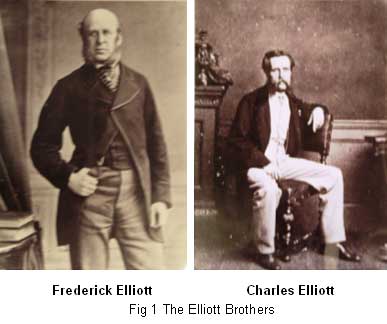
My step-father during my early teenage years worked for Elliott Brothers (the link goes to an interesting history of the firm that started in 1804) in Borehamwood, just north of London.  He encouraged me to fiddle with ‘steam’ radios and

Frederick and sa Elliot

try and understand how these basic circuits worked.  It was then a small step to deciding to become a radio amateur, popularly known as a radio ham!  In those days it was a case of some pretty intensive studying to pass a Theory exam as well as being able to pass an exam in sending and receiving Morse code.

Read more of this Post

Selling – finding customers, Part 1.

Prospecting with pin-point accuracy.

One of the classic ways of catching business students out is with the following:

Question:  If I am conducting a direct mail campaign, what would represent an excellent response?

Typically, students will answer, “2%”, “3%”, etc.  In fact any form of percentage response would miss an important point.

Correct answer: An excellent response, nay magical response, would be if only those that had the money and motivation to buy responded.

Impossible?  Yes!

Read more of this Post

The lessons in Chrysler?

Chrysler, investing, entrepreneurism and common sense.

Many, many years ago I went on a course on starting your own business.  It was held in London and caught my eye because just a few months previously I had resigned my sales job with IBM UK Ltd and commenced a journey of being self-employed, in the sense of being responsible for my own income. A 31-year journey that has provided so many riches in a non-financial sense.

Since we are talking about an event so long ago, it is not surprising that few memories are intact about that single day in a smart hotel in the centre of London.

BUT, one thing has stayed with me, and served me well.

Never get involved in a business where you don’t really know the marketplace.

So a recent article in the New York Times (Saturday, 8th August) about Cerebus, the private capital investment company that purchased Chrysler two years ago wasn’t short on lessons for us more down-to-earth guys.  Here’s a extract from the interview that Louise Story with the NYT (cool surname, by the way, for a journalist!) did with Steve Feinberg, co-founder of Cerebus, in his smart office on Park Avenue.

Continue reading “The lessons in Chrysler?”