François Fillon, the French prime minister, said on Friday (June 4th) that the weakening currency was “good news” because it could boost European exports. His comments accelerated the currency’s slide and prompted selling of French government bonds.
This of course is the cunning ploy formerly used by weak, failing, uncompetitive countries such as Greece, Italy, Portugal and so on before they hitched their waggons on to the euro gravy-train led by the massive German engine. (Anyone remember the story of the over-burdened camel, by the way?)
For France’s Prime Minister, the falling euro is “good”. Well done, François. Thanks for the increased price of oil and everything else we import. How the Swiss must be quietly smirking as they watch this shambles of overspending and reckless financial profligacy.
And the news of Hungary’s tottering economy is helping to push the euro further down towards parity with the dollar. Wonderful. Perhaps we should hope that it falls to half the dollar! Think of how much that would boost exports! This policy is of course about as fatuous as France’s idea that cutting the working week to 35 hours would increase employment.
Of course, the Yanks could copy our example and help to push the dollar down, so that the USA and Europe end up in a deadly game of spiral descendency (“Ha, Ha – our currency is weaker than yours!”) while the Russians, Chinese and Arabs quietly prepare to buy up all our increasingly-worthless assets.
We deserve better leaders.
P.S. Ireland? The Forgotten Basket Case? Don’t worry – it won’t be forgotten for much longer:
Fears for Ireland’s financial stability also re-emerged after the minister of finance said that the country’s banks had to refinance more than €74 billion of debt by October 1. The sum is equivalent to more than half Ireland’s annual economic output.
P.P.S. The USA will save the world as usual? Maybe not!
This may not be very Politically Correct but I am getting a bit fed up for the following reasons with Obama’s constant bad-mouthing of BP :
If the regulatory procedures were not strong enough then that is the USA’s fault, not BP’s.
The USA is glad enough to extract oil from ecologically-dangerous places because it is hooked on oil. That isn’t BP’s fault either.
It is bleedin’ obvious that SOONER OR LATER (see previous comments on statistics) there was going to be an accident of this type, yet NO PROPER CONTINGENCY PLAN was in place. That is partly BP’s fault (over-confidence) but also the USA’s fault for not insisting on one.
BP is clearly doing all it can to put things right; constantly rubbishing it seems fairly pointless.
Nobody knows how much BP was to blame; there were other companies involved, including US ones.
The burning BP Oil Rig
In general, the USA has long been too soft on oil companies because it needs the oil.
Now of course we are going to have a pendulum swing the other way, but rather than knee-jerk reactions why not consult and put in place an effective “doomsday scenario” plan? For example, a 20,000 ton concrete dome that could be lowered right over a fractured well to seal it off?
Of course, Obama’s ranting is political. He does NOT want this to be his “Katrina”. However, nobody in their right mind would blame him personally for this accident and now that it has happened it is pretty pathetic to rant about how evil BP is.
What’s done is done. Statistically, there was BOUND to be an accident of this kind one day. By allowing deep-sea drilling the USA MUST HAVE ACCEPTED the risk. If proper and regulatory contingency plans had been in place then the environmental damage might have been minimised.
In general one must say of the Human Race that we aren’t brilliant at anticipating risks and preparing for the worst. Witness carbon emissions and climate change. As a man-in-the-street, the ONLY change in long-held habits that I have seen to combat global warming is that you can no longer in Europe buy old-fashioned light bulbs. Otherwise life seems to go on pretty much as ever, with all governments desperately wishing for growth because of their idiotic over-spending.
STOP PRESS: Above all a President needs to stay calm and rational. There was no reason to stop all off-shore drilling pending the result of an enquiry. This has put thousands of Americans out of work. No, I am NOT minimising the damage; it is tragic and disastrous, but 80% of Louisiana’s economy depends on the oil business.
And we badly need perspective. This is – as I already said – a terrible disaster, but the record of off-shore drilling is in fact extremely good in ecological terms. One bad experience should not lead to the knee-jerk shut-down of the entire industry. Fascinating article in the UK Guardian newspaper. That article concludes thus:
In an open letter to Obama published in Louisiana’s Thibodaux Daily Comet newspaper, local resident Stephen Morris vented fury at the drilling freeze: “If it was a knee-jerk response to everyone’s anger about the continued leak and possible annihilation of southern Louisiana’s way of life, you didn’t think it through or your advisers are smoking way too much crack.”
And this article in the UK Independent brilliantly sums up the way Obama is getting this all wrong for superficial, popularist reasons. Here’s how that article starts:
The evidence is overwhelming. Any fair-minded person who examines the Gulf of Mexico oil spillage is compelled to two conclusions. First, that there is no evidence of wrongdoing by BP. Second, that the President of the United States has behaved disgracefully.
The vessels of the Los Angeles class, the pride of the US nuclear submarine fleet, will not operate below 950ft. If they were to dive to 1450ft, their hulls would implode. The Americans do have three subs which could function at 2,000ft. They cost $3bn each. It follows that drilling for oil below a 5,000ft seabed is a difficult business which involves risks. But it is essential.
Does anyone else see how perverted this story is? A company which is 60% owned by the U.S. Treasury, in other words, 60% owned by taxpayers — not voluntary shareholders, but TAXPAYERS, has hired a private investment banking company to take the company public.
That is, to be sold to public stockholders. For a profit. Which is going to be distributed to whom? The government. Who took the company over by edict, essentially by force, ignoring lawfully binding financial contracts in the process. Oh, yes, technically G.M. went through a “banktuptcy,” but when one of the two involved parties is the federal government — the one who makes up the rules of the game — then it isn’t a game anymore. It’s “do it, or else!”
GM Headquarters
Absolutely unbelievable. This IPO should not be happening. The bailout should not have happened. None of this should have happened. If the company cannot generate a profit in the marketplace, then it should go bankrupt and its resources freed up to be used where they are most valued by the marketplace.
Thugs from the Service Employees International Union (SEIU) and Chicago’s National Political Action trespassed on a Bank of America Executive’s front lawn in a so-called “protest” over mortgage defaults.
SEIU Protests on private citizen's front lawn
This same group went after AIG executives in March of last year (see video). I commented on local television and to anyone who would listen then how misdirected their anger was, and I repeat that sentiment now.
Where is the President’s outrage at these mob tactics against a private U.S. citizen? I can only assume his silence is tacit approval. The recently-resigned President of SEIU, Andy Stern, is reportedly Obama’s most frequent visitor at the White House, after all. And Obama has made it abundantly clear that he has no respect for private industry and free enterprise.
The Basel Committee on Banking Supervision provides a forum for regular cooperation on banking supervisory matters. Its objective is to enhance understanding of key supervisory issues and improve the quality of banking supervision worldwide. It seeks to do so by exchanging information on national supervisory issues, approaches and techniques, with a view to promoting common understanding. At times, the Committee uses this common understanding to develop guidelines and supervisory standards in areas where they are considered desirable. In this regard, the Committee is best known for its international standards on capital adequacy; the Core Principles for Effective Banking Supervision; and the Concordat on cross-border banking supervision.
The Committee’s members come from Argentina, Australia, Belgium, Brazil, Canada, China, France, Germany, Hong Kong SAR, India, Indonesia, Italy, Japan, Korea, Luxembourg, Mexico, the Netherlands, Russia, Saudi Arabia, Singapore, South Africa, Spain, Sweden, Switzerland, Turkey, the United Kingdom and the United States. The present Chairman of the Committee is Mr Nout Wellink, President of the Netherlands Bank.
OK, that’s clear then!
Pers Kurowski
Well, according to a good supporter of and Guest contributor to Learning from Dogs, Pers Kurowski, we really ought to know much, much more about this ‘committee’.
Pers has a Blog called Tea with FT (as in the Financial Times) and there is much to read there that helps us understand why we are in so big a mess with the banks. Here’s his piece from the 4th May.
Basel Committee, why don´t you just shut up!
Sir who do these Basel Committee regulators really think they are bullying us around with an arrogant “the banks should be sensible and realise that it might backfire if they protest too much”? as reported by Brooke Masters, May 4.
They themselves are the ones who thought everything would be fine and dandy if they just had some few credit rating agencies determine default risks and then gave the banks great incentives, by means of different capital requirements, to follow those credit risk opinions. They themselves are the ones who believing in the abundance of safe triple-A rated lending and investments, caused the world to stampede and fall over the subprime mortgages. They themselves should shut up, because rarely has the world seen such a gullible naive and outright stupid bunch of regulators.
Now the banks, in the midst of a crisis, need to build up the equity they do not have precisely because the Basel Committee did not require them to have; precisely when we need the most the banks to lend. The regulators, instead of bullying banks, should busy themselves day and night finding ways for severely capital stretched banks to be able to lend to those small businesses and entrepreneurs who have had to pay the cost of higher capital requirements but who had absolutely nothing to do in generating this crisis.
And just in case, for the record, I am no banker, only a citizen, very upset with the fact that in the 347 pages of the regulations known as Basel II, there is not one single word that describes the purpose of those regulations. Basel Committee why do you not start defining a purpose for what you are doing? Is that too much to ask?
Well, every day the eurofarce gets more surreal. Yesterday, Frau Merkel said this:
“The current crisis facing the euro is the biggest test Europe has faced in decades. If the euro fails, then Europe fails.”
What on earth does she mean by “Europe fails”? Why this recourse to sensationalism?
If the euro is sinking it is because people don’t think it is serious. If that is the
Two happy leaders!!
case, the only thing to do is MAKE it serious. This is not to be done by borrowing EVEN MORE money.
In the worst-case scenario (which Merkel’s antics are rapidly talking us into) the euro collapses and we go back to our old currencies. This would be a failure of the EURO, not of EUROPE.
Germany would return to being the economic powerhouse of Europe under the strong Deutschmark. Italy, Greece and other usual suspects would return to their quaint old ways with frequent devaluations.
So what? Better to be honest than go on suffering from a vast ego-bubble that will inevitably collapse in an explosion of hubris. (Thank you for the vocabulary, dear Greeks)
Derivative securities are not inherently evil, though the media would have you think otherwise. It seems that any
Are they evil?
type of investment that does not directly involve commodities is an easy target these days.
But derivatives are just another type of investment, those whose value is derived from some underlying security or asset or event. Insurance is a type of derivative investment, as a matter of fact. If the bad event happens (a car accident, flood, or fire, for example), then a claim is made against the policy. If not, the policy expires. The value of the policy is derived from the insured asset or event.
If derivatives are bad, then so too is insurance. If derivatives are bad, then so too are leases with the option to own. If derivatives are bad, then so too is the equity in any type of company, small or large, private or public, including those that produce real products and commodities, for stock is nothing more than an option to buy the underlying assets of the company for the price of the face value of its debt. If derivatives are bad, then so too are convertible securities and most every other type of financial innovation we’ve witnessed in the last 30 years, and for decades to come.
Just to try to help put stock market swings into perspective,consider this:
the 347.8 point fall in the Dow Jones Industrial Average last week, from 10868.12 at the start of the trading day on Thursday, May 6, 2010 to 10520.32 at the close of trading, can be COMPLETELY explained by an increase in the perceived cost of capital from 12% to 12.23%.
do the math. Using the constant dividend growth model, a very simplified model of the market value of equity, or Market Value = Current Dividend/(cost of equity capital – dividend growth rate), and assuming a long-term average cost of U.S. equity capital of 12% and average growth rate of 5%, we find that the opening level of 10868.12 = 760.77/(.12 -.05), and the closing level of 10520.32= 760.77/(.1223 -.05).
I think it is entirely possible that the chaos in Greece and surrounding nations, and the interconnections between worldwide supplies of liquidity and financial capital, that an increase in the perceived risk and uncertainty of the returns to equity from 12% per year to 12.23% per year makes perfect sense.
The market’s are working. Market participants, from the individual investor using on-line trading at 2:00 in the morning from their living room to the most sophisticated computerized large-scale institutional trader, understands that a borrower’s ability to pay back its investors depends on the real productivity and growth of private industry, whether the borrower is a company or a country.
Came across a relatively new Blog with the title The Fourteenth Banker. Caught my eye because of the similarity to the book written by Simon Johnson and James Kwak of Baseline Scenario fame. Here’s an extract from the ‘About’ piece of this new Blog.
In response to the comments of folks in the Congress and oversight regimes, I have created this blog as a home for bankers who need to speak out and do not have a central clearinghouse or a safe place to do so. Big banks now treat their employees like property, bought and owned. Typically employees must subject themselves to all sorts of potential sanctions, forfeitures of compensation, clawbacks and even lawsuits if they speak in ways we often have thought were protected speech. I am not talking about revealing confidential customer or proprietary information, I am talking about simply commenting on a company, management philosophy, making general observations or raising concerns. It makes one appreciate unions even if not historically supportive of unions. At least management and labor can have a debate. Not so in today’s large banks. Gag orders are written in the most intimidating way, included in Codes of Ethics, attached to incentive plans, posted on the company home pages. We should ask ourselves, what is the big secret?
Do support the Blog by calling by. Here’s a taste of what they are writing about:
This can only be called what it is. Delusion. Delusion about self, society, morality, values and anything else you can name. These are symptoms of a grave illness which is too common among those in power. In fact, the illness may be the requisite to power.
Some videos are just fun to watch. Whether you are interested in aviation or not, this blast through the making of an aircraft by Boeing makes it all look quite easy really:
 François Fillon, the French prime minister, said on Friday (June 4th) that the weakening currency was “good news” because it could boost European exports. His comments accelerated the currency’s slide and prompted selling of French government bonds.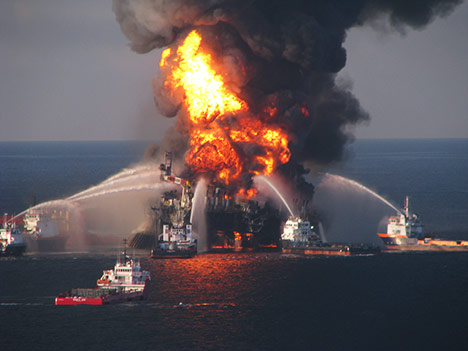


 Learning from Dogs