Digital content opens up a whole new ways of thinking about price, value and success.
Book cover
Some time ago, I read the new book from Chris AndersonFree: The Future of a Radical Price It was a very busy period of my life and I had ‘parked’ the conclusions contained in the book for a later time – and then forgot about it!
Anyway, something that came into my in-box earlier today reminded me of the power of giving content away. But before going there, let me briefly come back to Anderson’s book. An extract from this link talking about what in the UK we know as jelly and in the US the name of Jell-O, (nice history on Wikipedia):
But it didn’t sell. Jell-O was too foreign a food and too unknown a brand for turn-of-the-century consumers. Kitchen traditions were still based on Victorian recipes, where every food type had its place. Was this new jelly a salad ingredient or a dessert?
For two years, Wait kept trying to stir up interest in Jell-O, with little success. Eventually, in 1899, he gave up and sold the trademark — name, hyphen, and all — to Orator Frank Woodward, a local businessman. The price was $450.
Woodward was a natural salesman, and he had settled in the right place. LeRoy had become something of a nineteenth- century huckster hotbed, best known for its patent medicine makers. Woodward sold plenty of miracle cures and was creative with plaster of paris, too. He marketed plaster target balls for marksmen and invented a plaster laying nest for chickens that was infused with an anti-lice powder.
But even Woodward’s firm, the Genesee Pure Food Company, struggled to find a market for powdered gelatin. It was a new product category with an unknown brand name in an era where general stores sold almost all products from behind the counter and customers had to ask for them by name. The Jell-O was manufactured in a nearby factory run by Andrew Samuel Nico. Sales were so slow and disheartening for the new product that on one gloomy day, while contemplating a huge stack of unsold Jell-O boxes, Woodward offered Nico the whole business for $35. Nico refused.
Anderson then explores what Woodward does next:
So in 1902 Woodward and his marketing chief, William E. Humelbaugh, tried something new. First, they crafted a three-inch ad to run in Ladies’ Home Journal, at a cost of $336. Rather optimistically proclaiming Jell-O “America’s Most Famous Dessert,” the ad explained the appeal of the product: This new dessert “could be served with the simple addition of whipped cream or thin custard. If, however, you desire something very fancy, there are hundreds of delightful combinations that can be quickly prepared.”
Then, to illustrate all those richly varied combinations, Genesee printed up tens of thousands of pamphlets with Jell-O recipes and gave them to its salesmen to distribute to homemakers for free.
(My emphasis – do read the extract in full from here.) The book is highly recommended.
So what was it that came into my email in-box? It was an email from Leo Babauta of Zen Habits, a Blog that I subscribe to. This is what it said:
I’m happy to announce that focus is now in the Kindle Store. You can get the full book — the free chapters plus bonus chapters from me and five other authors — for $8.99. It doesn’t include the videos, audio interviews and bonus PDFs in the full version.
The free version is simple: it’s 27 chapters that you can download for free, without having to give an email address or do anything else. It’s uncopyrighted, and you can share it with as many people as you like.
Again, you can share this ebook freely, so feel free to post it on your blog, Twitter, Facebook, or email.
I have no way of knowing how many downloads have been made but I suspect many more than one might imagine.
What I would be curious is to know from amongst the many Learning from Dogs readers how many of you have read this Post to the point of downloading the book for yourself, or others?
Will Hutton’s book continues to impress me; greatly.
On 28tTh October, I wrote an article about Will Hutton‘s impressive book, Them and Us. I had got to page 120 or thereabouts and could resist no longer the urge of reading the book to the end before commenting on Learning from Dogs.
Now I am reading through page 260 and, again, find myself incapable of waiting until the book is completed before offering further thoughts!
Despite being very optimistic about the long-term future, I sense that the period that we have been in since 2008 may turn out to be one of the darkest in recent history – I touched on this aspect in a recent post called Faith in a (new) future.
One of the things that strikes me is the complete lack of openness from the British Government about the likely growth scenarios over the next decade. Here was how the latest ‘growth’ figures were presented a couple of weeks ago, “The economy grew by 0.8% in the three months to September – double the rate that had been predicted by analysts.”
UK output increases by 0.8 per cent 4Q 2010
But here’s Will Hutton,
Britain is going to be much poorer than it anticipated just a few years ago.
They paint a sober picture of prolonged loss of output, high unemployment and depressed asset prices, and warn that there is no precedent for what happens after the kind of global crisis through which we have just lived. (My italics)
Hutton says that growth would need to accelerate to 3.25 per cent in order for output to reach its predicted level if the recession had not taken place.
He then says that a more plausible scenario if growth remains at 2.75 per cent (average level in recent years leading up to the credit crunch) “then it might never recover sufficiently to converge with the old trajectory.”
Hutton continues,
However, even that may be optimistic. The reality is that between the economic growth troughs of 1991 and 2009, growth in Britain actually averaged just over 2 per cent.
That would lead to a cumulative loss of output of more than £5 trillion!
It could be even worse. The economics team at Barclays believe that is it perfectly plausible for growth to average just 1.75 per cent for the first half of the current decade.
And all of this before the huge budget cuts announced by the UK Coalition Government start to bite!
So the reality is that we are a long way away from any form of real recovery, despite what the politicians are saying!
What is so impressive about the book is that Will Hutton is meticulous in his research (there are 23 pages of referenced notes at the end of the book) and from Chapter 9 starts setting out how Britain “has the opportunity to put things right fast.” So this is a book from a well-respected author that sets out carefully and logically the cause of the recession and then presents some powerful options for change.
The bottom line is that Britain has to be a much more fairer society. Not just Britain. Here’s an extract from a recent posting on Tom Engelhardt’s Blog. Tom is the author of the book, The American Way of War.
I’m no expert on elections, but sometimes all you need is a little common sense. So let’s start with a simple principle: what goes up must come down.
For at least 30 years now, what’s gone up is income disparity in this country. Paul Krugman called this period “the Great Divergence.” After all, between 1980 and 2005, “more than 80%of total increase in Americans’ income went to the top 1%” of Americans in terms of wealth, and today that 1% controls 24% of the nation’s income. Or put another way, after three decades of ”trickle-down” economics, what’s gone up are the bank accounts of the rich.
In 2009, for instance, as Americans generally scrambled and suffered, lost jobs, watched pensions, IRAs, or savings shrink and houses go into foreclosure, millionairesactually increased. According to the latest figures, the combined wealth of the 400 richest Americans (all billionaires) has risen by 8% this year, even as, in the second quarter of 2010, the net worth of American households plunged 2.8%
Of course, that’s a crazy idea. So why in business do we so often find almost a direct parallel?
Most people who have had anything to do with manufacturing in any form know that the first thing that generally gets cut in a down turn is training and development.
Why? Because it’s seen as a ‘nice to have’ and most companies reckon they can do without it.
In the very short term, that may be true; note the ‘maybe’
True, because things will seem to be normal. In fact there will be an important change almost immediately – a drop in morale, which many managers will not notice!
But who is in business for the short term? So we need to look at the longer term and see if there is any valid strategy for cutting back on the most vital resource for a business’s people.
Look what has happened to much of our manufacturing capability. Outsourced abroad. Clearly if it’s cheaper to do that then why wouldn’t you?
Change?
Why is it cheaper, though? Because, I believe, most British companies weren’t able to adapt and change quickly enough. Shareholders or senior management got fed up and the decision was made.
Change is a funny thing. If it’s our idea then we’ll do it but if it is seen to be inflicted on us, resistance is guaranteed. This leads us into the next thing:
You can’t impose change. People need to be facilitated to find their own solutions.
Engage with people, ask them where greater efficiencies should be made. This is the only way towards successful change and requires high levels of interpersonal and communications skills.
What’s good for business is the same outside for that matter. Without these skills it is very difficult to develop the relationships which are necessary to encourage people to pull together in times of hardship. These do need developing in people and not to bother is a highly risky option.
So, investing money in planned and structured people development, where benefits and performance improvements can be identified, is a good use of money, especially in difficult times.
One of the problems of our modern media is that there is so much competition for news that old stories frequently just seem to disappear.
So it was delightful to find in last Saturday’s Daily Telegraph news that the rescue shaft had achieved a very important milestone – the pilot shaft, 12 inches in diameter, had broken through to the chamber where the miners patiently wait for their rescue.
Rescuers working to release 33 trapped Chilean miners have achieved a pivotal breakthrough by drilling an escape shaft through to the underground chamber occupied by the men.
Focus warning! This is a longer piece that usual but also a more important piece than usual. Please find the time to read it and explore the links. Thank you.
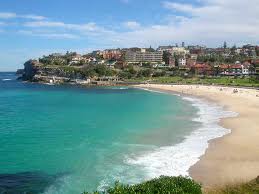
Many, many years ago I lived in Tamarama Bay, just East of Sydney,
Bronte Beach, Australia
Australia. It was a very short walk to Bronte Beach which was much better experience than the famous Bondi Beach about half a mile North of where we lived.
Thus when I saw the name Bronte Capital it caught my eye because of old resonances from the word “Bronte”.
OK, to the point!
John Hempton is a principle at Bronte Capital, an Australian fund manager. John is no slouch having been in his past a Chief Analyst for the New Zealand Treasury and Executive Assistant to the CEO of ANZ Bank in New Zealand. John’s CV is here.
Bronte Capital have a Blog – well who doesn’t – and it was a link to that Blog from Naked Capitalism that caused me to read a recent article from John about deregulation.
Despite me not understanding many of the technical aspects, it struck me with some force, so much so that I wanted to reproduce chunks of it on Learning from Dogs. John was gracious enough to give me written permission to so do! Thanks John.
I have just read Daniel Amman’s excellent biography of Marc Rich – the oil trader notoriously pardoned by Bill Clinton. I don’t want to get into the politics and ethics of the pardon other than to note that few things in it are black-and-white when you finished reading the book.
and a couple of paragraphs later explains that Marc Rich has a rather appropriate surname – well this is how John writes:
Marc Rich exploited price fixing/import/export controls to make simply unbelievable profits trading oil. Marc Rich & Co (the Swiss vehicle) was started with just over $1 million in capital and a couple of years later was making in excess of $200 million in profit. This level of profitability exceeds – by far – any other trading operation I have ever seen – and was probably the most profitable trading operation in history. Marc Rich & Co (since renamed Glencore) is possibly the most valuable business in Switzerland within the lifetime of its founder.
Just stop here for a moment.
This man, Rich, goes from one million dollars in capital to two hundred million dollars in profits in 2 years, give or take! Read on:
A typical Marc Rich & Co trade involved Iran (under the Shah), Israel, Communist Albania and Fascist Spain. The Shah needed a path to export oil probably produced in excess of OPEC quotas and one which was unaudited and hence could be skimmed to support the Shah’s personal fortune. Israel – a pariah state in the Middle East – wanted oil. Spain had rising oil demand and limited foreign currency but was happy to buy oil (slightly) on the cheap. Spain however did not recognise Israel and hence would not buy oil from Israel – so it needed to be washed through a third country. Albania openly traded with both Israel and Spain. Oh, and there is an old oil pipeline which goes from Iran through Israel to the sea.
So what is the deal? The Shah sells his non-quota oil down the pipeline through Israel and skims his take of the proceeds. Israel skim their take of the oil. Someone doing lading and unlading in Albania gets their take and hence make it – from the Spanish perspective – Albanian, not Israeli oil. The Spanish ask few questions. The margins are mouth-watering – and they all come from giving people what they really want rather than what they say they want. We know what the Shah wanted (folding stuff). We know what Israel wanted (oil). We know what Spain wanted (cheap oil). Who cares that Spain was publicly spouting anti-Israel rhetoric. [Similar trades allowed South Africa to break the anti-Apartheid trade embargoes.]
John explains:
It also helped that Marc Rich & Co was a (highly) multilingual firm. Rich is fluent in Spanish (it is the language he talks to his children in). He speaks English, German, Yiddish and presumably Hebrew. His business partner (Pincus Green – pardoned the same day as Rich) speaks Farsi amongst many other languages. They could do this deal because they could negotiate it and – deep in their heart they hold the Ayn Rand view that trade is a moral virtue and hence they do not need to be concerned with other morality. [The only line that matters is the law – and then it might not be the law of his adopted country – Switzerland – rather than the United States where he was resident.]
My italics, by the way. Just stay with me for a short while longer to ‘get’ John’s important message. Here’s John again:
The regulatory regime for domestic American oil was also perverse. Old oil (meaning wells drilled before the first oil crisis) received one price. New oil (wells drilled after the crisis) received a higher price. Squeeze oil (oil that was extracted from wells that ran less than 10 barrels per day) received a higher price still. The oil could be chemically identical and the price difference over $20 per barrel. Obviously a trader with a method (any method) of changing the oil source could make a fortune. Again I am not commenting on legality or morality. That was just plain fact. Ayn Rand applies – you give a value and you receive a value.
What all this regulation did was that it allowed people to make simply grotesque profits by thwarting regulation. The regulation thus worked less well and it was socially unfair. Pincus Green was good at negotiating in Farsi. He was astoundingly brave going to Iran immediately after the Shah fell. He was good at organising shipping. He worked really hard – but he did not invent something that changed the world and he wound up a billionaire. Traders make money by intermediating real business solutions – but these were real business solutions to problems made by legislation. Bad regulation, moral indignation about “trading with the enemy” or “trading with Israel” or with racists in South Africa made people with Ayn Rand morals exceedingly wealthy because you could arbitrage your way around any of these regulations.
OK, you are probably getting the drift of this important article from John. If any of this ruffles your hair, then read it all – it’s a very important message. This is what John is saying:
As a plea then I want a debate about the right form of regulation – a regulation that controls agency problems but does not allow arbitrage opportunities to people with “Ayn Rand morals”.
We are not going to get that from the current Tea Party Republicans. They simply argue that regulation (they say but do not mean all regulation) impinges on “freedom” (something that is clearly a good but hard to define). However many of the same people want planning regulations to ban a mosque in downtown New York because it is an insult to the victims of 9/11 (and banning mosques is not a restriction on “freedom”).
If that is the level of debate we are not going to get good re-regulation – we are just going to get pandering to whichever lobby group manages to garner most support. And that is a real risk because we will leave agency problems in place (they benefit the rich and powerful) and we will introduce the same sort of (dumb) regulation that made Marc Rich and Pincus Green astoundingly wealthy. That sort of regulation also benefits the rich and powerful – especially those with “Ayn Rand morals”. [The rich and powerful – if you have not noticed – are good lobbyists. Unless we are careful many amongst them will get their way.]
You didn’t rush those last three paragraphs, did you?
John concludes thus:
I don’t know how to do this well – but I thought I would state the obvious. The most obvious things that need regulation are things with a government guarantee (implicit or explicit). If you have an implicit guarantee (as we now know almost all large financial institutions have) then regulation really matters. If there are large agency problems (small shareholders, large management) then regulation should be deliberately biased to put power in the hands of shareholders not managers (eg banning staggered board elections).
Likewise other agency problems should be strongly policed and the regulation should be of the form that allows that policing. When Elliot Spitzer found that Marsh – a large insurance broker – was participating in bid rigging against schools buying insurance that was shocking – and is precisely the sort of thing in financial markets that should be policed strongly. But it took Elliot considerable effort to find and prove his case. The rules should be established so that sort of behaviour is really difficult to hide.
And I do not think that I need to explain to anyone how much mortgage brokers contributed to the crisis by (a) deliberately misleading borrowers about conditions on their mortgage and (b) participating in the faking of borrowers income/assets/education level when they on-sold the loans to Wall Street. Agency problems were at the core of the crisis.
On the other side if there is no agency problem then deregulation should remain the order of the day. Trade restrictions create arbitrageurs – and the arbitrageurs ensure the trade restrictions don’t work anyway.
There are obviously going to be extensions to this rough rule – and this post is really to garner discussion. But for a start I expect agents who benefit from their agency (and the abuse of their agency) to join the Tea Party.
It is difficult to get policy right. And when and if the policy is got right we are in for a very long fight to implement it.
I take my hat off to Mr John Hempton. He’s in the ‘finance’ industry, probably doing well, and yet he has the courage to hold a mirror up to the desperately immoral happenings going on around him.
It’s a real pleasure and honour to publish this Post.
Let me close with a short piece from the Sydney Morning Herald of the 2nd January, 2010.
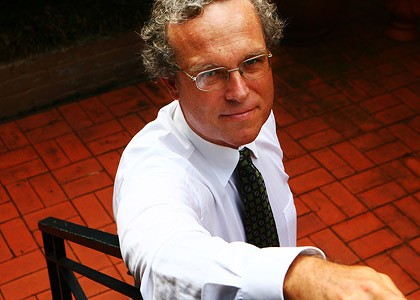
John Hempton ... blog locally, act globally. Photo: Domino Postiglione
WHEN John Hempton started a blog as he recovered from pneumonia, he did not expect to send shockwaves through the finance industry.
But that is exactly what the 42-year-old fund manager did through his Bronte Capital blog. His exposé of an unrelated US hedge fund would eventually lead to $426 million in investments being frozen and authorities seizing control of the Albury fund manager Trio Capital shortly before Christmas.
THERE are plenty of studies which show that dogs act as social catalysts, helping their owners forge intimate, long-term relationships with other people. But does that apply in the workplace? Christopher Honts and his colleagues at Central Michigan University in Mount Pleasant were surprised to find that there was not much research on this question, and decided to put that right.
And the article concludes:
Mr Honts found that those who had had a dog to slobber and pounce on them ranked their team-mates more highly on measures of trust, team cohesion and intimacy than those who had not.
But do read the article in full because the conclusions are quite significant. Once again, the link is below:
A nearly 30-year old film has real relevance for today!
Those of you that read yesterday’s Post right through to the end will have picked up on the fact that after completing that article last Friday, Jean and I watched the movie The Verdict.
Amazingly, this powerful film was released on the 8th December 1982.
So why the connection between the film and the Post written yesterday?
Well yesterday I wrote about two recent examples of, at best, a terrible lack of integrity, or, at worst, blatant examples of powerful institutions lying to us. It troubled me greatly and I found no adequate way of closing the Post expressing my troubles in a succinct and fitting way. Stay with me for a few moments.
In the film The Verdict, Paul Newman plays Frank Galvin – here’s the synopsis from the IMDb website:
Frank Galvin is a down-on-his luck lawyer, reduced to drinking and ambulance chasing. Former associate Mickey Morrissey reminds him of his obligations in a medical malpractice suit that he himself served to Galvin on a silver platter: all parties willing to settle out of court. Blundering his way through the preliminaries, he suddenly realizes that perhaps after all the case should go to court: to punish the guilty, to get a decent settlement for his clients, and to restore his standing as a lawyer.
As one might have guessed, Galvin wins the case against all the odds, which doesn’t in any way reduce the power of the film. Newman was brilliant.
Tackling a medical malpractice case that could revive his once glorious career, attorney Frank Galvin (Paul Newman) questions a key witness, Dr. Thompson (Joe Seneca), in the compelling courtroom drama The Verdict.
At the end of the hearing Galvin rises to give his summation. Technically the case appears utterly lost to his side. Galvin slowly stands, hesitantly looks as his notes, cast the sheet aside and reluctantly addresses the jury.
You know, so much of the time we’re just lost.
We say, “Please, God, tell us what is right; tell us what is true.” And there is no justice: the rich win, the poor are powerless. We become tired of hearing people lie.
And after a time, we become dead… a little dead. We think of ourselves as victims… and we become victims. We become… we become weak. We doubt ourselves, we doubt our beliefs. We doubt our institutions. And we doubt the law.
But today you are the law. You ARE the law. Not some book… not the lawyers… not the, a marble statue… or the trappings of the court. See those are just symbols of our desire to be just. They are… they are, in fact, a prayer: a fervent and a frightened prayer. In my religion, they say, “Act as if ye had faith… and faith will be given to you.” IF… if we are to have faith in justice, we need only to believe in ourselves. And ACT with justice. See, I believe there is justice in our hearts.
Now go back and read my Post of yesterday. Read of the Citi executives paying token fines for lying to investors. Read of the allegation that the 2009 data set in the US GDP report was a “bald-faced lie”.
Now read again, aloud to yourself if you can, the first few sentences of Galvin’s summation. Here they are again (my emphasis).
You know, so much of the time we’re just lost.
We say, “Please, God, tell us what is right; tell us what is true.” And there is no justice: the rich win, the poor are powerless. We become tired of hearing people lie.
And after a time, we become dead… a little dead. We think of ourselves as victims… and we become victims. We become… we become weak. We doubt ourselves, we doubt our beliefs. We doubt our institutions. And we doubt the law.
I firmly believe that this is where millions of ordinary, hard-working, caring citizens of many countries have arrived today because of the lack of integrity, the lack of honesty and the lack of grace shown by so many in positions of power and privilege.
But do not despair because if we do that, then all is lost. No, believe in the power of good men. Back to the summation from the film:
In my religion, they say, “Act as if ye had faith… and faith will be given to you.” IF… if we are to have faith in justice, we need only to believe in ourselves. And ACT with justice. See, I believe there is justice in our hearts.
Many will know that Naked Capitalism is a wonderful Blog and what Yves does is truly amazing. (And a big ‘thank you’
Yves Smith
to Richard Smith who so ably stood in for Yves on her recent European trip.)
On the 29th July this year, Yves reran an article that she posted on May 11th, 2007. It’s spot on, in my opinion.
Here’s how Yves starts the Post:
I am beginning to suspect that many are reacting to the over-stimulation of the modern world – the accelerating pace of change, data overload, time pressure, work and relationship instability – by turning off their brains. The rise of fundamentalism and the “family values” push, both efforts to turn back the clock, is one set of responses.
Another is the rise of sound-biting, of using pithy communications to cut through the clutter of the daily information assault. But sound biting is inherently reductionist. It doesn’t permit nuanced argument, or pointing out fuzziness in data, or shades of grey. Sound bites are great for simple, emotional appeals, lousy for policy development (which is one reason why this country seems incapable of having an intelligent discussion on important topics like health care. The public has been trained out of having a long enough attention span to listen to alternatives).
That is so true. Just re-read the sentences, “But sound biting is inherently reductionist. It doesn’t permit nuanced argument, or pointing out fuzziness in data, or shades of grey.” (My italics.)
We live in such a complex world that reducing any important idea or concept to a headline or to an executive summary is, in its own way, significantly short on integrity.
That article from Yves concludes thus:
Most businesses operated in competitive environments far too complex for a terse phrase to be a useful guide to action. Yet a magic incantation, a talisman, a battle cry is terribly appealing. But those who can resist the temptation of relying on a simple playbook and face the complexity and uncertainty of their environment are likely to steer a better path. But understanding risk and adapting also demands far more courage that trusting simple ideas.
Ironically, if one reflects for a moment, that closing sentence is a pretty good executive summary! “…… understanding risk and adapting also demands far more courage that trusting simple ideas.”
On July 15th, 2009 a post called Parenting lessons from Dogs started what has now become a bit of a ‘habit’. But more reflections tomorrow.
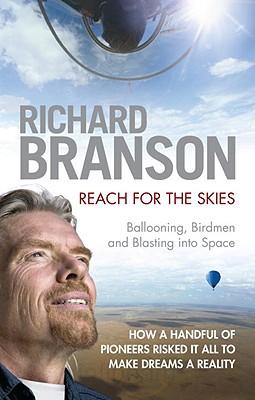
Reach for the Skies
Today I want to voice something that has been running around my mind for some time. It is whether we give in to the mounting doom and gloom at so many levels in our societies (and it can be a very compelling draw) or whether we see this as a painful but necessary period where slowly but surely the desires of ordinary people; for a fairer, more truthful, more integrous world are gaining power.
And I’m going to use Richard Branson to voice it for me!
(Now this is an unusually long Post so I’ve inserted the Read More divider to prevent the Post visually swamping your browser.)
It is probably a bit non-PC [PC = politically correct, Ed] to say anything negative about the World Cup, but I sense that the importance of being PC is beginning to wane; not that it ever bothered me anyway.
Let’s look at the positives, since almost everything has some positives somewhere; Stalin, Hitler, Pol Pot and the North Korean regime being obvious exceptions.
They built world-class stadia on time.
The foreign visitors who were there generally got to venues on time and the matches all started on time.
Inside the stadia (despite the obvious occasional sillinesses for which we can blame FIFA), everything went tickety-boo. According to some pundits, the atmosphere was “the best ever”, despite (or because of?) the hideous vuvuzela.
There was no major crime wave, no terrorism, no significant disasters of any kind.
The South Africans were reportedly very hospitable.
Opposing fans celebrated together; the England fans totally restored their reputations; reports of drunken English mobs were distinguishable by their absence. (they probably couldn’t afford to get there.)
South Africa took pride in its ability to put on the World Cup, which many had suspected it incapable of.
For a month the nation forgot all its problems; most people had a big party, even if the South African team (and Africa in general) was made to realize the enduring gulf between its standard of football and that of the other continents.
So, all’s well that ends well, then? Unfortunately not ….
The country paid around 10 billion rand to put the event on, three times more than original estimates. Where did all the money go?
The country is left with giant stadia that may never again be filled, the so-called “white-elephants” typical of almost all these major events. Apparently even the wondrous “Birds-nest” stadium in Beijing used for the opening ceremony of the Olympics has only been used once since 2008.
Only half the number of expected foreign tourists came, as the organisers over-priced everything. Organisers claim the extra income generated will pay for the costs, but nobody believes them …..
Preparations for the World Cup provided jobs, but those workers are now back on the street. The ordinary people of South Africa benefited little from the event, except in terms of “national pride”.
And there of course is an interesting animal; “national pride”. In a grown-up world, you’d have hoped that national pride would be best achieved through one of the following:
the building of suitable housing for the population
the setting-up of an affordable and accessible national health system (fat chance, even the USA hasn’t got that!!)
the diminution and ending of corruption
the creation of a fair society
the development of the economy to provide jobs and create wealth to allow ordinary people to live decently and comfortably
Any of these and other things could be seen as deserving of “national pride”, but the ability to put on at vast expense a four-week jamboree that mostly benefited the political elite, other nations, FIFA and the international television networks is a dubious contender for “pride”.
But of course it depends which side of the coin you are looking at. For some, all the expense justifies the “putting of South Africa on the map.” The politicians as usual will have been the most happy; four weeks in the spotlight strutting about on the world stage, loads of media coverage, hundreds of journalists hanging on their every word …
As for the real ethos behind the World Cup, the bits that don’t hit the glitzy headlines, two in particular struck me as symbolic of Man’s capacity for self-delusion; Africa’s attitude to its poor and the obscene power of international non-governmental monopolies such as FIFA.
These have been variously described in excellent articles written by proper journalists. The first example is from Globalpost. I find it pretty depressing.
Green Point Stadium, Cape Town: In Cape Town, Green Point Stadium is covered in a sheath of woven fiberglass so that it glows at night like a floating bowl. But its location on six city blocks in a prime real estate area has also created controversy. In 2006, the city’s government published a study that found the stadium’s location offered the least amount of economic gain to Cape Town’s resident. In fact, repairs to several older stadiums in the surrounding area could have led to savings that could have paid for 250,000 new homes for the city’s poor, according to researchers.
But FIFA wanted a stadium that would sit between South Africa’s iconic Table Mountain and Robben Island, according to reports, causing the football federation’s president, Sepp Blatter, to come under fire.
“I really think that we’re going into Green Point because Sepp Blatter says: ‘I like Green Point,’ not because it is the best thing for South Africans,” Cape Town’s then-mayor, Helen Zille, said in 2006.
Sepp Blatter will take his $2 BILLION profit away with him to some lush office somewhere, while the ordinary residents of Cape Town pick up their lives as before. How long “national pride” will sustain them is a moot point.
Roadside waterseller in Gabon, West Africa
The Marketing Bonanza:If you’ve been to Africa and driven around a bit, you’ll know that there are street traders everywhere. These are desperately poor people who will try to flog you anything and everything. They wander up and down lines of cars carrying their pathetic wares. In the ferocious midday heat women often carry large heavy buckets full of water bottles on their heads. Many do this all day every day to earn a pittance.
But of course, like beggars in the big city, they don’t really create the right “image” and “ambiance” for a major international event with its glitz and invasion of well-off foreigners. So, as reported in “The Guardian” they were simply banned whenever the authorities considered it appropriate. So much for the World Cup “improving the lives of ordinary Africans”.
But not just anyone will be allowed to participate in what President Jacob Zuma calls “the greatest marketing opportunity of our time“. Informal traders – a significant part of the working poor – are subject to a verbatim “exclusion zone” from the bonanza in the fan parks, fan walks and stadiums. For them, the World Cup may as well be happening on another continent.
I have personal experience of something similar in Gabon. When the wife of President Bongo died, the whole country was ordered to do a week’s mourning. Street trading was banned. This of course did not affect the elite, but for many of the rest it meant the difference between eating and going hungry. When a few daring and desperate people dared to try to sell their pitiful produce in some locations the police confiscated it and trashed their stands.
And FIFA? It is reported to have made $2 BILLION in tax-free profits. Who controls this money? Why is it tax-free? How will it be spent? To whom is FIFA really accountable? Ah, to national Football Associations? You mean like the British one, which pays £6 million per annum to a failed manager, which is three times more than the German Coach gets?
These vast sums swilling about leave a nasty taste in the mouth. Of course, any organisation’s primary concern is usually to its own self-aggrandizement, so nothing new there. Even the European Union refuses to get its accounts signed off properly, so what faith the common man can have in the honesty of these vast international organisations is questionable.
Well, the World Cup has come and gone and it provided much entertainment for those watching the games. The long-term legacy for the ordinary people of South Africa (43% of whom live on less than $2 per day) is another matter, so forgive me if my rejoicing is muted.
PS The Vuvuzuela …. nothing to me more clearly illustrates Man’s stupidity. The sound output of this instrument is 113db, which can apparently become harmful to the hearing after only 90 seconds. Those in the stadia (including the players, by the way – did anyone ask THEM what they felt?) were subject to nearly TWO HOURS of continuous multiple vuvuzuelae. Many of those people will have had their hearing IRREPARABLY DAMAGED. This will only become clearer to them in LATER YEARS.
For me it is a symbol of our stupidity. All the above health risks are clear and known. Did FIFA ban the damned thing? OF COURSE NOT!! That would have diminished the “local colour” so vital for the international media, which gives Blatter his $2 billion profit. Who gives a damn about ordinary people’s hearing? I doubt whether Sepp Blatter exposed himself overmuch to the bloody things, though he seems pretty deaf already.Once again, for a transient thrill or benefit we do ourselves lasting damage, no different from the way we often treat the planet of course.






 Learning from Dogs