Category: Business

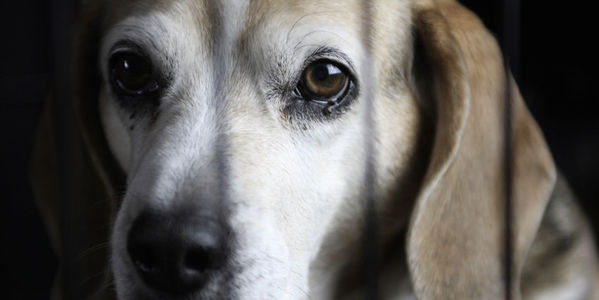
Beagle puppies would like a loving New Year!

Please, please sign this petition to stop Beagle puppies being bred for slaughter!

Not going to add anything more than to republish in full a recent CARE2 Petition.

ooOOoo

471427-1438026925-wideStop the Beagle puppy animal testing breeding facility!

  • BY: Jen Johnson
  • TARGET: Greg Clark, Secretary of State for Communities and Local government

Unless we take action to stop it, a new puppy farm will open in the UK with the purpose of breeding beagles for animal testing experiments.

Click here to sign the petition demanding the government revoke its approval for this horrific facility.

According to the National Anti-Vivisection Society, dogs taking part in scientific experiments are made to inhale toxic substances through masks, force feed through tubes, and are strapped in harnesses while being injected with drugs.

The facility is owned by a US firm and would be Britain’s second facility for breeding beagles specifically to be cut open and experimented on while still alive.

The other facility breeds 3,000 beagles for animal testing each year.

Dozens of celebrities have spoken out against this farm. Join Ricky Gervais, Queen guitarist Dr Brian May and Downton Abbey’s Peter Egan: sign this petition to demand the government stop the construction of a new cruelty-laden dog breeding facility.

PLEASE SIGN NOW

ooOOoo

As at 09:30 PST yesterday, the target of 310,000 supporters of the petition was just short by 761 persons. Fingers and toes crossed that by the time this post is published the target will have been met. I know there are many caring readers of this blog who wouldn’t hesitate for a moment to sign the petition.

Thank you!

Let them grow up as happy beagles!

Changes to the Blog

No! It’s not your eyes! 😉

I should have sent this out earlier to you all.

For a few hours ago the WordPress theme I am using on Learning from Dogs was changed.

The change is necessary to allow a number of eCommerce features to be added to the blog in connection with me being able to sell my book, both in paperback and eBook formats, directly to you good people.

Plus there’s a real bonus.

This theme is mobile friendly.

In other words, everything on Learning from Dogs will be much, much easier to read on tablets and smartphones.

Finally, if anyone is within reach of Grants Pass then you have a warm welcome to come along on Saturday, December 12th. There will be some specials available to visitors only.

Layout 1

More and more learning from dogs!

This was sent to me by neighbour Jim Goodbrod.

(Jim also wrote the foreword to my book!)

It comes from a post over on The Brandbuilder Blog: here is a link to the original article.

ooOOoo

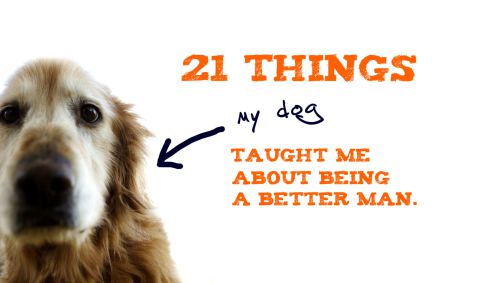
Twenty-one things my dog taught me about being a better man.

June 7, 2010 by Olivier Blanchard

sasha003

We had to put our golden retriever to sleep this weekend, our friend of fifteen years, our family’s faithful guardian and companion, and one of the kindest, most loyal and giving souls I have ever met. True to her breed, Sasha was courageous, tender and selfless until the end.

I was trying to figure out how to give her a worthy send-off here on The BrandBuilder blog, and settled on some of the things she taught me over the years. Or rather, the things I didn’t realize she had taught me until this past week, much of which I spent caring for her, as she could no longer take care of herself. She and I had some long chats, in our own way, and the old girl was much wiser than I gave her credit for.

Are there business lessons in this list? Yes. There are. But all are deeply human lessons at the core. If being human can make a business better, if it can fuel its soul (or even simply give it one), then yes, let these be business lessons. But don’t ever forget that what makes a business truly great isn’t technology or design or a fancy logo. Those are expressions of something deeper. Something more visceral and powerful and true. What makes a business great, what makes it special, worthy of a connection, worthy of trust and loyalty, admiration and respect, even love, always starts with a beating heart, not a beeping cash register. (One is the cause, and the other one of many effects. Don’t lose sight of that distinction. Horse before cart: Soul drives love. Love drives business.)

It’s so easy to lose sight of what’s important in our lives. And this isn’t me being overly sentimental because I just lost my dog. I mean, yes, sure, okay… But there’s also something to this: That sentimentality, that emotion, these things that make us connect with other souls is at the heart of EVERYTHING this blog has been about these last few years: Business, design, marketing, social media, communications, corporate responsibility, best practices… No company can ever be great unless it can tap into the very essence of what makes us want to connect with each other, and no executive or business manager or cashier can ever truly be great at their jobs unless they also tap into the very thing that makes genuine human connections possible. If ever there was a secret to successfully building a brand, a lovebrand, the kind that people will fight for and whose mark they will tattoo on their bodies, it is this. The rest is merely execution.

If you only walk away with one bit of wisdom from this post, let it be this: You cannot build a better business unless you first become a better human being. Everything that strips you of your humanity, of your empathy, of your ability to connect with others is bad for business. It’s bad practice. It is doomed to fail in the end.

As my good friend John Warner noted yesterday, “If more people were as loyal and loving as dogs the world would be a better place.” (source) And he’s right. How do you become a better human being then? Well, that’s up to you, but if you had asked Sasha, she might have given you a few pointers of her own. Granted, she was never a Fortune 500 C.M.O. She didn’t design the iPad. She didn’t invent the internet or write a book. She never presented at a conference. All she did was hang out with me and Chico. We went on car rides. She watched me work. She lived the simple life of a dog, uncluttered by Twitter followers and Hubspot rankings and the drive to publish and present case studies. She was a dog, and so her perspective is a little different from what you may be used to. At any rate, here are twenty-one she and I discussed at length last week. I hope they will be as valuable to you as they now are to me.

Twenty-one things my dog taught me about being a better man:

1. Be true to your own nature. There’s no point in faking it. A golden retriever isn’t a chihuahua or a pug or a greyhound, and for good reason. Being comfortable in your own skin is 90% of the trick to rocking out your life. Not everyone is meant to be Rintintin or a seeing-eye dog or an Iditarod racer. It’s okay. Find yourself and embrace your nature. That’s always a great place to start.

2. Be true to the ones you love. Your friends, your family, your tribe, your pack. A life lived for others is a life well-lived. Selfish pursuits aside, ambition often grows hollow when turned inwardly instead of outwardly. It’s one thing to want to be pack leader, but there is just as much value and honor in serving than in leading. When in doubt, see item number one.

3. Never say no to a chance to go on a car ride. When the days grow short, I guarantee you’ll wish you’d have gone on more car rides.

4. Leashes are the enemy. Avoid them at all cost.

5. People are strange. So much potential, yet here they are, doing everything they can to complicate rather than simplify their lives. It’s puzzling.

6. Belly scratches.

7. The end isn’t pretty, but if you can face it with dignity and grace, none of your body’s weaknesses will matter. Your heart, your courage, your spirit is what people will see and remember. This isn’t only applicable in your last days and weeks. It’s applicable every day of your life. Adversity happens. It’s how you deal with it that matters.

8. Forgiveness is easier for dogs than for humans, but humans have opposable thumbs and the ability to speak, so it all balances out in the end.

9. Your bark is your own. No one has one quite like yours. Own it. Love it. Project it.

10. Trust your instincts. They rarely steer you wrong. The feeling in your gut though, that’s probably just something you ate.

11. Just because you’re meant to live on land doesn’t mean you can’t feel at home in water. Play outside the safety zone. Swim in the deep end. Dive in. We’re all designed to do more than the obvious.

12. Play more. The game is irrelevant. Just play. Tip: Exploring is play. Having adventures is play. Finding out what’s behind the next hill is play.

13. Your body growing old doesn’t mean you can’t be a puppy at heart. Actually, the first should have no impact on the latter. If you find that it does, take a step back, regroup, and restart. Always be a puppy at heart.

14. Humans aren’t all bad. But they aren’t all good either. Choose yours wisely.

15. Always keep that 20% wolf in you. If you ever give it up, you’re done. A dog without a little wildness in the blood isn’t a dog. It’s a furry robot. The beauty of a great dog doesn’t lie in its obedience but in its loyalty. Loyalty is a choice. Dogs choose to be dogs and not wolves. That’s what makes them so special.

16. Running full bore across a field in the rain.

17. There are no mysteries. Take cats, for example: Half rat, half badger. Crap in a box. Eat rodents. Where’s the mystery in that? If you look hard enough, you can figure most things out for yourself. The world isn’t as complicated as it sometimes seems.

18. Sometimes, you have to back up your growl with a bite. Go with it. Some people like to test your bark-to-bite ratio. With those “inquisitive” types, a little education goes a long way. As much as it sucks to have to go there, it is sometimes necessary. (It’s what the fangs are for.) Your territory, your space, your safety… They’re worth defending. Make a show of it once, and chances are you’ll never have to teach anyone a lesson again.

19. Being alone is no way to go through life. We’re pack animals. Humans, dogs, same thing. We need others to make all of this worthwhile. As an aside, if we live through others, why not also live for others, even if only a little bit? It isn’t that much of a stretch.

20. When you chase the ball, CHASE the fucking ball. Two reasons: a) It’s a chase. You don’t half-ass a chase. You go all out. It’s what you do. It’s the point. b) You don’t want some other mutt to get to the ball before you and slobber it all up, do you?

21. In the end, you will revisit your adventures, your battles, your chases, your voyages and all the excitement of your life with bemused pride, but it’s the quiet moments with loved ones that your mind will settle on. The comfort of those days when all you did was spend lazy hours with them, your head on their lap, their’s on yours, taking in the afternoon sun and the hundreds of fleeting stories carried like whispers on the breeze, those are the memories that will stay with you to the end and beyond.

Never give up on your thirst for life, on the beauty subtle moments, and on chasing that ball as hard and fast as your legs and heart will carry you.

Godspeed, Sasha.

Sasha (1995 - 2010) R.I.P.
Sasha (1995 – 2010) R.I.P.

ooOOoo

Shortly after completing today’s post, I read the following. It seemed appropriate to include it today.

When you talk, you are only repeating what you know,

But if you listen, you may learn something new.

It is one of the Dalai Lama’s sayings.

You all take care out there.

Food, agriculture, and our climate.

Locavore or vegetarian? What’s the best way to reduce climate impact of food?

With Thanksgiving Day just behind us and Christmas just around the corner, this is the season of feasting.

Just last Monday I published an essay written by George Monbiot, Pregnant Silence, that highlighted the impact on our climate of modern food production. Here are a couple of paragraphs from that essay:

Freshwater life is being wiped out across the world by farm manure. In England, as I reported last week, the system designed to protect us from the tide of crap has comprehensively broken down. Dead zones now extend from many coasts, as farm sewage erases ocean life across thousands of square kilometres.

Livestock farming causes around 14% of the world’s greenhouse gas emissions: slightly more than the output of the world’s cars, lorries, buses, trains, ships and planes. If you eat soya, your emissions per unit of protein are 20 times lower than eating pork or chicken, and 150 times lower than eating beef.

Thus it seemed both timely and appropriate to republish a further essay on the topic. This one published in The Conversation by Elliott Campbell, who is Associate Professor, Environmental Engineering, at the University of California.  It is republished here under the terms of essays published in The Conversation.

ooOOoo

Locavore or vegetarian? What’s the best way to reduce climate impact of food?

November 25, 2015

Elliott Campbell

This year’s Thanksgiving feast falls only a few days before the start of the global climate summit in Paris. Although the connections are not always obvious, the topic of food – and what you choose to eat – has a lot to do with climate change.

Our global agriculture system puts food on the table but it also puts greenhouse gases (GHG) in the air, which represent a huge portion of global emissions. GHG emissions come directly from farms such as methane from cows and nitrous oxide from fertilized fields, while other emissions come from the industries that support agriculture, such as fertilizer factories that consume fossil fuels.

Still other emissions come from natural lands, which have massive stocks of natural carbon stored in plants and soils. When natural lands are cleared to make room for more food production, the carbon in those natural pools is emitted to the atmosphere as carbon dioxide.

Adding all these emissions together makes agriculture responsible for between roughly one fifth and one third of all global anthropogenic, or man-made, greenhouse gas emissions.

How can these emissions be reduced? My own research through the University of California Global Food Initiative has focused on evaluating a wide range of factors from biofuels to local food systems.

Undoubtedly, broad emissions reductions must come from political action and industry commitments. Nevertheless, an enlightened consumer can also help achieve meaningful reductions in GHG emissions, particularly for the case of food. The trick is to understanding what food means for your personal carbon footprint and how to effectively shrink this footprint.

On par with electricity

Zooming in from the global picture on emissions to a single home reveals how important our personal food choices are for climate change. You can use carbon footprint calculators, such as the University of California CoolClimate Tool, to get an idea of how important food is in relation to choices we make about commuting, air travel, home energy use, and consumption of other goods and services.

For the average U.S. household, food consumption will be responsible for about the same GHG emissions as home electricity consumption for the average US household.

Measuring the greenhouse gas impact of different foods is complex but in general, it’s commonly agreed that plant-based diets have a lower carbon footprint. davidwoliver/flickr, CC BY-NC

That’s a significant portion of an individual’s GHG footprint but it could be seen as a blessing in disguise. While you may be stuck with your home or your vehicle for some time and their associated GHG emissions, food is something we purchase with great frequency. And every trip to the grocery store or farmer’s market is another opportunity for an action that has a significant and lasting impact on our climate.

Making concrete decisions, though, is not always straight-forward. Many consumers are faced with a perplexing array of options from organic to conventional foods, supermarkets to farmers markets, and genetically modified organisms to more traditional varieties.

And in truth, the carbon footprint of many food options is disputed in the scientific literature. Despite the need for more research, there appears to be a very clear advantage for individuals to chose a more plant-based diet. A meat-intensive diet has more than twice the emissions of a vegan diet. Reducing the quantity of meat (particularly red meat) and dairy on the table can go a long way to reducing the carbon footprint of your food.

Food miles and water recycling

Local food systems are popularly thought to reduce GHG emissions through decreased food transport or food miles. But in many cases food miles turn out to be a meaningful but small piece of the overall GHG emissions from food.

For example, a broad analysis of the US food supply suggests that food miles may be responsible for less than 10% of the GHG emissions associated with food. This general trend suggests that where you get your food from is much less important than first-order issues, such as shifting to a more plant-based diet.

A little-appreciated way of reducing the carbon footprint of food is to recycle nearby water rather than pump it long distances. The Pajaro Valley Water Management Agency (PVWMA) Water Resources Center in California sanitizes wastewater for direct use or blending with ground (well) water. US Department of Agriculture, CC BY

Where, then, does this leave a rapidly emerging local food movement?

For starters, there are some cases where food miles have greater importance. For example, food miles can play a big part in the carbon footprint of foods when airplanes or refrigeration are required during transport.

There is, however, untapped potential for locally produced food to deliver carbon savings around water and fertilizers.

When water is pumped long distances, it can add to food’s carbon footprint. Re-use of purified urban wastewater for irrigating crops represents one strategy for addressing this challenge but is only economically and environmentally feasible when food production is in close proximity to cities.

Using fossil fuels to produce fertilizers, such as ammonia, can also be a big piece of the carbon footprint of food. Nutrients in reclaimed wastewater and urban compost may provide a low-carbon alternative to fossil fuel-based fertilizers. But similar to water re-use, reusing nutrients is most easily done when there is a short distance between food production and consumption.

To be sure, buying local food doesn’t imply that food or nutrient recycling has happened. But developing local food systems could certainly be a first step towards exploring how to close the water and nutrient loop.

ooOOoo

I am sure many, as with me, tend not to follow through on all the links in an online essay. But there was one that really caught my eye. It was the CoolClimate Calculator on the Berkeley Edu website. It allows one to fill in a number of figures in terms of living, travel, food and more, and determine one’s total tons CO2/year emitted and how that compares with other people in your neighbourhood.  Unfortunately, it only calculates CO2/year for US locations. Does anyone know of similar calculators online in, say, the United Kingdom? Would love to know.

And another dog food recall

I know I did say about taking a day off but this was so easy to share.

ooOOoo

Dear Fellow Dog Lover,

On November 25, 2015, Blue Buffalo announced the recall of one lot of its Cub Size Wilderness Wild dog chews because the product has the potential to be contaminated with Salmonella.

Salmonella is a bacteria that can affect the health of both pets and humans.

To learn which products are affected, please visit the following link:
Blue Buffalo Dog Chews Recall of November 2015

Please be sure to share the news of this alert with other pet owners.

Mike Sagman, Editor
The Dog Food Advisor

ooOOoo

That link offers the following:

Blue Buffalo Dog Chews Recall of November 2015

November 25, 2015 — Blue Buffalo Company is voluntarily recalling one lot of its Cub Size Wilderness Wild Chews Bones because it has the potential to be contaminated with Salmonella.

blue-buffalo-wilderness-chews-recall

What’s Recalled?

The recalled product comes individually shrink-wrapped in plastic with the UPC number 840243110087 printed on a sticker affixed to the product.
It has an expiration date of November 4, 2017 — printed as “exp 110417” on the shrink-wrap.

Consumers should look at the UPC Code and expiration date on the product package to determine if it is subject to the voluntary recall.

The voluntary recall is limited to the following product and production lot:

  • Cub Size Wilderness Wild Chews Bone
  • UPC Code: 840243110087
  • Expiration Date: November 4, 2017

Where Was It Distributed?

The product was distributed starting November 19, 2015 in PetSmart stores located in the following 9 states:

California
Kansas
Michigan
Minnesota
Montana
Nevada
Oregon
Utah
Washington

What Caused the Recall?

Routine testing at the manufacturing site revealed the presence of Salmonella in the product.
No illnesses have been reported to date and no other Blue Buffalo products are affected.

About Salmonella

Salmonella can affect animals eating the product and there is risk to humans from handling contaminated pet products, especially if they have not thoroughly washed their hands after having contact with the products or any surfaces exposed to these products.

Healthy people infected with Salmonella should monitor themselves for some or all of the following symptoms: nausea, vomiting, diarrhea or bloody diarrhea, abdominal cramping and fever.

Rarely, Salmonella can result in more serious ailments including arterial infections, endocarditis, arthritis, muscle pain, eye irritation and urinary tract symptoms.

Consumers exhibiting these signs after having contact with this product should contact their healthcare provider.

Pets with Salmonella infections may have decreased appetite, fever and abdominal pain. Other clinical signs may include lethargy, diarrhea or bloody diarrhea, and vomiting.

Infected but otherwise healthy pets can be carriers and infect other animals or humans.

If your pet has consumed the recalled product and has these symptoms, please contact your veterinarian.

What to Do?

Consumers who have purchased the product subject to this recall are urged to dispose of the product or return it to the place of purchase for full refund.
Consumers with questions may contact Blue Buffalo at: 888-641-9736 from 8 AM to 5 PM ET Monday through Friday and the weekend of November 28, 2015.

Or by email at Bluebuffalo4260@stericycle.com for more information.

U.S. citizens can report complaints about FDA-regulated pet food products by calling the consumer complaint coordinator in your area.

Or go to http://www.fda.gov/petfoodcomplaints.

Canadians can report any health or safety incidents related to the use of this product by filling out the Consumer Product Incident Report Form.

ooOOoo

Truly hope no readers of Learning from Dogs are affected. (Perhaps better put as no readers’ dogs!)

You couldn’t make it up!

However hard one tried to!

LfDFrontCoverebook
In Chapter Eight, Behaviours and Relationships, I speak of how the development of humans has been, unsurprisingly, the result of our human behaviours. Adding that it is likely that our behaviours have been damaging, in varying degrees, to the survival of our species and countless others for a very long time. Continuing:

But 2,000 years ago, the global population of man was only 300 million persons[1]. It took 1,200 years for that global population to become 1 billion persons; in 1800. Now track the intervals as we come forward in time.

In 1927, just 127 years later, the two-billionth baby was born. In 1960, only 33 years on, came the birth of the three-billionth baby. Just 16 years later, in 1974, the four-billionth baby was born. In 1987, now only 13 years later, we have a population of five billion persons. Around October 1999, the sixth-billionth baby was born.
The growth rate of global population is slowing[2] but nevertheless it is trending to a billion additional persons every decade. In other words, a 100-million population growth every year, or about 270,000 more persons every single day.

Combine man’s behaviours rooted in times way back with this growth in population and we have the present situation. A totally unsustainable situation for one basic and fundamental reason. We all live on a finite planet.

[1] http://en.wikipedia.org/wiki/Population_growth
[2] According to UN’s 2010 revision to its population projections, world population will peak at 10.1bn in 2100 compared to 7bn in 2011. A 2014 paper by demographers from several universities and the United Nations Population Division forecast that the world’s population will reach about 10.9 billion in 2100 and continue growing thereafter. However, some experts dispute the UN’s forecast and have argued that birthrates will fall below replacement rate in the 2020s. According to these forecasters, population growth will be only sustained till the 2040s by rising longevity but will peak below 9bn by 2050.

A growth of about 270,000 more persons every single day!

I am sure that I am not alone in seeing this growth in our population as something that is both unsustainable and a critical component of long-term damage to our planet.

But George Monbiot in a recent essay, in true Monbiot style, highlights an aspect of our human population and the damage resulting that would have never previously occurred to me.

Read it and see if you don’t agree likewise. (Again, there are just too many links in George’s essay to reconstruct in this republishing and, as the other day, I have highlighted those phrases that are a link to other material in red. Go here if you wish to further investigate those links.)

ooOOoo

Pregnant Silence

19th November 2015

It’s about time we discussed the real population crisis.

By George Monbiot, published in the Guardian 18th November 2015

This column is about the population crisis. About the breeding that’s laying waste to the world’s living systems. But it’s probably not the population crisis you’re thinking of. This is about another one, that we seem to find almost impossible to discuss.

You’ll hear a lot about population in the next three weeks, as the Paris climate summit approaches. Across the airwaves and on the comment threads it will invariably be described as “the elephant in the room”. When people are not using their own words, it means they are not thinking their own thoughts. Ten thousand voices each ask why no one is talking about it. The growth in human numbers, they say, is our foremost environmental threat.

At their best, population campaigners seek to extend women’s reproductive choices. Some 225 million women have an unmet need for contraception. If this need were answered, the impact on population growth would be significant, though not decisive: the annual growth rate of 83 million would be reduced to 62m (1). But contraception is rarely limited only by the physical availability of contraceptives. In most cases, it’s about power: women are denied control of their wombs. The social transformations they need are wider and deeper than donations from the other side of the world are likely to achieve.

At their worst, they seek to shift the blame from their own environmental impacts. Perhaps it’s no coincidence that so many post-reproductive white men are obsessed with human population growth, as it’s about the only environmental problem of which they can wash their hands. Nor, I believe, is it a coincidence that of all such topics this is the least tractable. When there is almost nothing to be done, there is no requirement to act.

Such is the momentum behind population growth, an analysis in the Proceedings of the National Academy of Sciences discovered, that were every government to adopt the one-child policy China has just abandoned, there would still be as many people on Earth at the end of this century as there are today. If two billion people were wiped out by a catastrophe in mid-century, the planet would still hold a billion more by 2100 than it does now.

If we want to reduce our impacts this century, the paper concludes, it’s consumption we must address. Population growth is outpaced by the growth in our consumption of almost all resources. There is enough to meet everyone’s need, even in a world of 10 billion people. There is not enough to meet everyone’s greed, even in a world of 2 billion people.

So let’s turn to a population crisis over which we do have some influence. I’m talking about the growth in livestock numbers. Human numbers are rising at roughly 1.2% a year. Livestock numbers are rising at around 2.4% a year. By 2050, the world’s living systems will have to support about 120m tonnes of extra human, and 400m tonnes of extra farm animals(2).

Raising them already uses three quarters of the world’s agricultural land. One third of our cereal crops are used to feed them. This may rise to roughly half by 2050. More people will starve as a result, because the poor rely mainly on grain for their subsistence, and diverting it to livestock raises the price. Now the grain that farm animals eat is being supplemented by oil crops, particularly soya, for which the forests and savannahs of South America are being cleared at shocking rates.

This might seem counter-intuitive, but were we to eat soya, rather than meat, the clearance of natural vegetation required to supply us with the same amount of protein would decline by 94%. Producing protein from chickens requires three times as much land as protein from soybeans. Pork needs nine times, beef 32 times.

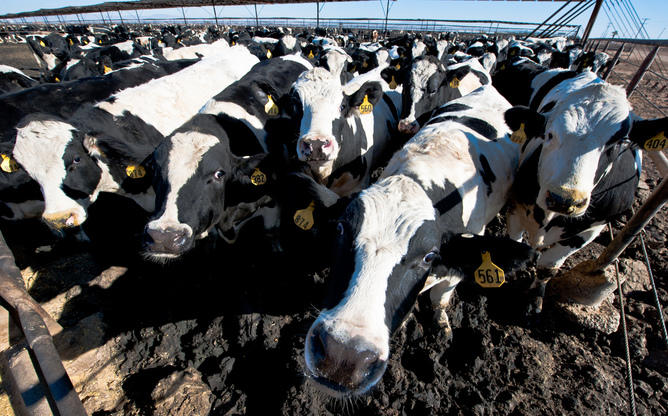
A recent paper in the journal Science of the Total Environment suggests that our consumption of meat is likely to be “the leading cause of modern species extinctions”. Not only is livestock farming the major reason for habitat destruction and the killing of predators, but its waste products are overwhelming the world’s capacity to absorb them. Factory farms in the US generate 13 times as much sewage as the human population. The dairy farms in Tulare county, California produce five times as much as New York City.

Freshwater life is being wiped out across the world by farm manure. In England, as I reported last week, the system designed to protect us from the tide of crap has comprehensively broken down. Dead zones now extend from many coasts, as farm sewage erases ocean life across thousands of square kilometres.

Livestock farming causes around 14% of the world’s greenhouse gas emissions: slightly more than the output of the world’s cars, lorries, buses, trains, ships and planes. If you eat soya, your emissions per unit of protein are 20 times lower than eating pork or chicken, and 150 times lower than eating beef.

So why is hardly anyone talking about the cow, pig, sheep and chicken in the room? Why are there no government campaigns to reduce the consumption of animal products, just as they sometimes discourage our excessive use of electricity? A survey by the Royal Institute of International Affairs found that people are not unwilling to change their diets, once they become aware of the problem, but that many have no idea that livestock farming damages the living world.

It’s not as if eating less meat and dairy will harm us. If we did as our doctors advise, our environmental impacts would decline in step with heart disease, strokes, diabetes and cancer. British people eat, on average, slightly more than their bodyweight in meat every year, while Americans consume another 50%: wildly more, in both cases, than is good for us or the rest of life on Earth.

But while plenty in the rich world are happy to discuss the dangers of brown people reproducing, the other population crisis scarcely crosses the threshold of perception. Livestock numbers present a direct moral challenge, as in this case we have agency. Hence the pregnant silence.

www.monbiot.com

Footnotes:

  1. While the number of unintended pregnancies would fall by 52m (or 70%), this does not mean that the number of babies would fall by the same amount. The Guttmacher/UNFPA report breaks down the outcome thus: “21 million fewer unplanned births; 24 million fewer abortions; six million fewer miscarriages; and 0.6 million fewer stillbirths.”
  2. Additional global meat consumption by this date is estimated to be roughly 200 million tonnes. Boned meat comprises roughly half the weight of a living animal. So total additional livestock biomass will be in the order of 400 million tonnes, or 400 billion kg. The average human weight is 52 kg and the anticipated rise in population by 2050 is 2.3 billion (the median estimate is 9.7 billion by that date). So the additional human weight is likely to be somewhere around 120 billion kg.

ooOOoo

Powerful reasons to turn vegetarian or vegan. And well done if you are already there. Well done, indeed!

Keeping up with yesterday!

Procrastination is the art of keeping up with yesterday.

Can’t claim credit for the sub-heading; it was taken from BrainyQuote.

donmarquis107414

However, the reason I went looking for a quotation on procrastinating was that I’m doing research for a fairly “heavy” post for tomorrow, and was looking for something quick and easy for today.

My blog folder came up with an essay from The Conversation website that is rather fun. It is republished here on Learning from Dogs within the terms of The Conversation.

ooOOoo

The psychological origins of procrastination – and how we can stop putting things off

October 7, 2015

Authors: Elliot Berkman, Assistant Professor, Psychology, University of Oregon, and Jordan Miller-Ziegler, PhD Candidate in Psychology, University of Oregon.

“I love deadlines,” English author Douglas Adams once wrote. “I love the whooshing noise they make as they go by.”

We’ve all had the experience of wanting to get a project done but putting it off for later. Sometimes we wait because we just don’t care enough about the project, but other times we care a lot – and still end up doing something else. I, for one, end up cleaning my house when I have a lot of papers to grade, even though I know I need to grade them.

So why do we procrastinate? Are we built to operate this way at some times? Or is there something wrong with the way we’re approaching work?

These questions are central to my research on goal pursuit, which could offer some clues from neuroscience about why we procrastinate – and how to overcome this tendency.

To do, or not to do

It all starts with a simple choice between working now on a given project and doing anything else: working on a different project, doing something fun or doing nothing at all.

The decision to work on something is driven by how much we value accomplishing the project in that moment – what psychologists call its subjective value. And procrastination, in psychological terms, is what happens when the value of doing something else outweighs the value of working now.

This way of thinking suggests a simple trick to defeat procrastination: find a way to boost the subjective value of working now, relative to the value of other things. You could increase the value of the project, decrease the value of the distraction, or some combination of the two.

For example, instead of cleaning my house, I might try to focus on why grading is personally important to me. Or I could think about how unpleasant cleaning can actually be – especially when sharing a house with a toddler.

It’s simple advice, but adhering to this strategy can be quite difficult, mainly because there are so many forces that diminish the value of working in the present.

The distant deadline

People are not entirely rational in the way they value things. For example, a dollar bill is worth exactly the same today as it is a week from now, but its subjective value – roughly how good it would feel to own a dollar – depends on other factors besides its face value, such as when we receive it.

The tendency for people to devalue money and other goods based on time is called delay discounting. For example, one study showed that, on average, receiving $100 three months from now is worth the same to people as receiving $83 right now. People would rather lose $17 than wait a few months to get a larger reward.

Other factors also influence subjective value, such as how much money someone has recently gained or lost. The key point is that there is not a perfect match between objective value and subjective value.

Delay discounting is a factor in procrastination because the completion of the project happens in the future. Getting something done is a delayed reward, so its value in the present is reduced: the further away the deadline is, the less attractive it seems to work on the project right now.

Studies have repeatedly shown that the tendency to procrastinate closely follows economic models of delay discounting. Furthermore, people who characterize themselves as procrastinators show an exaggerated effect. They discount the value of getting something done ahead of time even more than other people.

One way to increase the value of completing a task is to make the finish line seem closer. For example, vividly imagining a future reward reduces delay discounting.

No work is ‘effortless’

Not only can completing a project be devalued because it happens in the future, but working on a project can also be unattractive due to the simple fact that work takes effort.

New research supports the idea that mental effort is intrinsically costly; for this reason, people generally choose to work on an easier task rather than a harder task. Furthermore, there are greater subjective costs for work that feels harder (though these costs can be offset by experience with the task at hand).

This leads to the interesting prediction that people would procrastinate more the harder they expect the work to be. That’s because the more effort a task requires, the more someone stands to gain by putting the same amount of effort into something else (a phenomenon economists call opportunity costs). Opportunity costs make working on something that seems hard feels like a loss.

Sure enough, a group of studies shows that people procrastinate more on unpleasant tasks. These results suggest that reducing the pain of working on a project, for example by breaking it down into more familiar and manageable pieces, would be an effective way to reduce procrastination.

Your work, your identity

When we write that procrastination is a side effect of the way we value things, it frames task completion as a product of motivation, rather than ability.

In other words, you can be really good at something, whether it’s cooking a gourmet meal or writing a story, but if you don’t possess the motivation, or sense of importance, to complete the task, it’ll likely be put off.

It was for this reason that the writer Robert Hanks, in a recent essay for the London Review of Books, described procrastination as “a failure of appetites.”

The source of this “appetite” can be a bit tricky. But one could argue that, like our (real) appetite for food, it’s something that’s closely intertwined with our daily lives, our culture and our sense of who we are.

So how does one increase the subjective value of a project? A powerful way – one that my graduate students and I have written about in detail – is to connect the project to your self-concept. Our hypothesis is that projects seen as important to a person’s self-concept will hold more subjective value for that person.

It’s for this reason that Hanks also wrote that procrastination seems to stem from a failure to “identify sufficiently with your future self” – in other words, the self for whom the goal is most relevant.

Because people are motivated to maintain a positive self-concept, goals connected closely to one’s sense of self or identity take on much more value.

Connecting the project to more immediate sources of value, such as life goals or core values, can fill the deficit in subjective value that underlies procrastination.

ooOOoo

So there; glad that’s clear for us all.

Cosy-Lists-2

Mustn’t delay – I need to write down a list of all the things I’m not doing today!

Forgive the introspection, Part One

This is not some intellectual exercise; far from it!

As often happens, a number of seemingly disconnected articles and reports seem to have provided a common theme. A theme that has previously been aired on Learning from Dogs yet a theme that always needs to be in the front of our faces: integrity.

Here are some of those articles.

Firstly, I presented recently in this place an essay from George Monbiot that proposed (my italics):

The revelation that humanity’s dominant characteristic is, er, humanity will come as no surprise to those who have followed recent developments in behavioural and social sciences. People, these findings suggest, are basically and inherently nice.

Patrice Ayme, however, pointed out in a reply:

Saying that “people are good, while tolerating bad things” is an ineffective morality. The crux, indeed, is the moral nature of institutions, controlled by a few, not whether humans are kind or not.

That struck me as central to the theme: it is the terrible lack of integrity that we see in those who hold positions of power that totally overrides the premise that people are fundamentally good.

The next article read was an essay by Professor Michael Perelman published on Naked Capitalism. Perelman is a professor of economics at California State University. He also writes at Unsettling Economics.  Here is a little from that essay:

The architecture of inequality must be carefully constructed. As the founding fathers of the United States clearly understood, democracy must be kept in check. For this purpose, they invented the Electoral College to prevent the president from being elected by popular vote.

To ensure an effective electoral system, an obsequious media must be skilled in drowning the public with a flood of misinformation to maintain a constant level of fear to make them more likely to side with the CS (corporate system).

If there is ever one example of how that lack of integrity manifests itself in our world it is through inequality. Professor Perelman’s essay is clearly written “tongue-in-cheek” but that doesn’t lessen the impact of his essay. Try his closing paragraphs: (CES = a subset of CS; WEM = The Wondrous Efficiency of Markets)

Regulators are not the only ones to see the benefits of working with the CES. Politicians who resign or are defeated are almost inevitably destined to enjoy the benefits of their dedication to the WEM with the returns from taking a rewarding position with a major corporation, lobbying, or even a lucrative contract to write a book that virtually no one would want to read.

When done correctly, this system works magnificently, although it periodically it seems to fall apart until the detested government apparatus rescues it. In the meantime, huge amounts of wealth and income fall into the hands of the top 1%, the people of greatest importance, while the rest of the public can enjoy watching the spectacular performance of the CES, a reward worthy of their place in society especially because envy of the wealthy brethren will obviously make them work harder to succeed, adding to WEM.

All power to WEM!

Does this have anything to do with dogs?

Yes!

Let me steal a little from Chapter 16: Community from my forthcoming book:

When dogs lived in the wild, their natural pack size was about fifty animals and there were just three dogs that had pack status: the mentor, minder and nanny dogs, as described in Chapter 5. [Pharaoh: the Teaching Dog] As was explained in that chapter, all three dogs of status are born into their respective roles and their duties in their pack are instinctive. There was no such thing as competition for that role as all the other dogs in that natural pack grouping would be equal participants with no ambitions to be anything else.

Anyone who has had the privilege of living with a group of dogs will know beyond doubt that they develop a wonderful community strength. Let’s reflect on the lessons being offered for us in this regard by our dogs.

To reinforce the fact that this is not a new phenomena, at the time I was drafting my book last November, a new report was issued by the Center of Economic Policy Research (CEPR) on the latest (American) Survey of Consumer Finances. It painted a picture very familiar to many: the rich becoming richer while those with less wealth are falling further and further behind.

David Rosnick of the CEPR, and one of the report co-authors, made this important observation:

The decline in the position of typical households is even worse than the Consumer Finances survey indicates. In 1989, many workers had pensions. Far fewer do now. The value of pensions isn’t included in these surveys due to the difficulty of determining what they are worth on a current basis. But they clearly are significant assets that relatively few working age people have now.

Sharmini Peries, of The Real News Network, in an interview with David Rosnick, asked:

PERIES: David, just quickly explain to us what is the Consumer Finance Survey. I know it’s an important survey for economists, but why is it important to ordinary people? Why is it important to us?

ROSNICK: So, every three years, the Federal Reserve interviews a number of households to get an idea of what their finances are like, do they have a lot of wealth, how much are their house’s worth, how much they owe on their mortgages, how much they have in the bank account, how much stocks do wealthy people own. This gives us an idea of their situations, whether they’re going to be prepared for retirement. And we can see things like the effect of the housing and stock bubbles on people’s wealth, whether they’ve been preparing for eventual downfalls, how they’ve reacted to various economic circumstances, how they’re looking to the long term. So it’s a very useful survey in terms of finding out how households are prepared and what the distribution of wealth is like.

PERIES: So your report is an analysis of the report. And what are your key findings?

ROSNICK: So, largely over the last 24 years there’s been a considerable increase in wealth on average, but it’s been very maldistributed. Households in the bottom half of the distribution have actually seen their wealth fall, but the people at the very top have actually done very well. And so that means that a lot of people who are nearing retirement at this point in time are actually not well prepared at all for retirement and are going to be very dependent on Social Security in order to make it through their retirement years.

PERIES: So, David, address the gap. You said there’s a great gap between those that are very wealthy and those that are not. Has this gap widened over this period?

ROSNICK: It absolutely has. As, say, the top 5 percent in wealth, the average wealth for people in the top 5 percent is about 66 percent higher in 2013, the last survey that was completed, compared to 1989. By comparison, for the bottom 20 percent, their wealth has actually fallen 420 percent. They basically had very little to start with, and now they have less than little.

PERIES: So the poorer is getting poorer and the richer is getting extremely richer.

ROSNICK: Very much so.

To my way of thinking, if in the period 1989 through to 2013 “the average wealth for (American) people in the top 5 percent is about 66 percent higher” and “for the bottom 20 percent, their wealth has actually fallen 420 percent” it’s very difficult not to see the hands of greed at work and a consequential devastating increase in inequality.

In other words, the previous few paragraphs seemed to present, and present clearly, the widening gap between the ‘haves’ and the ‘have-nots’, comparatively speaking, and that it was now time for society to understand the trends, to reflect on where this is taking us, if left unchallenged, and to push back as hard as we can both politically and socially.

I wrote that shortly before another item appeared in my email ‘in-box’ in the middle of November (2014), a further report about inequality that, frankly, emotionally speaking, just smacked me in the face. It seemed a critical addition to the picture I was endeavouring to present.

Namely, on the 13th October, 2014, the US edition of The Guardian newspaper published a story entitled: US wealth inequality – top 0.1% worth as much as the bottom 90%. The sub-heading enlarged the headline: Not since the Great Depression has wealth inequality in the US been so acute, new in-depth study finds.

The study referred to was a paper released by the National Bureau of Economic Research, Cambridge, MA, based on research conducted by Emmanuel Saez and Gabriel Zucman. The paper’s bland title belied the reality of the research findings: Wealth Inequality in the United States since 1913.

As the Guardian reported:

Wealth inequality in the US is at near record levels according to a new study by academics. Over the past three decades, the share of household wealth owned by the top 0.1% has increased from 7% to 22%. For the bottom 90% of families, a combination of rising debt, the collapse of the value of their assets during the financial crisis, and stagnant real wages have led to the erosion of wealth. The share of wealth owned by the top 0.1% is almost the same as the bottom 90%.

The picture actually improved in the aftermath of the 1930s Great Depression, with wealth inequality falling through to the late 1970s. It then started to rise again, with the share of total household wealth owned by the top 0.1% rising to 22% in 2012 from 7% in the late 1970s. The top 0.1% includes 160,000 families with total net assets of more than $20m (£13m) in 2012.

In contrast, the share of total US wealth owned by the bottom 90% of families fell from a peak of 36% in the mid-1980s, to 23% in 2012 – just one percentage point above the top 0.1%.

The report was not exclusively about the USA. As the closing paragraphs in The Guardian’s article illustrated:

Among the nine G20 countries with sufficient data, the richest 1% of people (by income) have increased their income share significantly since 1980, according to Oxfam. In Australia, for example, the top 1% earned 4.8% of the country’s income in 1980. That had risen to more than 9% by 2010.

Oxfam says that in the time that Australia has held the G20 presidency (between 2013 and 2014) the total wealth in the G20 increased by $17tn but the richest 1% of people in the G20 captured $6.2tn of this wealth – 36% of the total increase.

I find it incredibly difficult to have any rational response to those figures. I am just aware that there is a flurry of mixed emotions inside me and, perhaps, that’s how I should leave it. Nonetheless, there’s one thing that I can’t keep to myself and that this isn’t the first time that such inequality has arisen; the period leading up the the Great Depression of the 1930s comes immediately to mind.

What on earth is coming down the road this time!

If only we truly could learn from our dogs!

A revisit to earlier times.

How time flies!

Last Monday, Jean and I had been living here in Merlin, Oregon for three years.

Why I am explaining this is because my day yesterday ended up being so busy that I ran out of time to focus on writing a fresh new post for you good people.

Thus, I decided to repost something that I published that first week we moved in to our Merlin home. Namely, a post published on the 16th October, 2012 under the heading of The death of the USA?.

So my apologies for you dear readers that recall this from three years ago, and welcome to the many new followers of this place that have signed up since then.

ooOOoo

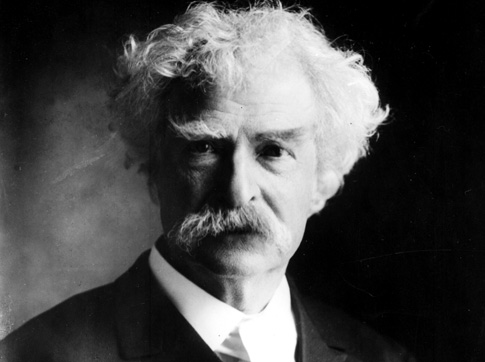
“The reports of my death are greatly exaggerated!” Mark Twain.

Mark Twain

The Mark Twain quotation after hearing that his obituary had been published in the New York Journal.

Mistaken publications of obituaries aren’t as rare as you might expect. A recent example is of Dave Swarbrick, the British folk/rock violinist, who was killed off mistakenly by the Daily Telegraph in April 1999 when they reported that his visit to hospital in Coventry had resulted in his death. He did at least get the opportunity to read a rather favourable account of his life, not something we all get to do, and to deliver the gag “It’s not the first time I have died in Coventry”.

So why have I opened with this quote from Mark Twain?  Read on and I hope all will be clear.

A little under a week ago, I published a couple of posts that proposed that the United States of America is an empire in decline.  The first was What goes up? and the second Might just come down! As a Brit, I well know that aspect of British history!

However a recent conversation with a friend of many years back in England, who has also been a shrewd and wise entrepreneur for longer than I care to remember, argued that the evidence for the ‘end of the USA’ could be challenged.

He cited five reasons why he thought the USA would remain, more or less, in its dominant position.  They were:

  1. Spirit of innovation
  2. Relaxed labour laws
  3. The importance of Mexico
  4. The uncertainty of China in terms of the next ’empire’
  5. The likely energy self-sufficiency for the USA in the near-term.

So let me expand on each of those points.

Spirit of innovation

Let me quote from an article in TIME Magazine of the 5th June, 2011,

Innovation is as American as apple pie. It seems to accord with so many elements of our national character — ingenuity, freedom, flexibility, the willingness to question conventional wisdom and defy authority. But politicians are pinning their hopes on innovation for more urgent reasons. America’s future growth will have to come from new industries that create new products and processes. Older industries are under tremendous pressure. Technological change is making factories and offices far more efficient. The rise of low-wage manufacturing in China and low-wage services in India is moving jobs overseas. The only durable strength we have — the only one that can withstand these gale winds — is innovation.

Now there are plenty who would argue both ways in terms of the future innovation potential for the USA, as a recent article in The Atlantic does, see American Innovation: It’s the Best of Times and the Worst of Times.  But the spirit of innovation will, nonetheless, be a powerful economic potential for the USA for many years to come.

Relaxed labour laws.

Definitely an area that I have little knowledge of except for the subjective notion that compared to many other nations, the laws in the USA are much less of a restraint on economic productivity than elsewhere.

The importance of Mexico.

The importance in the context of providing the USA with a source of cheaper manufacturing facilities.  My English friend thought that this was a significant competitive advantage for the USA.  Now, as it happens, we had a couple staying with us over the week-end of the 6th/7th October.  The husband is a senior manager of Horst Engineering, an American firm based in Guaymas, Sonora County, Mexico.  Here’s a picture from their website,

We are a contract manufacturer of precision machined components and assemblies for aerospace, medical, and other high technology industries. Our core processes include Swiss screw machining, turning, milling, thread rolling, centerless grinding, and assembly. Our extensive supply chain offers our customers a full service logistics solution for managing their precision product requirements. We are ISO9001:2008 and AS9100 registered and proud of our 66 year, three-generation legacy of quality and performance.

I was told that many American and British firms were using Mexico rather than China for a number of reasons.  Not least because Chinese suppliers require full payment before shipment.  Plus that taking into account that financial aspect together with shipping costs and other logistical issues, China wasn’t as ‘cheap’ over all.  Here’s a recent announcement from Rolls Royce,

Rolls-Royce plans new Sonora hub

The burgeoning aerospace industry in Guaymas had its efforts validated recently when the venerable Rolls-Royce chose it as the site for its newest global purchasing office.

Surrounded by several of its aerospace manufacturing suppliers, London-based Rolls-Royce will move into a Guaymas industrial park owned by Tucson-based The Offshore Group to develop a supply hub for commercial jets and military aircraft around the globe.

“Rolls-Royce has very robust booking orders for the next 10 years,” said Joel Reuter, director of communications for Rolls-Royce in North America. “We need to double our production.”

Because a number of Rolls-Royce suppliers already operate in Guaymas, the city was a logical choice, Reuter said.

The uncertainty of China in terms of the next ’empire’

The point made in terms of China taking over ’empire’ status from the USA, as Simon Johnson argues over at Baseline Scenario, is countered by the fact that politically China is an unknown quantity.  Until China endorses some form of democratic process, that unknowingness is not going to disappear.

The likely energy self-sufficiency for the USA in the near-term.

I can’t do better than to ask you to watch this video!  Just 27-minutes long, it is a very interesting review of the energy future of the USA.

As the TED website suggests in terms of why you should listen to Amory Lovins,

Amory Lovins was worried (and writing) about energy long before global warming was making the front — or even back — page of newspapers. Since studying at Harvard and Oxford in the 1960s, he’s written dozens of books, and initiated ambitious projects — cofounding the influential, environment-focused Rocky Mountain Institute; prototyping the ultra-efficient Hypercar — to focus the world’s attention on alternative approaches to energy and transportation.

His critical thinking has driven people around the globe — from world leaders to the average Joe — to think differently about energy and its role in some of our biggest problems: climate change, oil dependency, national security, economic health, and depletion of natural resources.

More on Reinventing Fire may be found here.

So, don’t know about you, but I found those five points deeply convincing.  How about you?  Are the reports of the death of the USA  greatly exaggerated? Do leave a comment.

ooOOoo

Now some three years later on, these five factors still seem to be valid.

What a funny lot we all are!

We must constantly remind ourselves that we are the servants of Nature, not the other way around!

There is only one species of creature on this planet that has the power to destroy its own species, and much else: Homo sapiens!

It’s such an obvious reflection, yet it is also such an incredibly difficult commitment to make. I am speaking of the commitment to do more than “tut, tut” but to make a real difference in how each of us live, ensuring that we are making real changes year by year.

I am being little more than a “smart arse” in saying we should learn from dogs to live in harmony with our planet because, in truth, this is the one key area where we can’t learn from our dogs: we each have to learn for ourselves and influence others to do the same.

All of which is my way of introducing a very recent essay from Tom Dispatch. It now follows, but be aware that there were simply too many links to recreate in my republished version. It is republished with the very kind permission of Tom Engelhardt.

ooOOoo

Tomgram: Michael Klare, Tipping Points and the Question of Civilizational Survival

Posted by Michael Klare at 8:00am, October 8, 2015.

In mid-August, TomDispatch’s Michael Klare wrote presciently of the oncoming global oil glut, the way it was driving the price of petroleum into the “energy subbasement,” and how such a financial “rout,” if extended over the next couple of years, might lead toward a new (and better) world of energy. As it happens, the first good news of the sort Klare was imagining has since come in. In a country where the price of gas at the pump now averages $2.29 a gallon (and in some places has dropped under $1.90), Big Oil has begun cutting back on its devastating plans to extract every imaginable drop of fossil fuel from the planet and burn it. Oil companies have also been laying off employees by the tens of thousands and deep-sixing, at least for now, plans to search for and exploit tar sands and other “tough oil” deposits worldwide.

In that context, as September ended, after a disappointing six weeks of drilling, Royal Dutch Shell cancelled “for the foreseeable future” its search for oil and natural gas in the tempestuous but melting waters of the Alaskan Arctic. This was no small thing and a great victory for an environmental movement that had long fought to put obstacles in the way of Shell’s exploration plans. Green-lighted by the Obama administration to drill in the Chukchi Sea this summer, Shell has over the last nine years sunk more than $7 billion into its Arctic drilling project, so the decision to close up shop was no small thing and offers a tiny ray of hope for what activism can do when reality offers a modest helping hand.

As Klare makes clear today, when it comes to the burning of fossil fuels, reality — if only we bother to notice it — is threatening to offer something more like the back of its hand to us on this embattled planet of ours. He offers a look at a future in which humanity, like various increasingly endangered ecosystems including the Arctic, may be approaching a “tipping point.” Tom

Welcome to a New Planet

Climate Change “Tipping Points” and the Fate of the Earth

By Michael T. Klare

Not so long ago, it was science fiction. Now, it’s hard science — and that should frighten us all. The latest reports from the prestigious and sober Intergovernmental Panel on Climate Change (IPCC) make increasingly hair-raising reading, suggesting that the planet is approaching possible moments of irreversible damage in a fashion and at a speed that had not been anticipated.

Scientists have long worried that climate change will not continue to advance in a “linear” fashion, with the planet getting a little bit hotter most years. Instead, they fear, humanity could someday experience “non-linear” climate shifts (also known as “singularities” or “tipping points”) after which there would be sudden and irreversible change of a catastrophic nature. This was the premise of the 2004 climate-disaster film The Day After Tomorrow. In that movie — most notable for its vivid scenes of a frozen-over New York City — melting polar ice causes a disruption in the North Atlantic Current, which in turn triggers a series of catastrophic storms and disasters. At the time of its release, many knowledgeable scientists derided the film’s premise, insisting that the confluence of events it portrayed was unlikely or simply impossible.

Fast forward 11 years and the prospect of such calamitous tipping points in the North Atlantic or elsewhere no longer looks improbable. In fact, climate scientists have begun to note early indicators of possible catastrophes.

Take the disruption of the North Atlantic Current, the pivotal event in The Day After Tomorrow. Essentially an extension of the Gulf Stream, that deep-sea current carries relatively warm salty water from the South Atlantic and the Caribbean to the northern reaches of the Atlantic. In the process, it helps keep Europe warmer than it would otherwise be. Once its salty water flows into sub-Arctic areas carried by this prolific stream, it gets colder and heavier, sinks to lower depths, and starts a return trip to warmer climes in the south where the whole process begins again.

So long as this “global conveyor belt” — known to scientists as the Atlantic Meridional Overturning Circulation, or AMOC — keeps functioning, the Gulf Stream will also continue to bring warmer waters to the eastern United States and Europe. Should it be disrupted, however, the whole system might break down, in which case the Euro-Atlantic climate could turn colder and more storm-prone. Such a disruption might occur if the vast Greenland ice sheet melts in a significant way, as indeed is already beginning to happen today, pouring large quantities of salt-free fresh water into the Atlantic Ocean. Because of its lighter weight, this newly introduced water will remain close to the surface, preventing the submergence of salty water from the south and so effectively shutting down the conveyor belt. Indeed, exactly this process now seems to be underway.

By all accounts, 2015 is likely to wind up as the hottest year on record, with large parts of the world suffering from severe heat waves and wildfires. Despite all this, however, a stretch of the North Atlantic below Iceland and Greenland is experiencing all-time cold temperatures, according to the National Oceanic and Atmospheric Administration. What explains this anomaly? According to scientists from the Potsdam Institute for Climate Impact Research and Pennsylvania State University, among other institutions, the most likely explanation is the arrival in the area of cold water from the Greenland ice sheet that is melting ever more rapidly thanks to climate change. Because this meltwater starts out salt-free, it has remained near the surface and so, as predicted, is slowing the northern advance of warmer water from the North Atlantic Current.

So far, the AMOC has not suffered a dramatic shutdown, but it is slowing, and scientists worry that a rapid increase in Greenland ice melt as the Arctic continues to warm will pour ever more meltwater into the North Atlantic, severely disrupting the conveyor system. That would, indeed, constitute a major tipping point, with severe consequences for Europe and eastern North America. Not only would Europe experience colder temperatures on an otherwise warmer planet, but coastal North America could witness higher sea levels than those predicted from climate change alone because the Gulf Stream tends to pull sea water away from the eastern U.S. and push it toward Europe. If it were to fail, rising sea levels could endanger cities like New York and Boston. Indeed, scientists discovered that just such a slowing of the AMOC helped produce a sea-level rise of four inches from New York to Newfoundland in 2009 and 2010.
klarepbk2012

In its 2014 report on the status of global warming, the IPCC indicated that the likelihood of the AMOC collapsing before the end of this century remains relatively low. But some studies suggest that the conveyor system is already 15%-20% below normal with Greenland’s melting still in an early stage. Once that process switches into high gear, the potential for the sort of breakdown that was once science fiction starts to look all too real.

Tipping Points on the Horizon

In a 2014 report, “Impacts, Adaptation, and Vulnerability,” Working Group II of the IPCC identified three other natural systems already showing early-warning signs of catastrophic tipping points: the Arctic, coral reefs, and the Amazonian forest. All three, the report suggested, could experience massive and irreversible changes with profound implications for human societies.

The Arctic comes in for particular scrutiny because it has experienced more warming than any other region on the planet and because the impact of climate change there is already so obvious. As the report put it, “For the Arctic region, new evidence indicates a biophysical regime shift is taking place, with cascading impacts on physical systems, ecosystems, and human livelihoods.”

This has begun with a massive melt of sea ice in the region and a resulting threat to native marine species. “For Arctic marine biota,” the report notes, “the rapid reduction of summer ice covers causes a tipping element that is now severely affecting pelagic [sub-surface] ecosystems as well as ice-dependent mammals such as seals and polar bears.” Other flora and fauna of the Arctic biome are also demonstrating stress related to climate change. For example, vast areas of tundra are being invaded by shrubs and small trees, decimating the habitats of some animal species and increasing the risk of fires.

This Arctic “regime shift” affects many other aspects of the ecosystem as well. Higher temperatures, for instance, have meant widespread thawing and melting of permafrost, the frozen soil and water that undergirds much of the Arctic landmass. In this lies another possible tipping-point danger, since frozen soils contain more than twice the carbon now present in the atmosphere. As the permafrost melts, some of this carbon is released in the form of methane, a potent greenhouse gas with many times the warming potential of carbon dioxide and other such gases. In other words, as the IPCC noted, any significant melting of Arctic permafrost will “create a potentially strong positive feedback to accelerate Arctic (and global) warming.” This, in fact, could prove to be more than a tipping point. It could be a planetary catastrophe.

Along with these biophysical effects, the warming of the Arctic is threatening the livelihoods and lifestyles of the indigenous peoples of the region. The loss of summer sea ice, for example, has endangered the marine species on which many such communities depend for food and the preservation of their cultural traditions. Meanwhile, melting permafrost and coastal erosion due to sea-level rise have threatened the very existence of their coastal villages. In September, President Obama visited Kotzebue, a village in Alaska some 30 miles above the Arctic Circle that could disappear as a result of melting permafrost, rising sea levels, and ever bigger storm surges.

Coral Reefs at Risk

Another crucial ecosystem that’s showing signs of heading toward an irreversible tipping point is the world’s constellation of coral reefs. Remarkably enough, although such reefs make up less than 1% of the Earth’s surface area, they house up to 25% of all marine life. They are, that is, essential for both the health of the oceans and of fishing communities, as well as of those who depend on fish for a significant part of their diet. According to one estimate, some 850 million people rely on coral reefs for their food security.

Corals, which are colonies of tiny animals related to sea anemones, have proven highly sensitive to changes in the acidity and temperature of their surrounding waters, both of which are rising due to the absorption of excess carbon dioxide from the atmosphere. As a result, in a visually dramatic process called “bleaching,” coral populations have been dying out globally. According to a recent study by the Worldwide Fund for Nature, coral reef extent has declined by 50% in the last 30 years and all reefs could disappear as early as 2050 if current rates of ocean warming and acidification continue.

“This irreversible loss of biodiversity,” reports the IPCC, will have “significant consequences for regional marine ecosystems as well as the human livelihoods that depend on them.” Indeed, the growing evidence of such losses “strengthens the conclusion that increased mass bleaching of corals constitutes a strong warning signal for the singular event that would constitute the irreversible loss of an entire biome.”

Amazonian Dry-Out

The Amazon has long been viewed as the epitome of a tropical rainforest, with extraordinary plant and animal diversity. The Amazonian tree cover also plays a vital role in reducing the pace of global warming by absorbing vast amounts of carbon dioxide from the atmosphere during the process of photosynthesis. For years, however, the Amazon has been increasingly devastated by a process of deforestation, as settlers from Brazil’s coastal regions clear land for farming and ranching, and loggers (many operating illegally) harvest timber for wood products. Now, as if to add insult to injury, the region faces a new threat from climate change: tree mortality due to a rise in severe drought and the increased forest fire risk that accompanies it.

Although it can rain year-round in the Amazon region, there is a distinct wet season with heavy rainfall and a dry season with much less of it. An extended dry season with little rain can endanger the survival of many trees and increase the risk of wildfires. Research conducted by scientists at the University of Texas has found that the dry season in the southern Amazonian region has grown by a week every decade since 1980 while the annual fire season has lengthened. “The dry season over the southern Amazon is already marginal for maintaining rainforest,” says Rong Fu, the leader of the research team. “At some point, if it becomes too long, the rainforest will reach a tipping point” and disappear.

Because the Amazon harbors perhaps the largest array of distinctive flora and fauna on the planet, its loss would represent an irreversible blow to global biodiversity. In addition, the region hosts some of the largest assemblages of indigenous peoples still practicing their traditional ways of life. Even if their lives were saved (through relocation to urban slums or government encampments), the loss of their cultures, representing thousands of years of adaptation to a demanding environment, would be a blow for all humankind.

As in the case of the Arctic and coral reefs, the collapse of the Amazon will have what the IPCC terms “cascading impacts,” devastating ecosystems, diminishing biodiversity, and destroying the ways of life of indigenous peoples. Worse yet, as with the melting of the Arctic, so the drying-out of Amazonia is likely to feed into climate change, heightening its intensity and so sparking yet more tipping points on a planet increasingly close to the brink.

In its report, the IPCC, whose analysis tends, if anything, to be on the conservative side of climate science, indicated that the Amazon faced a relatively low risk of dying out by 2100. However, a 2009 study conducted by Britain’s famed Meteorological (Met) Office suggests that the risk is far greater than previously assumed. Even if global temperatures were to be held to an increase of 2 degrees Celsius, the study notes, as much as 40% of the Amazon would perish within a century; with 3 degrees of warming, up to 75% would vanish; and with 4 degrees, 85% would die. “The forest as we know it would effectively be gone,” said Met researcher Vicky Pope.

Of Tipping Points and Singularities

These four natural systems are by no means the only ones that could face devastating tipping points in the years to come. The IPCC report and other scientific studies hint at further biomes that show early signs of potential catastrophe. But these four are sufficiently advanced to tell us that we need to look at climate change in a new way: not as a slow, linear process to which we can adapt over time, but as a non-linear set of events involving dramatic and irreversible changes to the global ecosphere.

The difference is critical: linear change gives us the luxury of time to devise and implement curbs on greenhouse gas emissions, and to construct protective measures such as sea walls. Non-linear change puts a crimp on time and confronts us with the possibility of relatively sudden, devastating climate shifts against which no defensive measures can protect us.

Were the Atlantic Meridional Overturning Circulation to fail, for example, there would be nothing we could do to turn it back on, nor would we be able to recreate coral reefs or resurrect the Amazon. Add in one other factor: when natural systems of this magnitude fail, should we not expect human systems to fail as well? No one can answer this question with certainty, but we do know that earlier human societies collapsed when faced with other kinds of profound changes in climate.

All of this should be on the minds of delegates to the upcoming climate summit in Paris, a meeting focused on adopting an international set of restrictions on greenhouse gas emissions. Each participating nation is obliged to submit a set of measures it is ready to take, known as “intended nationally determined contributions,” or INDCs, aimed at achieving the overall goal of preventing planetary warming from exceeding 2 degrees Celsius. However, the INDCs submitted to date, including those from the United States and China, suggest a distinctly incremental approach to the problem. Unfortunately, if planetary tipping points are in our future, this mindset will not measure up. It’s time to start thinking instead in terms of civilizational survival.

Michael T. Klare, a TomDispatch regular, is a professor of peace and world security studies at Hampshire College and the author, most recently, of The Race for What’s Left. A documentary movie version of his book Blood and Oil is available from the Media Education Foundation. Follow him on Twitter at @mklare1.

Follow TomDispatch on Twitter and join us on Facebook. Check out the newest Dispatch Book, Nick Turse’s Tomorrow’s Battlefield: U.S. Proxy Wars and Secret Ops in Africa, and Tom Engelhardt’s latest book, Shadow Government: Surveillance, Secret Wars, and a Global Security State in a Single-Superpower World.

Copyright 2015 Michael T. Klare

ooOOoo

Just to repeat myself in that if you find this essay from Michael Klare one that you want to refer to again, then go across to the version published on TomDispatch so you can follow up the many links in that essay.