A dog naps in the Ikea store in Catania, Italy. (Photo: rewintageboudoir/Instagram)
There’s something particularly homey about the living room vignettes and kitchen setups in the Ikea store in Catania, Italy. Sprawled on the occasional braided rug or curled up under the sleek dining tables are sleeping homeless dogs. They’ve been welcomed into the store by employees who offer them comfort when the temperatures drop.
Giovanna Pecorino says she takes a photo of the dogs each time she visits the store.
“I know those dogs well,” says Pecorino, who owns a vintage clothing shop in Catania. “You find them at the entrance sleeping between the racks, or at the exit between the tables of their restaurant, always with their sweet eyes. I love them. They give me a sense of peace.”
[There are two more photographs on Instagram that I am unable to copy into this post.]
Linda Chartier Scala, an American from Rhode Island who now lives in Noto, Italy, also photographed one of the dogs that made a temporary home in a makeshift Ikea living room. She is very familiar with the pups, who are mainstays in the store through the seasons.
“Dogs are there year-round,” says Chartier Scala. “They love the air conditioning during the summer. They are sterilized and looked after by an animal welfare group. Fat and happy, they don’t wander from there.”
Shoppers like Scala often post photos of the resting pets on social media, lauding the store and its employees for feeding the homeless dogs and offering them shelter.
“Yesterday, going to the Ikea of Catania I came across this sweet scene, a stray puppy had found shelter in one of the store’s exhibits, this image was wonderful!” wrote mannilvers. “Giving shelter to a stray dog and making it feel at home is simply amazing!”
According to reports on some posts, the dogs are well cared for and quite popular with visitors, who often stop by the store just to check on their favorite canines. And the dogs, who seem to be very respectful of their surroundings, enjoy the attention.
“This is the best story I’ve read in a long time. Human kindness at it’s best,” writes ihelpanimals12018. “THANK YOU.”
ooOOoo
“Human kindness at it’s best … ”
This is such a wonderful account of people being loving towards dogs that were homeless.
Last, but no means least, Happy Birthday to Jeannie!
More on the elevated vitamin D issue in our dog food.
Here are the details.
ooOOoo
Evolve, Sportsman’s Pride, and Triumph Dog Food Recall
November 27, 2018 — Sunshine Mills, Inc., of Red Bay, Alabama, is voluntarily recalling select products of Evolve, Sportsman’s Pride, and Triumph dog foods due to elevated levels of vitamin D, which can cause serious health issues.
What’s Recalled?
The following products are being recalled:
Evolve Chicken & Rice Puppy Dry Dog Food
Size: 14-pound bag
UPC: 0-73657-00862-0
Evolve Chicken & Rice Puppy Dry Dog Food
Size: 28-pound bag
UPC: 0-73657-00863-7
Sportsman’s Pride Large Breed Puppy Dry Dog Food
Size: 40-pound bag
UPC: 0-70155-10566-0
Sportsman’s Pride Large Breed Puppy Dry Dog Food
Size: 40-pound bag
UPC: 0-70155-10564-0
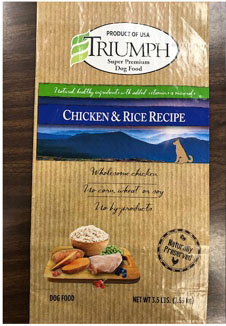
Triumph Chicken & Rice Recipe Dry Dog Food
Size: 3.5 pound bag
UPC: 0-73657-00873-6
Triumph Chicken & Rice Recipe Dry Dog Food
Size: 16-pound bag
UPC: 0-73657-00874-3
Triumph Chicken & Rice Recipe Dry Dog Food
Size: 30-pound bag
UPC 0-73657-00875-0
Bags affected have a Best Buy Date Code of November 1, 2018 through November 8, 2019.
The Best Buy Code can be located on the back of each bag.
No other Evolve, Sportsman’s Pride or Triumph products are affected by this recall.
Where Was Product Sold?
The above products were distributed in retail stores within the United States as well as some export distributors in Japan, Puerto Rico, Colombia, Israel, Canada and South Korea.
This recall is being conducted in cooperation with the U.S. Food and Drug Administration.
About High Levels of Vitamin D
Dogs ingesting elevated levels of Vitamin D may exhibit symptoms such as vomiting, loss of appetite, increased thirst, increased urination, excessive drooling, and weight loss.
Vitamin D, when consumed at very high levels can lead to serious health issues in dogs including renal dysfunction.
Consumers with dogs who have consumed any of the products listed above and are exhibiting any of these symptoms, should contact their veterinarian.
What to Do?
Consumers should stop feeding the products listed above.
Consumers who have purchased any of the affected product should dispose of it or return it to the retailer for a full refund.
Consumers may contact Sunshine Mills, Inc. customer service at (800) 705-2111 from 7AM to 4PM Central Time, Monday through Friday.
Or by email at customer.service@sunshinemills.com for additional information.
ooOOoo
Phew!
Maybe that is the last of the recalls with regard to Vitamin D.
Giant and Martin’s Recall Nature’s Promise Dog Food
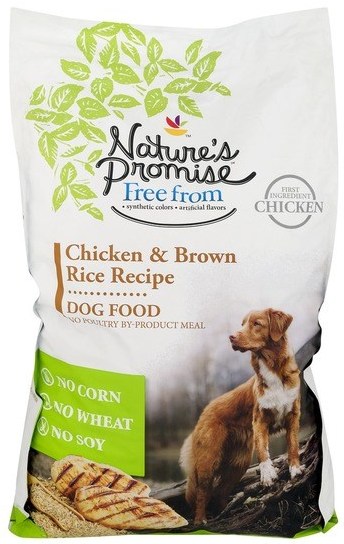
November 20, 2018 — Giant Food Stores and Martin’s Food Markets are voluntarily recalling certain lots of Nature’s Promise Dog Food because they may contain excessive amounts of Vitamin D, which may cause renal failure.
No graphic was supplied with the official news wire. The following image was retrieved from the internet and is provided in good faith by The Dog Food Advisor.
What’s Recalled?
The following products are included in this recall event:
Nature’s Promise Chicken & Brown Rice Dog Food
Size: 4 lb package
Best By Dates: November 1, 2018 to November 8, 2019
Nature’s Promise Chicken & Brown Rice Dog Food
Size: 14 lb package
Best By Dates: November 1, 2018 to November 8, 2019
Nature’s Promise Chicken & Brown Rice Dog Food
Size: 28 lb package
Best By Dates: November 1, 2018 to November 8, 2019
Giant/Martin’s has removed all affected product from its shelves and urges customers to return the product to their local store for a full refund.
The companies have received no reports of illnesses to date.
About Elevated Levels of Vitamin D
Dogs ingesting elevated levels of Vitamin D may exhibit symptoms such as vomiting, loss of appetite, increased thirst, increased urination, excessive drooling, and weight loss.
Vitamin D, when consumed at very high levels, can lead to serious health issues in dogs including renal dysfunction.
Customers with dogs who have consumed any of the products listed above and are exhibiting any of these symptoms, should contact their veterinarian.
What to Do?
Customers should stop feeding the products listed above.
Customers may contact Sunshine Mills, Inc. customer service at 800-705-2111 from 7 am to 4 pm Central Time, Monday through Friday.
Or by email at customer.service@sunshinemills.com for additional information.
In addition, customers may call Giant/Martin’s Customer Support Center at 888-814-4268.
U.S. citizens can report complaints about FDA-regulated pet food products by calling the consumer complaint coordinator in your area.
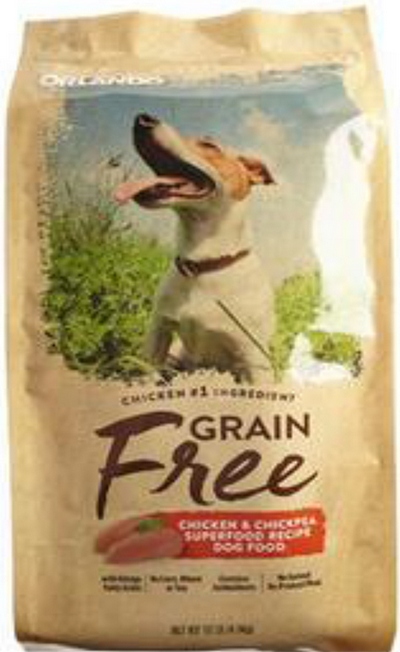
Lidl USA is voluntarily recalling specific lots of Orlando brand Grain Free Chicken & Chickpea Superfood Recipe Dog Food because the products may contain elevated levels of Vitamin D.
What’s Recalled?
The recalled Orlando brand products include the following lot numbers manufactured between March 3, 2018 and May 15, 2018:
TI1 3 Mar 2019
TB2 21 Mar 2019
TB3 21 Mar 2019
TA2 19 Apr 2019
TB1 15 May 2019
TB2 15 May 2019
Elevated Vitamin D Levels
Dogs consuming elevated levels of Vitamin D could exhibit symptoms such as vomiting, loss of appetite, increased thirst, increased urination, excessive drooling, and weight loss.
Customers with dogs who have consumed this product and are exhibiting these symptoms should contact their veterinarian as soon as possible.
No other products sold by Lidl are impacted by the recall.
This is a voluntary recall and is being conducted in cooperation with the U.S. Food and Drug Administration.
What to Do?
Customers who have purchased this product with the affected lot codes should stop feeding it to their dogs and discard the product immediately or return it to their nearest Lidl store for a full refund.
Customers who have questions about this recall should call the Lidl US Customer Care Hotline at 844-747-5435, 8 AM to 9 PM Eastern time, 7 days a week.
U.S. citizens can report complaints about FDA-regulated pet food products by calling the consumer complaint coordinator in your area.
These are taking priority over the text for yesterday’s Picture Parade.
And there are two of them.
Nutrisca Dog Food Recall | November 2018
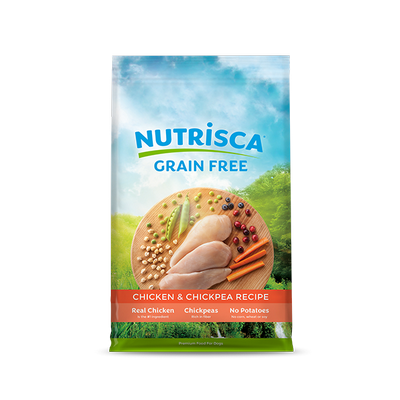
November 3, 2018 — Nutrisca, of Saint Louis, MO, is voluntarily recalling one formula of Nutrisca dry dog food because it contains elevated levels of vitamin D.
Nutrisca did not include an image with its FDA news release. So, the following image has been copied from the company’s website and provided in good faith by The Dog Food Advisor.
What’s Recalled?
Nutrisca Chicken and Chickpea Dry Dog Food
Package Size: 4 pounds
Bag UPC: 8-84244-12495-7
Best By Dates: February 25, 2020 thru September 13, 2020
Nutrisca Chicken and Chickpea Dry Dog Food
Package Size: 15 pounds
Bag UPC: 8-84244-12795-8
Best By Dates: February 25, 2020 thru September 13, 2020
Nutrisca Chicken and Chickpea Dry Dog Food
Package Size: 28 pounds
Bag UPC: 8-84244-12895-5
Best By Dates: February 25, 2020 thru September 13, 2020
Bags affected have a Best By Date code of February 25, 2020 through September 13, 2020. The Best By Date code can be found on the back or bottom of each bag.
The products were distributed to retail stores nationwide.
What Caused the Recall?
Nutrisca became aware of the elevated levels of vitamin D after receiving complaints from three pet owners of vitamin D toxicity after consuming the product.
An investigation revealed a formulation error led to the elevated vitamin D in the product.
About Elevated Vitamin D
Dogs ingesting elevated levels of Vitamin D may exhibit symptoms such as vomiting, loss of appetite, increased thirst, increased urination, excessive drooling, and weight loss.
Vitamin D when consumed at very high levels can lead to serious health issues in dogs including renal dysfunction.
Consumers with dogs who have consumed any of the products listed above and are exhibiting these symptoms, should contact their veterinarian.
What to Do?
Consumers should stop feeding the products listed above.
Consumers who have purchased any of the products affected by this recall should dispose of it or return it to the place of purchase for a full refund.
Consumers with questions may contact Nutrisca at 888-279-9420 from 8 AM to 5 PM Central Standard time, Monday through Friday, or by email at consumerservices@nutrisca.com for more information.
No other Nutrisca products, including Nutrisca Chicken & Chickpea wet dog foods are impacted.
All other Nutrisca dog and cat food products are safe to feed to pets.
According to the company…
“This is a voluntary recall and is being conducted in cooperation with the U.S. Food and Drug Administration.
“We genuinely regret that this has occurred as we place the highest priority on the health of pets.”
U.S. citizens can report complaints about FDA-regulated pet food products by calling the consumer complaint coordinator in your area.
November 3, 2018 — Natural Life Pet Products of Saint Louis, MO, is voluntarily recalling its Chicken and Potato dry dog food due to it containing elevated levels of Vitamin D.
What’s Recalled?
No product image was included with the official news release.
Natural Life Chicken and Potato Dry Dog Food
Package Size: 17.5 pounds
Bag UPC: 0-12344-08175-1
Bags affected have a Best By Date code of May 29, 2020 through August 10, 2020. The Best By Date code can be found on the back or bottom of each bag.
The products were distributed to retail stores in:
Alabama
California
Florida
Georgia
North Carolina
South Carolina
Tennessee
Virginia
What Caused the Recall?
Natural Life Pet Products became aware of the elevated levels of vitamin D after receiving complaints from three pet owners of vitamin D toxicity after consuming the product.
An investigation revealed a formulation error led to the elevated vitamin D in the product.
About Elevated Vitamin D Levels
Consumers should stop feeding the product listed above.
Dogs ingesting elevated levels of Vitamin D may exhibit symptoms such as vomiting, loss of appetite, increased thirst, increased urination, excessive drooling, and weight loss.
Vitamin D when consumed at very high levels can lead to serious health issues in dogs including renal dysfunction.
Consumers with dogs who have consumed the product listed above and are exhibiting these symptoms, should contact their veterinarian.
What to Do?
Consumers who have purchased the product affected by this recall should dispose of it or return it to the place of purchase for a full refund.
Consumers with questions may contact Natural Life Pet Products at 888-279-9420 from 8 AM to 5 PM Central Standard time, Monday through Friday, or by email at consumerservices@nutrisca.com for more information.
This is a voluntary recall and is being conducted in cooperation with the U.S. Food and Drug Administration.
U.S. citizens can report complaints about FDA-regulated pet food products by calling the consumer complaint coordinator in your area.
This came in yesterday and is shared with you as per normal.
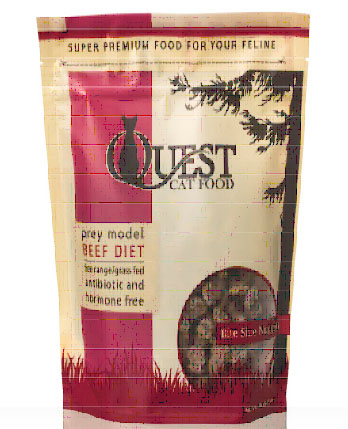
Steve’s Real Food Recalls Dog and Cat Foods
September 7, 2018 — Steve’s Real Food of Salt Lake City, Utah is voluntarily recalling limited quantities of its raw frozen dog and cat foods due to possible contamination with Salmonella and Listeria bacteria.
What’s Recalled?
The affected products were nationally distributed and are identified with the following UPC codes and “Best by” dates located on the front of the bag.
Steve’s Real Food Turducken Recipe
Package size: 5-pounds
Lot number: J155
Best By Date: 6/4/19
UPC: 6-91730-15304-5
Quest Emu Diet
Package size: 2-pounds
Lot number: B138
Best By Date: 5/18/19
UPC: 6-91730-17103-2
Quest Beef Diet
Package size: 2-pounds
Lot number: A138
Best By Date: 5/18/19
UPC: 6-91730-17101-8
About Salmonella and Listeria
Salmonella and L. mono can affect animals eating the products and there is risk to humans from handling contaminated pet products.
Symptoms of infection in people include nausea, vomiting, diarrhea or bloody diarrhea, abdominal cramping and fever.
Consumers exhibiting these signs after having contact with this product should contact their healthcare providers.
Pets with Salmonella and/or L. mono infections may be lethargic and have diarrhea or bloody diarrhea, fever, and vomiting.
Some pets will have only decreased appetite, fever and abdominal pain.
Infected, but otherwise healthy pets can be carriers and infect other animals or humans.
If your pet has consumed the recalled product and has these symptoms, please contact your veterinarian.
What Caused the Recall?
This recall is being initiated after the firm was notified by the Washington Department of Agriculture when sample was collected and tested positive for Salmonella and/or Listeria.
The firm did conduct its own test which produced a negative result for both Salmonella and Listeria monocytogenes.
However, because of the company’s commitment to overall safety and quality, Steve’s Real Food is conducting a voluntary recall of these products.
Consumers should also follow the safe handling tips published on the Steve’s Real Food packaging, when disposing of the affected product.
No pet or human illnesses from this product have been reported to date.
This recall is being made with the knowledge of the U.S. Food and Drug Administration.
What to Do?
Consumers are encouraged to check the lot code and best buy date of the affected pet foods.
Any product with the noted lot code and best buy dates should be returned to the specialty retailer where product was purchased for a full refund.
Consumers with questions may contact Steve’s Real Food at 888-526-1900, Monday through Friday, 9 am to 4 pm MT.
U.S. citizens can report complaints about FDA-regulated pet food products by calling the consumer complaint coordinator in your area.
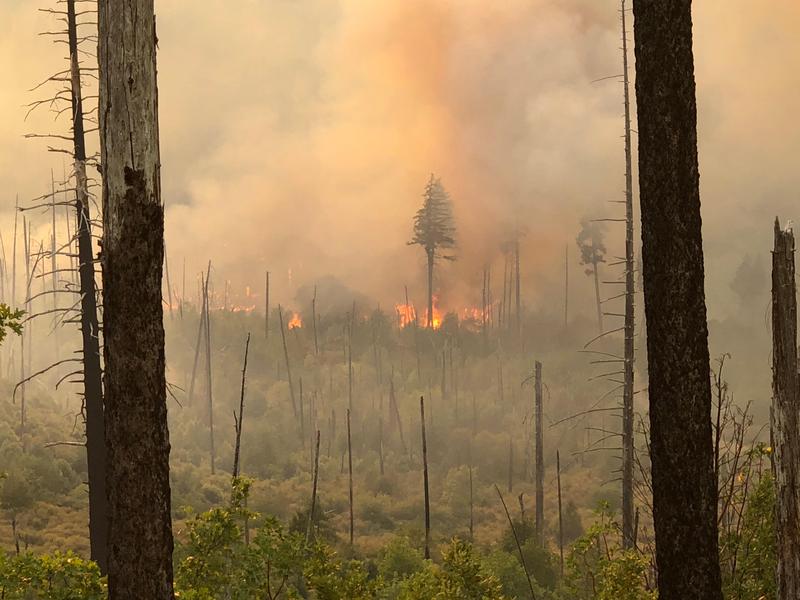
The latest news is that our Klondike Fire is now burning an area larger than 100,000 acres. Or to use the words from the incident webpage(my emphasis):
The Taylor Creek and Klondike Fires were split into zones on Saturday, Aug. 18. The fires are now referred to as “Taylor Creek Fire” and “Klondike Fire East,” managed by the Northwest Incident Management Team 12 out of Lake Selmac, and “Klondike Fire West” managed by California Interagency Incident Management Team 4 out of Gold Beach. A transfer of command of the Klondike West Zone will occur at 6:00 AM Friday when the Southern Area Red Team who arrived on Wednesday will take over.
As of the morning of Aug. 30, the Taylor Creek Fire is estimated 52,839 acres and is 95 percent contained. The Klondike Fire is estimated at 100,996 acres and is 40 percent contained. There are 1,214 personnel working on the Klondike Fire and 126 personnel assigned to the Taylor Creek Fire.
Courtesy Jeffersen Public Radio
Then just over a week ago, The Conversation blogsite published a reminder that I wanted to share with you today, under the permissions offered by The Conversation site.
ooOOoo
Many native animals and birds thrive in burned forests, research shows
But the idea that wildfires should be suppressed by logging the forest is far too simplistic. Most scientists agree that large hot wildfires produce many benefits for North American forests. Notably, they create essential habitat for many native species.
Fifteen years of research on Spotted Owls – a species that has played an oversized role in shaping U.S. forest management policies and practices for the past several decades – directly contradicts the argument that logging is needed to protect wildlife from fires. Wildlife biologists, including me, have shown in a string of peer-reviewed studies, that wildfires have little to no effect on Spotted Owls’ occupancy, reproduction or foraging, and even provide benefits to the owls.
The Northern Spotted Owl in the Pacific Northwest was listed as threatened under the Endangered Species Act in 1990. At that point, about 90 percent of U.S. old-growth forest had already been lost to logging. Every year in the 1980s the U.S. Forest Service sold about 7 to 12 billion board feet of public lands timber.
Figure 1. National forest timber sales (1905–2017). FY 1905-2017 National Summary Cut and Sold Data USDA Forest Service
Listing the owl drew attention to the dramatic decline of old-growth forest ecosystems due to 50 years of unsustainable logging practices. In response the U.S. Forest Service adopted new regulations that included fewer clearcuts, less cutting of trees over 30 inches in diameter and fewer cuts that opened up too much of the forest canopy. These policies, along with vast depletion of old-growth forests, reduced logging on Forest Service lands to about 2 billion board feet per year.
During the 1990s, national forest management policy for the Northern Spotted Owl included creating old-growth reserves and designating critical habitat where logging was restricted – mostly within half a mile of a Spotted Owl nest. In spite of these protections, populations of Northern Spotted Owls, as well as California and Mexican Spotted Owls, continued to decline on forest lands outside national parks. This was most likely due to ongoing logging outside of their protected nesting areas in the owls’ much larger year-round home ranges.
Fire and owls
Over the years the Forest Service shifted away from treating Spotted Owls as symbols of old-
Historical range (burgundy) of the Northern Spotted Owl, which also extended north into British Columbia. One hundred fifty years of logging, agriculture and urbanization have reduced the amount of old growth forest (potential Spotted Owl habitat) in this zone by 85-90 percent. NASA Earth Observatory
growth forest biodiversity, and instead started to cite them as an excuse for more logging. The idea that forest fires were a threat to Spotted Owls was first proposed in 1992 by agency biologists and contract researchers. In a status assessment of the California Spotted Owl, these scientists speculated that fires might be as damaging as clearcuts to the owls.
This perspective gained popularity within the Forest Service over the next 10 years and led to increased logging on public lands that degraded old-growth habitat for Spotted Owls.
Academic scientists, including some with Forest Service funding, published peer-reviewed studies of Spotted Owls and fire in 2002, 2009, 2011 and 2012. All four studies showed either no effects from fire or positive benefits from fire for Spotted Owls. Subsequent research on Spotted Owls in fire-affected forests has showed repeatedly that the owls can persist and thrive in burned landscapes.
(The U.S. Forest Service says wildfires harm wildlife habitat, but wildfires actually create rare and important habitat.)
Many wild species thrive in burned landscapes
I recently conducted a systematic review and meta-analysis that summarized all available scientific research on the effects of wildfires on Spotted Owl ecology. It found that Spotted Owls are usually not significantly affected by mixed-severity forest fire. Mixed-severity forest fire, which includes large patches with 100 percent tree mortality, is how wildfires in western forests naturally burn. The preponderance of evidence indicated that mixed-severity wildfire has more benefits than costs for Spotted Owls.
In 2017 I submitted an early version of this analysis with the same conclusions to the U.S. Fish and Wildlife Service during the agency’s peer-review process for its Conservation Objectives Report for the California Spotted Owl. My conclusions were not included in the final report.
Decades of science have shown that forest fires – including large hot fires – are an essential part of western U.S. forest ecosystems and create highly biodiverse wildlife habitat. Many native animals thrive in the years and decades after large intense fires, including deer, bats, woodpeckers and songbirds as well as Spotted Owls. Additionally, many native species are only found in the snag forest habitat of dead and dying trees created by high-severity wildfire.
Pileated woodpeckers excavate nests within snags, bringing life to charred forests in Oregon. NASA/S. Russell, CC BY-ND
Wildfires threaten homes, but wildlife and water supplies benefit
It is also time to reform Forest Service management goals to emphasize carbon capture, biodiversity, outdoor recreation and water supply as the most important ecosystem services provided by national forest lands. These services are enhanced by wildfires, not by logging.
ooOOoo
These last two paragraphs are key lessons: 1. Logging does not stop the biggest, hottest fires, and, 2. It is time to change the goals under which our forests are managed emphasising carbon capture, biodiversity, recreation and water supplies!
I haven’t had the time yet to contact them to see if they can provide material of general interest to you.
But I did find the following video on YouTube that seemed to be interesting. (But note that I have no knowledge good or bad about the company and there are many other companies offering aversion training.)
This was received yesterday afternoon regarding G and C Raw Dog and Cat Food Recall
ooOOoo
G and C Raw Dog and Cat Food Recall
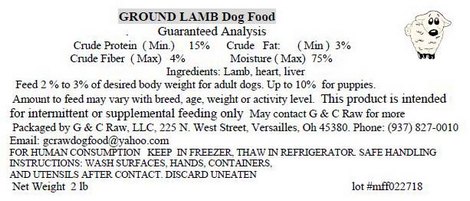
August 3, 2018 — G & C Raw of Versailles, OH is recalling 30 1–pound containers of Pat’s Cat Turkey Cat Food and 40 2-pound containers of Ground Lamb Dog Food because they have the potential to be contaminated with Listeria monocytogenes.
About Listeria Infections
Listeria monocytogenes can cause serious and sometimes fatal infections in animals eating the products.
Furthermore, there is risk to humans from handling contaminated pet products, especially if they have not thoroughly washed their hands after having contact with the products or any surfaces exposed to these products.
Healthy people infected with Listeria monocytogenes should monitor themselves for some or all of the following symptoms: nausea, vomiting, aches, fever, and diarrhea.
Listeria monocytogenes infections can also spread through the bloodstream to the nervous system (including the brain), resulting in meningitis and other potentially fatal problems.
Pregnant women are especially susceptible to Listeria infection, which can result in abortion.
The young, the elderly, and people with weakened immune systems also are more vulnerable.
Consumers exhibiting these signs after having contact with this product should contact their healthcare providers.
Pets with Listeria monocytogenes infections are rare, and pets may display symptoms such as mild to severe diarrhea, anorexia, fever, nervous, muscular and respiratory signs, abortion, depression, shock, and death.
In addition to the possibility of becoming sick, such infected animals can shed Listeria monocytogenes through their feces onto their coats and into the home environment and thus serve as sources of infection to humans and other animals in the household.
If your pet has consumed the recalled product and has these symptoms, please contact your veterinarian.
Where Was the Product Sold?
Pat’s Cat Turkey and Ground Lamb Dog Food products were distributed in OH, MI, IN, PAN, KY, NC, and GA.
They were also distributed by direct delivery by G & C Raw, LLC.
What’s Being Recalled?
The Pat’s Cat Turkey is sold in 1-pound clear plastic containers with the Lot number WWPKTF051618.
The Ground Lamb product is sold in a 2-pound plastic container with the Lot number MFF022718.
The Lot number codes are listed on the bottom right corner of the label.
No illnesses have been reported to date.
About the Recall
The recall was as the result of a routine sampling program by the Ohio Department of Agriculture which revealed that the finished products contained the bacteria
The company has ceased the production and distribution of the product as the company continues its investigation as to what caused the problem.
What to Do?
Consumers who have purchased Pat’s Cat Turkey Cat Food with the lot number, WWPKTF051618, OR Ground Lamb Dog Food with the lot number MFF022718 are urged to return it to G & C Raw, 225 N. West Street, Versailles, OH, for a full refund.
Consumers with questions may contact: G & C Raw, LLC at 937-827-0010 ET, or by email at gcrawdogfood@yahoo.com.
U.S. citizens can report complaints about FDA-regulated pet food products by calling the consumer complaint coordinator in your area.
Why it’s time to curb widespread use of neonicotinoid pesticides
ByJohn F. Tooker Associate Professor of Entomology and Extension Specialist, Pennsylvania State University
Planting season for corn and soybeans across the U.S. corn belt is drawing to a close. As they plant, farmers are participating in what is likely to be one of the largest deployments of insecticides in United States history.
Almost every field corn seed planted this year in the United States – approximately 90 million acres’ worth – will be coated with neonicotinoid insecticides, the most widely used class of insecticides in the world. The same is true for seeds in about half of U.S. soybeans – roughly 45 million acres and nearly all cotton – about 14 million acres. In total, by my estimate, these insecticides will be used across at least 150 million acres of cropland, an area about the size the Texas.
Neonicotinoids are very good at killing insects. In many cases they require only parts per billion, equivalent to a few drops of insecticide in a swimming pool of water.
In recent years, concerns have been raised about the influence of neonicotinoids on bee populations. As an applied insect ecologist and extension specialist who works with farmers on pest control, I believe the focus on bees has obscured larger concerns. In my view, U.S. farmers are using these pesticides far more heavily than necessary, with potential negative impacts on ecosystems that are poorly understood.
Pesticides on seeds
Most neonicotinoids in the United States are used to coat field crop seeds. Their role is to protect against a relatively small suite of secondary insect pests – that is, not the main pests that tend to cause yield loss. National companies or seed suppliers apply these coatings, so that when farmers buy seed, they just have to plant it.
The percentage of corn and soybean acreage planted with neonicotinoid seed coatings has increased dramatically since 2004. By 2011, over 90 percent of field corn and 40 percent of soybeans planted were treated with a neonicotinoid. Between 2011 and 2014, the area treated crept toward 100 percent for corn and 50 percent for soybeans. And the mass of neonicotinoids deployed in each crop doubled, indicating that seed suppliers applied about twice as much insecticide per seed. Unfortunately, many farmers are unaware of what is coated on their seeds, while others like the peace of mind that comes from an apparently better protected seed.
Unlike most insecticides, neonicotinoids are water soluble. This means that when a seedling grows from a treated seed, its roots can absorb some of the insecticide that coated the seed. This can protect the seedling for a limited time from insects. But only a small fraction of the insecticide applied to seeds is actually taken up by seedlings. For example, corn seedlings only take up about 2 percent, and it only persists in the plant for two to three weeks. The critical question is where the rest goes.
Clothianidin is a neonicotinoid used almost exclusively as a coating on seed corn. Maps from USGS.
Pervading the environment
Because neonicotinoids are water soluble, the leftover insecticide not taken up by plants can easily wash into nearby waterways. Neonicotinoids from seed coatings are now routinely found polluting streams and rivers around the country.
Neonicotinoids also can strongly influence pest and predator populations in crop fields. My lab’s research has revealed that use of coated seeds can indirectly reduce crop yield by poisoning insect predators that usually kill slugs, which are important crop pests in mid-Atlantic corn and soybeans fields.
Slugs, shown here on a soybean plant, are unaffected by neonicotinoids, but can transmit the insecticides to beetles that are important slug predators. Nick Sloff/Penn State University, CC BY-ND
An exaggerated need
Neonicotinoid advocates point to reports – often funded by industry – which argue that these products provide value to field crop agriculture and farmers. However, these sources typically assume that insecticides of some type are needed on every acre of corn and soybeans. Therefore, their value calculations rest on comparing neonicotinoid seed coatings to the cost of other available insecticides.
History shows that this assumption is clearly faulty. In the decade before neonicotinoid seed coatings entered the market, only about 35 percent of U.S. corn acres and 5 percent of soybean acres were treated with insecticides. In other words, pest populations did not cause economically significant harm very often.
Importantly, the pest complex attacking corn today is more or less the same as it was in the 1990s. This suggests that it is not necessary to treat hundreds of millions of acres of crops with neonicotinoid seed coatings.
Neonicotinoids can harm birds via multiple pathways, sometimes in very small quantities.
From overkill to moderation
Should the United States follow the European Union’s lead and pass a broad ban on neonicotinoids? In my view, action this drastic is not necessary. Neonicotinoids provide good value in controlling critical pest species, particularly in vegetable and fruit production. However, their use on field crops needs to be reined in.
In the Canadian province of Ontario, growers can only use neonicotinoid seed treatments on 20 percent of their acres. This seems like a good start, but does not accommodate farmers’ needs very well.
Integrated Pest Management (IPM), a control strategy based on using pesticides only when they are economically justified, offers valuable guidelines. It was introduced in the late 1950s in response to issues stemming from overuse of insecticides, including environmental damage and pest populations that had evolved resistance. Field-crop growers have a good history of using IPM, but current use of neonicotinoids ignores pest risk and conflicts with this approach.
To implement IPM in field crops with neonicotinoids, seed companies need to acknowledge that the current approach is overkill and poses serious environmental hazards. Extension entomologists will then need to provide growers with unbiased information on strengths and limitations of neonicotinoids, and help farmers identify crop acres that will benefit from their use. Finally, the agricultural industry needs to eliminate practices that encourage unnecessary use of seed coatings, such as bundling together various seed-based pest management products, and provide more uncoated seeds in their catalogs.
These steps could end the ongoing escalation of neonicotinoid use and change the goal from “wherever possible” to “just enough.”








 Learning from Dogs