Category: Art

The book! Chapter Eleven.

Ouch, ouch and more ouch!

In yesterday’s chapter I wrote of what, perhaps, was one of the better times in the lives of our hero, Philip, and his wife Maggie.  But as we move to Chapter Eleven the phrase ‘first impressions may be misleading’ does come to mind.

oooOOOooo

Learning from Dogs

Chapter Eleven

Later that evening, after he and Maggie had eaten their evening meal, a rather poor affair that Philip had to admit, Monday being his turn to prepare dinner, he couldn’t shake off something approaching a cloud over him.  Most likely associated with the forthcoming fiftieth anniversary of his father’s death, he guessed.

It was the same every year.  Whatever he was involved in, however interesting and engaging his life was during the last few months of the year, Philip knew that the period between his birthday in early November and the date of his father’s death on the twentieth of December had some ill-defined greyness about it.  Then as soon as the twenty-first of December dawned, he was back to his usual brightness. Indeed, he was always embarrassed by the fact that his pre-Christmas mood never arrived until the twenty-first of December, frequently a bit on the late side to engage properly in the annual ritual of present-buying.

Still that’s how it had been for every year of his adult life and, privately, he wondered if that was his way of treasuring a father he never really knew.

Thus so it was this year. In the sense that it was about a week before Christmas Day, probably around the eighteenth of December that, again, he had to pull himself up sharply and start thinking as to what he should give Maggie as her main present.

What really caused him to focus on Maggie and Christmas was a very strange, decidedly untypical, interaction between Maggie and Pharaoh.  Up until then, whenever Maggie had gone out somewhere on her own, Pharaoh would always bark as her car turned into the driveway.  On their upper floor, the main living room area, there was a floor-to-ceiling pair of glass-panelled doors overlooking the front of the house, the garden and their short driveway and their five-bar, wooden gate.  The glass doors would have been wooden shutters back in the days when it was a cow barn.  Today, the doors could be opened during hot summer weather; there was a wooden rail across the opening to prevent any falling accidents.

Pharaoh’s usual routine with arriving cars was to bound up to the windows barking furiously when he heard the latch on the gate being handled and when any car drove up the driveway.  If it was Maggie returning home then as soon as he recognised her he would bound down the short, single flight of wooden stairs from the living-room level to the hallway and stand inside the front door, also glassed from head to foot, wagging his tail furiously until he was let out whereupon he would run joyously to her.

However this day, Philip was pretty sure is was the Monday, Pharaoh did his usual barking act as Maggie drove in.  Then there was the sound of Pharaoh coming down the steps to the front door with a growl in his throat. That’s what made Philip look up from his computer screen; he was certain that he had heard Maggie’s car but then the growling suggested otherwise.

Pharaoh’s growl became quite intense, practically a sound from him that Philip had never heard before.

He quickly pushed his office chair back on its wheels and stood up from his desk.  Within moments, he was beside Pharaoh looking out at Maggie walking back down the driveway to close the front gate.

“Pharaoh, quiet!”, Philip said with a sternness to his voice. Pharaoh reduced the constant growl to a sort of angry muttering in the back of his throat.  Philip had no doubt that Pharaoh was not playing around.  To the point where he practically dragged Pharaoh by his collar back into the small office and firmly closed the door on the two of them.

Pharaoh pushed to the office window, also full length, his eyes, ears and full body stance continuing to signal a great unease.  What on earth was happening?  Philip just couldn’t fathom it out.

He left his office room, closing the door with Pharaoh inside, and went out to meet Maggie who was walking towards the house with a semi-full bag of groceries in a cloth shopping bag.

“Hi, is that all there is to bring in?”, Philip asked.

“Yes, only a few items that I needed from Safeways.”

As Maggie came up to the front door, Philip continued, “You know, there’s something weird about Pharaoh just now.” He went on to explain what had just happened, continuing, “It’s almost as though he didn’t know it was you.”

They climbed the stairs up to the open-plan kitchen area that was at one end of the living room, to the right of the stairs, the main living room area to the left.  Philip then went over to the log-burner in the corner of the living room and fiddled with it for a while.  In fact, his mind was still on Pharaoh wondering if his angst had now subsided.  Only one way to find out.

He returned to his office room and opened the door.  Pharaoh was lying on the rug.  He looked up at Philip and, again, very strangely, only raising himself from the floor and following Philip upstairs to the living-room after a great deal of coaxing.

It was all very peculiar.

Wednesday, the 20th, dawned to reveal a bright pleasant morning with soft, cumulus clouds across a broadly blue sky.  A great morning to be over at the woods for a walk.

After breakfast, Philip called out to Maggie, who had been in the bathroom for a while, actually more than a while when he thought about it, that he and Pharaoh were off to James’ woods.  Philip just heard Maggie call out that she had heard him.

It was a wonderful walk.  Pharaoh was in his prime chasing squirrels, a fairly pointless task Philip always thought, then sticking his nose down the many rabbit holes, sniffing such large lungfulls of air that Philip wondered if Pharaoh thought he could suck the poor rabbits out of their burrows.

The date, fifty years to the day that his father had died, seemed to rest much more easily with him than he had feared.  It was all so, so long ago.  It crossed his mind to buy Maggie a bouquet of flowers on the way home.

A couple of hours later, he and Pharaoh bounced into the house, a fresh bouquet of flowers newly purchased at Safeways in Totnes in Philip’s right hand.

“Hi sweetheart, bought you these.  Just thought you looked a little off-colour earlier this morning and that some flowers might cheer you up.”

As he was offering the flowers to Maggie he realised that whatever it was that had been afflicting her earlier that morning was still troubling her.  Frankly, she looked very pale and drawn.

“Maggie, what’s the problem?  You don’t look at all well.”

“Philip, do you mind if I lie down on the bed for a little while, just not feeling that brilliant.”

“No, of course not,” came his reply.  “Look you go and lie down, I’ll put the flowers in water, make us both a nice cup-of-tea and bring them down to the bedroom.”

With that Philip went upstairs to the living room, dug out a glass vase and put the flowers in water, placing the vase with the flowers on one of the work surfaces in the kitchen.

He also noted that the fire was pretty low and needed rejuvenating.  Thus it was nearer thirty minutes before he returned to their bedroom with the hot teas. Maggie’s body was under the bedspread, her head back against a pair of pillows, still giving the appearance of being significantly out of sorts.

He put Maggie’s cup down on the bedside table next to her and cradling his own mug of tea in his hands sat down on the edge of the bed, just adjacent to where Maggie’s knees were under the cover.

Maggie heaved herself up, leaning back against the headboard and reached for her tea.  “Thank you, Philip, that was very kind of you.”

They both sat without saying a word, Philip conscious of the hot tea reminding him of an empty stomach not yet having had lunch.

Maggie took a breath, put her empty cup down on the bedside table, and looked at Philip.

“Philip, I don’t know how to say this.  The reason for me being unwell this morning was that I have just had a miscarriage.”

Philip’s world came to an instant, shuddering halt. Of course, that’s what Pharaoh had picked up, the impending breakup of his home. Because, after the birth of his second child with his first wife in 1972, Philip had opted for a vasectomy.

1,495 words. Copyright © 2013 Paul Handover

 oooOOOooo

Have to wait until Monday to see where it all leads to.

The book! Chapter Ten.

Steadily working towards the climax in Philip’s life.

Tomorrow in Chapter Eleven, Philip’s life comes apart, in spades.  Thus today’s chapter produces the contrast of a sweet life, running smoothly to create the appropriate backdrop to tomorrow.

Having been very unhappy with my feelings about this ‘write a novel in a month’ as expressed on Tuesday in my introduction to Chapter Nine, today I’m much more contented.  The thick end of 34,000 words are now down on ‘paper’ and yet another pep talk from an experienced, published author really spoke to me.  In fact, I’m going to repost that talk here:

Dear Novelist,

Okay, here we are: more than halfway through, right in the thick of it. Probably at this point the last thing you want is a big lecture on Writing and How You’re Supposed to Do It. So I’m not even going to talk about writing.

Instead I’m going to talk about a metaphor for writing. Better, right?

Let’s say you’re not a writer hard at work on your first novel. Let’s say you’re a Tribute who’s just been selected for the Hunger Games. You’re freaking out because you’re facing almost certain death in the Arena. And instead of a published author, I’m going to be that drunk guy who’s supposed to be telling you how to survive.

It’s a good fit. Like Woody Harrelson, I am short and bald. And I like a drink. I may be drunk right now, who knows? But more important, I’ve done this before and lived. So I’m here to tell you: it is survivable.

Writing Requires Nerve

Which brings me to my first point. Writing a novel belongs to that category of thing—like surviving the Hunger Games, and eating an entire large pizza by yourself—that appears to be impossible but actually isn’t. I’ve written four of them, with another coming out next year, and every time around halfway through, I get to a point where I say to myself: let’s admit it, this just isn’t going to happen. Given the number of words I have written, and the number of words I have left to write, and the rate at which I am currently producing words, and the crappiness of said words, it is mathematically and physically impossible that I will ever finish this book. It’s like the arrow in Zeno’s paradox: it’ll never get there.

But the thing is, the books do get there. It astounds me every time, but the books get done. How? It’s not about having some triumphant breakthrough moment. Being a novelist is a matter of keeping at it, day after day, just putting words after other words. It’s a war of inches, where the hardest part is keeping your nerve. The number one reason why people who want to write novels don’t is that they lose their nerve and quit.

So heads up: once you get in that Arena, Tributes are going to be biting the dust to the left and right of you, and it’ll be because they’ve lost their nerve. But that won’t happen to you. You’re going to keep your nerve. If talent exists, that is talent.

Writing Comes with Doubt

So, you are a Tribute for the Hunger Games but you don’t feel confident. You feel like crap. Like you have no idea what you’re doing. Sometimes you pick up your bow and arrow or your throwing knives and you’re like, I don’t even remember how these damn things work. Why? Why are you different? What is wrong with you?

So this is point number two: nothing is wrong with you. You’re not different. Everybody feels as bad as you do: this is just what writing a novel feels like. To write a novel is to come in contact with raw, primal feelings, hopes and longings and psychic wounds, and try to make a big public word-sculpture out of them, and that is a crazy hard thing to do. When you look at other people’s published novels, they seem gleaming and perfect, like the authors knew what they wanted to do from the start and just did it. But trust me: they didn’t know.
What you’re feeling is not only normal: it’s a good sign. A writer—someone once said—is a person for whom writing is difficult. That resistance you’re feeling is proof that you’re digging deep. To write a novel is to lose your way and find it over, and over, and over again.

A lousy draft proves nothing. Rough drafts are rough—everybody’s are. Being a writer isn’t like being a musician. You don’t have to get it right every day. The wonderful thing about being a writer is, you only have to get it right once. That’s all anyone will ever see. The only bad draft is the one that doesn’t get finished.

So get back at it. Let the others lose heart and give up. You stay out there in the woods. The weapons of a writer, James Joyce once wrote, are silence, exile, and cunning, and probably he wasn’t thinking of the Hunger Games when he wrote that—probably—but it fits the metaphor. While Tributes are falling left and right, you will fashion man-traps from ninja stars, steal weapons from the fallen, and bide your time, and when you’re ready you will come out of those woods like an avenging angel of death.

Forget that stuff about the odds being ever in your favor. What does that even mean? Screw the odds. There are no odds. You’re a writer, and writers make their own odds.

I’ll see you in the Victors’ Village.

Lev

Lev Grossman is the author of the bestselling novels The Magicians and The Magician King

So to Chapter Ten.

oooOOOooo

Learning from Dogs

Chapter Ten

Well, as is the way of things, 2005 came to an end, moved on to 2006 and before Philip could really get his head around it, the end of January was in sight. It was a New Year but in so many other ways nothing really seemed to change, either locally or internationally.  Philip was disgusted with the state of the world at so many levels; the tragedy of the conflict in Iraq being just one example of a political system that seemed broken beyond repair.  Locally, house prices were still ramping upwards and there was a sense that inflation rates were starting to rise.  But, hey ho, most people seemed to be enjoying the party.

Philip was enjoying this period of his life as well; immensely so.  There was just the right balance of mentoring to offer both a regular income and a variety of interesting engagements.  His relationship with Pharaoh was fulfilling to an extent that he could never have before imagined. Plus the sessions over at Angela’s place were clearly stimulating for Pharaoh, and a joy for Philip because of this unanticipated aspect of owning a teaching dog.  He had been undertaking some coaching for a youth opportunities organisation in Plymouth, a real and pragmatic effort to reduce the high levels of youth unemployment that had been a hallmark of the city of Plymouth for some time now.  Last, but by no means least, he and Maggie seemed to be much more settled in their relationship.

Thus the weeks became months and Winter gave way to Spring, possibly the most delightful time of the year for South Devon, especially for those who lived in this part of England.

It was on such a beautiful Spring day in May, in fact the Monday of the late Spring Bank Holiday in May, with he and Maggie having an afternoon tea by the raised flower beds directly in front of the house, when he heard his office telephone ringing. Ever the salesman who could never let a phone ring unanswered, Paul stepped the ten paces inside to his office room and picked up the receiver.

“Hallo.”

“Philip, is that you, it’s Jonathan.”

“Hallo, Jonathan, this is a nice surprise, how are you?”

“Good thanks.  In fact very good. Because last Friday was the end of my relationship with Cowdrays.”

Philip could hear the excitement in Jonathan’s voice.

“I know I shouldn’t have called you on a Bank Holiday but didn’t want to wait until tomorrow and find you were away from your desk.”

“Jonathan, it’s not a problem at all.  One of the things that all of us find out, those who run their own businesses, and find out pretty quickly, is that the concept of nine-to-five is dead and buried.  Are you ready for us to get together?”

“Yes, any time over the next couple of weeks, your place or mine.”

“Great. Just hang on a moment while I look at my diary.  What I will say is that while you had indicated preferring that we worked over at your place, the first few sessions will be easier on me over here.  That’s because I will have close-to-hand reference materials that almost certainly will be relevant to you.”

There was a pause as Philip looked at his diary.

“How about the morning of the fifth of June, in other words a week from today?  Say ten o’clock?”

There was a return pause before Jonathan replied by saying that it was perfect.

Philip asked, “Jonathan, how are you with dogs? Because Pharaoh is usually free to be around the house and just loves being in my office when I am chatting to someone.”

“Not a problem at all, I’m very fond of dogs and especially German Shepherd dogs,” came Jonathan’s reply.

“Fantastic,” and Philip went to add, “In fact he will have just turned three-years-old; his birthday is June 3rd.  See you in a week’s time. Take care.”

That first meeting with Jonathan came upon Philip almost before he could breath.  He wasn’t sure if it was an age thing but the days, in particular, and time in general just seemed to fly past now.

As Philip had expected, working with Jonathan was quite unlike any of his previous mentoring engagements.  Because previously whoever he was working with was involved in a business that was dealing with a tangible product or service.  Thus even back to the days when he endeavoured to assist an accountant, rather poorly if he recalled, at least the product, while not something you could hold in your hand, was something that didn’t touch on people’s sensitivities.  Philip smiled at that recollection thinking there might be some humour around the idea of whether or not accountants upset people. No, back to his main line of thought.

What Jonathan was presenting to his potential customers, was entirely concerned with the delicate and complex issue of human relationships; nothing more, nothing less.

Slowly over their next four meetings, what became clearer and clearer to Philip was that the route to finding new clients for Jonathan, the way to develop his business on his own account, was to direct a really appropriate open question, and salesmen do so love open questions, to the prospective client, to the professional person, along the lines of, ‘when you reflect on the relationships around you within your business life, what strengths and weaknesses come to mind?’

It all seemed to be in line with Jonathan’s ambitions and Philip’s only regret was that between his and Jonathan’s commitments elsewhere, their meetings frequently were interspaced by a couple of weeks, at times more.

Thus it was at the end of their meeting on the 16th August when sharing diaries, looking for the next mutually convenient date, Philip had to say to Jonathan, “I’m afraid September is going to be a challenge as Maggie and I have decided to take a holiday.  Somewhere in the Mediterranean; possibly Turkey.”

Jonathan looked up from scanning the pages of his diary in anticipation of Philip’s next sentence.

“Can’t be sure of the dates just now, because we haven’t booked kennel space for Pharaoh, but within the next week that should all be settled and flight tickets arranged.”

Jonathan replied, “Give me a ring when you know your dates and we’ll pencil in our next session to suit us both.”

That was agreed.

Philip and Maggie’s vacation dates were soon arranged, Pharaoh’s kennel space booked, and before they knew it, they were winging their way to a two-week vacation in the coastal town of Kaş, in Turkey.

It was a beautiful holiday.  Philip mused that in ways that were beyond his grasp the holiday was more relaxing, more intimate and more bonding than anything he and Maggie had ever done since they had married back in the year 2000.  Philip was conscious that the relationship between him and Maggie had had its ups and downs.  For a start there was a big age gap; he was eighteen years Maggie’s elder.  Then something about their backgrounds exacerbated that age gap at times. Almost as though Maggie was young for her age and Philip the reverse.  Perhaps that was the result of them both having very different backgrounds.  He losing his father suddenly when he had just turned twelve-years-old and not long after that trauma his mother remarrying.  Whereas Maggie having, indeed still having, a very strong family relationship with her parents who obviously put close family ties above all else.  Philip also found it slightly odd that there was a smaller age gap between him and Maggie’s father and mother, David and Gwen, than between him and Maggie.

Maggie and he had first met when he had been speaking at an engagement arranged by the South Devon Business Advisory Council back in 1998. The event was promoting the benefits of running one’s own business and Philip had been talking about sales and marketing for the budding entrepreneur.

During the next session break, Maggie had come up to him, offered some flattering words about how much she had learnt, and then asked if she could meet him later on to get some feedback on her own business ideas.

Philip had arranged to visit her at her small home, where she lived alone, Maggie being divorced from her first husband.  Her two-up, two-down terraced home was in the coastal town of Exmouth, not so far South-East of Exeter.  One meeting became two meetings became a dinner out and, inevitably, became him staying the night.  It all lead to them wanting to live together with, subsequently, them choosing to purchase the converted stone barn in Harberton. Maggie’s financial situation meant that it was Philip who financed the purchase initially with the agreement between them being that later on, when Maggie wanted to buy into the property, her name would be added to the deed.

So their cultural, age and background differences, including financial differences had offered their challenges but Maggie let him more-or-less run his life as he wanted to and she could be very attentive to him especially between the sheets.  They had married on the 14th February, Valentine’s Day, in the year 2000 and that had been that.

That’s what made their Turkish holiday so outstanding.  Maggie’s attentiveness towards him harked back to those days of flirting and love-making back in 1998 and 1999. By the time they were boarding the coach for the three-hour return to Dalaman Airport and their flight back to Gatwick Airport in England, Philip sensed that his disquiet that Maggie had married him for his money had evaporated and that this was a genuinely loving relationship that just happened to be between two persons with an unusually large age gap.

Back to Devon and life quickly picked up its regular patterns and routines.  September closed and led in a very blustery October, well certainly a very blustery start to the month.  Jonathan and he resumed their meetings, still over at Harberton, and October ushered in a cold but clear start to November.

They were meeting on November 20th and during their session, there was a pause. Jonathan was looking intently at Philip, who seemed to have slipped away somewhere in his mind, and quietly spoke, “Philip, are you OK? You and I have spent quite a few hours together now and, well, how can I put this, you are not in your usual place today.”

Philip started back with a bit of a shock.  “Oh, sorry, don’t know why, but all of a sudden it struck me that exactly one month from today, the 20th December, it will be the fiftieth anniversary of my father’s death, on December 20th, 1956.”

There was a silence between them.

“Sorry, Jonathan, let’s get back to what we were discussing.”

1,817 words. Copyright © 2013 Paul Handover

The book! Chapter Nine.

Life is full of surprises and that seems to apply to writing a book as well!

I was chatting to Jeannie yesterday afternoon taking a break from, yes, you guessed it, book writing!  Speaking about another aspect of ‘write a book in November’ that had been unexpected; that of the range of emotions associated with the task.

First up was excitement that I had committed to the idea.  Next was surprise that I had actually got stuck into it.  Then came the feeling of being over the worst, that I really would write a 50,000 word book. But what followed next, to a certain extent reflecting my present mood, is that writing words for words sake is one thing, writing something that would result in a compelling and engaging story is something completely different.

As you can see my emotions are rather at odds with what NaNoWriMo published yesterday:

Wrimos, congratulations. You’ve made it through the strenuous Week Two, and emerged (mostly) unscathed. Not only are you past the halfway point of the month, but you’re far enough into your novel that actual things are (likely) starting to happen.

I’ve always found the shore of Week Three to be the most exciting place to stand, and the trip through it the most exhilarating portion of the month. You’ve gotten to know your characters, the story has a discernible shape and trajectory, and it’s just so thrilling to go play in that world you’ve crafted.

That being said, a brief addendum: if the bogs of Week Two sucked you in a bit, and you’re behind on word count, don’t despair. Week Three’s momentum is fantastic for helping get back on track.

Ah well!

oooOOOooo

Learning from Dogs

Chapter Nine

Philip easily found the house, a relatively modern brick-built detached house in a suburban road just off the Torbay Road, the road that connected Torquay with Brixham and then on to Dartmouth.  Indeed, as Philip turned into the concrete drive that lead to the garage door, a neat garden on his left, he realised that a much shorter way back home via Totnes would be along the Preston Down Road just a couple of turnings from where the Atkins had their home.

Jonathan opened the front door just as Philip’s hand went to the bell-push.

“Ah, excellent timing.  Helen has just left so there’s been no need to ask you to park at the kerbside. Do come on in.”

He led Philip into a front room that seemed to be set up as an office room or study.

“Can I get you a warm drink? Coffee, tea?”

“I would murder for a tea, missed my second cup of the day to be here on time.”

“Oh, apologies, hope this wasn’t too early to meet up?”

“Jonathan, not at all, I was just kidding.  Well, maybe partially kidding!”

This levity from Philip came naturally and spontaneously, reflecting a sense of openness that he couldn’t put his finger on. That same feeling that he had had when listening to Jonathan’s presentation back, golly when was that now, he had to think for a moment, back in the Autumn some two months ago now.

Over the hot cup of tea, Earl Grey as Philip noticed, a favourite of his, Jonathan outlined his background.  That he was a registered psychotherapist with a Master’s degree in Core Process Psychotherapy, whatever that was Philip mused, and, interestingly, a qualified teacher with a teaching degree from Exeter back in 1989. Going on to add that he was a member of the Institute of Transactional Analysis and a licensed practitioner in neuro-linguistic programming.

At this point Jonathan paused noticing that Philip’s eyes had started to glaze over.

“Sorry, Philip, guess this all is a little mumbo-jumbo for the uninitiated,” going on to suggest that Philip can look up the full details on his website. Philip made a note of the web address.

Philip then paused before saying, “Sorry, Jonathan, I’m sure your background is crucial in terms of your professional way of life.  But the challenge for me before even thinking of being your business mentor is that there is nothing in my background that would allow me to understand your experiences, to know your world.” Philip paused, and then added, “Well, I guess I now know who to call if I become even sillier than I already am.”

“Philip, just stay with me for a little longer while I explain what my  situation is.”

Philip looked down at his notebook, drew a line under the website address he had just noted, put down the time and date and looked back up at Jonathan.

“I have been working as a psychotherapist for a number of years on the payroll of an Exeter company; Cowdrays.  It was something I needed to do in terms of becoming fully accredited as a psychotherapist.  It’s a long and drawn out process.”

Just as well Philip thought.

“I am now very close to the point where I want to stand on my own two feet and run my own business.  That’s why hearing you speak at that Exeter event was so useful.  I appreciate you saying how you don’t understand my background in detail.” Jonathan took a couple of breaths and continued, “But while I’m clear about the services that I can offer and where I would like to operate, when it comes to starting, running, and more critically, marketing my own business, frankly I haven’t a clue.”

Wow, Philip thought, still looking down at the page on his knee.

“So it occurred to me when listening to you speak whether you were still taking on clients and whether you felt you and I could work together?”

Philip let a few moments pass, trying to listen to the quieter, inner parts of his brain.

“Jonathan, In principle, I believe I have the experience and background that you are looking for.  But here’s the rub. My knowledge of your market is practically zero.  OK, I’ve been on the receiving end of some counselling, some relationship counselling, but many of the terms you used when explaining your background, terms like neuro-linguistic programming, did I hear that correctly?”

Jonathan nodded.

“Those were terms I didn’t understand at all. Even the phrase core process psychotherapy didn’t mean much to me.  So what bothers me is whether or not I could properly and competently understand your clients, in other words your potential customers’ needs.  Because if I can’t within reasonable time understand exactly who your potential customers are, what they have, what they don’t have, what they need, what the payoff is, sorry to use such a clumsy term, and more, I can’t competently mentor you.”

Philip went on to add, “Back in my old days of selling for IBM, we described the process of selling a product to a customer as the business of understanding need, feature and benefit.  OK, I was only selling IBM Selectric typewriters, you know the old golfball typewriters, but the principle is still the same.  That for every aspect of a service that you wish to sell to a customer, you need to understand fully what the customer’s need is for that service, how it can be described in terms that the customer understands and, finally, why the Jonathan Atkins’ service is better than your competitors.  Sorry if that sounded too much like a lecture.”

Philip realised that he had become quite agitated in those last few minutes and consciously breathed in and out a few times to settle himself down.  Jonathan had noticed but instinctively knew that Philip had a few more thoughts to offer.

Philip smiled, “Sorry, I got a little passionate just there,” and went on to say, “I think what I was responding to was the potential appeal of working with you but, at the same time, realising that I just didn’t have the appropriate experience of your likely market segments; to use some more jargon.”

Jonathan looked Philip in the face and said, “How well do you understand business people?”

“Er, that sounds like a trick question,” Philip replied with a smile across his face.

“No, it’s not.  For the area that I wish to be in is the area of the relationships that professional persons have in their workplace. Let me explain.”

Philip sensed something significant was about to happen.

“Professional people, managers, directors, even lawyers, those that are more likely than not to be driven people, they are much more likely to have some interesting childhood experiences, various levels of parental issues of one form or another, than people in general.  In a very real sense, those backgrounds give them the edge, the fuel, for want of a better term, to succeed.”

Again, Philip felt a breath of something blow across his consciousness.

“However, the very drivers of success are also the root causes of the many issues that these people have in managing their teams and, frequently, in getting the best from their suppliers and other key business relationships including, of course, their relationships with their customers.”

Jonathan added, with a wry smile on his face, “You see I can dish the jargon just as well as you.”

Philip smiled back and could sense where this was leading.

“So, it’s my guess that first as a salesman for IBM, then when running your own company selling software around the world, and now mentoring those already running their own businesses, you have a much better idea of this group of people, the personalities, the frequent lack of mindfulness, what may be expressed as their emotional ignorance, than you first thought.”

Philip got it.

“Well, yes, of course.  I just hadn’t thought of it in those terms.  As a salesman both for IBM and then for my own company, I must have met on a personal one-to-one basis, thousands of business people.  In fact, it got to the stage where I could make a private guess as to whether or not I was going to sell to that person within the first couple of minutes of meeting them.

Philip reflected for a moment, then went on to say, “In fact, my very good Californian friend, Danny Mitchell, who was my US West Coast distributor and with as many years of selling experience as me, used to say exactly the same thing.  That he knew whether or not he was going to close the deal within the first five minutes.”

This was starting to be very interesting.

“Philip, you don’t need to worry yourself about all the strange terms and descriptions that are wall-to-wall in my line of work, you need to understand that what I seek to offer are reliable, people-centred, sorry another term, ways of allowing professional people to realise that a better understanding of self, of who they are, can offer huge dividends in understanding others.  That, of course, if we are talking about a business, has a direct and hugely positive effect on the performance of that business.”

“OK, I’m sold,” Philip said, as he threw his arms up in mock surrender, going on to add in a light-hearted almost frivolous mood, “Of course, you do know that the easiest persons to sell to are salesmen!” He noted how comfortable this new relationship with Jonathan seemed to feel.

They then talked through the mentoring aims, agreed on the financial terms, and the usual other bits and pieces that such a new relationship often entailed.

“So, Jonathan, in terms of a schedule, when you do want to get started?”

“Frankly, Philip, there’s going to be a slight delay.  I’ll tell you why. Namely, that it’s not going to be possible for you and I to work together until not only have I resigned from Cowdrays but then worked out my notice.”

Philip showed with a nod that he understood this.

Jonathan continued, “What I am thinking is once the New Year is here and the coaching programme for the early part of 2006 is settled, then I will know what my obligations are to Cowdrays and when would be the appropriate time to give notice.”

Adding, almost as an afterthought, “And my inclination is that I should offer three months notice but appeal to Cowdrays that if it makes no difference to them, could I be released earlier. So it could well be heading towards the middle of 2006 before I can come to you unencumbered, as it were.”

“Jonathan, that’s not an issue at all.  In fact, it will give me plenty of time to think things through.  Because, what’s clear to me is that building your own business will require much more sensitivity than a classical start-up.  It’s not as though you can shout across the roof-tops, ‘are you a professional person who screws up relationships, because, hey, here’s someone who can really help’, much as it would be nice to do so.”  There was a hint of a giggle in Philip’s voice.

Philip made a few notes, closed his notebook, and started to rise from his chair.

“Once again, Jonathan, thank you so much.  I’m going to enjoy working together; hugely enjoy.  You and your family have a wonderful Christmas and a very Happy New Year.  Going to be quite a year, me thinks.”

“Philip, you too.  Be in touch just as soon as I can.”

With that Philip bade farewell to Jonathan, unlocked his car door, started up the engine and reversed carefully out on to the street.

Yes, 2006 looked like being quite a year.


1,980 words. Copyright © 2013 Paul Handover

Picture parade seventeen

Still they keep on coming.

A week ago, the last set of the gorgeous pictures from John Hurlburt was published.  They had been highly enjoyed by you.

To be honest, I had been wondering how on earth I was going to follow them.

Then Chris Snuggs partially came to my aid in sending me the following two pictures.  (Chris has his own blogsite here.)

priorities

Now that’s what I call the correct priorities in life!

oooo

thankyou

oooo

Then John H. sent me another great set of pictures.  Here’s the first five.

Hurl1

oooo

Hurl2

oooo

Hurl3

oooo

Hurl4

oooo

Hurl5

oooo

Thank you Chris, thank you John.

More coming in a week’s time.

You all take care out there.

Picture parade sixteen

When the power of love overcomes the love of power, the world will know peace.

The last set of these beautiful photographs sent in by John Hurlburt.

If you missed John’s previous sets, then the first set is here and the second set here.

And don’t forget to read the closing remark at the foot of this post.


JH22

oooo

JH16

oooo

JH17

oooo

JH18

oooo

JH19

oooo

JH20

oooo

JH21

oooo

A few days ago, John sent me some more fabulous pictures.  They are of a different style to the last three weeks but still very charming.

The first set of the new pictures from John will be next Sunday, a  week from today.

You all look after yourselves out there.

Picture parade fifteen.

When the power of love overcomes the love of power, the world will know peace.

The second set of wonderful pictures sent in by John Hurlburt.  If you missed the first set, they are here.

JH09

oooo

JH10

oooo

JH11

oooo

JH12

oooo

JH13

oooo

JH14

oooo

JH15

oooo

And the final set from John next Sunday.

Picture parade fourteen.

When the power of love overcomes the love of power, the world will know peace.

Huge thanks to John Hurlburt for forwarding the following photographs.

JH01

oooo

JH02

oooo

JH03

oooo

JH04

oooo

JH05

oooo

JH06

oooo

JH07

oooo

JH08

oooo

Another wonderful set of these pictures next Sunday.

Don’t believe your eyes!

There are some very creative people out there!

Just over a week ago, Dan Gomez sent me a link to an item on StumbleUpon.  It was a feature called Don’t Believe Your Eyes featuring the work of Matthew Albanese.

I am not going to reproduce all the images despite them all being on that StumbleUpon webpage simply because I haven’t had time to ask Matthew’s permission.  I will just offer a few of them so you may be wowed as I was.

oooOOOooo

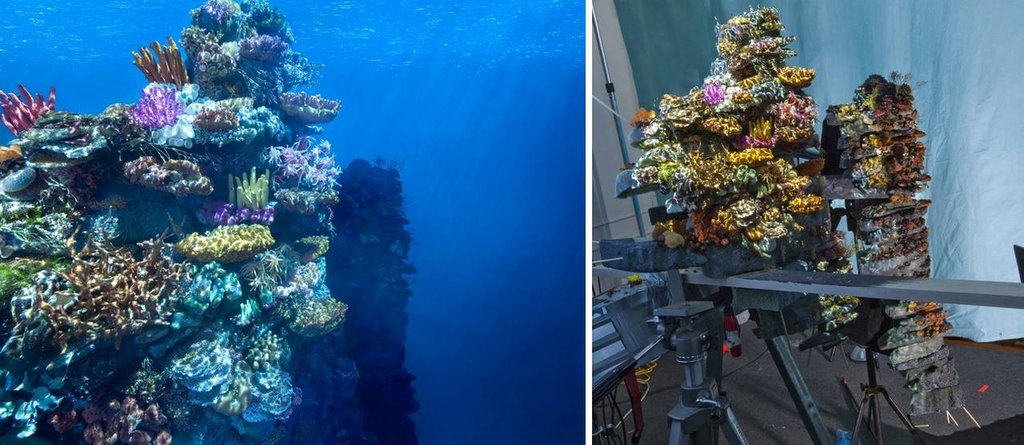
Matthew Albanese is an artist who fascinates with special effects and magic. Matthew owns a stunning artwork collection of photographs that will blow your mind with their realistic presence. On the left side in the gallery you can see the final image and on the right you will be able to see how image was created using his special effects. Scroll down and enjoy today’s gallery of 15 beautiful artworks.

BOX OF LIGHTNING

Matthew-Albanese-16-2

Diorama for Box of Lightning.. Backlit etching in plexiglass painted black.

HOW TO BREATHE UNDERWATER

lfXZ5uKh

Diorama made out of walnuts, poured and cast candle wax, wire, glitter, peanut shells, flock, plaster, wire, dyed starfish, compressed moss,

jellybeans (anemones), sponges, wax coated seashells, toothpaste, clay, figs, feathers, Q-tips, nonpareils.

A NEW LIFE

fdPyPIyh-2

Diorama made using painted parchment paper, thread, hand dyed ostrich feathers, carved chocolate, wire, raffia, masking tape, coffee, synthetic potting moss and cotton.

oooo

OK, if you want to see the whole set you will have to go Matthew’s website.

But I will just sneak in the last one from that series of fifteen.

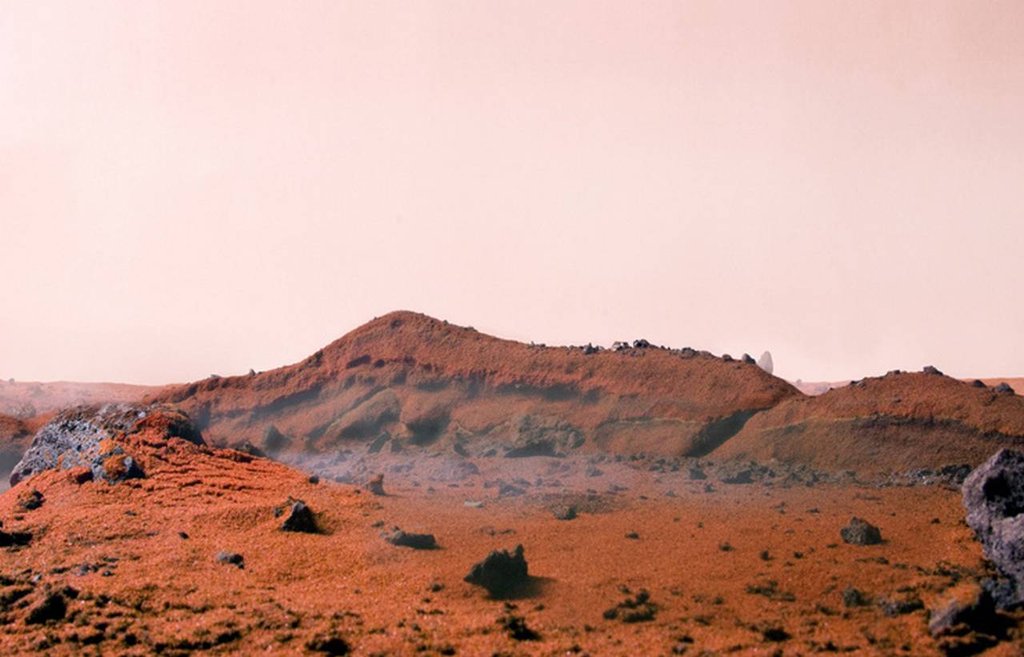
PuyEOkVh

Paprika Mars. Made out of 12 pounds paprika, cinnamon, nutmeg, chili powder and charcoal

oooo

Matthew Albanese’s fascination with film, special effects and movie magic—and the mechanics behind these illusions—began early.  Born in northern New Jersey in 1983, Albanese spent a peripatetic childhood moving between New Jersey and upstate New York. An only child, Albanese enjoyed imaginative, solitary play. He loved miniatures and created scenarios intricately set with household objects and his extensive collection of action figures. After earning a Bachelor of Fine Arts degree in Photography at the State University of New York, Purchase, Albanese worked as a fashion photographer, training his lens on bags, designer shoes and accessories—this small-object specialization is known in the retail trade as “table top photography.” Albanese’s creative eye soon turned to tabletop sets of a more wildly eclectic nature. In 2008, a spilled canister of paprika inspired him to create his first mini Mars landscape. More minute dioramas—made of spices, food and found objects—followed. In 2011, Albanese was invited to show at the Museum of Art and Design of New York. His work has also been exhibited at the Virginia Museum of Contemporary Art, Winkleman Gallery, and Muba, Tourcoing France. Matthew is represented  at Bonni Benrubi Gallery in New York

ALL IMAGES, TITLES, DESCRIPTION AND BIO ARE COPYRIGHT AND IN OWNERSHIP OF MATTHEW ALBANESE WEBSITE

Picture parade thirteen.

Keep having those wonderful Sundays!

First, the last four of the gorgeous pictures sent to me by Cynthia Gomez.  If you missed last week’s pictures, then here they are.

CG008

oooo

CG009

oooo

CG010

oooo

CG011

oooo

Now more pictures from Neil Kelly, back from my Devon, UK days.  Neil’s last set of images were in Picture parade ten.

NK10

oooo

NK11

oooo

NK12

oooo

NK13

oooo

NK14

oooo

NK15

oooo

NK16

oooo

Two very different styles but equally enjoyable, don’t you think.

It’s also appropriate for me to say a huge thanks to Cynthia, Neil and so many others who send me ideas, stories and pictures.

Thank you so much.  Not just on behalf of me but on behalf of so many others who follow Learning from Dogs.

Let there be lions.

The power and logic of nature.

In yesterday’s post Autumn ramblings, I mentioned:

There’s been a couple of posts that I want to refer to because they underline the fact that humans are so prone to forgetting that we are of the wild, from the wild and connected to the wild.

The first of those posts was a recent essay by Patrice Ayme under the title of Rewilding Us and is republished on Learning from Dogs with the kind permission of Patrice.

oooOOOooo

Rewilding Us.

REALITY IS WILD & FEROCIOUS. IGNORING IT IS INHUMAN.

And Presents A Civilizational Risk.

Princeton is freaking out. Flesh devouring aliens are lurking out in the woods, threatening academia’s fragile thoughts. Krugman:

‘From the Princeton Town Topics, which used to be all about (a) parking (b) deer:

A growing population of coyotes in the wooded area bordering the Institute for Advanced Study has motivated the Princeton Animal Control Advisory Committee to recommend that sharpshooters be hired to help handle the problem. “There is a big pack over at the Institute Woods,” officer Johnson said this week. “I’m having a lot of complaints that they follow people around.”‘

You Can’t Always Eat Who You Want

The “Mountain Lion”, is a relative of the Cheetah (erroneously put in the cat family, felis, until last year or so). It has 40 names, in English alone, and is found from the American Arctic to Patagonia, from the sea shore to the high mountains. The weight above is that of the female. Males are heavier (typically up to 100 kilograms). The heaviest puma shot in Arizona was 300 pounds (136 kilos).

The lion/cougar/puma is capable of jumping up twenty feet from a standstill (yes, 6 meters; horizontally, 14 meters). It is capable of killing a grizzly (pumas and ‘golden bears’ were famous for their naturally occurring furious fights to death in California). The feline’s crafty method consisted into jumping on top of the bear, and blinding him with furious pawing. Top speed: 50 mph, 80 km/h. (By the way, there used to be pure cheetahs in North America, recently exterminated by man. I propose to re-install the Asian cheetah in the USA, in a sort of cheetah diplomacy with Iran.)

The philosophical question here is: what is this world all about? Is it about living on our knees, or ruling among animals and wilderness?

Why would Princeton panic about small canids? Because they don’t obey the established order?

Coyotes are totally clever, and not at all dangerous (being so clever). They have very varied voices, when in packs. Going out and shooting them is really primitive, and misses the main point of having nature around. That is: to teach humility, and teach the richness of our planet, visit hearts with emotional diversity, and minds with complexity.

Bears and Mountain Lions are a completely different matter. They are both extremely clever too, but can be very dangerous.

Running and hiking in the Sierra, I got charged by scary bears several times. I view this dangerosity as a plus, but it never loses my mind, and I got scared nearly out my wits more than once.

Once, in a national Park on the coast, I literally ran into two large lions in 30 minutes! Then I got charged by a large elk before he realized I was not a lion. Other high notes were finding a bear cub on the trail in the near vertical mountain side, on the way down, as dusk was coming.

Another high point was the large bear by the trail, who was lying like a bear rug, at 9pm, in an apparent ruse to let me approach until he could jump at his prey, as he did, before realizing that I was not a deer, something that obviously infuriated him. He was torn between making the human into dinner, and the instinct that this would turn badly for him.

In Alaska I was charged by a moose with her progeny… although I did not go as fast as an experienced mountain biker who happened to be there too, the anti-grizzly cannister in my hand emboldened me to succeed in a circuitous move  to proceed towards my distant destination, something facilitated by the calf’s crash into some obstacle, drawing his mother’s concern. Mountain running often requires to proceed, no matter the obstacles in the way, when one is too far to turn around.

Bears know rocks, they have been hurt by them, and so they fear airborn rocks (throw the rock on something noisy, to impress; I had to hit, with a very large rock, a charging bear directly, once; it fled; it was killed by rangers later after he caused a flesh wound to somebody else; some will find all this very violent; well, it is, that’s part of the whole point).

Mountain Lions are better charged and/or, roared or barked at. They fear insane behavior.

In general making lots of noise helps, with bears and lions. I don’t have clever tricks to suggest for bathing safely in the murky icy Pacific. Although I assume that the presence of sea lions bobbing on the surface placidly is indicative of the absence of an obvious white shark prowling… In any case the pacific is so cold, you will probably die of cardiac arrest before you are devoured.

In Africa, there are about 500,000 elephants. 25,000 to 30,000 are killed, a year, to send the ivory to east Asia (China, Vietnam). So African elephants may disappear. This is beyond tragic, it’s irreplaceable. Elephants understand people’s gestures, without any learning (they apparently learn to use trunk gestures among themselves). One is talking about extremely intelligent animals here. (In contrast, chimpanzees have great difficulties understanding human gestures.)

Intelligence and culture are dominant among apex mammals. That’s what makes them so superior. Washington State had the smart idea to shoot full grown adult male mountain lions. Thus mountain lion society and culture collapsed, uneducated teenagers took over, and incidents with humans exploded (something about the quiet macho society!).

A Japanese specialist of chimpanzee intelligence who happens to have a bear in his lab, found that the bear did not underperform chimpanzees on mental tasks (that’s actually a problem with bears; being so clever, they can be unpredictable, one can never know what they have up their sleeve, like the one who mimicked a bear rug, above, or one who drove a car in Tahoe). A number of social mentally advanced animals (sea mammals, parrots) use advanced languages.

So what are my recommendations? The Princeton Institute for Advanced Studies ought to realize that, if it wants to become really brainy, it ought to give our fellow species a chance. They are part of what make our minds, in full.

Elephants and rhinoceroses used to be all over Europe and North America. They ought to be re-introduced right away, using Indian and African species (rare camels too; later, thanks to genetic engineering, part of those could be replaced by re-engineered ancient species, such as the Mammoth). Lions and leopard like species ought to be reintroduced too.

It can work: in the San Francisco Bay Area, there is an impressive population of mountain lions.  I had many close calls (in the most recent incident, a few weeks ago, a lion peed an enormous and dreadfully smelling amount on a trail I was making a loop on, obviously to show me he owned the territory, a total wilderness reserve a few miles from Silicon Valley… especially at dusk).

However, the lions are extremely good at avoiding people (although one got killed by police in downtown Berkeley in the wee hours of the morning). They will all be collared in the next ten years, to find out what is going on. With modern technology (collars!) and sophisticated human-animal culture, there is no reason why extremely dangerous, but clever species could not live in reasonable intelligence with humans.

So rewilding is possible. It’s also necessary. Why? So we humans can recover our hearts, and our minds.

Whether we like it or not, we are made for this wild planet. By forgetting how wild it is, by shooting it into submission, we lose track of the fact human life, and civilization itself, are much more fragile than they look.

And thus, by turning our back to the wilds, we lose track of what reality really is. Worse: we never discover all what our minds can be, and how thrilling the universe is. We are actually bad students who refuse to attend the most important school, that taught by reality itself.

Rewilding is necessary, not just to instill a mood conducive to saving the planet, but also to remake us in all we are supposed to be.

Expect Evil, And Don’t Submit.

These are the times when, once again, the plutocratic phenomenon is trying to take over. That’s when the few use the methods of Pluto to terrorize and subjugate the many (to constitute what is variously named an elite, oligarchy, or “nomenklatura“, or aristocracy, that is, a plutocracy).

And how is that possible? because the many have been made into a blind, stupid, meek herd (I refer to Nietzsche for the condemnation of the herd mentality).

How do we prevent that? Nietzsche advocated the mentality of the “blonde beast“. That meant the lion (and not what the Nazis claimed it was; few were as anti-Nazi as Nietzsche). Why lion? Because lions are domineering. I learned in Africa that one could go a long way with wild lions, as long as one gave them respect, and time to get out of the way. However, disrespecting a lion means death.

Lions don’t accept to live on their knees. When abominable forces from the giant Persian theocratic plutocracy put the tiny Athenian democracy in desperate military situations, Athenians fought like lions. And democracy won.

Yet, 150 years later, when fascist, plutocratic, but apparently not as abominable, Macedonian forces put Athens in a difficult situation, Athenians surrendered. They did not fight like lions. Democracy would not come back to Athens for 23 centuries (and only thanks to the European Union).

We will not defeat plutocracy if we do not rewild ourselves. First. Let there be lions.

***

Patrice Ayme

oooOOOooo

What I read in Patrice’s essay is this.  Man is, by definition, part of nature.  Yet man, uniquely of all the natural species on this planet, has contrived to ‘evolve’ a set of beliefs that run counter to the core integrity of nature.  Perhaps more accurately put: sections of modern man have evolved this way.

I have a background piece on Learning from Dogs called Dogs and integrity.  Here’s an extract:

Dogs:

  • are integrous ( a score of 210) according to Dr David Hawkins
  • don’t cheat or lie
  • don’t have hidden agendas
  • are loyal and faithful
  • forgive
  • love unconditionally
  • value and cherish the ‘present’ in a way that humans can only dream of achieving
  • are, by eons of time, a more successful species than man.

And have poetry written for them:

Inner Peace

If you can start the day without caffeine,

If you can always be cheerful, ignoring aches and pains,

If you can resist complaining and boring people with your troubles,

If you can eat the same food every day and be grateful for it,

If you can understand when your loved ones are too busy to give you any time,

If you can take criticism and blame without resentment,

If you can conquer tension without medical help,

If you can relax without liquor,

If you can sleep without the aid of drugs,

You are probably the family dog!

Those words apply equally to all the animals on this planet; all of Nature’s animals. In other words, integrity must be and has to be the one and only framework within which we live.

The second post I referred to is on Alex Jones’ wonderful blog The Liberated Way.  The post is called Nature Deficit Disorder.  Here is the text of Alex’s post.

I occasionally read sad stories in my local media of senseless cruelty against wildlife around my town of Colchester: the smashing of barn owl eggs; people suffocated badgers by closing their den up.  People have no opportunity to expose themselves to nature, and thus connect with nature, some experts call “Nature Deficit Disorder.”

Technology, far from liberating, enslaves the individual to a relentless need for entertainment and personal validation, backed by demands of television, homework, cellphones and money earning.  Many view nature as a health and safety risk, so that it is either managed or avoided.  The situation is best illustrated in a satirical YouTube video called“The discovery of the last child in the woods.”

The solution is simple: expose yourself to nature.

The indigenous Native American expresses a connection to nature in this video:

Here is that video.  Watch it without interruption.  In less that 3 minutes it spells out everything that we humans have to relearn about the world we live in; the world we are part of.  The integrous world we must fight for. Fight for as lions!

When all the trees have been cut down,
when all the animals have been hunted,
when all the waters are polluted,
when all the air is unsafe to breathe,
only then will you discover you cannot eat money.
~ Cree Prophecy ~