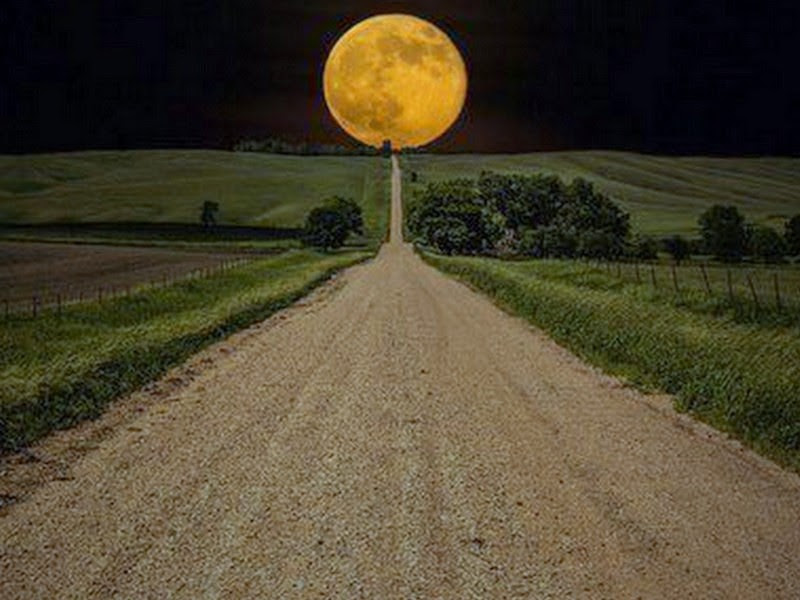
Category: Art

Climate Change and Humanity: Postscript.

A personal viewpoint after reading Tom’s essay Is Climate Change a Crime Against Humanity?

Last Thursday, July 3rd, I republished a post, what Tom calls a Tomgram, from TomDispatch comparing the USA’s attitude to the very small risk of a country exploding a weapon of mass destruction, WMD, over American soil to the 95% risk of the USA being harmed from the effects of climate change.  Here’s an extract from the central part of Tom’s essay:

So here’s a question I’d like any of you living in or visiting Wyoming to ask the former vice president, should you run into him in a state that’s notoriously thin on population: How would he feel about acting preventively, if instead of a 1% chance that some country with weapons of mass destruction might use them against us, there was at least a 95% — and likely as not a 100% — chance of them being set off on our soil? Let’s be conservative, since the question is being posed to a well-known neoconservative. Ask him whether he would be in favor of pursuing the 95% doctrine the way he was the 1% version.

After all, thanks to a grim report in 2013 from the Intergovernmental Panel on Climate Change, we know that there is now a 95% -100% likelihood that “human influence has been the dominant cause of the observed warming [of the planet] since the mid-20th century.” We know as well that the warming of the planet — thanks to the fossil fuel system we live by and the greenhouse gases it deposits in the atmosphere — is already doing real damage to our world and specifically to the United States, as a recent scientific report released by the White House made clear. We also know, with grimly reasonable certainty, what kinds of damage those 95% -100% odds are likely to translate into in the decades, and even centuries, to come if nothing changes radically: a temperature rise by century’s end that could exceed 10 degrees Fahrenheit, cascading species extinctions, staggeringly severe droughts across larger parts of the planet (as in the present long-term drought in the American West and Southwest), far more severe rainfall across other areas, more intense storms causing far greater damage, devastating heat waves on a scale no one in human history has ever experienced, masses of refugees, rising global food prices, and among other catastrophes on the human agenda, rising sea levels that will drown coastal areas of the planet.

Tom’s essays had many great links to background research papers and other supporting material.  The penultimate link was embedded (my italics) in this sentence: “In the case of a major exchange of such weapons, we would be talking about “the sixth extinction” of planetary history.”  That linked to the Amazon page describing the book, released earlier this year, of the same name written by Elizabeth Kolbert, as follows:

A major book about the future of the world, blending intellectual and natural history and field reporting into a powerful account of the mass extinction unfolding before our eyes

Over the last half a billion years, there have been five mass extinctions, when the diversity of life on earth suddenly and dramatically contracted. Scientists around the world are currently monitoring the sixth extinction, predicted to be the most devastating extinction event since the asteroid impact that wiped out the dinosaurs. This time around, the cataclysm is us. In The Sixth Extinction, two-time winner of the National Magazine Award and New Yorker writer Elizabeth Kolbert draws on the work of scores of researchers in half a dozen disciplines, accompanying many of them into the field: geologists who study deep ocean cores, botanists who follow the tree line as it climbs up the Andes, marine biologists who dive off the Great Barrier Reef. She introduces us to a dozen species, some already gone, others facing extinction, including the Panamian golden frog, staghorn coral, the great auk, and the Sumatran rhino. Through these stories, Kolbert provides a moving account of the disappearances occurring all around us and traces the evolution of extinction as concept, from its first articulation by Georges Cuvier in revolutionary Paris up through the present day. The sixth extinction is likely to be mankind’s most lasting legacy; as Kolbert observes, it compels us to rethink the fundamental question of what it means to be human.

Here’s an interview of Elizabeth Kolbert taken from the Democracy Now programme. It’s a tad under 20 minutes so easy to put aside a little of your time to watch it.

PLEASE DO!

Published on Feb 11, 2014
February 2014 on Democracy Now!

In the history of the planet, there have been five known mass extinction events. The last came 65 million years ago, when an asteroid about half the size of Manhattan collided with the Earth, wiping out the dinosaurs and bringing the Cretaceous period to an end. Scientists say we are now experiencing the sixth extinction, with up to 50 percent of all living species in danger of disappearing by the end of the century. But unlike previous extinctions, the direct cause this time is us — human-driven climate change. In “The Sixth Extinction: An Unnatural History,” journalist Elizabeth Kolbert visits four continents to document the massive “die-offs” that came millions of years ago and those now unfolding before our eyes. Kolbert explores how human activity — fossil fuel consumption, ocean acidification, pollution, deforestation, forced migration — threatens life forms of all kinds. “It is estimated that one-third of all reef-building corals, a third of all fresh-water mollusks, a third of sharks and rays, a quarter of all mammals, a fifth of all reptiles, and a sixth of all birds are headed toward oblivion,” Kolbert writes. “The losses are occurring all over: in the South Pacific and in the North Atlantic, in the Arctic and the Sahel, in lakes and on islands, on mountaintops and in valleys.”

Elizabeth Kolbert, is well known for her reporting on global warming as a staff writer at The New Yorker magazine, which led her to investigate climate species extinction. Her new book is The Sixth Extinction: An Unnatural History. In 2006, she wrote Field Notes from a Catastrophe: Man, Nature, and Climate Change.

Make no mistake, that short video interview doesn’t pull any punches.  Just as Kolbert’s book.  It is very tempting to want to hide, to close one’s ears and eyes and pretend it’s all a bad dream and, soon, we will awaken to a bright, new dawn.

(Now for something really lovely! It’s 1:40pm on Sunday, 6th)

I took a quick break to think about my next sentence.  I was looking for some words that would encourage us all to do something!  Because as John Hurlburt recently wrote: “Failure to act condemns us to death as a species of fools.

In that short break I saw that someone else had signed up to follow Learning from Dogs.  That person describes herself as Elsie Bowen-Dodoo.  Her blog is called BowenDiaries. On her About page, Elsie writes:

Elsie Bowen-Dodoo. Living life with a purpose. Persevering to inspire all races.

I write to inspire people hoping that they reading my articles and stuff will be touched to do something positive in their lives.

We really can all make this world a better place to live in.

Talent should not be wasted.

This is the picture on Elsie’s home page.

Positive inspiration!

So here’s my take on where we, as in all mankind, are at.

  • We have to turn our backs on growth, greed and materialism.
  • Each of us must place caring for our planet our highest priority in life.
  • Each of us must be alive to making a positive difference.
  • Being true to what we know is right will set us free.
  • This will also create ripples of positive energy that will set others free.
  • That is the only sustainable way to go.

Let me close by returning to dogs.  After all this blog is called Learning from Dogs! By recognising, of course, that these are challenging times. As we are incessantly reminded by the drumbeat of the doom-and-gloom news industry every hour, frequently every half-hour, throughout the day. A symphony of negative energy.

Yet right next to us is a world of positive energy. The world of dogs. A canine world full of love and trust, playfulness and relaxation. A way of living that is both clear and straightforward; albeit far from being simple. As anyone will know who has seen the way dogs interact with each other and with us humans.

In other words, dogs offer endless examples of positive behaviours. The wonderful power of compassion for self, and others, and of loving joy. The way to live that we humans crave for. A life full of hope and positive energy that keeps the power of negativity at bay.

That is the only way forward!

Oliver, Cleo and Hazel playing together.
Oliver, Cleo and Hazel joyfully playing together.

Picture parade fifty-one

The concluding set of wonderful pictures sent in by Amanda Smith.

If you missed the first set, they may be seen here.

Amanda9

oooo

Amanda10

oooo

Amanda11

oooo

Amanda12

oooo

Amanda13

oooo

Amanda14

oooo

Amanda15

oooo

Amanda16

oooo

Amanda17

oooo

What great fun, as I’m sure you will agree.

Big thanks, Amanda.

You all have a great week out there!

Self compassion.

A placeholder just for today.

Yesterday morning I had a lovely long chat with Jon Lavin in the UK.  We chit-chatted for a long time, covering such matters as caring for ourselves, about being compassionate towards the self, and much more besides.

Then in stark contrast, around noon Jean and I went over to “Runaway Tractors” to collect our tractor that had been in for a service.

The afternoon brought along another great conversation with John Hurlburt, he of the highly-appreciated Human arrogance essay last Thursday.  That brought forth a whole bundle of ideas to write about.

The talks with Jon and John inspired a wonderful set of essays in my mind – BUT!

But by the time I sat down in front of the PC to write today’s post, I had simply run out of time to write something of value.  So I’m cheating, well sort of, by reposting something from a little over a year ago. Hope it’s fresh to your eyes and that you enjoy it.

ooOOoo

Returning to Nature

The power of serendipity!

Why the choice of this sub-heading?  Well, just because a number of quite separate articles and essays have come together to offer a powerful, cohesive argument for reconsidering the role of Nature in the future of mankind.

Of course, my use of words in that preceding sentence is completely ludicrous; the suggestion that ‘Nature’ is disconnected from ‘mankind’.  Yet millions of us, to a greater or lesser degree, do behave as if we are the masters of the world.

So let me dip into what has been ‘crossing my desk’ in recent times.

On May 28th, George Monbiot published in The Guardian newspaper an essay entitled A Manifesto for Rewilding the World.  (The link takes you to the article on the Monbiot blogsite.)  Here’s how that essay opened,

Until modern humans arrived, every continent except Antarctica possessed a megafauna. In the Americas, alongside mastodons, mammoths, four-tusked and spiral-tusked elephants, there was a beaver the size of a black bear: eight feet from nose to tail(1). There were giant bison weighing two tonnes, which carried horns seven feet across(2).

The short-faced bear stood thirteen feet in its hind socks(3). One hypothesis maintains that its astonishing size and shocking armoury of teeth and claws are the hallmarks of a specialist scavenger: it specialised in driving giant lions and sabretooth cats off their prey(4). The Argentine roc (Argentavis magnificens) had a wingspan of 26 feet(5). Sabretooth salmon nine feet long migrated up Pacific coast rivers(6).

During the previous interglacial period, Britain and Europe contained much of the megafauna we now associate with the tropics: forest elephants, rhinos, hippos, lions and hyaenas. The elephants, rhinos and hippos were driven into southern Europe by the ice, then exterminated around 40,000 years ago when modern humans arrived(7,8,9). Lions and hyaenas persisted: lions hunted reindeer across the frozen wastes of Britain until 11,000 years ago(10, 11). The distribution of these animals has little to do with temperature: only where they co-evolved with humans and learnt to fear them did they survive.

I’m not going to reproduce the bulk of the article; just hoped that I have tickled your curiousity sufficient for you to read it in full here. But will just show you how it closed:

Despite the best efforts of governments, farmers and conservationists, nature is already beginning to return. One estimate suggests that two thirds of the previously-forested parts of the US have reforested, as farming and logging have retreated, especially from the eastern half of the country(23). Another proposes that by 2030 farmers on the European Continent (though not in Britain, where no major shift is expected) will vacate around 30 million hectares (75 million acres), roughly the size of Poland(24). While the mesofauna is already beginning to spread back across Europe, land areas of this size could perhaps permit the reintroduction of some of our lost megafauna. Why should Europe not have a Serengeti or two?

Above all, rewilding offers a positive environmentalism. Environmentalists have long known what they are against; now we can explain what we are for. It introduces hope where hope seemed absent. It offers us a chance to replace our silent spring with a raucous summer.

Then further research for this post brought to light an interview with David Suzuki in February.  Widely reported, I picked the version published on Straight.com, from which comes:

In December, Canadian specialty TV channel Business News Network interviewed me about the climate summit in Copenhagen. My six-minute interview followed a five-minute live report from Copenhagen, about poor countries demanding more money to address climate change and rich countries pleading a lack of resources. Before and after those spots were all kinds of reports on the Dow Jones Industrial Average, the price of gold and the loonie, and the implications of some new phone technology.

For me, this brought into sharp focus the inevitable failure of our negotiating efforts on climate change. BNN, like the New York-based Bloomberg channel, is a 24-hour-a-day network focused completely on business. These networks indicate that the economy is our top priority. And at Copenhagen, money dominated the discussions and the outcome.

But where is the 24-hour network dealing with the biosphere? As biological creatures, we depend on clean air, clean water, clean soil, clean energy, and biodiversity for our well-being and survival. Surely protecting those fundamental needs should be our top priority and should dominate our thinking and the way we live. After all, we are animals and our biological dependence on the biosphere for our most basic needs should be obvious.

The economy is a human construct, not a force of nature like entropy, gravity, or the speed of light or our biological makeup. It makes no sense to elevate the economy above the things that keep us alive. But that’s what our prime minister does when he claims we can’t even try to meet the Kyoto targets because that might have a detrimental effect on the economy.

This economic system is built on exploiting raw materials from the biosphere and dumping the waste back into the biosphere. And conventional economics dismisses all the “services” that nature performs to keep the planet habitable for animals like us as “externalities”. As long as economic considerations trump all other factors in our decisions, we will never work our way out of the problems we’ve created.

Concluding:

Nature is our home. Nature provides our most fundamental needs. Nature dictates limits. If we are striving for a truly sustainable future, we have to subordinate our activities to the limits that come from nature. We know how much carbon dioxide can be reabsorbed by all the green things in the oceans and on land, and we know we are exceeding those limits. That’s why carbon is building up in the atmosphere. So our goal is clear. All of humanity must find a way to keep emissions below the limits imposed by the biosphere.

The only equitable course is to determine the acceptable level of emissions on a global per capita basis. Those who fall below the line should be compensated for their small carbon footprint while those who are far above should be assessed accordingly. But the economy must be aligned with the limits imposed by the biosphere, not above them.

Quite clearly, if we continue to turn our backs on Nature, the consequences won’t be long in tapping us on the shoulder.

So, going to close it today with this, seen nearly a month ago on the PRI website:

oooo

Plant a Tree

Trees — by Kristof Nordin May 27, 2013

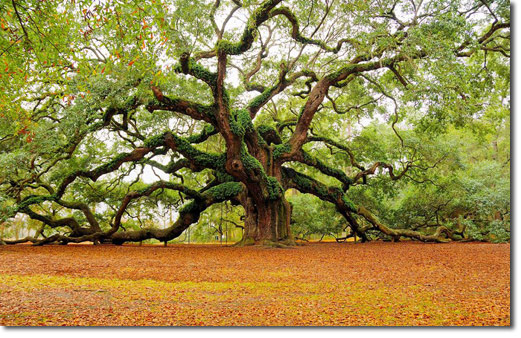
angel-tree

Imagine the type of world we could see
If instead of saying ‘pray,’ we said, ‘plant a tree’.
With this one little change so much more could be done
To protect all living things found under the sun.

We could ‘plant a tree’ for our troops sent away into war
So when they return they’d come home to find more.
We could ‘plant a tree’ at our churches with our husband or wife
To praise the Creator through a celebration of life.

We could ‘plant a tree’ for the needy and for those with no food
We could even plant in public without seeming rude.
The government would not have to introduce rules,
And most likely we could ‘plant a tree’ at our schools.

If we took it to task to ‘plant trees’ for the poorest,
We would all soon be reaping the wealth of a forest.
We could plant freely with those of all religions and creeds,
The improvement of earth would be based on these deeds.

We could plant with our neighbours, our family, and friends,
And ‘plant a tree’ with our enemies to help make amends.
If we ‘plant a tree’ for the sick to show them we care,
We would also be healing the soil, water, and air.

We could ‘plant a tree’ to observe when two people wed,
And plant one with our kids each night before bed.
Throughout the history of the whole human race
We find respect for the ‘tree’ has always had a place.

The great Ash of the Norse was their tree of the World,
And on a tree in the Garden is where the serpent once curled.
It was in groves of Oaks that the Druid priests wandered,
And under the Bodhi where the great Buddha pondered.

In the Bible it’s clear that we have all that we need:
‘All the trees with their fruits and plants yielding seed’.
Despite all these lessons that the past has taught
Now days, it seems, we cut our trees without thought.

This is confirmed by the Koran, for in it we read:
‘Many are the marvels of earth, yet we pay them no heed’.
We all have a duty, no matter what nation
To perform our part in protecting Creation.

Just think what we’d have if we had picked up a spade
Every time each one of us bowed our heads and prayed.

Further Reading:

ooOOOoo

See you all tomorrow.

Poetry in metal.

A pleasure to highlight the creative work of Ira Wiesenfeld DVM

Earlier on this week, we were fortunate in having a long-term friend of Jean and her late husband, Ben, stay with us.  In distant times, Ira, him being the friend, had been a horse veterinarian but many years ago had changed course.  As he explains on his web-site:

I grew up the scientist in an artistic family. I didn’t discover my right brain until midlife; my left was burned out and a crisis was upon me. First came the craft of blacksmithing, which I found therapeutic and immensely satisfying. Then a style of work developed that was biomorphic, botanical and branching. Finally a passion for sculpture evolved, made from forged, found, and fabricated metal.

Ten years ago I decided to get serious; I gave up my day job and began working full time in my smithy. Now I like to say that I forge and weld furniture, sculpture and anything in- between. I especially enjoy working in that in-between space, where aesthetics, function and narrative meet.

Ira was en-route to an exhibition in Portland which gave us the opportunity both to have him stay and for us to browse over some of the pieces he had with him.

Ira
Ira

 oooo

P1140905

My impromptu picture-taking didn’t do justice to this piece.  A much better version is the one below taken directly from Ira’s website Circle of Iron Forge.

Iron and Copper Nestbowl.

oooo

Ira discussing with Jean what could be done with an old iron pulley-wheel we found here at home.

oooo

Just missing the water and fish!

Have to say that I was very impressed by both Ira’s creative artistry and his metal-working skills.

Let me leave you with one more example of Ira’s work, taken from his web-site and his contact details in case any of you dear readers are motivated to be in direct touch with Ira.

Empty Nest Forged and welded steel, copper, bronze, and stainless steel.
Empty Nest
Forged and welded steel, copper, bronze, and stainless steel.

Ira Wiesenfeld DVM
Tucson, Arizona
Treeira@hotmail.com
520-742-5274

Picture parade forty-eight.

Concluding set of nanosecond pictures!

Courtesy of John H.

nano9

oooo

nano10

oooo

nano11

oooo

nano12

oooo

nano13

oooo

nano14

oooo

nano15

oooo

nano16

oooo

Incredible!

You all have a good week.

Picture parade forty-seven.

Nanosecond pictures.

Back to these photographs sent in by John H.

Nano1

oooo

nano2

oooo

nano3

oooo

nano4

oooo

nano5

oooo

nano6

oooo

nano8

oooo

More to come in a week’s time.

Meanwhile, you all take care out there.

Lest we forget!

Today is Memorial Day for all Americans that have died while serving their country.

Just a short preamble.

I was born in London six months to the day before the day on which the second world war ended.  On that day in early May, 1945 my mother breathed a sigh of relief and knew I was going to live!  The fact that I am writing this post does rather confirm that! 😉

Not only is this the year of my seventieth birthday (but, PLEASE, don’t remind me!) but my mother is also still alive and well and is coming to see Jean and me in our Oregon home in ten weeks time.

I served as a Radio Operator in the Royal Naval Reserve between 1963 and 1968. That is the totality of my military experiences.  Ergo, I have been more than fortunate not to have experienced military conflict at any time in my life.

So today’s post is just something gentle to remind us all of the advantages of freedom for humans and animals alike.

The Bear

An orphan bear cub hooks up with an adult male as they try to dodge human hunters.

Director: Jean-Jacques Annaud
Writers: James Oliver Curwood (novel), Gérard Brach (screenplay)
Stars: Tchéky Karyo, Bart the Bear, Youk the Bear

See full cast and crew details here.

Sometimes less says more: a growl or a snarl can be worth a thousand words. Without any verbal dialogue, the raw emotions of the wilderness are vivid in this segment of The Bear, a film about the actions of animals in relation to humans. In this suspenseful part of the story, a cub is hunted by a mountain lion who shows no mercy. Without any verbal dialogue, the raw emotions of the wilderness shine through.

Film Reviews:

Storytelling doesn’t get much purer than this–a film with virtually no dialogue and not a minute that isn’t fascinating, either for the plot it pursues or the way director Jean-Jacques Annaud gets his ursine stars to do what he wants. The story deals with a young cub who, after his mother is killed in a landslide, bonds to a lumbering male Kodiak. The two of them then must cope with an invasion of hunters into their territory – and Annaud makes it clear whose side he’s on. Aside from stunning scenery, the film offers startlingly close-up looks at bear behavior. They say the best actors are the ones that let you see what they’re thinking, a trick Annaud manages with his big, furry stars. – Marshall Fine

The Bear has all the marks of a classic. Lauded by animal rights groups for its respect for the integrity of all species, it manages to speak out eloquently against the senseless hunting of wildlife without having to depict killing to make its point. Instead, it emphasizes the ties that bind the human and animal worlds together. – Frederic and Mary Ann Brussat

May your day wherever you are in the world be a peaceful one.

Picture parade forty-five.

Just a few this week for you that have caught my eye.

From Suzann:

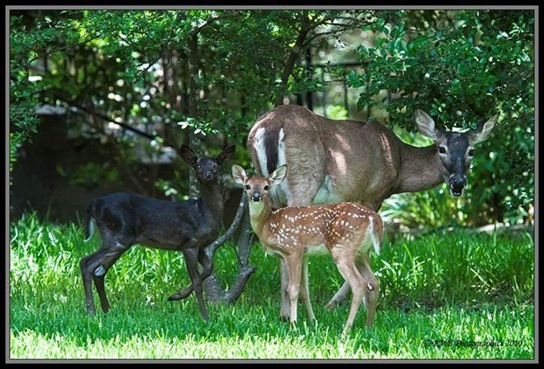
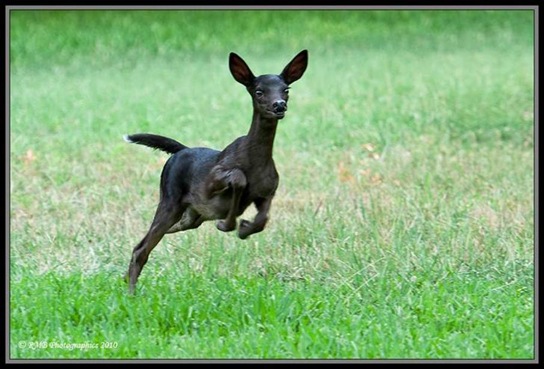
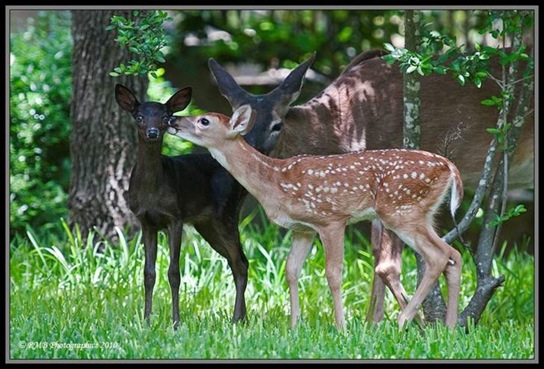
A black deer – unbelievably gorgeous!

All three pictures taken by RJ Verge near Beamsville, Ontario, Canada. Black deer are more rare than albinos.

Deer1

oooo

deer2

oooo

deer3

oooo

For all animal lovers a rare and beautiful set of pictures.

ooOOoo

Now three ‘nanosecond’ pictures sent to me by John Hurlburt.

nano3

oooo

nano10a

oooo

nano12

oooo

More of these another Sunday.

ooOOoo

Finally, one from a great set that Dan Gomez sent me.

Dan1

ooOOoo

More from Dan and John over the coming Sundays.

Saturday illusions, one.

They say the camera never lies! H’mm!

(Sent on to me by Suzann.)

SR1

oooo

SR2

oooo

SR3

oooo

SR4

oooo

SR5

oooo

SR6

oooo

SR7

oooo

SR8

There were a total of twenty-four of these wonderful photographs sent to me by Su.  Thus I am inclined to present them to you, dear reader, in a further two batches of eight over the next two weekends.

Creative reflections.

The power of re-finding oneself.

Terry Hershey

If you do a search on Learning from Dogs for Terry Hershey you will find that his name comes up from time to time. Way back in March, 2011, I published a post announcing a visit by Terry to Payson, AZ where Jean and I were then living.  Having had the opportunity to listen to Terry speaking and to meet him in person, I have maintained a subscription to his weekly Sabbath Moment ever since.

Thus it was that last Sunday in came the regular missive from Terry.  They are always good but last Sunday’s was spectacularly good. In response to my request to publish the full Sabbath Moment here on Learning from Dogs, there was a prompt reply to the affirmative.

Thus with no further ado, here is Terry’s Sabbath Moment for May 5th, 2014, in full.

ooOOoo

Artists

May 5, 2014

Hershey moon

It seems that in the spiritual world, we do not really find something until we first lose it, ignore it, miss it, long for it, choose, it, and personally find it again–but now on a new level. Richard Rohr

Mystery is at the heart of creativity. That, and surprise. Julia Cameron

I was born fragile, farther said. I was just born that way. He said I was a nervous baby. Just born like that. David Helfgott

I saw the angel in the marble and carved until I set him free. Michelangelo

oooo

Lorraine Hunt Lieberson began her career as an accomplished viola player. While on tour in Europe (in the late 1980s), her viola was stolen. She could have replaced it. As would be imagined, the theft threw her into a state of feeling lost and uncertain. She stopped playing. After awhile, Lorraine began to work with only instrument she had, her voice.

When asked, Lorraine stresses that her decision to go into singing happened quite naturally. “There were a lot of encouragements along the way, but no individual, earth-shaking event that made me change,” she says. “But, back in 1988, when my viola was stolen, I took that as a sort of omen.” (And although she hasn’t yet replaced her stolen viola, she avows that “the viola is always with me in spirit when I sing.”)

Interestingly, Lorraine is shy about being interviewed; she has no press agent. But when she sings she is known for an ever-widening swath of ardor and awe that she leaves in her wake. An intensity. Her voice–her singing–touches hearts and lives. The irony is that the gift–the artistry–she has given us all, began when life turned left.

Ask any class of kindergarten students, “How many of you are artists?
How many raise their hands? Every single one of them.
Ask fourth graders. Maybe half.
Seventh graders. A handful.
Seniors in high school. Maybe one.
It’s quite the educational system we have created.
We begin with artists, and we slowly wean it out of them.

I do know this: it is easy to lose sight of that artist that resides inside of each one of us. Whether lost or buried or stuck or forgotten or dismissed or ignored… or “stolen.” (Whenever I lead a retreat, Crayolas are mandatory–because it is an unwritten spiritual principle that you cannot learn about life unless you color. It is curious then, how many–otherwise secure adults–will say, “I’m not very good at coloring.” I will say, “Who said anything about being ‘good’ at it?” Our mind has already morphed from play and wonder to mastery and proficiency.)

When we tag or label or describe ourselves, “artist” is seldom used. Where I was raised, artist was a phase you went through (a dream), you know, to grow out of, to, move on to something more useful and sensible–in order to get a real job.

Yes, of course we are all inner artists, but the cynical part of me tells me that it all sounds too much like a mantra meant to be chanted standing in a circle at a “be all you can be” conference. Sure, it all sounds good.

But I’m not sure what it really means.

In the opening scenes of Shine, we first meet the middle-aged David Helfgott (played by acclaimed Australian stage actor Geoffrey Rush), babbling to himself incessantly and wandering in the rain, in a state of transition. Behind him is the isolated existence as a child piano prodigy whose emotional turmoil led to a nervous breakdown, and a series of stays in various mental institutions. Ahead of him is his eventual reconnection with the world around him, guided by both love and his virtuoso talent that has been long abandoned. We witness the awakening of the artist. In the movie (and in real life), David eventually moves toward that which gives life.

So, what is this artist? It is the place in our spirit that births…

creativity,
enchantment,
imagination,
play,
risk
and wonder.

There is no doubt that we hide it. We don’t believe it. Or we judge it as inadequate.

But here’s the deal: The artist in David did not reside only in the talent or prodigy or genius, but in the spontaneity, vitality, innocence, passion and delight. And the artist in Lorraine wasn’t detoured by life’s unkindness.

For me, the tragedy is that (in the name of love) David’s father (Peter) squeezes the artist out of the prodigy. But in truth, it doesn’t always require a pathological “love” to hide or extinguish the light.

In the movie rendition, there is a scene that stops my heart. David and his father are walking home after a competition. David has placed second.
(In his father’s eyes, anything other that first is a failure.) The father is seething, and there is no hiding his disgust. David has lived his entire life absorbing his father’s pathology, doing his very best to make his Daddy happy. The father walks ahead, hurried, his spirit heavy. David follows. On the sidewalk, in chalk, there is a hopscotch pattern.The camera follows from behind, and we see young David unconsciously, intuitively, childlike, hopping and skipping and jumping — the joy and the light (and the artistry) of his childhood still alive.

I don’t want to lose sight of that childlike artistry inside of me. I’m home for a week or so, and the garden is abounding and teeming with life and color and enchantment. The peony buds profligate, the bearded iris blooms beguiling, the columbine exquisite. The branches of the Japanese Maple, heavy with spring rain, deferentially bow. I once asked my analyst why I was in therapy. He told me it would make me a better gardener. Gardening can be strong medicine–an elixir that nurtures and shapes the soul. For that reason, it is a tonic seldom taken straight with no ice. Gardening has way of seeping into your soul, and one day you find yourself, in the words of poet May Sarton, spending the first half hour of the morning “enjoying the air and watching for miracles,” the joy and the light still alive.

oooo

I dip my pen in the blackest ink, because I’m not afraid of falling
into my inkpot. Ralph Waldo Emerson

ooOOoo

Hope you all enjoyed this just as much as I did!
But I can’t close without mentioning something that struck me the very first time I read the essay. It is this.

That list that describes artistry: creativity, enchantment, imagination, play, risk and wonder.  It’s not a million miles from describing the way our younger dogs behave when we take them for a walk around the property most days after lunch.

Dogs playing without a care in the world!
Once again, Terry’s website is here.