Category: Art

A short essay on leather dresses!

Enjoy this mid-week giggle.

A very timely item sent to me by neighbour, Dordie.

I say timely because it was nearly 6pm before I stopped writing ‘the book’.  It was a tough day of research and cross-checking and seeking permission to republish essays from other authors and magazines.  That’s the reason that my next NaNoWriMo chapter is not being published in thirty minutes time.  Still waiting for some of those permissions.

So ‘thank you’ Dordie.


Do you know that when a woman wears a leather dress…

dress1

a man’s heart beats quicker…

dress2

his throat gets dry…

dress3

he gets weak in the knees…

dress4

and he begins to think totally irrationally…


Ever stop to wonder why?

WELL …

It’s because she smells like a new car

The book! Part Two: Understanding the dog’s world

Mankind, Nature and Dogs

Understanding the dog’s world

A Dog is Man’s Best friend, but is Man a Dog’s Best Friend?

In the Prologue I offered a fictional, dreamlike story of how early man and wolf came together and from that special place in our history did flow the everlasting relationship between man and dog. I will return to that but first let’s get an idea of just how many dogs there are.

In 2012, the American Veterinary Medical Association reported that there were over 43 million [ 43,346,000] dog-owning households in the USA. That translated to over 36% of the total households in America. With an average of 1.6 dogs per household that came to the astonishing total of 62,926,000 dogs. In just one country!

It is therefore beyond doubt that millions and millions of people, of all ages, all around the world, understand what it is like to have a dog close to them. Likewise, those millions of dogs know what us humans are capable of. But of those millions of humans who have dogs in their lives, how many understand, really understand, the world of the dog?

In the next chapter after my Prologue, the Puppyhood chapter, I spoke of the circumstances that brought me into contact with Angela Stockdale of The Dog Partnership in Devon and how from that association I became aware of the three roles that dogs could be born into: mentor, monitor and nanny. How, generally speaking, out of every 50 dogs born there were just three carrying those roles, if ‘carrying’ is the correct description, and that the bulk of dogs born were straightforward pack members. Irrespective of the fact that we don’t normally own anything like the number that would constitute a natural pack of dogs in the wild, around 50 animals, that doesn’t alter the fact that when a puppy is born it’s social place, from a pack perspective, is hard-wired into the puppy.

I am indebted to Angela Stockdale for granting me permission to republish her descriptions of the mentor, monitor and nanny that are available on her website. In terms of man understanding the world of the dog, these descriptions are invaluable.

What is a Teaching Dog?

A Teaching Dog is a dog who has an instinctive desire to guide and support dogs in their learning canine communication.

A Teaching Dog helps other dogs develop their canine communication skills by displaying different body language to convey different messages. Such as lowering their heads and curving on approach as a polite way to introduce themselves. These essential etiquette skills are invaluable in preventing social issues.

A Teaching Dog teaches dogs canine etiquette to other dogs so they develop their communication skills as they go through the natural ageing process i.e. the transition from puppyhood to adolescence and from adolescence to adulthood. At these essential times, their pupils develop their skills in canine communication to a high level, hence again preventing social issues.

A Teaching Dog has an instinctive desire to guide and support dogs who find communicating difficult. If a dog has an established social issue, a Teaching Dog will actively incite interaction with them in order to teach them how to relax and communicate with them. They will assess how the other dog feels and react accordingly. Keeping their distance if the dog is concerned and approaching thoughtfully when the dog relaxes. I say thoughtfully because that is really important to understand; they think about how to work with a dog.

When a Teaching Dog works, whilst there are some elements of instinctive body language, in the main they will consciously use appropriate body language for the specific situation. They will always maintain control of an interaction but will change their posture from assertive to more inviting in accordance to the other dog’s behaviour.

On sighting the dog they are working with, they will first watch and assess them. This can be done from quite a distance with an experienced Teaching Dog. Eye contact is made but the eyes are averted intermittently whilst the Teaching Dog decides how assertive they need to be, or not as the case may be, with that particular dog. What follows from thereon is purely dependent on the other dog and that particular Teaching Dog’s way of working.

Do all Teaching Dogs teach in the same way?

No. Different Teaching Dogs have different teaching skills and different preferred roles. It is essential to recognise the role each particular Teaching Dog prefers to take. There are three primary Teaching Dog roles – Mentor, Minder and Nanny.

Mentor

A Mentor is normally quietly assertive by nature. They rarely play unless flirting with the opposite sex. However, they generally build the strongest bonds with high ranking dogs of the same sex.

As a Teaching Dog they are passively dominant. They always meet a dog with assertiveness but never hostility. They tend not to use body language to relax a dog as such but often just their presence has a calming effect on most dogs anyway.

If working in a group, they watch from the sidelines and only become involved if absolutely necessary. Mentors can be quite lazy! They will support other Teaching Dogs where needed, showing by example what to do in difficult situations if the other Teaching Dog is not coping.

Other dogs reaction to Mentors vary. Some dogs take great confidence in a Mentor and whilst not necessarily submissive towards them, they are very respectful. Some dogs find a Mentor intimidating and will avoid making contact with them.

Minder

A Minder is totally different to a Mentor in their interaction with dogs they are teaching. When a Minder meets another dog, they actively approach with the intent of interacting with them. A Minder is also naturally assertive but not as strong as a Mentor. When they meet another dog, in the Teaching Situation, they assess the new dog as they approach and use appropriate body language in accordance to the other dog’s reaction to them.

They are more generally more demonstrative than a Mentor and will actively seek interaction within a few minutes of meeting a new dog. This does not necessarily mean that they invite play. If they feel the dog is not ready for that level of interaction, they will converse with them in a more subtle manner.

If the other dog is worried but shows signs of being ready to rush at them, the Minder will stand firmly with their head side on to the dog. Eye contact is made intermittently as the Minder ascertains whether the other dog is calming down or intending to rush at them.

They can stand firm and openly display assertiveness if they need to. Once ‘control’ of the situation has been achieved, a Minder will generally incite status based activities from the other dog. These can be by marking then walking away allowing them to investigate their scent. Or they may invite the other dog into a status game, often instigating a chase.

If the other dog shows signs at trying to drive them away, the Minder will turn their head towards them and eye contact becomes stronger. They do not reposition the rest of their body. If the other dog shows signs of moving away, the Minder will totally drop their body language and move away. They will then reassess the other dog from a distance, before approaching again.

In a group situation, a Minder will monitor the group closely and interrupt any unsociable or unruly behaviour. They interrupt unacceptable behaviour by physically placing themselves between the dogs and will remain there until the tension has reduced. When the dogs in question have calmed down, the Minder will usually walk away and monitor them from a distance. They tend not to interact with the other dogs after harmony has been restored. In effect, they police a group.

Other dog’s reaction to a Minder is either respectful or challenging. Most dogs recognise a Minder as a strong dog and usually respect them. Sometimes polite status games may be played when they first meet.

As the Minder does not naturally command respect in the way a Mentor does, some dogs who have limited canine communication skills and/or adolescents can challenge them. Once the dogs have learned how to ascertain status in a polite manner from the Minder, they will usually then settle and look to the Minder for guidance in future situations.

Nanny

The Nanny is the most amazing of all the Teaching Dogs. Although not their preferred choice, a strong Nanny can take the role of a Minder or Mentor if they need to. They are unique.

They are extremely generous dogs and are at their happiest when everyone else is happy, including other Teaching Dogs. They work very differently to a Mentor and a Minder.

They not only relax a dog who is uncomfortable or anti-social but they also help relax any Mentor or Minder in a group. Few Mentors get overly stressed in a teaching situation but Minders tend to take their job quite seriously, unless really experienced and so can become tense when working.

If they see another Teaching Dog, usually a Minder, showing stress they will also consciously use body language to reduce their tension as well.

Being happier working on a one to one basis or in a group is down to each dog’s personal preference. Although, of all the Teaching Dogs they are more likely to be equally happy in either situation.

When meeting a new dog, they will observe from a distance before making a thoughtful approach. Thoughtful being the operative word as everything a Nanny does is done with thought. The Nanny tends to assess a dog in more depth than the other Teaching Dogs. This means they often take longer in their approach. They rarely communicate with instinctive responses but with conscious body movements, using the eyes in particular, when conversing with another dog.

If a dog is confrontational with them, they will remain strong in their attitude but will incite play, in particular chase games. The game of chase can be a challenge, like the ‘Chase me Charlie’ game children play. Or a game of chase can be used to loosen up a dog who is so stressed they feel unable to move.

The Nanny knows exactly what distance to keep between them and the other dog. If they feel the other dog is too close for comfort or who is becoming too unsociable, they will stop and face the dog and take control again. Once they see the other dog is more relaxed, they will stop running and attempt to converse with them again. They repeat this routine until the other dog stays relaxed and sociable with them.

In a group situation, initially they will monitor from the edge of the group and then actively walk up to each dog individually and check they’re comfortable. This also gives the other dogs confidence as they know the Nanny is there for support should they need it.

Once they have seen every group member, including any other Teaching Dogs, they will then focus on the dogs that feel the most uncomfortable, this is not necessarily the dog who shows outwardly unsociable behaviour.

It could be a dog who becomes withdrawn because they are so stressed. Sometimes they will simply follow and walk alongside a dog who is not comfortable and other times they may invite play. It totally depends on the other dog and how, at that moment, they are feeling. The Nanny may walk alongside another dog and then invite play.

The Nanny will resolve conflict by approaching in a calmer manner than a Minder usually to interrupt the unsociable behaviour. Not necessarily by physically splitting the dogs. They may bark and then play bow and/or literally pat them on the shoulder to attract their attention. A strong confident Nanny will split if they need to but prefer to resolve any conflict by mediation.

When other dogs meet a Nanny, if they have a good command of the canine language they will greet them in friendly, but not submissive manner. A Nanny’s first response to a dog displaying aggression, is to increase the distance between them. But they do not turn their back on the other dog. This would show vulnerability.

They will move away at an angle and stand sideways on to the other dog. This indicates to the other dog that whilst they are not offended and are not going to retaliate, they are also not intimidated. Initially, this can be most confusing for the other dog.

A Nanny excels at being able to recognise signals of stress in other dogs. They will only advance towards the dog to the level the other dog can cope with. As the dog learns that the Nanny will not be coming close enough to pose a threat to them, they begin to relax. In time, the other dog will take confidence from the Nanny and will look to them for guidance in difficult situations.

Is a Teaching Dog the same as the Alpha, Beta and Omega in a wild dog pack?

No. The Teaching Dog is unique to the dog world. Whilst a Mentor is usually a dog of natural Alpha status, an Alpha is not necessarily a Mentor. In fact, many dogs of natural Alpha status can not or do not want to teach. They can not be compared to wolves or any other wild dogs. Teaching Dogs working together are not a pack. They can not be compared to dogs living in a group at home. Some Teaching Dogs do not want to work together with their own group but enjoy working with dogs they know from another family. All Teaching Dogs have equally important roles. There are situations where a Mentor is better able to resolve a conflict and another time a Nanny may be the better dog to the resolve the situation.

How can I find out more about these amazing dogs?

It may sound that it is impossible for dogs to consciously work in this way, particularly the Nanny. Seeing is believing and even then it is almost unbelievable. I run a four day introductory course on the world of the Teaching Dog. On these courses, participants can bring along their own dog for assessment. But it is important to understand and to recognise that this is not whether your dog can teach but do they want to.

You will see experienced Teaching Dogs in practice. And also those who are at the beginning of their career. I can not, of course, guarantee how they will work as I have not met their pupils yet! You will learn about the Teaching Dog as an individual, see experienced and apprentice Teaching Dogs working on video as well where you can study their conscious body language in different teaching situations.

At this first level, we will cover identifying Teaching Dogs and offering them the right learning ground to develop their natural skills. You can not train a Teaching Dog. A Teaching Dog is born a Teaching Dog. It is dependent on their life’s experiences and living environment as to whether they develop to their full potential. Many allegedly aggressive dogs are actually true Teaching Dogs. In domestic society such dogs have not been able to do what they were born to do; help other dogs without the interference of people trying to tell them how to speak their own language. Their life of frustration has resulted in aggression. Once given the time and freedom to develop their natural teaching skills, any aggressive behaviour disappears.

Time to stop talking and start listening to the real teachers – The dogs themselves

Thus one of the key learning aspects that Angela offers us humans is that dogs (and horses) learn most effectively when being taught by other dogs (and horses). This was observed countless times by me when Pharaoh was working as a minder teaching dog and using his natural pack instinct to teach puppy dogs their social skills and breaking up squabbles between dogs.

Before moving on, some closing words from Angela.

I consider myself so lucky for dogs alone to have been my teachers. I learnt from watching how my own dogs responded to another dog’s body language and vice versa their language. Watching, learning and working with Teaching Dogs was the only way I knew. Seeing how these special dogs change the lives of less fortunate dogs, who never had the opportunity to really understand how to communicate with their own species.

I was and always will be in awe of a Teaching Dog’s ability consciously to adapt their body language in accordance to how the other dog was feeling. The result being that they could relax nervous dogs but at the same time maintain control of a problem situation. Remember, dogs talk dog far better than we do.

It came as quite a shock to me when I learnt about other approaches. It seemed foreign for people to have so much input in resolving what were described as ‘ behavioural’ issues. For me, working with these dogs was far more than resolving a behavioural issue. It was about improving the quality of lives of dogs who were not coping with everyday life. If they found dogs or people worrying, sometimes this was shown in displays of aggression. It is important to understand, these dogs were not aggressive, they simply displayed aggressive behaviour.

How on earth to follow that, you might be wondering?

Very simply! By recognising that as much as we have had dogs in our lives, for thousands of years, we do not understand their world, how they truly think, what they feel, and we probably never will.

2,958 words Copyright © 2014 Paul Handover includes Copyright © 2005 Angela Stockdale

The book! Part Two: We are all connected.

Mankind, Nature and Dogs

We are all connected – The biological interconnectedness of all conscious life.

I sit here writing the draft of this book in the Summer of 2014, a stone’s throw from the small community of Merlin in Southern Oregon where my wife and I and numerous animals, including nine dogs and four horses, live in thirteen acres of very rural countryside. Just a few miles away from us is a place known as Wildlife Images, or to give them their full name Wildlife Images Rehabilitation and Education Center. As their website declares, “The facility was created in order to provide for the care and treatment of sick, injured and orphaned wildlife.

We visit Wildlife Images frequently, especially when we have guests staying with us.

There is an enclosure for the otters and on one of the surrounding glass screens is engraved a Native American Proverb: “We will be forever known by the tracks we leave.

The first time I stood and read the words I was struck by something very profound, yet something that struggled to surface in my mind as a clearly articulated idea. Part of me embraced the irony of a race of people, the many tribes of the ancient North American Indians, that history suggests lived very much in harmony with the land, leaving a message to another race of people, modern man, who not only subjugated those native Indians but proceeded to despoil much of the vastness of what we today call the United States of America.

Granted, that word ‘despoil’ is a bit harsh in the direct sense that millions of acres of this continent remain as open, unspoilt countryside, but when one thinks about what Americans have exported in terms of technology and culture right across the planet then, maybe, despoil isn’t being too unfair. Exported, of course, to millions of eager recipients in dozens of other countries. This is a failure of modern man, not of any one country.

Returning to my reactions to that glass-engraved proverb, the only other thought that surfaced was that we, as in all of humanity, are living in such very strange times, times in which the tracks that we have been leaving over the last, say sixty years, indicate a path towards a future oblivion.

—-

In July, 2014, Stanford Biology Professor, Rodolfo Dirzo, and his colleagues, issued a warning that the present rate of what he called “defaunation” could have harmful downstream effects on human health. Professor Dirzo explained that despite the “planet’s current biodiversity, the product of 3.5 billion years of evolutionary trial and error being the highest in the history of life” we may have reached a tipping point.

The warning explained that more than 320 terrestrial vertebrates had become extinct since the year 1500 and that, since then, “Populations of the remaining species show a 25 percent average decline in abundance. The situation is similarly dire for invertebrate animal life.

Professor Dirzo further went on to explain that “while previous extinctions have been driven by natural planetary transformations or catastrophic asteroid strikes, the current die-off can be associated to human activity.” He even gave this era a name: the era of the “Anthropocene defaunation.

The current die-off can be associated to human activity”. Surely, this is the irony of all ironies. By that I mean the die-off of modern man being a direct consequence of the actions directly associated with modern man. Wow!

It seems to me that whichever way we look, the interconnectedness of all conscious life is staring at us full in the face. Of course we are all interconnected. Not just all of mankind but all of conscious life. Ergo, the destruction of natural habitats, the loss of every species, even the unwarranted killing of a wild animal is, in a very real and tangible way, the destruction of our own habitat, the loss of the species that is us, and the unwarranted killing of future generations of that same species: homo sapiens.

Now it would be perfectly reasonable to see this as a temporary distraction that has affected, or should the word be infected, mankind since the end of the Second World War, a relatively modern example of a new-style madness of our species. Some may claim that our continuing destruction of our habitat is an ingrained characteristic; a blindness beyond comprehension to the consequences of our actions. I see it in clearer terms. That the relative peace and prosperity of these last seven decades, the incredible gains in terms of medical science and human life-span, and above all our global population, have combined to bring about a growth in the demands on our planet that has taken us to a point where our consumption is now way beyond that which is sustainable. That millions of people who live comparatively comfortable lives have lost their connection with the planet, or more properly put, their connection with the laws of nature of the planet.

To further reinforce the argument that we are beyond a point of living sustainably on the only planet we can call home, consider the figures regarding the growth of the human population.

The first billion inhabitants of this planet did not occur until 1800. The next billion was clocked up one hundred and twenty-seven years later, in 1927. The third billion arrived in 1960, just thirty-three years after 1927. Since 1960 we have been increasing our presence on our planet by a billion people every fourteen years or so. Now fifty years or so after 1960 we have a global population of over seven billion: 7.183 billion[1] to be precise.

Several recent studies[2] show that Planet Earth’s resources are enough to sustain only about two billion people, at a European standard of living that is, so the global population of over seven billion is already two to three times higher than what is sustainable, stably so, over any period of time. That’s even before we consider that the typical European, on average, consumes only about half the planet’s resources of the typical American.

Yet despite the drama of these numbers, despite the daily headlines all over the world offering examples of our collective madness, so many do not sense the peril of our ways. It is almost as though we have become immune to some form of potential global suicide.

The global population of over seven billion people, from the top to the bottom in terms of living standards, are using about fifty percent more resources than our planet Earth is capable of producing. Or to put it another way: If we take the past twelve months, you and I and the rest of the 7.2 billion of us, have consumed the resources that it took the planet about eighteen months to produce. We are consuming our own resource base.

No, that previous sentence, about consuming our own resource base, despite the truth of the statement, comes over as too bland, too unemotional, to my way of thinking. Let me turn to E. F. Schumacher and one of his quotes: “Infinite growth of material consumption in a finite world is an impossibility.” That says it much better!

It could be argued, and frequently is so argued, that these are the end times for mankind, the end of the era of materialism and consumption, that we are past a number of critical tipping-points, past any chance of saving mankind from massive and widespread extinction. I would admit to being drawn to this ‘end of the world’ chant because whichever way one looks the challenges and problems far outweigh the solutions. But there’s another quote that frequently tickles my consciousness, the one that goes, “Never underestimate the power of the unintended consequence”. I have no idea who penned it but that doesn’t weaken the power of the quotation.

What I sense, in some barely-conscious manner, is that the interconnectedness of all living things, and I use the term interconnectedness in the broadest way possible, is the power-house, the engine, of huge unintended consequences that will illustrate the unarguable logic of Mr. Schumacher’s quotation. Because soon nature will remind mankind that we are part of nature, not in charge of nature. Nature will not only offer the solution to our present massive imbalance with our planet, but will enforce it.

Of course, I have no idea what nature’s solution will mean to me and my loved ones. Maybe being born a 1944 baby, I will not live sufficiently long to see the future clearly. However, of one thing I am clear. The sooner every human being starts living a life of balance with the planet, starts learning the way to live from all of nature including our nearest companions, our dogs, then the sooner the power of interconnectedness redeems us all.

It takes an ancient proverb from a people that lived in harmony with the planet to speak the truth. We ignore it at our peril.


[1] Estimate as of 2013 by the United States Census Bureau (USCB.
[2] WorldPopulation.org website

1,484 words Copyright © 2014 Paul Handover

Lights out for the first time!

My first general anaesthetic in nearly 70 years!

Today, I have an appointment with a urologist surgeon at the Rogue Regional Medical Centre in Medford, about an hour south of where we live in Merlin. All being well I should be out the same day but will need to take it easy for a couple of days thereafter.  I’m curious about the experience of having a general anaesthetic; the first one I have had.

Also this week I need to get my head down and commit to another month of writing under the NaNoWriMo banner.

Last November, participating in the National Novel Writing Month was critical in me completing a draft start of 56,000 words of my book Learning from Dogs. Despite it not being a novel and despite me wanting to continue the draft rather that start another writing project, NaNoWriMo have accepted me for a second time.  I’m very grateful because, fingers crossed, by the end of this coming November I should be within reach of my target of 120,000 words for a non-fiction book.

November also brings along a ’70’ birthday for me, a birthday for Jean later on in the month and our wedding anniversary in the middle of the month.

So you know where this is leading, don’t you!

Creative blog writing is going to be a little thin on the ground for the next four weeks – (What was that you said? Something about creative writing frequently being thin on the ground?!)

There will be a post every day but if I get squeezed for time I will repost something previously published in this place.  I will also republish items of general interest that catch my eye on the broader front of the big-wide-web!

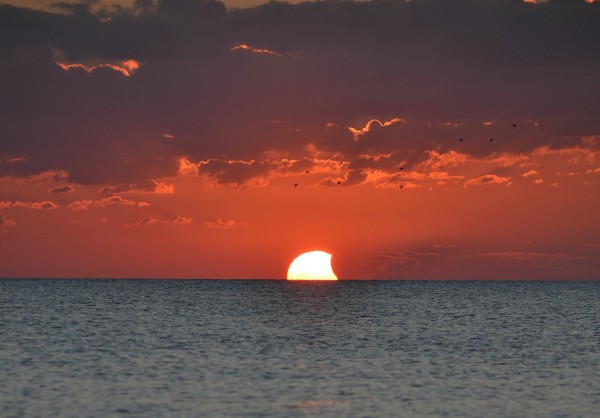
Going to close today by sharing a photograph of the recent solar eclipse.  There have been many published but this one seemed especially beautiful. It was part of a set over on the EarthSky blogsite.

Sunset partial solar eclipse, with sea birds, from the beach in Englewood, Florida, overlooking the Gulf of Mexico. Photo by K. King.


A small step to inner peace.

That journey towards stillness.

I didn’t intend this to be a theme for the week but sometimes one gives in to the forces of fate!

For after Monday’s post about making that inner journey to better know oneself, itself prompted by Rick Hanson’s Power of Stillness, came yesterday’s post on the power of love between a dog and his elderly owner.

So I was wondering what to write for today and wandering around the web looking for inspiration and, serendipitously, came across the blogsite The Commoner Princess.  I had never heard of it before but there on the home page was a post published on the 21st October: Unlocking inner peace: forgiveness.

Here’s a flavour of that post.

Unlocking inner peace: forgiveness

POSTED ON 21 OCTOBER 2014

What hurts the most in life? Trying to make everybody happy. I think this is one of the ultimate life lessons. I remember having a specific unease when someone close to me wasn’t happy for some reason. Things got even more dramatic when I knew I was the cause in one way or another. Time taught me that this perspective wasn’t exactly the healthier approach to life. It is more than normal to care for the wellbeing of your loved ones, to stand by them in need or to try to have a zen relationship with them at all times. But oh boy, this is one of the hardest things to achieve. Detachment is hard enough when you are not directly involved, but when there are emotional ties, becoming the observer takes a lot of mindfulness, awareness, compassion and most importantly, a loooooot of restraint.

Even better, the post concluded like this:

Here is a beautiful meditation to send love and peace to the entire world. Sit in easy pose or any comfortable position of your choosing. Place your arms against your ribs, forearms in horizontal position, palms facing upwards. Start by taking long deep breaths. Breath in through the nose, exhale through your mouth. You can try the 5-5-5 technique as I call in. 5 seconds breathing in, 5 seconds holding, 5 seconds breathing out. Keep this cycle of breath for as long as you feel comfortable with it or until the end of the meditation.Thank you gabbyb.tv for your teachings.

May this be of service to you all!

Then closed with this video that you have to play in the background as you just think of stillness.

Wonder what tomorrow will bring?

Never lose sight of what’s really important.

A wonderful message from Sue of Sue Dreamwalker. Reders will recall that last Saturday, under the post title of And we’re back!, I offered a beautiful story told by the coal-mouse bird about the power of change.  It included this sentence: “You see, it takes just one snowflake to make a difference.” In a very real sense, an example of that power of one snowflake was perfectly conveyed in Sue’s post a few days previously. Just read it, republished here with Sue’s blessings, and you will understand.

ooOOoo

illusion-2

Illusion.

What do you see in this Reality?

Do not your eyes view what is real to see?

Can you not touch the tangible fusion?

Or do we gaze into the ethers of illusion,

What trickery mocks us as we take in the lies

Binding our thoughts in roots of indoctrination

Following the herd, bleating like sheep Held captive, half asleep.

What happened to the land of the Free?

Conform or suffer, or pay the penalty

What is your reality?

Come, let me walk you through the misty vale.

To where this illusion significantly pales

We are magnificent magicians whose thoughts cast their magic

Where all is possible, where to doubt is tragic

Seek and Find, let go of fear

Dance in joy as Light penetrates your sphere

For you have forgotten our Time’s lost spell

As into the abyss of darkness you dwell.

Open your eyes and open your hearts.

Let the Light dispel all dark

Fear nothing, hate less, and embrace ALL

Seek a new illusion before you fall.

Stop following blindly, grasp hold of Love today

Remember your tomorrows, forget your yesterdays

Reach for the memory held high up in the stars

And heal from within, let go of all your scars

Sit in the silence; begin to know who you are

As illusion drifts away revealing Ancient Stars

Your time is but a moment, live each moment well,

For soon the illusion shatters, broken like a spell.

© Sue Dreamwalker 2010-2014 All rights reserved.

I resurrected this poem which I published 4 years ago.. As it seems we are bombarded on all sides from the negative energies which are being put out..

Detach and spend some time in your Quiet zones of thought.. Bring in the Peace around you, and know that we are Magnificent BEings who have remarkable powers..

The Power of Thought!

What we Think we Create

We are the ones creating the chaos… So choose to create Peace.. Don’t allow yourselves to get caught up within the Fear being put out..

Know your time is but a moment, Live each moment well

For soon the Illusion shatters,

Broken like a Spell.

Enjoy your week

Blessings

Sue

ooOOoo

Whatever is going on in the world, whatever has the power to create fear in our minds, in the end it comes down to another power, the power of thought, and our choice of the behaviors that we offer the world.

That is why dogs are so important. Because they almost predominantly love sharing and living their lives in the company of humans.

Do you remember when puppy Oliver came to live with us?

Pharaoh, age 88 years in human equivalent, passing on his wisdom to Oliver, age 3 in human terms.
Pharaoh passing on his wisdom to young Oliver.

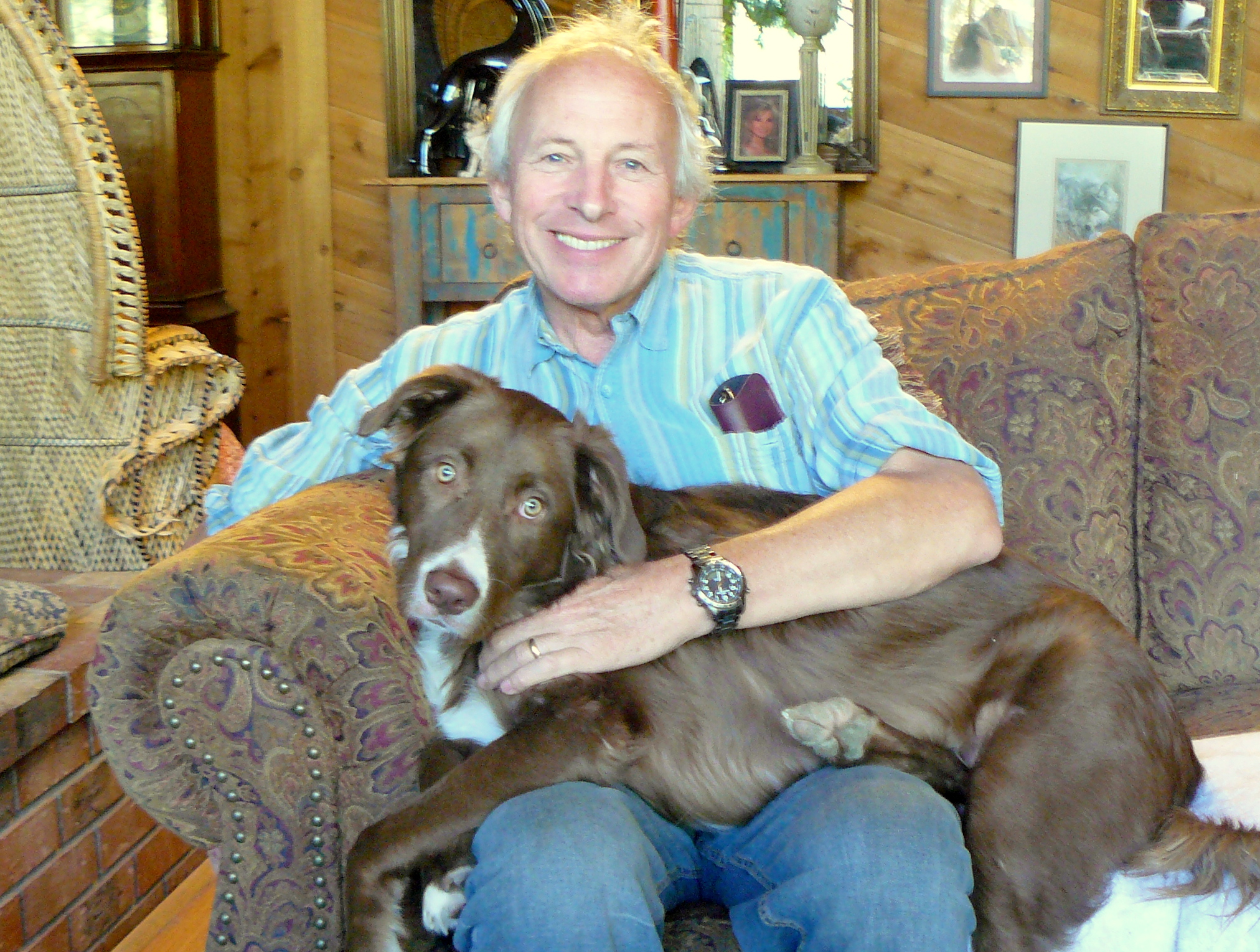
Another picture of Oliver sitting on the lap of yours truly taken in the last couple of days.

How time passes by! For both of us in the picture!

Picture parade sixty-five.

The final set of wonderful pictures, courtesy of Su Reeves.

The first set is here and the second set here.

Reeve16

oooo

Reeve17

oooo

Reeve18

oooo

Reeve19

oooo

Reeve20

oooo

Reeve21

oooo

Reeve22

oooo

Reeve23

oooo

What incredible photographs.

Wow!


Embracing the poetry of nature.

The beauty of poetry.

In yesterday’s post, where I wrote about how Jean and I had the wonderful privilege of feeding a wild deer from our hands, I closed it with a p.s. This is what I wrote: “P.S. It is at times like this that we need poetry.  So how about it: Sue? Kim? How would you describe in poetry what Jean and I experienced?

Well, Sue, of Sue Dreamwalker, replied with a link to a poem of hers that she published back in 2012. I will say no more than republish, with permission, Sue’s beautiful words and close with one of the photographs from yesterday.

ooOOoo

SDBeatOne

Be at One with yourself

Be at one with the world

Be at One with Nature

And see your life unfurl

Close your eyes and imagine

The beginnings of a New Earth,

And Open your eyes to your beauty

Breathe in and give Birth.

divider

For you are One and part of the Whole

Not a separate Unit , but a Beautiful Soul

United within the One Divine love

And part of that cosmic hub.

Share your love along with your Light

And Rejoice in Gratitude

Use your sight

To see a world in Beauty and Grace

divider

You are stronger than you think you know

Spread a little Love where ever you go

Shower your peace and sprinkle your heart

Into the rivers of life send a ripple a spark

Be Calm, knowing all is well

Keep breathing in Peace for inside it dwells

divider

Know you are where you are meant to be

Open your eyes

Come on now See

For we are ONE and it’s time to Unite

Stop all your hating, and judging and strife

Find your heart and clear out your mind

Seek out yourself

And Wisdom you’ll find

divider

Let go of torments and allow the Joy in

Come on now people

It’s time to begin

Be One with yourself

Be One with the world

Be One with nature

And Let the Universe Spin

For the Spiral is turning and

Peace will Win..

© Sue Dreamwalker – 2012 All rights reserved.

ooOOoo

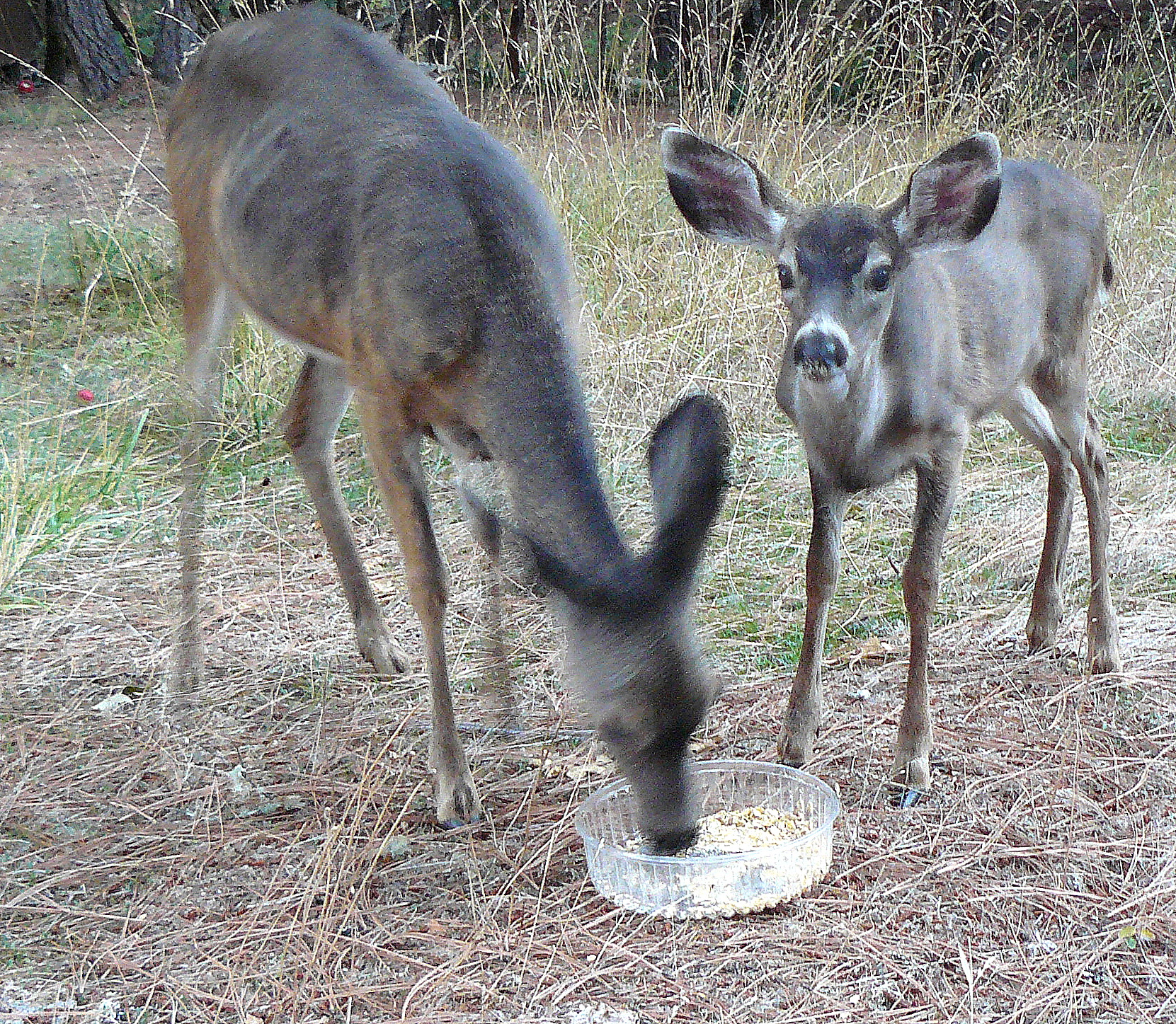
The trust between the deer and Jean then enabled the deer to feed from Jean's hand.
The trust between the deer and Jean then enabled the deer to feed from Jean’s hand.

Utterly beyond words!

A connection with a wild animal doesn’t get better than this.

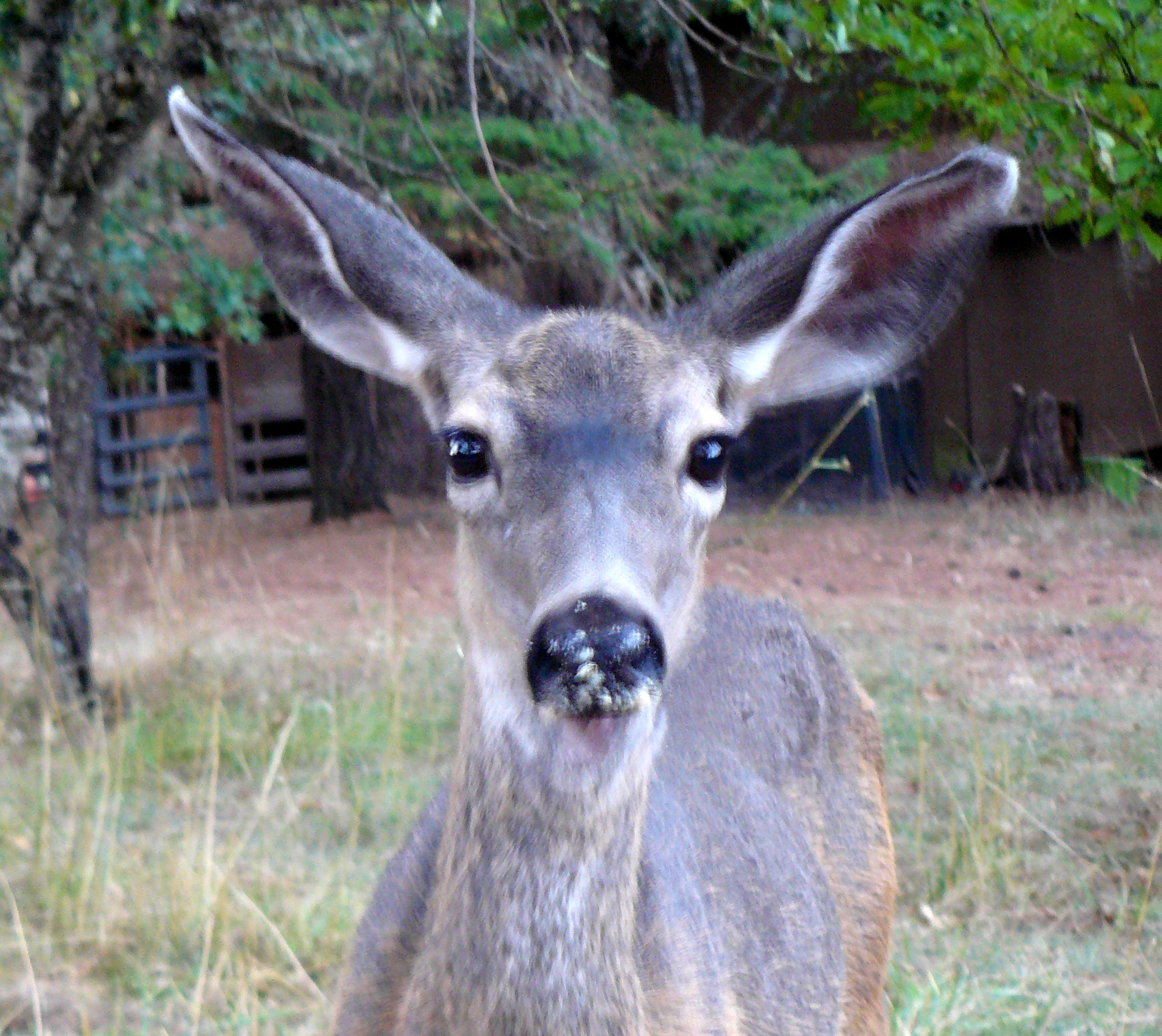
You may wonder, dear reader, how I “square the circle” in terms of a post title, Utterly beyond words, and then reaching out to you with the use of words!  My answer to that legitimate question is that if I reflected for the rest of my life, I couldn’t verbalise adequately the feelings (but note p.s. at the end of the post) that went through me, and through Jean, when a mother deer and her young fawn, crossed the boundary between their wild, animal world and our human world.

This is what happened.

Last Sunday afternoon, around 4pm, I was pottering around the area of fruit trees just above our stables.  We were fully aware that deer were coming in to our property to eat fallen apples as many times we had caught a glimpse of them through a window.

Anyway, on this particular afternoon outside by the stables, I noticed a deer eating some fallen apples and, somehow, picked up the idea that this gorgeous, wild animal was not stressed-out by me standing there looking at her from some twenty feet away.

After a few minutes of just watching, I quietly went across to the garage where we keep a bag of cob, or cracked corn, that we use to feed the deer during tough winter times.  I collected a small amount in a round plastic tray and went back into the orchard area and sat with my back against the trunk of an old oak tree, spread my legs apart and placed the tray with the cob in between my knees.

The mother deer was still hunting around for fallen apples but within a couple of minutes looked across at me, clearly smelling the cob.

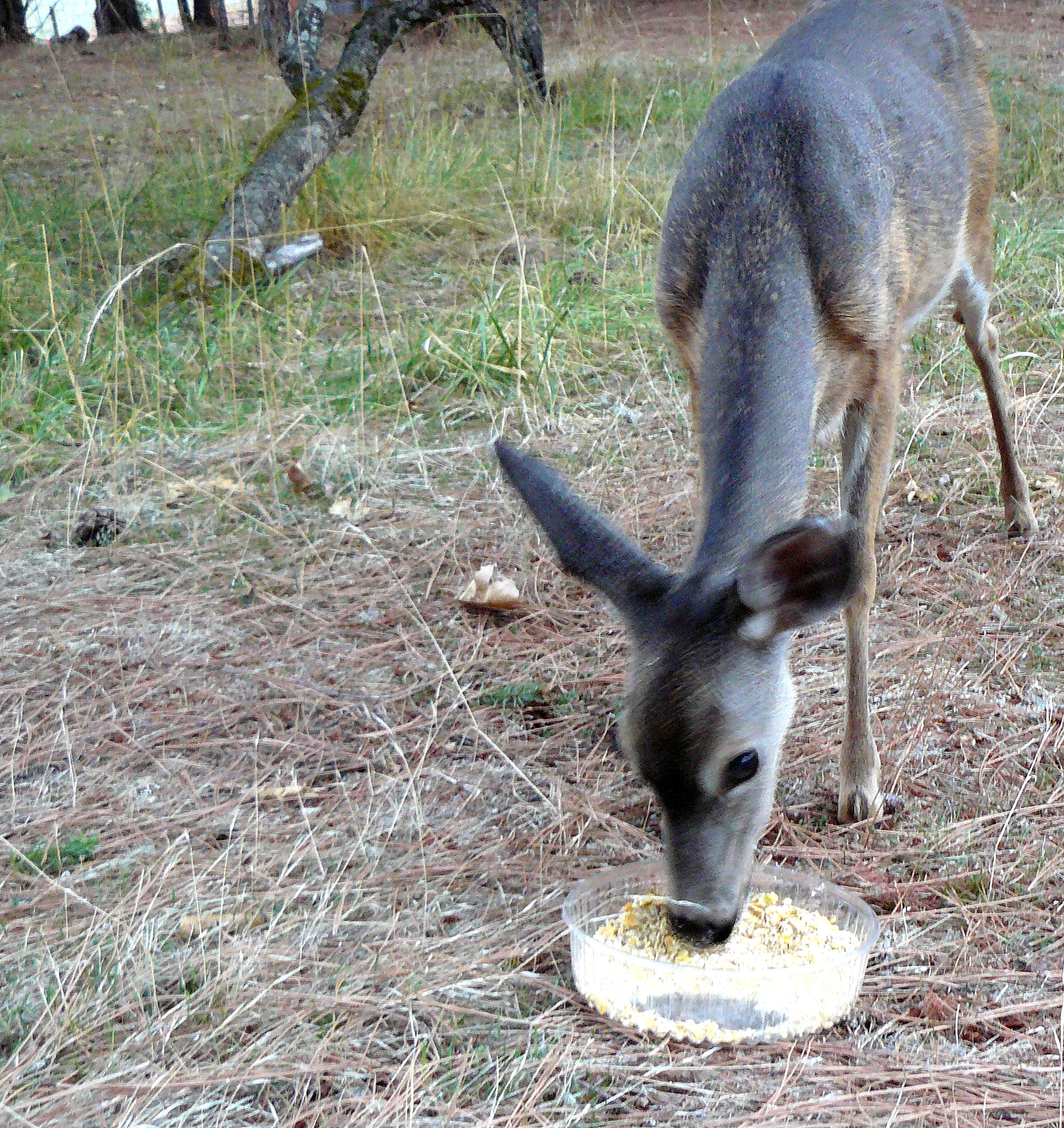
Slowly but steadily the beautiful creature came towards me and, miracle of miracles, trusted me sufficiently to eat from the tray.  Her head was well within arm’s reach of me!

I was totally mesmerised by this beautiful, fragile, wild animal, head down, eating cob less than three feet from my face!  I had the urge to touch her.

Slowly, I reached forward and took a small handful of the cob from the tray and with my other hand pulled the tray to one side.  My hand with the cob was fully outstretched; my heart was whispering to the deer that I would never, ever harm her.

Softly, gently the deer reached towards me and nibbled the cob from my left hand.

Later on, when I relayed this incredible event to Jean, I said that if it was at all possible we must try and take a photograph of a wild deer feeding from our hands.

Moving on to Monday afternoon, camera ready if necessary, we kept an eye out for the return of the deer.  There was no sign of her.  Looked as though it wasn’t going to happen.

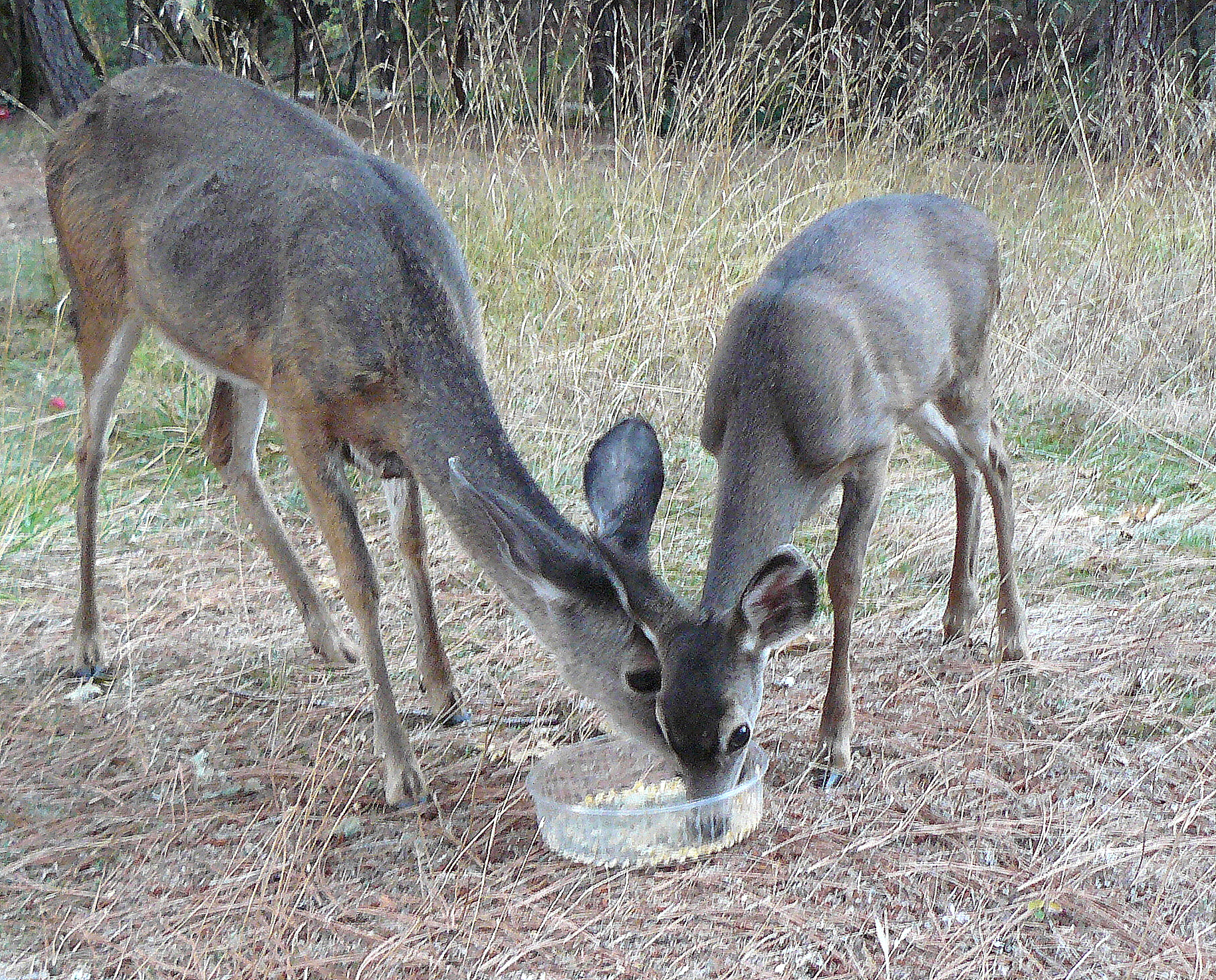
Then just before 7pm, I looked up from my desk and there, just outside the window, was the deer.  But even better, this time the mother was accompanied by her young fawn.

I grabbed the camera and quickly told Jean to meet me outside with a refill of cob in the same plastic tray.  We both sat down on the flat concrete cover of the septic tank; me with the camera, Jean with the tray of cob.

Over to the photographs!  The daylight was fading fast and I was hand-holding the camera, thus these are not the sharpest of pictures.  But so what!

The mother deer not even startled by the sound of the camera shutter!

oooo

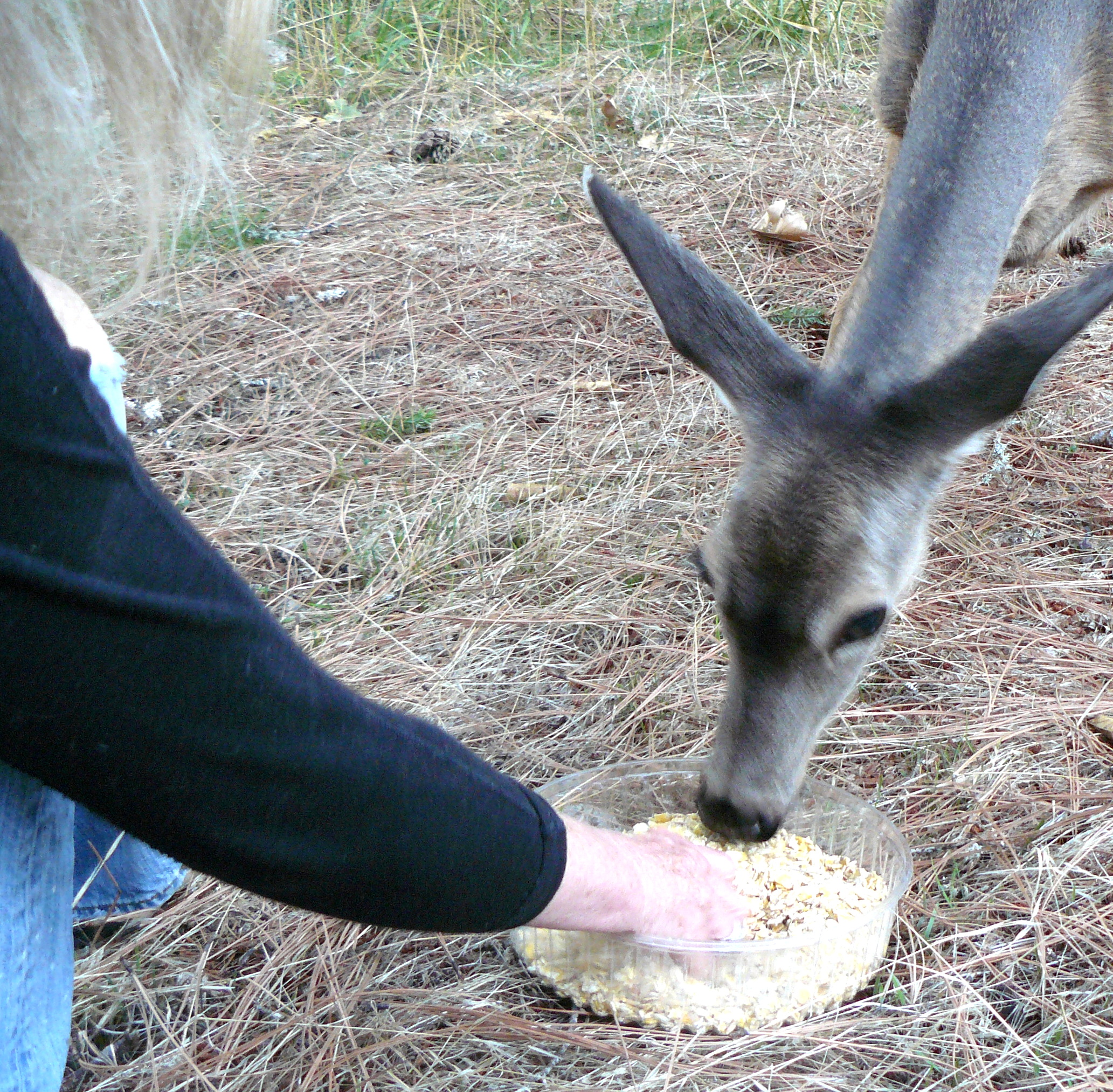
Mother deer reaches down to feed; the tray is about three feet in front of Jean and me.

oooo

Jean reaches forward and gently draws the tray closer to us. Mother deer continues to feed.

oooo

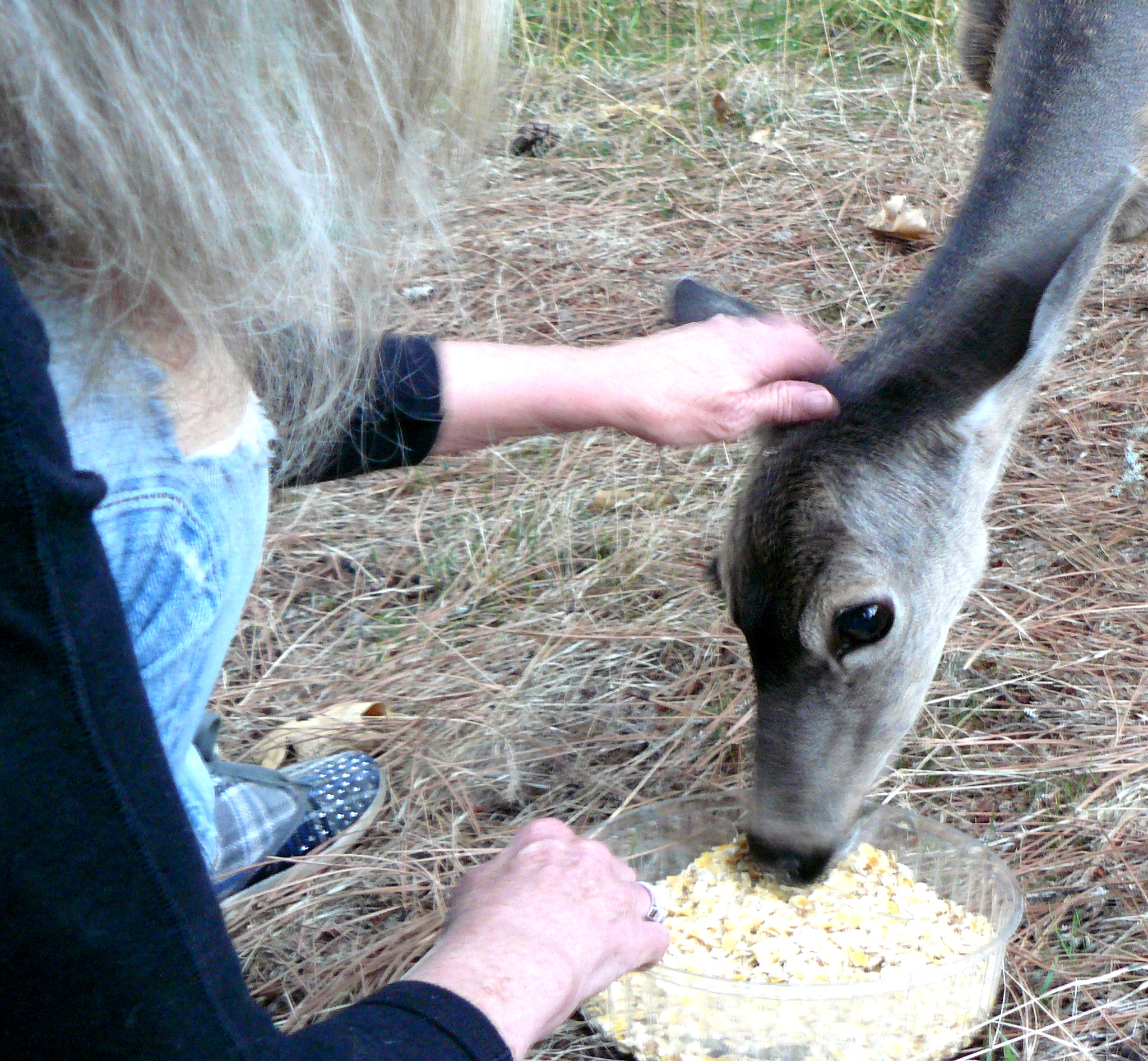
Then, unbelievably, the wild deer continues feeding as Jean fondles the deer's ear.
Then, unbelievably, the wild deer continues feeding as Jean fondles the deer’s head and neck.

oooo

The trust between the deer and Jean then enabled the deer to feed from Jean's hand.
The trust between the deer and Jean then enabled the deer to feed from Jean’s hand.

oooo

There was a rustle in the leaves some twenty feet away and we saw the fawn watching her mother feeding on the cob. Jean pushed the tray away, just by a few feet, and the fawn came right up to her mother.

oooo

The culmination of the most magical of experiences: mother deer and her fawn eating together some three feet in front of us.

When I published my post Space for Nature a little over a week ago, a post that included a photograph of two deer some thirty feet from Jean’s car, never in my wildest dreams could I have imagined what took place last Tuesday afternoon.

Words truly do seem inadequate.

P.S. It is at times like this that we need poetry.  So how about it: Sue? Kim? How would you describe in poetry what Jean and I experienced?

Picture parade sixty-four

Change of plans!

In last week’s picture parade I mentioned that today would be the final set of glorious pictures, courtesy of Su Reeves.

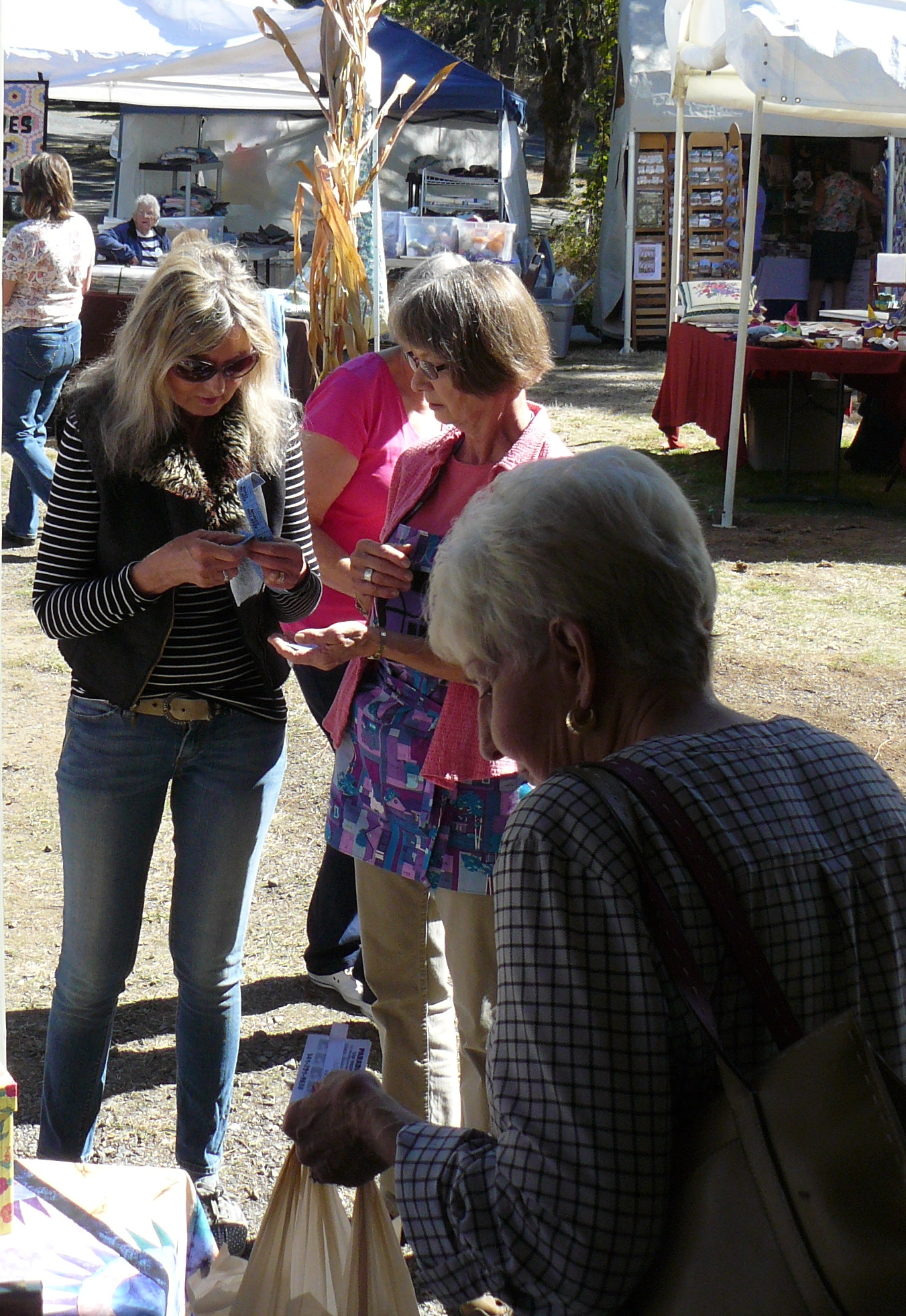
But that was before I realised that Jean and I would be popping in to our local old school house on Friday to enjoy a couple of hours admiring the quilting work on show at this year’s Hugo Ladies Club Quilt Show.

The theme of community has never been far from the pages of this blog and despite the provincial nature of this gathering I wanted to share a selection of photographs with you for today’s picture parade.

P1150151


oooo

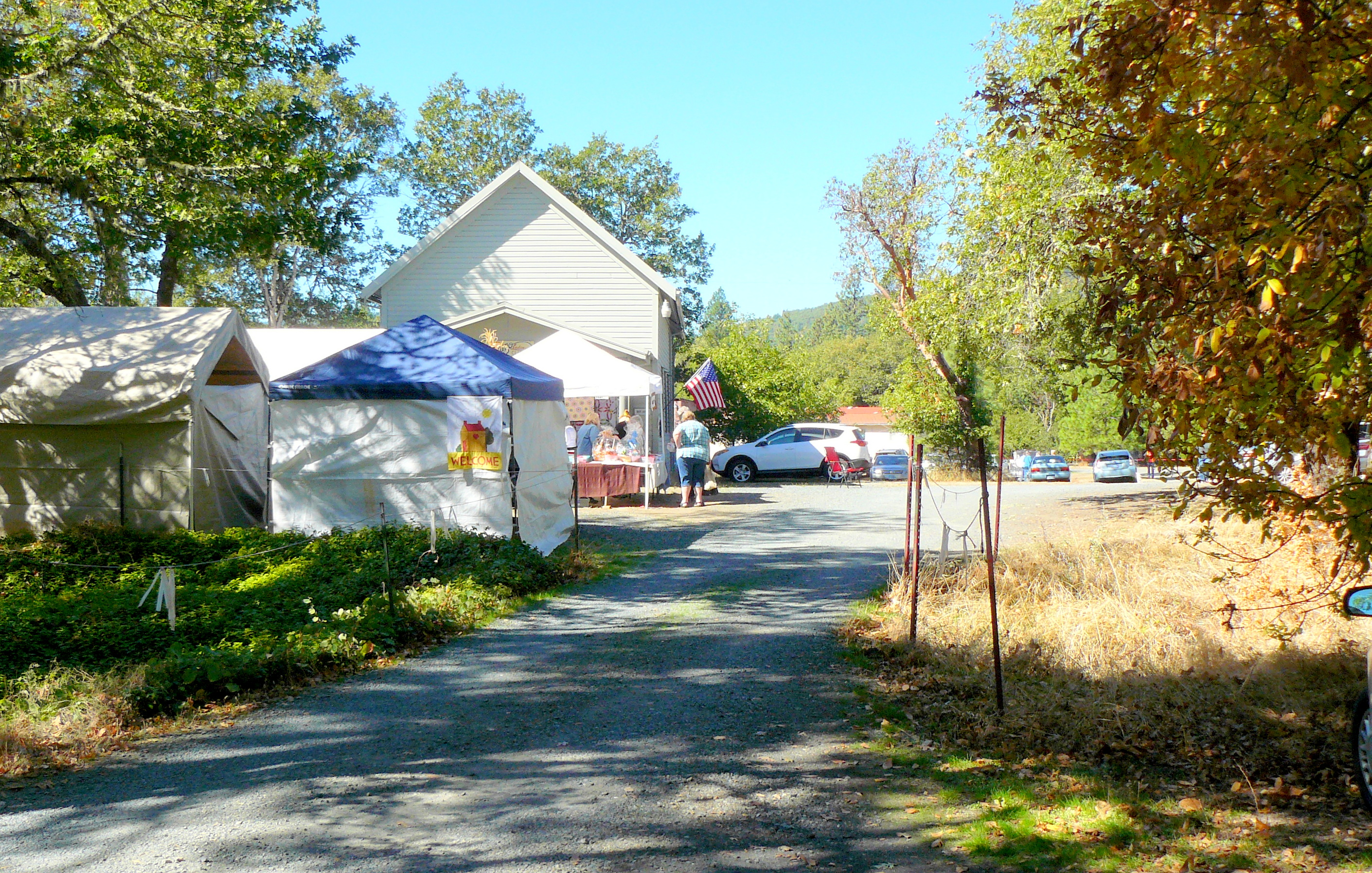
The front entrance of what was once the school in Hugo.

oooo

P1150161

oooo

Now that's what I call a school bell!
Now that’s what I call a school bell!

oooo

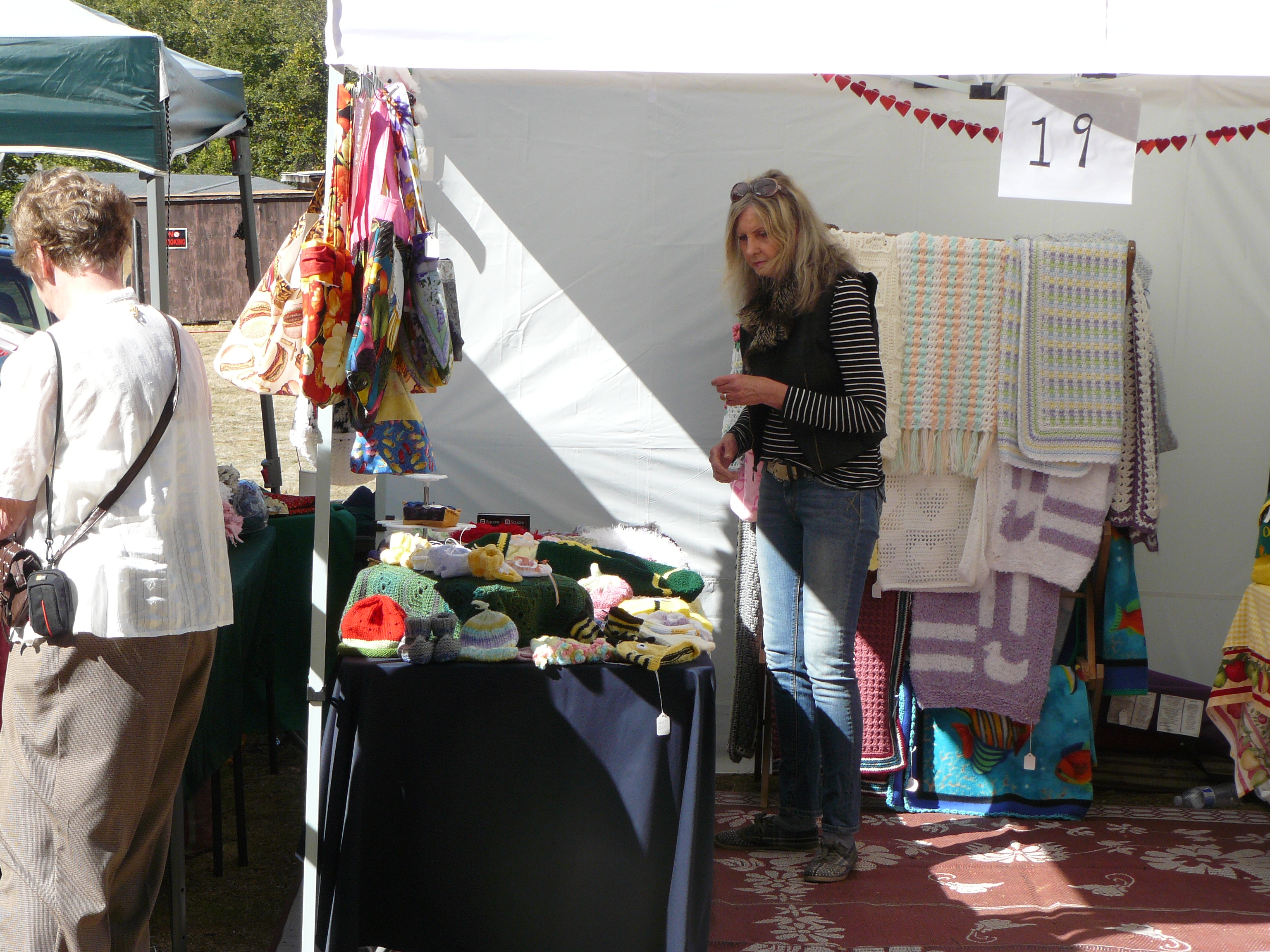
An amazing array and range of items.

oooo

P1150155

oooo

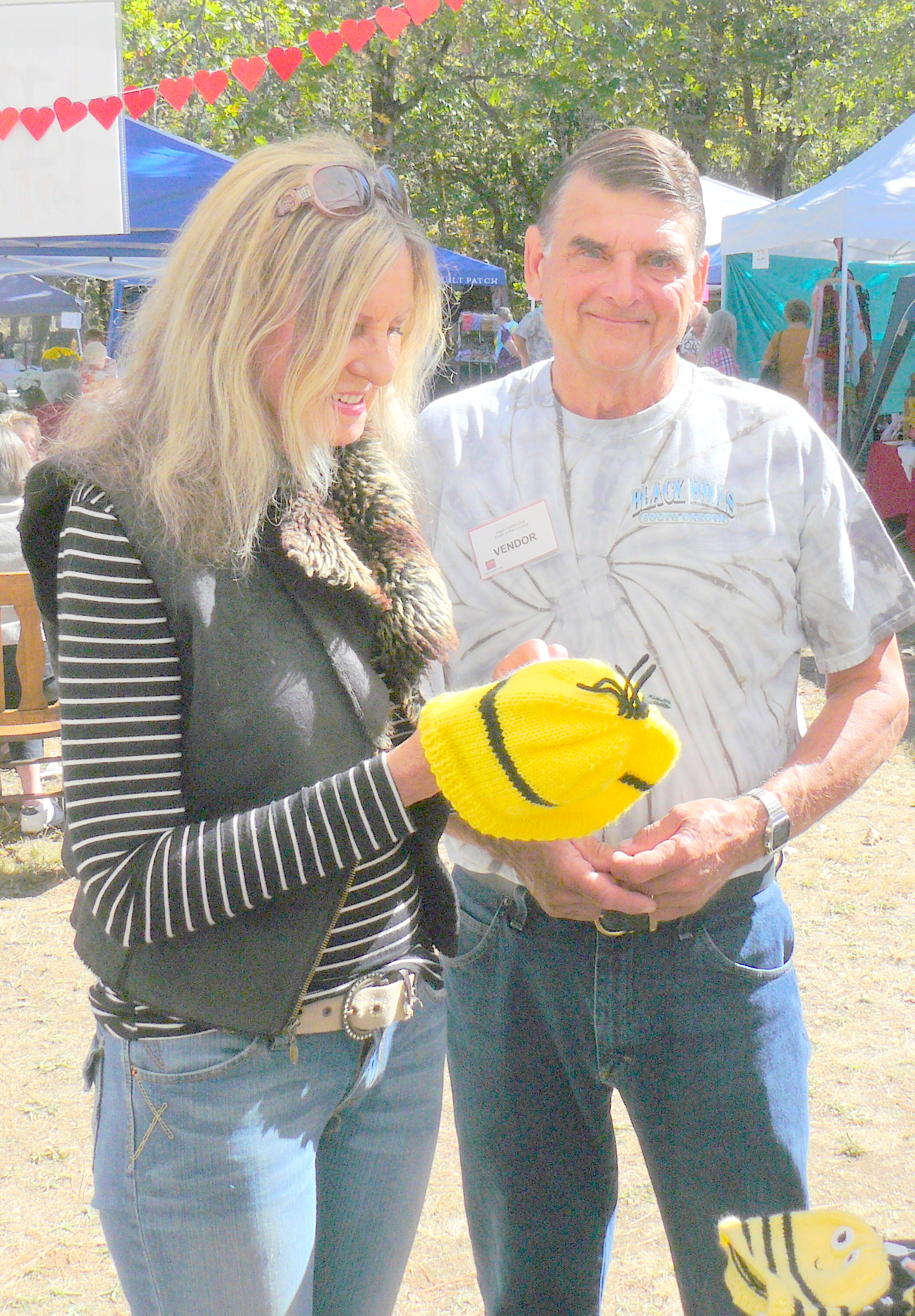
Irresistible to Mrs H.!

oooo

Including a rather fun woollen hat for grandson Morten back in England.

oooo

P1150154

oooo

Jean chatting to neighbour Janell; also a keen quilter.
Jean chatting to neighbour Janell who is also a keen quilter; as are so many North American women.

oooo

One of Janell's exhibits at the show.
One of Janell’s exhibits at the show.

oooo

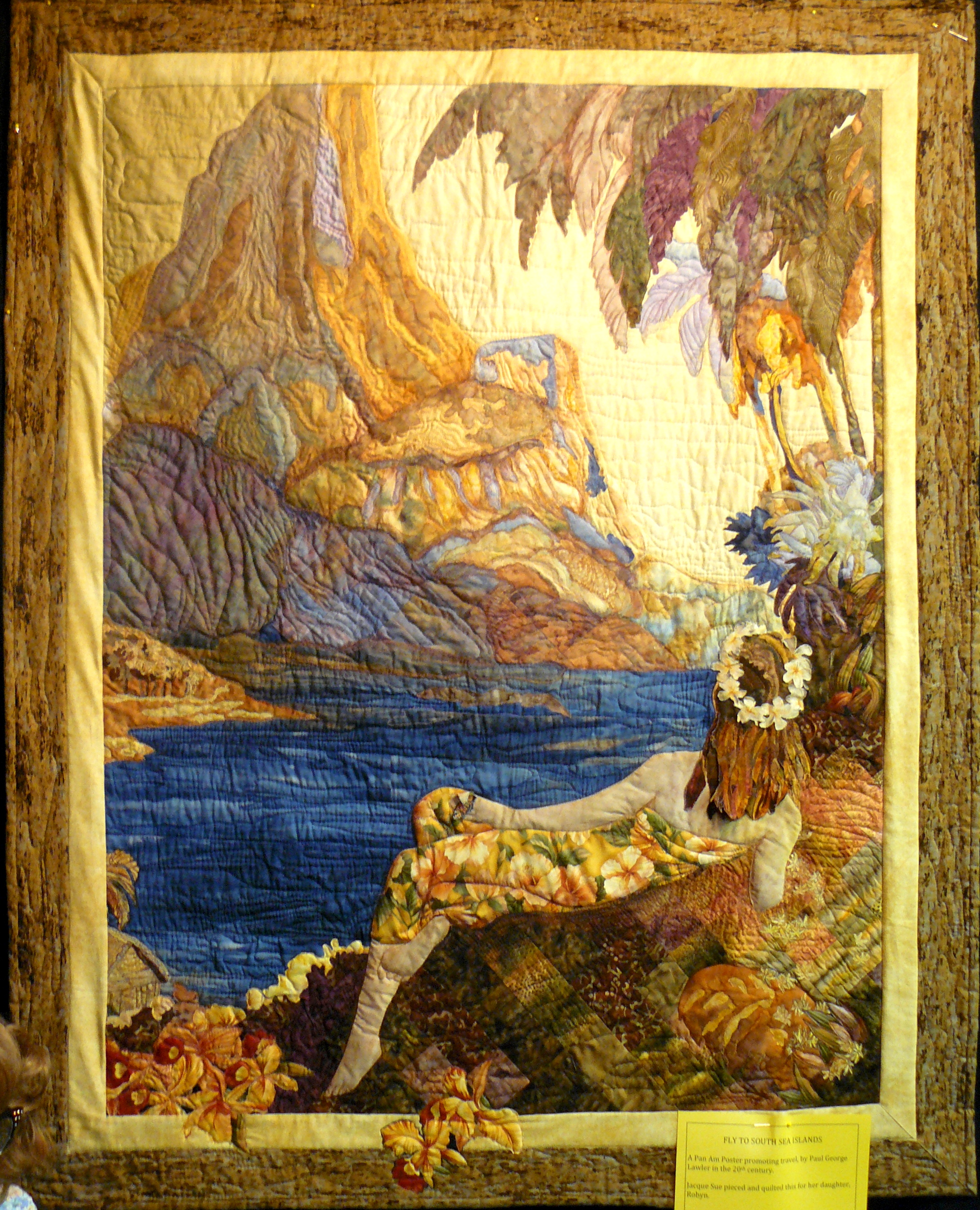
Established quilters are also featured at the show.
Established quilters are also featured at the show.  Here’s a magnificent example from Jacque Sue Harvey.

oooo

The quilt above the work of Jacque Sue Harvey.


oooo

P1150165
Another quilt from Jacque.

oooo

Final example of Jacque's work.
Final example of Jacque’s work.

Puts the phrase “needle and thread” into a whole new world of meaning!

P1150152
One last look as we drove away!

Maybe I’m becoming a soppy old fool but a couple of hours wandering around this event, just five minutes from where we live, made me feel, strongly so, that Jean and I and all our animals really do belong here!