Category: Art

Animal healing

The power of our beautiful creatures to heal us.

Yet again, another example of a post almost writing itself.

Let me explain.

Yesterday, I published a post about being sensitive to the world around us.

Then this morning there was a new post from Sue Dreamwalker under the title of Fear of the Future. It was uncharacteristically downbeat for Sue.

Now most who follow me know I try to bring a positive touch within my posts… Yet to be quite honest with you all I am really struggling right now to lift myself from the doldrums of my own thoughts.

The key to conquering our fears lies in awareness. When we identify the irrational thoughts that frighten us and replace them with positive affirming ones.

Argh… all easier said than done..

You would think with my inner Knowing, and my Spiritual mind I should be the last person to take a nose dive into that Pit of depression.. Especially when I dredged its depth before and vowed that I had been there done that and worn the T-shirt and I refuse to wear it again.

I could blame it on my Fall which left me feeling bruised with aching, muscles which are still healing.. And I could blame it on grief as I lost a very beloved Aunt last week. I could blame my fatigue on me deciding to move a whole wall of books out the spare bedroom with wrists still recovering from the sprains of the fall.. And I could blame it on the weather being cold and miserable.. I could even blame it on the state of the world, or the Planets .. I have a whole host of excuses I could fall back upon to justify why I am feeling tired and jaded..

Many left comments including me. I spoke of the reward of hugging a dog. My words included:

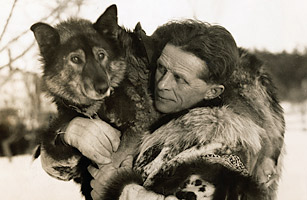
I don’t have answers other than to feel what you are feeling. All I hang onto when I spend too much time thinking of my own mortality is that the answer, the answer to the moment, is to bury one’s face into the warm, soft fur of a dog. They seem to sense my need at these times. (And that isn’t meant to sound like me devaluing the love and affection that I receive from Jean!)

In other words, that contact with the warm dog holds me in the present and before long the reinforcement of living that present, loving moment puts the unknown future into perspective.

Another comment was left by blogger Rajagopal that included this wonderful tale:

The only thing that I have seen working in my life is to keep living, as much as possible, in the present. There is nothing to fear, either of the now or of the future.

In this context, wish to leave you with the story of the pregnant deer; in a forest, a pregnant deer is about to give birth. She finds a remote field near a strong-flowing river, that looks like a safe place, as she starts going into labour. At the same moment, dark clouds gather in the sky and streaks of lightning sets off a forest fire. The deer looks to her left and sees an approaching hunter with arrow pointed at her. To her right, the deer spots a hungry lion speeding towards her. What can the pregnant deer do? She is in labour! What will happen? Will the deer survive? Will she give birth to the fawn and will it survive? Or will everything be burnt by the forest fire? Or will she perish to the hunter’s arrow? Or does a horrible end await her at the hands of the hungry lion? Constrained by the fire on one side, the flowing river on the other and boxed in by her natural predators, the deer is apparently left with no option. What does she do? Well, she focuses on delivering and giving birth to a new life.

The sequence of events that follows is the Lightning strikes and blinds the hunter, who releases the arrow which zips past the deer and strikes the hungry lion. It starts to rain heavily and the forest fire is slowly doused by rain water. The deer gives birth to a healthy fawn….In our life too there are moments when we are confronted with negative thoughts and possibilities on all sides, so powerful as to overwhelm us. May be we can learn from the deer. The priority of the deer at that given moment was to give birth as safely as possible.

The rest was not in her hands and any change in her focus would have most likely impeded giving birth to the fawn. In the midst of the severest storm, we just have to maintain presence of mind and do what is in our control…the Cosmic power will take care of the rest…best wishes… Raj.

Finally, there was a recent new follower of this place. Her name is Emma and she writes the blog The Muse in the Mirror. Emma was kind enough to grant me permission to republish a post from last December about the healing power of Llamas. Enjoy!

ooOOoo

Llama Loving; The healing power of Llamas

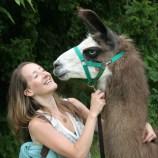
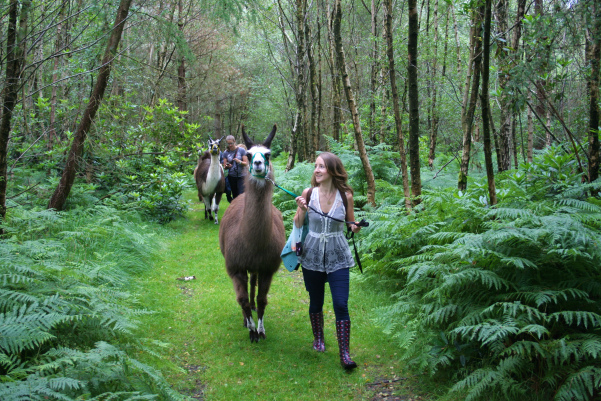
emma1It’s official; I LOVE llamas. There, I said it, put out there for the world to know! I love their gentle, sensitive nature, friendly disposition and most of all their goofy, giggle-worthy expressions, which never fail to bring a smile to my face! Concerned that my llama loving status was bordering on obsession, I was beginning to question whether my love for these comical camelids was founded on anything other than sheer amusement! Thankfully as I researched further my findings confirmed that these beautiful animals are much more than a pretty (funny) face!!!

Llama Therapy

emma2
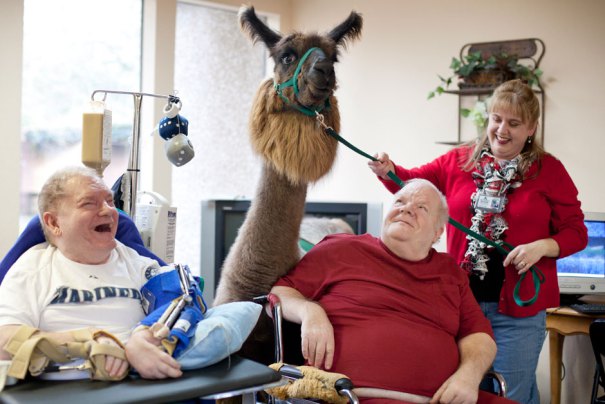
Llama Marisco visits patients at Bellingham Health and Rehabilitation Center in Washington, USA. © Jen Osborne Photography

I squealed in delight when Colours Magazine published the story about The Delta Society, a non-profit organization that licenses animals for therapy

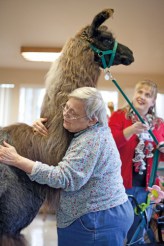
Holly Barto hugs a therapy llama at Bellingham Health and Rehabilitation Center, USA © Jen Osborne Photography

in USA. The adorable photo’s lay testament to the happiness that llama’s bring to residents at Bellingham Health and Rehabilitation Center in Washington, USA. Llama Marisco (pictured above), and Llama N.H. Flight of the Eagle (pictured right) are trained therapists, who spread comfort and joy as they stop at each bed to kiss the patients or have a hug. Resident Holly Barto remarked that…

It was heaven. Just emotionally – to be able to touch an animal and hold an animal close.

Another example of the profound healing benefits of llama’s can be seen in this adorable video below showing Rojo the therapy llama and Napoleon the therapy alpaca from Mtn Peaks Therapy Llamas & Alpacas, in Vancouver, WA USA. A non-profit corporation, which offers therapy teams to visit hospitals and schools in the area. The expressions on people’s faces are heart warming to say the least!

Who knew such fluffed-up, carrot munching mammals could bring so much joy.

Laughter is the best medicine.

emma4
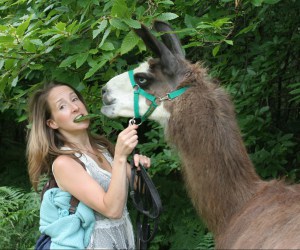
Llama Dave is disgruntled by the fact I was munching in on his dinner!

If I am having an off day, the first thing I reach for is a funny llama picture. Better still, a visit to the local llama park soon blasts my bad moon into infinity and beyond! A good giggle-fest at the Ashdown Forest Llama park, in East Sussex, dissolves the blues and confirms that laughter really is the best medicine! (See my picture gallery below to see me with some of the residents of the Ashdown Forest Llama park!).

There’s a very good reason behind the saying Laughter is the best medicine. Research suggests that people feel less pain after a good laugh, because it causes the body to release chemicals that act as a natural painkiller. ‘Professor Robin Dunbar of Oxford University, who led the research, believes that uncontrollable laughter releases chemicals called endorphins into the body which, as well as generating mild euphoria, also dull pain.’ (BBC)

It is common knowledge that animals in general make us happier and brighten our spirits. A growing body of scientific research now suggests that interacting with animals can make us not only happier, but healthier too. That helps explain the increasing use of animals for therapeutic purposes in hospitals, hospices, nursing homes, schools, jails and mental institutions.

The use of pets in medical settings actually dates back more than 150 years, says Aubrey Fine, a clinical psychologist and professor at California State Polytechnic University. Fine who has written several books on the human-animal bond says:

One could even look at Florence Nightingale recognizing that animals provided a level of social support in the institutional care of the mentally ill,”

So there you have it, next time you’re feeling blue, you know what to do! Head on out to your nearest llama park to insight those warm fuzzy feelings from a fluffy four legged llama! Check out my favourite selection of Llama and Alpaca pics below, guaranteed to bring a smile to any face!!

emma5

ooOOoo

Note: That last photograph above is only one of a wonderful collection of Llama photographs that Emma included in her blog post. Do drop across there and admire all the wonderful pictures.

The incredible healing power of hugging an animal.

Picture parade eighty-one

Something a little different for this week.

Mother Nature Network put out an email earlier in January that opened, thus:

Dear friend of Mother Nature,

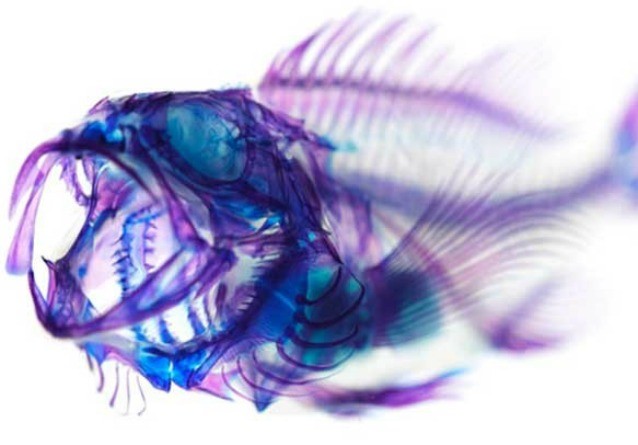
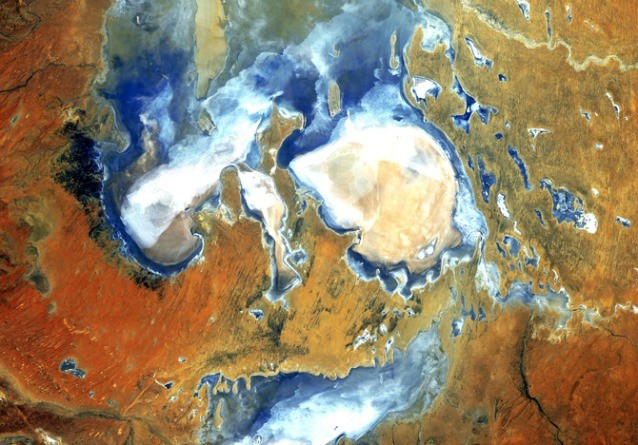
We all see the beauty in a sunset or in a gorgeous painting, but can you appreciate the art in bacteria, climate images or preserved animal remains? These beautiful examples show how for centuries, art and science have danced a well-choreographed routine. The result has been some breathtaking creativity.

The pictures were so wonderful that I have offered the first six for today and the balance in a week’s time.

Finding the link Who doesn't find beauty in nature? But can you find the art in bacteria or global warming or in the interesting forms of dead animal remains? For centuries, art and science have danced a careful routine. As each has informed the other, the result has been some spectacular creativity. (Text: Mary Jo DiLonardo)
Finding the link
Who doesn’t find beauty in nature? But can you find the art in bacteria or global warming or in the interesting forms of dead animal remains? For centuries, art and science have danced a careful routine. As each has informed the other, the result has been some spectacular creativity. (Text: Mary Jo DiLonardo)

oooo

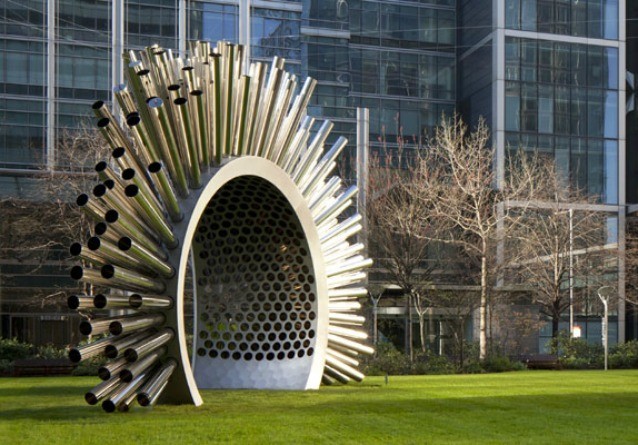
Sonic sculptures Already known for his blown-glass microbes and bacteria, U.K. artist Luke Jerram also makes creations motivated by the science of sound. In Jerram's sonic sculptures, "invisible sound waves are visualized as silent, three-dimensional experiences," says science writer Joe Hanson, host of PBS's "It's Okay To Be Smart." One striking example is Aeolus, a giant stringed musical instrument with harp-like cables that vibrate and make music, responding to changes in the wind. The sculpture (also shown at left) was designed "to make audible the silent shifting patterns of the wind and to visually amplify the ever changing sky," says Jerram.
Sonic sculptures
Already known for his blown-glass microbes and bacteria, U.K. artist Luke Jerram also makes creations motivated by the science of sound. In Jerram’s sonic sculptures, “invisible sound waves are visualized as silent, three-dimensional experiences,” says science writer Joe Hanson, host of PBS’s “It’s Okay To Be Smart.” One striking example is Aeolus, a giant stringed musical instrument with harp-like cables that vibrate and make music, responding to changes in the wind. The sculpture (also shown at left) was designed “to make audible the silent shifting patterns of the wind and to visually amplify the ever changing sky,” says Jerram.

oooo

Albrecht Dürer Albrecht Dürer was a German painter, printmaker and theorist who many say was the greatest German artist of the Northern Renaissance. Although he was most well-known for his woodcuts and watercolors, Dürer was also revered for his anatomical and cartographic work, says Harvard art historian Susan Dackerman. She says his groundbreaking terrestrial map was “the first perspectival rendering of a terrestrial hemisphere.” His other science-inspired works include a map showing how the brain works and a woodcut of a rhinoceros so detailed that until the 18th century, it was the go-to scientific reference for the animal.
Albrecht Dürer
Albrecht Dürer was a German painter, printmaker and theorist who many say was the greatest German artist of the Northern Renaissance. Although he was most well-known for his woodcuts and watercolors, Dürer was also revered for his anatomical and cartographic work, says Harvard art historian Susan Dackerman. She says his groundbreaking terrestrial map was “the first perspectival rendering of a terrestrial hemisphere.” His other science-inspired works include a map showing how the brain works and a woodcut of a rhinoceros so detailed that until the 18th century, it was the go-to scientific reference for the animal.

oooo

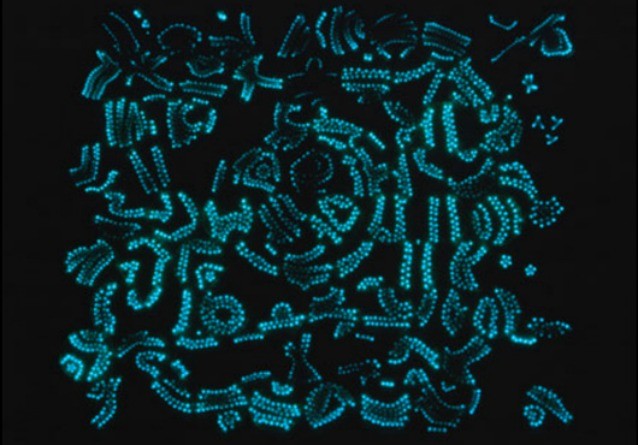
Bioluminescent art Who knew bacteria could be so beautiful? In a mash-up of nature and design, bioluminescent art uses naturally glowing bacteria to create intricate designs that you can see only in the dark. Showing off these creations, BIOGLYPHS is an art and science collaboration by members of the Center for Biofilm Engineering and the Montana State University School of Art. The group "painted" bioluminescent bacterium naturally present in marine environments onto petri dishes to come up with the spectacular glow-in-the-dark creations. Read more: http://www.mnn.com/lifestyle/arts-culture/photos/11-beautiful-examples-of-art-inspired-by-science/bioluminescent-art#ixzz3QRM4dVEt
Bioluminescent art
Who knew bacteria could be so beautiful? In a mash-up of nature and design, bioluminescent art uses naturally glowing bacteria to create intricate designs that you can see only in the dark. Showing off these creations, BIOGLYPHS is an art and science collaboration by members of the Center for Biofilm Engineering and the Montana State University School of Art. The group “painted” bioluminescent bacterium naturally present in marine environments onto petri dishes to come up with the spectacular glow-in-the-dark creations.

oooo

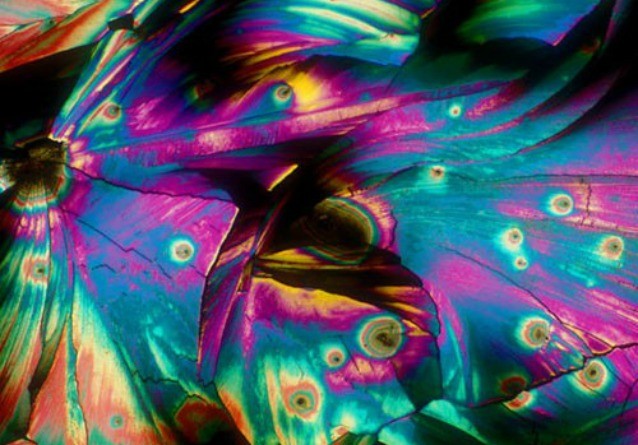
Microscopic art It's amazing how incredible something can look when you magnify it. Florida State researcher Michael Davidson has a catalog of lovely microscopic images of beer, wine and cocktails. Davidson started his company, BevShots, as a way to raise funds for his lab. Scientific photographer Martin Oeggerli (known as Micronaut) uses scanning electron microscopy to produce images of pollen, microbes, insects and fungi with 500,000 magnification or more. An interesting combination, Oeggerli is a scientific photographer who holds a doctorate in molecular biology. His images often appear in National Geographic where he says, "I also want to broaden people’s awareness that even the smallest living organisms are perfectly 'designed' and well worth … our attention." Read more: http://www.mnn.com/lifestyle/arts-culture/photos/11-beautiful-examples-of-art-inspired-by-science/microscopic-art#ixzz3QRMHN1hO
Microscopic art
It’s amazing how incredible something can look when you magnify it. Florida State researcher Michael Davidson has a catalog of lovely microscopic images of beer, wine and cocktails. Davidson started his company, BevShots, as a way to raise funds for his lab. Scientific photographer Martin Oeggerli (known as Micronaut) uses scanning electron microscopy to produce images of pollen, microbes, insects and fungi with 500,000 magnification or more. An interesting combination, Oeggerli is a scientific photographer who holds a doctorate in molecular biology. His images often appear in National Geographic where he says, “I also want to broaden people’s awareness that even the smallest living organisms are perfectly ‘designed’ and well worth … our attention.”

oooo

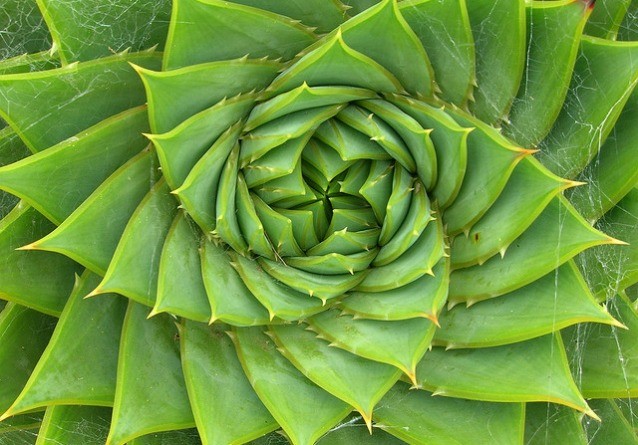
Fibonacci art Math fans know the Fibonacci sequence as an important series of numbers used in all sorts of key mathematical scenarios. The first nine numbers in the Fibonacci sequence are: 0, 1, 1, 2, 3, 5, 8, 13, 21. The sequence — which ironically was explained by Fibonacci himself using the multiplication of rabbits — also appears in nature. MNN's Shea Gunther writes that the Fibonacci sequence can be found in the formation of sunflowers, galaxies, cellular structure, hurricanes and honeybees. Artists have also been intrigued by the number series. It has inspired everything from sculpture to furniture. Read more: http://www.mnn.com/lifestyle/arts-culture/photos/11-beautiful-examples-of-art-inspired-by-science/fibonacci-art#ixzz3QRMQoz1a
Fibonacci art
Math fans know the Fibonacci sequence as an important series of numbers used in all sorts of key mathematical scenarios. The first nine numbers in the Fibonacci sequence are: 0, 1, 1, 2, 3, 5, 8, 13, 21. The sequence — which ironically was explained by Fibonacci himself using the multiplication of rabbits — also appears in nature. MNN’s Shea Gunther writes that the Fibonacci sequence can be found in the formation of sunflowers, galaxies, cellular structure, hurricanes and honeybees. Artists have also been intrigued by the number series. It has inspired everything from sculpture to furniture.

The final set to be published in a week’s time.


Picture parade eighty.

Winter wonderland four, the last of the series. (One was here, two was here, and three was here.)

Background information is after the last photograph.

Bambi22

oooo

Bambi23

oooo

Bambi24

oooo

Bambi25

oooo

Bambi26

oooo

Bambi28

oooo

Bambi29

oooo

Bambi30

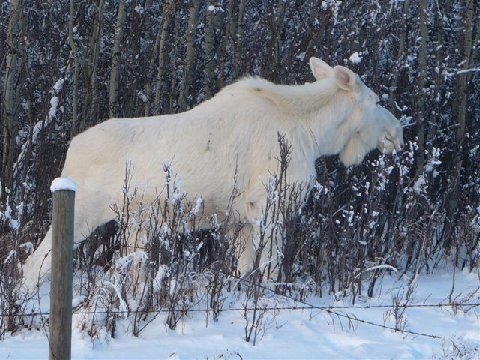
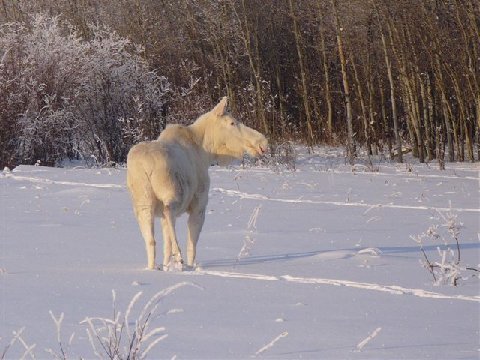
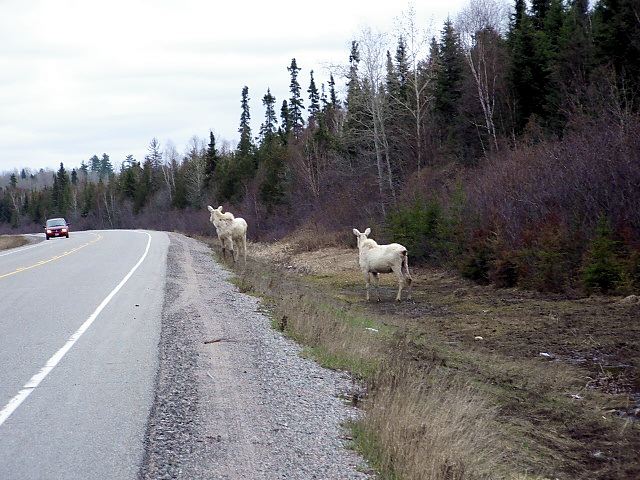
These animals were photographed just north of the Barber Lake on a highway near Mine Center, Ontario, Canada. The odds of seeing an albino moose are astronomically rare; let alone seeing two of them. It really doesn’t matter the colour of their fur; white or dark brown.

Once in a while there is an opportunity to take in a piece of nature that most of us may never see ‘in the wild’.

A huge thank you to Dordie for forwarding all the pictures featured over the last four weeks.


Out of this world!

Literally!

I noticed the other day a series of photographs of the moon and Venus that were included in an item on EarthSky News. All I am going to do is to republish a selection of the photographs so if you would like to read the full item, including all the photographs, then here is the link.

Mohamed Laaïfat Photographies in Normandy, France caught the little planet Mercury, too, along with the moon and Venus, on January 21.

oooo

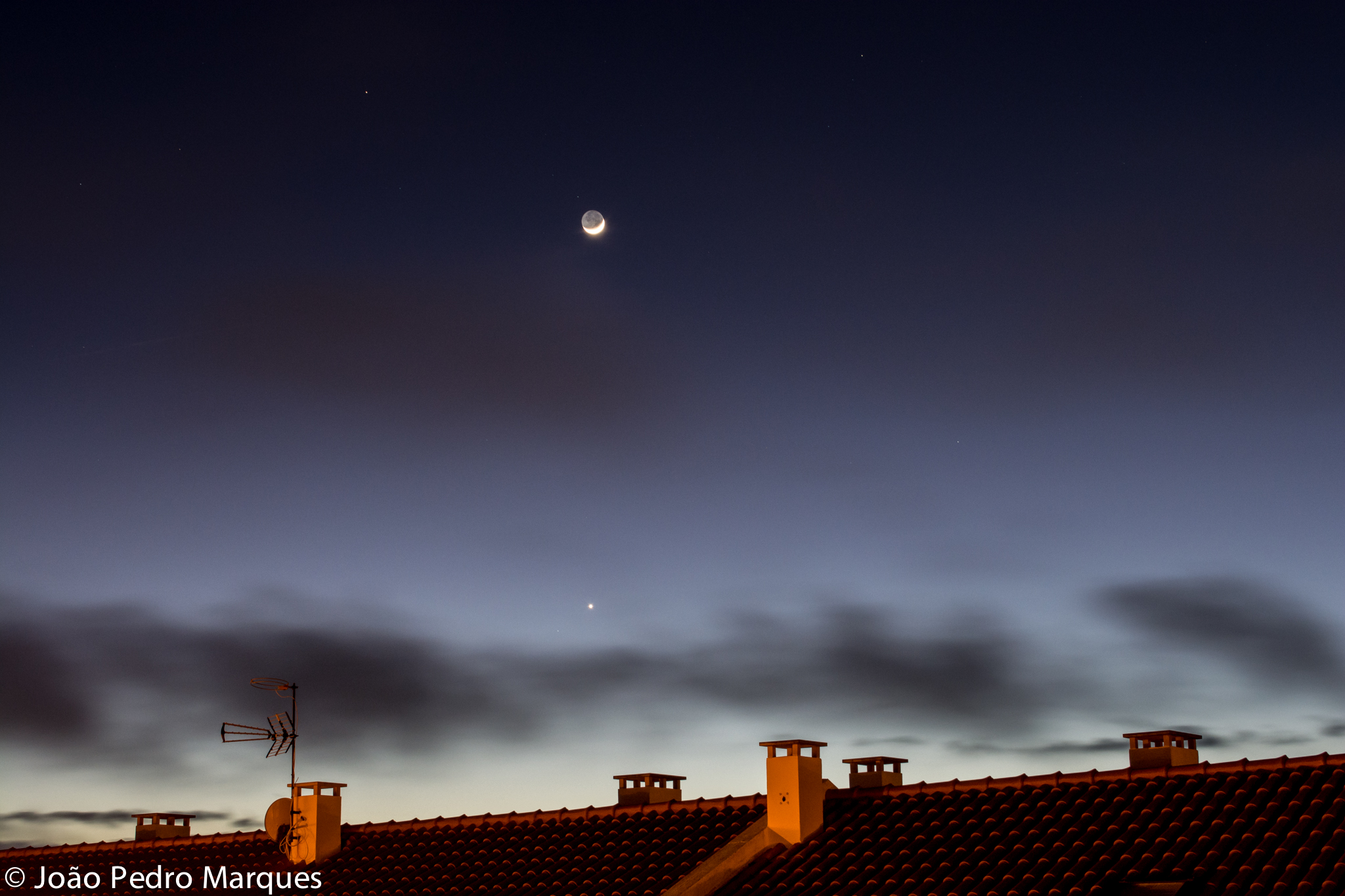
João Pedro Marques caught bright Venus and the waxing moon on the evening of January 22, 2015, from Portugal. The reddish “star” above and to the left of the moon is Mars.

In the above image, Mars may only be seen by viewing a bigger image here.

One Horse Media in Lolo, Montana wrote: “What a cool moon and view of Venus this evening! I was happy to have just enough time to take a few photos as soon as I got home!”

oooo

Hecktor Barrios in Hermosillo, Mexico wrote: “Venus, Moon and Mercury, the latter barely visible."
Hecktor Barrios in Hermosillo, Mexico wrote: “Venus, Moon and Mercury, the latter barely visible.”

oooo

Planet Venus and young moon on January 21, 2015, as captured by Cathy Emmett Palmer in Panama City Beach, Florida.

Won’t add any more thoughts from me because each and every one of you will have your own feelings and responses to these photographs. Don’t want my ideas to get in the way of your own thoughts.

Just all of you have a wonderful and peaceful weekend.

Making sense of who we are?

The psychology of self.

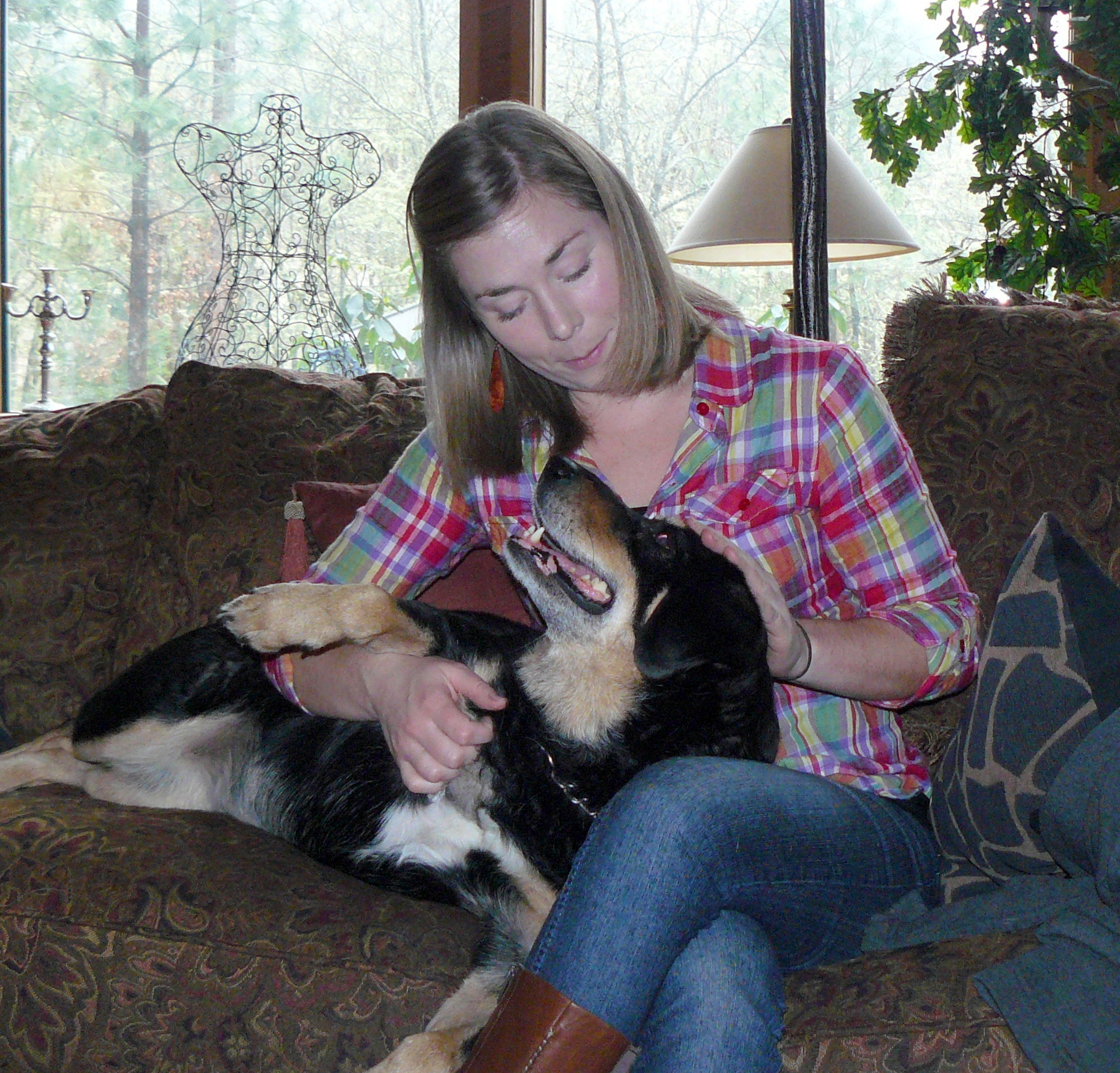
One of the huge differences between humans and our beloved dogs is that dogs live entirely in the present and do not engage in abstract thinking. Indeed, one of the most glorious aspects of owning a dog is being able to lose oneself in those moments of intimacy between yourself and your dog. Here’s a wonderful example of that when Bridget from Oregon Wild visited us recently and enjoyed a moment of bliss with Hazel.
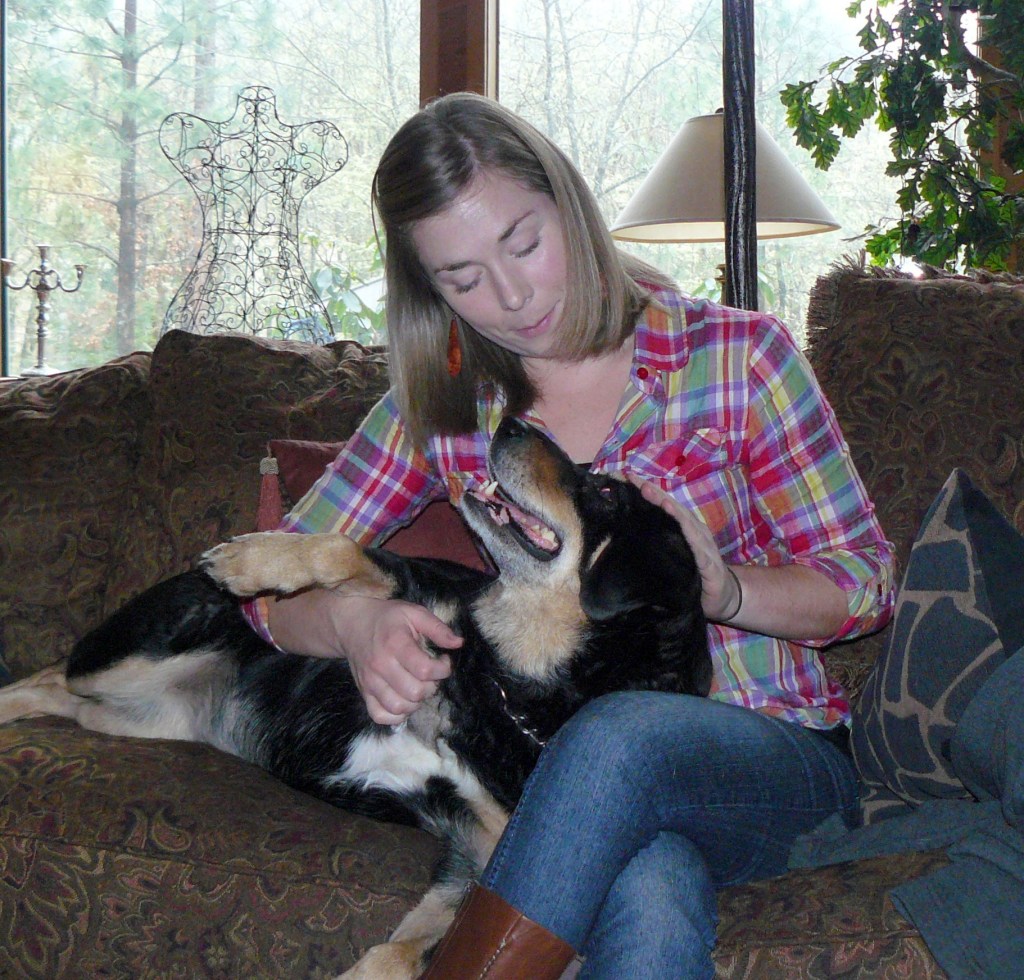
P1150348

So with that in mind, I am now going to be very un-dog-like and very human by offering an essay that is most abstract in manner.  Not my essay, I should hasten to add, but a recent essay from George Monbiot, republished here with his kind permission. Then tomorrow, I want to stay with the abstract theme and include a recent essay from Terry Hershey.

ooOOoo

A Small and Shuffling Life

Why, in this age of freedom, are we so confined? And what can we do to reclaim our lives?

By George Monbiot, published in the New York Times, 19th January 2015

Live free or die: this is the maxim of our age. But the freedoms we celebrate are particular and limited. We fetishise the freedom of business from state control; the freedom not to pay taxes; the freedom to carry guns and speak our minds and worship whom we will. But despite – in some cases because of – this respect for particular freedoms, every day the scope of our lives appears to contract.

Half a century ago, we were promised that rising wealth would mean less work, longer vacations and more choice. But our working hours rise in line with economic growth, and they are now governed by a corporate culture of snooping and quantification, of infantilizing dictats and impossible demands, which smothers autonomy and creativity. Technologies that promised to save time and free us from drudgery (such as email and smartphones) fill our heads with a clatter so persistent it stifles the ability to think.

Public spaces in our cities are reduced to pasteurised piazzas, in which loitering without intent to shop is treated as suspicious. Protest is muted by dozens of constraining laws. Young people, who have no place in this dead-eyed, sanitised landscape, scarcely venture from their bedrooms. Political freedom now means choosing between alternative versions of market fundamentalism.

Even the freedoms we do possess we tend not to exercise. We spend hours every day watching other people doing what we might otherwise be doing: dancing, singing, playing sport, even cooking. We venture outdoors to seek marginally different varieties of stuff we already possess. “Getting and spending, we lay waste our powers / Little we see in Nature that is ours,” wrote William Wordsworth (1), and it is truer today than it was then.

We entertain the illusion that we have chosen our lives. Why, if this is the case, do our apparent choices differ so little from those of other people? Why do we live and work and travel and eat and dress and entertain ourselves in almost identical fashion? It’s no wonder, when we possess and use it so little, that we make a fetish out of freedom.

Perhaps we have forgotten the bitter complaint made by Benjamin Franklin in 1753. “When an Indian Child has been brought up among us, taught our language and habituated to our Customs, yet if he goes to see his relations and make one Indian Ramble with them, there is no perswading him ever to return.”(2) But when European Americans “have been taken prisoners young by the Indians, and lived a while among them, tho’ ransomed by their Friends, and treated with all imaginable tenderness to prevail with them to stay among the English, yet in a Short time they become disgusted with our manner of life … and take the first good Opportunity of escaping again into the Woods, from whence there is no reclaiming them.” In 1785 Hector de Crèvecoeur asked two European refuseniks why they would not come home. “The reasons they gave me would greatly surprise you: the most perfect freedom, the ease of living, the absence of those cares and corroding solicitudes which so often prevail with us.”(3)

We arose in a thrilling, terrible world. The African savannahs on which the first hominims evolved were dominated by sabretooth and false sabretooth cats, giant hyaenas and bear dogs. When human beings arrived in the Americas, 14,000 years ago, they found ground sloths the weight of elephants; a beaver eight feet from nose to tail; armadillos like small cars; giant lions and sabretooths; short-faced bears whose shocking armoury of teeth and claws suggests they drove giant lions and sabretooths off their prey. A bird in Argentina had a wingspan of 26 feet. Fanged salmon nine feet long migrated inland from the Pacific coast.

We carry with us the psychological equipment, rich in instinct and emotion, required to navigate that world. But our survival in the modern economy requires the use of few of the mental and physical capacities we possess. Sometimes it feels like a small and shuffling life. Our humdrum, humiliating lives leave us, I believe, ecologically bored.

At times this sensation has overwhelmed me. It happened in a newly-discovered bone cave in southern England. The walls and floor were encrusted with calcite crystals, that glittered in the torchlight. One of the archaeologists with whom I was exploring it handed me the atlas vertebra of a Bronze Age cow. Then he picked up another bone, this time with both hands: another atlas vertebra, but monstrous. “It’s the same species as the first one. But this is the wild version. The aurochs.” As I turned it over in my hands, feeling its great weight, I experienced what seemed like an electric jolt of recognition. It felt raw, feral, pungent, thrilling. The colour seemed to drain from modern life.

I felt it again when stalking up a tidal channel with a trident, trying to spear flounders. After two hours scanning the sand intently for signs of the fish, I was suddenly transported by the fierce conviction that I had done it a thousand times before. I felt it most keenly when I stumbled across the fresh corpse of a deer in a wood. I hoisted it onto my shoulders. As soon as I felt its warmth on my back, my skin flushed, my hair stood on end and I wanted to roar. Civilisation slid off like a bathrobe. I believe that in these cases I accidentally unlocked a lumber room in the mind, in which vestigial faculties shaped by our evolutionary past are stored. These experiences ignited in me a smouldering longing for a richer and rawer life than the one I lead.

Unless we are prepared to reject civilization altogether and live in the woods, there is no complete answer to this predicament. But I think there is a partial one. Across many rich nations, especially the United States, global competition is causing the abandonment of farming on less fertile land. Rather than trying to tame and hold back the encroaching wilds, I believe we should help to accelerate the process of reclamation, removing redundant roads and fences, helping to re-establish missing species, such as wolves and cougars and bears, building bridges between recovering habitats to create continental-scale wildlife corridors, such as those promoted by the Rewilding Institute(4).

This rewilding of the land permits, if we choose, a partial rewilding of our own lives. It allows us to step into a world that is not ordered and controlled and regulated, to imagine ourselves back into the rawer life from which we came, to discover, perhaps, the ecstasy I experienced when I picked up that deer. We don’t have to give up our washing machines and computers and spectacles and longevity to shed our ecological boredom and recover some measure of the freedom that has been denied to us. Perhaps we do need to remember who we are.

George Monbiot’s book Feral: rewilding the land, the sea and human life is published this month by the University of Chicago Press.

References:

1. http://www.bartleby.com/145/ww317.html

2. Benjamin Franklin, 9th May 1753. The Support of the Poor. Letter to Peter Collinson.

http://www.historycarper.com/1753/05/09/the-support-of-the-poor/

3. J. Hector St. John de Crèvecoeur, 1785. Letters from an American Farmer and Other Essays. Letter 12. Edited by Dennis D. Moore. Harvard University Press.

4. http://rewilding.org/rewildit/

ooOOoo

So tomorrow, the second part with Terry Hershey and a short talk by Professor Dan Gilbert, Professor of Psychology at Havard University.
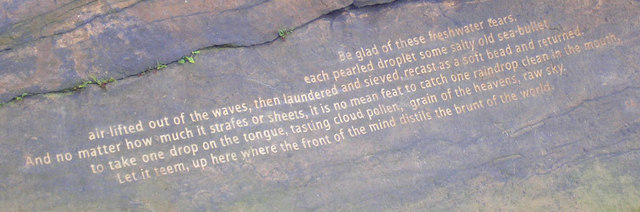
The poetry of nature

A repeat of a post from last October.

A few days ago, we had a visit from the Wilderness Campaign Coordinator from Oregon Wild. Bridget, that being her name, took the opportunity of saying ‘hi’ as a consequence of her coming down from Northern Oregon to Ashland. Bridget was giving a presentation in Ashland regarding securing more wilderness areas in Oregon; a very worthy ambition. Jean and I have supported the organisation since we moved up to Oregon.

Anyway, I offered to use Learning from Dogs to support and promote any campaigns from OW that would be of interest to LfD readers.  I sorted out some recent posts that would give Bridget and her colleagues an idea of what was published in this place and sent her the links.

One of the links that I forwarded was this post from last October.  I just wanted to share it with you all again.

oooo

Embracing the poetry of nature.

The beauty of poetry.

In yesterday’s post, where I wrote about how Jean and I had the wonderful privilege of feeding a wild deer from our hands, I closed it with a p.s. This is what I wrote: “P.S. It is at times like this that we need poetry.  So how about it: Sue? Kim? How would you describe in poetry what Jean and I experienced?

Well, Sue, of Sue Dreamwalker, replied with a link to a poem of hers that she published back in 2012. I will say no more than republish, with permission, Sue’s beautiful words and close with one of the photographs from yesterday.

ooOOoo

SDBeatOne

Be at One with yourself

Be at one with the world

Be at One with Nature

And see your life unfurl

Close your eyes and imagine

The beginnings of a New Earth,

And Open your eyes to your beauty

Breathe in and give Birth.

divider

For you are One and part of the Whole

Not a separate Unit , but a Beautiful Soul

United within the One Divine love

And part of that cosmic hub.

Share your love along with your Light

And Rejoice in Gratitude

Use your sight

To see a world in Beauty and Grace

divider

You are stronger than you think you know

Spread a little Love where ever you go

Shower your peace and sprinkle your heart

Into the rivers of life send a ripple a spark

Be Calm, knowing all is well

Keep breathing in Peace for inside it dwells

divider

Know you are where you are meant to be

Open your eyes

Come on now See

For we are ONE and it’s time to Unite

Stop all your hating, and judging and strife

Find your heart and clear out your mind

Seek out yourself

And Wisdom you’ll find

divider

Let go of torments and allow the Joy in

Come on now people

It’s time to begin

Be One with yourself

Be One with the world

Be One with nature

And Let the Universe Spin

For the Spiral is turning and

Peace will Win..

© Sue Dreamwalker – 2012 All rights reserved.

ooOOoo

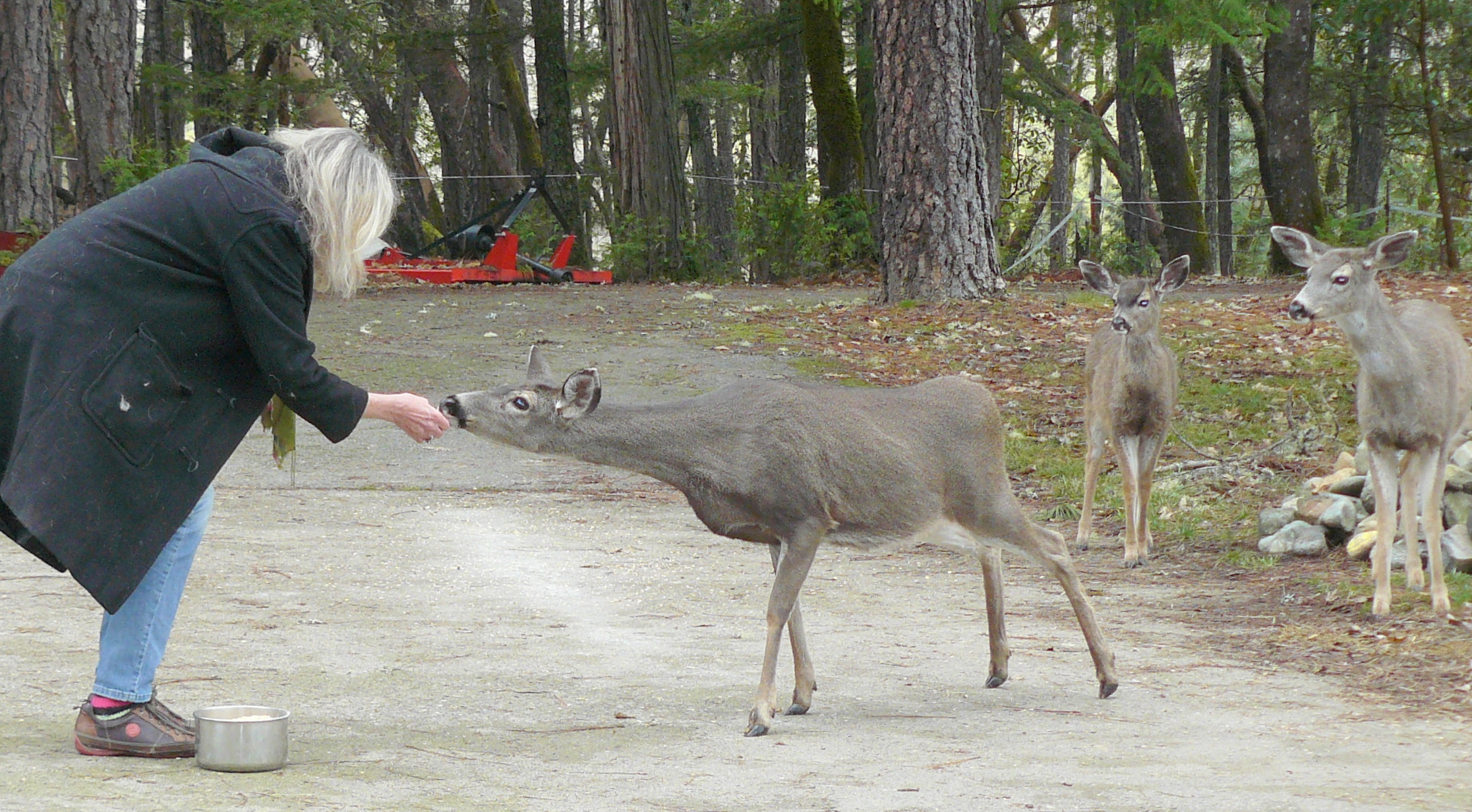
The trust between the deer and Jean then enabled the deer to feed from Jean's hand.
The trust between the deer and Jean then enabled the deer to feed from Jean’s hand.

The things one can do with a wok!

Very grateful to Neil back in Devon for sending this link to me.

You all have a great weekend.

The player is David Charrier and you can find more music from him on YouTube and elsewhere.

Thank you for 2014

Amazing how quickly a year flows by.

When, yesterday, I was wondering what to post today, I was curious as to what I had posted a year ago to the day: January 15th., 2014.

To my surprise it was the WordPress summary of my year in blogging; for 2013. I’m not going to prattle on with all the figures, just offer the following: Learning from Dogs was viewed about 93,000 times in 2014. The busiest day of the year was April 16th with 879 views. The most popular post that day was The night sky above.

I dropped in to that post, to refresh my memory of what it was, and saw that it was just delightful. As there have been a great number of new followers in the last twelve months, it seemed worthy of being repeated. Trust me, it’s not what one might expect from the title.

oooo

The night sky above.

Billions of stars

The Lone Ranger and Tonto went camping in the desert.

After they got their tent all set up, both men fell sound asleep. Some hours later, Tonto wakes the Lone Ranger and says,

Kemo Sabe, look towards sky, what you see?

The Lone Ranger replies,

I see millions of stars.

Tonto then responded,

What that tell you?

The Lone Ranger ponders for a minute then says,

Astronomically speaking, it tells me there are millions of galaxies and potentially billions of planets.

However, astrologically, it tells me that Saturn is in Leo.

Then again, thinking about the time just now, it appears to be approximately a quarter past three in the morning.

From a theologically perspective, it’s evident the Lord is all-powerful and we are small and insignificant.

Finally, meteorologically, it seems we will have a beautiful day tomorrow.

What’s it tell you, Tonto?”

Tonto is silent for a moment, then says,

Kemo Sabe, you dumber then buffalo chip. Someone has stolen tent.”

oooo

So returning to the theme of blogging for 2014, all I want to add is this: Thank you all for taking an interest in Learning from Dogs.

Yet life is what we make of it!

Events!

Perhaps the fundamental reason why I am so hooked on this world of blogging is because there are always wonderful surprises.  What do I mean by this?

Yesterday’s post, Sometimes the world seems very strange was a rather bleak affair. I had been affected by, and reported, a couple of items read elsewhere that seemed to me, in a rather dark and miserable way, to highlight what is wrong with our so-called modern society. Perhaps, no more clearly expressed than in my reply to a comment left by Sue Dreamwalker.

Here is what Sue said, and how I replied.

I agree with what Alex has to say… The super rich live in a totally different reality… Have no clues on the real structure of how their wealth is being created often on the backs of the poor. Who are squeezed ever tighter at every conceivable way of extracting more in the form of taxes, both on incomes and on everything else..

Change will come but what frightens you Paul is that when it does come it will come swiftly.. We have seen the social unrest in other nations… What is happening in many countries is the injustices and discriminations which are getting ordinary peoples backs up..

Stupid Gun Laws to teach children how to handle weapons..

Yes Paul sometimes the world is very Strange.. and also Very Stupid!..

Thank you and wishing you and Jean a lovely week
Sue

oooo

Sue, a wonderful reply from you. Thank you. What I find so strange is this. That here I am, turned 70-years-old, having enjoyed a fabulously interesting life, full of variety and opportunities. That, to some small degree, I believe I have a better, albeit still partial, sense of how we humans tick than, say, 20 years ago. How our lives fundamentally revolve around our relationships, with the most important one being our relationship with ourself and, flowing from that, some understanding of who we are!

Yet, (and you knew there was a ‘yet’ coming, didn’t you!) beyond the very small world of loved ones, family and close friends (and I count blogging friends in that last category) the world around me becomes more strange, more remote, more alien almost on a week-by-week basis.

I was born in the middle of London six months to the day of the end of the Second World War in Europe. Those first six months would have been unrecognisable to the later world I grew up in, and got to know. My fear is that I will spend the last six months of my life in a world that is similarly unrecognisable from the world I thought I knew.

Thank my lucky stars for a wonderful, loving woman in my life and for so many fabulous doggie friends.

Sue, apologies, I went on a tad – nay, a tad and a half!

Fondest love to you and your Hubby.

Paul

I think that makes it pretty clear what my mood was like yesterday morning.

Jean and I were out from 9am until 12:30 pm and it was coming up to 3pm when I sat down in front of my PC. Frankly, I didn’t have a clue as to what to write and still felt pretty miserable about the ‘strange world’.

However, one of the first things that I saw in my ‘in-box’ was the weekly email from the Rev. Terry Hershey. Here is how his email opened up:

Live deeply and deliberately

January 12, 2015

Hershey

“The purpose of life is to live it, to taste experience to the utmost, to reach out eagerly and without fear for newer and richer experience.” Eleanor Roosevelt

“To be fully alive, fully human, and completely awake is to be continually thrown out of the nest. To live fully is to be always in no-man’s-land, to experience each moment as completely new and fresh. To live is to be willing to die over and over again.” Pema Chodron

“On his right hand Billy tattooed the word love,
and on his left hand was the word fear,
And in which hand he held his fate was never clear.”
Bruce Springsteen: “Cautious Man

To live is to be willing to die over and over again.” Wow! Did that ‘speak’ to me or what!

Then the very next item in my ‘in-box’ was a note that “Deaf Duke is now following Learning from Dogs“. I try and make it across to every new follower of this blog and thank them for their support.  Seems the least I should do.

So it was with ‘Deaf Duke’. But I have to quietly admit that before clicking on the link I found myself wondering just what Deaf Duke was.

Then I went across to their place and was uplifted; hugely so!  Because Deaf Duke is the name of a blog that … well in their words ….

Duke

About

Deaf Duke is an American Bulldog mix that my boyfriend (Tyler) and I got just after the Fourth of July this year. He was only 6.5 weeks old when we got him so he had some issues to begin with. When he was about 6 months old we decided to take him to a trainer, we thought he was a bad dog because he would never listen to us, we soon found out that he was becoming deaf. He wasn’t a bad dog he just couldn’t hear us. Our lives changed a lot from that moment on. Everyone says that training a deaf dog is no harder than training a dog that can hear, which is true on so many levels but they never talk about how difficult it can be for the owners who are primarily vocal beings. This blog is about the upbringing and stories about Duke and his life.

Here’s a post from Deaf Duke from last December.

Skinny Boy

SB1

When we got Duke at 6.5 weeks old he was very under weight. Finding out that he was deaf could explain why he was. Deaf dogs generally don’t wake up for feedings because they cannot hear when the other puppies in the litter are eating. Duke is now a healthy and happy 7 month old boy learning just like his parents are to train him and us.

SB2

So thank you Terry, and thank you Duke and your Mum and Dad, for reminding me that life is utterly and whole-heartedly what we make of it!

Onwards and upwards!

Picture parade seventy-eight

Winter wonderland two. (One was here.)

Bambi8

oooo

Bambi9

Now still remaining with the pictures sent in by Dordie but a change from deer and rabbit to deer and dog!

Bambi10

oooo

Bambi11

oooo

Bambi12

oooo

Bambi13

oooo

Bambi14

The third group of winter wonderland pictures in a week’s time. Enjoy!