Category: Animal rescue

A no-kill approach!

Funny how things come around!

I just happened to click on the ‘signature’ of a follower that took me to a blog where I was truly enthralled. It was called Who Will Let the Dogs Out? and I was fascinated by what was being written.

Now I already follow this blog but had been very reluctant to go across to their place and read the posts. Shame on me! I have no idea why!

How about this post, that I am taking the liberty of republishing.

ooOOoo

No Kill is Not Rocket Science.

BY CARA SUE ACHTERBERG

July 25th, 2019

Ian and I are still processing what we saw and what we learned in Tennessee, each in our own way.

He is taking a break and feels he can’t look at the pictures for a bit. His pictures capture the emotion of the dogs caught in our human failure, and that is hard to look at. I know eventually he will be ready to edit them and to hopefully share more here on the blog. He took thousands of pictures. My big son has a very big heart, and it truly broke in Tennessee.
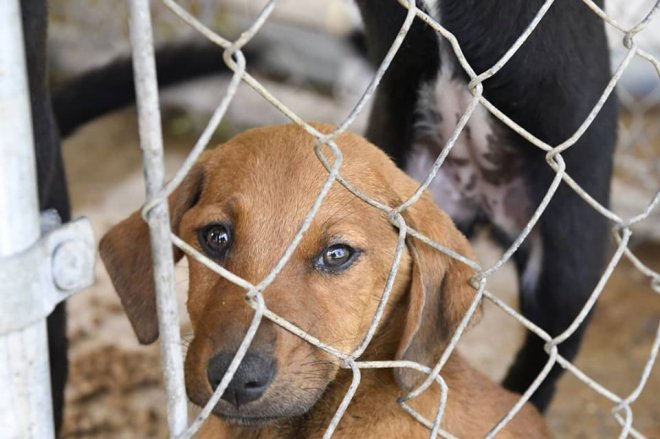
For me, seeing the conditions in western Tennessee made me furious. This should not be happening. We should not be leaving the responsibility for lost and surrendered animals to a handful of citizens who are quite literally standing in the gap left by a government that neglects its duties and an unaware public.

I cannot look away. So, I am doing what I do– writing and talking and making a nuisance of myself. I’m working on articles, blog posts (like this one), and even a book. I am in the midst of signing a publishing contract for 100 Dogs and Counting, a follow up to Another Good Dog: One Family and Fifty Foster Dogs that will recount more of our fostering adventures, and then take the reader south to discover where these dogs come from and what they can do about it.

I am also planning another trip in September– this time back to Tennessee, and then on to Alabama. Ian will be in school, but I will bring along another talented photographer and excellent co-pilot, Nancy Slattery.

One of the people I am excited to see on this next trip is a rescue hero of mine — Aubrie Kavanaugh. I’m excited to introduce you to her today in the following interview. Aubrie is not only an expert in the fight for a No-Kill nation, but a talented writer, a wickedly smart and funny person, and a dog-hearted woman relentlessly and methodically committed to changing the situation.

Enjoy!

The biggest first – the question everyone asks me – Why are there so many unwanted dogs in the south?

I honestly try to avoid the word “unwanted” because it implies that no one wants the animals when that is not necessarily true. Having said that, we have so many in need of homes for a host of reasons, some of which I’ll explain.

In many locations, there is a complete disconnect between animal control agencies/animal shelters which have animals needing new homes and the general public who could provide those homes. The shelters presume no one wants the animals and the public presumes the animals all find homes. The chasm between the agencies and the public is wide and leads to animals who otherwise may be saved being destroyed.

We have issues with most municipalities who manage animal shelters continuing to use the outdated “catch and kill” method of sheltering because they have not learned about or embraced No Kill programs and philosophies which could both reduce shelter intake and increase shelter output. Rather than educate themselves on how to keep animals alive which still ensure public safety, they hold firm to the status quo with the mindset of, “its’ not broken, so don’t fix it.” But the shelter system is broken and it does need to be fixed.

Many people are quick to ascribe what has been called “The Bubba Factor” to the south which essentially means that people here are too woefully stupid or callous to care about what happens to animals in need. We do have cultural differences regarding the value of animals in our lives (“it’s just a dog”) or where animals live (inside v. outside) and there are some people who could care less about animal welfare. Most people, however, do care at most about the welfare of animals and at least about how their tax dollars are spent. People can be informed not only about how their tax dollars can be best used, but also about how they can make better personal choices which affect how shelters operate (like the value of spay/neuter, how to keep pets contained, how to rehome pets in the event of their death or some life crisis, etc.). Many see themselves as stewards of the species we have domesticated and for them this is an issue of ethics, but they need to be informed of the need to address the need.

In many parts of the south, there is also very limited access to spay/neuter at all, let alone at a reasonable cost. This means that in some places, pet populations are not contained and just continue to grow over time. The more animals there are in any particular community, the more animals are apt to end up in animal control systems.

Define what ‘no-kill’ means to you.

No kill means we don’t kill healthy and treatable shelter animals using our tax dollars or donations.

Some try to portray the phrase as controversial or complicated when it really is not. When we use the intended meanings of words like “euthanasia” and “kill,” the phrase makes more sense.

If you have ever made The Terrible Decision to euthanize a beloved pet who is suffering, you know exactly what euthanasia means. It is an act of mercy to end or alleviate suffering. If a shelter ends the life of a healthy dog, that is not euthanasia no matter how many times we call it that. If someone outside an animal shelter setting were to end the lives of healthy animals, we would not say those animals were euthanized. We would say they were killed. We should not alter the meaning of words based on the location where the act takes place.

There will always be animals in shelters who are suffering and for whom euthanasia is the only responsible action as an act of mercy. There will also always be a very small number of dogs who are so broken as to be genuinely dangerous (as opposed to scared, traumatized or undersocialized) and who cannot be adopted out because they present a public safety risk and those dogs must, unfortunately, be euthanized. No Kill does not mean animals do not die. It means we keep the healthy and treatable animals alive because that’s what the public expects and because it is possible using a progressive business model.

I blogged about this topic recently for No Kill Movement and the blog explains a bit more about what No Kill is and what it is Not.

What made you get involved in no-kill advocacy?

We had our 16-year old German Sheppard mix euthanized on Earth Day of 2006. We knew for years that the day was coming, but it was heart-wrenching. I found I was not coping well in the wake of our loss. I began donating to the animal shelter in the city where I work in her honor and to help me cope with the loss by doing something positive.

I was on the shelter website a few months later when I came across a promotional video which began harmlessly but then transitioned to footage of an outwardly healthy dog being taken from his kennel to be killed. It shocked me. I had no real clue prior to that that the shelter was destroying healthy and treatable animals. When I later asked if the dog in the video had actually died, I was told five words that changed my life: “nobody wants Beagles these days.”

I got upset, then I got angry and then I began educating myself about why this was happening not just in my area, but all over the country. I wanted to do all I could to make it stop. I now consider myself an unapologetic No Kill advocate. For me, this is an issue about free speech and municipal accountability. I see my advocacy as a moral imperative. Shelters operate using tax dollars and it is up to us to hold those places accountable for how they spent our money and in our name (while sometimes blaming us for the process). As a country, we are better than this.

Is no-kill truly possible and if so, what will it take?

I absolutely believe that any community can become a No Kill Community and that as more places take this step, we move closer to a time when the killing of healthy and treatable animals will become part of our shameful past. Change can come in one of two ways. Municipalities can get ahead of this issue by adopting progressive programs. If they will not do so, the burden passes to citizens to educate themselves and then speak out to demand better of elected and appointed officials. If elected officials will not listen to the will of the people, they need to be replaced.

I support and promote the No Kill Equation which is a one-size-fits-all DIY solution for any community which was first published by Nathan Winograd in 2007. It is an all-in series of programs which work in concert with each other to reduce shelter intake and then move animals who are in the shelter through the system as quickly as possible. I group them into “keep them out” and “get them out” programs. Anyone can learn about the No Kill Equation by reading Nathan’s book, “Redemption: The Myth of Pet Overpopulation and the No Kill Revolution in America.” They can also read about the equation on numerous websites including those for the No Kill Advocacy Center, No Kill Movement, No Kill Learning, my Paws4Change website or our No Kill Huntsville website. I also go into a lot of detail about the Equation in my book and explain a bit about how each of the programs works.

What can someone who is not in the rural south do to help?

Every area can improve. If you live outside the south, find out how your local shelter is functioning using your tax dollars. Many shelters claim to have high release rates when, in fact, they are playing a numbers game or are using words in different ways than they are used by the public to condone or excuse killing. If you don’t like what you learn, speak out and ask for better. Only when more places across our country change will those changes ultimately become infectious everywhere, including in the south.

Even if your local area is doing a great job, you can connect with people you know in the south and encourage them to educate themselves and perhaps become politically active about their local shelter. It often falls to the public to speak out and demand better. Only those who live in the area can speak out for better use of their tax dollars in ways which are consistent with their values.

If you don’t know anyone in the south, you can help rescue and advocacy organizations in the south which are doing some of the heavy lifting to keep animals alive. If that is the help you choose to provide, please also encourage the rescue group or advocates with whom you engage to speak out to seek better. While I have the utmost respect for people “in the trenches,” who are keeping animals alive, they are doomed to provide that role indefinitely unless the system is forced to change through public demand. I have a section in my book called “For Rescuers,” which addresses this need to go beyond saving X dog and Y cat to becoming a catalyst for change so there are fewer animals in need of rescue or help. As simple as it sounds, nothing will change unless something changes to alter the process.

I love the title of your book because that’s what I’ve concluded, too – It’s not Rocket Science. Tell me a little about why you wrote the book and what you hope people take from it.

I formed an advocacy group called No Kill Huntsville in 2012 to speak with one voice to persuade the City of Huntsville, Alabama, to stop destroying healthy and treatable animals using tax dollars. The live release rate at the shelter at the time was about 34% and my individual efforts going back to 2008 to bring about change had failed. Fast forward a few years and things have changed remarkably. The live release rate at the shelter has been above 90% for more than four years and while there is still work to be done, the culture at our shelter has changed. It was an incredible struggle for a long time. It got ugly with some strong opposition from some unlikely sources. But we’re proud of what we did working together as a coalition.

One day last fall after a city council meeting which set some new guidelines for the shelter, I was thinking back to all the times people have contacted us asking for help or asking what we recommend. People contact us from the south, from other regions and even from other countries. I decided to write the book to help others learn from our path. We didn’t get everything we wanted and our work is not over, but the worst is behind us and I think people may learn something from our methods and from our mistakes. I think the content in the book about the opposition we faced is almost as important as the No Kill Equation we promoted and still promote. If advocates are not prepared to counter opposition, their arguments in support of animal shelter reform may fall short.

Anything else you’d like to add?

The phrase No Kill is on the public radar and is not going away. We do better to educate people on what it means and to help people learn how to promote change than to try to sugarcoat what is happening in our shelters using our money. We should be respectful in our advocacy, but there truly is no polite way to say, “please stop killing healthy and treatable animals using our money.” No Kill advocates are not the enemy of shelters any more than the public is the enemy. I always encourage people to focus not on the messenger, but the fact that the message is necessary in the first place.

There are some who use the phrase No Kill and do so in ways which are inconsistent with our social movement. Some of these people engage in criminal acts for which they should be prosecuted. We should absolutely call out those bad actors when we find them. Those people who co-opt the phrase No Kill for illegal or unethical purposes are no more representative of our social movement than unethical breeders of animals represent all breeders. If an organization calls itself No Kill and destroys a lot of animals, keeps them for years, or does not provide for their care, they are using the words without the actions to support them. My book covers this topic and I touch on it in the No Kill Movement blog.

I believe a time will come when all shelters in America will be No Kill shelters. How long that takes is up to all of us. We must educate ourselves on what his happening in our own communities so we can decide if our money is being spent in ways of which we approve. When it is not, it is up to us to ask for better and, when necessary, be advocates for change. The lives of animals depend on it.

Aubrie Kavanaugh is an Army veteran who has worked for decades as a litigation paralegal doing defense work; her clients are mostly municipalities and law enforcement officials.

Aubrie became an animal welfare advocate in 2006 after learning about the deaths of animals at her local animal shelter. She manages the Paws4Change educational website, blogs on animal welfare issues, creates video productions and public service announcements for animal shelters and nonprofit organizations across the country, and is involved in advancing animal welfare legislation on the local and state level. She also leads an advocacy group called No Kill Huntsville. She lives in northern Alabama with her husband, their dog, and the enduring inspiration of their dogs to whom they have said farewell for now.

Her book, “Not Rocket Science: A Story of No Kill Animal Shelter Advocacy in Huntsville, Alabama” is available on Amazon. It is priced to print.

ooOOoo

Well done, Aubrey!

And if you go to that Amazon Books page you will read this:

America is an animal friendly society. Approximately sixty-eight percent of U.S. households own a pet – about 85 million families. Most of us consider our companion animals family members. We recognize that they enrich our lives in countless ways, improve our physical and mental health, and make us better people. We value the fact that they don’t care what we look like, where we live, what we do for a living or how much money we make; their love for us is unconditional. And we agonize over our decisions when the time comes to say farewell to them due to advanced age or disease.

But there is a dark side to our relationship with companion animals which is our collective shame. We destroy millions of healthy and treatable animals in our tax-funded animal shelters every year. Many people simply do not know about what happens at their local animal shelter using their money and in their name. Some who know about this tragedy believe there is no other way to function. There is.

“Not Rocket Science” is a story of no kill animal shelter advocacy in Huntsville, Alabama, which explains how a group of animal welfare advocates joined forces to speak with one voice to save the lives of healthy and treatable animals in the municipal animal shelter. This advocacy helped change the shelter from one which destroyed more than half of the animals entrusted to its care to a shelter which saves the lives of all healthy and treatable animals instead.

Any community can be a no kill community. Sometimes it just takes the courage to try something new. And sometimes it just takes a group of people willing to band together and speak out with one voice to say “enough. We are better than this.”

The book is priced at $5.52. I have ordered a copy!
Dog in the road!

An incident yesterday serves as an introduction to today’s post.

I went biking yesterday morning.

I decided to go down Azalea Drive to the end and return the same way; a total of 19.5 miles.

Now about 2 miles into my return I came across a dog playing in the road. Azalea Drive is a pretty busy road and as I approached the dog I had to wave down cars. Soon I was up to it and I noticed it wasn’t wearing a collar but it looked well-fed. It was incredibly friendly and came instantly up to me and allowed me to caress it around its head and ears. It was a black Labrador.

Now not wanting to leave it and the two gates alongside where I was, on the same right-hand side of the road, being padlocked shut I decided to walk a good half-mile down an opposite drive to find someone. I was pushing the bike in my righthand and the dog was walking very happily by my left leg. Eventually I got to the house and rang the bell. Pat and Earl came to the door; it wasn’t their dog as evidenced by the barking of their own dogs. Pat suggested trying the next house South. I left my bike there and Pat gave me a leash to walk the dog with.

So the dog and I walked back down the drive and up the next driveway South. I knocked on the front door.  Several people came to the door. It wasn’t their dog either but a young man kindly offered to take the dog and return it to the property where it lived across the road. Apparently it wasn’t the first time that this had happened; the owners worked all day and the dog had found a gap in the fence.

So I left the beautiful Lab with the young man, thanked him profusely and walked the three-quarters of a mile back to fetch my bike. Thinking that some people didn’t deserve such a beautiful dog!

Now to my post for the day, courtesy of The Dodo.

ooOOoo

Dog Left Tied To Tree Gave The Biggest Smile To Rescuers

PUBLISHED ON 07/31/2019
Photo Credit: Facebook/Patrick Harden

As a group of road workers were collecting trash along a highway in Dutchess County, New York, they suddenly heard barking. They were basically in the middle of nowhere, and couldn’t imagine why a dog would be wandering around there. Still, they knew they had to investigate, and so they followed the barking — and found a dog tied to a tree, deep in the woods away from the highway.

The workers were shocked to find the poor dog tied to the tree, away from where anyone could have spotted him, and he was just as shocked — and overjoyed — to see them too.

Photo Credit: Facebook/Patrick Harden

“He was very happy and excited to see anyone,” Lynne Meloccaro, executive director of the Dutchess County SPCA, told The Dodo. “He had been there for quite a while in 100-plus [degree] weather. He’s clearly got a strong will to live.”

After the New York State Police were contacted, the very excited dog was taken in by the Dutchess County SPCA, who decided to name him Pesci. The staffers there were dumbfounded by how anyone could have abandoned such a happy, upbeat dog. Even after everything he’d been through, he was so thrilled to meet all of his new friends, and didn’t seem to be scared of people one bit.

Photo Credit: Lynne Meloccaro

“He is a very sweet soul,” Meloccaro said. “He’s happiest when he’s with people — he loves to play and get cuddles.”

Besides being dehydrated, Pesci was surprisingly healthy. He’s now thriving in the care of all his new rescue friends, and simply can’t get enough of all the love and attention he suddenly has. The police are now actively investigating how he came to be abandoned, so they can hold whoever did it responsible.

“That he was so far off the road suggests that whoever put him there did not intend for him to be found easily,” Meloccaro said.

Photo Credit: Lynne Meloccaro

Luckily, Pesci is safe now and is already so loved, and the shelter has a feeling he won’t have to wait long before he’s adopted into the best forever home.

“He will be ready for adoption very soon, and given the public interest in this case, I think he will find his forever home in a shorter amount of time than he spent tied to that tree,” Meloccaro said.

ooOOoo

The contrast between the dog I found, or rather the owners, and Dutchess County SPCA is stark!

As I said some people have no right to a loving dog.

Diya’s story

With thanks to Michelle Orcutt.

I am not a great Facebook user. I have nothing against the app just prefer not to be active in terms of my comings and goings. However, I do automatically send posts from this blog across to Facebook. Some of my followers come from FB.

As was the case with Michelle Orcutt.

I went across to her FB ‘page’ to leave my thanks for her follow and read a wonderful account of Diya.

Michelle kindly gave me permission to republish the article in this place. Here it is.

ooOOoo

Diya’s Story

By Michelle Orcutt

Most of my friends know I adopted Diya, originally a street puppy from India (aka a desi dog, an Indie, a native Indian dog, pariah dog, or a streetie), almost 4 years ago. I wrote this for her rescue’s private Facebook group a year ago, in hopes of encouraging a better understanding of street dogs, and have had some requests to make it public, so here it is:

What follows are my own musings, not anything coming from ISDF. I think about dogs a lot!😁 Through Diya’s rescuer’s visit to the Twin Cities, I was able to meet and observe 7 other Indian-Minnesotan dogs. Thinking about some common difficulties voiced by these dogs’ people, and also about some of the worries and frustrations recently expressed in group and my own challenges with Diya, I feel like sharing my perspective.

To a person, the Desi adopters I met here have been patient and accommodating towards their dogs, yet most of the dogs continue to have difficulty in certain situations. These are dogs, working from what their DNA and experience gives them to go on, in a wholly other environment from where they emerged into the world. Especially with random-bred, pariah type dogs like many from India, Oman, and Thailand, these dogs’ lives center around finding food and water, protecting themselves and their territory, avoiding harm, and successfully breeding, bearing, and raising pups. Certainly the pursuit of pleasure and comfortable resting spots plays into their lives too.

We ask these dogs, who are dogs as dogs are truly meant to be—to become “ours” when they arrive in America. We subject them to foreign constraints like crates and leashes, and saddle them with our own expectations. We spend a lot of time telling dogs they are good and that they are bad. But bottom line, they’re dogs, not just our fur babies, or our charges, but entities deserving of respect in their own right. This isn’t to minimize the difficulty and emotional toll of trying to change worrisome behaviors.

Our dogs think hard to get a handle on us; they interpret and build their own sense of the meanings behind our facial expressions, movements, words, tone, touch, habits, clothing, and smells. Their language is far broader than English, Hindi, Arabic, or Thai. They are another form of intelligent life in our midst, in our cars, on our sofas, under the covers and curled into the bend of our knees. Yet they can also be incredibly distressing as they bark at our friends, growl at our guests, lung at terriers, chase cats, and destroy door frames.

Dogs are incredibly adaptable; this is one of the reasons for their success as a species. A terrified dog rescued from meat trade smugglers in Thailand can transform into a remarkable beauty at ease in a Chanel boutique (😉😉Sparkle Stern); a dog from torrid Muscat can thrive in snow (you Omani pups know who you are). A Delhi puppy fated to starve in the same spot her mother died, can instead run miles through the Michigan woods and “go to work” in an air-conditioned office with her human mom and other people with their own dogs (yes, that’s you, Miss Lily). These changes don’t happen magically or automatically (except in the case of snow), but through initial acts of grace followed by steady and hope-fueled progression.

The things that come easiest to most of these former street puppies and dogs, are the ones that overlap with their natural instincts. Bonding with people who treat them well and provide their food, comfort, and positive mental stimulation is relatively straightforward, though many of our dogs retain more of a capacity for independence than common American companion breeds. Diya is always watching for suspicious people and crows; I live in a part of St. Paul where it’s not uncommon for neighborhood Facebook group posts to start out, “Was that gunshots or fireworks?” so I appreciate her sharp eyes and formidable-sounding bark (I love my city neighborhood, by the way. I love crows too—this is one of the points at which Diya and I differ).

It’s the things that are really weird for street dogs that are hard: being expected to be outgoing, friendly, and trusting of all people and other dogs…always having to stifle your growl…tolerating being left in a wire or plastic box for hours…not being able to run away when you get nervous or to sniff as many spots as you think you need to gather information…to have people decide what you need…going to the vet, going to dog parks, etc. Dogs are social animals, but their idea of social life is different from ours (and also very different from wolves’), and each has their own unique relationship with their person or people, and to the other animals in the household.

So when you are flustered and upset by your dog’s behavior, step back, and think of all we are expecting them to learn and all we are asking them to put aside. Learning new things can be very uncomfortable and anxiety-provoking, especially when going against strong instincts. Living alone with my dogs and cats, and being an introvert by nature, I’ve tended to avoid some trying situations that other families have to work through, but Diya and I have still come a long way. I look forward to finding out where all we’ll go and what we’ll teach each other.

ooOOoo

If you just glanced at this post then make a note, a firm note, to come back and read it fully and carefully.

For Michelle captures precisely what it is to be a dog, especially a street dog.

It is a profoundly wise article and it is a great honour to be able to republish it in this place.

This is some mother dog!

A share of a story from more than a month ago.

From my file of stories that I keep for Learning from Dogs comes this one about a mother dog that raised a kitten.

It’s a delightful article and I have great pleasure in sharing it with you.

ooOOoo

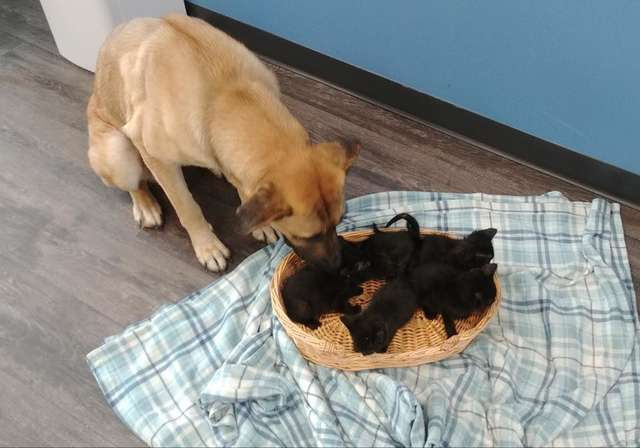
Dog Mom Raises Tiniest Kitten As One Of Her Puppies

“She was trying to tell us, ‘This little creature belongs in my family.’”
BY
PUBLISHED ON 06/12/2019

Nala was just a newborn when she was abandoned alone in a dirt alley. A kind neighbor heard the tiny tabby’s cries and brought her to the Spokane County Regional Animal Protection Service (SCRAPS) in Spokane, Washington.

The little kitten had never known a mother’s love, but soon, two unusual moms would step forward to help her grow up strong.

Jamie Myers

Found at such a young age, Nala had to be placed with a foster family to have the best chance of survival. When Jamie Myers saw a plea for help on Facebook, she jumped at the chance to take in the kitten. She was fostering a cat who had recently lost a number of her babies and knew Nala would fit right into the little family.

“She was about a week and a half younger than my group, so I said, ‘My mama is pretty wonderful. She’s been very accepting so let’s see if she can’t nurse,'” Myers told The Dodo. “Nala nursed straight away and mama took her in instantly. She started licking her, and grooming her and showing her acceptance and love.”

Jamie Myers

By the time the mama cat and her babies were ready to be adopted, Nala still wasn’t quite big enough to find her forever home. “She did everything later than the rest of the group,” Myers said. “When they all opened their eyes, she still had her eyes closed, and when they started toddling about, she was still latched onto Mama nursing.”

Nala was alone once again — but not for long. Myers had taken in a dog named Izzy who had recently had puppies. Izzy’s paws were full nursing her own litter, but she was still determined to adopt the lone kitten.

Jamie Myers

“The mama dog kept trying to get Nala and pick her up and put her in with the rest of her babies,” Myers said. “She just thought one of the babies was out and missing — she kept trying to put it back and put it back.”

Izzy became more and more insistent that Nala belonged with her, so eventually, Myers decided to take a chance. “The kitten could not walk across the floor without Izzy getting up from nursing to hunt her down,” Myers said. “She was trying to tell us, ‘This little creature belongs in my family.’”

Jamie Myers

To help the mama dog settle down, Myers placed Nala in Izzy’s pen and supervised their interactions. A remarkable change occurred as soon as Nala joined the group, and Myers knew that she had done the right thing for both dog and kitten.

“As soon as we put Nala in with her babies, she settled and was happy and all was right in her world again,” Myers said. “And Nala just all the sudden had all these little warm bodies for snuggles and love, and a new fur mama to care for her, and she just fit in with her second foster family.”

Jamie Myers

Nala quickly adjusted to her new routine with her dog family: “She would get in and out of [the pen] on her own. So when she was done snuggling, she’d get out and go eat her kitten food and play for a little while, and then she’d go right back in,” Myers said. “Whenever she wanted to sleep, she was always in there sleeping with them.”

Jamie Myers

With the love and care of her three foster families — dog, cat and human — Nala grew bigger and was finally ready for adoption.
But for Izzy, Nala finally leaving the house was bittersweet. Luckily, Myers knew just what to do to settle Izzy down again.

She agreed to foster a bonded pair of kitten sisters desperately in need of some love and attention. And Izzy couldn’t be happier, Myers noted: “Now Izzy has two more kittens she’s loving on.”

Jamie Myers

Izzy proves a mother’s love knows no bounds — no matter the species.

ooOOoo

This is an interesting tale. The last statement: “no matter the species.”, is almost certainly not true. But this dog has shown that this kitten is to be loved.

I’m not sure that a mother elephant would be able to raise a baby snake, for example, but it doesn’t take anything away from the story!

Dog food alert – Salmonella!

Once again an alert and this is especially important.

This dog food alert came in on Monday.

ooOOoo

Dear Fellow Dog Lover,

You’re getting this alert because you signed up on our website and asked to be notified. If you no longer wish to receive these emails, please click the “unsubscribe” link at the bottom of this message.

The U.S. Center for Disease Control (CDC) is expanding its investigation into an outbreak of Salmonella in 27 states due to contaminated pig ear dog treats.

For more information, including which states are listed in the CDC announcement, please visit the following link:

Salmonella Outbreak Linked to Dog Treats Expands

Important Best Dog Foods Update

We’ve recently updated 2 of our Best Dog Foods pages. Both lists now include more grain-free and grain-inclusive recipes to satisfy your personal feeding preferences.
Click here to view our 20 Best Dry Dog Foods for July 2019

Click here to view our 20 Best Wet Dog Foods for July 2019

Please be sure to share the news of this alert with other pet owners.

Mike Sagman, Editor
The Dog Food Advisor
Saving Good Dogs from Bad Dog Food

P.S. Not already on our dog food recall notification list? Sign up to get critical dog food recall alerts sent to you by email. There’s no cost for this service.

ooOOoo

And if you go across to that first link then you will see the following:

ooOOoo

Salmonella Outbreak Linked to Dog Treats Expands

July 17, 2019 — The U.S. Centers for Disease Control and Prevention (CDC) has announced its investigation into an outbreak of Salmonella infections due to contaminated pig ears dog treats is expanding to 27 states.

Related Recall

In a related story posted July 3, 2019, by The Dog Food Advisor, Pet Supplies Plus recalled bulk pig ears stocked in open bins because they might be contaminated with Salmonella.

Link to Dog Treats Confirmed

The CDC has uncovered scientific evidence to indicate that contact with pig ear dog treats is the likely source of the outbreak.

DNA “fingerprinting” conducted by the CDC has linked the bacteria found on pig ears dog treats with the following 3 genetic strains:

  • Salmonella infantis
  • Salmonella newport
  • Salmonella london

About the Outbreak

As of July 16, 2019, a total of 93 people infected with the outbreak strains of Salmonella have been reported from 27 states.

Twenty ill people have been hospitalized. No deaths have been reported.

Illnesses might not yet be reported due to the time it takes between when a person becomes ill and when the illness is reported. This takes an average of 2 to 4 weeks.

What States?

Affected states include Alabama, Arizona, California, Colorado, Florida, Georgia, Hawaii, Illinois, Indiana, Iowa, Kansas, Kentucky, Louisiana, Massachusetts, Michigan, Minnesota, Missouri, New York, North Carolina, North Dakota, Ohio, Oregon, Pennsylvania, South Carolina, Utah, Washington, and Wisconsin.

About the Investigation

During the investigation, the Michigan Department of Agriculture and Rural Development gathered pig ear dog treats at retail locations where ill people reported buying the products.

A common supplier of pig ear dog treats has not been identified. Pet owners can take steps to keep their families healthy while feeding pets.

This investigation is ongoing and CDC will provide updates when more information is available.

About Salmonella

Most people infected with Salmonella develop diarrhea, fever, and stomach cramps 12 to 72 hours after being exposed to the bacteria.

The illness usually lasts 4 to 7 days, and most people recover without treatment.

In some people, the illness may be so severe that the patient needs to be hospitalized. Salmonella infection may spread from the intestines to the bloodstream and then to other places in the body.

Children younger than 5 years, adults 65 years and older, and people with weakened immune systems are more likely to have a severe illness.

Pets with Salmonella infections may be lethargic and have diarrhea or bloody diarrhea, fever, and vomiting.

Some pets will have only decreased appetite, fever and abdominal pain.

Infected but otherwise healthy pets can be carriers and infect other animals or humans.

What to Do?

Consumers should not feed suspected pig ears to their dog. Throw them away in a secure container so that your pets and other animals can’t eat them.

Even if some of the recalled pig ears were fed to dogs and no one got sick, do not continue to feed them to pets.

Wash containers, shelves, and areas that held the recalled pig ear dog treats with hot, soapy water.

U.S. citizens can report complaints about FDA-regulated pet food products by calling the consumer complaint coordinator in your area.

Or go to https://www.fda.gov/petfoodcomplaints.

Canadians can report any health or safety incidents related to the use of this product by filling out the Consumer Product Incident Report Form.

Get Dog Food Recall Alerts by Email

Get free dog food recall alerts sent to you by email. Subscribe to The Dog Food Advisor’s emergency recall notification system.

ooOOoo

Or follow this place because I always promote the Dog Food Alerts.

As before please share this with other dog owners.

This is so beautiful!

Another gorgeous story from The Dodo.

I make no apologies for featuring so quickly another article from The Dodo.

It’s just so beautiful and another example of the special characteristics of dogs.

Just see for yourself.

ooOOoo

Rescue Dog Won’t Let Orphaned Foal Sleep Alone

The foal knew that the dog was trying to help him.

BY
PUBLISHED ON 06/27/2019

At only 9 days old, a foal named Tye lost his mother. But that same night he gained an unexpected friend — an Australian cattle dog named Zip.
Zip had never shown much interest in his horse siblings. “We raise foals every year, and he would kind of look in the door and just look at them,” Karla Swindle, Zip’s mom, told The Dodo.

But on that fateful night in March, it was as if the 5-year-old rescue dog could tell he was needed.

Facebook/Karla Swindle

Tye’s mother became sick days after giving birth, and despite treatment, quickly went downhill. When things looked their bleakest for the mother and baby, Swindle stayed by their side. As always, Zip tagged along after his owner.

“I spent the night at the barn taking care of the mama horse, hoping that I could pull her through,” Swindle said. “Zip stayed with me in the alley of the barn all night — the foal was laying in the alley, and he just lay there beside the foal.”
“He was whining,” Swindle added. “You could tell that Zip knew something was wrong that night.”

The next morning, Tye lost his mother, but he wasn’t alone.

Zip insisted on keeping the newborn horse company, comforting the little animal with his presence. When Zip was around, Tye was relaxed and happy. “It seemed to me that the foal knew that the dog was trying to help him,” Swindle said, “which is so sweet.”

Facebook/Karla Swindle

For six weeks, Zip wouldn’t let Tye out of his sight. Whenever Swindle went to feed the foal, Zip was first in line to greet the little horse. “Every time I would take off to the barn, Zip would run to the stall, and stand in front of the stall and wait for me to get there,” Swindle said. “He would beat me to the barn every time.”

“As soon as I opened the door, he would about knock me down before I could get in there,” she added. “If the foal was laying down, he would go over there and lay his head on him.”

Facebook/Karla Swindle

As months passed, Tye quickly put on weight, growing into a healthy young horse — in part, thanks to his adoptive dad.

Now, Tye spends most days out in the pasture with his older sister, who is teaching him the ins and outs of being a horse. And while Zip still accompanies Swindle to the barn, he doesn’t beg to go in the stall with Tye anymore.

Facebook/Karla Swindle

“The foal is a little rough now,” Swindle said, “raring up, trying to play, so Zip kind of stays away from him now.”

The proud dad understands that Tye needs to test his independence, and it doesn’t make their relationship any less special.

“You could tell that when the foal needed Zip, Zip was there for him,” Swindle said. “And now Zip knows that the foal is OK, so they kind of went their separate ways.”

Facebook/Karla Swindle

But it seems the little horse has opened up room in the older dog’s heart — space that he has since filled with another baby.

“He loves my granddaughter,” Swindle said. “Whenever she comes over here, he goes directly to her. He treats her like he did the foal. He just loves to be around her.”

ooOOoo

We have mentioned it time and time before. That dogs are so special. And then one comes across an account of something that is even more special.

All of the photographs are delightful but that third one shows the intimacy that is in the relationship. The caring that is being shown by Zip!

I have said it before and no doubt will say it many times more: Dogs are incredibly wonderful.

Batman to the rescue!

Seriously!

It’s unbelievable but there’s a guy who transports rescue dogs and cats to their new owners. And he dresses up in a batman tunic!

This story was recently carried by The Dodo and is shared with you all today.

ooOOoo

There’s A Real-Life Batman Going Around Saving Shelter Pets

“It’s not who I am underneath but what I do that defines me”

BY

PUBLISHED ON 07/03/2019

Not all heroes wear capes — but when it comes to helping animals in need, some really do.

That’s what one homeless pit bull named Koko learned when the Caped Crusader himself changed her life forever.

Photo Credit: Batman4Paws

Koko arrived at the Pet Resource Center of Tampa as a stray. Day after day, she waited patiently for a family to choose her. But, before that day could come, she was put on the euthanasia list. With an hour left to live, Koko was pulled from the shelter by her foster mom and months later found a forever home in Gatlinburg, Tennessee.

The only problem? She had no way of getting there.

Enter the Dark Knight — otherwise known as Chris Van Dorn, founder of the animal rescue nonprofit Batman4Paws.

Batman4Paws

An eight-hour road trip dressed in an elaborate Batman costume is all in a day’s work for Van Dorn. “I would say I’m just the middleman,” Van Dorn told The Dodo. “The real heroes are the people giving these dogs a good, loving home.”

Koko is one of many dogs and cats whom Van Dorn has helped transport from overcrowded shelters to the safety of their forever homes.

And while dressing as Batman isn’t necessary to save an animal’s life, it has helped Van Dorn open up a dialogue about the importance of adoption and fostering.

Batman4Paws

The costume just makes everybody happy and smile,” Van Dorn said. “It’s special to see Batman walking around, and when they find out that he’s doing a good deed in the world they get even more excited.”

“It kind of just came as a way to embody all the good I wanted to do in the world,” he added, “and make it easy for people to talk to me right off the bat.”

Batman4Paws[/caption]

Van Dorn grew up watching the Batman animated series and began volunteering with animal rescues when his family adopted an Australian shepherd named Mr. Boots. When it came time for Van Dorn to start his own rescue organization, he decided to do it as Batman with, of course, Mr. Boots occasionally stepping in as Robin.

Batman4Paws

Every superhero has a secret identity, and for Van Dorn, wearing a mask was an intentional way of keeping the focus on his mission of saving animals.

“When I was first starting out, I was keeping everything really anonymous,” Van Dorn said. “I would sign everything ‘Bruce Wayne’ and not put my real name out there … My catchphrase is, ‘It’s not who I am underneath but what I do that defines me,’ and I still hold that true today.”

Batman4Paws

His cover was blown when GoFundMe honored his campaign, naming him as their GoFundMe Hero for May. Van Dorn hopes soon to put his private pilot’s license to good use by purchasing a plane so he can fly the animals to their forever homes every week.

But for the time being, he’s using his Batmobile, and making a difference whenever he can.

“Actions speak louder than words and I’m just doing my best to empty the cages,” Van Dorn said. “And I challenge anyone to go to their local shelter because it’s a depressing place, but if you can help out in any way — whether that’s to foster a dog or adopt a dog or just volunteer your time, then you should go out and do it.”

ooOOoo

This is one amazing guy. Simple and straightforward!

A plea!

A republication of shared angst

I haven’t been a follower of Cara’s blog Who Will Let The Dogs Out?  for a very long time but her posts are powerful and good. I have every intention of remaining a follower.

Especially when one reads posts this one that speaks of the stream of unwanted animals.

Cara has given me permission to republish it.

ooOOoo

A Neverending Stream of Unwanted Animals

We are home and settled in for the holiday week, but in some ways, I feel like I’m still in Tennessee. The pull is so strong. The stories down there break my heart but they also fire up my desire to fix this situation.

It is SO fixable. It does not need to be happening. There are more than enough of us to help the women struggling to help the dogs in western Tennessee. Once more, there are more than enough homes for those dogs, too.

From Kim Kavin’s excellent, well-researched book, The Dog Merchants:

“The notion that America’s homeless dogs face an ‘overpopulation problem’ does not match up against the available statistics. Supply is not exceeding demand. Americans want about 8 million dogs a year as new pets, while only about 4 million dogs are entering shelters….If just half the Americans already getting a dog went the shelter route, then statistically speaking, every cage in US animal control facilities could be emptied. Right now.”

And Tabi and Amber and Kim and Anne and Laura wouldn’t spend their every waking moment fighting to keep animals alive.

I’m not trying to guilt those of you who chose to buy your dog, particularly if you bought that dog from a reputable breeder and/or intend to show your dog. What I am saying is that if the next time you decide you’d like another pet (especially a cat), you’d consider looking at your local shelter or rescue.

And the next time a friend of yours or just an acquaintance tells you they adopted a dog from a shelter or rescue, thank that person for choosing to save a dog.

I’ve been home for five days now and already I’ve heard of more heartbreaking stories landing in the lap of both Karin’ 4 Kritters and Red Fern. Puppies abandoned and struggling, three dogs rescued by a woman who has them kenneled on her front porch to keep neighbors from poisoning them, dogs and puppies simply dumped. I can’t keep count of how many are in desperate need of rescue, so I asked for a summary from Laura (who handles transports from the area for OPH and many other rescues across our country).

The list here of calls for help in one day is:

– 3 pups dumped at Red Fern (that may go to Greenfield pound) – the picture of the ear with ticks is one of these puppies.

– 2 choc pups dumped in the country that they put at the city pound for now

– 2 pittie teens they’re being asked to take. (Crockett and Tyke)

– 3 strays in Sharon, TN that a lady caught because the neighbors were threatening to poison them because they’ve been running loose for months.

– pittie pup in Greenfield that the owner wants to surrender because it’s getting to be “too much”

– 2 three month old pups someone is asking her to take

– a 6 month injured beagle. The owner was going to “put it on the street” so her brother went and picked it up but he thinks it has a broken rib and it’s in pain and he doesn’t have money to treat it so he wants to dump it on Tabi.


That’s just in a day. Multiply that times all the little towns and counties all over western Tennessee that rely on rescues like Red Fern and Karin’ 4 Kritters and their minimalist dog pounds. Places where there is no safety net and dogs are suffering and dying daily. Places where there is no real, reasonable, low-cost access to spay/neuter. Places where dogs (and cats) are not valued or loved, and where their local government will not spend money because it’s ‘just a dog’ or ‘just a cat.’

We seem to have ‘solved’ the problem in the northeast and many metropolitan areas, but we are far from a solution in the rural south and Midwest. We cannot forget them.

The need is so real. Something has got to change. Someone has got to let these dogs out.

Thanks for reading and for caring.

Blessings,

Cara

If you’d like to help, page back through these posts for contact information, but if you’d really like to help, TELL someone. Spread the word – I remain convinced, that the problem is not that people don’t care, it’s that they don’t know. Please help us tell them.

ooOOoo

Bear in mind that the above list is for One Day!
Is it true that people don’t know about this?

Well those that read this blog certainly do now.

What rubbish!

No dog is ever ugly!

There was a recent item on The Smithsonian ‘Smart News’ that spoke of a dog winning the prize as the world’s ugliest dog!

I’m sure it was to gain headlines because no dog can be described as ugly.

Read the article yourself.

ooOOoo

Meet Scamp the Tramp, the World’s Ugliest Dog

Scamp took home the top prize in an annual competition that seeks to promote dog adoption

Yvonne Morones embraces her dog Scamp the Tramp after he wins the World’s Ugliest Dog contest. (Photo by Justin Sullivan/Getty Images)

By Brigit Katz
smithsonian.com
June 24, 2019
Nineteen canine competitors flocked to California’s Sonoma County last Friday, all pawing for the coveted title of World’s Ugliest Dog. Among them was Willie Wonka, an American Staffordshire Terrier mix born with twisted legs and deformed front paws; Rascal Deux, a hairless, dentally challenged “mutant”; and Josie, an eight-time veteran of the contest, which has been taking place for nearly three decades, with bulging eyes and a too-long tongue. But only one pooch could be crowned the ugliest of them all. And that pooch was Scamp the Tramp.

Scamp, according to Derrick Bryson Taylor of the New York Times, is a dog of unknown breeding, with a plump body and two-inch-long legs. He has Yoda-like ears and wild hair that grows naturally in dreadlocks. His tongue lolls perpetually. Now, Scamp and his human, Yvonne Morones, are the recipients of a towering trophy and $1,500.

“He’s Scamp the Champ, no longer Scamp the Tramp,” Morones quips in an interview with Andrew Beale of the Santa Rosa Press-Democrat.

The Ugliest Dog Contest’s pool of competitors was especially strong this year, so much so that the judges had a hard time picking just one pup. Once they had narrowed the contestants down to four, the judges asked the audience to cheer loudly for their favorite. Scamp was the clear winner.

Climbing to the top of the ugliest dog totem pole is no easy feat. Boasting a wonky appearance isn’t enough; dogs must also impress the judges and audience with their personalities and accomplishments. Scamp, according to his biography, regularly visits a local senior center and volunteers as a “reading dog,” letting first-graders read stories to him. His favorite book, his bio notes, is Go Dog Go.

“I think the audience saw his beautiful spirit and everything he’s given back to the community,” Morones tells Beale.

The competition’s second-place honor went to Wild Thang, a bushy-haired Pekingese who once contracted distemper, a viral disease that left Wild Thang with slight paralysis of the jaw and a front leg that never stops paddling. Tostito, a chihuahua who lacks teeth and a lower jaw, won third place and the Spirit Award, according to John Rogers of the Associated Press. As champion, Scamp joins the ranks of previous competition winners including Zsa Zsa the English bulldog and Martha the Neapolitan mastiff.

Scamp was found wandering the streets of Compton—“licking Taco Bell wrappers,” according to Taylor of the Times—and was adopted by Morones in 2014.

“It was on the way home that I knew I made the right choice,” she says. “There we were, two strangers in a car on the way home to a new start. Bob Marley was playing … and I looked over and little Scamp was bobbing his head. It was like he knew he had found his forever home.”

The Ugliest Dog Contest is without a doubt entertaining, but it also hopes to impart a serious message: Even dogs without a pedigree, or dogs that don’t quite measure up to standards of conventional canine beauty, are worthy of love and celebration. Many of the contestants, according to the competition’s website, have been rescued from shelters or puppy mills, and the contest organizers seek to promote adoption as an option for potential pet owners—“no matter [the dogs’] physical detractions.”

As part of their prize, Morones and Scamp were flown to New York for an appearance on NBC’s “Today Show.” There, Morones revealed that she was the owner of two previous Ugliest Dog winners—one of whom, Nana, took home the title six times.

In her opinion, Morones said, she doesn’t believe that her latest prize-winning pooch is ugly at all.

“He’s absolutely adorable,” she said. “When people first meet him, they go, ‘Oh, he’s kind of scary’ and then he wins them over with his sparkling personality.”

ooOOoo

Now that is not a particularly good photograph of Scamp in the article so I looked for an alternative.

Scamp the Tramp won the World’s Ugliest Dog Contest Friday evening in Petaluma.

Now he is not smart as in smooth-coated but he is a long way from being ugly. Reminds me a little of our own Sweeny.

Here’s a video of the champion.

Welcome to July!

Being a lover of dogs shows no constraints!

Try a pharmacist from Turkey!

I love this recent story from the Daily Dodo.

It concerns a Turkish pharmacist who is also a dog lover.

Look, here’s the story:

ooOOoo

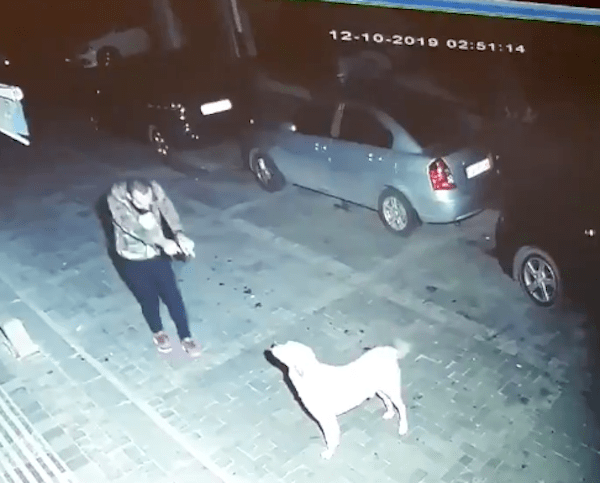
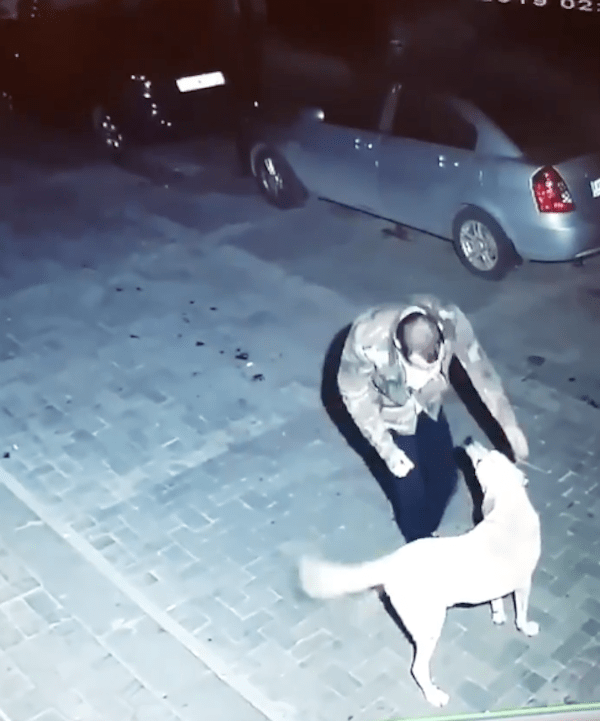
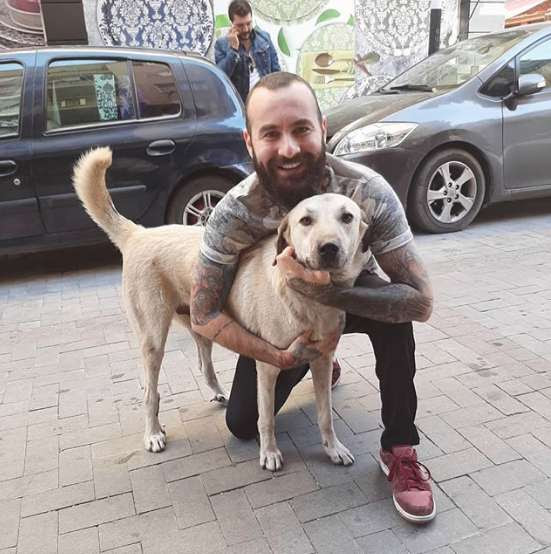
Pharmacist Sees Stray Dog At The Door And Realizes She’s Asking For Help”

“She was saying, ‘I trust you.'”