Category: Animal rescue

Picture Parade Two Hundred and Ninety-Three

These photographs are a few that were carried by The Guardian.

Thanks to Neil.

A selection of works at the exhibition Photographic Dog Show includes images from some of the world’s finest photographers, including Elliott Erwitt, Bruce Weber, Martin Usborne among others, who all happen to have a love of canines

  • Christ Church & St Stephen, Battersea Park Road, London, from 20-23 June. Proceeds go to Battersea Dogs
Maus
Photograph: Martin Usborne

oooo

John Boorman at the Museum of the Moving Image
Photograph: Barry Lewis

oooo

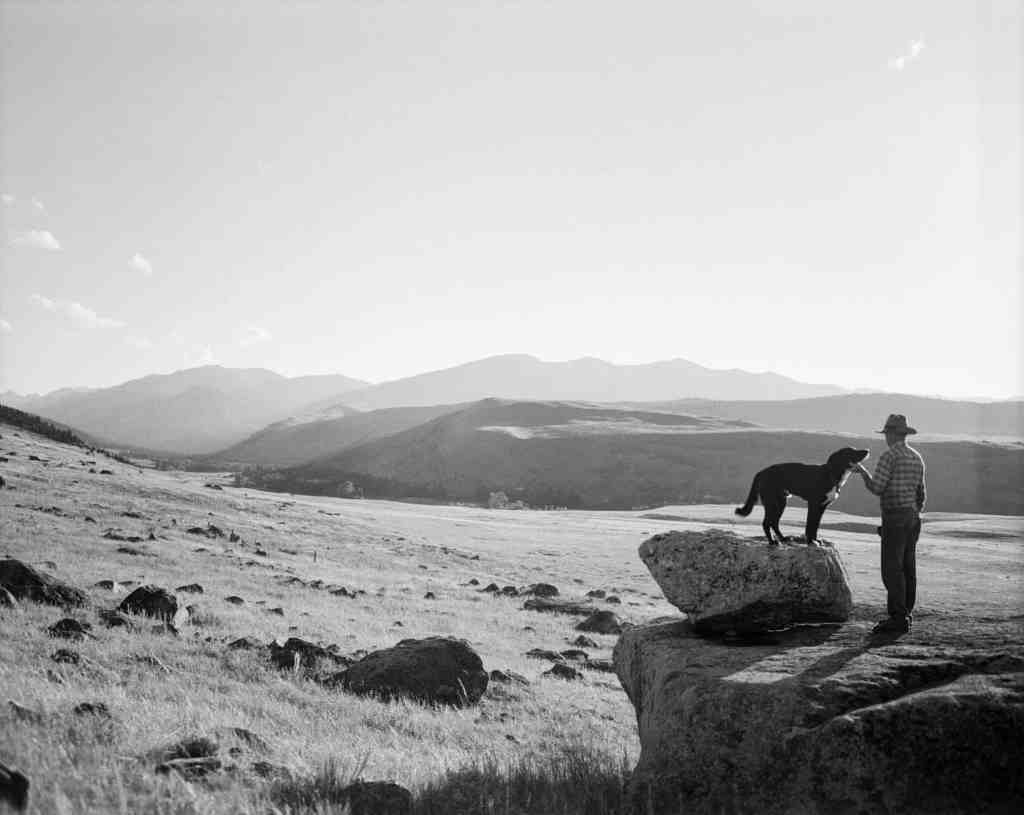
My neighbor John Hoiland and his dog, Zippy, McLeod, Montana 1997
Photograph: Bruce Weber

oooo

Sex workers keeping a lookout for their pet terrier playing outside their brothel which faced the Krupp works, Rhur Valley, Germany, 1985
Photograph: Barry Lewis

oooo

South Beach, Miami: a polecat is held up to a labrador by a woman as her daughter looks on
Photograph: Barry Lewis/Network

oooo

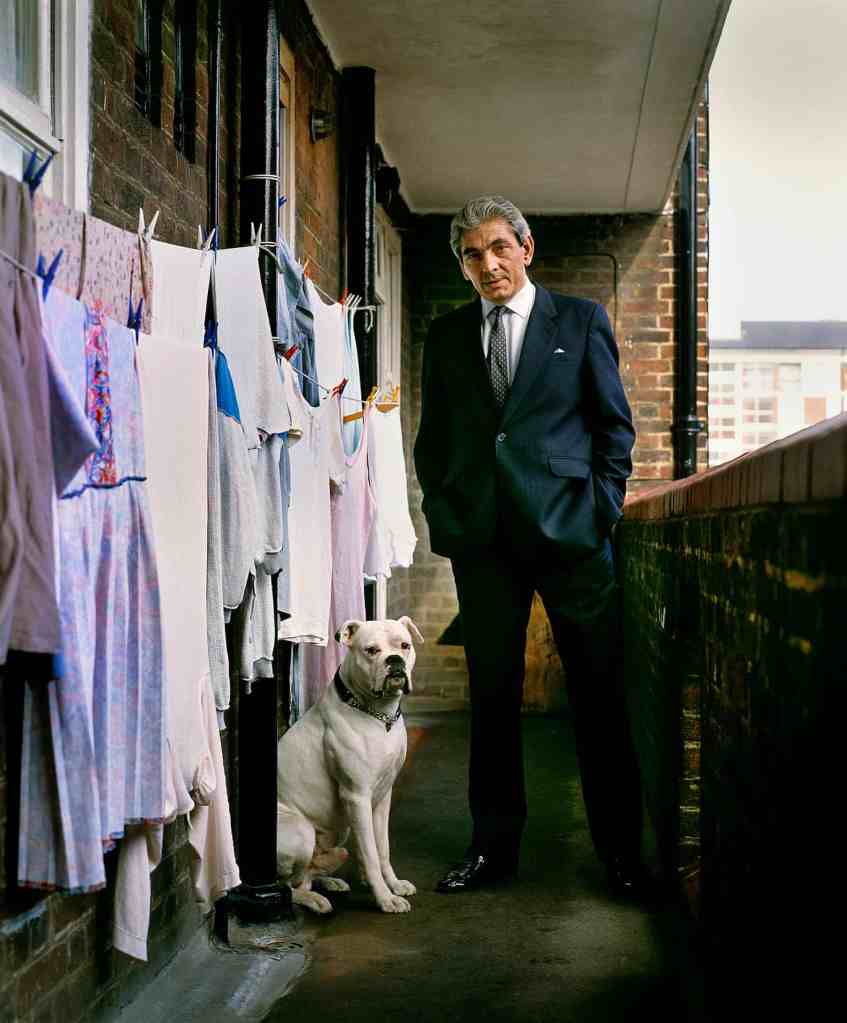
Tony Lambrianou, enforcer for the Krays with his dog outside his mum’s flat in the Elephant & Castle where he was staying in 1983 after his release from 15 years in prison
Photograph: Barry Lewis

oooo

Dog waiting in car, North Circular Road, Wembley, 1979
Photograph: Barry Lewis

oooo

Old Hastings pier
Photograph: Richard Hamilton

oooo

Dolly and Nora
Photograph: Rory Carnegie

Beautiful photographs!

Puppy Mills, Part Two

Part Two of this guest post from Monika.

ooOOoo

One of the more alarming facts surrounding the audit was a lack of enforcement against violators. Enforcement has been ineffective, particularly against the worst of the worst where little or no action against a majority of violators resulted. Of the enforcement decisions for 68 sampled violators, 71% (48) resulted in no action taken, 6%  (4) received a “Letter of Information,” 19% (13) received an Official Warning and 4% (3) resulted in Stipulation. In 2007 the AC discontinued using Letter of Information as an enforcement option. Only 20 of 68 dealers (nearly 30%) were cited for repeat violations.

States with Animal Cruelty Laws

Only 5 states have a subsequent-offense felony cruelty law (Arkansas, Idaho, North & South Dakota, Mississippi); and 5 States have a misdemeanor cruelty law (Alaska, Iowa, Nevada, Ohio, Pennsylvania, the remaining 40 states have a first-offense felony cruelty law.

We all know that puppy mills put profit over the health and well-being of the dogs but here are a few of the worst examples cited in the Audit.

Example No. 1. With 83 adult dogs, a Oklahoma breeder was sited with 20 violations during 5 inspections from April 2006 to December 2007. Lack of adequate vet care for 3 dogs hair-loss over their entire bodies and raw, irritated spots on their skins. Despite continuing violations, no enforcement actions were taken due to the agency’s lenient practices against repeat violators.

During another visit, AC cited breeder for another 11 violations (one involving a dog that had been bitten by another and left untreated for at least 7 days which resulted in the flesh around the wound rotting away to the bone! The inspector required the dog be taken to a local vet who immediately euthanized it. The case was referred to IES for investigation but only after another violation was documented. AC recommended a stipulation, yet as of early June 2009 (11 months following visit), violator had not been fined.

Example No. 2 was another OK facility with 219 adult dogs. Breeder was cited for 29 violations (including 9 repeats) during 3 inspections from February 2006 to January 2007. Yet the AC did not take enforcement action, but did request an investigation in November 2007 when another inspection revealed five dogs were found dead and other starving dogs resorted to cannibalism. When asked why dogs were not confiscated when the first dead and starving dogs were discovered, inspector cited its own regulations require violator be given opportunity to correct condition before confiscation can occur. Despite those conditions, the AC did not immediately confiscate the survivors, resulting in another 22 dogs dying before the breeder’s license was revoked and surviving dogs were rehomed within a year.

Example No. 3  involved a Ohio facility with 88 adult dogs. Breeder was cited for 23 violations including 7 repeats during 3 inspections from August 2005 to January 2008. An official warning was sent in July 2007 and in a subsequent visit in January 2008, found the same violations with another official warning sent rather than a more severe penalty. When asked by a more serious action was not taken, the regional manager indicated ‘breeder was making progress’ with a ‘reasonable opportunity’ to comply. National instructions state official warning can be sent if no other action was taken against a violator in the previous 3 years. Four months later in June 2008, breeder was cited for another 9 violations (4 repeats) yet the inspector recommended no enforcement action. Upon re-inspection 4 months later, breeder was cited for 4 more violations (including 3 repeats); AC took no enforcement action noting violator was “making credible progress.”

The USDA accompanied 19 of the 99 inspectors to observe dealer facility inspections. While many inspectors are highly committed, inspections are conducted timely and thoroughly and significant efforts are made to improve humane treatment of covered animals, it was noted that at least 6 inspectors did not correctly report direct or repeat violations. Some inspectors did not always document violations with sufficient evidence and direct violations were not reported. The Agency Guide defines a direct violation as one that “has a high potential to adversely affect the health and well-being of the animal” which include: “infestation with large numbers of ticks, fleas, or other parasites” and “excessive accumulations of fecal or other waste material to the point where odors, disease hazards, or pest control problems exist.” In such cases, a facility must be re-inspected within 45 days to ensure that the violator has taken timely actions to treat the suffering animals. By contrast, an indirect violation is one that “does not have a high potential to adversely affect the health and well-being of the animal.” Minor violations include: “inadequate records” and “surfaces not resistant to moisture.” In such cases, a re-inspection may not occur for up to a year.

Major deficiencies of the APHIS administration of the AWA cited in the Audit included:

  • AC’s enforcement process was ineffective against problematic dealers.
  • AC inspectors failed to cite or document violations properly to support enforcement actions.
  • AC inspectors failed to Cite or document violations properly to support enforcement actions.
  • APHIS’ new penalty worksheet calculated minimal penalties. Although APHIS previously agreed to revise its penalty worksheet to produce “significantly higher” penalties for violators of AWA, the agency continued to assess minimal penalties that did not deter violators. This occurred because the new worksheet allowed reductions up to 145 percent of the maximum penalty.
  • APHIS misused guidelines to lower penalties for AWA violators. In completing penalty worksheets, APHIS misused its guidelines in 32 of the 94 cases we reviewed to lower the penalties for AWA violators. Specifically, violations were inconsistently counted and applied “good faith” reductions without merit. A reduction in “no history of violations” when there was a prior history; and  arbitrarily changed the gravity of some violations and the business size. AC assessed lower penalties as an incentive to encourage violators to pay a stipulated amount rather than exercise their right to a hearing.
  • Some large breeders circumvented AWA by selling animals over the Internet. Large breeders that sell AWA-covered animals over the Internet are exempt from AC’s inspection and licensing requirements due to a loophole in AWA resulting in an increasing number of unlicensed breeders are not monitored for their animals’ overall health and humane treatment.

While the USDA does not advocate assessing maximum penalties, at a time when Congress tripled the authorized maximum penalty to “strengthen fines for violations,” actual penalties were down 20 percent less through the use of a new worksheet as compared to the one previously used.

I could go on, but to do so belies cold hard facts that trying to stem puppy mills is a bit like playing a ‘Whack-A-Mole.”

Bottom line, what the Audit tells us is: (1) red tape saddles agencies with convoluted regulations that are difficult to implement or monitor, due in part to (2) the sheer number of puppy mills and (3) a lack of adequate number of inspections conducted.

No doubt resources are limited but until such time as the economics of keeping puppy mills in business is reduced, they will continue to operate with impunity. The resulting advice is make sure your breeder is legit and don’t succumb to adorable puppy faces in pet shop windows.

I shudder to think how many of Elsa’s pups are out there because who easily resists puppies? It makes me wonder how many of them have genetic diseases due to poor breeding practices (in Elsa’s case epilepsy which was diagnosed just two weeks following her adoption), but other dogs seized at the same mill with her suffered from Sebaceous Adenitis (which is also most likely an autosomal recessive inherited disease), Addison’s Disease and one whose severe aggressive behavior (due to lack of socialization) was deemed so severe, he was considered unable to be rehabilitated in any way as to place him and heartbreakingly was euthanized. Bottom line, please adopt, don’t shop (or only use a reputable breeder). Only then can the sheer numbers of puppy mill facilities be reduced and heartbreaking stories like Elsa’s be stemmed.

Live, love bark! 🐾
Tails Around the Ranch

ooOOoo

We must spread the word far and wide that puppy mills have to be brought down by publicity and  lack of business.

Only when the last puppy mill goes out of business can we relax.

Finally, here’s a picture of a million miles from a puppy mill!

Melissa Lentz

Puppy Mills, Part One!

A guest post from Monika McDonald

If there’s one thing that raises the blood pressure of an animal lover, especially a dog lover, it’s a puppy mill.

I am very grateful for Monika to have sent me this piece, and for it to be her first guest post.

Here it is!

ooOOoo

Puppy Mills

By Monika McDonald

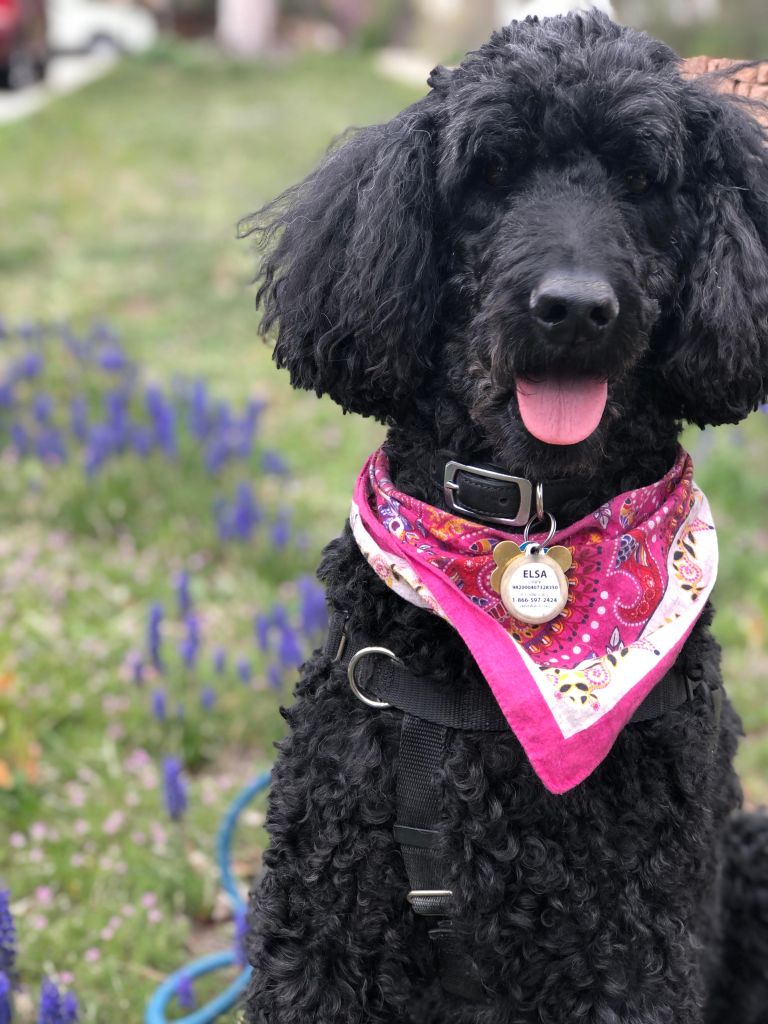
Puppy Mills…a topic that’s near and dear to my heart. Elsa, a Standard Poodle who probably lived 4 years or more in a mill, was rescued from a Northern Colorado puppy mill along with 8 other Standards (you can  read her story at the link). She was basically feral, shy but very sweet and curious and showed signs there was a lovely sweet companion beneath the matted filthy hair.

Recently I was given the opportunity to write a guest post for Paul at Learning from Dogs. Hold on to your hankies while I share some of the more disturbing facts uncovered from various sources. After much negative media coverage concerning large-scale dog dealers (i.e. breeders and brokers) failing to adequately monitor humane treatment for the animals under their care, the United States Department of Agriculture conducted an audit in 2010, some findings of which are noted below. Although Elsa was rescued through the local poodle rescue organization, I’m also featuring another group, the National Mill Dog Rescue group, headquartered in Colorado Springs, Colorado.

It is estimated there may be as many as 15,000 mills throughout the country, with a large number located in the heartland of the US. Simply put, puppy mills are dog breeding operations that put profit over the health and well-being of the dogs.

They can be a large or small operation, licensed by the USDA or unlicensed. It should be noted that in order to sell to a pet store, a breeder must be licensed, though many violate that requirement. According to the USDA, breeders…breed and raise animals on the premises whereas brokers negotiate or arrange for the purchase, sale or transport of animals in commerce. Puppy mills may house anywhere from hundreds to thousands of dogs, however smaller does not necessarily mean better.

Elsa was rescued from a very small mill with the same horrific conditions as the large ones. Puppy mills are everywhere, but a large concentration is located in the Midwest. Missouri has the largest number of puppy mills in the United States. Amish and Mennonite communities (particularly in Ohio, Indiana, and Pennsylvania) also run a large number of puppy mills.

Breeding parents spend their lives in 24-hour confinement in cages often stacked on top of each other. Protection from heat, cold, or inclement weather is rare and dogs live in filthy, unsanitary conditions receiving little or no veterinary care (some puppy mill owners often provide veterinary care without anesthesia or vet training). Female dogs are bred every heat cycle and are killed (or offered at auction) when they can no longer produce litters. Puppies are often taken from their mothers too young and can develop serious health or behavioral issues due to the conditions in which they are bred and shipped. Genetic diseases often result from the over-breeding. The bottom line is that puppy mills are all about profits. Any money spent on veterinary care, quality food, shelter, or staff to care for the dogs cuts into the profit margin.

Where are puppy mill puppies sold? Two primary sales outlets for puppies bred in  mills are pet stores, and the Internet. Nearly all puppies sold at pet stores come from puppy mills. Pet stores are the primary sales outlet for puppy mills and are essential for keeping puppy mills in business. Both licensed and unlicensed mills sell to pet stores with many mills selling to pet stores without the required license and not held accountable. Puppies are bred in mills and then shipped all over the country. Shipping conditions are inhumane. They can be forced to go up to 12 hours without food or water, and confined in a small space where diseases can be easily transmitted. Many puppies do not survive.

Background Info. In 1966, Congress passed Public Law 89-544, known as the Laboratory Animal Welfare Act, to regulate the humane care and handling of dogs, cats, and other laboratory animals. In 1970 the law was amended (Public Law 91-579), changing the name to Animal Welfare Act (with subsequent amendments passed in 1970, 1976, 1985, 1990, 2002, 2007, and 2008). In 2010 the USDA conducted an audit of the Animal and Plant Health Inspection Service’s (APHIS) Animal Care unit (AC) who are responsible for enforcing the act (the “Audit)”. Data cited is compiled from that Audit.

Inspections Conducted in FYs 2006-2008

Years

2006

2007

2008

No. of Inspectors

99

101

99

No. of Inspections*

17,978

16,542

15,722

Average Inspections Per Inspector

182

164

159

* These numbers include inspections on all licensees (i.e., dealers and exhibitors) and registrants (i.e., research facilities) under AWA.
ooOOoo
Tomorrow I will publish Part Two of Puppy Mills.

Protect dogs in this hot weather.

It’s all too easy to forget that a dog can’t cope with hot weather.

As in too hot. Especially in a car!

I want to republish a post that appeared on The Dodo blog site recently. It is about a dog trapped in a car when it was far too hot.

ooOOoo

Guy Sees Puppy In Hot Car And Realizes What He Has To Do

Photo Credit: Jason Minson

Jason Minson, an Army veteran who runs a landscaping business, was out on a job in Norfolk, Virginia, on Tuesday when the first of several unusual things happened.

Minson was inspecting a tree in a yard when he heard a bang on the street.

When he went to check, he realized that a car driving by had bumped another car parked on the street. If that hadn’t happened, Minson probably never would have approached the parked car and discovered what was inside.

A black Labrador puppy was sprawled out on the floor of the vehicle — the noise and shudder seemed to have woken him up for a moment.

And he was incessantly panting.

“It was the kind of panting that was the last effort a dog does to try to cool himself off,” Minson told The Dodo.

Photo Credit: Jason Minson

Minson immediately called 911.

The police dispatched a unit to come help the dog — but they also informed Minson that breaking the window of the car to free the dog is a crime. (The law varies depending where you are.)

Minson watched the panting puppy from behind the pane of glass. He brought one bottle of water to the sliver of opened window and the dog jumped up on the seat and started drinking from it.

The dog went through the whole bottle. And then another.

“I’m usually a pretty cool, level-headed person but I was kind of fed up,” Minson said.

Photo Credit: Jason Minson

An animal control officer arrived and she started to try to pry the door open, but it wasn’t working. And nearly 20 minutes had passed since Minson had found the dog — and he was worried they were already out of time.

“The dog had laid back down on the floor of the car and wasn’t panting as quickly,” Minson said.

“I honestly didn’t think this pup was going to make it,” Minson wrote.

That’s when he took matters into his own hands.

“Charge me,” he can be heard saying in one of the videos he shot, “I don’t give a sh*t at this point.”

Using the baton from the animal control officer, Minson smashed the window and opened the door.

The animal control officer rushed the dog over to her van and took him to the vet for urgent care. And the owner of the dog was charged by the police. Minson received a call from the police, too — but to be a witness at the hearing about the incident.

The following day, Minson went to visit the pup at the facility where he’s recovering. Already, the dog seemed to be much stronger.

Photo Credit: Jason Minson

Minson, who has a Great Dane, hopes that if someone saw his dog in trouble in any way that they would do something about it.

“This is REAL talk people,” Minson wrote on Facebook after the dog was saved. “It’s hot out and if you leave an animal in your car [he’s] going to die from the heat … Take care of your fur babies.”

ooOOoo

I can’t think of a more dramatic way of telling you about the perils of dogs in cars in hot weather!

It really does kill dogs!

Saving a bald eagle.

This has nothing to do with dogs but it’s a beautiful story none the less!

I follow the Daily Dodo as it most frequently relays lovely stories about dogs.

But not always.

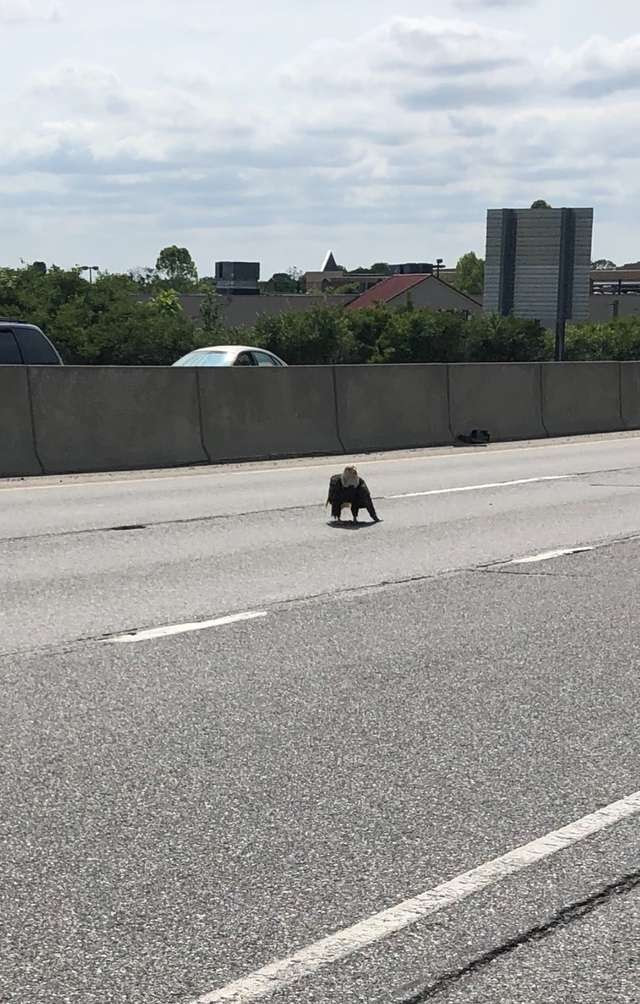
On the 28th May Lily Feinn wrote about the way that dozens of motorists avoided a bald eagle on the freeway and one in a particular, Dandon Miller, a motorcyclist, did much more than that. He saved her!

ooOOoo

Guy Sees A Bald Eagle Caught In Traffic — And Saves Her Life

“It was just amazing to hold that bird and for her to be calm like that.”
BY
PUBLISHED ON 05/28/2019

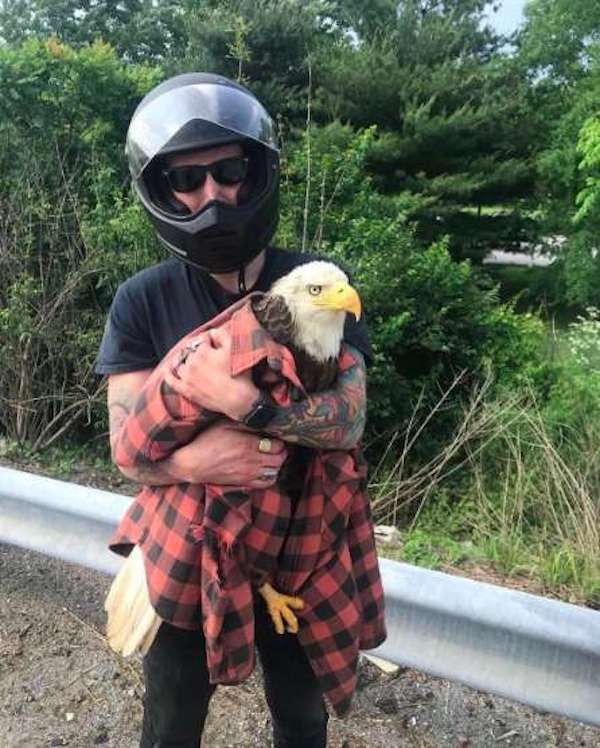
Dandon Miller’s favorite piece of clothing is a red and black flannel. He’s had the shirt for eight years and wears it all the time — but he never thought it would one day come in handy when saving a life.

On Saturday of Memorial Day weekend, Miller was on his way home from Philadelphia when traffic slowed in front of him. Miller pulled his motorcycle off to the side of the two-way highway and was shocked when he realized what was causing the traffic jam.

“I looked down to see why everyone was stopping and there was a bald eagle in the middle of the road,” Miller told The Dodo. “Another person was there and they kind of nudged her a little bit to see if she would walk off the road or fly away. She spread her wings open and was not going to go anywhere.”

Dandon Miller

An avid animal lover, Miller knew he had to help the injured bird get out of harm’s way.

The large animal was too hurt to fly, but her powerful talons were reason enough for Miller to take off his favorite flannel and throw it over her. To Miller’s surprise, the eagle remained sedate as he wrapped her in the shirt.

“I picked her up and she was very calm,” Miller said. “She got a little worked up when people started wanting to take pictures, but we were able to get that under control.”

Dandon Miller

Once Miller moved the eagle out of the road, he called 911 and eventually got in touch with Tri-State Bird Rescue and Research, a local rehabilitation center for wild birds. Miller held the 15-pound bird for about 45 minutes while waiting for rescue staffers to arrive. But the time seemed to pass quickly.

Dandon Miller

“I wasn’t really thinking about it when I was holding her,” Miller said. “I was just trying to keep her calm and make sure she knows she’s secure, and I wasn’t going to drop her or anything.”

“It was just amazing to hold that bird and for her to be calm like that,” Miller added. “Just amazing.”

Dandon Miller

After a few days of treatment, the rescue is confident that the bald eagle will eventually be able to be released into the wild.

“She had a mild injury to one eye and soft tissue injuries, but no broken bones,” Rebecca Stansell with Tri-State Bird Rescue and Research told The Dodo. “Her wounds were treated by our wildlife veterinarian while the eagle was under anesthesia. The unexpected can always happen, but we are optimistic that she will make a full recovery.”

As for Miller’s favorite flannel, it has certainly seen better days.

The shirt now has a few large talon holes in it, but Miller knows it was for the best cause — and he will definitely be wearing it again.

To help the bald eagle get the care she needs, you can make a donation to Tri-State Bird Rescue and Research.

ooOOoo

I can’t really imagine what it felt like to hold that eagle in your arms for 45 minutes. Especially with all the traffic rushing past. But for sure it felt more than amazing. A beautiful wild eagle!

One can’t have too many opportunities to meld with the natural world.

Wonderful story!

Saturday smile!

A delightful story of one man’s bravery for another – dog!

This was published on The Daily Dodo a week ago and really does need retelling.

It shows how much we love our dogs.

ooOOoo

Man Jumps Into An NYC River To Save A Drowning Dog

Photo Credit: Erin O’Donnell

Ever since she was adopted from North Shore Animal League in March 2017, Harper has been absolutely head over heels for her mom, Erin O’Donnell, but is definitely a little nervous in new situations and can take some time to warm up to new people.

“She is a sweetheart but very anxious outside and around strangers,” O’Donnell told The Dodo.

On Saturday, O’Donnell was performing with the Brooklyn Irish Dance Company in Manhattan and left Harper in Brooklyn with friends and a trusted dog walker. Harper and her dog walker were out taking a stroll when a cab recklessly ran a stop sign and hit both the dog walker and Harper.

Both were OK and only sustained minor injuries, but poor Harper was so scared and shaken up that she ran and ran and ran — until she reached the East River, and jumped right in.

Still in a panic, Harper swam with determination and ferocity, and while at first onlookers thought she was just a dog with an owner nearby going for a swim, they soon realized that wasn’t the case at all.

“I was at the Brooklyn Barge celebrating my B’day when we saw a dog ‘going for a swim,’” Gabe Castellanos wrote in a post on Instagram. “The day grew hot and we all figured a nice swim could do us all a service. We assumed the owner was on shore keeping a watchful eye until a patron ran up to the north side of the Barge with a panicked voice saying that the dog, Harper, had run away.”

Photo Credit: Lorenzo Fonda

It was around that time that everyone began to notice Harper losing speed. The river was incredibly cold, and with the amount of energy Harper was exerting in her panicked state, it was likely that she wouldn’t be able to keep herself afloat for very much longer. This fact settled in for Castellanos, and he immediately knew he had to do something about it.

Castellanos happens to be a graduate of SUNY Maritime College and has extensive water survival skills knowledge — and so he decided he was going in.

“Since there was no sign of her making an attempt to swim back to shore, I knew something had to be done,” Castellanos told The Dodo. “I looked on the barge for any type of floating device to use if I were to jump from the end, but then I noticed there was a life vest, so I grabbed it.”

At this point, a crowd of about 300 people had gathered, invested in Harper and her well-being, and as soon as everyone realized what Castellanos was about to do, they all broke out into cheers of encouragement. Lorenzo Fonda, a Brooklyn-based filmmaker and artist, was hanging out at the Brooklyn Barge when he suddenly realized what was happening, and quickly began recording the entire ordeal.

Photo Credit: Lorenzo Fonda

Knowing the water was going to be cold and the conditions less than ideal, Castellanos strategized quickly with those around him as he prepared to jump into the water. He stripped down to his underwear, climbed over the rails, and then lowered himself as close to the water as he possibly could before letting go and diving in.

“There was a grand cheer when I entered the water,” Castellanos said. “After that, I was no longer focused on the crowds and my surroundings but focused on my breathing and swimming over to Harper. The crowds went mute during my swim. I’m sure they were still cheering, but I could not hear anything other than the water.”

Harper was still swimming at a steady pace, and Castellanos had to work hard to catch up with her. As soon as she realized someone was swimming towards her, she became even more panicked and tried as hard as she could to swim away from him.

Castellanos was persistent, though, and even though Harper struggled and lashed out a bit out of fear when he finally reached her, he stayed calm and determined and was finally able to secure her.

Cheers erupted from all over when Castellanos finally had Harper safely in his arms, and the pair quickly returned to shore. Both were exhausted and needed medical attention to make sure everything was OK, but luckily they were both completely fine, and are now recovering at their respective homes.

Photo Credit: Lorenzo Fonda

O’Donnell was in the middle of a performance when all of this occurred, and didn’t find out until later about Harper’s river adventure and the man who saved her life.

“Her paws are in rough shape, so she will need some trendy boots for a few weeks, but otherwise she’s in great spirits,” O’Donnell said. “It is definitely so refreshing to see the positive responses from people at the Brooklyn Barge and on social media expressing their sympathy for Harper and praising Gabe, who definitely saved the day.”

As an innocent onlooker that day, Castellanos didn’t have to do anything to help. He could have just sat by and watched and let someone else handle it, but instead he took a leap of faith and ended up saving Harper’s life, making him a true hero.

ooOOoo

I take my hat off to Gabe Castellanos. It’s something that 99.9% of us wouldn’t do yet Gabe didn’t think twice. OK, he had specific training but still there was a degree of risk. But he took it!

So well done, Mr. Gabe Castellanos!

Back to Coyotes!

Hunting, and not for food!

We hate hunting. Period.

It’s sort of alright when the person needs to hunt to stay alive. But in the Western world the incidence of that is pretty remote.

So when author Jim wrote about coyotes and hunting I had to share it with you (and, for the record, both Jean and I are atheists).  Published with Jim’s permission.

ooOOoo

The Incredible Coyote and Western Morality

How killing for fun is not only a Christian Right, but a value

By Jim, August 5th 2018.

Christian vulgarity has reigned it’s bullets down on the North American coyote for over 100 years. The longest standing extermination order in history has killed millions of coyotes and continues its bounty program in most states. Competitive hunts sponsored throughout the nation each year with cash prizes and trophies instill to our kids the right obligation to kill for fun.

“One morning in the late 1930s, the biologist Adolph Murie stood near a game trail in Yellowstone National Park and watched a passing coyote joyously toss a sprig of sagebrush in the air with its mouth, adroitly catch it, and repeat the act every few yards. At the time, Mr. Murie was conducting a federal study intended to prove, definitively, that the coyote was “the archpredator of our time.” But Mr. Murie, whose work ultimately exonerated the animals, was more impressed by that sprig-tossing — proof, he believed, of the joy a wild coyote took in being alive in the world” (1)

The majority of politicians have failed to address this with any passion, and being the good, high moral standard western value Christians that they are, continue the killing spree. A useless torture that drives the coyote without mercy and without effect. “Under persecution, the biologists argued, evolved colonizing mechanisms kicked in for coyotes. They have larger litters. If alpha females die, beta females breed. Pressured, they engage an adaptation called fission-fusion, with packs breaking up and pairs and individuals scattering to the winds and colonizing new areas. In full colonization mode, the scientists found, coyotes could withstand as much as a 70 percent yearly kill rate without suffering any decline in their total population”.

Hunters have their ultimate victim to hunt—one that can outbreed the continued onslaught. How fun is it? While the coyote is hunted for sport, they die in earnest. Leave them to experience their joy, and populations will mitigate in their own necessary way.

Christian values and morals once again are superior delayed in common decency and way off the mark—unless your talking killing for sport.

ooOOoo

I want to add a couple of comments that were left on the post:

Not many christians are bothered by this. Why should they, when you hear them quote from their holy book, that god commanded them to subdue the earth.

It is for this very reason that many christians are nonchalant when we talk about climate change

oooo

The price paid for pointlessly killing predators is a dear one. Moreover, all needless killing of animals is wrong, says the immoral, convinced atheist.

oooo

(to which Jim replied)

Part of the doctrine is to subdue and have dominion. To hell with inferior, soulless life. The ripple effect of what was once naturally flowing is tragic and painful.

Enough said!

How much time do we have left?

A post from Patrice Ayme.

I have subscribed to Patrice Ayme for some time now. I don’t know who he is because he writes under a pseudonym, or a nom-de-plume. (And, indeed, I may have the gender incorrect but I’m pretty sure it’s a male.)

Patrice writes frequently and doesn’t mince his words.

But then he writes about really serious matters and often has criticism for the ‘ruling classes’.

Such as he has in the post that was published on the 6th May. I left a comment:

It’s extremely worrying and not something that can be put off. The clock is at 5 minutes to midnight. In Britain Extreme Resistance are pursuing a campaign that may just produce a political outcome. And, indeed, the English Government have come up with goals to combat climate change.

So keep banging your drum, Patrice, and hope that urgent action across the world isn’t too far away.

To which Patrice replied:

Dear Paul:
thanks! Here I am fighting with my daughter’s school, which has decided to install artificial, plastic grass. It’s horrendous for the environment, and it endangers the lives of children (in many ways, including a disease called “SUBEROSIS” caused by organic cork.) Here real ecologist take it hard, and have started to burn artificial plastic flame retardant fields: 13,000 were recently installed in the USA, a proof of mass corruption…
Feel free to use my essay on your site, BTW, of course…
And thanks again…
P

Now I hadn’t heard of Suberosis before, but no problem, a quick web search brought up Wikipedia and this:

Suberosis is a type of hypersensitivity pneumonitis usually caused by the fungus Penicillium glabrum (formerly called Penicillum frequentans) from exposure to moldy cork dust.[1][2] Chrysonilia sitophilia, Aspergillus fumigatus, uncontaminated cork dust, and Mucor macedo may also have significant roles in the pathogenesis of the disease.[1]

Cause

Cork is often harvested from the cork oak (Quercus suber) and stored in slabs in a hot and humid environment until covered in mold.[1] Cork workers may be exposed to organic dusts in this process, leading to this disease.[1]

I don’t fully understand how the laying of artificial grass leads to possible Suberosis.

But I have decided to republish even though it has nothing to do with dogs! (Well, not directly.)

ooOOoo

Nature Collapsing, Plutocracy Thriving

Both phenomena are related. The more nature collapses, the more plutocracy thrives (see the multi-centennial fall of Rome, for reference). Small people and other losers have no interest to see nature collapse. However, plutocracy does. Because Pluto-Kratia, Evil-Power, is best expressed and justified during war-like states, and civilizational collapse sure qualifies.

Plutocracy survived the collapse of the Roman and Carolingian empires with flying colors. In the Roman case, most noble families had a bishop in their midst. The collapse of the Renovated Empire of the Romans (Renovatio Imperii Romanorum) and its renewal by the Ottos and Capets brought the feudal order, another plutocratic success.

Now is no different: we have a terminal CO2 crisis bringing in extreme, sudden temperature, acidification and ocean rises: 1% of US CO2 is from state subsidized private jets. Nobody notices, because media have made sure to create entire generations just preoccupied by celebrities, not by what is going on, which is really most significant.

Nor has the media been keen to notice the likes of Biden annihilated the Banking Act of 1933, in the 1990s, bringing in the age of the financial plutocracy… itself a heavy financier of fossil fuels. So all what some schools are thinking of is installing “Apps”, and plastic grass, instead of teaching sustainable global citizenship. We are cruising towards an apocalypse, at an increasing pace: the Sixth Mass Extinction. The United Nations just came up (May 6, 2019) with an analysis made by 132 countries and 455 scientists: one million species are disappearing. For example, nearly all amphibians.

https://www.cnn.com/2019/05/06/world/one-million-species-threatened-extinction-humans-scn-intl/index.html
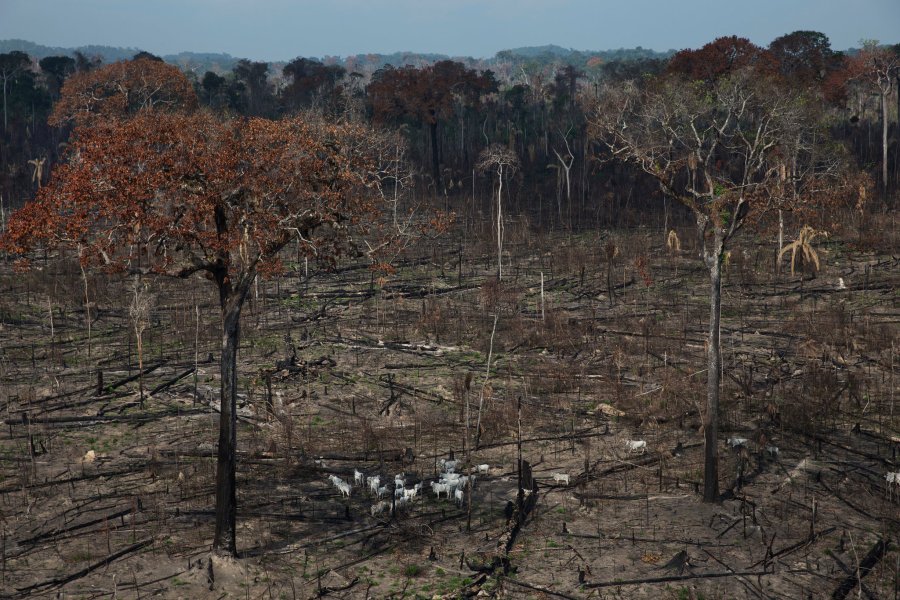
One problem with burning forests in the tropics is that what is left are often extremely poor soils (differently from northern European soils, which are very forgiving, explaining in great part why north west Europe replaced the Greco-Roman world…) Cattle grazing on a tract of illegally cleared Amazon forest in Pará State, Brazil. In most major land habitats, the average abundance of native plant and animal life has fallen by 20 percent or more, mainly over the past century,,, [Credit Lalo de Almeida for The New York Times]

In Africa, burned forest is often replaced by lateritis, a soil which is red, baked, hard… for the good reason that it is full of Aluminum.

It is the Sixth Mass Extinction, but this time the dinosaurs have thermonuclear weapons.

What to do? Get involved, get aware, protest. Protests can become unbearable to the powers that be.

This is the way the fascist government of Brunei on the island of Borneo was just dealt with. It drew powerful international condemnation when it rolled out its interpretation of sharia laws on April 3. Now, the Sultan of Brunei, Hassanal Bolkiah, reverted his decision: after all, the country won’t enforce Islamic laws that include stoning to death for rape, adultery and gay sex.

Killing all the people who got killed in World War Two was atrocious. However, what is now unfolding has the potential to be way way worse. Einstein said he didn’t know which weapons will be used to fight World War Three, but next it would be sticks and stones. That was naively optimistic. If we acidify further the ocean with acid from CO2, we may kill the Earth’s oxygen making mechanism. Not really news, as this was clear five years ago already:

https://patriceayme.wordpress.com/2014/05/30/global-hypoxia/ 

Many behave as if there will be no tomorrow, because they feel that way! It’s a self-fulfilling prophecy, it has to be resisted.

What’s needed, beyond recording what’s going on, is interpreting it, going beyond, building ideas, and moods meant to last. Only deeper thinking can do this, and ensure a planet capable of lasting. Because we are not at the regional level anymore. When climate change, plus nefarious human impact, forced the Harappan civilization to abandon its homeland, the Indus valley, it was dealing with forces it had no idea existed. Maybe there are such forces out there. But there are also plenty of forces we can see, and which are plenty lethal enough, at civilizational scale, and the scale of the entire biosphere. Stop. And think. One million species are marching towards extinction, among the plants and animals we know.

Patrice Ayme

***

***

From NYT:

WASHINGTON — Humans are transforming Earth’s natural landscapes so dramatically that as many as one million plant and animal species are now at risk of extinction, posing a dire threat to ecosystems that people all over the world depend on for their survival, a sweeping new United Nations assessment has concluded.

The 1,500-page report, compiled by hundreds of international experts and based on thousands of scientific studies, is the most exhaustive look yet at the decline in biodiversity across the globe and the dangers that creates for human civilization. A summary of its findings, which was approved by representatives from the United States and 131 other countries, was released Monday [May 6, 2019] in Paris. The full report is set to be published this year.

Its conclusions are stark. In most major land habitats, from the savannas of Africa to the rain forests of South America, the average abundance of native plant and animal life has fallen by 20 percent or more, mainly over the past century. With the human population passing 7 billion, activities like farming, logging, poaching, fishing and mining are altering the natural world at a rate “unprecedented in human history.”

At the same time, a new threat has emerged: Global warming has become a major driver of wildlife decline, the assessment found, by shifting or shrinking the local climates that many mammals, birds, insects, fish and plants evolved to survive in. When combined with the other ways humans are damaging the environment, climate change is now pushing a growing number of species, such as the Bengal tiger, closer to extinction.

As a result, biodiversity loss is projected to accelerate through 2050, particularly in the tropics, unless countries drastically step up their conservation efforts.

ooOOoo

I’m in the autumn of my life and may not live to see the consequences of what we are doing to Nature and to the Planet.

Then again, if some of the predictions bear true, I won’t have to live an awful lot longer to experience real change.

It’s time for a complete re-analysis of our relationship with the natural world.

Eleven dogs all perfectly composed!

Taking their family portrait!

Our six dogs are such a beautiful family that it’s hard to imagine that we once had eleven dogs; actually more than that.

But our six still aren’t as well behaved as the eleven dogs in The Dodo article.

ooOOoo

Whole Pack Of Dogs Sits Perfectly Still For Their Family Portrait

Their foster mom is truly a dog whisperer.
BY

PUBLISHED ON 04/24/2019

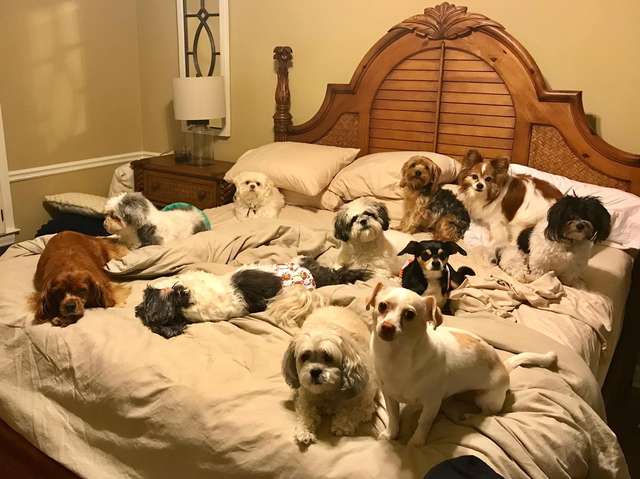
Anyone who has ever tried to convince even one dog to sit still for a photo knows just how difficult it can be — but one woman has managed to do the impossible with — wait for it — 11 dogs.

Melissa Lentz

Melissa Lentz, who fosters dogs through Releash Atlanta, told The Dodo in a rundown about who is in this photo.

“Top from left: Mia, Pancake, Paxton,” Lentz said. “Bottom from left: Benji, Gizmo, Alex, Penny, Donny, Lula, Monroe and Rudy.”

Lentz added that seven of the depicted dogs are fosters waiting for homes, while “Gizmo, Donny, Monroe and Rudy are mine,” she said.

Even more remarkable, perhaps, is the fact that that perfect portrait is far from a one-time fluke.

Melissa Lentz

“I have tons of these photos,” Lentz said.

Melissa Lentz

Sometimes, Lentz even manages to join the pack for that perfect shot.

But how does she get such perfect family portraits — something that’s hard enough even for humans?

Melissa Lentz

Lentz’s secret seems to have to do with the particular relationships she forms with the dogs. One can almost see the bond reflected in the way the dogs look at her as she’s snapping the photos.

Melissa Lentz

“I literally just put them on the couch one by one and they situate themselves!” Lentz said. “I don’t use food [or] treats or anything. I just tell them to look at me.”

Melissa Lentz

Boonrod has a home!

Good news to our earlier story.

On April 30th I published a story that had been on the BBC News website about a dog that had been rescued from the sea some 200+ kilometres from the Thai coast.

It drew a fair amount of replies.

Then Margaret from Tasmania left a reply that contained the link to an article in the Bangkok Post. It was very good news!

ooOOoo

Rescue dog heads to new home in Khon Kaen

29 Apr 2019

WRITER: GARY BOYLE

ORIGINAL SOURCE/WRITER: ASSAWIN PAKKAWAN

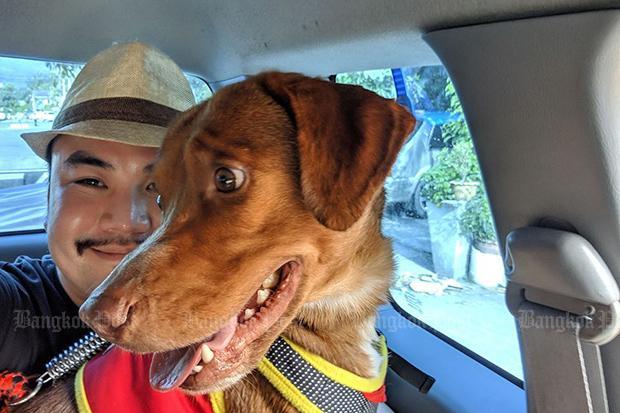
Vitisak Payalaw sits behind Boonrod, the dog he helped rescue from the ocean, as he prepares to take him from a shelter in Hat Yai district, Songkhla, to his home in Khon Kaen on Saturday. (Photo from Boonrod Facebook account)

Seafaring dog Boonrod is heading to a new life in Khon Kaen with his new owner — one of the oil rig workers who rescued him from the ocean in a story that captured international attention.

“We’re leaving,” owner Vitisak Payalaw posted in a message on the Boonrod Facebook page on Saturday evening.

Mr Vitisak, an planner of Chevron Thailand Exploration and Production, met Boonrod — in Thai — on Saturday for the first time since the team found him to an oil platform in the Gulf of Thailand about 220km from the shore in Songkhla on April 12.

How Boonrod got there remains a mystery, but it is believed that he must have fallen off a trawler. After helping rescue the deepwater dog, Mr Vitisak offered to be his new owner.

The exhausted animal was brought ashore on April 15 and lodged at Dog Smile House, a shelter in Hat Yai district of the southern province, with financial support from the US oil firm and Watchdog Thailand, a non-profit group.

Boonrod appeared delighted to see Mr Vitisak and the other members of the oil rig team who rescued him.

Mr Vitisak said he was taking annual leave from his work at the oil platform to transport the dog to his home in Khon Kaen, almost 1,500km from Hat Yai. The house in the northeastern province has been prepared to accomodate a new resident, the Chevron employee added.

Mr Vitisak asked for privacy and requested that well-wishers not visit his new pet at his parents’ home in Khon Kaen. But fans are welcome to greet Boonrod when he walks the dog, he added.

He also encouraged other animal lovers to adopt pets if they can.

The story of Boonrod was carried by global news agencies, including CNN. He can be followed on his Facebook page.

ooOOoo

We love stories like that!

Good luck to Boonrod and to his new friends.