Category: Animal rescue

The Dog Food Advisor.

A good summary of all that matters.

The Dog and Cat Food update was announced two days ago.

In the covering email they said:

Dear Fellow Dog Lover,

You’re getting this email because you signed up on our website and asked to be notified. If you no longer wish to receive these emails, please click the “unsubscribe” link at the bottom of this message.

Bravo Packing of Carney’s Point, NJ, is expanding its recall to now include multiple dog and cat food products due to possible contamination with Salmonella and Listeria bacteria.

For full details, please visit the following link: Bravo Packing Expands Dog and Cat Food Recall

Best Dog Food for March 2021

The Dog Food Advisor has recently updated the following best dog food pages:

  • Best Dry Dog Foods
  • Best Puppy Foods
  • Best Large Breed Puppy Foods
  • Best Dog Foods for Small Dogs
  • Best Dog Food for Allergies
  • Best Grain-Free Dog Foods
  • Best Dog Foods Made with Grain
  • Best Budget-Friendly Dog Foods
  • Best Dog Food for Specific Breeds
  • Best Senior Dog Foods

Click here to see our Best Dog Foods for March 2021

Please be sure to share this news with other dog and cat owners.

Mike Sagman, Editor
The Dog Food Advisor
Saving Good Dogs From Bad Dog Food

Now onto the Bravo Packing recall.

ooOOoo

Bravo Packing Expands Dog and Cat Food Recall

March 16, 2021 — Bravo Packing, Inc., of Carneys Point, New Jersey, is expandingits previously announced voluntary recall of two pet food products to now include all pet food and bones in all package sizes… because they may be contaminated with disease-causing bacteria.

During an FDA inspection, samples collected tested positive for Salmonella and Listeria monocytogenes and resulted in a recall due to the potential health risks to humans and pets.

See The Dog Food Advisor’s previous announcement here.

What’s Recalled?

Bravo Packing, Inc. is expanding the recall due to potential cross contamination of the following dog and cat food products.

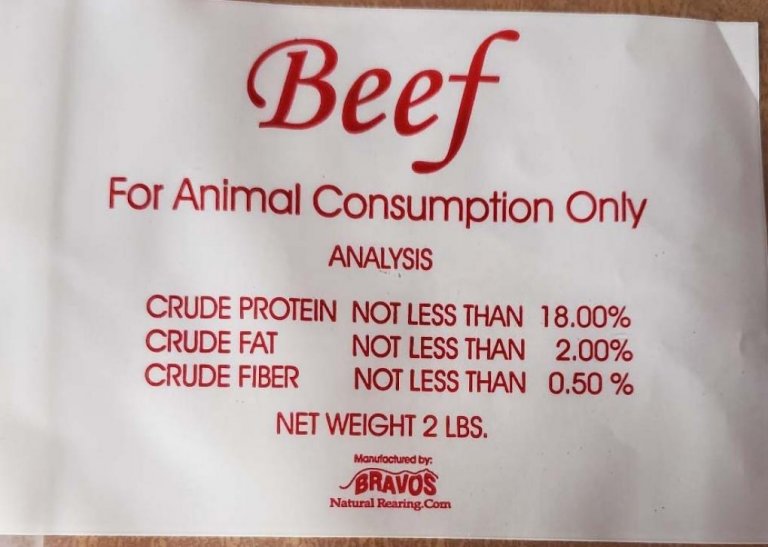
Label Images of Recalled Products

The following label images are included in the FDA bulletin. No other photographs were provided by the company.

About Salmonella

Salmonella can cause illness in pets eating the products, as well as people who handle contaminated pet food products, especially if they have not thoroughly washed their hands after having contact with the products, infected pets, or any surfaces exposed to these products.

People infected with Salmonella should monitor themselves for some or all of the following symptoms: nausea, vomiting, diarrhea or bloody diarrhea, abdominal cramping, and fever.

Rarely, Salmonella can result in more serious ailments, including arterial infections, endocarditis (an infection of the heart muscle), arthritis, muscle pain, eye irritation, and urinary tract symptoms.

People who have these symptoms after having contact with the products identified in this recall or with a pet that has eaten these products should contact their healthcare providers.

A pet with a Salmonella infection may be lethargic and have diarrhea or bloody diarrhea, fever, and vomiting.

Some pets will have decreased appetite, fever, and abdominal pain.

If your pet has consumed the recalled products and has these symptoms, please contact your veterinarian.

Pets exposed to contaminated food can be infected without showing symptoms.

Infected pets, including those without symptoms, can also shed Salmonella through their feces and saliva, spreading pathogens into the home environment and to humans and other animals nearby.

Listeria monocytogenes is an organism which can cause serious and sometimes fatal infections in young children, frail or elderly people, and others with weakened immune systems.

Although healthy individuals may suffer only short-term symptoms such as high fever, severe headache, stiffness, nausea, abdominal pain, and diarrhea, Listeria monocytogenes infection can cause miscarriages and stillbirths among pregnant women.

No human or animal illnesses related to the identified products have been reported to date.

Where Were the Products Sold?

Bravo Packing Inc. generally works with distributors that fill orders to retail storesand to consumers directly nationwide.

What to Do?

Consumers with any of the affected products should handle them with caution, discard products in a secure container, and wash hands and surfaces properly.

Consumers with questions should contact Bravo Packing, Inc. at 856-299-1044 (Monday through Friday, 9:00 am to 2:00 pm, ET).

U.S. citizens can report complaints about FDA-regulated pet food products by calling the consumer complaint coordinator in your area.

Or go to the FDA’s “Report a Pet Food Complaint” page.

Canadians can report any health or safety incidents related to the use of this product by filling out the Consumer Product Incident Report Form.

Get Lifesaving Recall Alerts by Email

Get free dog food recall alerts sent to you by email. Subscribe to The Dog Food Advisor’s emergency recall notification system.
There’s no cost. No spam ever. Cancel any time.

ooOOoo

As always, please share this around as much as you can.

Because even just one dog owner being informed of this Dog Food Recall makes it all worthwhile.

What’s a stray dog need? Food and caring!

Another international story of love and caring for our dogs.

This time about homeless or stray dogs and in Peru. Again it was written by Stephen Messenger and was shared on The Dodo website. Again it is about the fundamental goodness that is in a great many humans spanning continents.

ooOOoo

Nice Restaurant Owner Prepares A Free Meal For Every Stray Dog Who Visits

“They pay us with their happiness and wagging tails” ❤️
By Stephen Messenger
Published on the 26th February, 2021

One evening five years ago, an unexpected customer dropped by Gerardo Ortiz’s restaurant, Ajilalo, in Peru. It was a stray dog, a look of hunger in her eyes.

Ortiz could have easily turned the dog away. But he didn’t.

Restaurante – Ajilalo

That evening, Ortiz offered the dog a free meal, made just for her.

And thus began an adorable tradition that continues to this day.

Restaurante – Ajilalo

Each evening, from then on, the hungry dog came and received a free meal from Ortiz’s restaurant.

But it didn’t take long for word of Ortiz’s kindness and generosity to spread among the community of local stray pups.

More dogs began to arrive with that first visitor— and Ortiz welcomed them all with a meal.

Restaurante – Ajilalo

Nowadays, numerous stray dogs arrive to the doors of Ortiz’s restaurant each night. Many are regular “customers,” while others are first-timers — all hoping to fill their bellies thanks to Ortiz’s kindness.

Restaurante – Ajilalo

Often, as Ortiz is working, he’ll look up and see a new dog’s face at the front — waiting politely to see if the rumor that free food can found there is true.

It always is.

Restaurante – Ajilalo

“For me, they are the best customers,” Ortiz told The Dodo.

And his human customers hardly take that as a slight. Inspired by Ortiz, they often bring food for the visiting dogs as well.

Restaurante – Ajilalo

“Thankfully, our clients have reacted well to the dogs,” Ortiz said. “They are affectionate toward them.”

Restaurante – Ajilalo

Ultimately, Ortiz’s sweet routine of feeding all the stray dogs who visit does more than keep them from being hungry. It lets them know that their lives matter — a truth that Ortiz is happy to prove to them each and every day.

Restaurante – Ajilalo

“They do not pay us with money, but they pay us with their happiness and wagging tails,” Ortiz said. “They are very grateful, and we enjoy giving more than receiving. Since I was a child, I have loved animals. My mother always taught us to help others, both people and animals. She’s my inspiration.”

ooOOoo

This is such a wonderful share. Snr Ortiz confirms what we know absolutely. That people who care for animals care for so much more. As Gerardo says: “It lets them know that their lives matter.

I am minded to remember when I first met Jean in December, 2007. Jean was living in San Carlos, Northern Mexico, and had been for many years. Her husband, Ben, had died in 2005.

Jean was rescuing street dogs off the streets of San Carlos and surrounding areas, caring for them, neutering or spaying them, and then finding homes for them mainly in Arizona, USA. Many, many dogs owed their lives to Jean’s love for those dogs. In 2010, after I had gone out to San Carlos with my Pharaoh to live with Jean and her dogs in 2008, we came North to Arizona to find a U.S. home and be married. We came through the Mexican-US border with 16 dogs, all of them with their paperwork in order. I will always recall the American border agent, after I had approached him with all the paperwork, leaning out of his booth and calling to the agent in the next booth: “Hey Jake, there’s a guy here with sixteen dogs!

Jean and I were married in Payson, AZ on the 20th November, 2010.

Mr and Mrs Handover

Very sweet memories and the start of a loving era in our lives.

Loving each other and loving our dogs!

Across the world people care for dogs!

This is a marvellous story from Turkey.

It is an account of how a young girl went to seek help for a dog.

It is on The Dodo website and just shows how the caring for a dog crosses all boundaries.

Yet this young girl is just one of millions, literally, who care for our precious dogs.

Here’s the story:

ooOOoo

Little Girl Trudges Through Heavy Snow To Get Help For Her Sick Dog

By Stephen Messenger
Published on 2/26/2021

“She’d wrapped her dog up and brought him to me on her back” ❤️

The other day, Ogün Öztürk was called to a small village in Turkey to attend to a client’s cow. He hadn’t planned on staying long.

But what began as just a routine visit ended as one Ogün won’t soon forget.

Ogün Öztürk

After wrapping up the job he’d come for, Ogün was about to leave the village. Before he did, however, something in the distance caught his eye.

There, trudging toward him on a path thick with snow, was a little girl. And she was not alone.

On her back was a pup.

Ogün Öztürk

Evidently, word had gotten around that a vet was in town — and that presented an opportunity which the girl, 8-year-old Cemre Su Türköz, refused to pass up.

Cemre’s dog, named Pamuk, had fallen sick. Desperate to get him help, she decided to carry Pamuk more than a mile from her home to the spot she’d heard that Ogün would be.

“When I first saw them, I was very surprised and touched,” Ogün told The Dodo. “She’d wrapped her dog up and brought him to me on her back.”

Ogün Öztürk

Ogün, of course, couldn’t turn Cemre and Pamuk away. While the little girl looked on, concerned, Ogün performed a checkup.

Fortunately, the dog’s sickness wasn’t all too serious. Ogün found Pamuk just had some minor skin issues that were making him uncomfortable, but which could easily be treated.

“When Cemre heard that her dog would be fine, she was very happy,” Ogün said. “I applied external parasite medications to Pamuk. He is now enjoying himself again, healthy and happily.”

Ogün Öztürk

The little girl and her dog had gotten help. But they also got a friend.

Ogün has been back to the village to check in on Cemre and Pamuk, ensuring that they never need to brave the snow again to get whatever help he can provide. It’s the least he could do, considering the effort she’d put in to find him.

“It made me very happy that an 8-year-old girl behaved in this way with such a loving heart,” Ogün said.

Ogün Öztürk

Ogün didn’t charge Cemre for his services that day. Just seeing her love and devotion to Pamuk was the best payment he could ask for.

“The fact that a person at such a young age exhibits this behavior gives hope to humanity,” Ogün said. “With all that’s going on in the world, there’s still hope. Cemre showed us that the only truth in the world is love.”

ooOOoo

Let me pick up on that last paragraph for it is so full of things that we know in our hearts are correct.

The first thing is that this eight-year-old girl, Cemre, knows what is right. To be honest, most young people of either gender more often than not know the right thing to do. Then Ogün was reported as saying: “With all that’s going on in the world …”. But there has always been so much going on. It is just that modern communications makes the world’s news to come in at us; wherever we are!

But the most important observation is that the only truth in the world is love!

Life is the flower for which love is the honey.”  Victor Hugo.

or

Love doesn’t make the world go round. Love is what makes the ride worthwhile.”  Franklin P. Jones

The above two quotes are just a fraction of what may be seen if one Googles love quotes!

Maybe there is a difference?

Between the genders!

I don’t think I had considered it before now, or rather at the end of January this year, that women across many cultures have an extra special relationship with dogs. It came from an article published in Treehugger on the 27th January and I hope it is alright to share it with you today.

ooOOoo

Why Women Have Had a Great Impact on Dog-Human Relationships

Dogs were more likely to be seen as a type of “person” when bonded with women.

By

Mary Jo DiLonardo

Throughout cultures, women often have closer relationships with dogs. GM Visuals / Getty Images

Sure, they’re called man’s best friend, but it’s women who likely had a bigger impact on the evolutionary relationship between dogs and their humans.

In a new analysis published in the Journal of Ethnobiology, researchers found that several factors probably played a part in creating the beneficial bonds between canines and people. One of those key factors, they found, is gender.

“Both men and women were important for the care and status of dogs across societies, but women had a stronger influence,” Robert Quinlan, Washington State University anthropology professor and corresponding author on the paper, tells Treehugger.

The researchers analyzed documents in the Human Relations Area Files, an anthropological database of collections covering cultural and social life. They sorted through thousands of mentions of dogs, ultimately finding data from 844 ethnographers (researchers who study human culture) writing in 144 societies.>They studied these cultures hoping to get insight into how the beneficial relationship between dogs and humans developed, the researchers said. They tracked traits associated with what they called dogs’ “personhood” across cultures.

“In some cultures, that idea is quite explicit: Dogs are defined as a type of ‘person,’ with human-like qualities. But it also can look like treating dogs in ‘person’-like ways — including giving dogs names, allowing to sleep in humans’ beds, viewing them as beings with souls, or burying and mourning them upon death,” Jaime Chambers, a WSU anthropology PhD student and first author on the paper, tells Treehugger.

They found accounts of the Toraja Indigenous People in Indonesia describing dogs as “equals,” the Sri Lankan Vedda referring to dogs as “four-footed persons,” and the Kapauku in Papua New Guinea calling dogs the only non-human animals with souls, Chambers says.

“We also tracked instances where ethnographers mentioned dogs having a special relationship to women, versus a relationship to men. When it came to dogs’ usefulness to humans, we didn’t detect either gender having more of an influence than the other,” Chambers says. “But in cultures where women and dogs shared a special bond, humans were more likely to be useful to dogs (providing things like affection, food, shelter, and healing) and to regard dogs as ‘person-like.’”

They found that in societies where men were observed interacting with dogs, the likelihood of dogs receiving care and other benefits from humans increased by 37%, and the likelihood that they were treated like people increased by 63%.

In contrast, in societies where dogs were observed interacting with women, the likelihood that they received care and other benefits from humans increased by 127%, and the likelihood that they were treated like people increased by 220%.

“The influence of men and women were additive so that in societies where dogs interacted with both men and women, their benefits and status were increased even more than in societies where dogs tended to interact with only men or only women,” Quinlan points out.

How Women Interact with Dogs

When sifting through the documents, researchers found examples of how women interacted differently with dogs than did men.

“We found women playing a notable role in welcoming dogs into the family sphere. Among the Munduruku from the Amazon and Tiwi from Australia, ethnographers describe women caring for dogs like their own children — literally allowing them to feed and sleep alongside their own human kids,” Chambers says.

“In some cultures, dogs serve as women’s companions in their daily work, such as Amazonian Tukano women who tend their gardens and hunt small game with their dog by their side. In Scandinavia, Saami women play a key role in controlling dogs’ breeding, keeping both male and female dogs and distributing the puppies to their human friends and relatives.”

But dogs aren’t revered everywhere.

“Among the Rwala Bedouin, there’s ambivalence around dogs — they’re seen as an unclean, polluting source, forbidden from eating from cooking vessels — yet they’re still valued as watchdogs and kept close to particular households via women (who sleep near them at night, and feed them via tossed scraps),” Chambers says.

Heat and Hunting

Gender isn’t the only thing that appears to have played a role in the coevolution of dogs and humans. Researchers also found that the warmer the climate, the less useful dogs were to people as hunting partners.

Humans evolved in tropical environments and are pretty good at keeping cool, Quinlan says. However, canine ancestors evolved in cold environments in northern latitudes.

“Dogs burn a lot of energy quickly when they are very active, like chasing prey and so forth, and that can make keeping cool a big problem. Anyone who has taken their dog for a run on a chilly day versus a hot day can easily see the difference,” Quinlan says.
“So, in hot environments dogs can overheat really quickly, making them less useful as hunting partners, herders, etc. ”There are some breeds in some hot environments that have better heat tolerance, yet those are the exceptions.”

Hunting also seemed to strengthen the ties between humans and dogs. In societies where people hunted with their dogs, the animals were more valued. That benefit appeared to decline when food production increased through agriculture or keeping livestock and dogs weren’t as necessary anymore.

Mutual Cooperation Theory

There have been many theories about how dog domestication happened. Some think that humans directly tamed the animals, while others think that people and dogs were mutually attracted to each other and discovered benefits from working together.

“We will never be able to precisely identify the chain of events and conditions leading to dog domestication, but shifting our emphasis like this allows us to rethink the relationship between humans and nature by moving away from a sense of complete human dominance to a kind of cooperation between humans and other beings where the other beings are on a more equal footing,” Quinlan says.

“A mutual cooperation scenario is probably more realistic, and it suggests that we all might benefit from thinking of humans as just one important player among many when we think about humans and the natural world. For us, this rethinking allowed us to approach dog-human relationships from multiple interrelated angles, and the insights we hoped to get from viewing the relationships from multiple angles was a big motivator for this research.”

ooOOoo

I don’t know about you but we found this a very interesting and fascinating theory.

I would love to say more but despite me being the publisher of this blog I am still an individual with lots to learn about dog domestication.

Almost the Ice Age again!

Just joking!

I was thinking yesterday morning that it was about time for me to publish a post.

Tuesday was a busy day with us in the morning going to collect the tractor from Runaway Tractors where it had been in for a service. Then in the afternoon I decided to go for a bike ride, something I try and do every other day. It was grand and I clocked up 18 miles.

The forecast for Wednesday was grim. And we awoke to a morning with much land covered in snow.

Looking to the North-East.

So my item that I wanted to republish from The Smithsonian Magazine seemed apt. It is about the history of dogs.

ooOOoo

How Dogs Migrated to America From Ice Age Siberia 15,000 Years Ago

Northern Siberians and ancestral native Americans may have traded pups at the time

By Elizabeth Gamillo
SMITHSONIANMAG.COM
FEBRUARY 1, 2021

All dogs with the genetic signature A2b descended from the same Siberian canines roughly 23,000 years ago (Jim Peaco; Photo has been cropped for article purposes by ZeWrestler, Public domain, via Wikimedia Commons)

Dogs have been companions to humans for many millennia, but exactly when this relationship started is highly debated among scientists.

A study published this week in the Proceedings of the National Academy of Sciences reveals that canine domestication may have first occurred in Siberia 23,000 years ago when humans and wolves were isolated together during the Last Glacial Maximum. After this initial domestication event, dogs most likely followed humans when they migrated across the Bering Land Bridge from East Asia to the Americas 15,000 years ago, reports Megan Marples for CNN.

“Wolves likely learned that scavenging from humans regularly was an easy free meal, while humans allowed this to happen so long as wolves were not aggressive or threatening,” Angela Perri, an archaeologist at Durham University and lead author of the study tells CNN.

The study was brought to fruition after Perri and her co-authors—David Meltzer, an archeologist at Southern Methodist University, and Gregor Larson, a scientist from Oxford University—were brainstorming how DNA evidence tells the story of migrating humans and dogs, reports James Gorman for the New York Times. After the authors scribbled down ideas on a whiteboard, they saw that both humans and canines had similar migration patterns and divergence that could explain how dogs and humans began their bond, reports the New York Times.

To see if the similarities between the timelines linked up with archeological evidence, Perri and her team analyzed the genome of 200 ancient dogs from around the world. They found that the canines had one genetic signature, A2b, in common. Once they reached the New World 15,000 years ago, they dispersed into four groups, reports David Grimm for Science.

The researchers found this dispersal matched a similar migration pattern of ancestral Native Americans that descended from Northern Siberia about 21,000 years ago. Connecting these timeline events between humans and dogs, the researchers concluded that humans must have brought dogs into the Americas somewhere around 15,000 years ago.

“Dogs are not going to go to the new world without people,” Meltzer tells the New York Times.

Further exploring the dogs’ genetic evidence, the team found all dogs with the genetic signature A2b descended from the same Siberian canines roughly 23,000 years ago, Science reports.

Looking back at human’s ancestral timeline and genetic evidence, the researchers found that ancient Northern Siberians intermingled with ancestral Native Americans before crossing the land bridge into the Americas. These meetings could have resulted in the two groups of people trading pups.

“People are exchanging information, they’re exchanging mates, they’re maybe exchanging their wolf pups,” Meltzer tells the New York Times.

While there is strong evidence that the initial domestication event occurred 23,000 years ago, the study relied only on mitochondrial DNA and could be missing the complete picture of domestication events, explains Pontus Skoglund, an ancient canine DNA expert from Crick Institute in London who was not involved in the study, to the New York Times. Likewise, Peter Savolainen, a geneticist at the Royal Institute of Technology, tells Science that the A2b signature has been found in other places in the world and is not unique to dogs in the Americas as the researchers suggested.

Still, the study reveals how the relationship between humans and dogs may have begun and how it may have dispersed across the globe. Perri and her team plan on looking at older dog fossils to gather more evidence.

“We have long known that the first Americans must have possessed well-honed hunting skills, the geological know-how to find stone and other necessary materials and been ready for new challenges,” Meltzer tells Peter Dockrill for Science Alert. “The dogs that accompanied them as they entered this completely new world may have been as much a part of their cultural repertoire as the stone tools they carried.”

ooOOoo

There is a huge number of dogs throughout the world. The exact figure is impossible to determine. Here’s an extract from WoofDog’s piece on the global population:

Determining the exact number of pups that inhabit our planet is a bit of a challenge. The fact that many of them live on their own, rather than side by side with people, presents the main obstacle to providing accurate figures.

According to 2012 data, there were around 525 million canines in the world. This figure has grown considerably until the present day, so today, it is estimated to be about 900 million pooches.

And from the same website, here is an estimate of the global population of owned dogs:

Statistics related to canine ownership vary across different countries. Nevertheless, the task of calculating the number of canines owned by people around the globe is far less complicated than it is the case with free-range ones.

The reason for this lies in the fact that many countries have introduced legal regulations on mandatory registration of household animals.

My analysis is that the USA is second in the league of owned dogs.

But wherever there are dogs they are a rich and bountiful addition to the ambitions of humans.

There’s no substitute to rescuing a dog!

Meet the family that has many dogs!

The joy that comes from rescuing a dog from a shelter, especially a shelter that can’t guarantee a no-kill policy, is beyond measure.

This post by Shelley Blount covers that in spades!

ooOOoo

Woman Goes To Adopt One Dog From Shelter — And Comes Out With Three

Group freedom ride 👏🤗💕

By Caitlin Jill Anders
Published on 10/31/2019.

When Shelly Blount saw a post online last week about a dog who was about to be put down in North Carolina, she called the shelter immediately. To her relief, they told her the dog had just been adopted, but it got her thinking about the other dogs who might be in danger. She asked if there were other dogs scheduled to be put down and they told her a dog named Caleb was next on the list — so Blount got in her car.

Accompanied by a friend, Blount drove four hours from Virginia to the shelter, determined to rescue Caleb. When she arrived, she realized two other dogs were about to be put down as well. Despite having three other rescue dogs already at home, Blount suddenly knew what she had to do.

Shelley Blount

“I asked the limit on how many you could adopt,” Blount told The Dodo. “They said there wasn’t one. So I decided to get all three.”

Blount had arrived at the shelter that day expecting to leave with just Caleb — and instead she left with Caleb, Charisma and Bella.

Shelley Blount

As they began the long drive home, all three dogs were so excited and couldn’t contain their happiness, and Blount knew she had absolutely done the right thing.

Shelley Blount

“Caleb was sooo excited — kept giving kisses from the back seat, and his tail was wagging so fast,” Blount said. “Bella was so content being held so she sat in my friend’s lap and literally didn’t move. Charisma, my sweet little angel, was literally hugging me and slept the entire ride.”

Shelley Blount

When Blount decided to adopt all three dogs, she hadn’t really had a plan. She knew she couldn’t leave them at the shelter to be put down, but she also didn’t have room for three more dogs at home — but luckily, within days, she’d already found the best new homes for both Caleb and Bella.

Shelley Blount

“Caleb is super happy in his new home with a friend of mine,” Blount said. “She has another Lab who he loves. Bella went to my boyfriend and let’s just say they are inseparable.”

Shelley Blount

Blount is likely going to keep Charisma, as the pair have bonded quite a bit in the days since the rescue. Either way, Charisma would need to stay with Blount for a while — because after a vet visit, she realized the sweet little dog was pregnant.

Shelley Blount

No one at the shelter had told Blount that Charisma was pregnant with five to six puppies, and later said they hadn’t known. Not only did Blount save Charisma that day, but she also saved the lives of her puppies, and for that Charisma is continuously grateful.

“My Charisma girl is very attached to me and we take lots of cat naps because she’s so sleepy,” Blount said.

Shelley Blount

Charisma is due to give birth within the next week, and her new family is so excited for her. In the meantime, she’s enjoying spending lots of time cuddling with her new mom and best friend, thanking her every day for saving her life.

ooOOoo

Shelley is a real star and, indeed, so are all the other people that rescue dogs.

At the risk of blowing our own trumpet, and I don’t intend to, here’s a photograph from home to finish today’s post.

Brandy, to the left, and Pedi. Two ex-rescue dogs that are now so happy.

The above photograph was taken in 2019!

The Secret Sauce to a Long, Sharp Life

A partial review of Sanjay Gupta’s book.

With credit to Amazon books.

There is so much to speak about in this book, and anyone the ‘wrong’ side of 50 should consider purchasing the book. Really! I include the link to the book on Amazon. (And nothing in it for me I have to say.)

I want to concentrate on two items of note.

The first is that given the right diet, primarily a Mediterranean plant-based diet, and plenty of exercise, it is possible for the brain to rejuvenate new brain cells. Yes, that’s correct! New brain cells!

The second item of note is over on page 194. Let me quote:

Dr. Waldinger’s findings are attractive because they debunk commonly held myths about health and happiness. The findings are based on a comprehensive review of the participants’ lives and biology.

and two sentences later:

The lesson learned is that health and happiness are not about wealth, fame, or working harder. They are about good relationships.

Dr. Robert Waldinger is a psychiatrist at Massachusetts General Hospital and a professor of psychiatry at Harvard Medical School. His TED talk, “What Makes a Good Life?” has been viewed more than 36 million times. The link to the TED Talk is here.

What keeps us happy and healthy as we go through life? If you think it’s fame and money, you’re not alone – but, according to psychiatrist Robert Waldinger, you’re mistaken. As the director of a 75-year-old study on adult development, Waldinger has unprecedented access to data on true happiness and satisfaction. In this talk, he shares three important lessons learned from the study as well as some practical, old-as-the-hills wisdom on how to build a fulfilling, long life.

On page 198 among the list of tips about staying engaged is to consider adopting a pet! Yes siree!

Now I am 76 and have had 14 years of pure happiness. Because in 2007 I met Jean, and all her dogs. We fell in love!

We came up to Payson, Arizona in 2010 and were married. In 2012 we came up to our rural acres in Southern Oregon.

Jeannie, Sweeny and Cleo. Taken in April, 2012.

It is 2021 and there is no doubt that we are both ageing but we are still very much in love.

We are very happy and that is because as luck would have it we are also each other’s best friend!

The Secret Sauce to a Long, Sharp Life!

Nothing but a good news story!

And we sure need it at the moment!

This was a story that was published by The Dodo last November 18th. It is a delightful account of an ex-rescue dog who is now in loving hands.

ooOOoo

Pregnant Rescue Dog Gets The Ultimate Maternity Shoot

“Lily Mae was born to model” 📸

By Lily Feinn
Published on the 13th November, 2020

Ryan Fant was out for a walk in a park in Little Rock, Arkansas, when he spotted a beautiful golden retriever running around without a collar. He approached the dog and started to play with her. When she began to follow him home, Fant decided to take in the lost dog and name her Lily Mae.

After a month of searching for her owner without luck, Fant decided to make Lily a permanent part of his family. But he soon noticed that the once-skinny dog’s stomach was growing … and growing.

INSTAGRAM/CAITIESFOSTERFAM

A vet confirmed that Lily Mae was pregnant, so Fant reached out to his friend Caitie Evers for help. With years of experience fostering new dog mamas and their pups, Evers was the perfect person to help Lily through this difficult time.

When Lily arrived, Evers was surprised that her growing belly didn’t seem to slow her down one bit. “She acts totally normal and makes me nervous with her running and jumping,” Evers told The Dodo. “She is a total sweetheart. She is a stage five clinger who prefers to be in my lap every moment.”

INSTAGRAM/CAITIESFOSTERFAM

With Lily’s due date just days away, Evers decided to get the word out about her puppies. And what better way to make the announcement than with an adorable maternity photo shoot?

“I have fostered a lot of pregnant dogs and new mama dogs and I have always said I wanted to do a photo shoot for them to gain attention for the foster/rescue dogs of the world,” Evers said. “So many people are amazed when they realize she is a rescue dog. I think it’s important to get the information out there that you can really truly find every single type of dog in rescue.”

SHAUNA KIELY PHOTOGRAPHY

She contacted her photographer friend and fellow rescuer Shauna Kiely, and the two set up the photo shoot for the very next day. Lily was excited to be the center of attention and get special hugs from Evers.

SHAUNA KIELY PHOTOGRAPHY

“Lily Mae was born to model,” Evers said. “She loved it and it only took like 30 minutes total!”

SHAUNA KIELY PHOTOGRAPHY

Two days later, Lily went into labor and gave birth to eight perfect puppies. Mama and the seven boys and one girl are all happy and healthy — thanks to the loving rescuer who saved them from the street and their kind foster mom.

“They are chunky babies at already almost a pound each,” Evers said. “They are doing wonderful and are healthy and active. Mom snuggles them and loves them but is also trusting me to care for them all. She allows me to change their bedding but if I take too long she’ll start putting them back on her own.”

INSTAGRAM/CAITIESFOSTERFAM

Once the babies are weaned, they will be available for adoption through the Houston-based rescue Chip N Snip, and Lily Mae will return to Arkansas to live with her dad. But, for now, the only thing Lily Mae cares about is being the best mom she can be.

To stay up-to-date on Lily Mae and her puppies’ journey, you can follow them on Instagram. If you’re interested in adopting one of Lily Mae’s puppies and live in a 3-hour radius of Houston, you can reach out to Chip N Snip here.

ooOOoo

We know totally the special joy and companionship that comes from dogs who had a rough start to their lives.

Oh how much we would like to adopt a couple of the darling puppies. But firstly we are trying to be strict in not weakening our resolve not to have more dogs and, secondly, we are thankfully more that three hours radius from Houston.

Phew!

Of pigs and other animals

Another guest post from John Brooks.

It really is delightful when someone comes along and reliably offers to submit a guest post or two, or three, or more. That person is John Brooks and he has submitted many posts; the last one being Ageing Gracefully Applies To Our Dogs As Well. It may be found here.

But before going on I would just like to say thank you to the very helpful comments about Pedi and his diabetes.

So without any further ado here is John’s latest:

ooOOoo

Pigs, Dogs, and Other Pets: Do They Get Along?

By John Brooks, December 3rd, 2020

Pigs are extremely intelligent animals, and this intelligence makes them great, loving and attentive pets. Most people opt for American miniature pigs as pets. This breed is a descendant of potbelly pigs and other small feral pig breeds. Breeders have specifically created miniature pigs to be smaller and lighter than full-sized pigs, so they can trot around the house like a dog or cat would. Most American miniature pigs will weigh between 50-75 pounds and stand 12-15-inches tall.

Ultimately however, it does not matter whether you have a full-sized or miniature pig, their ability to interact with other animals remains the same. Bringing a pig into a situation with other pets or bringing home a new pet when you already have a pet pig can be a stressful time. Pigs are prey animals. They typically react to new situations with fear.

But, you can cut down on your pet pig stress by choosing the right companion animal for them. Pigs can get along with other pets, you just need to make the introduction and relationship as safe and healthy as possible. Here we explain how to do just that.

Pigs and Dogs
Pigs and dogs living together in harmony is a big concern for most pet owners. There are plenty of photos online of pigs and dogs as best friends. But, do not count on your pig and dog getting along. Pigs are prey animals and dogs are predators. It is very easy for instinct to take over for both animals, especially if you are not there to supervise the interaction.

In addition to their instinctual behaviors, pigs and dogs have different social cues. Both are playful and intelligent animals, but their body language will be completely different. Your pig may annoy your dog and vice versa because they are unable to understand that the other animal needs a break.

These complications do not mean a pig and dog can get along. You just have to take precautions. If you do have a dog and pig together in the same household, it is essential that you supervise all of their interactions. Ultimately, if you are going to let your piggy roam free, your dog will need to be in a crate while you do so, or in another room or outside.

Pigs and Other Pets
As far as other pets are concerned, pigs will do well with almost any other prey animal. If you are searching for a friend for your piggy, here are the most common pig and pet relationships, and tips for making these relationships work:

Cats
In general, pigs and cats do well together. Despite cats being predators, the website All About Cats state that pigs have similar personality traits to cats. Additionally, cats are much less likely to hurt a pig than a dog. Even miniature pigs weigh from 50-100 pounds. It will be very hard for a common housecat to injure this size animal.

As with all animals, you will need to ensure the personalities of your cat and pig work well together. A lazy cat and playful pig will not be a good combination. However, a cat and pig with complementary personalities will likely get along just fine.

Farm Animals
Personality will come into play when introducing pigs to other farm animals. Animals that tend to buck or head-butt can hurt a pig. Similarly, pigs can bite if they feel threatened. Always test out a farm animal with a pig under supervision before putting them in a pasture together.

Farm animals that work well with pigs include sheep, goats, cows, donkeys, horses, and llamas. Obviously, you will need a lot of property to house any of these animals. Pigs work well in the same pasture as other farm animals, but it is better to give them their own living quarters in a barn or lean-to.

Conclusion
Pigs can be an amazing pet. They are trainable and affectionate. You can even teach them to walk on a harness. But, you will need to take some care in finding them a friend. Pigs can become close to many different species of animals. Some just work better than others.

Keep the personality of your pig in mind when looking for a companion. You will also want to keep early interactions short. Finally, supervision is key when it comes to successful relationships between your pig, dog, and other pets.

ooOOoo

Another brilliant essay.

Thank you to John and I write on my own behalf and, I am certain, on behalf of many, many other people.

Thank you, John.

Please find Albert a new owner! Quickly!

Can’t do better than post the Facebook page!

For some reason when one goes to “See more” it doesn’t stay that way.

So this is provided as follows:

Albert cries a lot and craves people around him. He is often found curled up in his basket but with his eyes open. If we could fix Alberts bereavement we would. Our Albert is a down hearted senior in kennels. This larger Staffy cross is nine years old and we are now working hard to find him a quiet and warm home and a very loving human. Life can be very cruel for hounds and humans and loss is a terrible thing for both. Although a painful story for a senior dog we now work towards finding a new chapter for Albert as soon as possible. We have visions of Albert curled up by an open fire this Christmas next to his new owners slippers. Happy are we that the heartbroken Albert face is gone and back is one happy staffy smile. Please support. Please share. Help us to find Albert the spark that lights his fire this Christmas. More details and applications forms are available at www.goodlifedogrescue.co.uk

I was first alerted to this by Lisa, my son’s partner.

Well done Lisa!