Category: Animal rescue

Will it ever be normal again!

These are strange times!

We made a plan for evacuation but just a plan.

We are relying on a Level One call, a Be Ready call, to finish off the packing. Of course we hope that never comes but at least we have done the planning.

The Dodo had a great article the other day and I wanted to share it with you all.

ooOOoo

Dog Refuses To Eat Snow Cone After Mom Orders The Wrong Flavor

By Caitlin Jill Anders

Published on the 11th June, 2021

Lola’s story started when she was taken in by a local shelter, but when she was spayed she experienced rare complications that left her unable to walk. She started to recover very slowly, and after a few months, she was taken in by Big Hearts for Big Dogs. The rescue found her a foster family who could commit to taking her to physical therapy every week, and they fostered her for two years — before deciding they couldn’t pretend anymore and officially adopted her into their family.

ANNIE BELANGER BURLEY

Now Lola lives on a farm with her forever family, where every other animal has a rescue story, too. She’s blossomed into the weirdest, most personality-filled dog her family has ever met, and they wouldn’t have her any other way.

Annie Belanger Burley

“We have had her for six years, but she’s been ‘ours’ for four,” Annie Belanger Burley, Lola’s mom, told The Dodo. “We have no clue how old she is, but she literally doesn’t age. She has the most amazing temperament, but she’s a total weirdo! She requires being tucked in at night. She’s goofy, she snores when she’s awake, other dogs think she’s growling, but she’s really just breathing. She has looks that could kill. Sometimes her happy face looks like her mean mug.” 

Annie Belanger Burley

Lola’s family loves her so much and loves to spoil her whenever they can. One of her favorite activities is going out for snow cones, and she always gets so excited, even if she’s not always sure how to show it. 

“We go to Pelican Snowballs in North Fort Myers a few times a month,” Burley said. “Her favorite flavor is chicken broth served with a Milk-Bone on top … When she gets excited, it’s usually with her eyes. She has a grumpy face the majority of the time.” 

Annie Belanger Burley

Lola and her mom were getting snow cones recently, like they always do, but this time, Burley decided to order Lola a plain snow cone because she’d had an upset stomach the night before and she didn’t want her to overdo it. She figured Lola would still enjoy a treat even if it wasn’t her normal order — but she was wrong. 

Annie Belanger Burley

Lola sniffed the plain snow cone, then stared at her mom and made it very clear that she had absolutely no intention of eating it. It wasn’t the right flavor, and she refused to compromise. 

“She refused to eat it the entire way home and glared at me in her usual side-eye,” Burley said. 

Annie Belanger Burley

Instead, Lola let the snow cone melt right next to her. She decided it was better to stand up for what she believes in rather than eat it. She’s strong in her convictions.

Annie Belanger Burley

Even though Lola didn’t get her snow cone that day, there will be many, many other trips, and hopefully, her mom can redeem herself in Lola’s eyes by ordering her the “correct” thing again next time.

ooOOoo

To be honest if it were not for our dogs (and Jeannie) I don’t think it would ever be normal again.

But one can stroke and cuddle a dog or six and cuddle up to Jeannie and forget about the outside world for a tad!

And it’s a lovely story!


The terrible scourge of puppy mills.

Personally, I think these should be banned in all countries!

Yes, I know that sub-heading is me being away with the fairies, but one can always hope.

The reason behind the heading and the topic is that on the 21st June this year Dexter sent me a guest post for including in this blog. Nothing gives me greater pleasure, so on with the show!

ooOOoo

Well well, Fancy that.

By Dexter.

This blog is on a subject that I have wanted to tackle but haven’t had the chance or insight to do so. Until now.

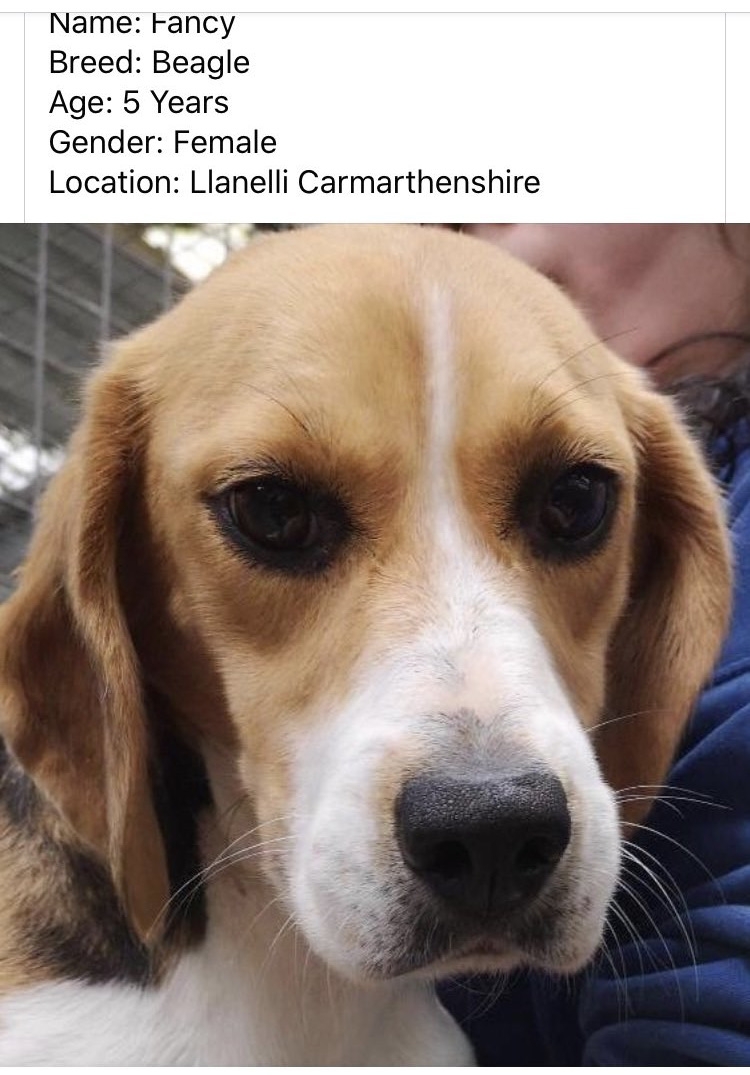
Puppy mills are an abhorrent method of producing large sums of money at the detriment to the dogs involved. I discovered that Fancy, who is one of the Wirral & Cheshire Beagles was used in a puppy mill. As I wanted to write something on this subject, I asked for the kind assistance of her mum, auntie Karen, who has been wonderful and extremely helpful in helping me write this blog. I cannot say “enjoy it” as I hope that you find it predominantly thought provoking and enlightening as to these terrible practices.

Thank you for allowing me to ask some questions about Fancy. When we spoke you told me that she was a puppy mill dog. Can you let me know a little more about her position before she came to live with you?

She had been in a puppy farm, kept in a concrete pig pen and had 3-4 litters in just over 3 years. Many of her pups died of Parvo either there or within 24 hours of being picked up for their new homes.

That sounds awful. Do you know how old she was when you met her?

They told us she was about 5 but she turned out to be 3.6 years. She was 4 on Valentine’s Day.

So, by my calculations, she was about one year old when she would have been forced to have her first litter. This makes me feel very sad.

How did you find out that Fancy was up for rescue and rehoming?

We saw Fancy on a “Beagles missing, found and in need ” site on FaceBook and we fell in love with her immediately. She had such sad, dark eyes and it occurred to us that she had never known a day’s happiness or been loved. There were so many people applied for her we didn’t think we stood a chance. However we were contacted by Many Tears twice that week and, because I’d previously had a home check and had 2 kind caring beagles, we were chosen.

Please help me, please!

We drove over 10 hours that day to Llanelli, Camarthenshire and met her in an area used for meet and greets. She was petrified of us but not my beagles, Eddie & George. She just ignored them. There was no eye contact with us, nothing. She just paced up and down and cowered in a corner. When it was time to take her home she had to be cornered and caught to get a slip lead on her. She just wet herself. It was heartbreaking. My husband Alan carried her to the car where she laid down in the travel crate. She didn’t sleep but just kept very quiet all the way home. She came from a real lowlife puppy farmer. He’s a multi millionaire who posts “his” beagles or pups running free on fields. In actual fact they’ve never seen a blade of grass. The BBC did an undercover investigation on him.

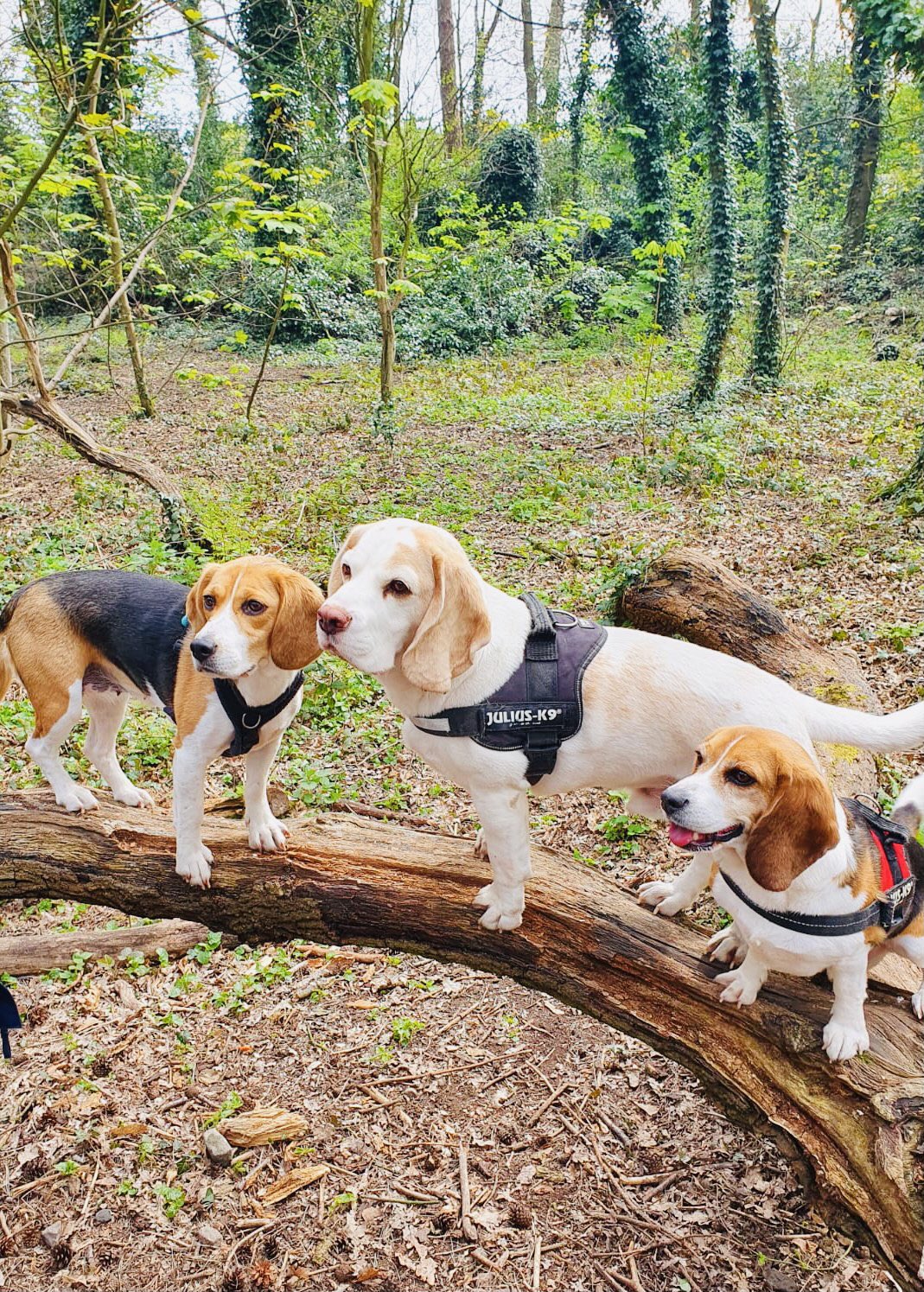
In any case, when she arrived it was a lovely Sunday evening last July 2020. So we sat outside and watched her exploring and sniffing around the garden. She kept hiding in a corner if we looked at her so we stopped. It took 8 long days before I touched her and that was only because there was a wall behind her. She went to the toilet in the house but thanks to Eddie & George she soon got the hang of going outside. They were fabulous with her and soon realised she wasn’t a boarder but a new sister. I certainly couldn’t have done this without them and the beagle field.

Is this OK? Is this what I am allowed to do?

What sort of condition was Fancy in when she arrived? I am going to assume she wasn’t in the greatest shape, given her life up to her time coming home with you?

She was in a bad condition when we got her. She had a dull dry coat and was very underweight with her ribs showing and tail between her legs. It took a few days for her to eat and she’d only do that if we weren’t around. When I first took her to the beagle field she spent the whole time pinned up against the fence. Nothing the beagles did bothered her, only the actions of the humans. I think it took about a month for her to trust one person and let them touch her. Eleven months later and she is still very wary of people she doesn’t know and she will cower away.

That sounds awful, and so sad. Looking at the pictures she seems to have come some way on her path to rehabilitation.

Yes,it doesn’t take much to win her round. A belly tickle, something tasty and she’s your best friend.

Give us a cuddle, says Jay.

How long did it take for Fancy to stop going toilet in the house? Was she called Fancy when you met her at the meet & Greet? 

She did her toilets in the house for about 4 days. Maybe twice a day then just first thing in the morning. It tailed off after that as she went out every time with her brothers. Yes she already had the name Fancy I rescued a kitten on the A55 motorway many years ago and she was called Fancy.

You’re safe now, Fancy!

You said that Eddie & George immediately knew Fancy was in need of some help. Did they act as if they were guardians to her, showing her the ropes if you like, and making sure that she felt at least some comfort with them.

Definitely. They gave her space from day one when she needed it. Even at the busy beagle field the others knew as well. She never got the initial newbie rough welcome. They all love her very much. Beagles know these things.

Welcome to the clan, Fancy.

Erm, when did you start to see a real breakthrough in her feeling more at home and less scared of all sorts of situations? What was the thing that made you think “you know, Fancy is feeling a bit happier”.

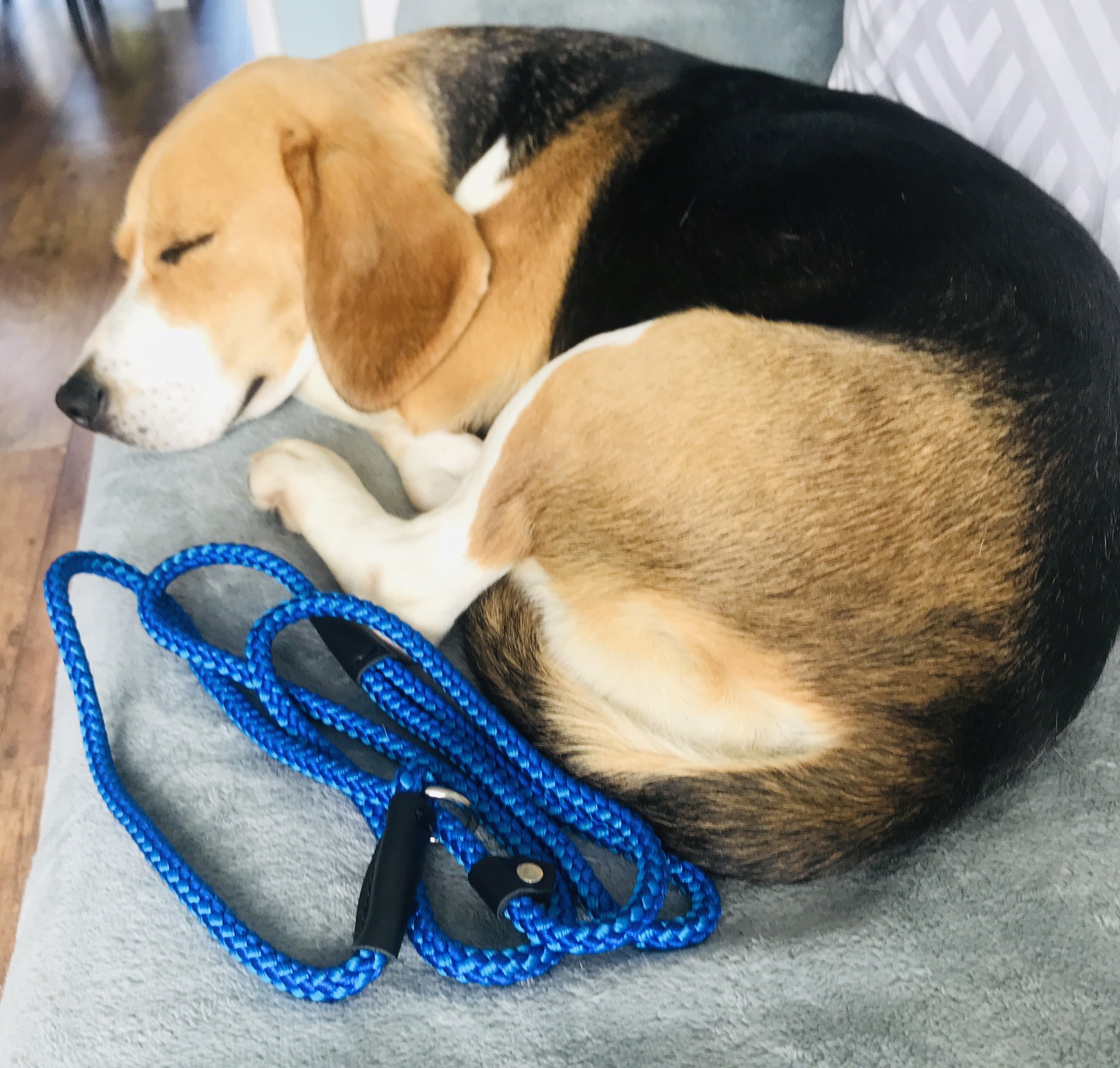
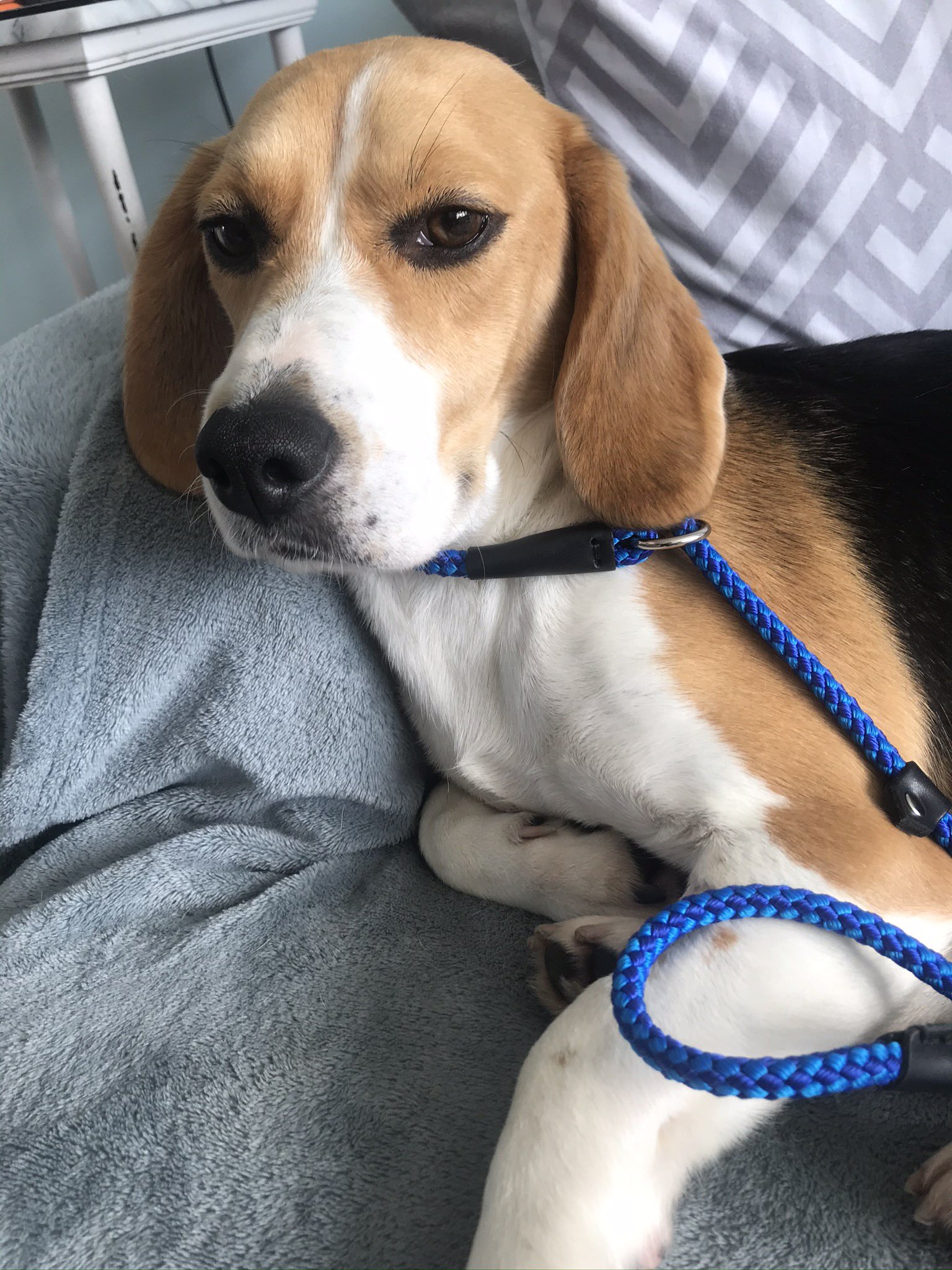
I lay that lead next to her for about a week. I started to show it to her and make a big fuss like it was a toy. She was petrified as she’d only been put in a “rape harness”. She’s still wary of it but can’t get out of it thank dogness.

A week from A to B

If you could give people a simple message regarding getting pups from a mill what would it be? Apart from “dont do it” that is. 

I’ve given many messages of support to people thinking of puppy farm rescues. Don’t ever give up on them because of their fear. Beagles are so loving and trusting of us the good times far outweigh the bad and no mistake. I have a friend who 12 days ago adopted one with identical problems and the difference in her each day is amazing. Day 12 today and she was dying to jump into his arms when he got home but held back and did an excited dance. We all love his daily updates.

I wish I knew the answer to the puppy mills question I really do. They’re clever people who advertise their pups as living in loving happy homes with caring owners. When in reality they use dirty filthy concrete pig pens where they receive no vet care whatsoever. People see the advertisement and pay a large deposit, when the time comes most travel hours and they won’t leave their puppy their a minute longer so will take them home and face the consequences. Many die over 24 hours and some will be saved by a good vet. One of Fancys pups and owner I know so I know how she was fooled. She knows others.

May I ask about Wirral & Cheshire Beagles generally. Are you a registered charity and, if so, with whom do you work and co-operate?

Yes the beagle group is a charity. We give £1000’s away to beagle charities each year. Mainly Unite to Care where we got ex laboratory George from and Many Tears who are absolutely fabulous and rescue so many ex breeding beagles.

Beautiful!

To sum up I am so happy that Fancy is now safe and loved. It is wonderful that she will never again suffer the privations of puppy mill life. It is sad and wholly awful that she had to suffer in the first place. If people didn’t buy from puppy mills, then there might be a chance that they are prevented of their ability to operate. Please please think before making a decision to adopt a dog. Puppy mills are awful and make our lives a misery.

Thank you to Fancy’s mum for her wonderful help on what is a very difficult subject. Without her help, I couldn’t have written this.

Safe! We will look after you!

ooOOoo

As Dexter says:

Rescue dogs sometimes have a bad reputation. Cross breed rescue dogs sometimes seem to have a worse reputation.  I wasn’t dangerous or bad. I was unlucky. Now I am enjoying life in my forever home and I am sharing my contentment with whoever will read my tails.

This is the essence of what having a dog in one’s life means.

I can’t voice Jean’s and my disgust at puppy mills. It is beyond terrible. All you and I can do is to never entertain buying a puppy where the commercial legitimacy is uncertain.

If in doubt, don’t!

This will make you smile!

A lovely tale from The Dodo.

I was looking through my LfD future posts folder and came across this story about a rescue dog in Kentucky River, in Kentucky, a long way from here ( Merlin, OR).

But that doesn’t diminish in the slightest how beautiful this story is and how generous are the management and staff of Home Depot.

Read it and see what I mean. Thanks to The Dodo for publishing it.

ooOOoo

Dog Is Literally The Cutest Home Depot Employee Ever

“She finds who needs her and gives them that smile” 😍

By Lily Feinn

Published on the 11th June, 2021

When Heaven first went to live with Jackie Rakers, she was scared of everything.

The scruffy rescue puppy from Kentucky River Regional Animal Shelter had had a rough start to life and was nervous around strangers and loud noises.

Luckily, her mom found the perfect place to help her come out of her shell — Home Depot.

JACKIE RAKERS

“The Home Depot runs started as a way to help her with her fears,” Rakers told The Dodo. “She was nervous about new places and new sounds, so we’d go for five minutes and she’d get all the treats. Then we started going longer and longer and exposing her to more and more things within the store.”

The large, dog-friendly store was the perfect place for Heaven to socialize, and the pup was such a good girl on her visits that she earned her own tiny employee apron.

JACKIE RAKERS

Now, Heaven knows that when the apron comes out, she’s about to go to her favorite place.

“I keep it in the car so we are always ready,” Rakers said. “As soon as she can tell we are in the parking lot, she just quivers until I put [the apron] on her and then she takes off towards ‘work.’”

“She walks around like she owns the place,” Rakers added.

JACKIE RAKERS

Heaven has become a bit of a celebrity at her local Home Depot, where all the staff knows her by name, and there’s even a picture of her in the break room.

And while she may not be an official employee, when she’s at her favorite store, she offers excellent customer service.

“She walks around minding her own business and then suddenly insists on meeting someone,” Rakers said. “She just sits and stares. They always end up saying how they needed that pick-me-up. It’s like she has a sense of who needs to be shown they are loved that day — and one of her favorite places to do that is Home Depot!”

JACKIE RAKERS

Heaven loves running errands with her mom, and everywhere they go, she finds someone having a rough day who needs her smile.

“She was scared of everything, but with a lot of training and patience she learned to trust and now it’s like she pays it forward,” Rakers said. “She finds who needs her and gives them that smile and a cuddle.”

JACKIE RAKERS

The only downside of all their Home Depot runs is that every time they visit, Rakers comes up with a new home improvement project. But all the retail therapy is worth it when she sees how happy Heaven is and how far she’s come.

“She’s the perfect example of what happens when you meet someone where they are at and love unconditionally,” Rakers said. “She went from so scared and so sad to the happiest dog.”

ooOOoo

Thank goodness our local Home Depot here in Grants Pass (Oregon) don’t have a Heaven in the store. For if they did Jean and I would be in the store every day of the year. OK, maybe a small exaggeration but only a small one!

Seriously, Home Depot are to be congratulated. It’s good for the store. It’s good for the employees. It’s good for the customers. But it is fantastic for Heaven!

Just love this story!

The Old and the New

This caught my eye!

Humans are great inventors! Indeed, a better way to describe H. sapiens ever since we separated from the chimpanzees, some 5 or 6 million years ago, is to describe us as explorers both outwards and inwards constantly in search for new worlds and new insights into meaning.

Thus this naturally caught me eye as Doug Thron uses a modern device, a drone, to search for animals in distress, a very ancient behaviour!

ooOOoo

Drone Pilot Rescues Animals After Natural Disasters

Doug Thron goes to devastated areas to save pets and wildlife.

By Mary Jo DiLonardo

Mary Jo DiLonardo

Published June 9, 2021.

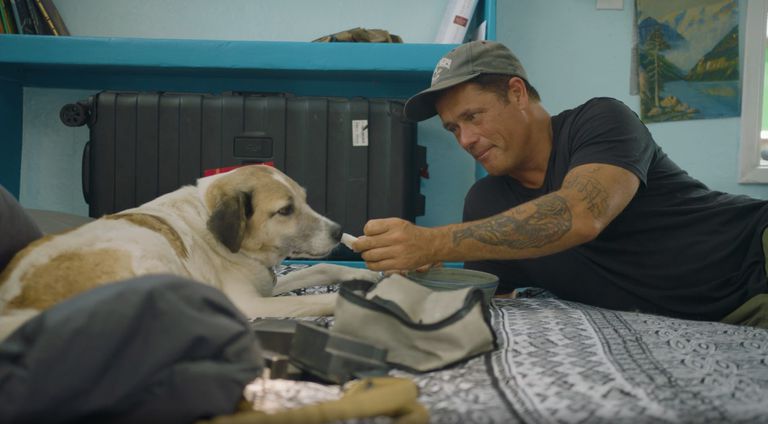
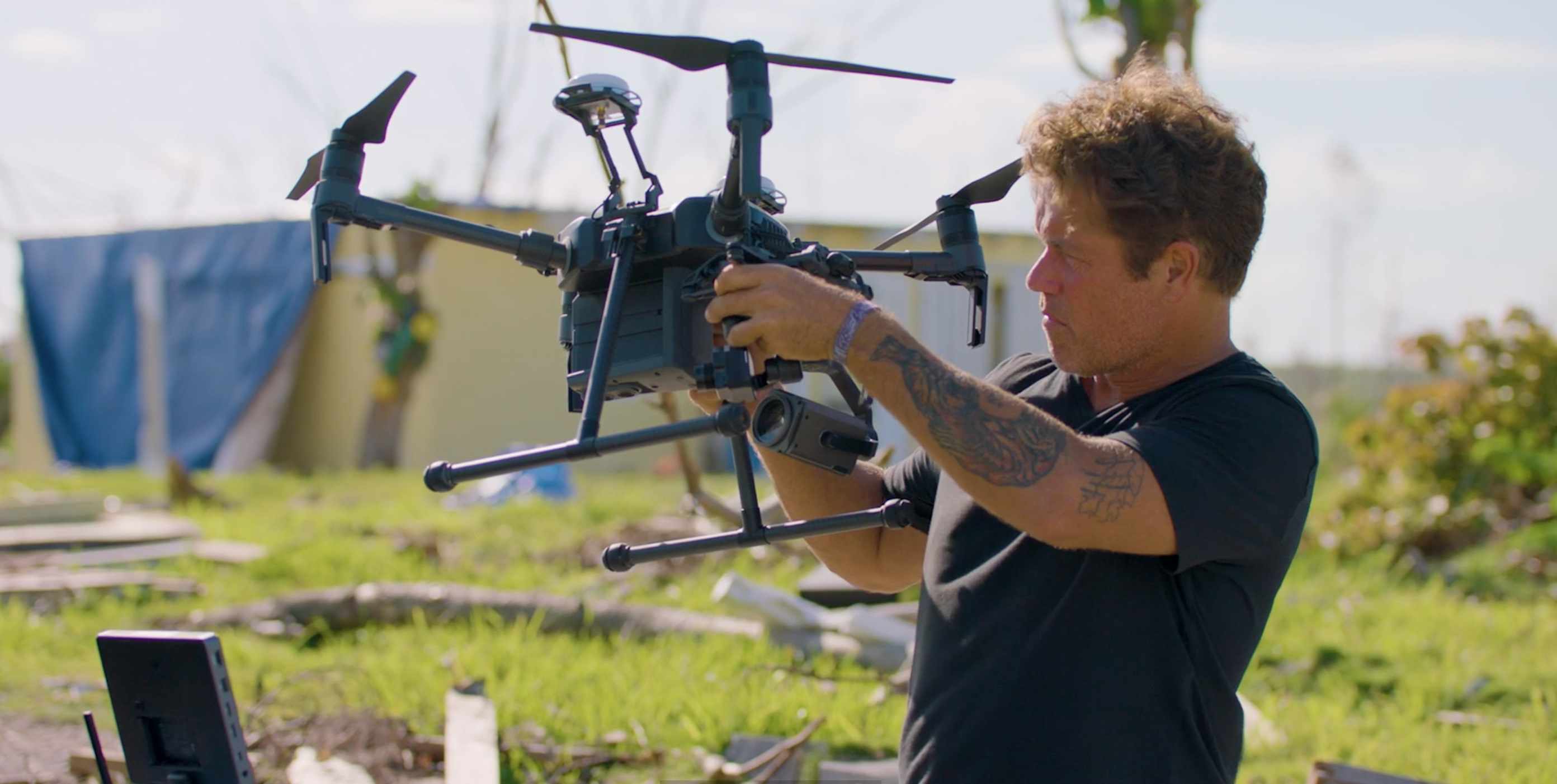
Doug Thron with Duke, a dog he rescued after California wildfires.”Doug to the Rescue”

For nearly three decades, seaplane and drone pilot Doug Thron has been a professional photographer and cinematographer, primarily for nature shows and magazines. A few years ago he was using his drone to film the devastation left behind after wildfires in California when he teamed up with rescuers to help find lost pets and reunite them with their owners.

A long-time animal lover and environmentalist, Thron realized he could combine those passions, using his aerial skills. He now travels wherever there is need, using his drone to help communities dealing with the destruction after natural disasters.

Thron is featured in a six-part documentary series “Doug to the Rescue”streaming on CuriosityStream beginning June 10.

He talked to Treehugger about his first animal rescues, his drones, and some of the challenges he’s faced.

Treehugger: Which came first: the animal rescue work or the drone?

Dough Thron: I was using drones for filming for TV shows, commercials, and real estate clients before doing the animal rescue work. 

Were you involved in animal rescue and realized that your drone work could come in handy? 

Definitely. I was doing animal rescue work after the wildfires in Paradise, California. I was working with an expert cat rescuer named Shannon Jay, and I saw him using an infrared scope at night to help find the cats. We talked about how incredible it would be to put one on a drone and when the opportunity came up about 10 months later in the Bahamas after the category 5 Hurricane Dorian, that’s what I did and it worked incredibly.

I had raised orphaned baby animals as a kid and worked with animals such as possums, raccoons, squirrels, beavers, and even mountain lions. I’ve been using drones since 2013 for cinematography, so I’ve used them for quite a while before I got involved in the actual rescuing of animals with drones.

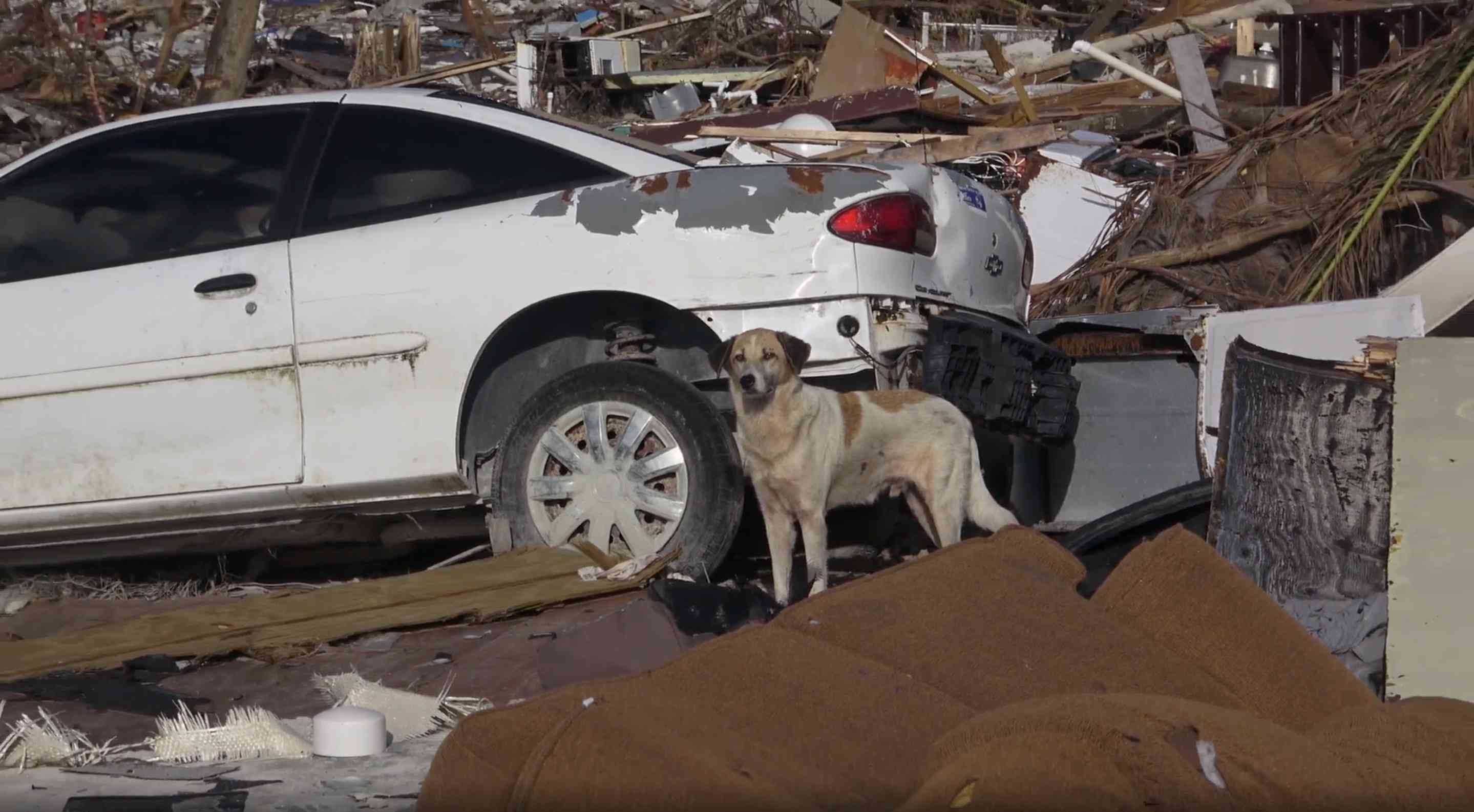
Duke in the Bahamas.Doug Thron / “Doug to the Rescue”

What was your first big rescue using a drone?

My first big rescue using a drone was in the Bahamas after Hurricane Dorian. I was there helping to deliver aid and film the destruction when I spotted a dog roaming around the mountains of debris. He obviously hadn’t had any water or much food for days. He was really apprehensive at first, but warmed up over the course of the day, as I just sat with him. Dog food and water helped! The next day, some animal rescuers came with me to get him. He’s such an incredible dog, and meant so much to me, so I adopted him and named him Duke after a sign I’d seen where I found him.

Where are some of the places you’ve gone to help stranded animals? 

The Bahamas, Australia, Oregon, California, and Louisiana.

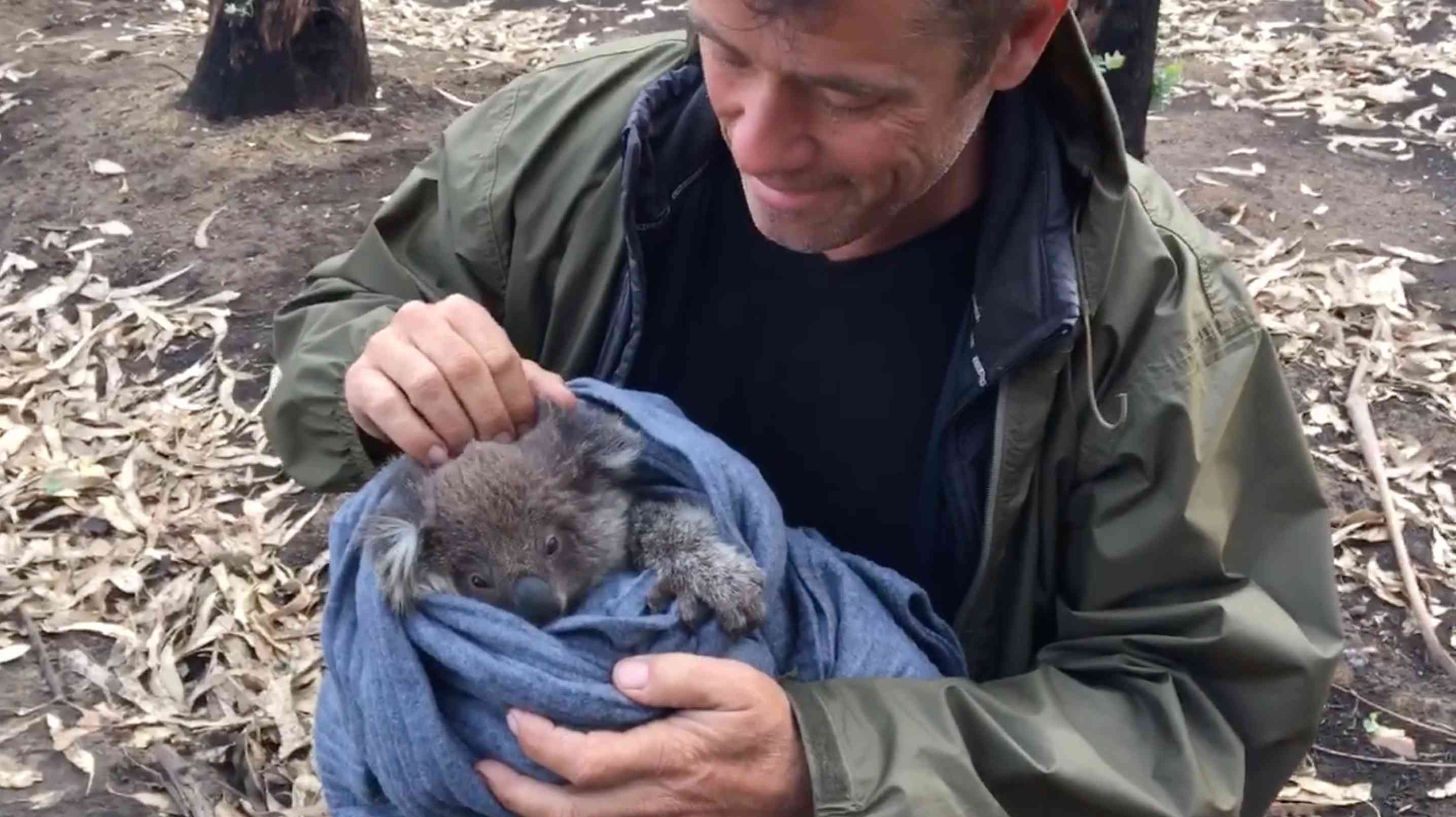
Thron with a rescued koala.”Doug to the Rescue”

What were some of the most challenging circumstances?

In Australia, it was challenging because the hurt koalas were deep in burnt out forests, often with a dense canopy. It was so hot out you had to fly strictly at night with spotlights and infrared and fly the drone pretty far and often drop it down through the trees to see the animals, which takes a lot of skill. Koalas are also very aggressive and strong, and not always thrilled when you go to grab them out of a tree to rescue them. On almost all these rescues, Australia and everywhere else, it’s countless long hours of work—generally about 20 hours a day—which can certainly wear you down day after day.

What is it like when you spot an animal in an area of devastation where there is no other sign of life? 

It’s great to be able to rescue these animals so much more efficiently and faster and, in many cases, find animals that never would have been found.  It’s different everywhere I go—finding animals when there aren’t any others alive nearby is always really hard. But in places like Louisiana, where I was searching in so many neighborhoods, it gives you a feeling of hope when you find a cat or dog, knowing it was someone’s pet. 

In other places, like Australia, I’d be covering dozens of miles a night, sometimes and only finding an occasional animal. It’s really sad because you realize how many thousands of animals didn’t make it. It’s also really hard to see how fires and other natural disasters as a result of climate change are taking out the last patches of unentered habitat and endangered animals.

A dog rescued in Louisiana.”Doug to the Rescue”

How heart-wrenching can it be?

It can be really heart-wrenching to find animals that are severely wounded, but it’s wonderful to be able to save them. 

How euphoric is it when you make a great save?

It’s awesome to be able to save people’s cats and dogs because frequently, that might be the only thing they have left after a fire or hurricane. Obviously, for the animal’s sake, it’s so incredible because without the infrared drone, in many cases, the animal would have never been found and would have died, sometimes a slow and painful death.

Thron with his drone.”Doug to the Rescue”

What is your drone like?

The Matrice 210 V2 are the drones I use with an infrared camera, spotlight, and 180x zoom lens. The combination of using those three attachments for animal rescue has never been done before.

How much time do you spend doing animal rescue work? What else do you do?

The rescue work is pretty continuous for 9 to 10 months during the fire and hurricane seasons. After that, there are occasional lost pets to be found.

What else do you want to accomplish?

I hope to make using infrared drones for animal rescue as popular as helicopters are for rescuing people after a natural disaster. So many more animals can be saved when you can find them so much faster and find ones that never would have been found on foot because there is just too much area to cover.

ooOOoo

This account makes me want to choke up. Doug is clearly used to being a professional photographer and, also, works with others in the field of animal rescue. But this story is about Doug and he is engaged with animal rescue with his heart as well as his head!

Doug has been reported widely I am delighted to say and there’s a YouTube video that you can watch.

It doesn’t get any better than that!

We are all connected!

Thank you Patrice Ayme for sharing this.

I can’t remember when I first came to know Patrice Ayme; it was quite a few years ago. I followed him for years and then had to take a break simply because there weren’t enough hours in the day! Not because I disliked what he was writing – no siree!

He is a most prolific author. Pop into Patrice Ayme’s Thoughts and have a browse around.

Anyway, Patrice recently forwarded me an article that rightly deserved much attention. Here it is:

ooOOoo

Saving The Animals, Thus Ourselves

Animals die in great numbers trying to cross human transportation systems.

When one provides the animals with crossings, they rush to use them (so are used even before they are finished, by a Noah’s ark of species).

Respecting nature is not just about the beauty and naturalness it provides us with, it is about respecting how we became who we are, at our best. We have to learn to share the planet with animals. Not just because we are smart, but also because they are smart and our smarts evolved from interacting with their smarts. So interacting with wild animals is smart all around… and it has made our species smarter! Wildlife interaction is how we evolved our smarts.

Not book smarts, but the deepest smarts.

Hence by respecting animals, we respect how we became human… and it keeps on being human to do so. Economy means managing the house, in particular, managing earth, which is our common house. As the greenhouse heating proceeds at an accelerating pace, we then have to reserve an increasing part of our economic activity to save the animals by helping them to cope with the changes we have brought.

Morality comes from the mores, the old ways, the ways which perdured, and thus, insure survival. Having a natural environment, full of animals, is the ultimate morality. If we can’t save them, how can we learn to save ourselves?

So it is not just smart and economic to save the animals, but also moral. The money engaged so far is quite small. But the price of an unbalanced environment tottering towards ruin, is incomparably higher. For a nice article with nice videos of animals using their smarts crossing freeways and roads, consider:

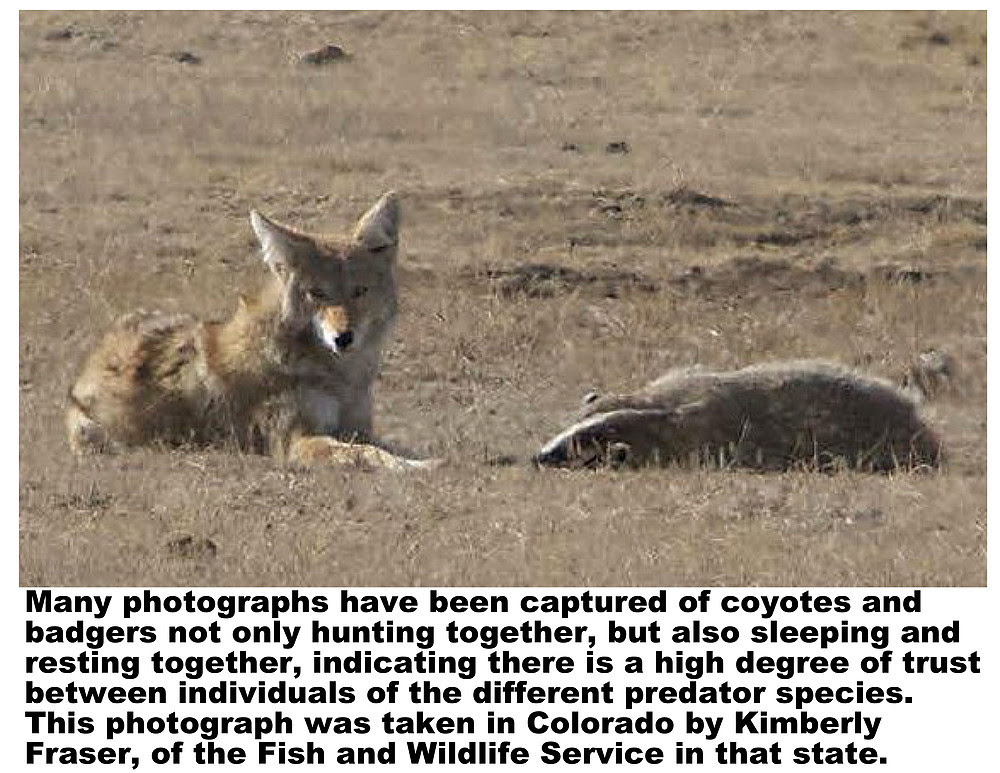
As a badger digs, say for ground squirrels whose burrows have many exits, could not it be that the coyote would seize a fleeing squirrel, and share the meal? This is basic economics and strategy, and it turns out that coyotes and badgers have figured out that behavior, and cooperate together.

The next question would be this: do the individuals concerned figure it out by themselves, as cephalopods do, or is the behavior culturally instigated, namely both badgers and coyotes learn elements of interspecific cooperation from teaching by their elders? I believe the latter.

After all, I trained the (wild) nesting birds on my balcony to benignantly ignore my weird and intrusive ways … which thus had to learn to be a bit more respectful than they usually are. But of course these ways tend to incite the red tail hawks to not land on this particular balcony on a determined culinary mission (as they have been seen doing…) And the birds know this [1].

Saving the animals is first of all about saving us… Not just our sense of beauty.

Patrice Ayme

[1] Hummingbirds set their nests below hawks’ nests, as this protects them from gays. Local hawks do attack nests of birds who are big enough (like gays, crows, etc). And I have seen them pass 10 feet from me, eyeing me suspiciously… Their feathers can be two feet long…

See this: https://www.audubon.org/news/why-hawk-hummingbirds-best-friend

ooOOoo

We are all connected as I said in the title to today’s post.

The only way we are going to survive as a species on this planet is for all of us to recognise this fundamental law of nature. Or should I say this fundamental law of Nature!

It is a little over fifty years since the inaugural celebration of the first Earth Day; on the 22nd April, 1970. In other words we are just over halfway through if one imagines the celebration of the one hundredth Earth Day: 22nd April, 2070. In 1970 the planet was home to 3.7 billion people. Today there are nearly 8 billion people. But more than that these 8 billion people are living to an average of 72 years, up from 59 years in 50 years.

Our failure to address climate change is harming the planet and all the species, including us humans, who live on Planet Earth. I shall be dead by 2070 and also a great many of my fellow humans. But for all those born in the year 2000 and later it is increasingly going to become the number one priority: Saving the planet from a total catastrophe!

We don’t have long!

Time to end puppy mills

I am republishing a recent email that came to me.

Puppy Mills are disgraceful. Worse than that they are a scar on the face of mankind.

Yesterday I received an email that came in from the Humane Society Legislative Fund. I am sure many of you also received it.

I am going to republish it. Please help if you can.

ooOOoo

Tell the USDA to protect puppies

Dogs suffer horribly in puppy mills. What’s worse is that over the last four years, The U.S. Department of Agriculture, which is charged with monitoring, citing and revoking licenses of these breeding facilities if they sell to pet stores, brokers or online, stopped taking their job of puppy mill enforcement seriously and the agency did not take all the necessary steps to make sure that standards of care are improved to ensure that puppy mill facilities meet the basic needs of happy and healthy dogs.

Enforcement has plummeted at USDA since 2017 and citations for violations are down more than 65%. But we have a new Administration leading the United States Department of Agriculture, one that has already promised that they are going to take animal care seriously. Now is our chance to send a message loud and clear: you must protect dogs and puppies and take puppy mill enforcement seriously, and you must ensure that standards of care are improved in puppy mills to meet the needs of the thousands of dogs living in those facilities.

TAKE ACTION
Please send a brief, polite message to the USDA using the form provided.

ooOOoo

The form is available here!

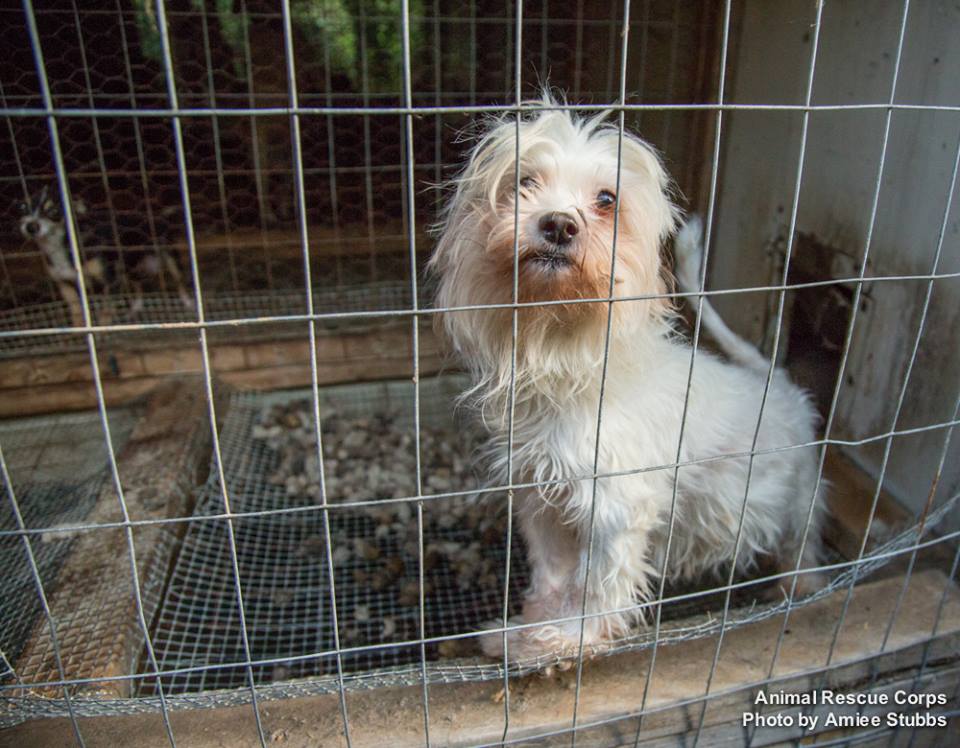
I am going to leave you with a photograph, one of many I am afraid. This one was taken from the Animal Rescue Corps.

Very sad!

What goes around comes around!

Another account of dogs bonding with humans.

Chernobyl is a name that anyone born before, say, 1970 will associate with a terrible nuclear accident in Russia.

As Wikipedia put it:

The Chernobyl disaster was a nuclear accident that occurred on Saturday 26 April 1986, at the No. 4 reactor in the Chernobyl Nuclear Power Plant, near the city of Pripyat in the north of the Ukrainian SSR in the Soviet Union. It is considered the worst nuclear disaster in history both in terms of cost and casualties, and is one of only two nuclear energy accidents rated at seven—the maximum severity—on the International Nuclear Event Scale, the other being the 2011 Fukushima Daiichi nuclear disaster in Japan. The initial emergency response, together with later decontamination of the environment, ultimately involved more than 500,000 personnel and cost an estimated 18 billion Soviet rubles—roughly US$68 billion in 2019, adjusted for inflation.

But recently BBC Future spoke of the bond that the guards and the abandoned dogs made.

Read it below: (Unfortunately you will have to go here to view the stunning photographs because the BBC prevents them being republished! But it is still a very interesting article.)

ooOOoo

The guards caring for Chernobyl’s abandoned dogs

The descendants of pets abandoned by those fleeing the Chernobyl disaster are now striking up a curious relationship with humans charged with guarding the contaminated area.

It wasn’t long after he arrived in the irradiated landscape of the Chernobyl Exclusion Zone that Bogdan realised his new job came with some unexpected companions. From his first days as a checkpoint guard in Chernobyl, he has shared the place with a pack of dogs.

Bogdan (not his real name) is now in his second year of working in the zone and has got to know the dogs well. Some have names, some don’t. Some stay nearby, others remain detached – they come and go as they please. Bogdan and the other guards feed them, offer them shelter, and occasionally give them medical care. They bury them when they die.

All the dogs are, in a sense, refugees of the 1986 disaster in which Reactor No. 4 at the Chernobyl Nuclear Power Plant exploded. In the aftermath, tens of thousands of people were evacuated from the Ukrainian city of Pripyat. They were told to leave their pets behind. (Read more about the long-term toll of the Chernobyl disaster.)

Soviet soldiers shot many of the abandoned animals in an effort to prevent the spread of contamination. But, undoubtedly, some of the animals hid and survived. Thirty-five years later, hundreds of stray dogs now roam the 2,600km (1,000 sq mile) Exclusion Zone put in place to restrict human traffic in and out of the area. Nobody knows which of the dogs are directly descended from stranded pets, and which may have wandered into the zone from elsewhere. But they are all dogs of the zone now.

Their lives are perilous. They are at risk from radioactive contamination, wolf attacks, wildfires and starvation, among other threats. The dogs’ average lifespan is just five years, according to the Clean Futures Fund, a non-governmental organisation that monitors and provides care for dogs living within the Exclusion Zone.

That dogs inhabit this ruined place is well known – some of them have even become minor celebrities on social media. Clean Futures Fund co-founder Lucas Hixson, who gave up a research career to look after the animals, offers virtual tours of the Exclusion Zone featuring the dogs.

But less is known about the local workers who interact with these canines on a daily basis.

Jonathon Turnbull, a PhD candidate in geography at the University of Cambridge, realised it might be worth collecting these people’s stories.

“If I wanted to know the dogs,” he says, “I needed to go to the people who know them best – and that was the guards.”

What he discovered is a heart-warming story of the guards’ relationship with the animals they encounter in this abandoned environment – a tale that provides insights into the deep bond between humans and dogs.

The guards sometimes go to the trouble of helping the dogs by pulling out ticks embedded in their skin, or by giving them rabies injections

For instance, the guards have given several of the dogs nicknames. According to Turnbull, there’s Alpha, whose name refers to a type of radiation, and Tarzan, a dog well-known to Chernobyl tourists, who can do tricks on command and who lives near the famous Duga radar installation built by the Soviets. Then there is Sausage – a short, fat dog that likes to warm herself in the winter by lying on heating pipes. These pipes serve one of the buildings used by workers in the Exclusion Zone who are part of ongoing efforts to decommission and decontaminate the ruined power plant.

Access to the Chernobyl Exclusion Zone requires a permit, so guards are tasked with controlling checkpoints on roads in and out of the area. People who dodge these checkpoints to trespass in the Exclusion Zone are known as “stalkers”. Guards report them to the police.

When Turnbull, who lives in Ukraine’s capital Kyiv, started making regular visits to the zone, he met Bogdan, and other checkpoint guards. They were reluctant to talk at first so he had to win them over. Then he offered them to chance to take part in his research, which he says was a “turning point”. His idea was to give the guards disposable cameras and ask them to take pictures of the dogs – not posed portraits but scenes of everyday life. The guards only had one other request – “please, please – bring food for the dogs”. So Turnbull did.

The photos taken by the guards revealed how much they had developed companionships with the wandering dogs of the Exclusion Zone.

Turnbull published some of the resulting images and material from interviews with the guards in a paper in December. More recently, he interviewed one of the study participants again on behalf of BBC Future. The guard in question has asked not to be identified to avoid disciplinary action at work, so we refer to him here by the pseudonym “Bogdan”.

When Bogdan walks around the abandoned streets of the zone to check for stalkers, the dogs happily accompany him, he says. They always appear eager to see whether he, or a passing tourist, might be carrying food. Should a companion dog get distracted or run off to chase an animal, it always eventually returns to Bogdan, he adds.

You might also like:

The loyalty goes both ways. Turnbull says the guards sometimes go to the trouble of helping the dogs by pulling out ticks embedded in their skin, or by giving them rabies injections.

Wolves, dogs and other animals could in theory carry radioactive contamination, or genetic mutations potentially passed on by breeding, to places outside the Exclusion Zone

Monitoring who comes and goes from the Exclusion Zone sometimes makes for a dull occupation. But there are always dogs nearby.

At some checkpoints, the guards have more or less adopted some of the animals. They feed them and give them shelter. But not all are so tame. During his research, one guard told Turnbull, “We can’t inject Arka because she bites.”

Another participant spoke of one dog that was even more difficult to approach. It refuses to be touched at all. “You should just give her a pan [of food] and go. She waits until you leave and then she eats,” the guard explained.

The dogs sometimes bark at strangers on first sight, that’s their nature, says Bogdan. But so long as they don’t feel threatened, they sometimes calm down and wag their tails. Occasionally it even seems as though they’re smiling, he adds.

Generally, visitors to Chernobyl are advised not to touch the dogs, for fear that the animals may be carrying radioactive dust. It’s impossible to know where the dogs roam and some parts of the Exclusion Zone are more contaminated than others.

There is wildlife living in the Chernobyl Exclusion Zone besides dogs. In 2016, Sarah Webster, a US government wildlife biologist who was working at the University of Georgia at the time, and colleagues published a paper in which they revealed how mammals, from wolves to boars and red foxes, had colonised the Exclusion Zone. Camera trap data showed that the animals’ numbers were not noticeably lower in those areas where radioactive contamination is higher.

Animals living in the Exclusion Zone are not necessarily confined there. A later studyby Webster and colleagues, published in 2018, detailed the movements of a wolf tagged with a GPS device. It travelled 369km (229 miles) from its home range in the zone, taking a long arc to the south-east, then north-east again, eventually entering Russia.

Wolves, dogs and other animals could in theory carry radioactive contamination, or genetic mutations potentially passed on by breeding, to places outside the Exclusion Zone.

“We know it’s happening but we don’t understand the extent or the magnitude,” says Webster.

Turnbull says the guards do not generally worry about radiation, though they might occasionally use dosimeters to check a dog over.

It actually seems as though the dogs, through the companionship they offer, end up reassuring those who interact with them regularly, says Greger Larson, an archaeologist who studies animal domestication at the University of Oxford and who was not involved in Turnbull’s research.

“They’re kind of putting themselves in the shoes of the dogs,” he suggests, referring to the guards. “If the dog is fine, that means you’re fine.”

But in truth, this may only be a false sense of security.

“It’s an uncanny environment,” notes Turnbull. “You can’t see the danger. You’re constantly aware that it might be there but everything looks normal.”

Despite the fact that the dogs could pose a risk in terms of radioactivity, guards like Bogdan instead emphasise the benefits of having them around. For example, he claims to know dogs that bark in noticeably different ways depending on what they have spotted in the distance – a human stranger, a vehicle, a wild animal. Because of these helpful warning signals, Bogdan thinks of the dogs as “assistants”.

What’s happening in the Exclusion Zone is an echo of interactions with dogs that are known to have occurred within human civilisations for thousands of years, says Larson.

“We find this for the last 15,000 years or more, this is what people do, they make very close associations with not just dogs but a lot of domestic animals […] to sort of say, ‘this is our attachment to the landscape’,” he explains.

All over the world, there are dogs that inhabit a similar, in-between state – not quite fully domesticated, not quite fully wild. These are the feral dogs that roam cities and industrial areas looking for food, the ones that may become to some extent adopted by people but still wouldn’t be considered pets.

Chernobyl’s dogs also live in this sort of space, on the edge of domestication, but there is a difference argues Webster, who has participated in a separate study of Turnbull’s in the past.

“The Exclusion Zone is very different in that it’s abandoned by humans,” she says. “The only people in that landscape on a day-to-day basis, really, are the guards.” As such, the dogs’ opportunities for befriending humans are very limited.

While the outside world remains fascinated by the dogs, and their story, for many guards the connection runs much deeper. Bogdan says he is often asked why the dogs ought to be allowed to stay in the Exclusion Zone. “They give us joy,” he replies. “For me personally, this is a kind of symbol of the continuation of life in this radioactive, post-apocalyptic world.”

ooOOoo

What is so fascinating is that this interaction between the dogs and the people is an echo of the first interaction between hunter/gatherers and wolves of, perhaps, 25,000 years ago or more. And the guards of today and the dogs, whom Larson calls his assistants, are perfectly bonded.

It just goes to show that ‘what goes around comes around’!
Yet another dog food advisory

This came out yesterday and is republished below.

ooOOoo

Dear Fellow Dog Lover,

Zuke’s has asked pet food retailers to remove some of its most popular dog treats from retail stores due to “a potential quality issue”.

For full details, please visit the following link: Popular Dog Treats Removed from Retail Stores

Best Dog Food for May 2021


The Dog Food Advisor has recently updated the following best dog food pages:

  • Best Dry Dog Foods
  • Best Puppy Foods
  • Best Large Breed Puppy Foods
  • Best Dog Foods for Small Dogs
  • Best Dog Food for Allergies
  • Best Grain-Free Dog Foods
  • Best Dog Foods Made with Grain
  • Best Budget-Friendly Dog Foods
  • Best Dog Food for Shih Tzus, Labs and 8 Other Breeds
  • Best Senior Dog Foods

See our Best Dog Foods for May 2021 

Please be sure to share this news with other dog and cat owners. 

Mike Sagman, Editor
The Dog Food AdvisorSaving Good Dogs From Bad Dog Food

ooOOoo

Hope it finds some people who needed to be informed!

Beyond the Call of Duty

A little coyote pup is rescued by a policeman.

I am republishing a post from The Dodo. It is dated May, 2019 but the actions, feelings and results are timeless.

Have a read of it yourself.

ooOOoo

Kind Cop Goes Above And Beyond For A Lonely Little Coyote Pup

He found a friend when he needed it most ❤

By Stephen Messenger

Published on 5/9/2019

Stop in the name of the awww.

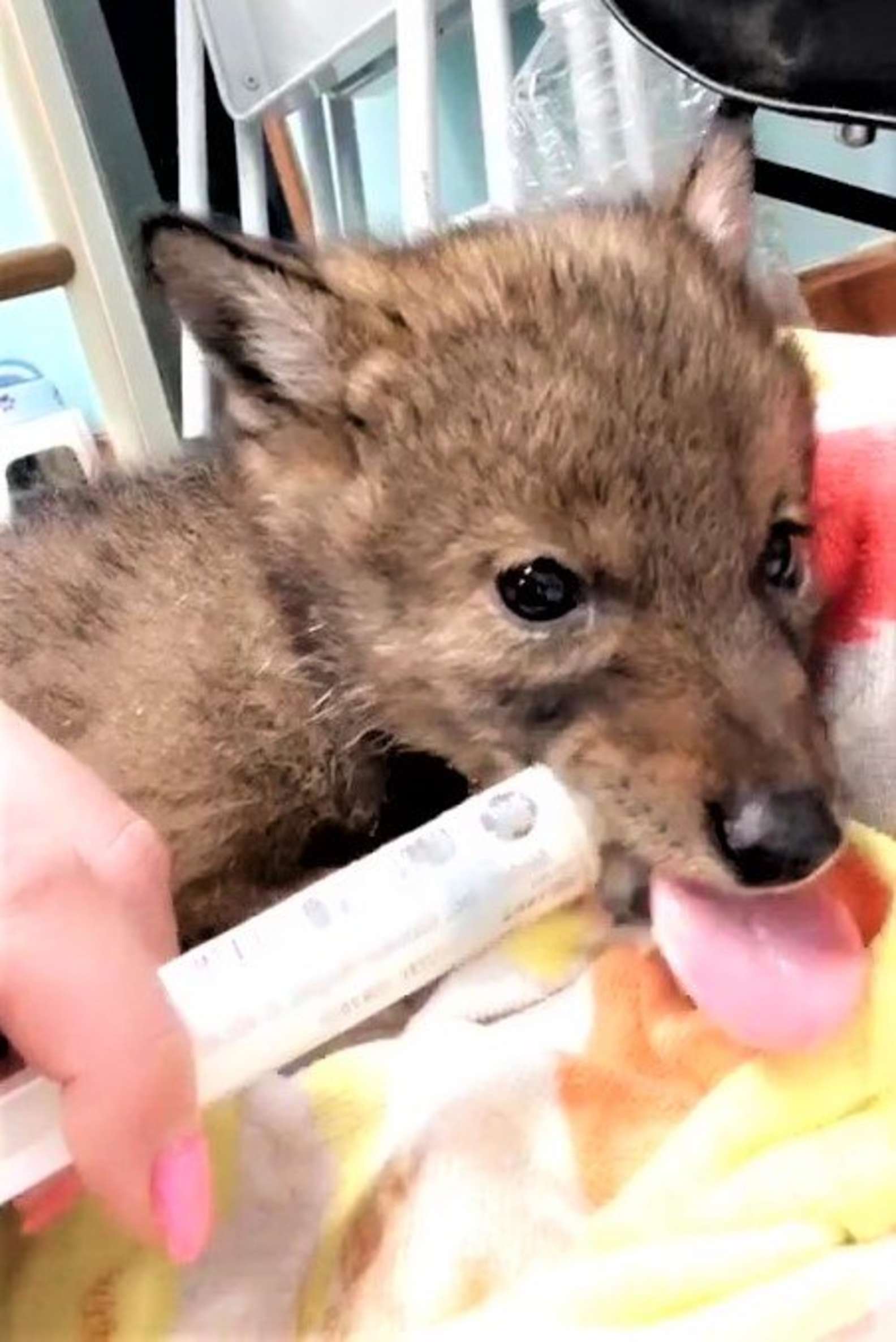
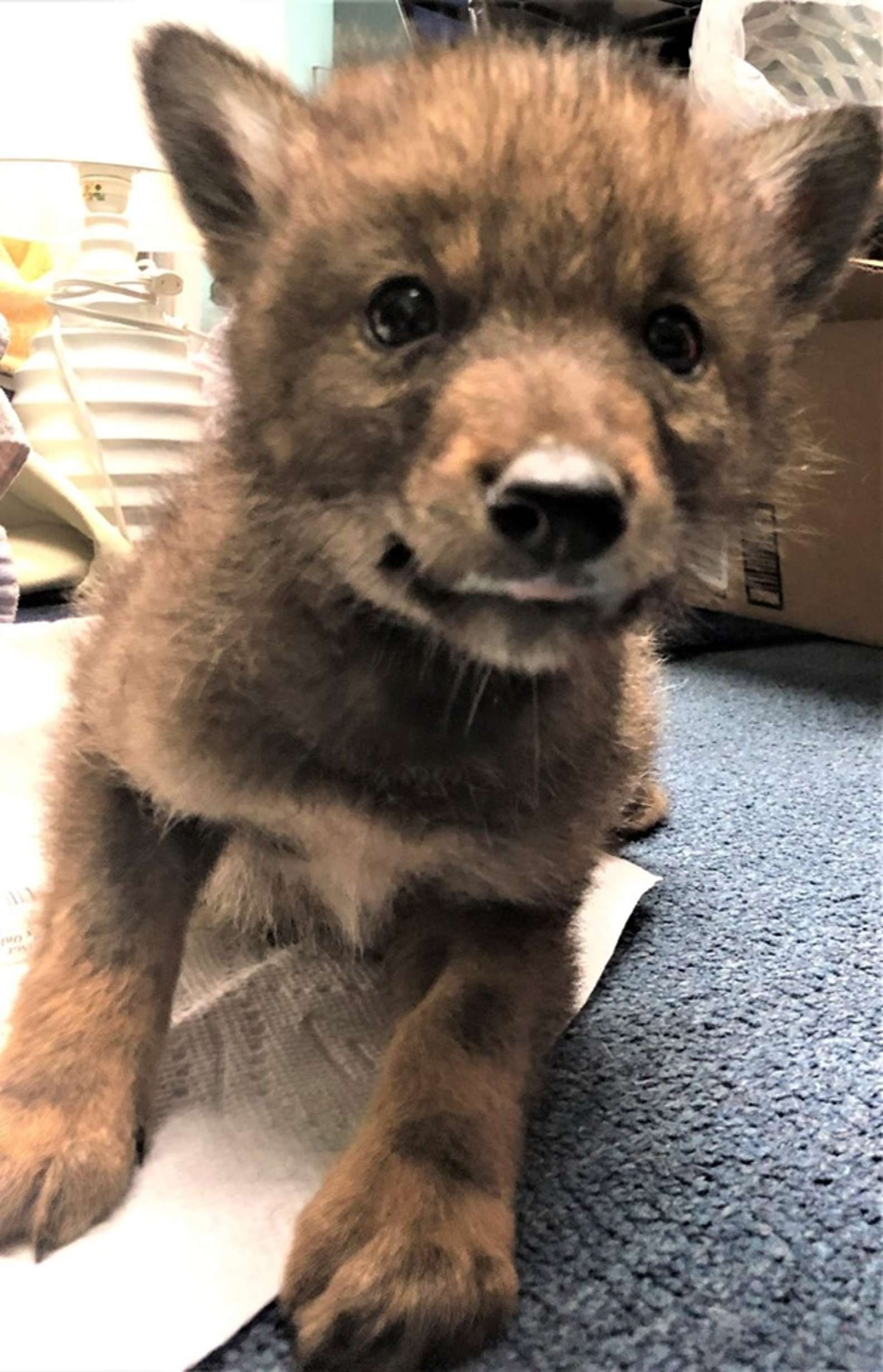
This week, a Massachusetts State Police trooper did just that — coming to the aid of a helpless young coyote pup who’d been found stranded all alone along a busy roadway.

MASSACHUSETTS STATE POLICE

Seeing that the pup’s mother was nowhere in sight, trooper Carlo Mastromattei contacted Lisa Cutting, owner of Ocean View Kennels, for help in safely removing the animal from that perilous spot.

The pup was now out of immediate danger, but Mastromattei’s kindhearted actions didn’t end there.

MASSACHUSETTS STATE POLICE

At that late hour, all nearby wildlife rehab facilities were apparently closed. So, the trooper then decided to go above and beyond his call of duty in order to keep the little coyote safe until morning.

Mastromattei brought the pup home, where he and his girlfriend kept him cozy and fed through the night.

MASSACHUSETTS STATE POLICE

The next day, Mastromattei brought the coyote to the Tufts Wildlife Clinic for a checkup. Fortunately, he was found to be in good health — thanks in no small part to the trooper having rescued him in time.

MASSACHUSETTS STATE POLICE

According to the Massachusetts State Police, the young coyote has since been placed under the care of a wildlife rehabilitator. With any luck, he’ll continue gaining his strength until he’s old enough to be released back into the wild to live life as nature intended.

For their efforts, those involved in the pup’s rescue are getting some much-deserved praise from police officials, who wrote in a post:

“The Department offers its sincere thanks to Trooper Mastromattei, his girlfriend, Ocean View Kennels, and Tufts for their compassionate care for this beautiful little creature.”

ooOOoo

I would like to bet that Carlo Mastromattei has a dog at home. For this compassion shown by Carlo Mastromattei is surely brought about by having a dog or two in his life.

I guess we will never know but my bet stands.

The pain of letting go.

Dogs ought to live far longer!

I have spoken before of the bond that we humans make with our dogs, and vice versa, and the love that flows from such a bond.

But they don’t live long enough! And the end of their lives is a very difficult period for us.

Doug Goodman writes a blog. He is also an accomplished author.

Recently Doug wrote about the most difficult decision he had to make. Doug kindly gave me permission to republish his article.

ooOOoo

The Difficult Decision to Euthanize Ryder.

By Doug Goodman, April 20th, 2021

Unfortunately, all dogs die. There’s no easy way to do this, but it’s a fact of life as a pet owner. For me, the key decision was when is the right time to do it? I don’t want to wait too long so that Ryder suffers, but I’d feel guilty putting Ryder down too early.

We’ve talked about this many times, in fact. Often on walks or long rides in the car, my wife and I go through the bullets, like a checklist of emotional redemption. There are many “easy” decisions when owning a dog: which food? That bag of Purina over there. When do you pick up after the dog? At least twice a week in the spring and summer, sometimes every other day. Should you pet the dog? Well, it’s a German Shepherd, so if it wants to be petted, you better do it now because it may not want to be petted the rest of the day.

Deciding to euthanize is nothing so simple.

Years ago when we went through end-of-life with Mojo, a veterinarian recommended as a litmus test to pick the three things the dog enjoys most in life. When the dog can no longer do one or especially two of those things, it’s time to euthanize.

But that litmus test doesn’t apply to all dogs, and certainly not to Ryder. She’s always been a peculiar dog. She likes her backyard and playing with Koda, and she likes to eat*. She still does those things. For me, it is a pain factor based on arthritis and lack of mobility. People will talk about the dignity of life for a dog, and I think there is some truth to that. I remember laying in bed one day and Mojo walking in and telling me he was ready. A few months later, he again looked at me, and his eyes were full of truth. He wasn’t happy, he didn’t like this anymore. He was ready. Sometimes Ryder gives me that look, but I’m not sure. She’s always had a pained, scared-of-the-world emotion in her eyes.

But there is “pained” and there is “pain.” Ryder can’t put in words her suffering, so it’s up to me to observe her closely. Over the past few months, and certainly over the past year, my family and I have noticed changes to her behavior, physicality, and mental state:

-She had urination problems. She was diagnosed as a UTI and corrected. Alone, this is not a sign that she is close to dying, but I believe it may be a sign of the severity of her back arthritis. She’s not cleaning herself. This is especially troubling considering…

-She has problems holding in poop. Sometimes she’s sitting there, laying in it, and she doesn’t realize she’s pooped herself. Often, she can’t make it through the night without releasing her bowels in the house. If she isn’t able to clean herself, and she isn’t aware that she is going to the bathroom, this can lead to discomfort and additional UTIs.

-She stopped climbing the stairs. This was a subtle one because our dogs aren’t allowed upstairs. But last week we had a major thunderstorm, and as anyone who owns German Shepherds can attest, GSDs only want to be right next to you when the thunder booms and the lightning crashes. Koda busted down the dog gate and ran upstairs for solace. Ryder, who is usually the first one to bump against the bedroom door until we wake up, stayed downstairs and didn’t attempt coming to us. At least, I didn’t see her attempt it. She may have tried, failed, and gone back downstairs. That’s a first in her lifetime, and she wouldn’t have stayed down there if she didn’t absolutely have to remain on the first floor.

-She is stumbling. She often stumbles in the house, especially walking inside and out. She has fallen doing little playful jumps at my daughter. I’ve seen her fall to the floor and not be able to stand for thirty seconds or more.

-This will sound weird, but she sits a lot, and not on purpose. One of the things she does is get in the way of her people (helloooo, herding dog). She backs out when she realizes I want to get through. Now, she backs out, and her butt falls down, and she stares at me like “That wasn’t supposed to happen. What do I do now? Sorry!” until she can get back up.

-She is whining and yelping. This is the big one. My dogs don’t whine or yelp for no reason. They aren’t talkative dogs. For the past year, though Ryder will yelp when roughhousing with Koda. She wants to jump on him, but she’s incapable. Lately, she’s really reduced her roughhousing. Additionally, Koda is being a son of a bitch about this. A few days ago I noticed they were playing their favorite game of “I’ve got a thing and you don’t.” I posted about this when during one of these games, Ryder knocked the poop out of Koda. That old chestnut. But this last time when Koda wanted the random stick, he bumped her rear with his chest so that she went down. I scolded him, he didn’t understand, and eventually Ryder dropped the stick and guarded it with strong play-snaps. Koda wasn’t going to take any further action to take the prized random stick, but the fact that he knows to exploit this indicates to me that one day we could find out he’s hurt her, perhaps broken her back from bumping her, and now you have to put down Ryder immediately in your backyard. Nobody wants that. 

So we have elected to euthanize Ryder. 

Damn, there’s a lot of finality in that statement. She is a family member, and we lover her very much. I picked her up from the tiny town of Buda, Texas and drove her three or four hours back to Houston. She never liked car rides after that. We have a lot of memories with that dog, some I’m sure I will share in the coming weeks, but for now, I want to focus on the decision.

We are reaching out to companies that can euthanize at home. With all of Ryder’s fears, it seems like the best option. Of course, home euthanasias are the popular choice in the pandemic. Earlier in 2020, some of the vets we looked to wouldn’t allow owners to be present for euthanasias. So we will see if we can make the home euthanasia happen.

In the meantime, I give her half an aspirin to help with the pain, and my daughter purchased some CBD-infused peanut butter, too. We’ve had her on joint vitamins, but that only goes so far. We do as much as we can to keep Ryder comfortable, but it’s clear that she’s in near-constant pain and that her hips/back have greatly reduced function. She is an eleven and a half year old GSD, old for one. So as difficult as it is to decide to euthanize, I know that it is a necessary part of ownership. If I’m willing to own a dog, I must be willing to take care of it throughout it’s life, not just the happy puppy parts, but all of it, including her last days. 

*Ryder only eats infrequently over the past few weeks. It is one of her three joys: play, eating, and protection/perimeter walking, and I would argue that food is her highest joy, so not eating is a big clue that her time is soon.

ooOOoo

I met Jean in 2007 in Mexico. Jean was rescuing street dogs, looking after them for a while, and then finding homes for them in the USA; primarily Arizona. I was then living in Devon, England together with my German Shepherd, Pharaoh. Jean loves all dogs irrespective of size. I moved out to Mexico, with Pharaoh, permanently in 2008. Living with so many dogs around the home quickly brought an awareness of the integrity of dogs, of their ability to love unconditionally, and I started this blog in 2009.

Now Jean and I live in Southern Oregon. Indeed we have been here since 2012. We are down to six dogs: Cleo; Brandy; Sheena; Oliver; Pedi and Sweeny. That means we have had many dogs die in the past. I still miss Pharaoh who died in 2017. Or rather it should be said that the decision to euthanise him was in June, 2017.

In the end we have to make that final decision for our beloved dogs. It is, frankly, so much better than leaving dogs to die because the last few weeks or days can be very brutal.

So we know only too well what Doug is going through. Our thoughts are with Doug and Ryder.