The point at which the sun reaches its farthest point north of the equator is the Summer Solstice, well it is for the Northern Hemisphere. This occurs annually on June 20 or June 21, depending on your time zone.
Here in Southern Oregon, the moment of the Summer Solstice will be at 2:43 PM or 14:43 PDT on Saturday, i.e. today! For the United Kingdom it will be at 22:43 BST on the same day or 21:43 GMT/UTC.
A quick web ‘look-up’ finds that the word solstice is from the Latin solstitium, from sol (sun) and stitium (to stop), reflecting the fact that the Sun appears to stop at this time, albeit momentarily.
At the ancient stone circle of Stonehenge in Southern England, the prehistoric monument that took Neolithic builders an estimated 1,500 years to erect, for many years the Druids have celebrated the Solstice and, undoubtedly, will be doing so again.
AMESBURY, UNITED KINGDOM – JUNE 21: A man stands on top of Stonehenge as the sun rises over Salisbury Plain on June 21, 2006 in Amesbury, England. Police estimated around 17,000 people travelled to watch the sun rise over the 5,000 year old stone circle to start the longest day of the year. (Photo by Daniel Berehulak/Getty Images)
There’s a good article over at EarthSky on this year’s Solstice. I would like to quote a little from it:
At the June solstice, Earth is positioned in its orbit so that our world’s North Pole is leaning most toward the sun. As seen from Earth, the sun is directly overhead at noon 23 1/2 degrees north of the equator, at an imaginary line encircling the globe known as the Tropic of Cancer – named after the constellation Cancer the Crab. This is as far north as the sun ever gets.
All locations north of the equator have days longer than 12 hours at the June solstice. Meanwhile, all locations south of the equator have days shorter than 12 hours.
and
Where should I look to see signs of the solstice in nature? Everywhere. For all of Earth’s creatures, nothing is so fundamental as the length of the day. After all, the sun is the ultimate source of almost all light and warmth on Earth’s surface.
If you live in the Northern Hemisphere, you might notice the early dawns and late sunsets, and the high arc of the sun across the sky each day. You might see how high the sun appears in the sky at local noon. And be sure to look at your noontime shadow. Around the time of the solstice, it’s your shortest noontime shadow of the year.
If you’re a person who’s tuned in to the out-of-doors, you know the peaceful, comforting feeling that accompanies these signs and signals of the year’s longest day.
Is the solstice the first day of summer? No world body has designated an official day to start each new season, and different schools of thought or traditions define the seasons in different ways.
In meteorology, for example, summer begins on June 1. And every schoolchild knows that summer starts when the last school bell of the year rings.
Yet June 21 is perhaps the most widely recognized day upon which summer begins in the Northern Hemisphere and upon which winter begins on the southern half of Earth’s globe. There’s nothing official about it, but it’s such a long-held tradition that we all recognize it to be so.
It has been universal among humans to treasure this time of warmth and light.
For us in the modern world, the solstice is a time to recall the reverence and understanding that early people had for the sky. Some 5,000 years ago, people placed huge stones in a circle on a broad plain in what’s now England and aligned them with the June solstice sunrise.
We may never comprehend the full significance of Stonehenge. But we do know that knowledge of this sort wasn’t limited to just one part of the world. Around the same time Stonehenge was being constructed in England, two great pyramids and then the Sphinx were built on Egyptian sands. If you stood at the Sphinx on the summer solstice and gazed toward the two pyramids, you’d see the sun set exactly between them.
How does it end up hotter later in the summer, if June has the longest day? People often ask:
If the June solstice brings the longest day, why do we experience the hottest weather in late July and August?
This effect is called the lag of the seasons. It’s the same reason it’s hotter in mid-afternoon than at noontime. Earth just takes a while to warm up after a long winter. Even in June, ice and snow still blanket the ground in some places. The sun has to melt the ice – and warm the oceans – and then we feel the most sweltering summer heat.
Ice and snow have been melting since spring began. Meltwater and rainwater have been percolating down through snow on tops of glaciers.
But the runoff from glaciers isn’t as great now as it’ll be in another month, even though sunlight is striking the northern hemisphere most directly around now.
So wait another month for the hottest weather. It’ll come when the days are already beginning to shorten again, as Earth continues to move in orbit around the sun, bringing us closer to another winter.
And so the cycle continues.
Indeed, so the cycle continues as it has for time immemorial!
Yesterday, (it was actually the 22nd February, 2014!) I published a post and called it Dogs and wolves – fascinating research. Then blow me down in yesterday’s online BBC News, there was an article headlined: Dogs’ brain scans reveal vocal responses This is how it opened.
Dogs’ brain scans reveal vocal responses
By Rebecca Morelle, Science reporter, BBC World Service
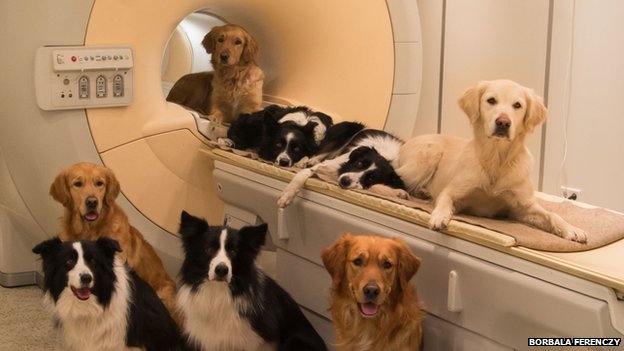
Pet dogs took part in the MRI scanning study.
Devoted dog owners often claim that their pets understand them. A new study suggests they could be right.
By placing dogs in an MRI scanner, researchers from Hungary found that the canine brain reacts to voices in the same way that the human brain does.
Emotionally charged sounds, such as crying or laughter, also prompted similar responses, perhaps explaining why dogs are attuned to human emotions.
Lead author Attila Andics, from the Hungarian Academy of Science’s Eotvos Lorand University in Budapest, said: “We think dogs and humans have a very similar mechanism to process emotional information.”
Eleven pet dogs took part in the study; training them took some time.
During the approximately 18–32 thousand years of domestication [1], dogs and humans have shared a similar social environment [2]. Dog and human vocalizations are thus familiar and relevant to both species [3], although they belong to evolutionarily distant taxa, as their lineages split approximately 90–100 million years ago [4]. In this first comparative neuroimaging study of a nonprimate and a primate species, we made use of this special combination of shared environment and evolutionary distance. We presented dogs and humans with the same set of vocal and nonvocal stimuli to search for functionally analogous voice-sensitive cortical regions. We demonstrate that voice areas exist in dogs and that they show a similar pattern to anterior temporal voice areas in humans. Our findings also reveal that sensitivity to vocal emotional valence cues engages similarly located nonprimary auditory regions in dogs and humans. Although parallel evolution cannot be excluded, our findings suggest that voice areas may have a more ancient evolutionary origin than previously known.
The canine brain reacted to voices in the same way that the human brain does.
“There were 12 sessions of preparatory training, then seven sessions in the scanner room, then these dogs were able to lie motionless for as long as eight minutes. Once they were trained, they were so happy, I wouldn’t have believed it if I didn’t see it.”
For comparison, the team looked at the brains of 22 human volunteers in the same MRI scanners.
The scientists played the people and pooches 200 different sounds, ranging from environmental noises, such as car sounds and whistles, to human sounds (but not words) and dog vocalisations.
The researchers found that a similar region – the temporal pole, which is the most anterior part of the temporal lobe – was activated when both the animals and people heard human voices.
“We do know there are voice areas in humans, areas that respond more strongly to human sounds that any other types of sounds,” Dr Andics explained.
“The location (of the activity) in the dog brain is very similar to where we found it in the human brain. The fact that we found these areas exist at all in the dog brain at all is a surprise – it is the first time we have seen this in a non-primate.”
Emotional sounds, such as crying and laughter also had a similar pattern of activity, with an area near the primary auditory cortex lighting up in dogs and humans.
Likewise, emotionally charged dog vocalisations – such as whimpering or angry barking – also caused a similar reaction in all volunteers,
Dr Andics said: “We know very well that dogs are very good at tuning into the feelings of their owners, and we know a good dog owner can detect emotional changes in his dog – but we now begin to understand why this can be.”
However, while the dogs responded to the human voice, their reactions were far stronger when it came to canine sounds.
They also seemed less able to distinguish between environmental sounds and vocal noises compared with humans.
About half of the whole auditory cortex lit up in dogs when listening to these noises, compared with 3% of the same area in humans.
Commenting on the research, Prof Sophie Scott, from the Institute of Cognitive Neuroscience at University College London, said: “Finding something like this in a primate brain isn’t too surprising – but it is quite something to demonstrate it in dogs.
“Dogs are a very interesting animal to look at – we have selected for a lot of traits in dogs that have made them very amenable to humans. Some studies have show they understand a lot of words and they understand intentionality – pointing.”
But she added: “It would be interesting to see the animal’s response to words rather than just sounds. When we cry and laugh, they are much more like animal calls and this might be causing this response.
For the full report, as it was posted on the BBC website, click here.
Plus, do watch this five-minute video abstract.
Published on Feb 20, 2014
The video presents the first study to compare brain function between humans and any non-primate animal. Scientists at MTA-ELTE Comparative Ethology Research Group in Hungary found that dogs and humans use similar neural mechanisms to process social information in voices. The fact that dogs can be trained to lie motionless during fMRI tests opens up the space for a new branch of comparative neuroscience.
The first study to compare brain function between humans and any non-primate animal shows that dogs have dedicated voice areas in their brains just as people do. Dog brains, like those of people, are also sensitive to acoustic cues of emotion, according to a study in the Cell Press journal Current Biology.
The findings suggest that voice areas evolved at least 100 million years ago, the age of the last common ancestor of humans and dogs, the researchers say. It also offers new insight into humans’ unique connection with our best friends in the animal kingdom, perhaps explaining how our two species have lived and worked together so effectively for tens of thousands of years.
“Our findings suggest that dogs and humans not only share a similar social environment, but they also use similar brain mechanisms to process social information,” said Atilla Andics of MTA-ELTE Comparative Ethology Research Group in Hungary. “This may help the successfulness of vocal communication between the two species.”
Andics and his colleagues trained eleven dogs to lay motionless in an fMRI brain scanner. That made it possible to run the very same neuroimaging experiment on dog and human participants — something that had never been done before. They captured both dogs’ and humans’ brain activities while they listened to dog and human sounds, ranging from whining or crying to playful barking or laughing.
The images show that dog and human brains include voice areas in similar locations. Not surprisingly, the voice area of dogs responds more strongly to other dogs, while that of humans responds more strongly to other humans. The researchers also noted striking similarities in the ways the dog and human brain processes emotionally loaded sounds. In both species, an area near the primary auditory cortex lit up more with happy sounds than unhappy ones. Andics said they were most struck by the common response to emotion across species.
There were some differences too: in dogs, 48 percent of all sound-sensitive brain regions respond more strongly to sounds other than voices. That’s in contrast to humans, in which only three percent of sound-sensitive brain regions show greater response to non-vocal versus vocal sounds.
The study is the first step to understanding how it is that dogs can be so remarkably good at tuning into the feelings of their human owners. “This method offers a totally new way of looking at neural processing in dogs,” Andics said. “At last we begin to understand how our best friend is looking at us and navigating in our social environment.”
Although this is the second time this has been shown it is so remarkable, and there may well be many who have not seen it!
I have been having some tiny problems mainly with the Apple Photos app and the good folks over at Ugly Hedgehog were incredibly helpful. This led to me taking my machine into Dick Webster Computers here in Grants Pass for a potential upgrade.
So I am going to republish some earlier posts for the next two days, which I hope will be long enough to come to a conclusion about whether this machine may be upgraded or whether I am looking at a new iMac.
Footnote:
I called in to Dick Webster, a good, local computer repair shop, earlier today. Took my iMac with me.
They told me that that particular iMac cannot have the RAM upgraded to 16GB but they could install a SSD. However, they looked up the Apple Photos app and said there were a number of complaints from others that it was freezing.
I was told to save my money, the iMac was perfectly good and to choose a photo editing application that supplied my needs.
My only outstanding query is whether all the relevant software programs, i.e. the photo editing apps, will run without any bother on 8GB.
We haven’t had a recall for some time but here’s one from Health Canada.
ooOOoo
Carnivora Dog and Cat Food Recall
June 15, 2020 — Health Canada is recalling Carnivora Fresh Frozen Patties for Dogs and Cats due to a possible contamination with E. coli O157.
E. coli O157 is a particularly dangerous strain of bacteria that can cause serious and life-threatening illness in both pets and humans after eating or handling the affected food.
What’s Recalled?
The recall includes 6 varieties of Carnivora brand raw pet food.
Approximately 1,803 packages of the affected products were sold nationwide in Canada between January 13, 2020 and June, 2020.
As of June 12, four cases of illness related to the recalled product have been reported.
About E. Coli Bacteria
E. coli O157 is a bacteria that can cause serious, sometimes life-threatening illness.
Some people infected with E. coli O157 do not get sick at all, though they can still spread the infection to others.
Common symptoms observed after infection include nausea, vomiting, headache, mild fever, severe stomach cramps, and watery or bloody diarrhea.
Most symptoms end within five to ten days.
Pregnant women, those with weakened immune systems, young children and older adults are most at risk for developing serious complications and might need hospitalization.
There is no real treatment for E. coli infections, other than monitoring the illness, providing comfort, and preventing dehydration.
People should contact their health care provider if symptoms persist or worsen with time.
What to Do?
Health Canada advises consumers to stop using any of the affected pet food products and contact the retailer where it was purchased from for a full exchange or refund.
U.S. citizens can report complaints about FDA-regulated pet food products by calling the consumer complaint coordinator in your area.
So soon after we welcomed Sheena, Ruby had a severe downturn.
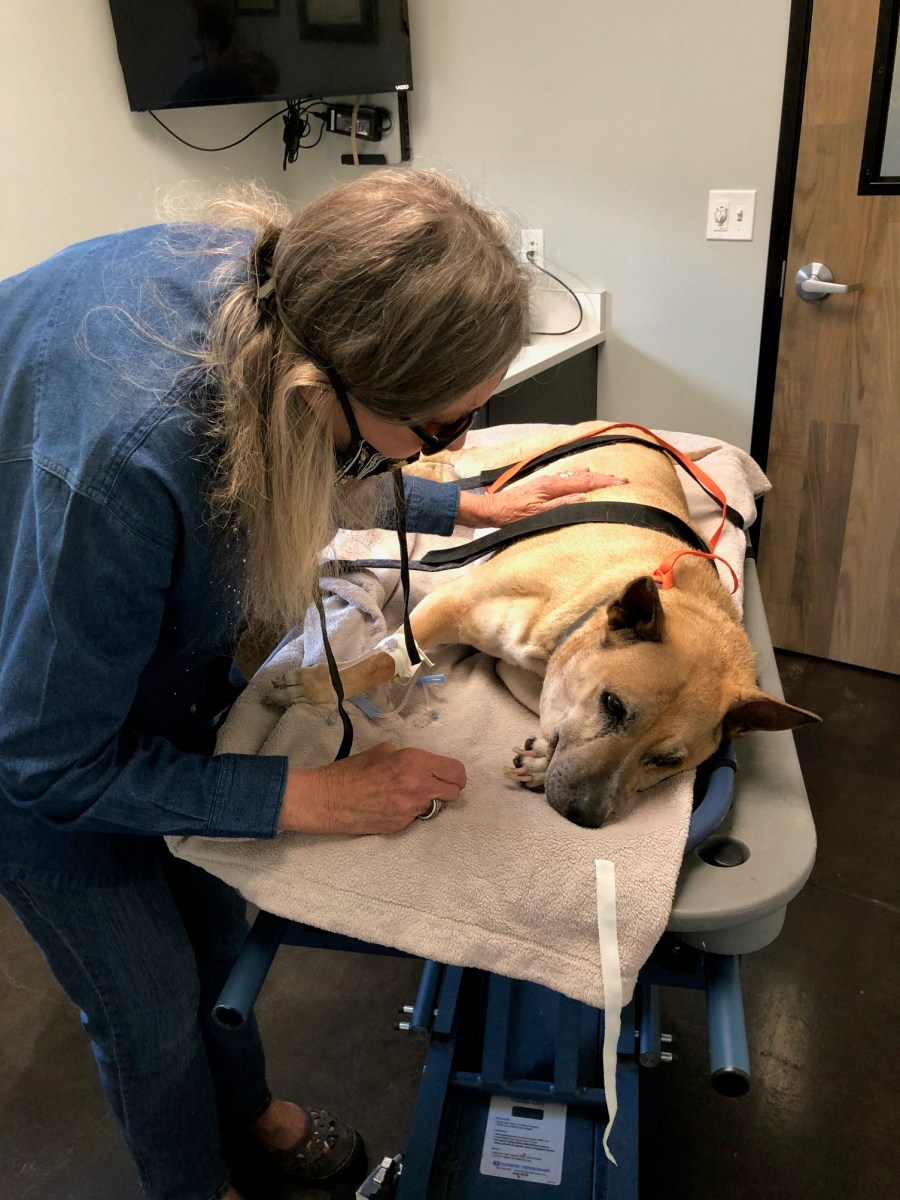
Ruby had had one operation for the removal of a mast cell tumor back in February but we were advised by the vet that almost certainly it would grow back. Late on Saturday Ruby became very tired and went off her food and Jean and I were discussing having to take her to be put down on Monday (today).
Then overnight Saturday it was clear that her breathing was very laboured and on Sunday she was weak and struggling. It was time.
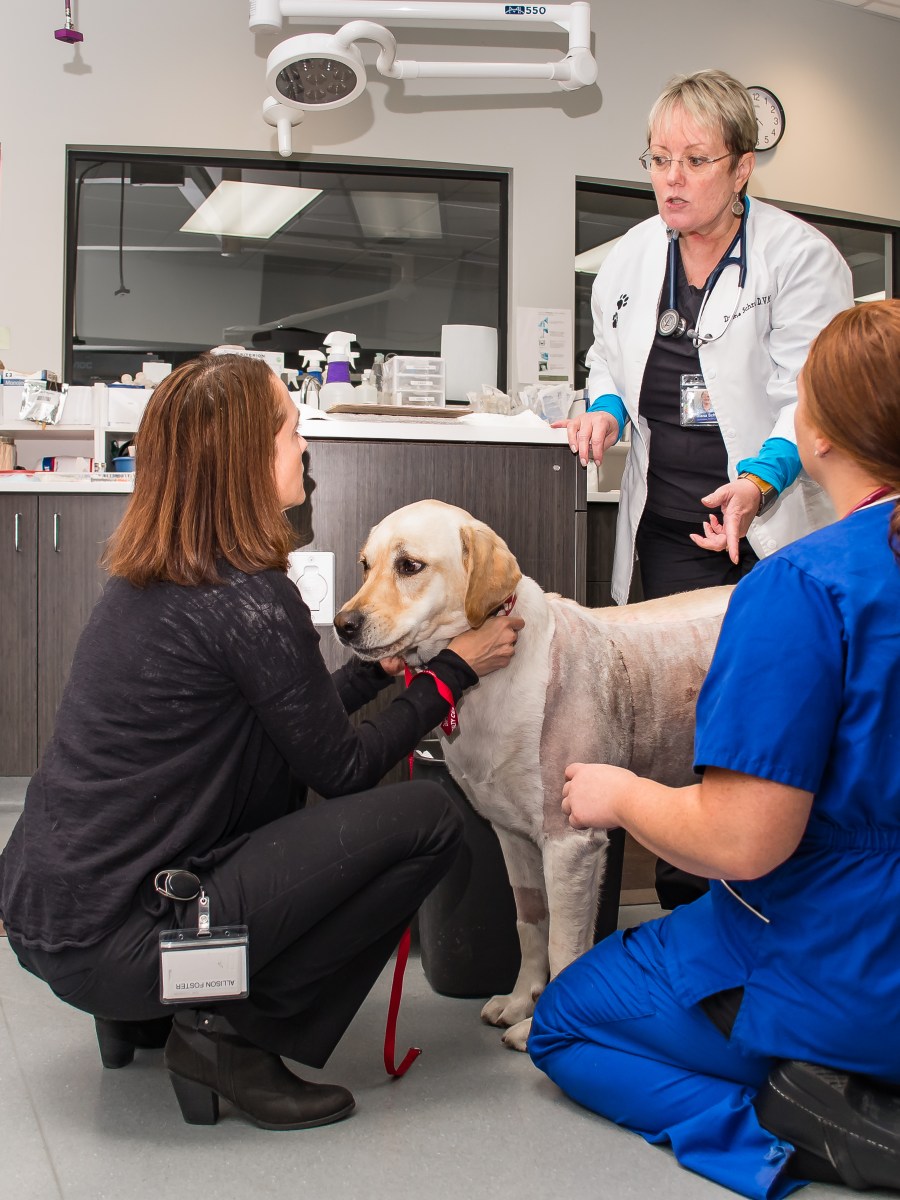
Being a Sunday we had no option other than to go to the Southern Oregon Veterinary Specialty Center, or SOVSC. We called them and they asked a few questions about Ruby and then told us to come straight over. They are at Biddle Road, Central Point and it took us 45 minutes to get there.
A little bit from their website:
Outstanding Team
Our team includes board certified specialists and highly trained doctors and staff, who have been chosen for their skill and expertise, as well as their compassion and dedication to veterinary medicine.
Then a couple of photographs from us.
oooo
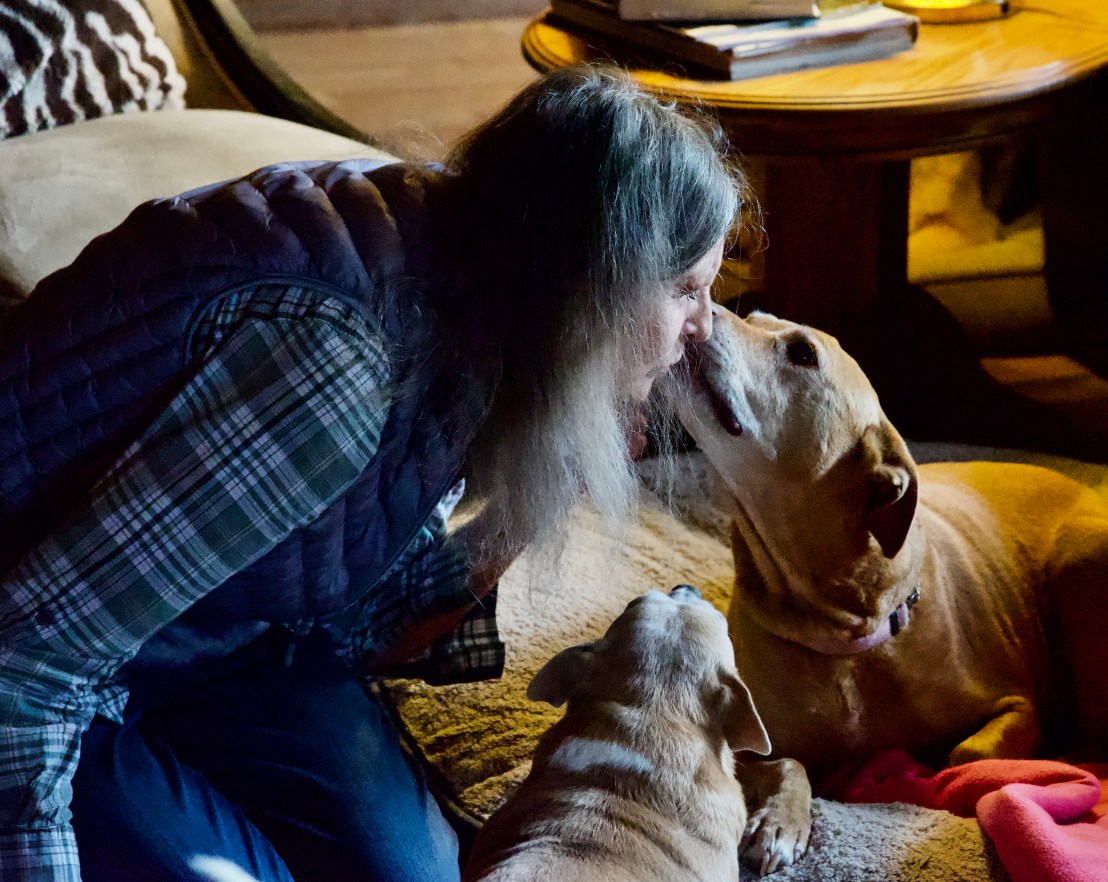
Jeannie saying goodbye.
Ruby was the last of Jean’s Mexican rescues. She will be sorely missed!
Those were Jeannie’s words not mine. When you consider the number of dogs that Jean has introduced into her pack, especially down in Mexico, that is quite a statement!
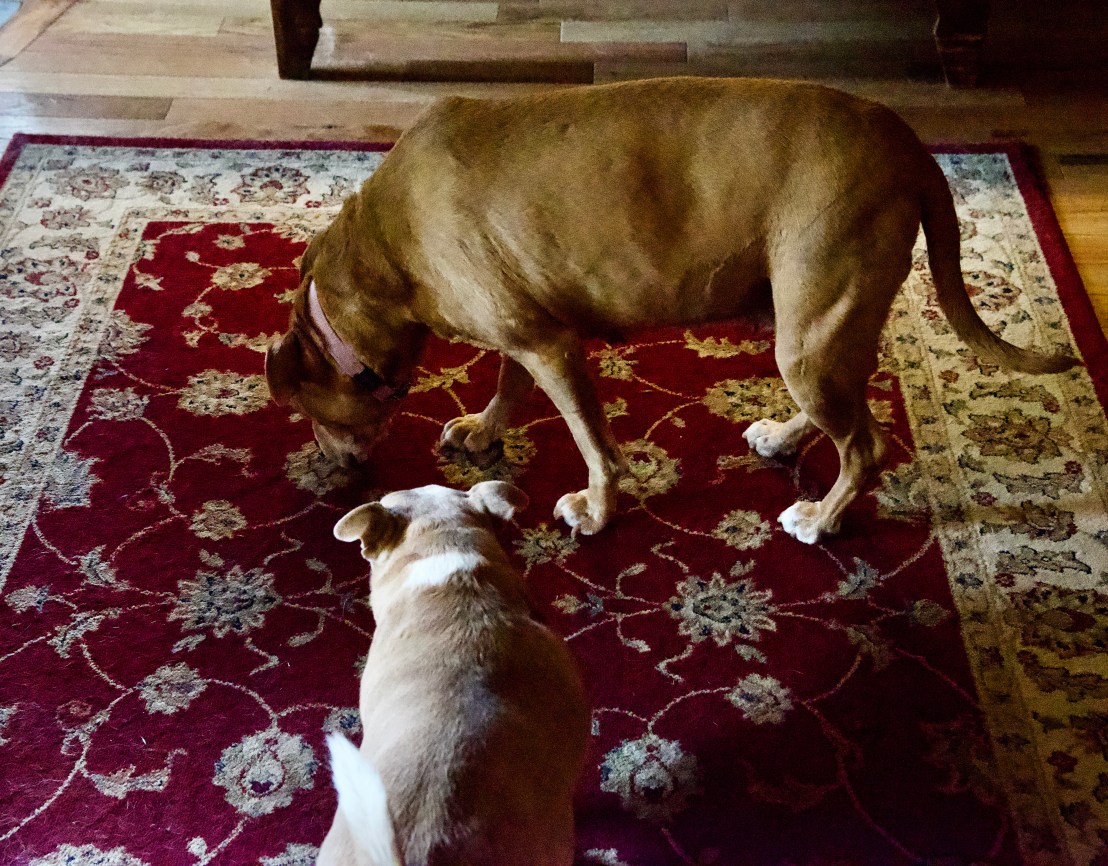
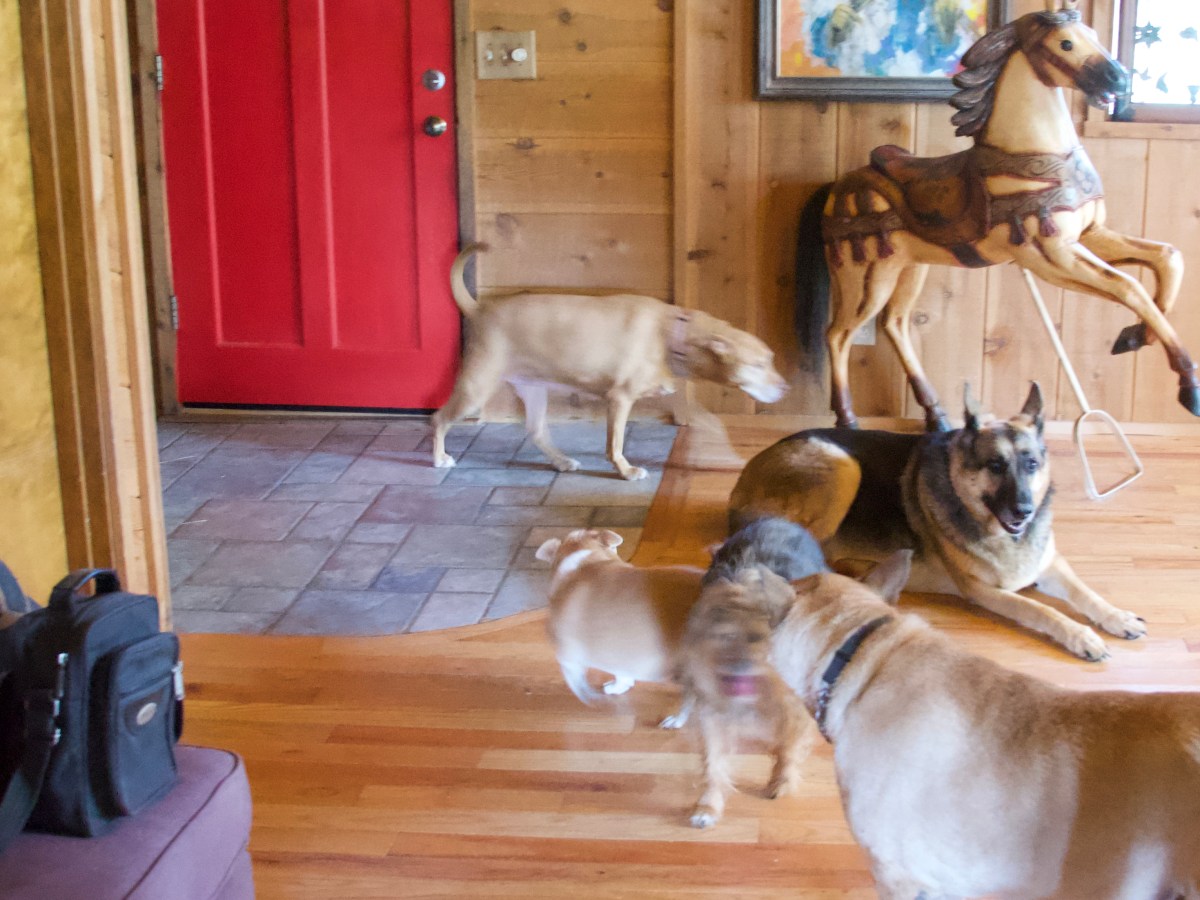
Very soon after Renate coming round to our place at 10 am yesterday morning Sheena came into the house. I tried to take a few photographs in those early moments. They are not the best I have taken!
Sheena within minutes goes to her bed.
oooo
Little Pedi watching Sheena!
oooo
oooo
oooo
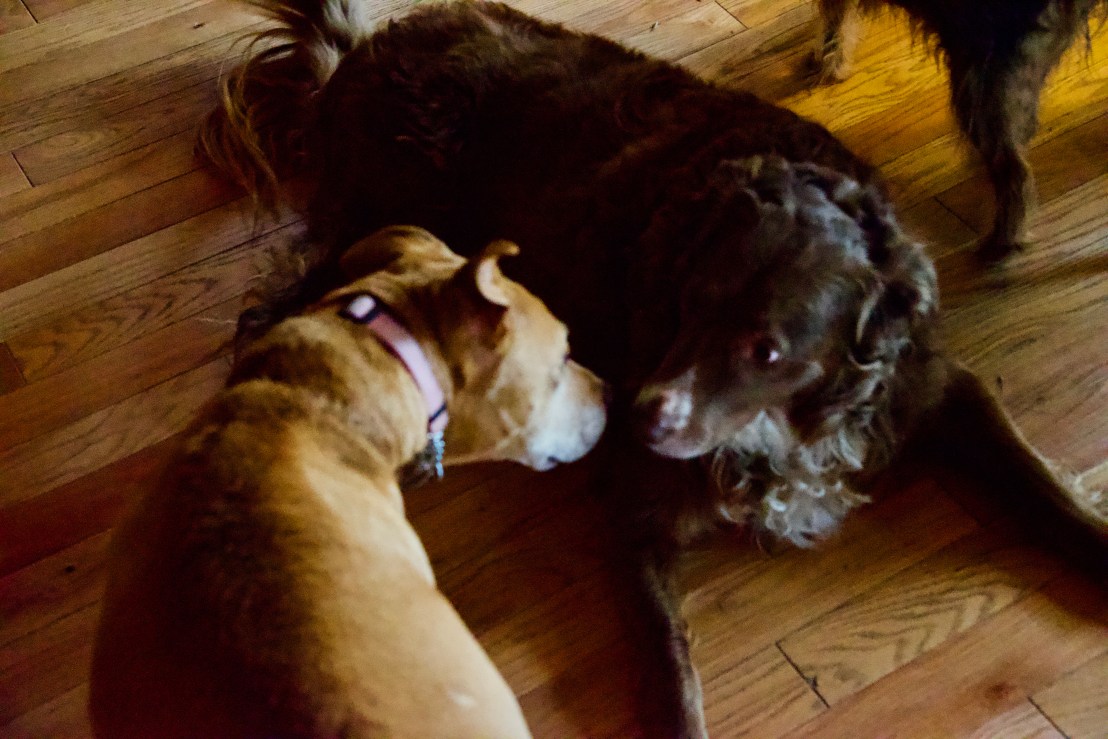
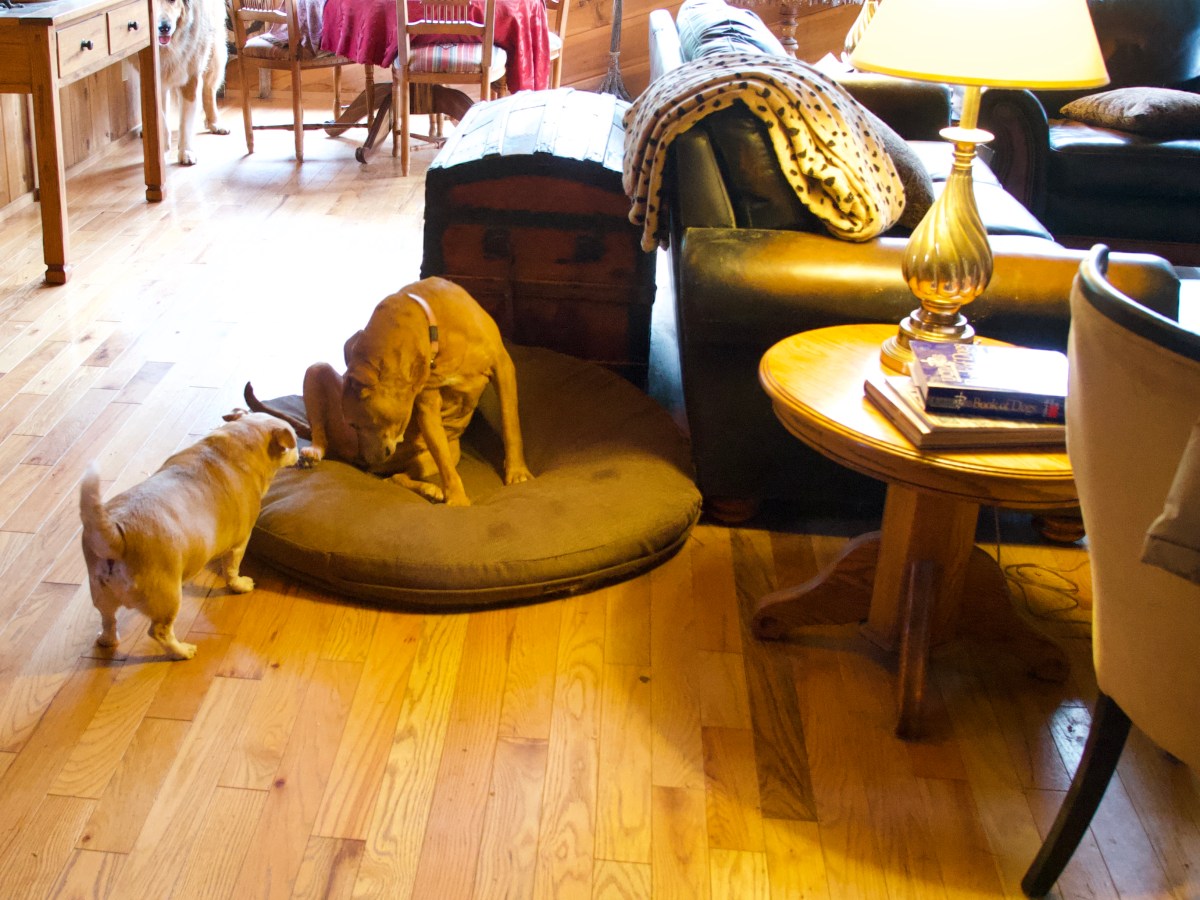
Sheena getting to know Oliver.
oooo
oooo
oooo
Now we have yet to go a full day (as this is being written on Friday for publication at midnight PDT tonight). But Jean and I have a good feeling about Sheena.
I follow Colin’s blog Wibble. It ranges across a myriad of thoughts and beliefs and it’s a good follow.
On June 9th, Colin published a post regarding The wolves within, a beautiful legend from the Cherokees. Colin readily and promptly gave me permission to share it with you.
The content isn’t mine, but of course it’s fine by me, Paul. You’re too polite by half! 😀
Here it is.
ooOOoo
The wolves within: a Cherokee legend
Posted on June 9, 2020
An old grandfather said to his grandson, who came to him with anger at a friend who had done him an injustice, “Let me tell you a story.
“I too, at times, have felt a great hate for those that have taken so much, with no sorrow for what they do.
“But hate wears you down, and does not hurt your enemy. It is like taking poison and wishing your enemy would die. I have struggled with these feelings many times.” He continued, “It is as if there are two wolves inside me. One is good and does no harm. He lives in harmony with all around him, and does not take offense when no offense was intended. He will only fight when it is right to do so, and in the right way.
“But the other wolf, ah! He is full of anger. The littlest thing will set him into a fit of temper. He fights everyone, all the time, for no reason. He cannot think because his anger and hate are so great. It is helpless anger, for his anger will change nothing.
“Sometimes, it is hard to live with these two wolves inside me, for both of them try to dominate my spirit.”
The boy looked intently into his grandfather’s eyes and asked, “Which one wins, grandfather?”
The grandfather smiled and quietly said, “The one I feed.”
On June 4th this year Grist published an article written by Eve Andrews. It is not about dogs at all. Yet, it seems to me to ask a fundamental question about us humans. The article speaks of America but certainly it applies to my old country, the U.K., and it probably applies to most of the countries in the world.
I recently wrote to Annelise McGough, the Growth and Engagement Editor at Grist asking if I could republish the article. She kindly said yes!
Did any aspect of climate change cause the pandemic to happen this year (versus last year or next year)? Could pandemics happen more often?
— Which Oracle Read Rightly Imminent, Existential Doom?
A. Dear WORRIED,
2020: what a year so far! As anyone who witnessed the crowds of face mask-clad people show up in the middle of a deadly pandemic to protest police violence this weekend can attest, a lot seems to be terrible all at once. You’re asking, in a sense, why now? It almost seems like it must be a rhetorical question. But it’s not — by understanding how we got into this mess, we might presumably be able to find our way out.
This doesn’t just apply to the pandemic.
Let’s start by taking your question at face (mask) value: There are multiple factors that have contributed to the rise of zoonotic illnesses — those of animal origin — over recent years, as my very sharp colleague Shannon Osaka delineated in an article and video earlier in the spring. Scientists believe COVID-19, like several other SARS viruses, likely originated in a bat. It turns out many strains of coronavirus can be traced back to bats! Who knew those little guys were such harbingers of destruction?
It’s not really on the bats, of course. Warmer temperatures (an established feature of climate change) and environmental degradation (often attributed to climate change, industrialization, or other products of human development) have driven a lot of animals to migrate out of their normal habitats and into human ones. Those factors have also contributed to different species coming into close contact with each other, which makes viruses normally contained to one species more likely to “spill over,” or jump to a new type of animal.
So clearly, the lead-up to the novel coronavirus’s outbreak was a gradual one. But perhaps 2019 was just warm enough to kill off enough of the insect population that some COVID-19-carrying bat depended on for food, and that drove it out to wreak some (unintentional) havoc on humanity. The bat’s habitat could have been destroyed by a new coal mine development. It could have woken up one morning and thought: This is my time to fuck shit up! Revenge on those humans that messed up my home! (OK, there was also probably a pangolin involved, but let’s keep things simple.)
According to the Centers for Disease Control and Prevention, COVID-19 is the fourth major pandemic caused by a novel virus to hit the United States since the 1918 “Spanish flu” that killed 50 million people worldwide. And there are so many factors and variables that lead to the sprout of a pandemic that you could very well argue that, “Yes, of course it happened at this exact point in time” or “No, it could have happened at any point in time.” It’s impossible to know for sure. But climate change and habitat destruction are certainly working together to create circumstances more favorable to the spread of disease, and that means pandemics will likely become more common as the world grows warmer.
The thing is, highly contagious, devastating illnesses have always been a part of human life, even though a real pandemic is a few-times-per-century event. It’s a fact of sharing the Earth with other living things; it just happens. But humans are ostensibly equipped with the means to contain the spread of diseases and help heal those who become sick. At this moment, thanks to advances in medicine and information-sharing and communication, that’s more true than ever before!
And yet. The United States, an astonishingly wealthy nation with ostensibly the most advanced — certainly the most expensive! — medical system in the world, has lost around 100,000 people to COVID-19, with many more surely to come. That doesn’t even take into account the far-reaching hardship caused by an economic collapse as drastic, by some metrics, as the Great Depression. The current unemployment rate, for example, exceeds 20 percent.
The reality is that what some have referred to as “the lost spring” (and what could very well be “the lost year”) is not the product of a single infectious disease, but the boiling over of many long-standing crises, including structural forms of injustice. Like everything else in American society, the damage done by the coronavirus is unevenly distributed across race. The death rate of black Americans from COVID is three times that of whites, and 40 percent of black-owned businesses have shuttered due to social distancing measures. As of April, rates of black and Latino unemployment were 16.7 and 18.9 percent, respectively, compared to 14.2 percent for whites. These hardships continue to feed into the cycle of racial inequality in this country.
The devastation to American society that we are witnessing in real time, one could argue, could only have happened at the present moment. That’s due to the nightmarish confluence of horrific leadership, centuries of racial oppression, unprecedented wealth inequality, the erosion of the social safety net, privatization of medicine, a far-too-consolidated supply chain, politicization of science, a highly globalized economy, and one misguided or mischievous bat. Oh, and the climate change and environmental degradation that could have led to said bat’s misbehavior.
COVID-19 could have popped up at any time, as viruses do. The degree to which it’s ravaged American society, however, has little to do with the virus itself. Other countries such as New Zealand and South Korea, faced the same disease and came out the other side with far fewer deaths and less severe economic devastation. This is, to a significant degree, about governance and leadership.
It’s also a preview of what climate change can do. A very contagious respiratory virus is an unfortunate fact; it’s not going away, and it is a challenge to be dealt with. Climate change, just the same, is coming whether or not we pay attention to it. Communities, cities, and states are going to have to put measures into place to ensure that it doesn’t literally kill us all. That’s what adaptation means, and that’s why people talk about things like seawalls and tree cover and managed retreat.
But creating a climate-resilient society requires a lot more than just building or planting stuff! This is where I would normally tell you to vote for leaders who support all that building and planting and, more importantly, cutting carbon emissions in the first place. Yes, do that. And additionally, vote for leaders who will feed our starving public systems to make it so they actually support the people who need them. Vote for those who understand and want to change what non-white people experience, what poor people experience, what immigrants experience. Without all of these things, there cannot be a climate-resilient civilization.
If anything were made clear by the unique, mind-boggling suffering that the United States has seen in the past week, brought about by the collision of a viral pandemic and police brutality, it’s that voting is a necessary condition but it is not enough. You, WORRIED, wrote to me to ask why the pandemic happened right now, possibly because it seems like such a uniquely terrible moment for the country to have to deal with it. We not only have the worst possible leader, but also a general absence of leadership altogether.
Going back just a few months, I believe there was an opportunity for an alternate version of this moment in American history in which one incredibly dangerous virus did not kill as many people nor ruin as many lives. But even in that universe, it’s important to acknowledge that pre-pandemic life wasn’t so great for most people. Undoing this path and “restoring order” is a ridiculous hope, since the order that has existed for so long has created a society that is wholly unsustainable judging from almost any social, environmental, or economic perspective.
So what can we do with this knowledge? One, you should be angry. Be angry that leaders missed opportunities to fortify the nation beyond its military, to break down racist systems and promote equality, and to instate laws and policies designed to help prevent crises that, by all accounts, were utterly predictable.
Then I think you should show your anger, whether that’s through protesting, hurling money or your time or whatever you have at worthy organizations that will put it in the right hands, or just screaming and yelling, if you have to. And while voting might not feel like enough when so much feels so wrong, it’s a necessary condition for change — force people in power to know that they created that mess and that they are accountable for it.
Furiously,
Umbra
ooOOoo
Climate change or global warming is with us NOW. It is time to make fundamental changes to the way we live NOW. While many individuals are doing their bit we need international agreement, especially international support for the United Nations, for all the nations in the world NOW.
Thank you for reading this!
It breaks my heart.
Let me not stop with that. I want to hear from you. Are you worried? Or not quite as concerned as me and Umbra? Do you think it is in the hands of our leaders or is it an international problem?
 The point at which the sun reaches its farthest point north of the equator is the Summer Solstice, well it is for the Northern Hemisphere. This occurs annually on June 20 or June 21, depending on your time zone.
















 Learning from Dogs