Author: Paul Handover

The wisdom of Jefferson

Interesting insights into the American Founding Father.

Big thanks to Bob Derham who sent me this yesterday.  I’m sure many Americans know this as they know their own mother.  But for this recent resident of the USA I found it fascinating.
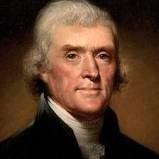
Jeffeson

Thomas Jefferson

Thomas Jefferson was an American Founding Father, the principal author of the Declaration of Independence and the third President of the United States.
Born: April 13, 1743, Albemarle County
Died: July 4, 1826, Charlottesville
Presidential term: March 4, 1801 – March 4, 1809
Party: Democratic-Republican Party
Education: College of William and Mary (1760–1762), University of Toronto Mississauga

Thomas Jefferson was a remarkable man who started learning very early in life and never stopped.

At 5, began studying under his cousin’s tutor.
At 9, studied Latin, Greek and French.
At 14, studied classical literature and additional languages.
At 16, entered the College of William and Mary.
At 19, studied Law for 5 years starting under George Wythe.
At 23, started his own law practice.
At 25, was elected to the Virginia House of Burgesses.
At 31, wrote the widely circulated Summary View of the Rights of British America and retired from his law practice.
At 32, was a Delegate to the Second Continental Congress.
At 33, wrote the Declaration of Independence .
At 33, took three years to revise Virginia ‘s legal code and wrote a Public Education bill and a statute for Religious Freedom.
At 36, was elected the second Governor of Virginia, succeeding Patrick Henry.
At 40, served in Congress for two years.
At 41, was the American minister to France , and negotiated commercial treaties with European nations along with Ben Franklin and John Adams.
At 46, served as the first Secretary of State under George Washington.
At 53, served as Vice President and was elected president of the American Philosophical Society.
At 55, drafted the Kentucky Resolutions, and became the active head of Republican Party.
At 57, was elected the third president of the United States.
At 60, obtained the Louisiana Purchase , doubling the nation’s size.
At 61, was elected to a second term as President.
At 65, retired to Monticello .
At 80, helped President Monroe shape the Monroe Doctrine.
At 81, almost single-handedly created the University of Virginia , and served as its first president.
At 83, died on the 50th anniversary of the Signing of the Declaration of Independence.

Thomas Jefferson knew because he himself studied the previous failed attempts at government. He understood actual history, the nature of God, his laws and the nature of man. That happens to be way more than what most understand today. Jefferson really knew his stuff.

John F. Kennedy held a dinner in the white House for a group of the brightest minds in the nation at that time. He made this statement:
“This is perhaps the assembly of the most intelligence ever to gather at one time in the White House with the exception of when Thomas Jefferson dined alone.”

Quotations by Thomas Jefferson

“When we get piled upon one another in large cities, as in Europe, we shall become as corrupt as Europe.”

“The democracy will cease to exist when you take away from those who are willing to work and give to those who would not.”

“It is incumbent on every generation to pay its own debts as it goes. A principle which if acted on would save one-half the wars of the world.”

“I predict future happiness for Americans if they can prevent the government from wasting the labors of the people under the pretense of taking care of them.”

“My reading of history convinces me that most bad government results from too much government.”

“No free man shall ever be debarred the use of arms.”

“The strongest reason for the people to retain the right to keep and bear arms is, as a last resort, to protect themselves against tyranny in government.”

“The tree of liberty must be refreshed from time to time with the blood of patriots and tyrants.”

“To compel a man to subsidize with his taxes the propagation of ideas which he disbelieves and abhors is sinful and tyrannical.”

And finally Thomas Jefferson said in 1802: “I believe that banking institutions are more dangerous to our liberties than standing armies. If the American people ever allow private banks to control the issue of their currency, first by inflation, then by deflation, the banks and corporations that will grow up around the banks will deprive the people of all property – until their children wake-up homeless on the continent their fathers conquered.”

A voice from the past to lead us in the future.

It almost makes sense, doesn’t it?

Starting the week-end a little early.

Regular followers of Learning from Dogs know that I try and offer something more gentle and light-hearted for the week-end.  But yesterday afternoon amid all the hustle and bustle of things, the telephone cable was cut to add to our sensation of being cut off from the outside world.  (If you are new to this theme then drop in here for further explanation.)  Somehow finding the time to offer you a post of substance for today became too challenging.

We recently watched a comedian by the name of Reggie Watts appearing on BBC television and laughed our sides off.  But Mr. Watts is not your average comedian.  Wikipedia describes him thus:

reggie-watts-8

Reggie Watts (born March 23, 1972 in Stuttgart, Germany[1]) is a Brooklyn-based comedian and musician. His shows are mostly improvised and consist of stream of consciousness stand-up in various shifting personae, mixed with loop pedal-based a cappella compositions. He performs regularly on television, radio, and in live theater. His comic skills come into play in improvisational performance, as well as performance of written music. Watts currently appears as the sidekick on the IFC talkshow Comedy Bang Bang, which began airing on June 8, 2012.

So enjoy the following, and have a lovely week-end!  You will see how it all makes sense!

The saga of Bummer Ck, part Two!

Our bridge repairs continue.

Last Friday, I posted part One about how the floods had swept away our bridge supports and how the remaining steel deck had been removed.

Unfortunately, when the deck was lifted clear of the concrete supports, further damage to those supports became visible.  Thus repairs had to be made, as the photo below illustrates.

Brpt21

Once the concrete had cured for a couple of days, then it was time to install a steel frame.  This frame will take the weight of the steel platform when it’s time to re-install that.

Brpt22

Below there’s a picture of Wade welding the cross joists to the main longitudinal girders.

Brpt23

Plus another shot that demonstrates the ease with which these guys work on girders!

P1120087

So no access to our front entrance road just now but by Friday the steel platform should be back in place.  Then before the required earth works are started on Monday we will have a week-end of being able to drive in and out of our property.

Utter madness!

The very strange ways of man!

I am incredibly grateful to be living in the USA as a legal resident.  The circumstances that lead to Jeannie and me living here in Merlin, Southern Oregon are the stuff of dreams.  Which is why writings on Learning from Dogs that could be seen as critical of a US administration leave me rather uncomfortable.

However, a recent news item on the BBC website struck me as so utterly incongruous that I couldn’t resist today’s post.  As is said, “I can resist anything except temptation!”  Here’s that item.

US Congress bans word ‘lunatic’ in federal legislation

6 December 2012

"Lunatic" is derived from the Latin word for moon, and the belief that it could affect mental health
“Lunatic” is derived from the Latin word for moon, and the belief that it could affect mental health

The sharply divided US Congress has been able to agree on one thing at least – that the word “lunatic” should be banned.

The House of Representatives voted 398-1 on Wednesday to strike the term from all federal legislation, after the Senate did the same in May.

The measure is designed to remove language that has become outdated or demeaning from the US code.

The bill will now go to President Barack Obama for his signature.

Senator Kent Conrad, one of the sponsors of the measure, said: “Federal law should reflect the 21st Century understanding of mental illness and disease, and that the continued use of this pejorative term has no place in the US code.”

The only “no” vote came from Texas congressman Louie Gohmert, who said it was madness for lawmakers to waste time on such a measure when more high-profile issues loomed, such as the federal debt.

“Not only should we not eliminate the word ‘lunatic’ from federal law when the most pressing issue of the day is saving our country from bankruptcy,” said Rep Gohmert in a statement.

“We should use the word to describe the people who want to continue with business as usual in Washington.”

Now don’t get me wrong.  In and of itself that measure is fabulous removing, as it does, any official labeling of those with mental health problems.

However, surely the following demonstrates that madness is still alive and well.

LAW PROHIBITS UNFAIR EU TAXATION OF U.S. AVIATION

November 27, 2012

Washington, DC – The President today signed into law a measure to stop the United States’ participation in a costly European Union (EU) scheme to impose an emissions tax on American and other nations’ aircraft operators and air carriers. Transportation and Infrastructure Committee Chairman John L. Mica (R-FL) and Aviation Subcommittee Chairman Tom Petri (R-WI) were among the primary sponsors of the bipartisan companion bill in the House of Representatives.

In 2011, Mica first led a Congressional delegation to the European Union to convey opposition to the EU’s plan. Mica also led a subsequent delegation to Montreal to meet with International Civil Aviation Organization (ICAO) leaders, representatives of the EU, and other officials regarding U.S. opposition to the ETS. The original “European Union Emissions Trading Scheme Prohibition Act of 2011,” authored by Mica, Petri, and other House leaders, overwhelmingly passed the House on October 24, 2011.

John Mica was quoted as saying “The law signed today is a clear signal that the United States will not accept the EU’s go-it-alone attempt to impose emissions taxes on other nations for activities far outside the EU’s own borders. This European emissions trading scheme is an unlawful infringement upon U.S. sovereignty, and the sovereignty of numerous other nations.”

Now I don’t know the rights and wrongs of this but one thing is clear to me.  If trying to reduce carbon emissions represents ‘unlawful infringement upon U.S. sovereignty‘ then don’t even ponder on the infringement that not trying to reduce emissions would risk!

Which neatly leads to the Yale forum on Climate Change & The Media that recently reported,

Forget About That 2-Degree Future

SAN FRANCISCO, CA, Dec. 5, 2012 — Renowned British climate scientist Sir Robert Watson pulled few punches today during a talk about the warmer world humans will face in coming decades.

Watson, who was IPCC chair from 1997 to 2002, all but dismissed the possibility of keeping the rise in average global temperatures to 2 degrees Celsius above pre-industrial levels — a temperature rise that corresponds to an atmospheric concentration of CO2 of 450 parts per million. It now stands at about 390 ppm.

“Fundamentally, we are not on a path toward a 2 degree world,” Watson told a packed hall at Moscone Center for a talk entitled: “A World Where the Atmospheric Concentration of Carbon Dioxide Exceeds 450 ppm.”

If the international community wanted a world in which the rise in average global temperatures this century peaked at 2 degrees C above pre-Industrial levels, CO2 emissions in the developed world should have peaked in 2010, Watson said. Globally, they would need to peak by 2014.

Instead, CO2 emissions in 2010 were up 5.9 percent relative to 2009 — and that was in the midst of an economic downturn for most industrialized countries. Total carbon emissions as well as carbon intensity (often described as the amount of CO2 emitted per unit of a nation’s GDP) have gone up.

“It’s totally clear we’re changing the composition of the atmosphere …” [but] “politicians have not listened to the scientific message,” Watson said. [my emphasis]

Average global temperatures could rise 2 to 7 degrees C by the end of the century, driving a litany of environmental changes, Watson said. Already, the climate of the 2020s and 2030s is locked in, or as Watson put it, “pre-ordained.” “Therefore, we must adapt,” he said.

You can read the full report here.

As Isaac Newton is recorded as saying: “I can calculate the motion of heavenly bodies, but not the madness of people.“

The dirt beneath our feet.

A film about dirt that opens eyes!

dirt-splsh

I have mentioned the website of the Permaculture Research Institute of Australia before.  It’s a fabulous resource for many aspects of moving towards a more sustainable lifestyle, and not just for Australians.

A few days ago, their regular posting included a link to this:

Dirt: The Movie

DIRT! The Movie — directed and produced by Bill Benenson and Gene Rosow — takes you inside the wonders of the soil. It tells the story of Earth’s most valuable and underappreciated source of fertility — from its miraculous beginning to its crippling degradation. The opening scenes of the film dive into the wonderment of the soil. Made from the same elements as the stars, plants and animals, and us, “dirt is very much alive.” Though, in modern industrial pursuits and clamor for both profit and natural resources, our human connection to and respect for soil has been disrupted. “Drought, climate change, even war are all directly related to the way we are treating dirt.”

DIRT! the Movie — narrated by Jaime Lee Curtis — brings to life the environmental, economic, social and political impact that the soil has. It shares the stories of experts from all over the world who study and are able to harness the beauty and power of a respectful and mutually beneficial relationship with soil.

DIRT! the Movie is simply a movie about dirt. The real change lies in our notion of what dirt is. The movie teaches us: “When humans arrived 2 million years ago, everything changed for dirt. And from that moment on, the fate of dirt and humans has been intimately linked.” But more than the film and the lessons that it teaches, DIRT the Movie is a call to action.

Here’s the trailer to the film.

And here’s the movie’s website.

The link to the film on the PRI Australia’s website is here: Dirt: The Movie.

So plan on sitting down somewhere and enjoying a full-length film about dirt.  It will hold you spellbound.

To nurture a garden is to feed not just on the body, but the soul.  Alfred Austin

The power of the bleedin’ obvious!

Musings for a Monday morning!

Let me start with this:

A self-affirmation

For today, I am in charge of my life.

Today, I choose my thoughts.

Today, I choose my attitudes.

Today, I choose my actions and behaviours.

With these, I create my life and my destiny

I hasten to add that I am not the author of these wonderful words; just been aware of them for many years.

OK, to the muse!

I subscribe to Christine’s excellent blog 350 or bust.  Last Friday, Christine published a post that she called: Despite Pleas In Doha, Our Governments Have Failed Us & Our Children.

In that post, Christine included this video,

The lead negotiator for the Philippines at the Climate Conference in Doha, Naderev Saño, could not keep back the tears as he made a passionate appeal for real action on climate change.

“I appeal to all, please, no more delays, no more excuses. Please, let Doha be remembered as the place where we found the political will to turn things around…

The outcome of our work is not about what our political masters want. It is about what is demanded of us by 7 billion people…

I ask of all of us here, if not us, then who? If not now, then when? If not here, then where?”

Christine also included a short video of 19-year-old Syrian-American student Munira Sibai addressing the delegates.

“So let me now speak beyond the negotiators in this room to the people who I represent. Your governments are failing you. They are afraid that offering visionary pathways to low-carbon economies will make them look foolish, that taking responsibility will make them look weak, that standing up to the money and power of polluters will cost them political support. Unchecked, this cowardice will cost lives. Here in the halls of the United Nations, the voices of global citizens are limited, regulated and relegated to these short, symbolic statements. Outside these walls, these walls, there is a global movement, growing up from the grassroots, calling for climate justice. Join us.”

So young Munira Sibai offered the answer to Naderev Saño’s plea, “I ask of all of us here, if not us, then who? If not now, then when? If not here, then where?”  That answer being so beautifully encompassed in the opening self-affirmation.  Stay with me a little longer.

Many of you readers know that a little over 5 weeks ago Jean and I and our 11 dogs and 5 cats moved from Payson in Arizona up to Merlin, Southern Oregon.  The reason I refer to Payson is that not long before we left, a group concerned about the environment and climate change decided to form Transition Town Payson.

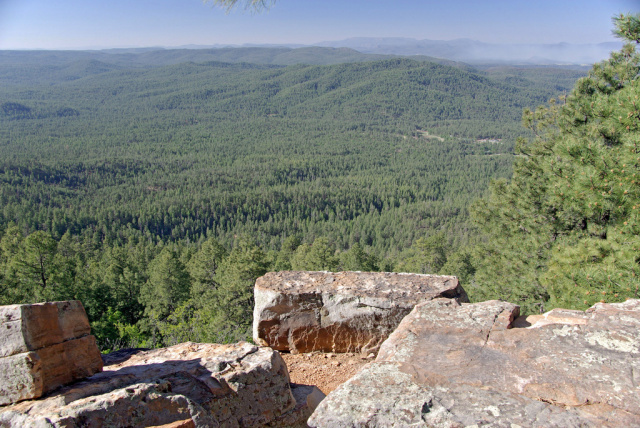
If you go to the ‘About‘ page of their website, you will see this beautiful photograph.

TTPvista

It’s a view from the Mogollon Rim Trail that would inspire anyone to want to care for our planet.  The trail passes close to Payson and is a very popular walking area.

Back to TTP.  If you go to their website and start browsing the articles and seeing what information is already there, you get a clear idea of what a group of people can do.  That key word ‘DO‘!

Last Thursday, I offered a reflection on Learning from Dogs about what feels like a new world order.  The penultimate paragraph offered this:

I sense that we, as in the peoples on this planet, are well into a period of such change that even by the end of 2013, a little over 50 weeks away, the precipice for humanity will be within sight.  I hold out zero hope that any time soon our leaders and politicians will stop ‘playing games’ and focus on doing what’s right.  The time for truth, for integrity, for sound debate is NOW!

However, all the truth, integrity and debate in the world comes to nothing without ACTION.

It really is the bleedin’ obvious!

Another pause!

More beautiful pictures from Cynthia G.

A couple of weeks ago, I published a selection of photographs from a number of pictures that had been sent to me by Cynthia.  I named the post Small pause today and it received 25 ‘Likes’ and favourable comments including one from Pedantry that simply said, “More of the same, please! :)”

So to Pedantry and all you other dear readers, here comes more of the same!

cg1

cg2

cg3

cg4

cg5

cg6

cg7

cg8

cg9

cg10

oooOOOooo

Forgive me now for this little indulgence; a couple of pictures from closer to home – literally!

HugoRd

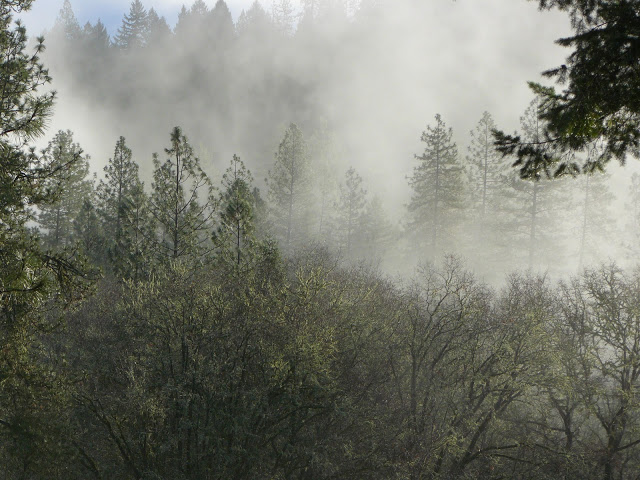
An early morning picture of the woods overlooking our Oregon property.

Jeannie

My lovely Jeannie helping tidy up the bank of the creek.

Woof, woof, let me drive, Daddy!

With thanks to Martin Lack for forwarding this item.

As reported on the BBC,

5 December 2012

A charity in New Zealand is teaching rescued dogs how to drive a car.

The canine driving school is aimed at proving how intelligent the animals can be.

Monty the giant schnauzer is among the novice drivers who have learned to control the brakes, gears and steering wheel.

Bill Hayton reports.

Prepare to be amazed!

The saga of Bummer Ck, part One!

The next couple of weeks are going to be ‘interesting’.

You will have been aware from my post last Saturday, The naming of creeks!, that heavy rains washed away the supports to the bridge that crosses Bummer Creek inside our property.

So apologies for taking a break from writing something more substantial for today but yesterday (I’m writing this at 5pm on the 6th, i.e. yesterday) the crew that will be repairing the damage arrived and got to work.  It has not been a normal day!

Three pictures to explain why!

bridge1

This seriously large digger was delivered around 9am!

bridge2

Then in what seemed a matter of moments, the bridge was no more!

bridge3

Pharaoh, of course, was getting involved.  Let’s face it, even bridge construction people can always learn from dogs!

A few reflections on a new world order

Maybe the power of open communications is our only way forward.

A number of disparate ideas have flown into my ‘in-box’ and left me with these thoughts.

The first was the last essay on TomDispatch.  This one from the hands of Mr. Engelhardt himself.  I’m referring to Tomgram: Engelhardt, The Washington Straitjacket.  As many of you know, Tom has been generous in granting me blanket permission to republish his posts and I frequently so do;  as yesterday’s post written by Professor Michael Klare demonstrated.

Let me give you a idea of where Tom was coming from with this personal essay,

The Barack Obama Story (Updated) 
How a Community Organizer and Constitutional Law Professor Became a Robot President
By Tom Engelhardt

President Barack Obama
The White House
1600 Pennsylvania Avenue, NW
Washington, D.C. 20500

Dear President Obama,

Nothing you don’t know, but let me just say it: the world’s a weird place. In my younger years, I might have said “crazy,” but that was back when I thought being crazy was a cool thing and only regretted I wasn’t.

I mean, do you ever think about how you ended up where you are? And I’m not actually talking about the Oval Office, though that’s undoubtedly a weird enough story in its own right.

The next paragraph opens, thus:

After all, you were a community organizer and a constitutional law professor and now, if you stop to think about it, here’s where you’ve ended up: you’re using robots to assassinate people you personally pick as targets.

Then there’s a comprehensive description of all the outcomes that have taken place in the last few years as in this paragraph,

Still, who woulda thunk it?  Don’t these “accomplishments” of yours sometimes amaze you? Don’t you ever wake up in the middle of the night wondering just who you are? Don’t you, like me, open your eyes some mornings in a state of amazement about just how you ended up on this particular fast-morphing planet? Are you as stunned as I am by the fact that a tanker carrying liquid natural gas is now making a trip from Norway to Japan across the winter waters of the Arctic? Twenty days at sea lopped off an otherwise endless voyage via the Mediterranean Sea, and the Indian and Pacific Oceans. Did you ever think you’d live to see the opening of the Northeast Passage in winter? Don’t you find it ironic that fossil fuels, which helped burn that oceanic hole in the Arctic ice, were the first commercial products shipped through those open waters? Don’t you find it just a tad odd that you can kill someone in distant Yemen without the slightest obstacle and yet you’ve been able to do next to nothing when it comes to global warming? I mean, isn’t that world-championship weird, believe-it-or-not bizarre, and increasingly our everyday reality?

Tom’s essay comes to this conclusion,

And don’t you ever wonder whether a labyrinth of 17 (yes, 17!) major agencies and outfits in the U.S. “Intelligence Community” (and even more minor ones), spending at least $75 billion annually, really makes us either safe or smart? Mightn’t we be more “intelligent” and less paranoid about the world if we spent so much less and relied instead on readily available open-source material?

I mean, there are so many things to dream about. So many ghostly possibilities to conjure up. So many experimental acts that offer at least a chance at another planet of possibility. It would be such a waste if you only reverted to your community-organizer or constitutional-law self after you left office, once “retirement syndrome” kicked in, once those drones were taking off at the command of another president and it was too late to do a thing. You could still dream then, but what good would those dreams do us or anyone else?

It’s a very powerful analysis that I really encourage you to read.

Then thanks to a mailing from the WordPress team, I was drawn to a recent account of life by Ruth Rutherford.  In an essay from the 13th November, Ruth writes about living in the dark, as this sample evocatively describes,

Dating in the dark

Just got back from visiting my ol’ stomping grounds in New Jersey where I spent the weekend with my parents and grandparents, just talking, eating and enjoying good company. And all this was done in the dark. Yep, that’s right. Even nearly two weeks after Hurricane Sandy unleashed her fury, the Garden State is still struggling to recover. And let me tell you: Living without power for that long will quickly make you appreciate the little things.

Like walking into a dark room and then transforming it with just the flip of a switch. Or turning on a faucet and seeing water actually pour out. Or pulling into a gas station on any day you choose, not just the days you’re allowed to based on the numbers on your license plate. Or just using the bathroom without strategically planning your “number twos” based on how much water is in the tank. Or not having to wake up at two o’clock in the morning to wander outside in your pajamas to fill the generator with gas. (Okay, fine. My dad did that part. But still…)

When you’re without electricity for a while, your mind tends to do a lot of thinking. There are no reality shows to turn your brain into mush, no hair dryers to block out the noise of everyday life, and no steaming hot baths to drown your worries in. Basically, it’s you, alone, with a candle, a flashlight and your thoughts. So I spent the time brain blogging.

At the heart of this essay is the concept that ‘dating’ as in finding one’s life partner has become too complex.  This is how Ruth concludes her ideas.

Yep, I’m telling you to be shallow.

Forget the deep end, folks. Jump, cannonball style, into the shallow end and let the fun begin!

Shared interests. Favorite movies. Local hot spots. Interesting hobbies. Recent vacations. Current music playlists. Boring work stories. Embarrassing childhood memories. Stupid jokes. Mutual attraction. Sparks. Chemistry.

Because if you can’t relate on these basic levels, then who the heck cares if you both want two boys, one girl and a yellow Labrador named Minnie?

Start small. Start simple. Grab a lantern and meet during a power outage. It’s amazing what you’ll find out about your date in the dark. (With your clotheson, people! Get your minds out of the gutter.)

~Ruth

Finally, closer to home. Patrice Ayme and Martin Lack have been exchanging views in comments to my recent post Unintended Consequences.  Patrice ended a comment with this: ” If goodness is to win, it has to be smarter than the enemy.”

So what’s this all coming to?  According to WordPress there are over 500,000 people blogging about the world as they see it.  The number of others who read all those words must be well into many, many millions.  Even humble old Learning from Dogs received over 45,000 viewings in November alone bringing the total viewings to over 785,000!

As the saying goes, “the only thing required for evil to win, is for good people to do nothing.”

Go and read the latest from Bill McKibben on 350.org.

The_New_York_Times

The article in The New York Times tells the story of students, faculty and alumni around the country who are demanding divestment from fossil fuels. On a few campuses, like Swarthmore, they’ve been at it for semesters — but all of a sudden, as the article says, they find themselves “at the vanguard of a national movement. In recent weeks, college students on dozens of campuses have demanded that university endowment funds rid themselves of coal, oil and gas stocks. The students see it as a tactic that could force climate change, barely discussed in the presidential campaign, back onto the national political agenda.”

The picture that accompanies the article comes from our Minneapolis roadshow last Friday night, and the article concisely lays out the demands and the strategy of the campaign. It’s precisely the boost we need. So please, go read it here: www.nyti.ms/SESrfr

We’re quickly getting traction, but we can get more if we have your help.

So, first things first: please email the article by clicking the “E-Mail” button on the New York Times website — if we can get it on the newspaper’s “most emailed list”, we can help make sure it goes as far as possible, as fast as possible.

For full instructions on how to email the article, click here: www.350.org/nyt

I sense that we, as in the peoples on this planet, are well into a period of such change that even by the end of 2013, a little over 50 weeks away, the precipice for humanity will be within sight.  I hold out zero hope that any time soon our leaders and politicians will stop ‘playing games’ and focus on doing what’s right.  The time for truth, for integrity, for sound debate is NOW!

The sharing of ideas, thoughts and emotions that this ‘virtual’ world of blogging offers (despite me regarding the word ‘blogging’ as ugly) is going to be the only tool, the only channel to carry sufficient weight and power for the wishes and desires of the ‘common man’ to live peacefully and safely to the end of this century and beyond!