Community.
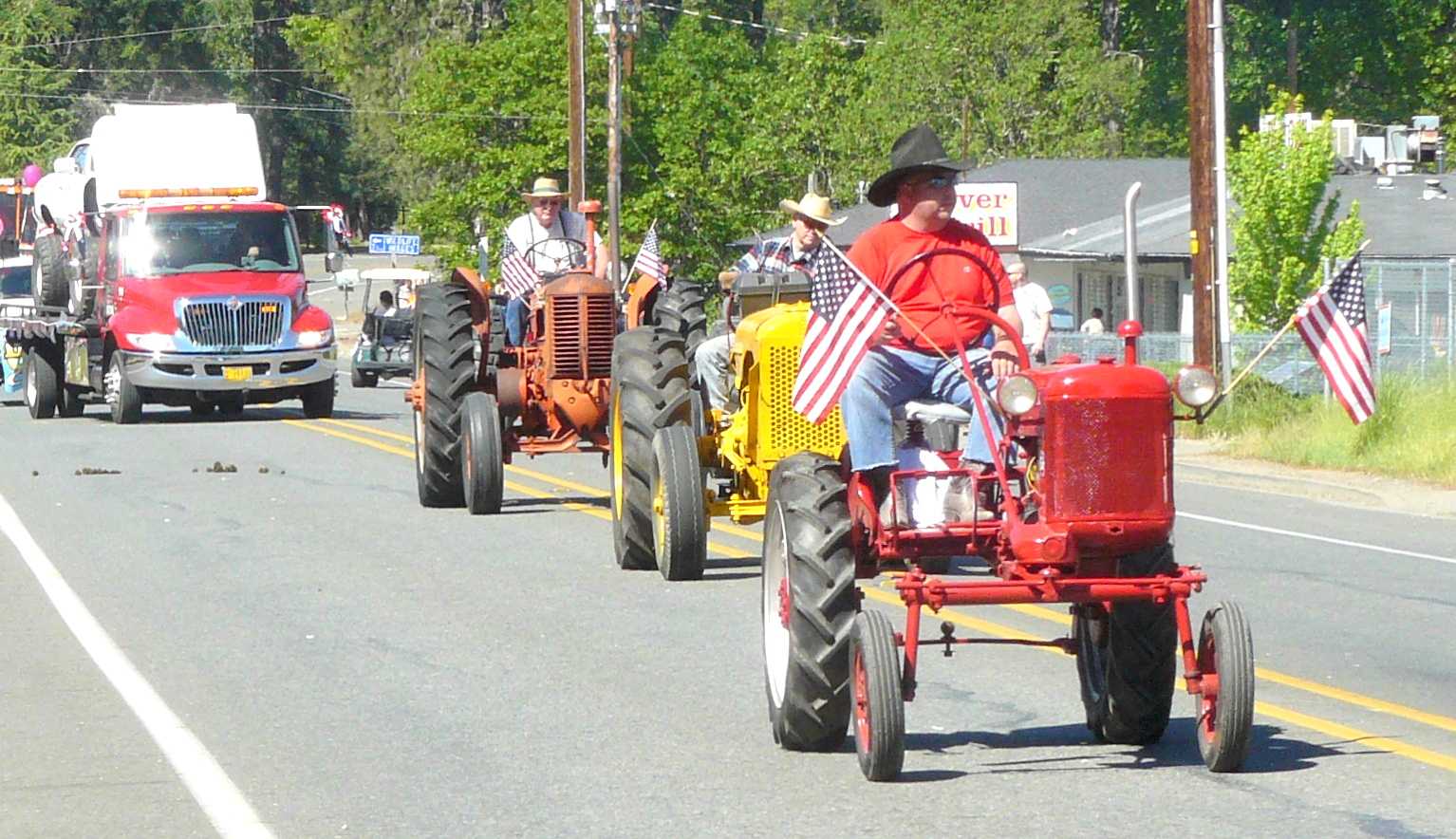
Just three photographs from our first experience yesterday of Merlin’s May Parade. We live just 3 miles from Merlin in Southern Oregon.

oooo
oooo

Dogs are animals of integrity. We have much to learn from them.
Author: Paul Handover
Community.
Just three photographs from our first experience yesterday of Merlin’s May Parade. We live just 3 miles from Merlin in Southern Oregon.
oooo
oooo
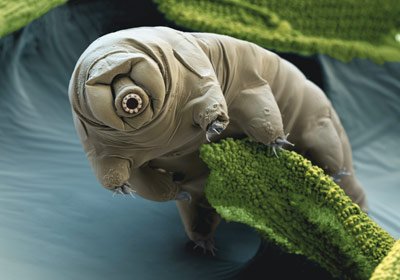
When I say tiny, I mean tiny!
A few days ago, dear friend Dan Gomez sent me a link to an article in the March/April edition of Maui Magazine (must admit not heard of it before).
It was a story written by Shannon Wianecki under the title of ‘Eight Tiny Steps for Tardigrades‘. Here’s how it opened;
Eight Tiny Steps for Tardigrades
It might sound like a fairy tale, but it’s fact: Haleakala National Park is home to a troupe of tiny bears. But don’t bother searching for these wee creatures. Tardigrades, better known as water bears, are miniscule, ranging from 50 to 1,200 microns. Which means a couple of water bears could fit into the period ending this sentence.
Water bears are so named for their appearance and form of locomotion. Like microscopic grizzlies, they pad along on eight stumpy legs, brandishing claws and short snouts. Another name — moss piglet — refers to the animal’s most common habitat. Tardigrades are aquatic, but to creatures of their size, suitable swimming holes include the moisture clinging to mosses, or the capillary water between grains of sand. They are found all over the globe: in the arctic, desert, deep sea, and — most of all — in Hawai‘i.
Now if I blow the dust off my aged brain, I recall that a micron is a millionth of a metre (or meter in American speak). Whatever the spelling, that is small.
So even if this little creature can be up to 1,200 microns ‘big’ that would still only be 1.2 thousandths of a metre.
The article is well-worth reading in full. However, I will take the small liberty of republishing the final paragraph;
In 2007, water bears joined astronauts in space to see how they handled cosmic rays. Exposed for ten days to the vacuum of space, without oxygen, water, or heat, and zapped by intense solar radiation, water bears became the first animals to survive in space.
Back on Earth, the mini-cosmonauts continued to breed successfully. Investigating the molecular makeup of these amazing creatures may show humans how to survive future space explorations.
Now without wishing to be too basic, I would love to have this question answered: How does something that small breed? Indeed, how could they ever find each other?
So if you are a pet owner and a bit worried about the costs of feeding and looking after your beloved animal, don’t worry! There’s something else in town a little bit smaller!
Something inspirational and encouraging (for a change!)
As regular readers of Learning from Dogs will know, I subscribe to news items from The Permaculture Institute of Australia. It is much recommended.
Well just the other day, this item came up:
Permaculture Recycled
Off the coast of Honduras, on a small island called Utila, lives a guy called Shane. Shane has broken away from all the social restraints and has built his own house. He is now building his own garden. However, he is doing it slightly different from most people — he uses cardboard boxes! This short film by Serena Aurora talks about Shane’s key concepts and tips on permaculture.
It’s a deeply moving film.
Awareness is the only way to go.
Two days ago, I published a post under the title of Reflections on pain and peace. The pain aspect was as a result of a shocking photograph of a rhino that had been slaughtered for its horn.
Subsequent to that piece coming out there has been more information that I wanted to cover.
I had an email from Avaaz that needed circulating:
Thanks for joining the campaign to protect the world’s rhinos. To win this campaign, we urgently need to build a massive outcry — every voice who joins us makes a difference!
Help spread the word by sending the email below to friends and family, and post this link on your Facebook wall.
http://www.avaaz.org/en/save_rhinos/?tta
Thanks again for your help,
The Avaaz team
——–
Dear friends,
The rhino is being hunted into extinction and could disappear forever unless we act now. Shocking new statistics show 440 rhinos were brutally killed last year in South Africa alone — a massive increase on five years ago when just 13 had their horns hacked off. European nations could lead the world to a new plan to save these amazing creatures but they need to hear from us first!
Fueling this devastation is a huge spike in demand for rhino horns, used for bogus cancer cures, hangover remedies and good luck charms in China and Vietnam. Protests from South Africa have so far been ignored by the authorities, but Europe has the power to change this by calling for a ban on all rhino trade — from anywhere, to anywhere — when countries meet at the next crucial international wildlife trade summit in July.
The situation is so dire that the threat has even spread into British zoos who are on red-alert for rhino killing gangs! Let’s raise a giant outcry and urge Europe to push for new protections to save rhinos from extinction. When we reach 100,000 signers, our call will be delivered in Brussels, the decision-making heart of Europe, with a crash of cardboard rhinos. Every 50,000 signatures will add a rhino to the crash — bringing the size of our movement right to the door of EU delegates as they decide their position. Sign the petition below then forward this email widely:
http://www.avaaz.org/en/save_rhinos/?tta
So far this year one rhino has been killed every day in South Africa, home to at least 80% of the world’s remaining wild rhinos. Horns now have a street value of over $65,000 a kilo — more expensive than gold or platinum. The South African Environment Minister has pledged to take action by putting 150 extra wardens and even an electric fence along the Mozambique border to try and stem the attacks — but the scale of the threat is so severe that global action is required.
Unless we act today we may lose this magnificent and ancient animal species permanently. Some Chinese are loudly lobbying for the trade in horn to be relaxed, but banning the trade in all rhinos will silence them. With the EU’s leadership, we can bring these international gangsters to justice, put the poachers in prison, and push for public awareness programmes in key Asian countries — and end this horn horror show for good.
In the next few weeks, the EU will be setting its agenda for the next big global meeting in just a few months — our best chance of turning the tide against the slaughter. We know that rhinos will be on their agenda, but only our pressure can ensure they challenge the problem at its source. Let’s build a giant outcry and deliver it in a spectacular fashion — sign now and together we can stop the slaughter across Africa:
http://www.avaaz.org/en/save_rhinos/?tta
In 2010, Avaaz’s actions helped to stop the elephant ivory trade from exploding. In 2012, we can do the same for the rhino. When we speak out together, we can change the world — last year was the worst year ever for the rhino, but this can be the year when we win.
With hope,
Iain, Sam, Maria Paz, Emma, Ricken and the whole Avaaz team
More Information:
Few Rhinos Survive Outside Protected Areas (WWF)
ttp://www.worldwildlife.org/species/finder/rhinoceros/rhinos.htmlSouth Africa record for rhino poaching deaths (BBC)
http://www.bbc.co.uk/news/world-africa-15571678‘Cure for cancer’ rumour killed off Vietnam’s rhinos (The Guardian)
http://www.guardian.co.uk/environment/2011/nov/25/cure-cancer-rhino-horn-vietnamBritish Zoos on Alert as Rhino Poaching Hits the UK (International Business Times)
http://www.ibtimes.co.uk/articles/289792/20120130/british-zoos-uk-alert-rhino-poaching-hits.htm—————–
Then as a reminder that sitting on our hands and doing nothing must be resisted, Chris sent me this link to a recent item in the British Telegraph newspaper, from which I include these portions:
Last rhinos in Mozambique killed by poachers
The last known rhinoceroses in Mozambique have been wiped out by poachers apparently working in cahoots with the game rangers responsible for protecting them, it has emerged
7:46PM BST 30 Apr 2013
The 15 threatened animals were shot dead for their horns last month in the Mozambican part of Great Limpopo Transfrontier Park, which also covers South Africa and Zimbabwe.
They were thought to be the last of an estimated 300 that roamed through the special conservation area when it was established as “the world’s greatest animal kingdom” in a treaty signed by the three countries’ then presidents in 2002.
Aislinn Laing finishes off her report, by writing:
Dr Jo Shaw, from the World Wide Fund for Nature, said the rhinoceroses had probably crossed into Mozambique from Kruger.
Whereas killing a rhino in South Africa can attract stricter punishments than killing a person, in Mozambique offenders generally escape with a fine if they are prosecuted at all.
“Rhinos being killed in Kruger are mostly by Mozambican poachers who then move the horns out through their airports and seaports,” she said. “With huge governance and corruption issues in Mozambique, it’s a huge challenge.”
Boy, do we have so much to learn from dogs!
Yesterday and Monday saw a team from Caveman Heating in Grants Pass installing a new heating and air-conditioning system in the house. That resulted in me not turning my computer on until 6pm. So apologies for lacking the creative spirit.
Will just leave you with a picture of Pharaoh, Hazel and Dhalia helping a couple of the crew eat their lunch yesterday! 😉

Can’t close without saying that the entire Caveman team were just wonderful with all the dogs, who will surely miss the innumerable strokes and head rubs.
Thanks guys!
Seeking solace in these times of insanity.
Not sure what it is about Tuesdays because exactly a week ago I wallowed in introspection with an essay Finding one’s true self and here we are again with another wallow!
The pain came about when good friend, Chris Snuggs, included a picture link that is on Facebook in an email exchange we were having. Here’s that picture.

Here are a couple of comments left on that Facebook page.
Oh Dear God in Heaven. This is just so so so so so wrong. I am so ashamed of my species.
—-
Armina,you have said it right. Animals never sin,they never commit crime, they don’t go to war against each other. Humans do all these and they face the negative results of it. Who will save them? Who will protect them? The very humans that are to protect and save them, are the very heartless wicked people killing them … Sometimes I cry when I see animals being treated badly …. the world is a wicked place and they should not have been here among humans …. I wish there could be a place where there are no humans and no human can be able to go there no matter how hard they may try. So that all animals may go and live there ever safe.
In his email Chris wrote, “Difficult to comprehend. And all in this bizarre quest to improve themselves, increase their sexual potency or some such tosh. Why do many humans not accept themselves for what they are, warts and all, and just try to do the best with what they can bring to the world?“
To which I replied, “That is so disgusting a picture. Sometimes, in fact too often these days, I seem to want to pull up the drawbridge and just forget this mad, insane world so many seem to ‘enjoy’.“
Then yesterday, over on the Wibble blog, there was a post with the title of Schrödinger’s Leopard that generated a comment from Mikestasse, “Yes, we humans think we own everything. Copyright the planet, patent its contents, run amok, screw it all. I’m often ashamed to be human ……. “
So all of this was reinforcing the pain I was feeling.
I then turned to my email and there was a further reply in from Chris.
Yes, it is a terrible photo, but no doubt there are far worse somewhere. One of the worst things about rhinos (and other large creatures) is that they clearly have largish brains and probably a lot more “consciousness” and/or “understanding” than we appreciate. And therefore are very much aware of what is going on, have pain and other “emotional” sufferings we can’t fully comprehend but which undoubtedly exist. I mean, they are not like fish I guess (though some maintain that even fish feel pain) or even more clearly insects.
Was it Voltaire who said in response to the world’s evils: “Il faut cultiver son jardin.“? [We must cultivate our garden.]
He had a point – sometimes one has to shut oneself off, but on the other hand and at other times if we all do that then the bastards can get on with their evil unchecked – or even uncommented. At least you in particular are spreading good vibrations and a moral view of the world. I feel the same about my political rants and blog entries. It may not do much to change the world but it could perhaps confirm to others that they are not alone in their protests about whatever. I would like to get engaged more actively in a particular “charity” or movement. One, since one cannot do everything. I might go for tigers and rhinos, etc. The last three years have been horrendous for me but I hope things will settle down a bit in coming months so I can do something more positive.
I would just say to you that you SHOULD completely detach sometimes and WHEN you do you should relax TOTALLY and clear your mind of negative thoughts in order to return fully charged to the fray at a later stage!!!
NO, you DON’T need a shrink for this but I understand that the US is well-equipped in this department if needs be!!!
Now because of the time difference between here and Europe it was too late for me to check if Chris was comfortable about me sharing his personal email. But I took a gamble that it would be OK because of the power of Chris’ advice; the plain common-sense of that penultimate paragraph.
Because if we end up consumed by the pain then, not to put too finer a point on it, the bastards have won! If we can feel the pain but stay grounded, remaining at peace, then that poor rhino did not die in vain.
So please go now and sign the petition Save the Rhinos!
“It sometimes feels like a strange movie, you know, it’s all so weird that sometimes I wonder if it is really happening.”
This quote by Marshall Bruce Mathers III (born October 17, 1972), better known by his stage name Eminem, is so apt for today’s item. Because in so many places in so many countries, the weather ain’t what it used to be!
For example, in Grants Pass, Oregon, our local town, yesterday’s high was 86 deg F. (30 deg C.)! Then recently NOAA reported that:
According to NOAA scientists, the globally-averaged temperature for March 2013 tied with 2006 as the 10th warmest March since record keeping began in 1880. It also marked the 37th consecutive March and 337th consecutive month with a global temperature above the 20th century average.
So with all this in mind, I’m republishing a recent item on Climate Crocks, with the permission of Peter Sinclair.
oooOOOooo
I’ve been recovering from earth-month speaking-event whiplash, having criss crossed the state over recent days to talk about climate change, and what scientists are telling us.
Meanwhile, Paul Douglas, above, gave a brief summary of what we know about the extreme spring in the US, just before the current river of moisture hit across the nation’s midsection last night.

Near record setting flooding is hitting at my location, schools closed and evacuations underway. I got a bump from Jeff Masters last night about the situation, he is grappling with the big picture, will be posting more later today. For now, more concern about extreme weather knock-on effects – possible washing of dangerous invasive species into the Great Lakes water system.
The rains have brought the Des Plaines River on the east side of Chicago to major flood stage this morning, and a record flood crest is expected on Friday. The Asian Carp, a dangerous invasive species that would cost billions of dollars were it to get loose in the Great Lakes, is present in the Des Plaines River. Today’s flood event is capable of washing significant numbers of Asian Carp from the Des Plaines River into a canal that feeds directly into Lake Michigan, where they might be able to set up a breeding population capable of devastating the Great Lakes’ fishing industry. However, in October 2010, the U.S. Army Corps of Engineers completed the Des Plaines River barricade, a 13-mile-long system of concrete barriers and a specially fabricated wire mesh that allows water to flow through the fence but prevents the passage of fish. Hopefully, this barricade will withstand the flood and prevent Asian Carp from washing into Lake Michigan.
CarbonBrief reports on similar extremes in northern Europe :
The Met Office has just released a report entitled “why was the start to spring 2013 so cold?”
–
The immediate cause was a natural climate fluctuation called the North Atlantic Oscillation (NAO). The NAO switches between two states, and this winter (in its negative phase) saw a southward shift of the jet stream, bringing cold air over the UK from northern Europe and Russia.The Met Office identifies three other natural climate variations that may have made the negative NAO phase more likely.
One is the recent behaviour of another natural climate fluctuation, called the Madden-Julian Oscillation ( MJO). It was particularly strong during late February and March – often a sign that a negative NAO is on the way.
This winter also saw what’s called a Sudden Stratospheric Warming ( SSW) event, where winds in the stratosphere above the north pole reverse direction. This brought cold weather conditions to the UK.
Finally, Europe’s climate is influenced by another natural climate system – the Atlantic Multi-decadal Oscillation ( AMO). While the influence on UK winters is unclear, the report suggests:
“[T]here is some evidence that the changes in Atlantic sea surface temperatures associated with the AMO, dispose the circulation to give drier than normal spring conditions over the UK and northern Europe.”
Arctic Amplification
What about the effects of human-caused climate change? One question that has been much discussed recently is whether the recent rapid decline in Arctic sea ice could contribute to a change in the UK’s weather.

The new report explains how this could work:
“It is argued that amplification of global warming over the Arctic is reducing the equator to pole temperature gradient, thereby weakening the strength of the mid-latitude jet streams.”
This could allow cold Arctic air to push further south, over mid-latitude countries like the UK, and weather patterns could stay longer in one place.
The possibility of a link between the Arctic and UK weather appears to be gaining scientific support, but the Met Office acknowledges it’s still an “area of ongoing research”. The Met Office has told us it’s holding an “ informal workshop” in the next two to three months for leading UK scientists plus several international experts.
Multiple factors
While scientists are making progress in working out how climate change could influence the odds of abnormal weather, it would be unwise to attribute one year’s events to a single cause. The report points this out, noting that:
“…no single explanation can account for the cold conditions observed”.
The report also highlights that although this spring was unusually cold,”it is not unprecedented or outside the expected natural variability of our climate”.
Nevertheless, with what the Met Office describes as “particularly heightened interest” in recent weather, getting to grips with how climate change could be affecting things is important. Even if, as the Met Office suggests, the complexities of the UK weather make “communicating the science drivers more complicated and nuanced than some audiences may wish.”
oooOOOooo
So wherever you are, do try and watch the Chasing Ice film because the more we all see the truth of what’s happening the better we can embrace change; locally, regionally, and globably.
Pure, simple wonderment!
To be honest, I had forgotten that I had this post stored in my ‘drafts’ folder. But when browsing for something easy on the eye for a Sunday, I discovered this.
Despite the item going back to last July, it’s still wonderful and worth sharing.

First, the news release from the Science Daily website:
First Ever Videos of Snow Leopard Mother and Cubs in Dens Recorded in Mongolia
July 12, 2012 — For the first time, the den sites of two female snow leopards and their cubs have been located in Mongolia’s Tost Mountains, with the first known videos taken of a mother and cubs, located and recorded by scientists from Panthera, a wild cat conservation organization, and the Snow Leopard Trust (SLT).
Because of the snow leopard’s secretive and elusive nature, coupled with the extreme and treacherous landscape which they inhabit, dens have been extremely difficult to locate. This is a tremendous discovery and provides invaluable insight into the life story of the snow leopard.
Dr. Tom McCarthy, Executive Director of Panthera’s Snow Leopard Program stated, “We have spent years trying to determine when and where snow leopards give birth, the size of their litters, and the chances a cub has of surviving into adulthood. This is one of those exceptional moments in conservation where after years of effort, we get a rare glimpse into the life of an animal that needs our help in surviving in today’s world. These data will help ensure a future for these incredible animals.“
A short video of the female and her cub who were bedded down in a partially human-made den was recorded from a safe distance by Örjan Johansson, Panthera’s Snow Leopard Field Scientist and Ph.D. student, using a camera fixed to an extended pole.
Read more of the article here.
Now enjoy this!
Sent to me by Richard Maugham – truly gorgeous.
You think English is easy? Well, we think a retired English teacher was bored and came up with this.
Read all the way to the end and appreciate how much work this took to put it together!
Let’s face it – English is a crazy language.
There is no egg in eggplant, nor ham in hamburger; neither apple nor pine in pineapple.
English muffins weren’t invented in England or French fries in France . Sweetmeats are candies while sweetbreads, which aren’t sweet, are meat.
We take English for granted. But if we explore its paradoxes, we find that quicksand can work slowly, boxing rings are square and a guinea pig is neither from Guinea nor is it a pig.
And why is it that writers write but fingers don’t fing, grocers don’t groce and hammers don’t ham?
If the plural of tooth is teeth, why isn’t the plural of booth, beeth? One goose, 2 geese. So one moose, 2 meese? One index, 2 indices?
Doesn’t it seem crazy that you can make amends but not one amend? If you have a bunch of odds and ends and get rid of all but one of them, what do you call it?
If teachers taught, why didn’t preachers praught? If a vegetarian eats vegetables, what does a humanitarian eat?
Sometimes I think all the English speakers should be committed to an asylum for the verbally insane. In what language do people recite at a play and play at a recital? Ship by truck and send cargo by ship? Have noses that run and feet that smell?
How can a slim chance and a fat chance be the same, while a wise man and a wise guy are opposites?
You have to marvel at the unique lunacy of a language in which your house can burn up as it burns down, in which you fill in a form by filling it out and in which, an alarm goes off by going on.
English was invented by people, not computers, and it reflects the creativity of the human race, which, of course, is not a race at all.
That is why, when the stars are out, they are visible, but when the lights are out, they are invisible.
PS. – Why doesn’t ‘Buick’ rhyme with ‘quick’?
You lovers of the English language might enjoy this .
There is a two-letter word that perhaps has more meanings than any other two-letter word, and that is ‘UP.’
It’s easy to understand UP, meaning toward the sky or at the top of the list, but when we awaken in the morning, why do we wake UP?
At a meeting, why does a topic come UP?
Why do we speak UP and why are the officers UP for election and why is it UP to the secretary to write UP a report?
We call UP our friends.
And we use it to brighten UP a room, polish UP the silver; we warm UP the leftovers and clean UP the kitchen.
We lock UP the house and some guys fix UP the old car.
At other times the little word has real special meaning.
People stir UP trouble, line UP for tickets, work UP an appetite, and think UP excuses.
To be dressed is one thing, but to be dressed UP is special.
A drain must be opened UP because it is stopped UP.
We open UP a store in the morning but we close it UP at night.
We seem to be pretty mixed UP about UP!
To be knowledgeable about the proper uses of UP, look the word UP in the dictionary. In a desk-sized dictionary, it takes UP almost 1/4th of the page and can add UP to about thirty definitions.
If you are UP to it, you might try building UP a list of the many ways UP is used.
It will take UP a lot of your time, but if you don’t give UP, you may wind UP with a hundred or more.
When it threatens to rain, we say it is clouding UP. When the sun comes out we say it is clearing UP. When it rains, it wets the earth and often messes things UP. When it doesn’t rain for awhile, things dry UP.
One could go on and on, but I’ll wrap it UP, for now my time is UP, so…….it is time to shut UP!
Now it’s UP to you what you do with this email.
oooOOOooo
What a wonderful exploration with, of course, more beautiful examples yet floating around. A couple come to my mind.
One is if the English language made any sense, lackadaisical would have something to do with a shortage of flowers.
I will close with a quote reputed to have come from Ronald Reagan, who argued that, “The most terrifying words in the English language are: I’m from the government and I’m here to help.“
Not saying anything more!
Apologies, forgot who sent me the link to this video.
Which is a little over 5 minutes of watching Mark Gungor speak about the differences between the brains of men and women. I hadn’t come across Mark Gungor before but his website reveals he is “one of the most sought-after speakers on marriage and family in the country.”
Enjoy!